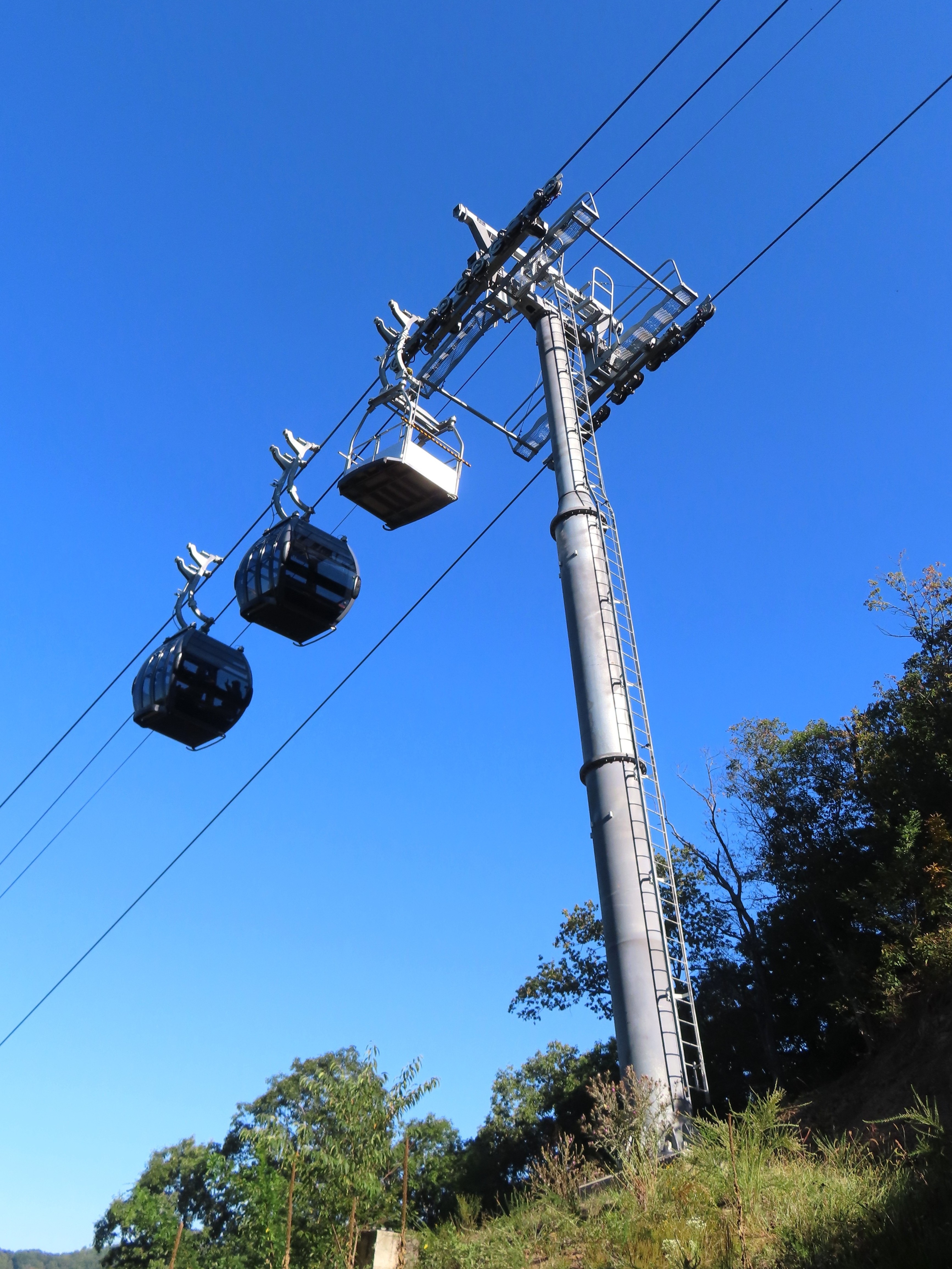
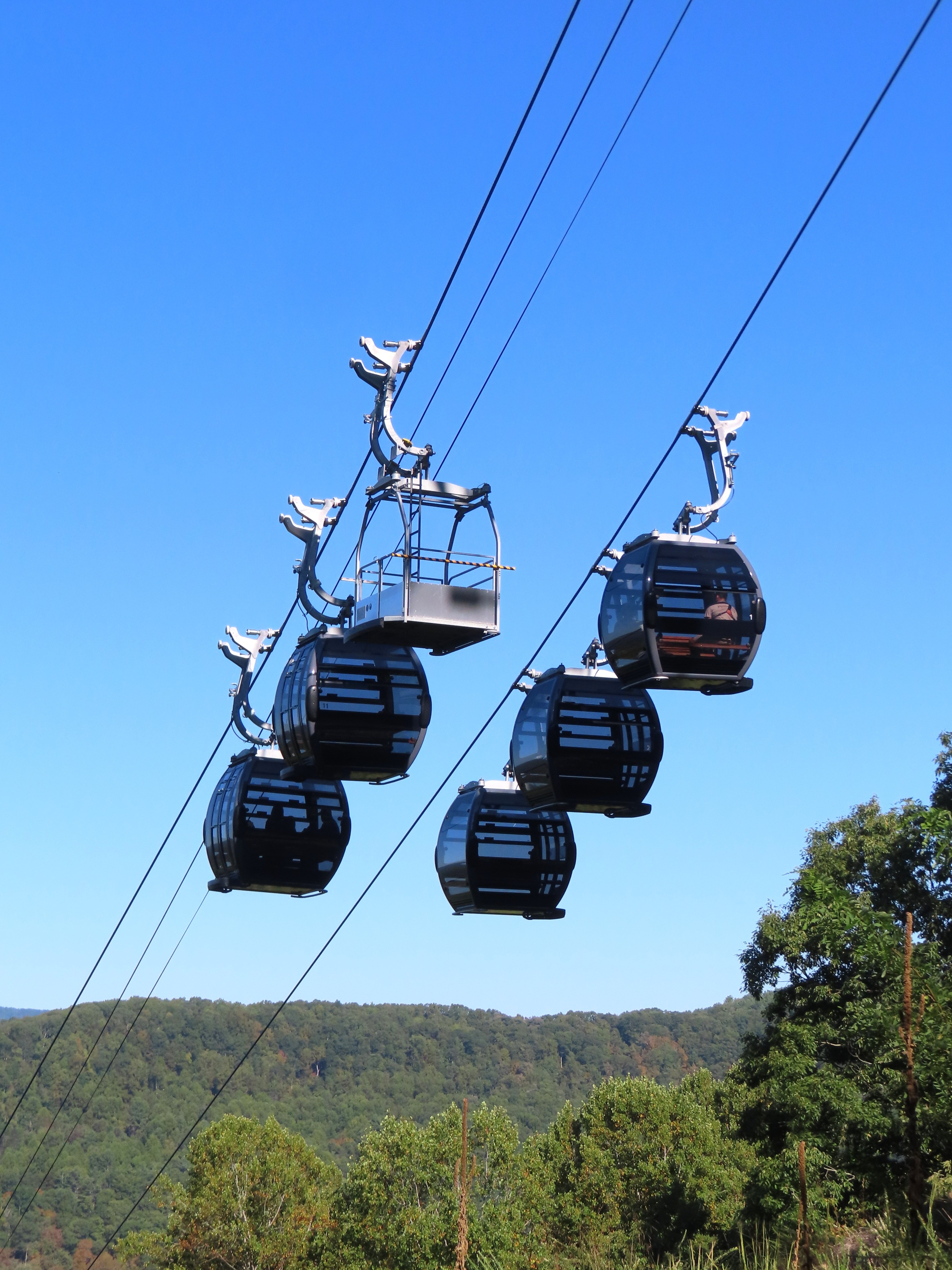
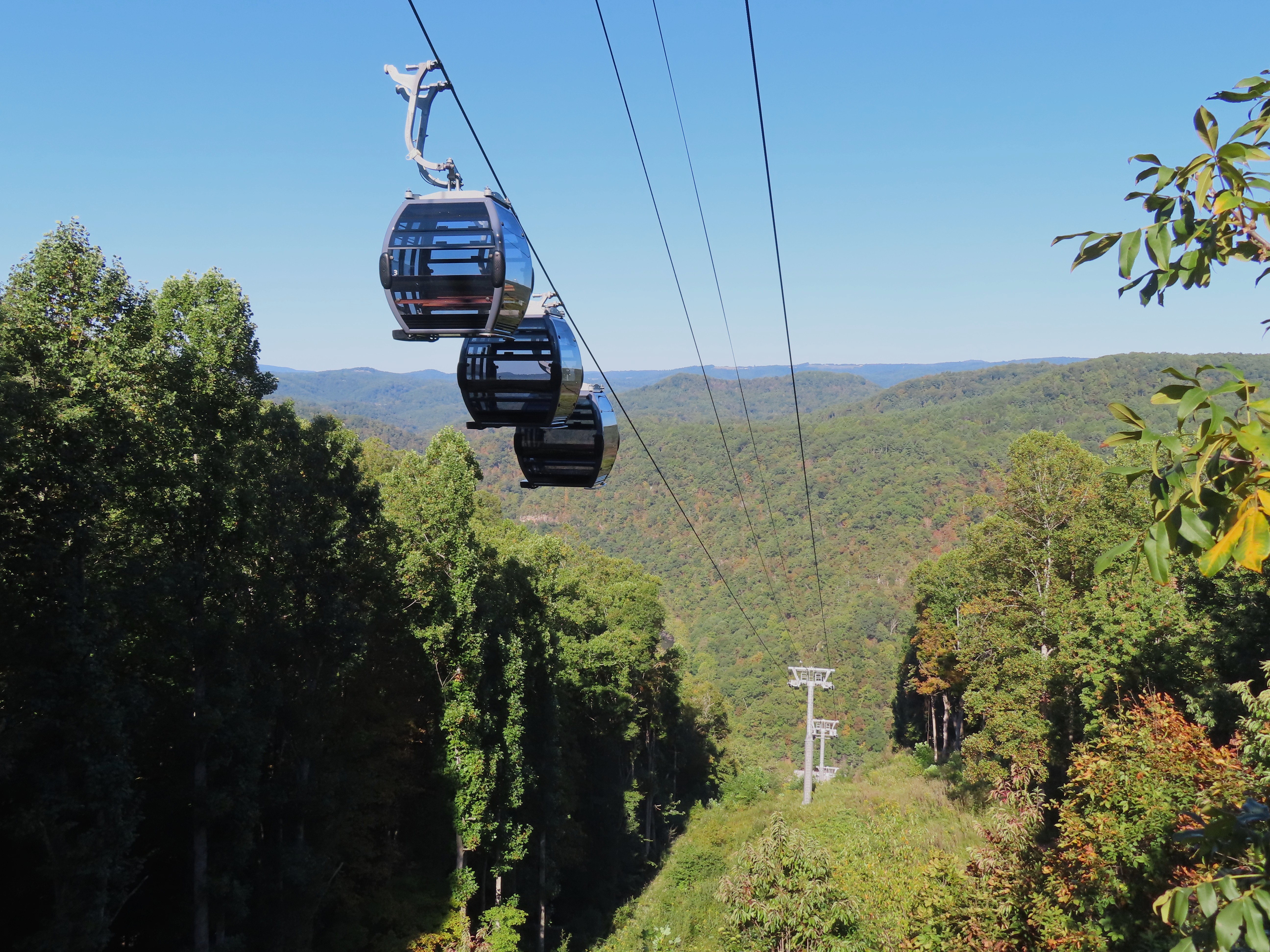
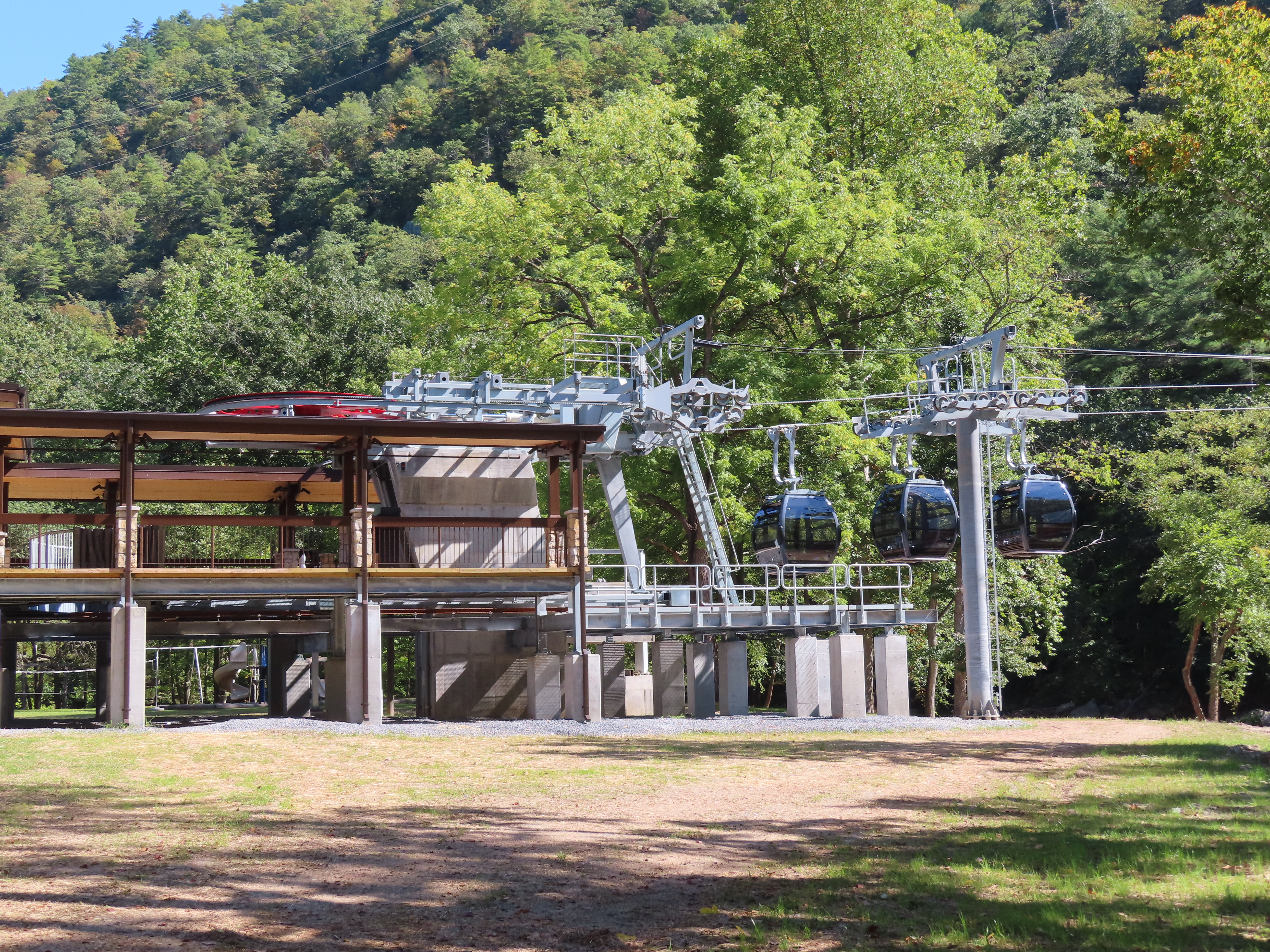
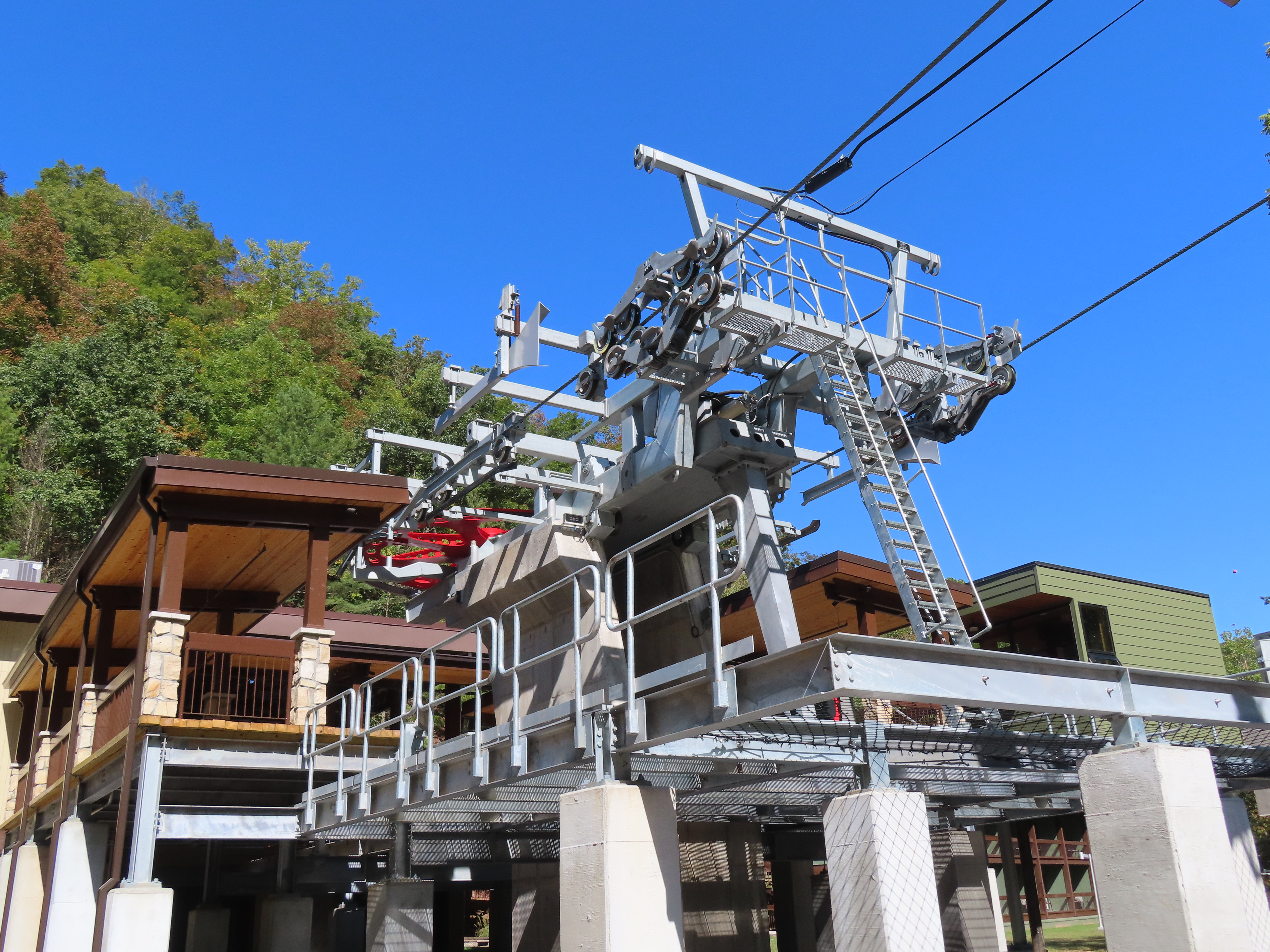
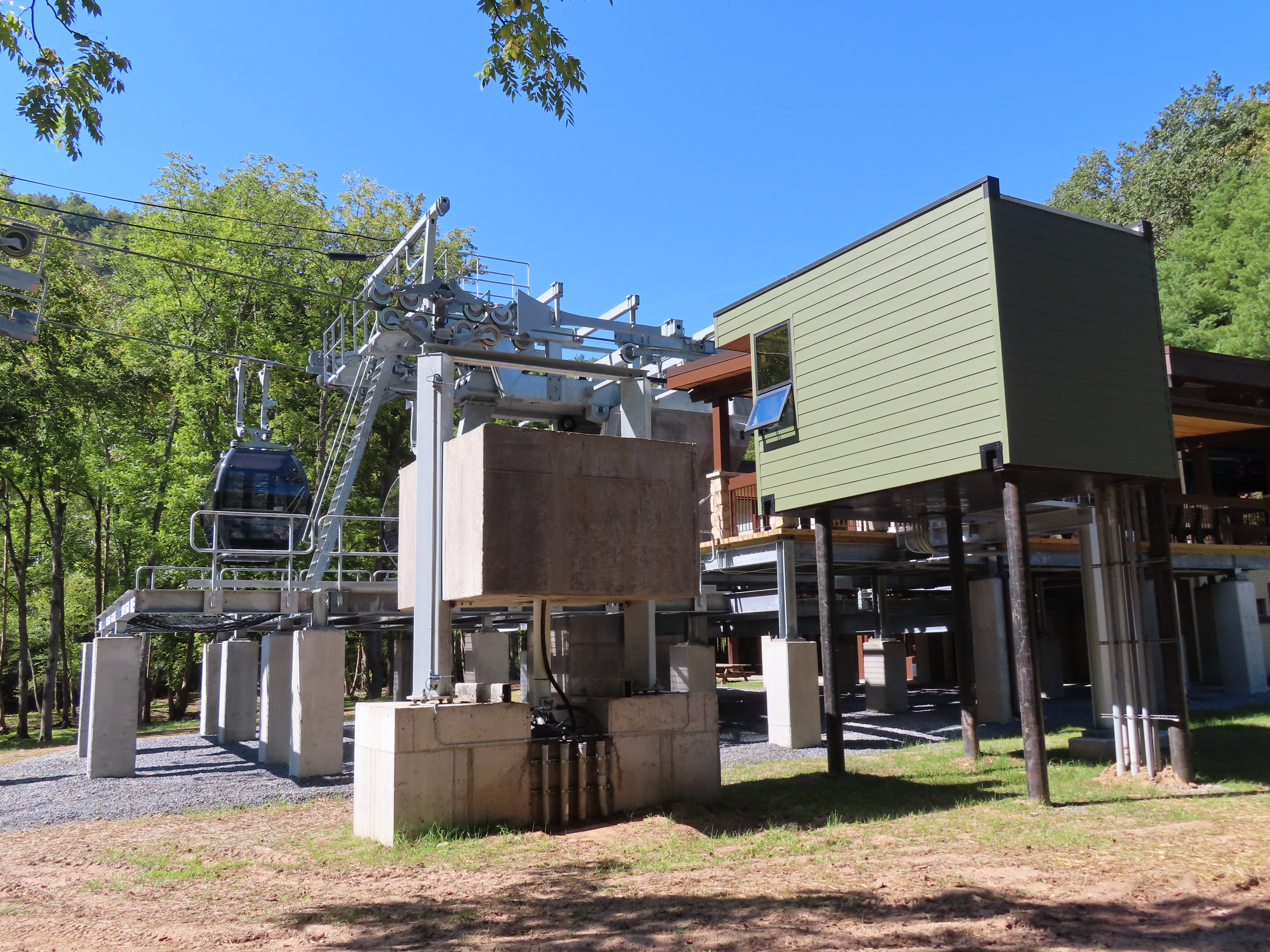
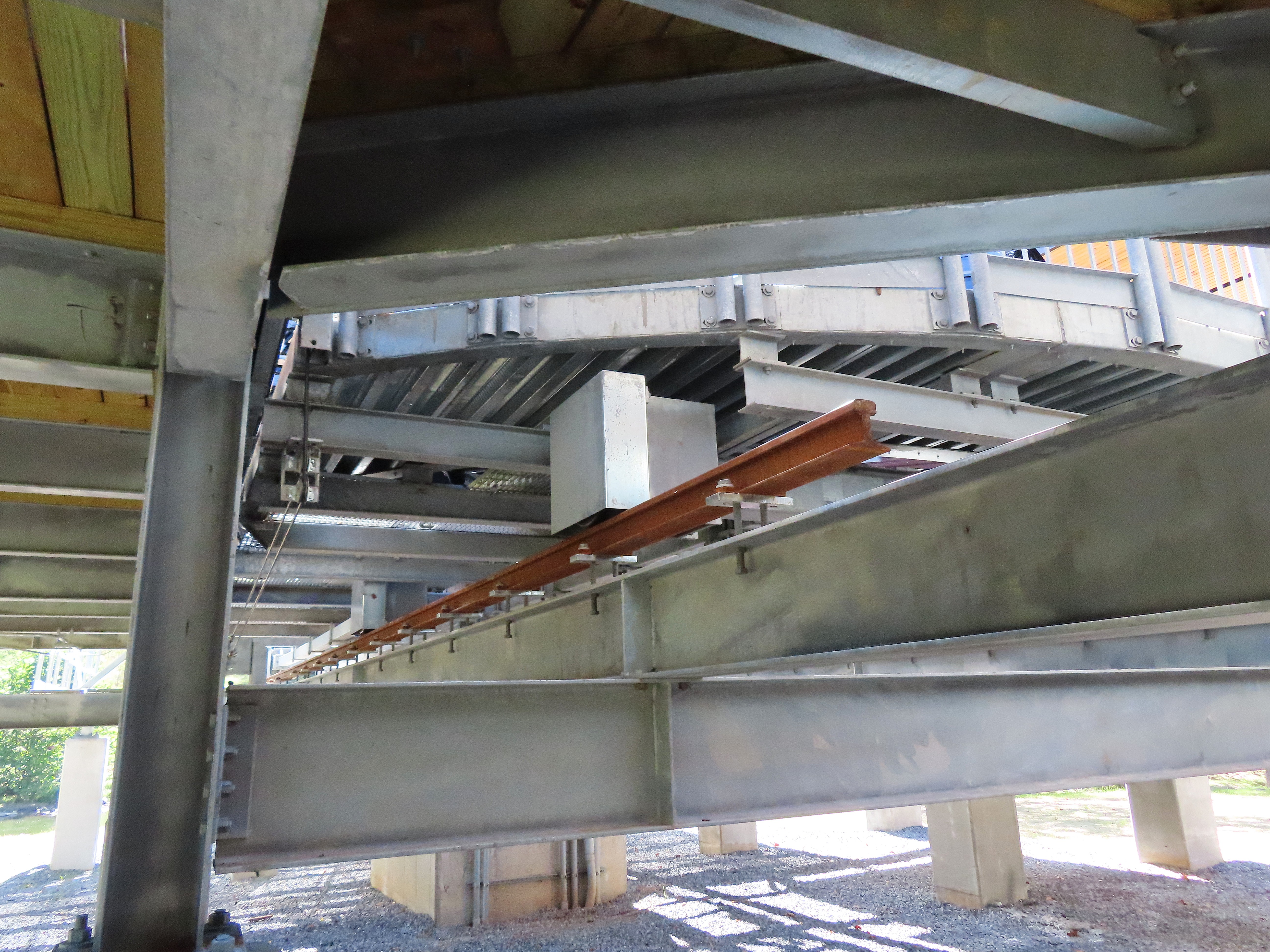
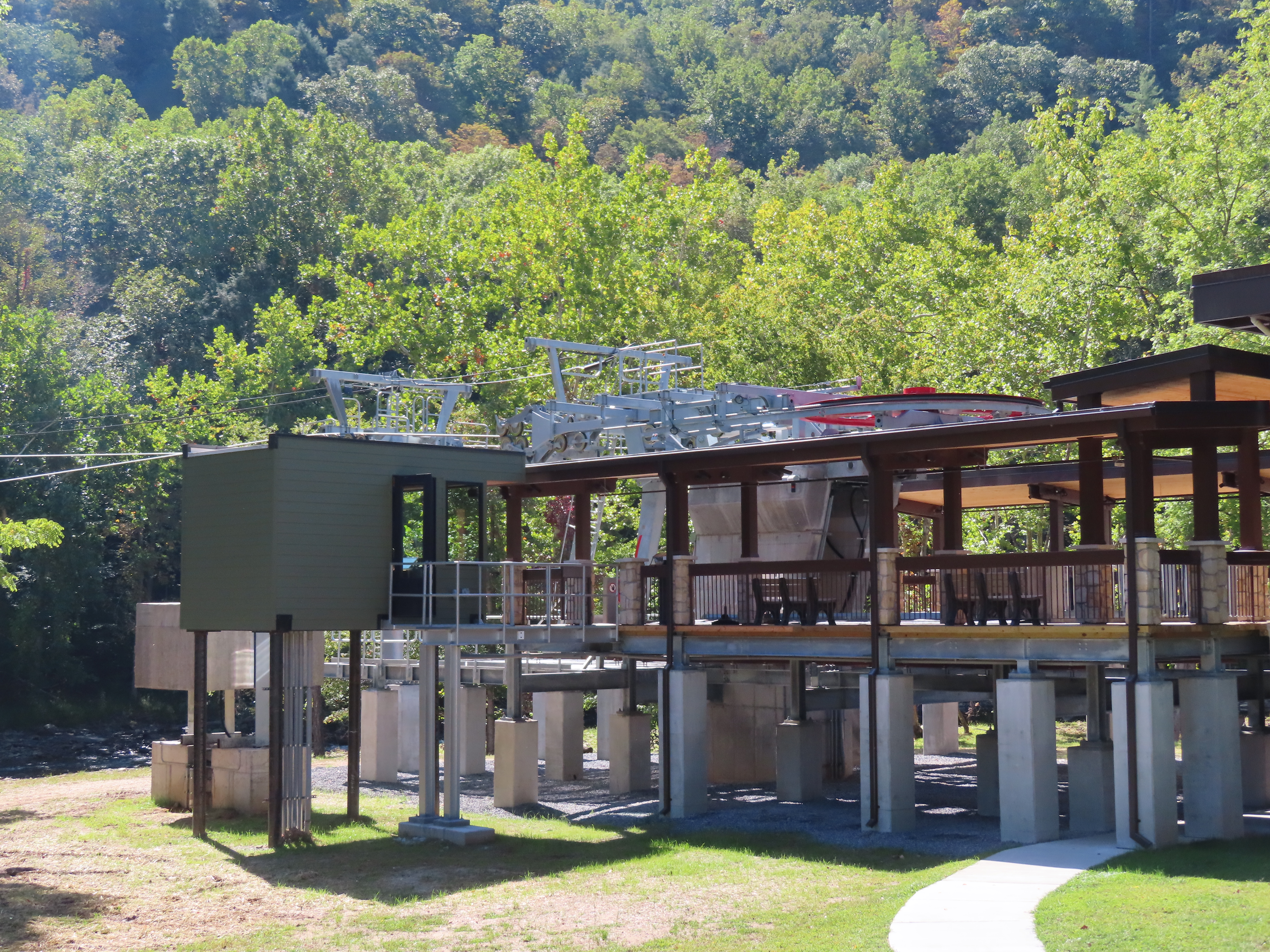
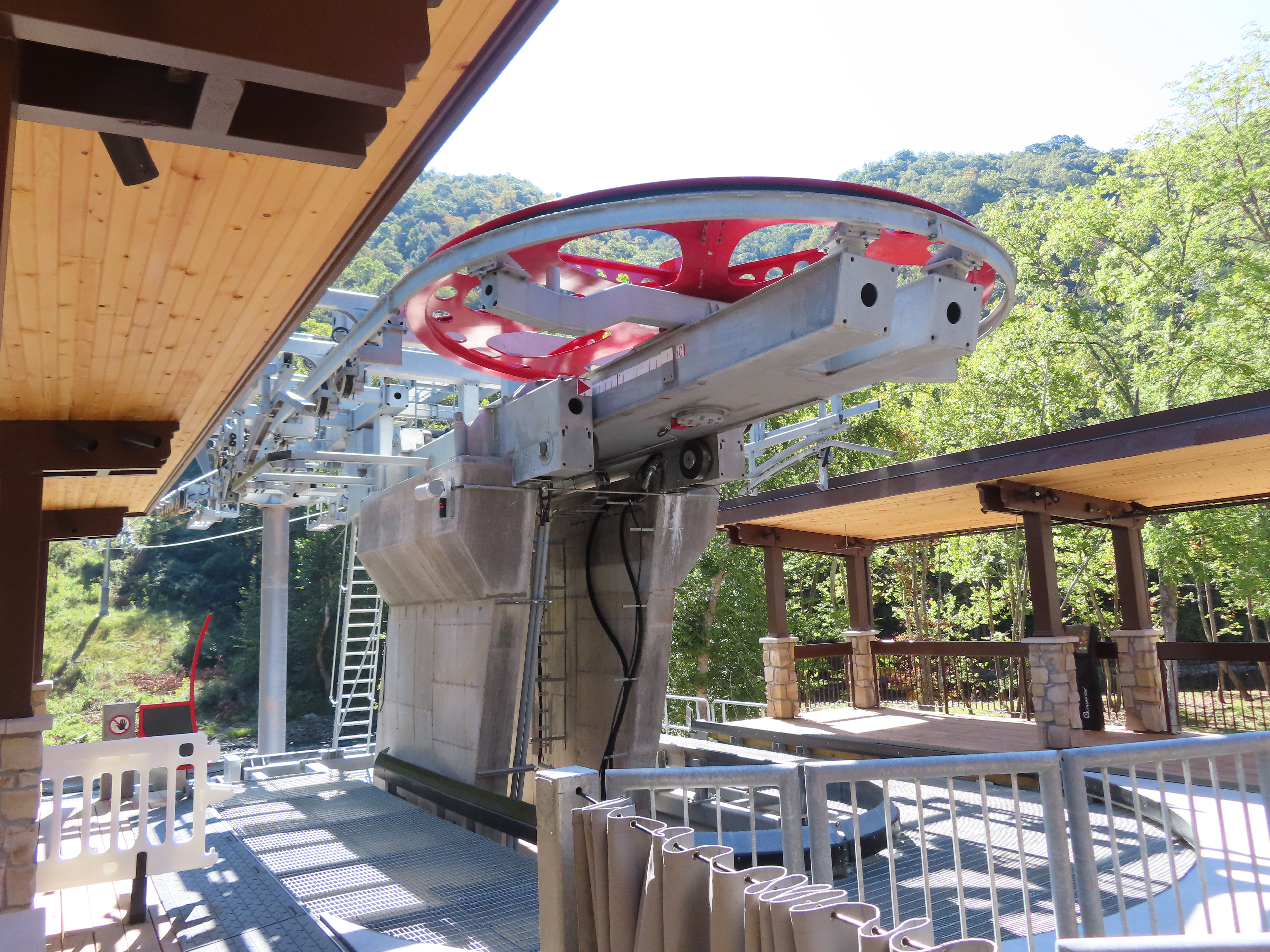
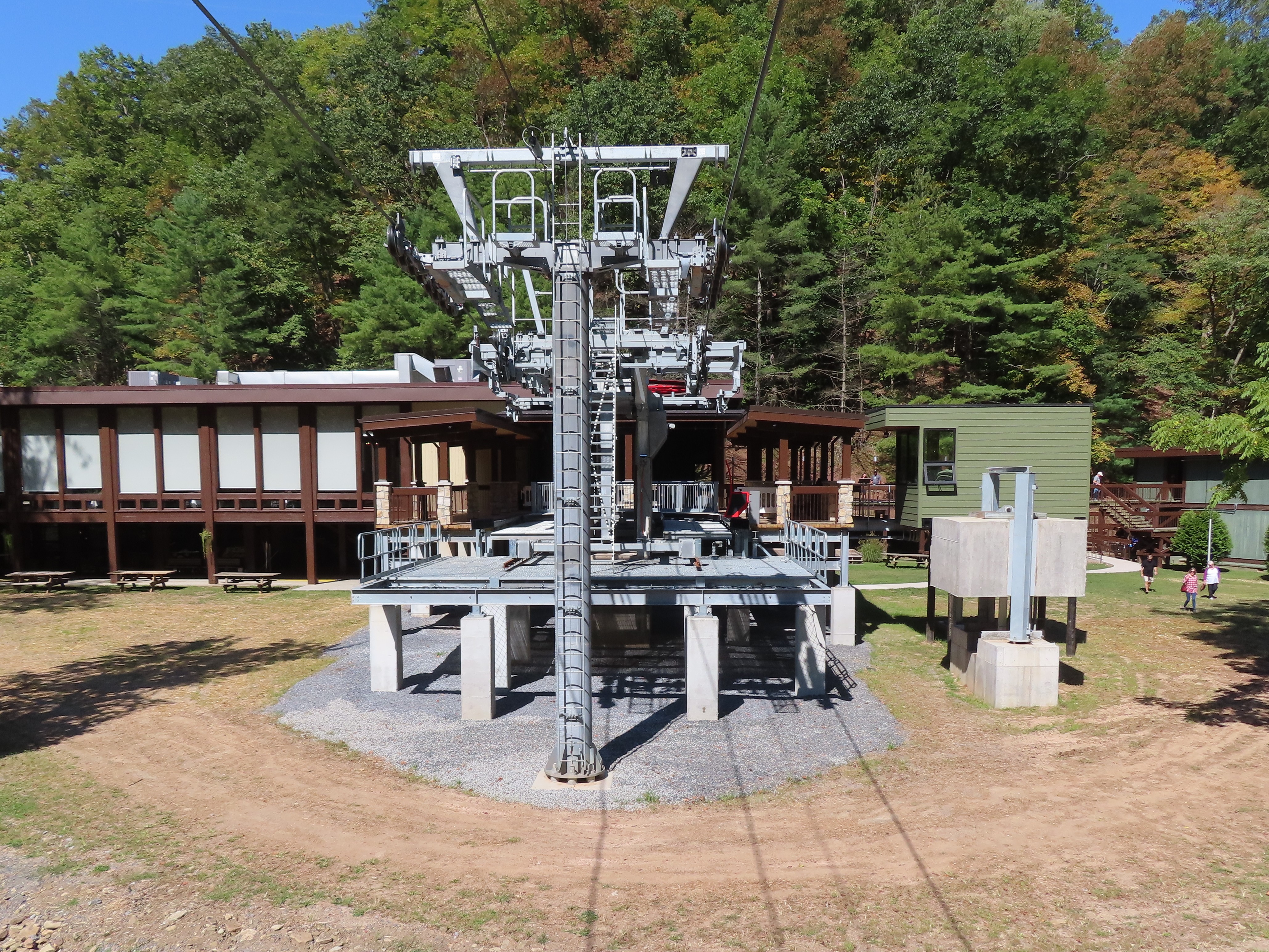
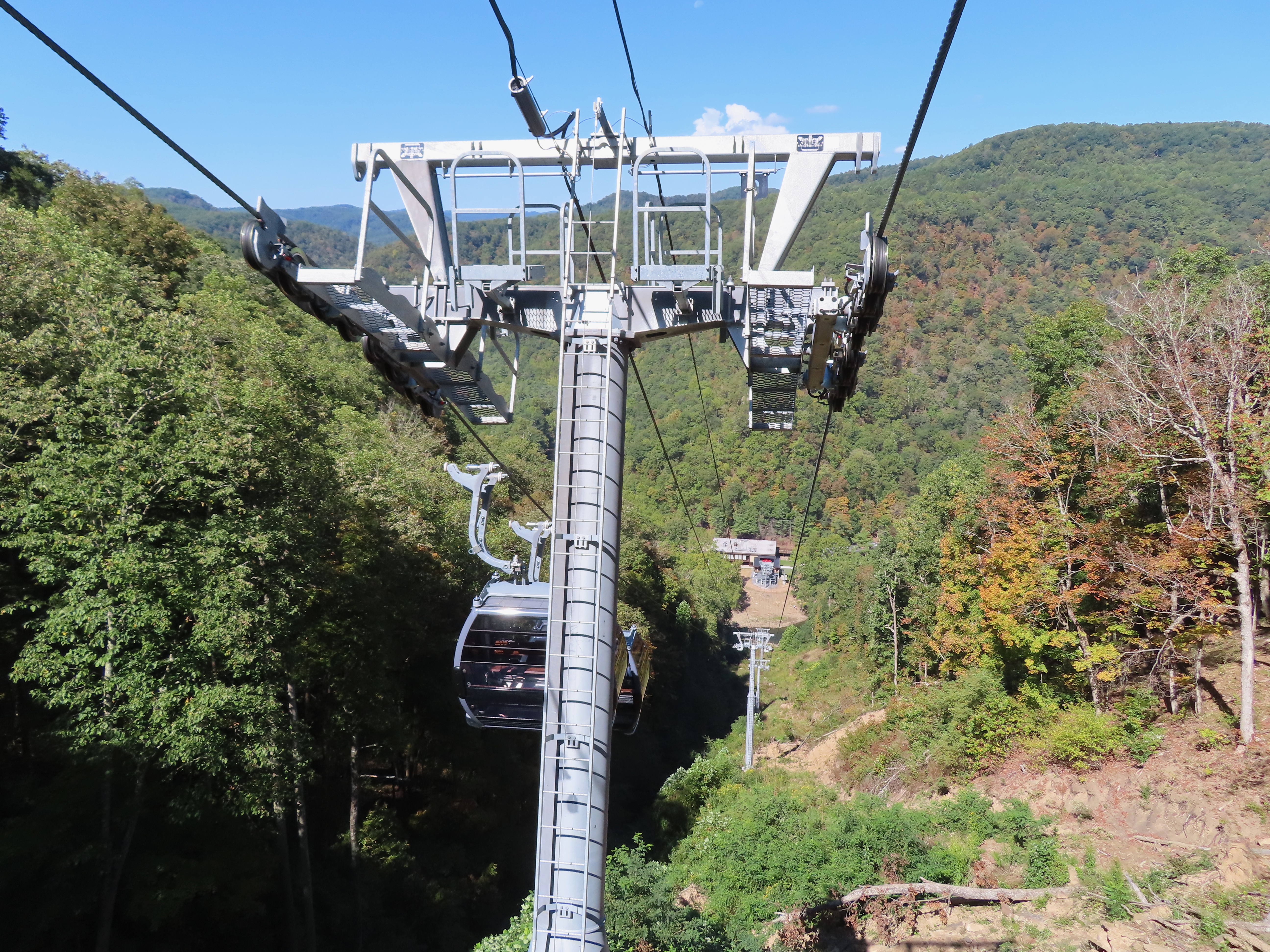
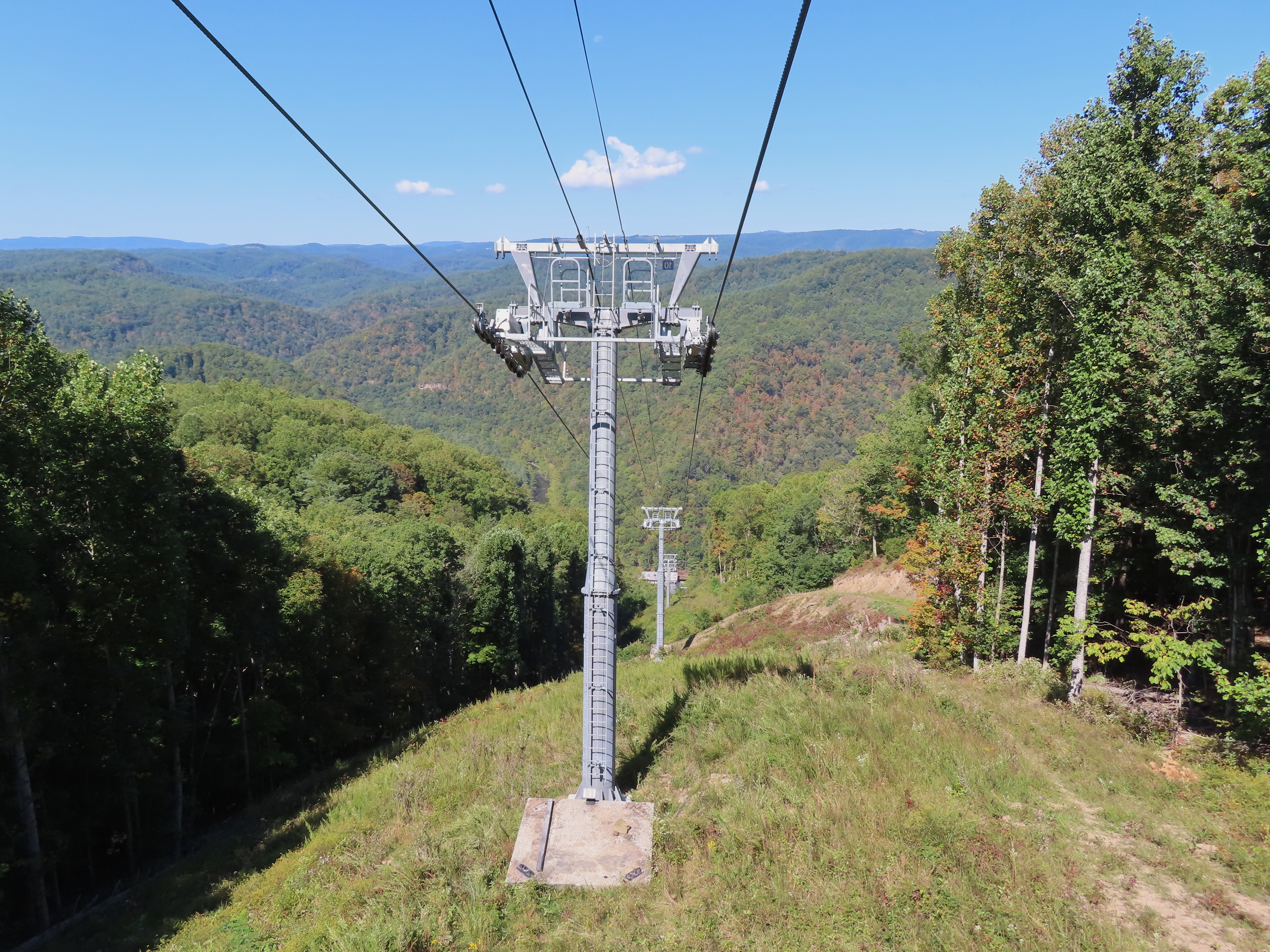
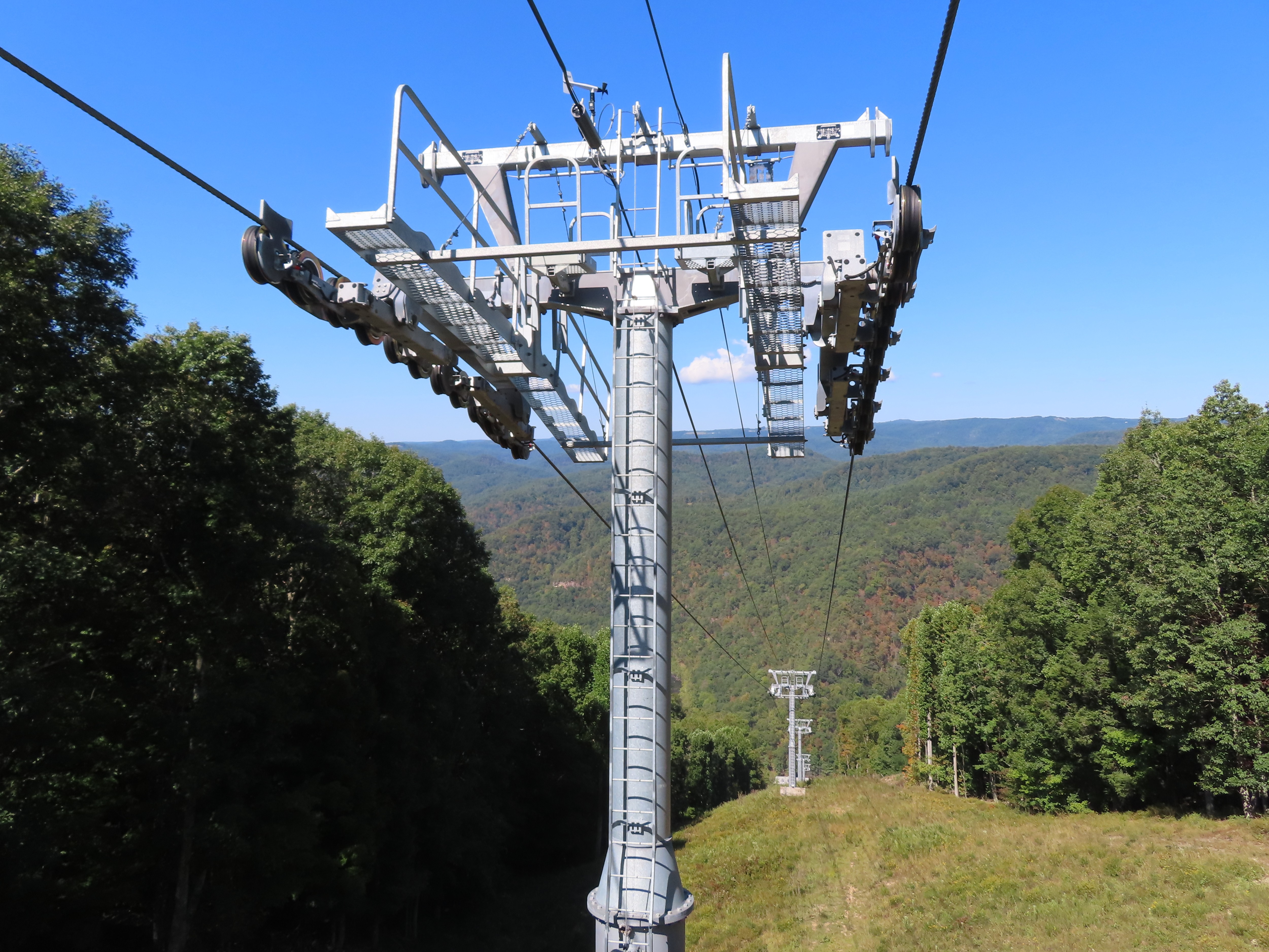
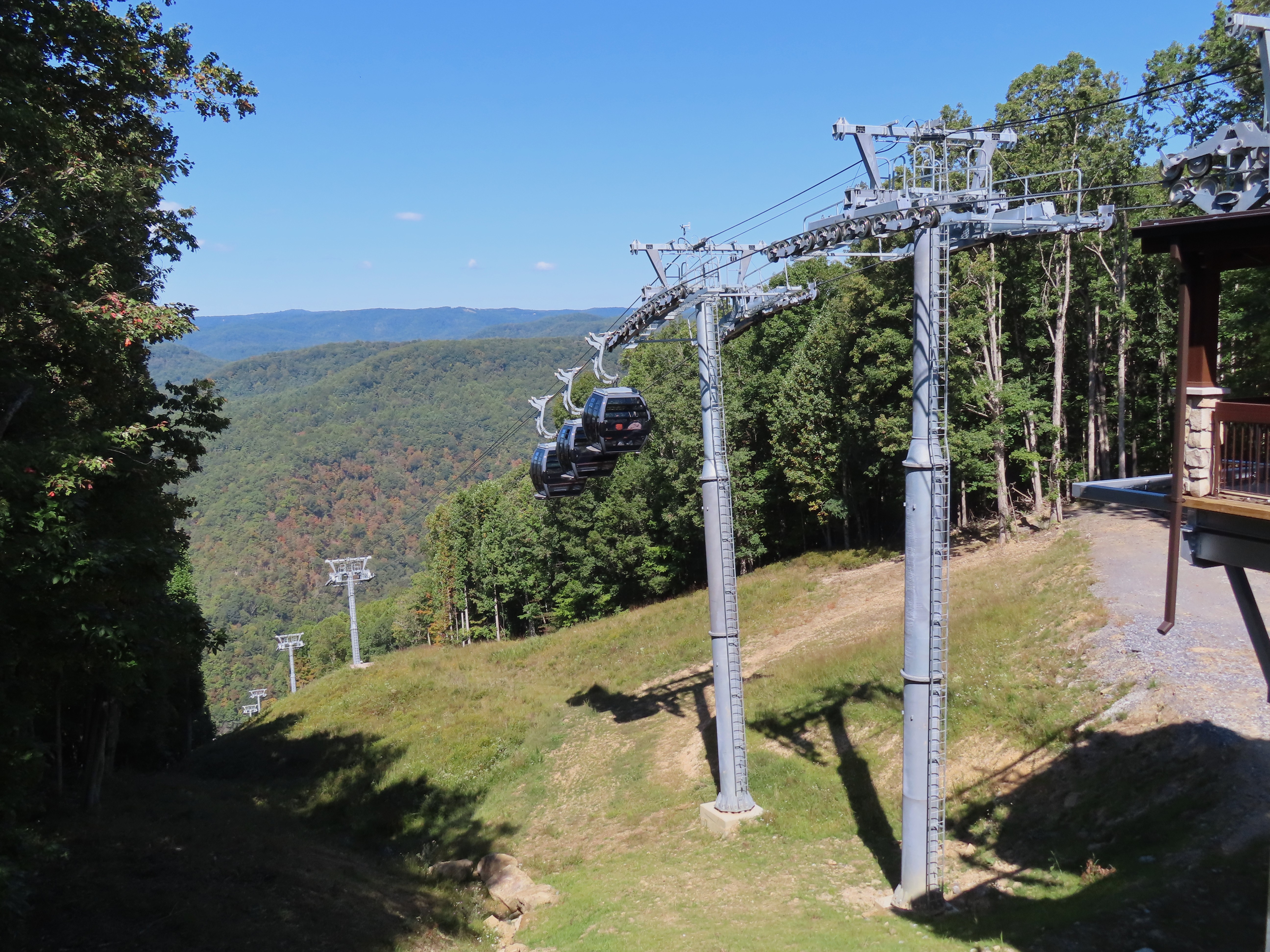
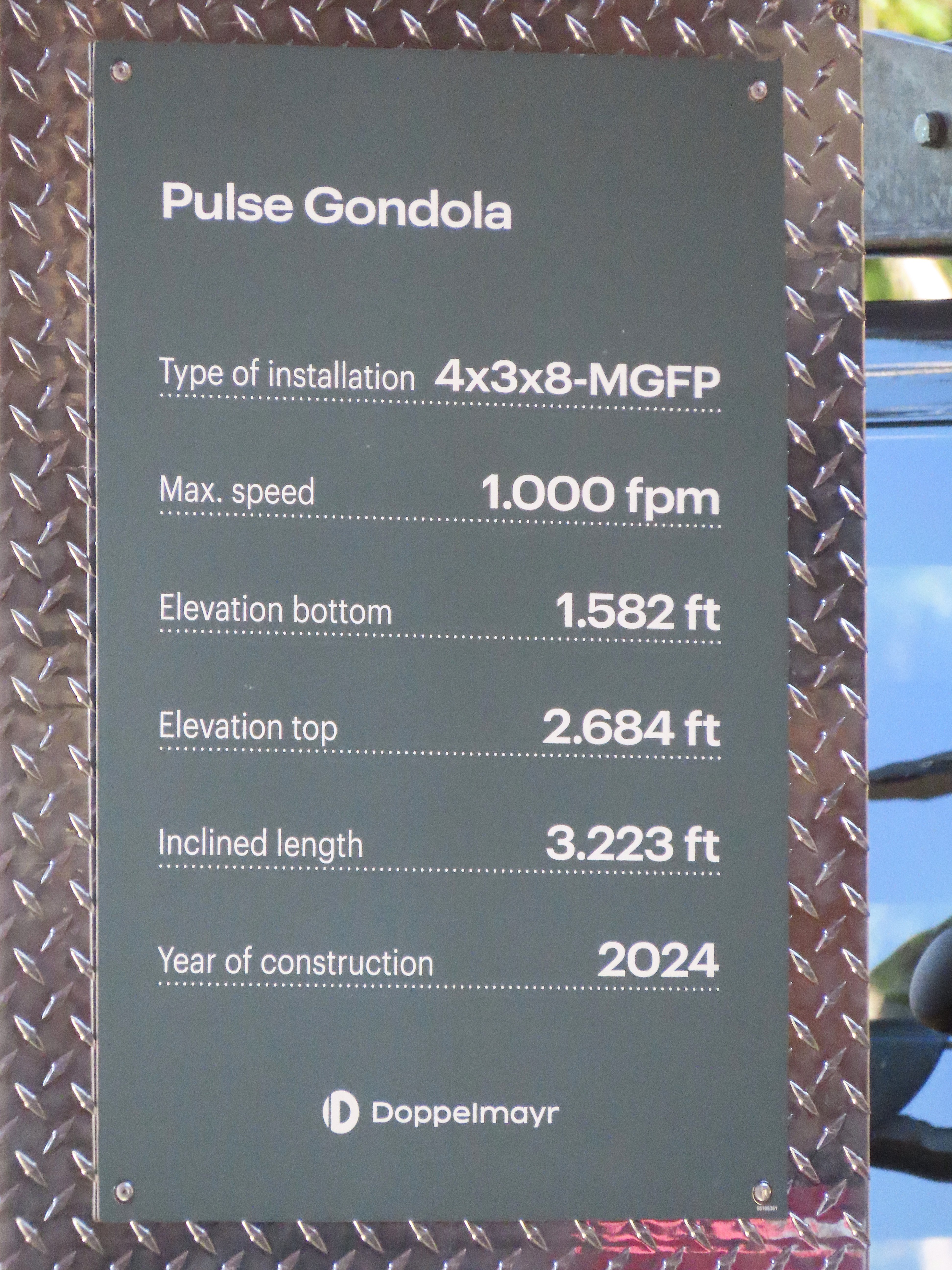
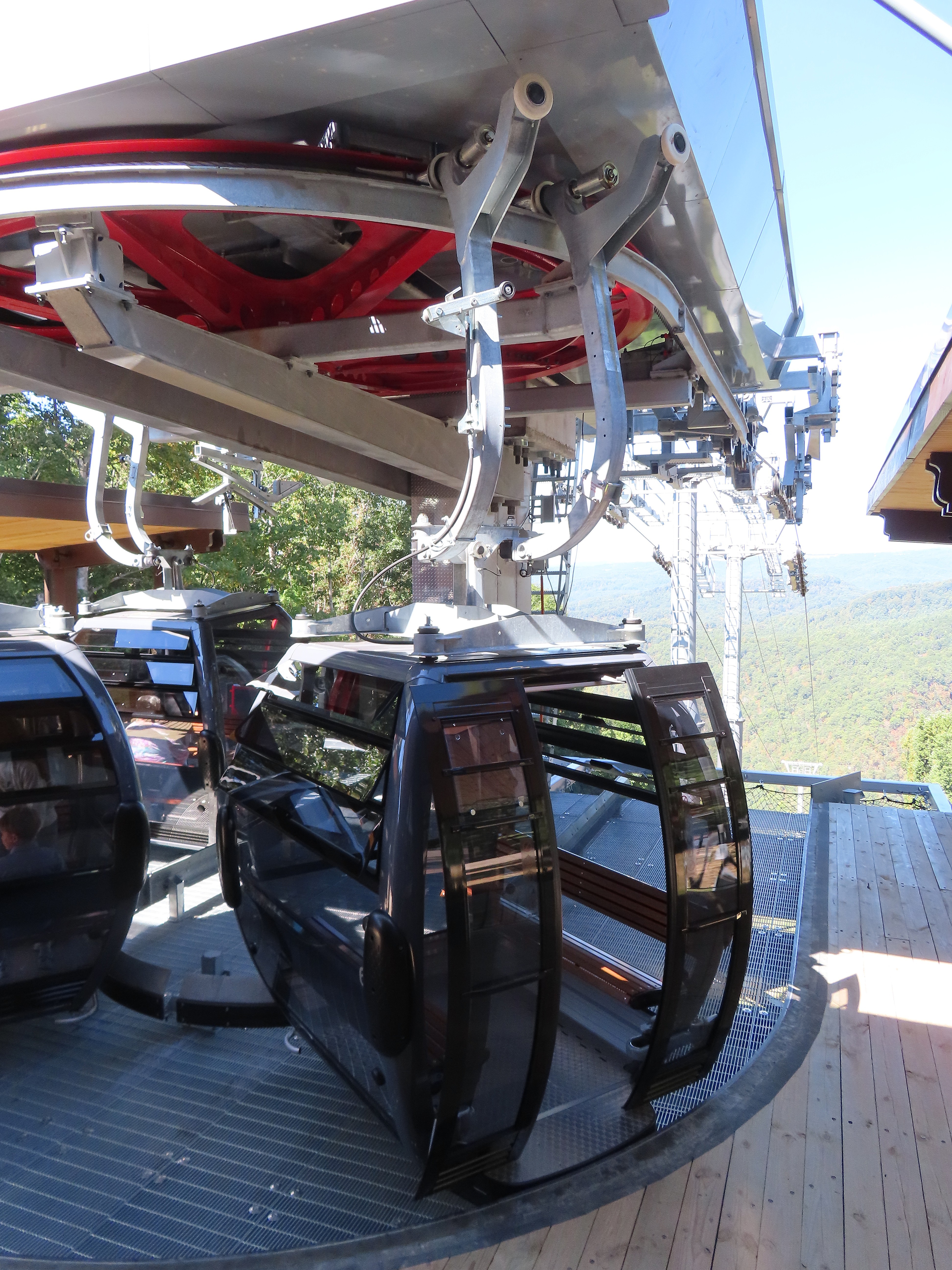
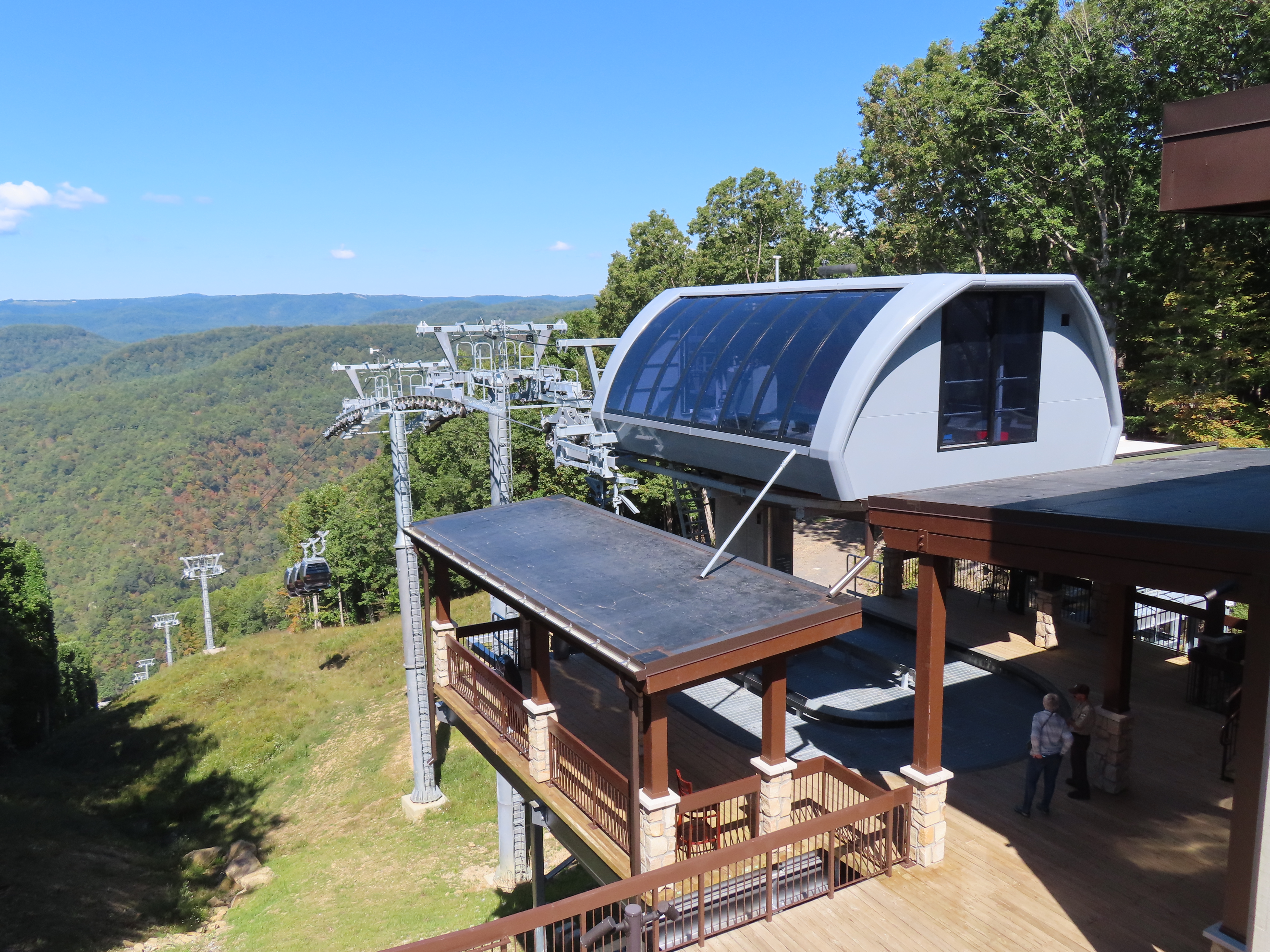
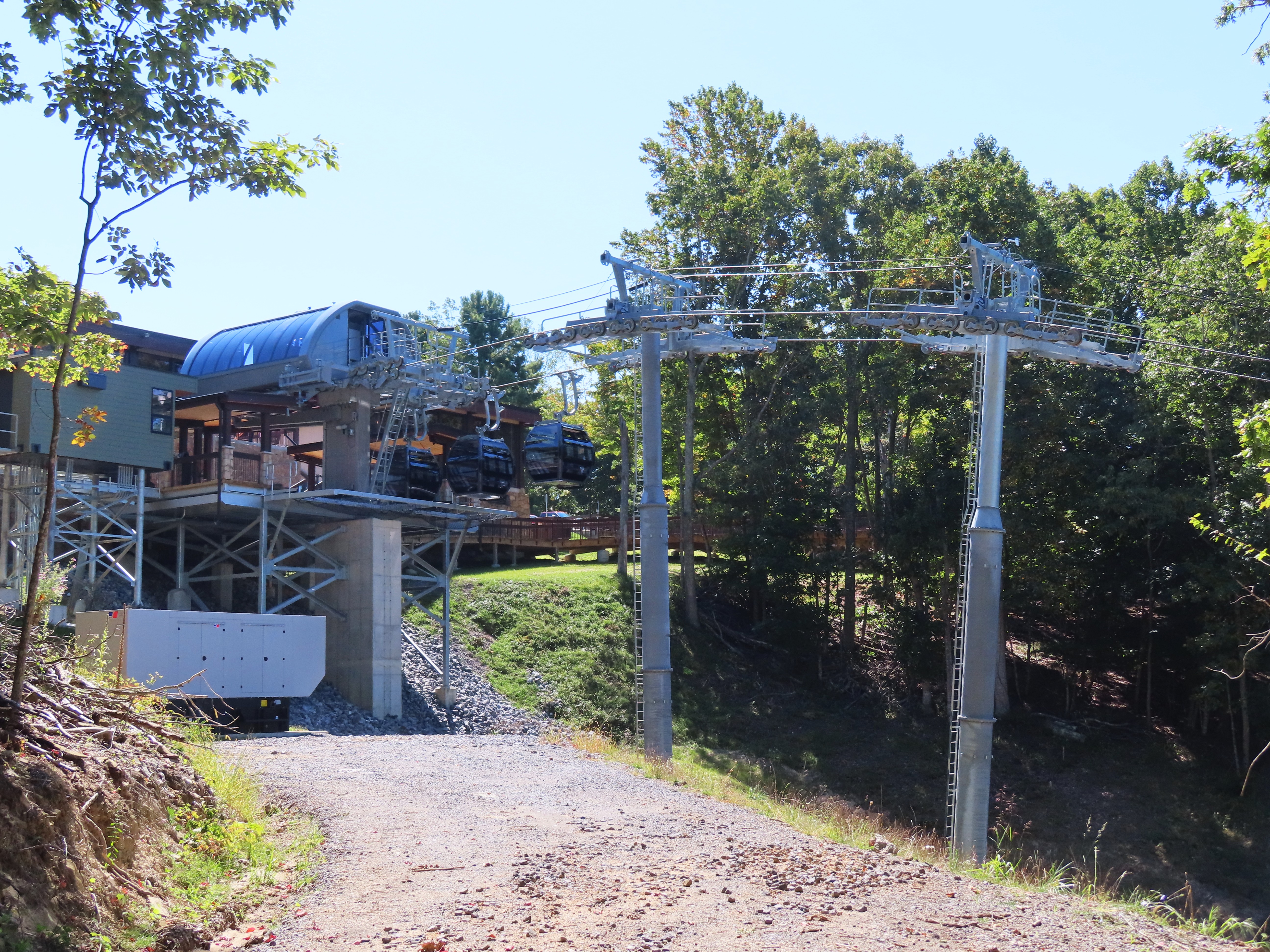
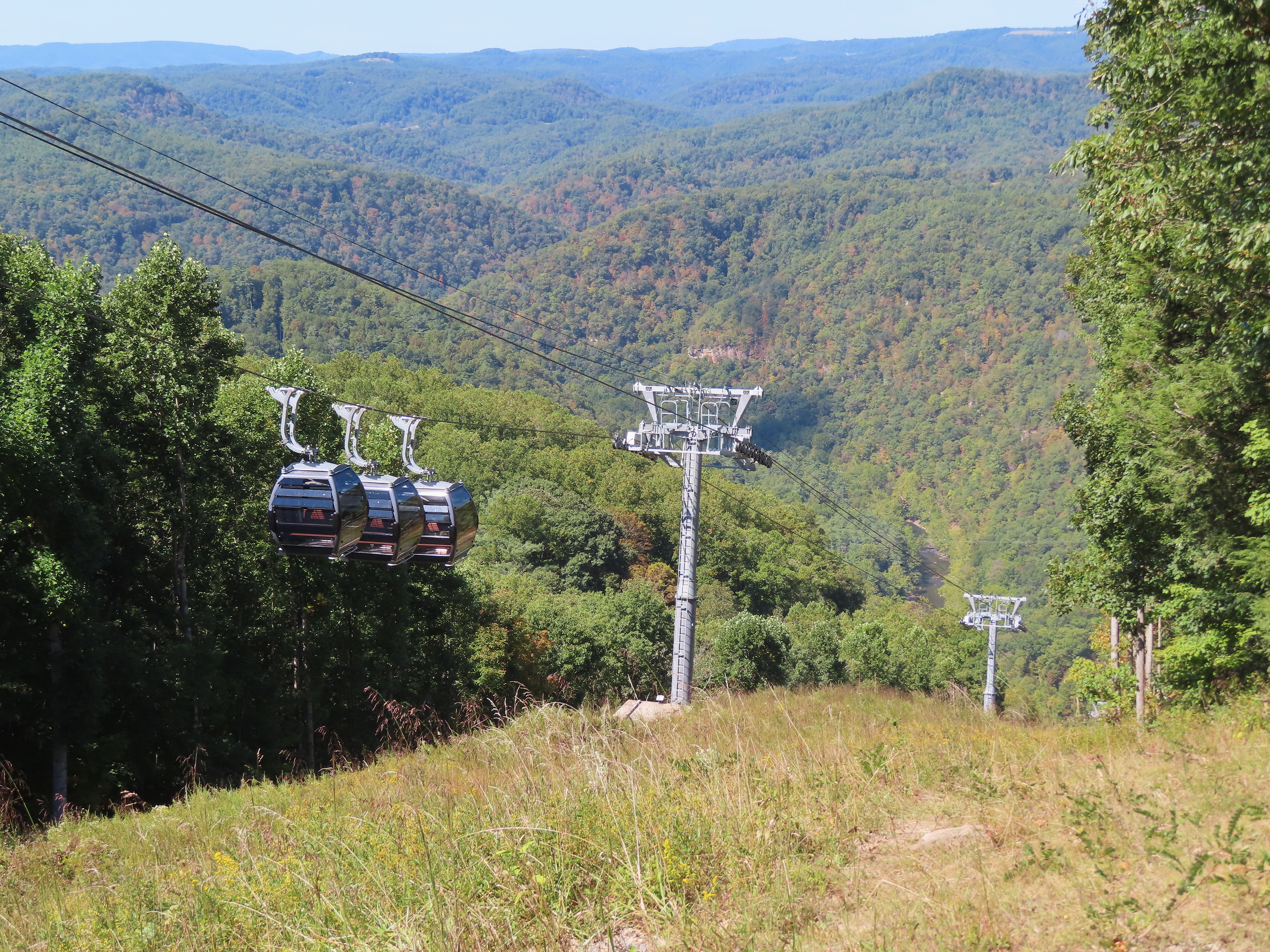
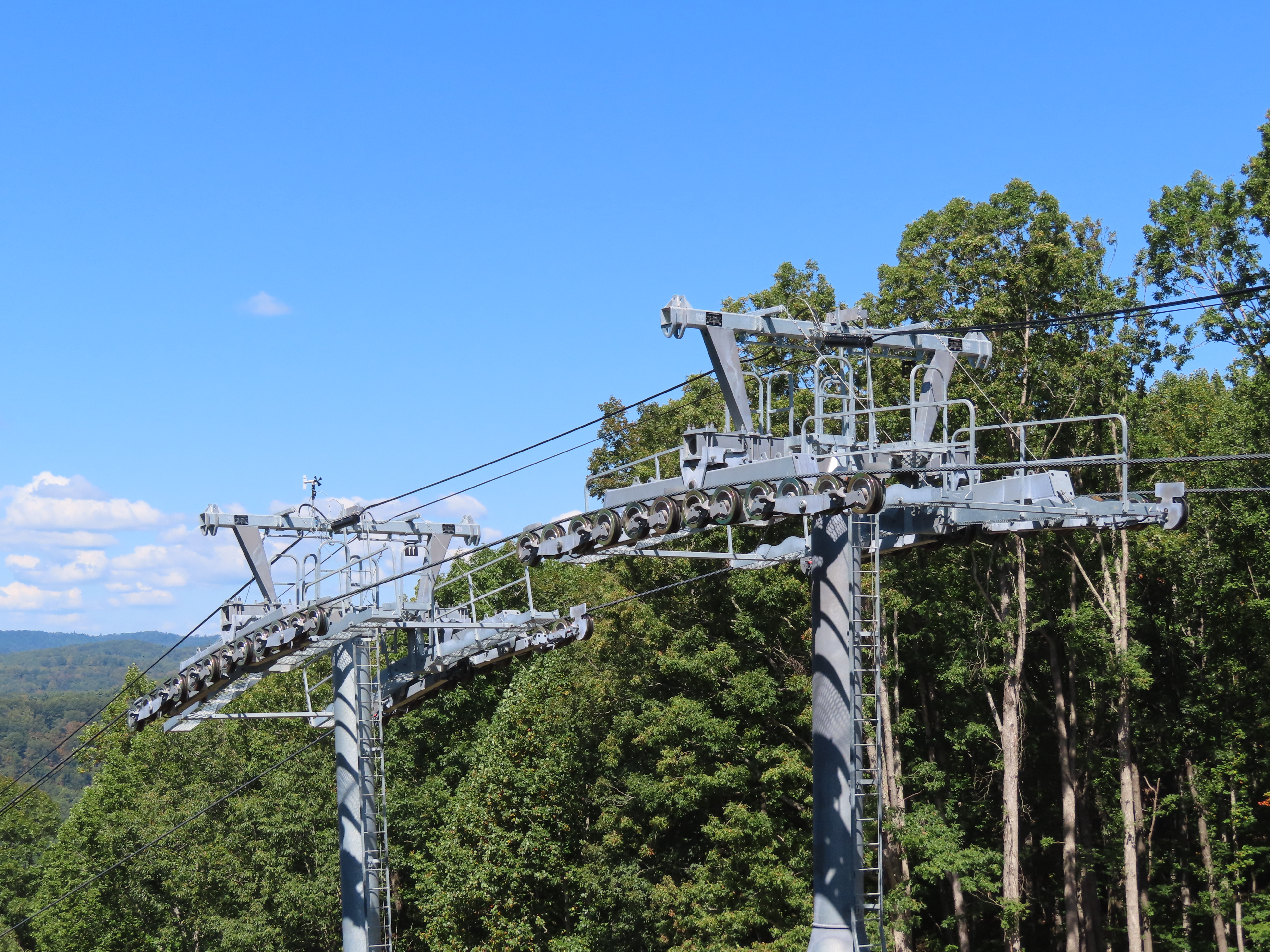
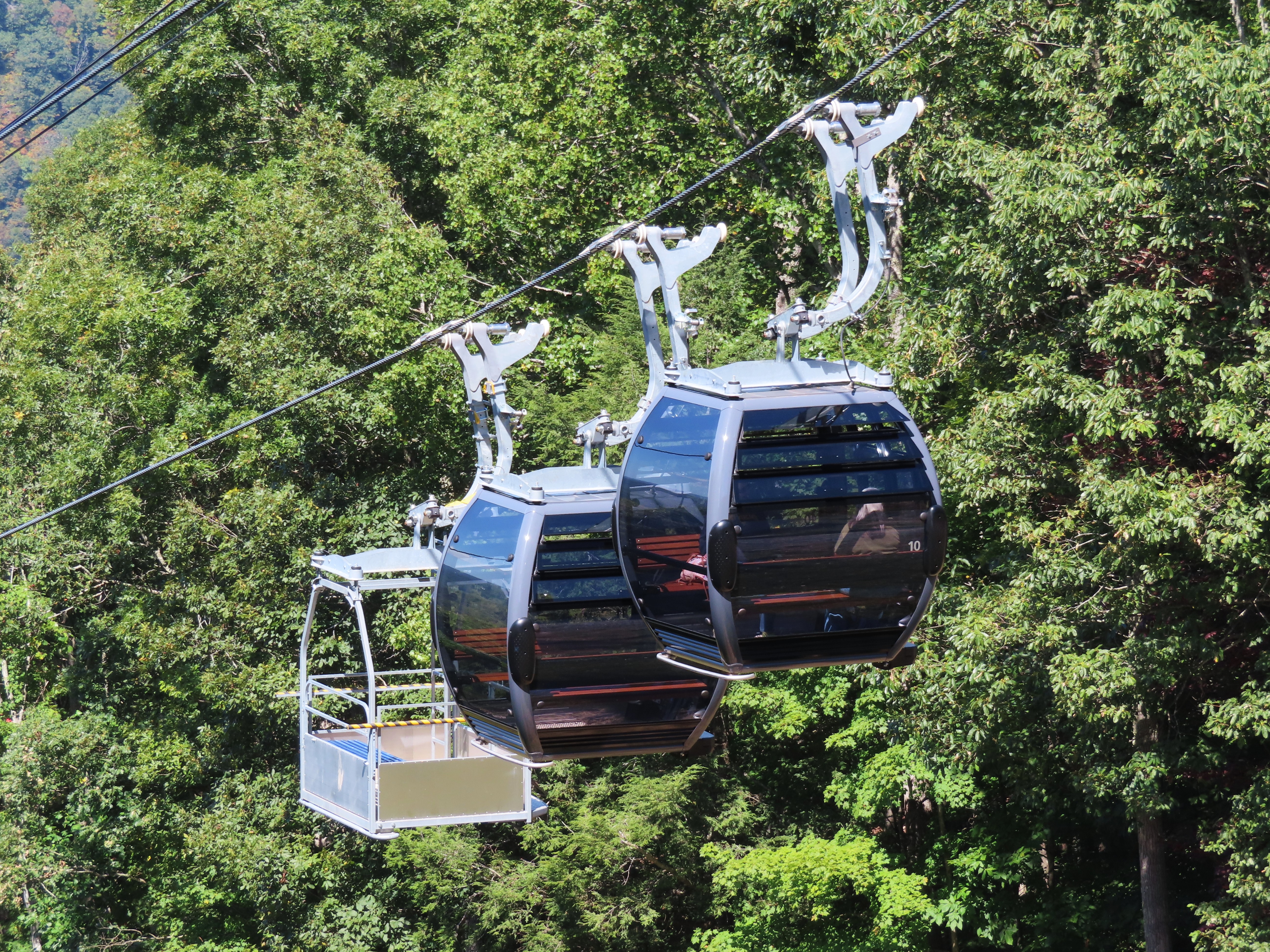
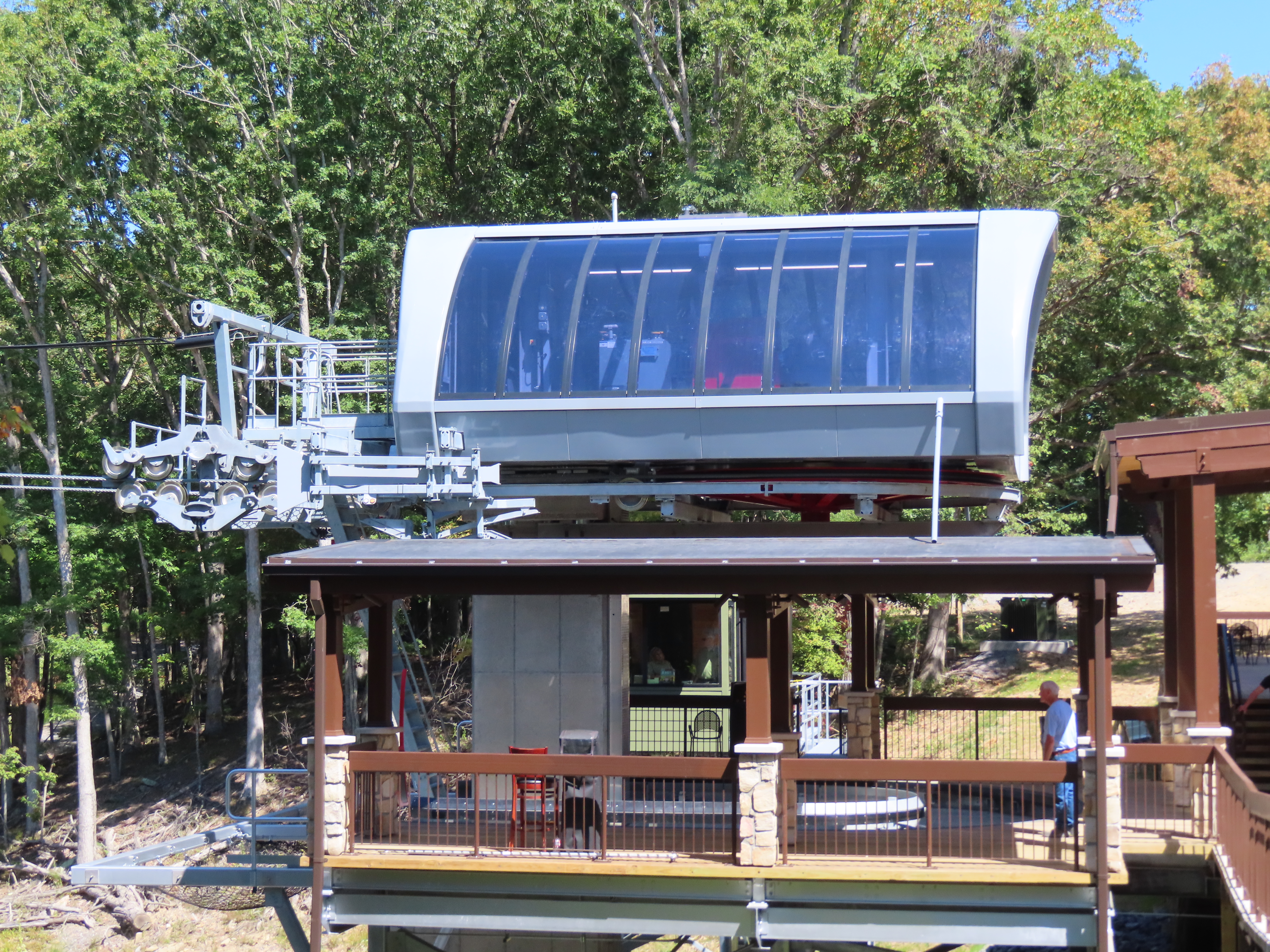
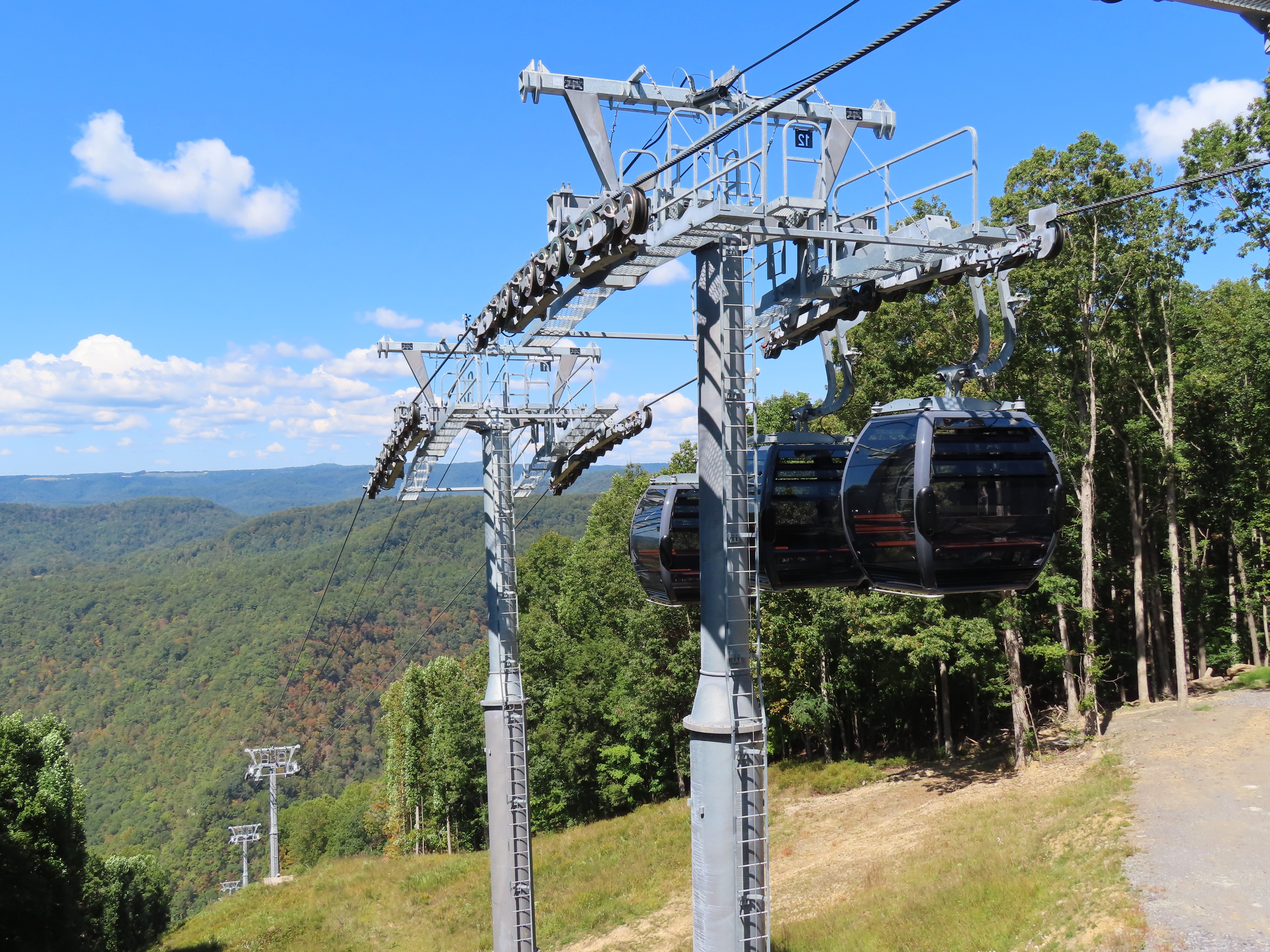
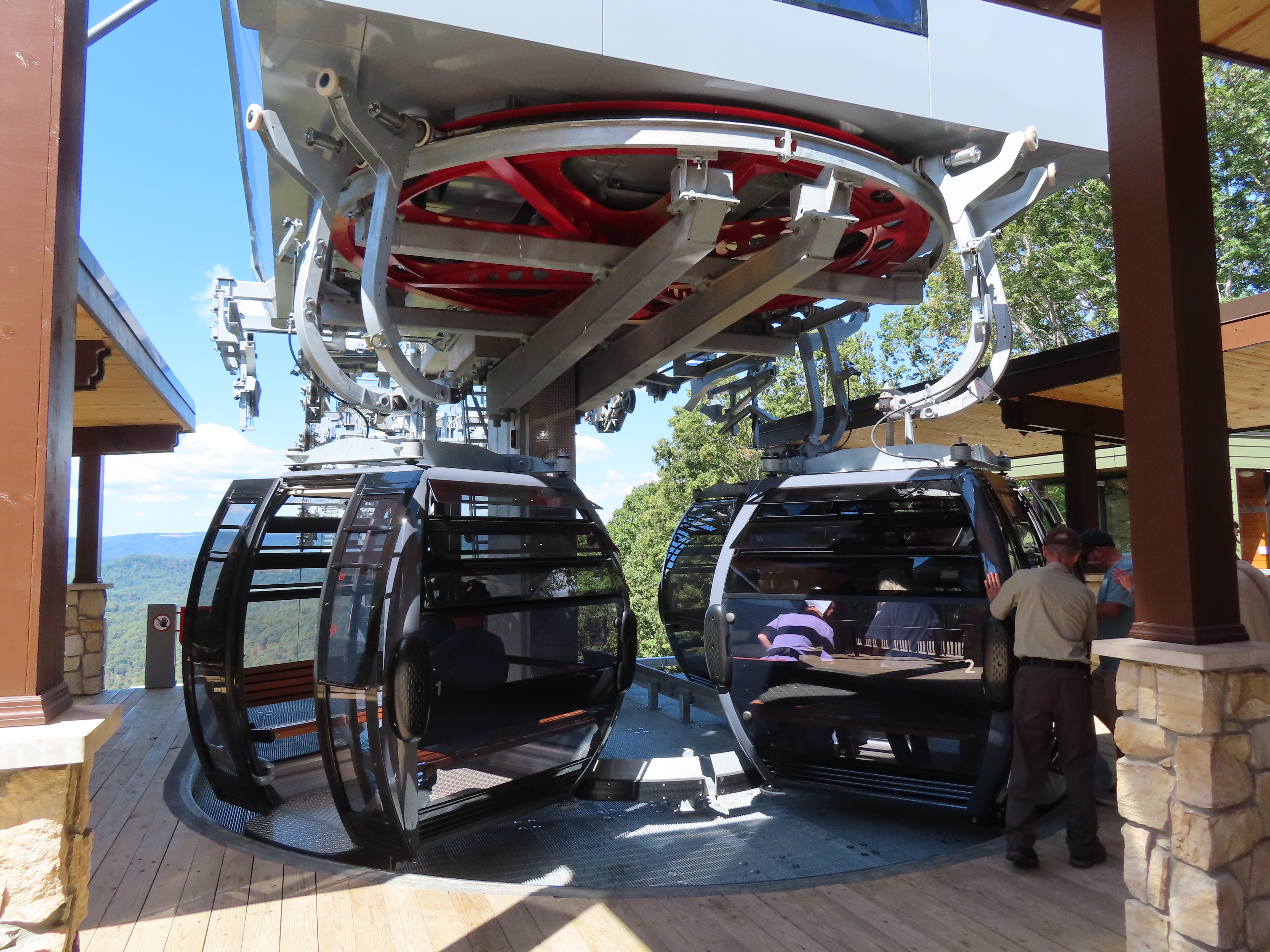
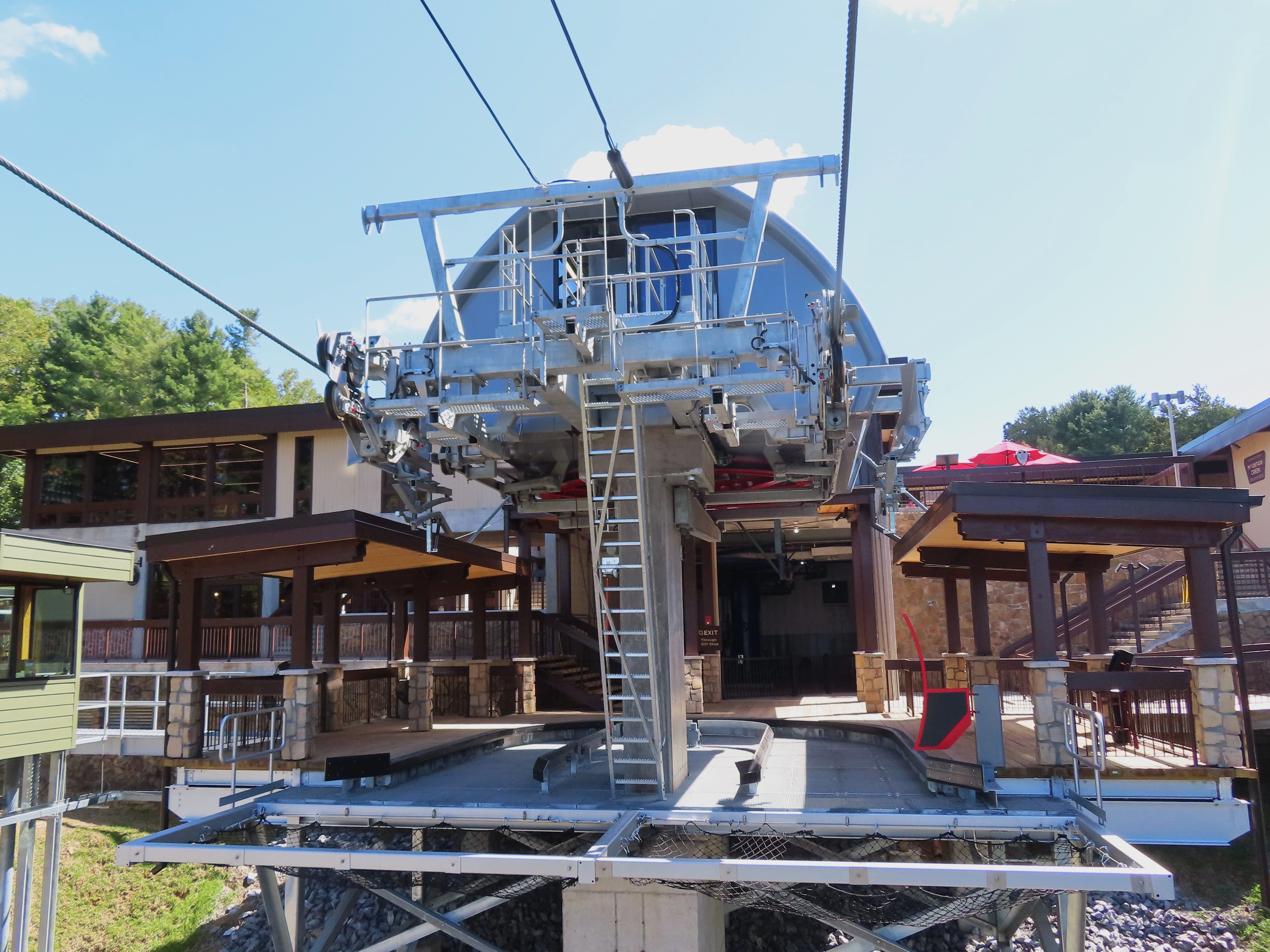
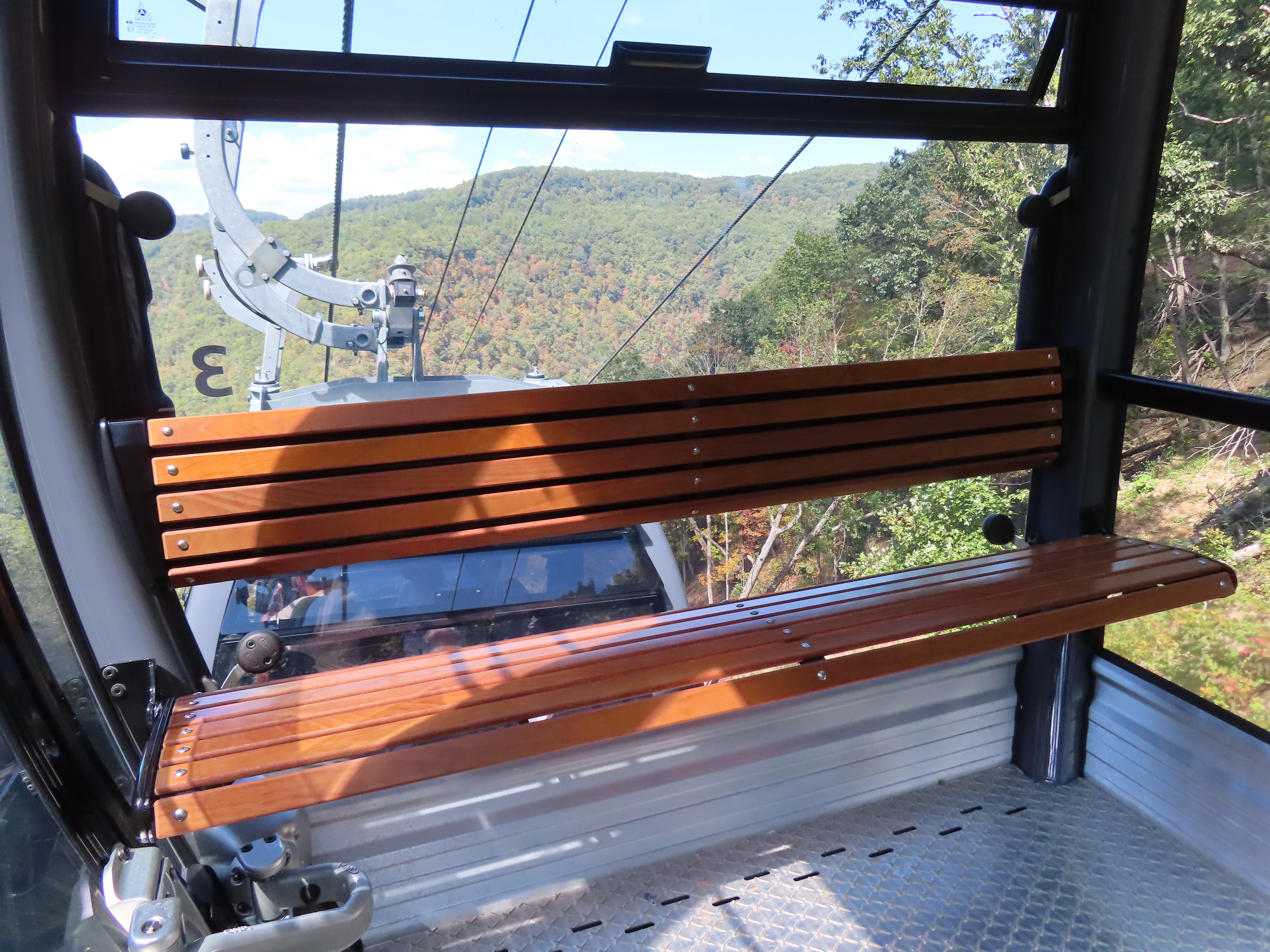
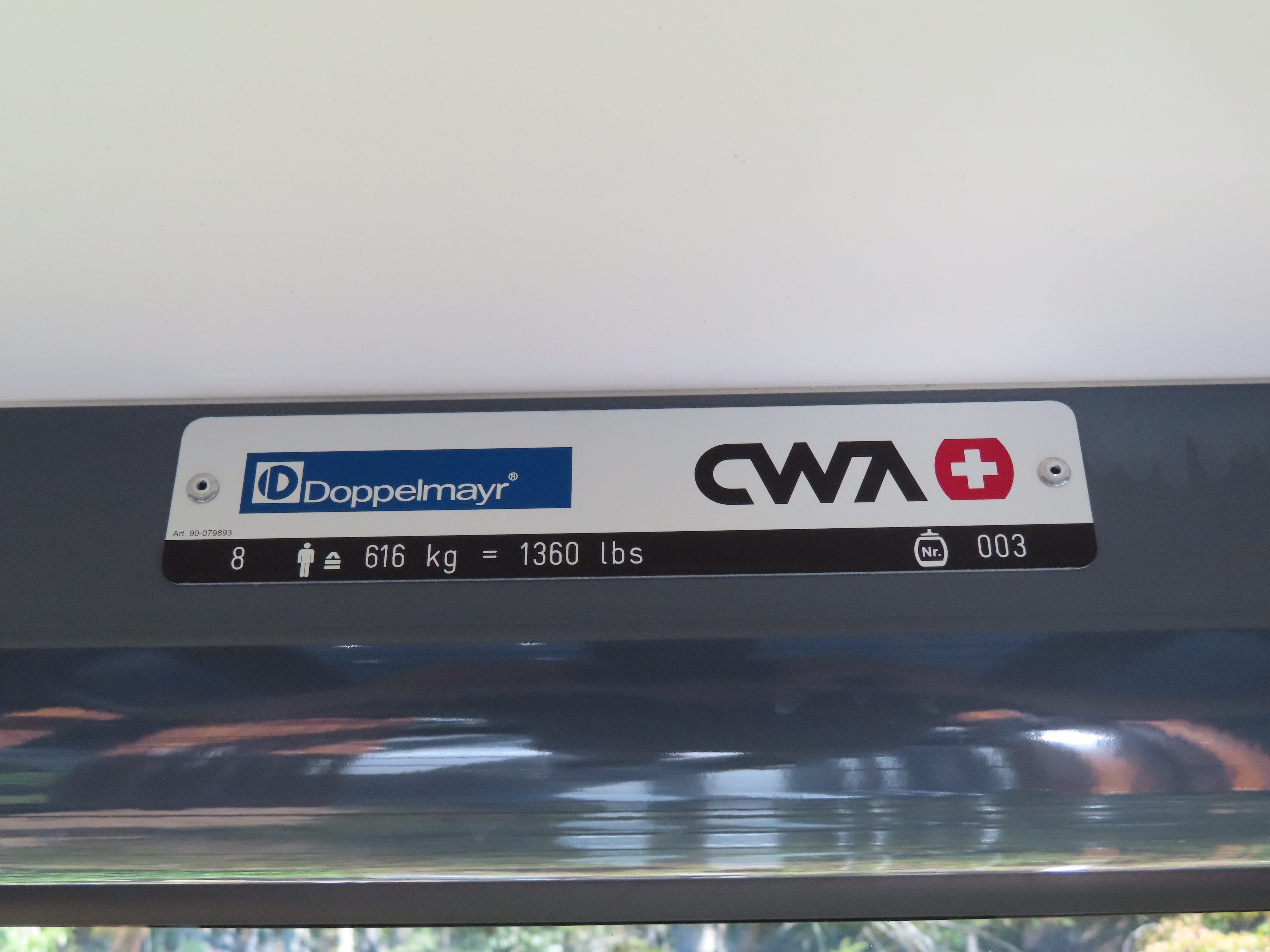
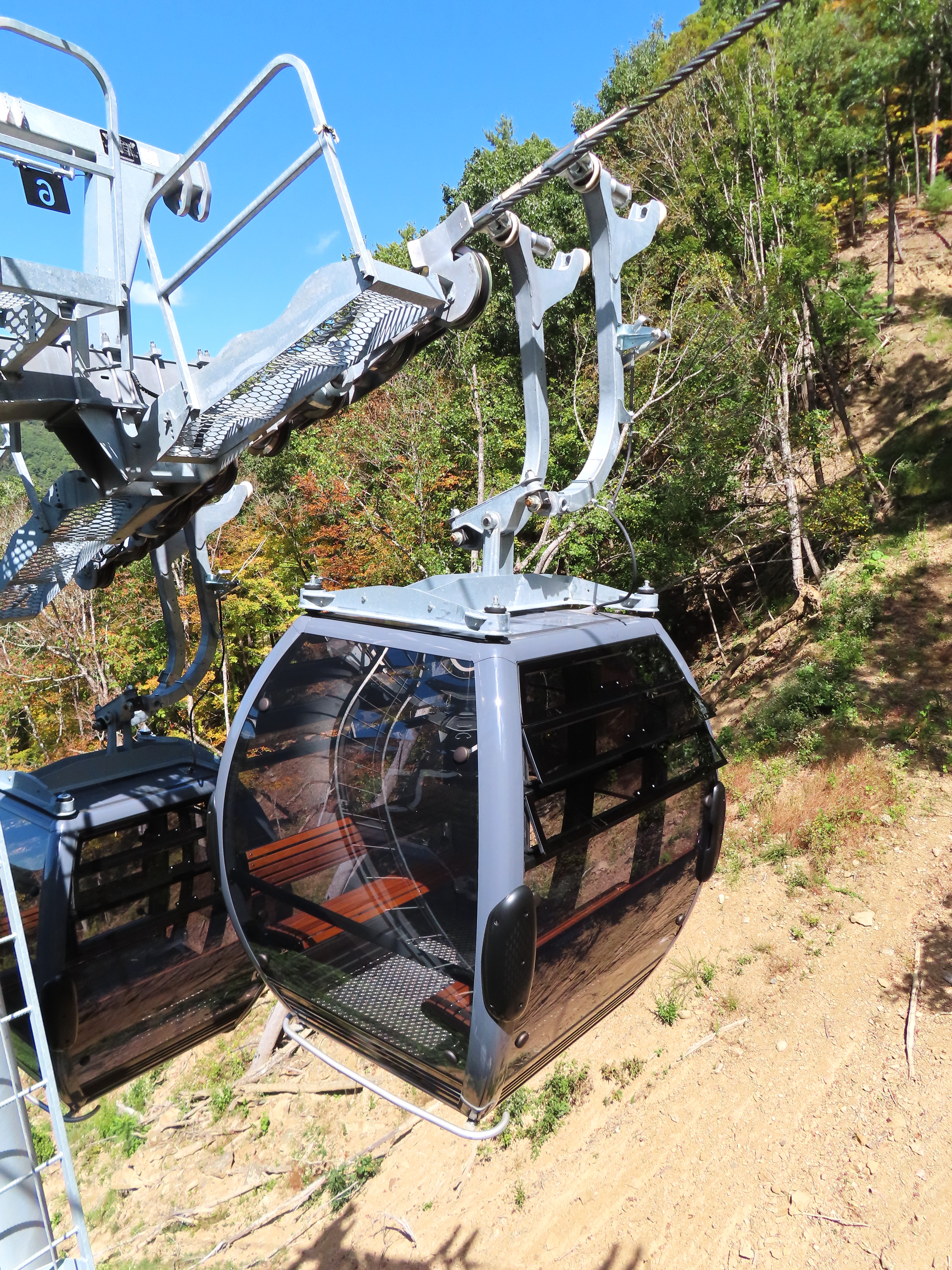
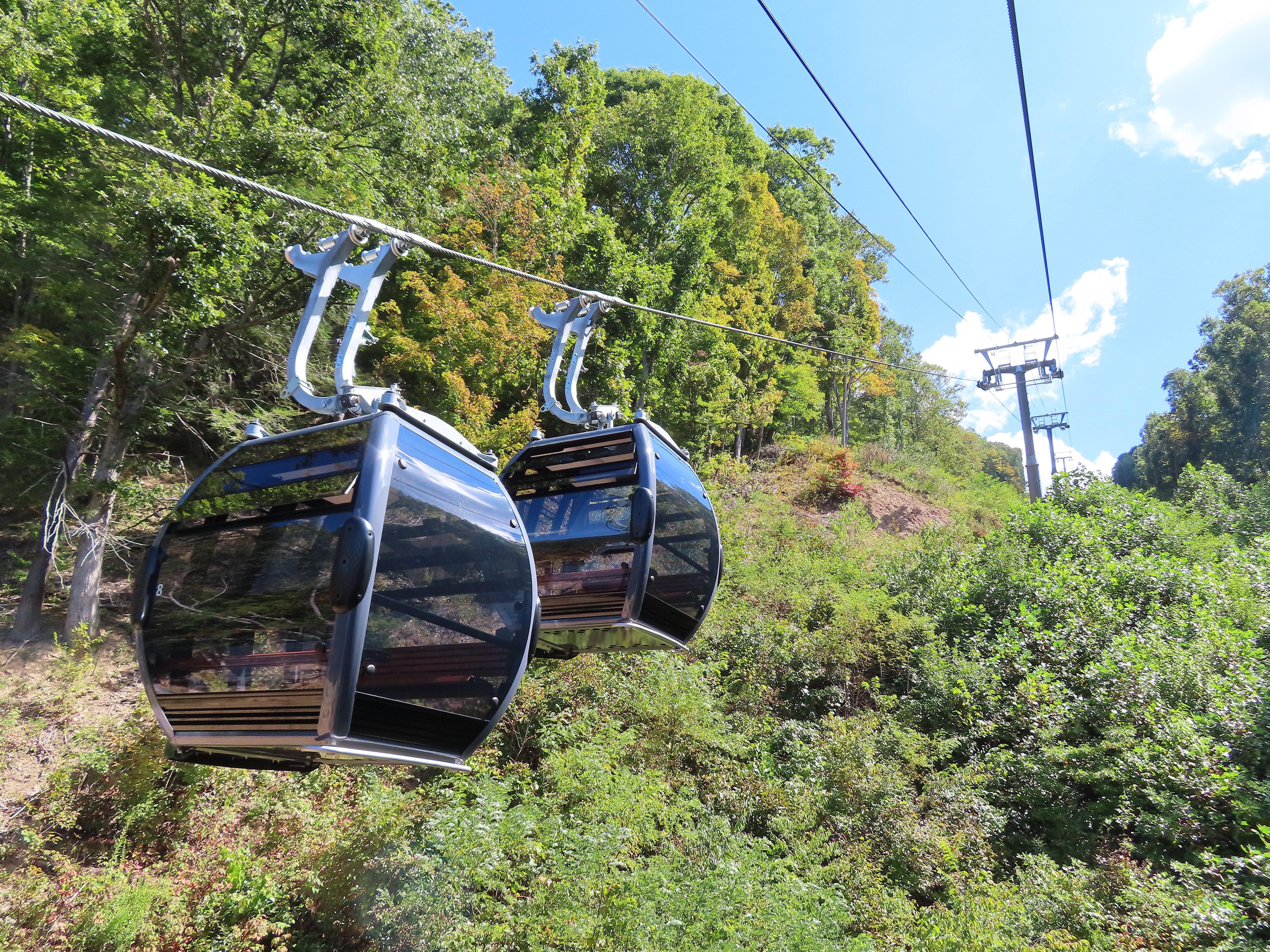
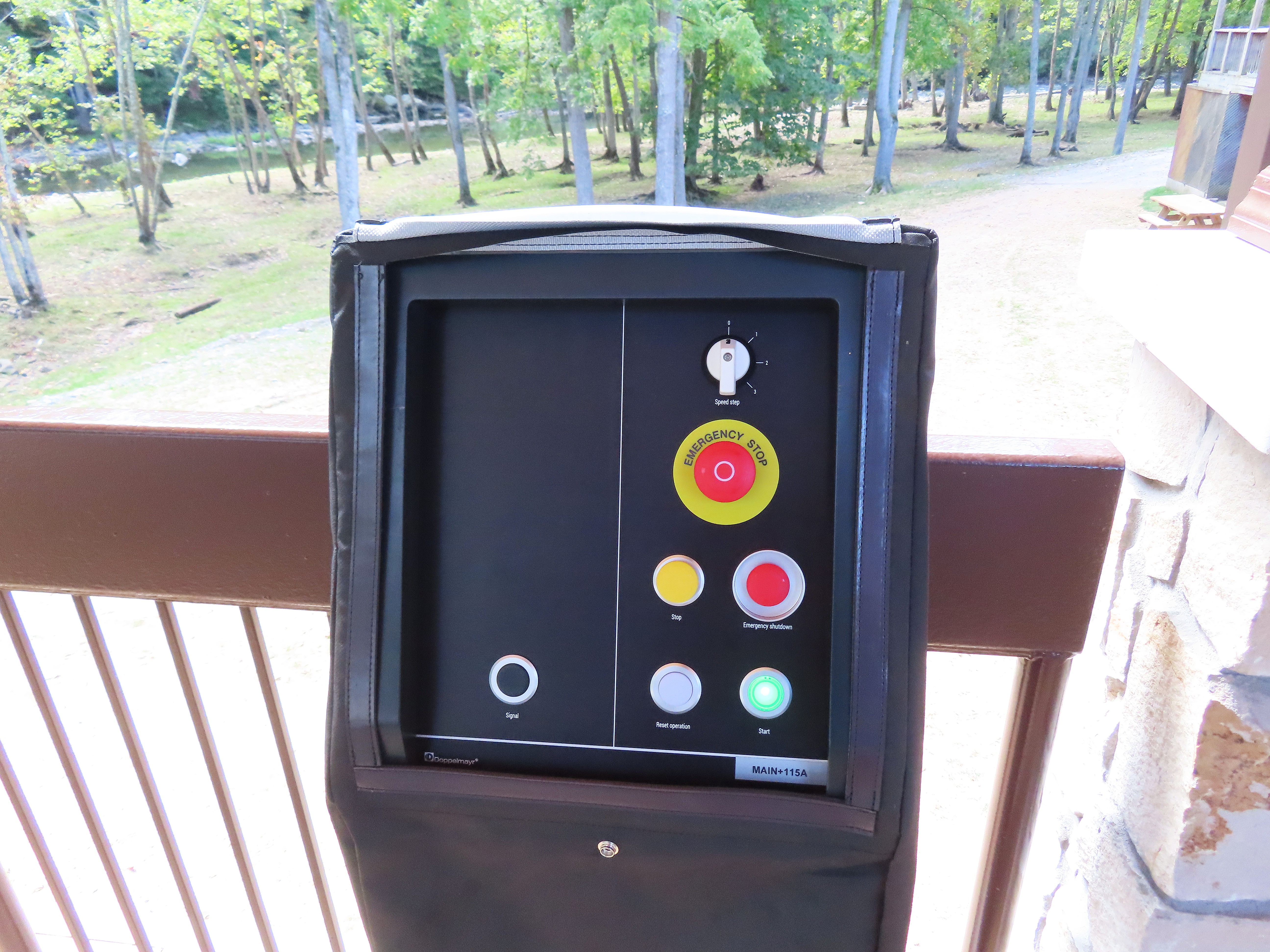
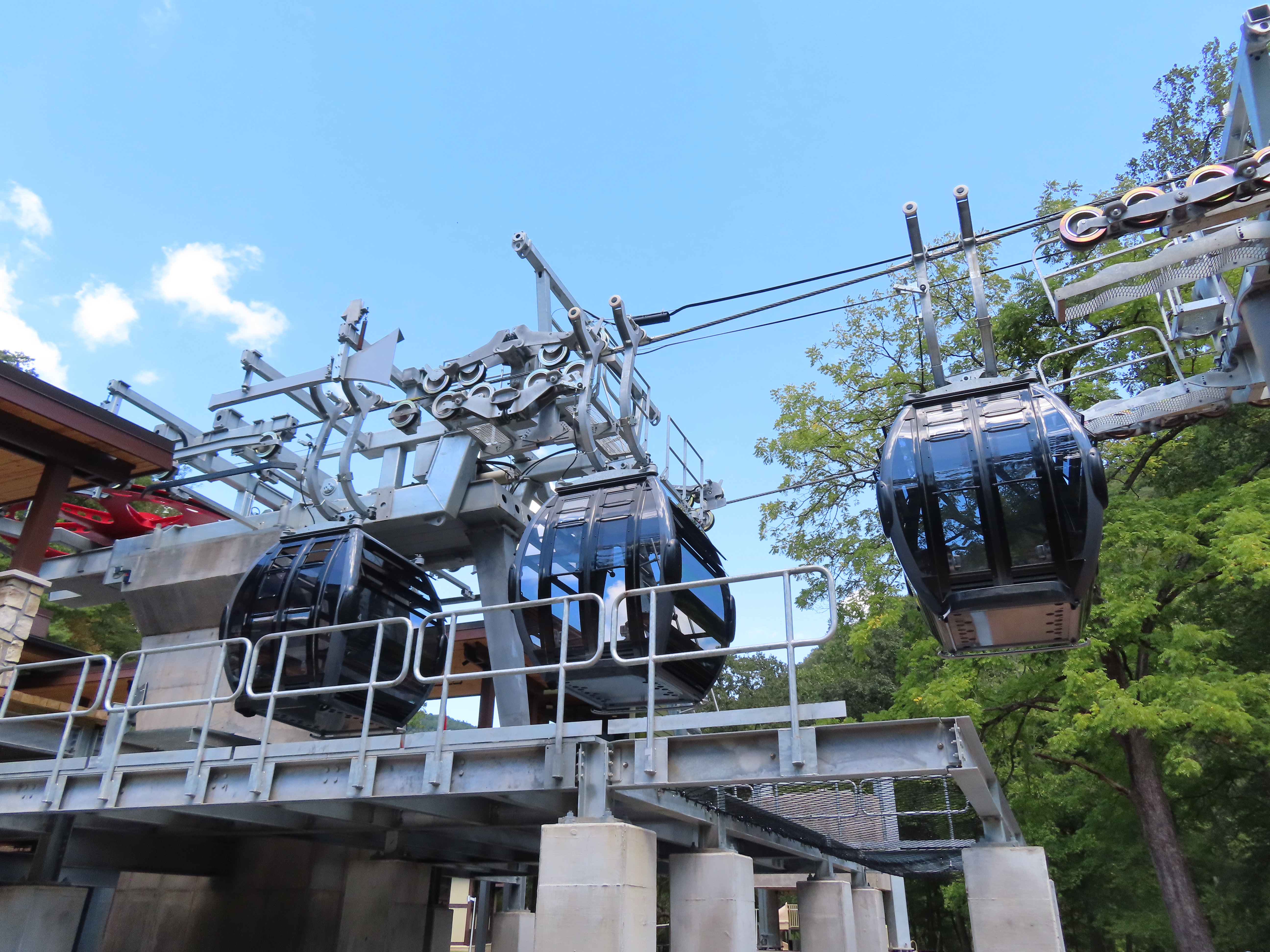
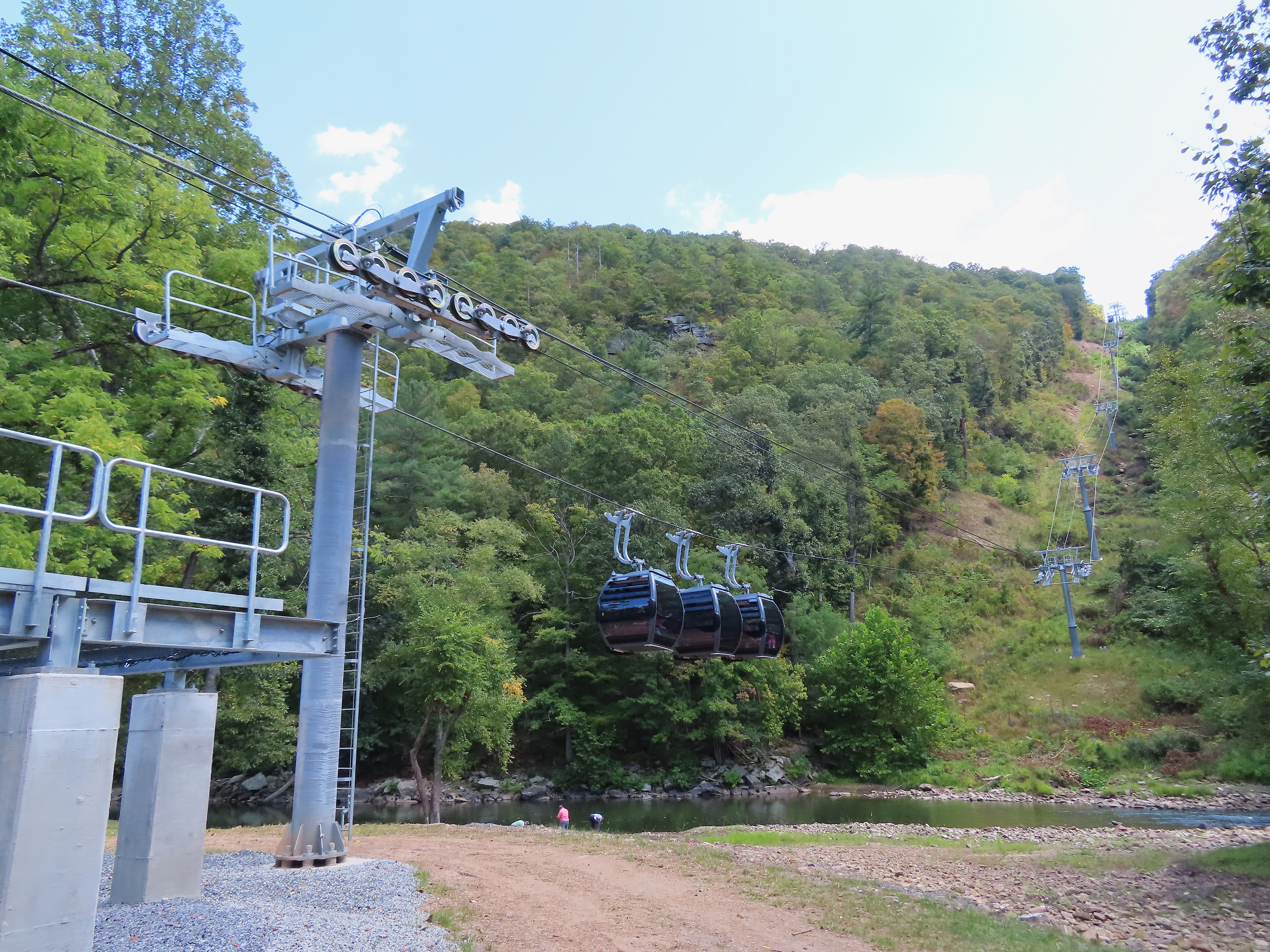
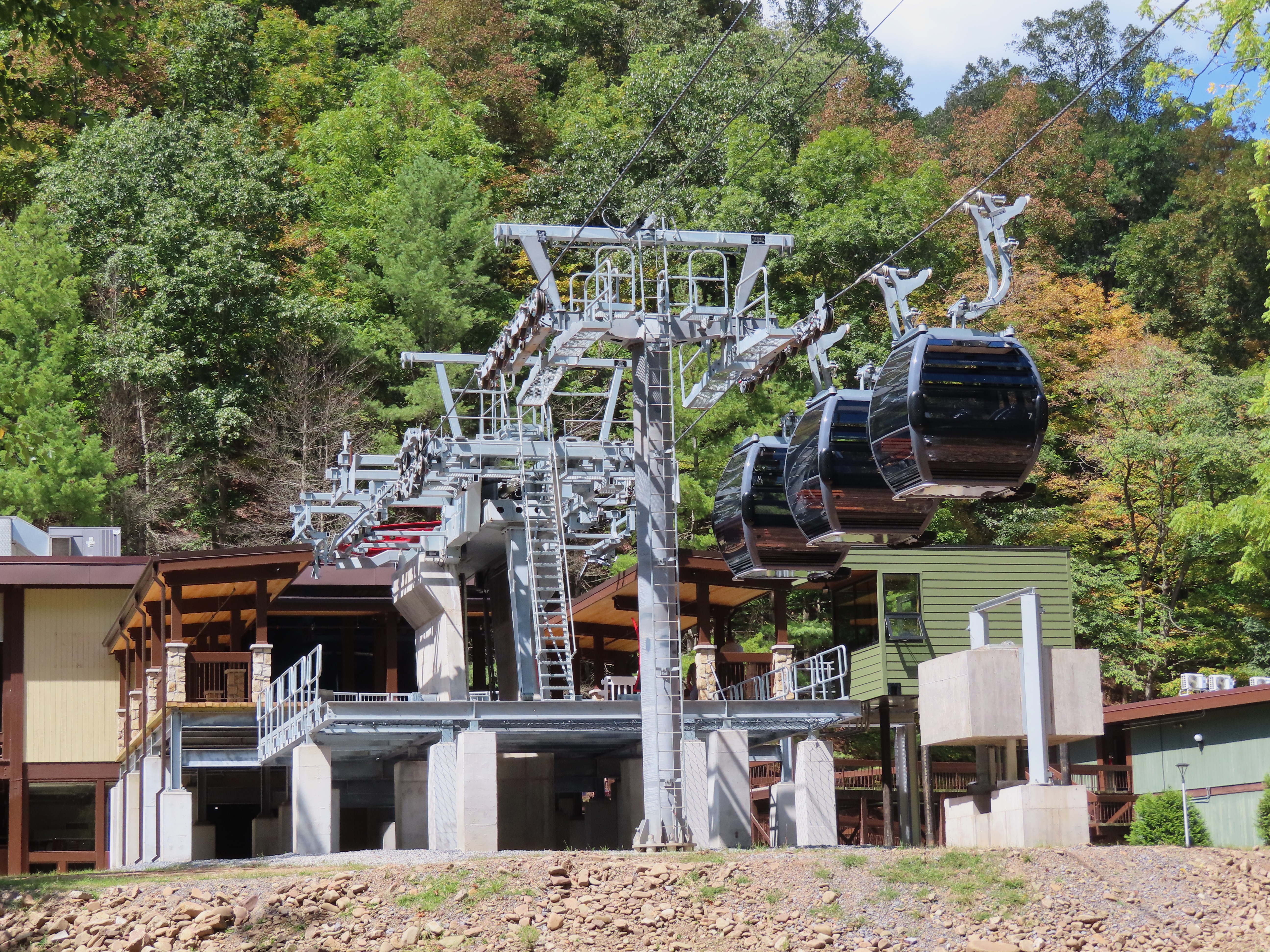
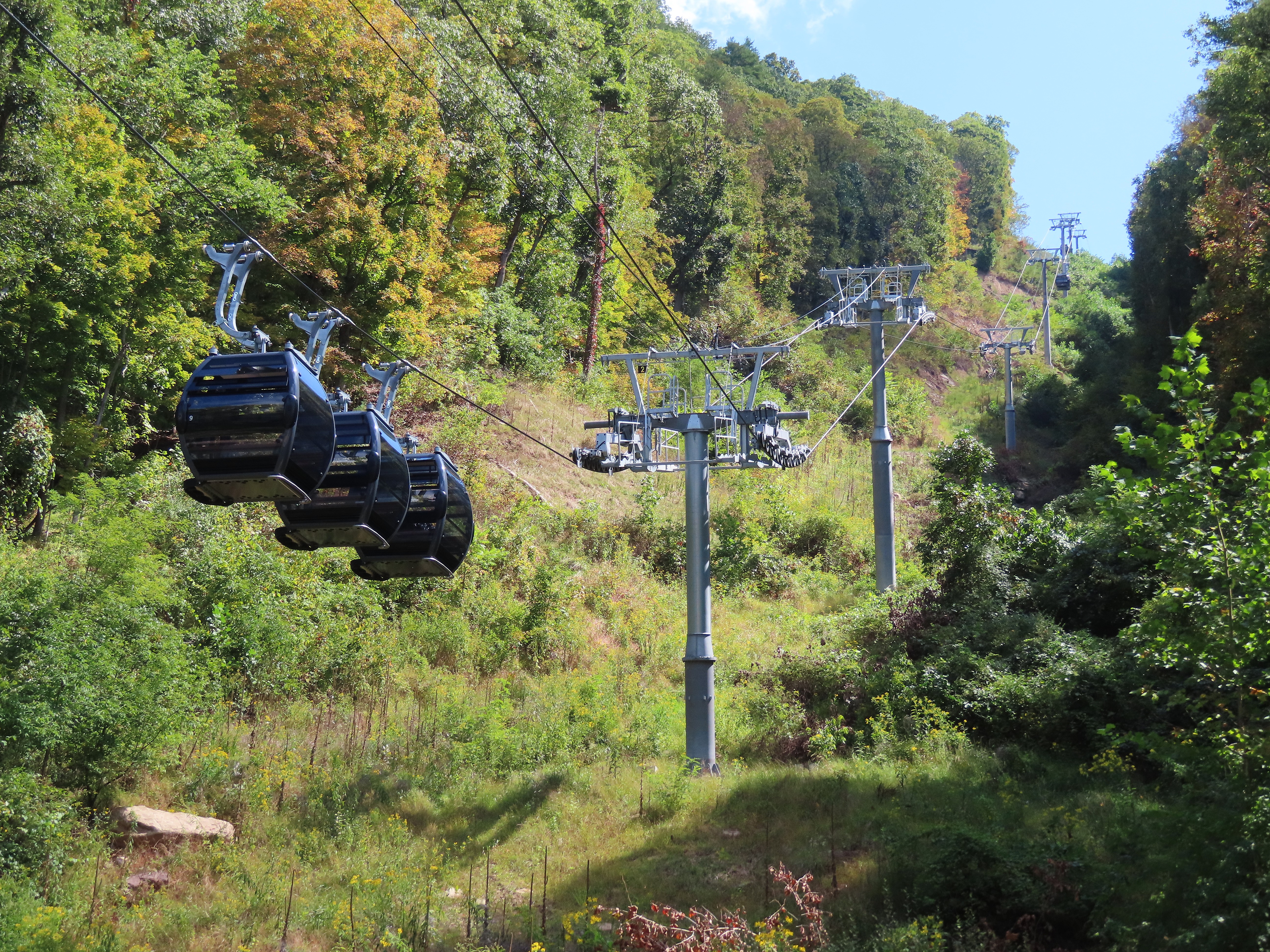
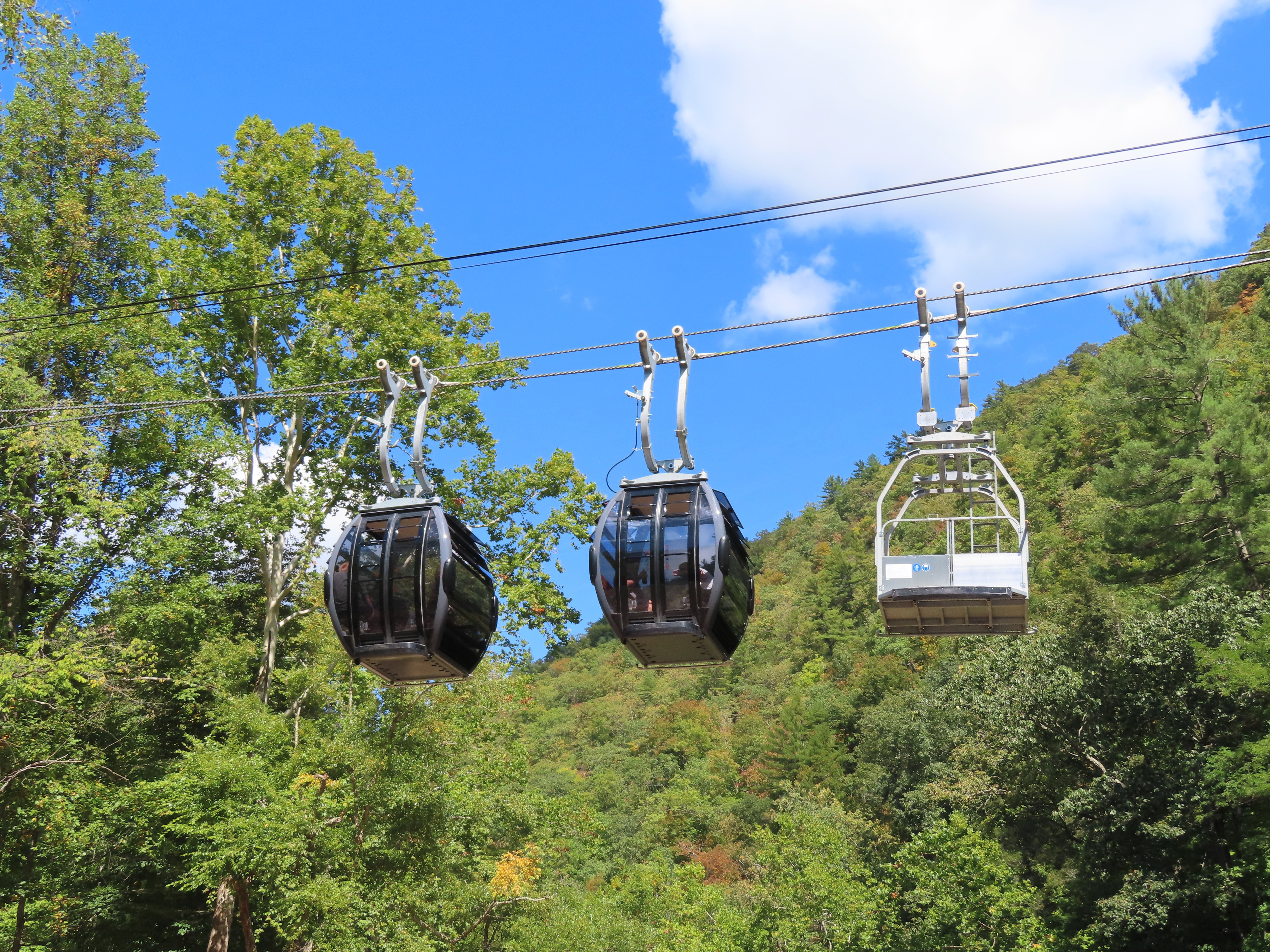
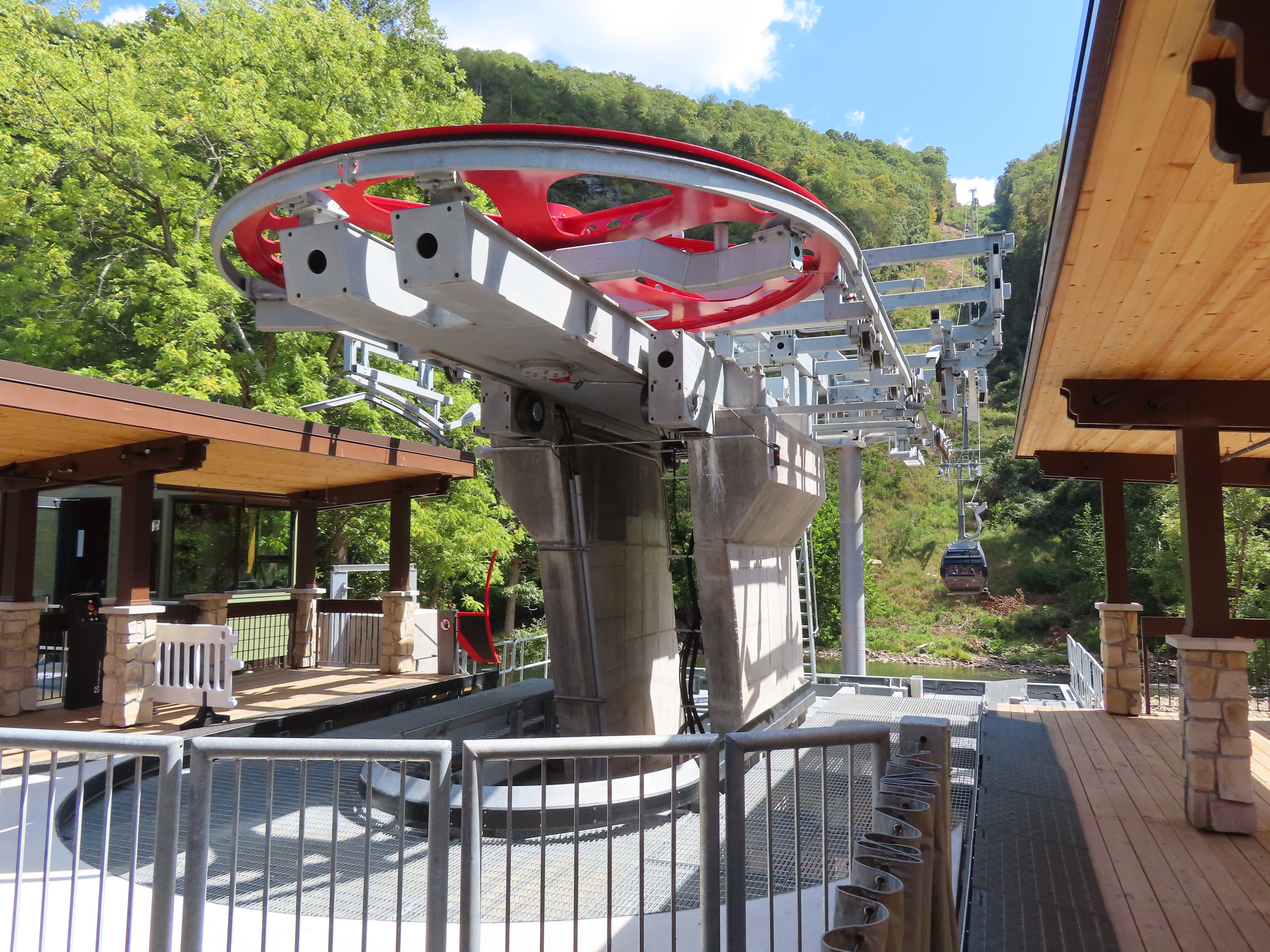
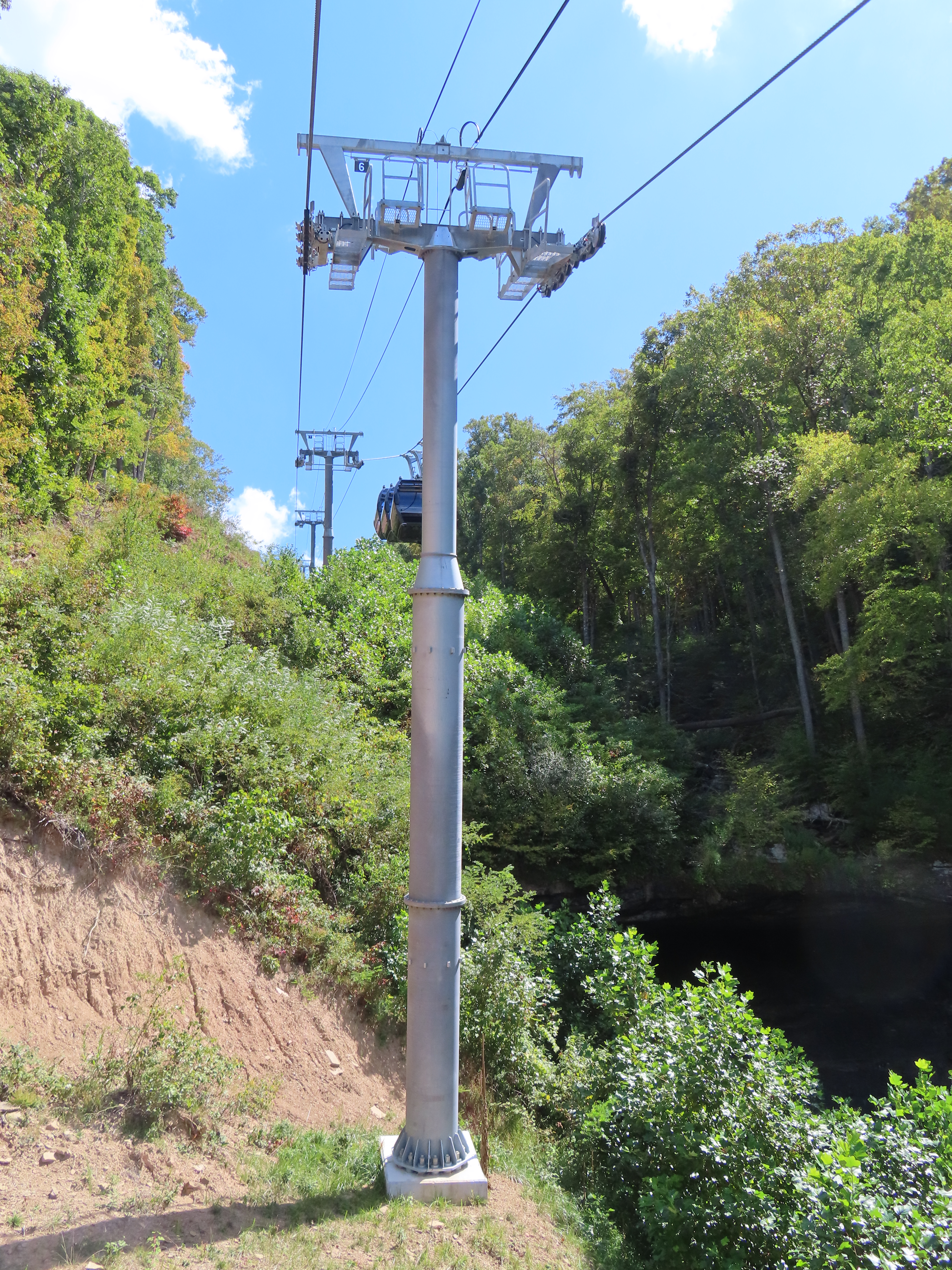
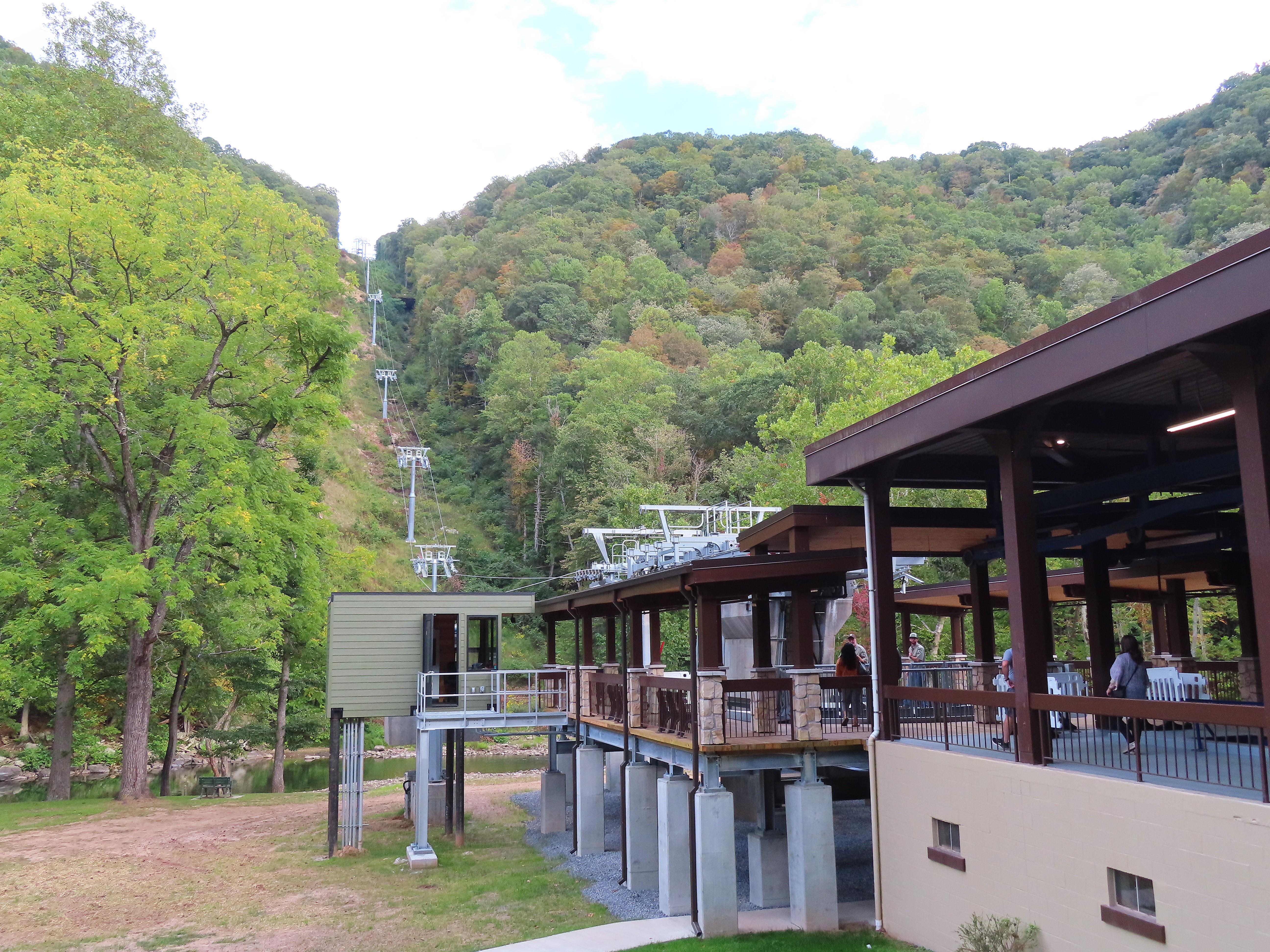
This pulse gondola replaced a Mueller detachable gondola in 2025 after several years of construction.The new system features four pulses of three cabins each.The cabins are designed for eight passengers but the State of West Virginia chooses to load only six.The bottom terminal services a remote hotel, restaurant and river access.Lower station on a raised platform.The lower station and tower 1.This lift features a unique tension system with a concrete counterweight and hydraulics.The entire bottom terminal moves on railroad-style tracks.Side view of the bottom complex.Bottom bullwheel and tension carriage.View departing the Mountain Creek Lodge.The lift crosses a river before climbing.Each trip riders pass three other pulses of cabins and slow at the halfway point.Tower 6.One pulse features a cargo carrier for kayaks, bicycles and supplies.New tower next to an old Mueller foundation.Tower 11.View from the summit.The new stations are fully ADA accessible via ramps.Doppelmayr name plate.Each cabin features a double grip and hanger.Drive operator house.Upper station overview.Looking up at the drive and Canyon Rim Center.View down the scenic lift line.Generator for off grid operations.Large sheave assemblies.A pulse with cargo carrier.Side view of the motor room and loading area.View from the loading platform.Top loading area.Guests park at the top of the lift and ride down into the canyon.Breakover towers 11 and 12.Middle section of the line.Wooden benches for warm weather operations.Hanger arm and H-frame.CWA Omega IV cabin.Side view of a carrier.Looking up the line.Doppelmayr Connect controls at the return.Steep lift line.Cabins arriving at the return.The gondola is the only way to cross the river without swimming.Tower 1.Hold town tower 2.A pulse crossing the river.Bottom station turnaround.Tower 6.Lift overview.
Double grips on such a modern, standard looking pulse gondola are really weird. Why do you think that was chosen? Overall grade, redundancy, something else?
Short answer-> Rope size and availability of grips.
I assume the grip used is one of the larger fixed chair grips modified to the application ie 8 person cabin = 2 quad grips,
If the lift had been done with a single grip per cabin the rope would need to be a larger diameter, then the line loading goes up and the size of all the components gets bigger = more expensive; figure this is the most cost effective solution.
How does the counterweight work at the bottom? The counterweight is what’s providing hydraulic pressure to move the bottom terminal? Is that because of the remote location of the bottom, something about the load profile of pulse gondolas, or something else?
Interesting that the only American Towers are the integrated top and bottom ones, whilst the rest are European (except that one Canadian Tower) I guess it’s due to heavy sheave-train loads that pulse lifts are known for.
This is an interesting instance of the European Combination Tower crossarm being the same height as the regular support towers, usually the height is shorter if you notice in Europe and on D-Lines everywhere. Vulcan Express at Deer Valley also has 2 of those towers where the cross-arms are the same height and not the short squat or stout height (I can be wrong, hopefully you know what I’m talking about)












 Lift Blog
Double grips on such a modern, standard looking pulse gondola are really weird. Why do you think that was chosen? Overall grade, redundancy, something else?
LikeLike
Steepness and perhaps stability and heavy loads.
LikeLike
Short answer-> Rope size and availability of grips.
I assume the grip used is one of the larger fixed chair grips modified to the application ie 8 person cabin = 2 quad grips,
If the lift had been done with a single grip per cabin the rope would need to be a larger diameter, then the line loading goes up and the size of all the components gets bigger = more expensive; figure this is the most cost effective solution.
LikeLike
How does the counterweight work at the bottom? The counterweight is what’s providing hydraulic pressure to move the bottom terminal? Is that because of the remote location of the bottom, something about the load profile of pulse gondolas, or something else?
LikeLike
Interesting that the only American Towers are the integrated top and bottom ones, whilst the rest are European (except that one Canadian Tower) I guess it’s due to heavy sheave-train loads that pulse lifts are known for.
LikeLike
Looks like they did not take out the old detachable terminals.
LikeLike
That’s cool how the bottom terminal is basically on railroad tracks!
LikeLike
This is an interesting instance of the European Combination Tower crossarm being the same height as the regular support towers, usually the height is shorter if you notice in Europe and on D-Lines everywhere. Vulcan Express at Deer Valley also has 2 of those towers where the cross-arms are the same height and not the short squat or stout height (I can be wrong, hopefully you know what I’m talking about)
LikeLike