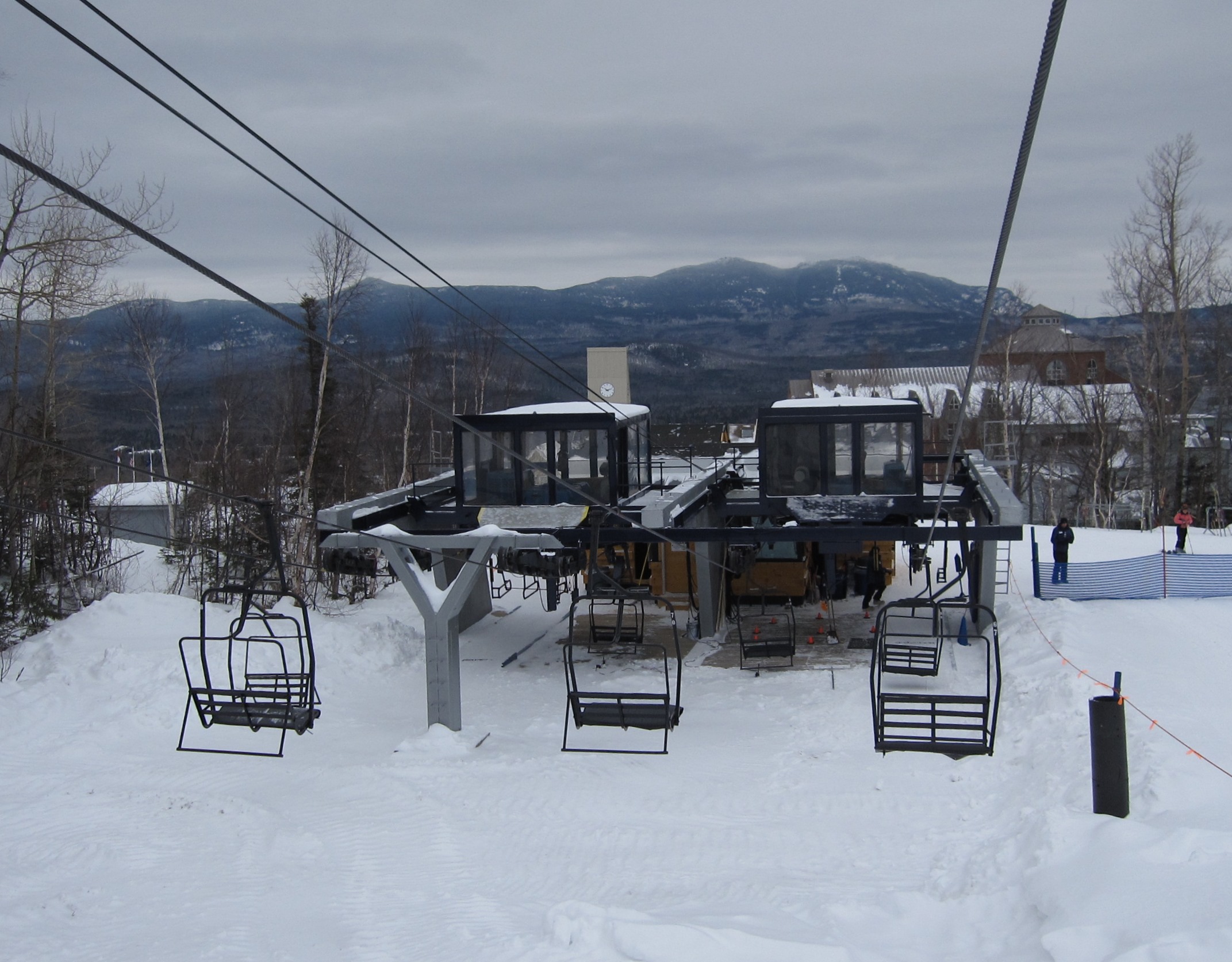
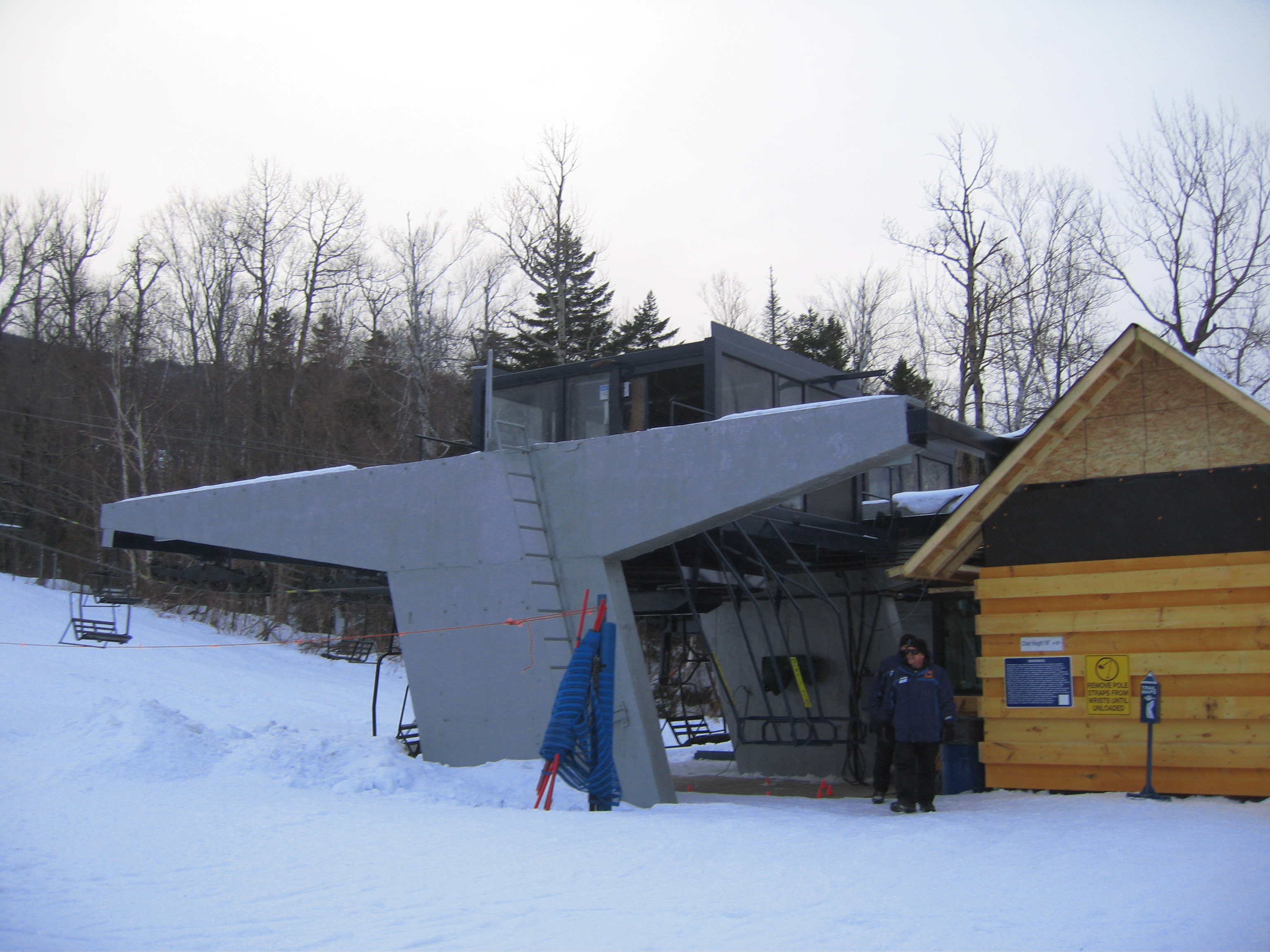
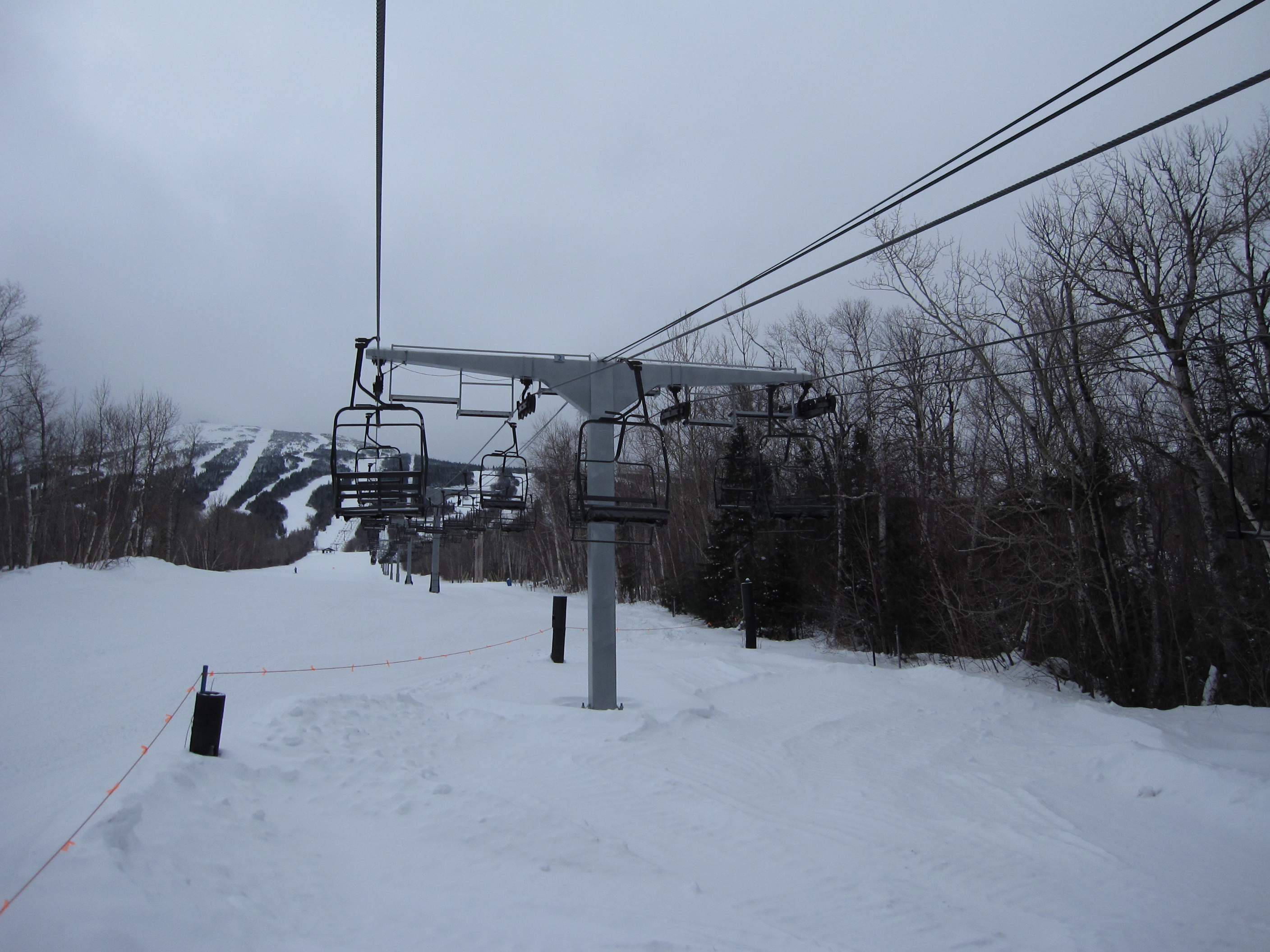
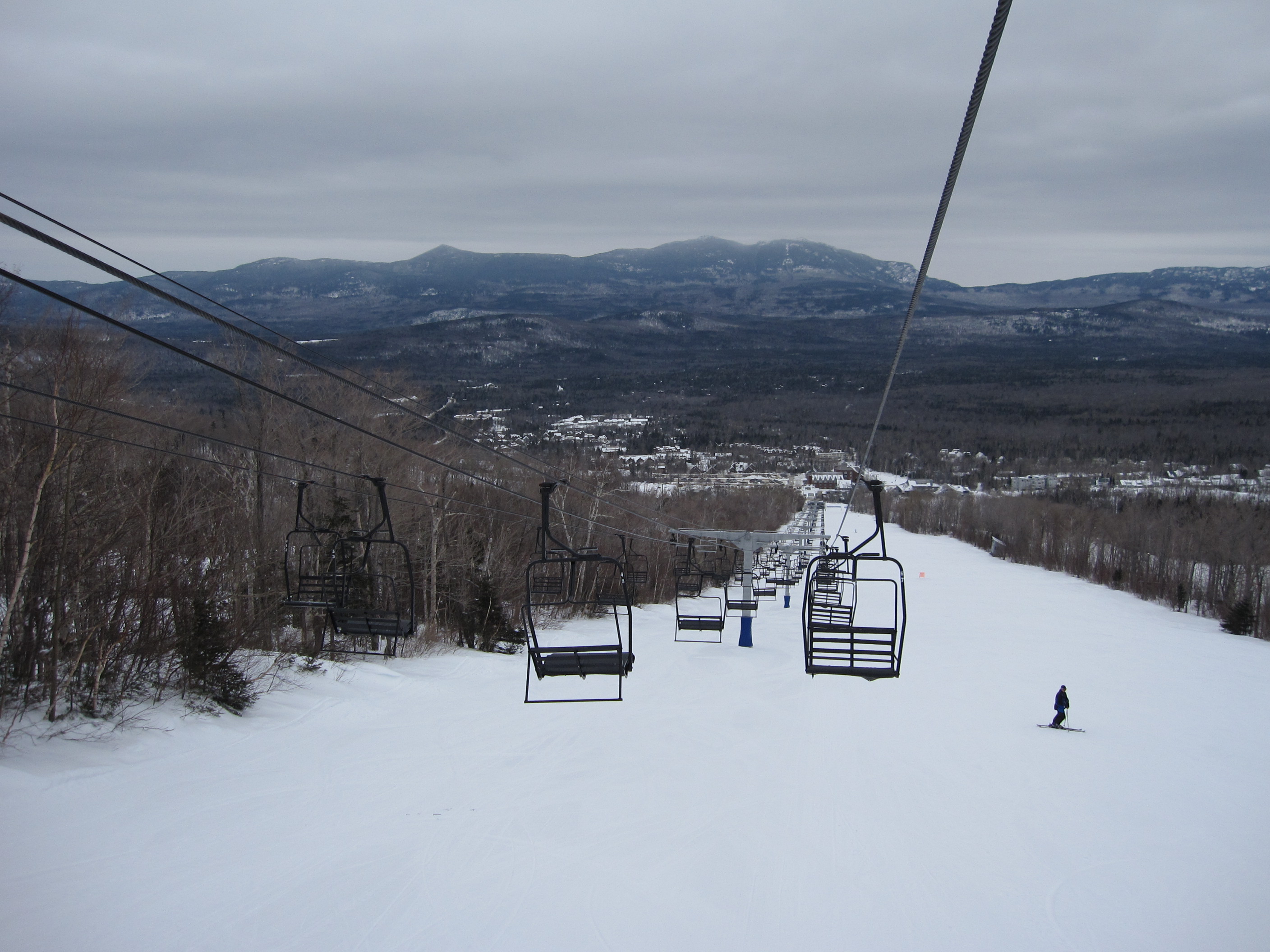
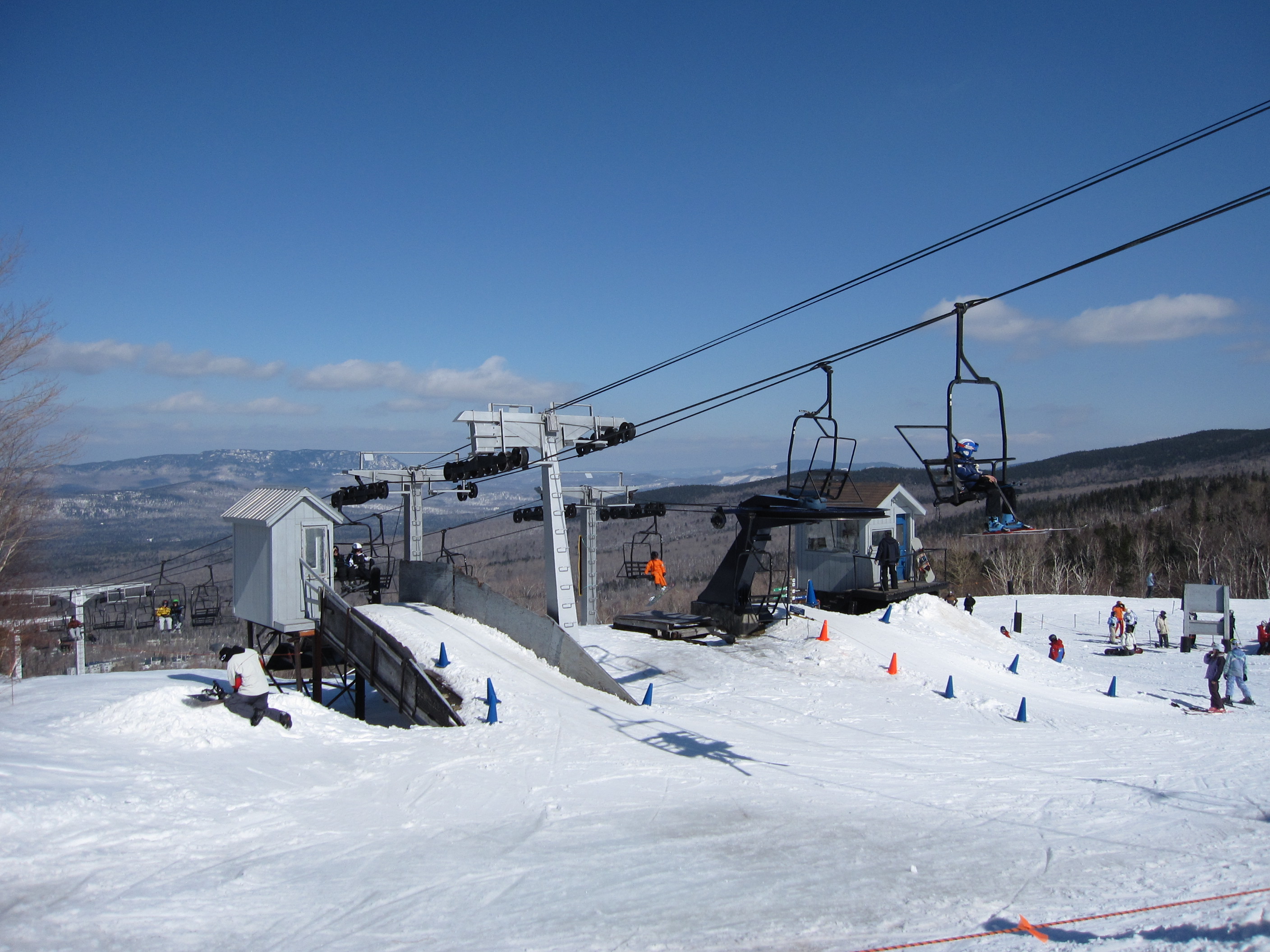
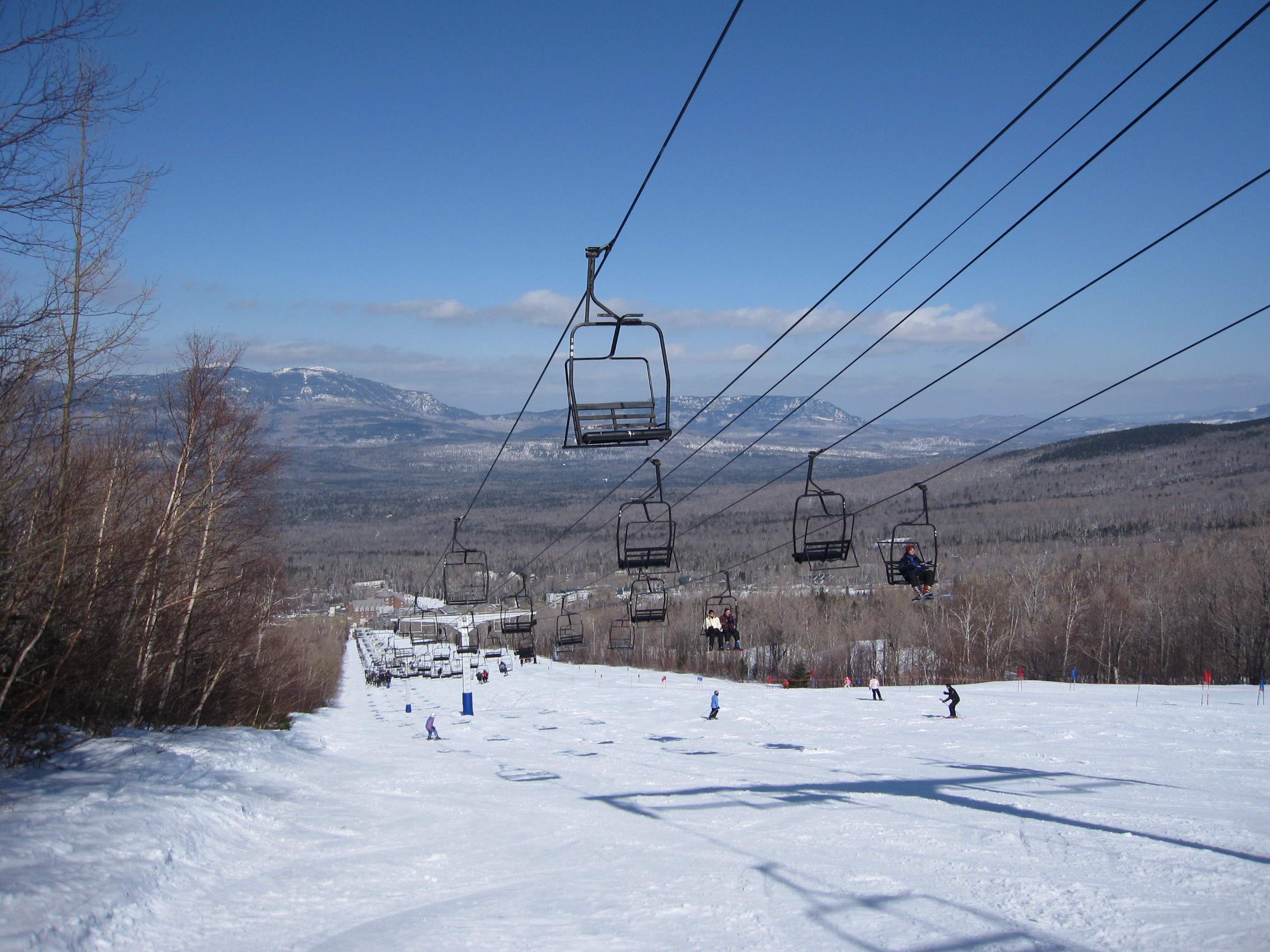
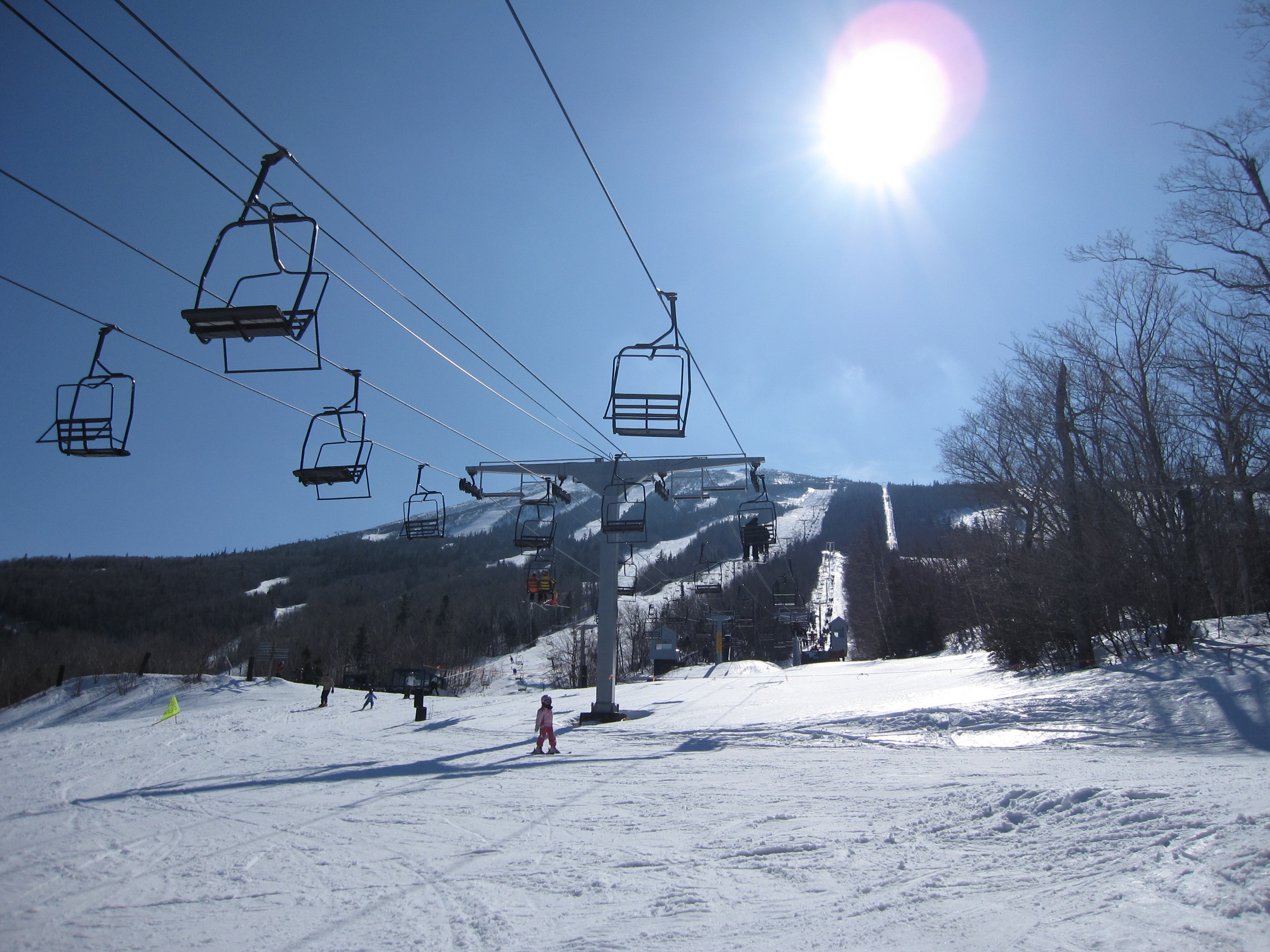
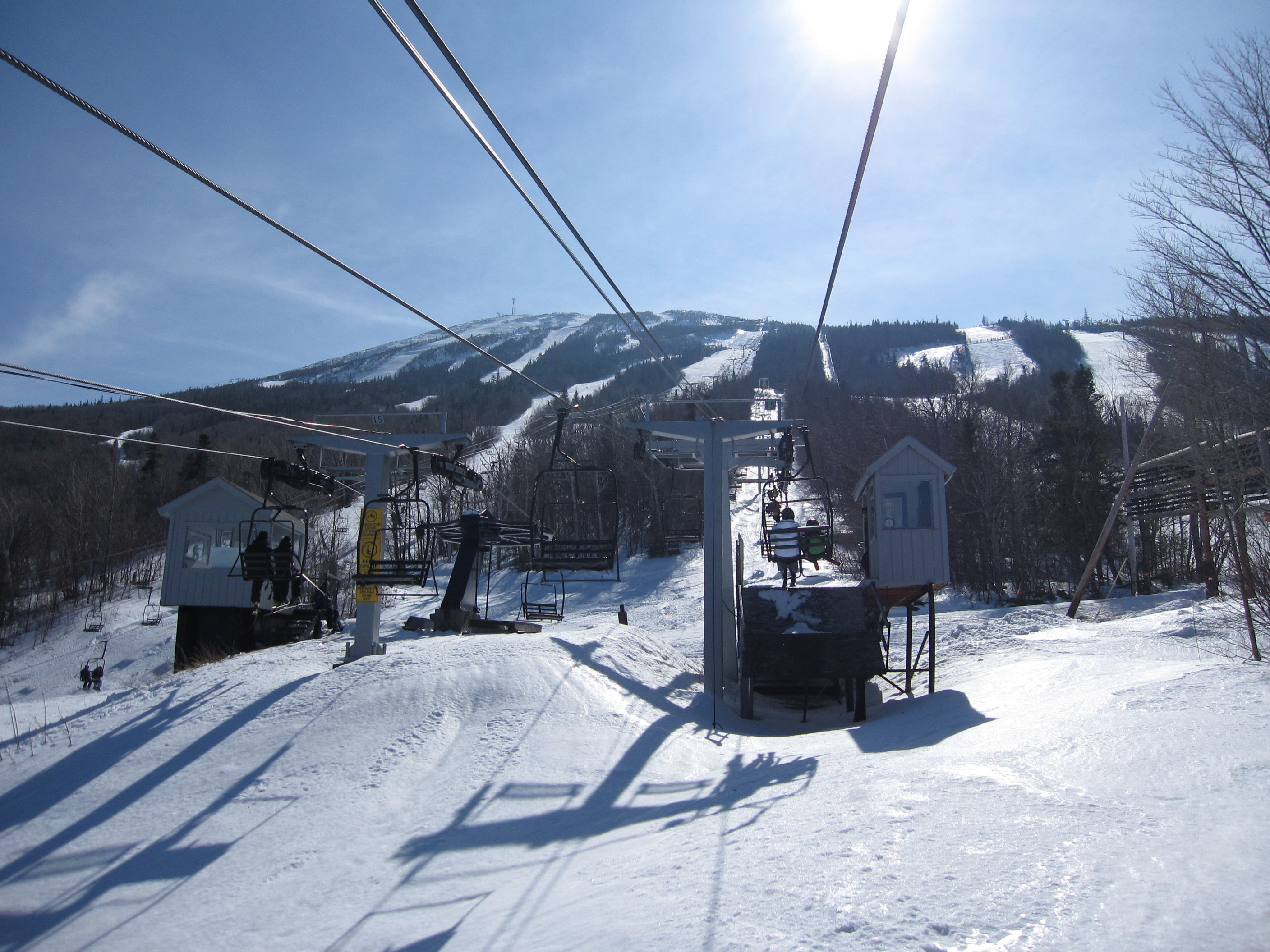
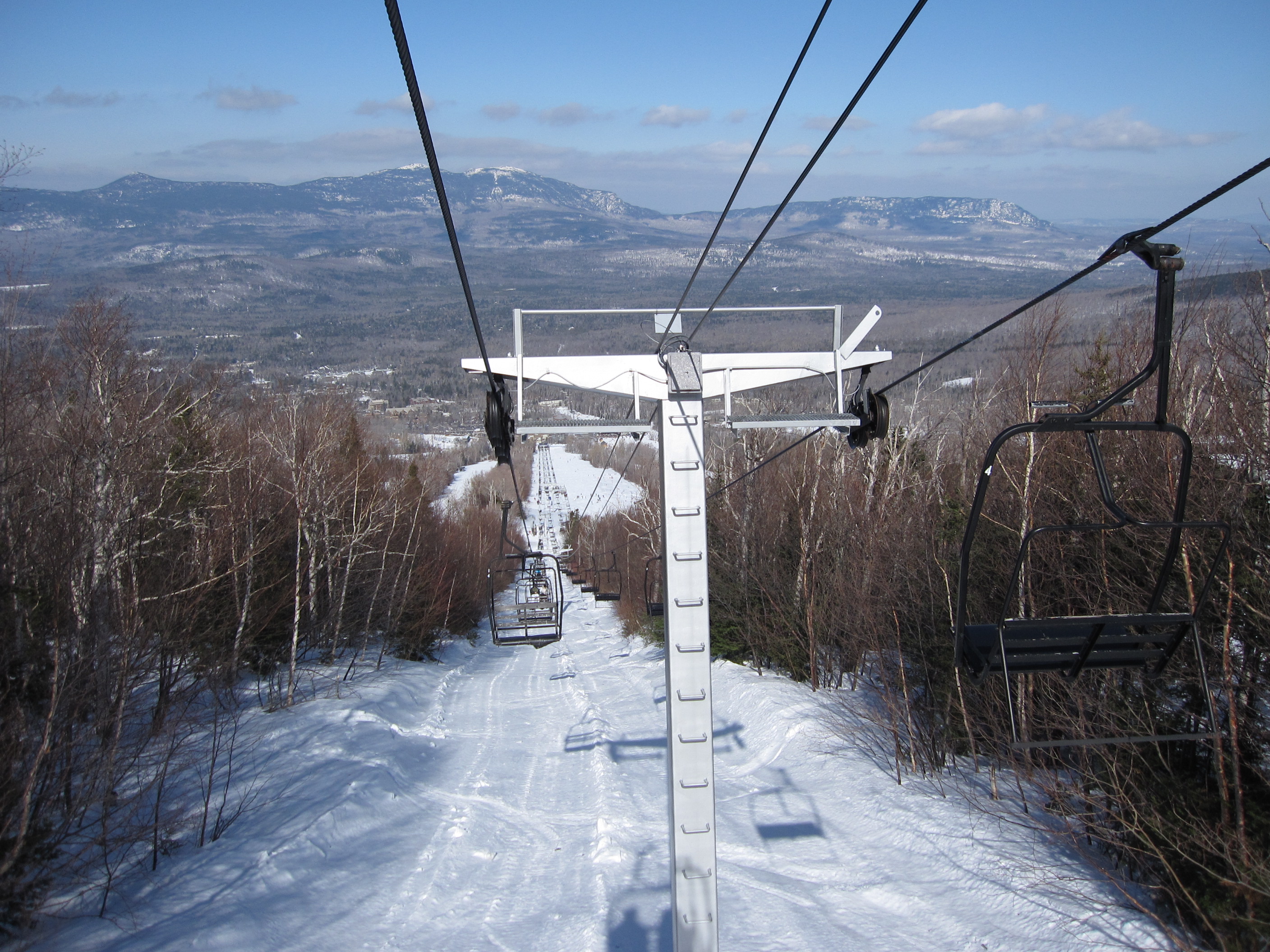
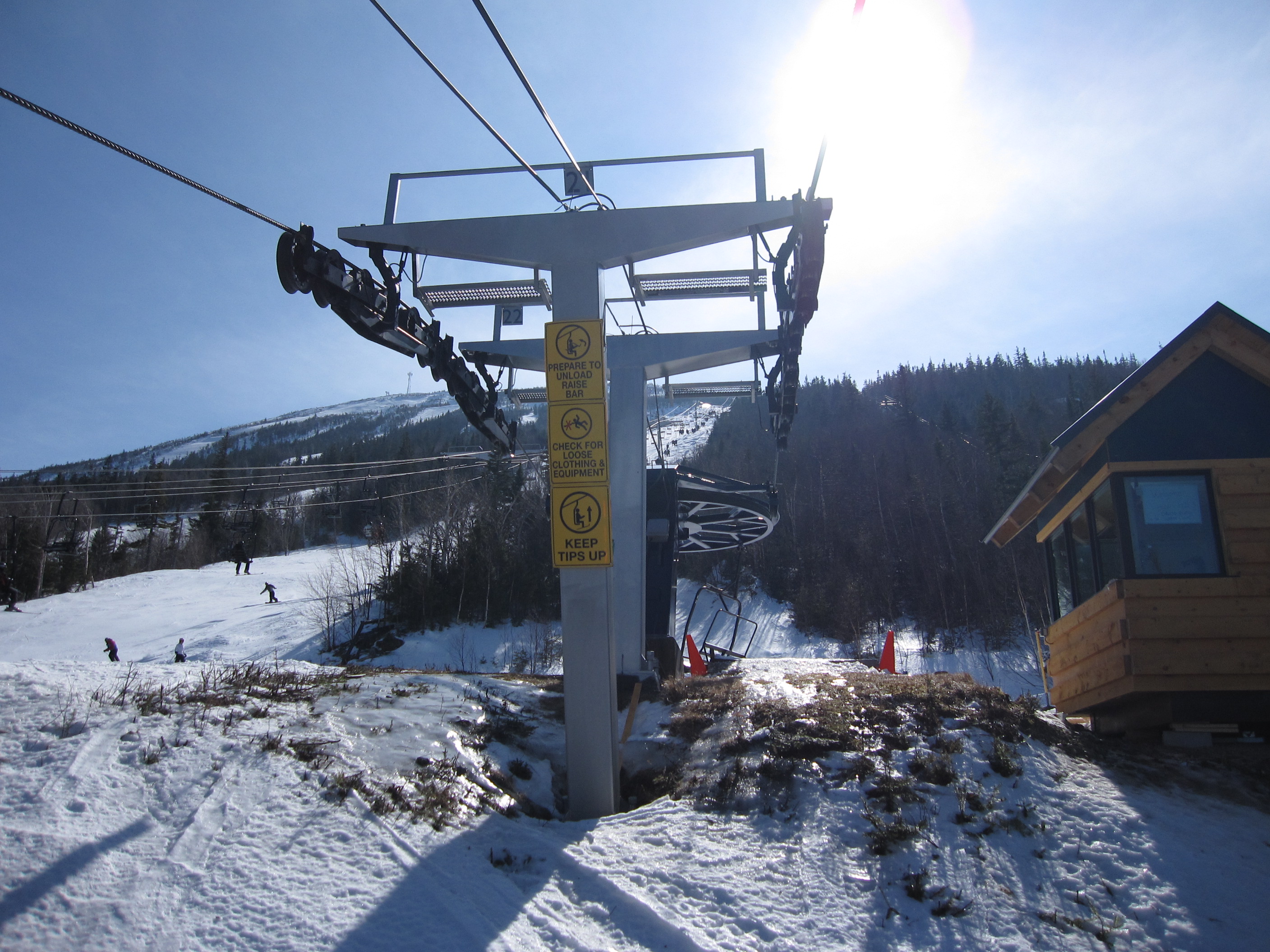
Bottom terminal with two motor rooms.Side view of the east drive terminal.Riding up the east side.View back down Double Runner East.Approaching the top of DRE.West side top bullwheel.West mid-station, east unload.View down the line from the west side.Upper portion of the west side.Mid-station.Single tower above the end of Double Runner East.Top bullwheel and last two towers on the west side.
I’ve recently made an observation via Sugarloaf webcam. It appears Double Runner West is operated early in the morning before public opening, likely to shuttle race training personnel up to their venue on Middle Narrow Gauge (where they will subsequently use their private T-Bar). However, on non-peak days (when they aren’t running both sides simultaneously), West is shut down once race personnel is through, and then east is run for the day. The east side is currently the preferred side to operate on off-peak days. My question is, if they have to fire up West early in the morning, why bother switch to the east side anyway? Especially considering the west side gives access to slightly more vertical and terrain.
When I worked up there, they used to run DRC East to get patrollers up to Spillway/Skyline, and then on to their shack at TOS – that’s “Top of Spillway” (not “Top of Sugarloaf”, like the radio station whose transmitter is at the summit, “105.1 FM – THE MOUNTAIN OF PURE ROCK!” implies), whereas the summit patrol shack would be TOT (“Top of Timberline”), or TOG (“Top of Gondi,” when that was open).
Maybe the presence of a racer-exclusive T-bar changed things, but generally speaking, patrol would ride whatever side of DRC was planned to open that day, which depended on how the wind was doing – if it was nice, the access would be DRC E to Skyline; if it was bad, it’d be DRC W to #3 T-Bar; and if it was stupidly windy but management didn’t want to refund day tickets, it would just be DRC E, with no upper mountain lifts.
When they run DRC West super early, it may be that the mechanics haven’t cleared Skyline to run yet, so Patrol is going up and hopping on #3 T-Bar, which, from what I remember, they could run by themselves with minimal fuss.
I wonder if the new CVA T-bar was installed with an eye towards replacing DRC with a quad, while assuaging concerns about T-bar access on wind hold days. I’m guessing the new lift will terminate at the DRC East location, with the CVA T-bar used to access #3-T when necessary, if they ask CVA really nicely.



 Lift Blog
I’ve recently made an observation via Sugarloaf webcam. It appears Double Runner West is operated early in the morning before public opening, likely to shuttle race training personnel up to their venue on Middle Narrow Gauge (where they will subsequently use their private T-Bar). However, on non-peak days (when they aren’t running both sides simultaneously), West is shut down once race personnel is through, and then east is run for the day. The east side is currently the preferred side to operate on off-peak days. My question is, if they have to fire up West early in the morning, why bother switch to the east side anyway? Especially considering the west side gives access to slightly more vertical and terrain.
LikeLike
I think because they gear toward the less experienced skiers, and that extra distance includes somewhat steeper terrain.
LikeLiked by 1 person
When I worked up there, they used to run DRC East to get patrollers up to Spillway/Skyline, and then on to their shack at TOS – that’s “Top of Spillway” (not “Top of Sugarloaf”, like the radio station whose transmitter is at the summit, “105.1 FM – THE MOUNTAIN OF PURE ROCK!” implies), whereas the summit patrol shack would be TOT (“Top of Timberline”), or TOG (“Top of Gondi,” when that was open).
Maybe the presence of a racer-exclusive T-bar changed things, but generally speaking, patrol would ride whatever side of DRC was planned to open that day, which depended on how the wind was doing – if it was nice, the access would be DRC E to Skyline; if it was bad, it’d be DRC W to #3 T-Bar; and if it was stupidly windy but management didn’t want to refund day tickets, it would just be DRC E, with no upper mountain lifts.
When they run DRC West super early, it may be that the mechanics haven’t cleared Skyline to run yet, so Patrol is going up and hopping on #3 T-Bar, which, from what I remember, they could run by themselves with minimal fuss.
I wonder if the new CVA T-bar was installed with an eye towards replacing DRC with a quad, while assuaging concerns about T-bar access on wind hold days. I’m guessing the new lift will terminate at the DRC East location, with the CVA T-bar used to access #3-T when necessary, if they ask CVA really nicely.
LikeLike
Less experienced skiers have less experience with midstations? I think it creates more trouble for instructors considering its a double as well.
LikeLike