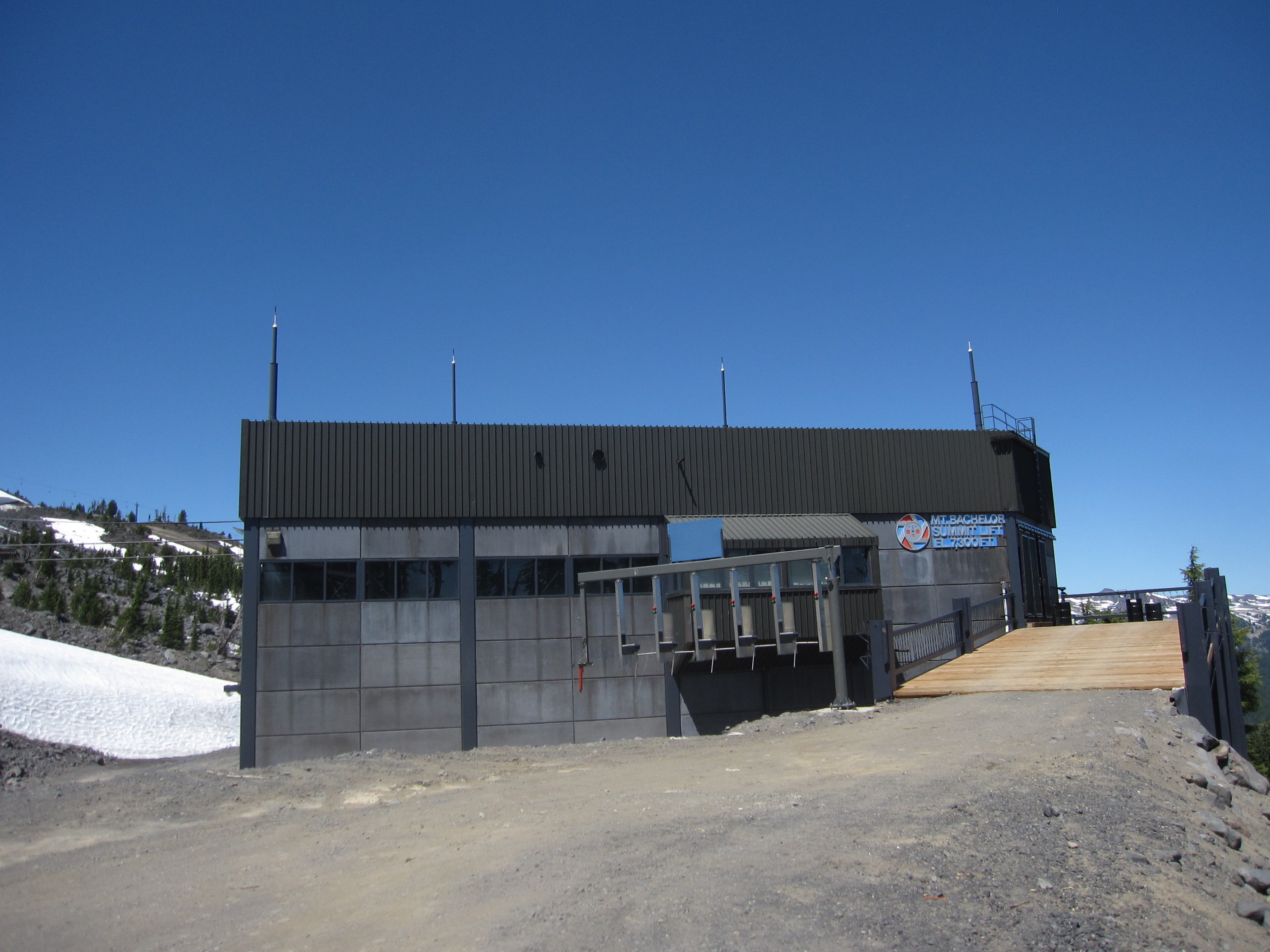
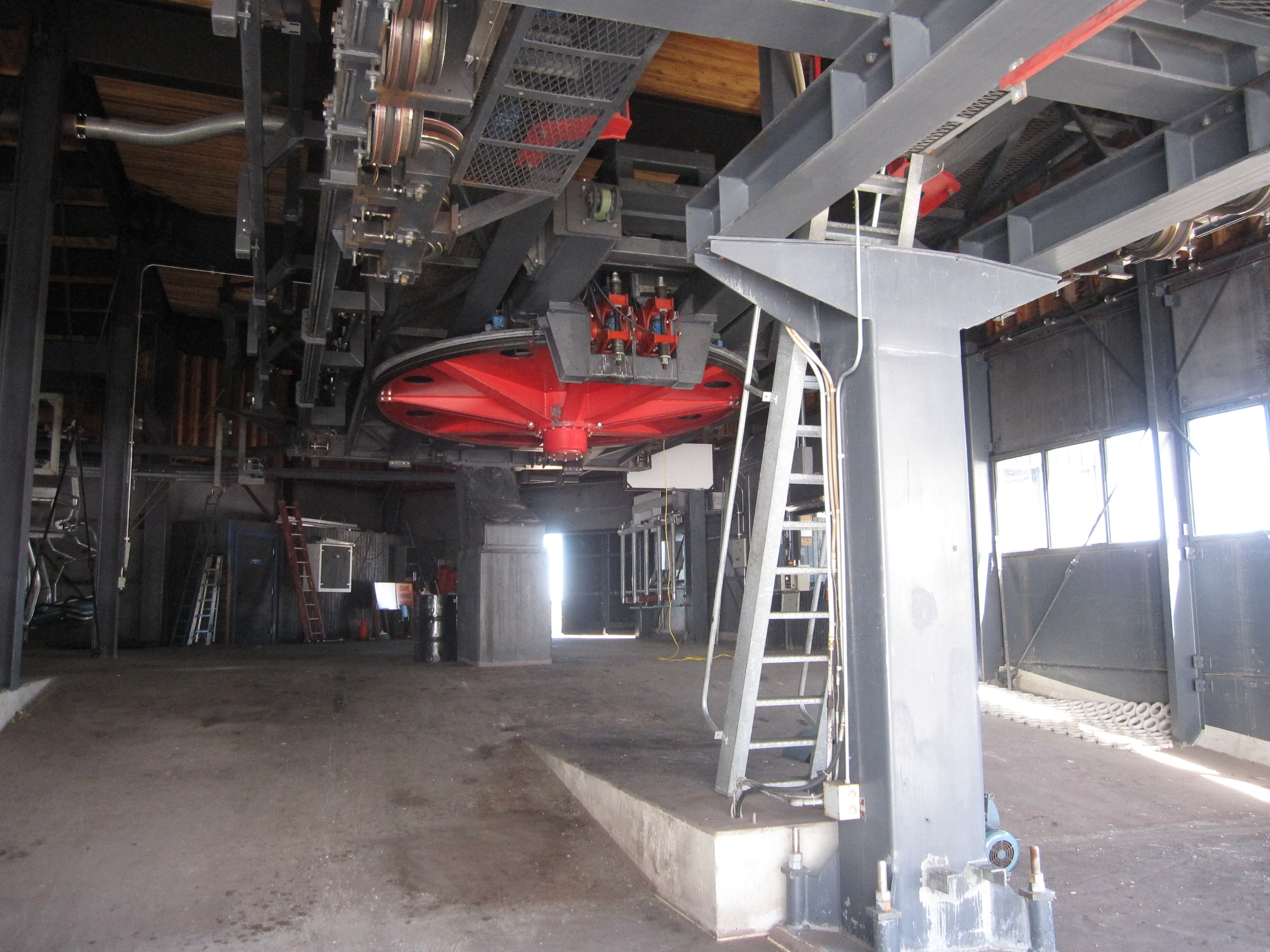
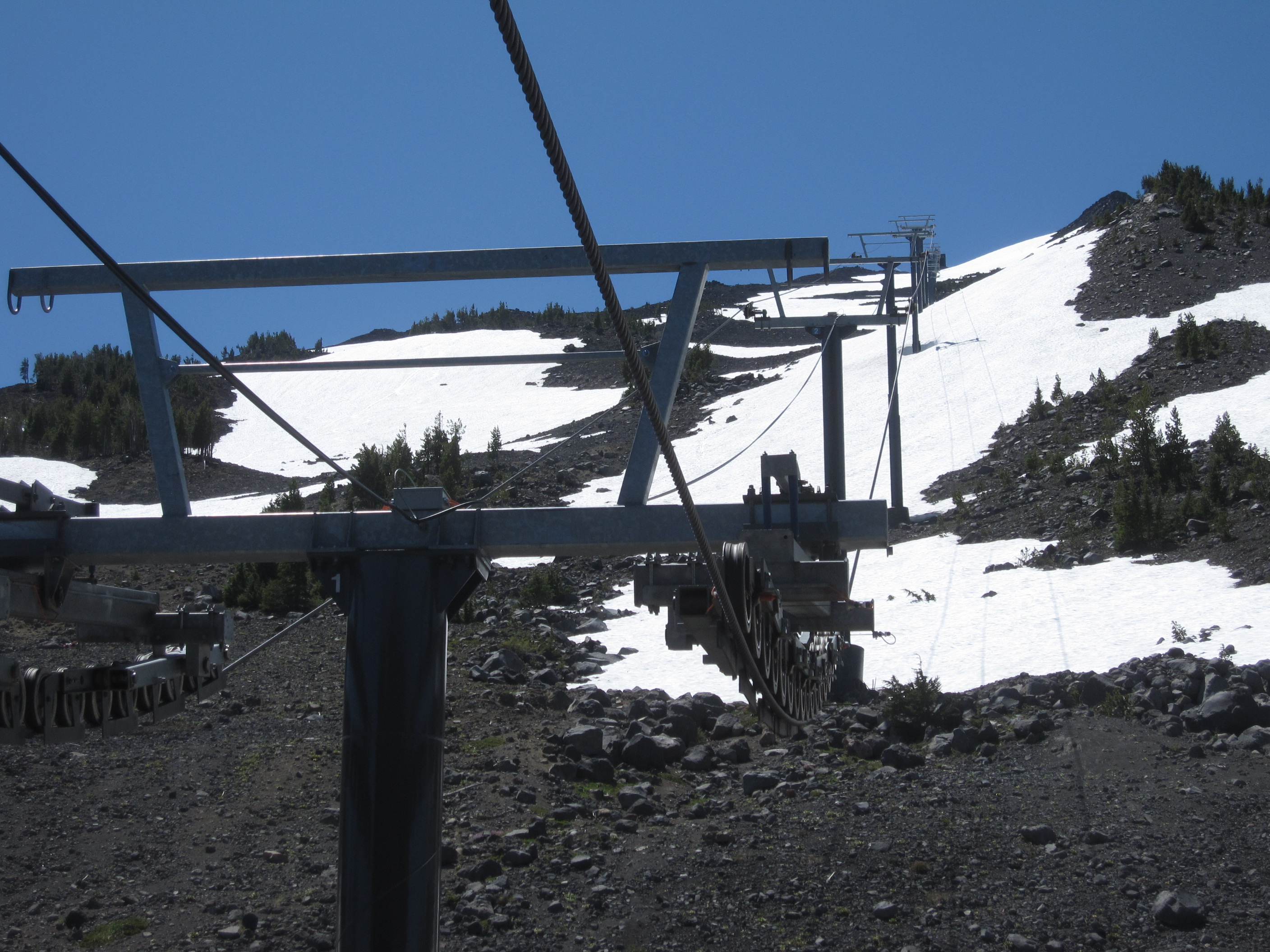
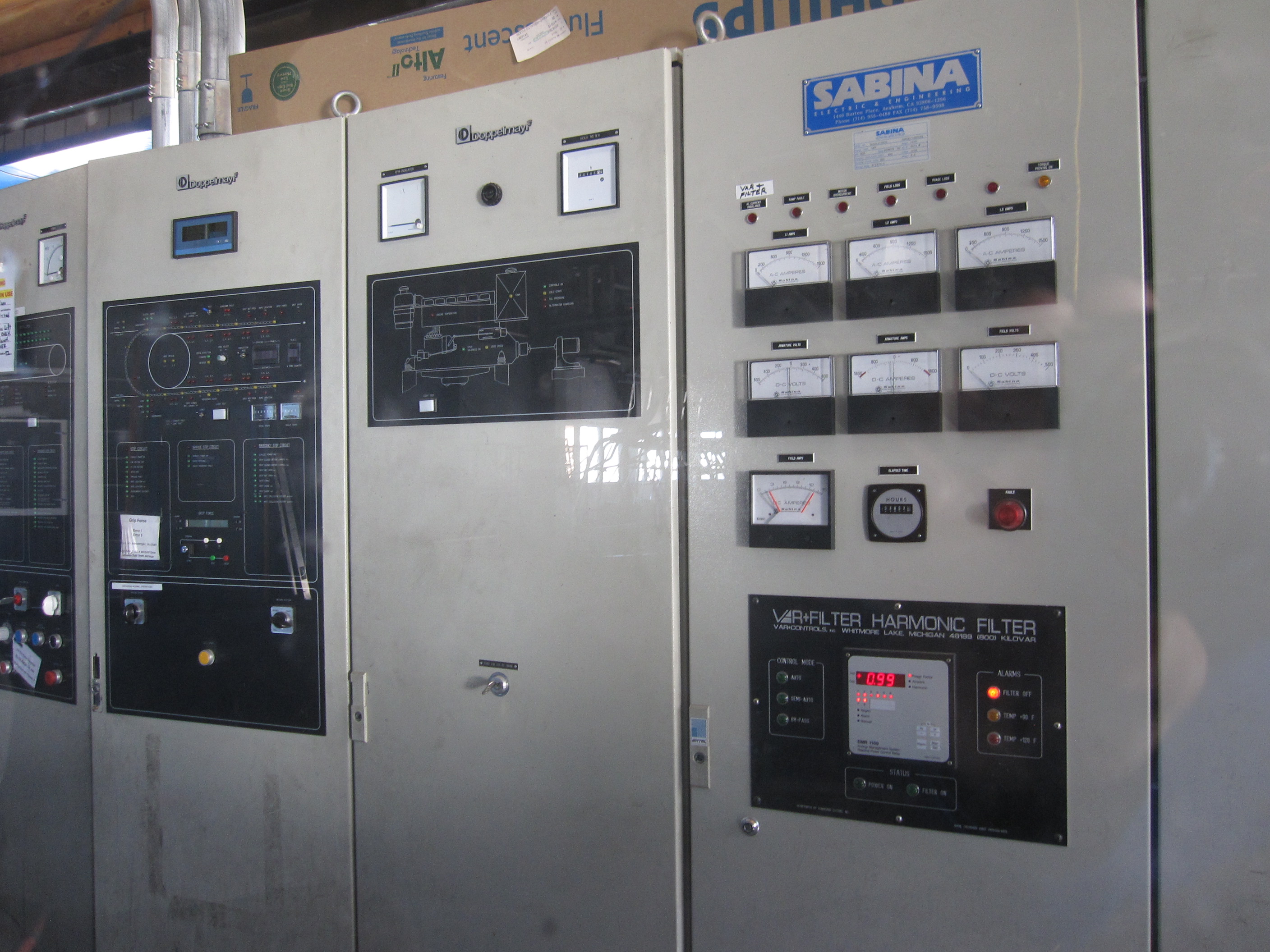
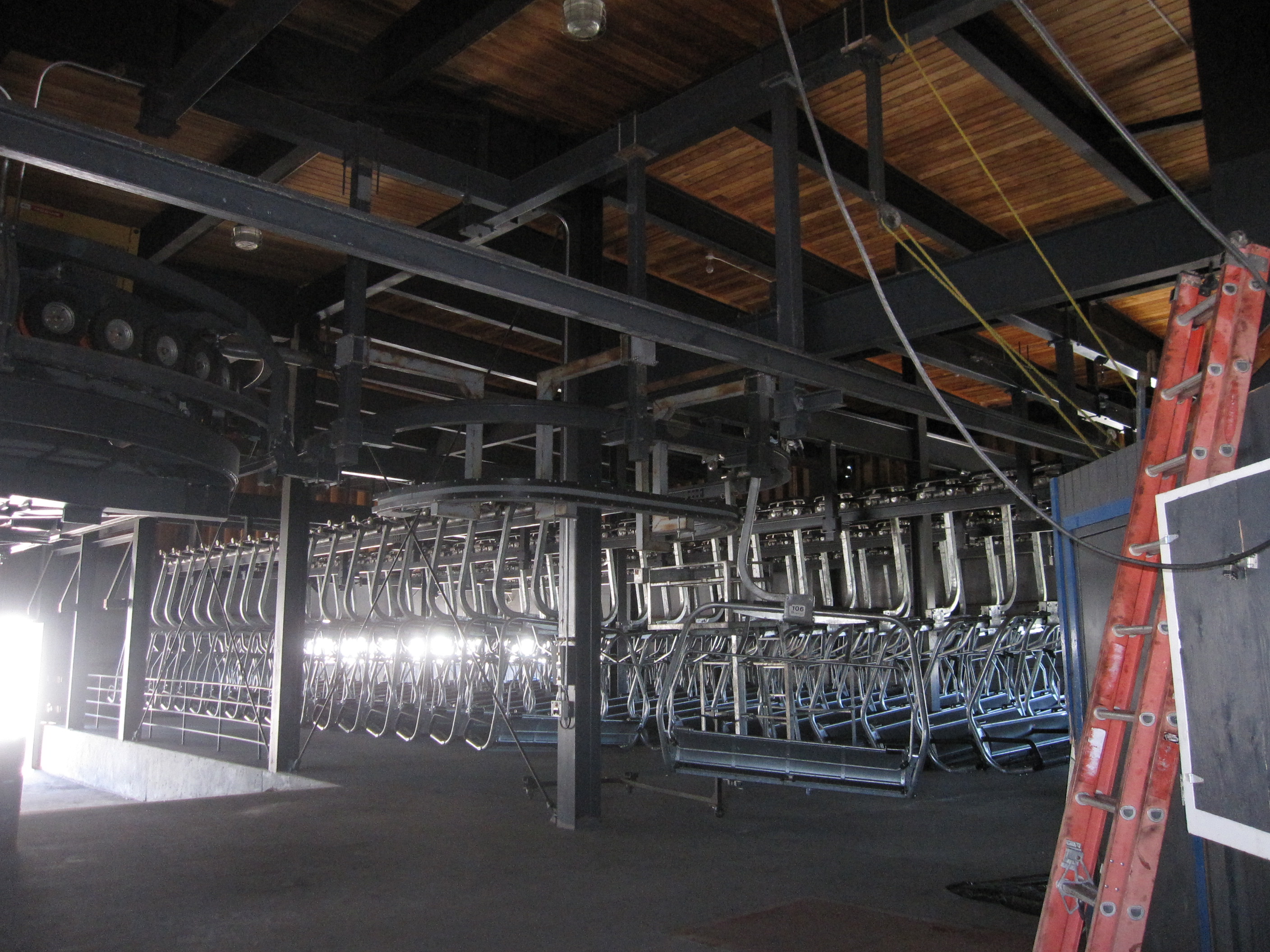
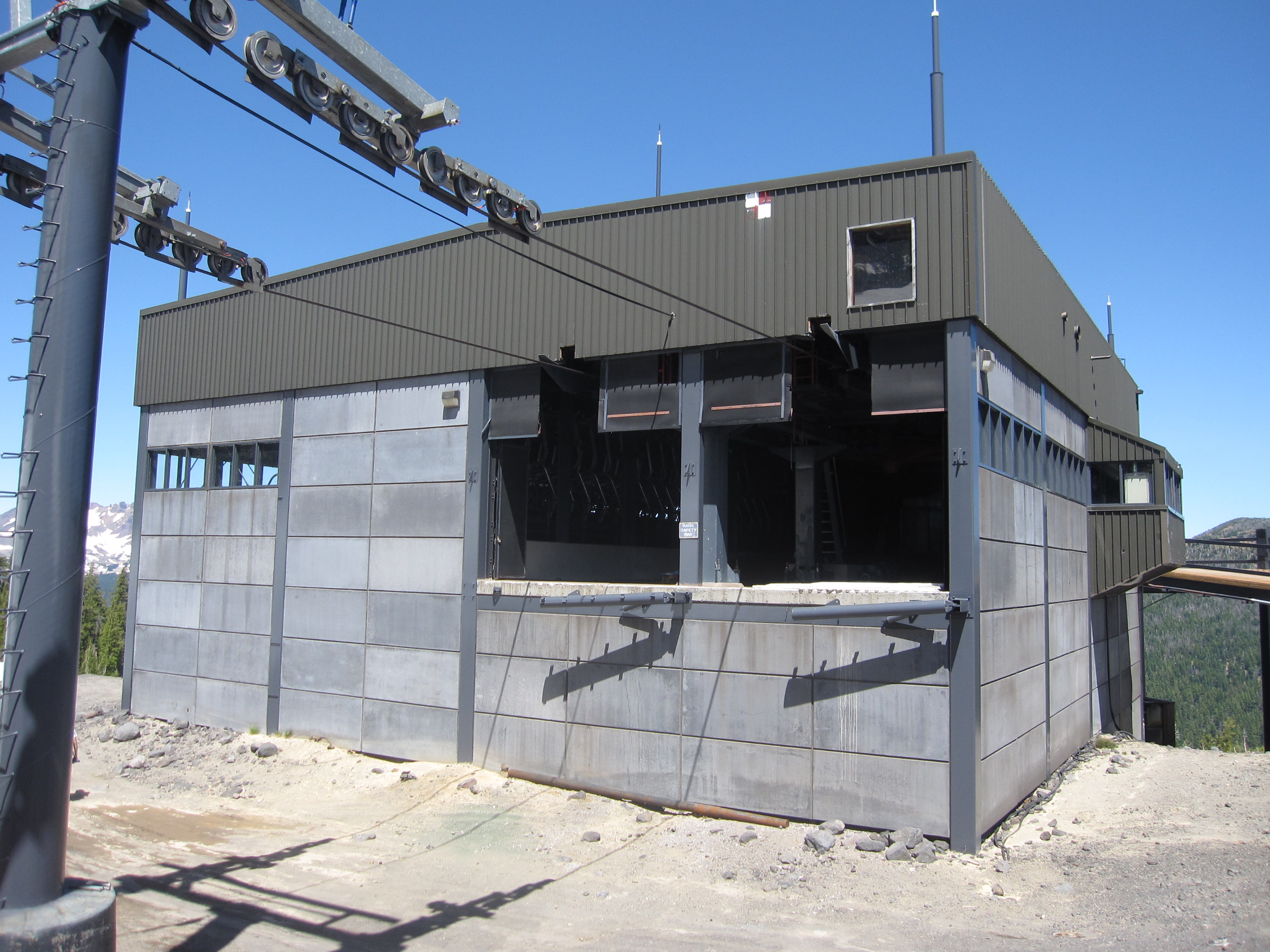
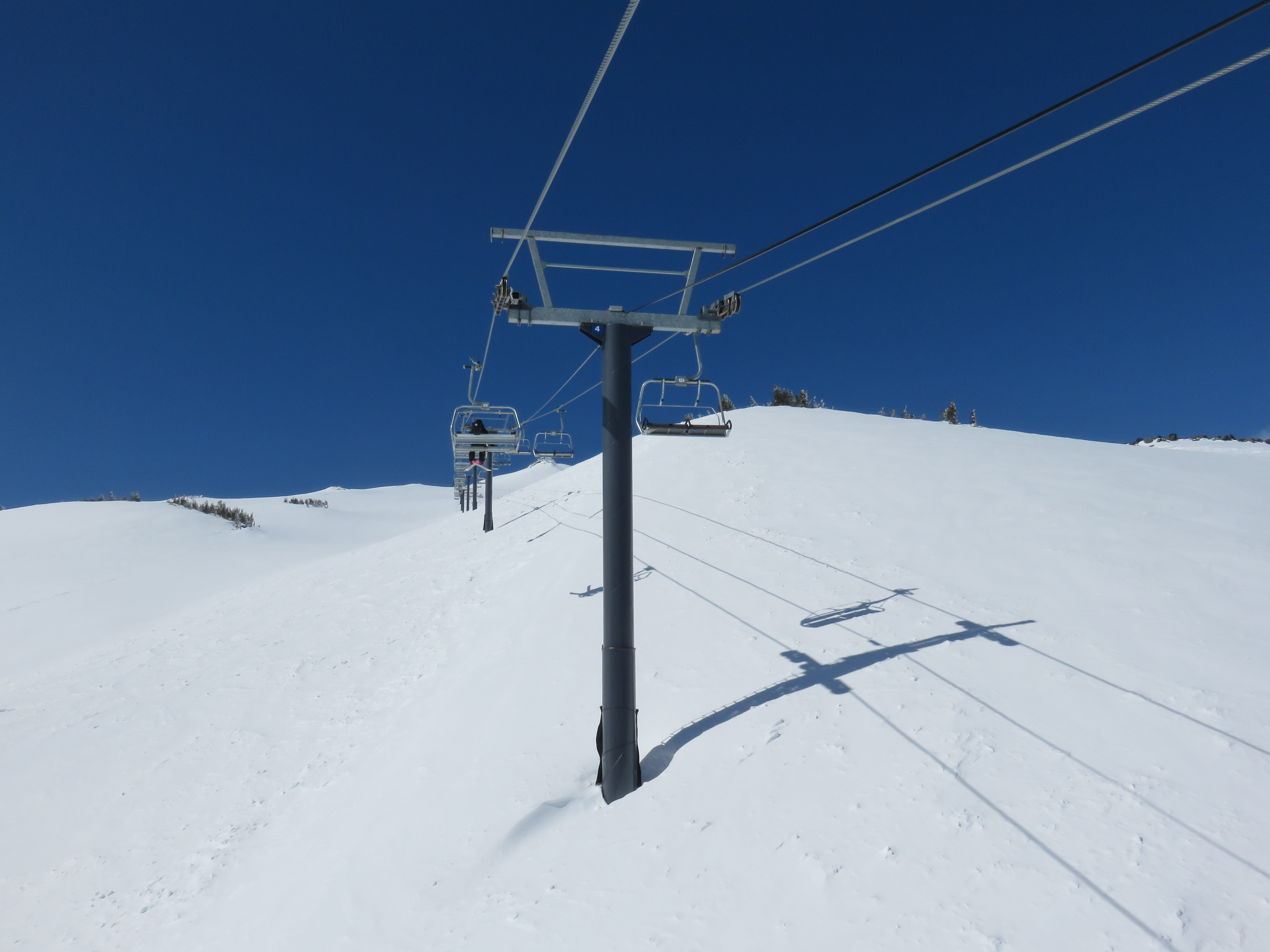
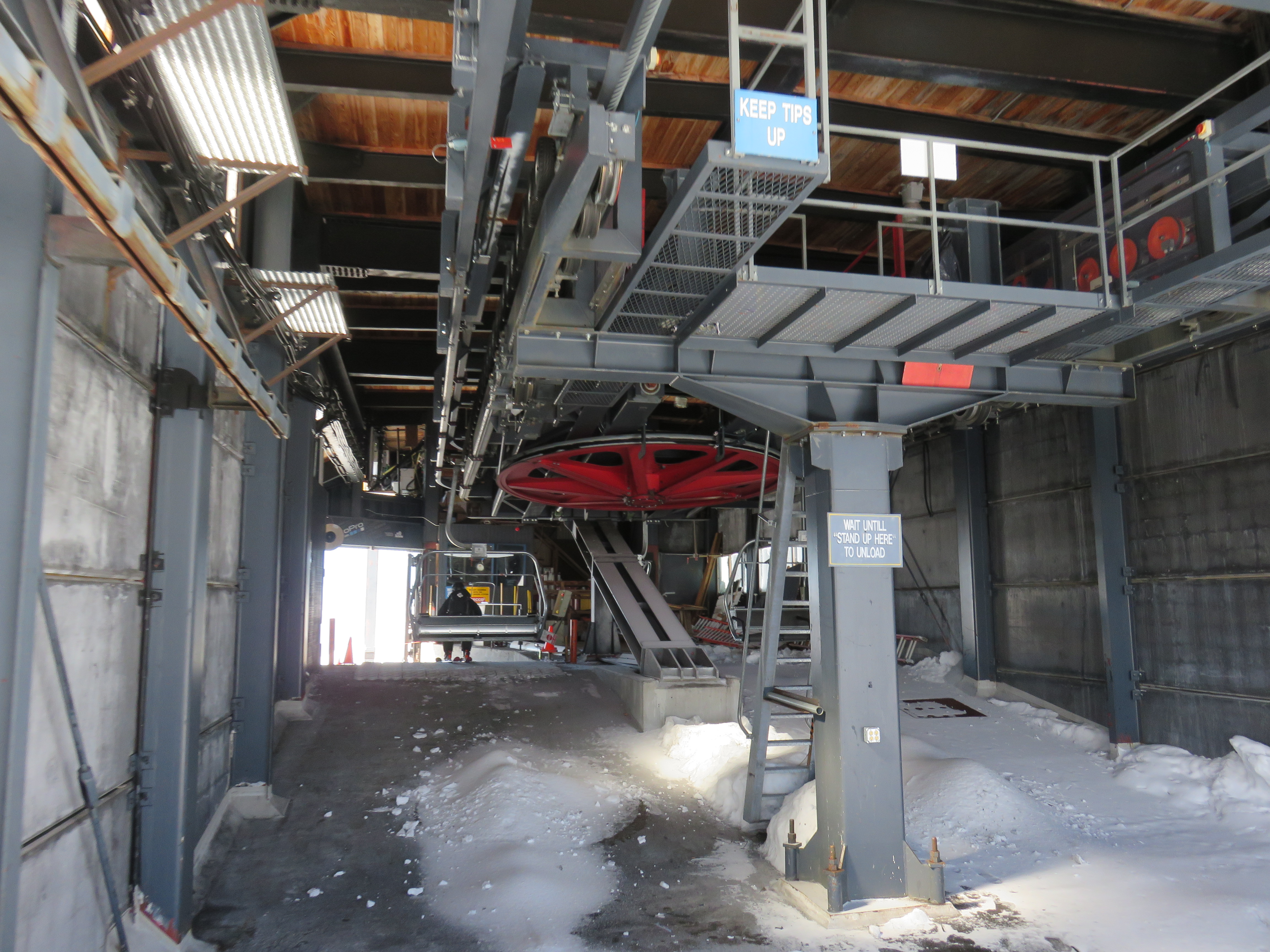
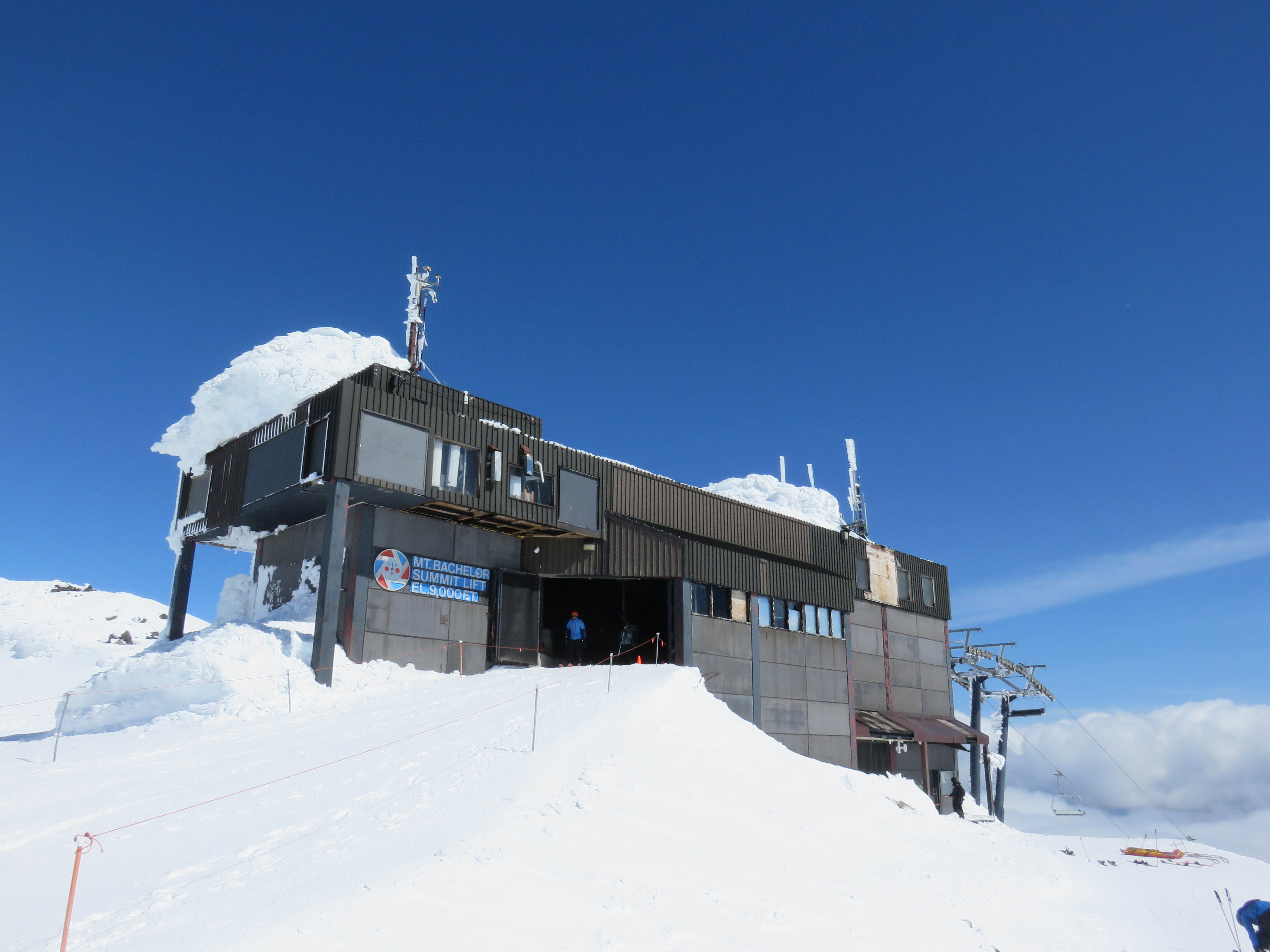
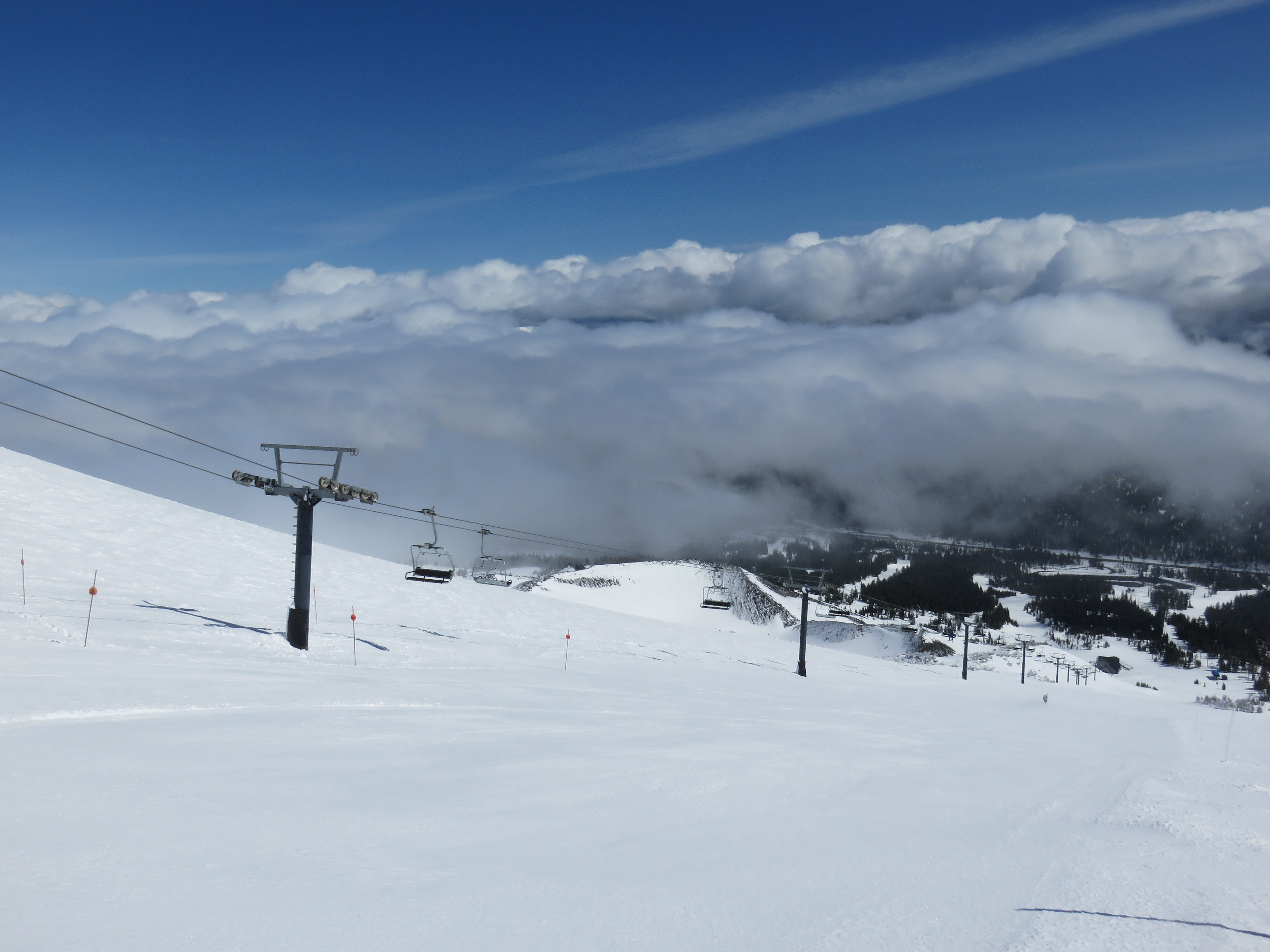
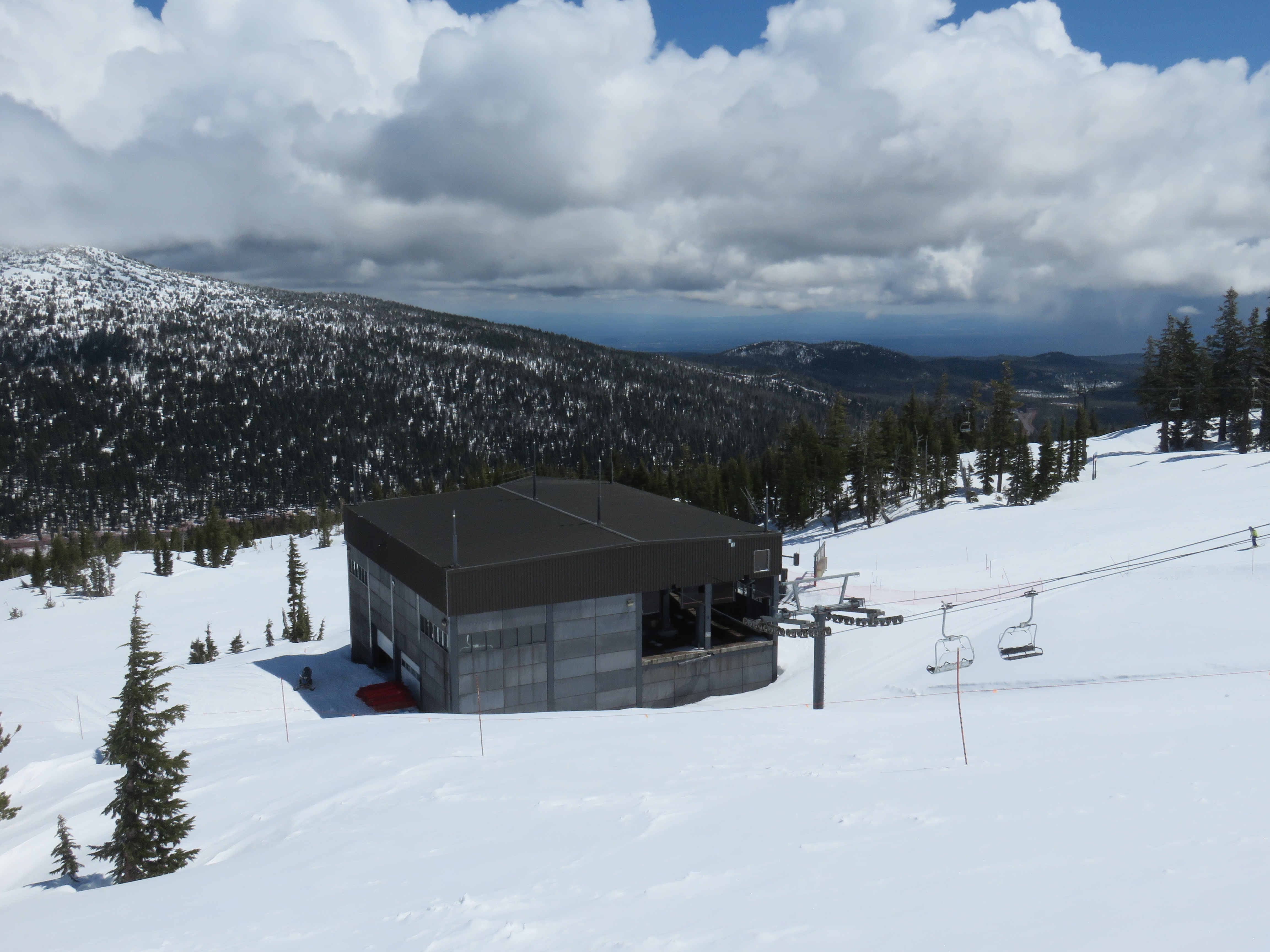
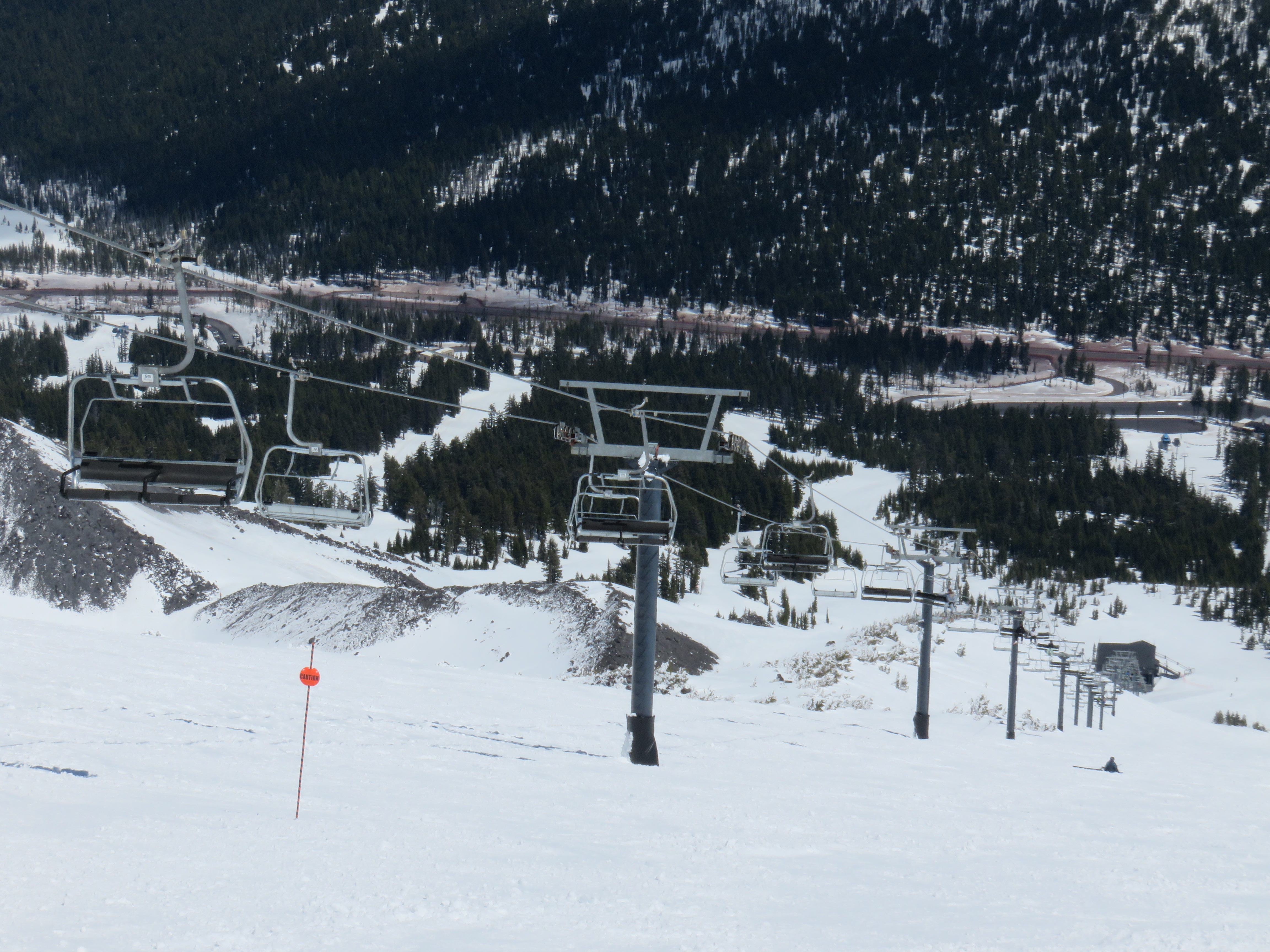
Bottom terminal building.Lift line minus chairs.Bottom terminal equipment.Tower and lift line.Drive cabinet.Chair parking.Bottom station.Doppelmayr Worldbook page 1.Doppelmayr Worldbook entry.Riding up in the spring.View back down the line.Breakover towers 19-21.This terminal building was re-used from the former detachable triple chair installed in 1982.Top terminal building.Lift line.Top terminal during operation.Note the extra metal plates to protect sheave trains from rime ice.Lower terminal building with chair parking inside.An empty lift line.
I’ve got several from the 80s. Unfortunately they’re on film and inaccessible to the interwebs at this point. If I can get them scanned I’ll post them here or send them to Peter. For what it’s worth, the original lift looked much the same aside from first-generation DS grips and green plastic slats on the old ET triple carriers.
For a high altitude lift with a lot of exposure, it does seem odd that the chairs wouldn’t be given slatted backrests, like Skyliner and Cloudchaser have.
Really cool to see that picture. Where did you find it? Clearly the high speed triple was very low capacity. I didn’t think those lifting frames were out in 1983. I thought it would’ve had the ones like Duncan/Soleil at Tremblant. Also, it looks like the towers were reused for the quad.
Curious, was the high speed triple the first lift on this alignment? Those tower tubes don’t look like Doppelmayr to me, with the ladder type and it being concreted straight into the ground Yan-style. I don’t see anything on the lift list being removed in 1983.
No, the triple was the first. There may have been engineering reasons, or if Bachelor built this in-house they were probably used to Yan foundations from building three in the years immediately prior. Our early Pomas were all embedded footers instead of bolt cages because our installation team knew how to put up those kids of towers.
I recently read a book from Hans Burkhart, who installed the original summit triple. Apparently the reason for the buried style towers was because they required a lot less concrete.
They are the first-generation DS. Same concept as the ones you’ve seen, but they look slightly different. Pretty sure they were only used on Breck’s original Quicksilver and this one.
If I’m not mistaken they are considered Schweiger grips, they were developed in 1976 and were used until I think 1985 (Mt Buller Australia). As PBROPETECH said they were probably only used here in North America twice
I wonder why the extra metal plates as noted in picture 15 are not used on other high alpine lifts in Oregon, every year when Palmer opens in the Spring there is a pile of bent sheaves on the floor of the lower terminal and I haven’t noticed similar protective plates on any of the towers. I feel like The Mile, Palmer, and Cascade could all use any extra protection from ice that they can get. However they could be there and I just haven’t noticed them.
4 years late here… all of those lifts do have the extra plates on the sheaves, in addition to Vista at Meadows. They’re only used on the above-ridgeline sections that ice up the worst.
1983 was remarkably early for a detachable chair; I’m fairly certain that was the second one installed in the whole country. It’s strange to see they went with it on a line like Summit too. Was this built a detachable largely so they could remove the chairs during ice storms and high winds?
Most likely. Volcanoes are home to utterly ridiculous weather. To clarify, true ice storms (freezing rain) are rare anywhere in the Cascades. Most “icing” is actually riming. Result for Maintenance is the same; a long day of hammering towers and terminals. Bachelor runs the rope on Summit continuously to keep riming to a minimum on the line gear. Obviously the towers still accumulate, as do the terminal buildings, but the rope is continuously cleaned, sheaves accumulate less, and those giant buildings protect all the terminal gear. In the end the labour spent is somewhat lower than places that do not keep the rope going. Lower, but not low. Easier, but not easy by any stretch.
Having worked at Mt Bachelor during the construction of the Summit Chair in the early to mid 80’s and the next few years running and maintaining it, the reason for the detachable chairs was so we could remove the chairs every day because of the weather. Every morning we put on 3 chairs, one work chair plus one regular in front and one behind for safety. We’d ride to the top inspecting every tower for overnight damage and repairing,or just clearing ice, if needed. If all was okay and weather permitted, we’d install all of the chairs. At the end of every day all of the chairs were removed and parked for the night. The wire rope (cable) would be left to run through the night without chairs to keep the shivs (wheels) from freezing.
I remember seeing you guys do that as a kid. It was our cue to start lapping old Sunrise because we knew you were probably opening Summit. We didn’t know what you were doing but we had learned that the three-carrier pod was a good indicator. I had never seen a work chair before and wondered what it was for, not knowing then that I would end up spending half my summers in one!
Exactly what Donald said but if you don’t want to create a Flickr account, you can use https://postimages.org/ to upload your photos and then copy the “direct link” into the comment field here.
Does anyone know why the Summit lift has been running at about 75% speed the last couple seasons? It’s short enough that it isn’t a major inconvenience but it is kind of weird.
Dopp “waterfall” panels of this era are actually sweet- no touchscreen menus or virtual switches to navigate through. Makes it really quick to diagnose faults/ stops. Sure the modern version is sleeker, but these still work well. Perhaps I’m just being sentimental though.
I don’t think you’re being sentimental. I enjoyed being able to simply look at the panel and check indicator lights (we called them Christmas Tree panels because of the red and green LEDs). My current Doppelmayr lift has a maze of menus on a touchscreen, and while it’s effective it’s sometimes too much.
Oh yeah we’d call them Christmas tree’s too! forgot about that one. The lifts I work on nowadays are all 2000’s LPOA touchscreens, which are helpful but can be cumbersome. I definitely miss the simplicity of Christmas tree panels sometimes.
I really dug the Christmas Tree panels (hadn’t heard that) cos I could see it from outside, as a operator or as a rider. Gave me a heads up on whether I should head inside or take advantage of the lull and shovel. (Yes, I did memorise the stops/faults. I obvs don’t have the first clue today, 21 years later, but I was still in crash study mode for school way back then and could memorise just about anything.)






 Lift Blog
any pics of old detach triple?
LikeLiked by 1 person
Nope, I was 8 years old when it spun its last lap.
LikeLike
I’ve got several from the 80s. Unfortunately they’re on film and inaccessible to the interwebs at this point. If I can get them scanned I’ll post them here or send them to Peter. For what it’s worth, the original lift looked much the same aside from first-generation DS grips and green plastic slats on the old ET triple carriers.
LikeLiked by 5 people
Well? We’re waiting…
LikeLiked by 2 people
1024 fpm?
LikeLike
For a high altitude lift with a lot of exposure, it does seem odd that the chairs wouldn’t be given slatted backrests, like Skyliner and Cloudchaser have.
LikeLike
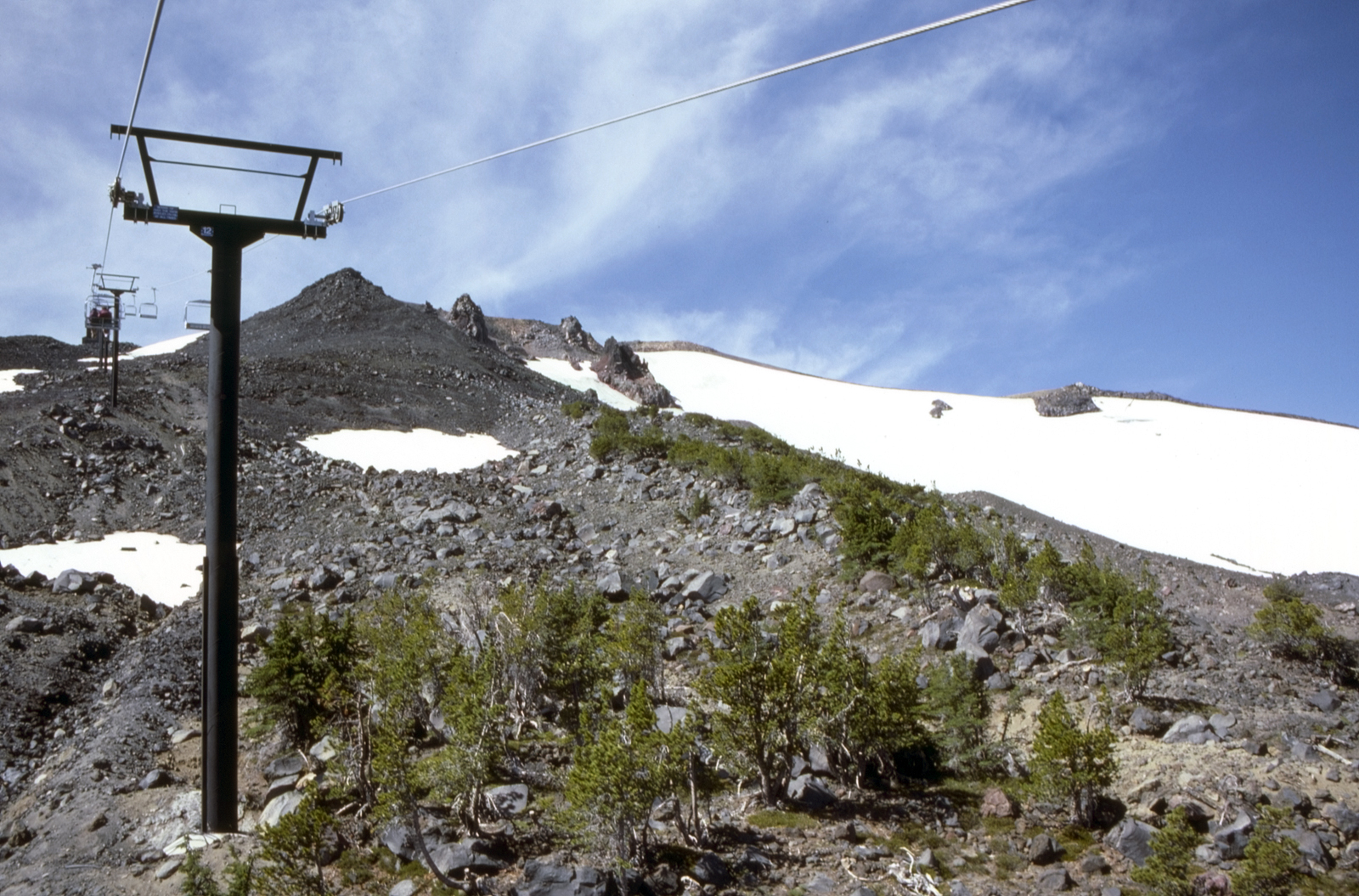
Here’s a photo of the old high speed triple:
LikeLiked by 2 people
Really cool to see that picture. Where did you find it? Clearly the high speed triple was very low capacity. I didn’t think those lifting frames were out in 1983. I thought it would’ve had the ones like Duncan/Soleil at Tremblant. Also, it looks like the towers were reused for the quad.
LikeLike
It was on Wikipedia’s article about Mount Bachelor.
LikeLike
Curious, was the high speed triple the first lift on this alignment? Those tower tubes don’t look like Doppelmayr to me, with the ladder type and it being concreted straight into the ground Yan-style. I don’t see anything on the lift list being removed in 1983.
LikeLike
No, the triple was the first. There may have been engineering reasons, or if Bachelor built this in-house they were probably used to Yan foundations from building three in the years immediately prior. Our early Pomas were all embedded footers instead of bolt cages because our installation team knew how to put up those kids of towers.
LikeLiked by 2 people
Makes sense, the Pomas at Copper Mt right?
LikeLike
Yup. K, L, A-1, M, O-1, and F all had embedded footers instead of the more typical Poma bolt cages.
LikeLike
I recently read a book from Hans Burkhart, who installed the original summit triple. Apparently the reason for the buried style towers was because they required a lot less concrete.
LikeLike
It does not look like DS grips, what grips are those?
LikeLike
They are the first-generation DS. Same concept as the ones you’ve seen, but they look slightly different. Pretty sure they were only used on Breck’s original Quicksilver and this one.
LikeLike
I’m pretty sure I saw a high-speed triple in Europe with these grips as well, but seems like a pretty short-lived design. Thanks for the info.
LikeLike
If I’m not mistaken they are considered Schweiger grips, they were developed in 1976 and were used until I think 1985 (Mt Buller Australia). As PBROPETECH said they were probably only used here in North America twice
LikeLiked by 1 person
I’ve sometimes seen this photo of the lift as the banner when browsing the site:
LikeLiked by 2 people
Was the lift designed with 106 chairs to start or 99?
LikeLike
I wonder why the extra metal plates as noted in picture 15 are not used on other high alpine lifts in Oregon, every year when Palmer opens in the Spring there is a pile of bent sheaves on the floor of the lower terminal and I haven’t noticed similar protective plates on any of the towers. I feel like The Mile, Palmer, and Cascade could all use any extra protection from ice that they can get. However they could be there and I just haven’t noticed them.
LikeLike
4 years late here… all of those lifts do have the extra plates on the sheaves, in addition to Vista at Meadows. They’re only used on the above-ridgeline sections that ice up the worst.
LikeLike
the towers and terminals are reused from the old high speed triple
LikeLike
Towers and terminal buildings were reused, but the terminals and grips were replaced.
LikeLiked by 1 person
here are some old pictures of the high speed triple being made
LikeLike
1983 was remarkably early for a detachable chair; I’m fairly certain that was the second one installed in the whole country. It’s strange to see they went with it on a line like Summit too. Was this built a detachable largely so they could remove the chairs during ice storms and high winds?
LikeLiked by 2 people
Most likely. Volcanoes are home to utterly ridiculous weather. To clarify, true ice storms (freezing rain) are rare anywhere in the Cascades. Most “icing” is actually riming. Result for Maintenance is the same; a long day of hammering towers and terminals. Bachelor runs the rope on Summit continuously to keep riming to a minimum on the line gear. Obviously the towers still accumulate, as do the terminal buildings, but the rope is continuously cleaned, sheaves accumulate less, and those giant buildings protect all the terminal gear. In the end the labour spent is somewhat lower than places that do not keep the rope going. Lower, but not low. Easier, but not easy by any stretch.
LikeLiked by 1 person
Having worked at Mt Bachelor during the construction of the Summit Chair in the early to mid 80’s and the next few years running and maintaining it, the reason for the detachable chairs was so we could remove the chairs every day because of the weather. Every morning we put on 3 chairs, one work chair plus one regular in front and one behind for safety. We’d ride to the top inspecting every tower for overnight damage and repairing,or just clearing ice, if needed. If all was okay and weather permitted, we’d install all of the chairs. At the end of every day all of the chairs were removed and parked for the night. The wire rope (cable) would be left to run through the night without chairs to keep the shivs (wheels) from freezing.
LikeLike
I remember seeing you guys do that as a kid. It was our cue to start lapping old Sunrise because we knew you were probably opening Summit. We didn’t know what you were doing but we had learned that the three-carrier pod was a good indicator. I had never seen a work chair before and wondered what it was for, not knowing then that I would end up spending half my summers in one!
LikeLike
I used to think that work carriers were for ADA
LikeLike
Exactly what Donald said but if you don’t want to create a Flickr account, you can use https://postimages.org/ to upload your photos and then copy the “direct link” into the comment field here.
LikeLike
is there a timeline for the summit chair to be operational again?
LikeLike
Last time I saw it running near the holiday season was 3-4 years ago. idk when it’ll be open again.
LikeLike
Center armrests were removed for the 22-23 season
LikeLike
Does anyone know why the Summit lift has been running at about 75% speed the last couple seasons? It’s short enough that it isn’t a major inconvenience but it is kind of weird.
LikeLike
Another photo of the triple:
LikeLike
That’s some serious line sag. Awsome photo!
LikeLike
Another photo that shows the first tower of Silver Streak:
LikeLike
A few more photos of Silver Streak from the newspaper archives:
LikeLike
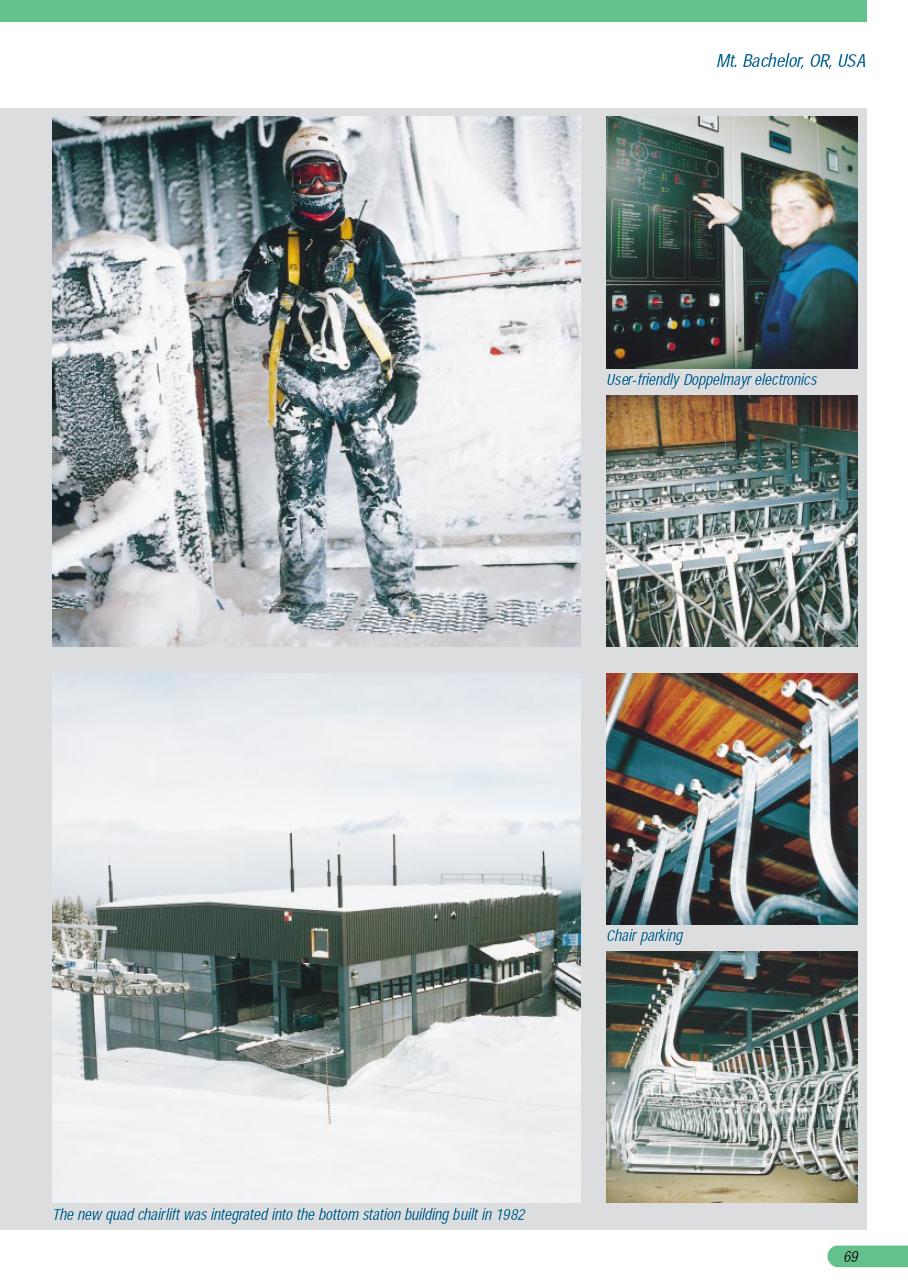
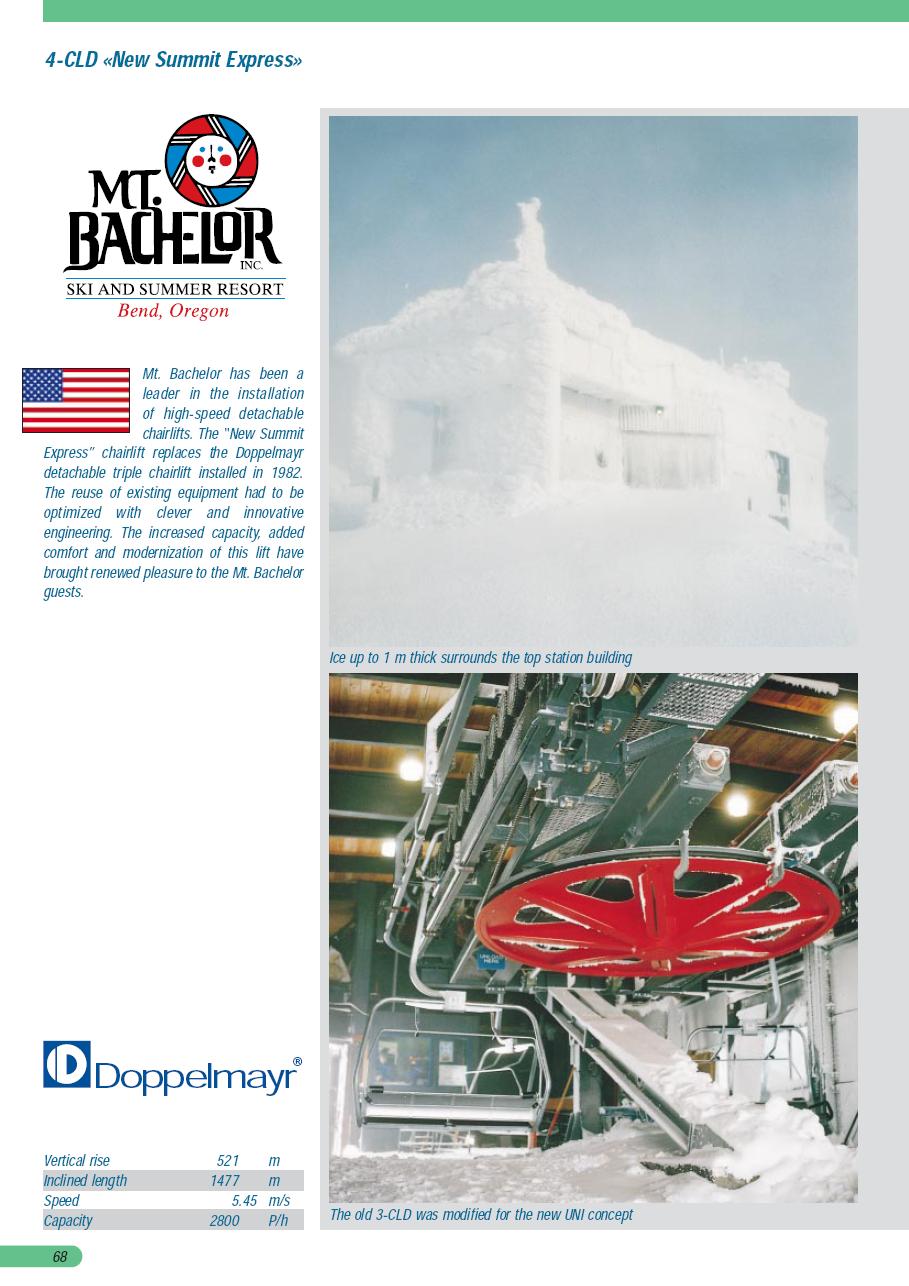
The world book calls them user friendly:
LikeLike
Don’t see anything wrong here. I guess it was user-friendly in the 90s.
LikeLike
Dopp “waterfall” panels of this era are actually sweet- no touchscreen menus or virtual switches to navigate through. Makes it really quick to diagnose faults/ stops. Sure the modern version is sleeker, but these still work well. Perhaps I’m just being sentimental though.
LikeLike
I don’t think you’re being sentimental. I enjoyed being able to simply look at the panel and check indicator lights (we called them Christmas Tree panels because of the red and green LEDs). My current Doppelmayr lift has a maze of menus on a touchscreen, and while it’s effective it’s sometimes too much.
LikeLike
Oh yeah we’d call them Christmas tree’s too! forgot about that one. The lifts I work on nowadays are all 2000’s LPOA touchscreens, which are helpful but can be cumbersome. I definitely miss the simplicity of Christmas tree panels sometimes.
LikeLike
I really dug the Christmas Tree panels (hadn’t heard that) cos I could see it from outside, as a operator or as a rider. Gave me a heads up on whether I should head inside or take advantage of the lull and shovel. (Yes, I did memorise the stops/faults. I obvs don’t have the first clue today, 21 years later, but I was still in crash study mode for school way back then and could memorise just about anything.)
LikeLike