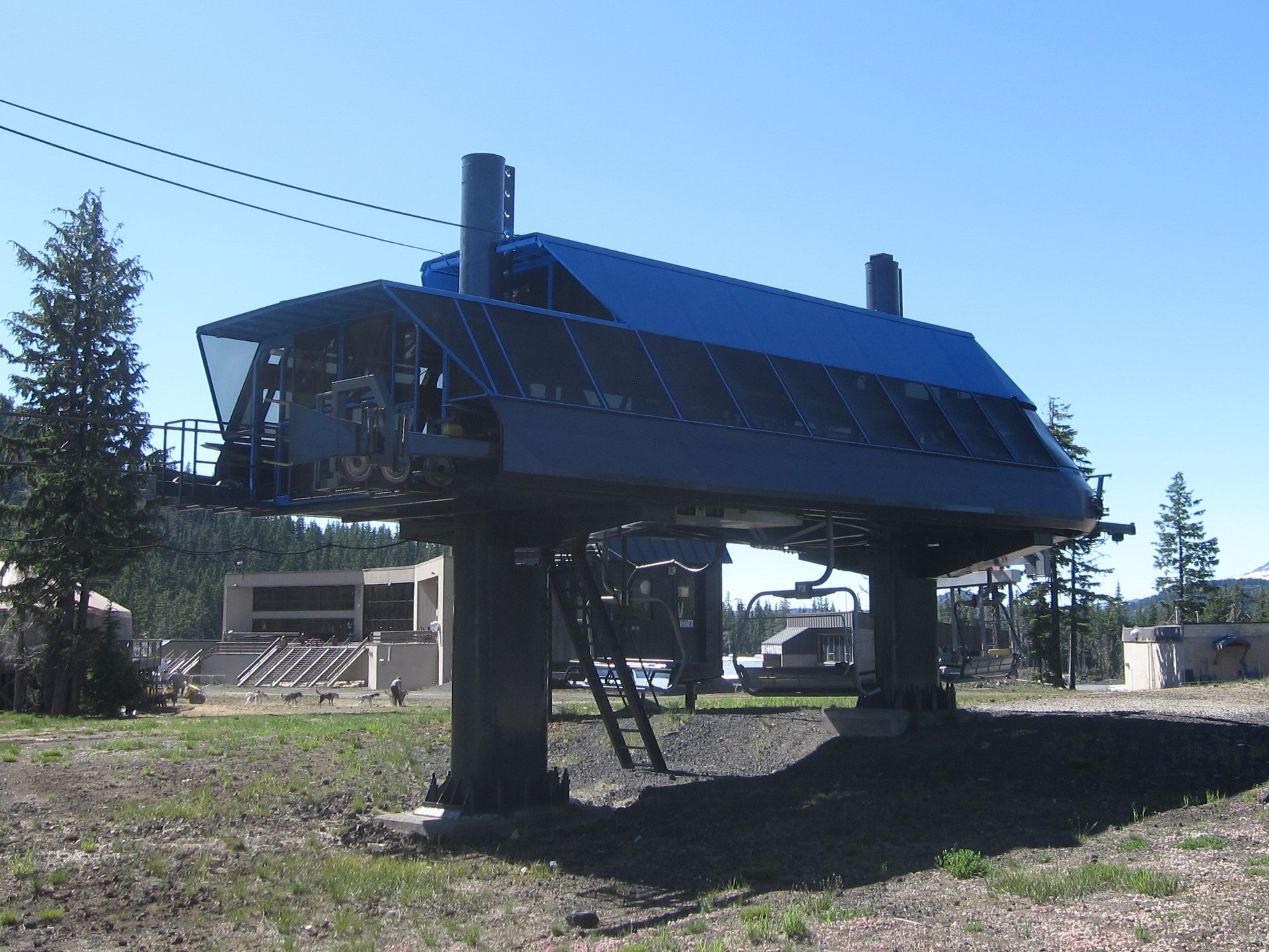
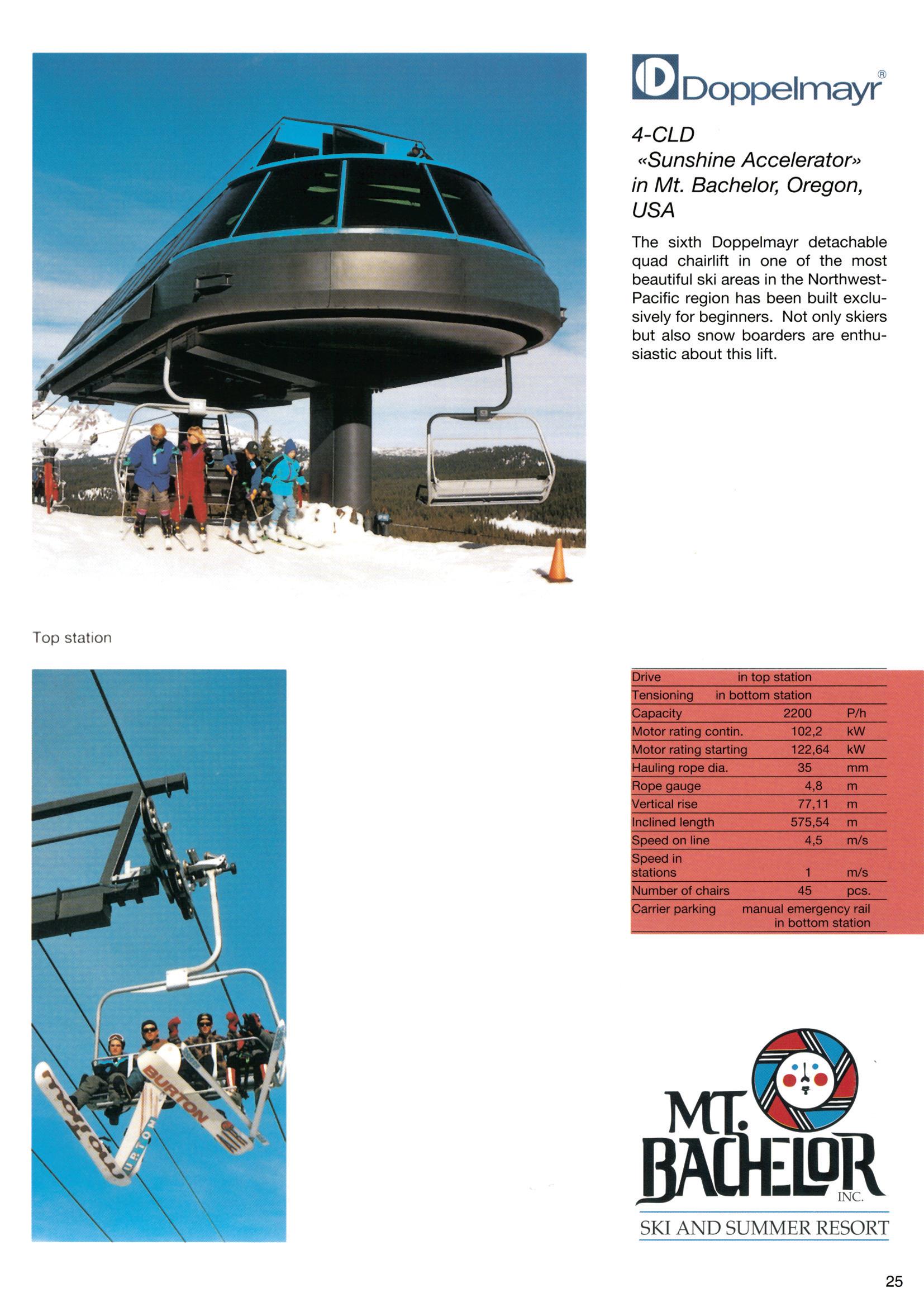
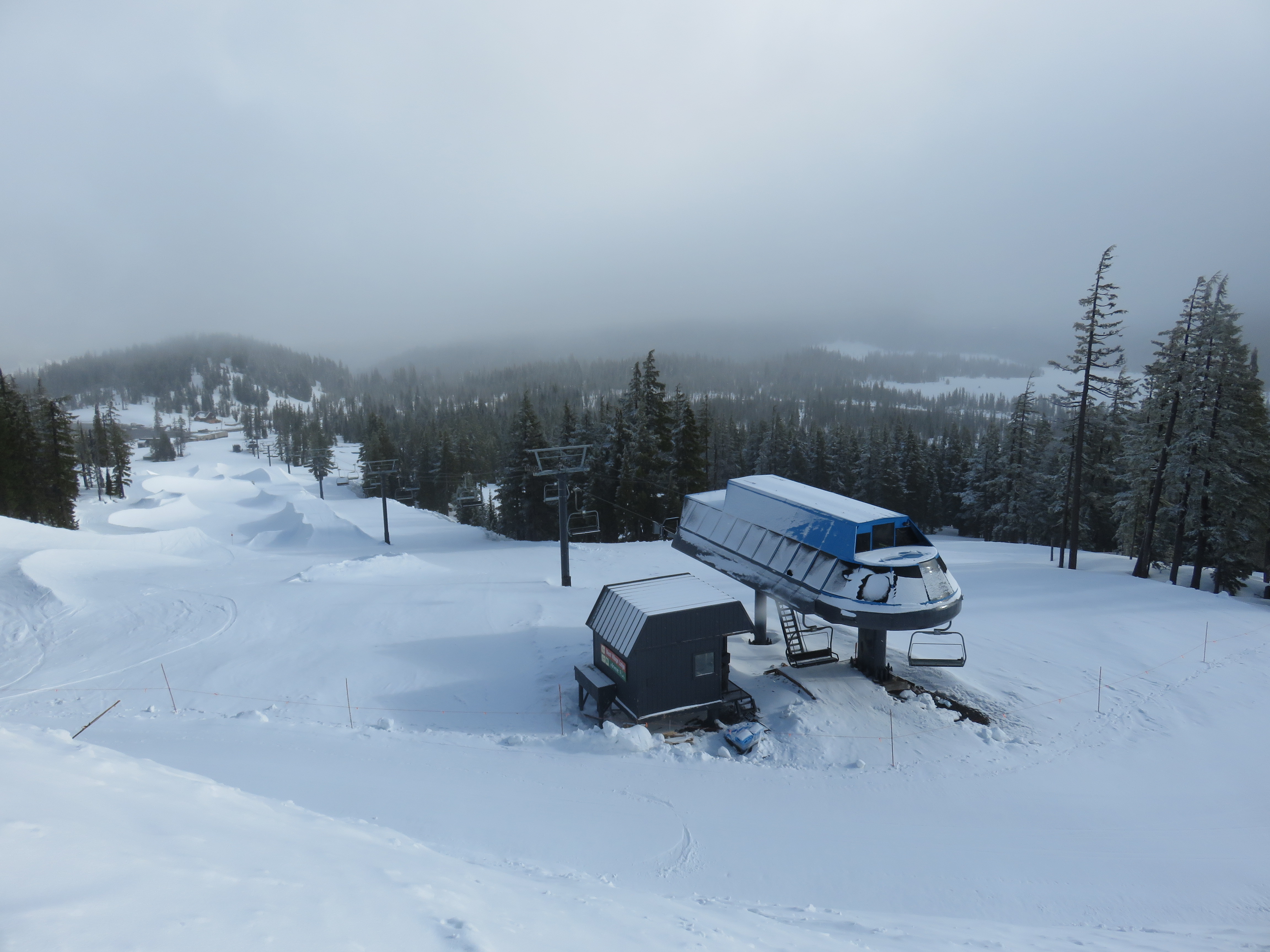
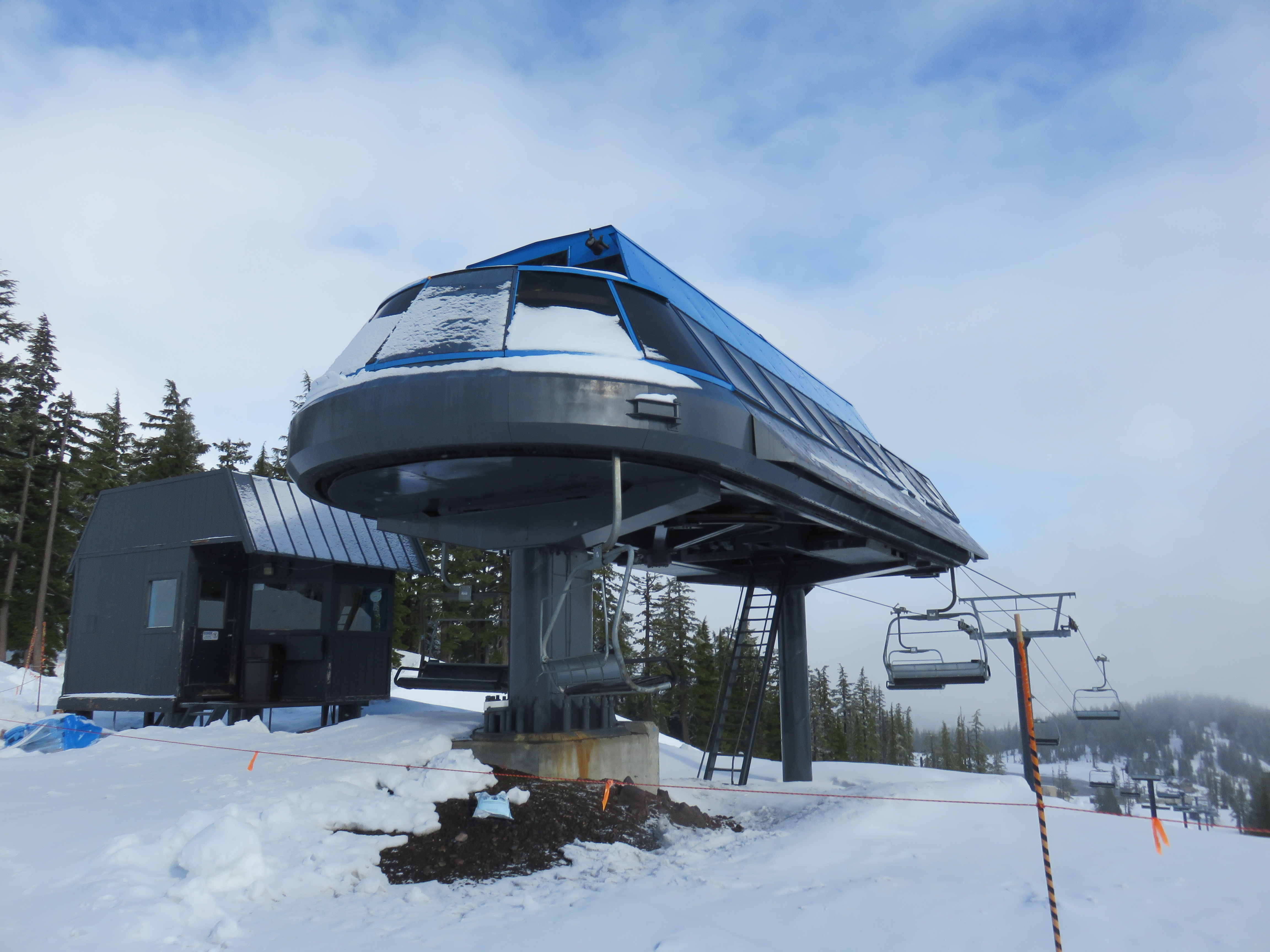
Bottom terminal with loading gates.Height-adjustable terminal.Another view of the bottom.Lift line.Doppelmayr Worldbook entry.Lift from above.Early generation Uni drive terminal.Top station from below.View down the line.
I don’t know the length but I do like the looks of it. The one major downside to it though is that it has a design speed of only 885 FPM. This reduces capacity and increases ride time. I don’t suspect that capacity was a concern when building this though as they definitely have enough space for a larger terminals.
thats pretty normal. June mountain’ J6 and J7 have a top speed of 800 fpm and that is enough to pretty much never have lift lines. The capacity is good enough for demand. Unlike the former chair’s 16 and 1 at Mammoth, which were the same design but served much more crowded terrain zones and were essential connector lifts.
The comparable beginner detachable, chair 11, gets cranked up to its max 1000 fpm every morning for its start up, then run all day at 600-800fpm cuz it’s exclusively loading beginners. The lift lines are crazy and I’m sure they’d love to run it at full speed, but that just means stopping every 5 min.
Often just looking at the poh number or line speed wont tell the whole story.
These are the short 1993-1995 UNI terminals. Camelback has them and so does Alpine Meadows on the Roundhouse Express. They only allow for speeds of up to 4.5 m/sec. Design capacity can be up to 2800 just like on the full length terminals. The chairs will just be spaced closer to make up for the lower speed. I think they went with the short terminals here because the lift is very short. They are cheaper to install, and the ride time isn’t increased that much with the short length. It’s also a beginner lift and wouldn’t likely run full speed even if it had the longer terminals.
This also functions as an access lift, as one can use this to get from the West Village Lodge over to Skyliner without having to go up Pine Marten and come all the way down.
It’s an erroneous photo. That second photo in the Worldbook is actually of Sunrise Express. You can tell by looking at the tower head structure (new Doppelmayr equipment resting on top of the old Yan tower). Further, that photo shows a clockwise-running lift, with guests riding on the left side (looking up). That’s Sunrise’ configuration. Sunshine Accelerator (Little Pine) runs counter-clockwise, with guests riding on the right side (looking up). It was probably an innocent photo mix-up, since Sunshine Accelerator (Little Pine) and Sunrise Express were installed in the same summer and both have entries in the 1993 Worldbook.
Sunshine Accelerator (Little Pine) was originally installed without footrests – the only HSQ at Mt Bachelor never have them.






 Lift Blog
Anyone know the length of the bottom terminal? It looks awfully short, even though it’s a UNÍ-S.
LikeLike
I don’t know the length but I do like the looks of it. The one major downside to it though is that it has a design speed of only 885 FPM. This reduces capacity and increases ride time. I don’t suspect that capacity was a concern when building this though as they definitely have enough space for a larger terminals.
LikeLike
‘Only’ 885 FPM. You should have ridden the old Orange chair that had a similar alignment. Shorter length, longer ride time.
LikeLike
As a beginner lift, it kinda makes sense they would have this be a lower speed detachable.
LikeLike
thats pretty normal. June mountain’ J6 and J7 have a top speed of 800 fpm and that is enough to pretty much never have lift lines. The capacity is good enough for demand. Unlike the former chair’s 16 and 1 at Mammoth, which were the same design but served much more crowded terrain zones and were essential connector lifts.
The comparable beginner detachable, chair 11, gets cranked up to its max 1000 fpm every morning for its start up, then run all day at 600-800fpm cuz it’s exclusively loading beginners. The lift lines are crazy and I’m sure they’d love to run it at full speed, but that just means stopping every 5 min.
Often just looking at the poh number or line speed wont tell the whole story.
LikeLiked by 1 person
These are the short 1993-1995 UNI terminals. Camelback has them and so does Alpine Meadows on the Roundhouse Express. They only allow for speeds of up to 4.5 m/sec. Design capacity can be up to 2800 just like on the full length terminals. The chairs will just be spaced closer to make up for the lower speed. I think they went with the short terminals here because the lift is very short. They are cheaper to install, and the ride time isn’t increased that much with the short length. It’s also a beginner lift and wouldn’t likely run full speed even if it had the longer terminals.
LikeLike
The Sunrise Express also has the shorter length terminals.
LikeLike
This also functions as an access lift, as one can use this to get from the West Village Lodge over to Skyliner without having to go up Pine Marten and come all the way down.
LikeLike
In the second Workbook Entry photo, it shows the chair’s safety bar with footrests, anyone know why they removed them?
LikeLike
Doppelmayr messed up, that’s actually Sunrise Express. You can tell since the tower heads are mounted on a Yan tower.
LikeLike
It’s an erroneous photo. That second photo in the Worldbook is actually of Sunrise Express. You can tell by looking at the tower head structure (new Doppelmayr equipment resting on top of the old Yan tower). Further, that photo shows a clockwise-running lift, with guests riding on the left side (looking up). That’s Sunrise’ configuration. Sunshine Accelerator (Little Pine) runs counter-clockwise, with guests riding on the right side (looking up). It was probably an innocent photo mix-up, since Sunshine Accelerator (Little Pine) and Sunrise Express were installed in the same summer and both have entries in the 1993 Worldbook.
Sunshine Accelerator (Little Pine) was originally installed without footrests – the only HSQ at Mt Bachelor never have them.
LikeLike
Thank you! This makes so much sense now
LikeLike