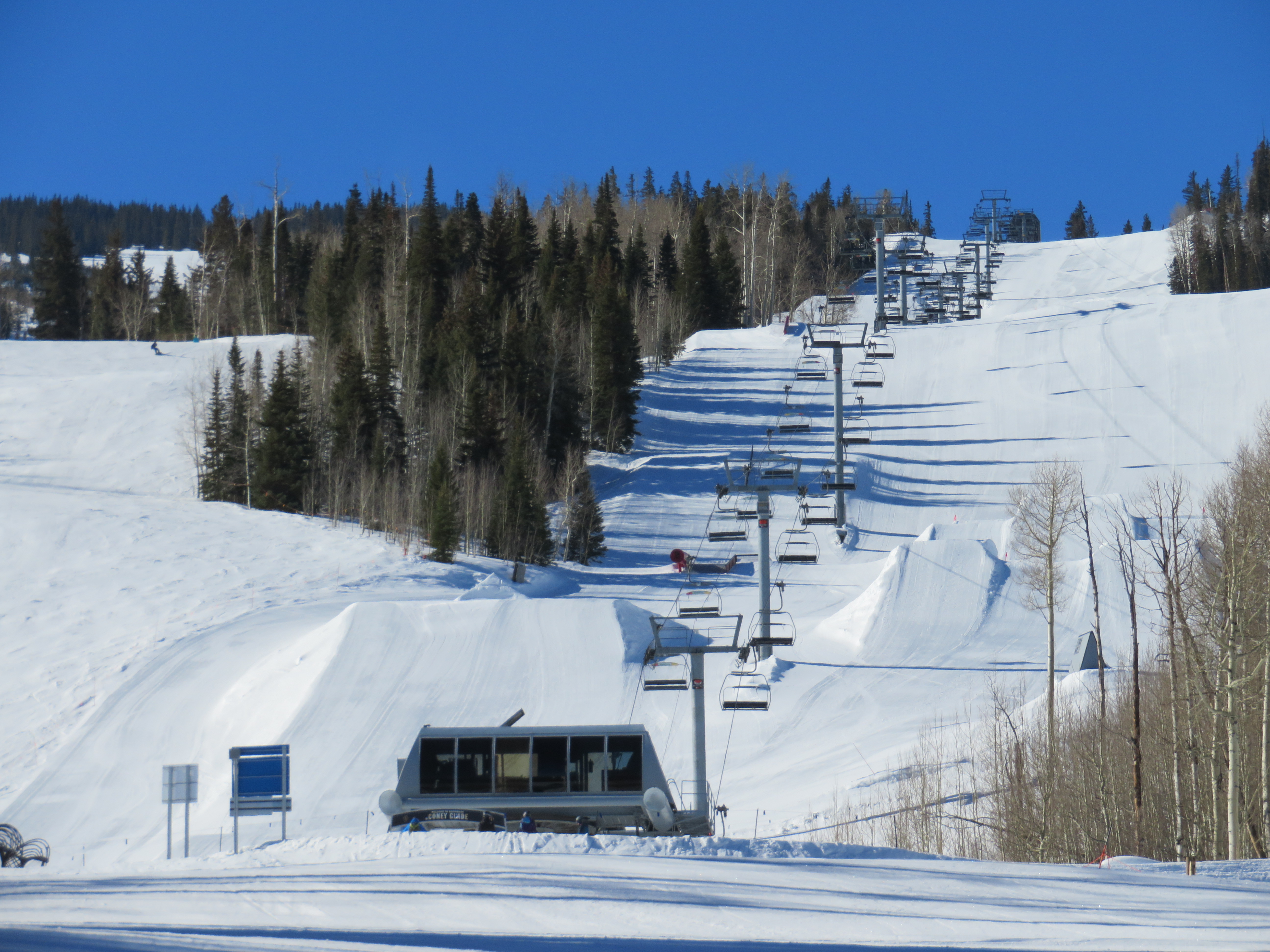
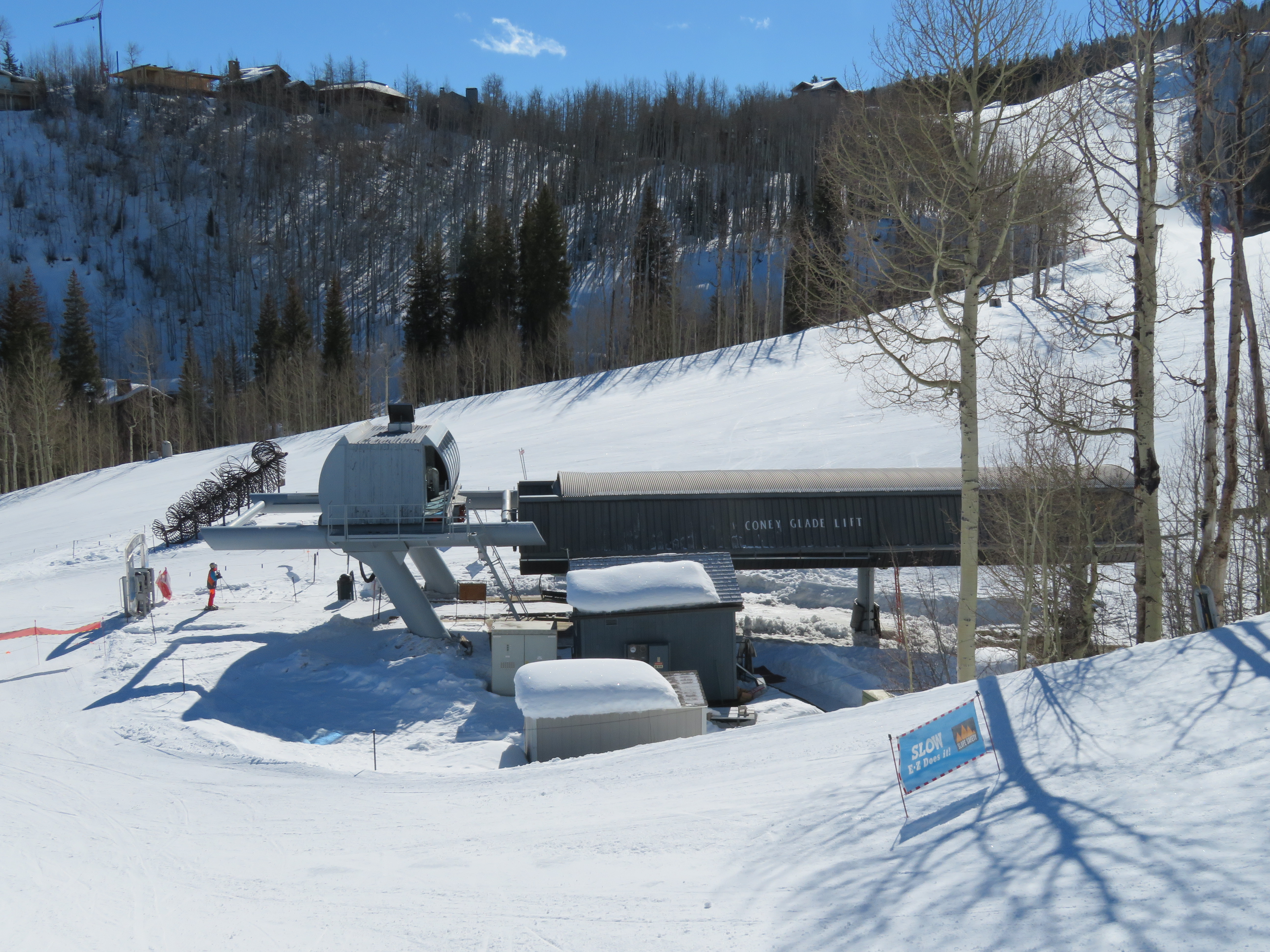
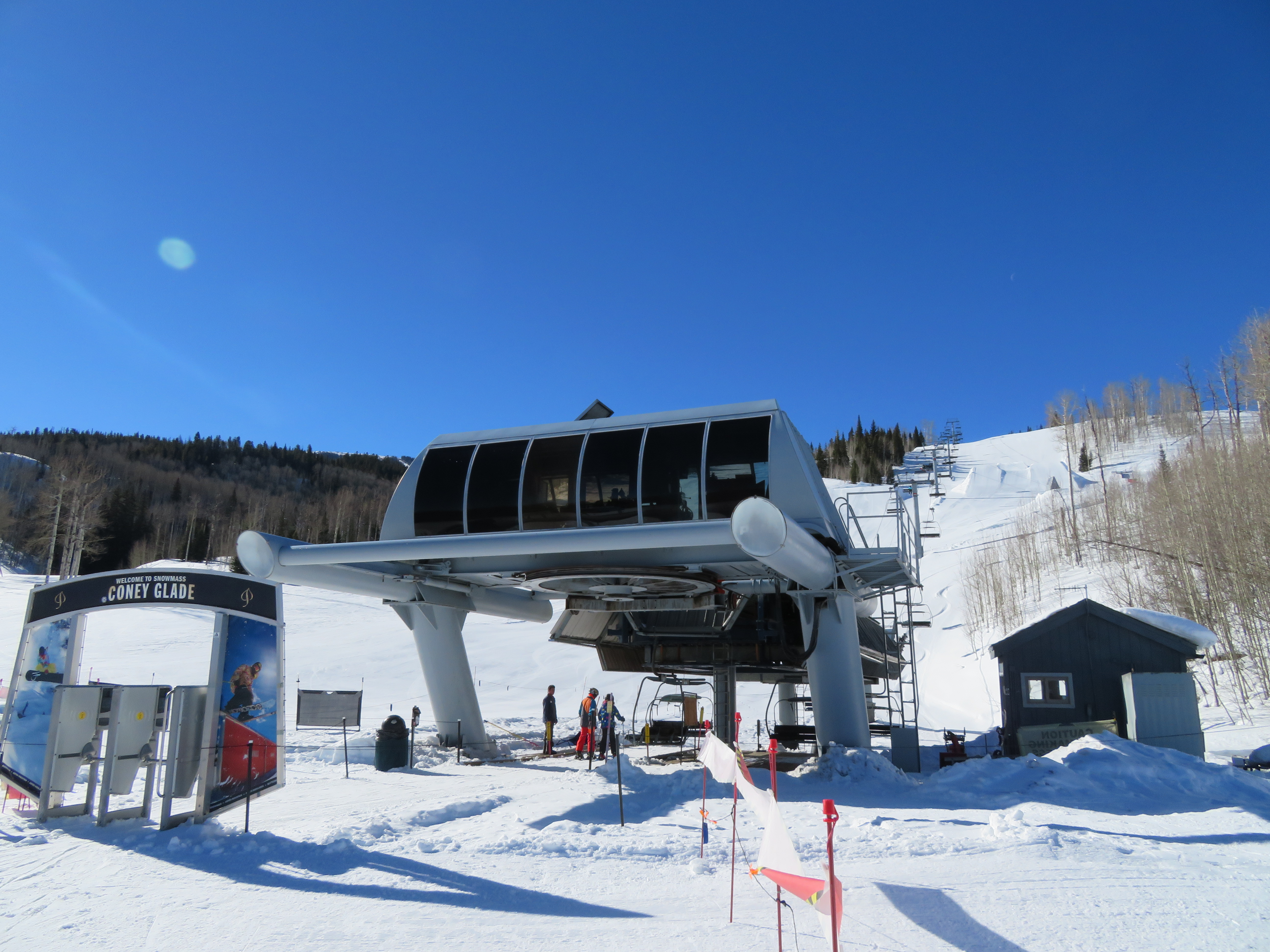
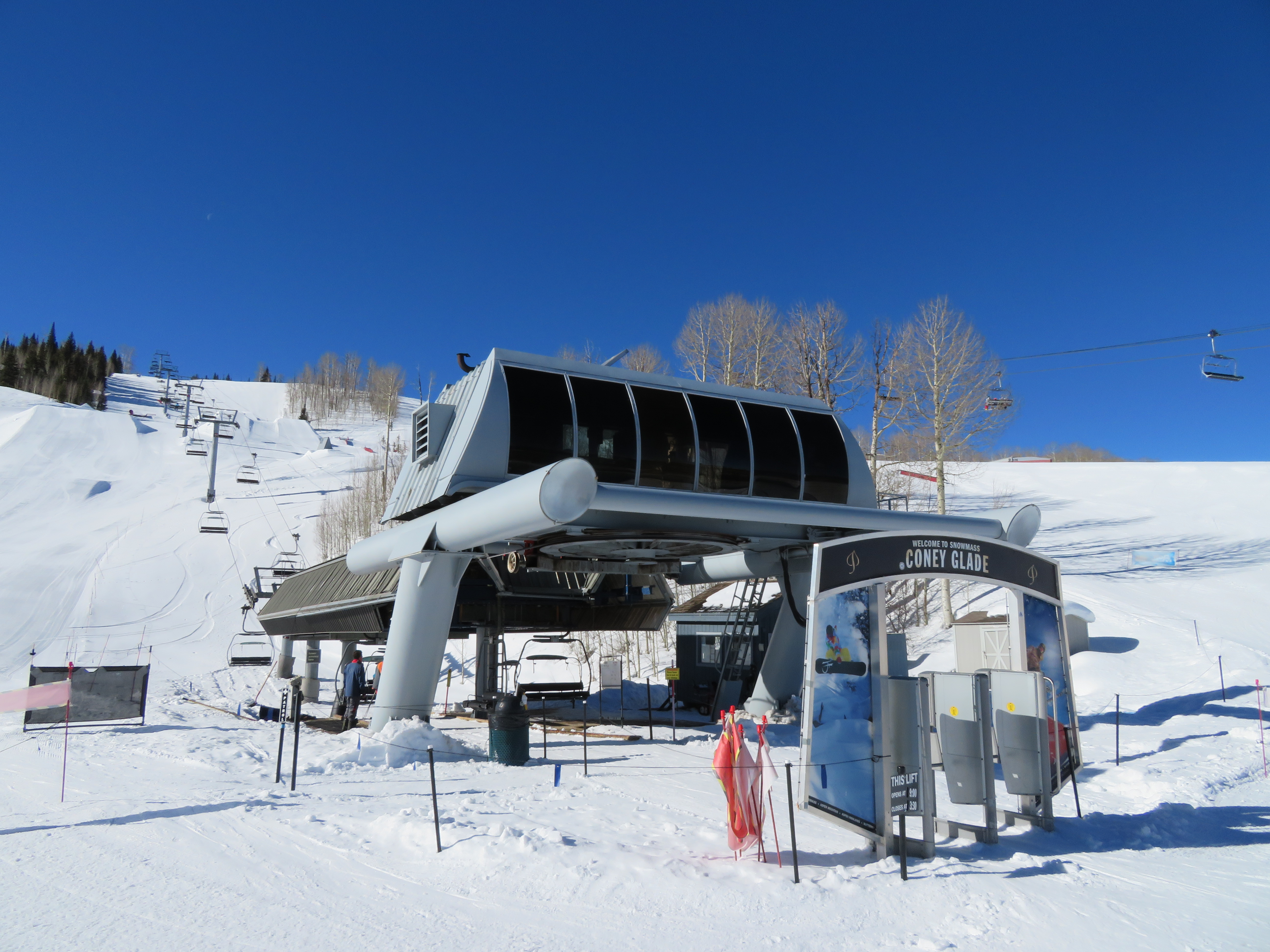
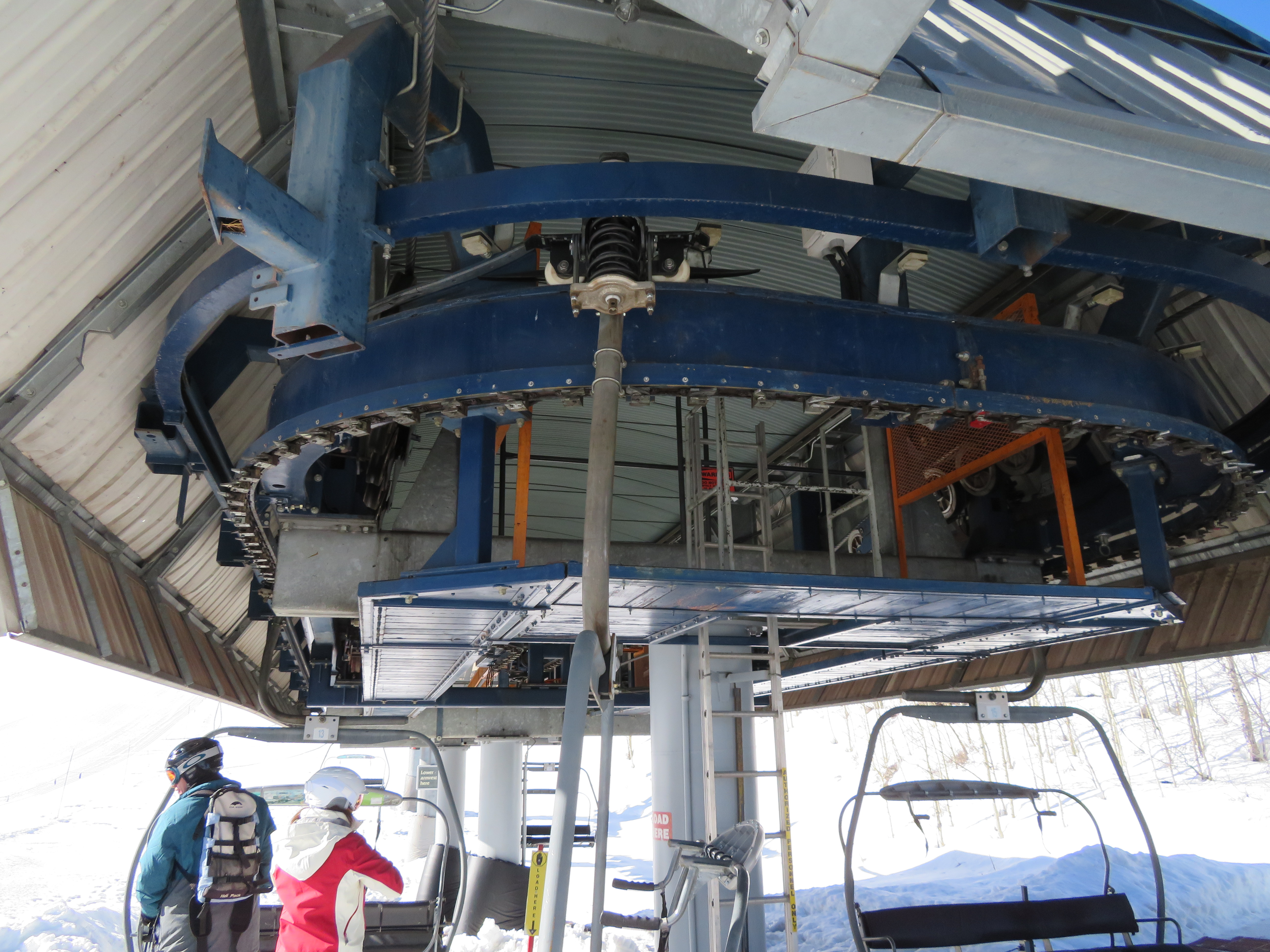
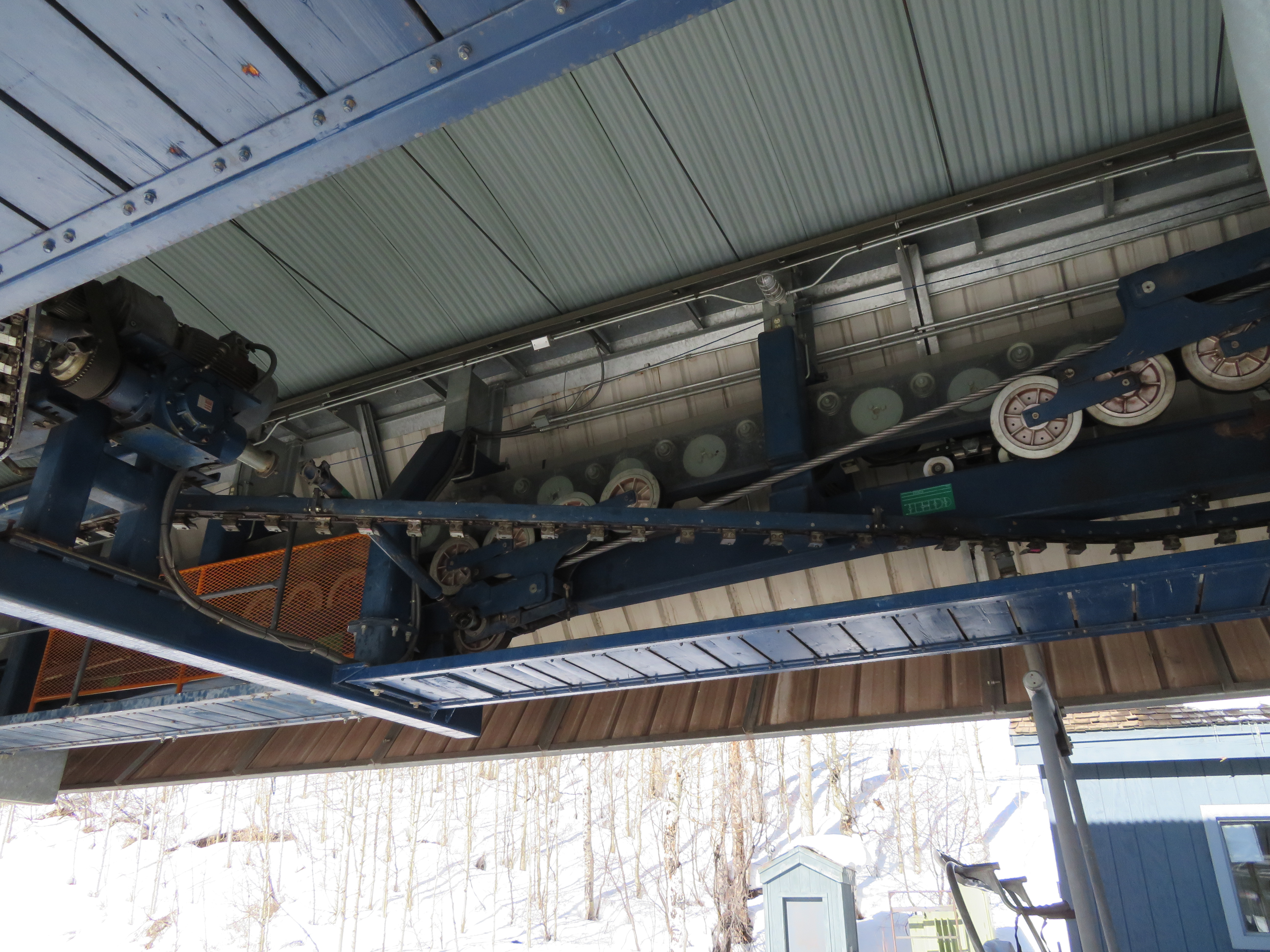
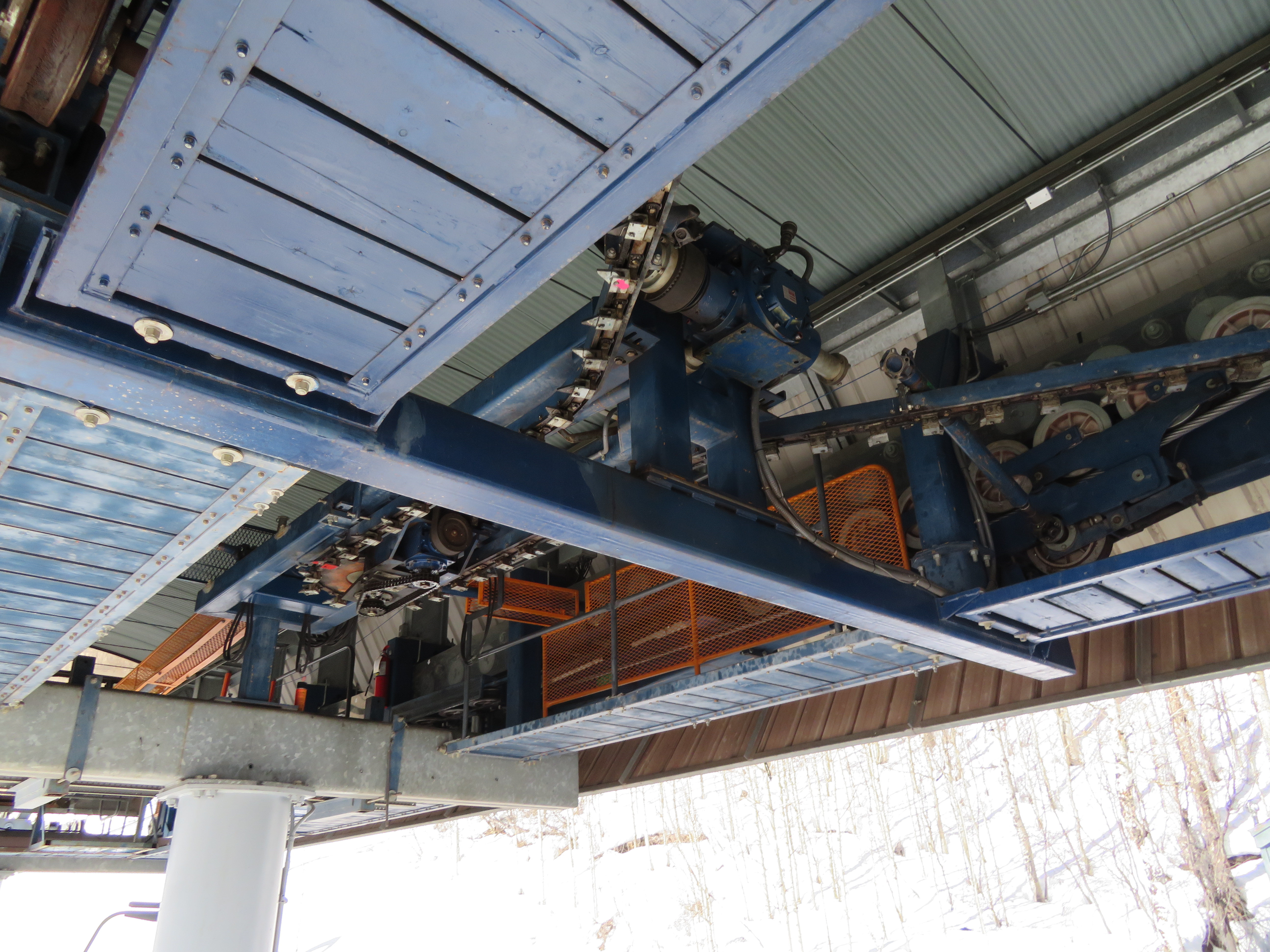
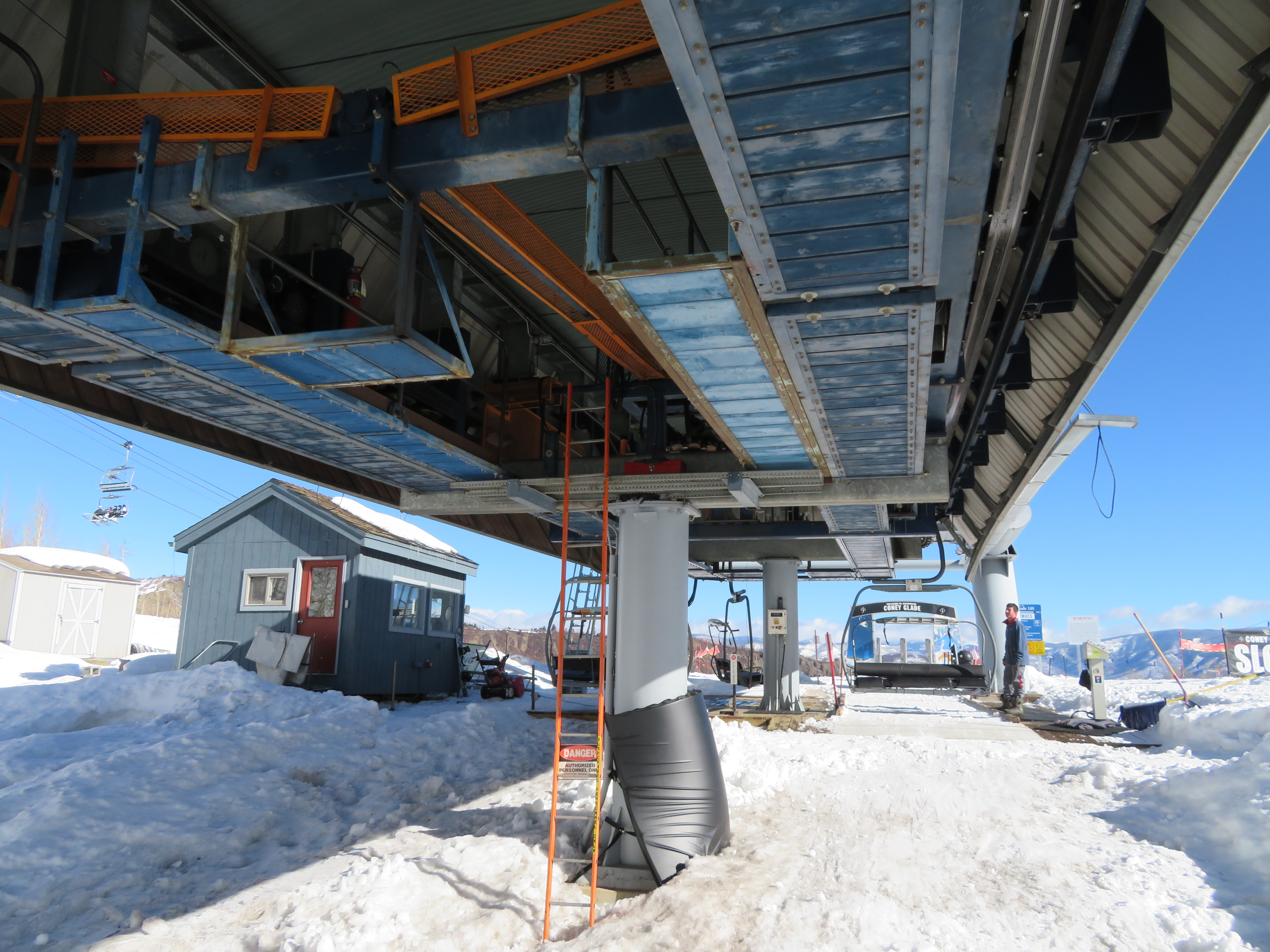
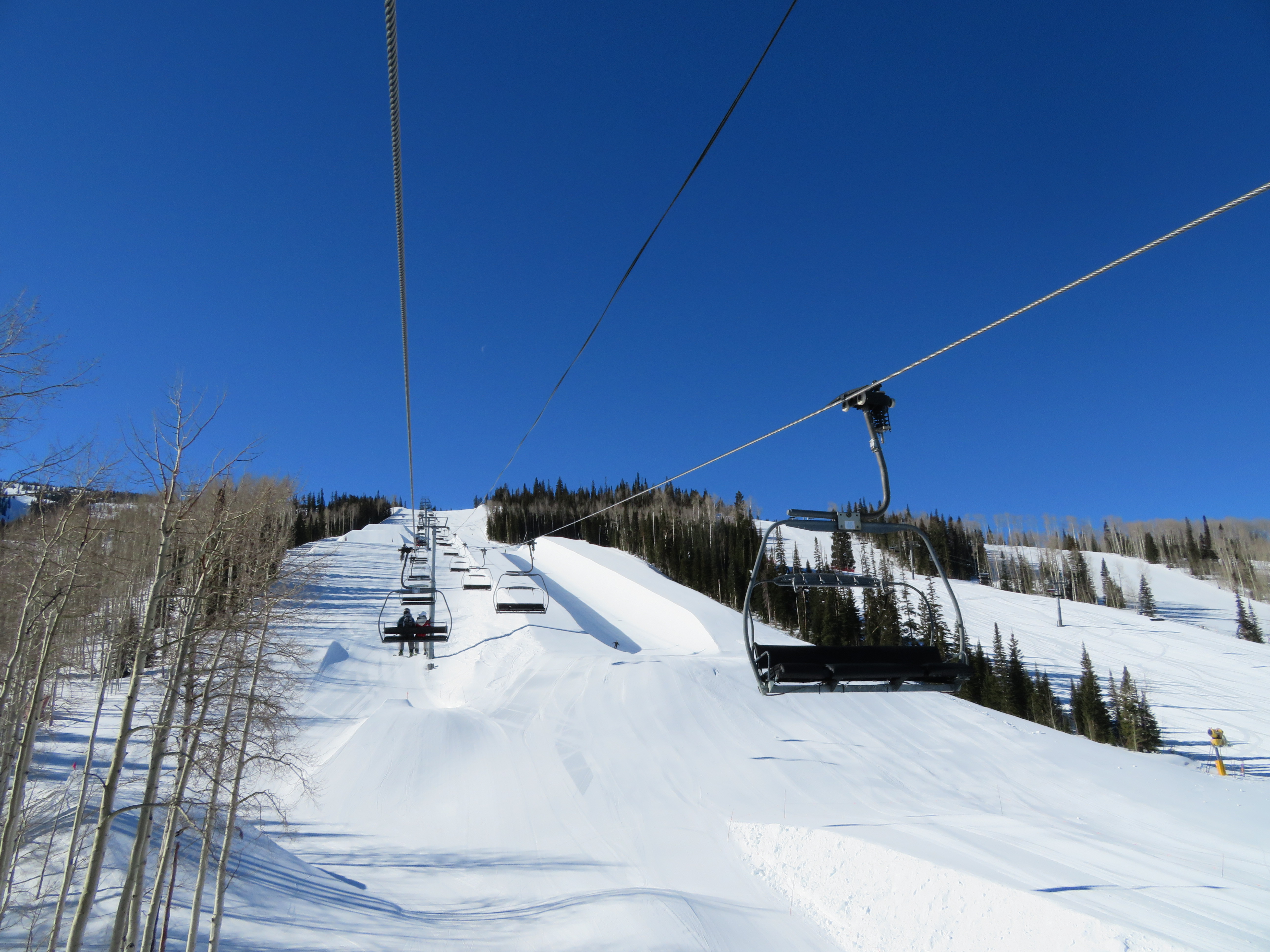
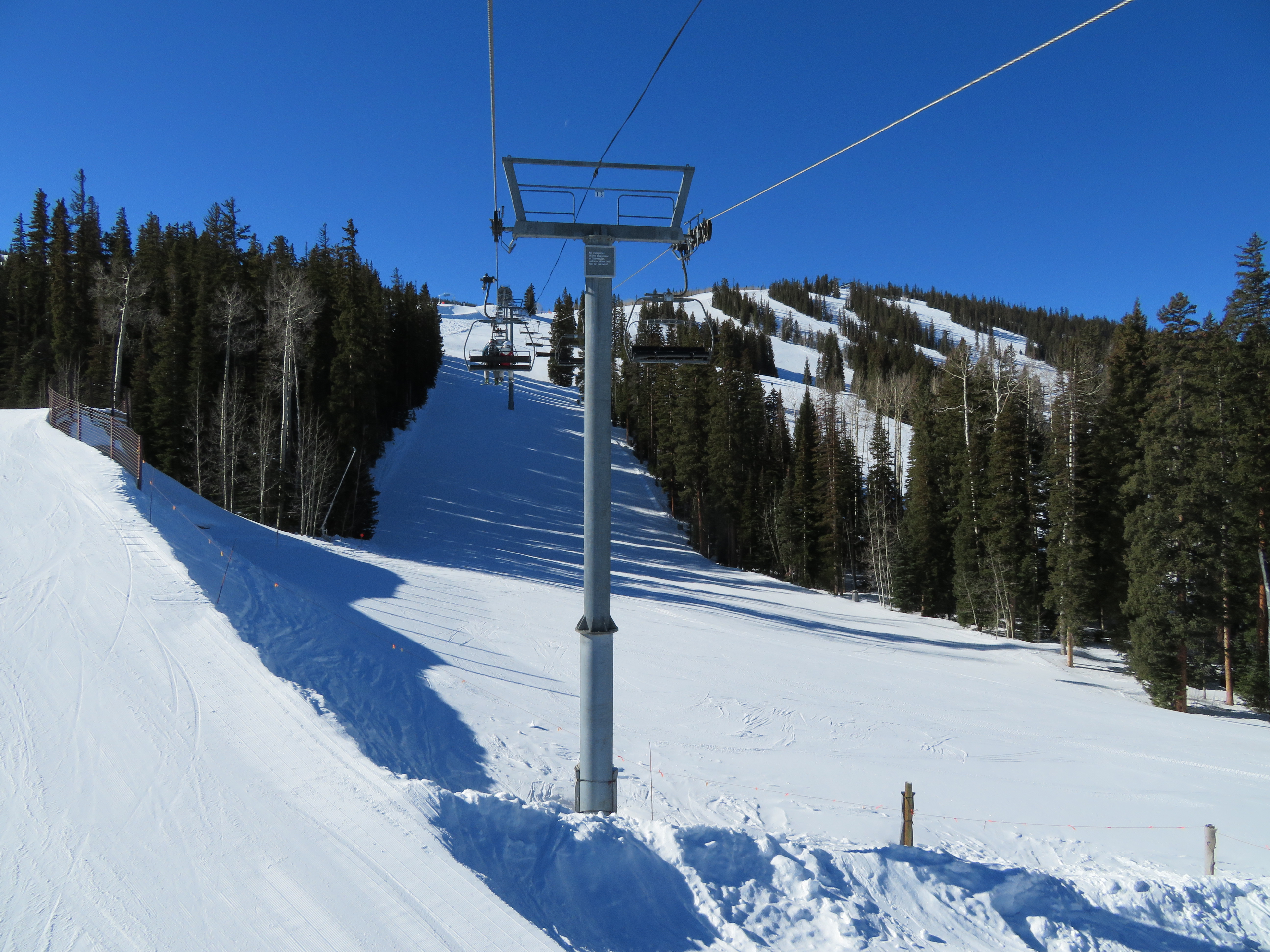
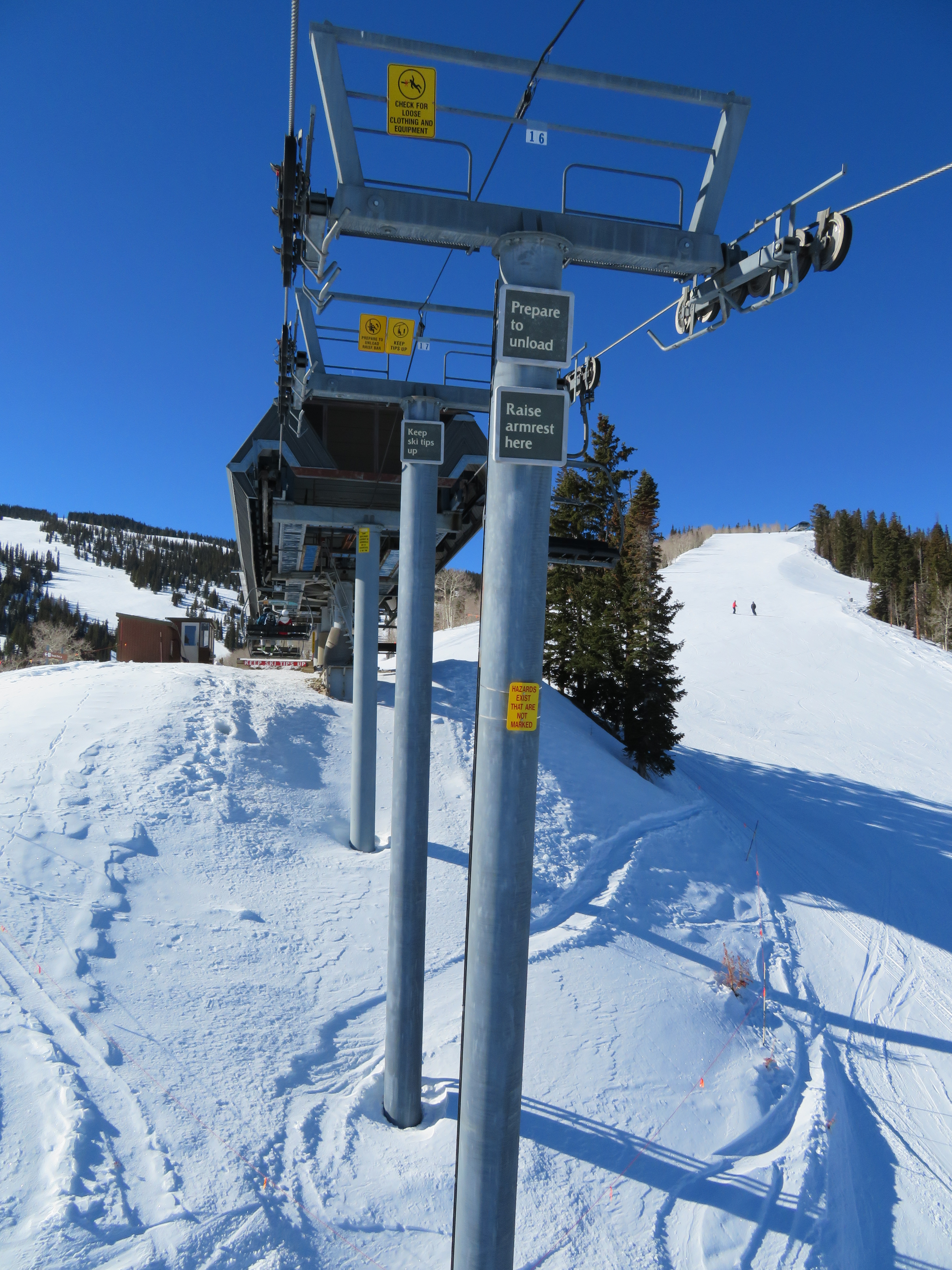
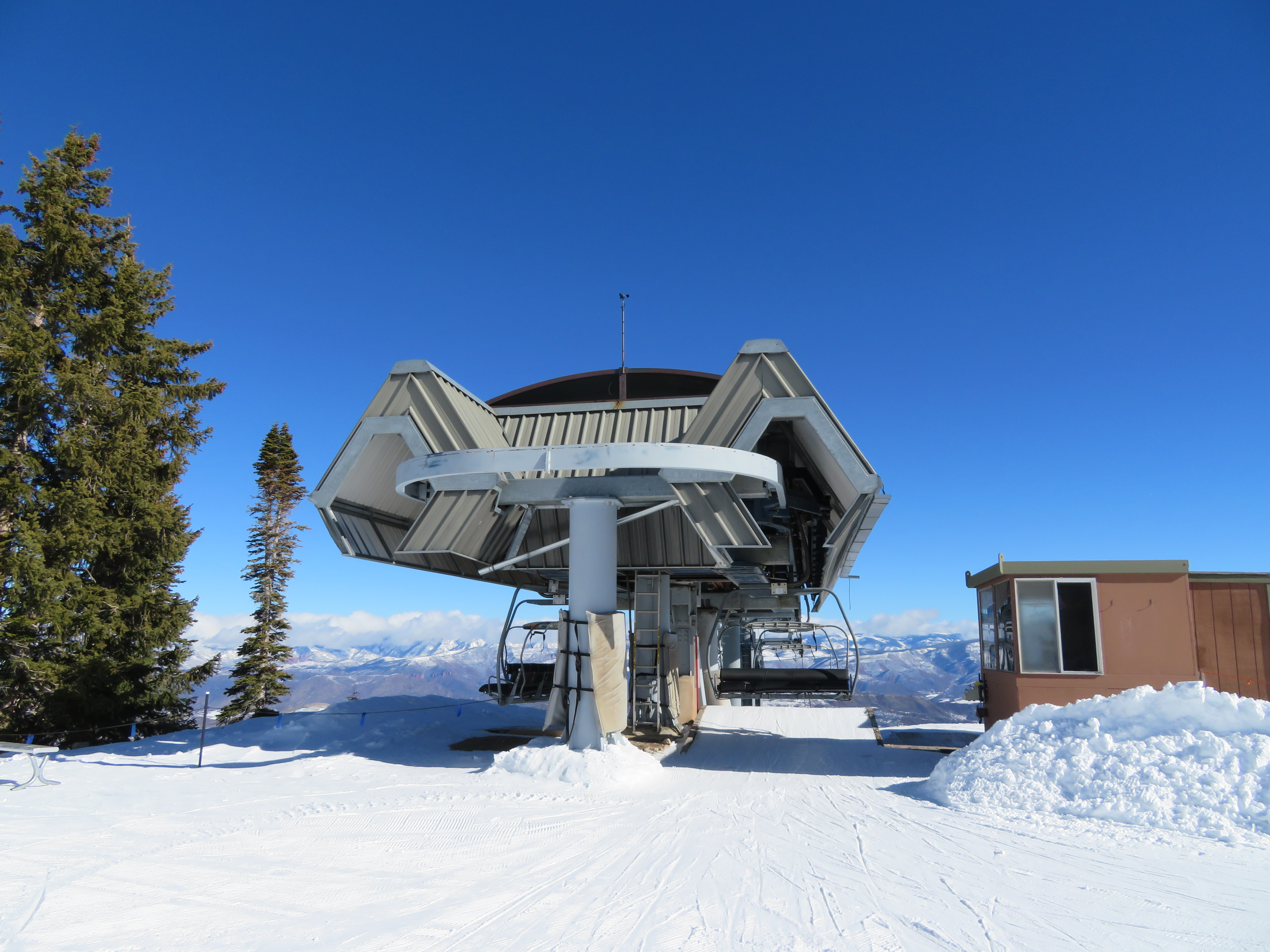
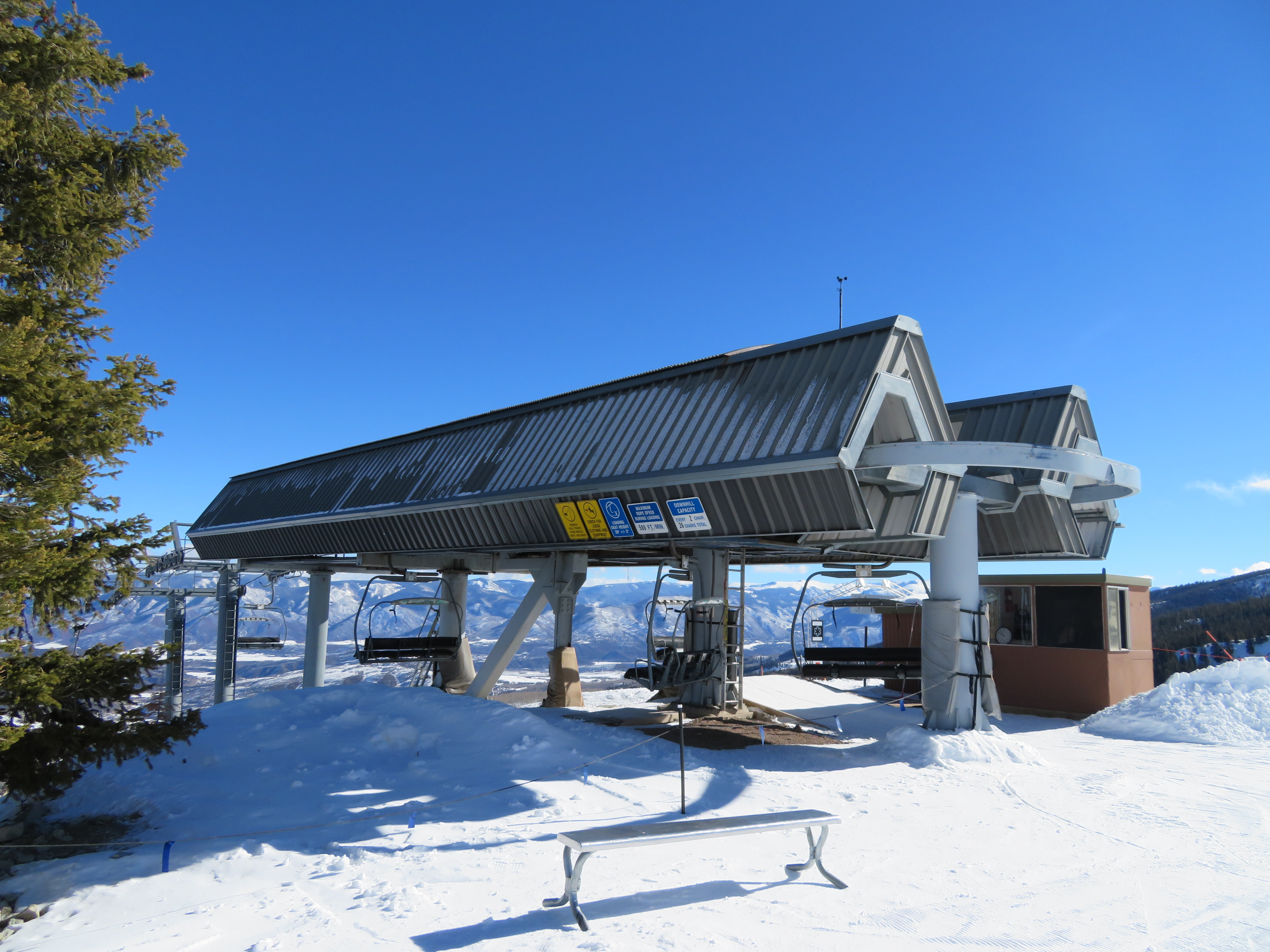
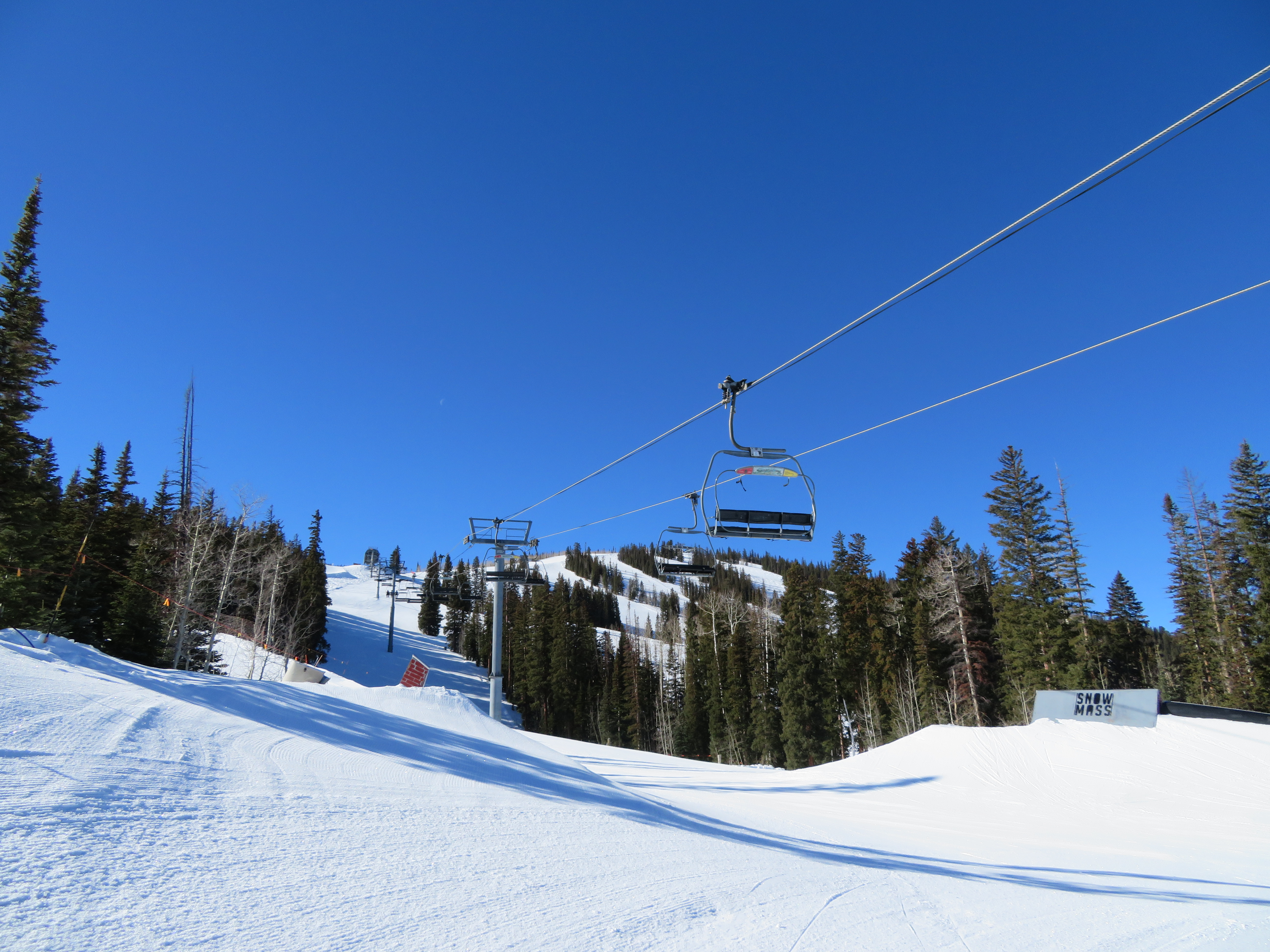
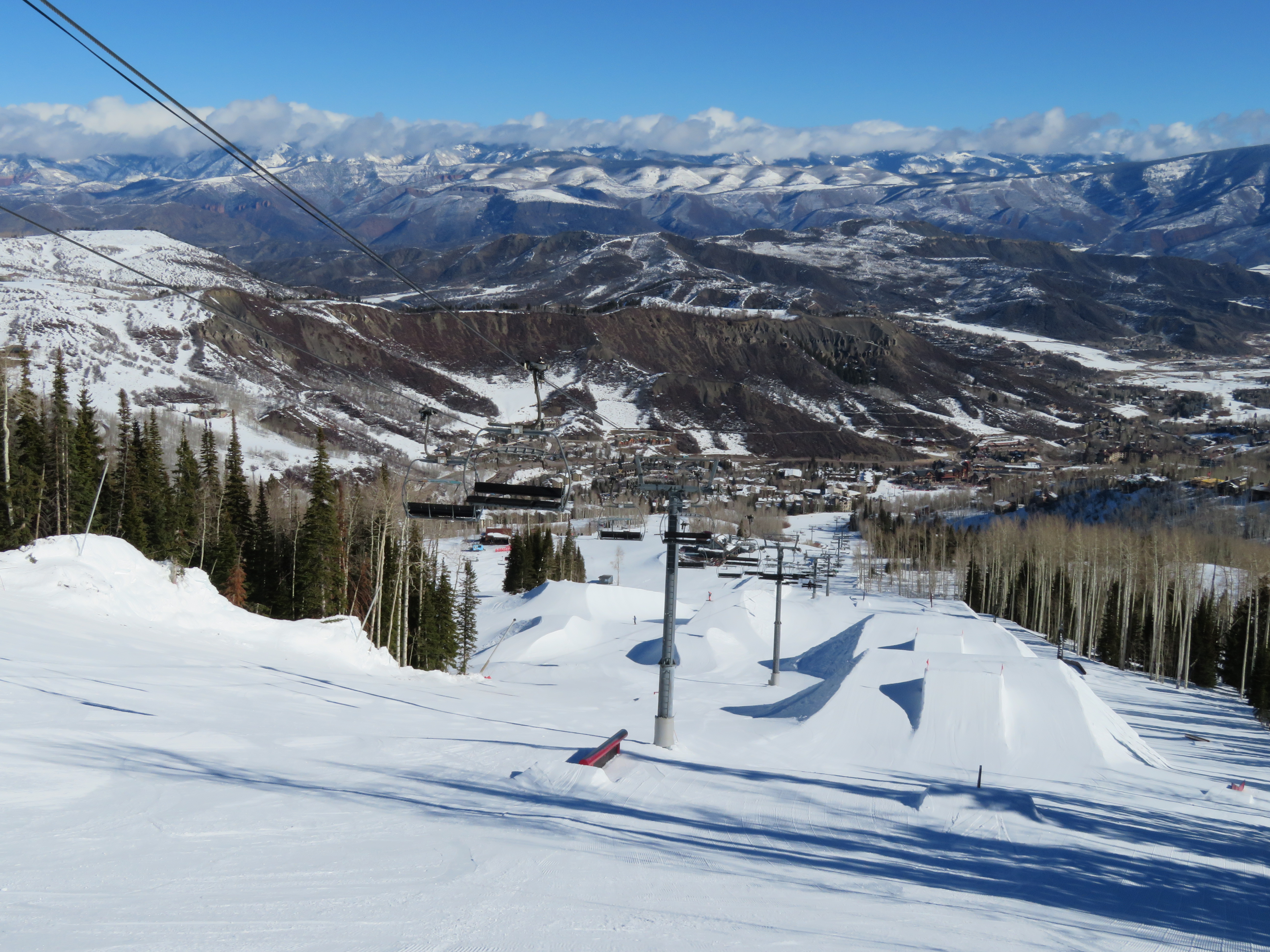
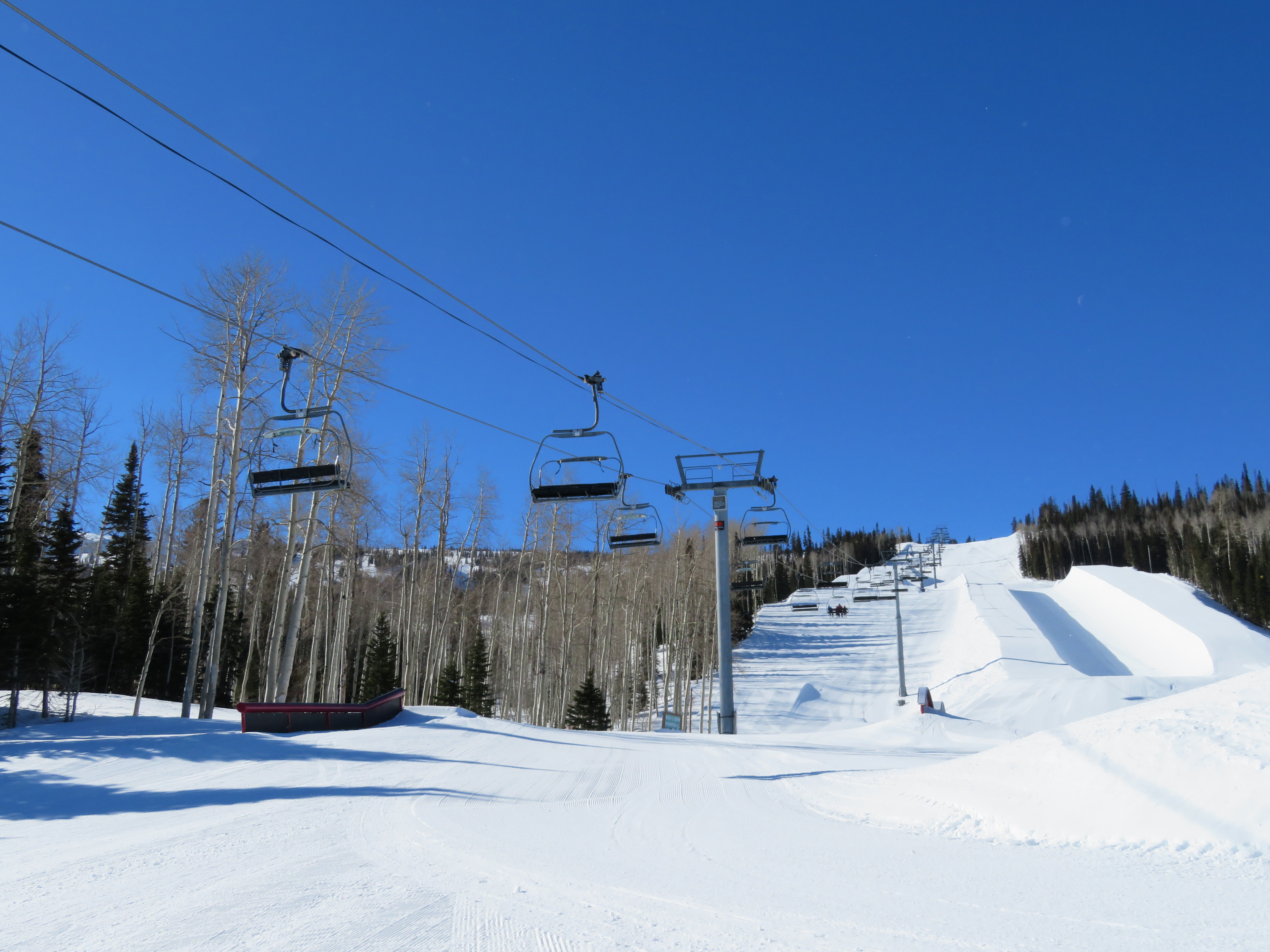
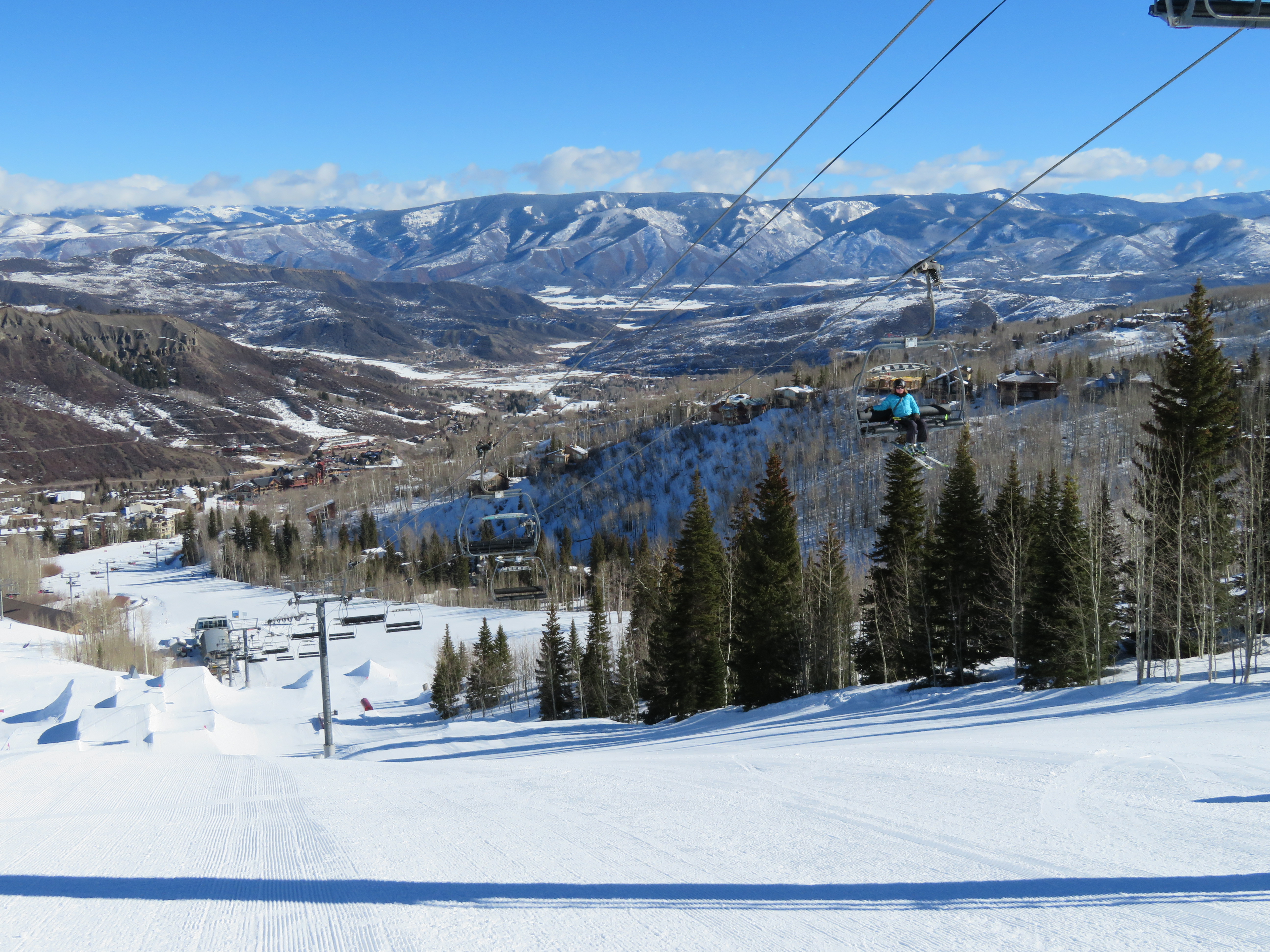
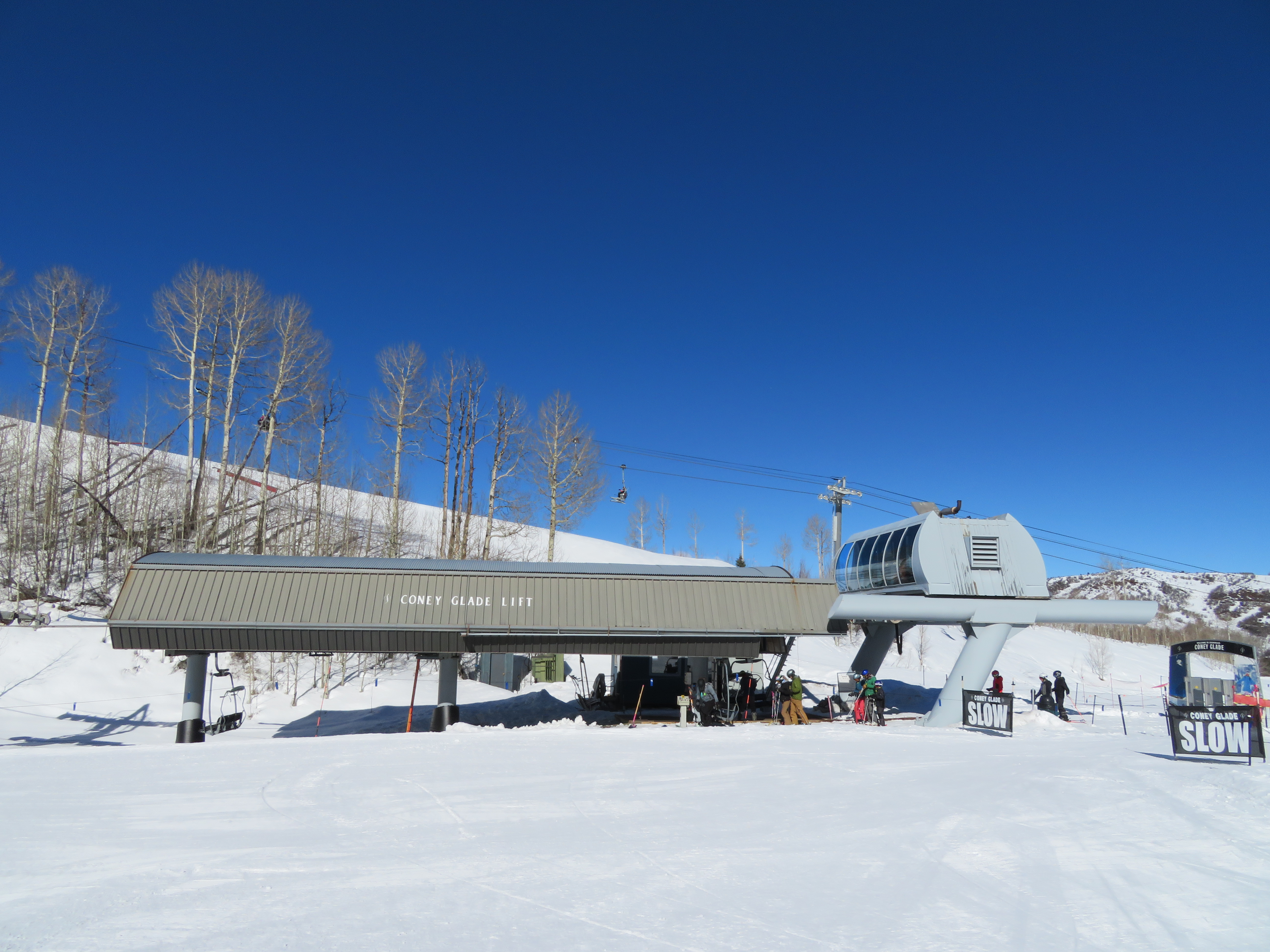
Before the Village Express, Fanny Hill and Coney Glade combined to serve Sam’s Knob.Poma Alpha detachable drive station.Lift overview.Loading area and lift line.Chain-driven turnaround.The rope deflects a bunch to make it to the Alpha drive behind the Falcon detachable equipment.Chain motor.The acceleration and deceleration tires are driven by shafts rather than belts.Riding up the line.Upper lift line with tall towers.Towers 16 and 17.Unload ramp and operator house.Return station overview.Upper lift line.Middle portion of the line.Looking up.Lower lift line.Side view of the drive setup.
And now parts from the Flyer are on Coney Glade. I set aside a bunch of stuff for my counterparts when we tore it out- chain parts, tire axle housings, conveyor gearboxes, and some grip parts.
Also, I’ll beat my favourite dead horse here- there were never any such things as Alpha-Falcons. There once was a lift like this *called* the Falcon, but Poma called these terminals Performant (Performance). If it had an Alpha drive it was called the Alpha Evolutif (Evolution)- although the only Alpha fixed quad that evolved into a Performant detach in North America (that I’m aware of) was the aforementioned F-lift. The rest were all built originally as detachables.
While this looks like a bit of a “lift to nowhere,” I see this as a nice way for someone traveling from the Big Burn, Sheer Bliss, Alpine Springs, High Alpine or Elk Camp pods to get over to Sam’s Knob without going down to the base area.
Prior to the installation of Village Express, the Coney Clade Express was part of the main egress onto the mountain. The Fanny Hill Express would only get you access to Coney Glade Express or the now-removed Burlingame chair. It used to take 3 lifts to get to the top of Sam’s Knob back in the day.
It does serve the purpose like you said to help move skiers across the mountain between terrain pods, services the terrain park & superpipe areas, and also acts as a decent area to ride on windy or low visibility days in more protected terrain when the upper mountain is more exposed.
This lift could probably be removed tomorrow with only park skiers being upset, although they could still use Village Express so it would not be the end of the world for them. This lift’s alignment is suited for the old lift system at Snowmass, so it is unnecessary these days, and I would change it completely if it were to be replaced. Perhaps put the top terminal at the intersection of Lunchline and Bonzai and the bottom terminal towards the top of Fanny Hill to allow for the middle section of Village Express (the park and the blue/green trails off Lunchline) to all be lapped without needing to head all the way to the bottom.
I don’t see it as completely unnecessary, since I think it serves as a means to bypass the village base area entirely when transiting from the central and eastern parts of the mountain over to Sam’s Knob and Campground. (Although now looking at some maps, I think it might be possible to use Lunchline to get over to the Sam’s Knob lift from Big Burn and Sheer Bliss).
I’m not a park skier and I would be extremely upset. Though you can get from Big Burn/Sheer Bliss to Sam’s Knob via Lunchline, It remains the best way to get from Alpine Springs/High Alpine to Sam’s Knob/Campground bypassing the busy base area. The alternative is to use the Sheer Bliss lift, which is a long inefficient detour.
Besides being a great way to get from Alpine Springs to Sam’s Knob, it’s also the only remaining detachable at Snowmass where you can look up and see the inner workings of the lift, something that most skiers might not appreciate but is one of the finer points of skiing at Snowmass for me.
Doppelmayr debuted them on the UNI terminals in 1988/1989. Poma debuted them with the Challenger terminal prototypes in 1990/1991 and full-time beginning in 1992.
Many older chain-driven detachables of Poma vintage underwent conversion to tire contours in the late 1990s / early 2000s. This was the case for Breck’s older superchairs (the original Colorado and Falcon SuperChairs, which have been since replaced with high speed six packs, along with the still-running Beaver Run SuperChair) and Copper’s original American Flyer.
My biggest issue with the functioning of that yan tire contour system (not sure if it was the unreliable part), is that having independent motors means you need a computer to sync up ALL of the motor speeds. Back in the early 80s micro controllers weren’t as powerful and I imagine they may have used some very rudimentary electrical systems. I imagine that those motors would get out of sync quite often leading to spacing issues. Pretty much all current tire contour systems seem to have some kind of drive off the cable or drive by some kind of connected section. If anyone has any input on this it would be cool because this has always interested me.
You have to admit despite some fatal accidents that occurred in the 1990s, Yan was ahead of their time with the full tire contour detachable chairlifts, if only they had put more thought into their grips and designed their terminals better they really could’ve madea name for their brand
I’m going to cut-and-paste PBROPETECH here – there were never any such things as Alpha-Falcons. There once was a lift like this *called* the Falcon, but Poma called these terminals Performant (Performance). If it had an Alpha drive it was called the Alpha Evolutif (Evolution)
As you’ve probably already noticed by now, the old drive (bottom) location is not the new mid location. The mid load/unload/turn station is located between the Picnic Palace and Lynn Britt.
From what I know the “Alpha Evolution” terminals worked like any other detachable system, just the drives (the Alpha part) were located behind the detach terminal rather than being vault drives or overhead drives. In other words, the Alpha part powers the bullwheel/haul rope (like they do on a fixed grip, but faster), while the chairs are detached/reattached to the rope at the “Falcon” terminal (I’m told Falcon is a misnomer but I’m using it anyways). You can see in the photos above how the rope was deflected in the terminals. PBROPETECH or others who have experience working on these terminals may be able to correct or add more.
That’s it in a nutshell. The conveyor system in the terminals was powered either by a separate electric motor synced to haul rope speed, or by one of the deflection sheaves if the motor went out. The RT conveyor system was powered off the bullwheel.

 Lift Blog
Would you know what the strange slinky/barbwire object is in photo 2 left of the drive?
LikeLike
“Cable Art”- made from old ski lift haul ropes!
LikeLike
As I hear, It’s made from the old Sheer Bliss lift (Couloir)
LikeLike
This lift looks to be in really good shape for its age. There aren’t many Alpha-Falcons still in service.
LikeLiked by 1 person
Especially with Copper replacing the Flyer quad this summer
LikeLike
And now parts from the Flyer are on Coney Glade. I set aside a bunch of stuff for my counterparts when we tore it out- chain parts, tire axle housings, conveyor gearboxes, and some grip parts.
Also, I’ll beat my favourite dead horse here- there were never any such things as Alpha-Falcons. There once was a lift like this *called* the Falcon, but Poma called these terminals Performant (Performance). If it had an Alpha drive it was called the Alpha Evolutif (Evolution)- although the only Alpha fixed quad that evolved into a Performant detach in North America (that I’m aware of) was the aforementioned F-lift. The rest were all built originally as detachables.
LikeLiked by 3 people
I’ll amend my statement- seems the original chair 3 at Ajax evolved as well.
LikeLike
While this looks like a bit of a “lift to nowhere,” I see this as a nice way for someone traveling from the Big Burn, Sheer Bliss, Alpine Springs, High Alpine or Elk Camp pods to get over to Sam’s Knob without going down to the base area.
LikeLike
Prior to the installation of Village Express, the Coney Clade Express was part of the main egress onto the mountain. The Fanny Hill Express would only get you access to Coney Glade Express or the now-removed Burlingame chair. It used to take 3 lifts to get to the top of Sam’s Knob back in the day.
It does serve the purpose like you said to help move skiers across the mountain between terrain pods, services the terrain park & superpipe areas, and also acts as a decent area to ride on windy or low visibility days in more protected terrain when the upper mountain is more exposed.
LikeLike
It’s mainly used for park laps. It goes from bottom of the park to the start.
LikeLike
This lift could probably be removed tomorrow with only park skiers being upset, although they could still use Village Express so it would not be the end of the world for them. This lift’s alignment is suited for the old lift system at Snowmass, so it is unnecessary these days, and I would change it completely if it were to be replaced. Perhaps put the top terminal at the intersection of Lunchline and Bonzai and the bottom terminal towards the top of Fanny Hill to allow for the middle section of Village Express (the park and the blue/green trails off Lunchline) to all be lapped without needing to head all the way to the bottom.
LikeLike
I don’t see it as completely unnecessary, since I think it serves as a means to bypass the village base area entirely when transiting from the central and eastern parts of the mountain over to Sam’s Knob and Campground. (Although now looking at some maps, I think it might be possible to use Lunchline to get over to the Sam’s Knob lift from Big Burn and Sheer Bliss).
LikeLike
Coney Glade would be good to keep because Village Express stops all the time because of beginners loading it and Village express is also very long.
LikeLike
I’m not a park skier and I would be extremely upset. Though you can get from Big Burn/Sheer Bliss to Sam’s Knob via Lunchline, It remains the best way to get from Alpine Springs/High Alpine to Sam’s Knob/Campground bypassing the busy base area. The alternative is to use the Sheer Bliss lift, which is a long inefficient detour.
Besides being a great way to get from Alpine Springs to Sam’s Knob, it’s also the only remaining detachable at Snowmass where you can look up and see the inner workings of the lift, something that most skiers might not appreciate but is one of the finer points of skiing at Snowmass for me.
LikeLiked by 1 person
When were tire-driven detachables created? This is a chain-driven.
LikeLike
The cadence chain is only through the contour at the drive. Drive arrival and departure, as well as the entire return are tire driven
LikeLike
Doppelmayr debuted them on the UNI terminals in 1988/1989. Poma debuted them with the Challenger terminal prototypes in 1990/1991 and full-time beginning in 1992.
Many older chain-driven detachables of Poma vintage underwent conversion to tire contours in the late 1990s / early 2000s. This was the case for Breck’s older superchairs (the original Colorado and Falcon SuperChairs, which have been since replaced with high speed six packs, along with the still-running Beaver Run SuperChair) and Copper’s original American Flyer.
LikeLike
What was the very first tire contour detachable lift in North America (Or the world)
LikeLike
Possibly J6?
LikeLike
https://www.remontees-mecaniques.net/bdd/reportage-tcd6-river-run-1-yan-lift-engineering-5782.html
Huge sheaves and tire turnarounds with each tire independently powered by its each motor!
LikeLike
My biggest issue with the functioning of that yan tire contour system (not sure if it was the unreliable part), is that having independent motors means you need a computer to sync up ALL of the motor speeds. Back in the early 80s micro controllers weren’t as powerful and I imagine they may have used some very rudimentary electrical systems. I imagine that those motors would get out of sync quite often leading to spacing issues. Pretty much all current tire contour systems seem to have some kind of drive off the cable or drive by some kind of connected section. If anyone has any input on this it would be cool because this has always interested me.
LikeLike
I think Sunshine’s old Angel Express was converted to tires, same for Louise’s Grizzly gondola. both Poma’s.
LikeLike
I believe Yan started with tires in 1986, Doppelmayr and Poma caught on later.
LikeLike
YAN built 2 tire turnaround gondolas in 1984.
LikeLike
You have to admit despite some fatal accidents that occurred in the 1990s, Yan was ahead of their time with the full tire contour detachable chairlifts, if only they had put more thought into their grips and designed their terminals better they really could’ve madea name for their brand
LikeLike
Is this the only falcon terminal left in North America now that Pioneer Express at Winter Park is removed?
LikeLike
Zephyr Express at Hunter Mountain, NY
LikeLike
Silver Queen at nearby Aspen Mountain
LikeLike
Grizzly at Lake Louise and WVG at Whistler also count.
LikeLike
SQG is a falcon with vault drive.
LikeLike
I’m going to cut-and-paste PBROPETECH here – there were never any such things as Alpha-Falcons. There once was a lift like this *called* the Falcon, but Poma called these terminals Performant (Performance). If it had an Alpha drive it was called the Alpha Evolutif (Evolution)
LikeLike
Watch the progress on the base (soon to be mid) station on the Coney Express:
https://coloradowebcam.net/camera/snowmass-village-ski-hill-webcam
LikeLike
As you’ve probably already noticed by now, the old drive (bottom) location is not the new mid location. The mid load/unload/turn station is located between the Picnic Palace and Lynn Britt.
LikeLike
How do these Falcon Alpha drives work? What does the Alpha drive do? How many Falcon Alpha drives are there left?
LikeLike
From what I know the “Alpha Evolution” terminals worked like any other detachable system, just the drives (the Alpha part) were located behind the detach terminal rather than being vault drives or overhead drives. In other words, the Alpha part powers the bullwheel/haul rope (like they do on a fixed grip, but faster), while the chairs are detached/reattached to the rope at the “Falcon” terminal (I’m told Falcon is a misnomer but I’m using it anyways). You can see in the photos above how the rope was deflected in the terminals. PBROPETECH or others who have experience working on these terminals may be able to correct or add more.
LikeLike
That’s it in a nutshell. The conveyor system in the terminals was powered either by a separate electric motor synced to haul rope speed, or by one of the deflection sheaves if the motor went out. The RT conveyor system was powered off the bullwheel.
LikeLiked by 1 person
Coney used to be powered by a motor.
LikeLike