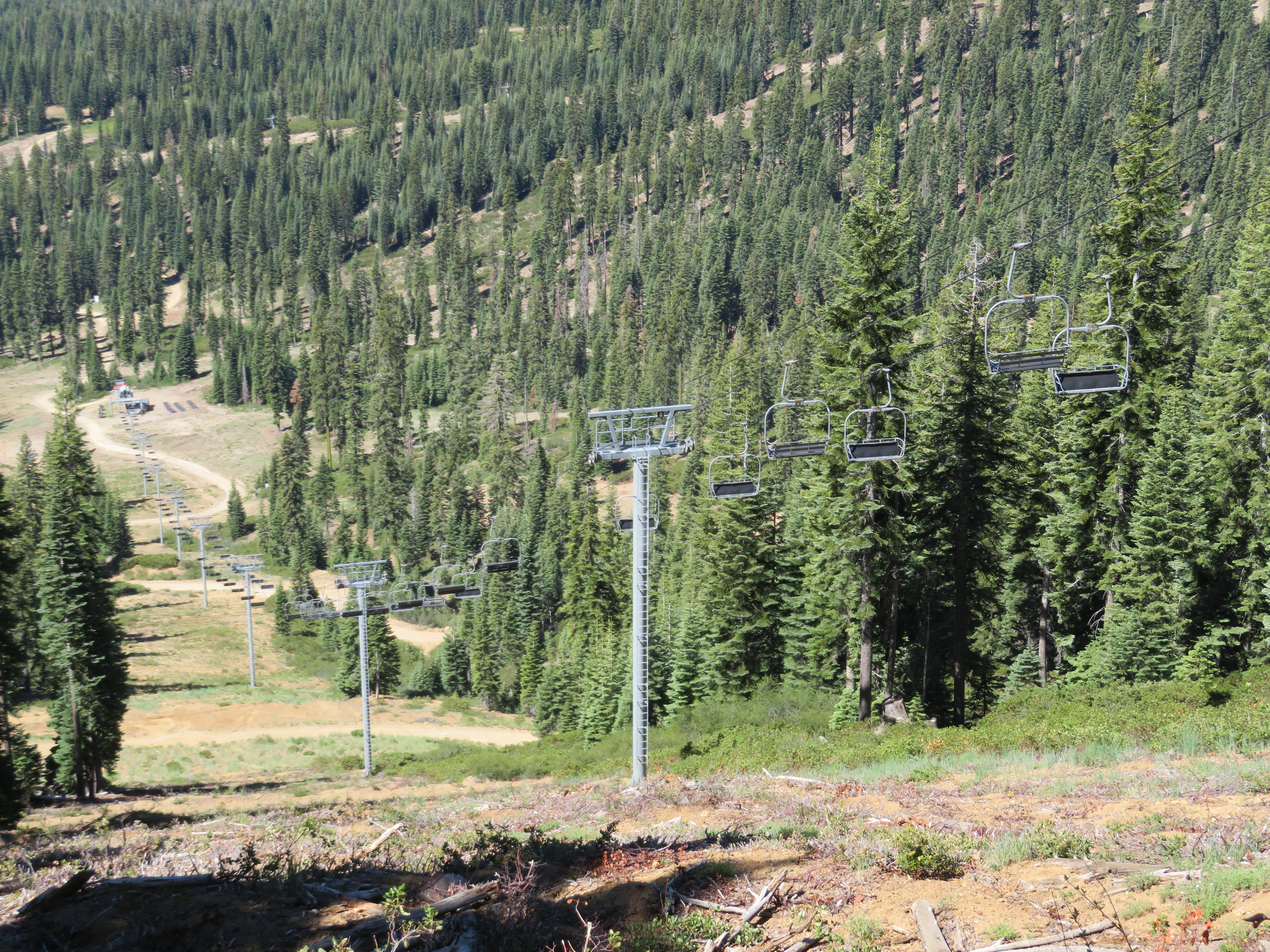
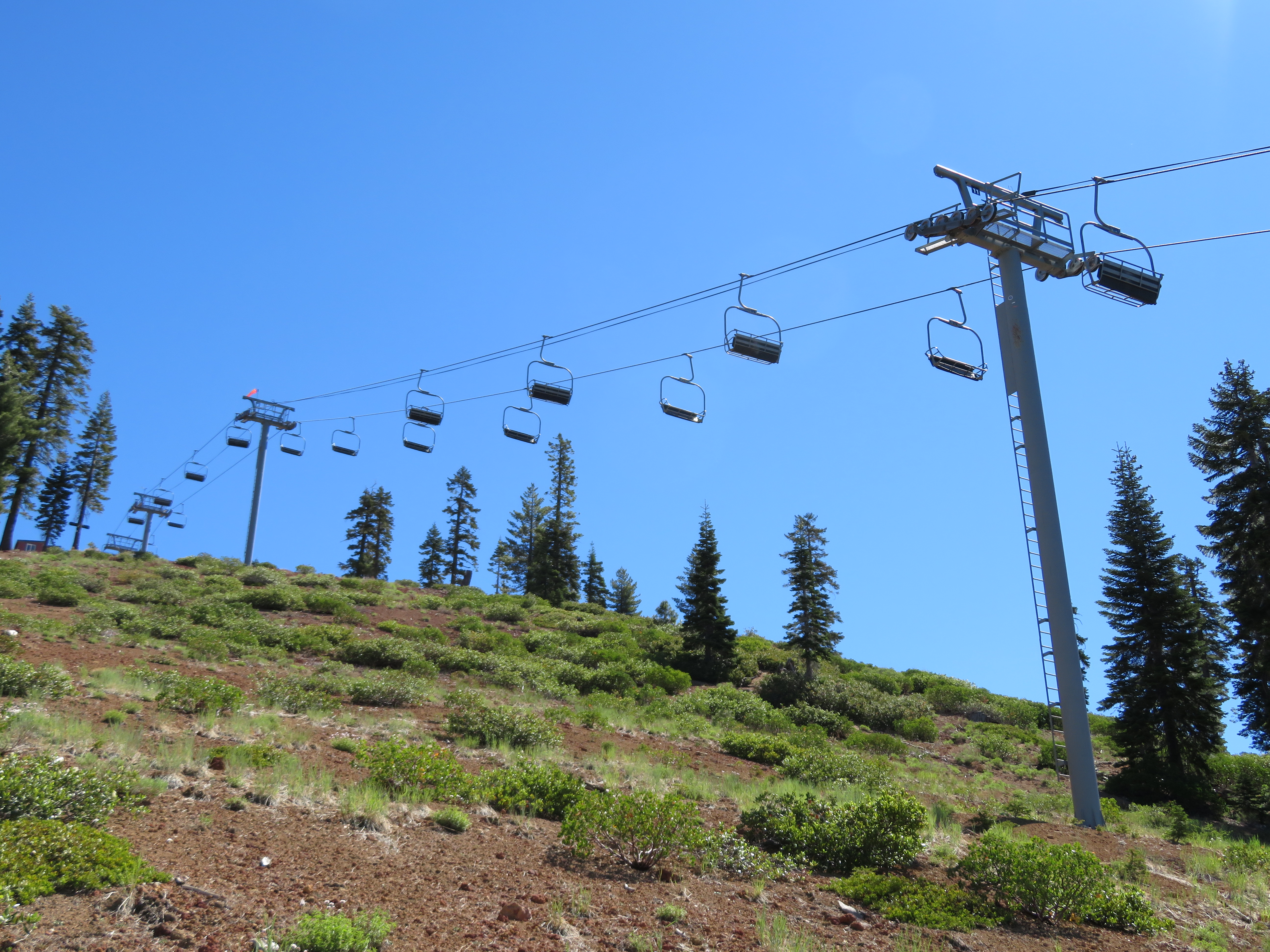
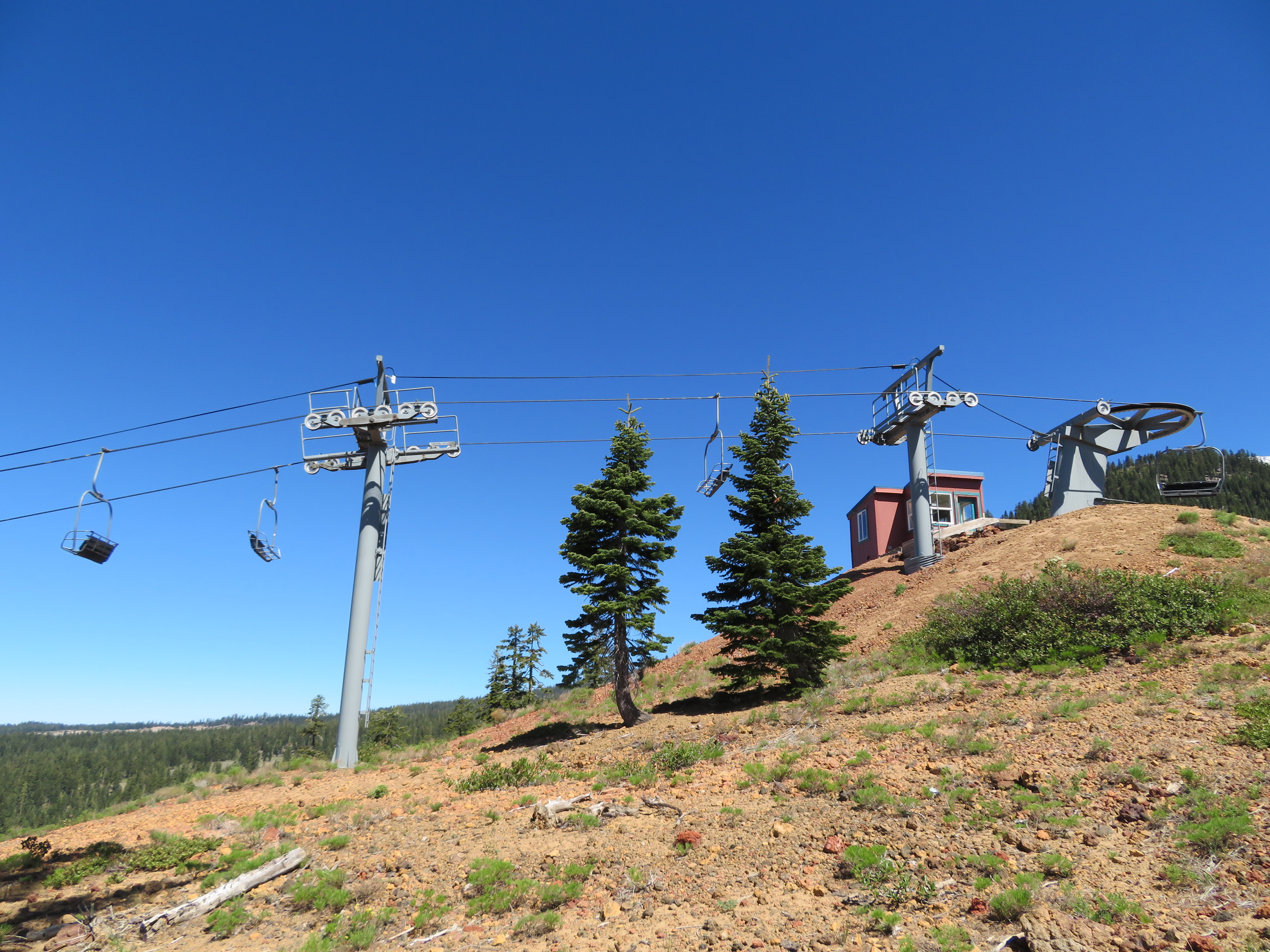
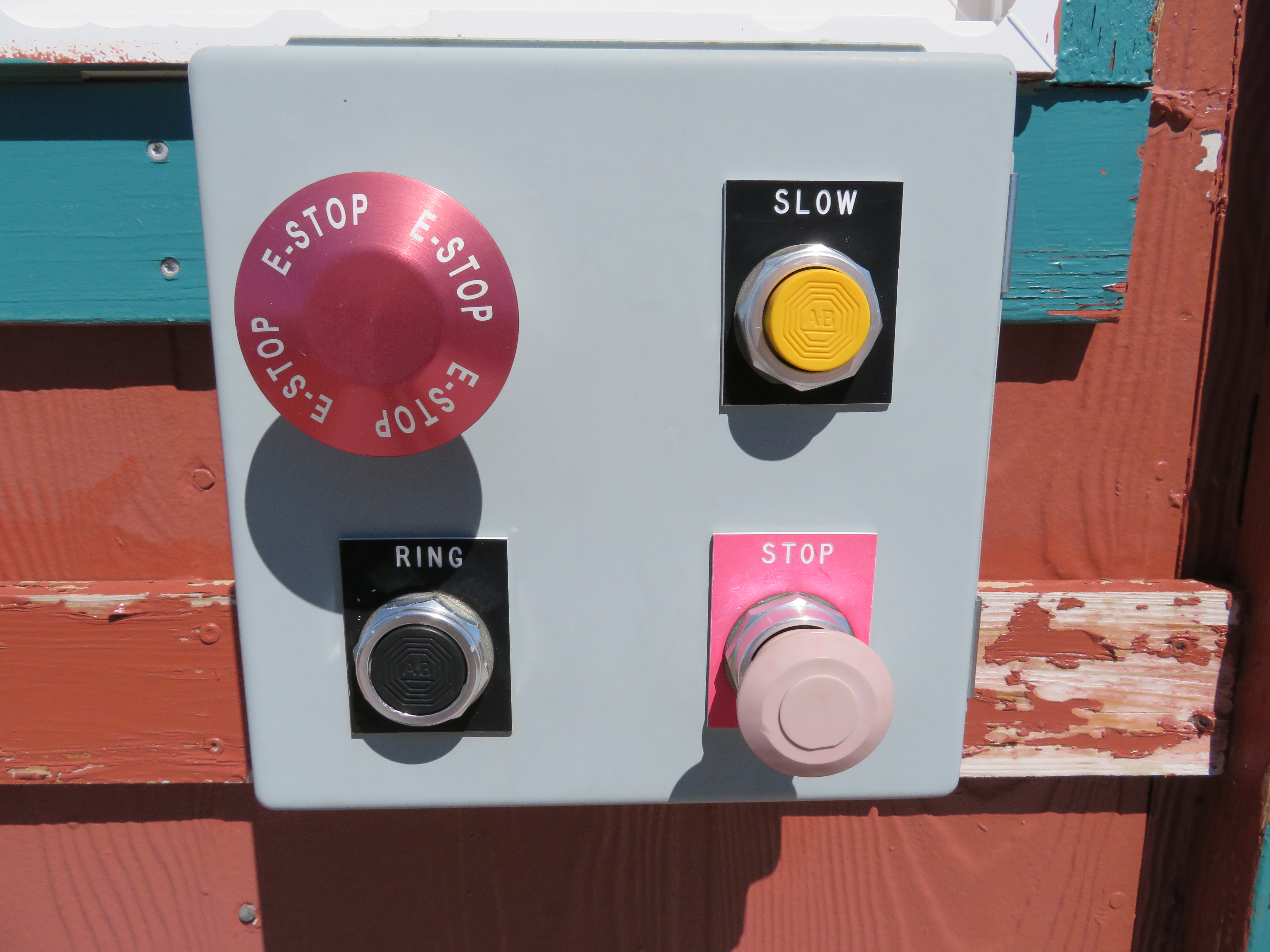
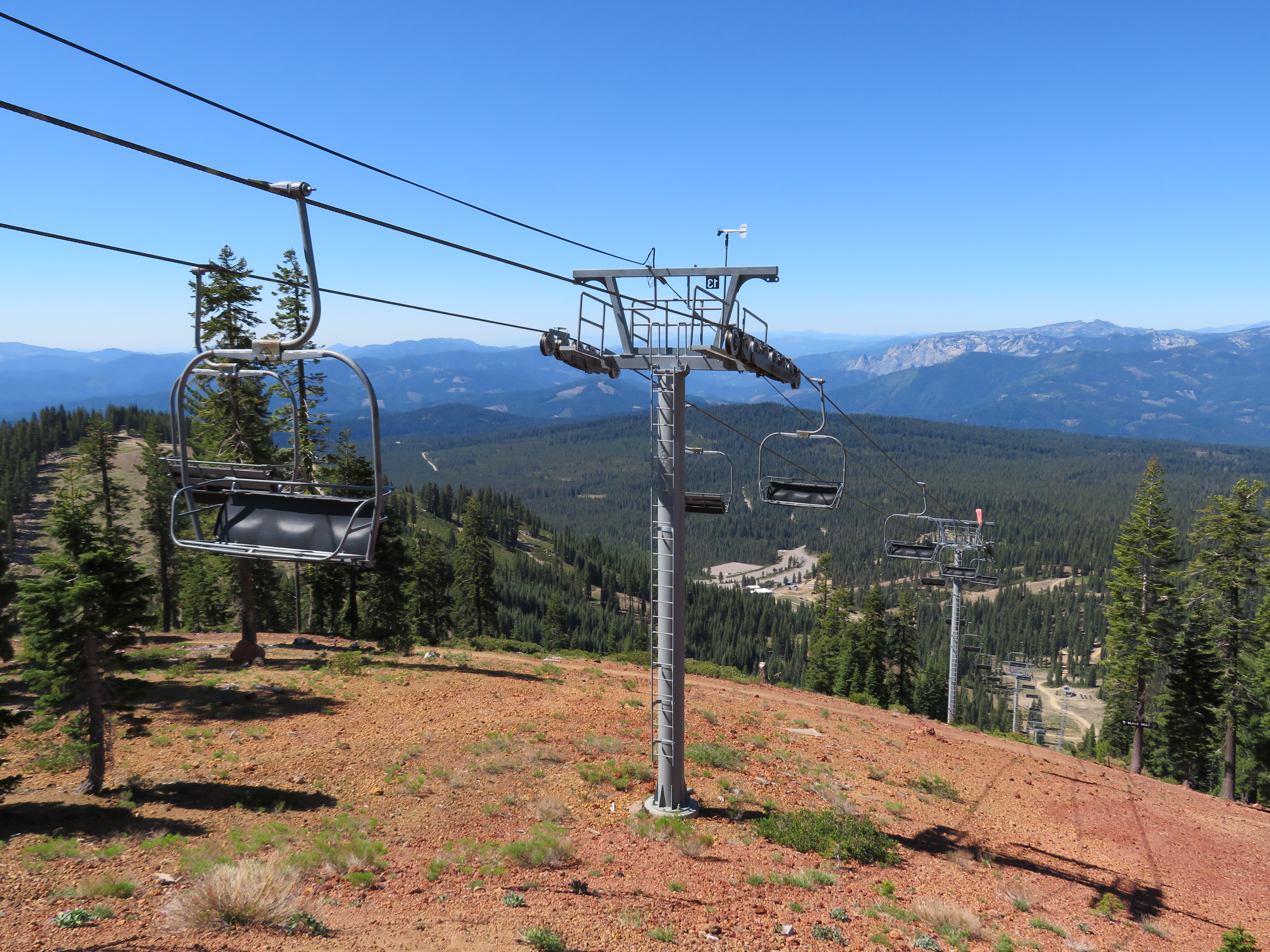
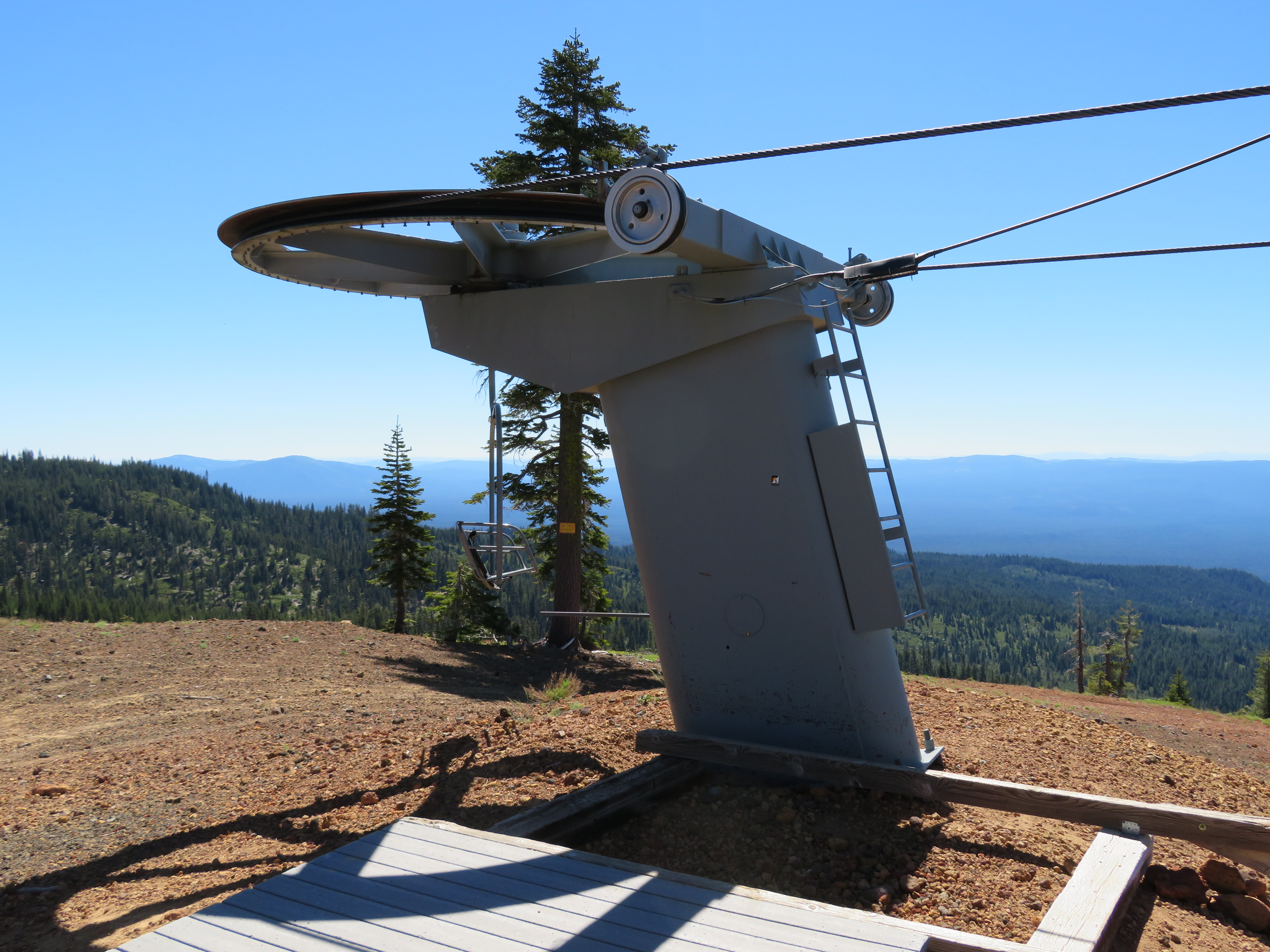
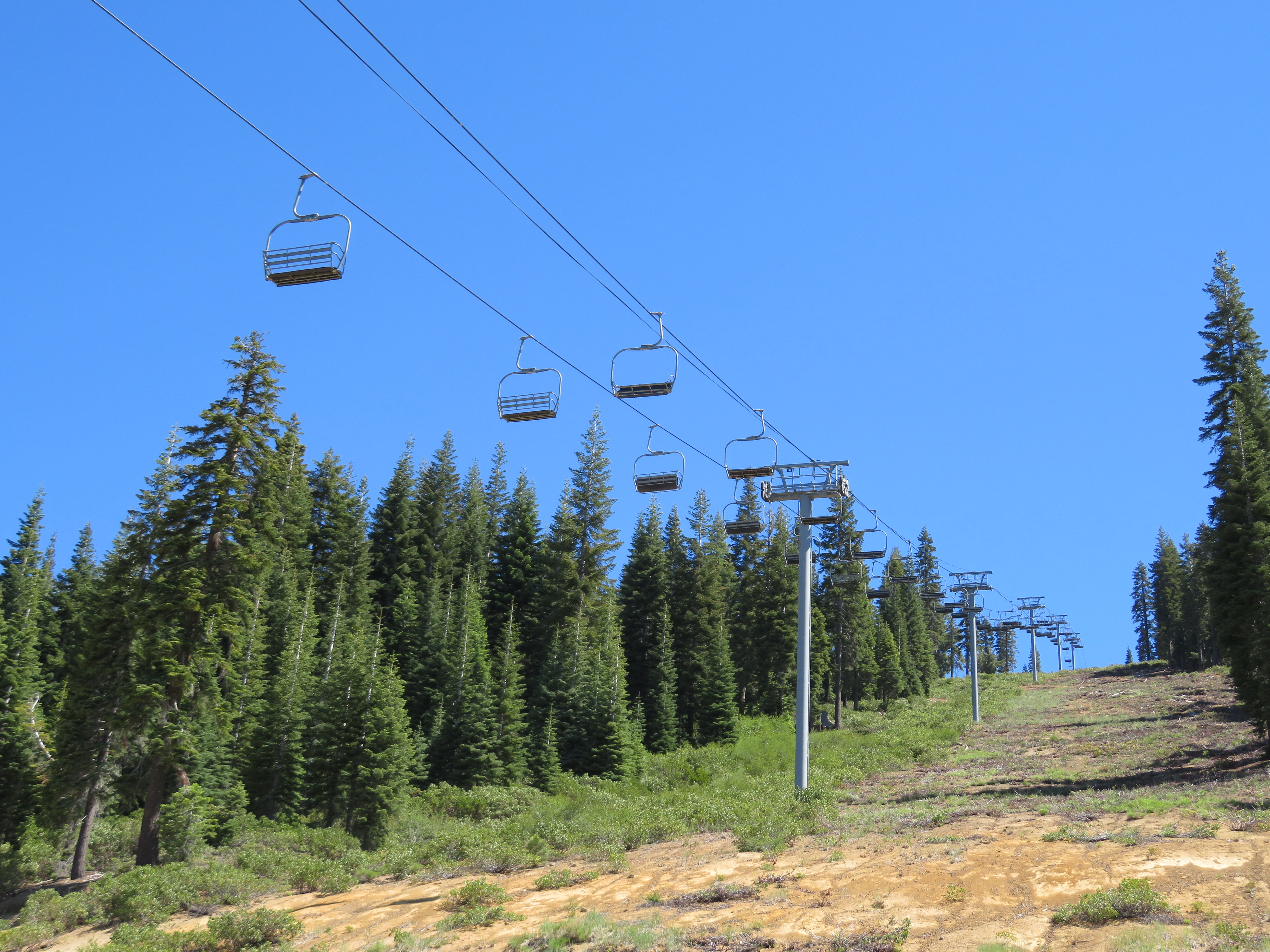
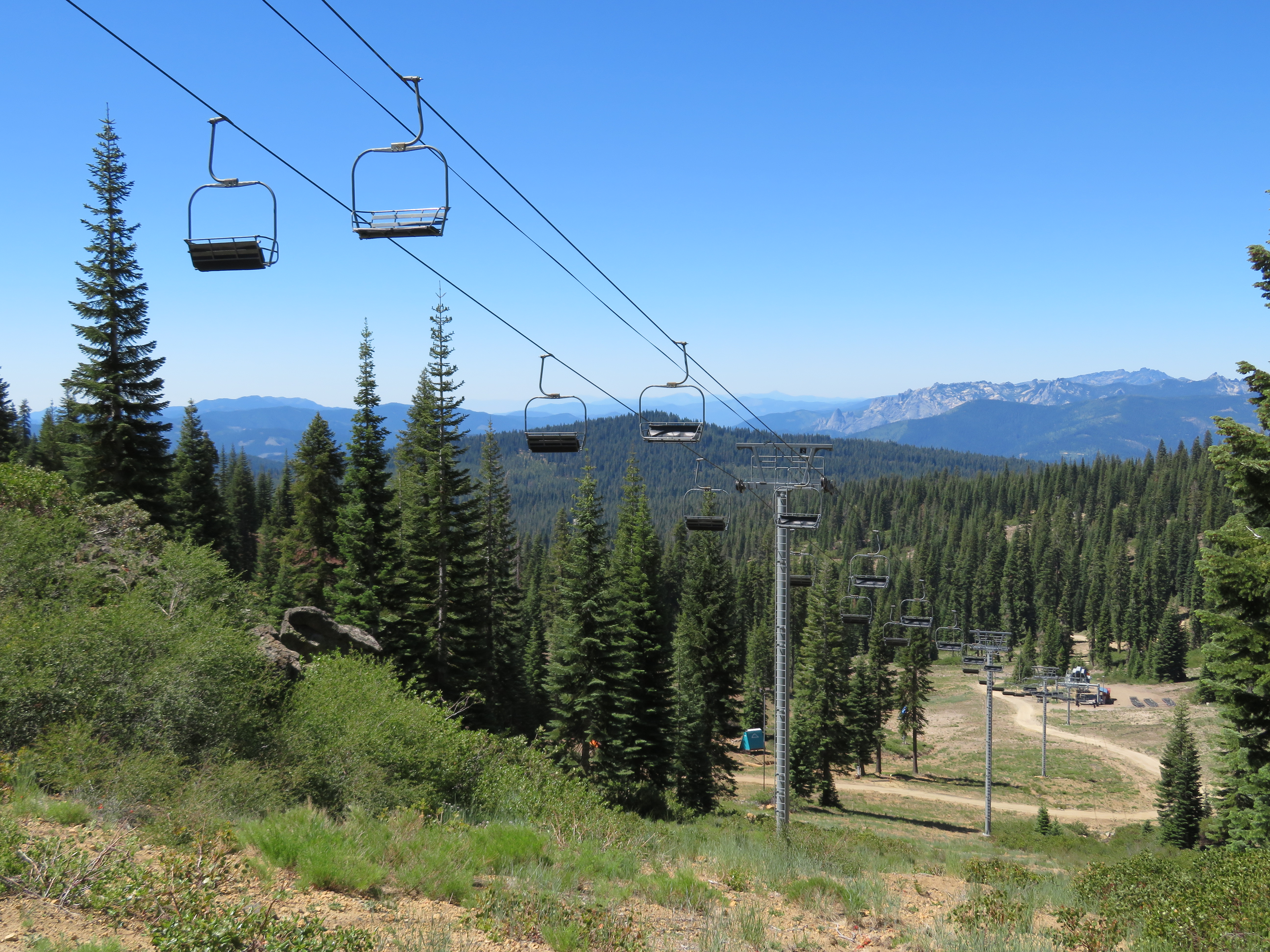
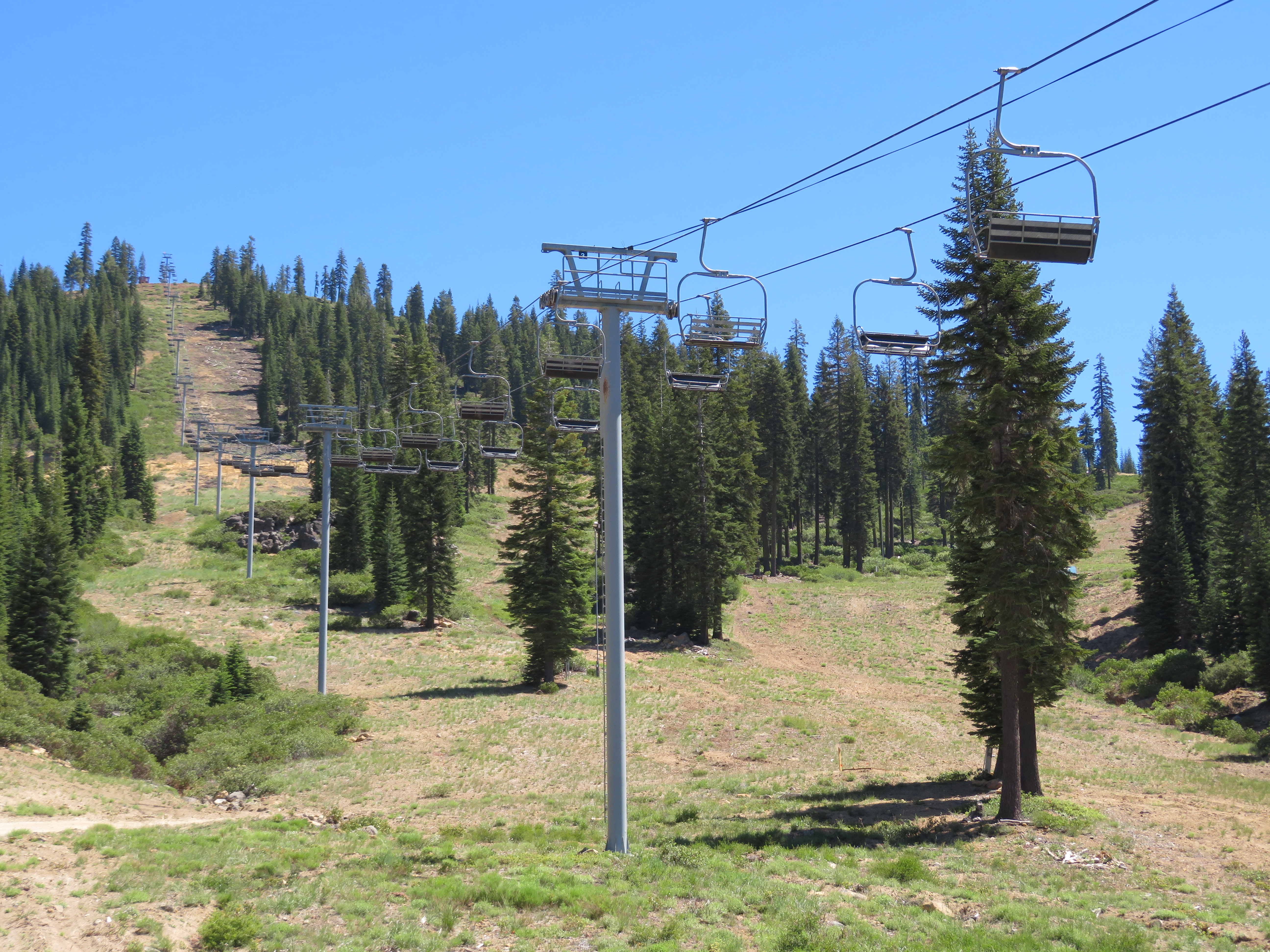
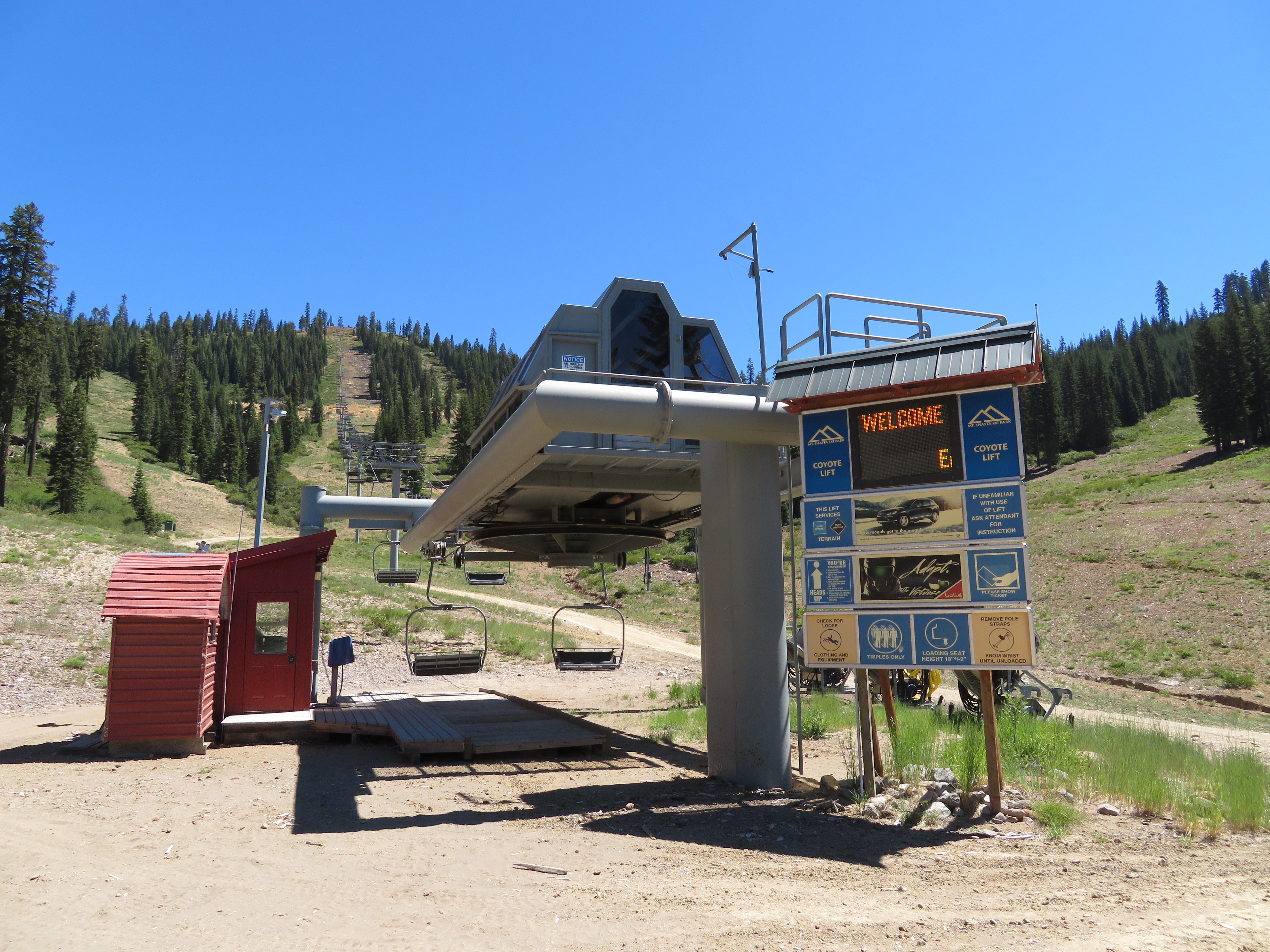
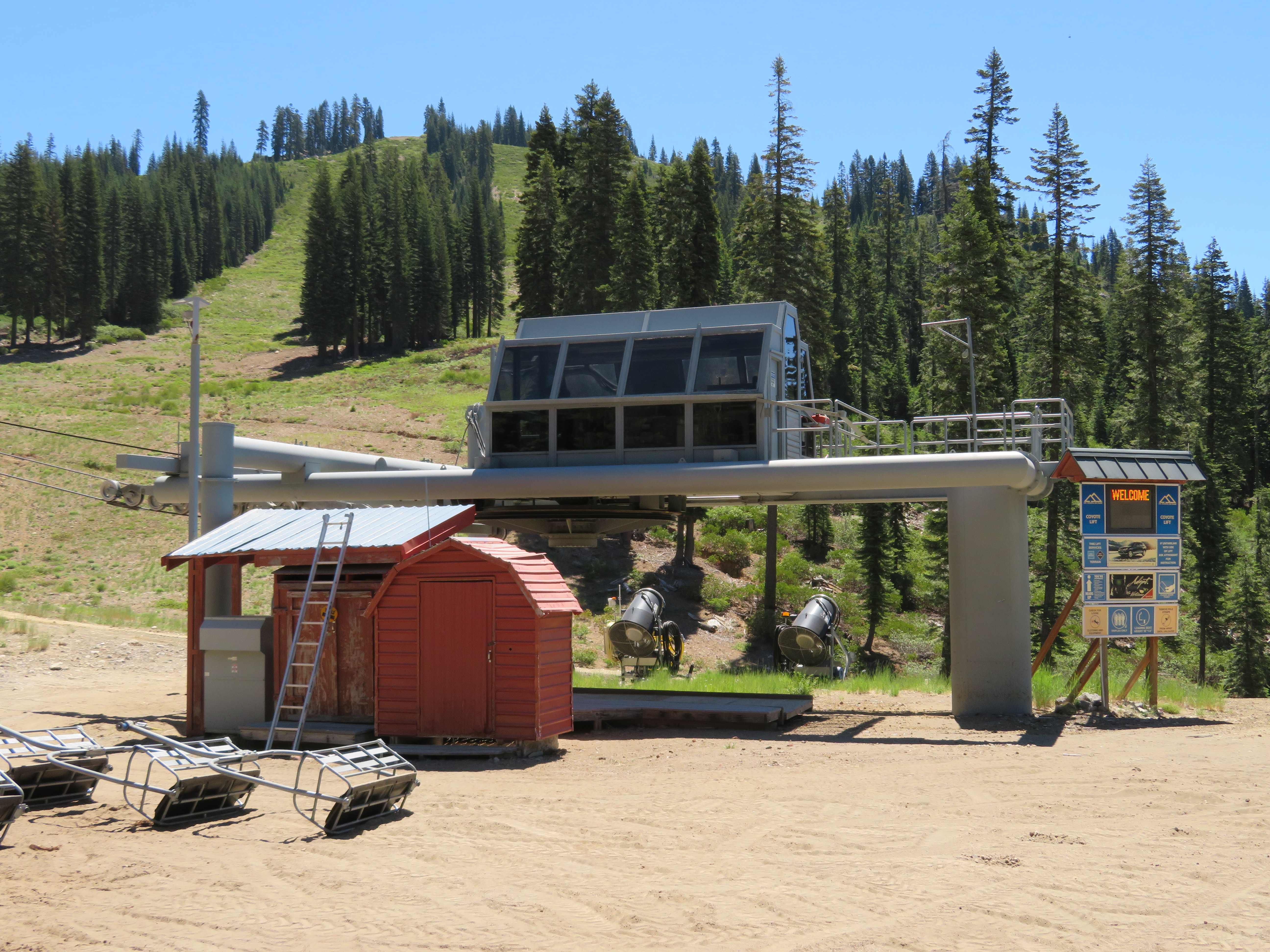
The three original lifts at Mt. Shasta Ski Park were built by Poma in 1985; this CTEC triple was added eleven years later to service an expansion.Breakover towers near the summit.The top two towers and upper terminal.Return controls.View down from the summit.Orion top terminal.View up the steep lift line.Lower section of the lift line.Lift line overview.Loading area and motor room.Side view of the drive station.
The equation for capacity is different than what you show here. (3600/loading interval) x carrier capacity, where 3600 is the number of seconds in an hour, and loading interval is also in seconds. Thus, if we assume this lift has a 6-second load interval, we know that the design capacity is 1800. Neither the number of carriers on the lift nor the ride time (I assume that’s what you mean by 7 minutes in your math) factor in. To put it another way, if you’re the top operator you see three people unload every six seconds. It doesn’t matter how many people are behind them.
what ive done in part of my equation is calculate carriers per hour with: ((60 min/hr)/(7 min * 2)) * 210 chairs = 900 chairs/hr
using this i could calculate loading interval with: (3600 sec/hr)/(900chairs/hr) = 4 sec/chair
plugging it back in to the equation you’ve given me would make: (3600 sec/hr)/(4 sec/chair) * 210 chairs = 2700 pph
my original equation with carriers per hour subbed in would make: (900 chairs/hr) * 210 chairs = 2700 pph
it’s the same result, but with different inputs, I’ve simply taken the information provided in the spreadsheet and used it to verify the actual capacity of this lift (which is listed as 1800 pph), both ways work, which way works better is down to what quantities are known.
@NoahBerg, your equation works but it is misleading. The 7 minute ride time you use is reliant on the chair being run at full speed. This lift could definitely have 210 chairs and a capacity of 1800 if it was run slower than the max design speed of 500 fpm. As PBROTECH and Kirk pointed out capacity is dependent on interval. For example, if this lift was run at 330 fpm, that would create a chair interval of 6 seconds on this lift and therefore a capacity of 1800. Given this speed is slow, I could see Shasta having less chairs on the line than the spreadsheet says, but it’s entirely possible that 210 is correct.
@SkiClaremont you certainly do have a point in saying this, I however, am just using the data presented to me in the spreadsheet and analyzing it, but yes, the lift could have 210 chairs if run slow enough.

 Lift Blog
I’ve heard this lift was purchased second-hand. Does anyone know if this is true, and where it would have come from?
LikeLiked by 1 person
It was purchased new.
LikeLike
Is that an electronic sign in the last pic?
LikeLike
I guess it’s a welcome sign…
LikeLike
are we sure this lift actually has 210 chairs, because if so, it would have a 2700 pph capacity number, which shouldn’t be possible for a fixed triple
LikeLike
how i got this number: ((60 min/hr)/(7 min * 2)) * 210 chairs * 3 ppl/chair = 2700 pph
to be able to have the listed 1800 pph, this lift would have to have 140 chairs (same process)
LikeLike
The equation for capacity is different than what you show here. (3600/loading interval) x carrier capacity, where 3600 is the number of seconds in an hour, and loading interval is also in seconds. Thus, if we assume this lift has a 6-second load interval, we know that the design capacity is 1800. Neither the number of carriers on the lift nor the ride time (I assume that’s what you mean by 7 minutes in your math) factor in. To put it another way, if you’re the top operator you see three people unload every six seconds. It doesn’t matter how many people are behind them.
LikeLike
what ive done in part of my equation is calculate carriers per hour with: ((60 min/hr)/(7 min * 2)) * 210 chairs = 900 chairs/hr
using this i could calculate loading interval with: (3600 sec/hr)/(900chairs/hr) = 4 sec/chair
plugging it back in to the equation you’ve given me would make: (3600 sec/hr)/(4 sec/chair) * 210 chairs = 2700 pph
my original equation with carriers per hour subbed in would make: (900 chairs/hr) * 210 chairs = 2700 pph
it’s the same result, but with different inputs, I’ve simply taken the information provided in the spreadsheet and used it to verify the actual capacity of this lift (which is listed as 1800 pph), both ways work, which way works better is down to what quantities are known.
LikeLike
also noting that (7 min * 2) = 14 min/revolution, meaning chair 1 would take 14 minutes to go from top to bottom and back assuming no slows or stops
LikeLike
Agree, the only thing that matters when calculating PPH is knowing the carrier interval and number of passengers per carrier.
LikeLike
@NoahBerg, your equation works but it is misleading. The 7 minute ride time you use is reliant on the chair being run at full speed. This lift could definitely have 210 chairs and a capacity of 1800 if it was run slower than the max design speed of 500 fpm. As PBROTECH and Kirk pointed out capacity is dependent on interval. For example, if this lift was run at 330 fpm, that would create a chair interval of 6 seconds on this lift and therefore a capacity of 1800. Given this speed is slow, I could see Shasta having less chairs on the line than the spreadsheet says, but it’s entirely possible that 210 is correct.
LikeLike
@SkiClaremont you certainly do have a point in saying this, I however, am just using the data presented to me in the spreadsheet and analyzing it, but yes, the lift could have 210 chairs if run slow enough.
LikeLike