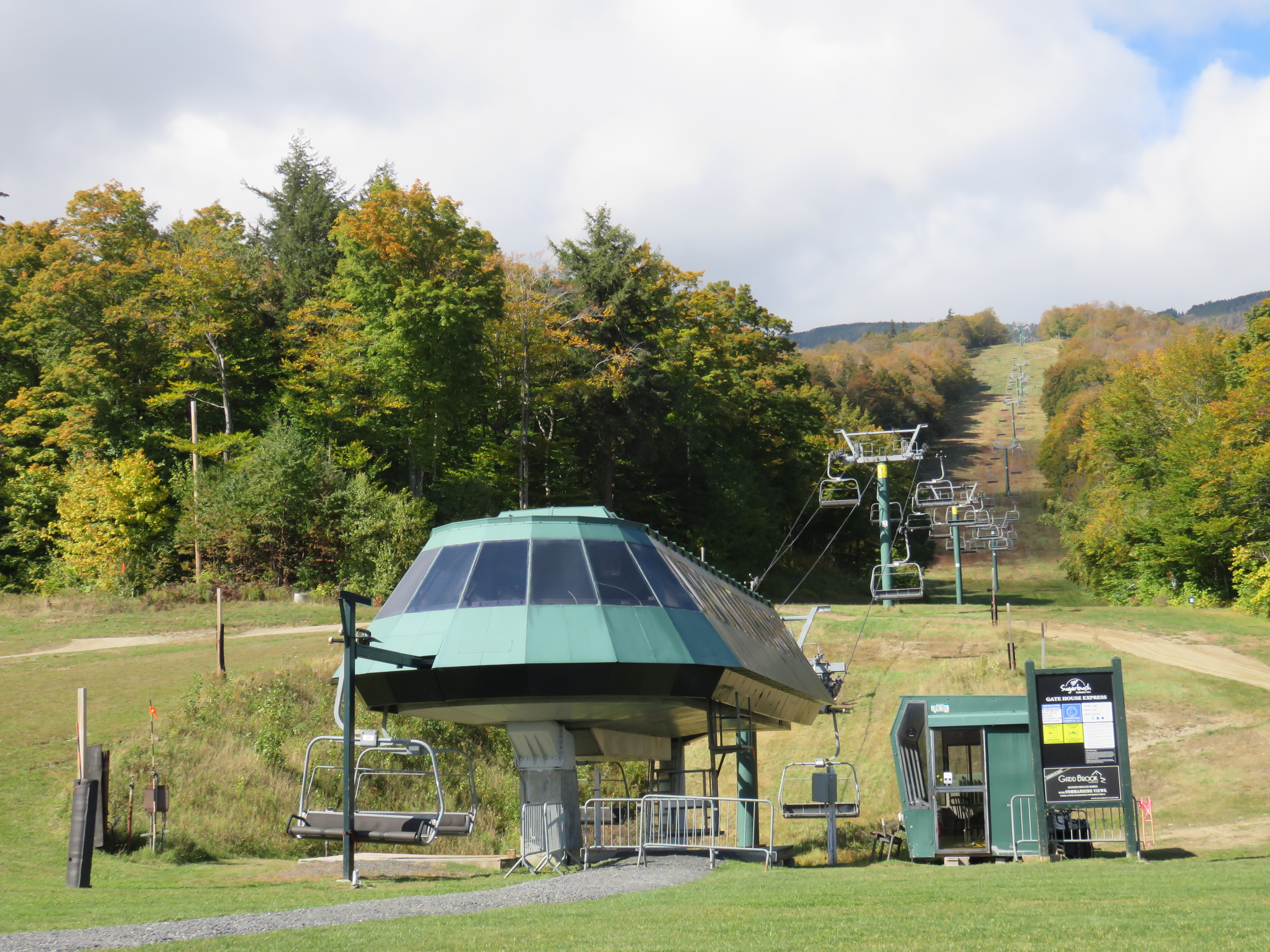
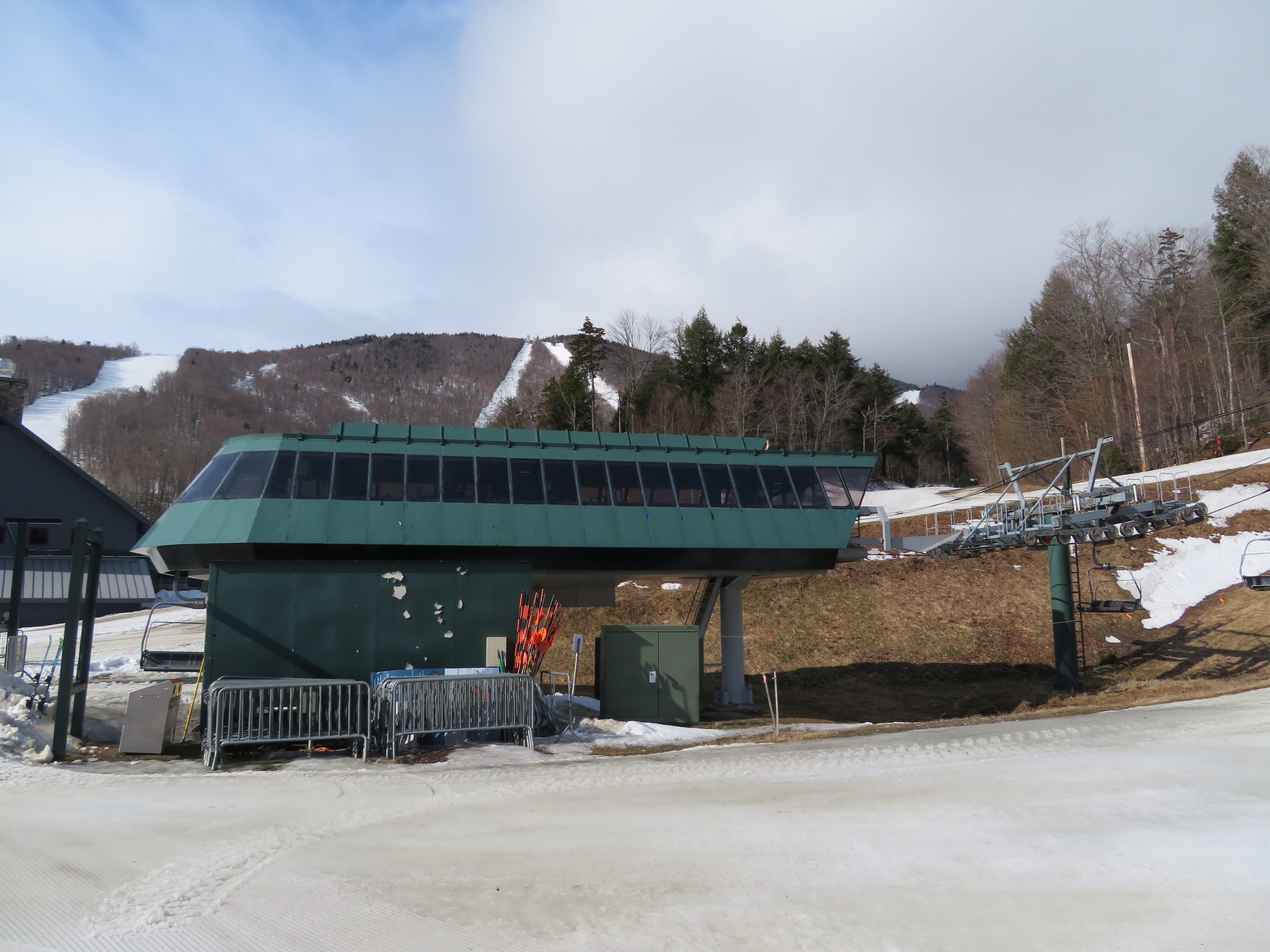
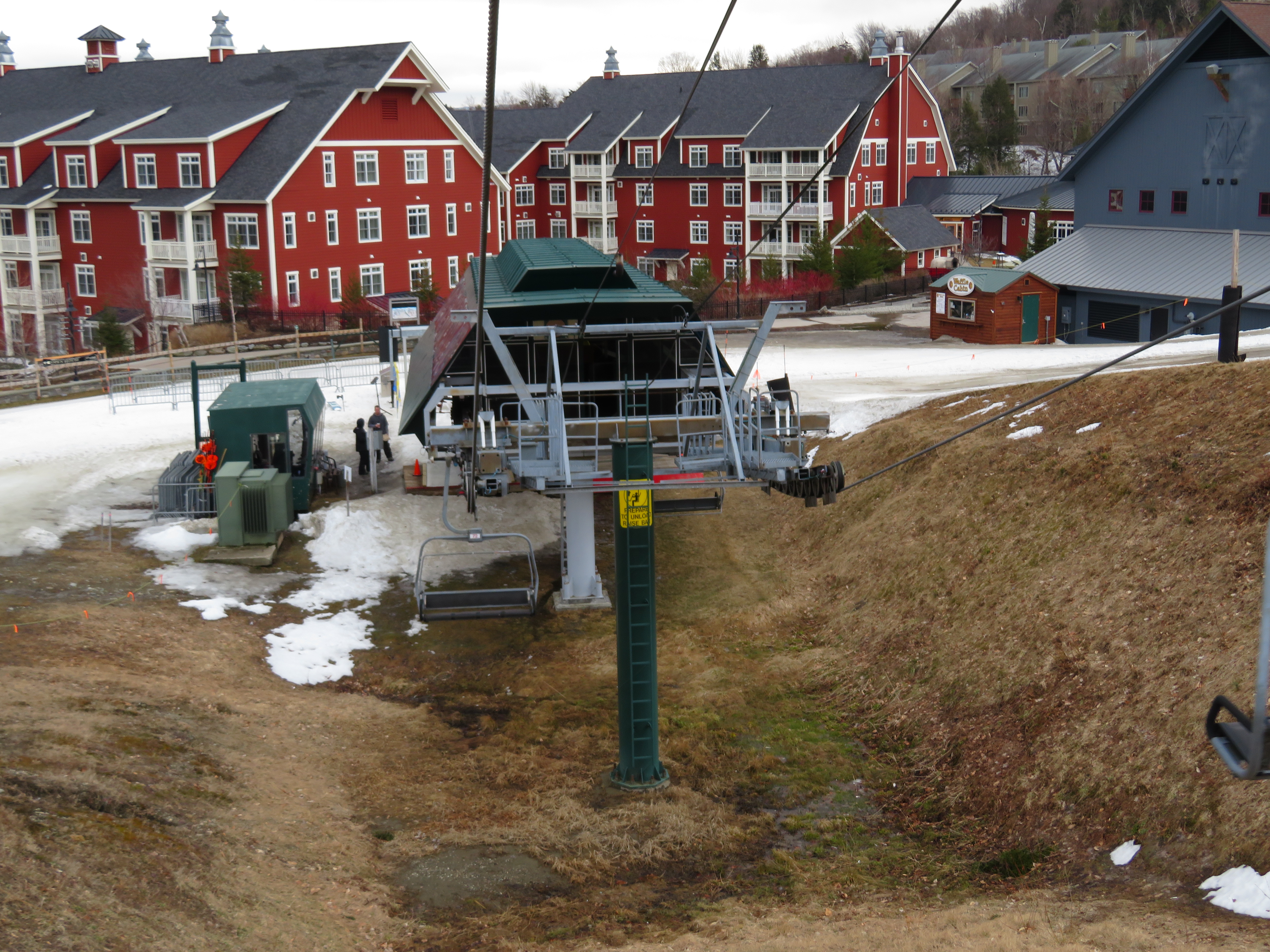
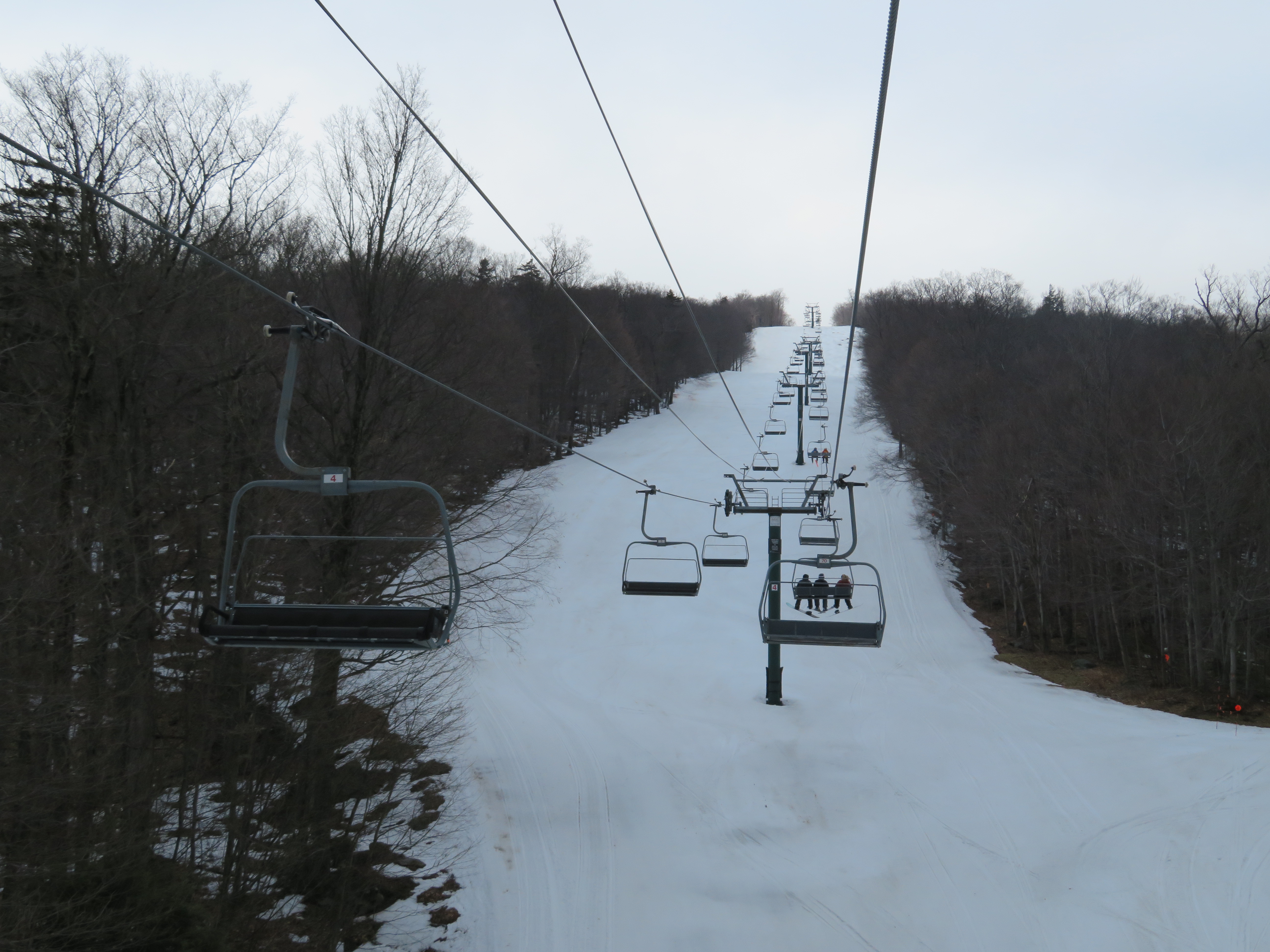
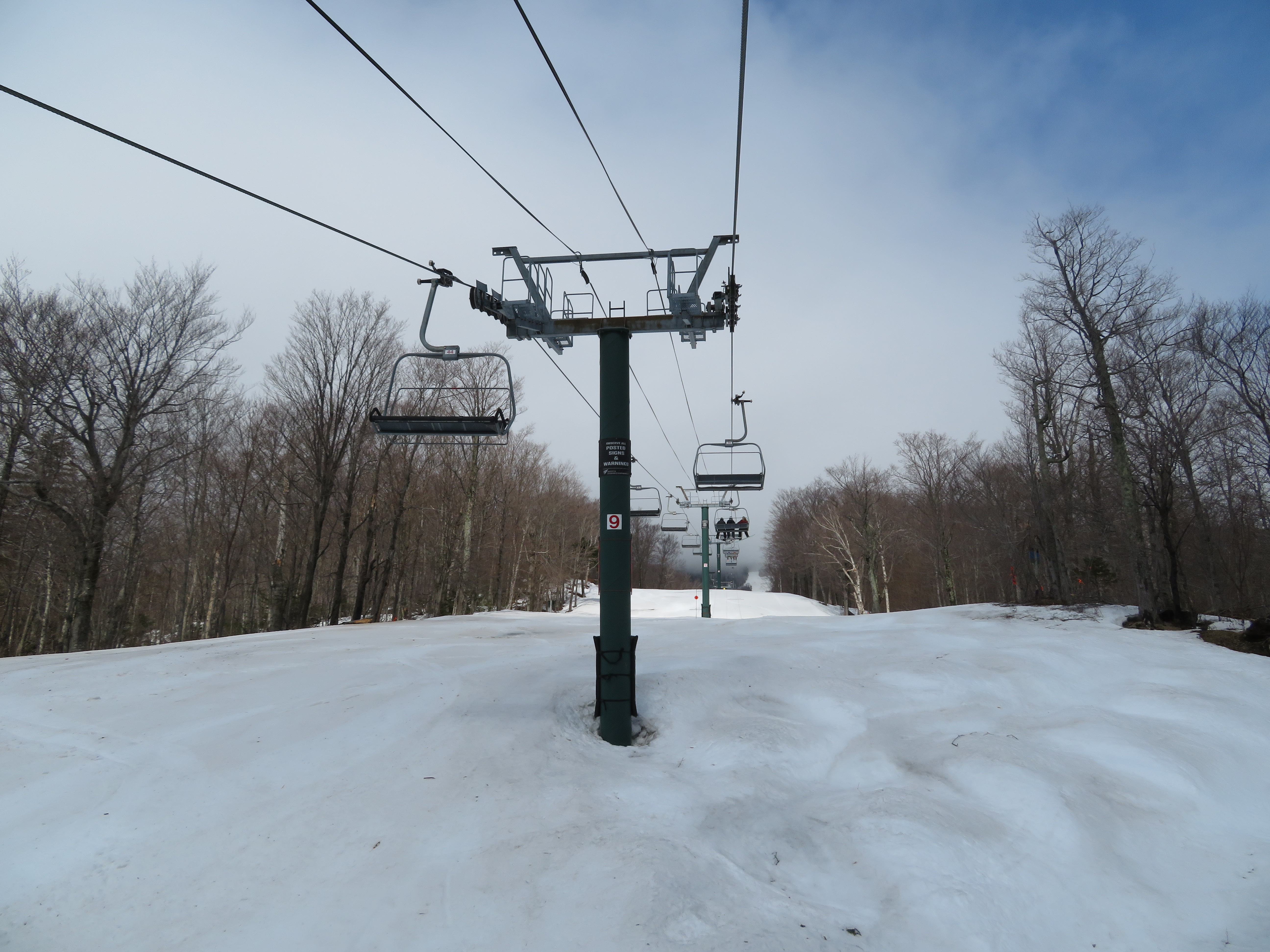
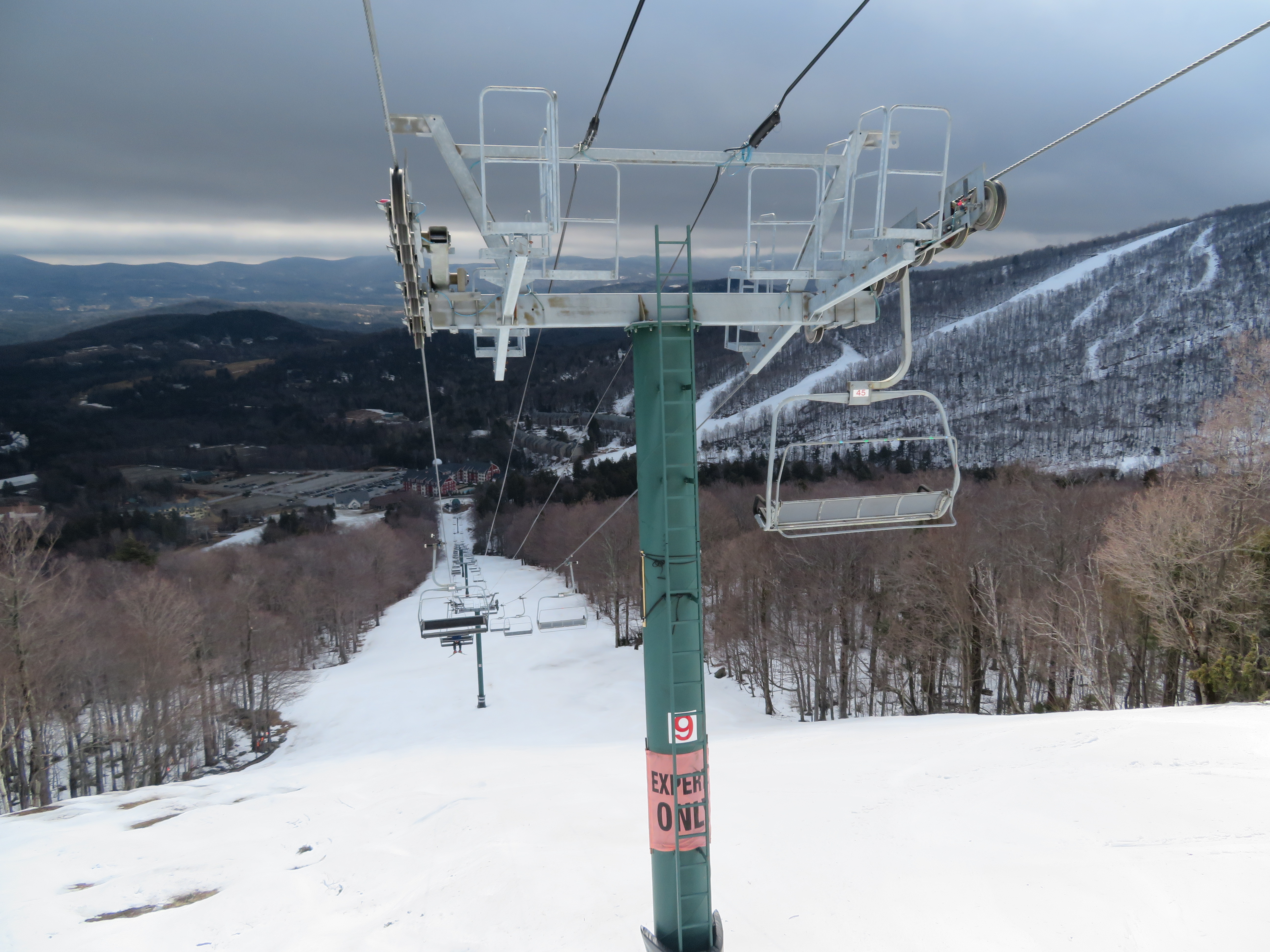
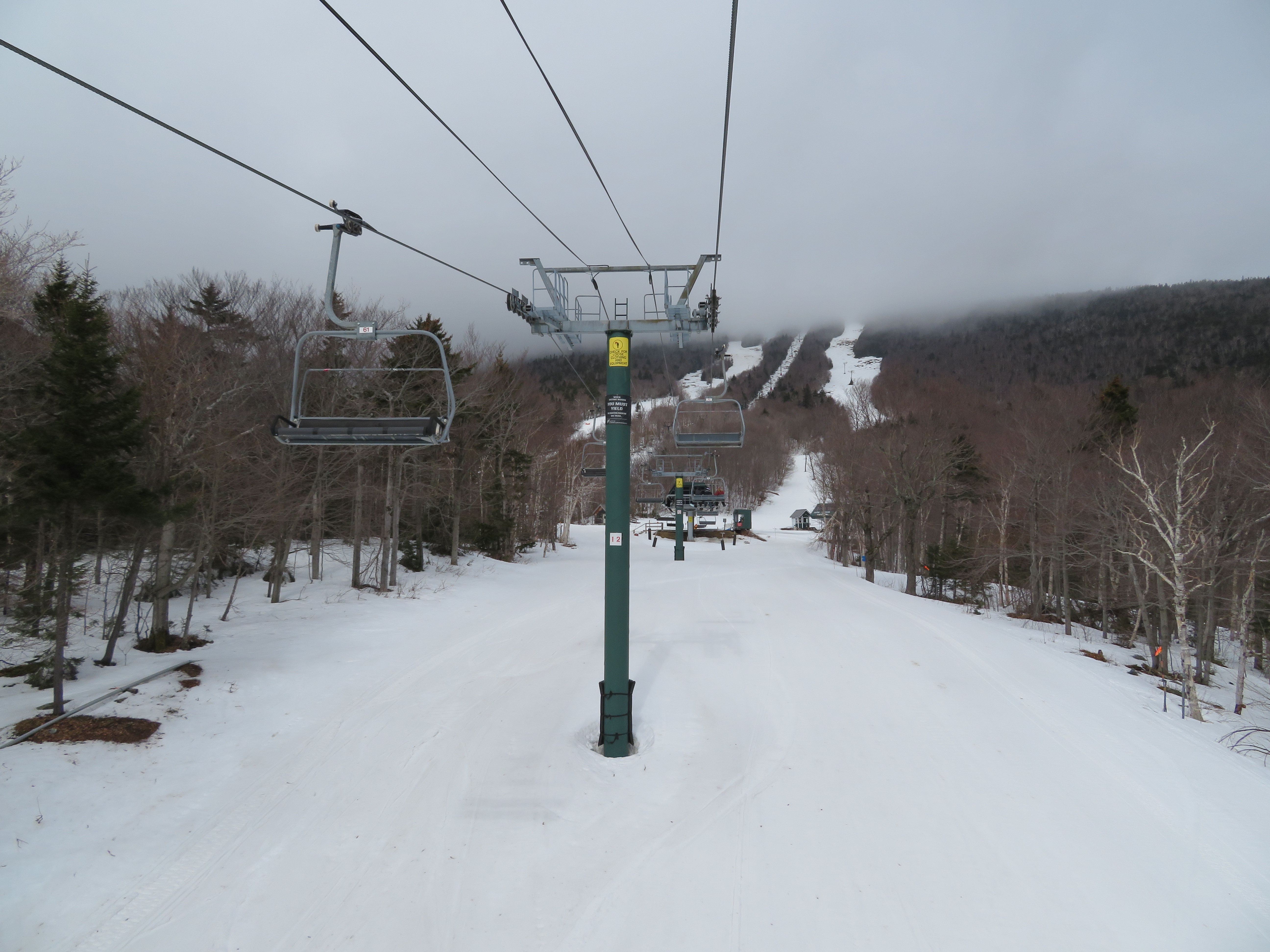
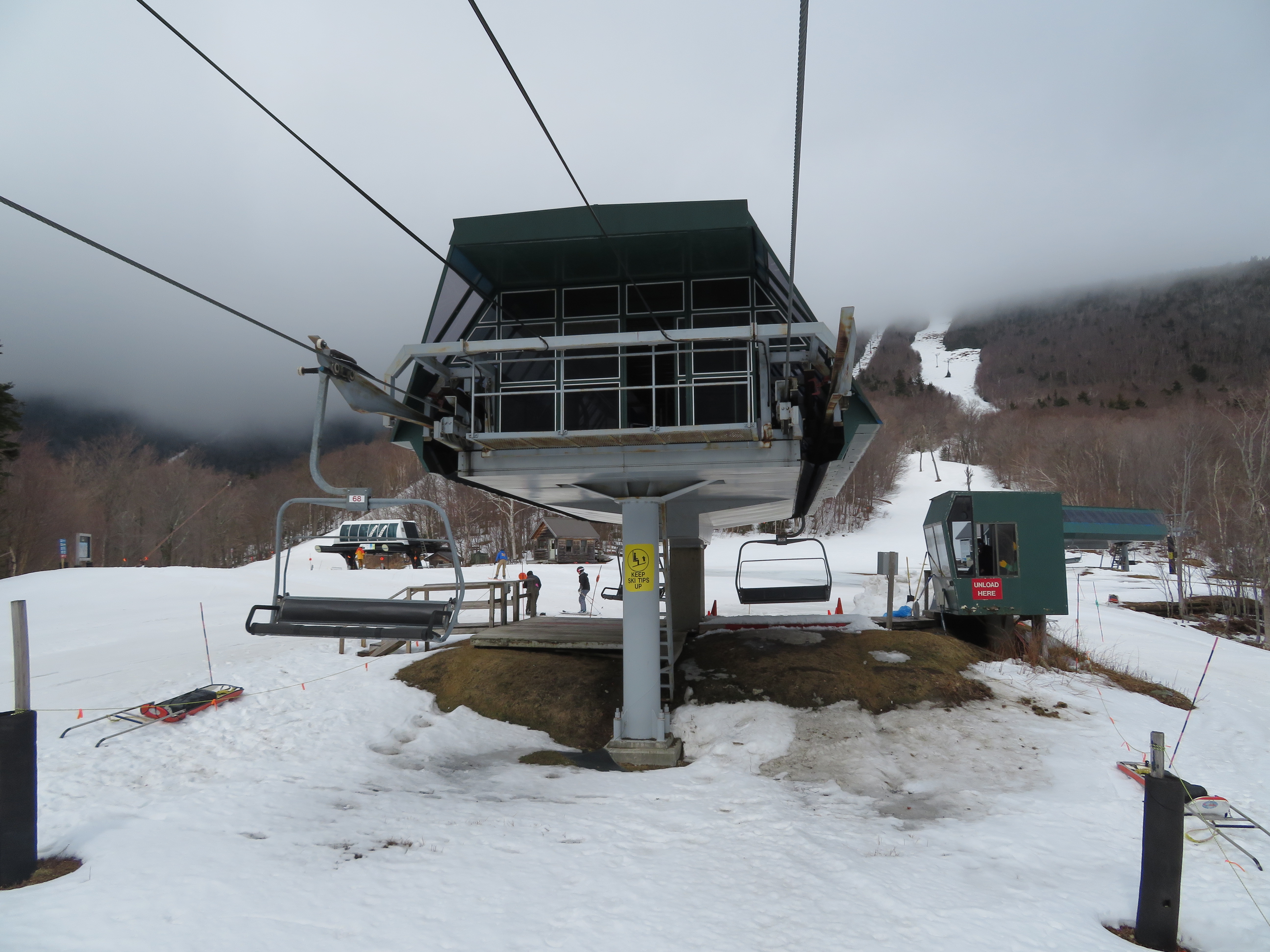
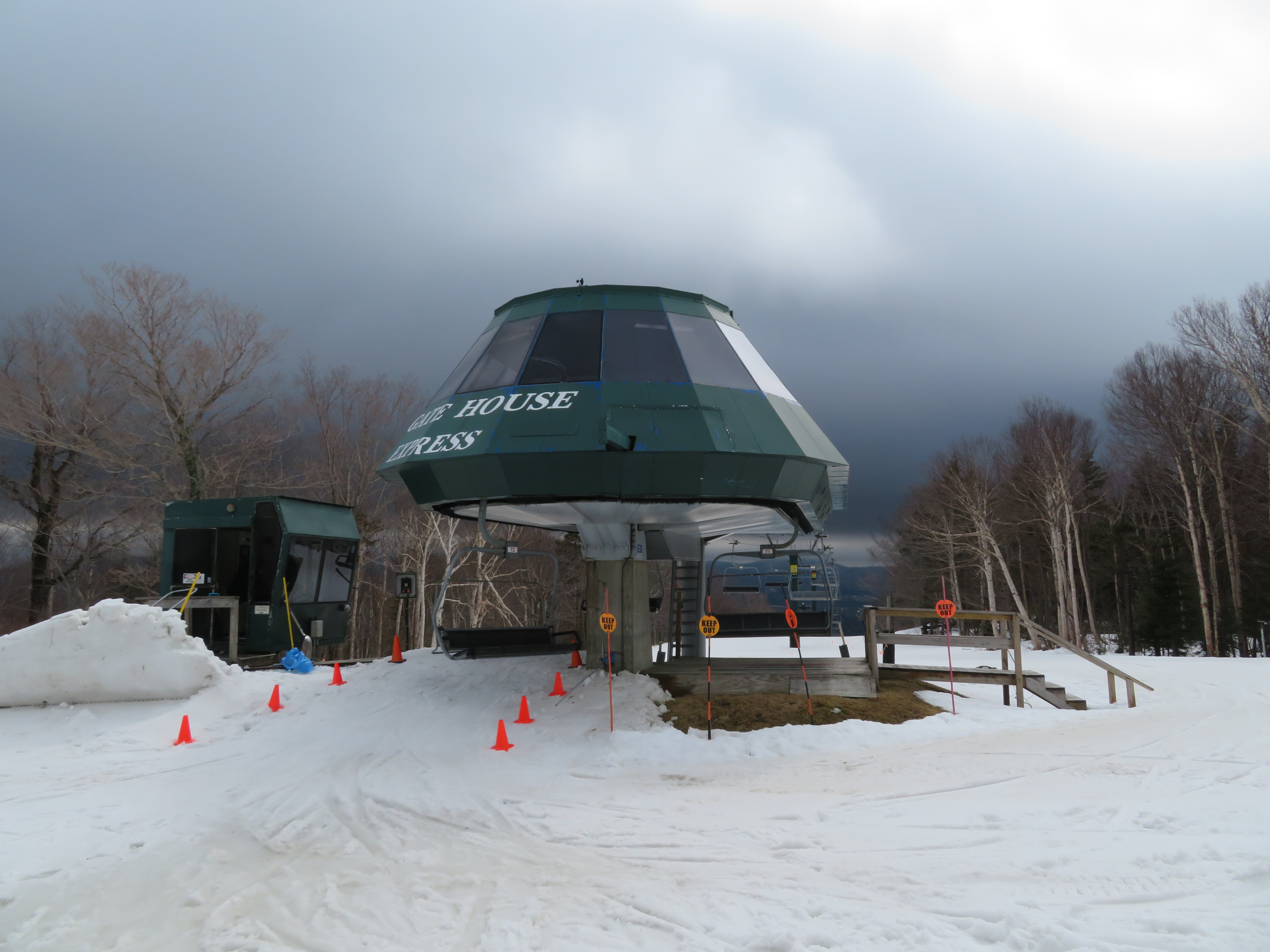
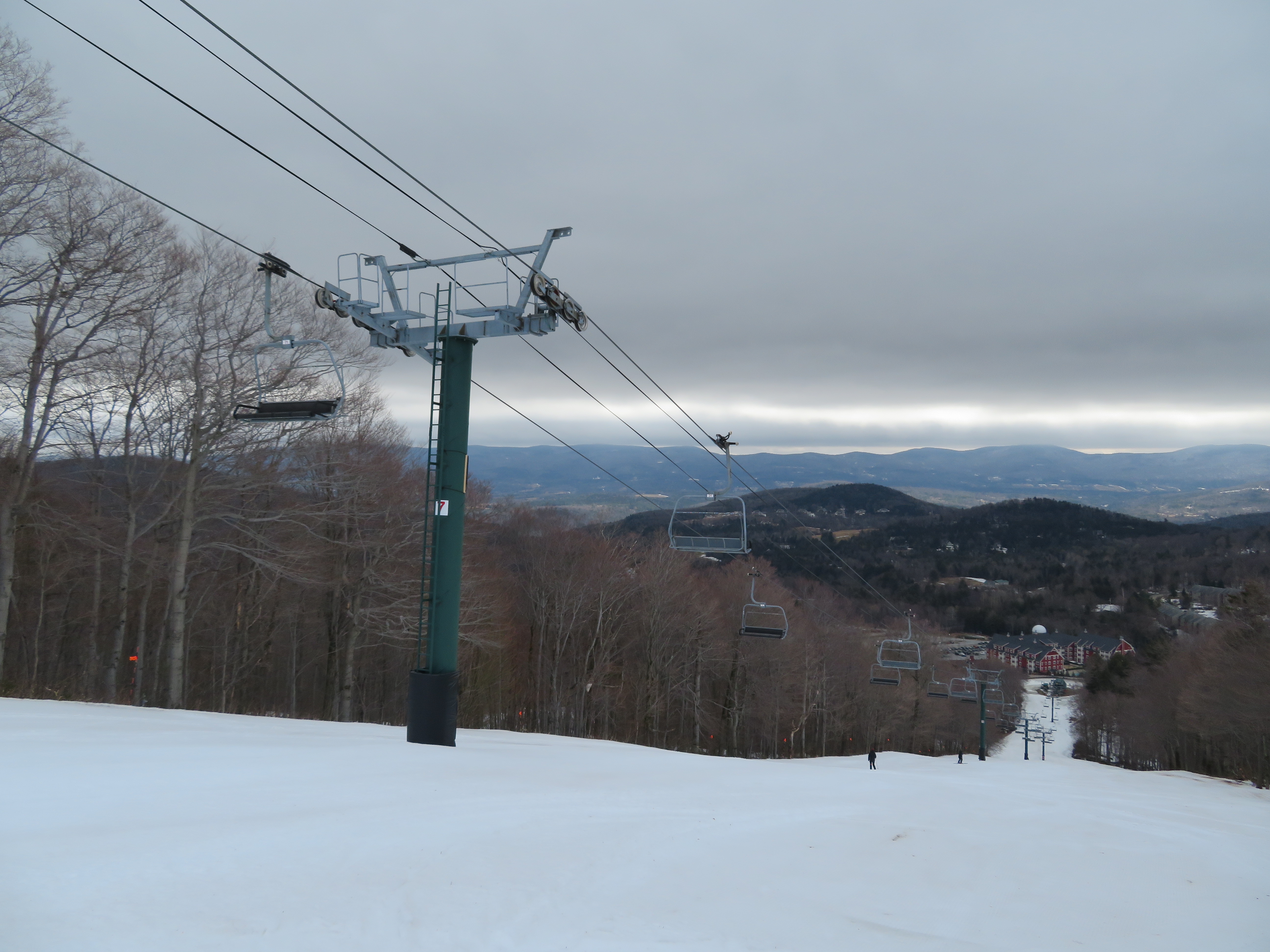
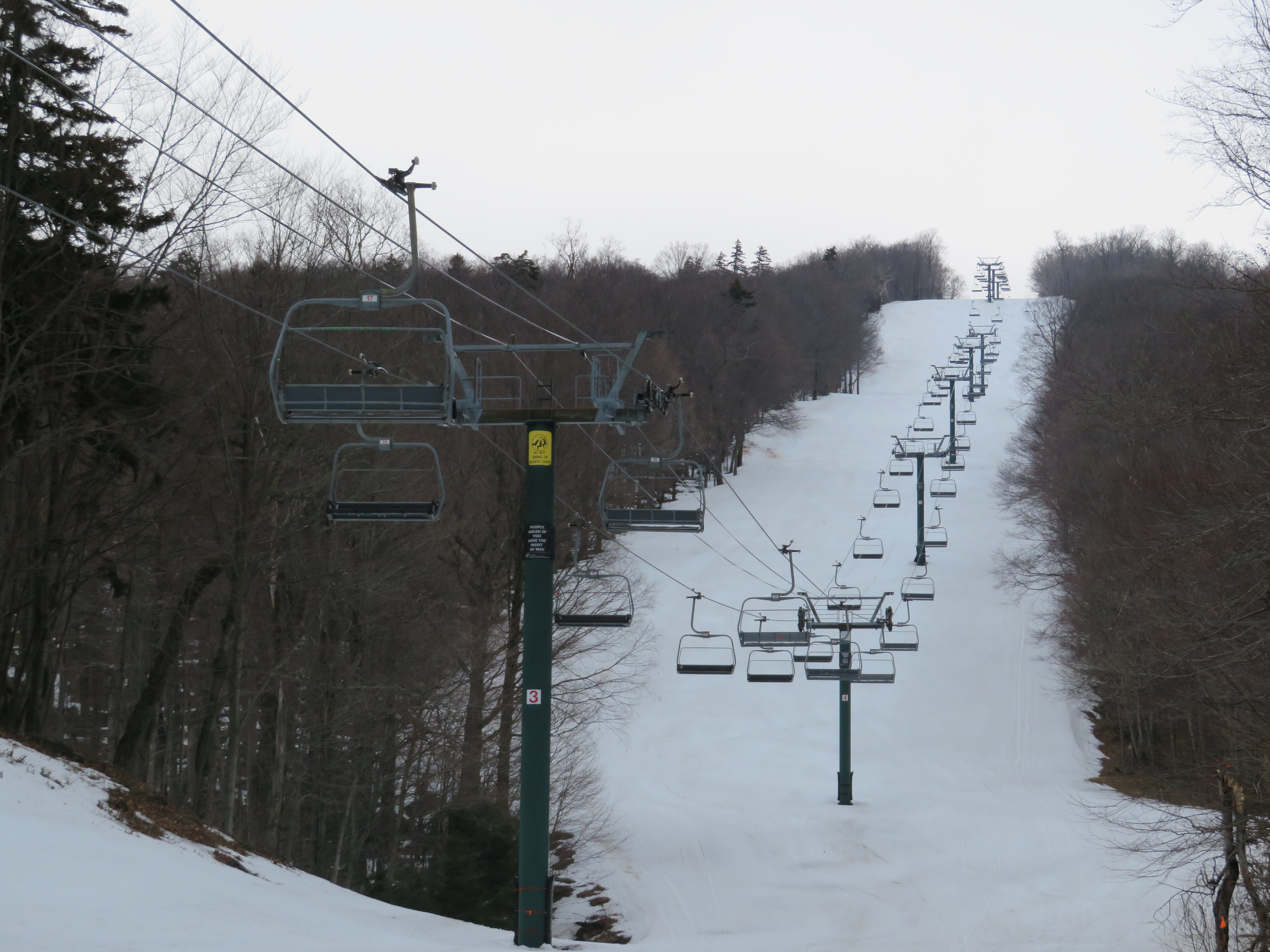
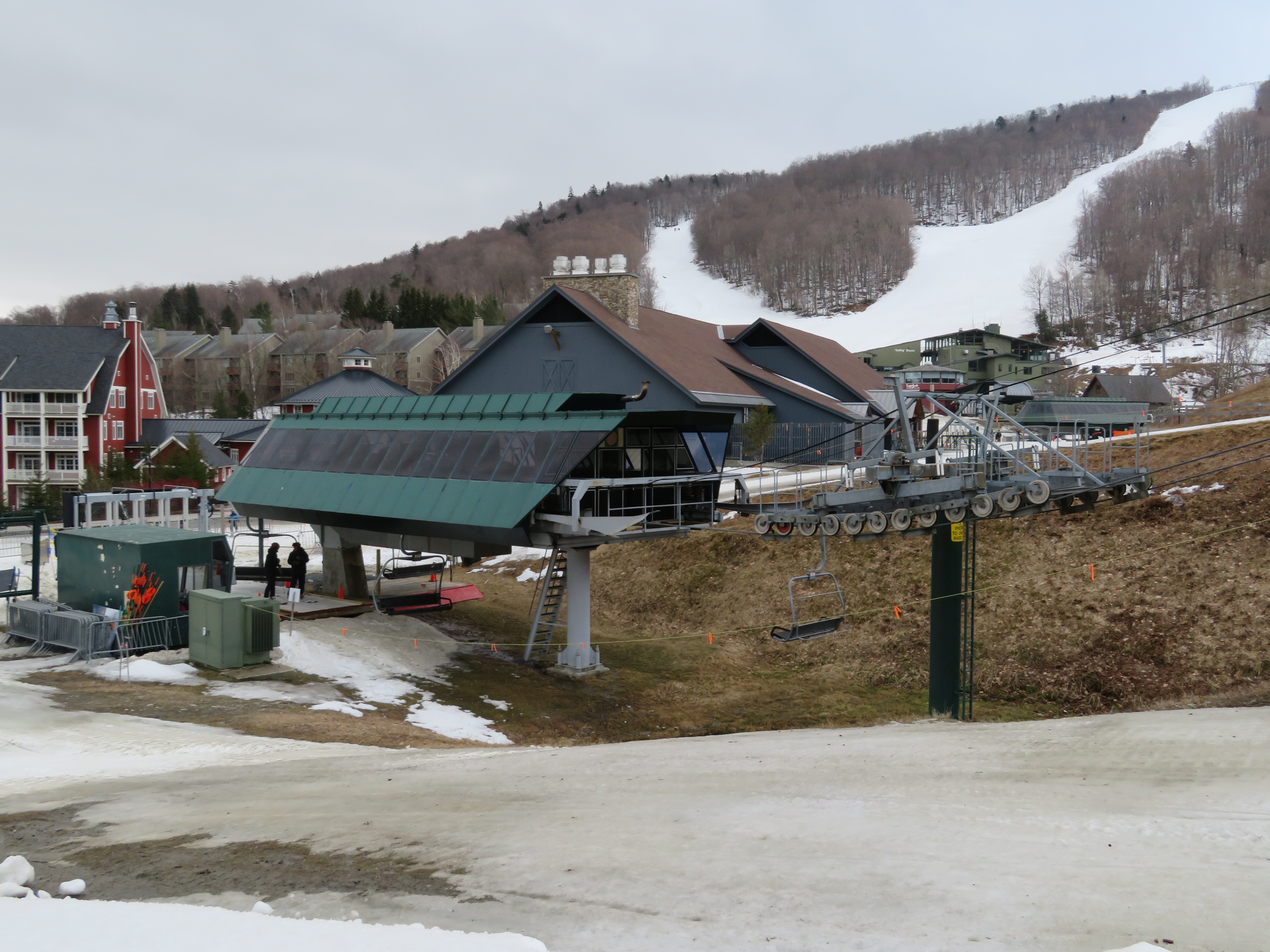
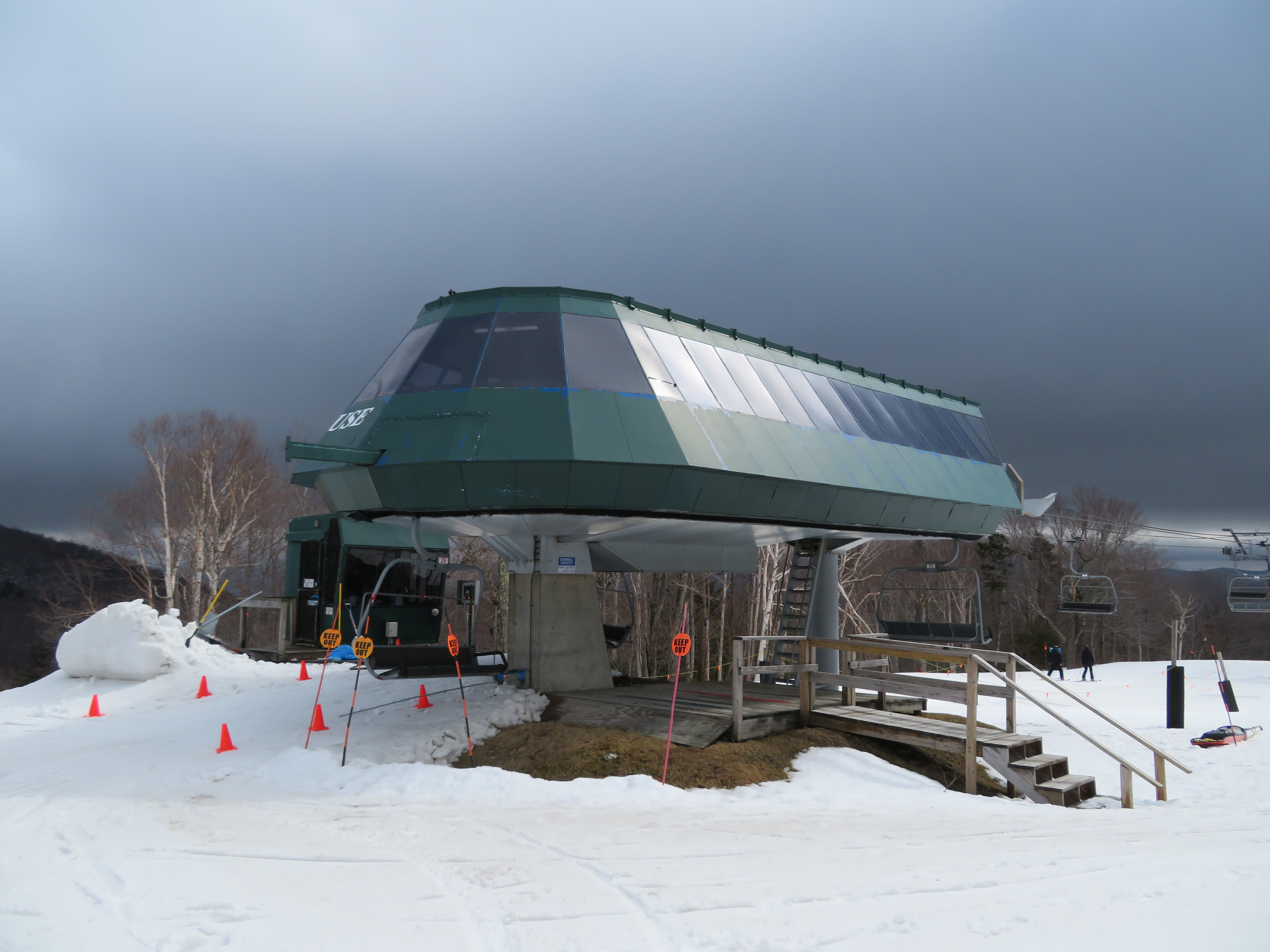
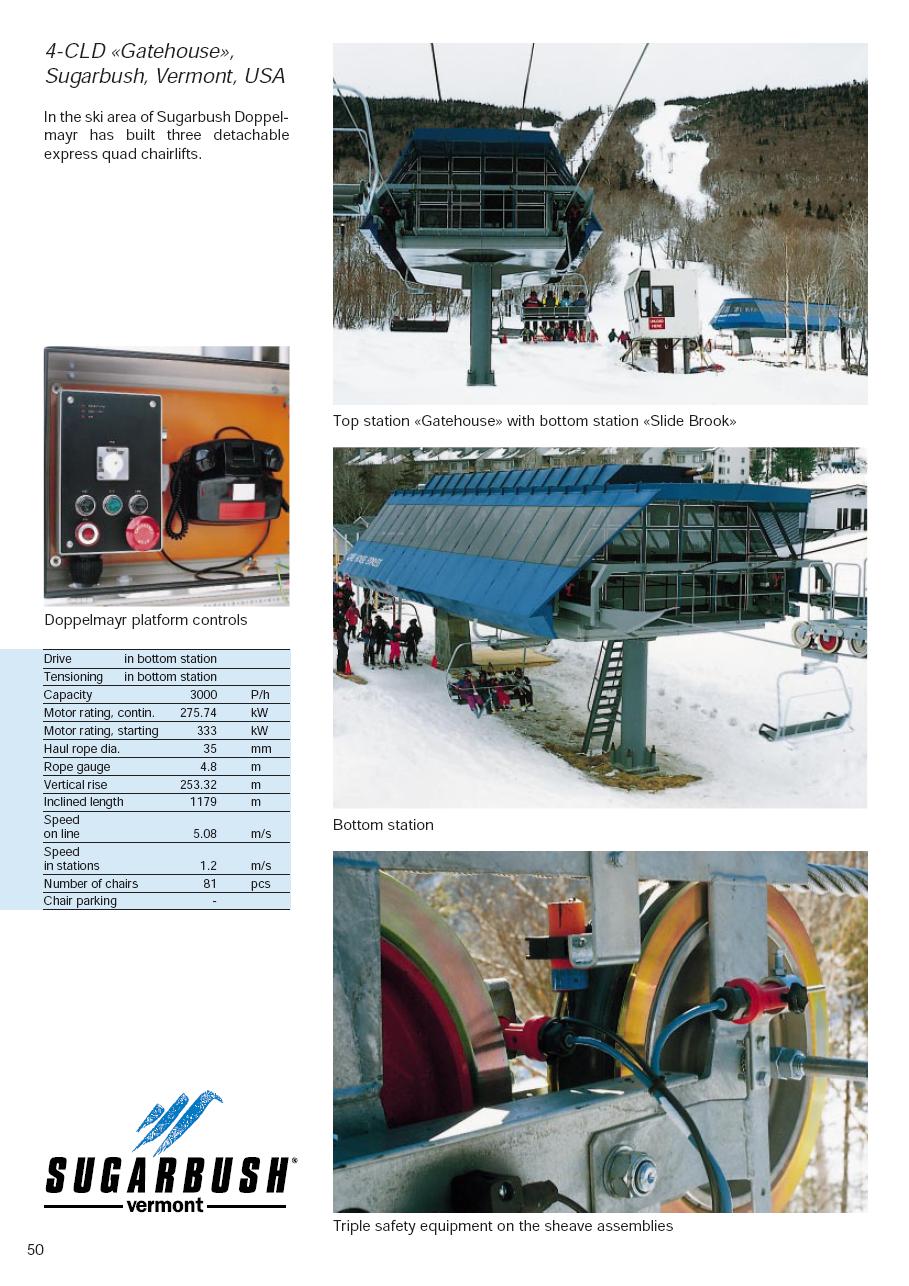
Doppelmayr Uni detachable terminal.Doppelmayr built four big lifts at Sugarbush in 1995 for American Skiing Company, one of which was the Gatehouse Express at Lincoln Peak.Leaving the Village.Riding up the lift line.Breakover towers.View down the line from T9.Nearing the top and the Slide Brook/North Lynx lifts.Arriving at the top station.Unloading area.Another view of the lift line, which is relatively short for a detachable.Middle section of the line.The bottom terminal near sister lift Super Bravo Express.Top terminal overview.Doppelmayr Worldbook entry.
Here’s a fact for people saying Gatehouse can only run at 800 fpm. On President’s Weekend Gate House was running full speed while super bravo was only running at 800 FPM. This was possibly to deal with the crowds. The motor sounded much different than before and I saw the operator turn the dial to fast when she started the lift.
The fast, medium, and slow speed settings can all be adjusted in the drive lift shack. The dial you see on the control panel just switched between those speeds. To bring the lift back up to speed after a slow down, you would turn the dial to fast and then let it go back to neutral. It will not stay stuck on fast. When dial is on neutral, the lift still runs at whatever the top speed is set to, but the other control stands are able to initiate a slow or stop. If the dial is on medium or slow, the lift is locked at that speed unless it is turned back to neutral.
It was running close to full speed though, you could hear it in the pitch of the motor. I had always wondered how those controls worked on Doppelmayr lifts.
That has nothing to do with it. Some older lifts accelerate to a faster speed than is set as the top speed, but that never happens on newer ones.
Here’s how I believe Doppelmayr’s dial control works. There are 3 preset speeds, fast, medium, and slow that can be adjusted at the drive. For a beginner lift, they would likely be set slower than for a lift serving mostly advanced terrain. On most lifts, fast is set to 900-1000, medium is 500-600, and slow is 100-200 feet per minute. On the dial, there are 4 positions. Going clockwise, they are slow, medium, neutral, fast.
When the lift is operating normally, it is traveling at whatever speed fast is set to. Let’s say that’s 900. All dials will be at the neutral position. Say a guest has a minor difficulty loading, or a lifty is getting on to download. An operator would turn the dial to medium and the lift would slow down to that speed, which we’ll say is 500. If the dial is left on medium, the lift will continue to operate at 500 feet per minute no matter what happened at a different control position. If it is turned back to neutral, another operator at another control position could speed the lift back up. Usually this does not happen. To bring the lift back up to 900, the operator would turn the dial to fast until it started to speed up and then let go and it would go back to neutral but maintain the same speed. If a guest had a major issue loading, turning the dial to slow would bring the speed down to about 200 feet per minute, and it would stay at that speed until the dial is turned back to neutral, which would also bring it back up to medium speed. To get it back up to 900, the dial would need to be turned to fast and allowed to go back to neutral. It never locks in the fast position.
Basically this control style is to reduce the number of buttons needed, and to prevent the lift from being sped up by another operator if a slow is initiated by one.
I’m not too familiar with the technical aspects of actually operating lifts, but this makes a lot of sense. I’d also imagine that the slow, medium and fast can be adjusted on the fly at the drive (while the lift is running) based on weather conditions, time of day, etc.
Collin is correct, though this isn’t the case on all doppelmayr lifts. The newest Doppelmayr lifts / controls skip the neutral/fast combo and contain only three switches on the dial. The names vary; sometimes, it’s Fast/Medium/Slow; other times, it’s Neutral/Medium/Slow; in Quebec (at least, at Tremblant) the newer Doppelmayr controls are abbreviated N/L1/L2 (L = lent/slow). This abbreviation is also present on European doppelmayr lifts.
The mechanism on the three-switch system is the same as Collin described. The slowing down of the lift can only be undone from the pedestal where it was initiated, i.e. the switch needs to be turned back to N for the lift to head back to top speed. The top speed of the lift is set by a dial at the drive station, which has many more incriments than just fast/medium/slow. If all switches are set to neutral, the lift will run at that speed, and no faster.
If a dial is set to L1 (medium), for example, and a different dial at the other station is turned to L2 (slow), the lift will slow further. Even if the first dial is set to N, the lift will run slow until the second dial is turned back to L1 or N.
And @Somebody, the speed of the lift at fast/medium/slow can be adjusted on the fly at any control pedestal at any terminal, drive or return. Only the exact speed of the lift (e.g. 900 vs 1000 fpm) is only adjusted at the drive.
Collin has a pretty good explanation. I would only add that the medium and slow speeds are percentages of whatever your top speed is. If I have the speed control turned all the way up (5 m/s) then the medium is 3, and the slow is 1,5. If I set the fast at 2,5 m/s, the medium goes down to 2,0 and the slow to around 1,0 (or something like that).

 Lift Blog
Here’s a fact for people saying Gatehouse can only run at 800 fpm. On President’s Weekend Gate House was running full speed while super bravo was only running at 800 FPM. This was possibly to deal with the crowds. The motor sounded much different than before and I saw the operator turn the dial to fast when she started the lift.
LikeLike
The fast, medium, and slow speed settings can all be adjusted in the drive lift shack. The dial you see on the control panel just switched between those speeds. To bring the lift back up to speed after a slow down, you would turn the dial to fast and then let it go back to neutral. It will not stay stuck on fast. When dial is on neutral, the lift still runs at whatever the top speed is set to, but the other control stands are able to initiate a slow or stop. If the dial is on medium or slow, the lift is locked at that speed unless it is turned back to neutral.
LikeLike
It was running close to full speed though, you could hear it in the pitch of the motor. I had always wondered how those controls worked on Doppelmayr lifts.
LikeLike
That would explain why the hall lifts at Afton start fast before slowing down to normal speed
LikeLike
That has nothing to do with it. Some older lifts accelerate to a faster speed than is set as the top speed, but that never happens on newer ones.
Here’s how I believe Doppelmayr’s dial control works. There are 3 preset speeds, fast, medium, and slow that can be adjusted at the drive. For a beginner lift, they would likely be set slower than for a lift serving mostly advanced terrain. On most lifts, fast is set to 900-1000, medium is 500-600, and slow is 100-200 feet per minute. On the dial, there are 4 positions. Going clockwise, they are slow, medium, neutral, fast.
When the lift is operating normally, it is traveling at whatever speed fast is set to. Let’s say that’s 900. All dials will be at the neutral position. Say a guest has a minor difficulty loading, or a lifty is getting on to download. An operator would turn the dial to medium and the lift would slow down to that speed, which we’ll say is 500. If the dial is left on medium, the lift will continue to operate at 500 feet per minute no matter what happened at a different control position. If it is turned back to neutral, another operator at another control position could speed the lift back up. Usually this does not happen. To bring the lift back up to 900, the operator would turn the dial to fast until it started to speed up and then let go and it would go back to neutral but maintain the same speed. If a guest had a major issue loading, turning the dial to slow would bring the speed down to about 200 feet per minute, and it would stay at that speed until the dial is turned back to neutral, which would also bring it back up to medium speed. To get it back up to 900, the dial would need to be turned to fast and allowed to go back to neutral. It never locks in the fast position.
Basically this control style is to reduce the number of buttons needed, and to prevent the lift from being sped up by another operator if a slow is initiated by one.
LikeLiked by 2 people
I’m not too familiar with the technical aspects of actually operating lifts, but this makes a lot of sense. I’d also imagine that the slow, medium and fast can be adjusted on the fly at the drive (while the lift is running) based on weather conditions, time of day, etc.
LikeLike
Collin is correct, though this isn’t the case on all doppelmayr lifts. The newest Doppelmayr lifts / controls skip the neutral/fast combo and contain only three switches on the dial. The names vary; sometimes, it’s Fast/Medium/Slow; other times, it’s Neutral/Medium/Slow; in Quebec (at least, at Tremblant) the newer Doppelmayr controls are abbreviated N/L1/L2 (L = lent/slow). This abbreviation is also present on European doppelmayr lifts.
The mechanism on the three-switch system is the same as Collin described. The slowing down of the lift can only be undone from the pedestal where it was initiated, i.e. the switch needs to be turned back to N for the lift to head back to top speed. The top speed of the lift is set by a dial at the drive station, which has many more incriments than just fast/medium/slow. If all switches are set to neutral, the lift will run at that speed, and no faster.
If a dial is set to L1 (medium), for example, and a different dial at the other station is turned to L2 (slow), the lift will slow further. Even if the first dial is set to N, the lift will run slow until the second dial is turned back to L1 or N.
And @Somebody, the speed of the lift at fast/medium/slow can be adjusted on the fly at any control pedestal at any terminal, drive or return. Only the exact speed of the lift (e.g. 900 vs 1000 fpm) is only adjusted at the drive.
LikeLike
Collin has a pretty good explanation. I would only add that the medium and slow speeds are percentages of whatever your top speed is. If I have the speed control turned all the way up (5 m/s) then the medium is 3, and the slow is 1,5. If I set the fast at 2,5 m/s, the medium goes down to 2,0 and the slow to around 1,0 (or something like that).
LikeLike
What is the difference between the Doppelmayr first generation spacejet and the Uni terminals?
LikeLike
Peter, these are actually first generation Uni-M (spacejet) terminals, not Unis.
LikeLike