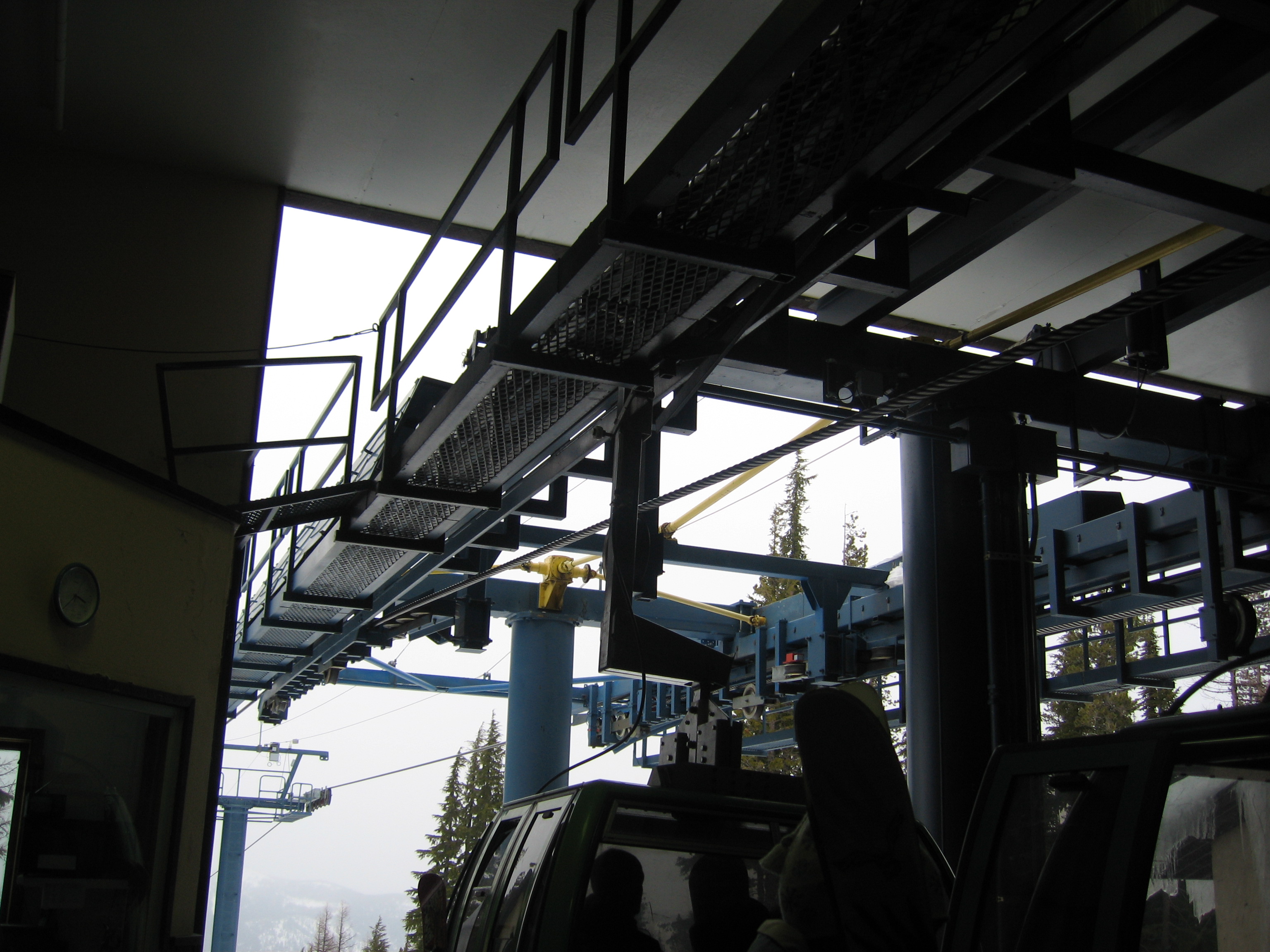
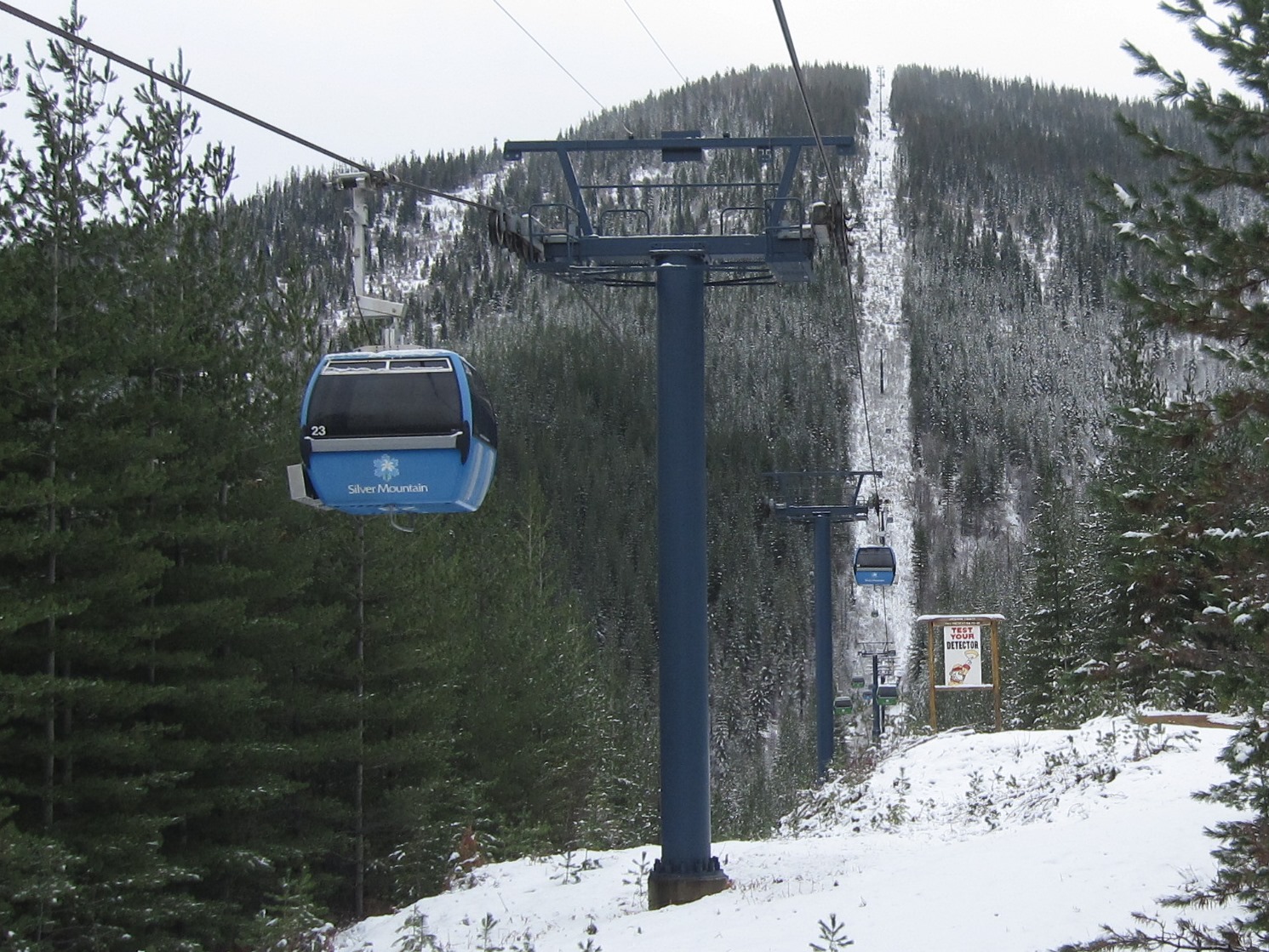
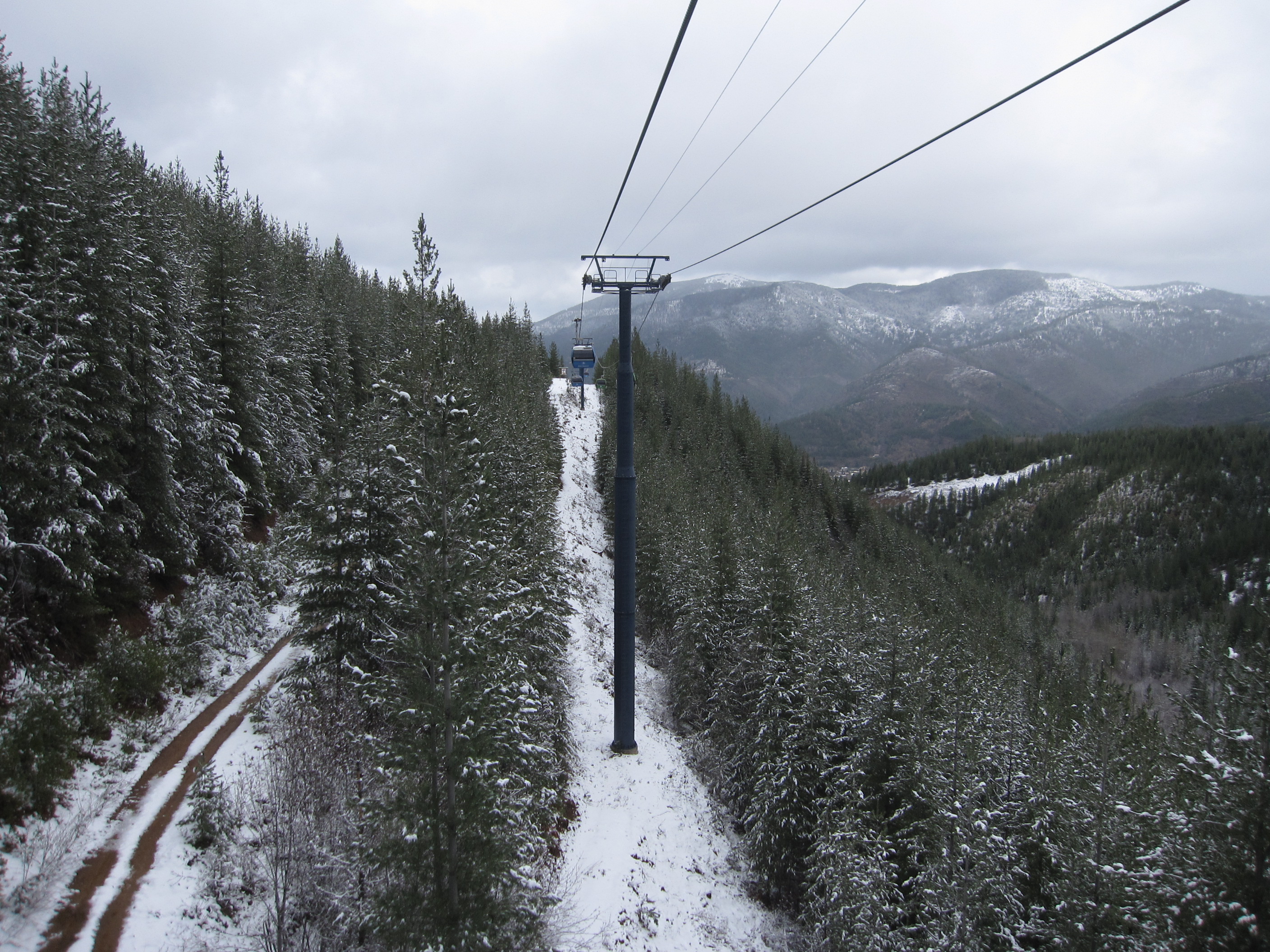
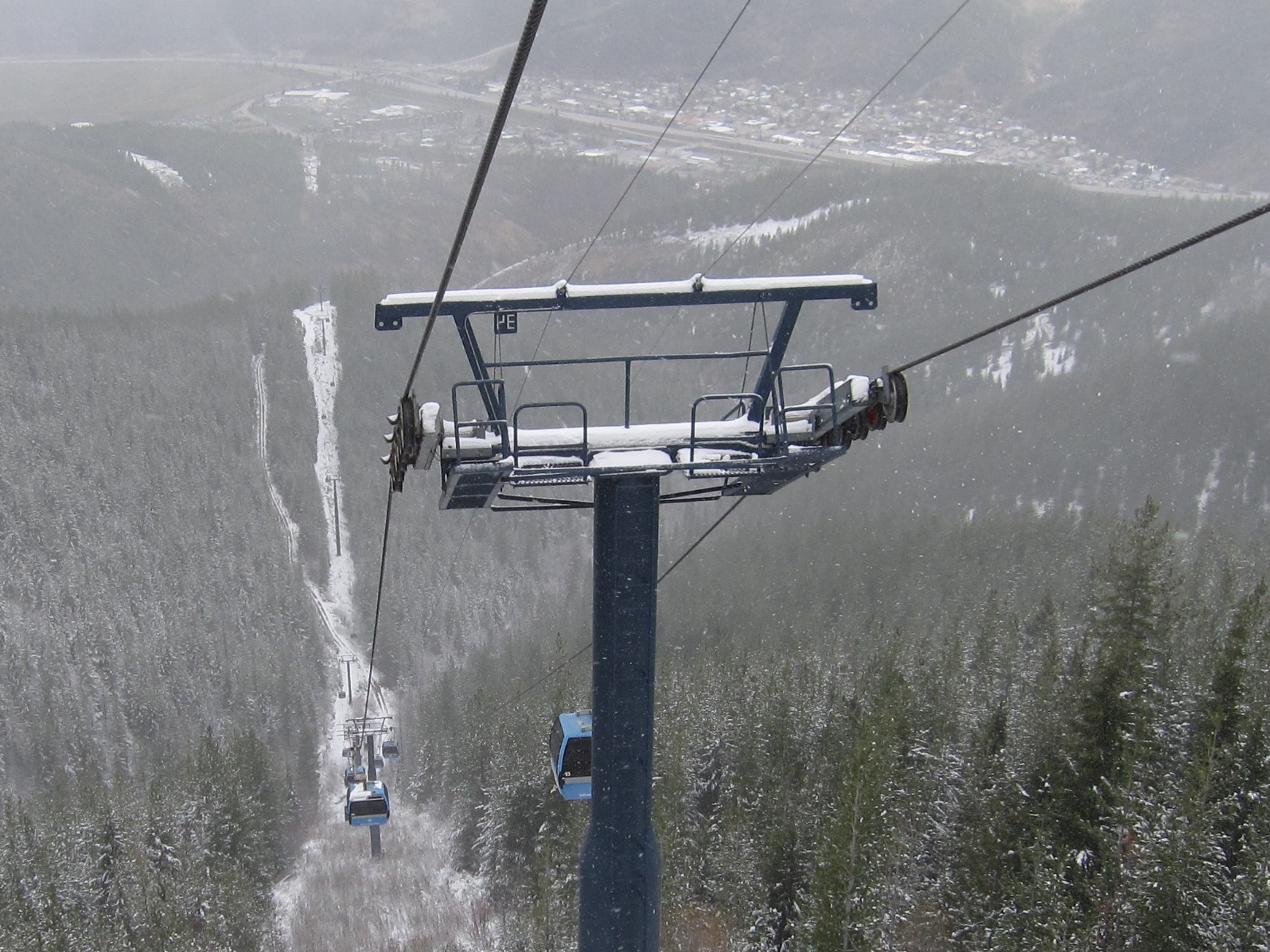
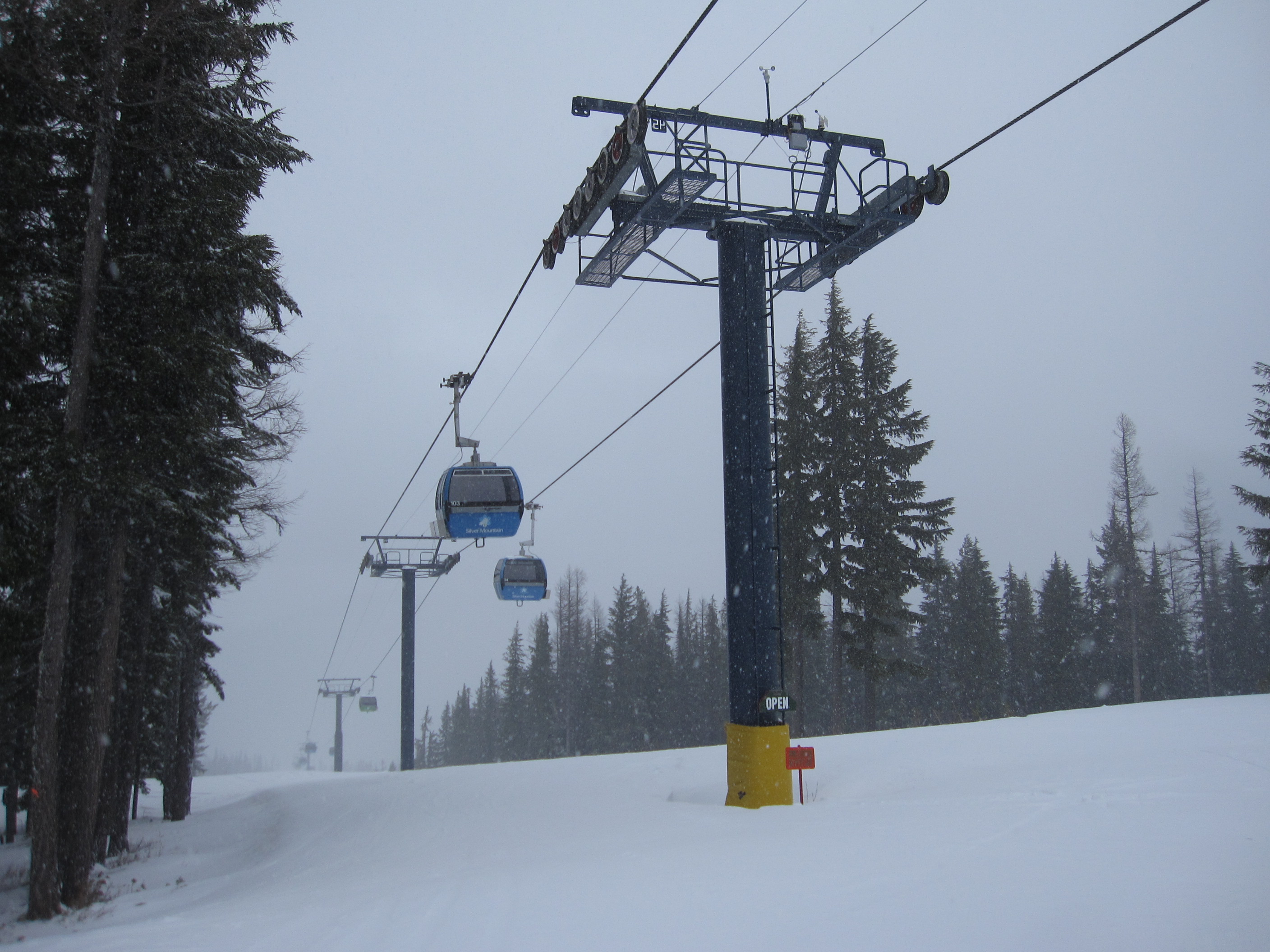
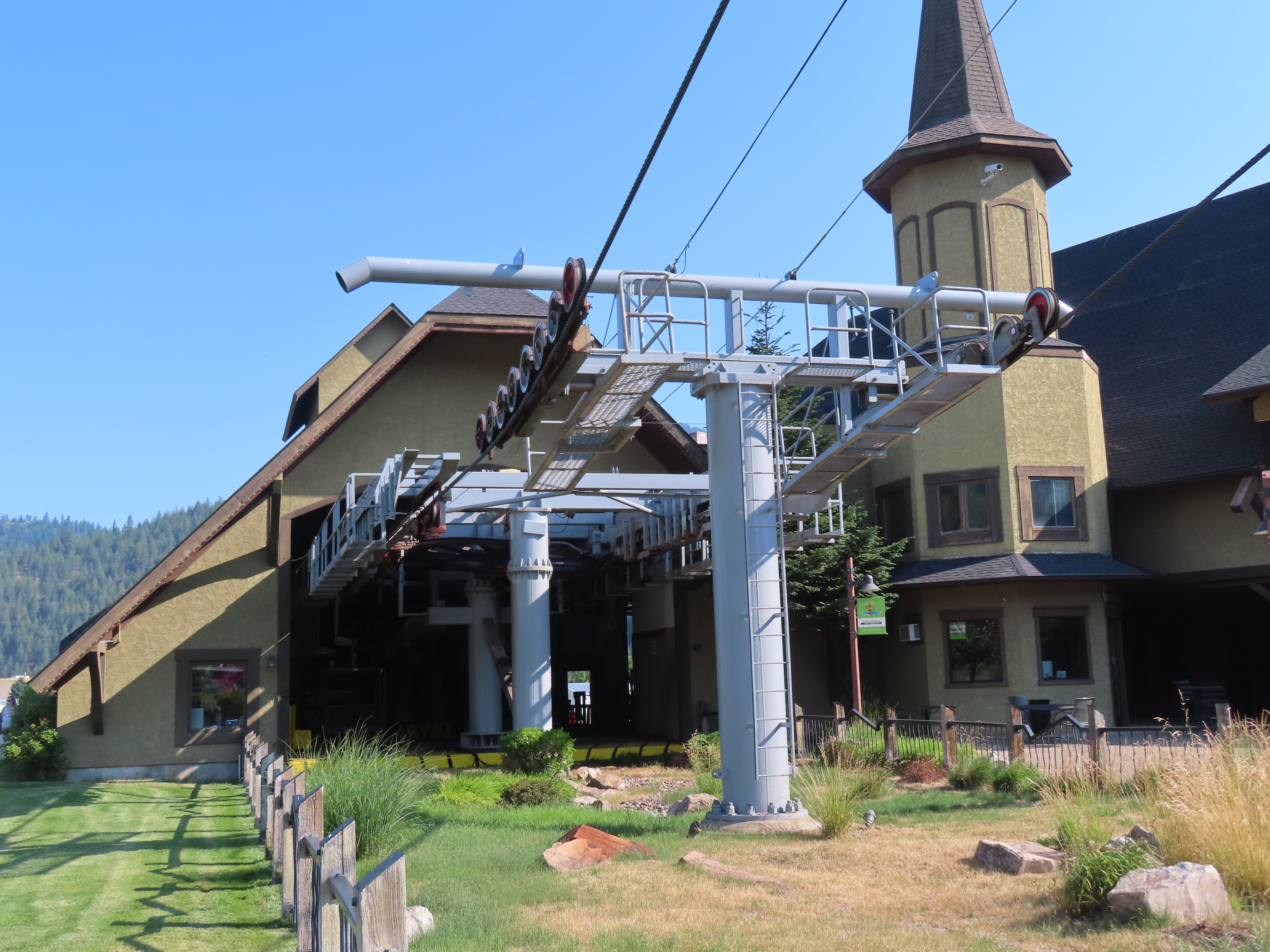
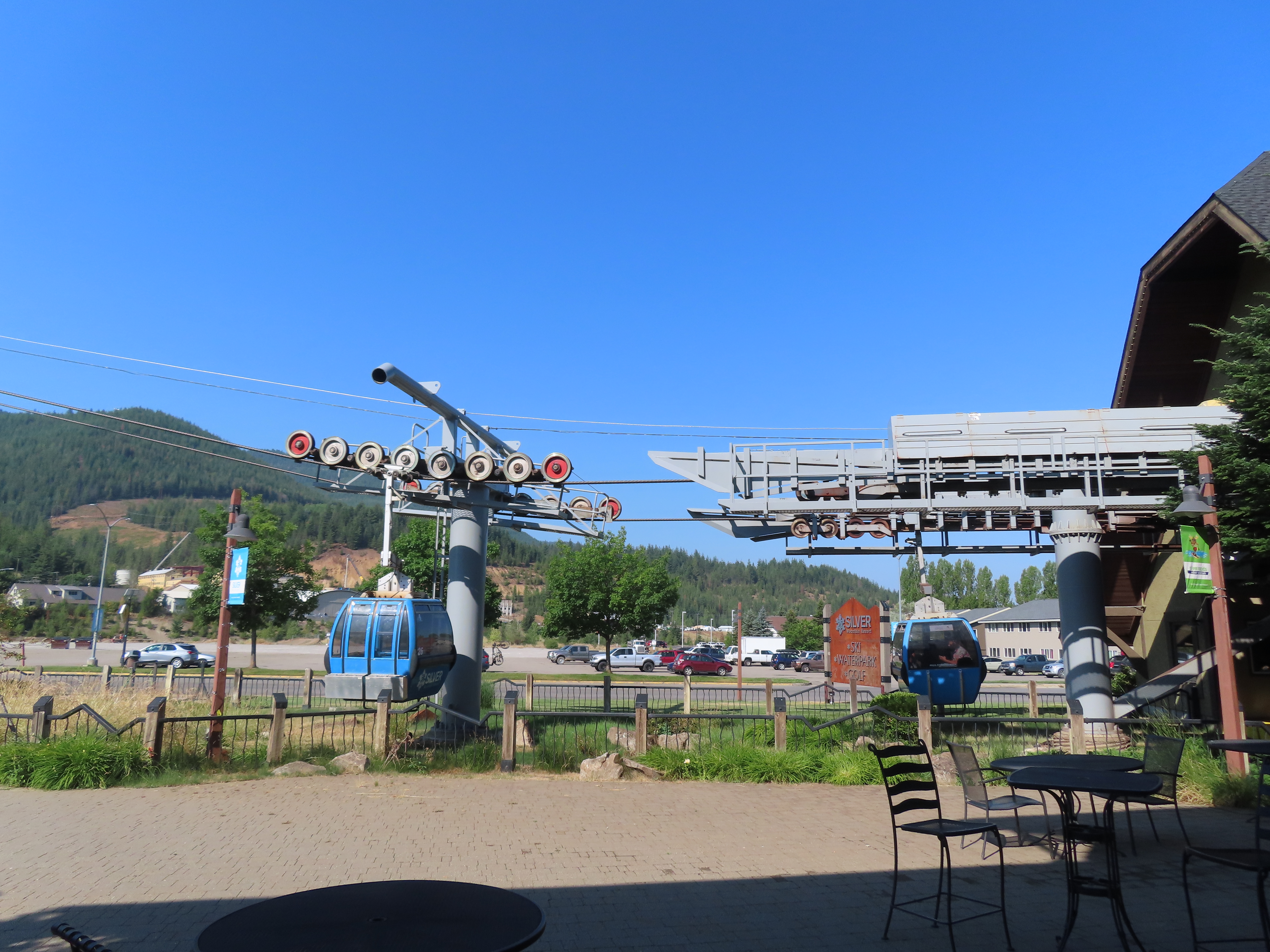
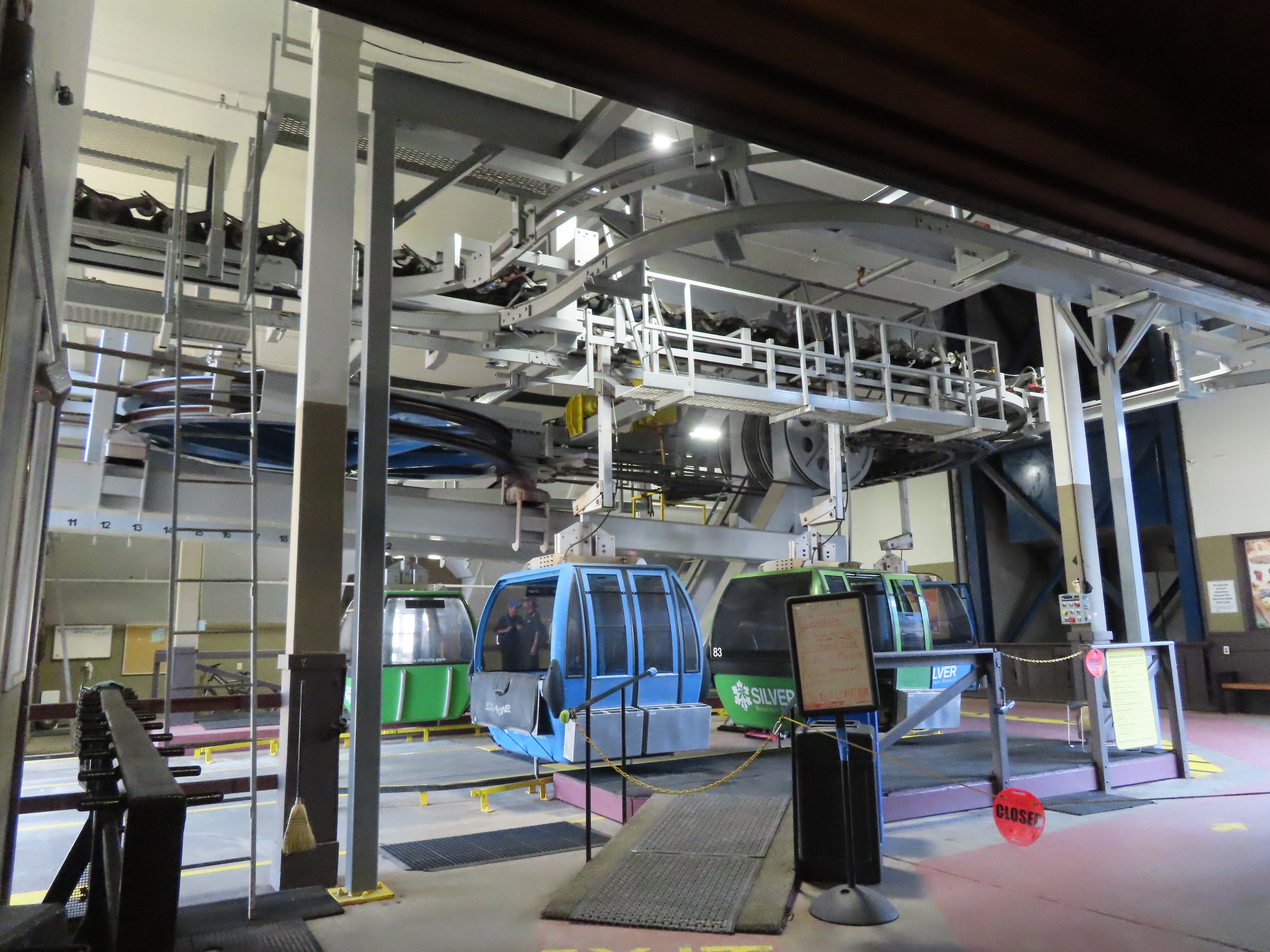
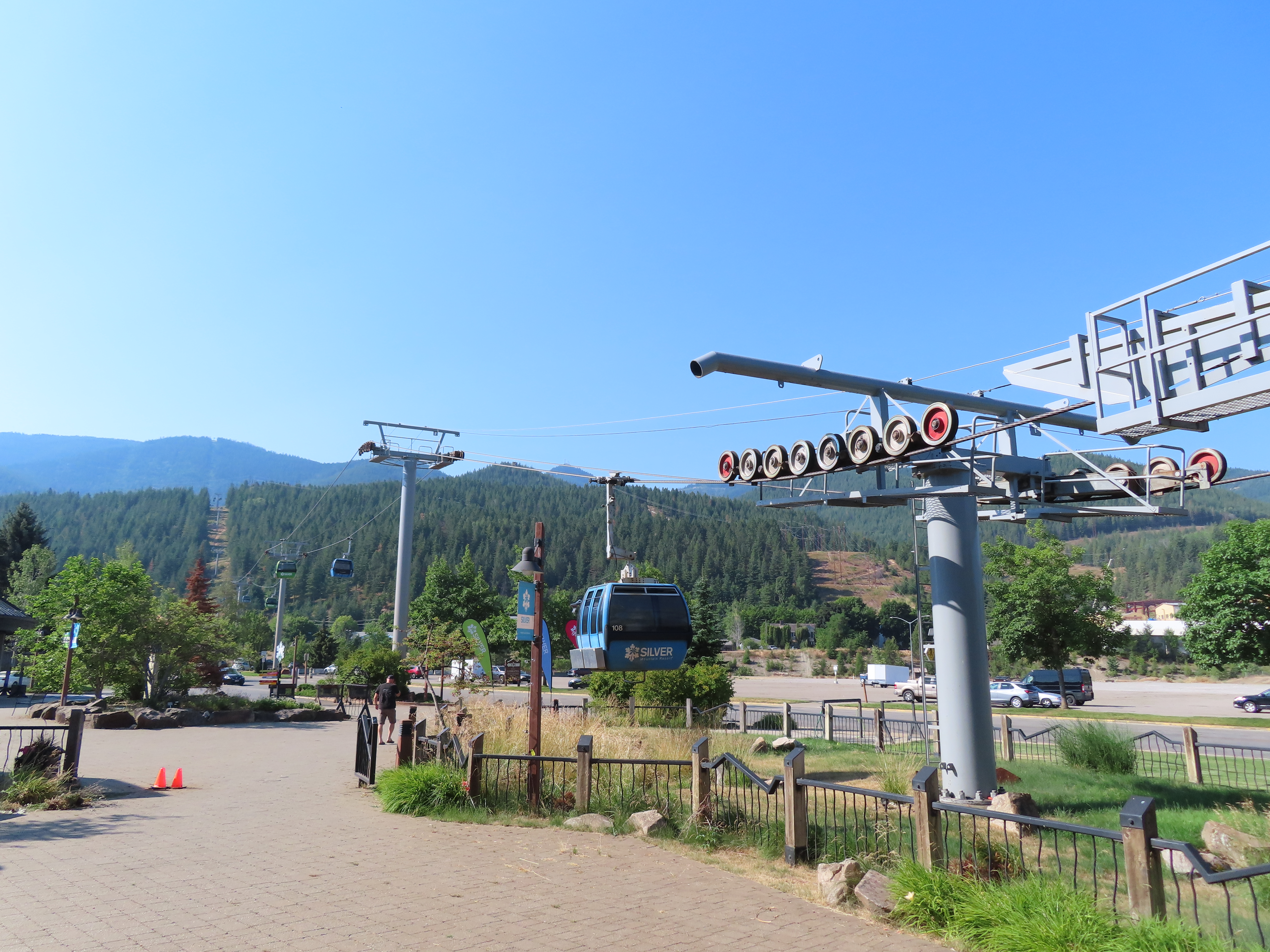
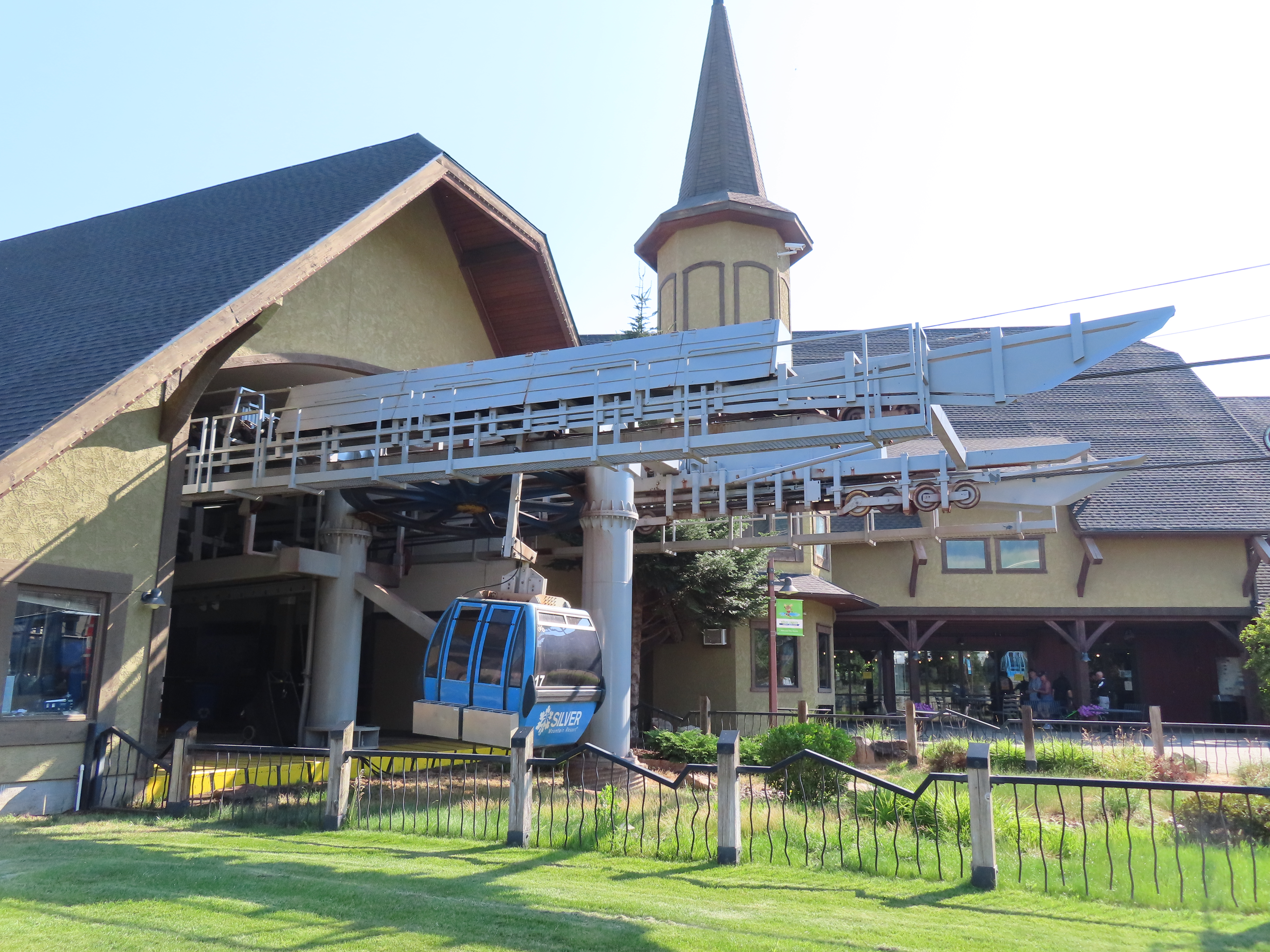
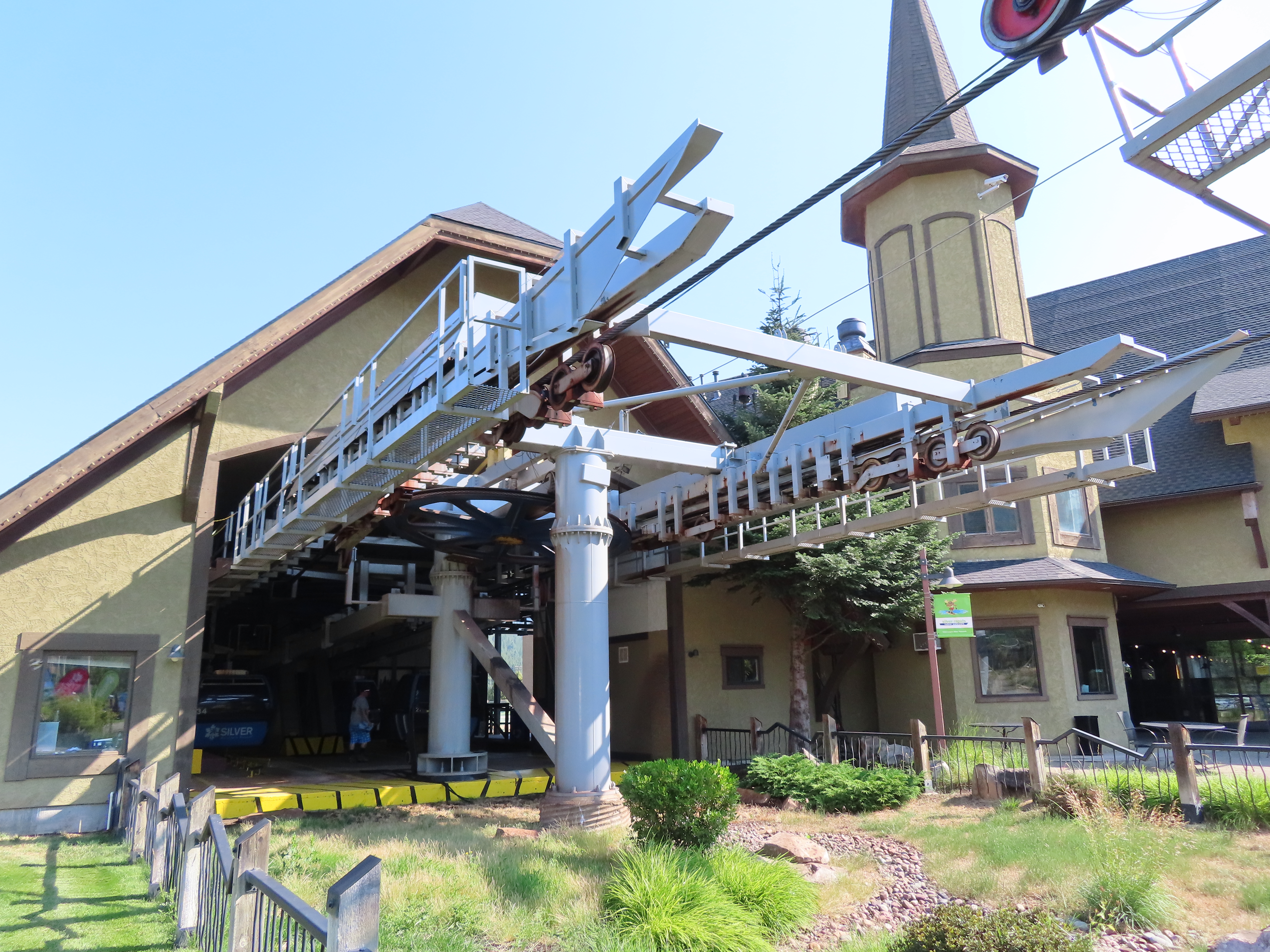
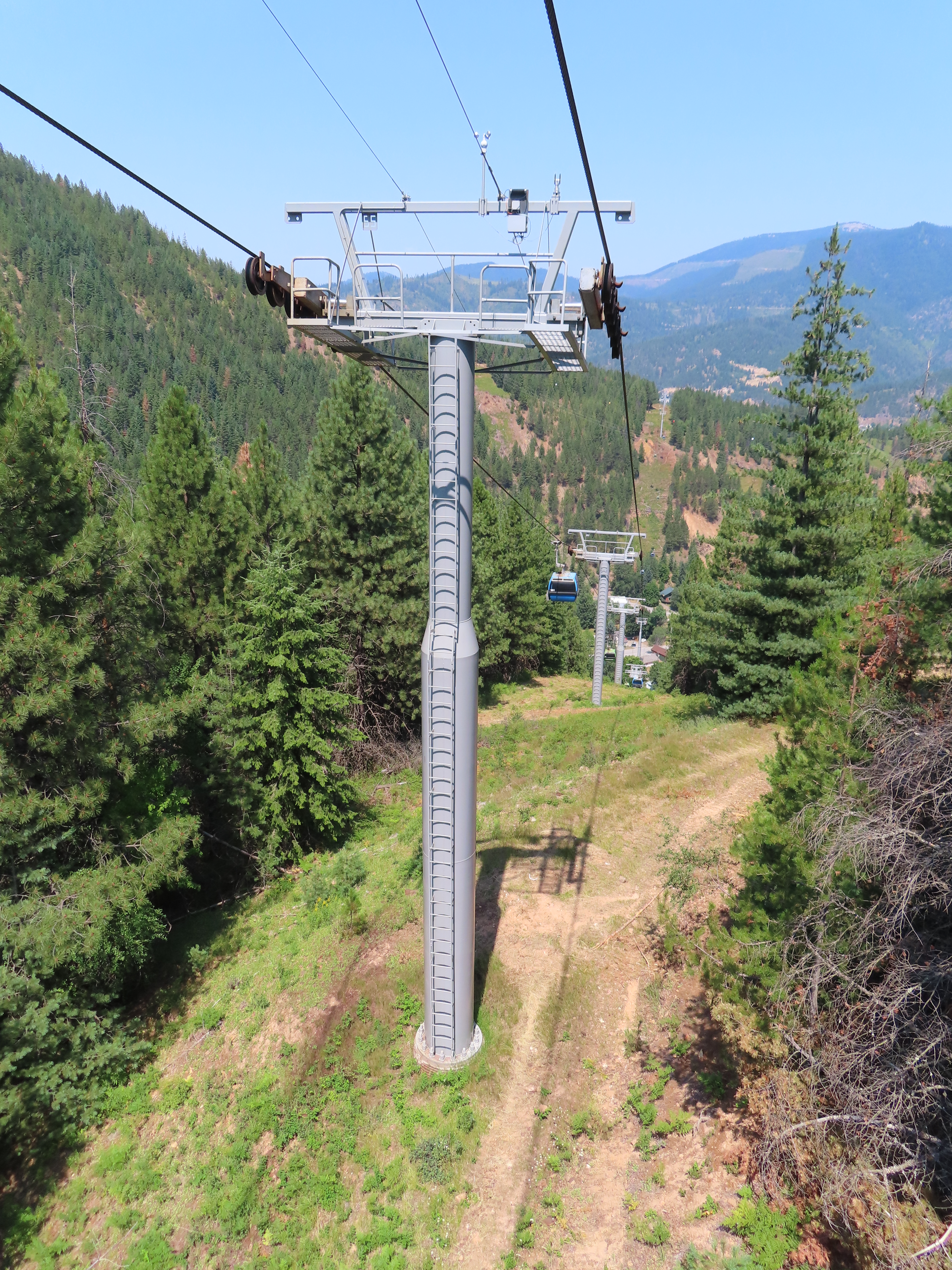
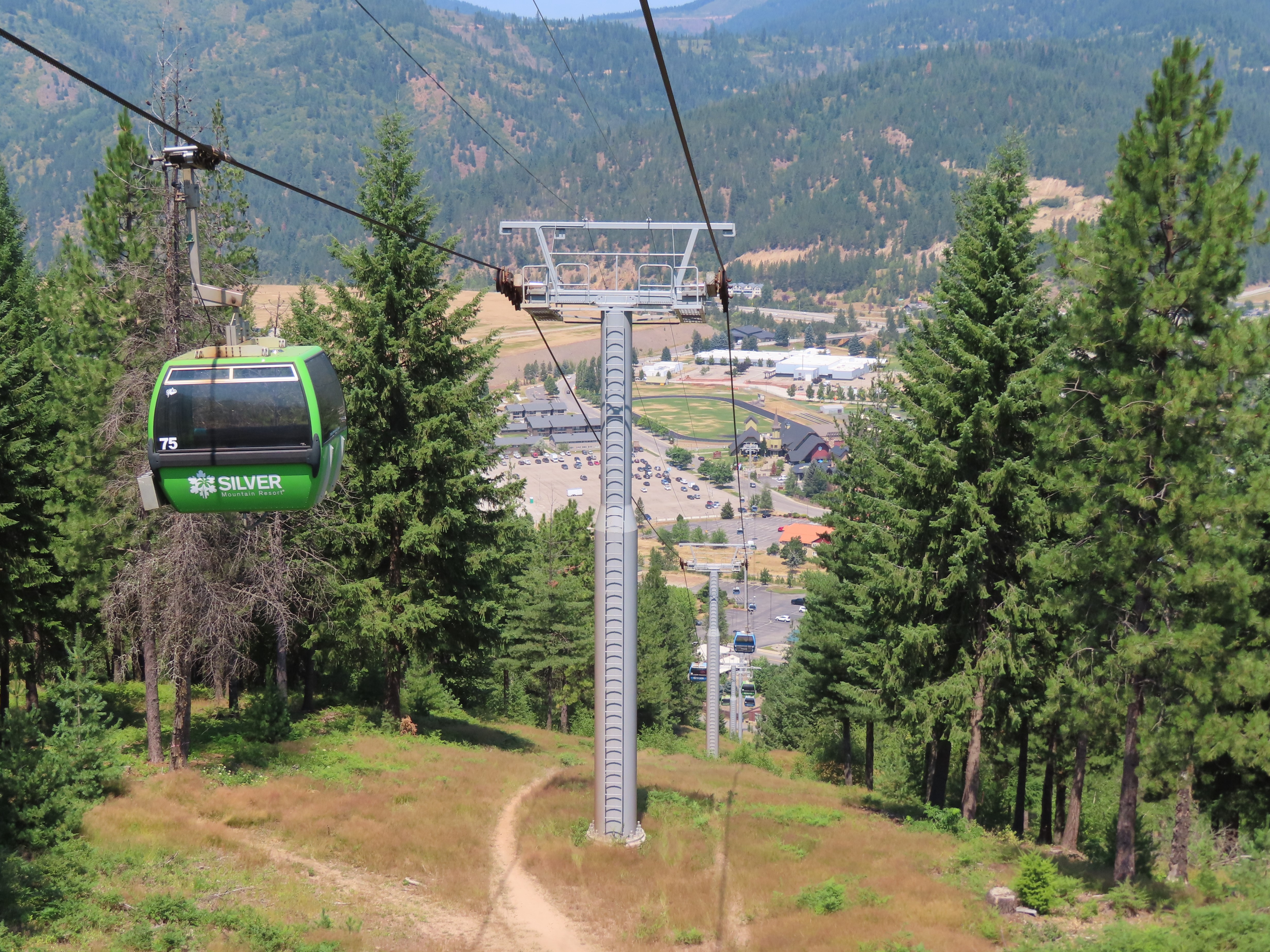
Inside the bottom terminal.Arrival side of the top station.VonRoll hanger and grip.Leaving the town of Kellogg.Headed over the town of Wardner.Depression towers in someone’s driveway.Looking back.About halfway.The final rise to Silver Mountain.Midway looking back.Upper lift line.Tower 34.Top station.Tower 42.Bottom terminal from the outside.Looking up from the parking lot.Tower 1 seen in summer.Side view of the bottom terminal end and tower 1.Loading area at the base.View up from the base plaza.A cabin leaving the lower station.This station is the return.Turnaround inside the base tension station.Counterweight for tensioning.One of many hold down towers on this lift.Riding out of Kellogg.Descending into the town of Wardner.Passing over Wardner.A second large set of hold down assemblies.One of a few cargo carriers along the line.The third major set of hold down towers.Tower 40.Drive bullwheel.Top terminal turnaround.Loading area at the summit.View riding out of the top terminal.Riding down toward Wardner.Middle section of the line.A support tower.The highest of the many hold down towers.One of the tallest towers.View down.A support tower near Wardner.Tower 10 above the town of Kellogg.Lift line overview.
I have never been to Silver Mountain before until earlier this summer! I rode the Gondola and Chair 3 since they were both open for sightseeing and for mountain bikers to use.
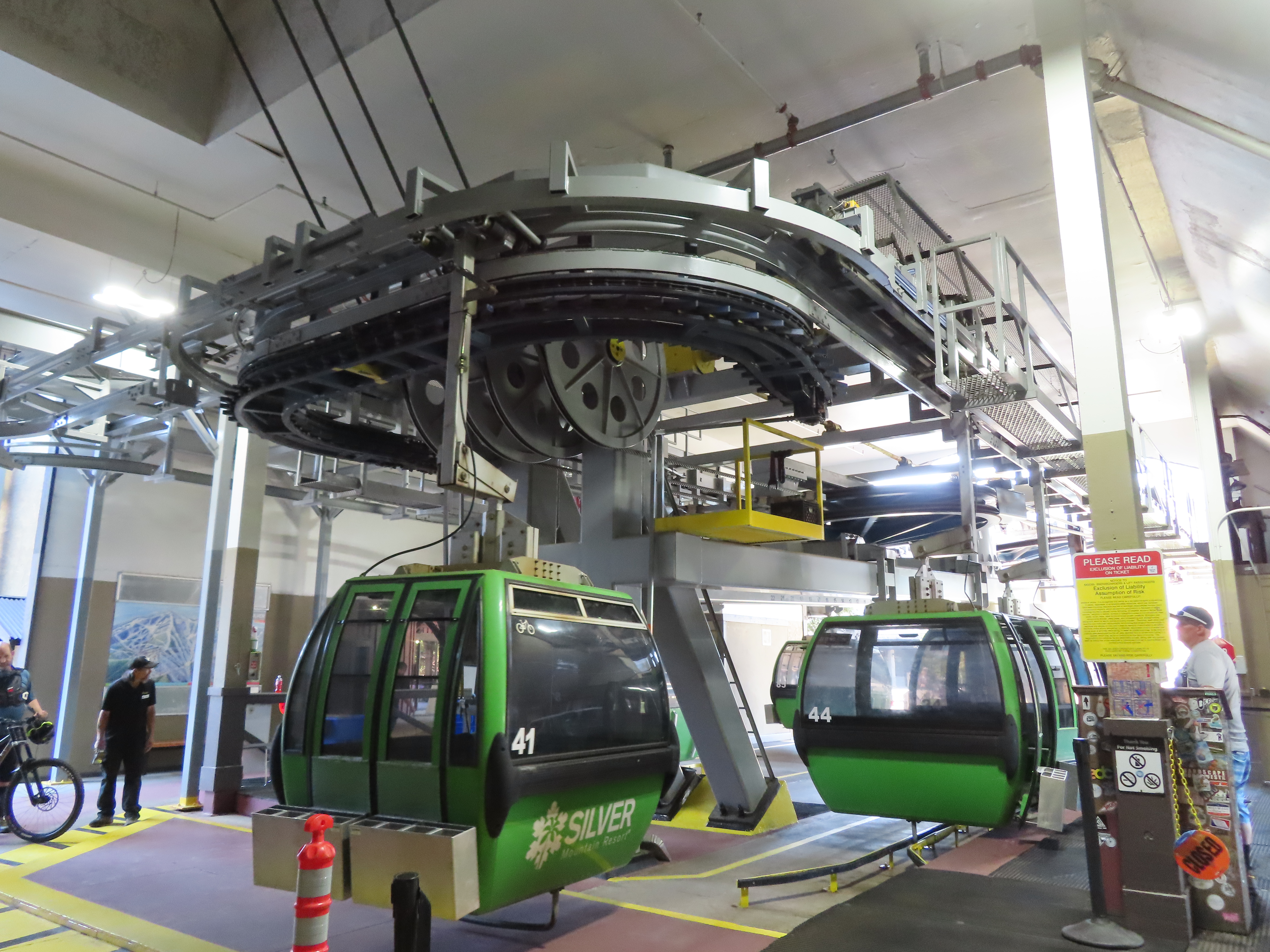
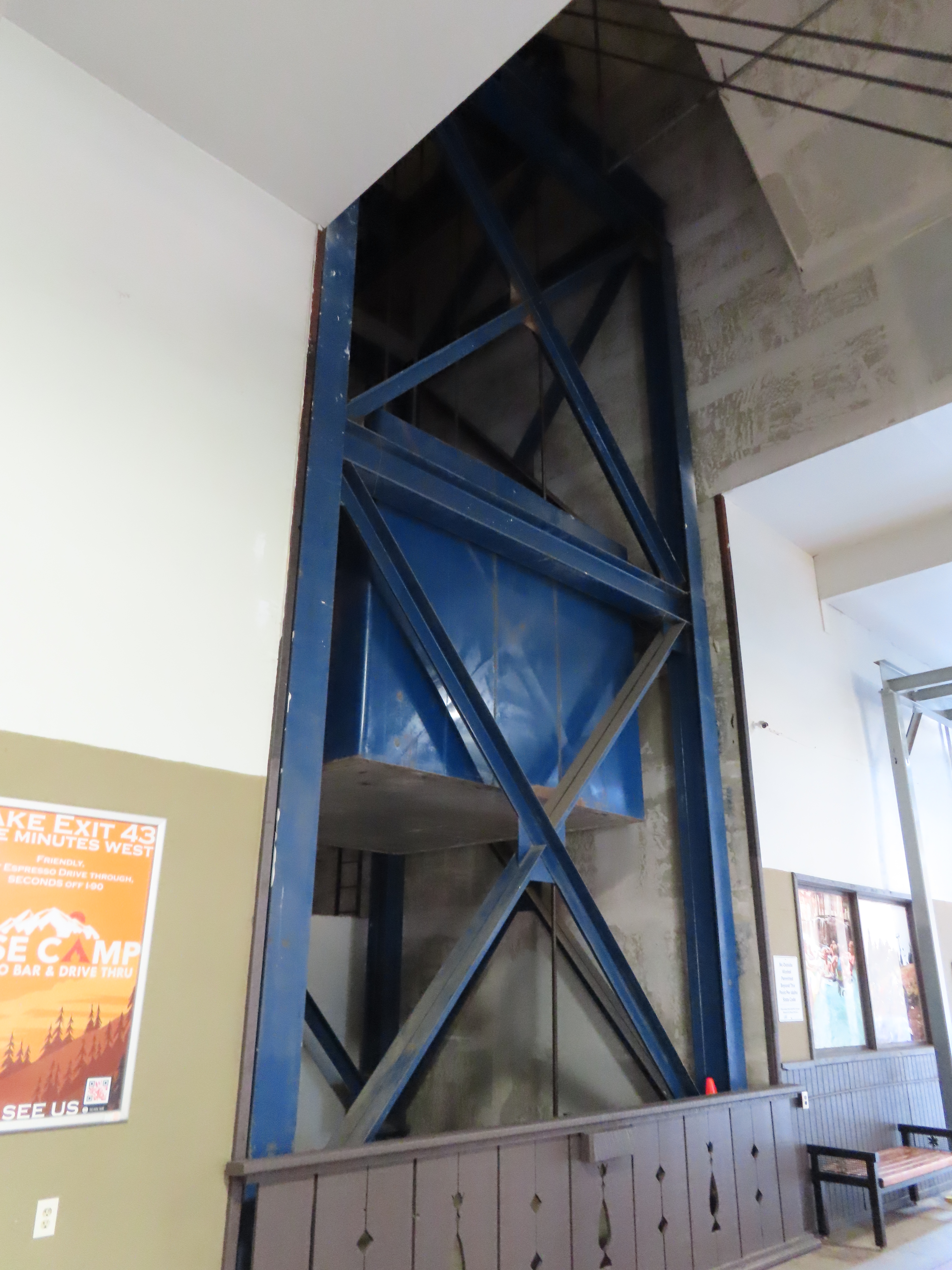
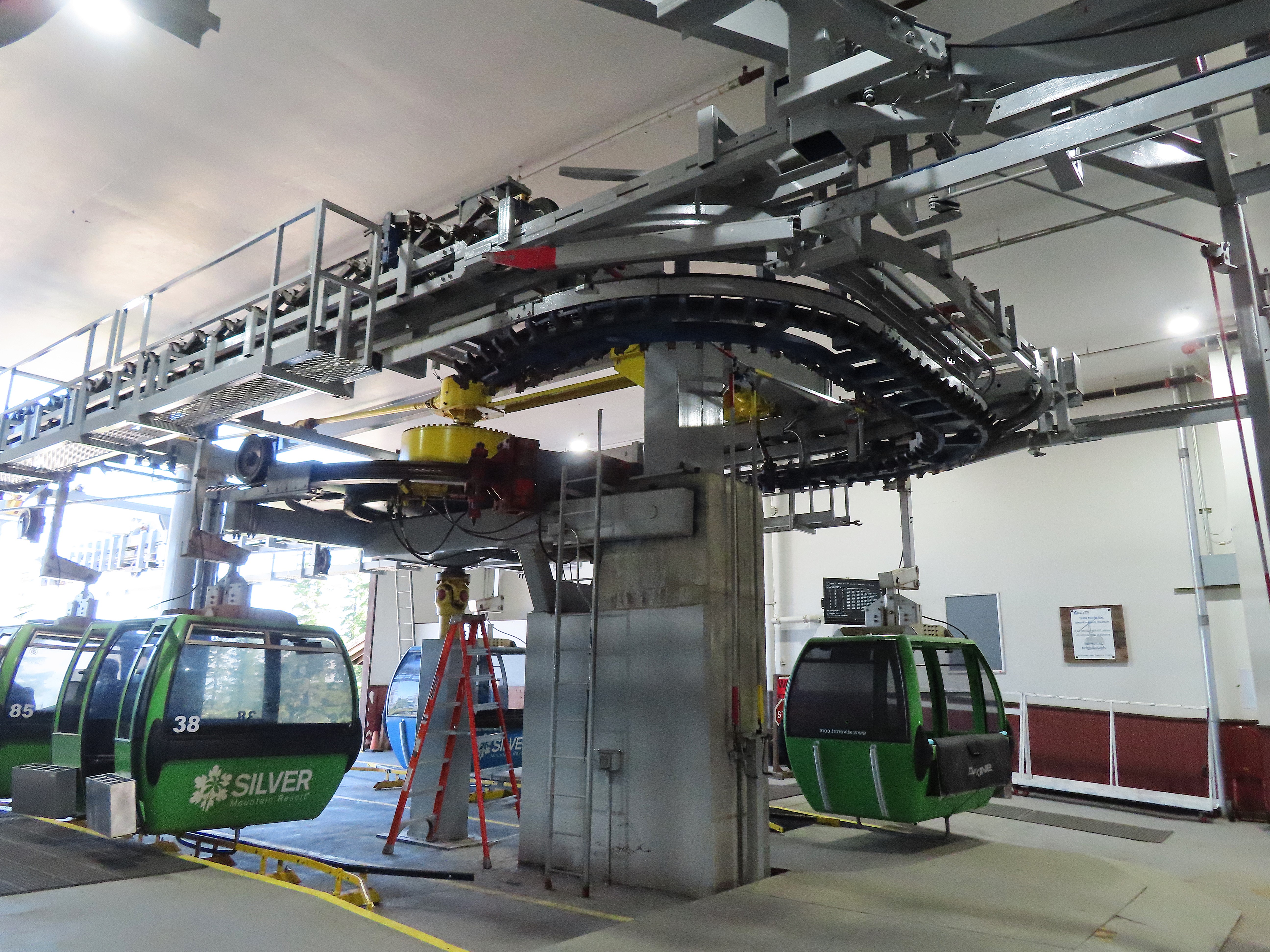
Was really surprised to see a MASSIVE counterweight, as well as (I think) three bullwheels in the bottom terminal of the gondola. Does anyone know what the purpose of the multiple bullwheels are for this monocable gondola?
I was also surprised to see counterweights on the gondola and every other Von Roll lift at Silver Mountain, considering they’re all from 1990. I figured, with rare exceptions, counterweight tensioning had already been replaced by hydraulic tensioning at that point, since I can think of many lifts older than the Silver Mountain Von Rolls, detachable and fixed grip, that have hydraulic tensioning. I guess Von Roll was a little behind in some ways.
There are three bull wheels (might technically only be two, with one having two grooves for the haul rope) to help with tensioning.The counterweight pulls on the downhill bull wheel, while the uphill one stays in place. I believe it’s to shorten the amount of travel needed to tension that long of a lift. Otherwise you’d need a much longer station, and a much larger hole for that counterweight.
Think you’re right abut that one. I think it’s three bullwheels as well, with the two on the carriage being independently mounted on the same shaft. I haven’t ridden that lift since well before I became a mechanic, and I’d be very interested to get a tour.
I too agree with PBROPETECH, I think the fixed bullwheel also acts as a pto, supplying the mechanical power to the conveyor equipment via numerous drive shafts.
Having worked on this lift as my previous mtn and silver are now jointly owned, how it works is to completely shorten the tension carriage. It’s two bullwheels at the bottom, the rope comes in off the heavy side & goes around the upper groove of the double groove bullwheel (which is also the moving tension bullwheel), goes back to the upper stationary bullwheel (which is mounted at an angle if you look closely at the pictures of it) back through the lower groove of the double groove, and back up the line. It greatly shortens the amount of tension carriage that is needed compared to a standard single return bullwheel setup, there’s a space constraint at the bottom where the property of a school goes right up to the back of the return terminal, I’d imagine that was part of the reason for the short carriage (the fact that this lift is a complete and utter behemoth probably adds to it as well) hopefully this helps.
Various manufacturers have built lifts (usually gondola actually) with counterweights well into the 2000s when they were especially long and/or had lots of breakovers. That might be the case here.
I don’t know about all Dopplemayer 3S gondolas but I am pretty sure some of them have counterweights, I think it depends on the profile. The 3S at Whistler is hydraulically tensioned I believe but I think in Europe there are many others with counterweights. Not only this but the Funitel at Squaw Valley is counterweight tensioned based off of the construction notes.
Correct. Riblet only made 2 gondolas. The Spokane one that Peter mentioned, and the Mount Rushmore one you mentioned. Here’s the link to it. It has since been modified into a triple chair. https://liftblog.com/chairlift-rushmore-tramway-adventures-sd/
Double VR-104s, I believe. This may be the only lift in the US with them; Von Roll never made much headway over here before they were bought by Doppelmayr. They’re an interesting grip with a lot of moving parts and I’ve never quite understood how they operate. Very different from any of the Pomas and Doppelmayrs I’ve worked on.
Also, silver likes to advertise this gondola as a super fun experience. But honestly, I don’t love it. Especially this year, I had season passes, and the lines on this thing earlier in the morning at like 7-8 just got ridiculous. Also, this thing is showing it’s age. They always rattle like crazy, it doesn’t go very fast a lot of the time, and it’s just annoying. They have a road going up to the mid station at chair 4, and I have thought that they should open it up for season pass holders to drive up because the line is crazy. Another thing to note, this is like the only place on the mountain that has lines. Sometimes chair 3 can, but that’s only during busy days. The main accesses chairlift, chair 2, rarely has lines, and because it goes fast and he relatively close spacing, it goes fast. Anyways, this gondola is cool but annoying.
That is what happens when access to the entire mountain is dependent on a 30-year-old, 1600 person per hour gondola. It really is due for a replacement, but it will absolutely be expensive. A capacity around ~2400 would be good, and the line speed should be boosted to 1200 given the length. For a project that will cost north of $10 million, it will take a few years of savings for the owners, as they are flush with cash.
It’s unlikely we see a full replacement anytime soon, but there was a proposal in the early 2000s to do a second portal to the east with either another gondola or a HSQ up to the bottom of Chair 2.
The road you refer to was how you would access the former Jackass (you read that right) ski area. What is now chair 4 was the sole lift at Jackass. The original day lodge was a secondary snack shop when I skied here in the 90s. I don’t know if it’s still there.
Uhhh… Source on the name? According to the skimap.org page for Silver mountain it was originally called “Silverhorn” before the gondola and the expansion around 1990…
Chase, the name originates from a donkey. Back at the time, it wasn’t an insult or curse word or anything, so there’s not really anything to be apologetic about
flyball- it was also the clientele. When Jackass was first made a ski area, the majority of the skiers were local silver miners, and the owners and workers of local businesses that supported them. Some people definitely made it over from Spokane, but many of them spent their ski days at the much closer Mt.Spokane or even 49. If you were willing to drive, Schweitzer was actually pretty big by 1960’s and 70’s standards, with multiple big bowls and a backside.
The gondola didn’t exist and cars/plows of the day meant i-90 wasn’t as easy to drive, so it wasn’t the convenient access for Spokanites it is now. Cour De Alene was still a tiny town.
It was a small, raw ski hill built on reclaimed mining land as a benefit to local miners. The name makes sense with context.
When I skied what was then called Jackass back in the 70s, many non-locals wouldn’t want to drive the access road! Steep, lots of switchbacks, no guardrails and no trees until you got near the top due to the pollution from the nearby smelter. Snowplows just plowed the snow off the sides.
No, that was cut to be the chairline for a chair 6 terrain expansion off the bunny hill. Changing ownership and low revenue years caused a 6th chair to never come to fruition.




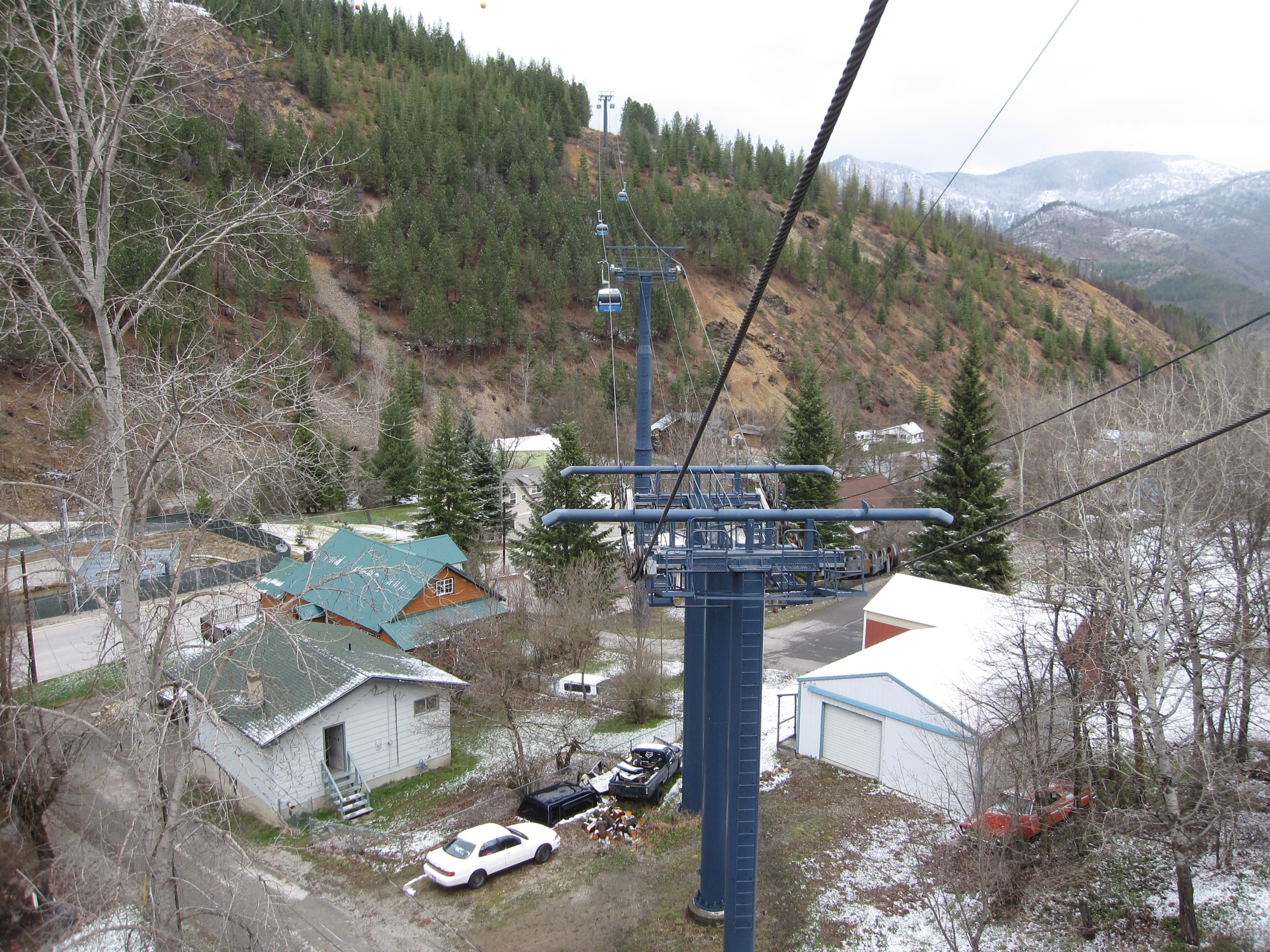






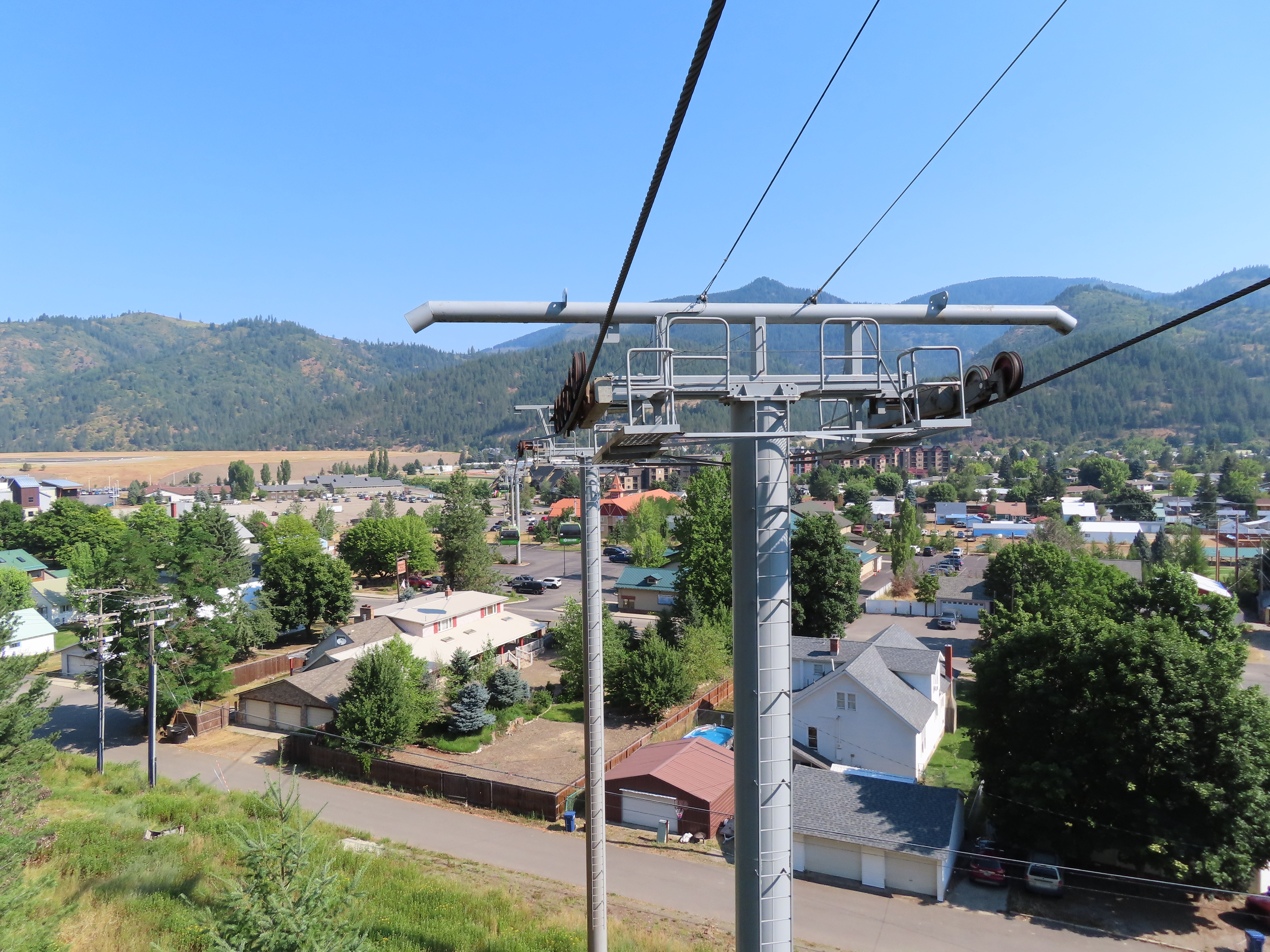
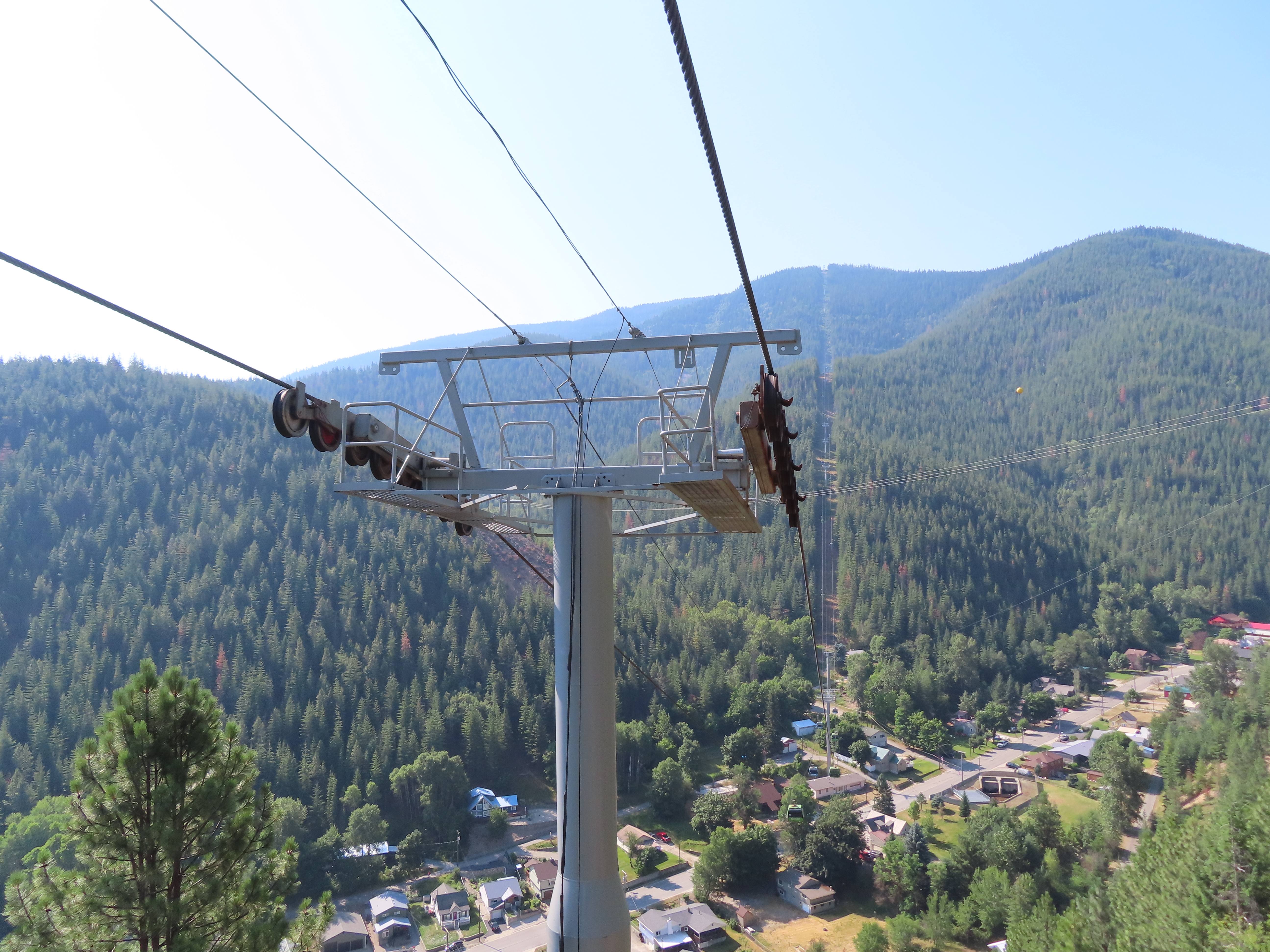
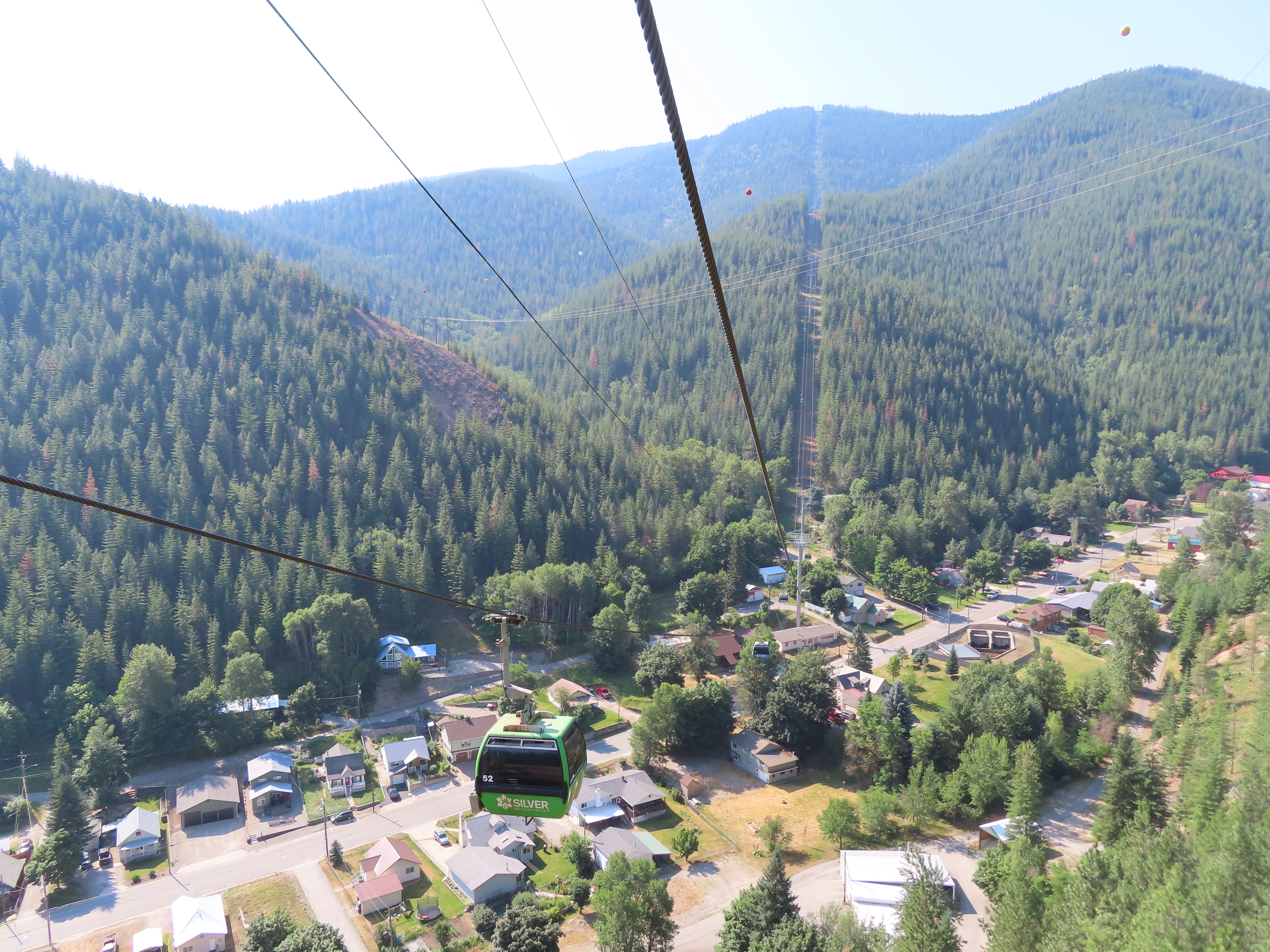
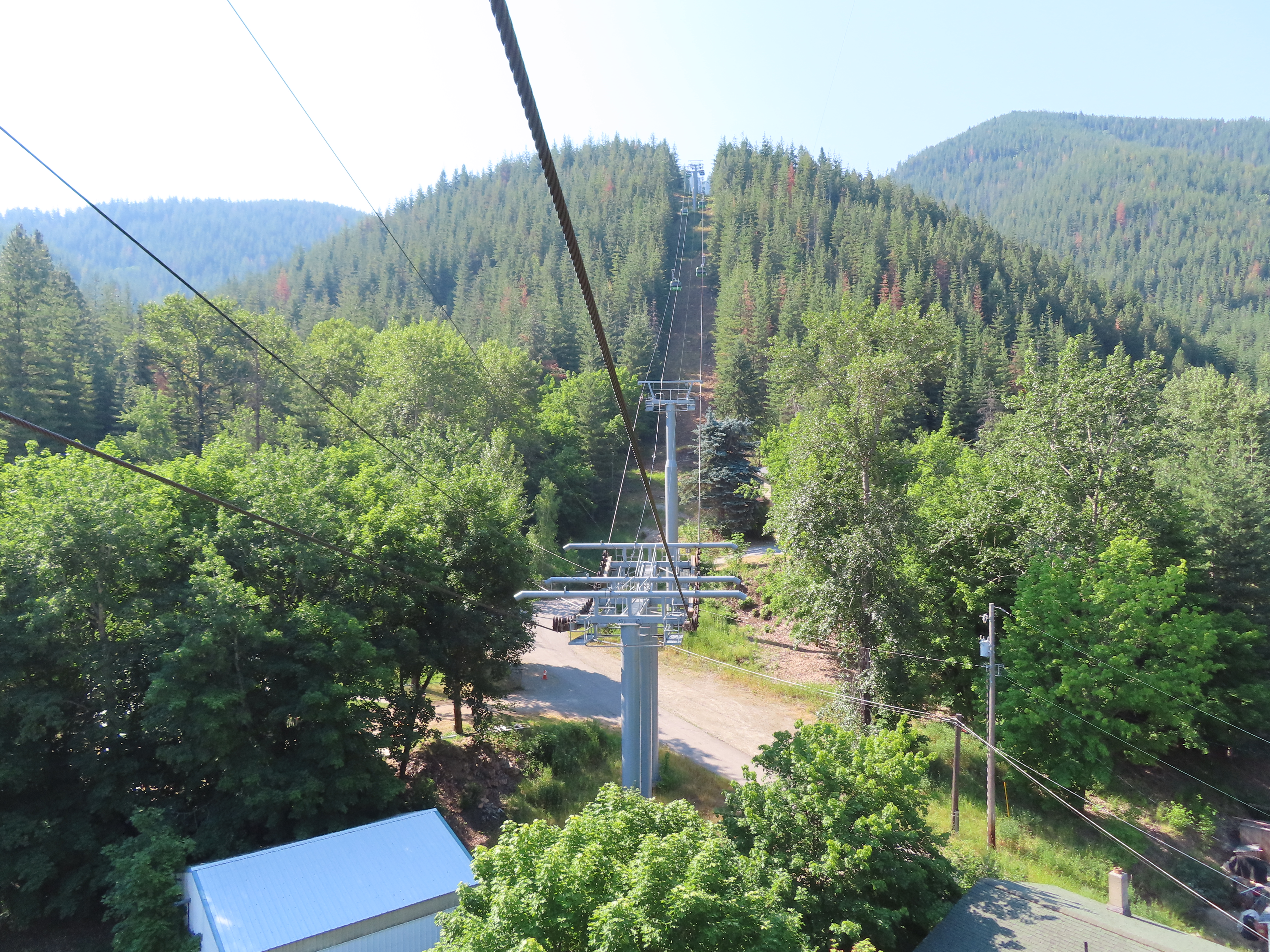
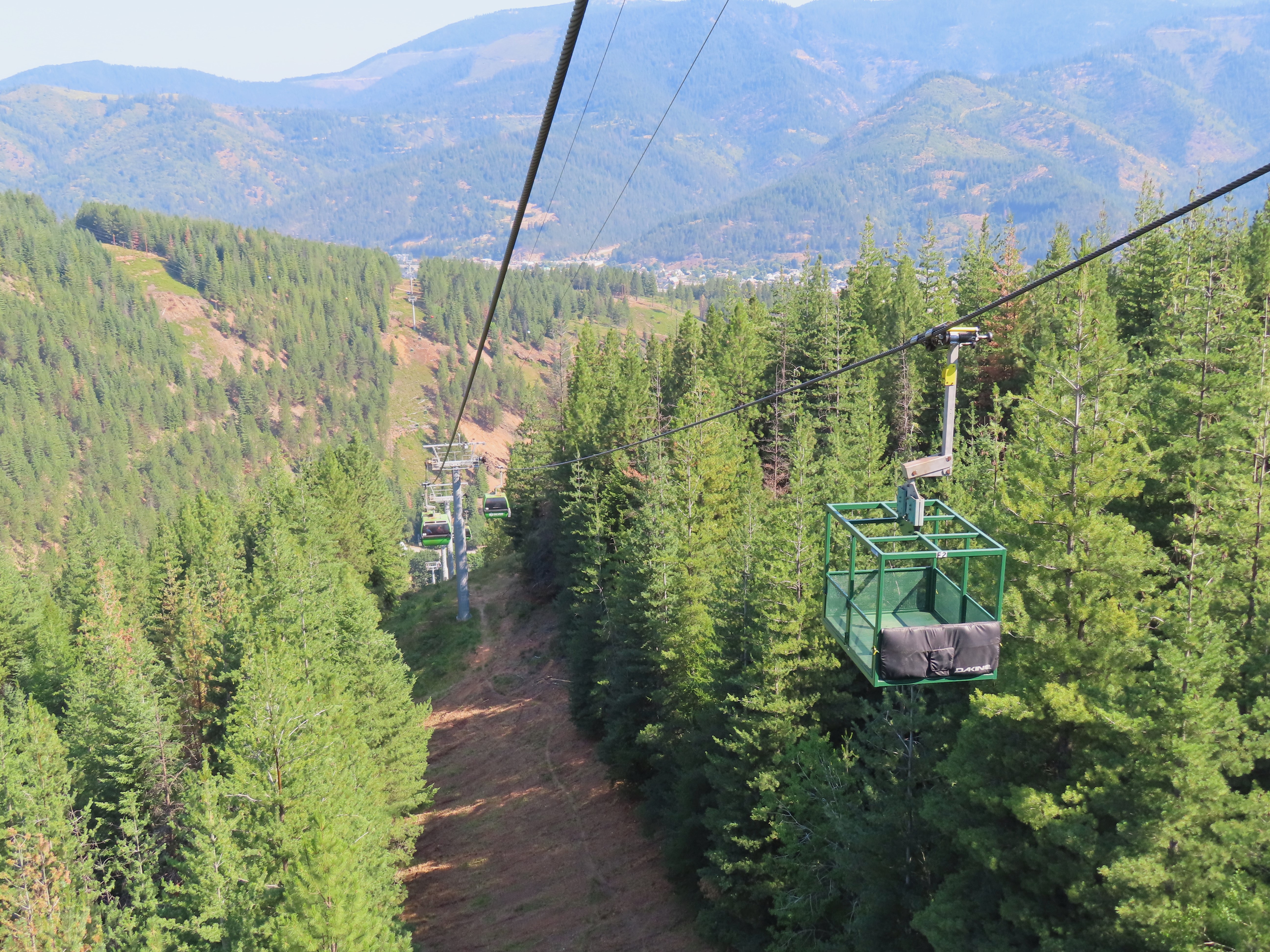
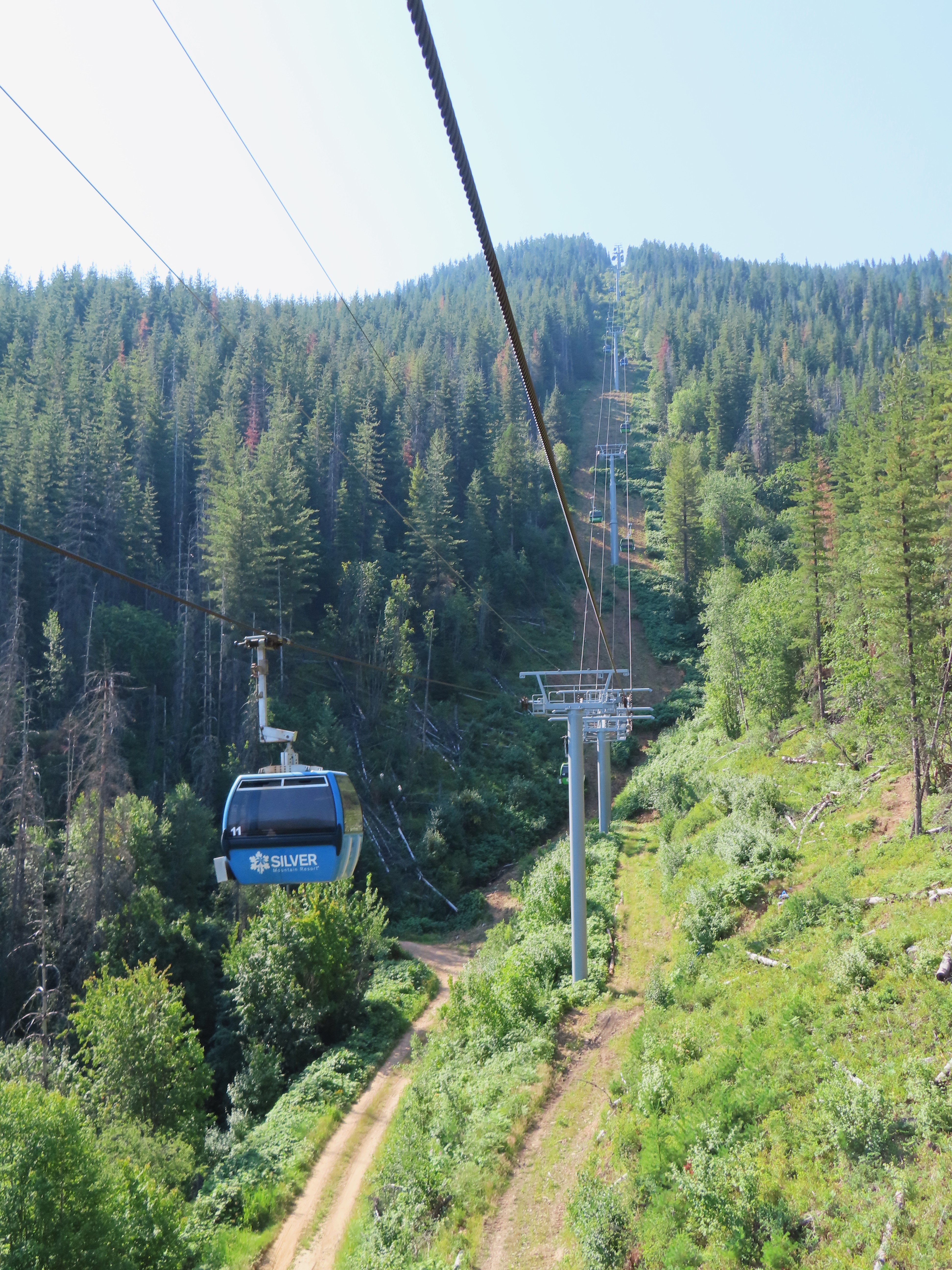
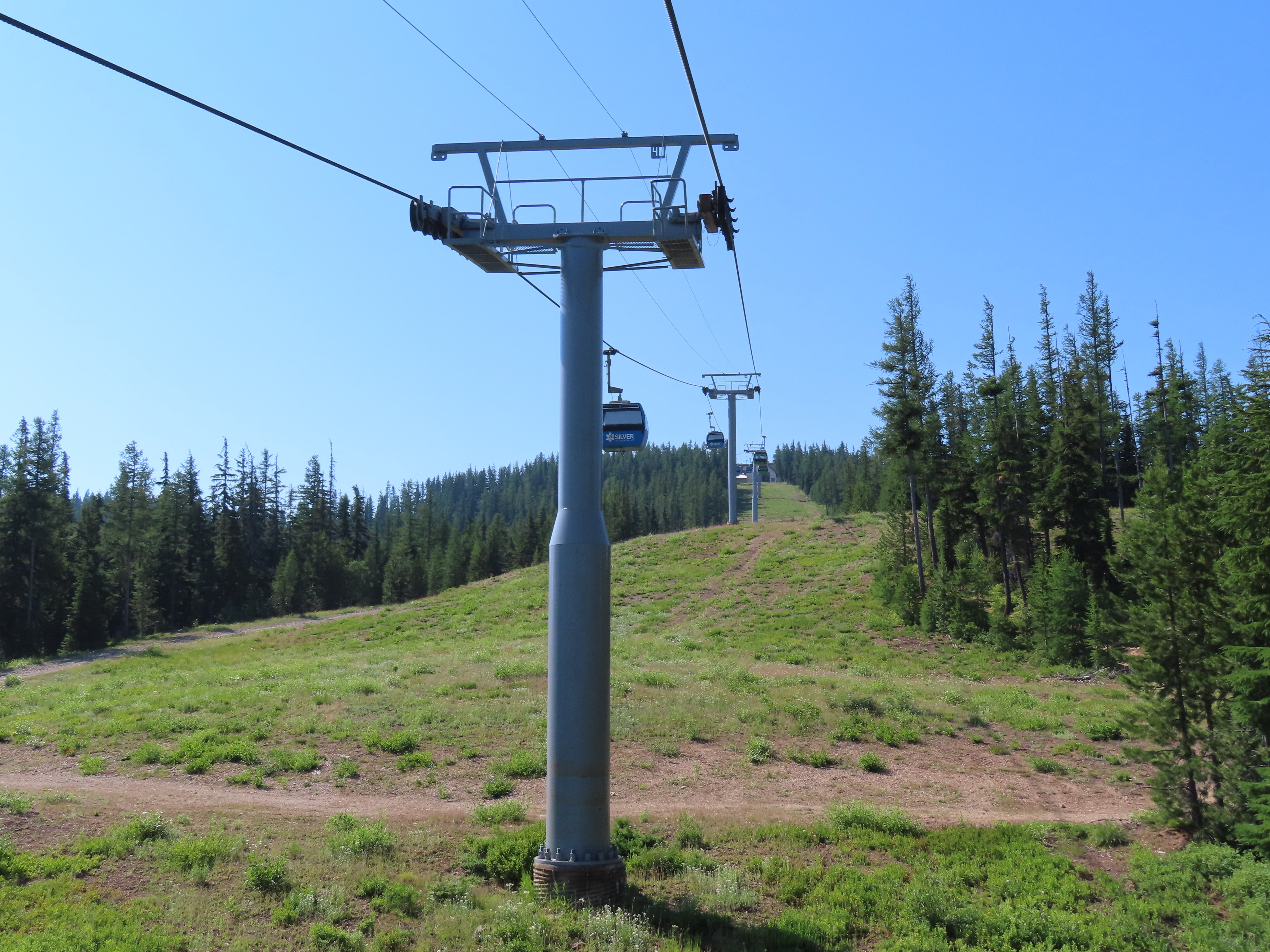


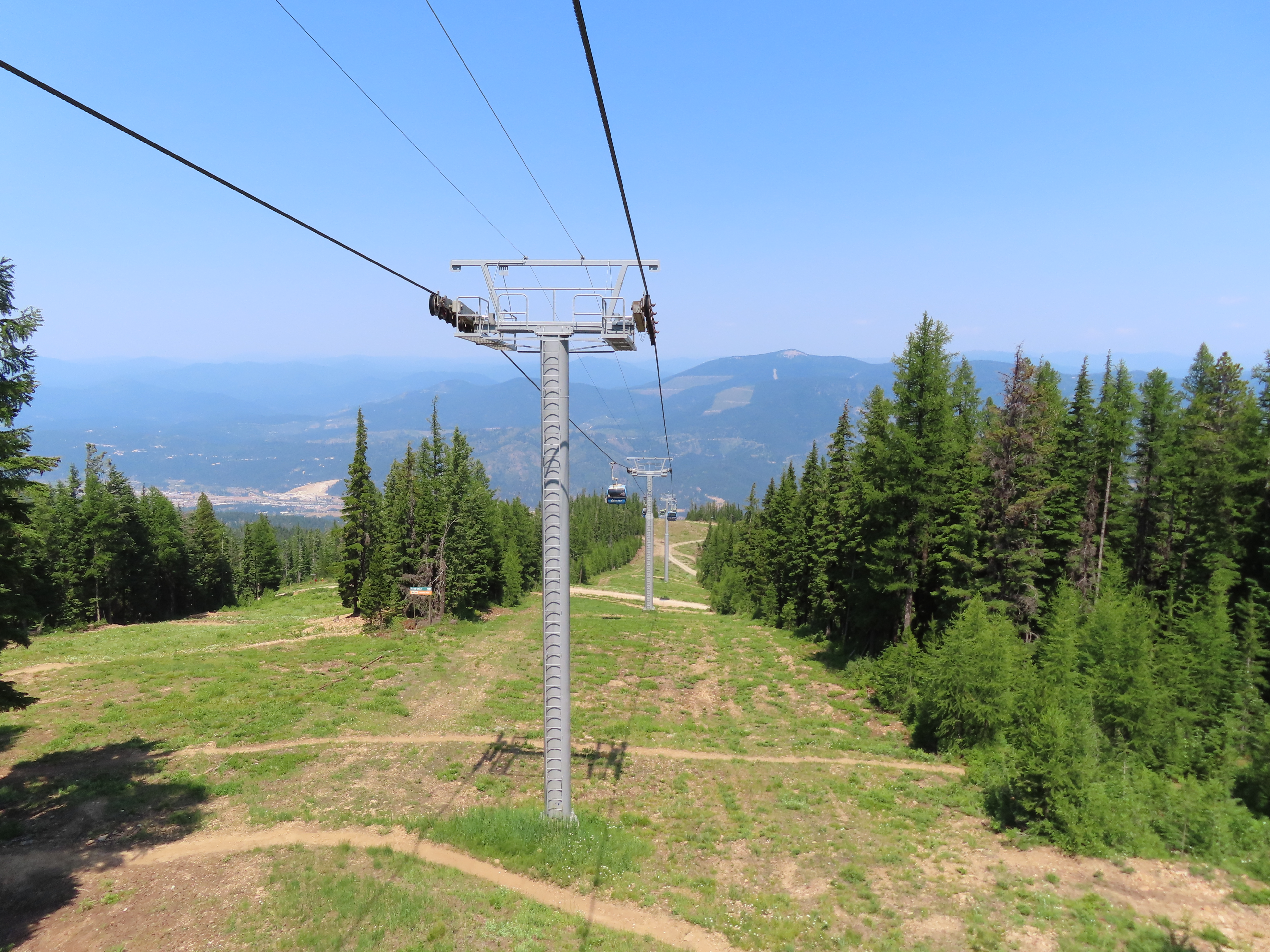
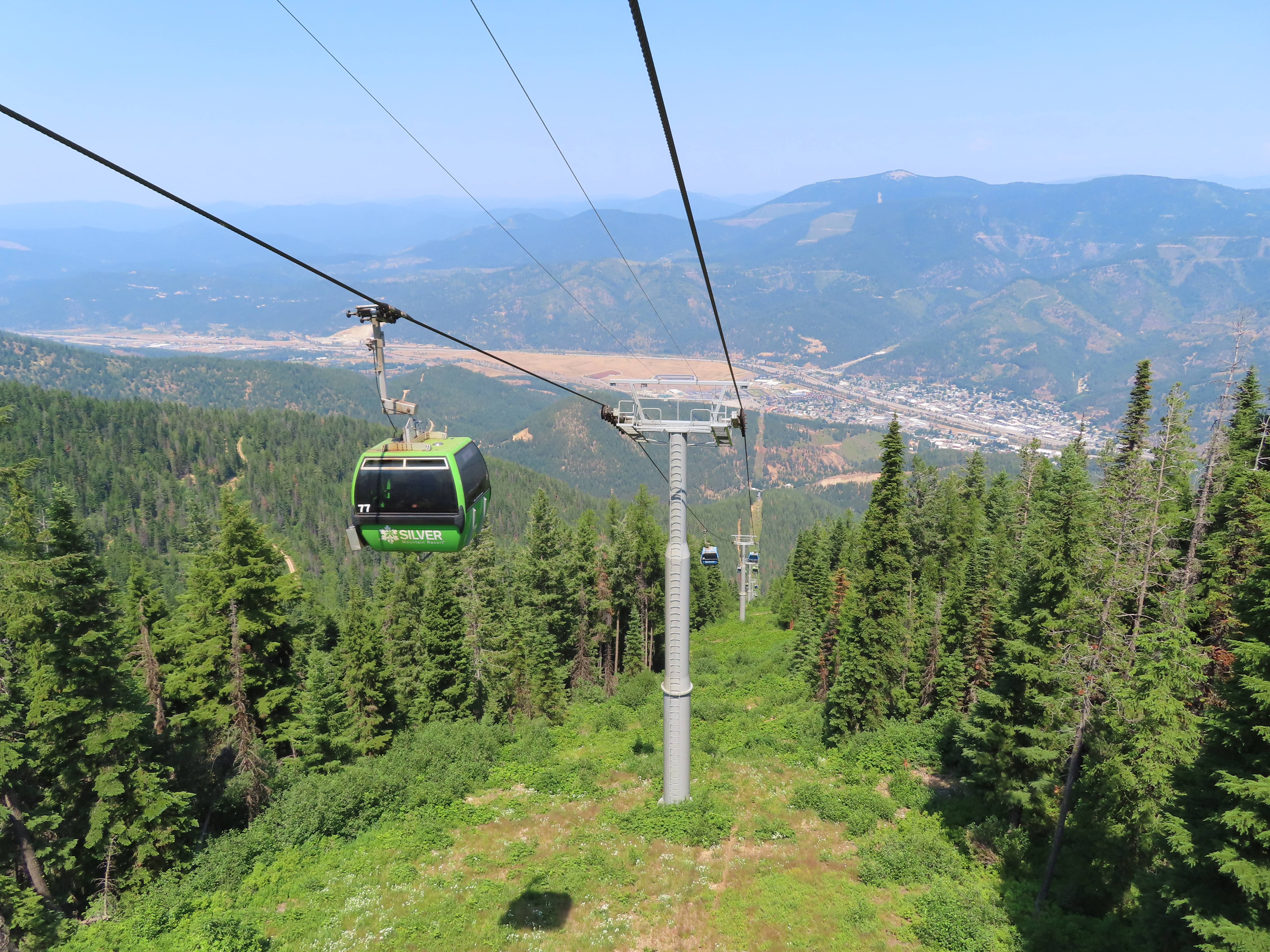
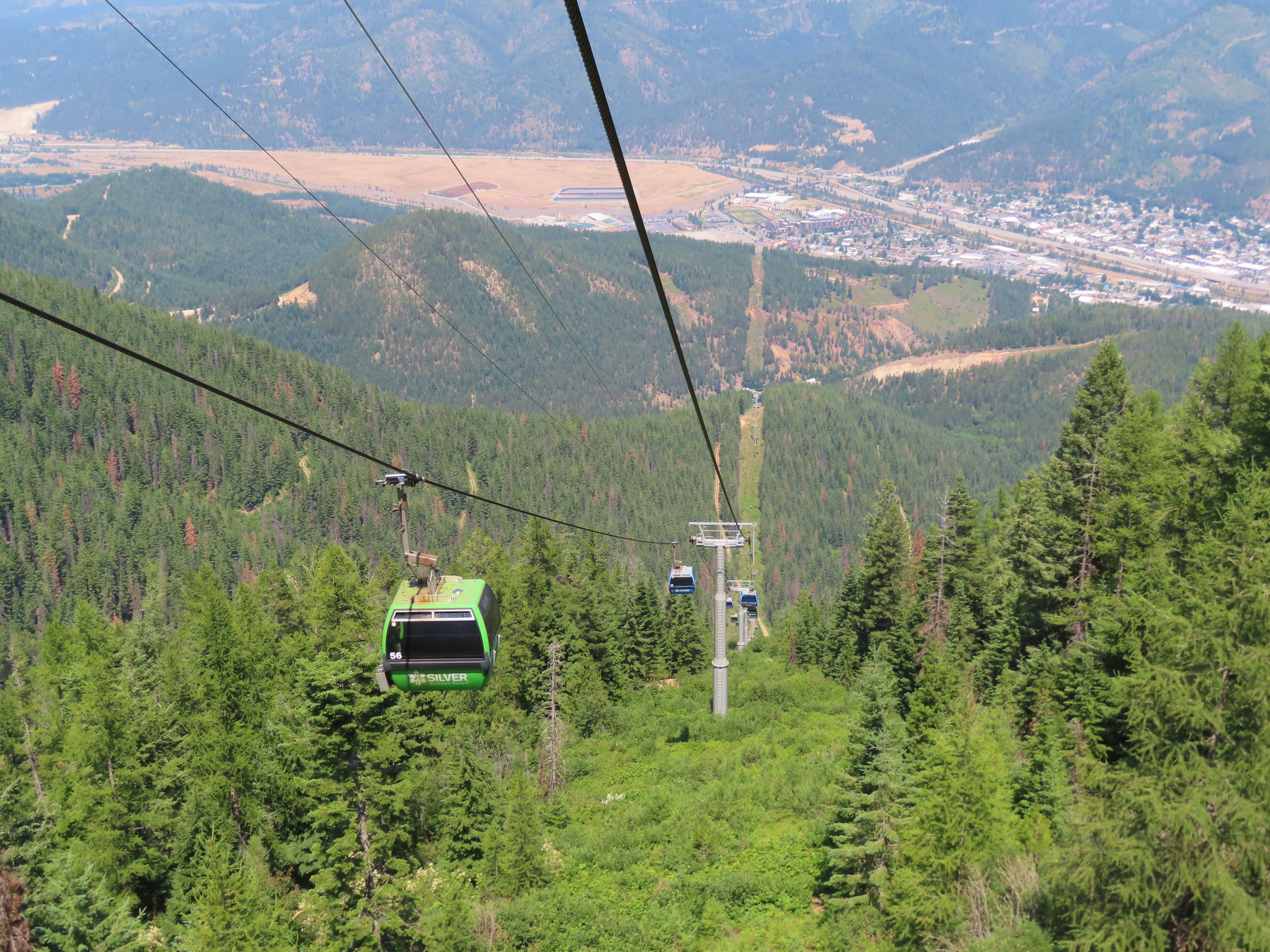


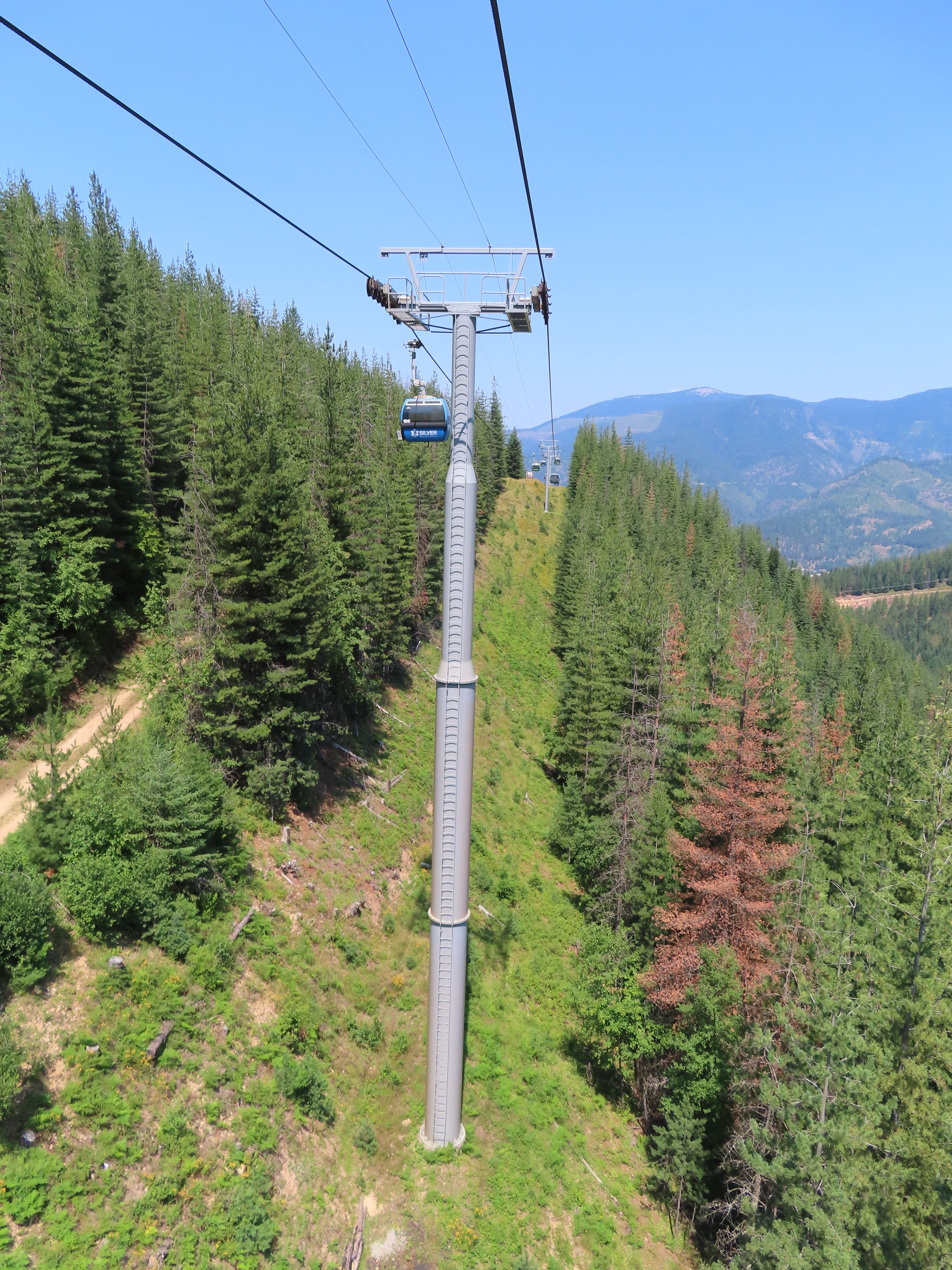
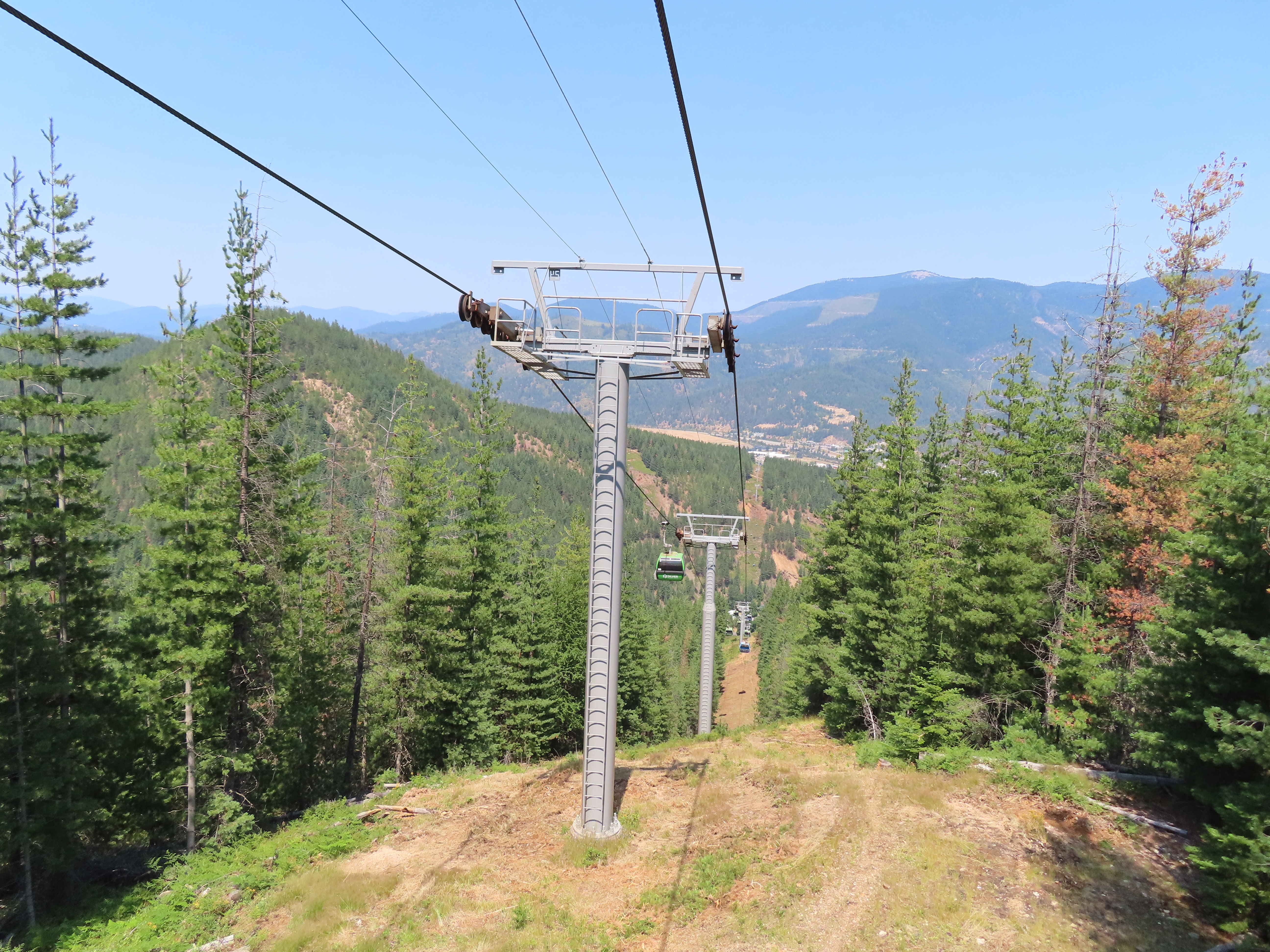
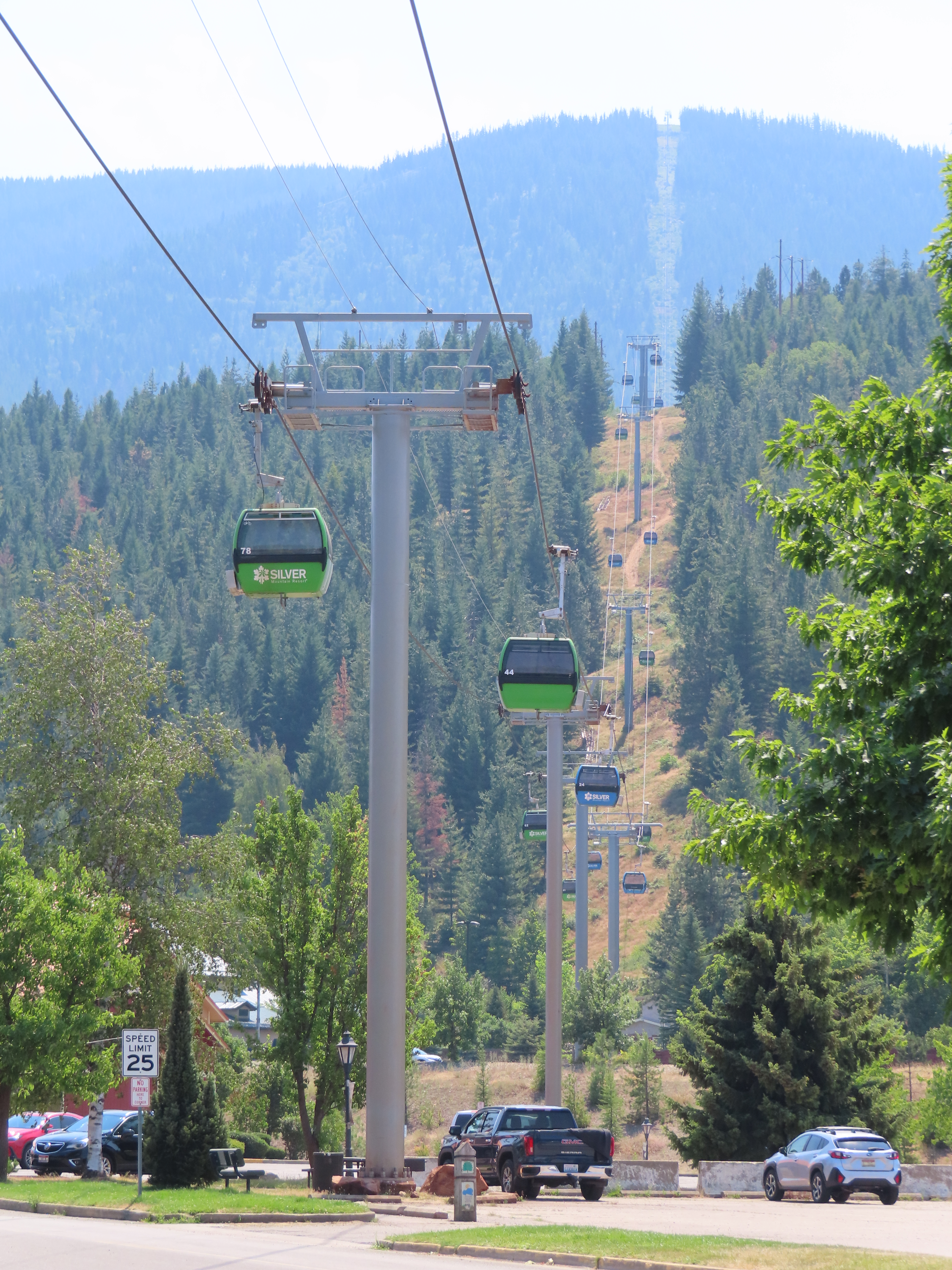


“Depression towers in someone’s driveway.”
Thanks for the 5 seconds of cracking up, man.
LikeLiked by 10 people
How did they even get permission for that?
LikeLike
Property purchase or a reoccuring fee established by the owner of that property.
LikeLike
Easement. Property rights are like a bundle of sticks. You can keep them all, sell them all, or just sell some of them.
LikeLiked by 1 person
Are these cabins Von-Roll? They look kinda like the ones on Excalibur and Steamboat.
LikeLike
They are early CWA Omegas. Doppelmayr didn’t buy CWA until 2002.
LikeLiked by 1 person
Had a fun time first time on a gondola
LikeLiked by 1 person
Was everything on the tower except the tube upgraded?
LikeLike
Is this the longest single stage mono-cable gondola/chairlift in the world?
LikeLiked by 1 person
I have never been to Silver Mountain before until earlier this summer! I rode the Gondola and Chair 3 since they were both open for sightseeing and for mountain bikers to use.
Was really surprised to see a MASSIVE counterweight, as well as (I think) three bullwheels in the bottom terminal of the gondola. Does anyone know what the purpose of the multiple bullwheels are for this monocable gondola?
I was also surprised to see counterweights on the gondola and every other Von Roll lift at Silver Mountain, considering they’re all from 1990. I figured, with rare exceptions, counterweight tensioning had already been replaced by hydraulic tensioning at that point, since I can think of many lifts older than the Silver Mountain Von Rolls, detachable and fixed grip, that have hydraulic tensioning. I guess Von Roll was a little behind in some ways.
LikeLiked by 1 person
There are three bull wheels (might technically only be two, with one having two grooves for the haul rope) to help with tensioning.The counterweight pulls on the downhill bull wheel, while the uphill one stays in place. I believe it’s to shorten the amount of travel needed to tension that long of a lift. Otherwise you’d need a much longer station, and a much larger hole for that counterweight.
LikeLiked by 1 person
Think you’re right abut that one. I think it’s three bullwheels as well, with the two on the carriage being independently mounted on the same shaft. I haven’t ridden that lift since well before I became a mechanic, and I’d be very interested to get a tour.
LikeLiked by 1 person
I too agree with PBROPETECH, I think the fixed bullwheel also acts as a pto, supplying the mechanical power to the conveyor equipment via numerous drive shafts.
LikeLike
Having worked on this lift as my previous mtn and silver are now jointly owned, how it works is to completely shorten the tension carriage. It’s two bullwheels at the bottom, the rope comes in off the heavy side & goes around the upper groove of the double groove bullwheel (which is also the moving tension bullwheel), goes back to the upper stationary bullwheel (which is mounted at an angle if you look closely at the pictures of it) back through the lower groove of the double groove, and back up the line. It greatly shortens the amount of tension carriage that is needed compared to a standard single return bullwheel setup, there’s a space constraint at the bottom where the property of a school goes right up to the back of the return terminal, I’d imagine that was part of the reason for the short carriage (the fact that this lift is a complete and utter behemoth probably adds to it as well) hopefully this helps.
LikeLiked by 2 people
It works like a block & tackle?
LikeLike
Various manufacturers have built lifts (usually gondola actually) with counterweights well into the 2000s when they were especially long and/or had lots of breakovers. That might be the case here.
LikeLiked by 1 person
I don’t know about all Dopplemayer 3S gondolas but I am pretty sure some of them have counterweights, I think it depends on the profile. The 3S at Whistler is hydraulically tensioned I believe but I think in Europe there are many others with counterweights. Not only this but the Funitel at Squaw Valley is counterweight tensioned based off of the construction notes.
LikeLike
Did Riblet ever make a gondola?
LikeLike
Yes in its hometown of Spokane.
LikeLike
If they had detachable technology, then why didn’t they make a detachable chairlift?
LikeLiked by 1 person
It was pulse, not detachable. They did have detachable technology.
https://skytraclifts.com/bill-bretts-view-from-the-tower/
LikeLike
Wasn’t there one near Mt. Rushmore?
LikeLiked by 1 person
Correct. Riblet only made 2 gondolas. The Spokane one that Peter mentioned, and the Mount Rushmore one you mentioned. Here’s the link to it. It has since been modified into a triple chair. https://liftblog.com/chairlift-rushmore-tramway-adventures-sd/
LikeLike
What types of grips are these?
LikeLike
Double VR-104s, I believe. This may be the only lift in the US with them; Von Roll never made much headway over here before they were bought by Doppelmayr. They’re an interesting grip with a lot of moving parts and I’ve never quite understood how they operate. Very different from any of the Pomas and Doppelmayrs I’ve worked on.
LikeLike
Super late reply but they look like VH400s, the same ones that were on the old River Run gondola at Keystone
LikeLiked by 2 people
Also, silver likes to advertise this gondola as a super fun experience. But honestly, I don’t love it. Especially this year, I had season passes, and the lines on this thing earlier in the morning at like 7-8 just got ridiculous. Also, this thing is showing it’s age. They always rattle like crazy, it doesn’t go very fast a lot of the time, and it’s just annoying. They have a road going up to the mid station at chair 4, and I have thought that they should open it up for season pass holders to drive up because the line is crazy. Another thing to note, this is like the only place on the mountain that has lines. Sometimes chair 3 can, but that’s only during busy days. The main accesses chairlift, chair 2, rarely has lines, and because it goes fast and he relatively close spacing, it goes fast. Anyways, this gondola is cool but annoying.
LikeLike
That is what happens when access to the entire mountain is dependent on a 30-year-old, 1600 person per hour gondola. It really is due for a replacement, but it will absolutely be expensive. A capacity around ~2400 would be good, and the line speed should be boosted to 1200 given the length. For a project that will cost north of $10 million, it will take a few years of savings for the owners, as they are flush with cash.
LikeLike
It’s unlikely we see a full replacement anytime soon, but there was a proposal in the early 2000s to do a second portal to the east with either another gondola or a HSQ up to the bottom of Chair 2.
LikeLike
The road you refer to was how you would access the former Jackass (you read that right) ski area. What is now chair 4 was the sole lift at Jackass. The original day lodge was a secondary snack shop when I skied here in the 90s. I don’t know if it’s still there.
LikeLike
Uhhh… Source on the name? According to the skimap.org page for Silver mountain it was originally called “Silverhorn” before the gondola and the expansion around 1990…
LikeLike
Check the Wikipedia page. It has a bunch of citations at the bottom of the page.
LikeLike
https://silvermt.com/about/history
They’re pretty unapologetic about their past.
LikeLiked by 1 person
https://www.silvermt.com/index.php/about/history
Scroll down to “Founding” and it’s in the first sentence
LikeLike
Chase, the name originates from a donkey. Back at the time, it wasn’t an insult or curse word or anything, so there’s not really anything to be apologetic about
LikeLike
The Jackass lodge was demolished in the early 2000s. It featured prominently in a really bad horror movie called “Shredder” before it was demolished.
LikeLiked by 1 person
How would a resort be able to gt away with a lodge name called “Jackass”
LikeLike
flyball- see ShangriGarrett and Chase’s comments above. Consider the time frame as well. It’s not exactly current-day.
LikeLike
@flyball See above comments. Not a swear, but a donkey.
LikeLike
flyball- it was also the clientele. When Jackass was first made a ski area, the majority of the skiers were local silver miners, and the owners and workers of local businesses that supported them. Some people definitely made it over from Spokane, but many of them spent their ski days at the much closer Mt.Spokane or even 49. If you were willing to drive, Schweitzer was actually pretty big by 1960’s and 70’s standards, with multiple big bowls and a backside.
The gondola didn’t exist and cars/plows of the day meant i-90 wasn’t as easy to drive, so it wasn’t the convenient access for Spokanites it is now. Cour De Alene was still a tiny town.
It was a small, raw ski hill built on reclaimed mining land as a benefit to local miners. The name makes sense with context.
LikeLike
It’s quite the movie, very funny, and very dumb.
LikeLike
When I skied what was then called Jackass back in the 70s, many non-locals wouldn’t want to drive the access road! Steep, lots of switchbacks, no guardrails and no trees until you got near the top due to the pollution from the nearby smelter. Snowplows just plowed the snow off the sides.
Definitely a small, local area at the time.
LikeLike
This lift makes the Silver Queen Gondola look like a sort beginner lift.
LikeLiked by 1 person
So this lift has CTEC controls and electronics.
Any updates on Depression towers in someone’s driveway.
LikeLike
They’re still there.
LikeLiked by 1 person
Gorgeous lift!
LikeLike
There is a cleared line of trees on google earth next to the gondola line. Was the gondola line changed before construction?
LikeLike
No, that was cut to be the chairline for a chair 6 terrain expansion off the bunny hill. Changing ownership and low revenue years caused a 6th chair to never come to fruition.
LikeLiked by 1 person