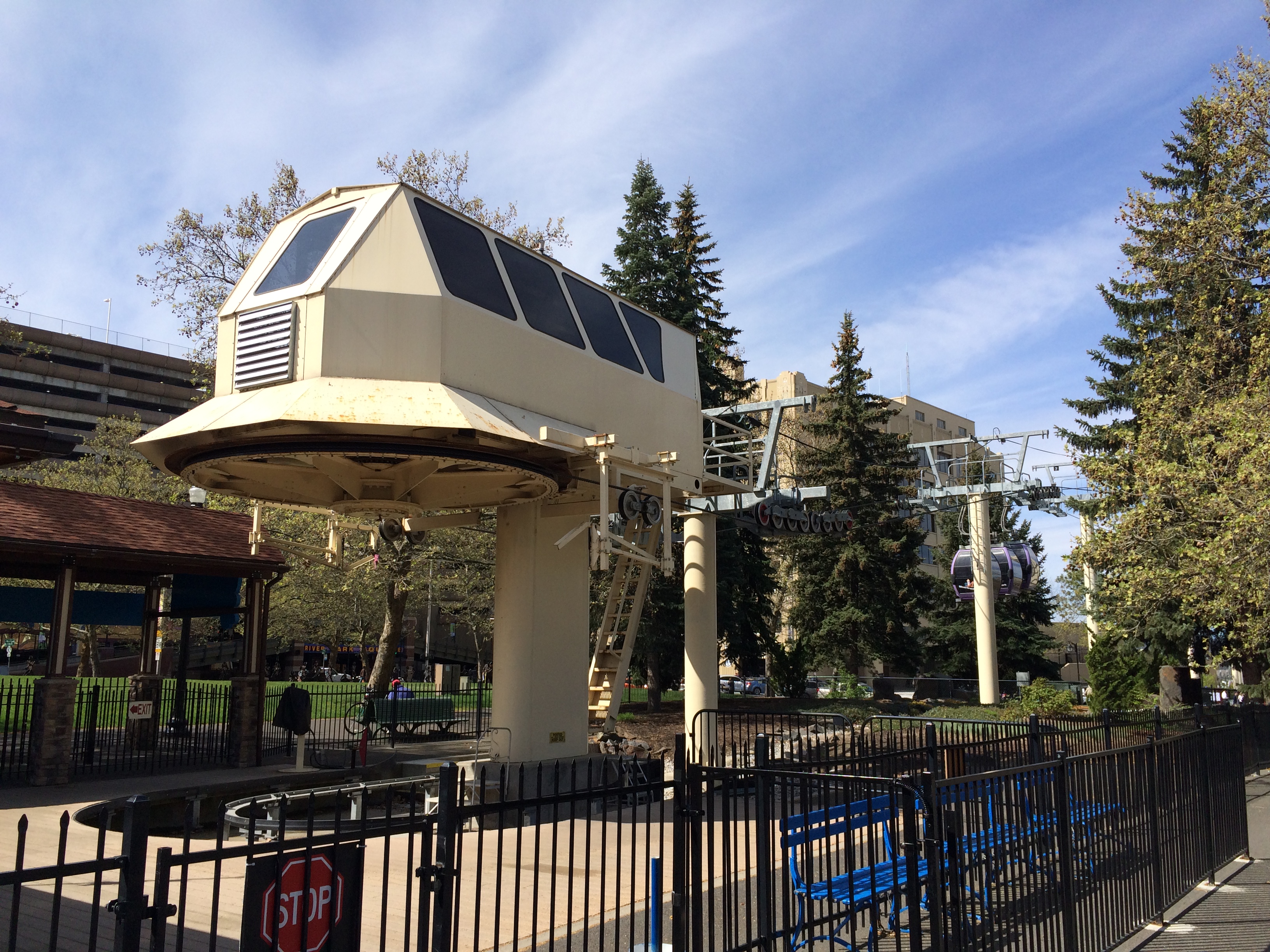
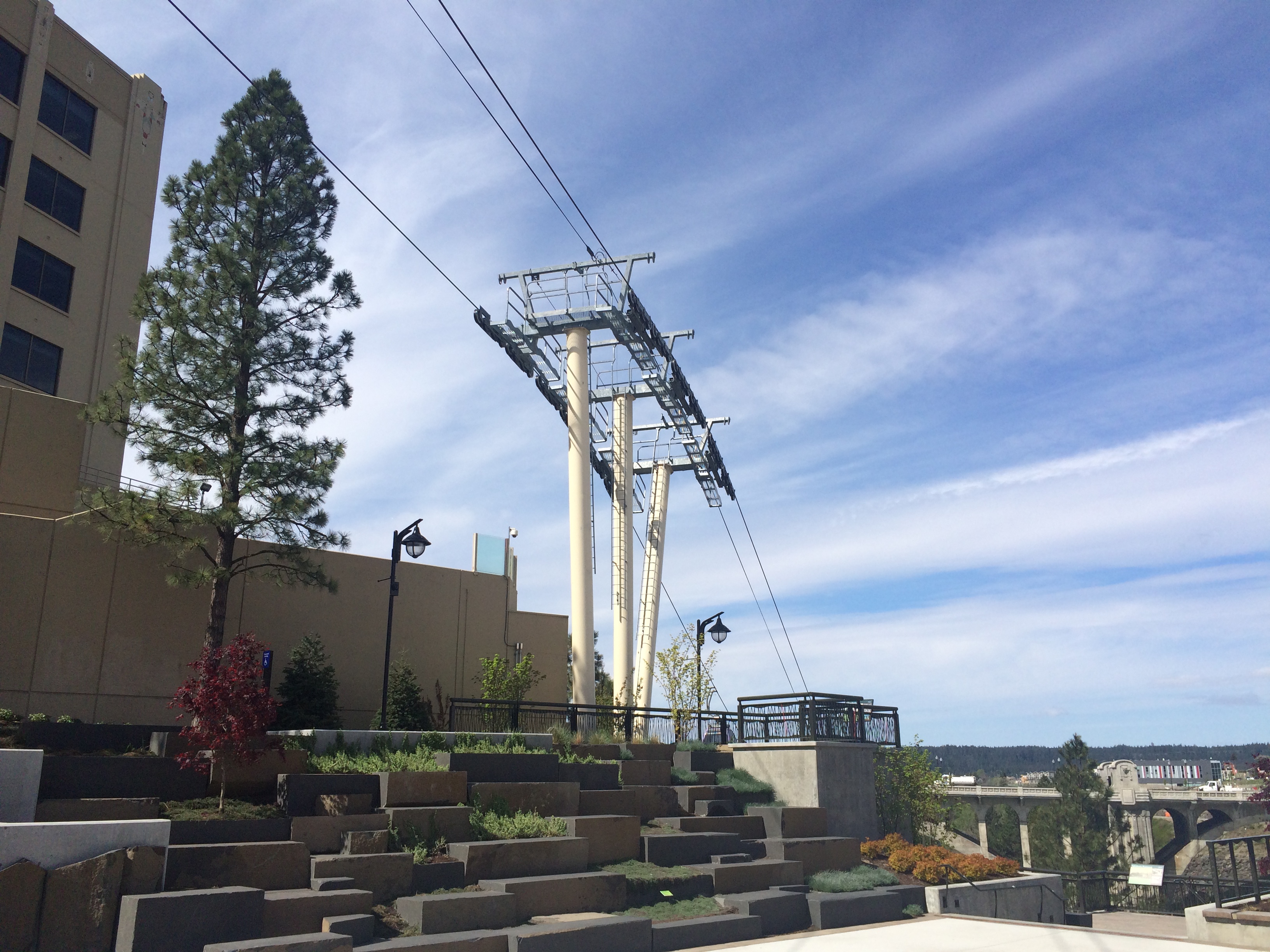
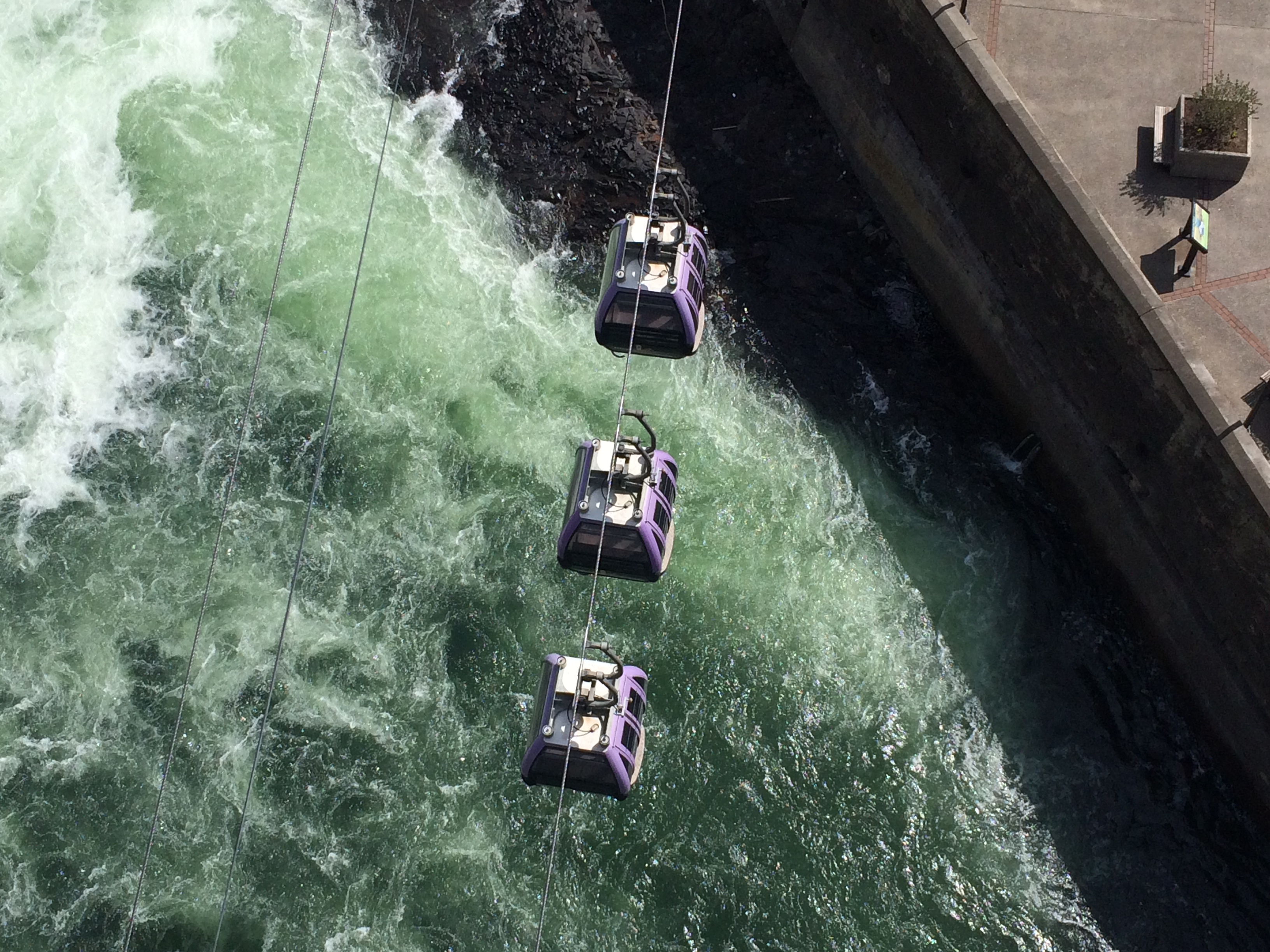
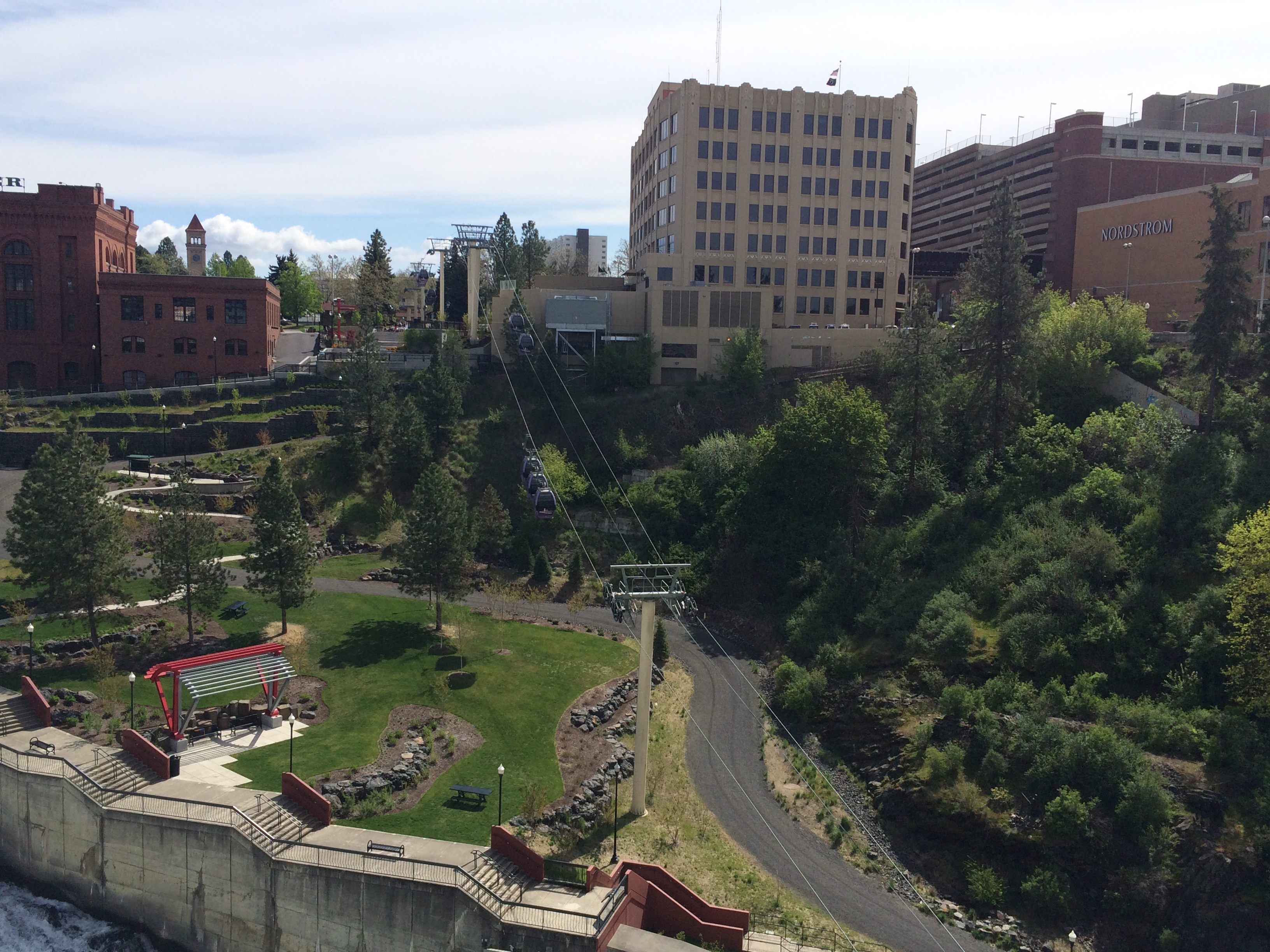
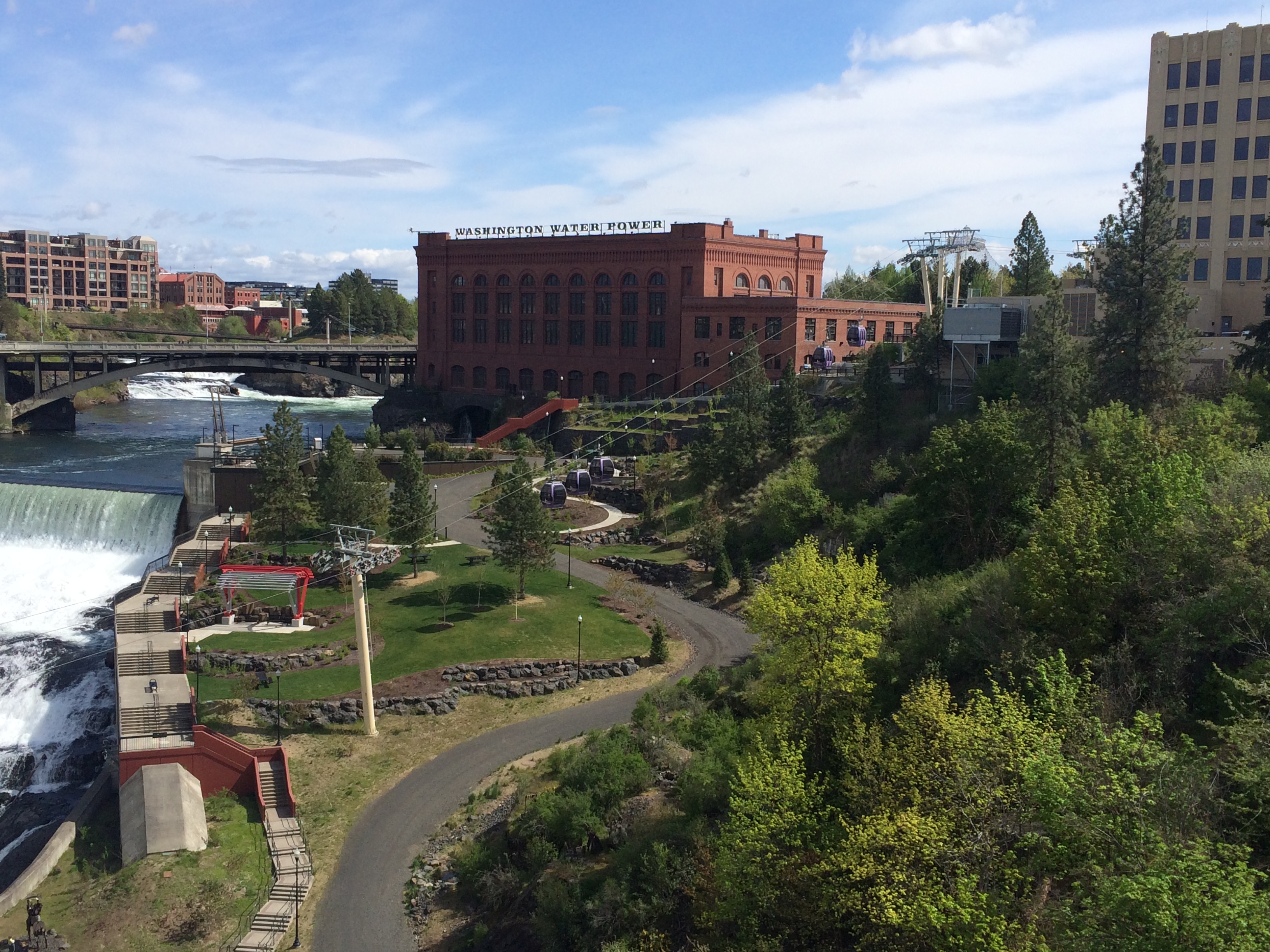
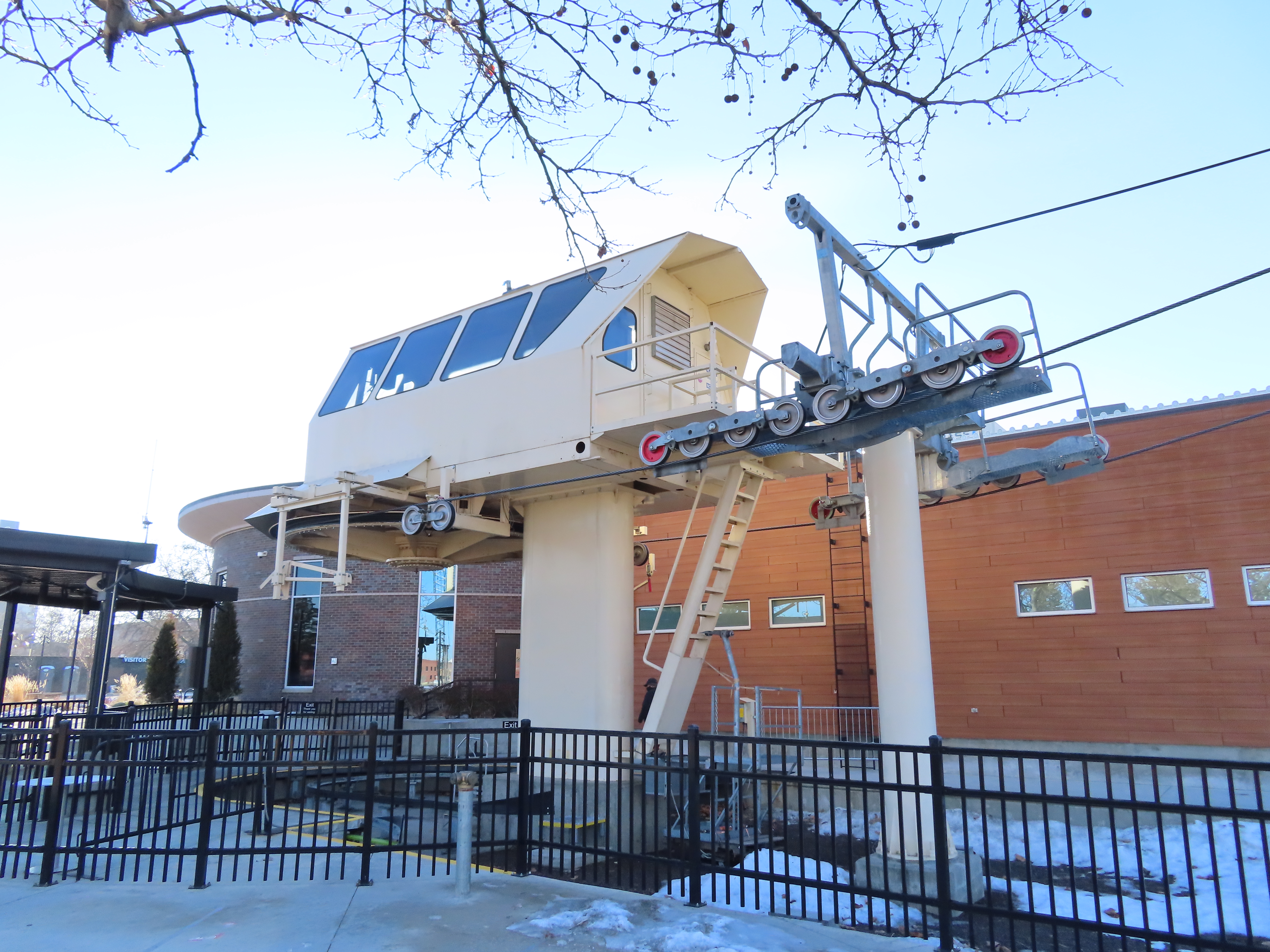
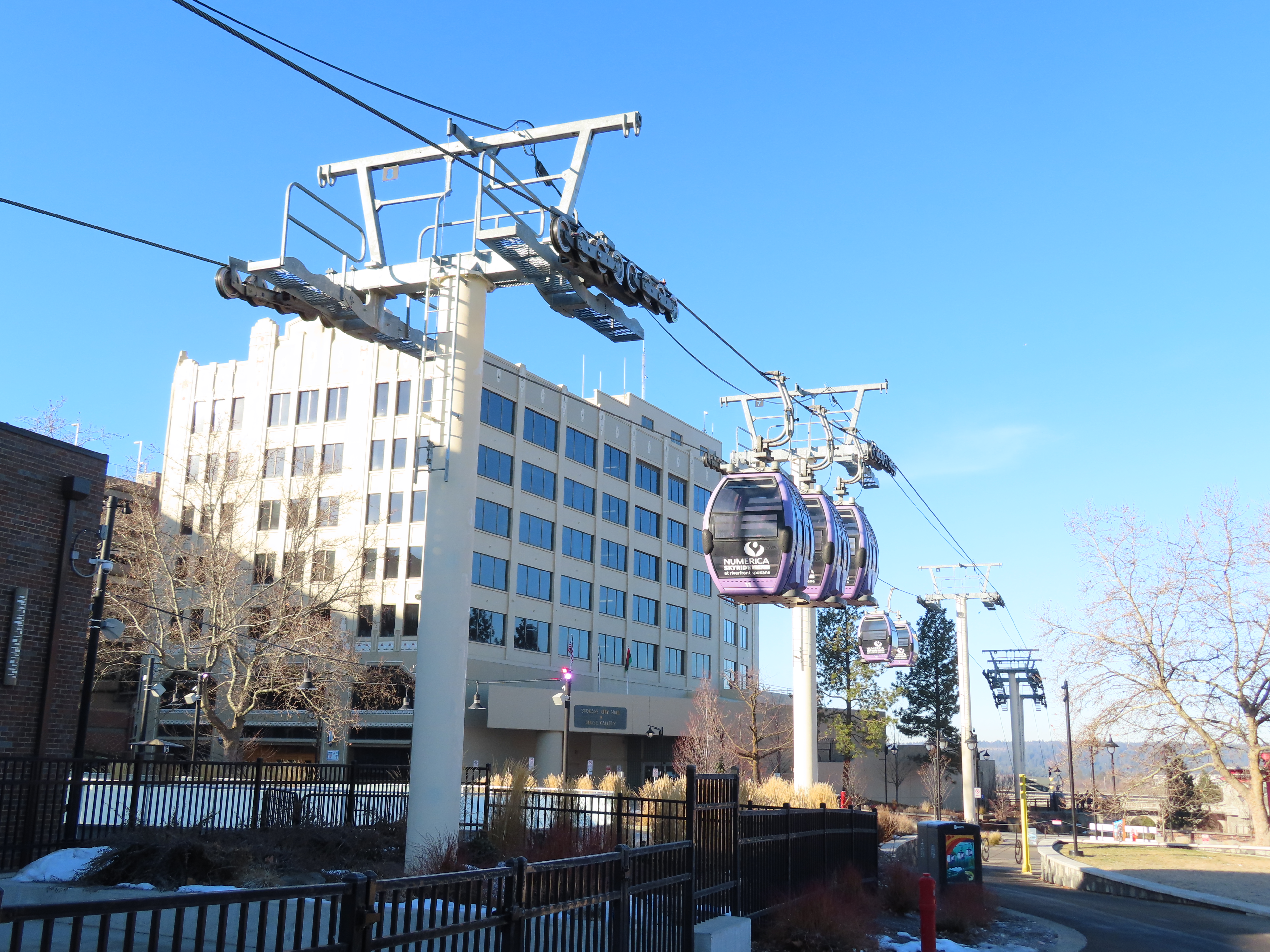
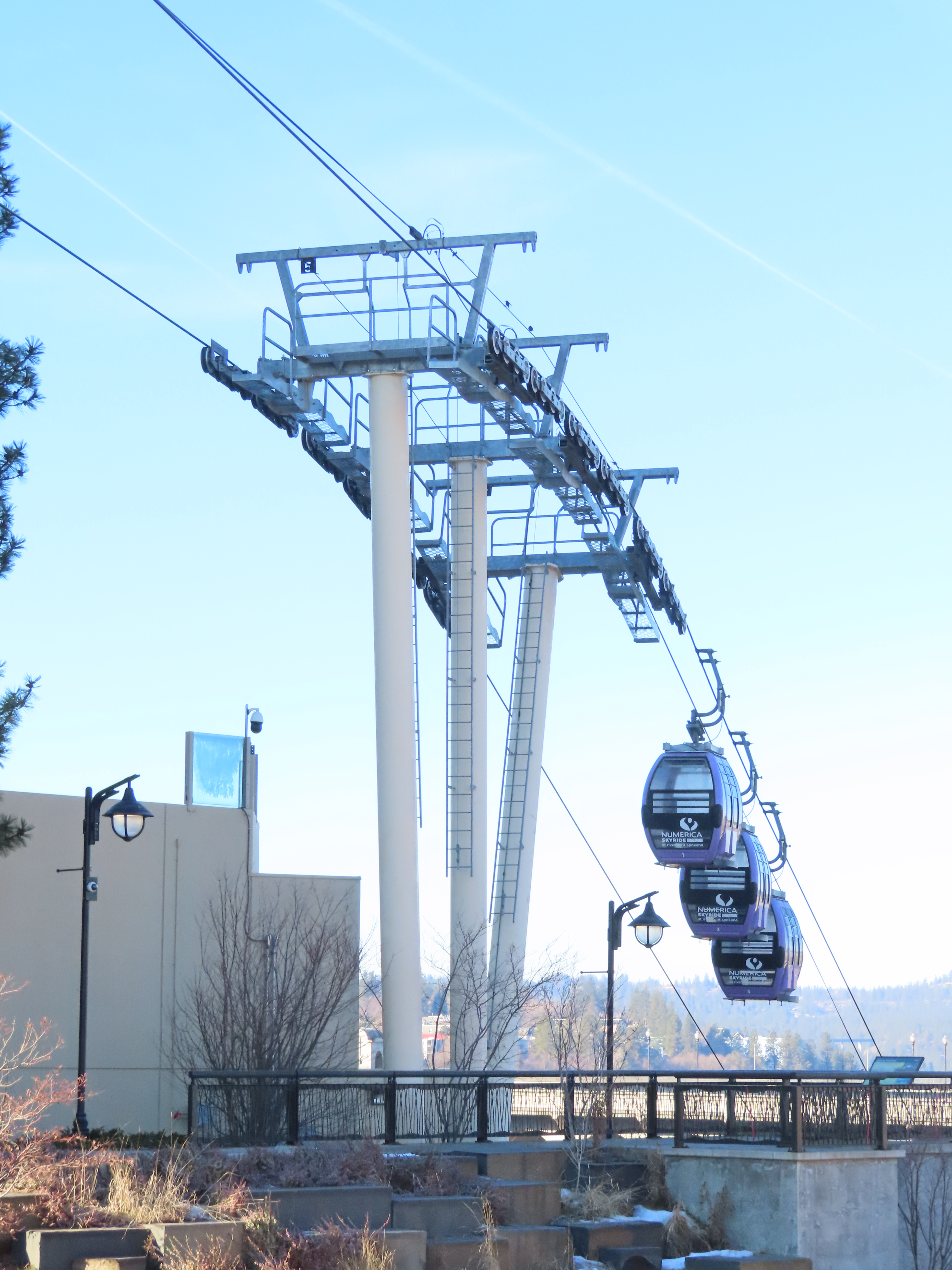
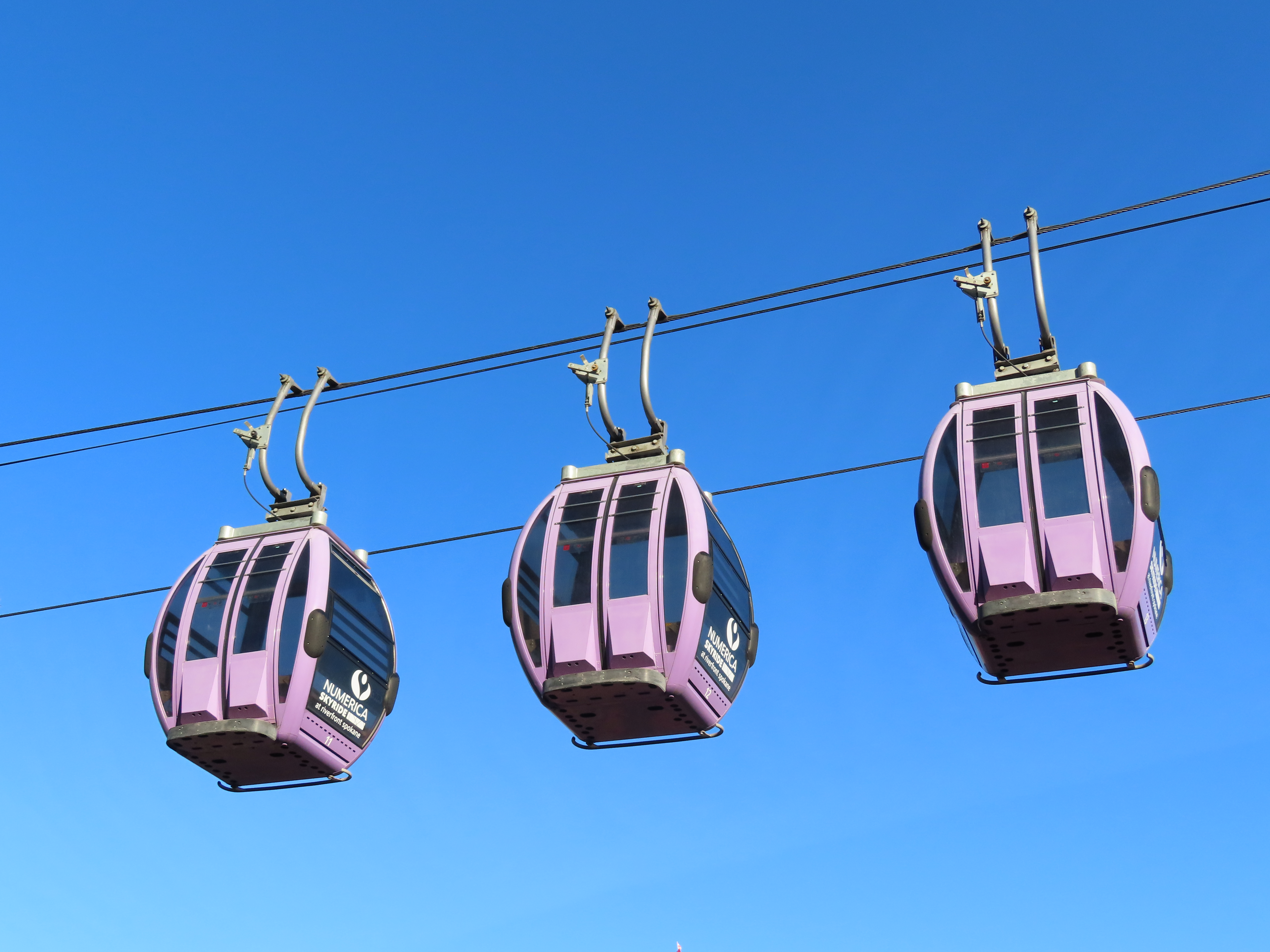
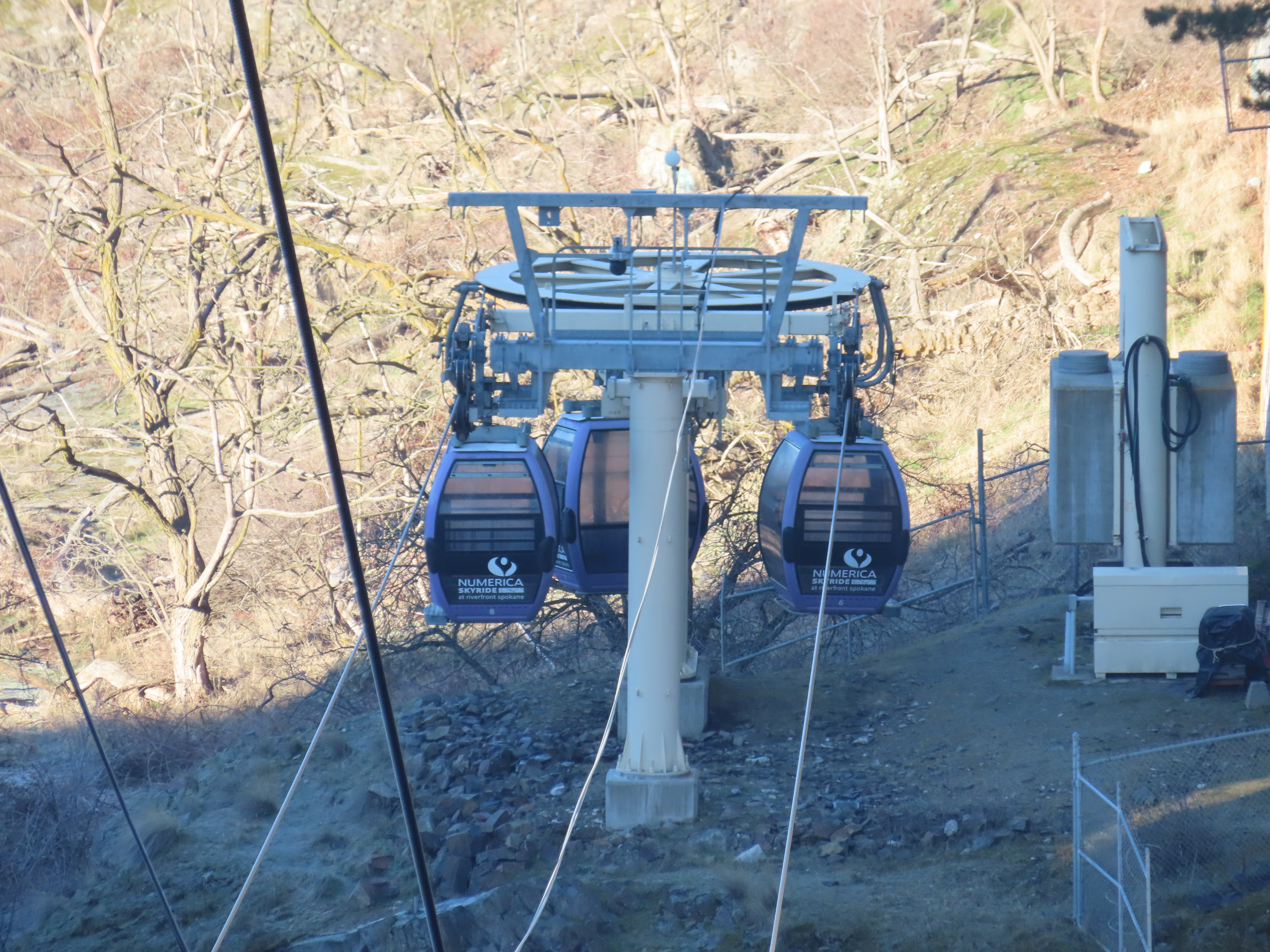
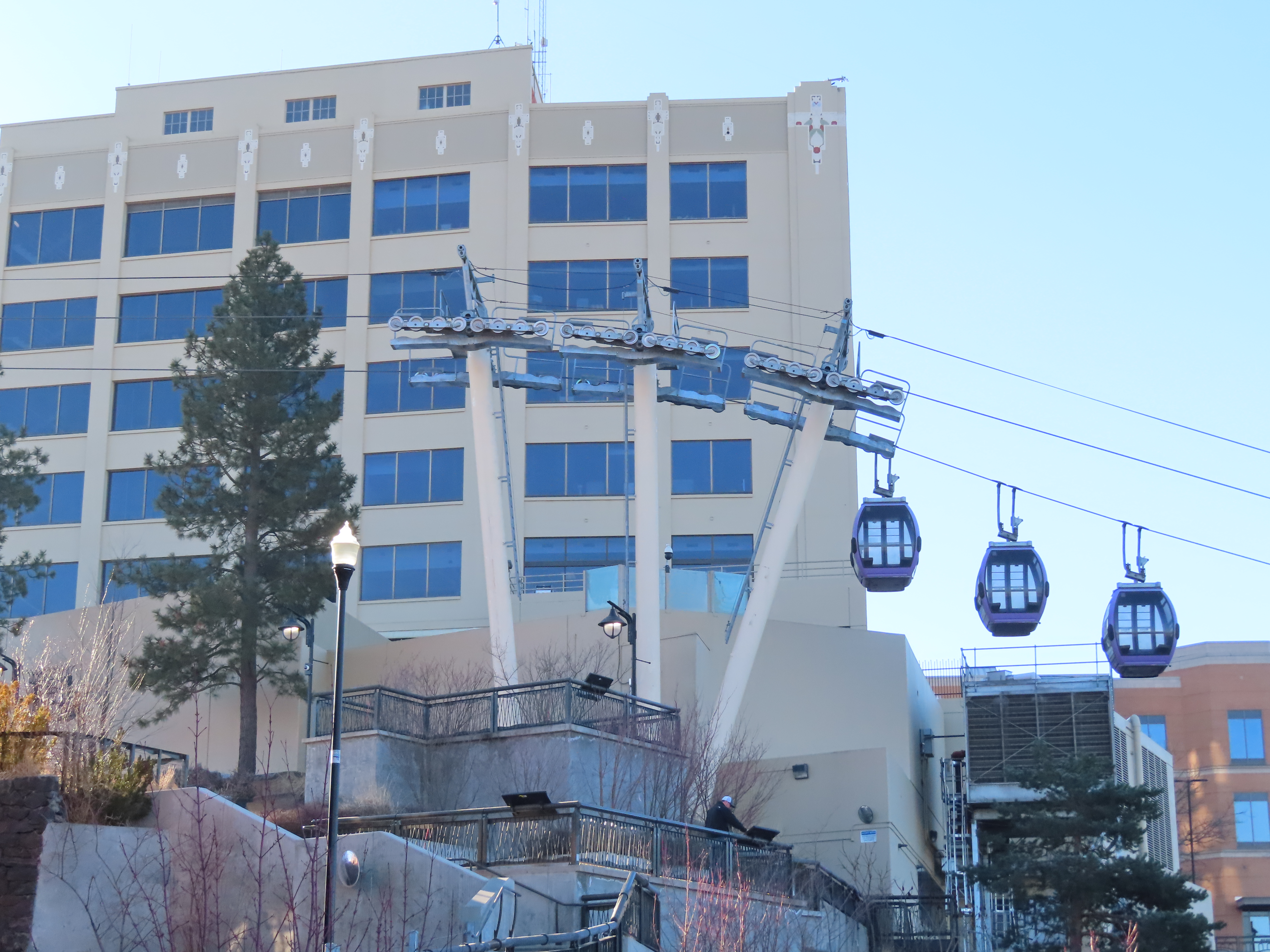
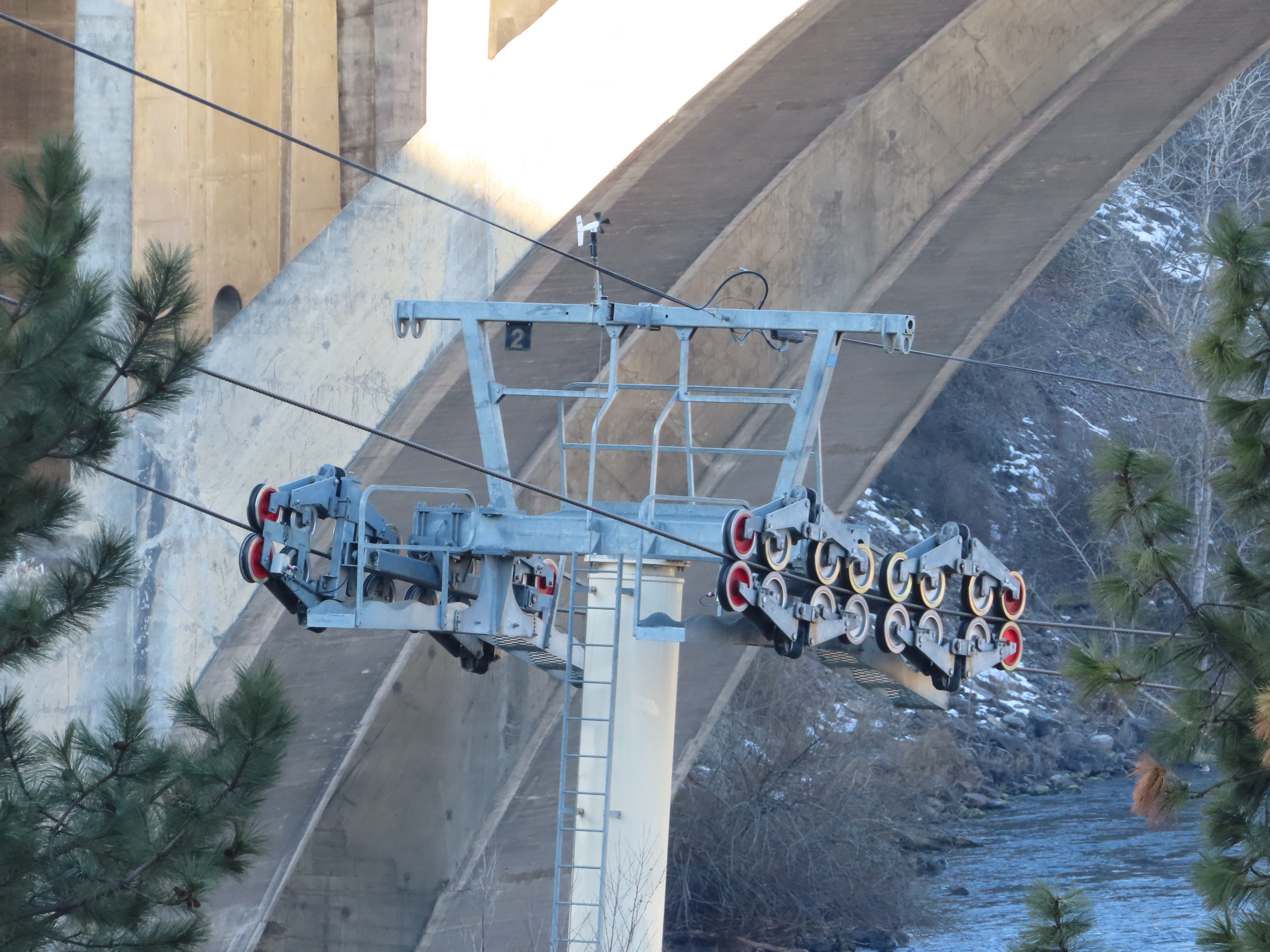
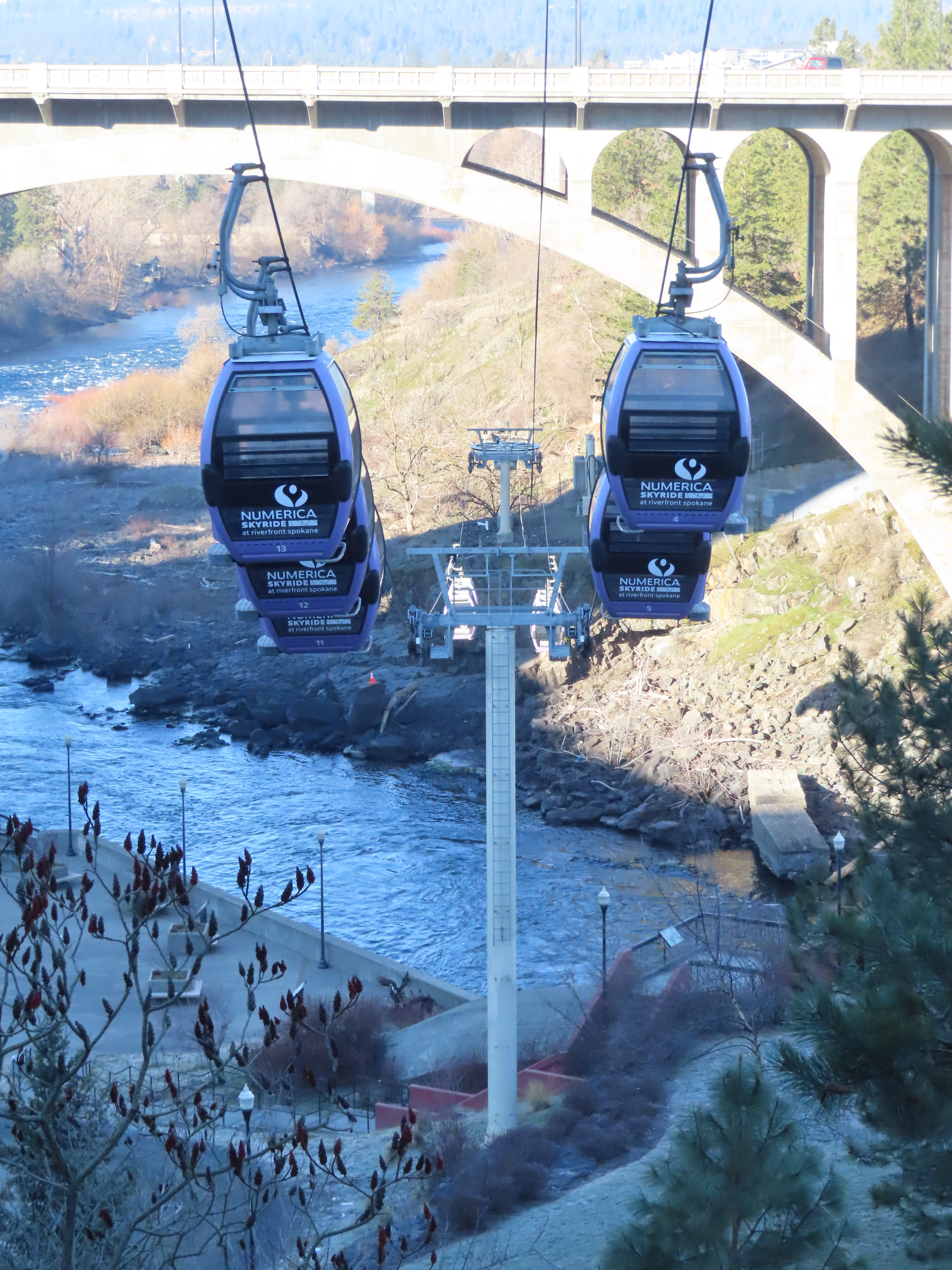
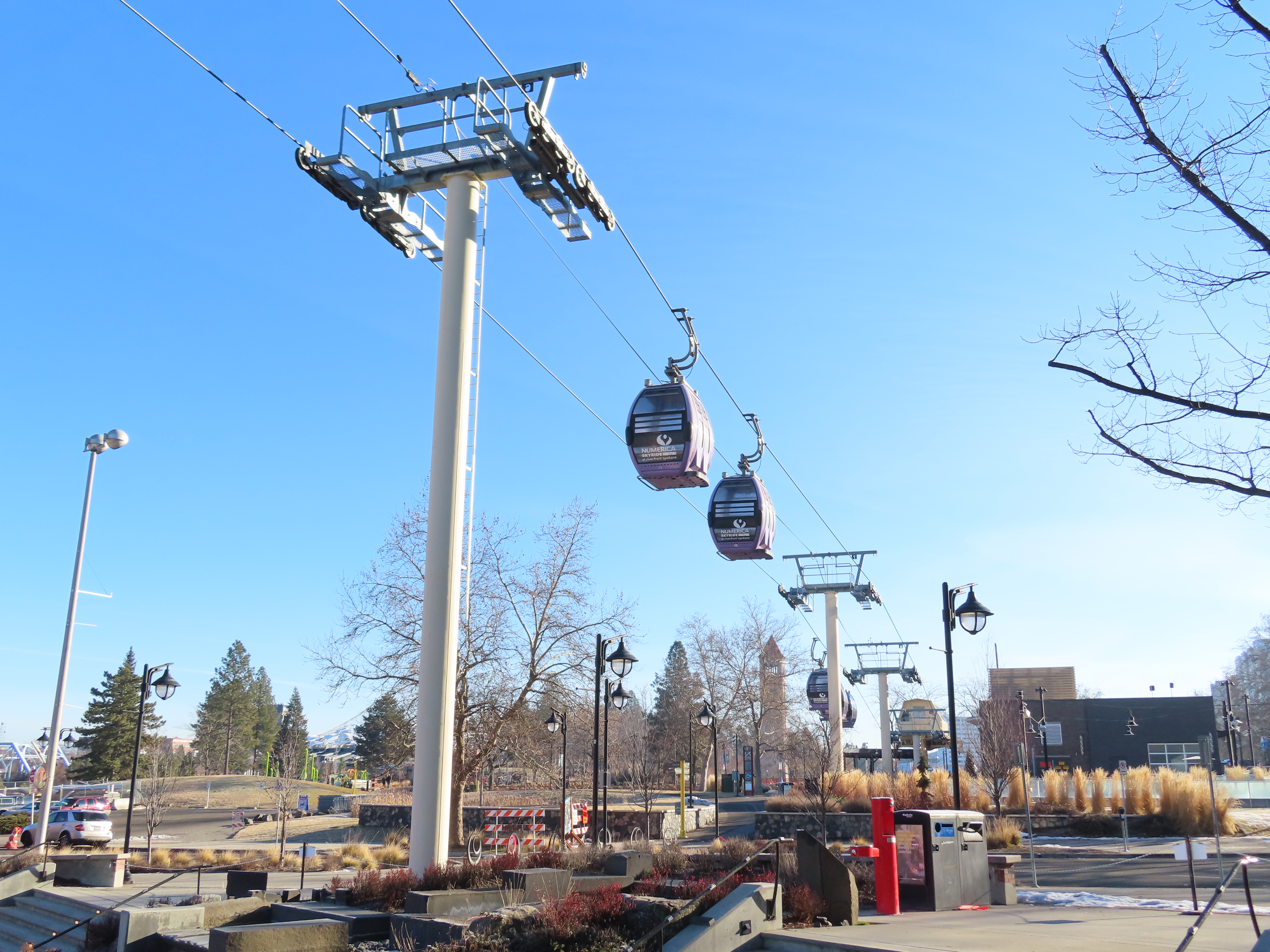
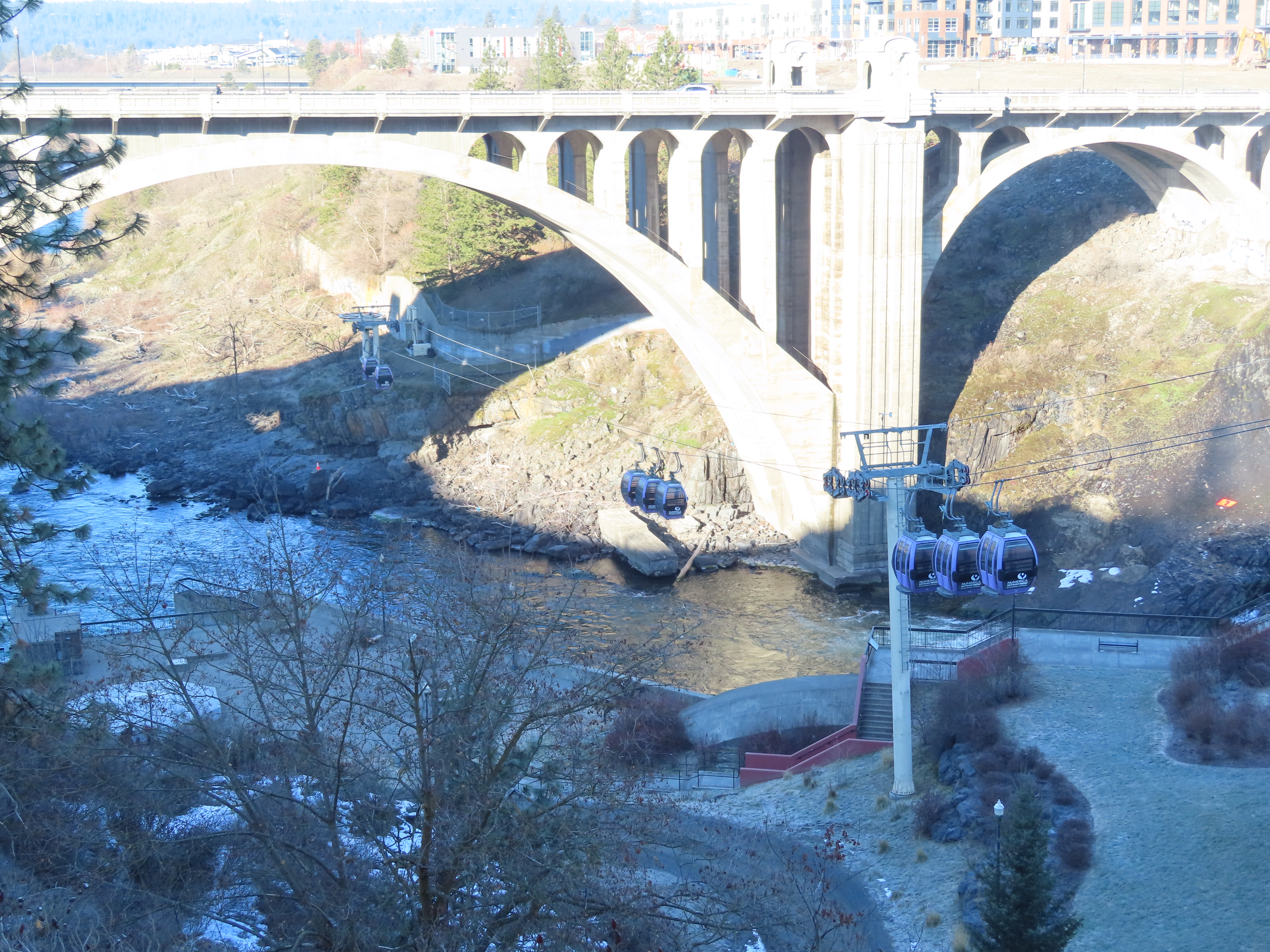
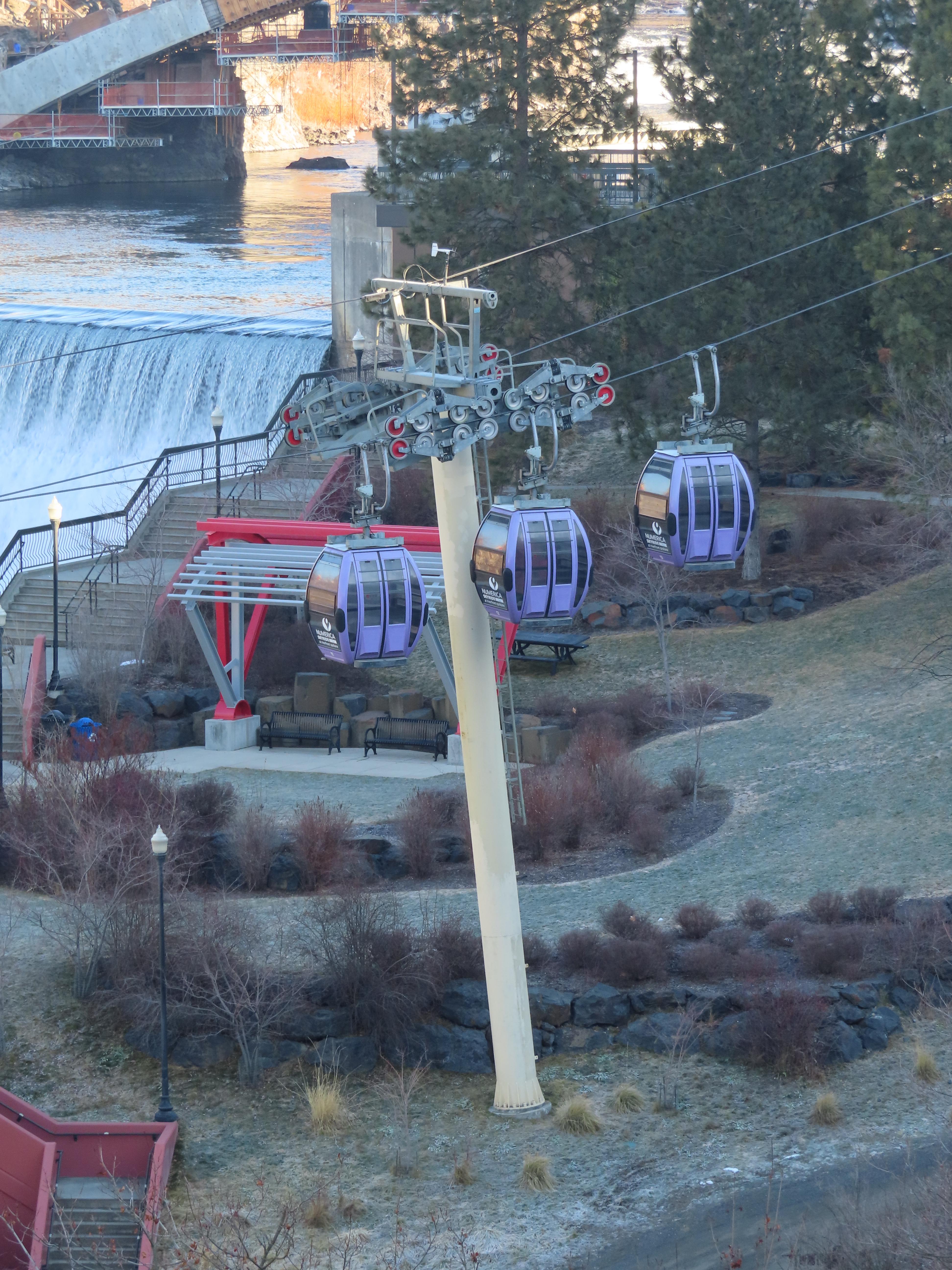
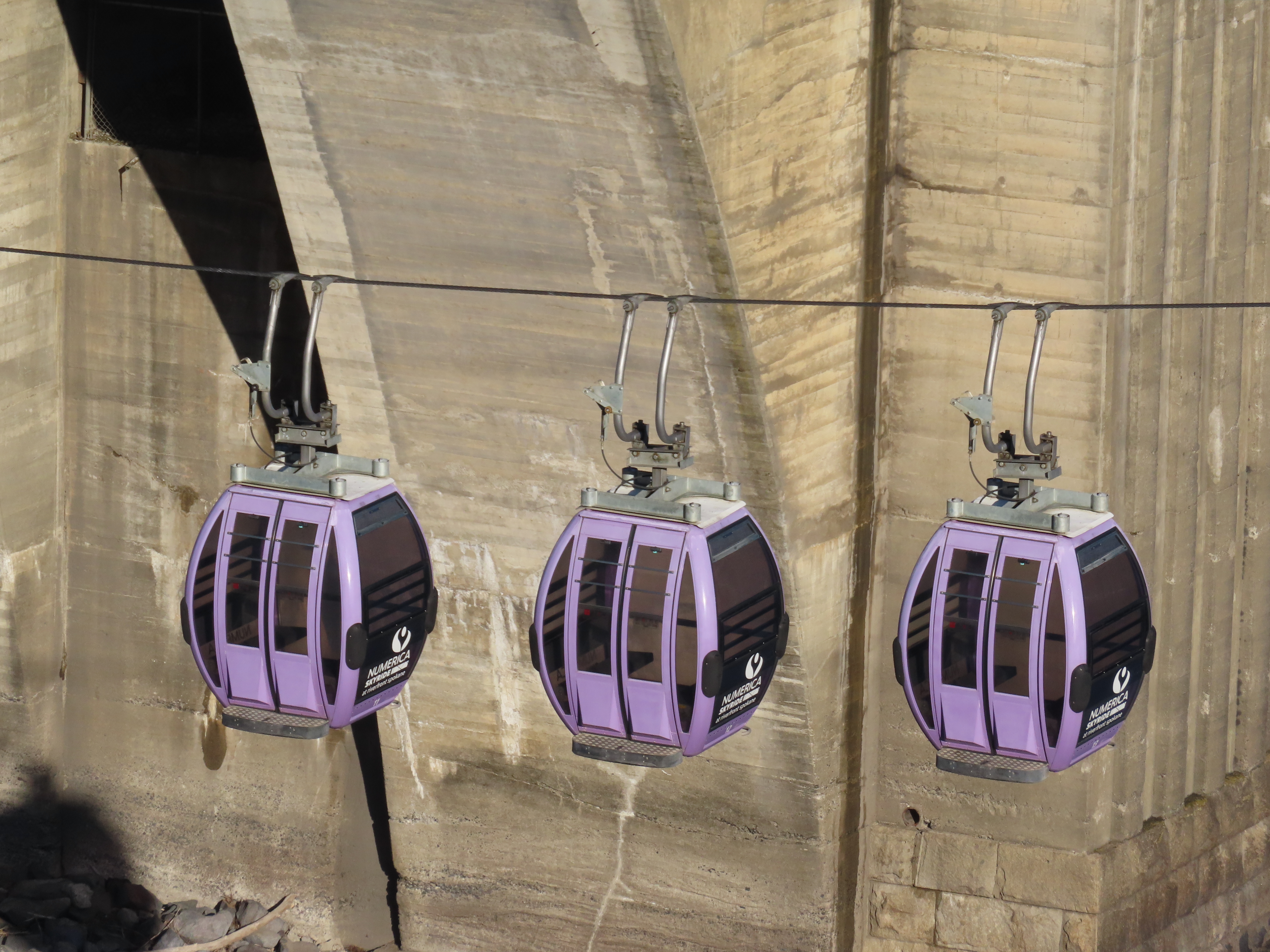
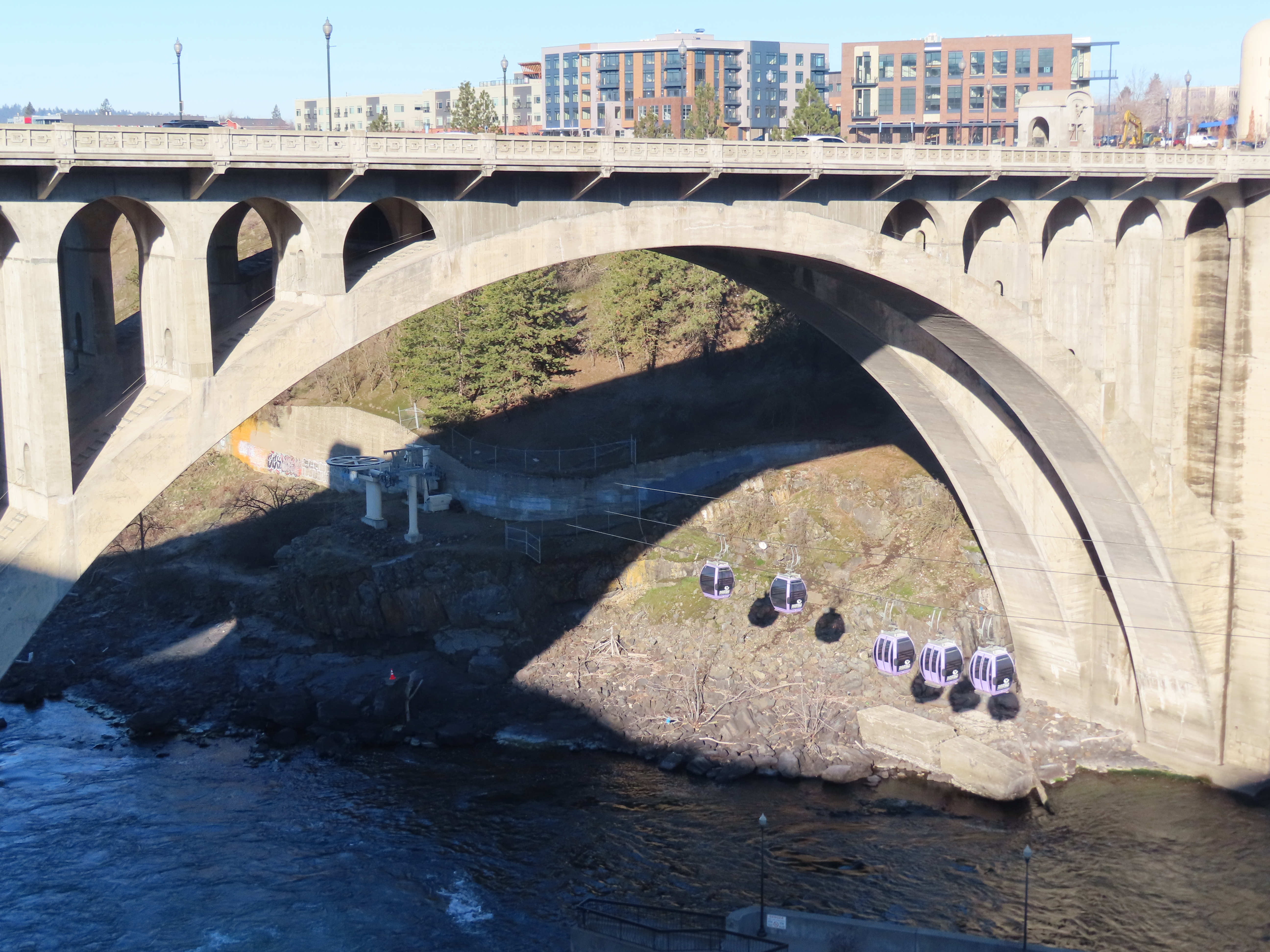
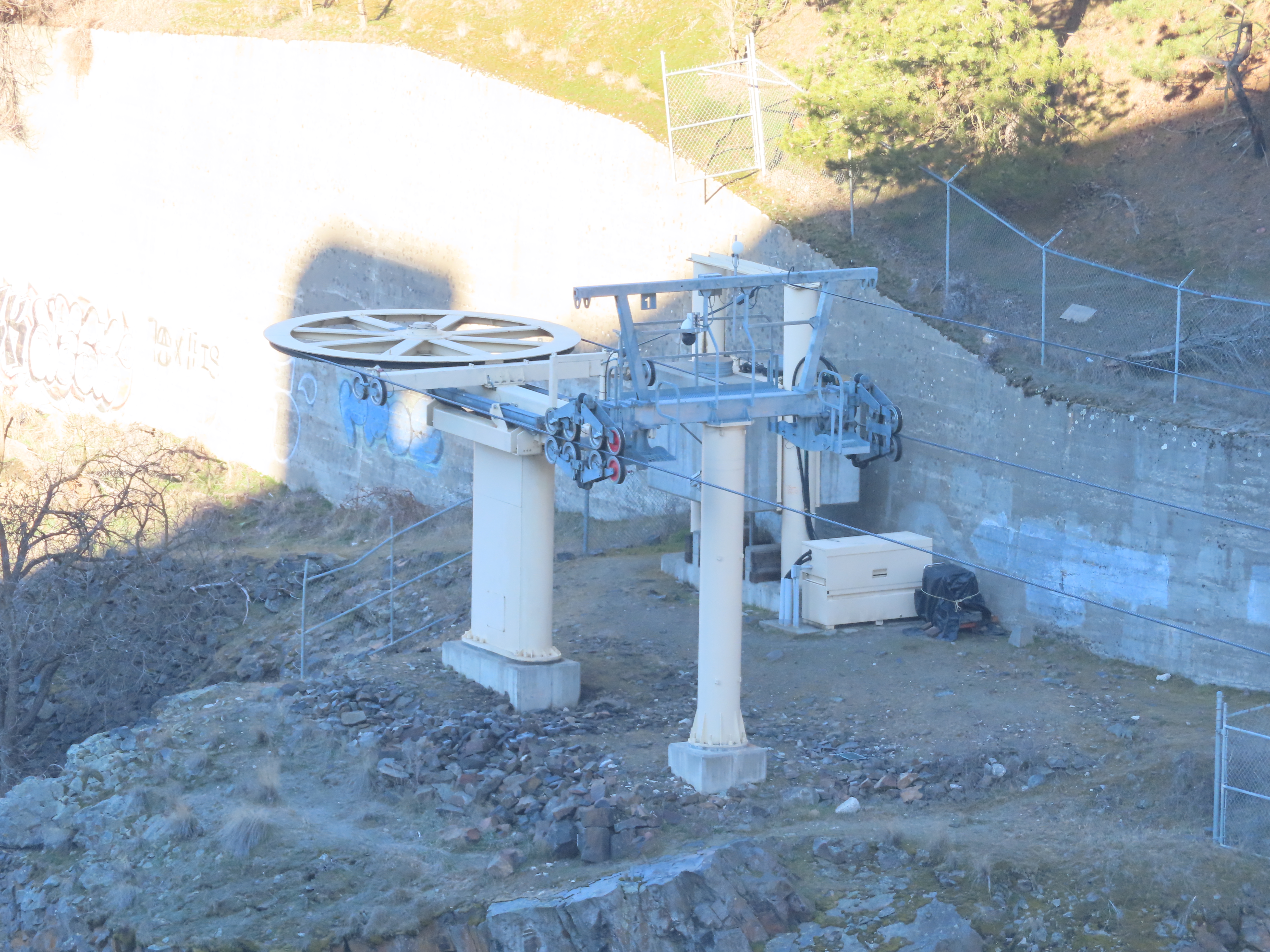
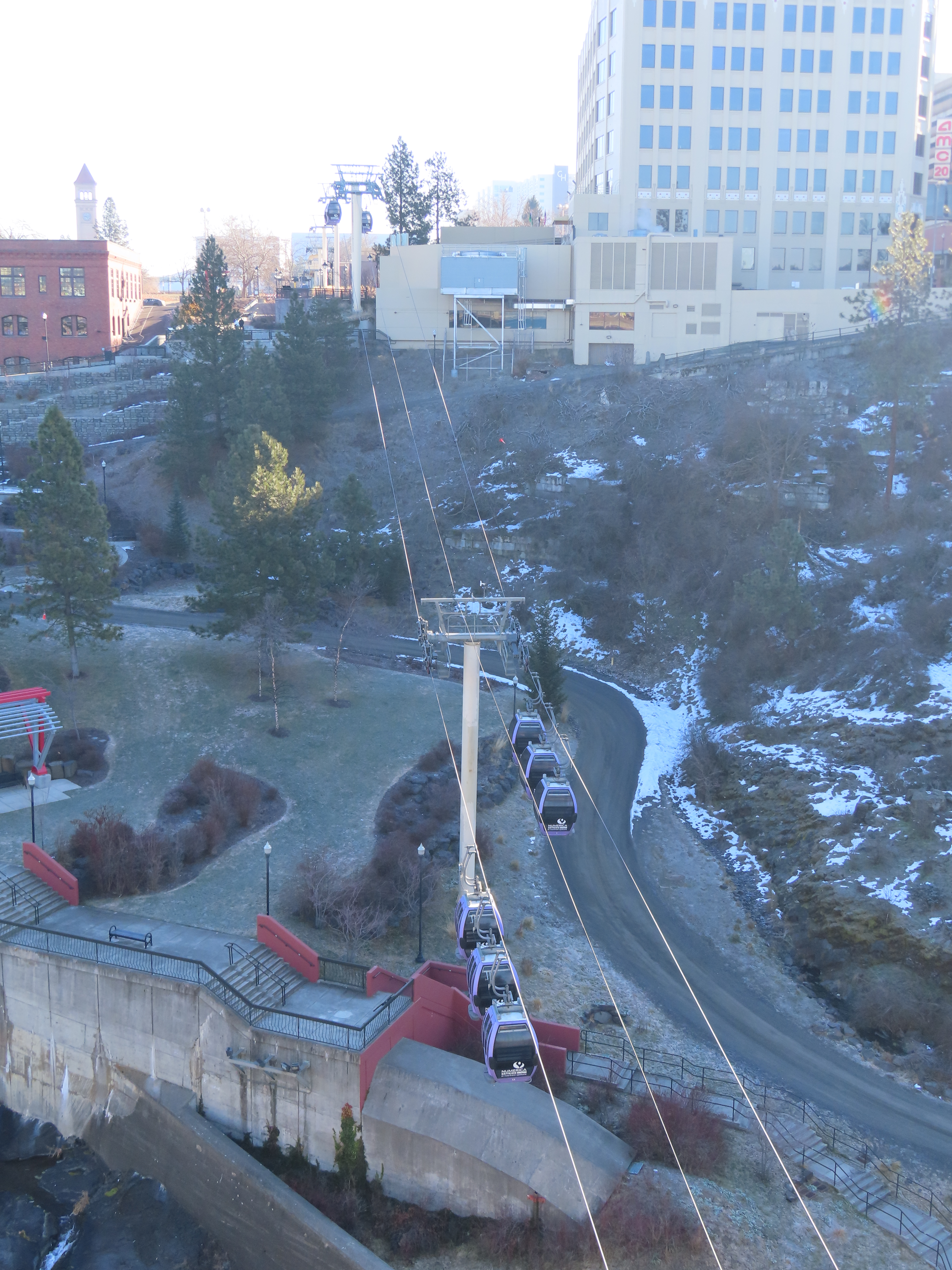
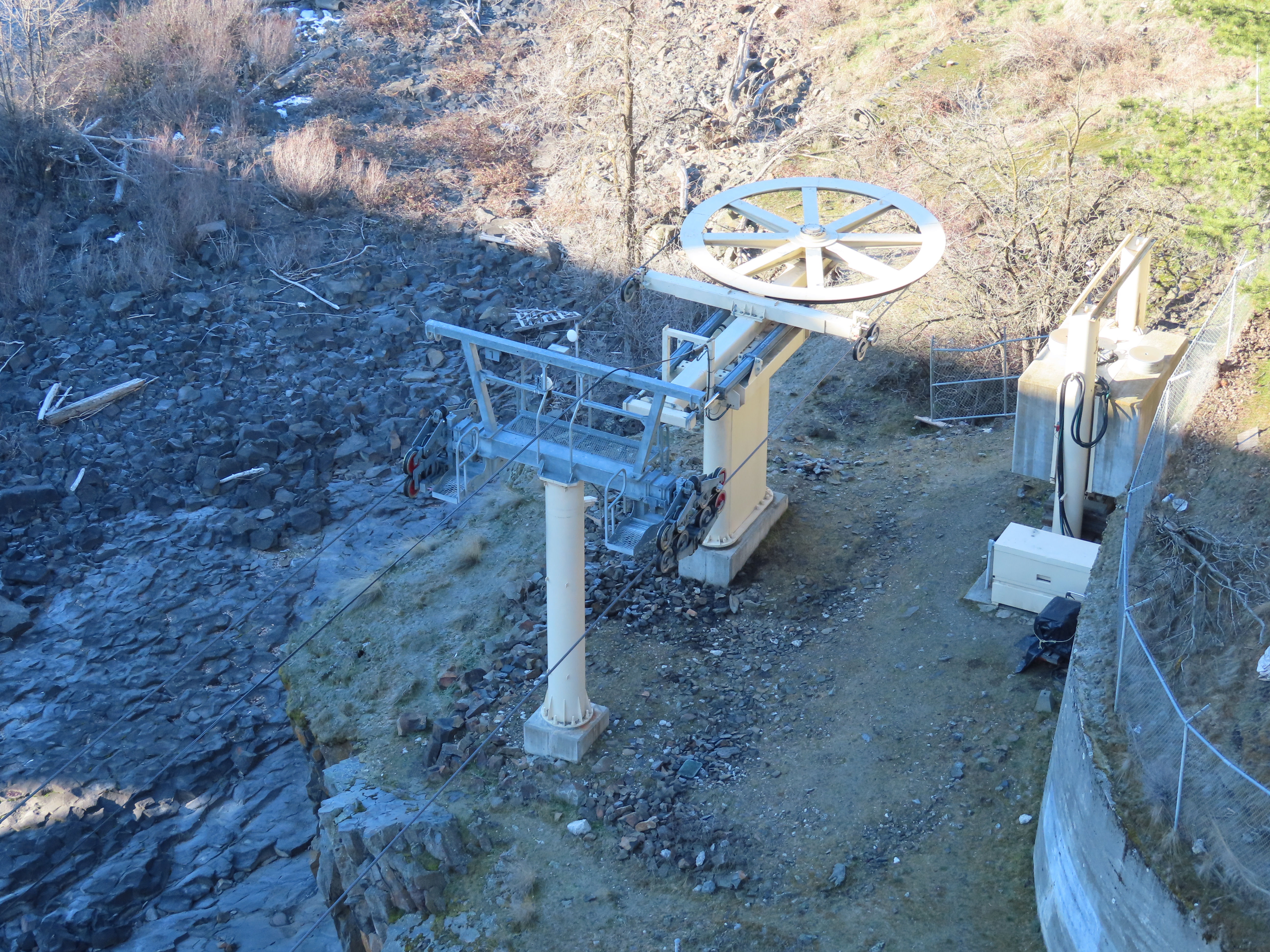
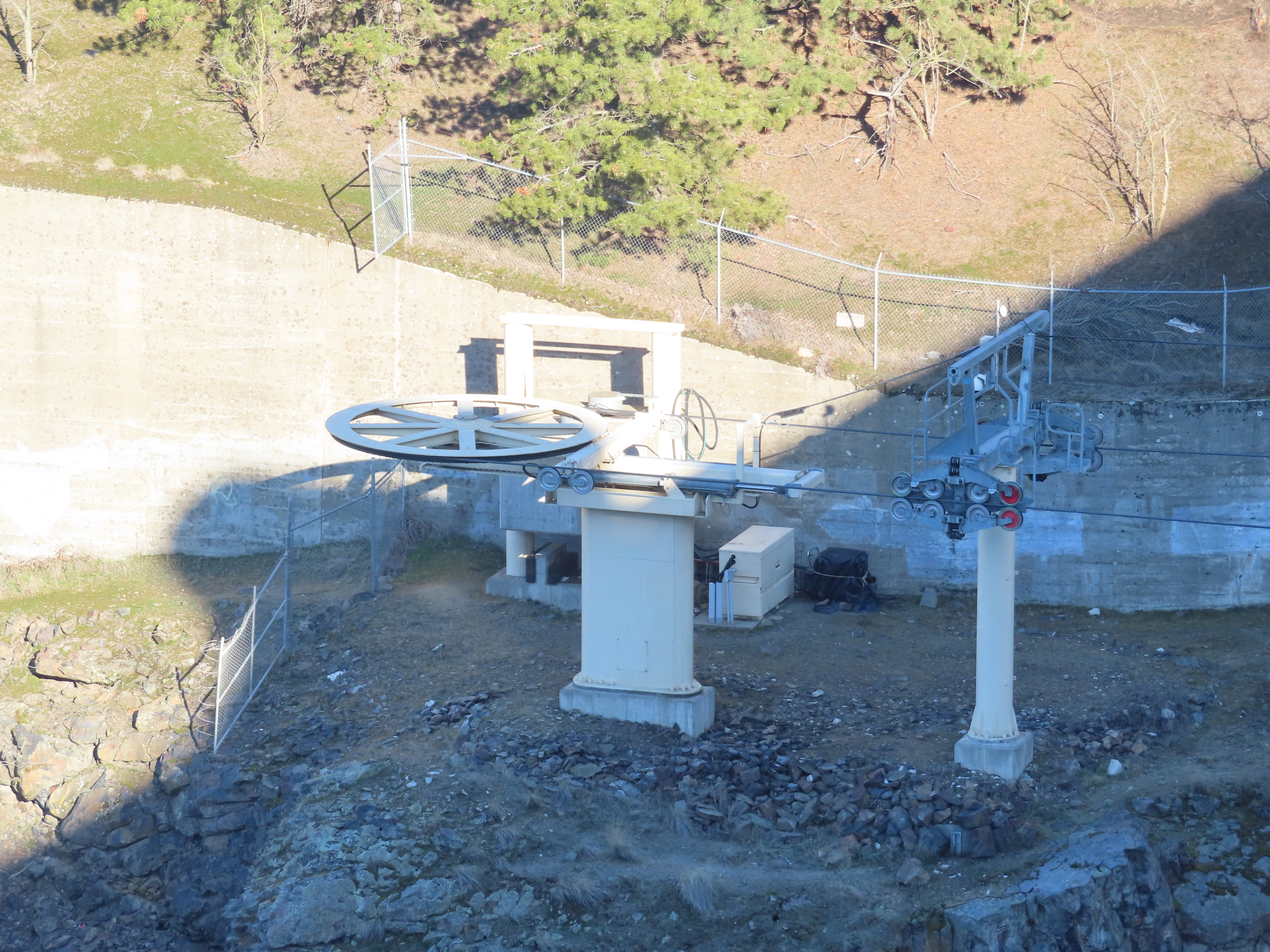
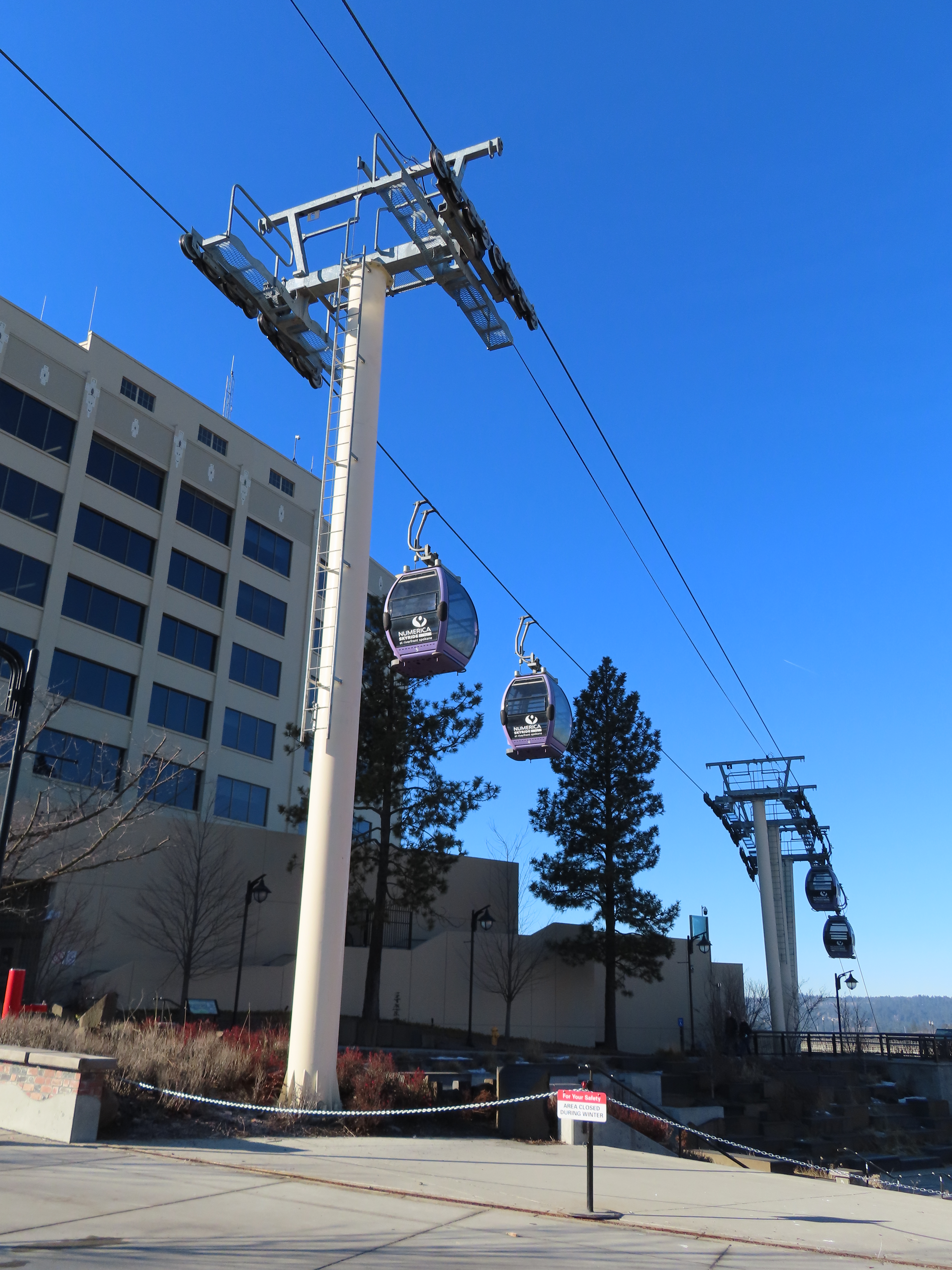
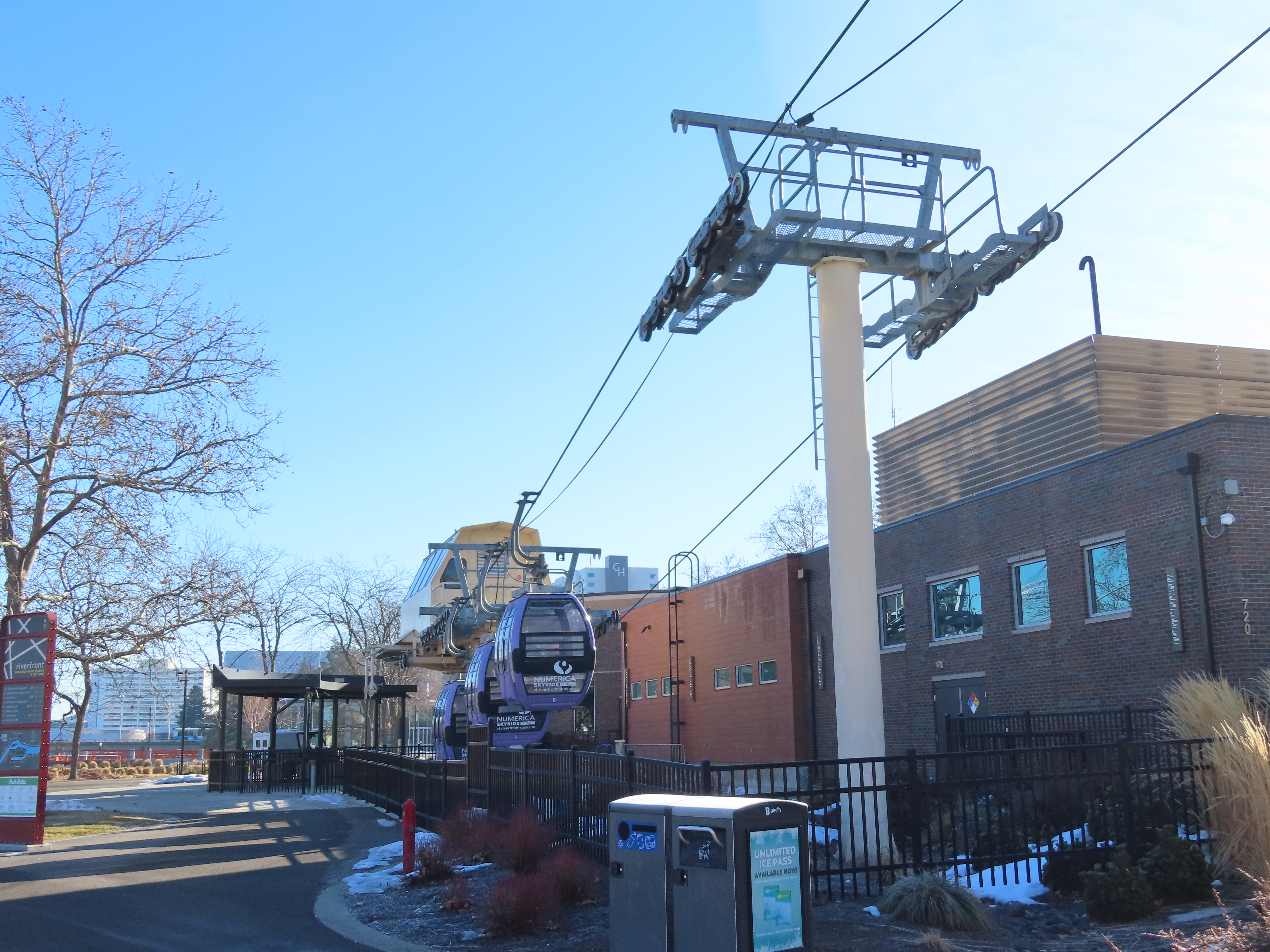
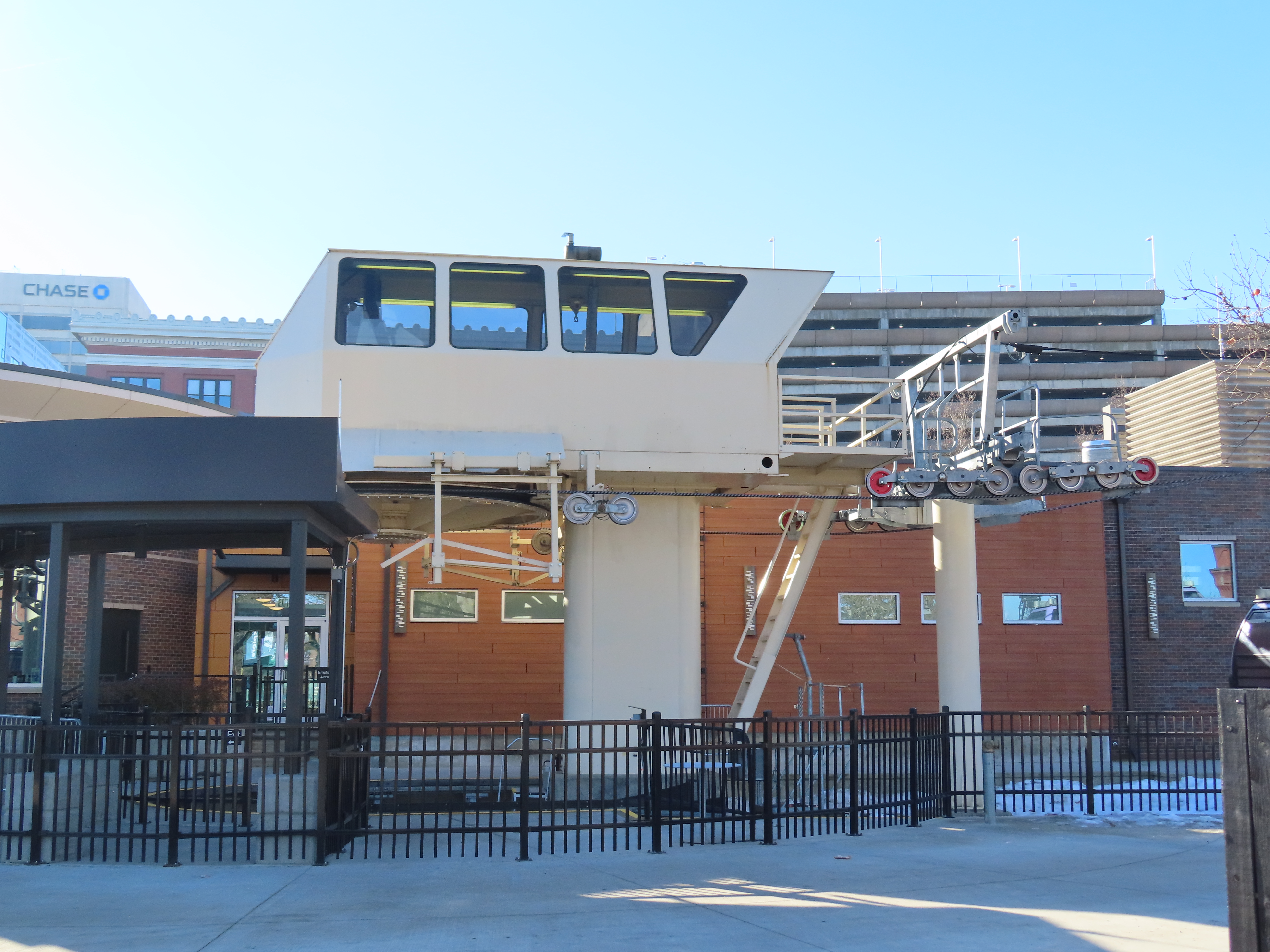
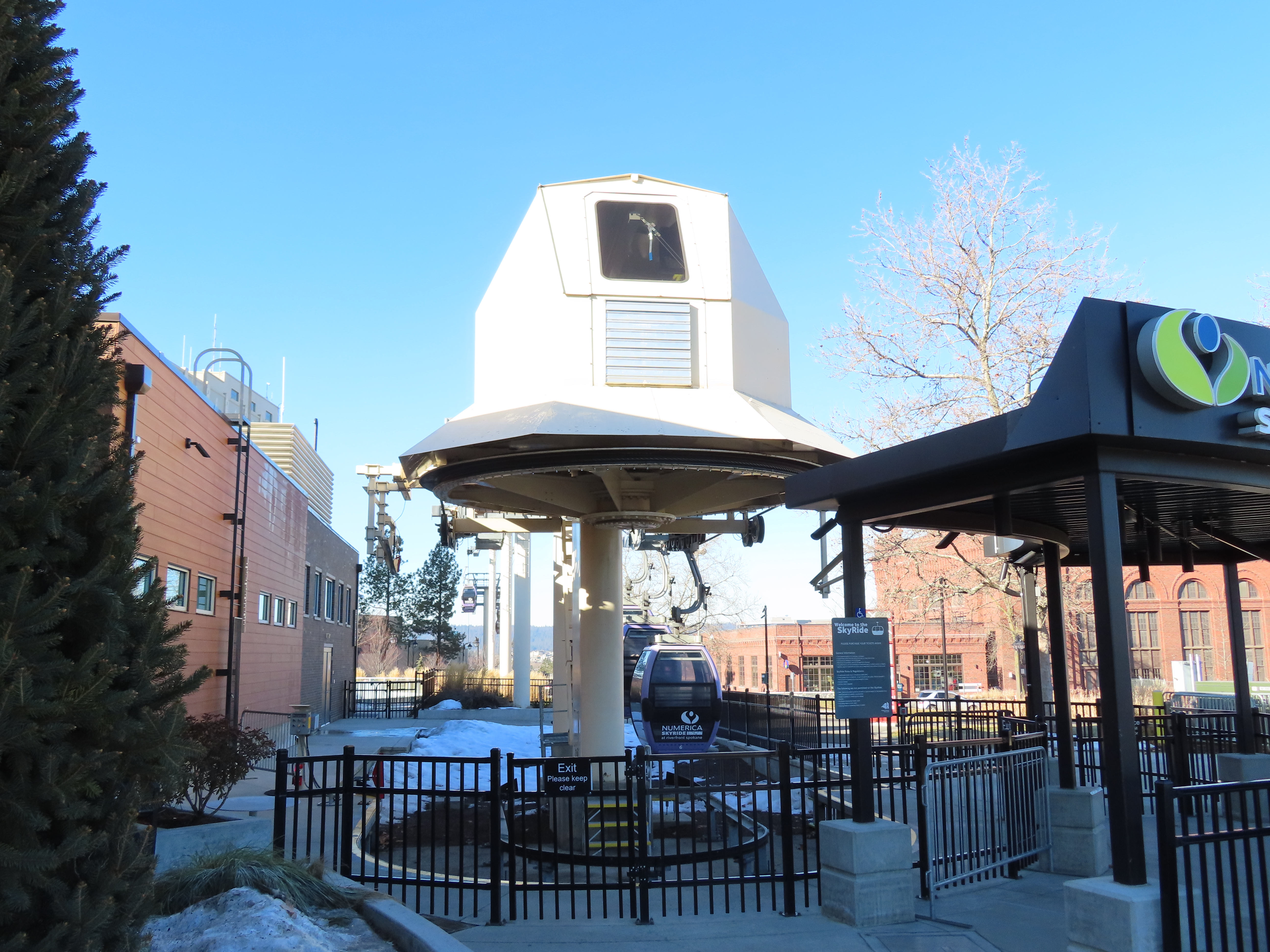
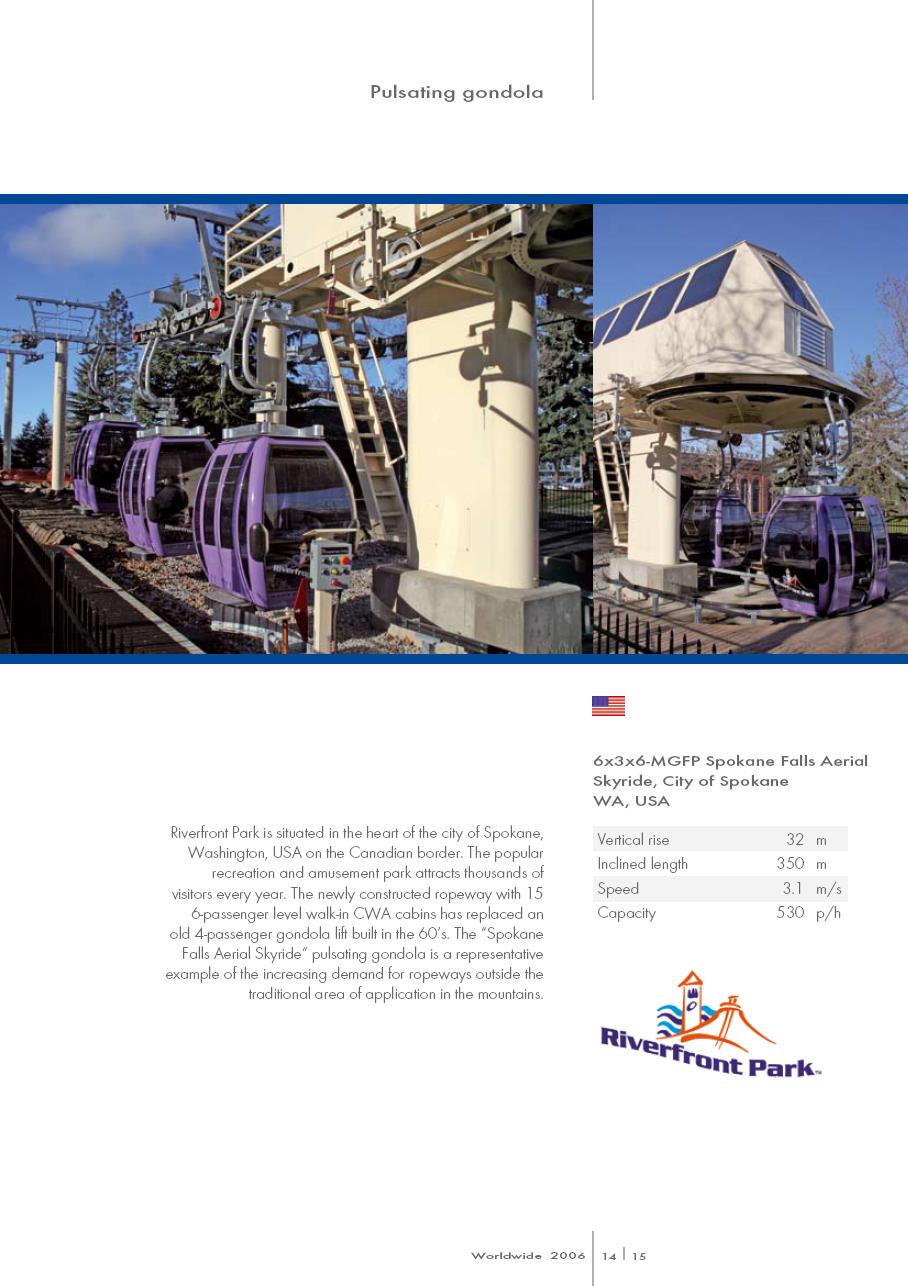
This lift replaced a Riblet gondola in Riblet’s home city in 2005.There is a big breakover before the cabins descend over the river.Looking down at one of five pulses of cabins.The steepest section of the line.The middle lift line in summer.Fixed drive terminal.This lift operates year round.As of 2022, the lift is sponsored by Numerica Credit Union.CWA Omega VI cabins.There is no loading, unloading or operator at the return station.Side view of the breakover towers.Large combination assemblies on tower 2.Lower part of the lift line.The last four towers.Another view of the section under the bridge.Cabins passing tower 2.Some of the pulses have three cabins while others are only two.The return terminal and river crossing.Tower 1 and the tension station.View up the line.The return bullwheel seen from above.Side view of the lower station.Tower 6.Tower 8.Drive station side view..Loading area.Doppelmayr Worldbook entry.
Interesting note regarding this installation is that it is not annually inspected by the State agency, WSPRC, that inspects Washington ski areas, but rather by another State agency, the Dept. of Labor.
That structure to the right of the picture is the counterweight. This lift has a counterweight for tension, but rather than pull directly on the tension carriage the weight pushes on a hydraulic cylinder which redirects the force to a second cylinder on the tension carriage.
man that is a very clever way to create hydraulic pressure without a pump. I wonder why no other lifts use this. Seems like a good way to get hydraulic tension without electricity

 Lift Blog
Interesting note regarding this installation is that it is not annually inspected by the State agency, WSPRC, that inspects Washington ski areas, but rather by another State agency, the Dept. of Labor.
LikeLike
Looks like a neat little thing to do in the city
LikeLike
What is that structure in pic 10?
LikeLike
That structure to the right of the picture is the counterweight. This lift has a counterweight for tension, but rather than pull directly on the tension carriage the weight pushes on a hydraulic cylinder which redirects the force to a second cylinder on the tension carriage.
LikeLike
man that is a very clever way to create hydraulic pressure without a pump. I wonder why no other lifts use this. Seems like a good way to get hydraulic tension without electricity
LikeLike