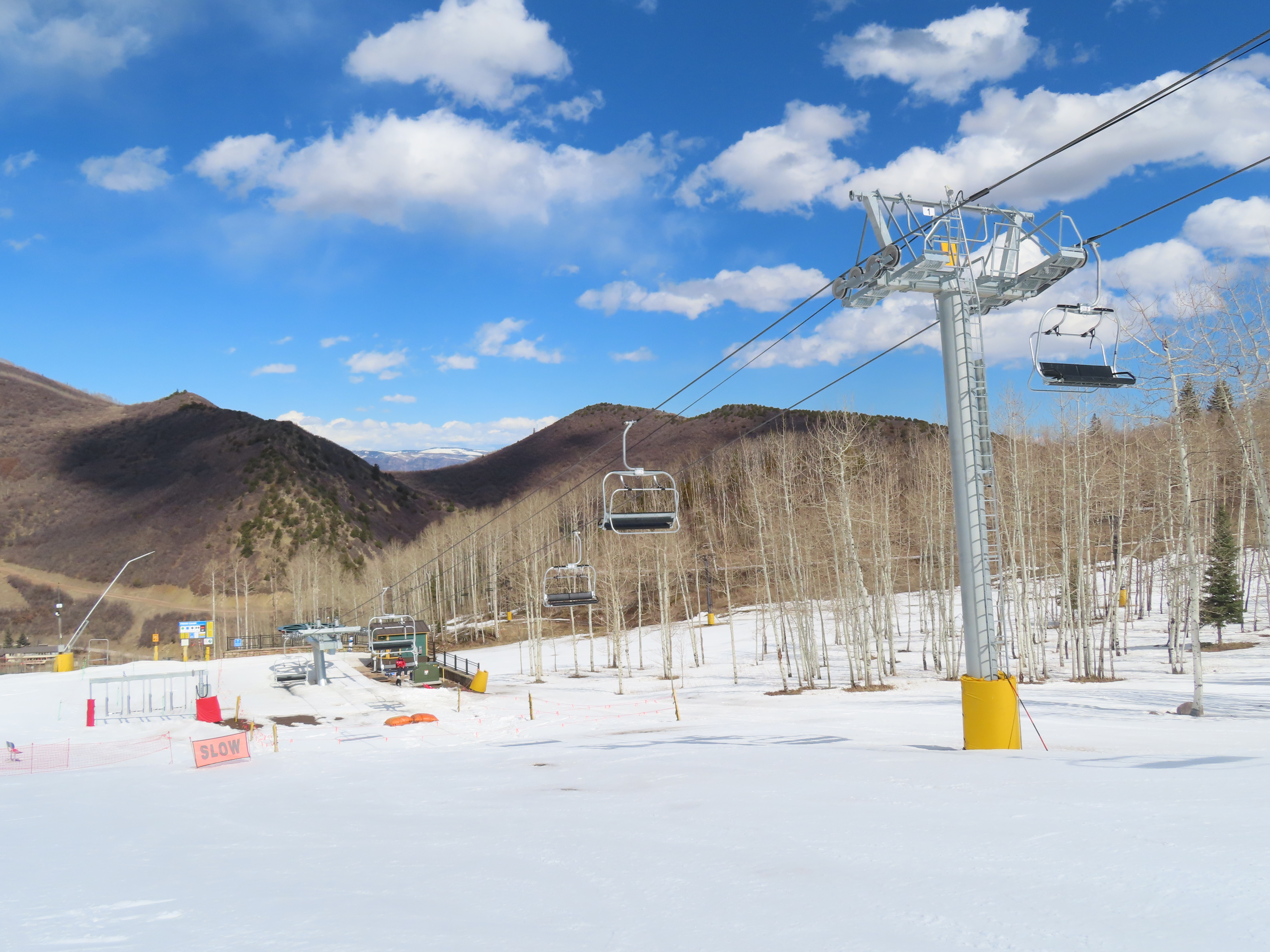
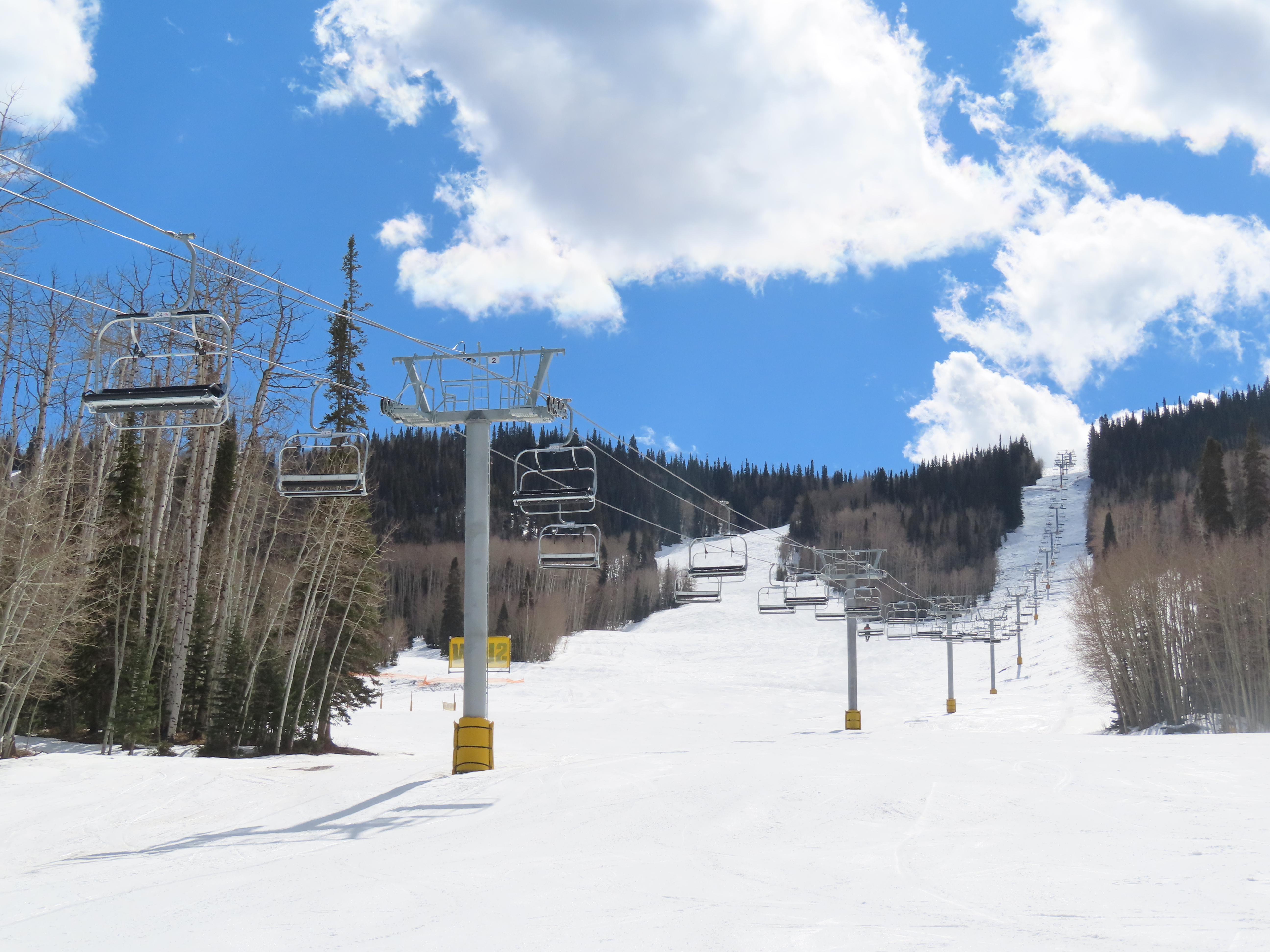
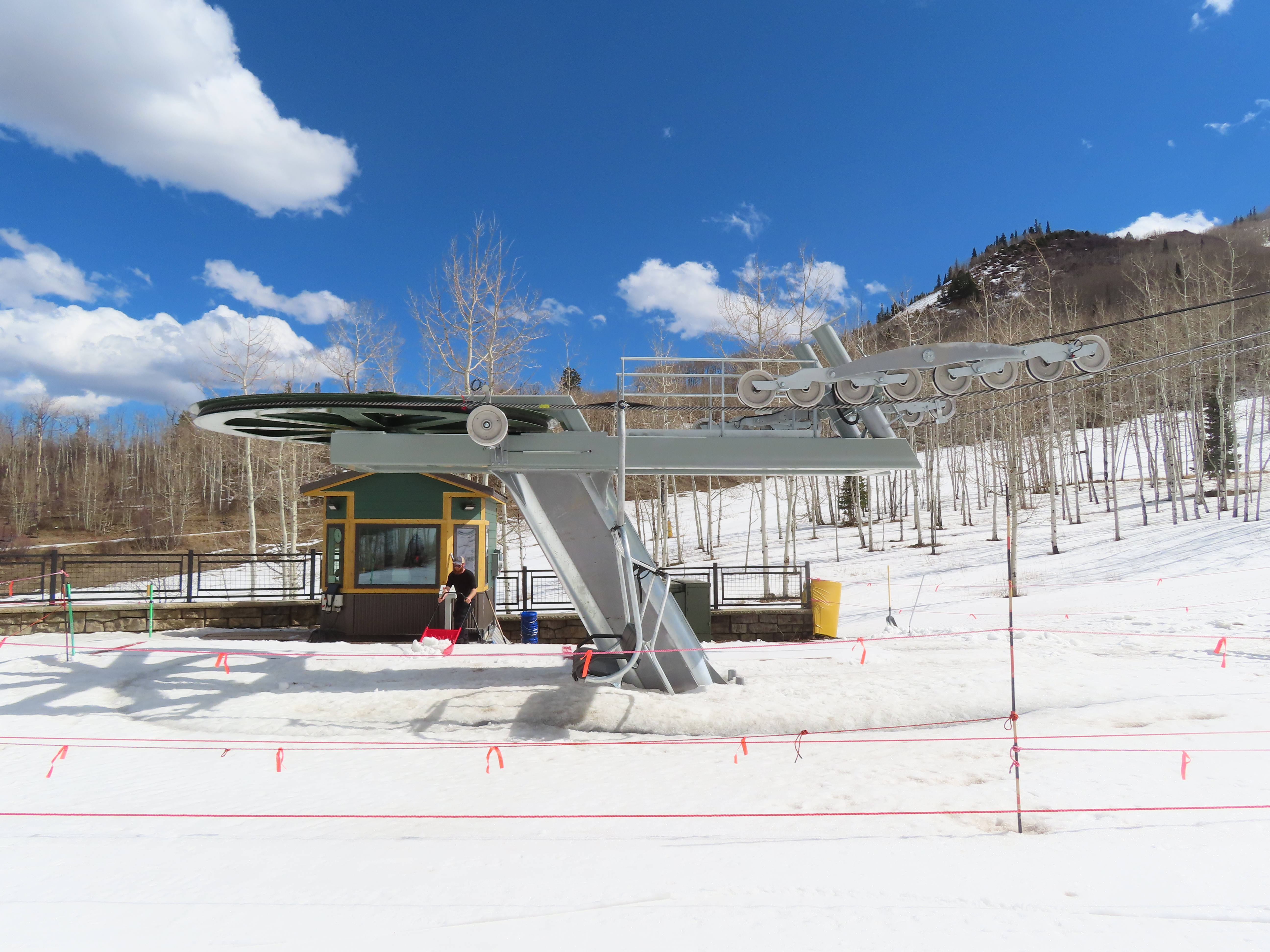
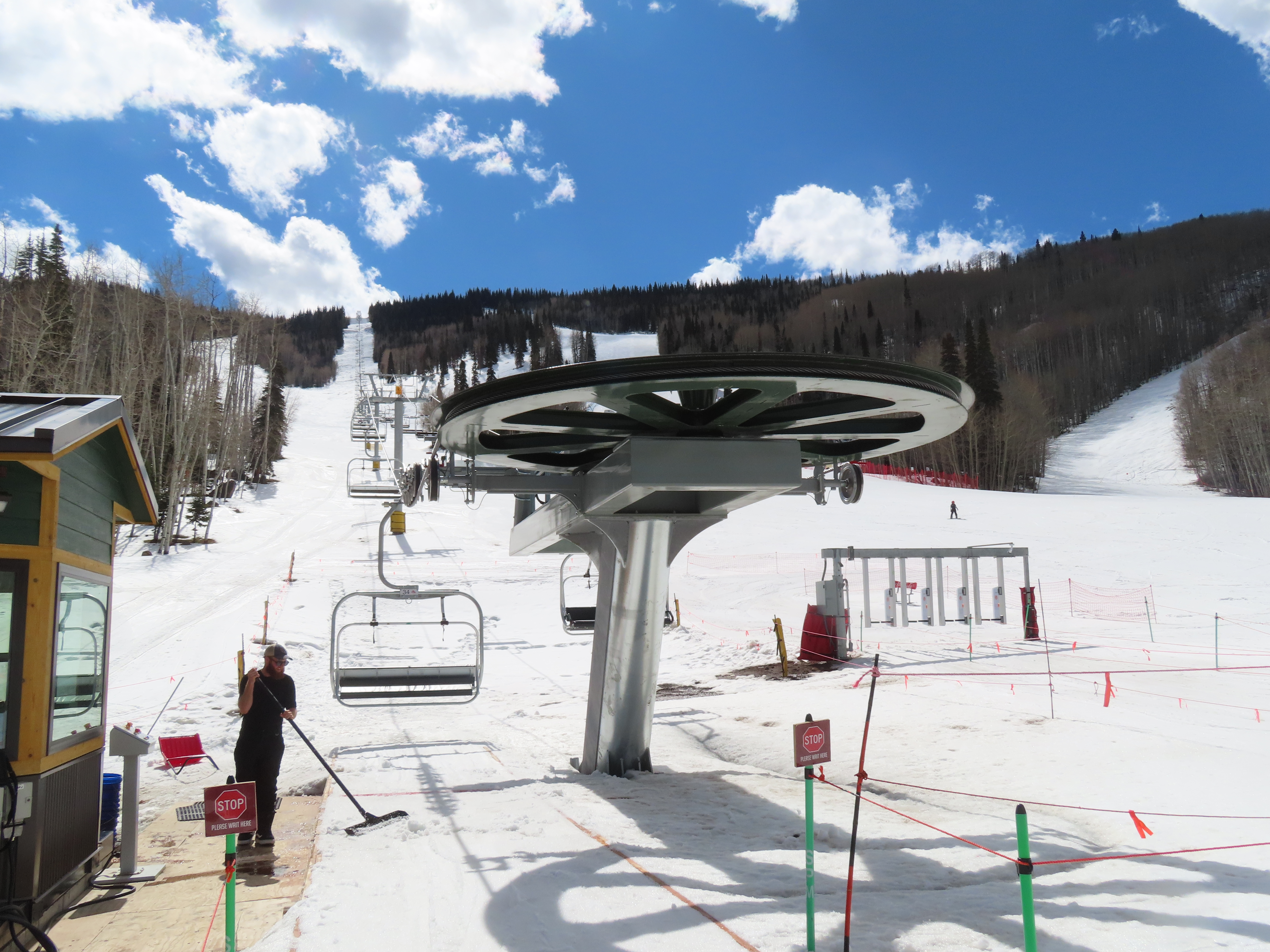
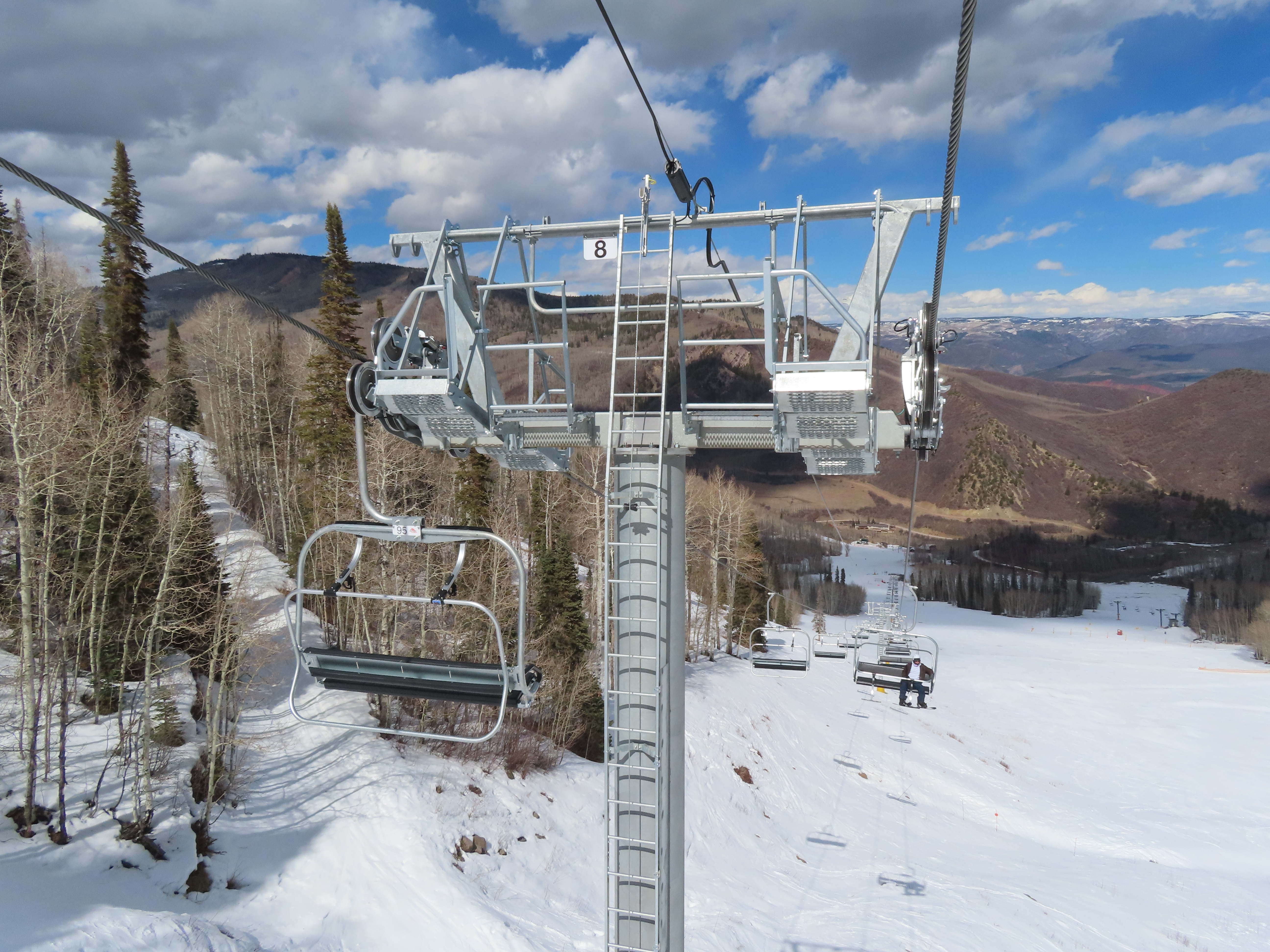
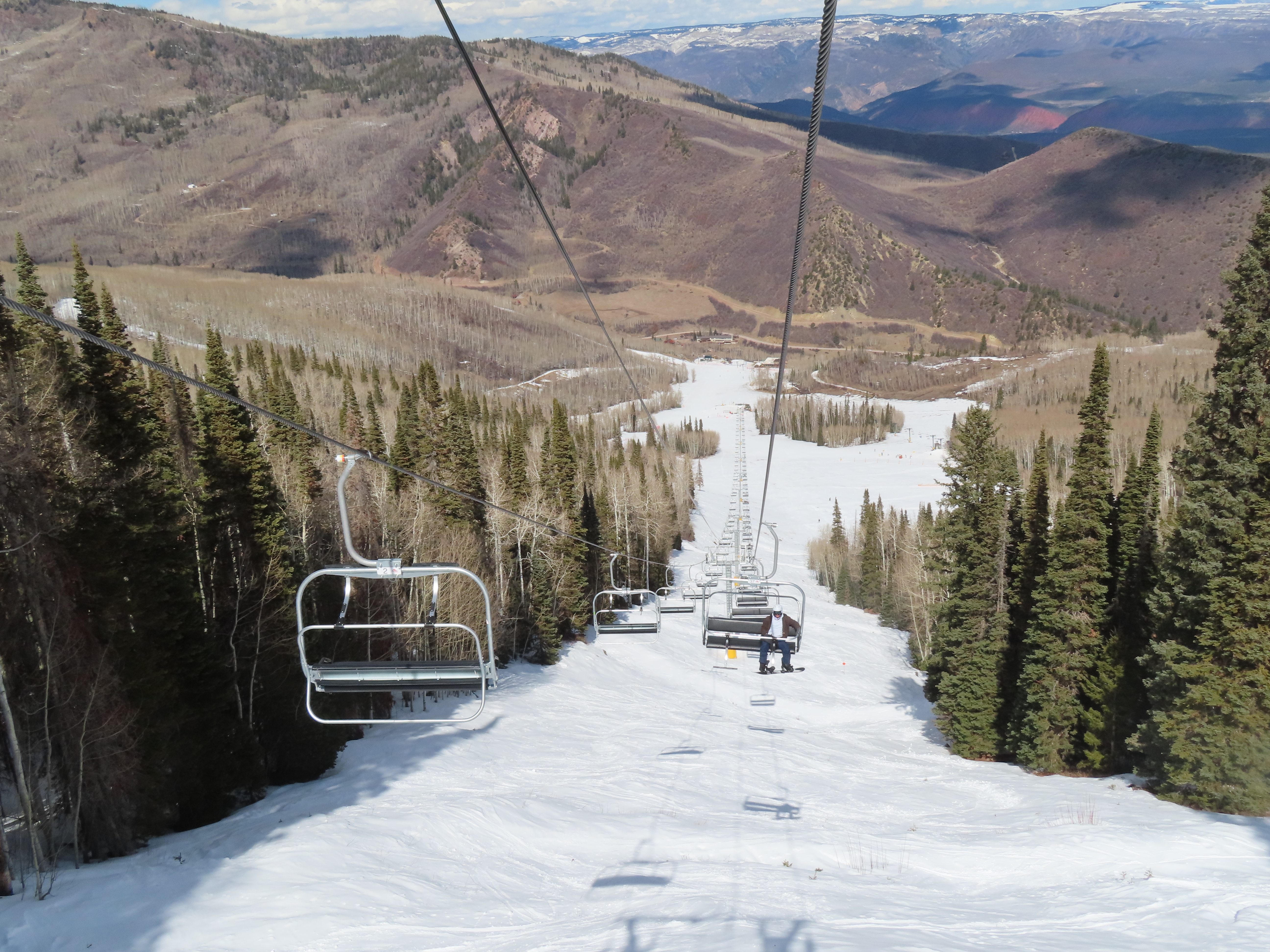
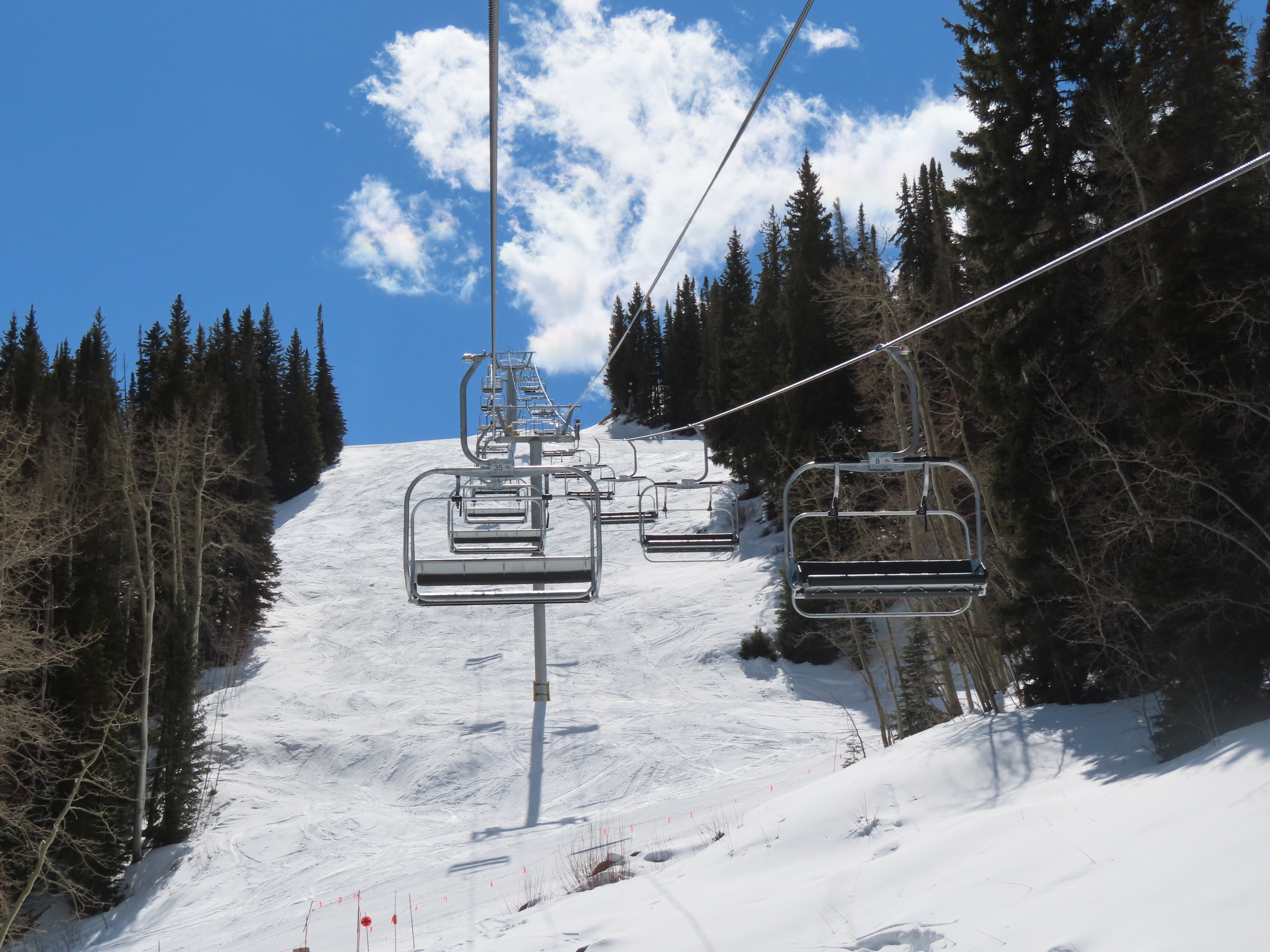
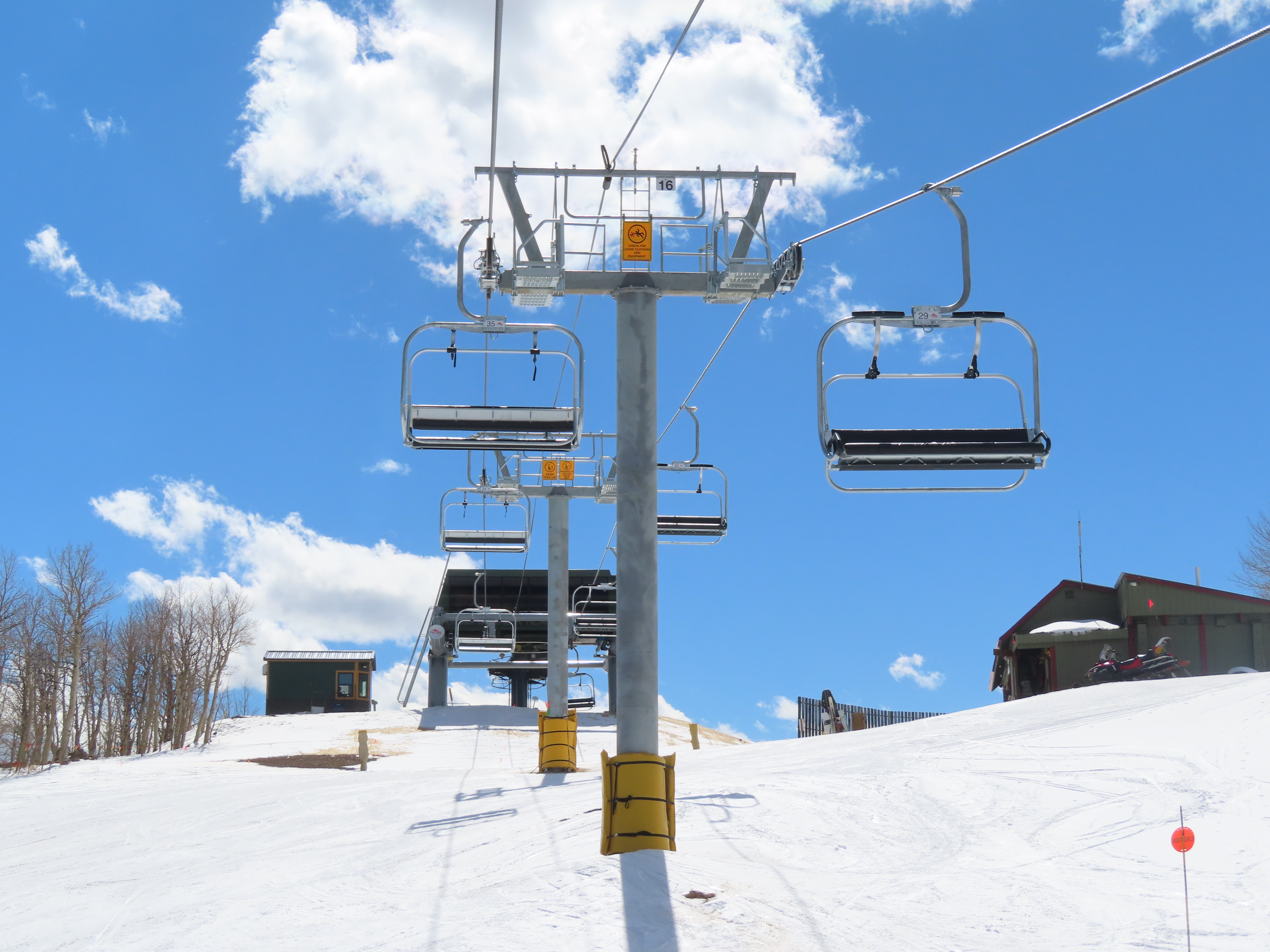
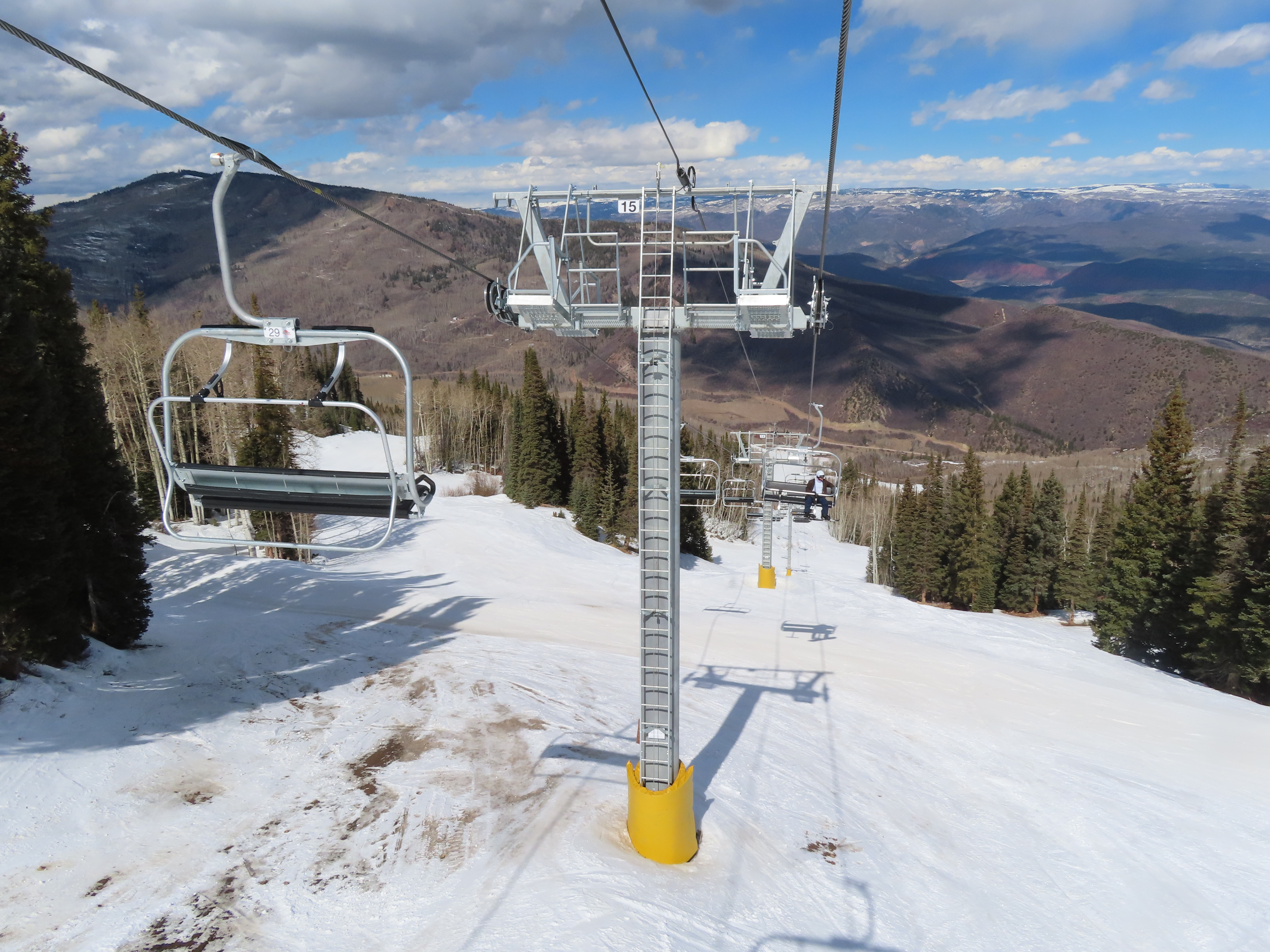
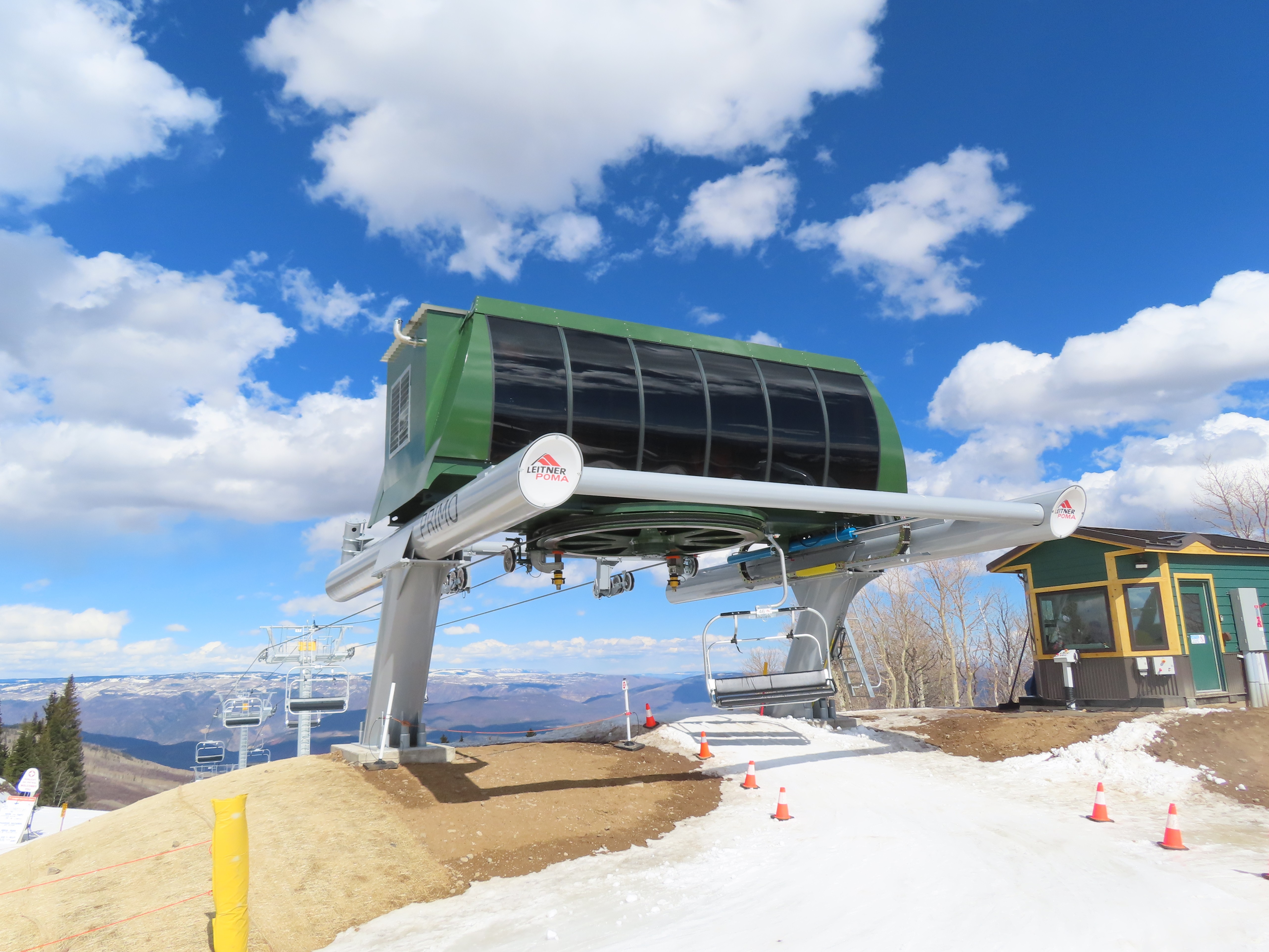
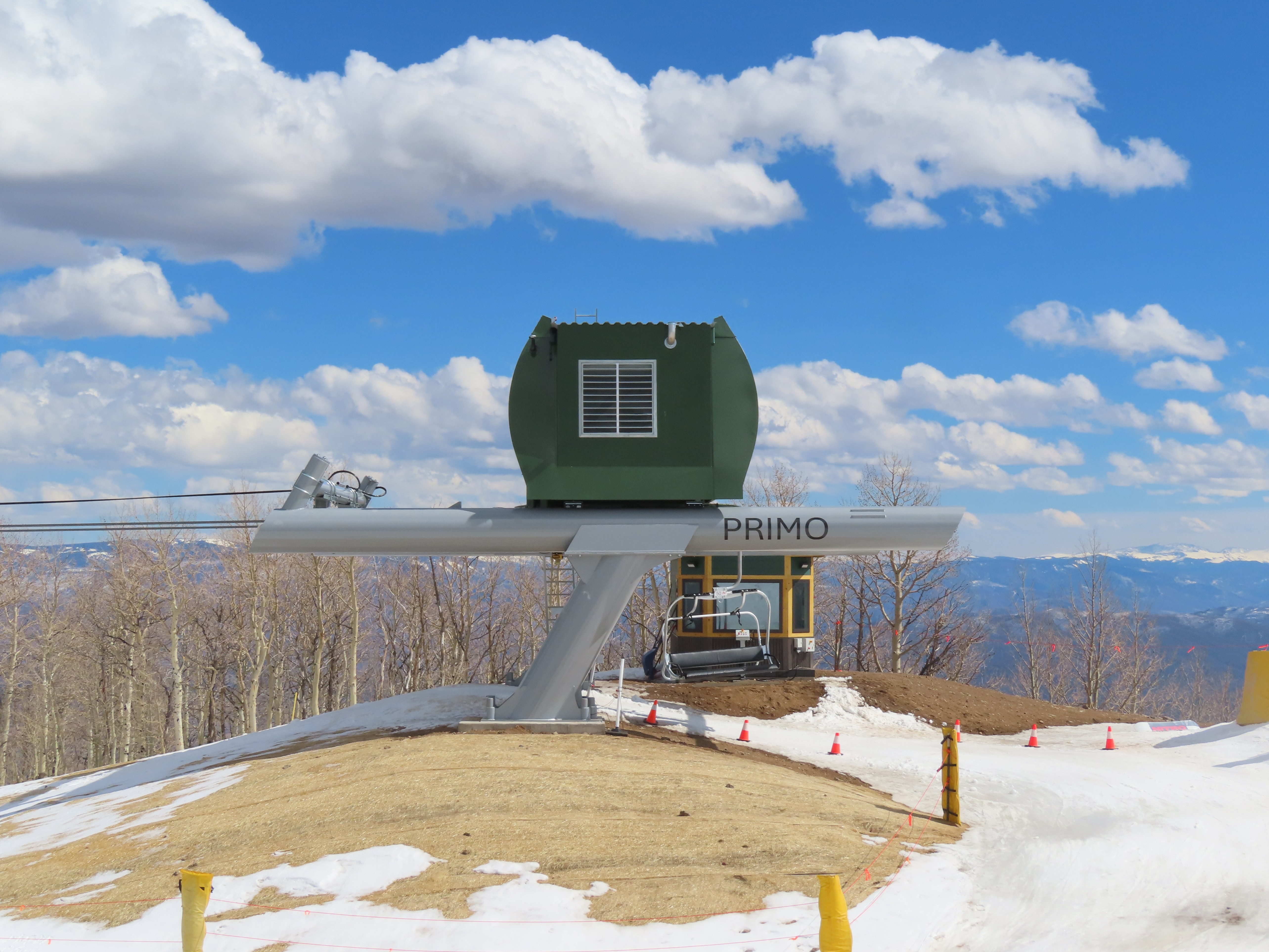
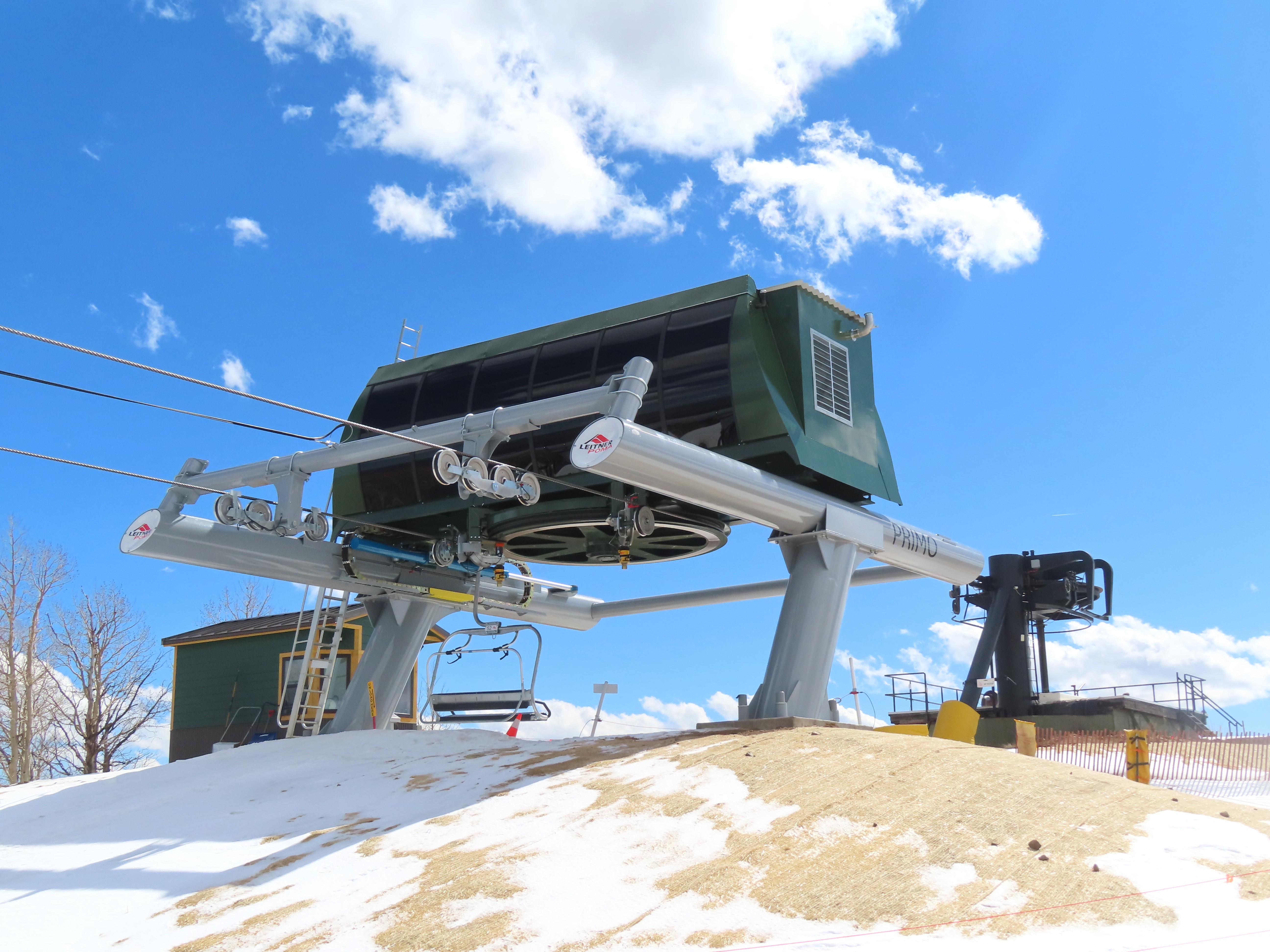
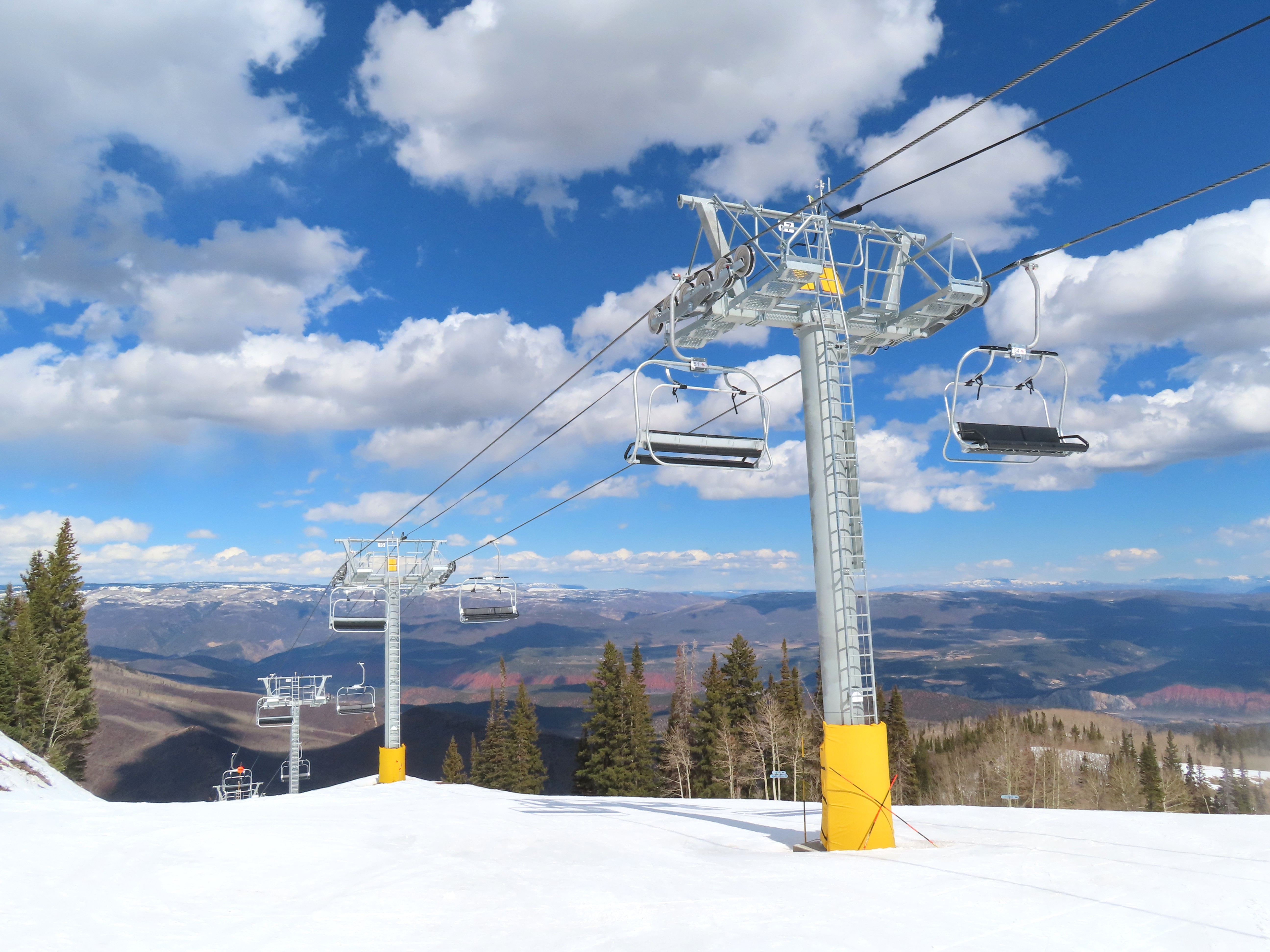
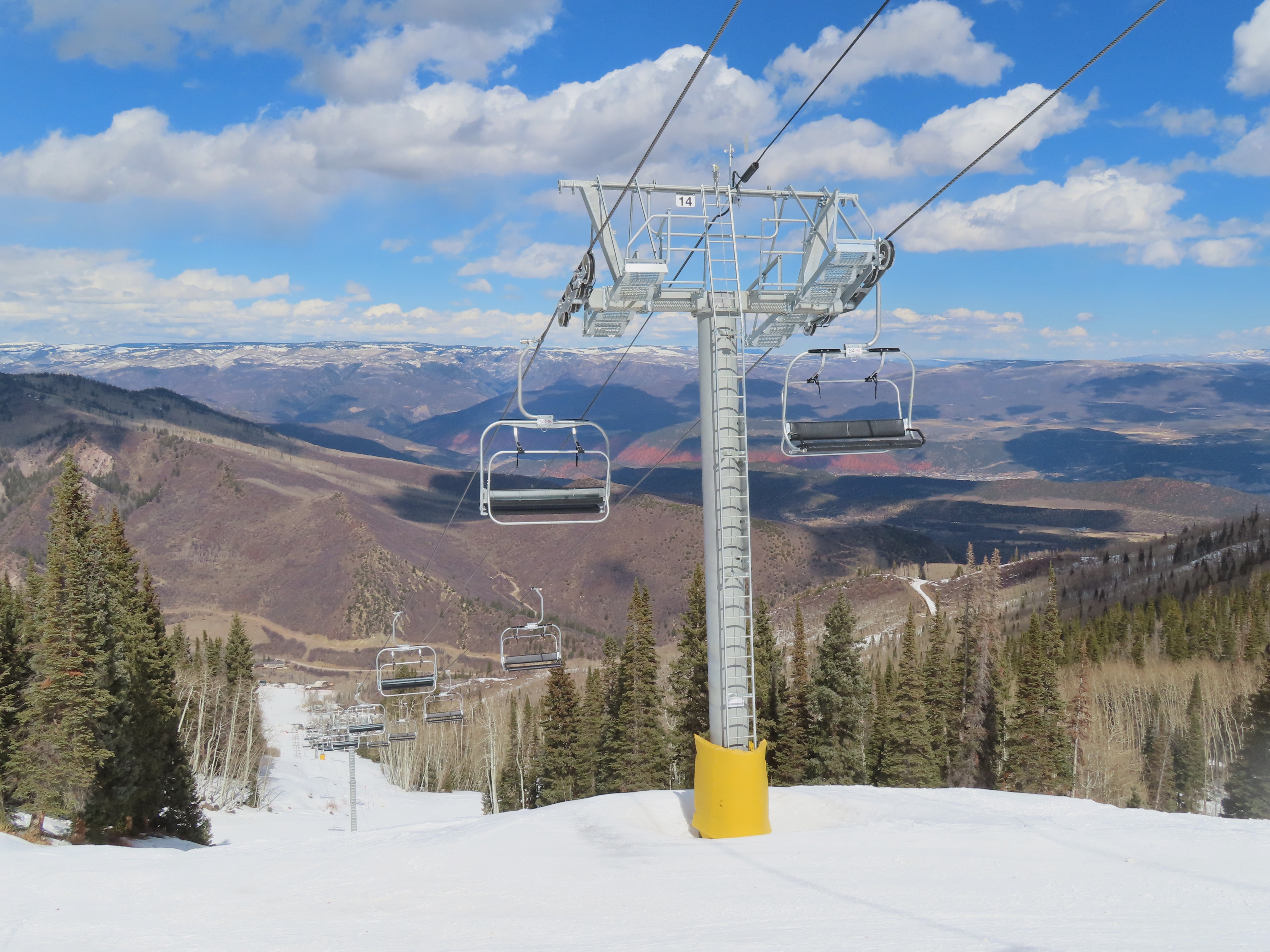
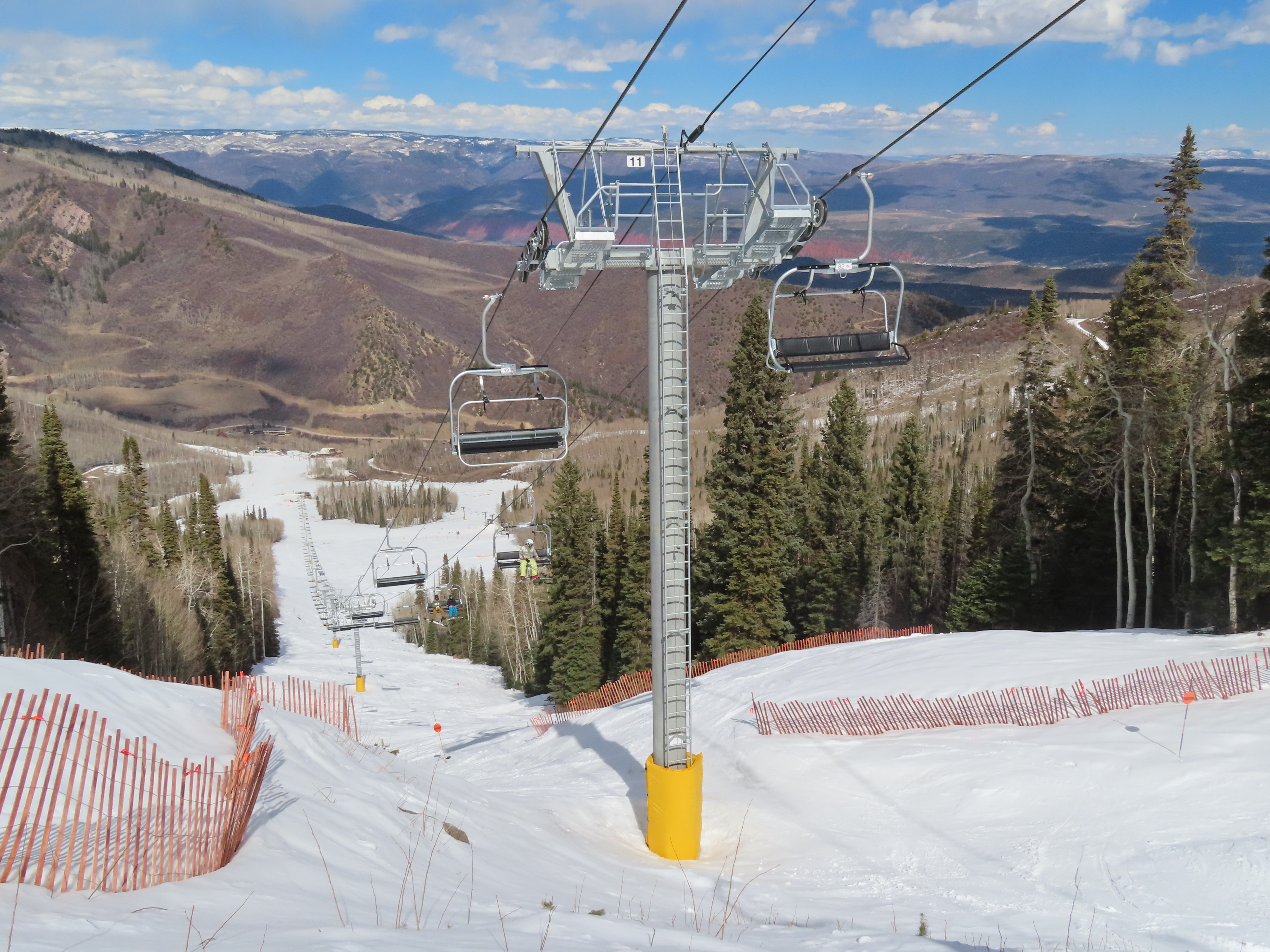
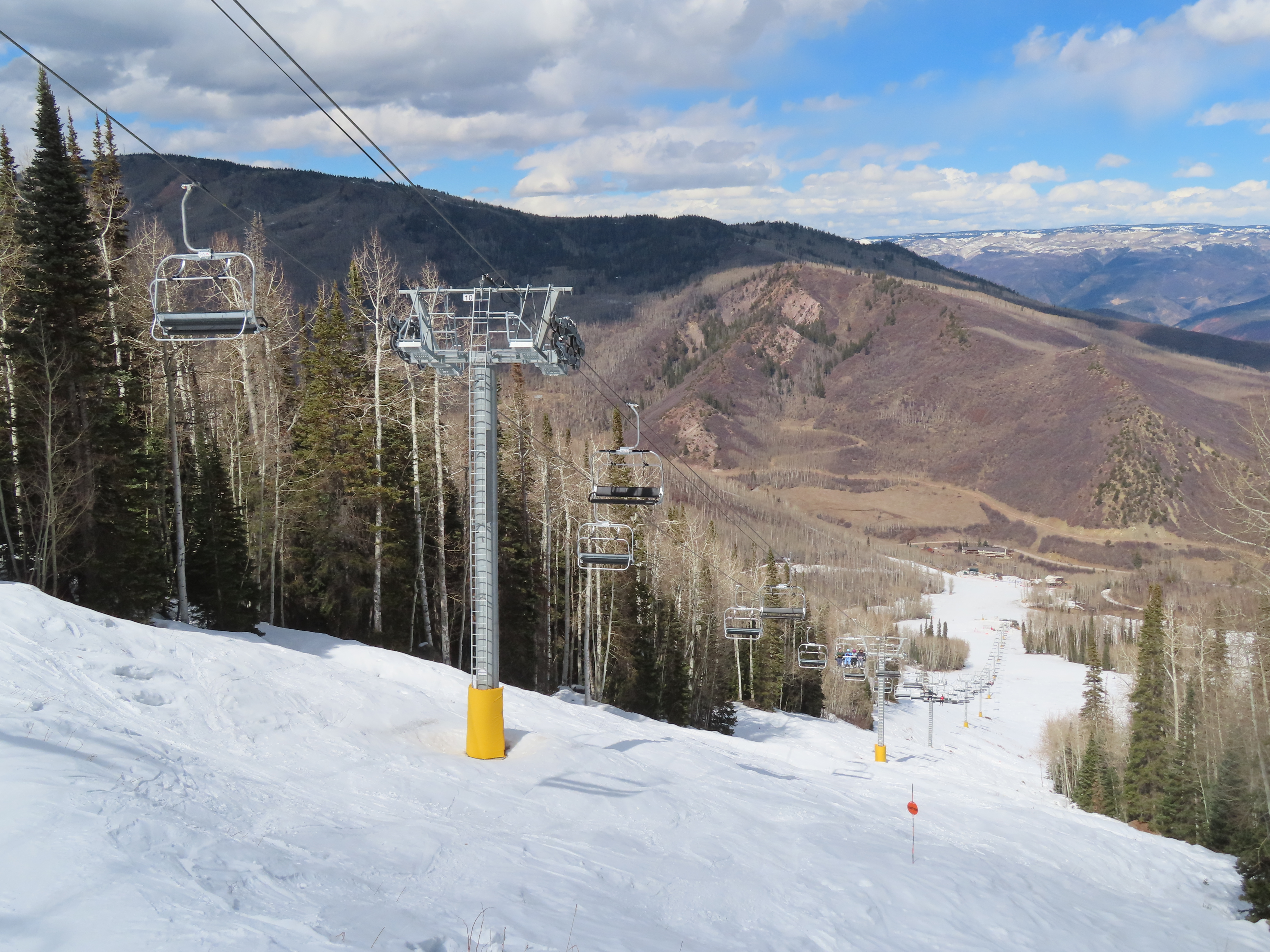
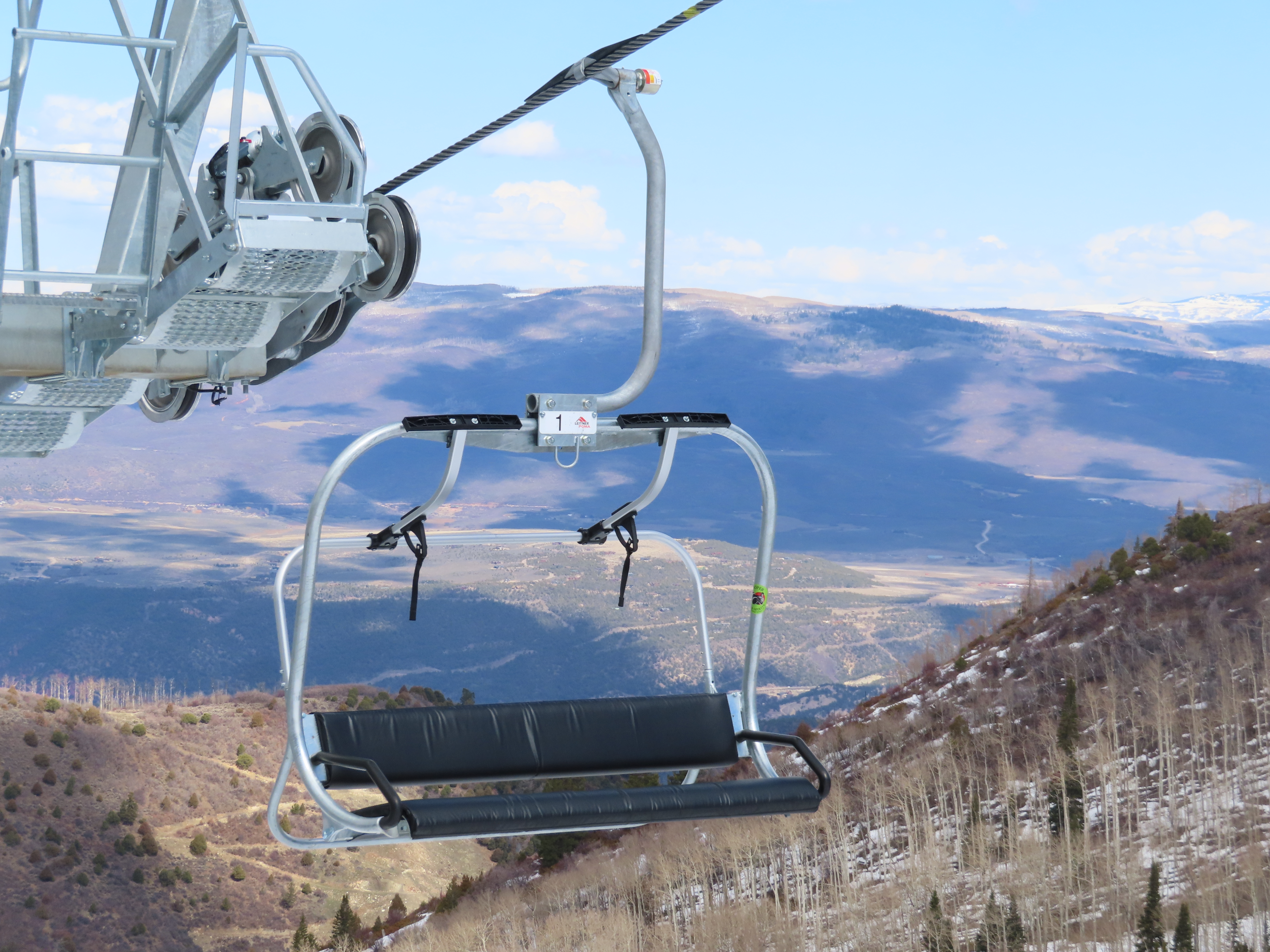
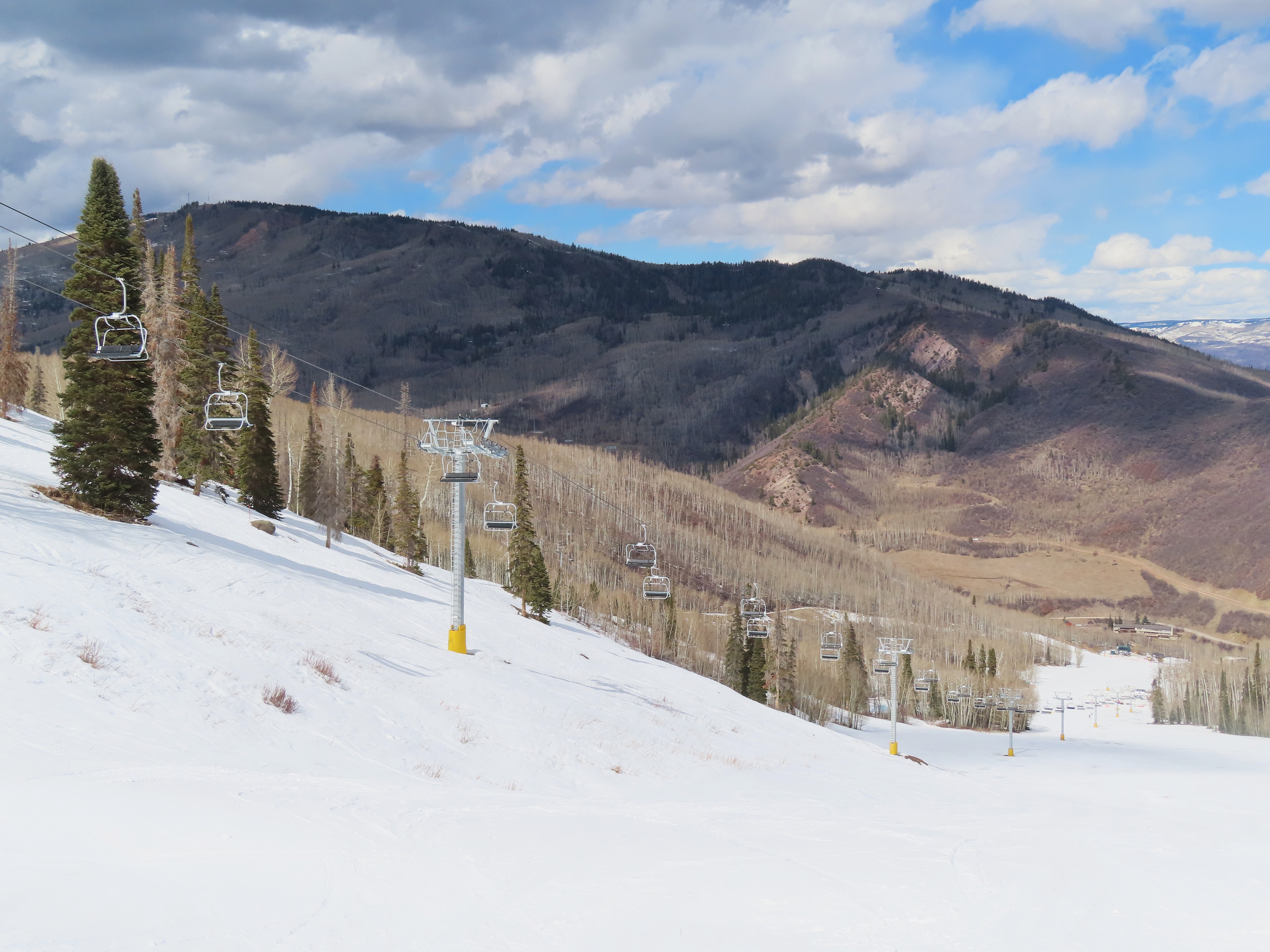
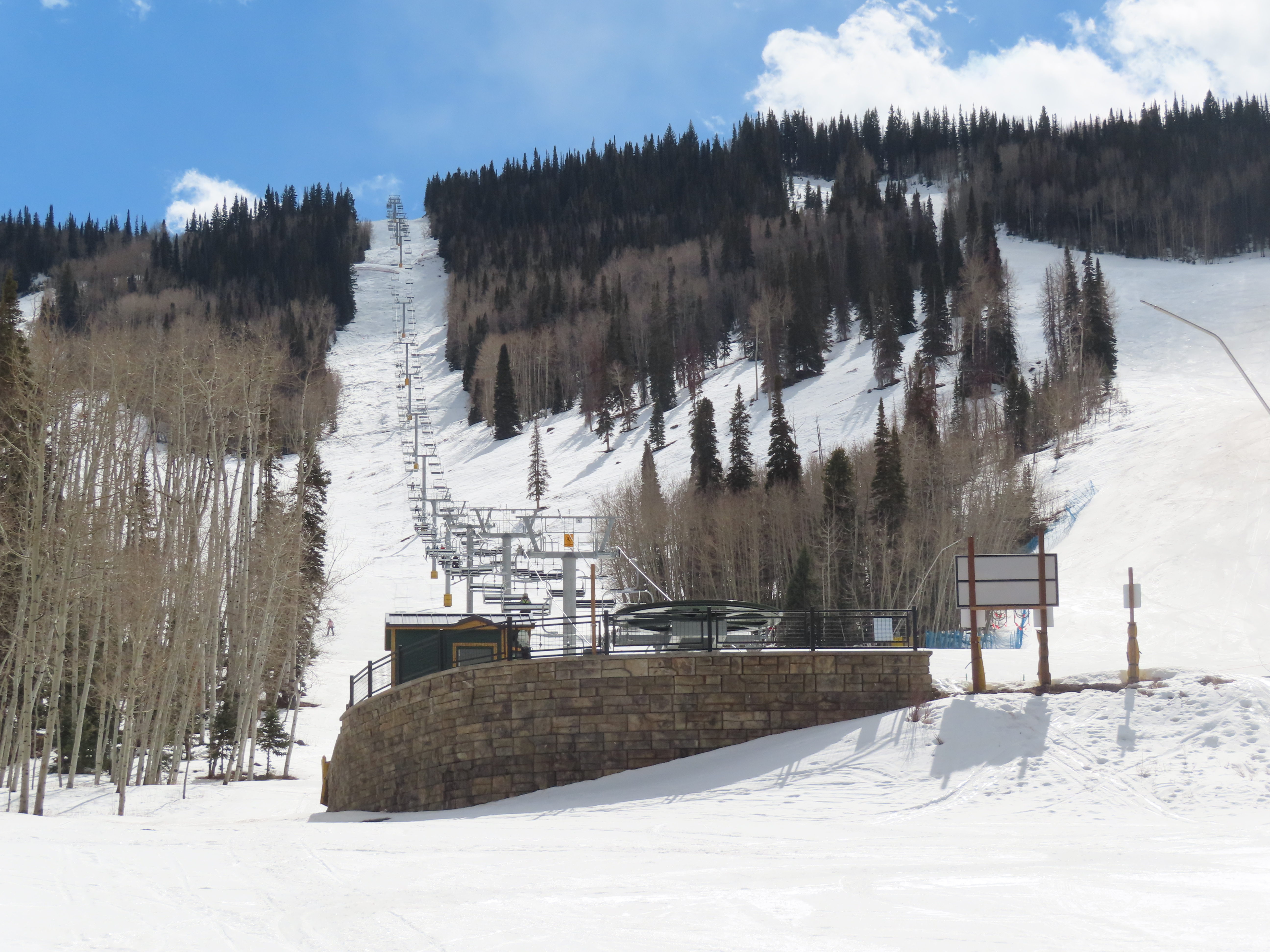
This Leitner-Poma quad replaced a Riblet double in 2025.Running from near the base to the summit of the mountain, this lift takes roughly 12 minutes to ride.Z model return station.Loading area.Leitner-Poma tower head.View back down.Middle part of the line.Arriving at the summit.Tower 15.Alpha drive station at the summit.Side view of the top station, one of five Alphas built in ’25.Drive station with old drive station in the background.Breakover towers.View down at T14.Tower 11.Middle part of the line.Chair 1.Lower lift line.Lift overview.
Wow.. no one on the mountain when Peter was there. Can’t blame them though with how little snow. The lift looks great. 12 min ride non-stop eh? about the same as the previous lift give or take a minute. Sad seeing the old drive station of the previous Ribbie in the background. Guess it will be removed this summer?
Rode this chairlift a few days ago and noticed Tower 17 has canted sheaves, deflecting the line inwards just a bit to the top bullwheel, which must be slightly smaller than the line gauge. Can anybody back me up on this, or explain why this type of setup would be done?
I think it is actually somewhat common on fixed-grips to have the bullwheel diameter be smaller than line gauge. I’ve seen this on some older Pomas, Riblets, Muellers, Carlevaro-Savios, and Stadelis, as well as Hall surface lifts. Not sure whether Doppelmayr and Skytrac do this as well. I believe the reason is that it takes less motor torque to drive a smaller bullwheel but there might be more to it than that.
It shouldn’t be because of torque, as a motors torque is downward sloping (a motor’s highest torque is at 0 rpm which is why they do not need transmissions, just a single speed gearbox), so in theory the larger torque acting on the motor due to a larger diameter should be offset by the lower rpm. It may have to do with making the bullwheel just small enough so it can be transported in one piece, or to help align the haul rope with the terminal
Would still need beefed up drive train components to handle the additional torque (gearbox, driveshaft). Motor torque is pretty irrelevant given any change in torque required at the bullwheel would be accomplished by changing the gearbox output ratio.
Most Poma fixed grips have smaller than line gauge bullwheels, but it’s not always as apparent. Some older Pomas even had deflection sheaves in the form of rubber tires on the first tower (B-quad at Okemo for one). Note that Poma has a significantly wider line gauge on fixed grips than other manufacturers, possibly being the same as their detachables. This is really notable on the Bear Mountain Quad at Killington which received Poma triple gauge tower heads as replacements. While I lack access to engineering prints to confirm my speculations, perhaps Poma wanted to only make one size of tower head per carrier size and thus they all use detachable line gauge. My speculation as for the gauge change is that a larger bull wheel would make loading complicated, as the chairs would swing in a much greater arc, requiring the queuing area to be further back. Doesn’t seem like there are too many downsides to having a bullwheel gauge and a separate line gauge; as you have plenty of tower clearance, cheaper smaller bullwheel, and more compact loading area.

 Lift Blog
Wow.. no one on the mountain when Peter was there. Can’t blame them though with how little snow. The lift looks great. 12 min ride non-stop eh? about the same as the previous lift give or take a minute. Sad seeing the old drive station of the previous Ribbie in the background. Guess it will be removed this summer?
LikeLike
Rode this chairlift a few days ago and noticed Tower 17 has canted sheaves, deflecting the line inwards just a bit to the top bullwheel, which must be slightly smaller than the line gauge. Can anybody back me up on this, or explain why this type of setup would be done?
LikeLike
Probably for the same reason as Rakes Rider at Angle Fire.
LikeLike
I think it is actually somewhat common on fixed-grips to have the bullwheel diameter be smaller than line gauge. I’ve seen this on some older Pomas, Riblets, Muellers, Carlevaro-Savios, and Stadelis, as well as Hall surface lifts. Not sure whether Doppelmayr and Skytrac do this as well. I believe the reason is that it takes less motor torque to drive a smaller bullwheel but there might be more to it than that.
LikeLike
It shouldn’t be because of torque, as a motors torque is downward sloping (a motor’s highest torque is at 0 rpm which is why they do not need transmissions, just a single speed gearbox), so in theory the larger torque acting on the motor due to a larger diameter should be offset by the lower rpm. It may have to do with making the bullwheel just small enough so it can be transported in one piece, or to help align the haul rope with the terminal
LikeLike
Would still need beefed up drive train components to handle the additional torque (gearbox, driveshaft). Motor torque is pretty irrelevant given any change in torque required at the bullwheel would be accomplished by changing the gearbox output ratio.
LikeLiked by 1 person
Most Poma fixed grips have smaller than line gauge bullwheels, but it’s not always as apparent. Some older Pomas even had deflection sheaves in the form of rubber tires on the first tower (B-quad at Okemo for one). Note that Poma has a significantly wider line gauge on fixed grips than other manufacturers, possibly being the same as their detachables. This is really notable on the Bear Mountain Quad at Killington which received Poma triple gauge tower heads as replacements. While I lack access to engineering prints to confirm my speculations, perhaps Poma wanted to only make one size of tower head per carrier size and thus they all use detachable line gauge. My speculation as for the gauge change is that a larger bull wheel would make loading complicated, as the chairs would swing in a much greater arc, requiring the queuing area to be further back. Doesn’t seem like there are too many downsides to having a bullwheel gauge and a separate line gauge; as you have plenty of tower clearance, cheaper smaller bullwheel, and more compact loading area.
LikeLiked by 1 person