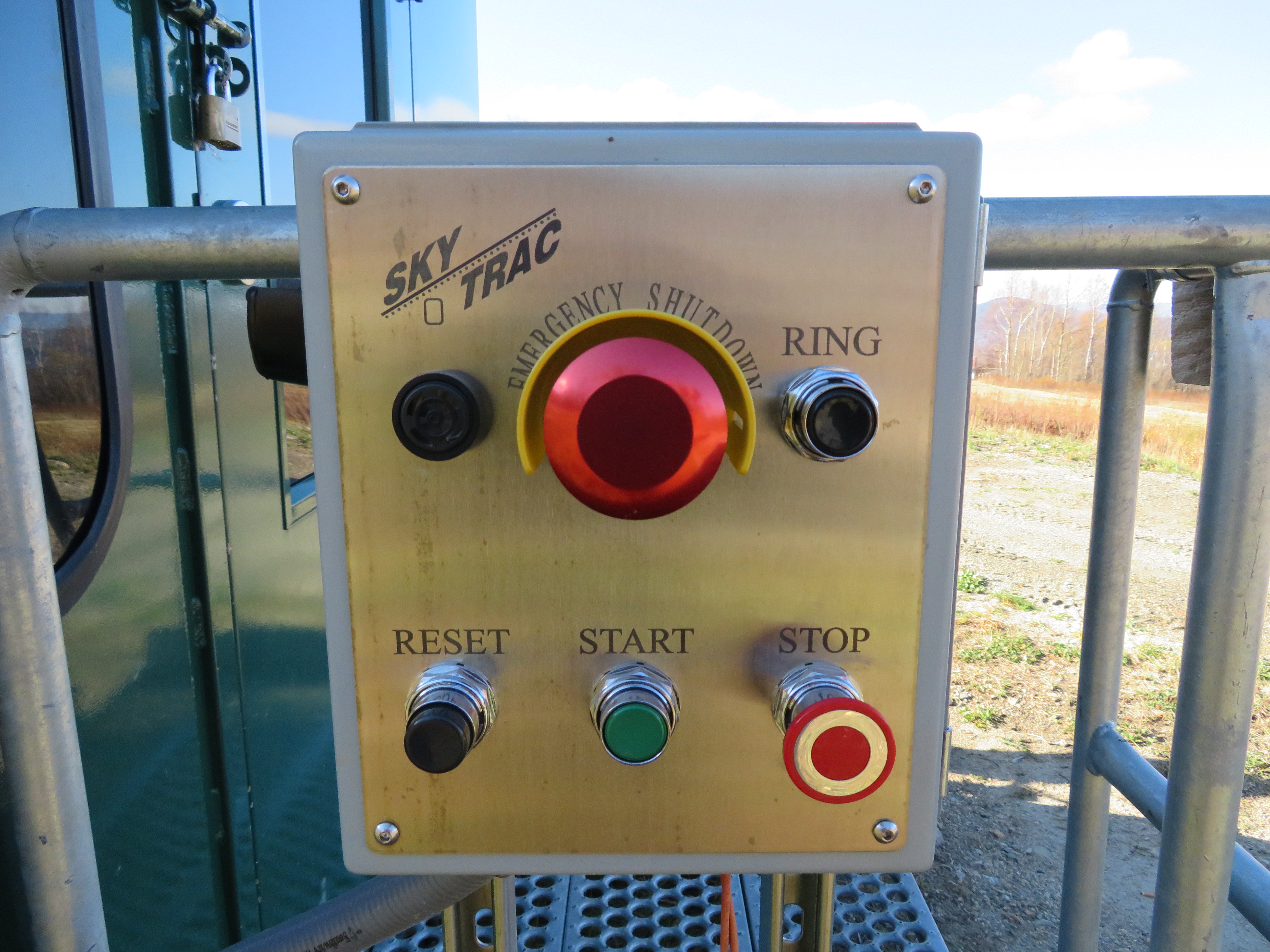
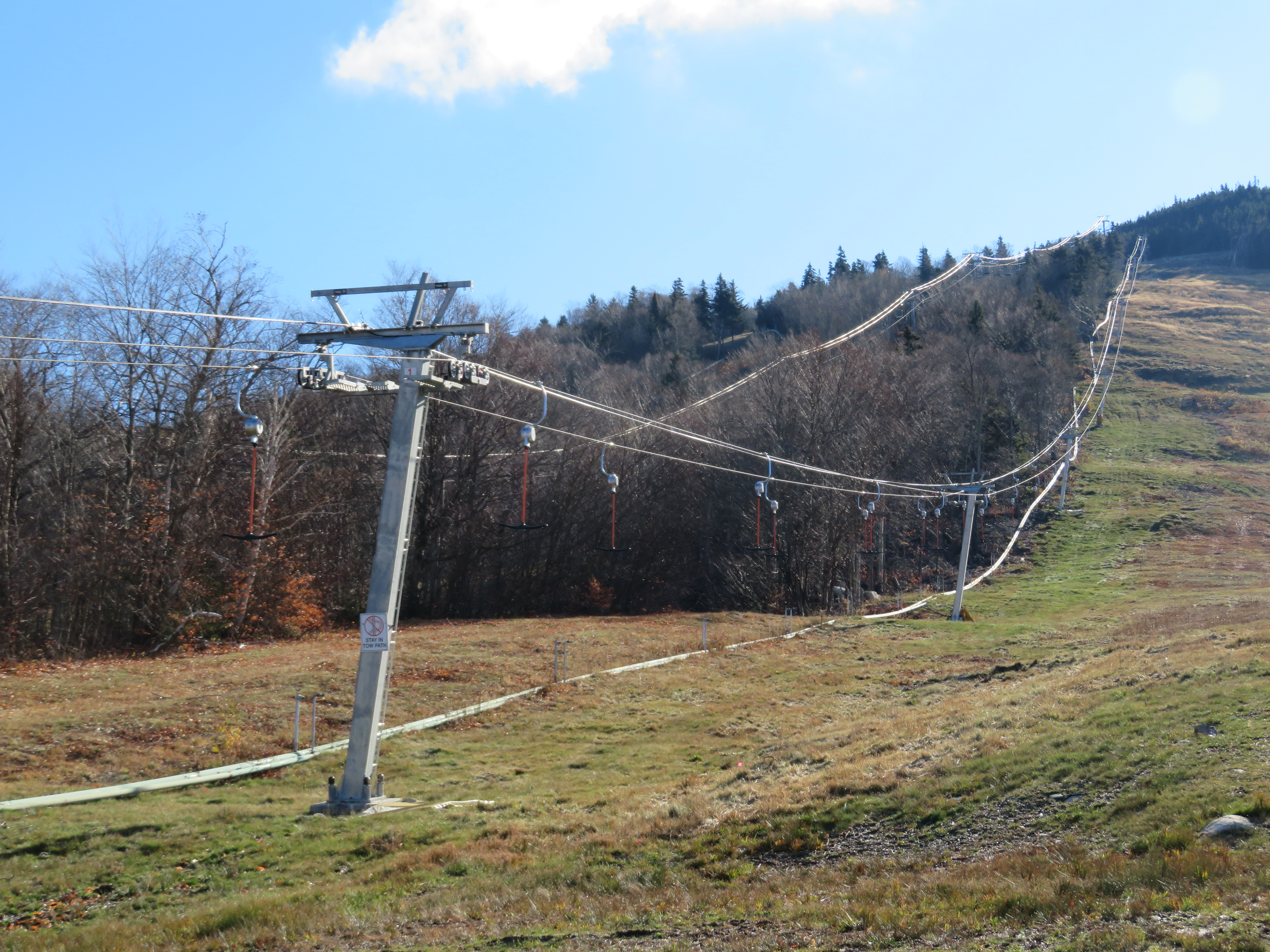
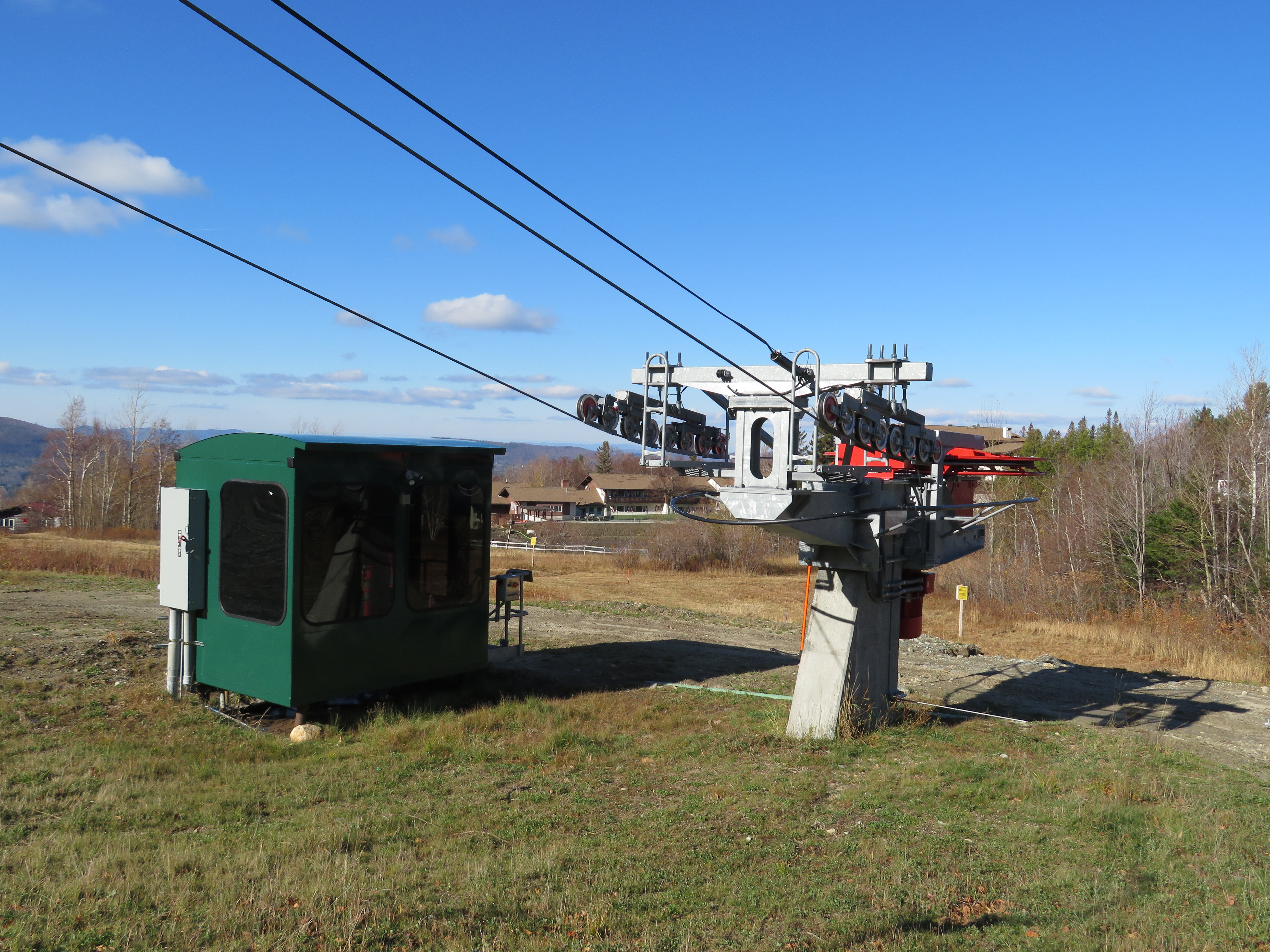
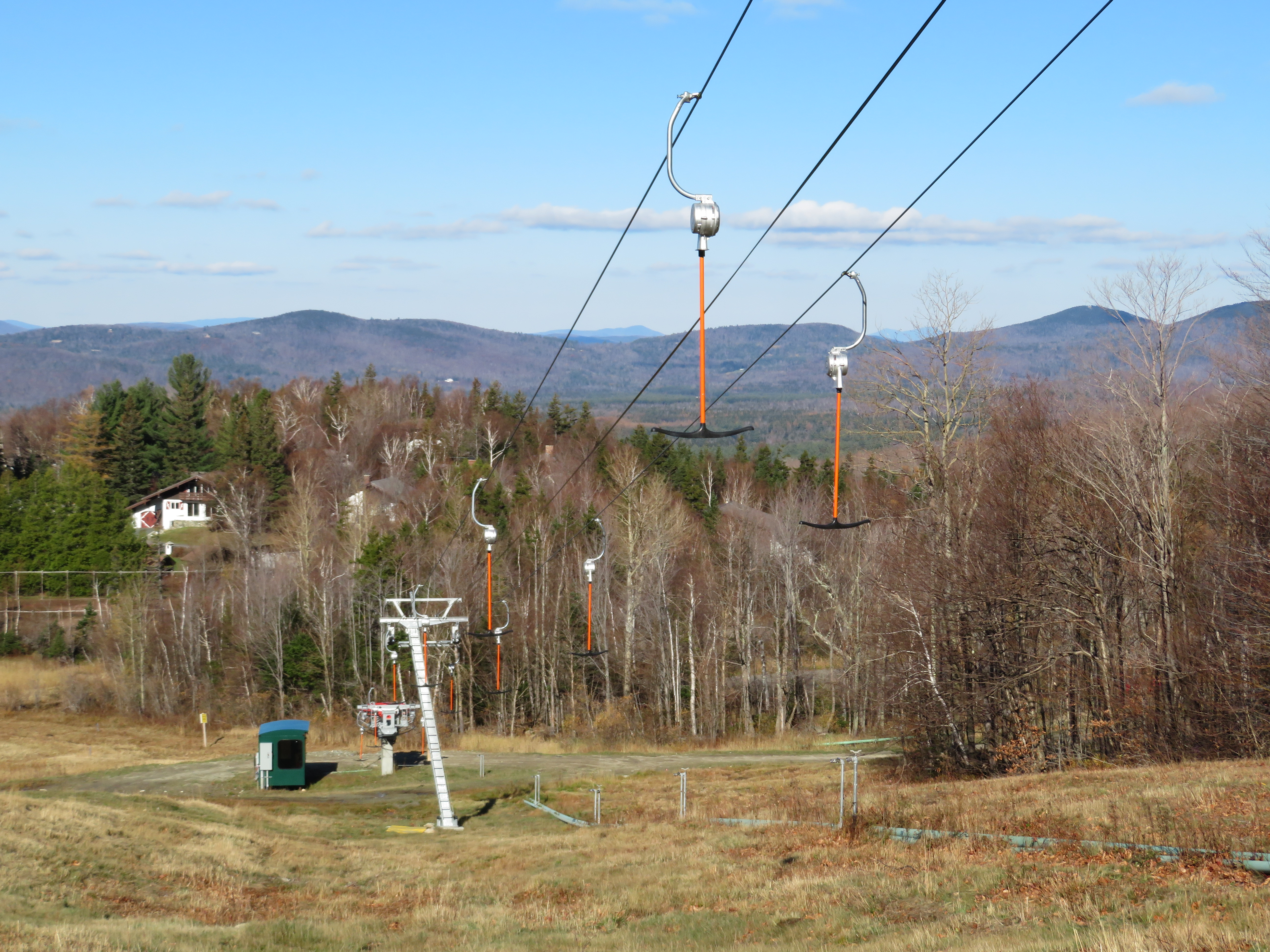
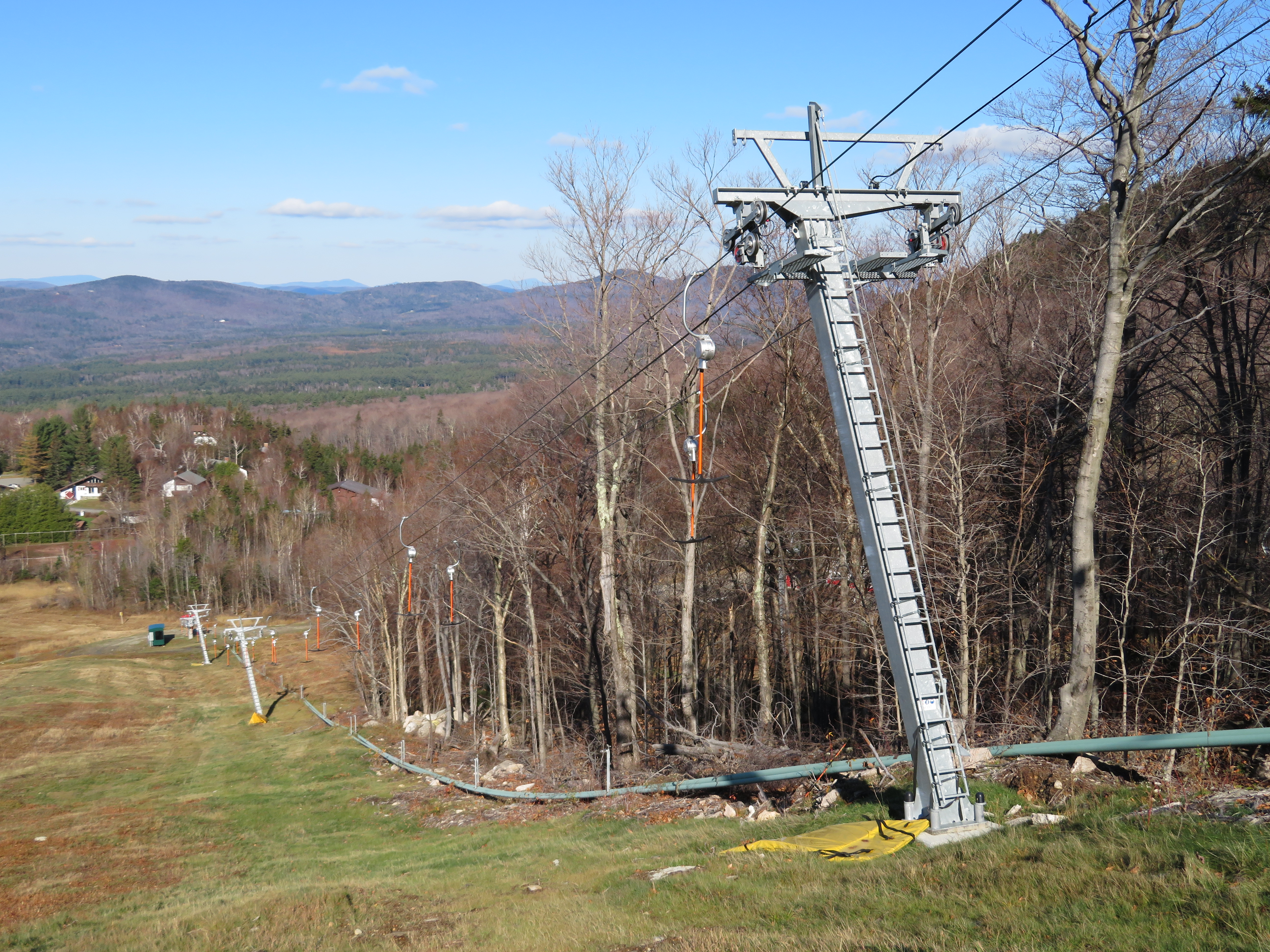
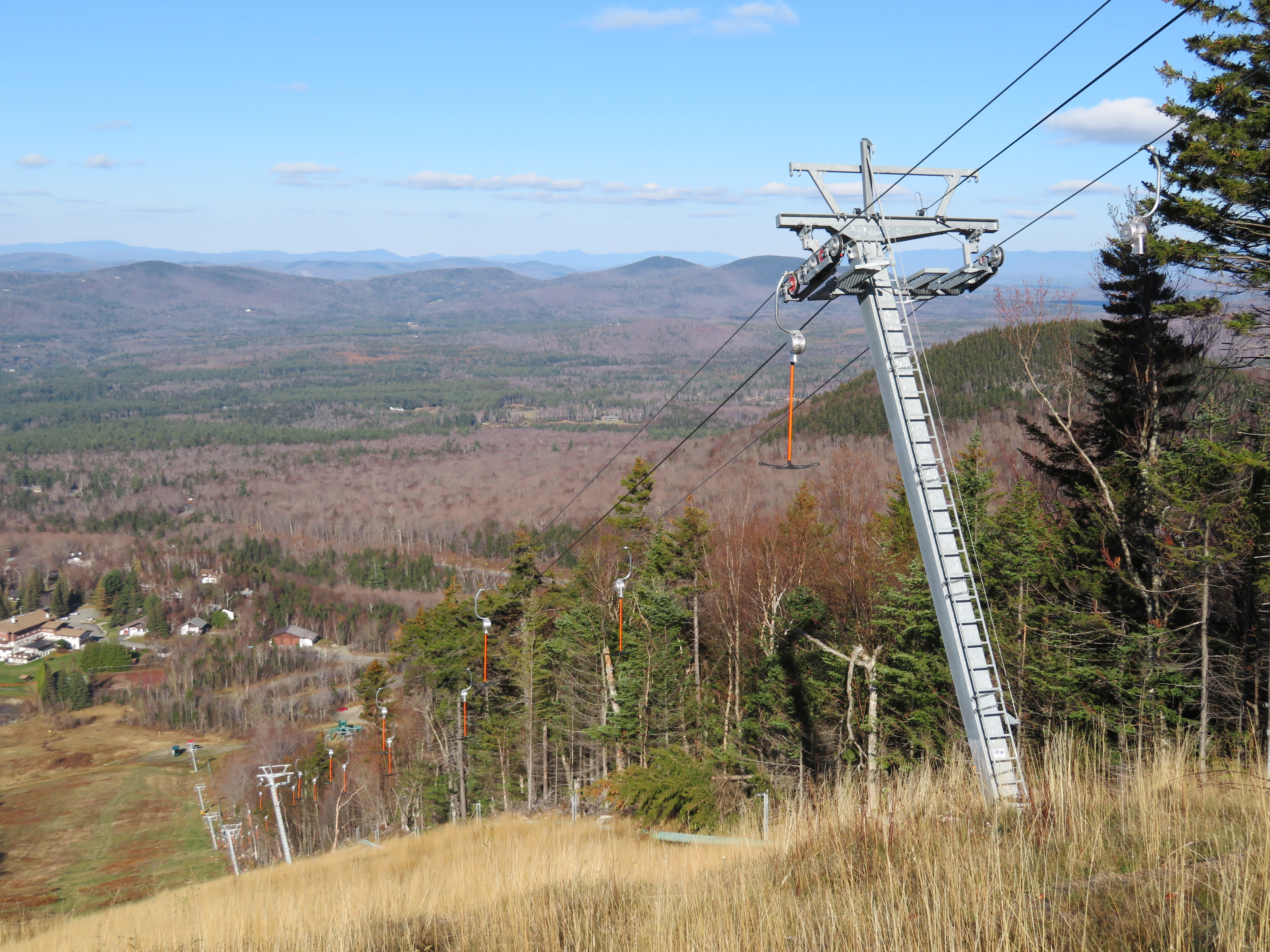
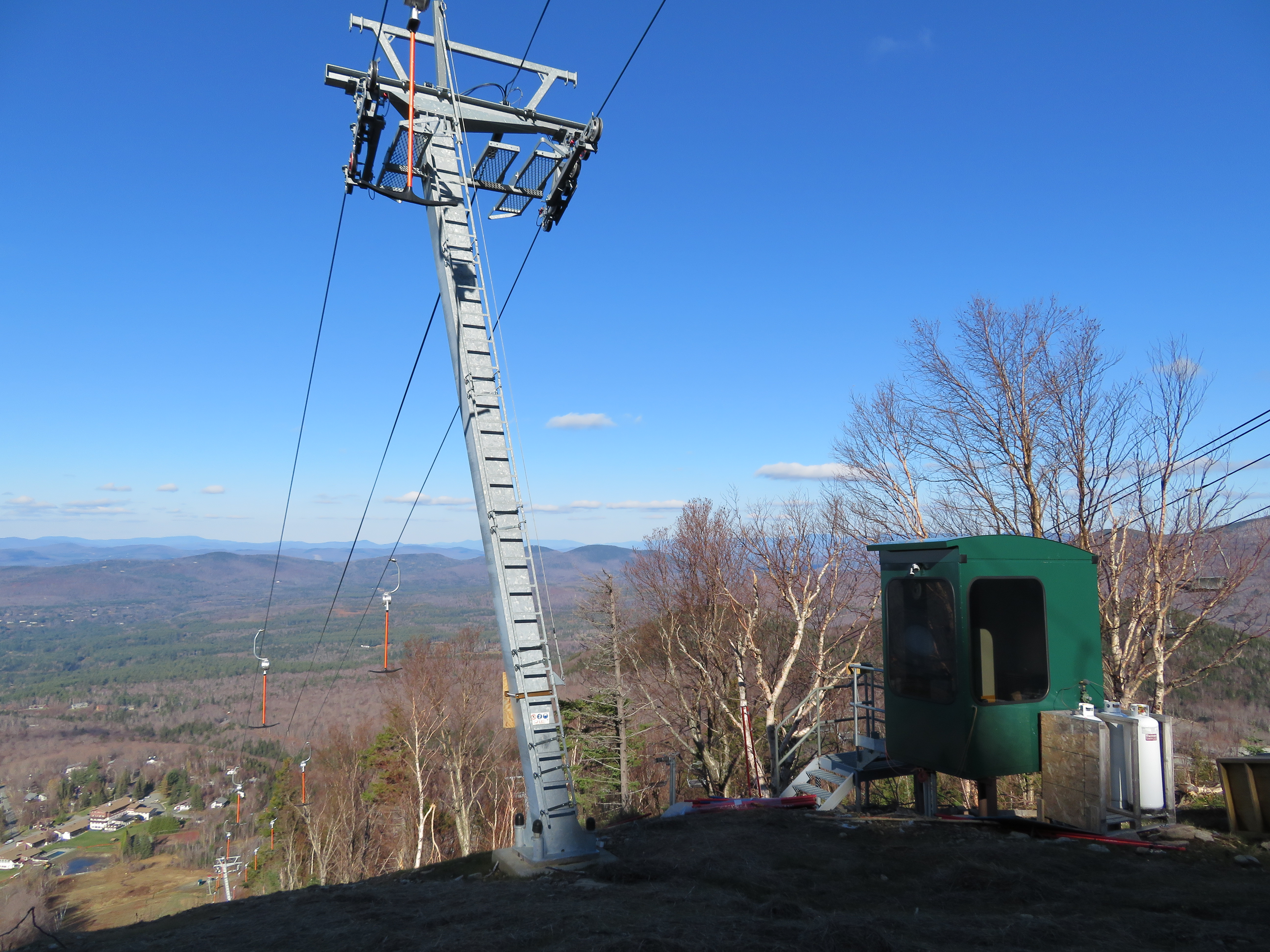
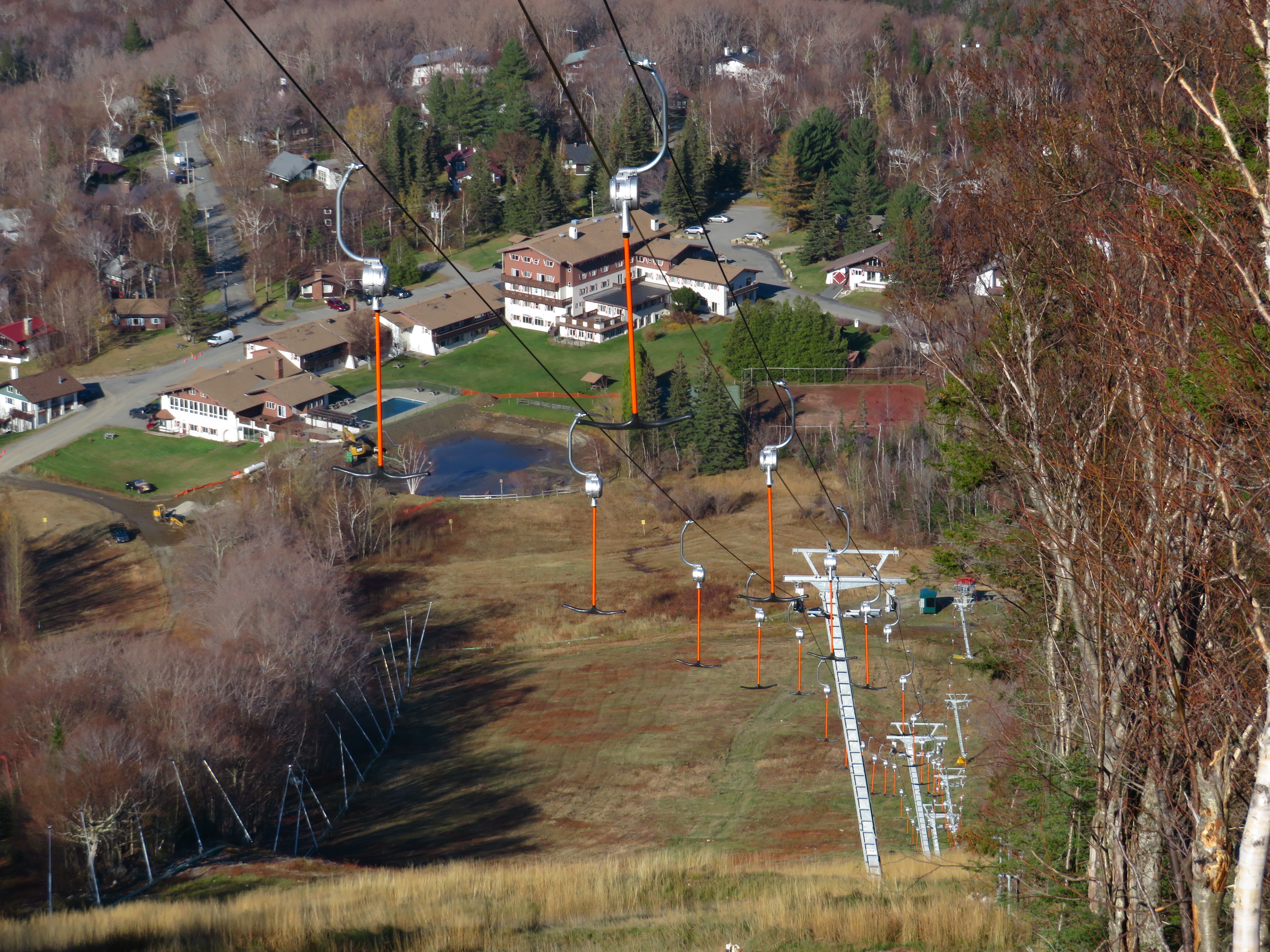
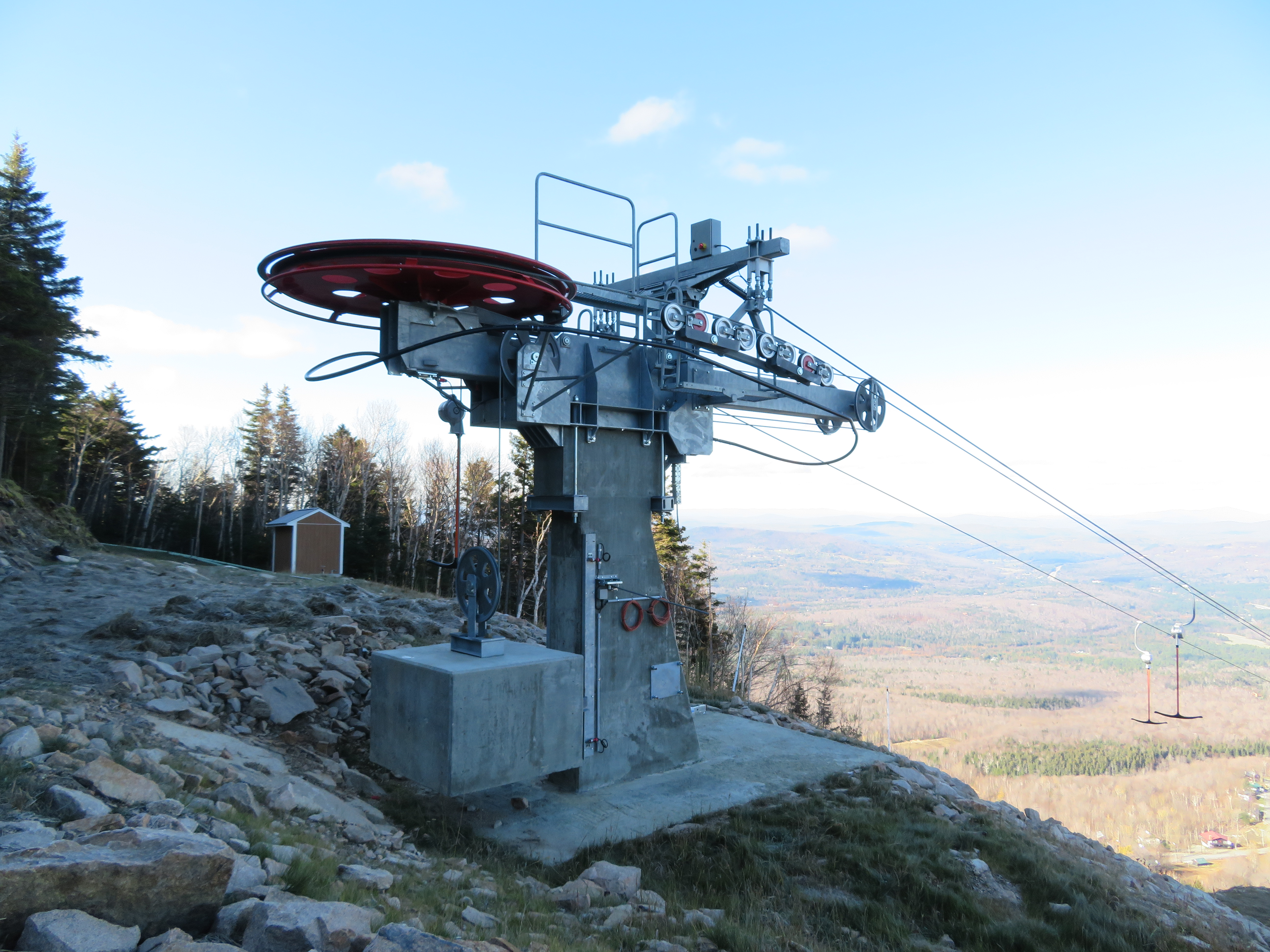
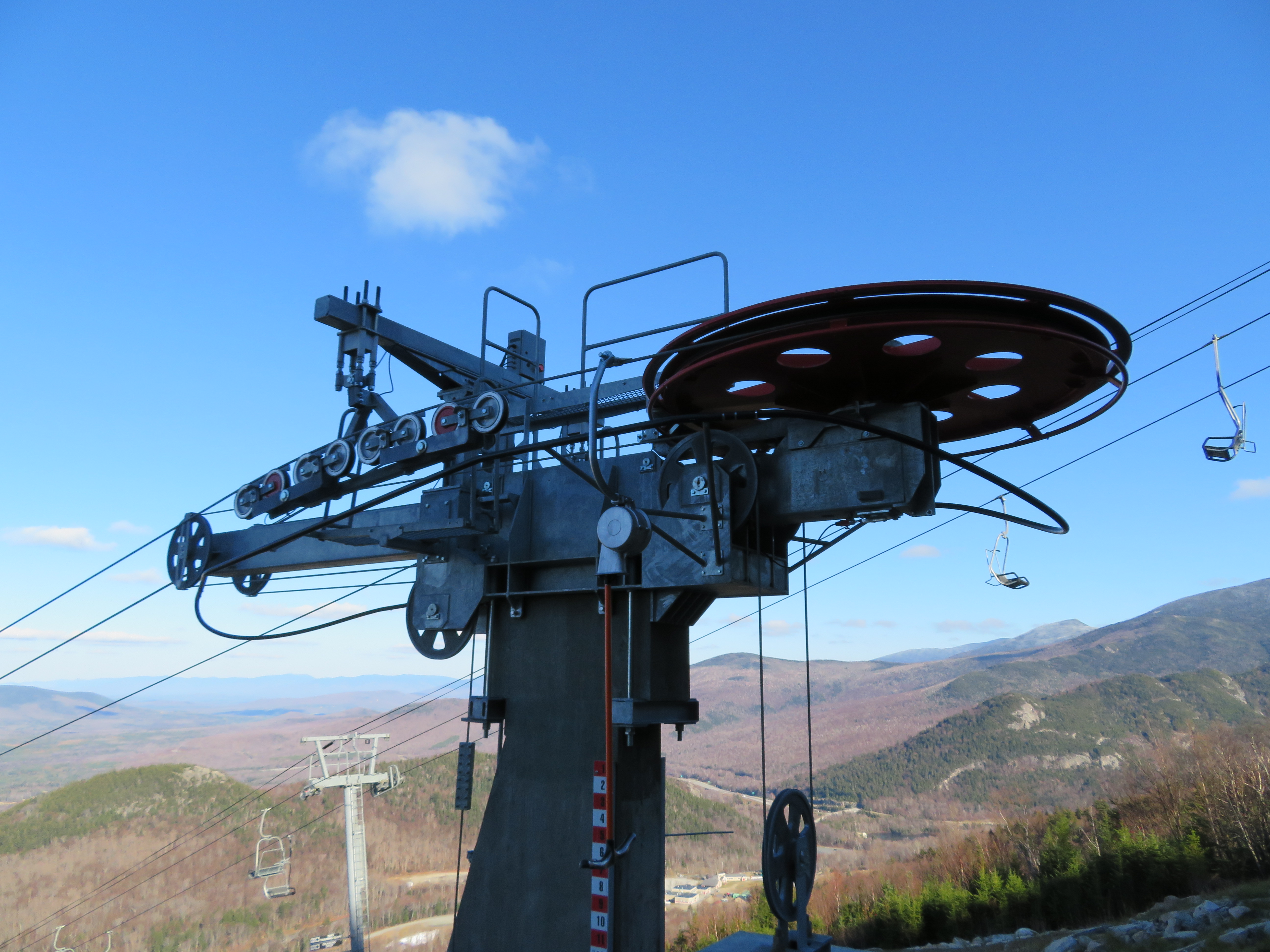
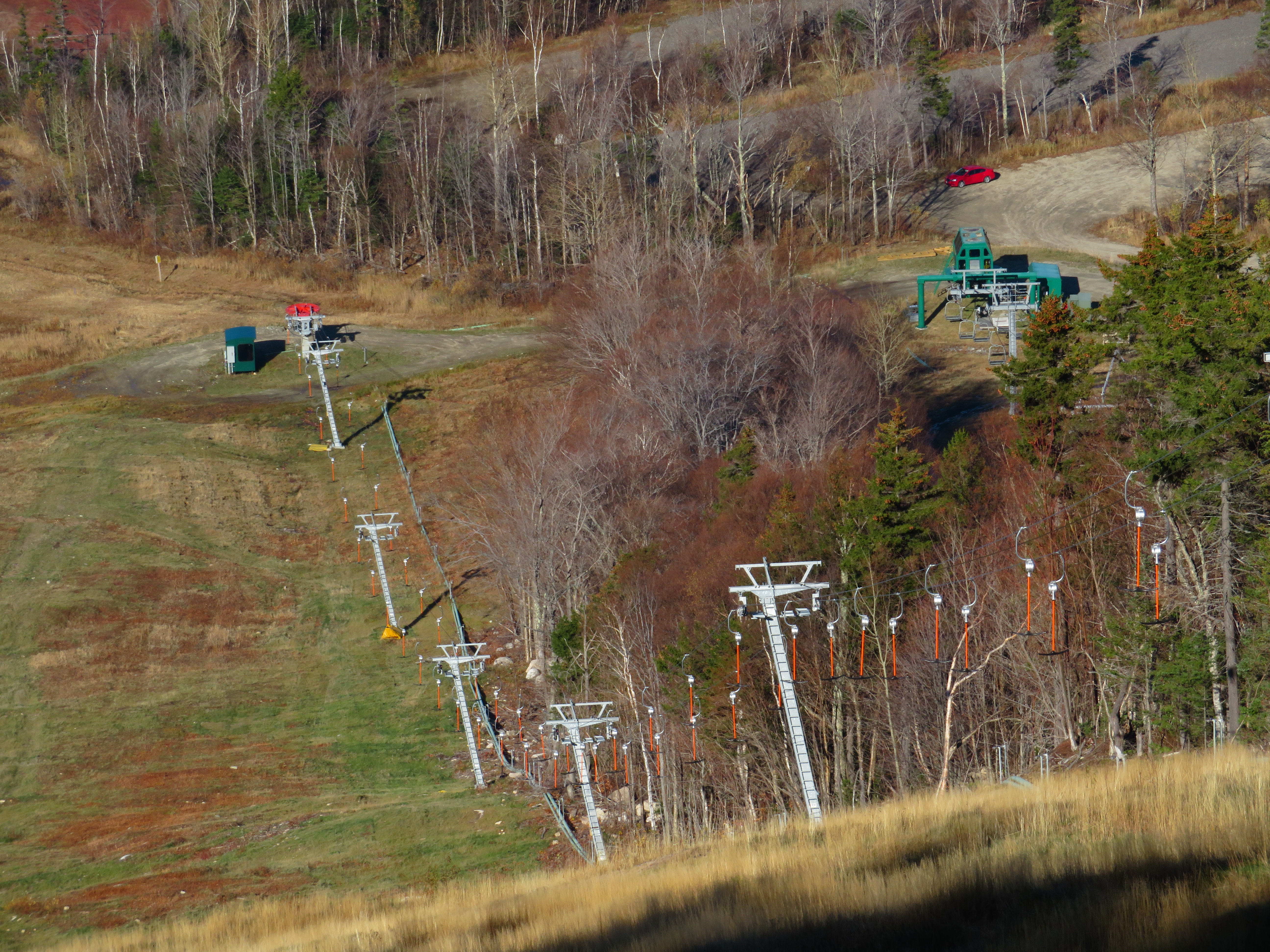
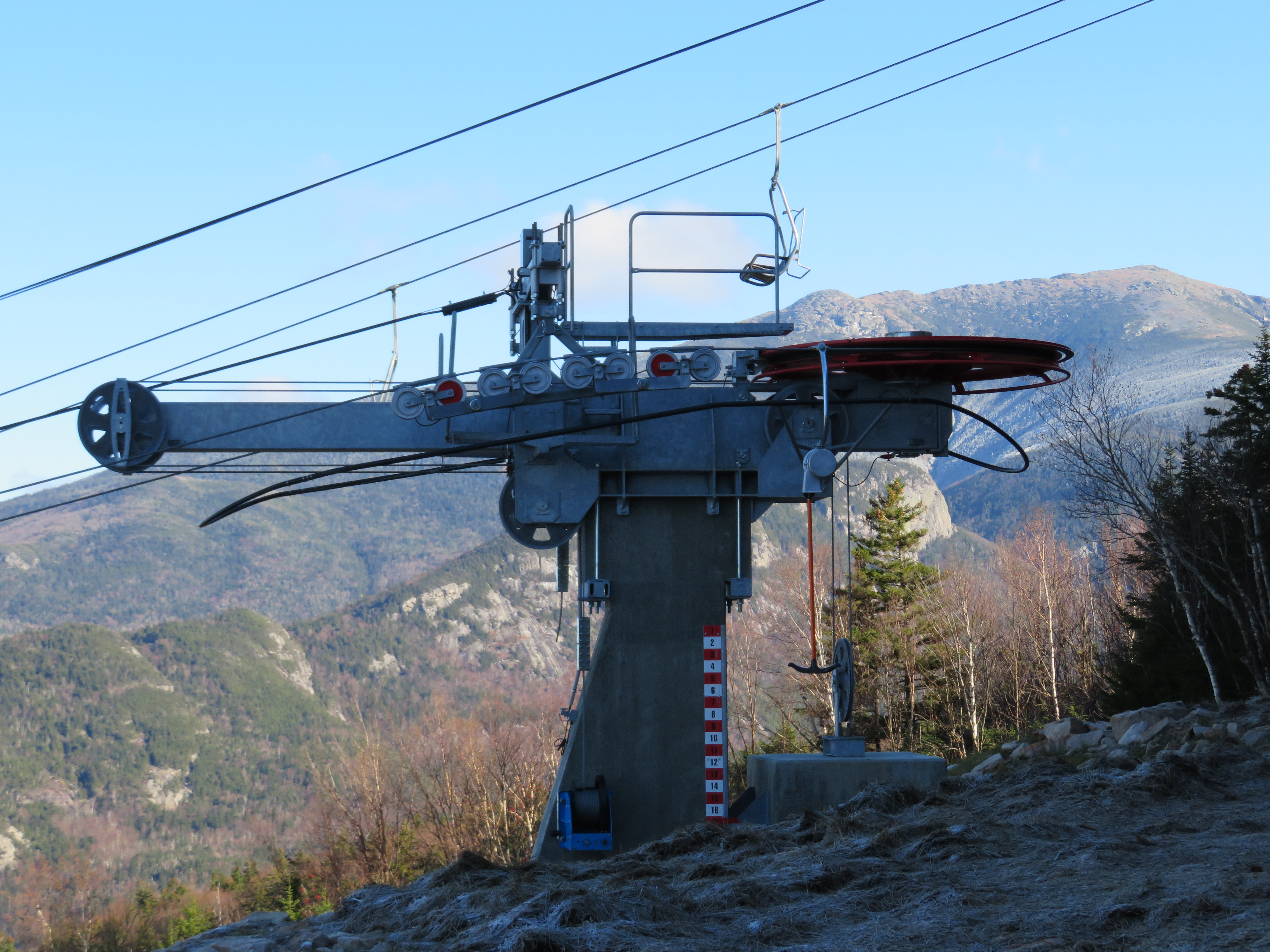
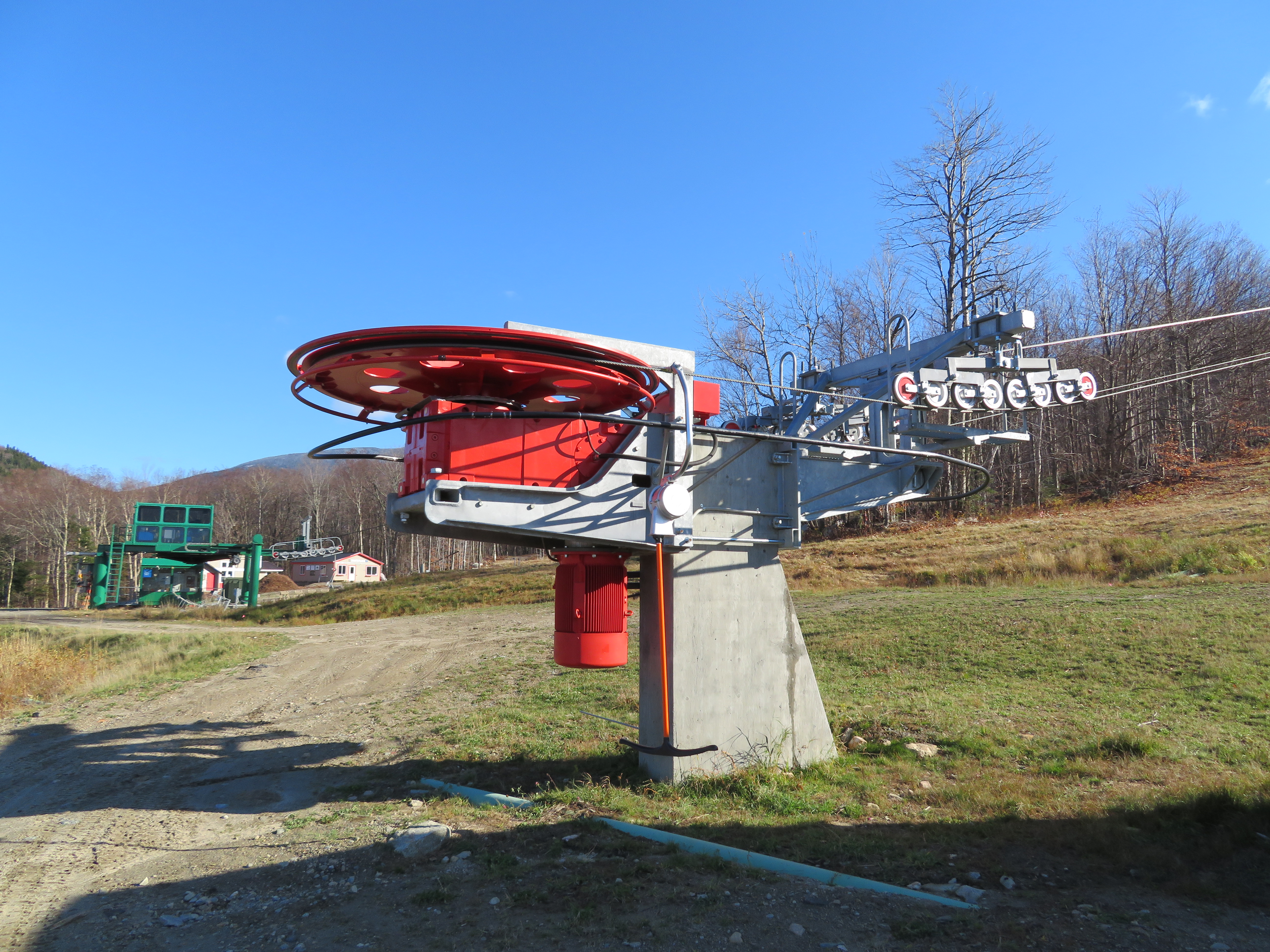
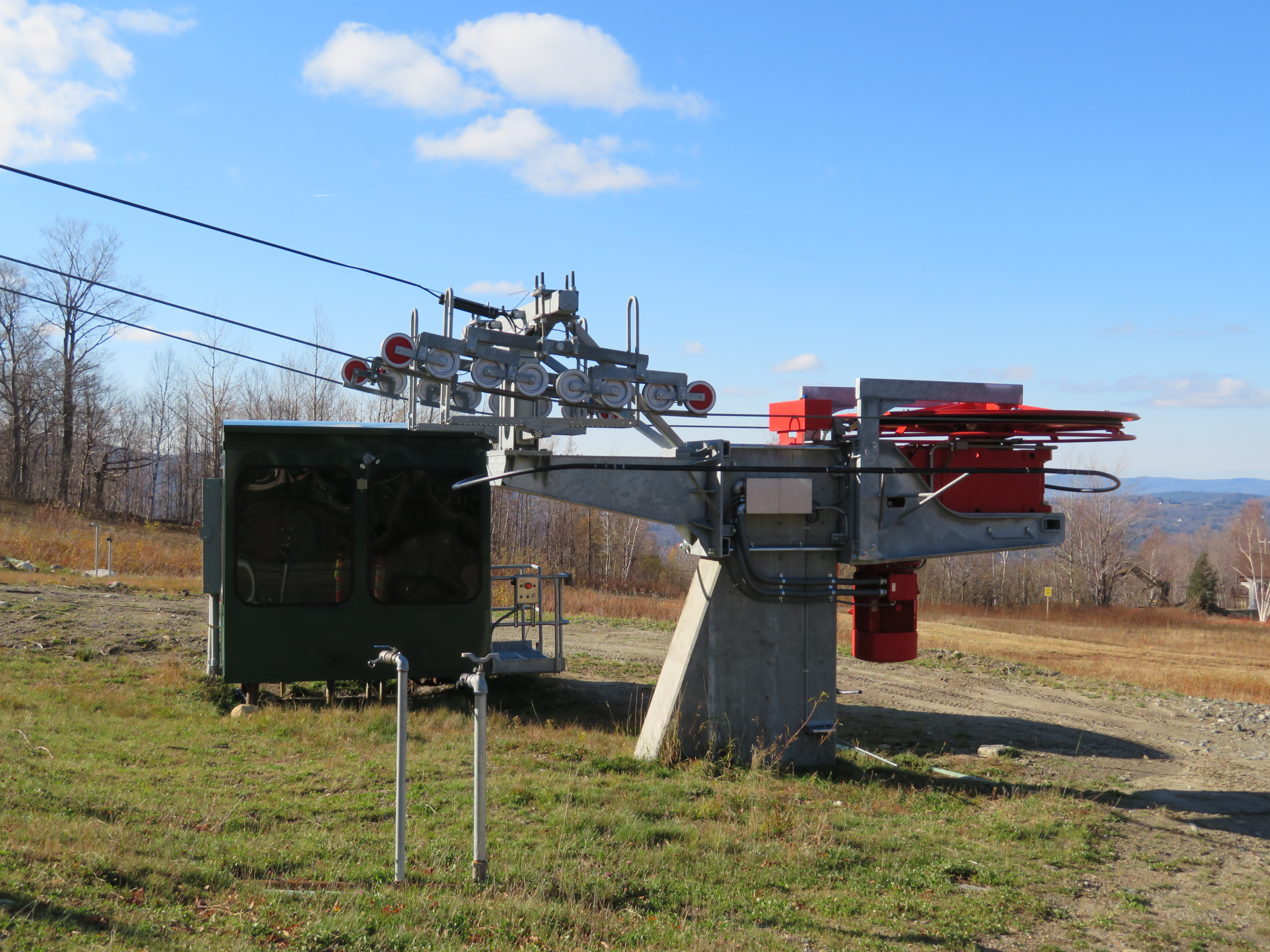
This T-Bar was built as a one-off joint venture between Skytrac of Salt Lake City and LST Ropeways of France.The relatively steep lift line includes seven towers.Skytrac operator house and controls with LST lift components.The founder of LST had roots with Doppelmayr and it shows.Tower 1 and LST carriers.View down at T3.Tower 6.Unloading area and operator house at tower 7.Lift line.The top terminal has an integrated counterweight.Top bullwheel.Lower half of the line.Top station side view.Another look at the lift line.Bottom station with drive motor next to the Mittersil double.Lower station overview.
I generally identify lifts with the manufacturer name at the time of construction. So a lift built in 2005 by Doppelmayr CTEC is listed that way, even though the CTEC was later dropped from the company name.
Probably so they didn’t have to have power run to the top terminal. Maybe LST didn’t have an integrated drive/tension terminal option when this was built. No idea on that though.
Because sometimes a big dumb rock is better than a complicated system (although the rope reeving here is more involved than most counterweighted lifts).
Most of the time it’s because a hydraulic system is more compact. You don’t need room for a large concrete block (although Yan definitely took that as a challenge). Counterweighted lifts can be more dynamic, resulting in line bounce and that jigback motion that the public thinks is rollback (although that occurs on hydraulically tensioned lifts as well).
Also, if I want to bleed my carriage forward I close two valves, open a third, and run it to where I need it. If I had a counterweight I’d need a large vehicle like a snowcat or front-end loader and some rigging.



 Lift Blog
Why aren’t there more LST lifts in the us? Shipping from Europe? Cost?
LikeLike
This lift is still listed as LST on the Cannon Mountain page.
LikeLike
I generally identify lifts with the manufacturer name at the time of construction. So a lift built in 2005 by Doppelmayr CTEC is listed that way, even though the CTEC was later dropped from the company name.
LikeLike
That makes sense. I saw that you had listed little ski hill’s T-bar as MND, but not this one.
LikeLike
LST became MND Ropeways while that lift was still under construction.
LikeLike
Why does this have a counterweight!?
LikeLike
A procurement worker probably confused LSD, for LST
LikeLiked by 1 person
Probably so they didn’t have to have power run to the top terminal. Maybe LST didn’t have an integrated drive/tension terminal option when this was built. No idea on that though.
LikeLike
Because sometimes a big dumb rock is better than a complicated system (although the rope reeving here is more involved than most counterweighted lifts).
LikeLike
Gravity never malfunctions
LikeLiked by 2 people
That makes sense.But it does make me wonder why counterweights aren’t more common.
LikeLike
Most of the time it’s because a hydraulic system is more compact. You don’t need room for a large concrete block (although Yan definitely took that as a challenge). Counterweighted lifts can be more dynamic, resulting in line bounce and that jigback motion that the public thinks is rollback (although that occurs on hydraulically tensioned lifts as well).
LikeLiked by 2 people
Also, if I want to bleed my carriage forward I close two valves, open a third, and run it to where I need it. If I had a counterweight I’d need a large vehicle like a snowcat or front-end loader and some rigging.
LikeLiked by 1 person