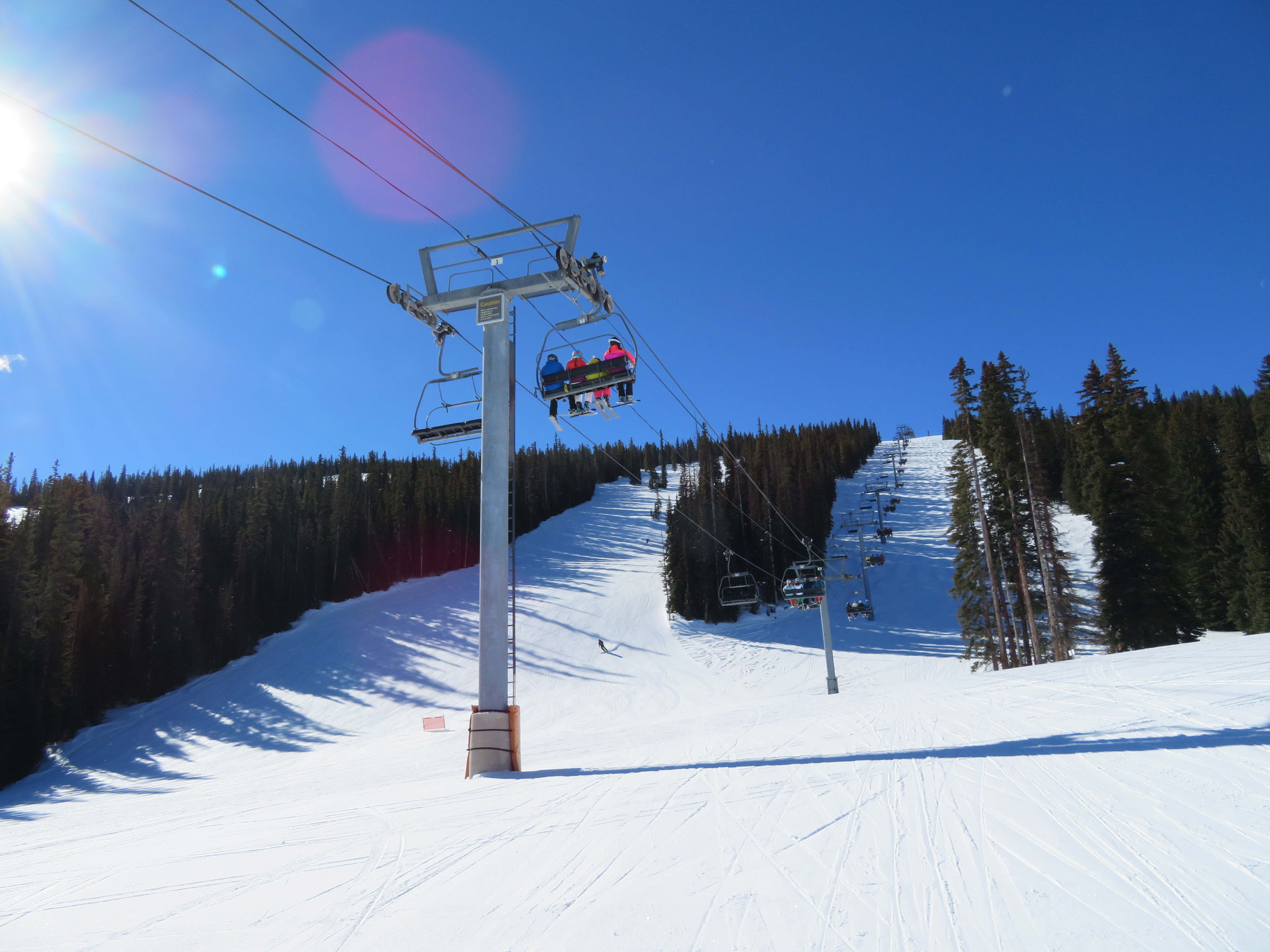
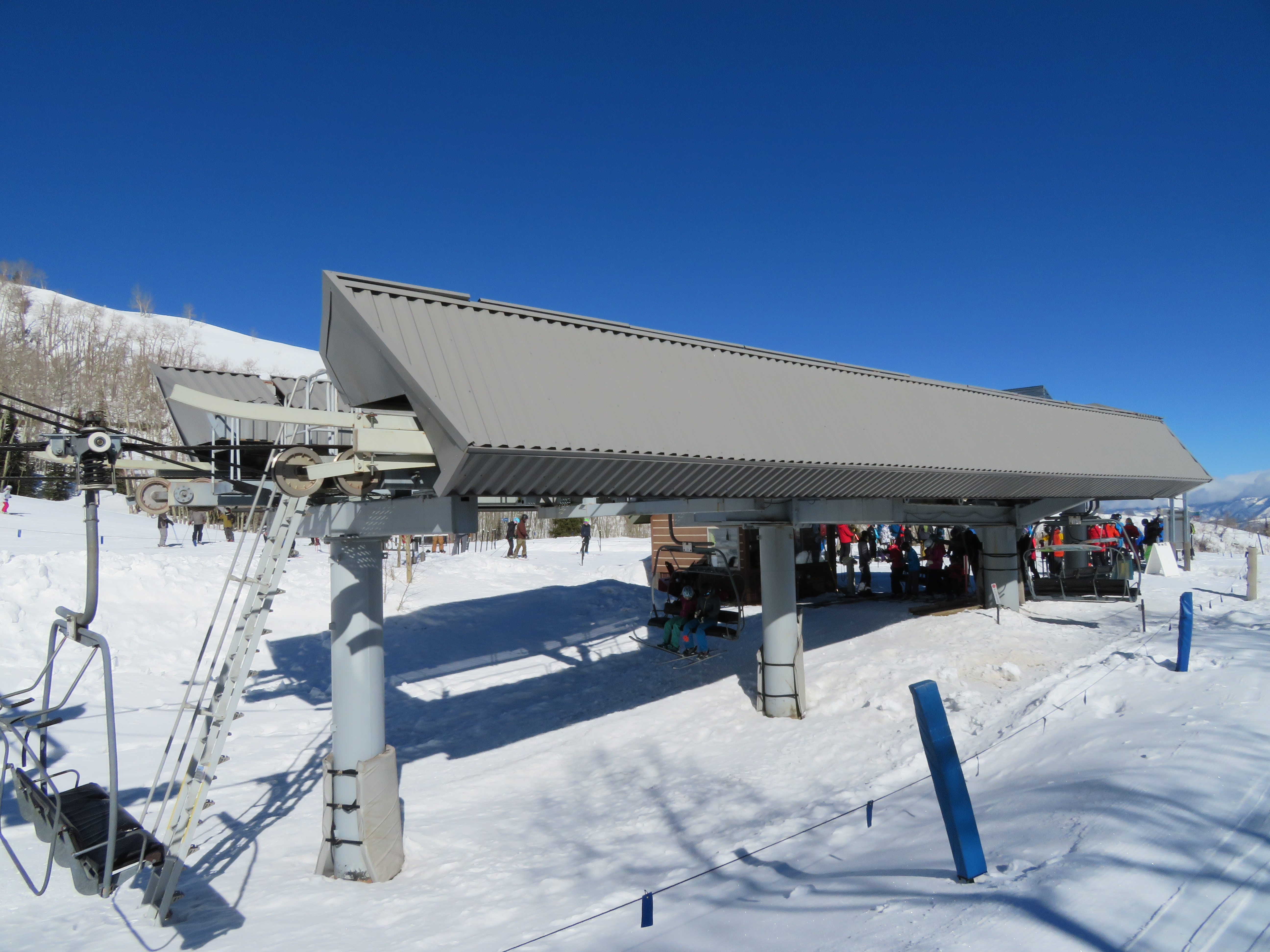
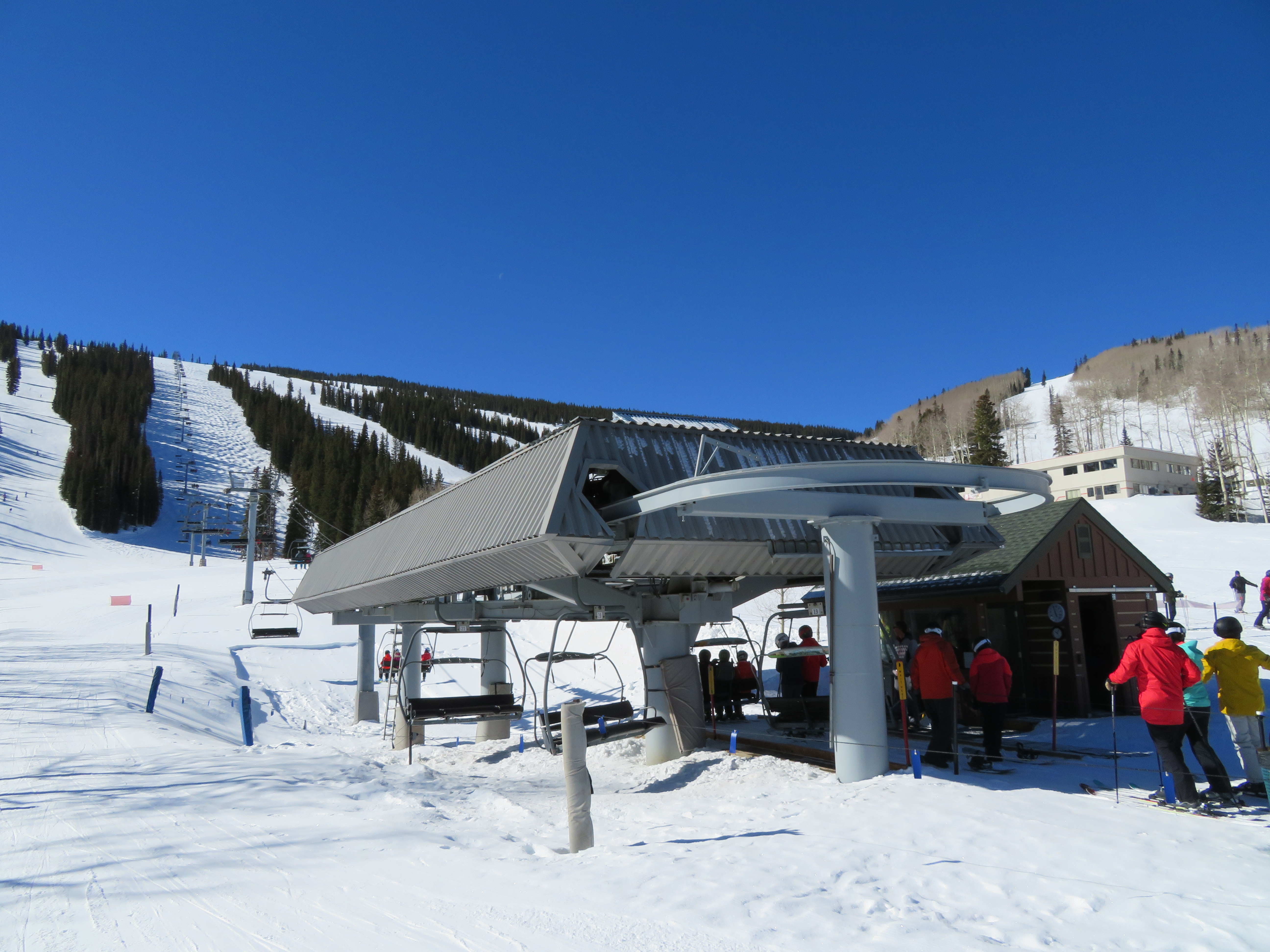
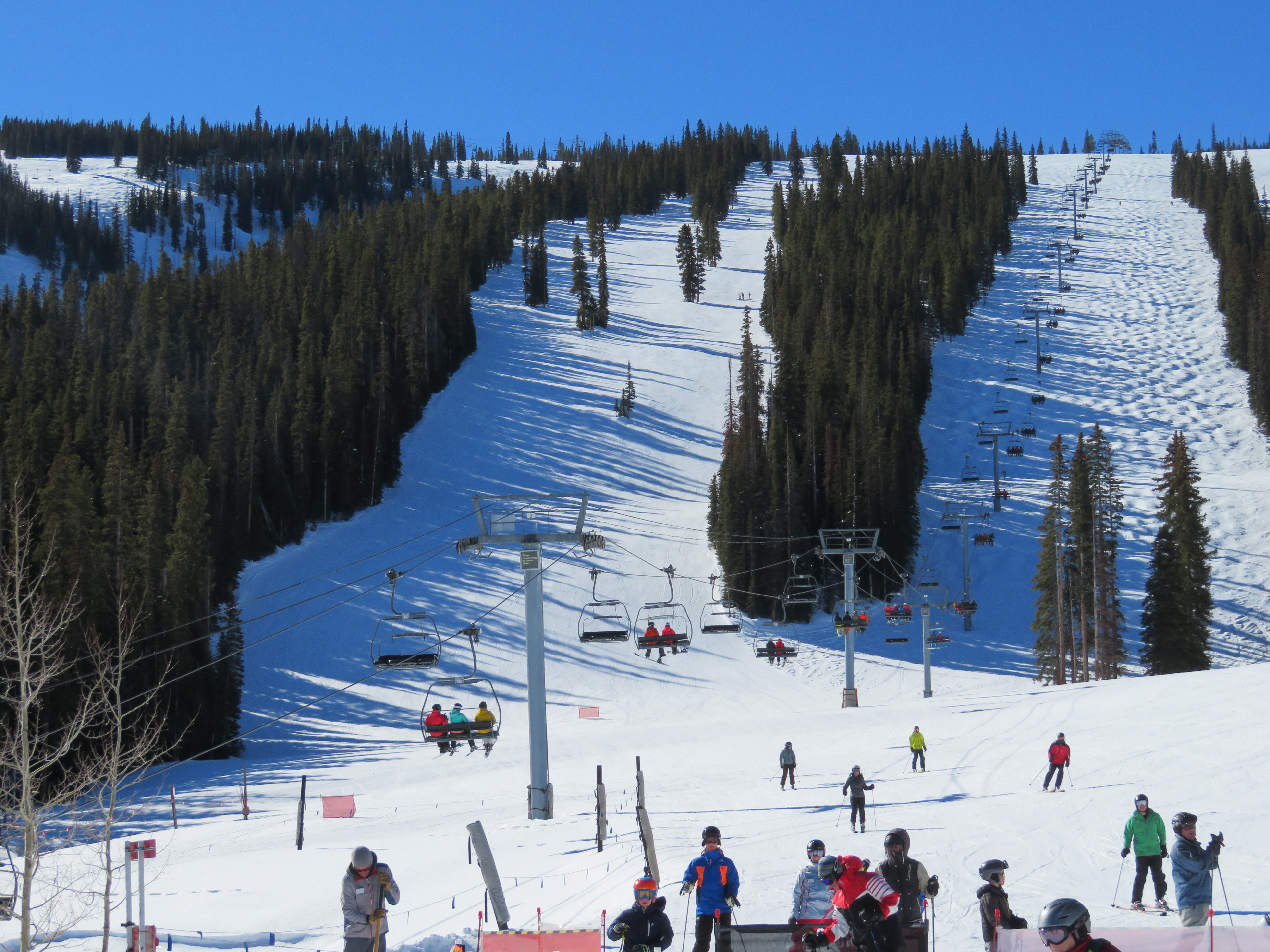
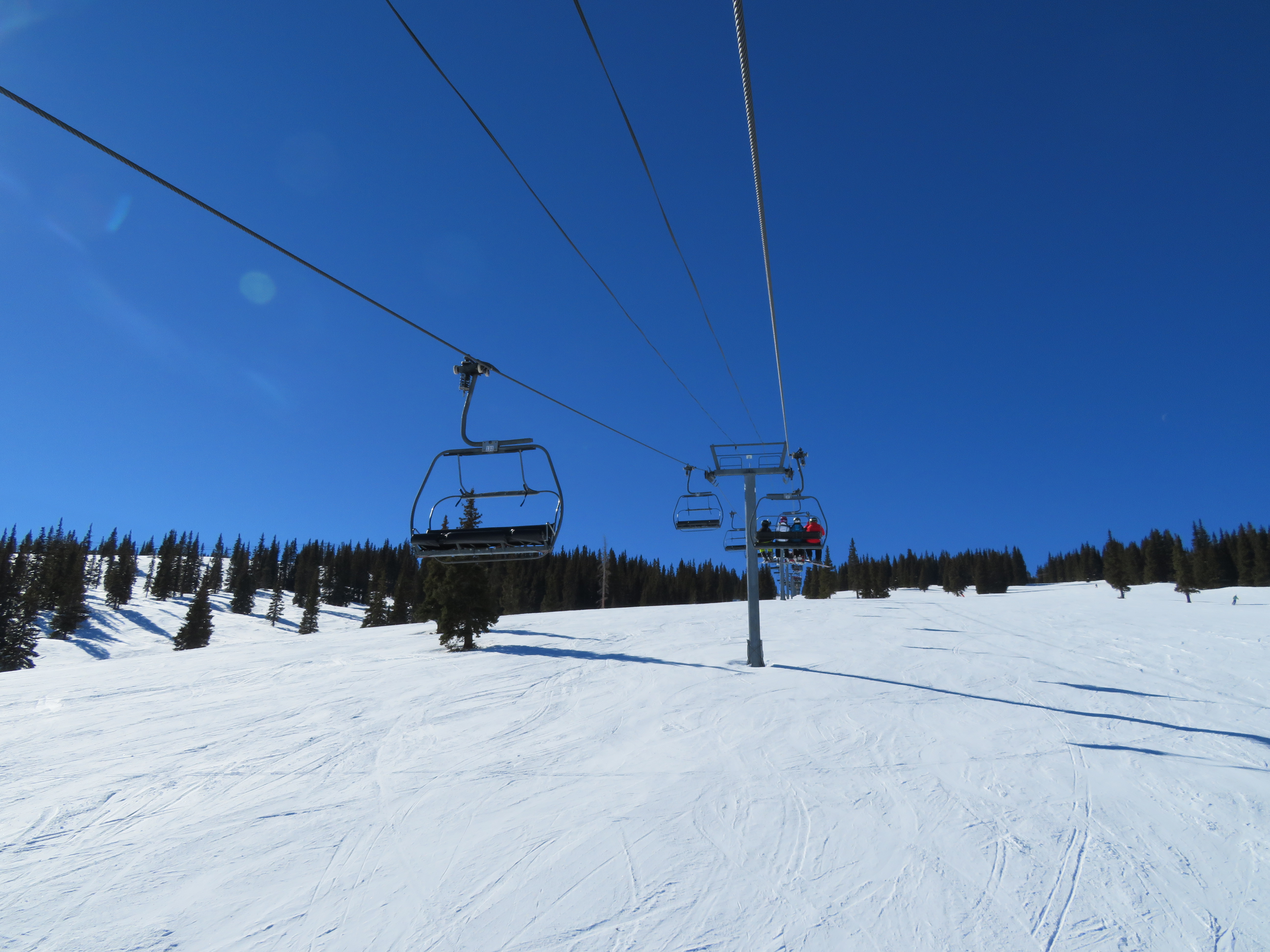
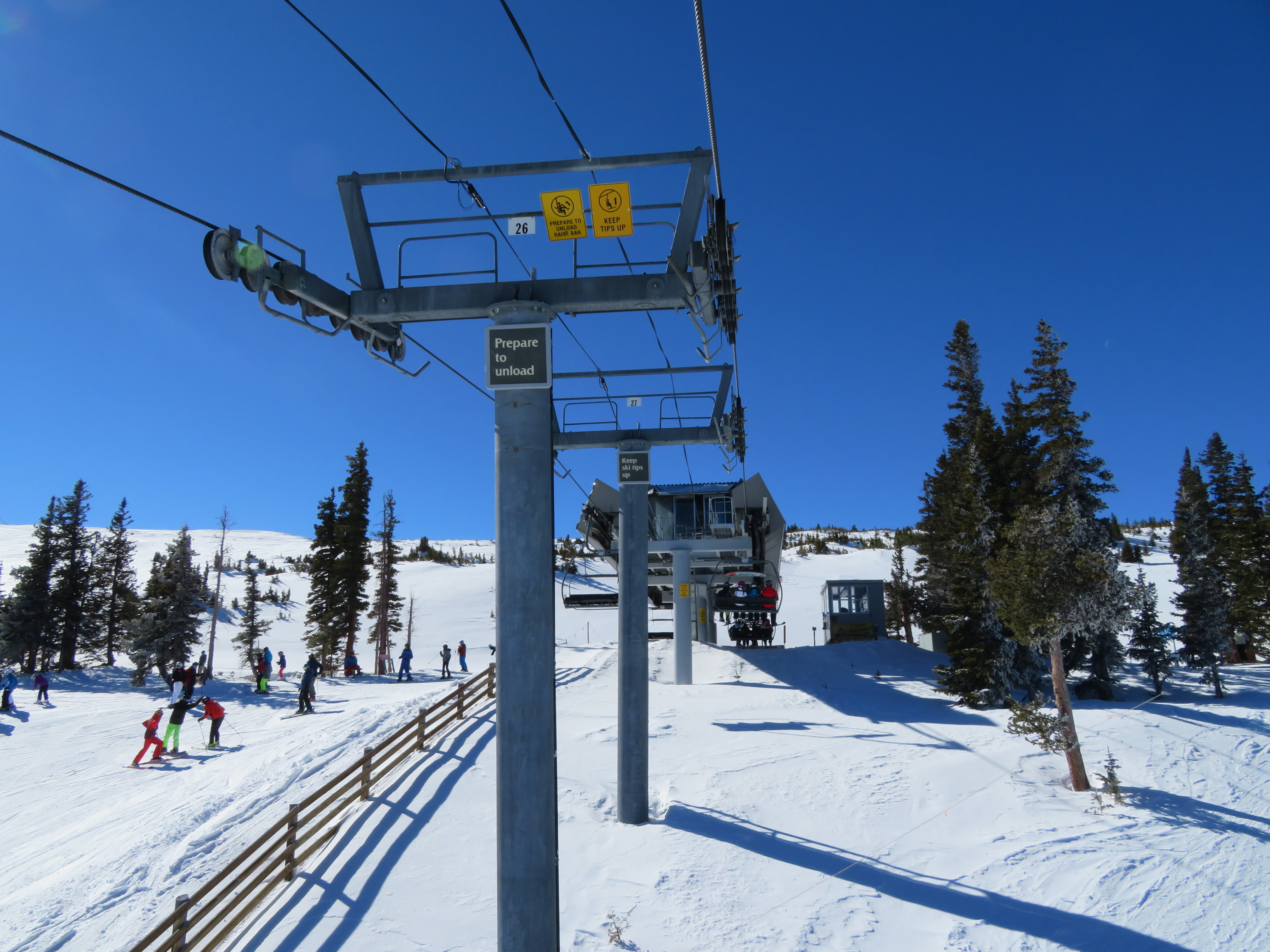
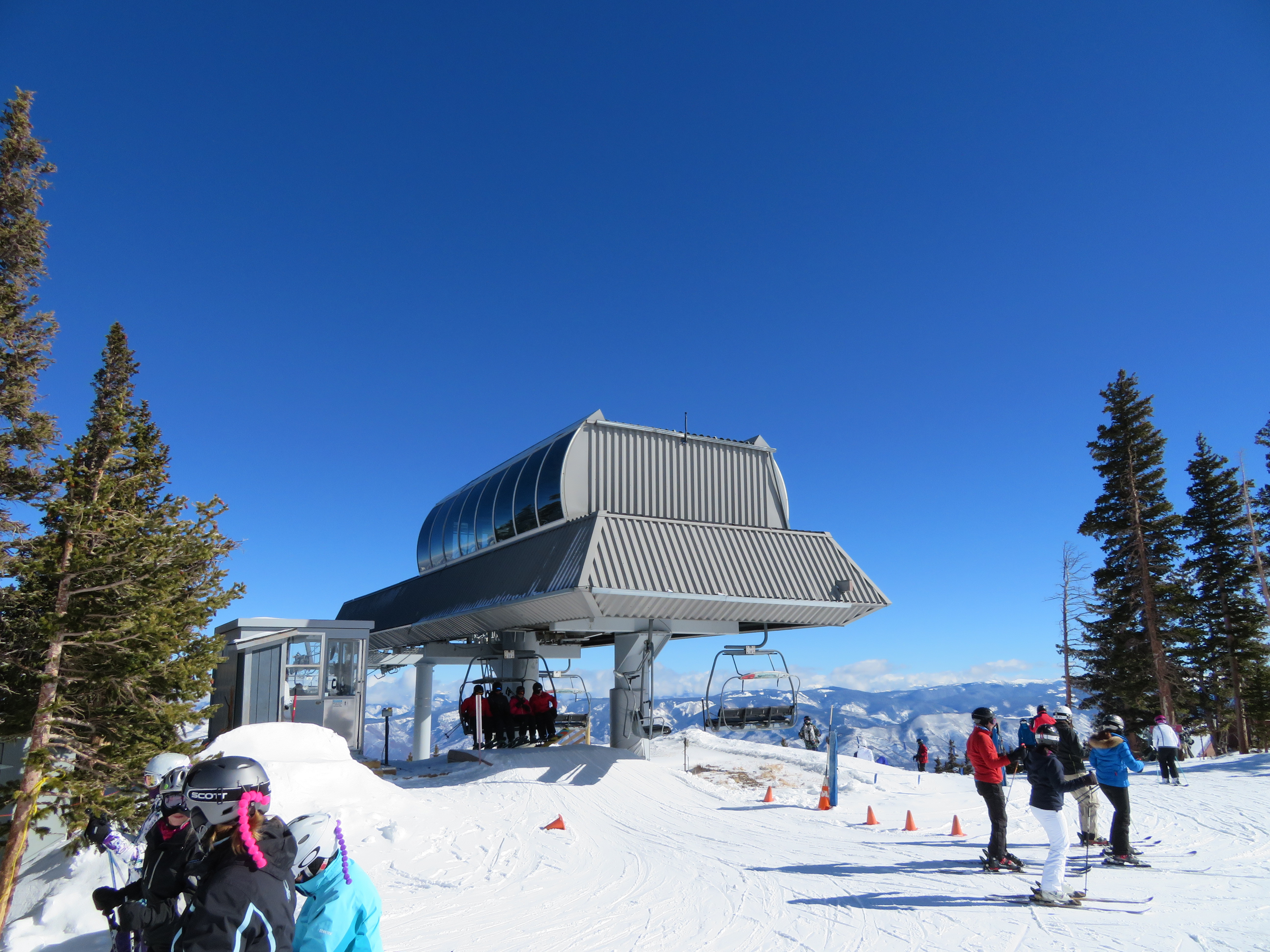
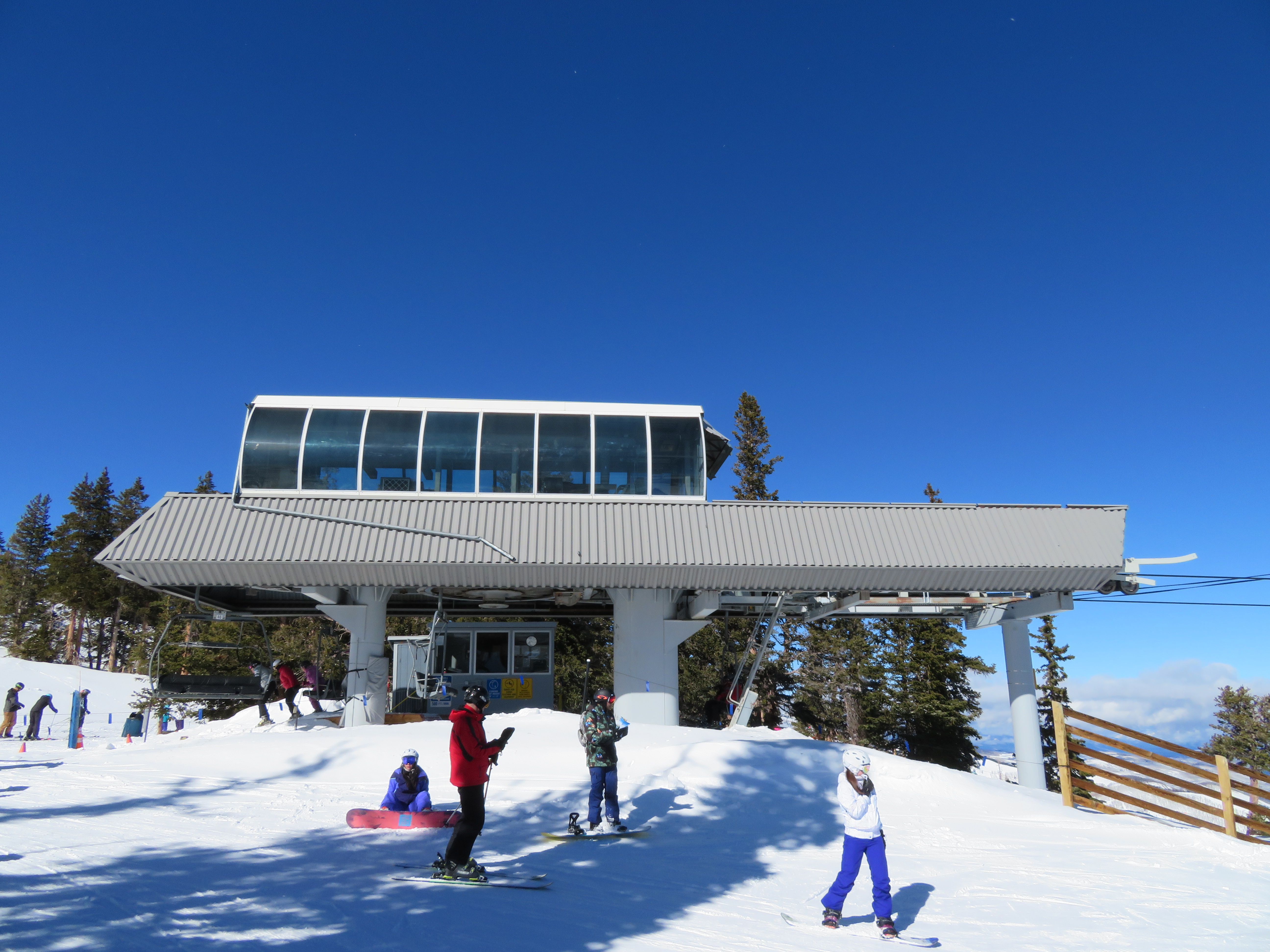
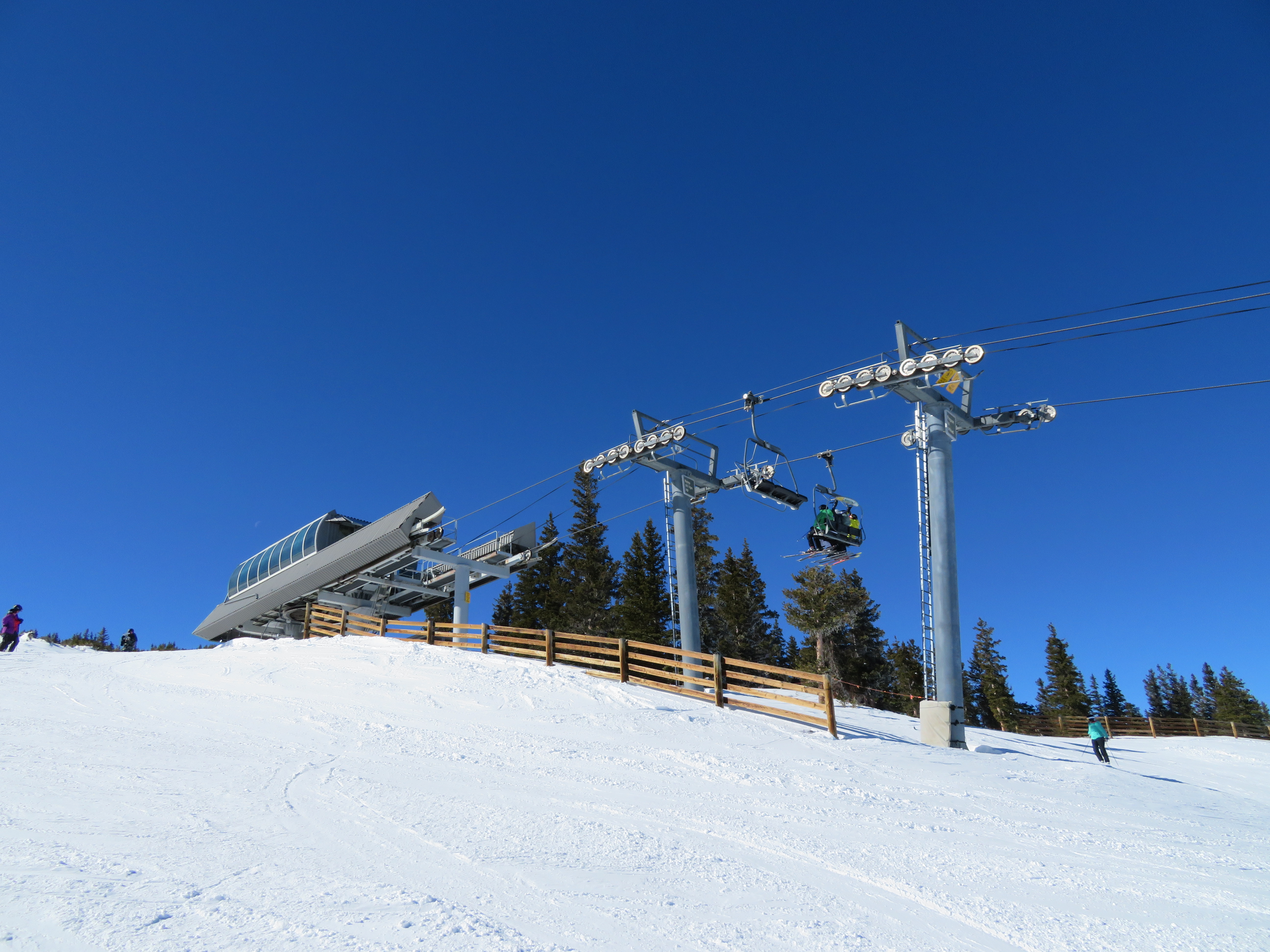
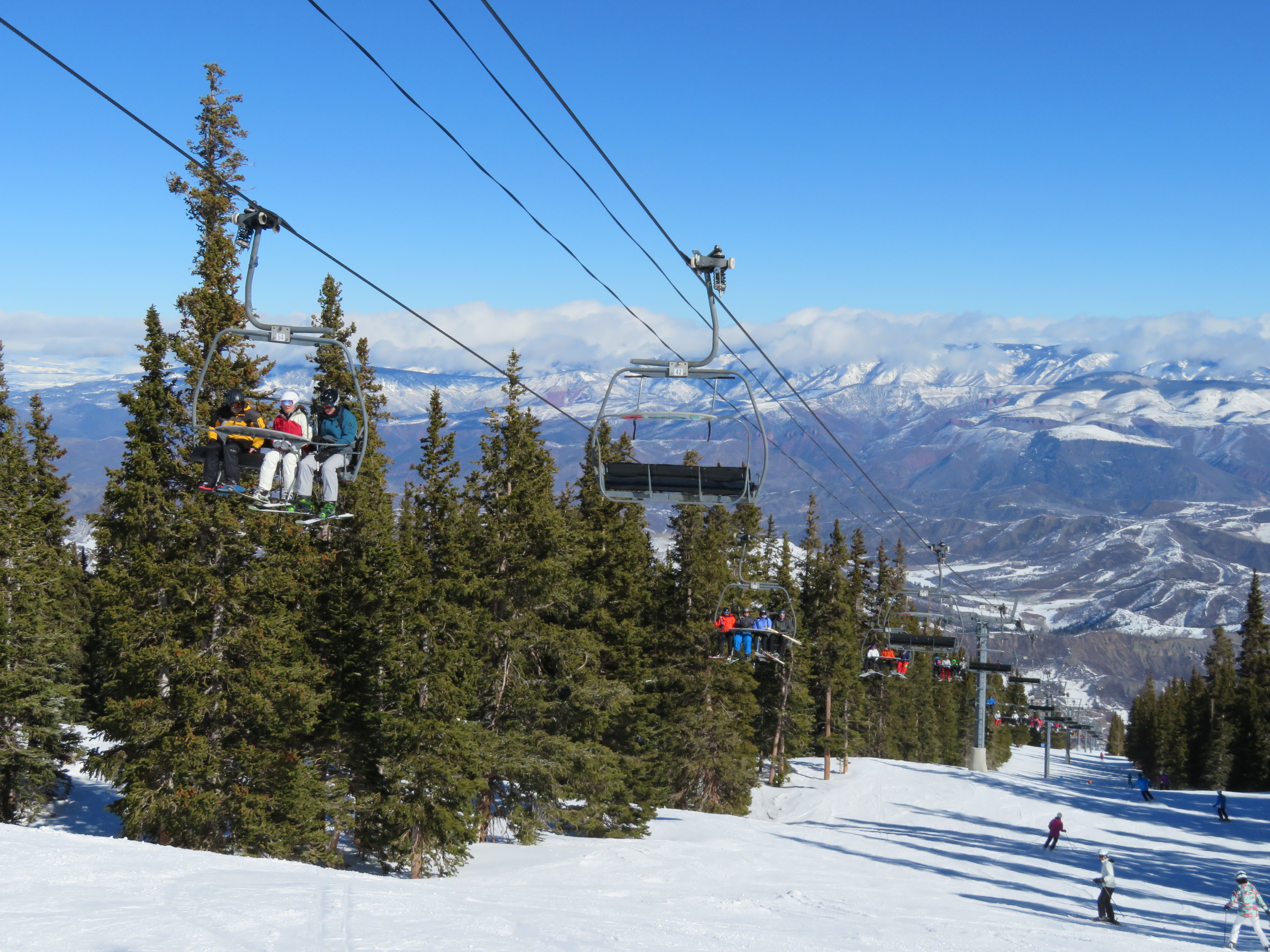
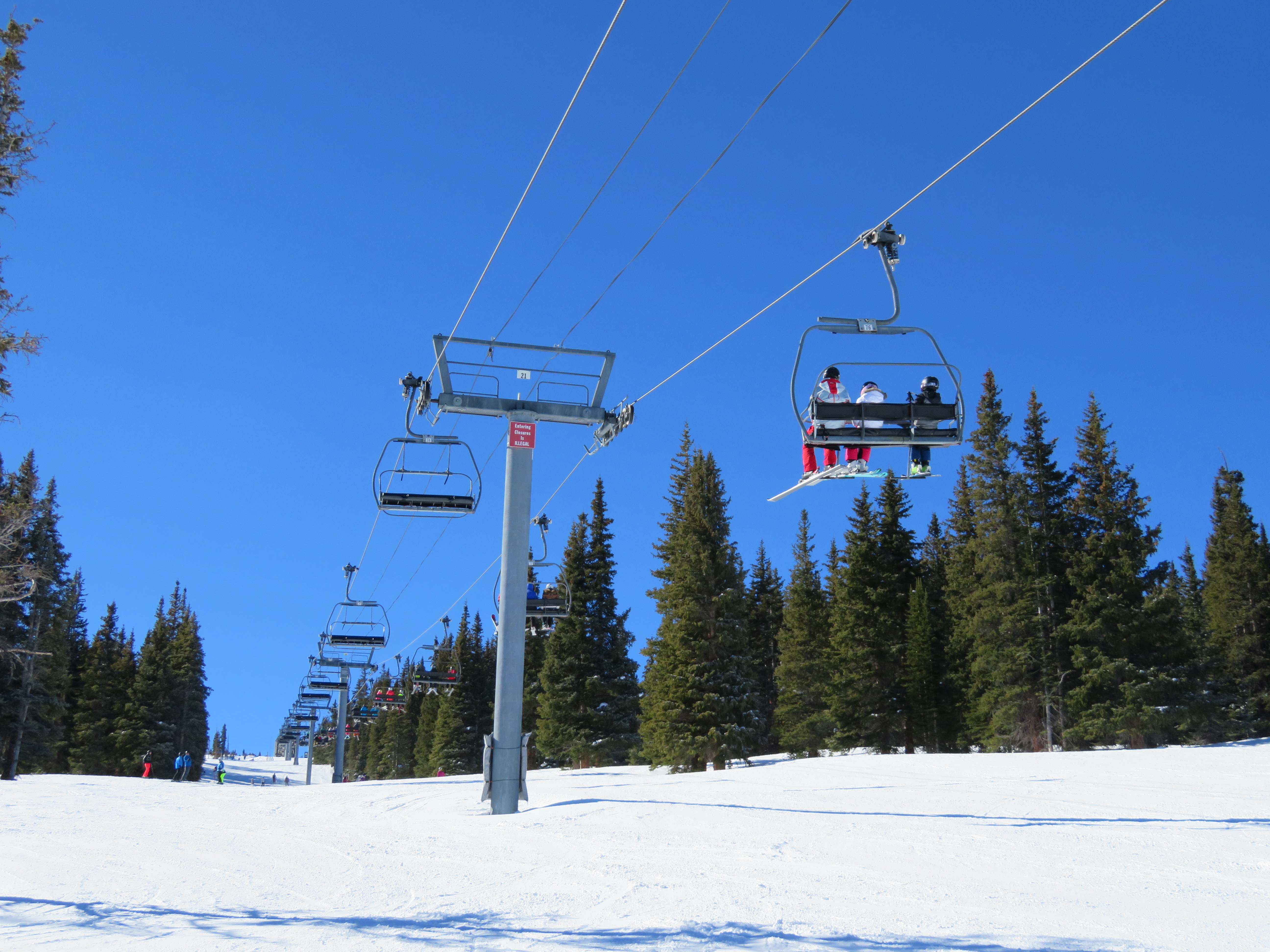
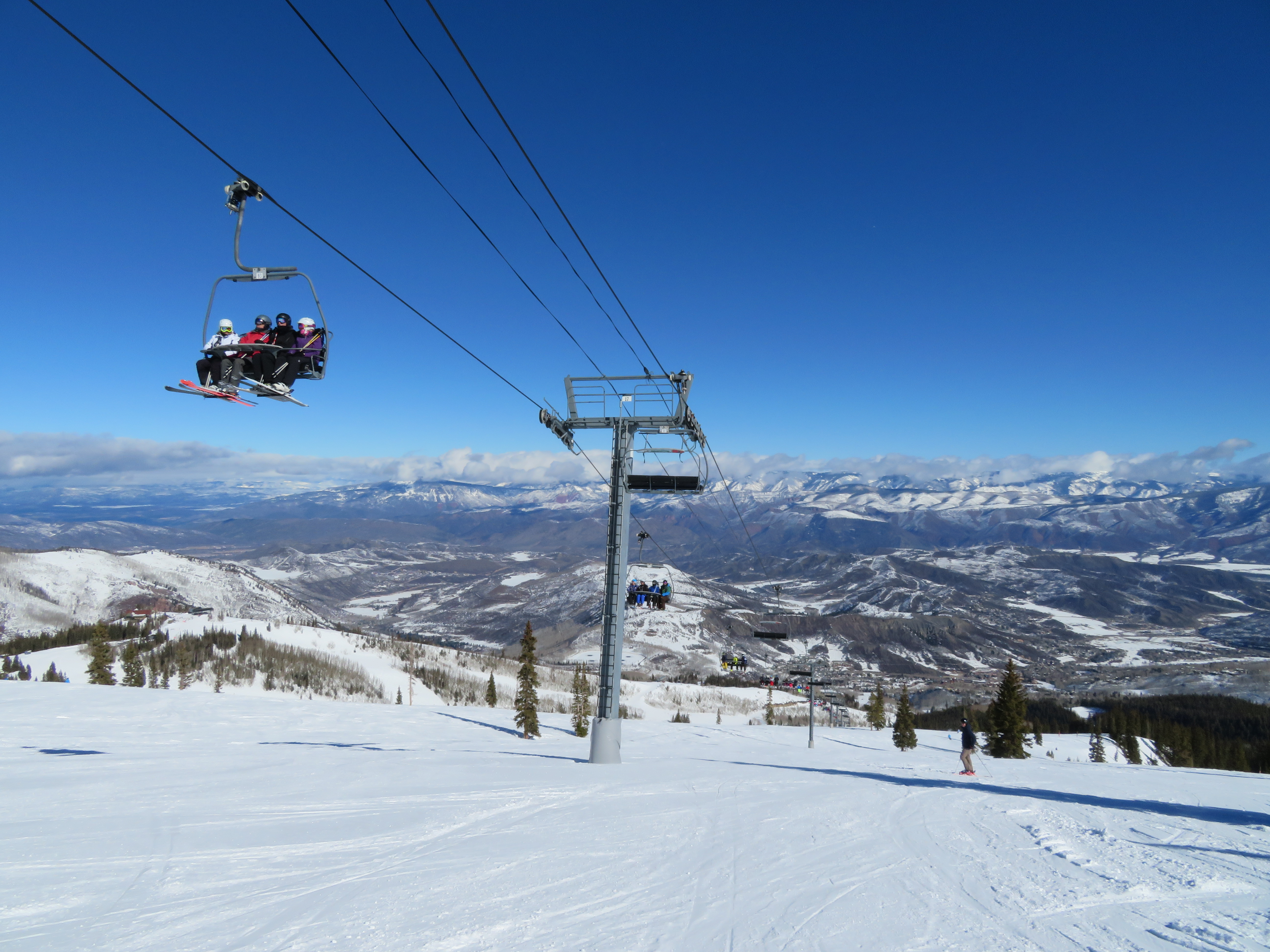
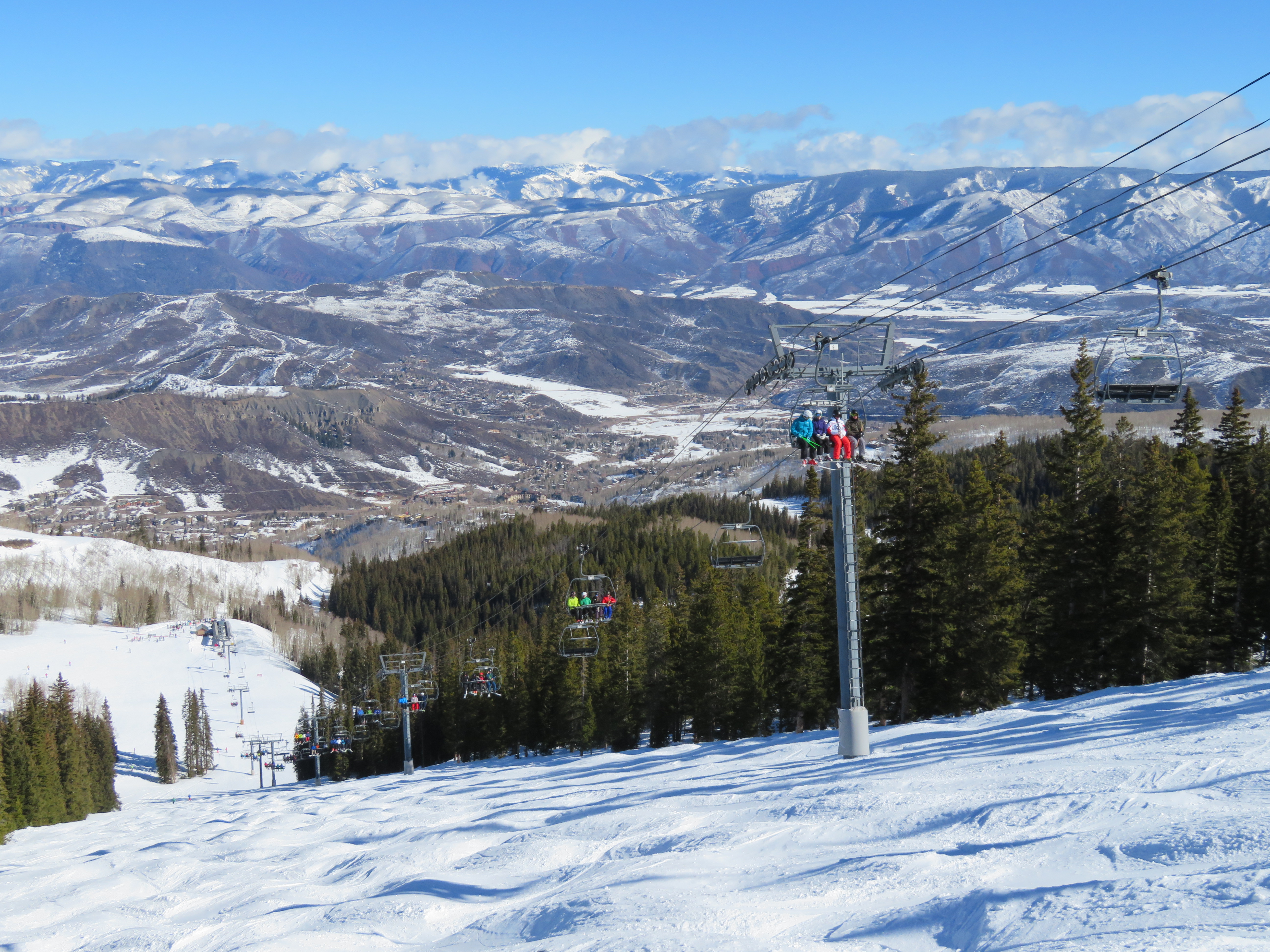
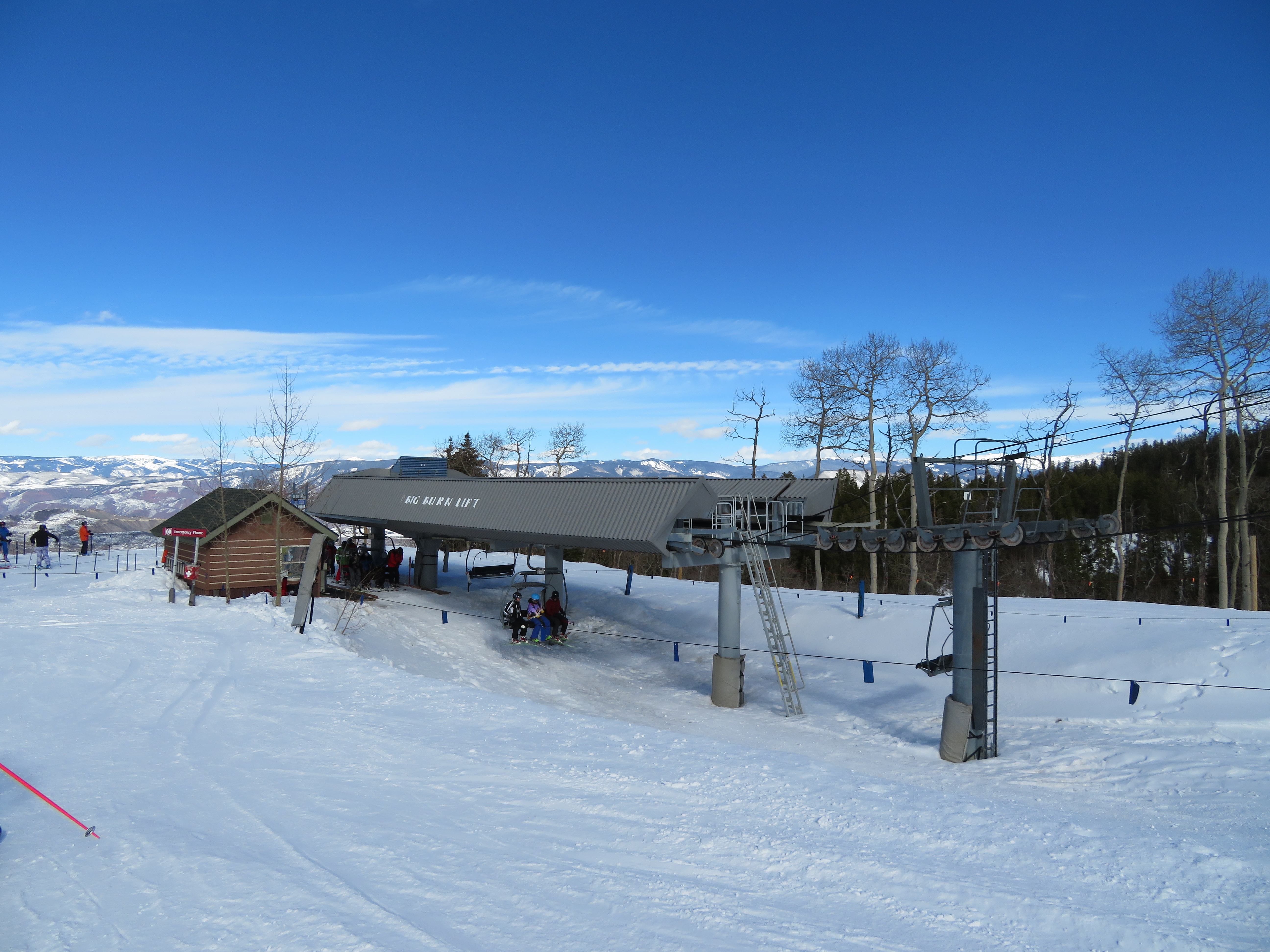
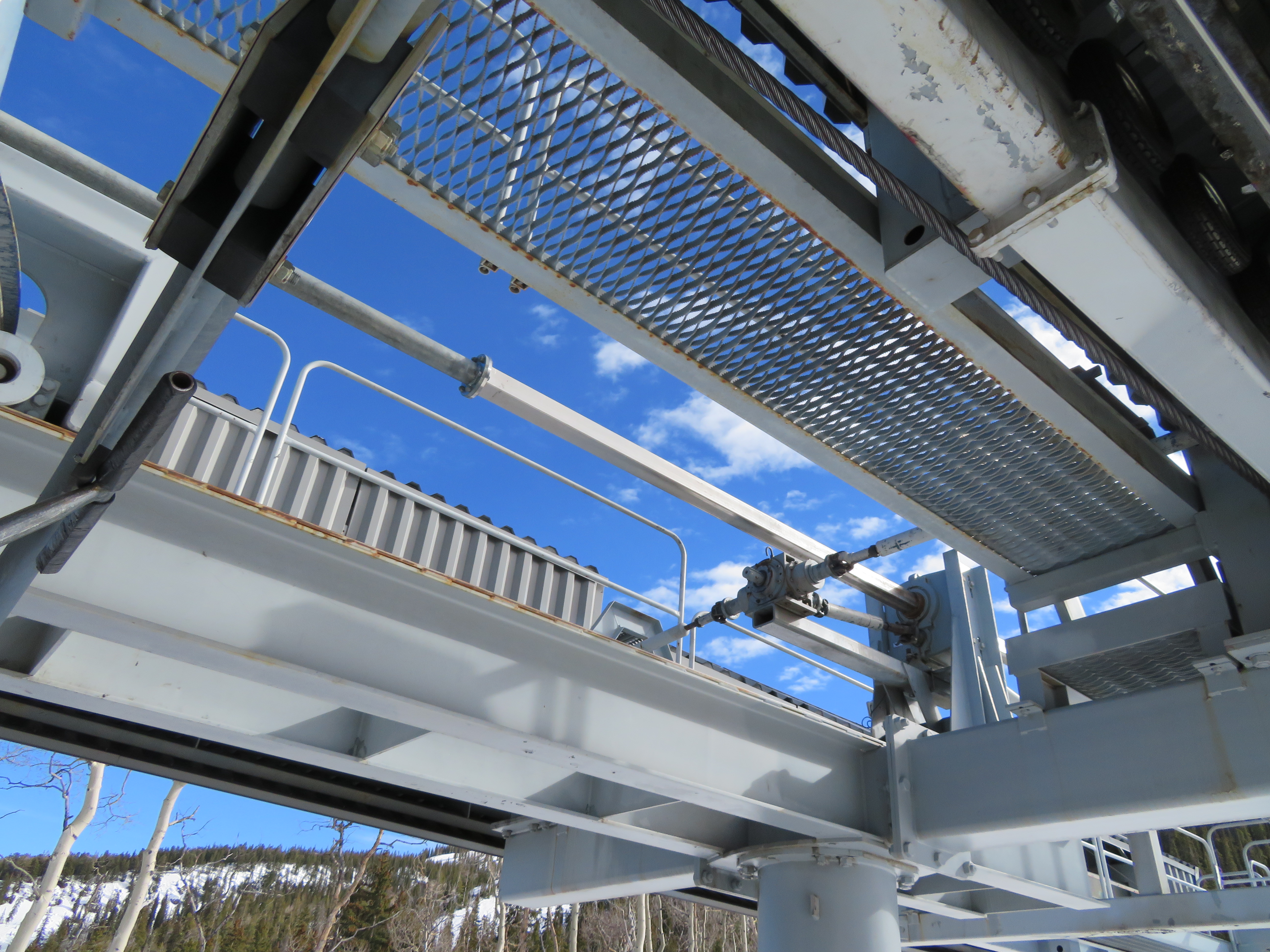
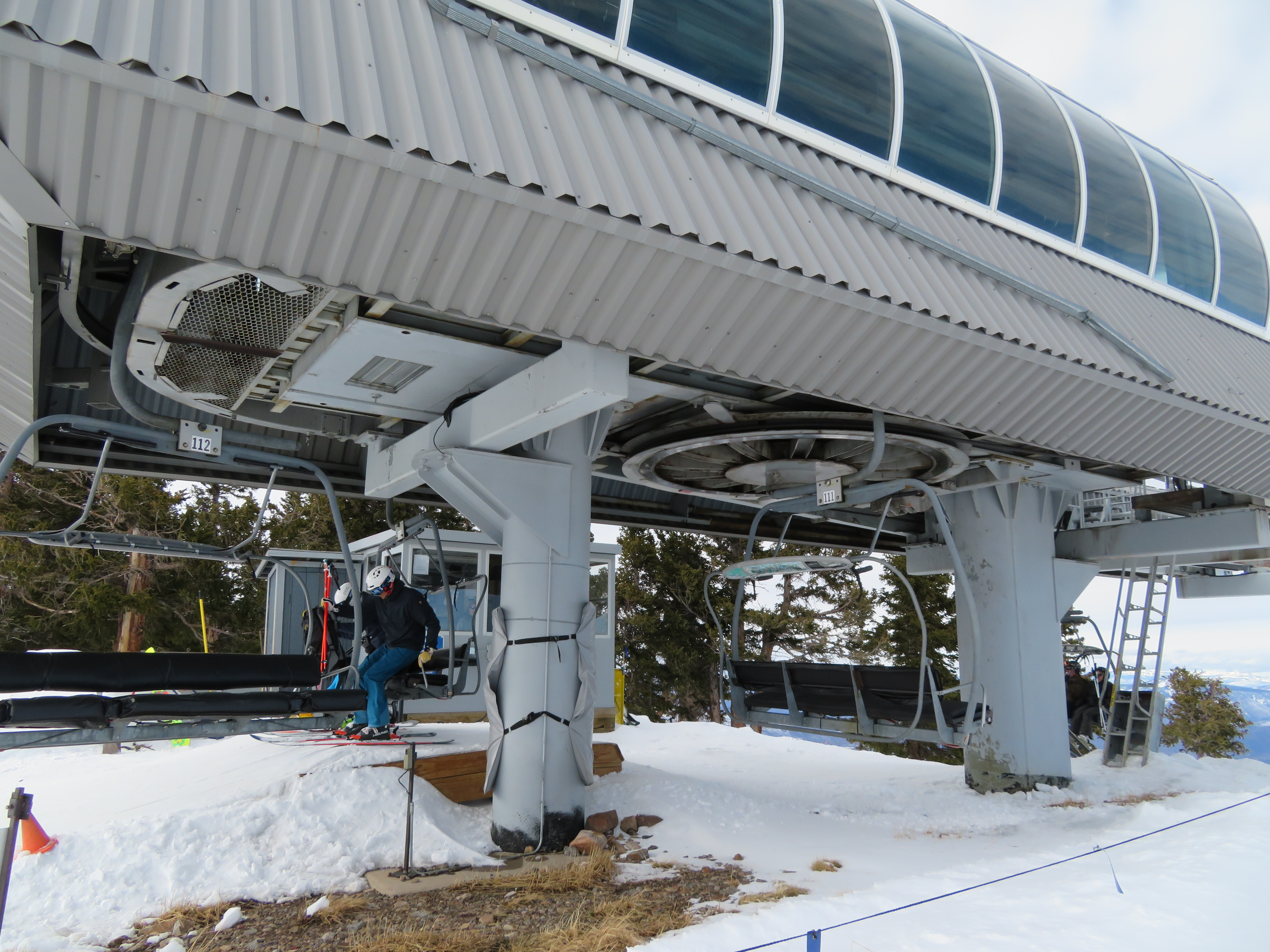
View up the line from the base.Both terminals are completely unique in North America.Poma “pancake” style return.Lift line overview.Riding up the line.The breakover, towers 26-27.Overhead Alpha-style drive.This was one of the first overhead detachable drives built in North America.Top station from below.View down the lift line.Looking up towards the top.This lift has very consistent pitch along its entire length.Lower lift line.Bottom station from above.Contours are driven by shafts rather than PTO belts.Drive bullwheel and turnaround.
The terminal design looks like a prototype from when Poma was developing a replacement for the Alpha-Falcon. This is the first Poma detachable to have an overhead drive in North America. Everything else from 1987 and earlier has either a vault-drive or a separate Alpha drive. Eventually they settled on the 1988 style terminal with the full glass siding.
The detach mechanism from this era was called Performance, not Falcon. My prints from the old Flyer, if they referred to a model name at all besides ‘telesiege debrayable’, called it the Performant in French.
I think it was sold as “Falcon” in North America, same with the chairs which the official name was Arceaux in Europe. That’s what the Skilifts.org lift identification page calls them both.
Not sold as Falcon. I’m not sure where this came from, but someone back in the early days of skilifts.org referred to it that way (probably thinking of F-chair at Breck) and it erroneously stuck.
Max Hart, true, it’s not the same. I know POMA used many “Alpha Evolution” terminals in their European market. Big Burn is a truly unique lift, as it utilizes an Alpha Evolution return terminal (same design used in Europe), but has an overhead Alpha drive. POMA used overhead Alpha drives on some of there later model lifts, but none with the Alpha Evolution return terminals.
Peter is correct. Technically, this lift as well as all Pomas and Doppelmayrs of this era had ‘bullwheel PTO systems’, meaning the power to drive the tires and conveyor chains was taken off the bullwheel. In the early 90s lifts began to be engineered to have the power be taken off the terminal sheaves, which conveniently enough are right near the tire banks anyway. Belts were routed from pulleys on those sheaves to pulleys on the tire axles, and off they went.
There were a few exceptions to the bullwheel system, and as far as I know they were all on Pomas. Big Burn, as well as the unnamed 1988 terminals and the ’90 and ’91 full-sized Competition machines had their drive terminal PTO come from the high-speed (electric motor) shaft, but it still drove the tires and chains through a series of gearboxes and drivelines. Alpha Evolutif drive terminals had a version of a terminal sheave PTO setup as well, except the sheave still drove a driveline.
Peter took some pretty good photos of the Alpha Evolutif on the Coney Glade. Pictures 6 & 7 show the synchronous electric motor that runs the tire banks, the sheave PTO setup was backup in these mechanisms.
Now you mention it, I do recall seeing something in my manual about a synchro motor. I thought it had something to do with the conveyor system but since I didn’t have one I didn’t know for sure. I thought the PTO sheave/universal shaft *was* the primary drive. You learn something new all the time :)
By the way, My mom remembers when I was 4, that she would always have to save the pampers boxes so I could build a ski lift across the living room. My younger bro was 1 at the time, so he still wore diapers. I remember going to Silver fir at Snoqualmie when I was 8 ( Silver fir was the first detachable I ever rode), & my dad telling me that the grips come off the cable at each station. From that point on, my obsession for ropeways took off & by 4th grade, I knew about the drive system, APUs, detachable grips & how they worked, ( my main objective for my research was to find out how detachable lifts work, I didn’t know I would be sucked into the world of ropeways, 🚡) then I found liftblog & my grandparents sente an article saying that Peter ran the site. ( I didn’t know at the time) & Now I’m dreaming about running my own ropeway company & working+living at big sky!
I don’t have it. When we removed the lift we tossed all the documentation we weren’t required to keep, which basically meant we kept the maintenance records and nothing else. I should have kept it; we always have two copies of lift manuals, one in the shop and one at the lift, but I didn’t set it aside in time.
After doing some looking and research, I think that this, competition prototype (1988), and first gen competition(1989)(American eagle (t)/Squaw One) and the high speed quads at mt Ste Mary (which were built in 1989 and have compact/pancake competition terminals that have the tops removed) are mechanically similar except this has a falcon return terminal that was found on American Flyer(t),Colorado super chairs(t) and gondolas of that era. I think that judging by terminal masts and other visible clues.

 Lift Blog
The terminal design looks like a prototype from when Poma was developing a replacement for the Alpha-Falcon. This is the first Poma detachable to have an overhead drive in North America. Everything else from 1987 and earlier has either a vault-drive or a separate Alpha drive. Eventually they settled on the 1988 style terminal with the full glass siding.
LikeLiked by 1 person
The one that only had three built?
LikeLiked by 1 person
Yes. White Peaks at Waterville, Angel and Sunshine Village, and Rainier at Crystal Mtn. Replaced with the Competition terminal the next year.
LikeLike
I believe it was called the Challenge terminal.
LikeLike
Edit: My other reply was referring to the 1988 terminal, not the Competition.
LikeLike
The 1988 terminal did not have a name. The Challengers first appeared in 1990 and were last built in 1998.
LikeLike
Do you guys think that “Integrated Falcon” would be a good name to call this terminal?
LikeLiked by 1 person
Reasonable.
LikeLike
The detach mechanism from this era was called Performance, not Falcon. My prints from the old Flyer, if they referred to a model name at all besides ‘telesiege debrayable’, called it the Performant in French.
LikeLiked by 1 person
I think it was sold as “Falcon” in North America, same with the chairs which the official name was Arceaux in Europe. That’s what the Skilifts.org lift identification page calls them both.
LikeLiked by 1 person
Not sold as Falcon. I’m not sure where this came from, but someone back in the early days of skilifts.org referred to it that way (probably thinking of F-chair at Breck) and it erroneously stuck.
LikeLike
Do you know if there are any pictures of the lifts with the separate alpha drive?
LikeLike
https://liftblog.com/liberator-express-mission-ridge-wa/
https://liftblog.com/falcon-superchair-breckenridge-co/
LikeLike
Also Coney Glade at snowmass:
https://liftblog.com/coney-glade-snowmass-co/
LikeLike
Does anyone know when Snowmass plans to upgrade/replace Big Burn and Coney Glade? Both of those lifts are getting very old.
LikeLike
Probably not for a while.
LikeLike
Is it just me or does there seem to be less tension on this lift?
LikeLike
“Both terminals are completely unique in North America.”
No, I believe this terminal was used on a few European detachables, this one for example:
https://www.remontees-mecaniques.net/bdd/reportage-tsd4-de-beauregard-poma-4158.html
LikeLike
That’s just an Alpha Evolution, which is not the same as Big Burn.
LikeLike
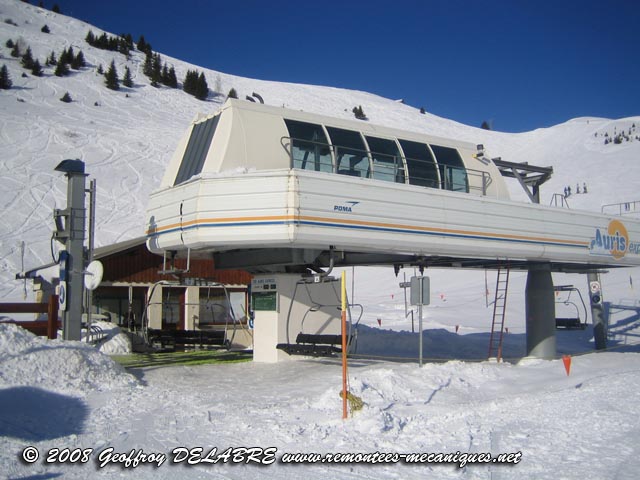
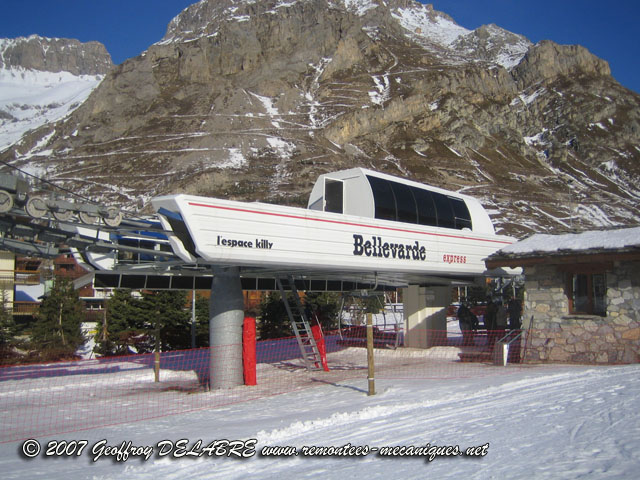
Max Hart, true, it’s not the same. I know POMA used many “Alpha Evolution” terminals in their European market. Big Burn is a truly unique lift, as it utilizes an Alpha Evolution return terminal (same design used in Europe), but has an overhead Alpha drive. POMA used overhead Alpha drives on some of there later model lifts, but none with the Alpha Evolution return terminals.
Here’s a few examples:
LikeLike
That’s just the same model as Cony Glade, not Big Burn
LikeLike
But in North America, it was the only one.
LikeLike
R.I.P Burn lift.
LikeLike
I would only like for Peter or PBropetech to answer this question.
What does PTO stand for? I have theories, but I’m probably incorrect.
LikeLike
I’ve always heard Power Take Off.
LikeLiked by 1 person
Peter is correct. Technically, this lift as well as all Pomas and Doppelmayrs of this era had ‘bullwheel PTO systems’, meaning the power to drive the tires and conveyor chains was taken off the bullwheel. In the early 90s lifts began to be engineered to have the power be taken off the terminal sheaves, which conveniently enough are right near the tire banks anyway. Belts were routed from pulleys on those sheaves to pulleys on the tire axles, and off they went.
There were a few exceptions to the bullwheel system, and as far as I know they were all on Pomas. Big Burn, as well as the unnamed 1988 terminals and the ’90 and ’91 full-sized Competition machines had their drive terminal PTO come from the high-speed (electric motor) shaft, but it still drove the tires and chains through a series of gearboxes and drivelines. Alpha Evolutif drive terminals had a version of a terminal sheave PTO setup as well, except the sheave still drove a driveline.
LikeLike
Peter took some pretty good photos of the Alpha Evolutif on the Coney Glade. Pictures 6 & 7 show the synchronous electric motor that runs the tire banks, the sheave PTO setup was backup in these mechanisms.
LikeLike
Now you mention it, I do recall seeing something in my manual about a synchro motor. I thought it had something to do with the conveyor system but since I didn’t have one I didn’t know for sure. I thought the PTO sheave/universal shaft *was* the primary drive. You learn something new all the time :)
LikeLike
Are you talking to me or A Mauch?
By the way, My mom remembers when I was 4, that she would always have to save the pampers boxes so I could build a ski lift across the living room. My younger bro was 1 at the time, so he still wore diapers. I remember going to Silver fir at Snoqualmie when I was 8 ( Silver fir was the first detachable I ever rode), & my dad telling me that the grips come off the cable at each station. From that point on, my obsession for ropeways took off & by 4th grade, I knew about the drive system, APUs, detachable grips & how they worked, ( my main objective for my research was to find out how detachable lifts work, I didn’t know I would be sucked into the world of ropeways, 🚡) then I found liftblog & my grandparents sente an article saying that Peter ran the site. ( I didn’t know at the time) & Now I’m dreaming about running my own ropeway company & working+living at big sky!
LikeLike
Pbropetech, since you mention the manual for the flyer on the blog I’m curious to see it.
LikeLike
I don’t have it. When we removed the lift we tossed all the documentation we weren’t required to keep, which basically meant we kept the maintenance records and nothing else. I should have kept it; we always have two copies of lift manuals, one in the shop and one at the lift, but I didn’t set it aside in time.
LikeLike
After doing some looking and research, I think that this, competition prototype (1988), and first gen competition(1989)(American eagle (t)/Squaw One) and the high speed quads at mt Ste Mary (which were built in 1989 and have compact/pancake competition terminals that have the tops removed) are mechanically similar except this has a falcon return terminal that was found on American Flyer(t),Colorado super chairs(t) and gondolas of that era. I think that judging by terminal masts and other visible clues.
LikeLike
This might be the only footage of this lift suprisingly
LikeLike
Nvm found one more
LikeLike