
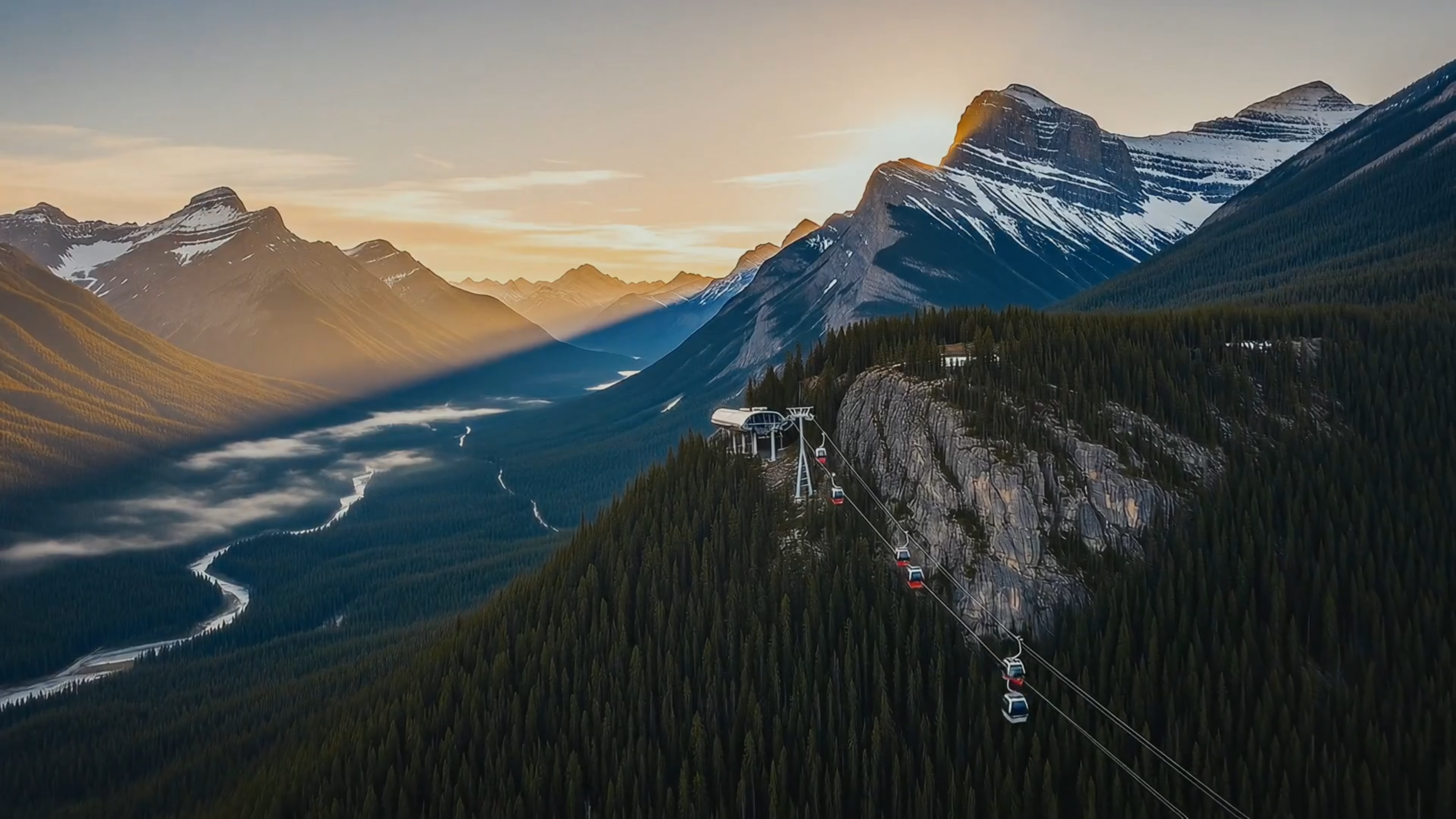
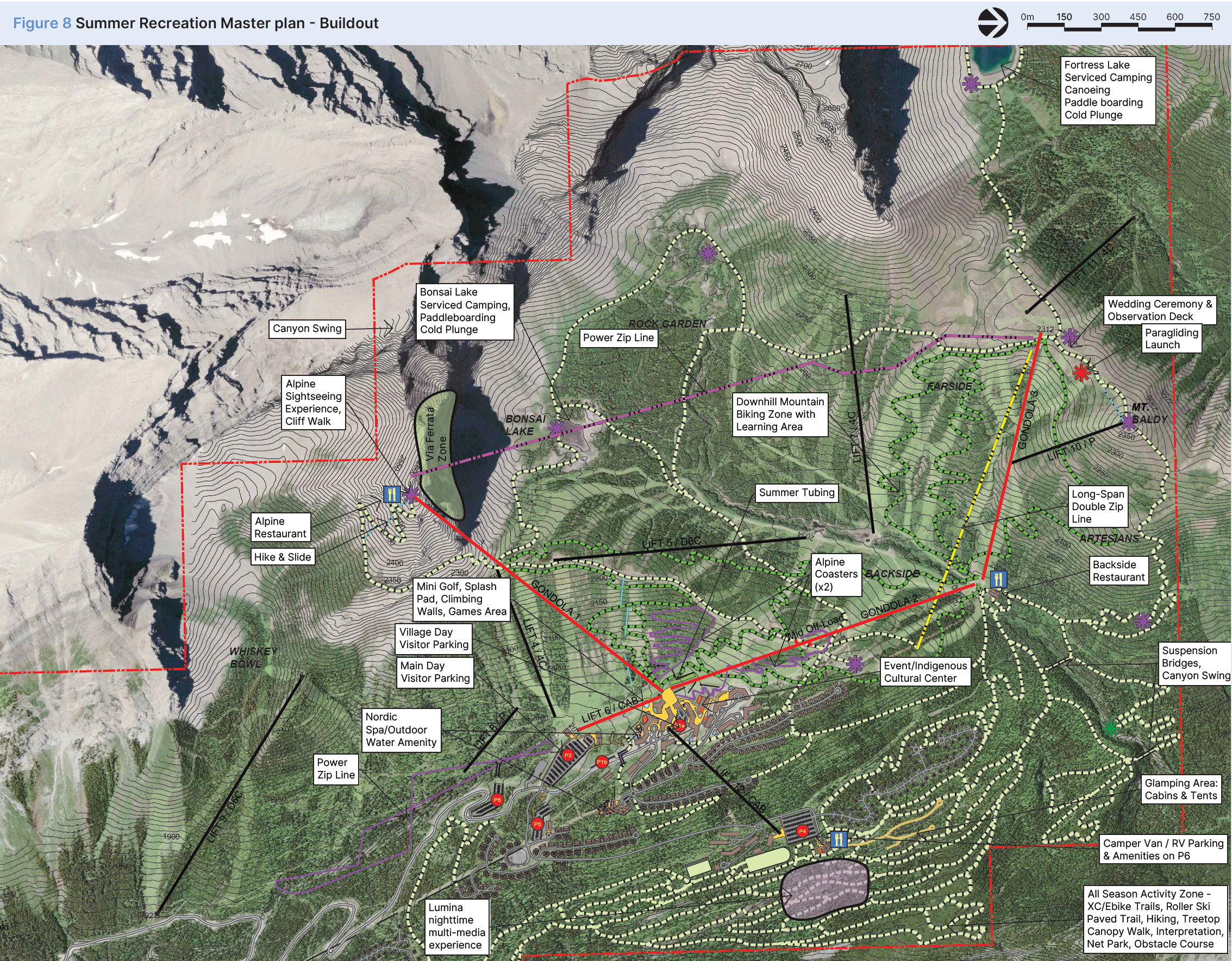
One of North America’s largest lost ski areas could reopen in a few years under a plan submitted to the Province of Alberta last week. Kelowna-based Ridge North America and Calgary-based Western Securities Limited would join forces to acquire Fortress Mountain Holdings and eventually construct up to 14 lifts. Fortress wouldn’t be another Kicking Horse or Revelstoke but rather a year-round resort and recreation hub with a modest ski component. Real estate forms a key aspect of the plan along with summer activities like mountain coasters, downhill biking and zip lines.
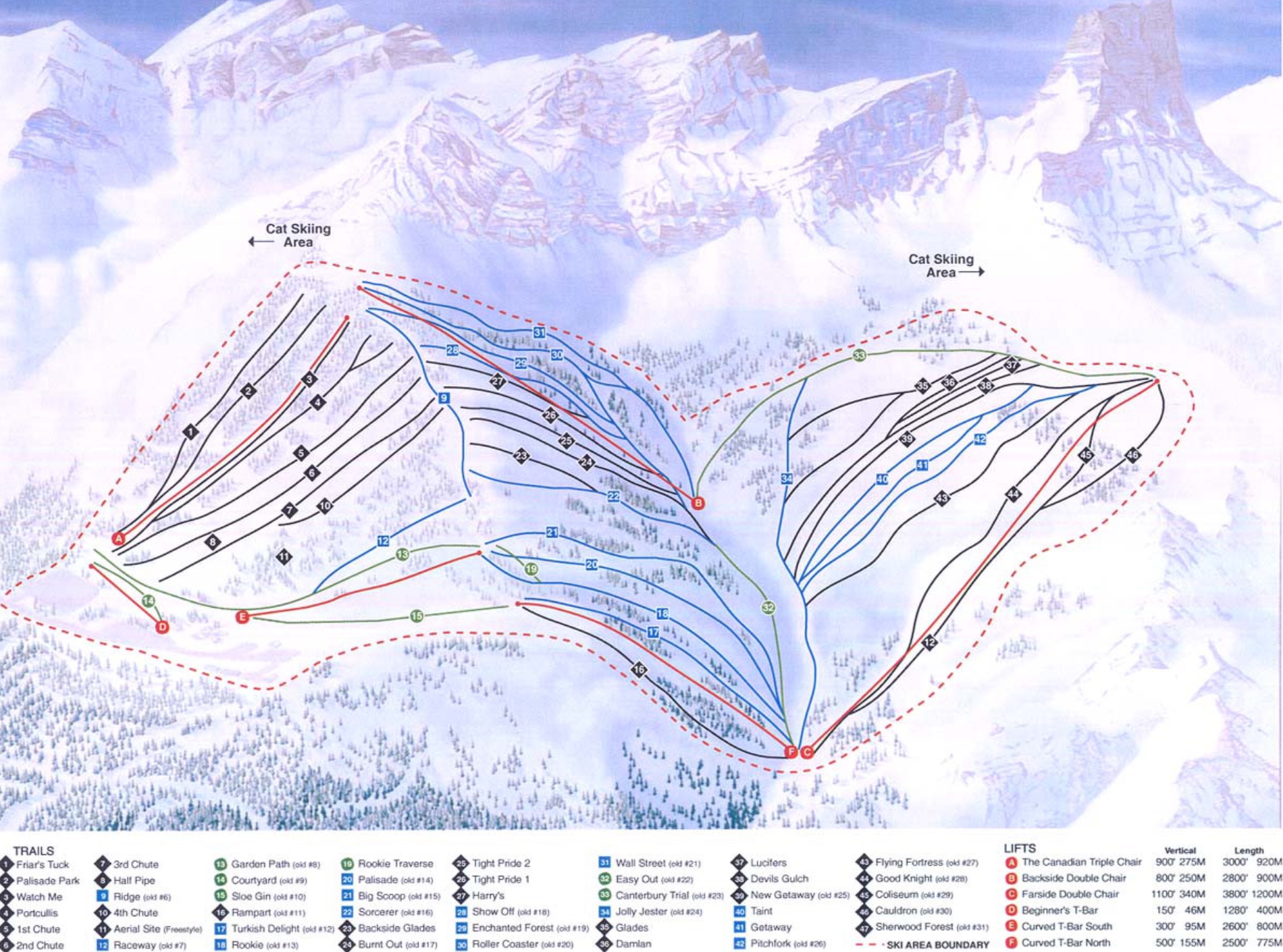
Fortress first opened as Snowridge in 1967 with an all-Doppelmayr fleet consisting of two T-Bars and one double. Doppelmayr supplied two additional chairlifts in the mid-1970s, creating a mid-sized mountain with skiing on three aspects. Though surrounded by towering peaks, vertical at Fortress was never huge with the biggest chair rising 1,070 feet. The ski area declared bankruptcy and closed several times through the second half of the 20th century. At one point Aspen Skiing Company acquired a 50 percent stake and funded the two newest lifts. The company that would later become Resorts of the Canadian Rockies bought Fortress in 1986 but put it up for sale 15 years later as part of its own bankruptcy. RCR continued operating the mountain in bankruptcy until shuttering Fortress in 2004.
Banff Rail Company, headed by Zrinko Amerl, bought the lease in 2005 and ran lifts for a few months in 2006 before the province condemned several buildings. By late 2006, regulators ordered Amerl to stop advertising services he couldn’t provide and forbid pass sales for the 2006-07 and 2007-08 seasons. BRC sold the mountain to Fortress Mountain Holdings in 2010. Both T-Bars were removed in 2012 but the chairlifts remain standing. Today the property is off limits to the public with a limited cat skiing and movie shoot operations. With no maintenance in decades, all three chairlifts are expected to be removed and replaced in new alignments.
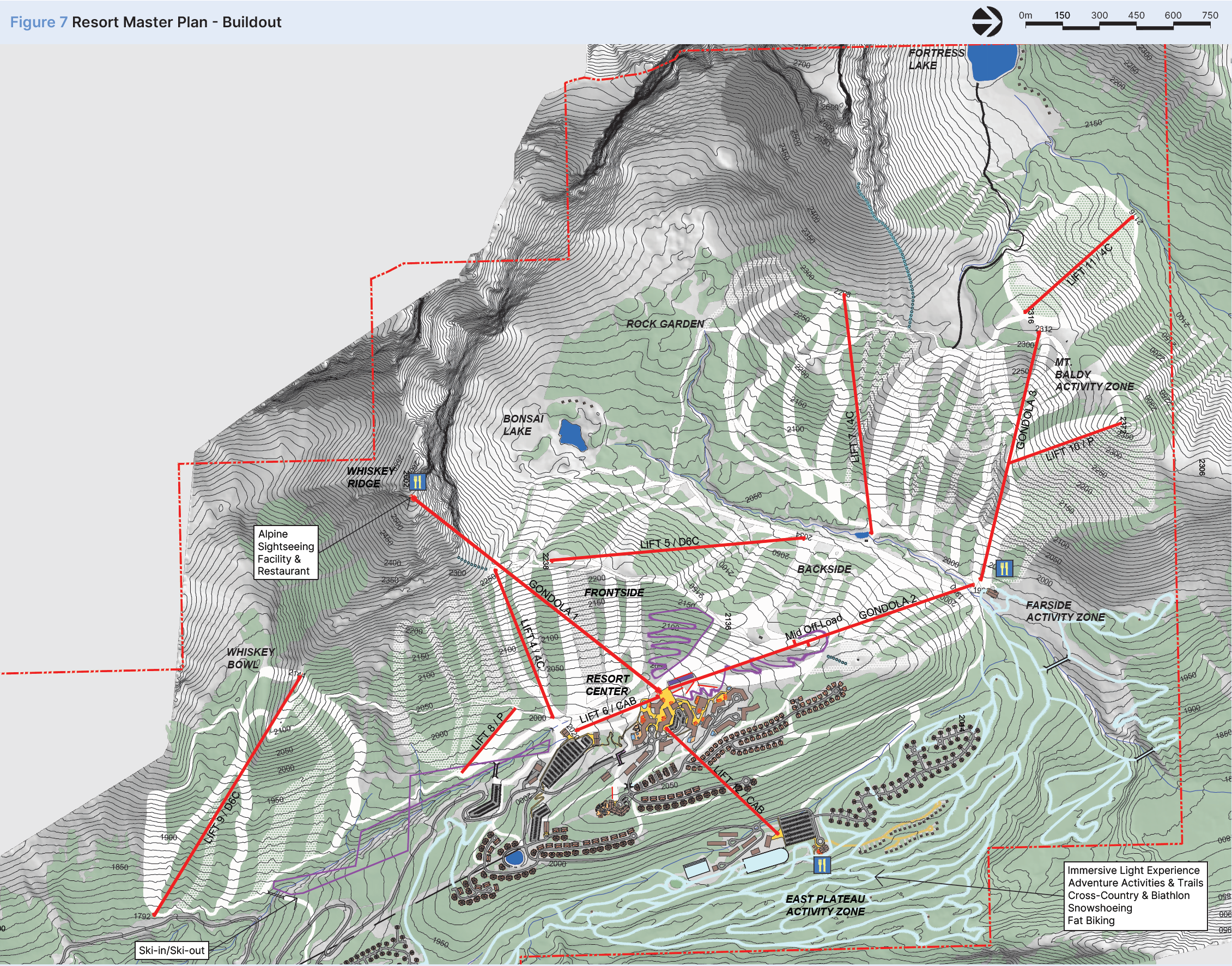
Whistler-based Ecosign prepared the resort’s latest master plan, which encompasses 3,500 acres of crown land. “The Fortress All Season Resort Master Plan presents a long-term vision to develop a modern, world class destination in one of Alberta’s most spectacular mountain contexts,” Ecosign notes. Phase one includes no ski lifts but rather three sightseeing gondolas similar to one Ridge is currently constructing near Kelowna. Each gondola would service distinct adventure nodes with activities like a cliff walk, paragliding and paddleboarding.
Lift-served downhill skiing would resume in phase two with chairlifts on Fortress’ traditional front and backside terrain. A fixed quad and two conveyors would serve the front with a detachable six pack on the back. Phase three envisions a fixed quad on the former Farside terrain plus a beginner platter and third conveyor. A second six pack is earmarked for Whiskey Bowl in phase four, plus a cabriolet lift connecting the resort core to parking and a surface lift on Mt. Baldy. The final phase would include a quad chair on the backside of Mt. Baldy and a second parking cabriolet. At full buildout, the resort could accommodate 6,780 skiers and 9,650 total visitors per day.
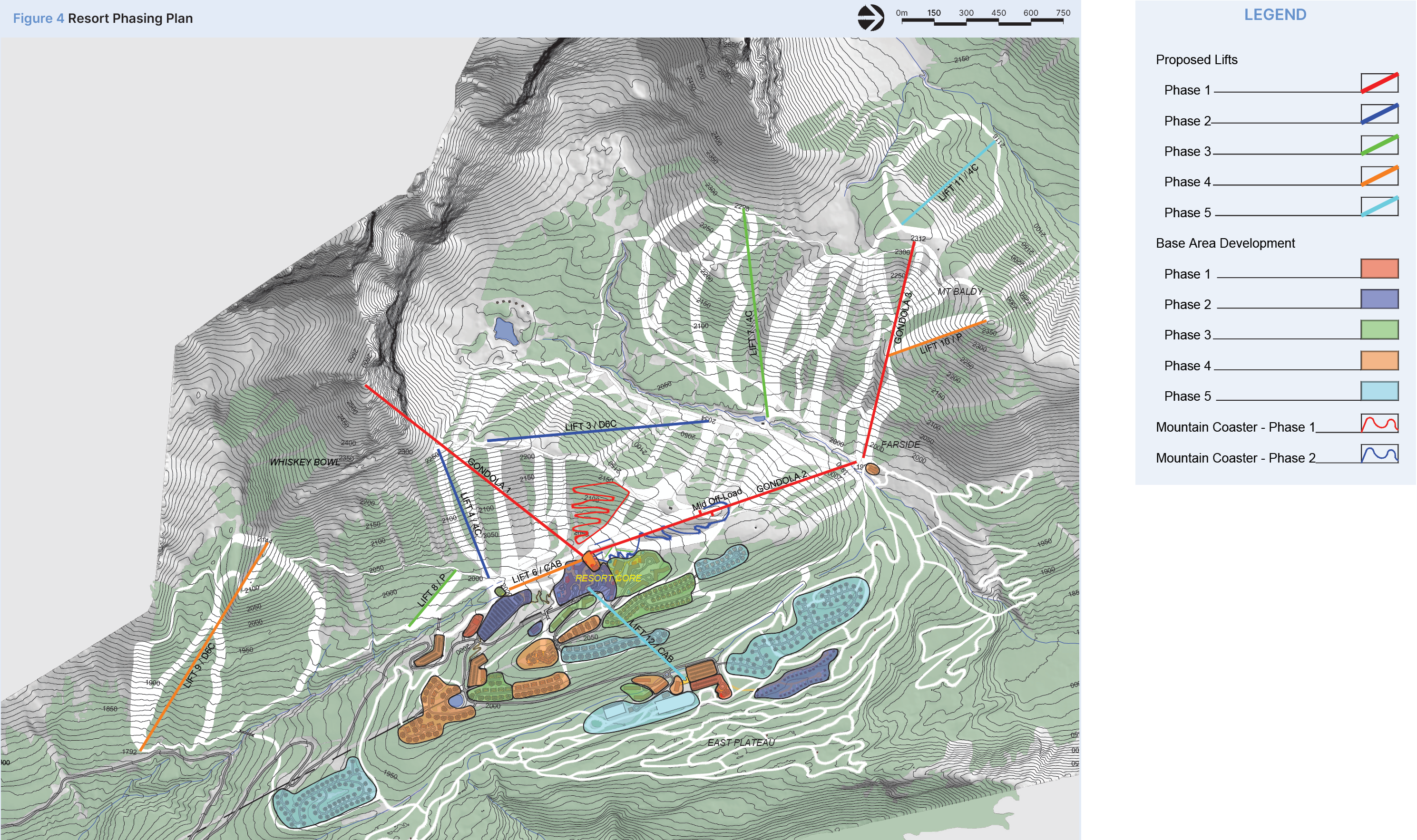
The ambitious vision faces several challenges. First, terrain is scenic but limited with significant competition from nearby ski areas with far more vertical. Ridge and Western Securities have significant experience building attractions and commercial buildings but have never operated a ski resort. Many have failed here before. On the plus side, the current plan wisely focus on activities beyond skiing which appeal to broad audiences. Ridge and Western Securities are well-capitalized and experienced developers. Alberta is booming with 4.2 million people visiting nearby Banff National Park last year. Fortress lies just outside the park, however, making large-scale development more practical than at existing ski areas like Lake Louise or Sunshine. In 2024, Alberta passed the All Seasons Resort Act, aiming to double visitor spending to CA$25 billion annually by 2035. Last year Alberta designated Fortress, Nakiska and Castle the first three mountains targeted for possible development. These policies place Alberta among the most pro-development jurisdictions in North America.
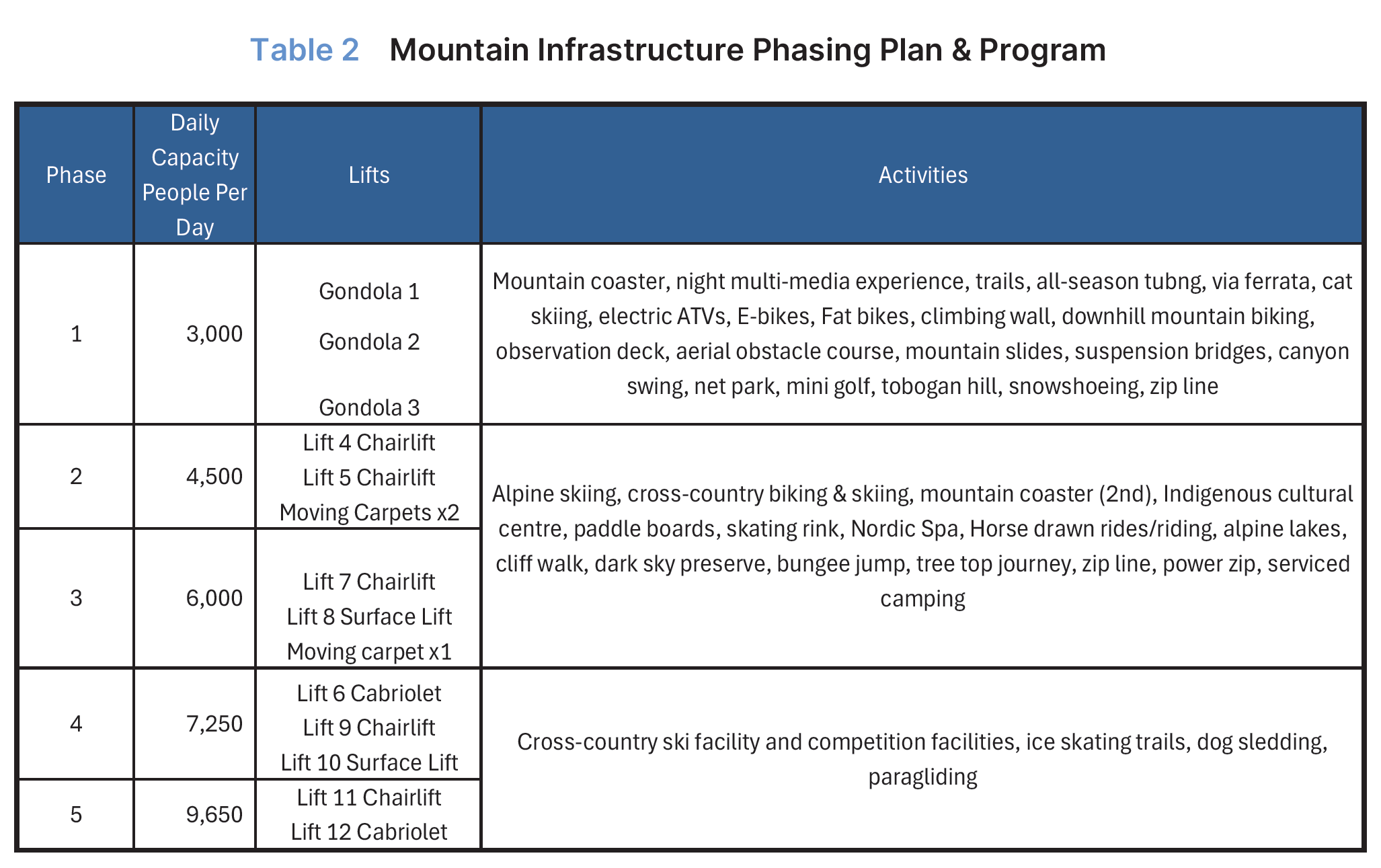
The Province will accept public comments on the proposal through February 27th. Developers also launched a survey to guide further refinements to the plan. If approved, full buildout is expected to take 14 years and last through 2040.
 Lift Blog