Twenty years ago this spring, 15 resorts faced near-disaster when the high-speed lifts they spent more than $50 million to build proved to be of faulty design and had to be retrofitted or replaced just a few years later. Lift Engineering, the company founded in 1965 by Yanek Kunczynski and more commonly called Yan, entered the detachable lift market in 1986 at June Mountain, CA reportedly after just one year of development. Yan built a total of 31 detachable quads in the US and Canada between 1986 and 1994. The majority of Yan’s customers were repeat clients such as Whistler Mountain Ski Corporation, which bought three high speed quads and the Sun Valley Company, which purchased seven. Whistler’s general manager would later write to Lift Engineering describing his team as the “unwitting recipients of a research and development project.”
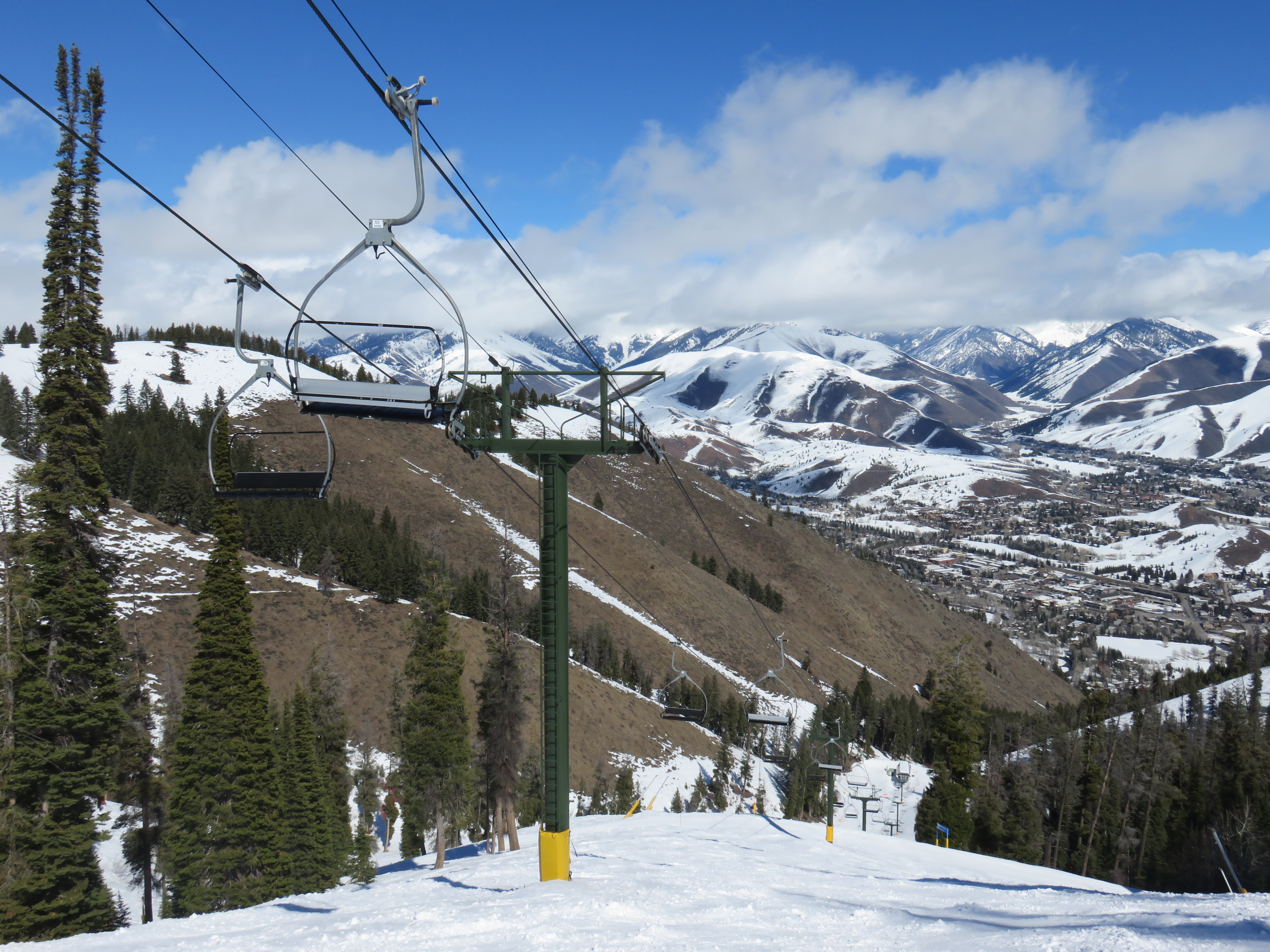
Frenchman’s is one of seven high speed quads on Bald Mountain built by Yan and retrofitted by Doppelmayr after accidents elsewhere. The original Yan teardrop chairs are some of the most comfortable I’ve ever ridden.Three incidents in two years sealed the fate of Yan detachables and eventually forced Lift Engineering to liquidate. On April 4, 1993, a 9-year old boy was killed and another child injured when loose bolts and a subsequent derailment caused two chairs to stack up on Sierra Ski Ranch’s Slingshot lift. The same lift had sent an empty chair to the ground two months prior when a grip failed. Lift Engineering settled a wrongful-death suit after the accident for $1.9 million. Sierra Ski Ranch’s marketing director would later state, “we found they just didn’t withstand the test of time” when the company committed $6 million to replace its three Yan detachables in 1996.
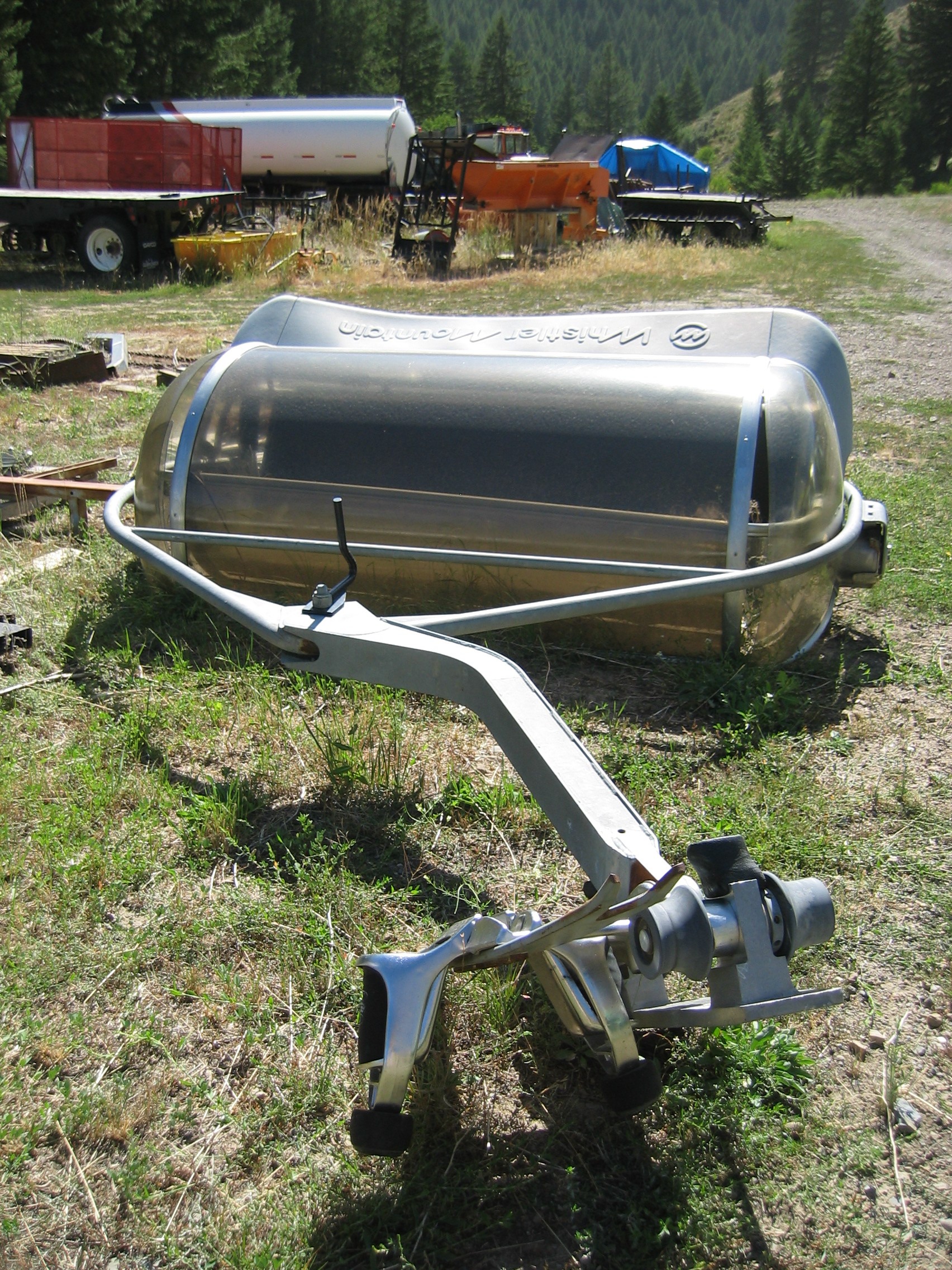
A Yan type-11 grip with marshmallow rubber springs on a bubble chair from Whistler’s Quicksilver high speed quad.On December 23rd, 1995, a routine emergency stop on the Quicksilver high speed quad at Whistler Mountain initiated a chain reaction crash of four down-bound chairs, plunging skiers 75 feet onto the Dave Murray Downhill course below. 25-year old Trevor MacDonald died at the scene, nine people were seriously injured, 200 had to be evacuated and a second guest died 12 days later. The coroner’s investigation revealed Yan’s design failed to maintain the required 15-degree lateral swing clearance over towers, causing damage to grips over time. The type-11 grips could not maintain adequate clamping force for the maximum 38-degree rope angle on Quicksilver between towers 20-21 (Quicksilver was the only lift built with Yan’s type-11 grip owing to its heavier chairs with bubbles, the rest had the type-7 grip.) On two prior occasions, empty chairs had fallen from Quicksilver’s line, including one time three weeks prior to the deadly accident and in the same location. Leading up to December 23rd, mechanics were getting grip force faults 20+ times a day and had reportedly stuffed paper into the corresponding alarm. At the time, detachable lifts were relatively new and not required to stop automatically as a result of a grip force fault.
Shortly after the Whistler accident, mechanics at Schweitzer in Idaho found cracks in its Yan type-7 detachable grip jaws and shut the lift down for the remainder of the season. “There were a lot of quality control problems,” Schweitzer’s mountain manager told the Wall Street Journal in 1997. The loss of a workhorse lift at the height of ski season through the following Christmas and resulting $1 million retrofit by Doppelmayr forced Schweitzer into bankruptcy.
Schweitzer’s Great Escape Quad retains Yan towers, operator houses, control systems, electric motor and gearbox while using Doppelmayr chairs, detachable grips and line equipment.Yan type-7 grips used at Schweitzer/Sierra and type-11 grips on Quicksilver utilized rubber “marshmallow” springs manufactured by Firestone rather than the helical, metal springs that are industry standard. Rubber proved susceptible to changing temperatures in mountain environments. Both grips relied on gravity such that grip force would be reduced when the line would bounce. Les Okreglak, a former Yan engineer, formed a company called Pol-X-West to develop a replacement grip using four coil springs compatible with Yan terminal equipment. Pol-X-West replaced grips on four lifts at Lake Louise and Silver Star in time for the 1996-1997 ski season.
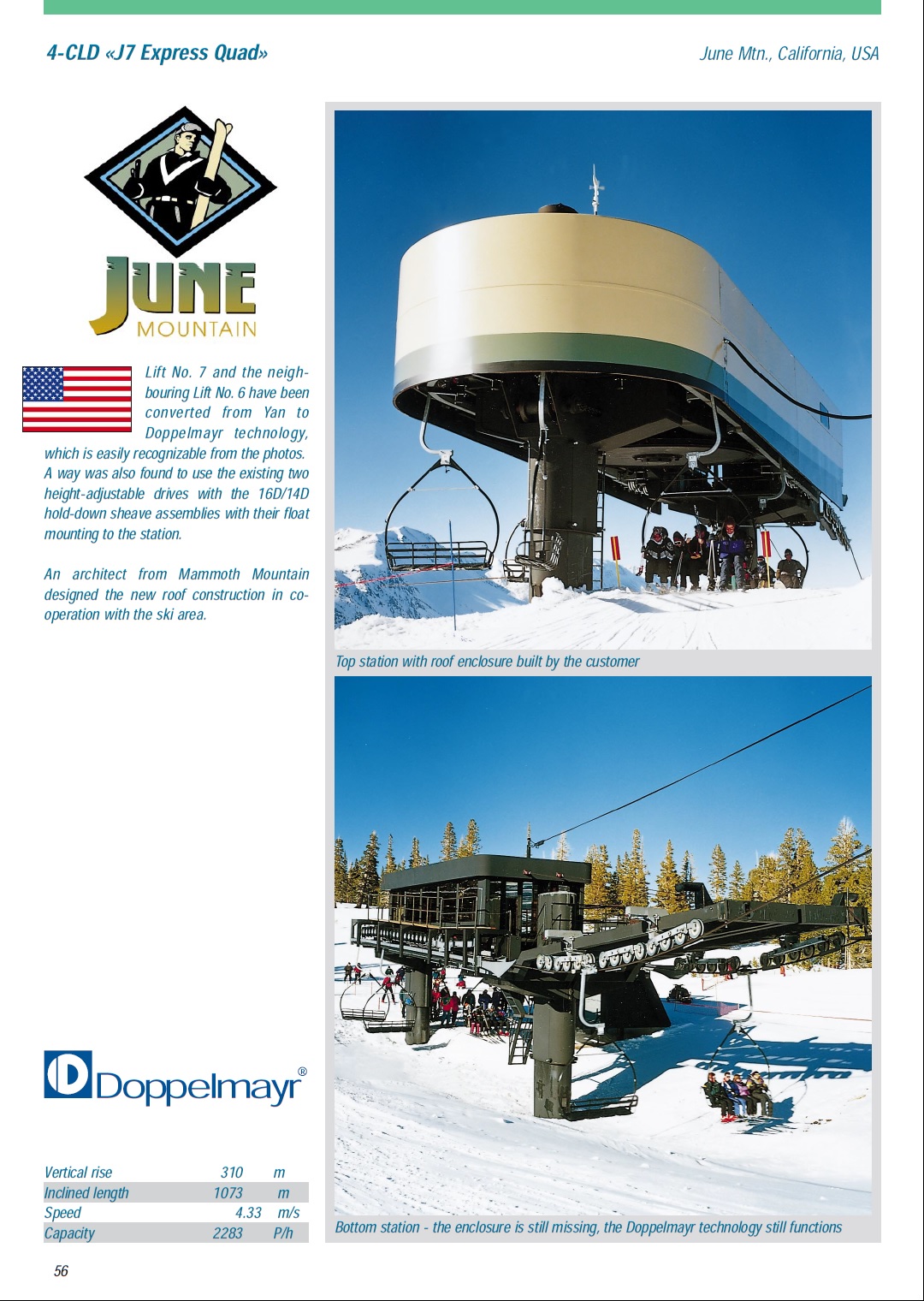
The 1996 retrofits were such a massive undertaking that June Mountain operated its quads for a season without covers on the tire banks.Most customers opted to completely replace Yan detachable equipment, in part due to the US Forest Service requiring replacement of Yan detachables operating in National Forests. Quicksilver never re-opened and Whistler Mountain spent $6.2 million to replace the lift with a Poma gondola the following summer. Eight other high speed quads were replaced with brand new lifts in 1996. Poma retrofitted six additional Yan detachables, all of which happened to be at American Skiing Company resorts in the northeastern US. They got TB-41 grips, new sheaves and upgraded terminals. In an ironic twist, it was a job with Poma that brought Mr. Kunczynski to the United States 30 years prior.
Everything that could be salvaged was kept at Sun Valley while the grip-related components were replaced with Doppelmayr equipment.The Sun Valley Company announced a retrofit program together with Doppelmayr in May 1996. Doppelmayr replaced 652 grips and hangers, line gear on 134 towers and tire banks/contours in 14 terminals on Bald Mountain at a total cost of $9 million. General manager Wally Huffman called the episode as an “almost devastating financial blow to the company.” Doppelmayr faced a huge backlog that summer refitting 12 lifts with DT-104 grips and new terminals in addition to building ten other lifts. Due to limited manufacturing capability in St. Jerome, 75 percent of the equipment came from Austria and many of the retrofits weren’t completed until January 1997.
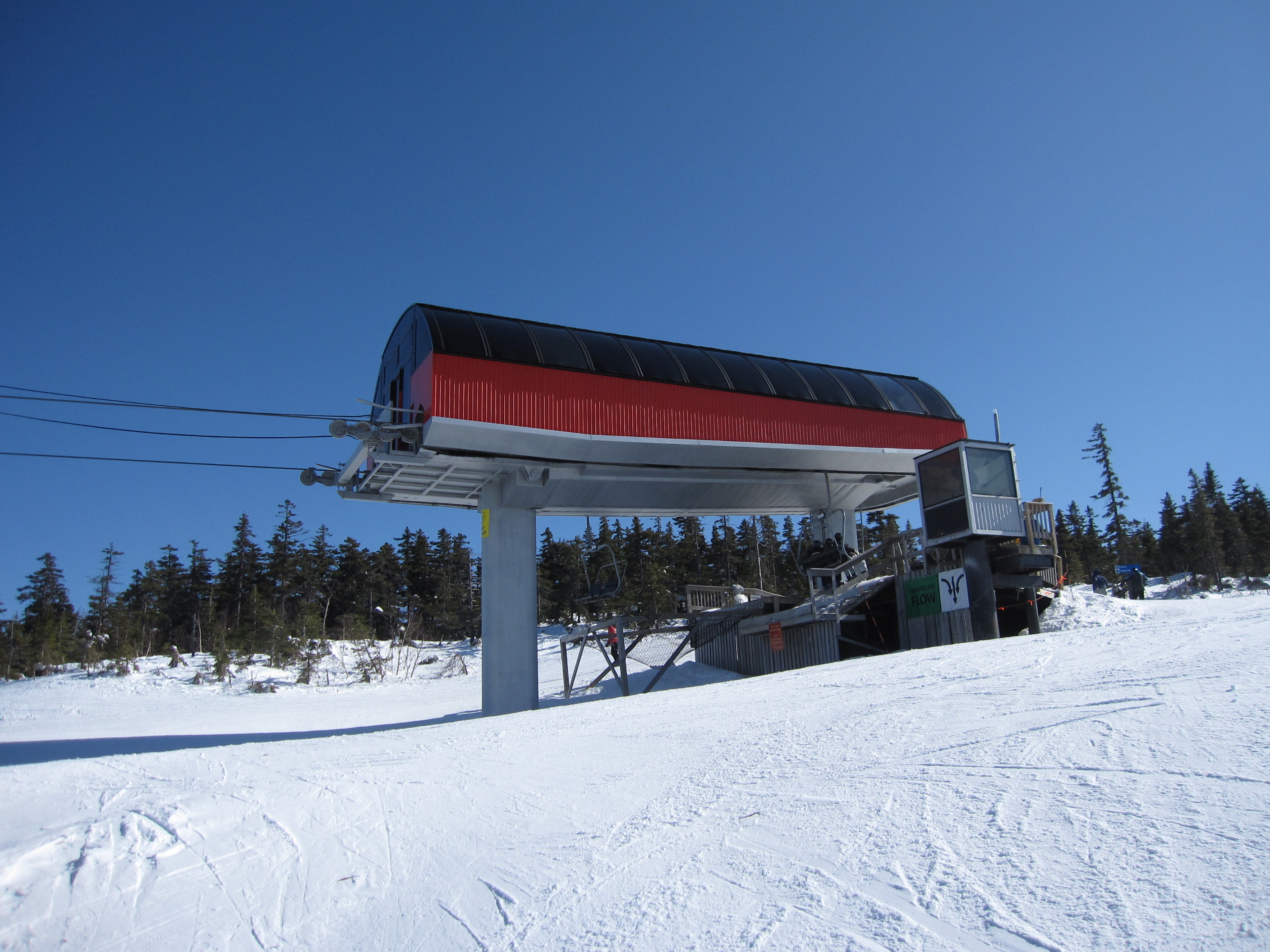
At Sunday River and four other New England resorts, Poma re-built terminals and provided new sheaves/grips for six Yan detachables.Lift Engineering built its last lifts in 1994 and filed for bankruptcy in July of 1997. The four Yan high speed quads in Canada that remained in operation have since been replaced (Silver Star’s in 2002, Lake Louise’s in 2003-2004.) At least two Lift Engineering detachable quad lifts still operate abroad. One is called La Roca at a ski resort in Spain that still has the original marshmallow springs that failed at Whistler, although they are the smaller type-7 size. The other is at the Nazhvan Forest Park in Iran, a re-installation from Silver Star with the safer Pol-X-West grips.
Almost time for the 30-year retrospective! A bunch of these have been or are about to be replaced a second time (Creekside Gondola, Silverlode, others). Carpenter at DV’s Y-towers can’t be too long for this world either. Sun Valley is halfway through theirs. How many sets of teardrop chairs are still in service today?
Well we’re down to 11 operation Yan (based) HSQ’s left, but only 2 sets of teardrop chairs in service… then 3 sets of Pentagons (and scheduled to be 2 sets of Pentagons, starting next season). 4 Eastern, 7 Western.
If all goes according to plan in the 26/27 season there will be only 9 left.
J6 – June (Pentagons)
J7 – June (Teardrops)
Snowshed Express – Killington (Pentagons)
Golden Express – Pico (Pentagons, but getting Superstar’s Poma carriers in summer 26)
Summit Express – Pico (Teardrops)
Grand Summit Express – Mt.Snow (Poma carriers)
Great Escape. – Schweitzer (Dopp EJ)
River Run – Sun Valley (Dopp EJ)
Christmas – Sun Valley (Dopp EJ) – to be replaced end of 25/26 season
Lookout Express – Sun Valley (Dopp EJ)- to be replaced end of 25/26 season
Frenchman’s – Sun Valley (Dopp EJ)
It will be interesting to see what happens to the remaining 9 after Lookout/Christmas get replaced. In theory River Run would be next, and maybe same time replace Frenchman’s… or maybe one or the other shalllinger longer with spare parts.
Outside of Sun Valley’s replacements. I’d speculate Great Escape, and Snowshed would be the only two replaced in any near future. GSX I’m sure will linger as a backup lift (even more so as being the most recently upgraded). June and Pico both share their status of not being profit centers to support upgrades. June I feel would have the most likely source of Mammoth ramping up replacements and getting refurb lifts similar to Boyne’s lift shuffles.
RIP to the most comfortable quad chair in the game.
As I said I think there is a strong chance that you have the most time to ride the two at June.
In a funny thought despite all their issues, and realizing they were all refurbished circa 1997 ( But, most I think are running their original locomotive based motors) I believe J6 is oldest operating original install HSQ left in USA, and tied or a year newer than only a handful of lifts located in Canada.
Unless there are some not coming to me, the only 1986 or earlier lifts in NA are,



 Lift Blog
Footage of the QMC Funitel, J6, and J7, starting 7:15
LikeLiked by 1 person
LikeLike
LikeLike
Almost time for the 30-year retrospective! A bunch of these have been or are about to be replaced a second time (Creekside Gondola, Silverlode, others). Carpenter at DV’s Y-towers can’t be too long for this world either. Sun Valley is halfway through theirs. How many sets of teardrop chairs are still in service today?
LikeLike
Well we’re down to 11 operation Yan (based) HSQ’s left, but only 2 sets of teardrop chairs in service… then 3 sets of Pentagons (and scheduled to be 2 sets of Pentagons, starting next season). 4 Eastern, 7 Western.
If all goes according to plan in the 26/27 season there will be only 9 left.
J6 – June (Pentagons)
J7 – June (Teardrops)
Snowshed Express – Killington (Pentagons)
Golden Express – Pico (Pentagons, but getting Superstar’s Poma carriers in summer 26)
Summit Express – Pico (Teardrops)
Grand Summit Express – Mt.Snow (Poma carriers)
Great Escape. – Schweitzer (Dopp EJ)
River Run – Sun Valley (Dopp EJ)
Christmas – Sun Valley (Dopp EJ) – to be replaced end of 25/26 season
Lookout Express – Sun Valley (Dopp EJ)- to be replaced end of 25/26 season
Frenchman’s – Sun Valley (Dopp EJ)
It will be interesting to see what happens to the remaining 9 after Lookout/Christmas get replaced. In theory River Run would be next, and maybe same time replace Frenchman’s… or maybe one or the other shalllinger longer with spare parts.
Outside of Sun Valley’s replacements. I’d speculate Great Escape, and Snowshed would be the only two replaced in any near future. GSX I’m sure will linger as a backup lift (even more so as being the most recently upgraded). June and Pico both share their status of not being profit centers to support upgrades. June I feel would have the most likely source of Mammoth ramping up replacements and getting refurb lifts similar to Boyne’s lift shuffles.
RIP to the most comfortable quad chair in the game.
LikeLike
I have to get over to June and ride J7 before they remove it
LikeLike
It rides very smoothly. More than many modern lifts!
LikeLiked by 1 person
As I said I think there is a strong chance that you have the most time to ride the two at June.
In a funny thought despite all their issues, and realizing they were all refurbished circa 1997 ( But, most I think are running their original locomotive based motors) I believe J6 is oldest operating original install HSQ left in USA, and tied or a year newer than only a handful of lifts located in Canada.
Unless there are some not coming to me, the only 1986 or earlier lifts in NA are,
J6- June
Avila Express- Sommet Saint-Sauveur
L’Express du Sud – Mont-Sainte-Anne
Silver – Nakiska
II – Mont Sutton.
LikeLiked by 1 person
Apresskischool, Sunshine at Telluride is also 1986. So tied at least. There may be others, but I’m not sure.
LikeLike
Ah yes, I thought I was missing one somewhere.
LikeLike