
93 percent of the 3.8 million people who visited Banff National Park last year arrived in a personal car. Across North America in places like Yosemite, Glacier and Banff, resource managers are struggling to find transportation solutions amid record visitation and constrained capacity. Banff National Park is unique – a very popular town of the same name with 7,500 residents that lies in the middle of a 2,500-square mile park. In 2015, the Town of Banff saw the most visitors in at least the last 15 years, continuing its average growth rate of 1.8 percent per year. So far in 2016, the daily vehicle count in town exceeded its 24,000-car comfortable capacity on at least 48 occasions. More troubling, vehicle volume increased eight percent this summer and is projected to exceed 24,000 on 270 days a year by 2045, with a crush load of 40,000 vehicles on peak days. This is in a town smaller than two square miles surrounded by mountains.

Challenging problems demand innovative solutions. This spring, the Town of Banff embarked on a long-term transportation study to examine parking, road improvements, traditional transit and a possible gondola to connect key points surrounding downtown. The Edmonton-based consulting company Stantec identified and studied three possible gondola alignments in addition to two intercept parking lots and increased bus service. The firm’s draft report notes, “without new interventions, congestion delays are expected to increase in both severity and frequency; Banff’s road system is finite and actions must be taken to solve the issues caused by the volume of vehicles on the road system.”
The Banff community knows gondolas. The Sulphur Mountain Gondola, a bi-cable Garaventa system operated by Brewster Travel Canada sits just south of town and will likely anchor the southern end of any new gondola. Sunshine Village ski resort also lies within Banff National Park and its huge gondola connects an offsite parking lot to the slopes and village with two mid-stations along the way.

Three gondola concepts Stantec studied rely on what the firm calls intercept parking. That means getting people out of their cars to visit the most popular destinations of Banff Avenue, the Banff Springs Hotel and Sulphur Mountain. What became the preferred alignment (originally option 2) would be 2.4 miles with five stations and cost approximately CDN$66 million. To compare, road improvements studied would cost at least $130 million, including $55 million for a single new bridge across the Bow River.

Citing examples from Telluride, Portland and Medellín, the key to Banff gondola success is visitors would actually choose to ride, unlike today’s Roam bus network that primarily serves workers. The report notes, “aerial transit is a visitor experience in itself that – through revenue collection – can generate income to offset or eliminate operating costs and tax burden.” Gondolas provide two advantages that national park visitors in particular are looking for: personal space and frequent service so that no schedule is needed.
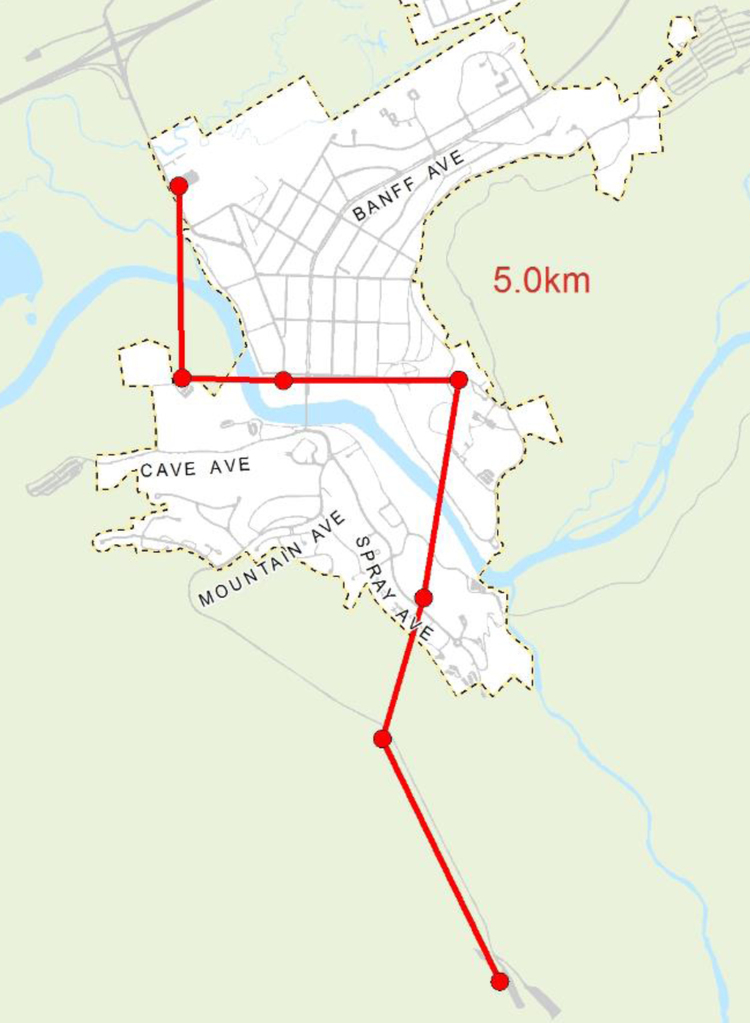
The $70,000 study, while preliminary in nature, is extremely well-done and demonstrates the reasons gondolas work. Assuming a $6 fare and a 24 percent “journey share” across the Bow River, the system would carry an estimated 1.4 million riders a year and be revenue-positive in as little as five years. For comparison, the Sulpher Mountain Gondola carried 563,000 passengers in 2013 with a ticket price of $49. Right now, transit share across the river is 4 percent.

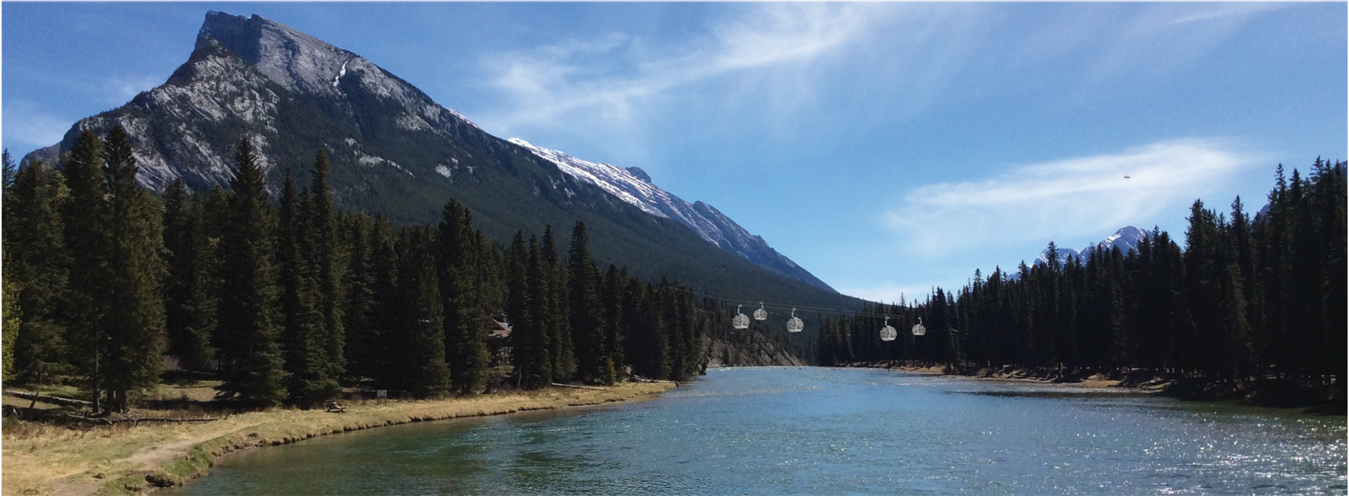
The biggest impacts of a gondola system would be visual. But keep in mind that, although inside a treasured park, Banff is a town with McDonald’s, Starbucks, and a North Face store. Banff has varied terrain that a gondola could cross but also closely-spaced destinations and high visitation that are tailor-made for a transit system. Unlike the recently-studied Austin and Washington, D.C., Stantec notes the Banff community is already familiar with gondolas in the ski context. The study ultimately concludes, “aerial transit is both a mode of transportation and a visitor experience which removes frequency, on-time-performance, schedule and personal space as barriers to the use of mass transit. The system generates revenue that can reduce or eliminate operating costs and required tax support.” Now that the initial study is overwhelmingly positive, the town will embark on an extensive public engagement campaign beginning with a website – BanffOnTheMove.com.
 Lift Blog