
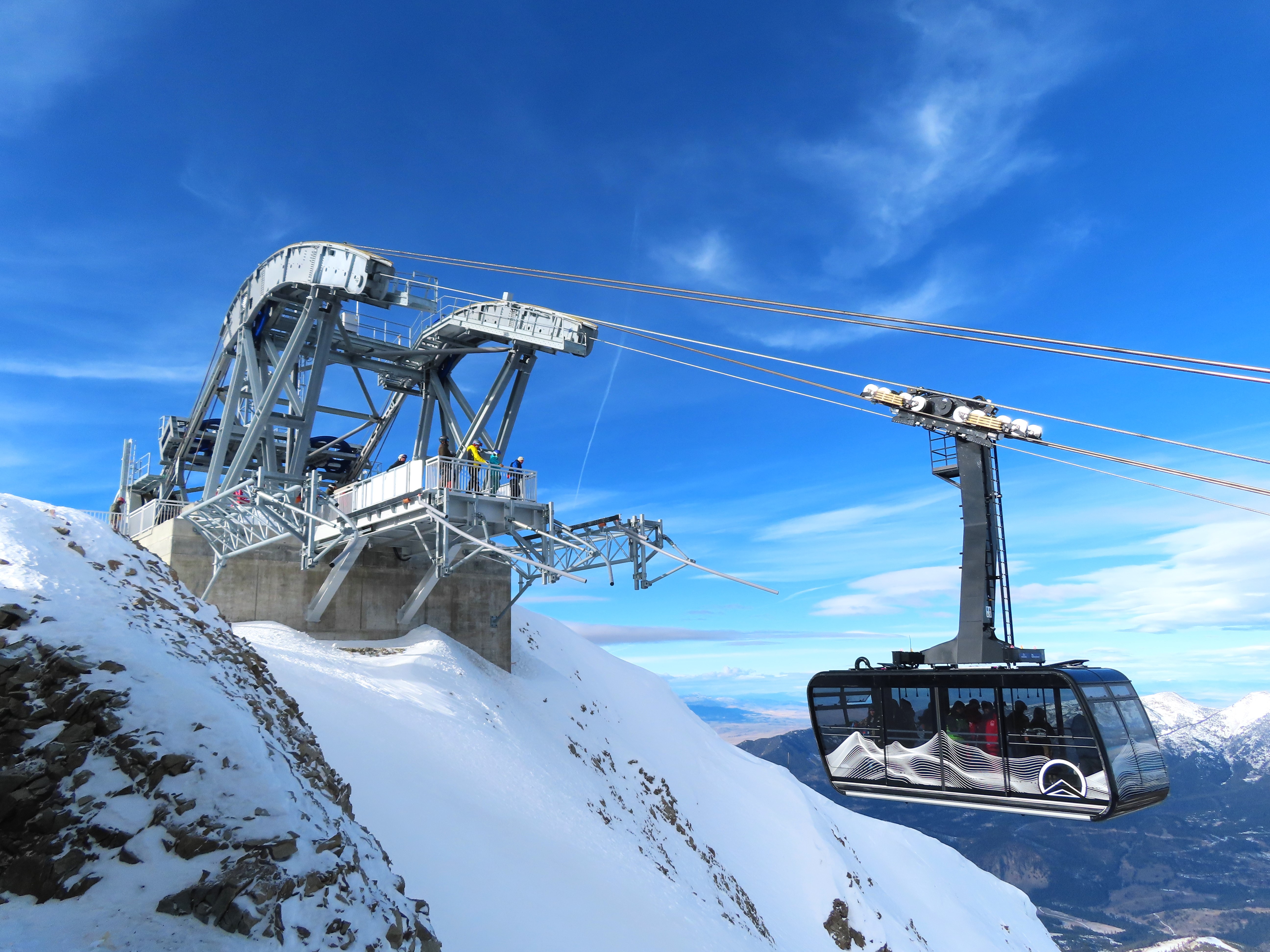
From the new Lone Peak Tram at Big Sky to the longest and fastest gondola in North America at Steamboat to lift served expansions and eight seat chairlifts, 2023 was an exciting year in lifts. This year will go down in history not for the mere number of projects but the sheer size and variety of lifts resorts installed.
Sixty one new lifts were completed for this winter, five fewer than last year. A handful projects were announced but later postponed for various reasons, including a new gondola at Homewood, a real estate access lift at Tremblant and a high speed quad at Mt. Holly. If all contracted projects had come to fruition, the total would have been in line with 2022, the best year for lift construction since 1999.
The Rocky Mountain region accounted for the largest share of new lifts this winter, with the Steamboat and Sun Valley undertaking two of the largest projects ever in North America. At Steamboat, Doppelmayr constructed the record-breaking second section of the Wild Blue Gondola while Leitner-Poma simultaneously built a 6,300 foot detachable quad servicing the Mahogany Ridge expansion. Sun Valley and Doppelmayr partnered to build the largest chairlift in North America by vertical transport feet per hour, a six pack called Challenger rising 3,138 vertical feet. Sun Valley also built a high speed quad that would be the biggest lift of the year in a normal year. Winter Park’s new Wild Spur Express is also notable in the Rockies, featuring 105 six passenger chairs and three stations.
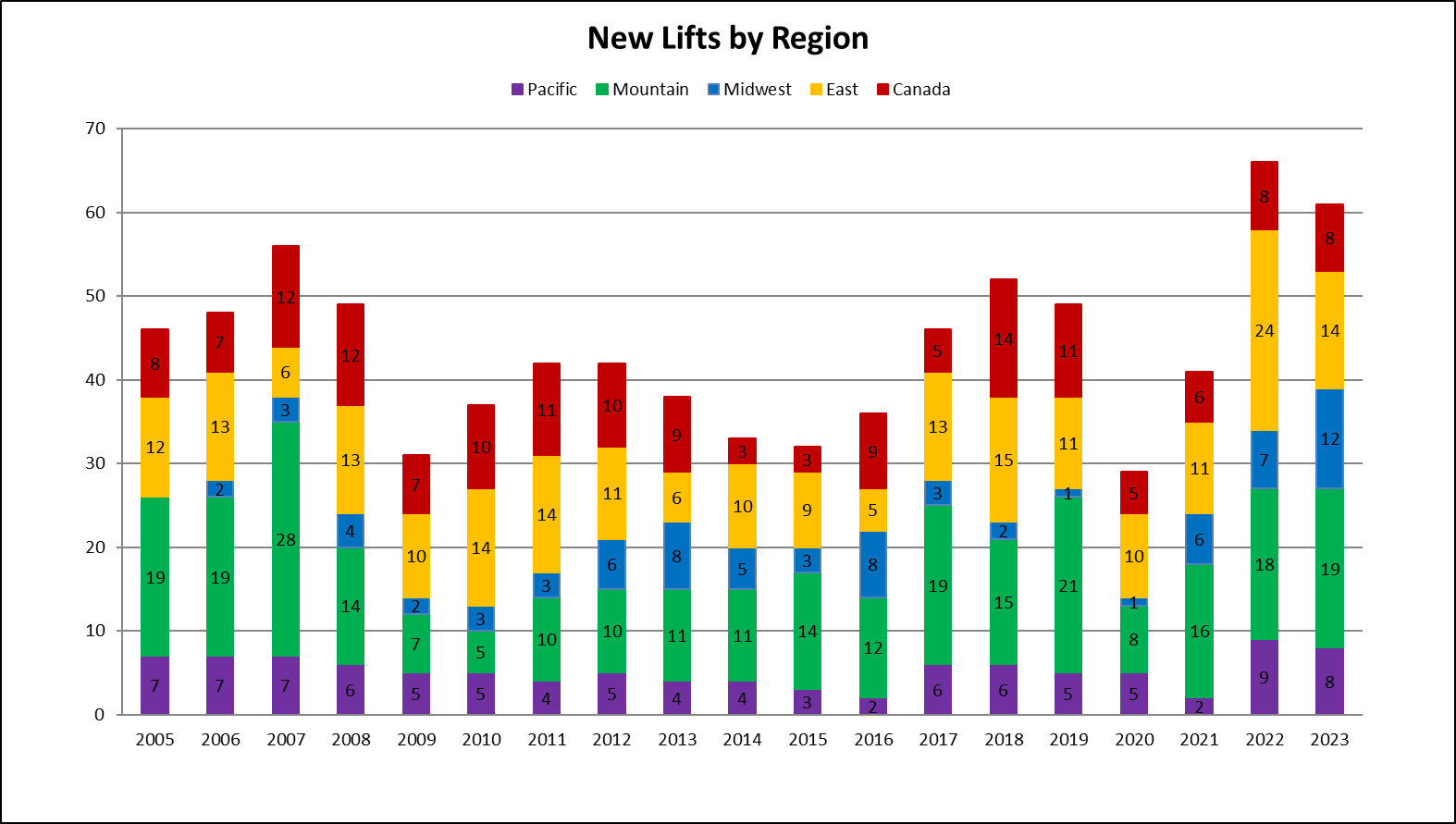
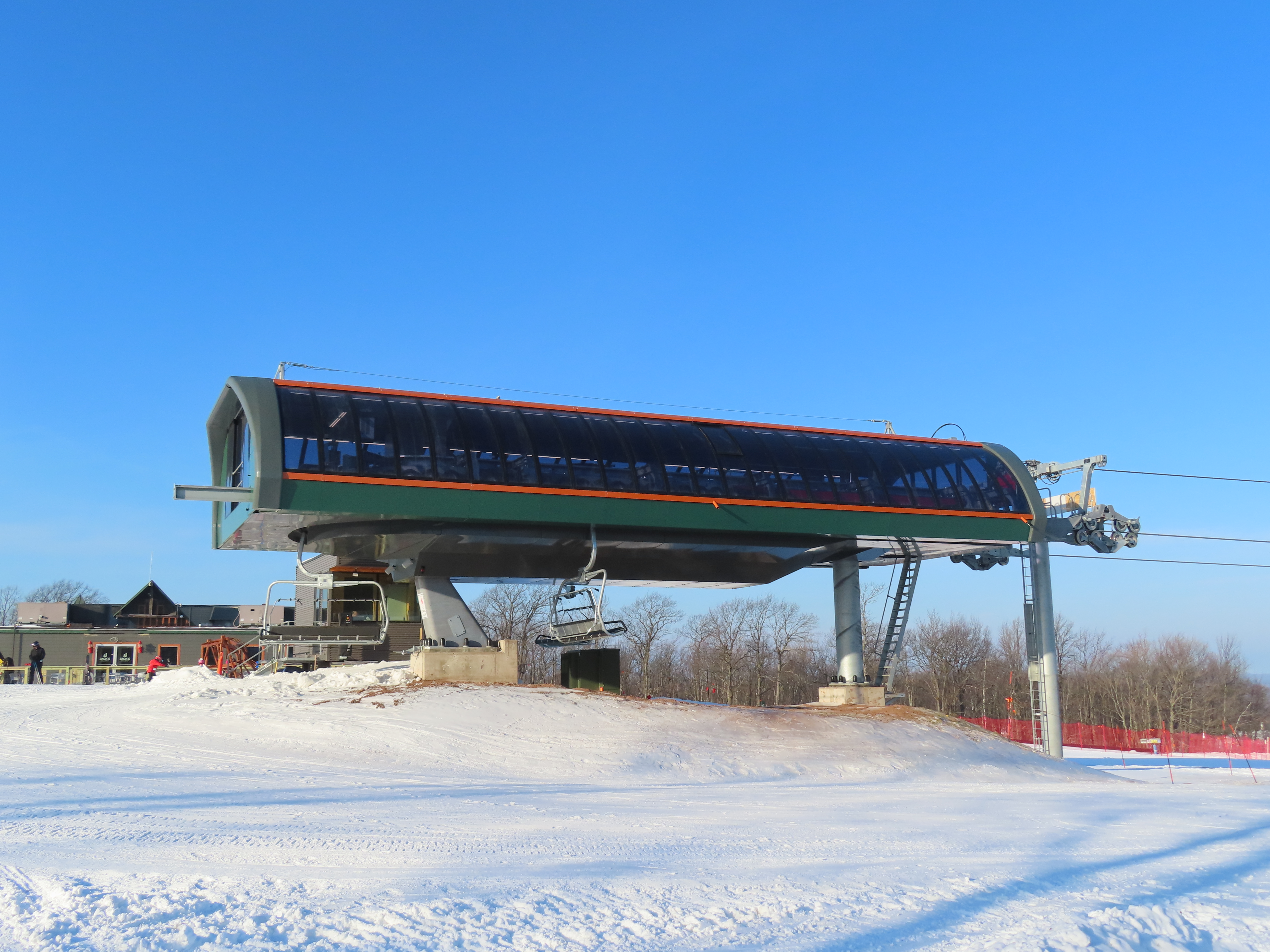
The Midwest also enjoyed a strong year with a dozen projects, primarily in the state of Michigan. Boyne Resorts built three new lifts at its Michigan resorts and two independent Lower Peninsula resorts added Skytrac fixed grip chairlifts. The Upper Peninsula gained its first-ever detachable lift, a Doppelmayr six pack called the Voyageur Express at Snowriver.
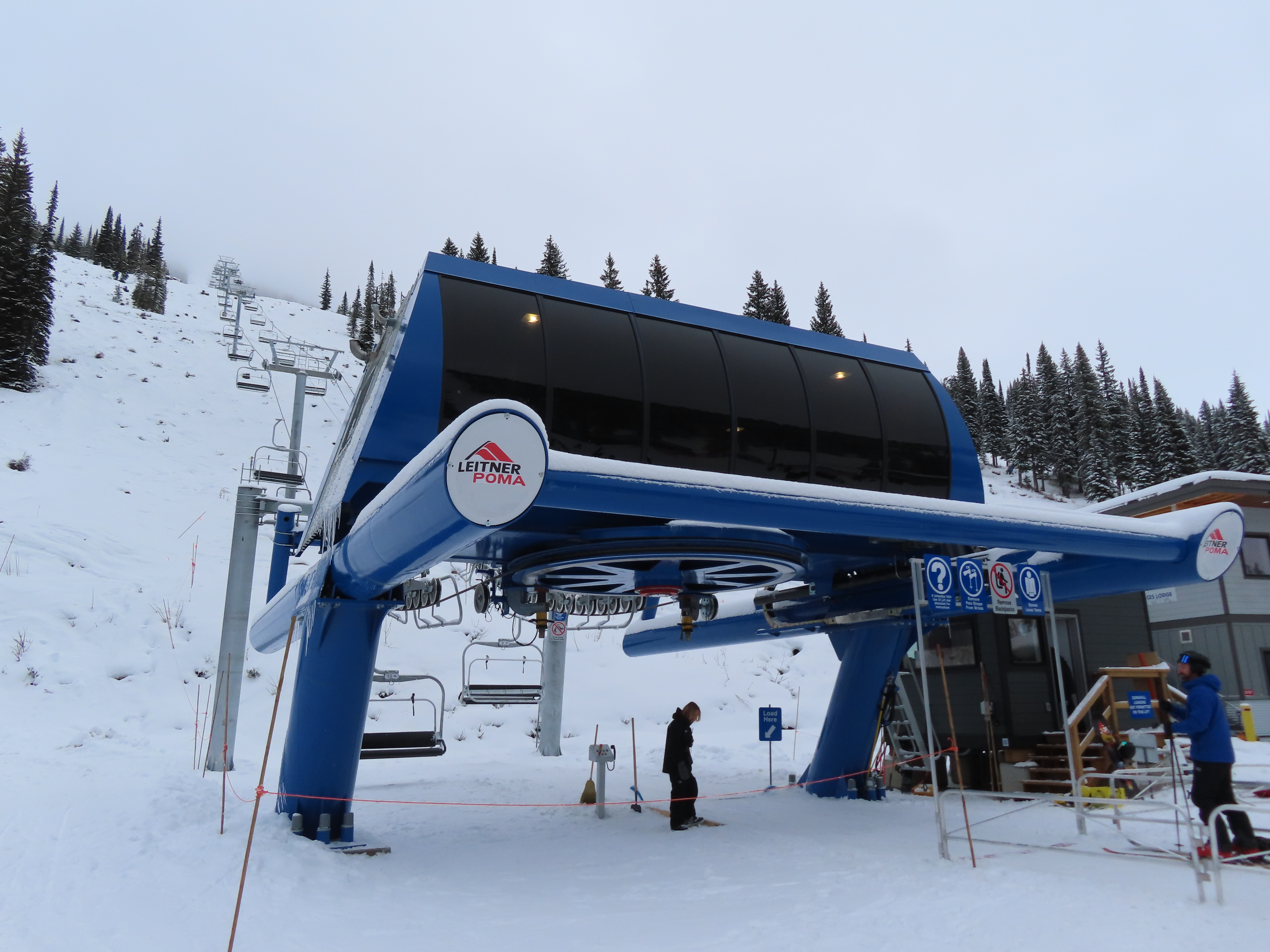
Canada bounced back nicely from an extended Covid slump with eight projects from coast to coast. The country’s first two eight place chairlifts debuted nearly simultaneously east and west at Mount St. Louis Moonstone, Ontario and Whistler Blackcomb, British Columbia. The Moonstone lift is the highest capacity lift ever installed in the US or Canada with a design throughput of 4,250 skiers per hour. A number of Canadian resorts poured concrete this summer for additional lifts set to debut in 2024-25 including at Grouse Mountain, Sunshine Village, Sun Peaks and Whistler Blackcomb.
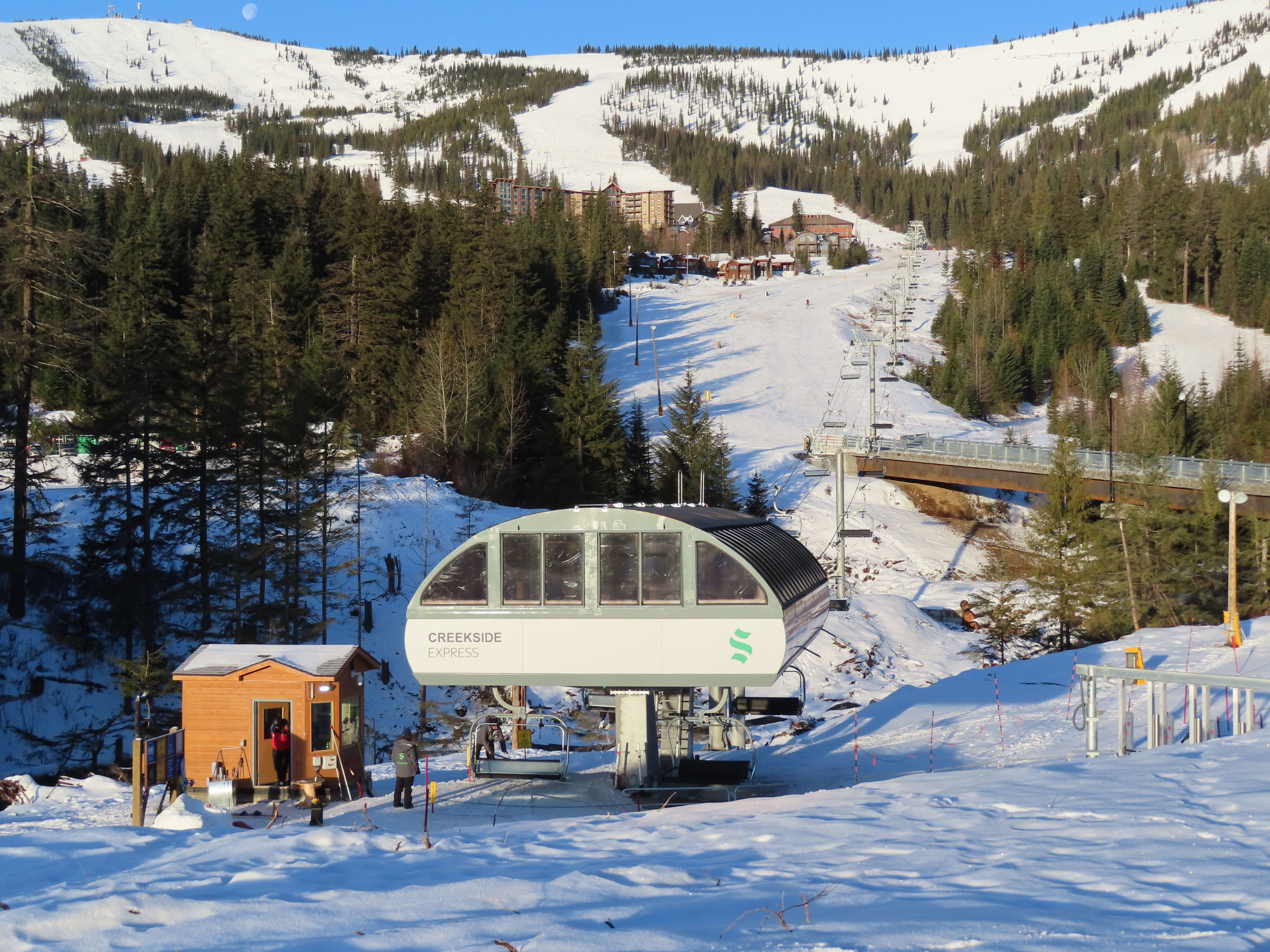
The Pacific states saw a slight decline in lift construction after a strong 2022. Mammoth Mountain, Mt. Hood Meadows and Mt. Bachelor all debuted large six packs replacing first generation detachable quads.
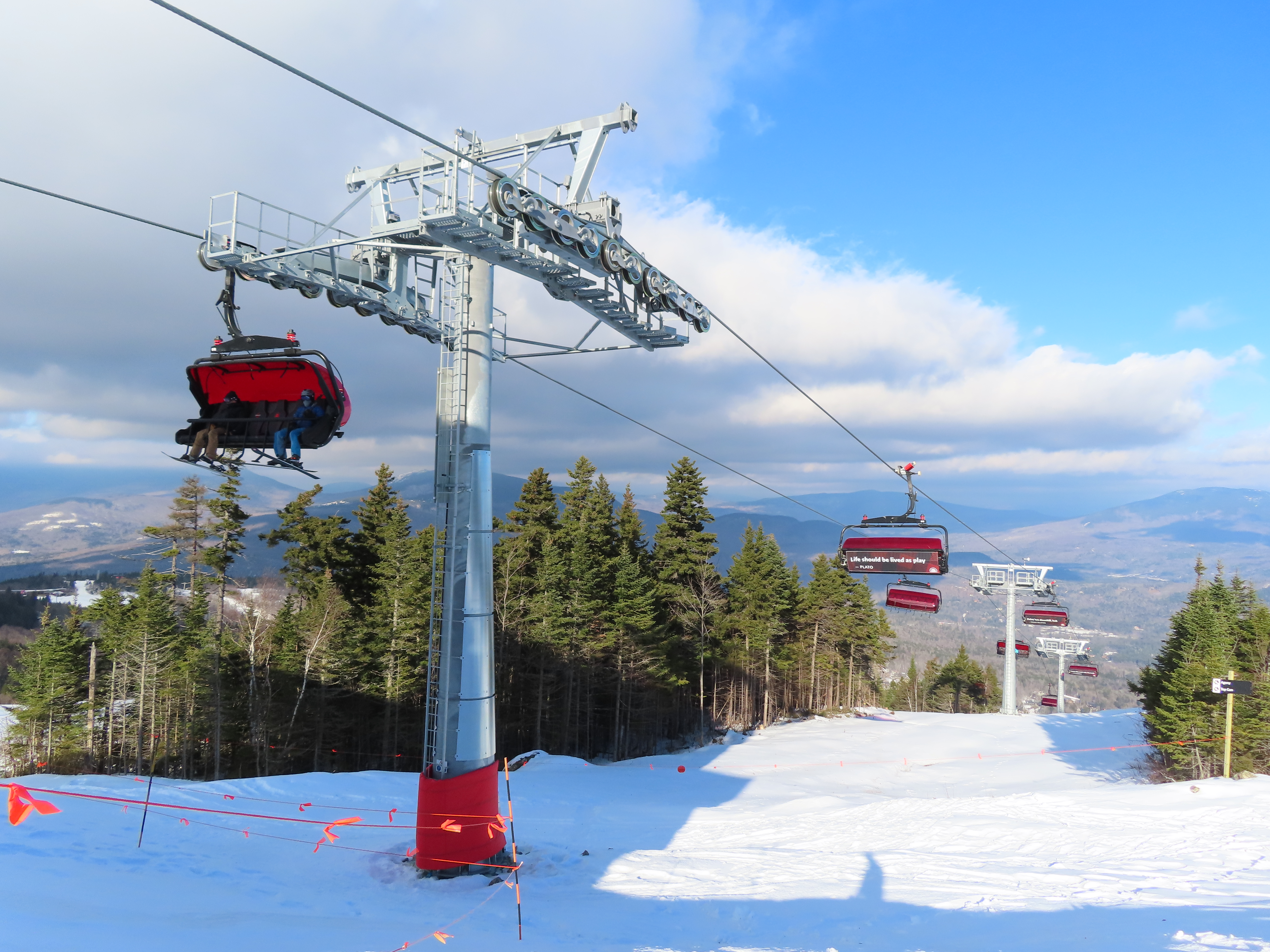
The biggest decline was the east coast, where the number of new lifts fell 60 percent year over year. Berkshire East debuted its first-ever detachable lift and Vail-owned Attitash replaced one of the most hated lifts in the east – the Summit Triple. The New York Olympic Regional Development Authority added new lifts at all three of its mountains, including a unique high speed quad with angle station at Whiteface called The Notch.
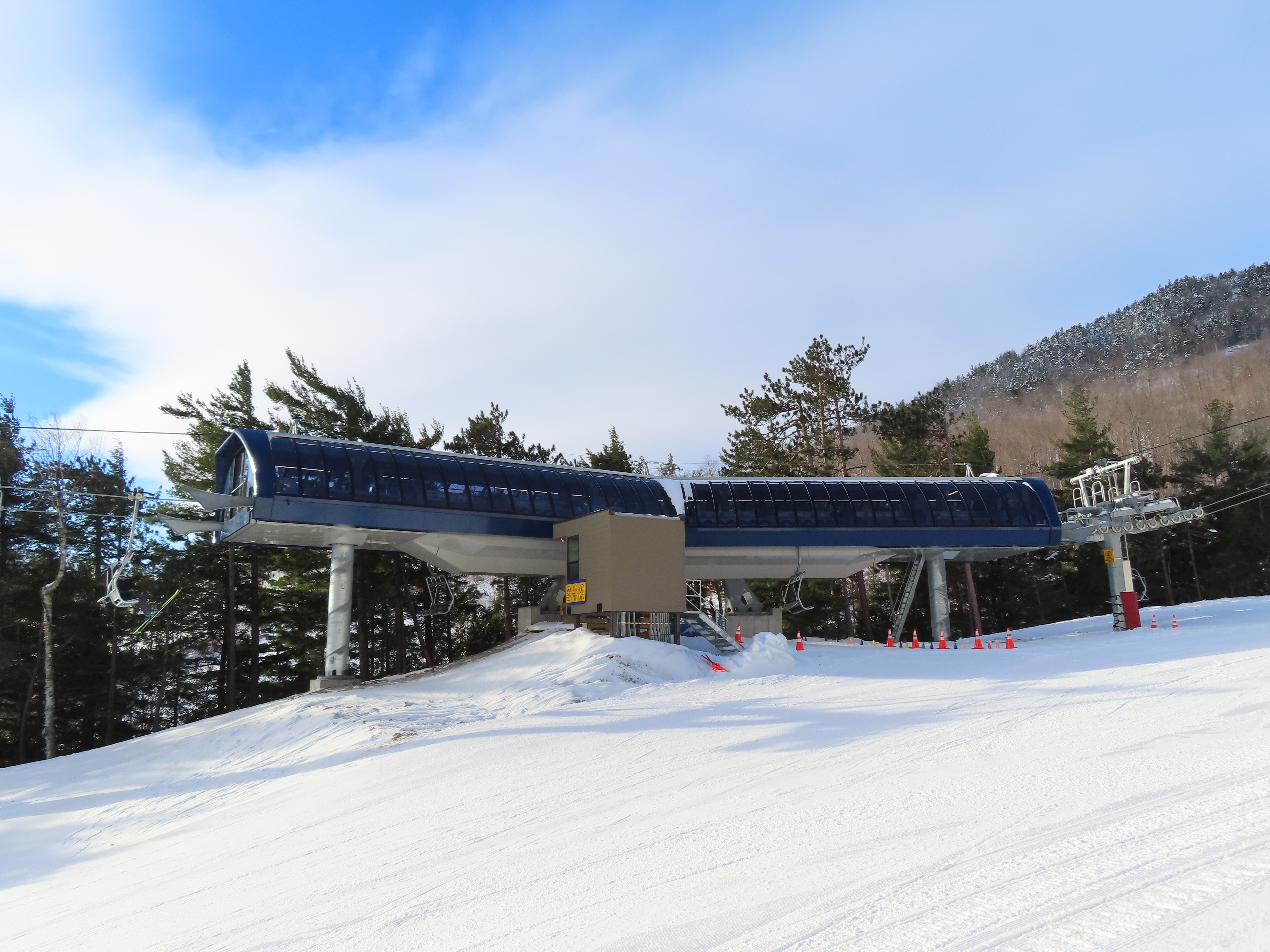
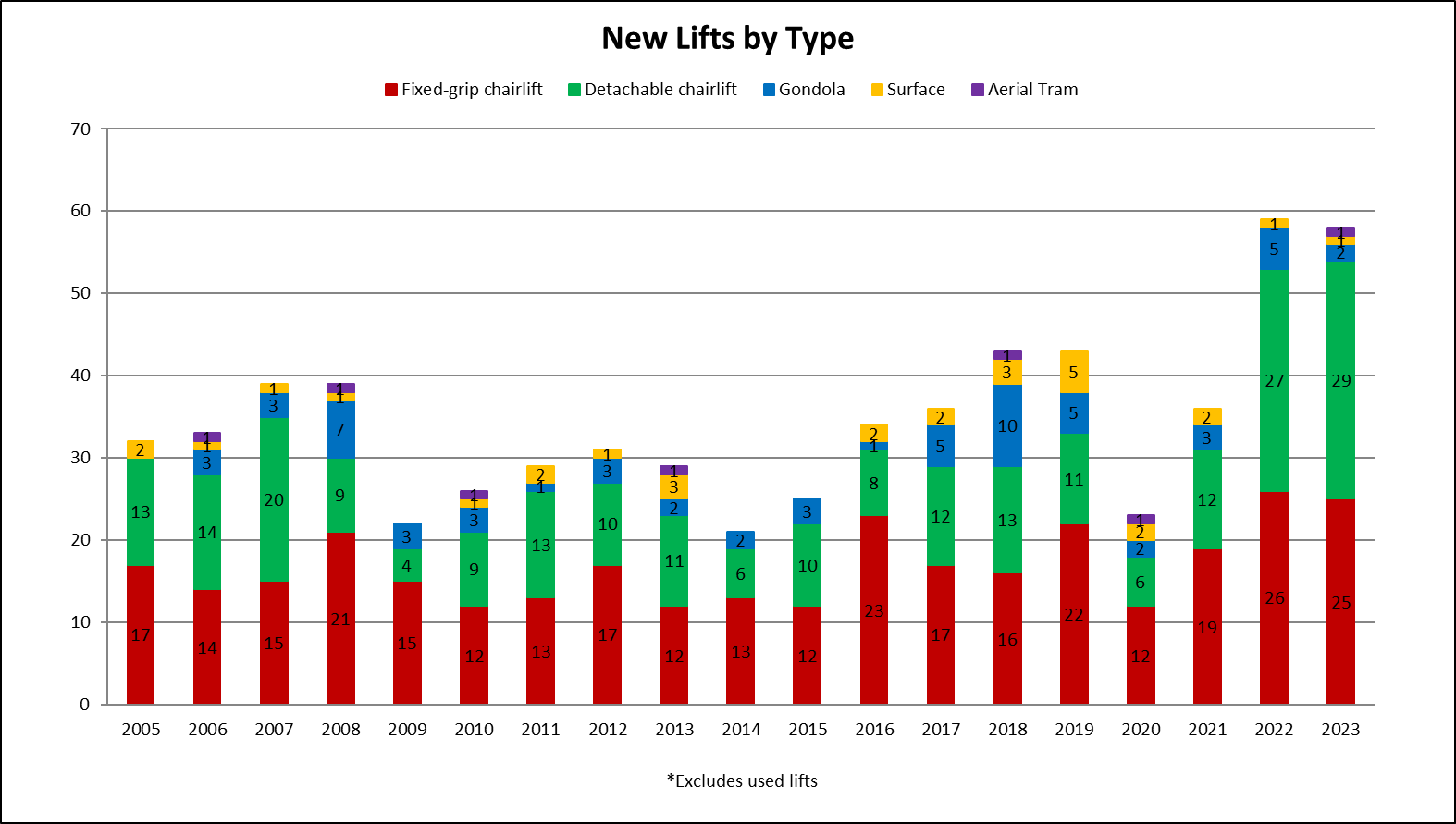
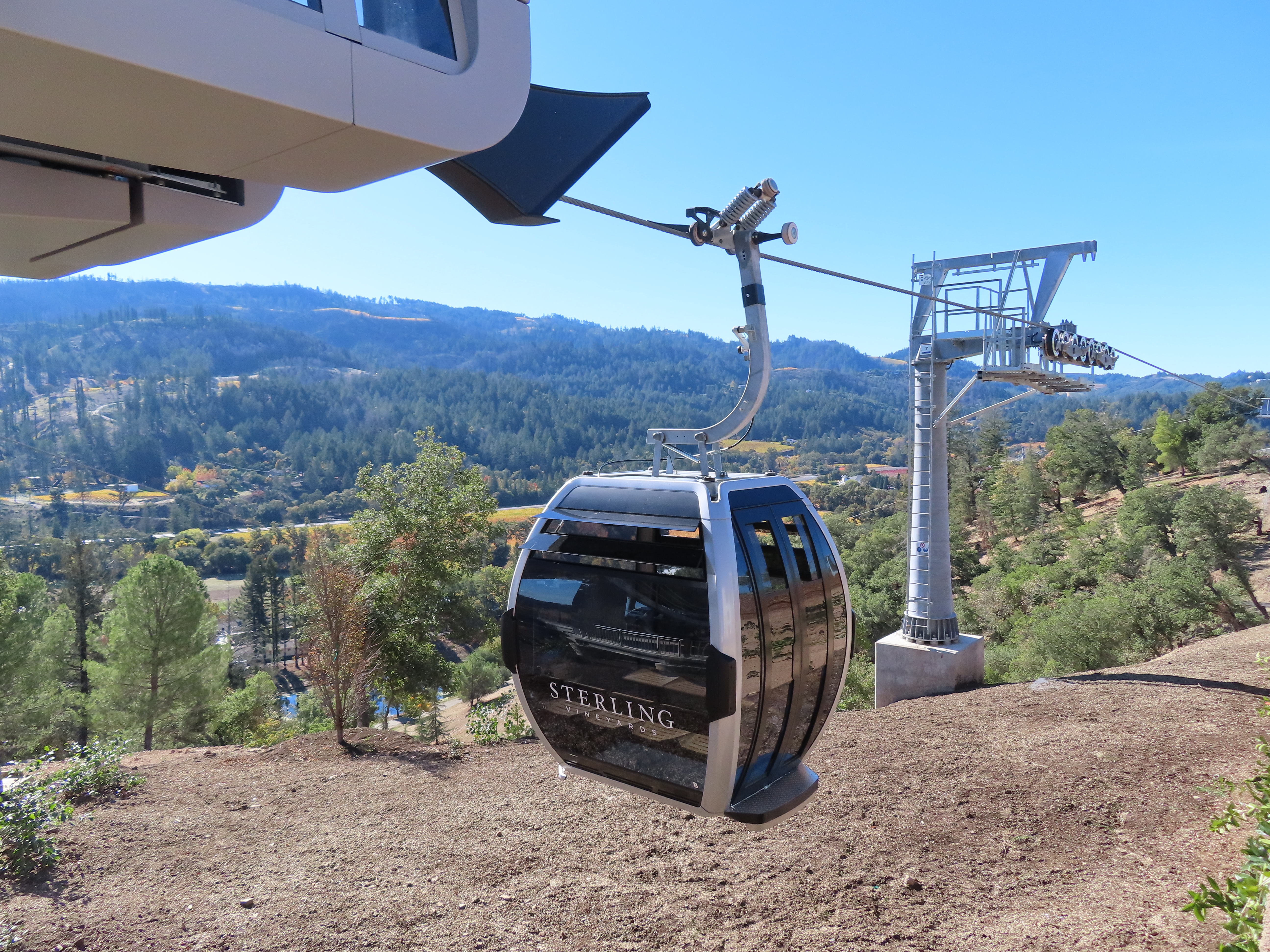
The mix of lifts was very similar to 2022, with detachables slightly outpacing fixed grips. Only two gondolas opened this year, one at Sterling Vineyards in California and the other at Steamboat. More popular were bubble chairlifts, which joined fleets at The Highlands, Sunday River and Wasatch Peaks Ranch. At Big Sky, the new Lone Peak Tram became the first large aerial tram in North America in 15 years. Bottineau Winter Park in North Dakota built the lone T-Bar this year, replacing an old Hall T-Bar.

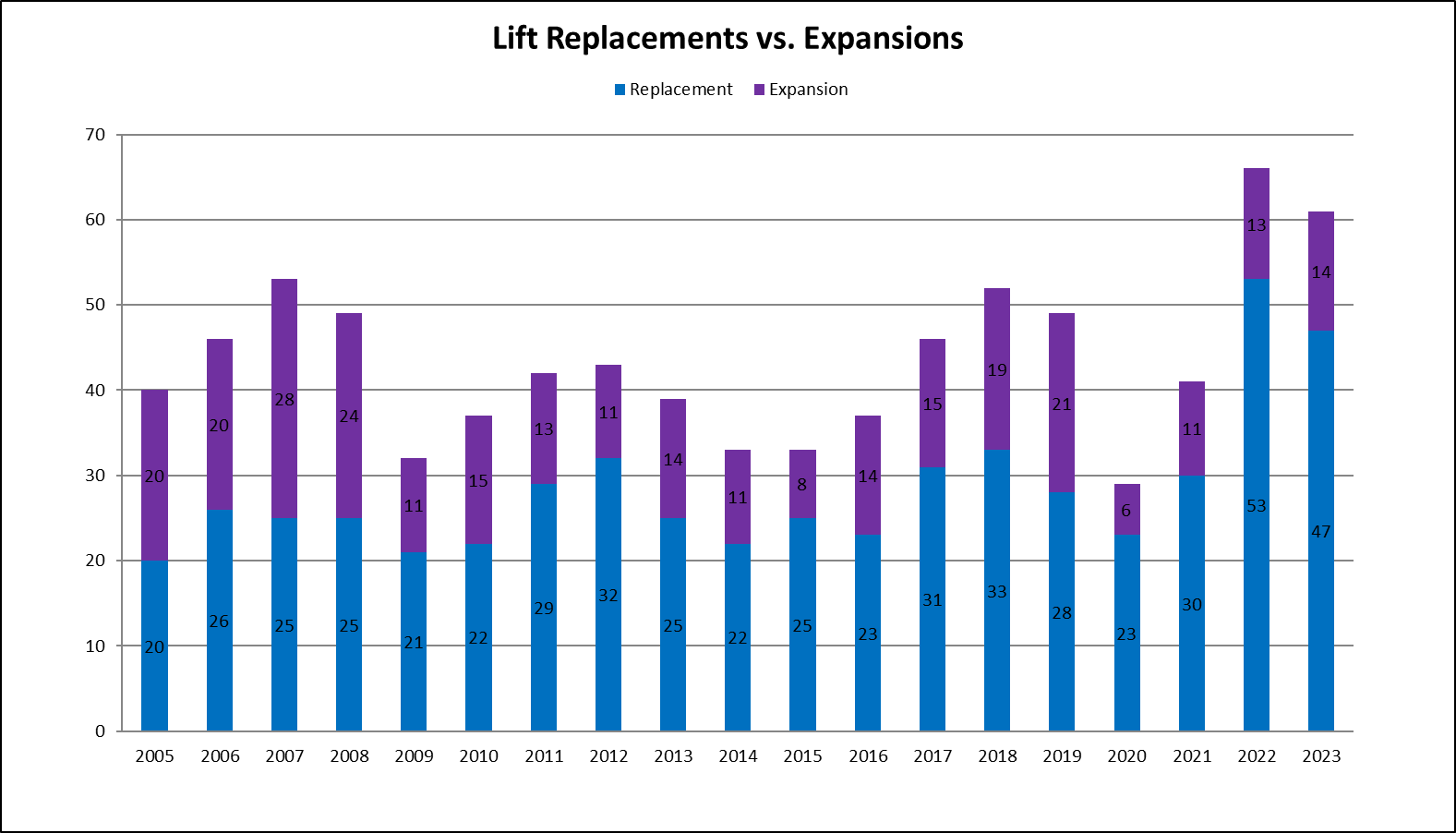
One exciting development this year was terrain expansions. In Colorado, Aspen Mountain, Keystone and Steamboat dropped ropes on a combined 1,350 acres of new terrain, all serviced by new detachable chairlifts from Leitner-Poma. Boyne Resorts also invested heavily to expand footprints in the east at Loon Mountain and Sugarloaf. Elsewhere, Trollhaugen, Wisconsin, Lee Canyon, Nevada and Whitewater, British Columbia constructed fixed grip quad chairs servicing new trail pods.
A number of resorts added infill lifts to boost capacity on existing terrain where there was no prior lift. Examples include the DeMoisy Express six pack at Snowbasin and a new beginner area at Wolf Creek, Colorado. There aren’t expansions per se but dramatically improve access to previously underutilized terrain.
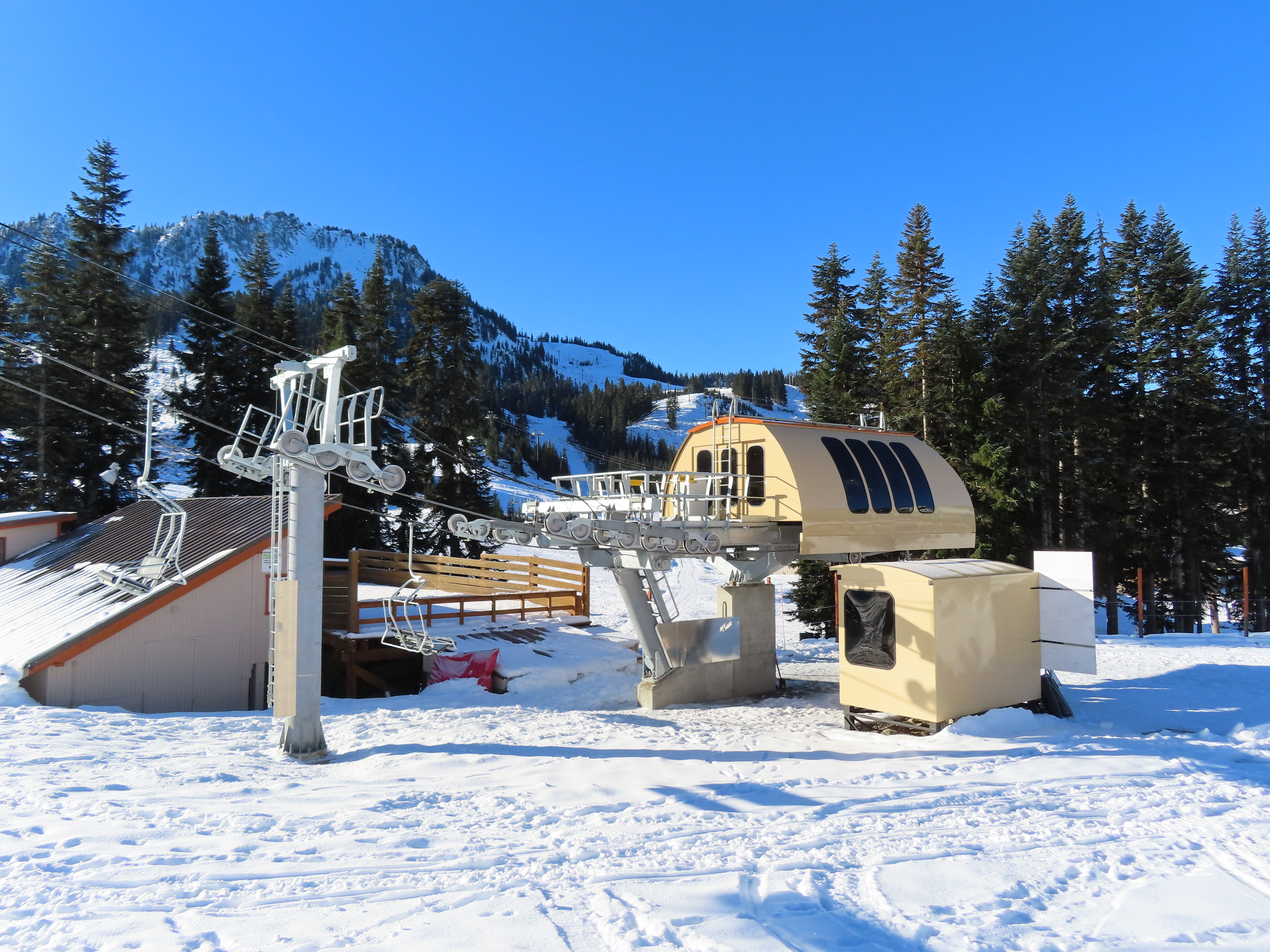
The balance of projects, 47 to be exact, were simply new machines replacing old machines. 59 lifts were removed from service in 2023 at an average age of 40 years. A whopping 17 Riblets retired along with five Halls, four Yans and four Borvigs.
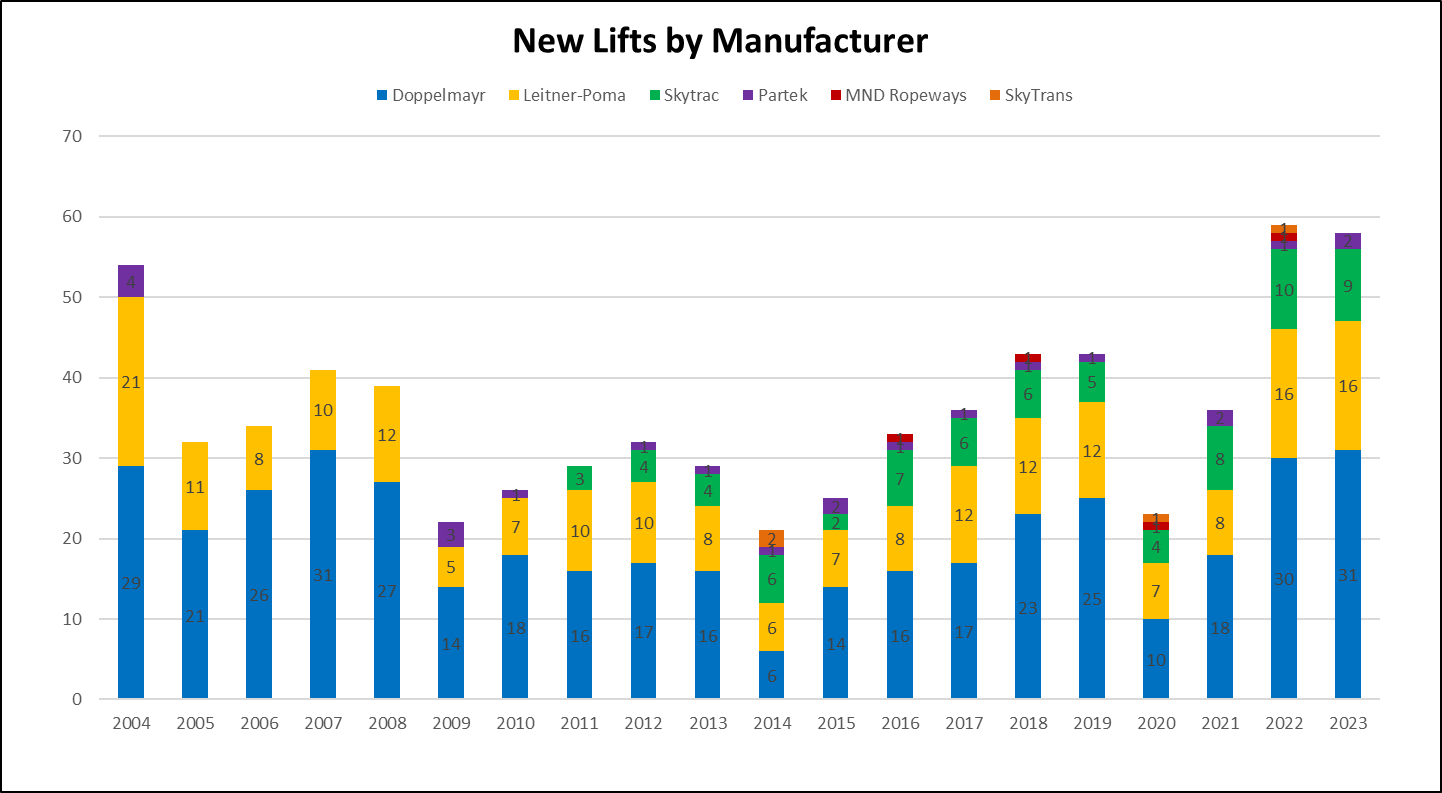
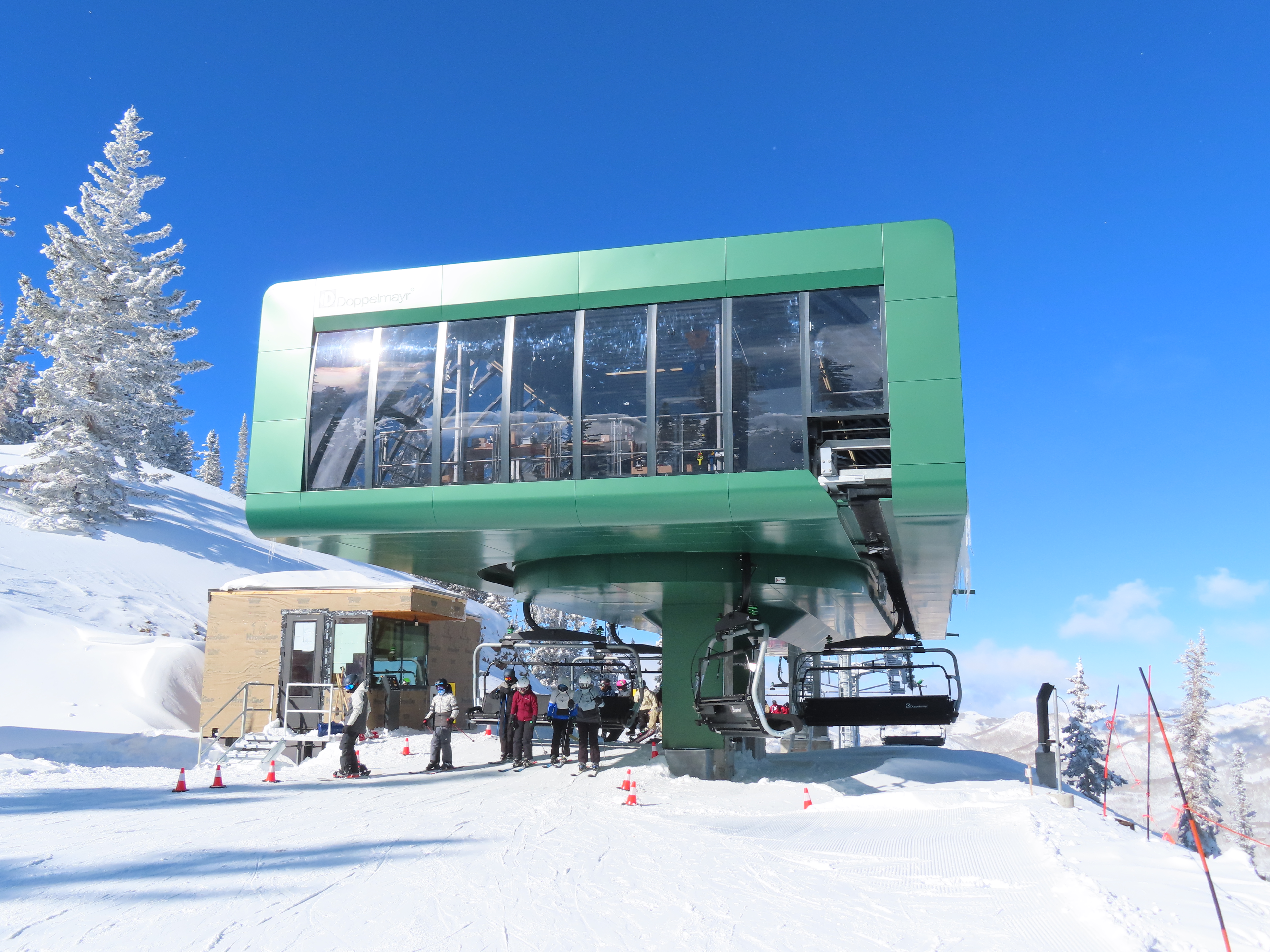
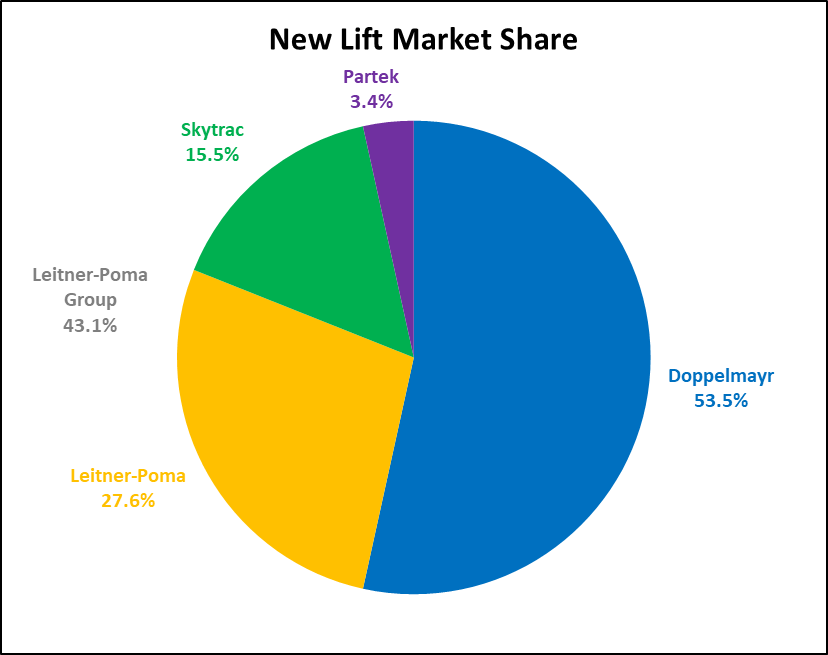
Doppelmayr and the HTI Group (Leitner-Poma and Skytrac parent) remain locked in a fiercely competitive duopoly, vying for business not only in North America but worldwide. Independent American manufacturer Partek did build two fixed grip lifts in Minnesota and Connecticut this year, continuing its history of serving small operators. France-based MND Group, which celebrated its first detachable lift in North America last year, did not install any aerial lifts in this part of the world this year, though they did supply a handful of conveyors. SkyTrans also didn’t build any lifts, leaving just three players in the aerial lift market in 2023. Overall Doppelmayr achieved 54 percent market share in North America while Leitner-Poma and Skytrac commanded 43 percent by number of projects.
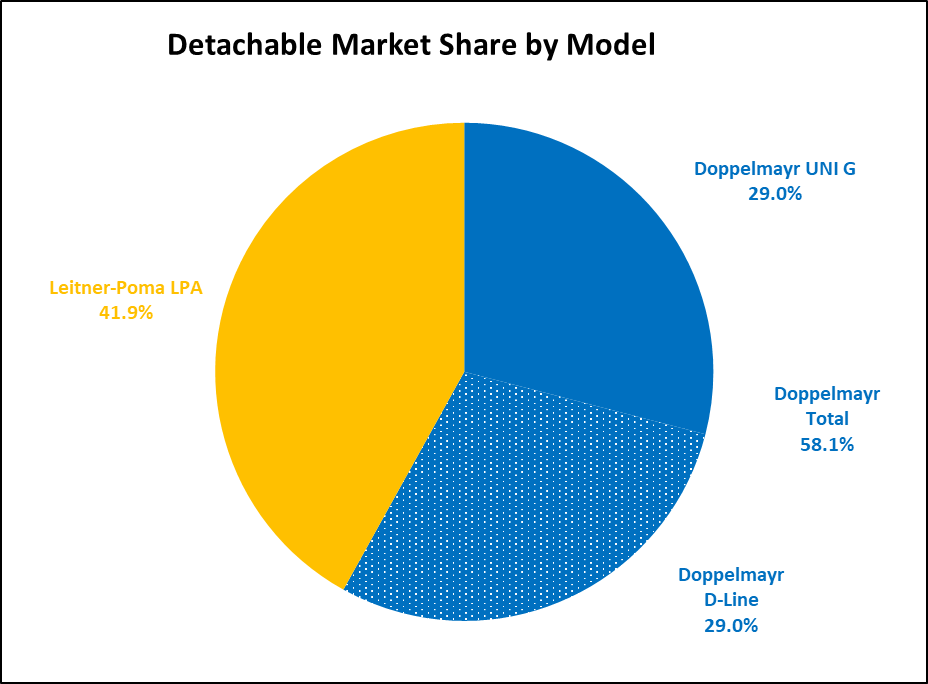
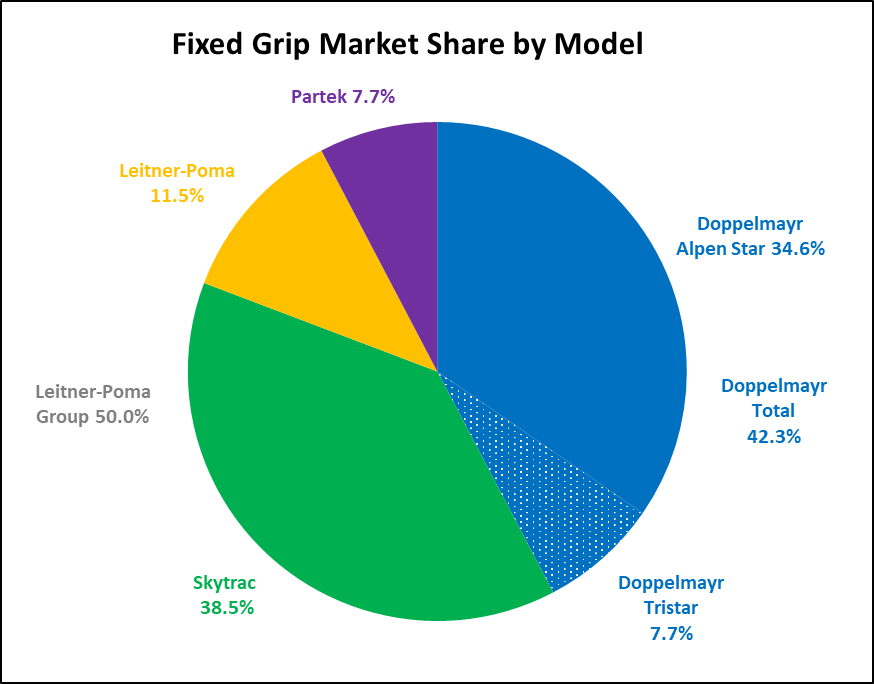
On the fixed grip side of the business, Leitner-Poma’s Alpha and Skytrac’s Monarch combined for 50 percent market share, besting Doppelmayr’s 42 percent. Doppelmayr led the detachable side with 58 percent share. Doppelmayr’s detachable projects split 50-50 between premium D-Line and standard UNI-G models.
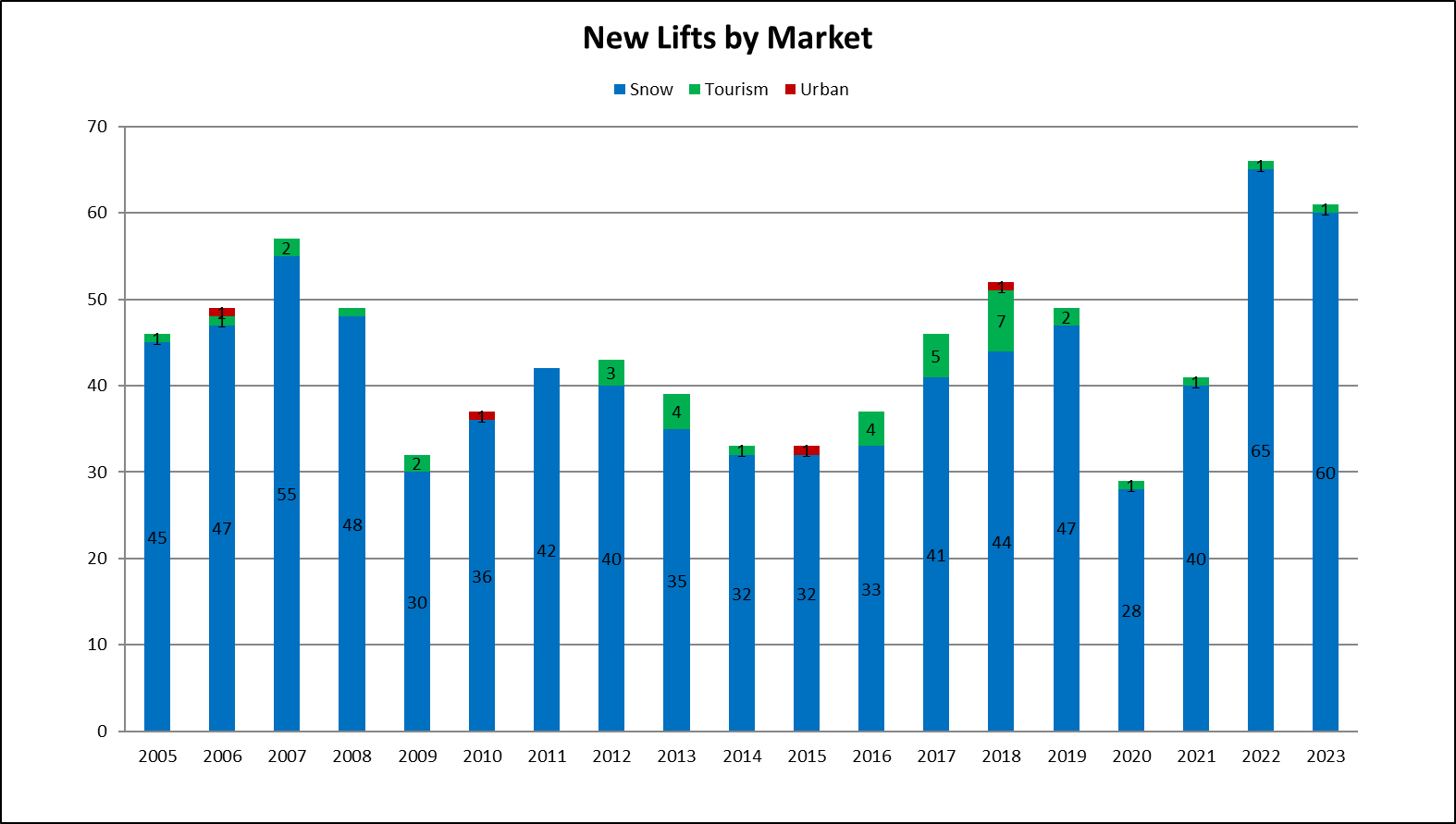
With 60 of 61 new lifts at ski resorts, Sterling Vineyards in California built the only non-ski lift in North America this year. Their new eight passenger gondola runs in a triangle alignment and carries riders to a hilltop tasting experience. Manufacturers completed zero urban projects this year in North America despite manufacturers’ best efforts and successes in other global markets.
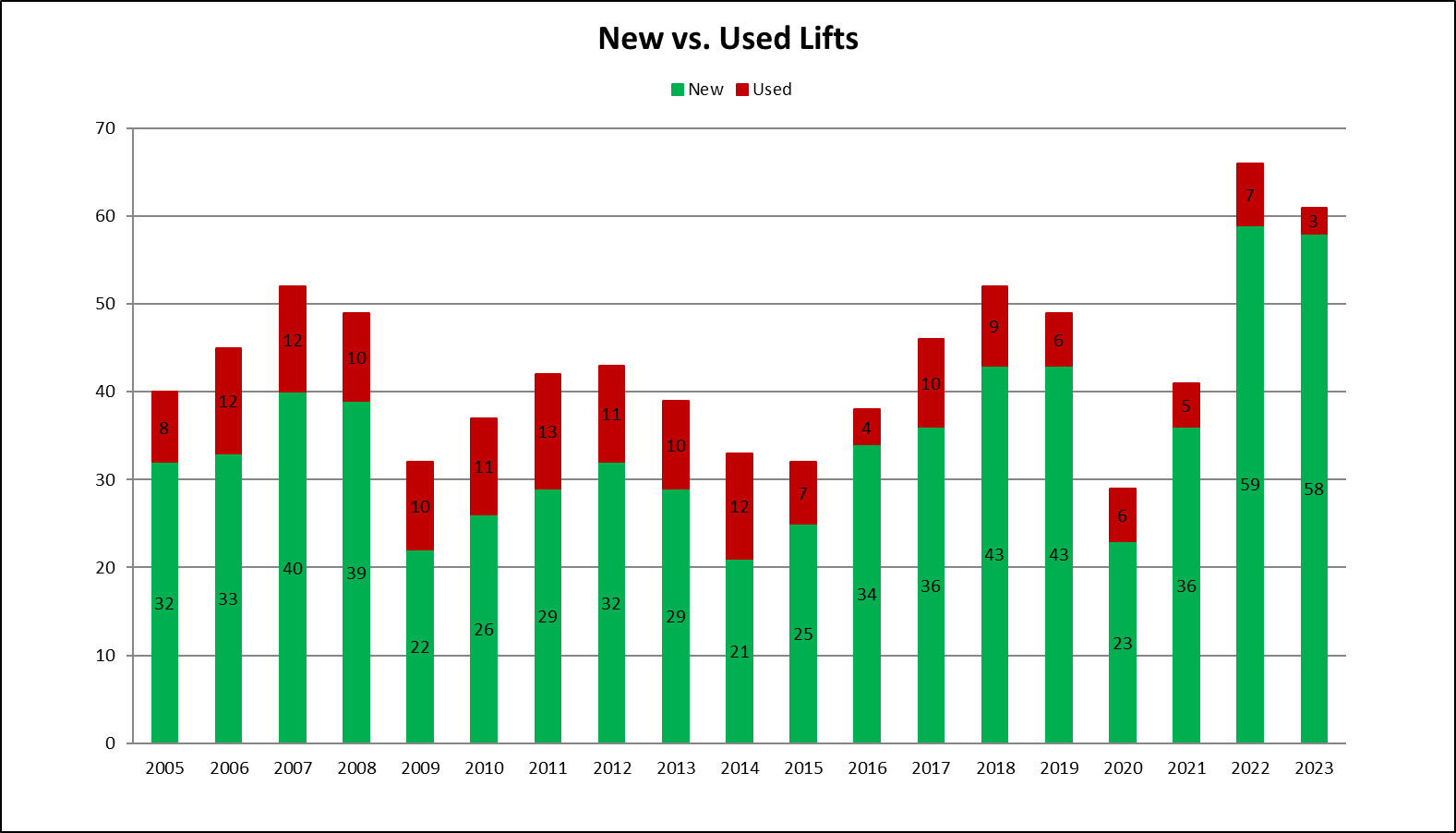
Only three resorts opted to install used lifts this offseason, the lowest number in decades. Red Lodge reinstalled Alta’s former detachable triple, China Peak strung up Jackson Hole’s old Thunder chair and Sugarloaf refurbished a high speed quad from sister property Big Sky. Bringing old lifts up to current code is complex and many resorts don’t have the institutional knowledge and labor to install a used lift in house any more.

I like to end with a chart comparing all the year’s lifts by size, measured in vertical transport feet per hour. You can see just how huge Steamboat’s Wild Blue and Sun Valley’s Challenger projects were compared to others this season. At the other end of the spectrum, Wolf Creek built the smallest new lift of the year, rising just 97 vertical feet and moving 1,200 skiers per hour.

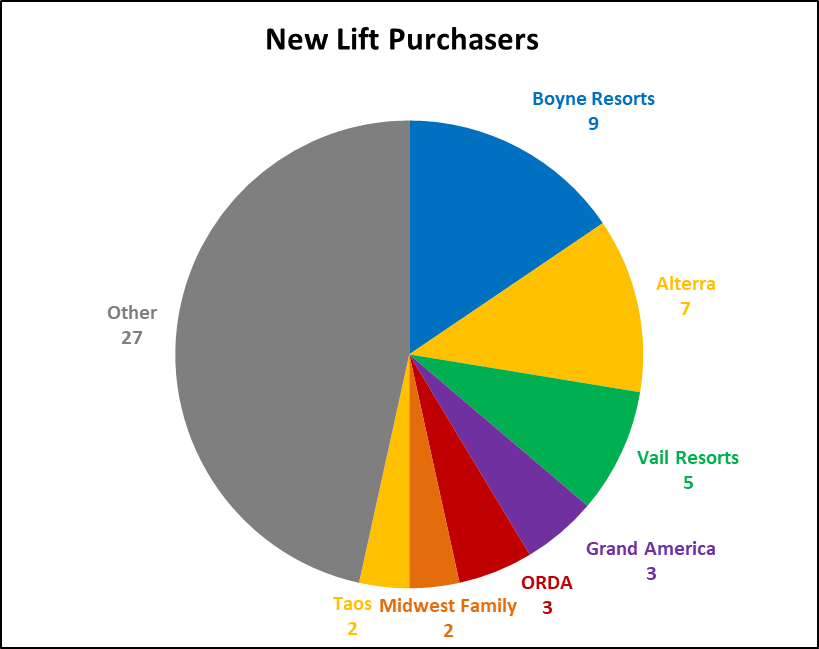
New this year I added a chart showing just how many lifts are being built by multi-resort conglomerates versus independents. Boyne Resorts led the pack with the new Big Sky tram, three six place D-Lines and five fixed grip chairlifts. Alterra completed major additions at six of its resorts while Vail Resorts added lifts at five of its mountains. Other multi-lift customers included Grand America Hotels & Resorts (parent company of Sun Valley and Snowbasin) and Midwest Family Ski Resorts. Still, almost half the customers for new lifts order just one.
Unlike last year on this day, nearly all new lifts are complete and load tested, a testament to hard work and an improved supply chain. For the few that aren’t open, the reason has nothing to do with shipping delays or labor shortages but a shortage of snow. The poor start this season across the industry may impact lift sales in future seasons. Despite winter’s absence, many operators have already committed to new lifts for next season. Big Sky just announced the longest eight seater in the world and Powder Mountain plans to build four new lifts in one summer. Dozens of other projects are in the pipeline and I hope you will follow along in 2024 as the lift business moves forward. Happy New Year.
 Lift Blog
Happy New Year, Peter & All.
LikeLike
With what Powder Mtn is proposing to do later this year with 4 new lifts, it reminds me of their neighbor Snowbasin and what they did in 98 with 4 new lifts, not counting the new skin terminals they threw on for the old Wildcat, MB, and LC. I’m excited to see PowMtn upgrading significantly. Having relatives who live there in Ogden Valley and near PowMtn as well as members of the HOA might get me access to skiing in all areas there..
LikeLike
How much of a doppelmayr or leitner-poma lift is manufactured here in North America vs Europe at this point? Are the major manufacturers at the point where everything is built here now?
LikeLike
That would be interesting to see what % of their business is north America vs Europe vs Asia. I would assume majority (guessing 70%) would come from Europe given the vast amount of ropeways that are in Switzerland, Austria, France, Italty, and more.
LikeLike
Not everything. Someone else can chime in. Regarding High Speed detatchables I seem to recall previous comments about a number of Doppie components and types of lifts that still come over on a boat vs Poma.
LikeLike
On the L-P side, almost all components of their fixed-grips lifts are built in Grand Junction. The grips and gearboxes are manufactured in France and Switzerland, respectively. APUs could come from anywhere. As far as their detachable lifts go, grips/carriers of all sorts/gearboxes/direct-drive motors are from Europe and most everything else is fabricated here.
Doppelmayr is pretty similar, from what I understand, especially with fixed-grips (although if you want the CTEC-style grip, that’s cast here). I think more of their detachable mechanisms come from Europe than L-P, but I’m not certain how much. They definitely build towers and structural items in North America.
LikeLike
On Doppelmayr’s end, the D-line equipment pretty much all ships from Wolfurt. The only parts of our D-line that originated state-side were operator houses and pre-wired electronics which came from SLC. Everything else arrived in a sea container from Austria. The carriers have Chinese export logos on them, so those were made in China. I’m not sure where they’re sourcing steel, but it all shipped from Wolfurt so I highly doubt it’s state-side. Like everything these days, the supply chain for ski lifts is extremely diverse. I believe the UNI lifts and most of the North American fixed grip models are being manufactured between SLC and Quebec.
LikeLiked by 1 person
Thanks for the clarifications. I hadn’t thought of the D-line; there’s so few of them in North America as of late. The carriers used to be made in Indonesia- the ones on our K-lift and many of the spare bails we’ve purchased over the years came from there at least.
LikeLike
I’m surprised that doppelmayr entrusts any of their components to Chinese manufacturers given that so many counterfeit doppelmayr lifts turn up in east Asia
LikeLike
Are they China Export or Conformité Européenne markings?
LikeLike
I think Doppelmayr EJ chairs are made in Thailand now, not China.
LikeLiked by 1 person
Happy new year Peter!
LikeLike
Thanks for the great information, Peter! I hope you know how much those of us that work in the ski lift industry appreciate your hard work! Looking forward to another “Remarkable Year” in 2024!
LikeLike
It is always interesting where and who are installing all these lifts in the us and Canada, I also think down in South America where the old Mardi Gras will be installed I believe at this moment, but I could be wrong on when it will be installed. I agree most places don’t have the knowledge to install older lifts in new locations, but I also think it involves the complexity of the machines there are leaving service vs the ones in the past which where cloned from the same manufacturer.
Over all love the blog and see more of what is installed in the future.
Happy New Year Peter, and to everyone on the blog.
LikeLike
Nice to see the Midwest ski resorts thriving!
LikeLike
Feels like you’re missing an opportunity to pair this post with an annual Lifties Awards post. Some potential categories:
Best New Lift
Best New Fixed Grip Chair
Best New Surface Lift
Best New Lift East/Midwest/West
Best Lift Relocation
I’d imagine those designations would spur a fair bit of discussion and engagement here. At least in most years – pretty sure Bug Sky Tram would be a landslide winner this year. It’s interesting in that truly major projects like Wild Blue 2 at Steamboat and Challenger 6 at Sun Valley or Bergman Bowl,, which would be easily be top of the list in most years, are likely relegated to “others receiving votes” status this year.
LikeLiked by 1 person
best surface lift of 23 should go to Maverick Mountain’s new SunKid carpet (relocated from Big Sky), replacing their infamous handle tow that had a reputation for beating the crap out of kids, instructors, parents, & really just anyone who dared go near it…
LikeLike
Good idea Mike B! I think the best midwest new lift award should be the new HSS lifts that both Snowriver and Lutsen or the terrain expansion at Troll. Honestly leaning towards the terrain expansion as that’s always really nice to see.
LikeLike
Happy new year, Peter! Thanks for another year of great writeups on the blog!
LikeLike
While Steamboat’s Wild Blue Gondola may be ‘record breaking’ in some respects, it’s actually not the longest gondola ever built in North America. From Peter’s table, Wild Blue is 12,243 + 4,267 = 16,510′ long—100′ longer than the Whistler Village Gondola.
But according to New England Ski History, the three-stage Killington Gondola was roughly 1000 feet longer (and calculated distance on google maps, which provides a lower bound, confirms it was at least 3.25 miles). The original gondola was so ambitious, it bankrupted its manufacturer, Carlevaro & Savio. A NY Times article from the 70s also describes it as “three and a half miles long” and as the longest gondola in the world, at the time. Its sucessor, the Skyeship, is roughly a mile shorter.
LikeLike