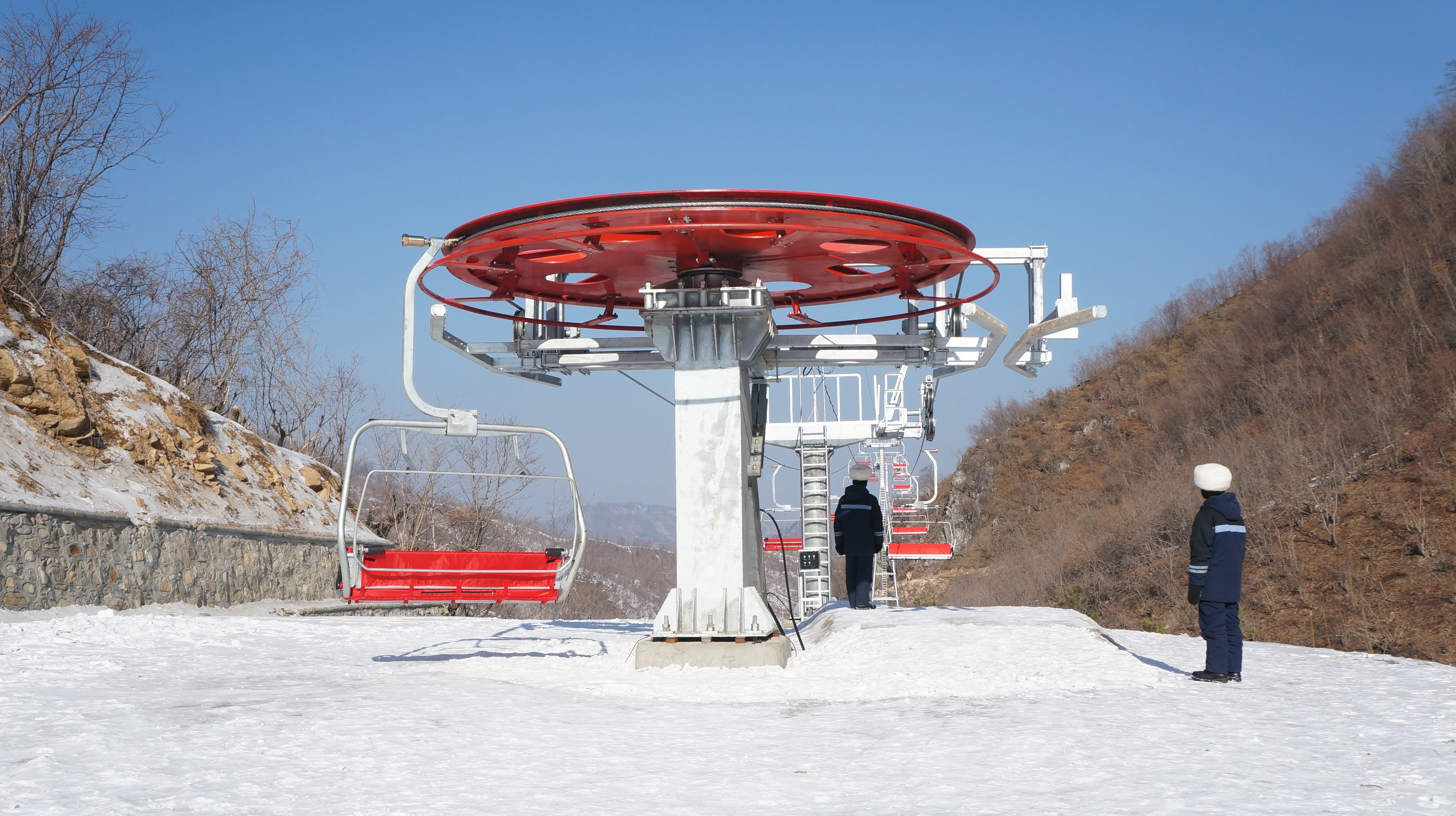
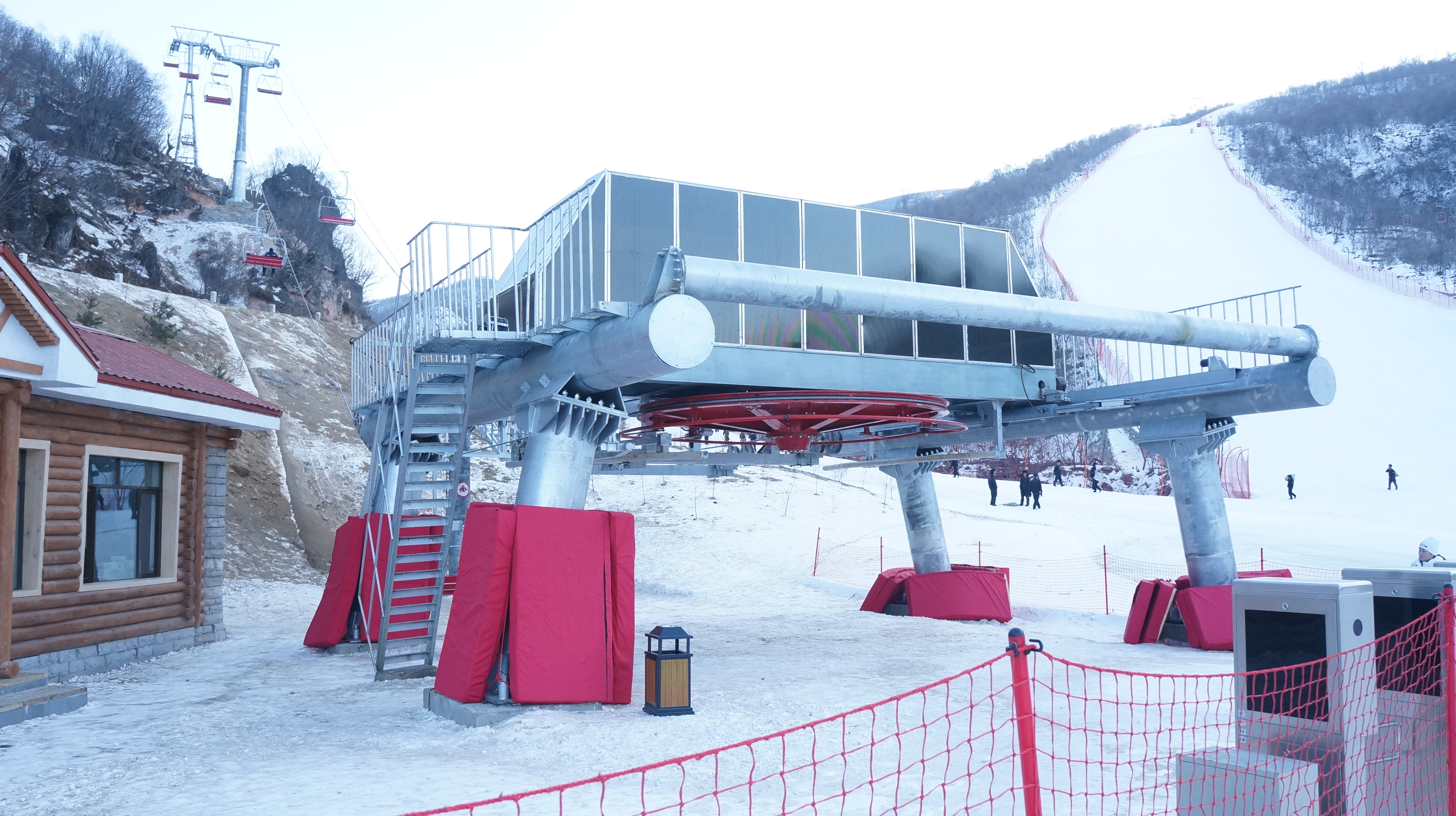
In July 2011, South Korea won the 2018 Winter Olympics, beating out cities in France and Germany. Almost immediately, North Korea announced plans to build its own ski resort called Masik Pass. The plan required at least five lifts despite the lack of any lift manufacturers in Asia.
Masik Pass Trail Map. All Photos from Uri Tours on Flickr.
Kim Jong Un’s government turned to the usual players, Doppelmayr and Poma. Both refused to build the lifts, citing the international ban on selling luxury goods to the North. Switzerland’s BMF agreed to a $7.7 million order but the Swiss government killed the deal. Ironically, Switzerland is where Kim Jong Un went to private school in the early 1990s and where he learned to ski.
For most of the last 25 years, there has been no major American lift manufacturer. Sure, Leitner-Poma and Doppelmayr/Garaventa have significant manufacturing here but they are indisputably European. Before the early 1990’s, prolific American lift builders like Riblet and Hall built more than 500 lifts each. Then Garaventa bought CTEC in 1992. Riblet built its last lift at Cooper Spur in Oregon in 2002 and closed the next year. The last remaining US manufacturer, Partek, sold to Doppelmayr in 2005. Ski Area Management’s headline at the time was “Then there were two.”
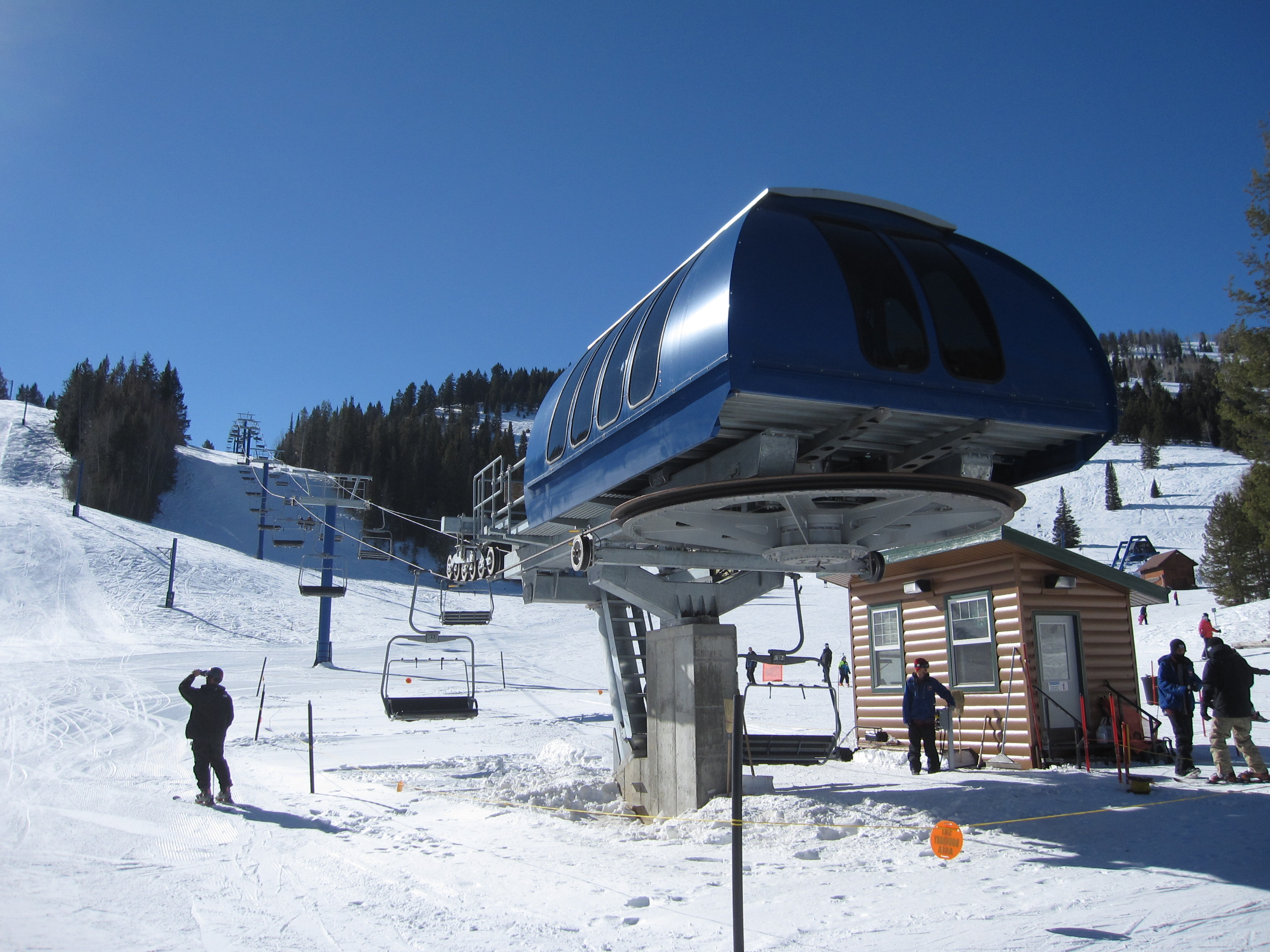
2011 SkyTrac Quad at Beaver Mountain, Utah.
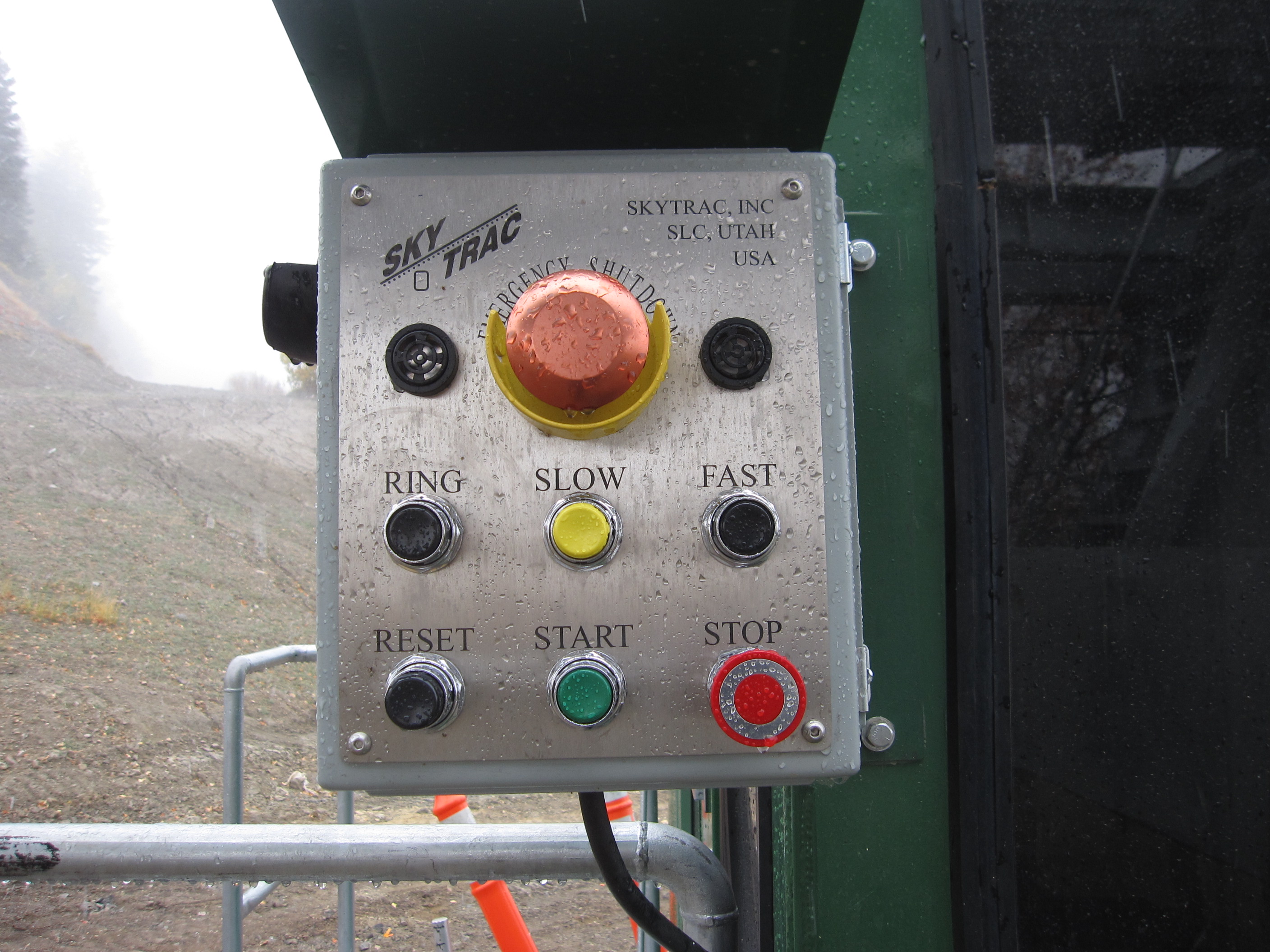
That all changed in 2010 when a group of CTEC veterans started Skytrac in Salt Lake City. One of them was Jan Leonard, the former president of Doppelmayr CTEC who “retired” in 2007. Skytrac’s first major project was a replacement drive terminal for a Hall double at Monarch Mountain in Colorado. In tribute to their first customer, Skytrac named its drive terminal models the Monarch and Monarch XL. Skytrac’s strategy seems to be to build simple and economical lifts that appeal to smaller resorts. All of their lifts feature the Monarch drive/tension terminal with a fixed return. One can’t help but notice the resemblance to CTEC’s lifts.
SkyTrac Controls. They look like a CTEC!
I couldn’t talk about Skytrac without bringing up their chairs. For some reason they abandoned the classic bail chair for a Euro-style chair. I think they look strange. As someone who operates lifts, I question the practicality of bumping a chair with no bail.
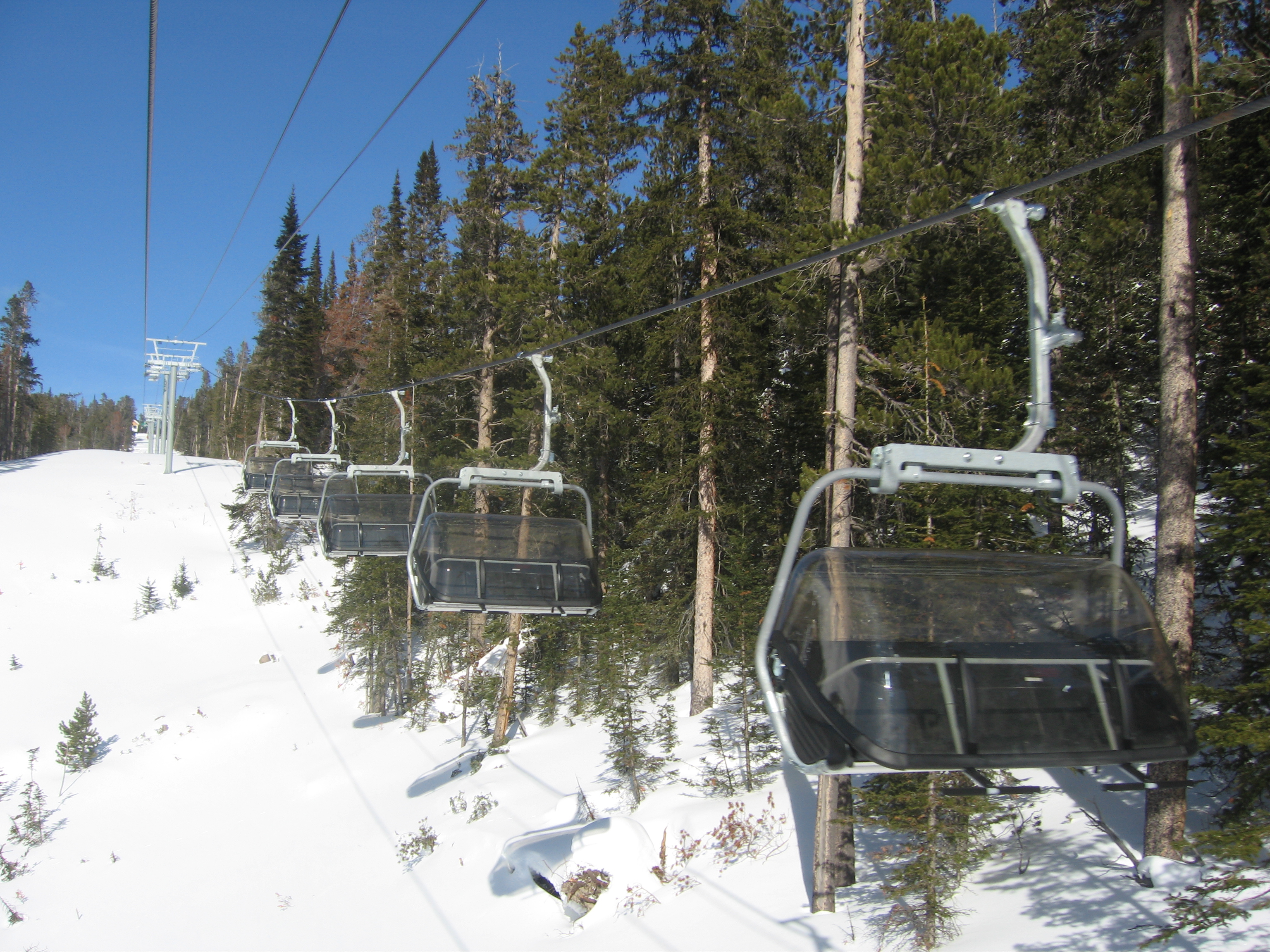
Growing up in the rainy Pacific Northwest, I happen to love chairs with bubbles. I can get the comfort of a gondola without taking my skis off or enjoy fresh air like on any other chairlift. Lifts with bubbles are technically very cool too. Electronic eyes in the lift terminals know when chairs are empty and the bubbles lower automatically. Chairs stay dry and lifties don’t have to sweep them or flip chairs at night.
Bubbles everywhere at the Yellowstone Club.
Despite their added comfort, bubbles haven’t really caught on in North America. Europe is a different story where 30+ lifts are built with them every year. In the US and Canada, Doppelmayr has built 16 lifts with bubbles since 1985. You can find them at Whistler-Blackcomb, Sun Peaks, Mont-Saint-Anne, Big Sky, Canyons and Stoneham. The Yellowstone Club also has bubbles on all six of their quad chairs.
What if you could build two lifts for the price of one longer lift? A handful of ski areas have done it with “up and over” lifts. With this setup, riders load at each end and unload at a ridgetop mid-station. There are obvious cost advantages but also limited locations where such a lift makes sense. Due to multiple load/unload areas more stops and slows can occur. Another disadvantage is that the entire system has to run even if only one side is open. Most up and over lifts are located in the Pacific Northwest.
Ray’s lift at Sundance, UT.
Robert Redford’s Sundance Resort built a CTEC up and over quad in 1995 to replace two lifts. Skiers who load Ray’s Lift in the main village can unload at the Mont Mountain summit or continue down the other side to the base of the Arrowhead lift. Guests can also load at this end to ride back up to the mid-station. Ray’s lift is a beast – depending on the season it has eight different load/unload points, five lift shacks with controls and 33 towers.
Stevens Pass considers its Double Diamond/Southern Cross system as two separate lifts. Skiers load at both ends and unload on two ramps at the summit which are monitored by one operator. The front side portion, called Double Diamond, is short and steep while the rest of the lift is on the Mill Valley side and dubbed Southern Cross. This system was also built by CTEC in 1987. The combined lift is 5,700 feet long and moves 1,200 people per hour up each side.
One operator oversees two unloading ramps from high above at Stevens Pass.
Perhaps the most famous of the up and over lifts is the Dinosaur at Snoqualmie’s Hyak. It was built by Murray-Latta in 1965. Over 5,000 feet long, it started at the base of Hyak, crossed the summit and continued down into Hidden Valley. This one lift accessed 100% of the resort’s terrain on both sides of Mt. Hyak. The lift had a rollback in 1971 that injured dozens of skiers. The Dinosaur continued to run until 1988. When it closed, large portions of Hyak became abandoned. The Dinosaur sat idle until was removed in 2009 and replaced with two used Riblet lifts, a triple on the front side and a double in Hidden Valley.
Moab, a town of 5,000 in the Utah desert is the surprising home of two failed lift projects – a gondola that never opened and a modern chairlift that lasted only a few years.
Moab Scenic Tram
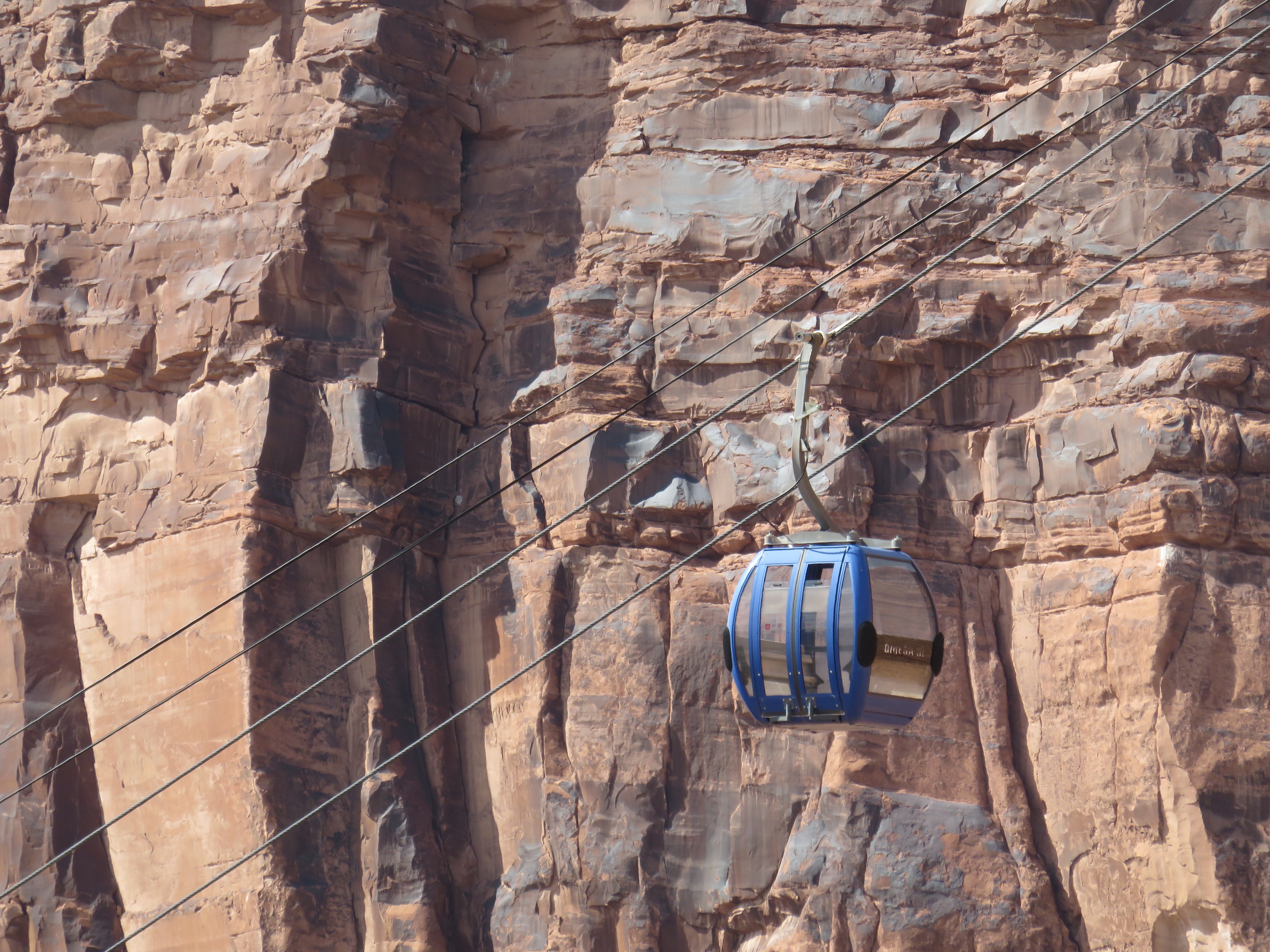
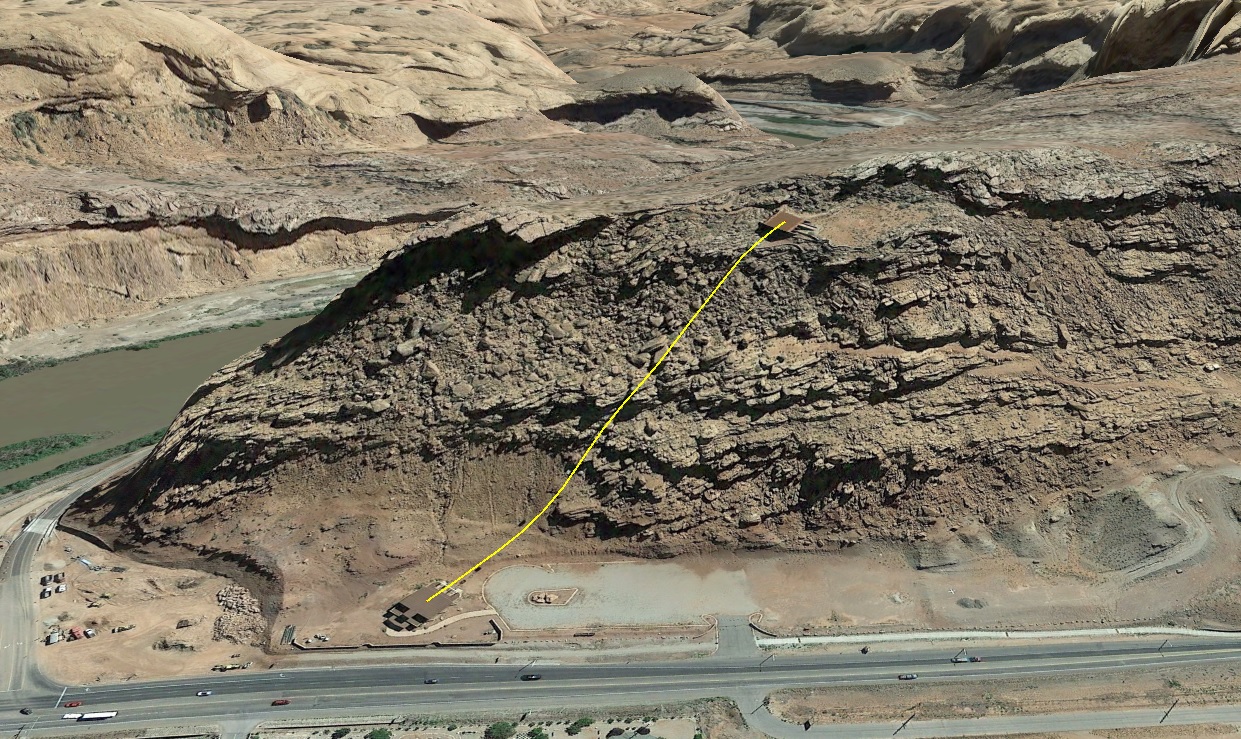
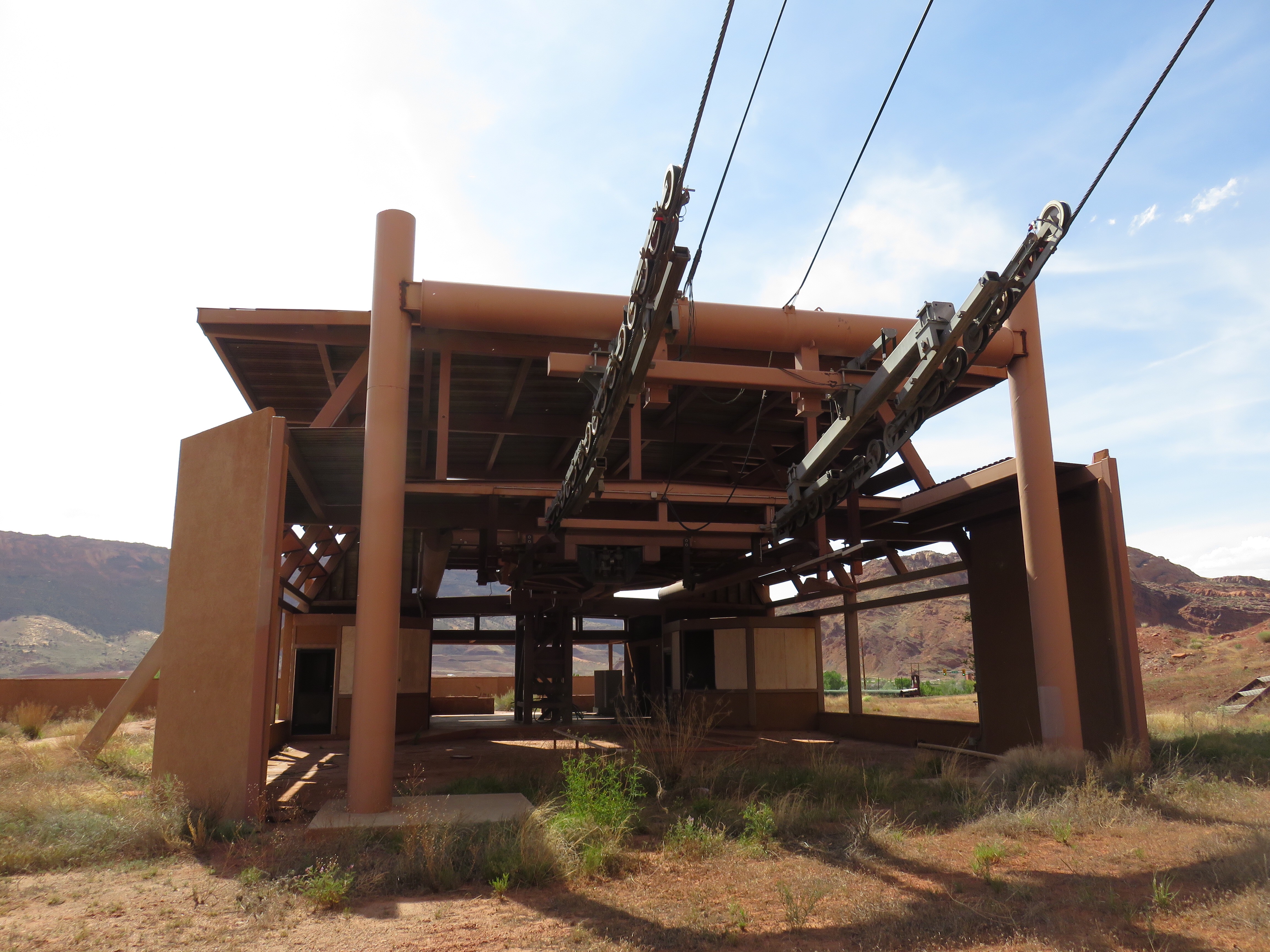
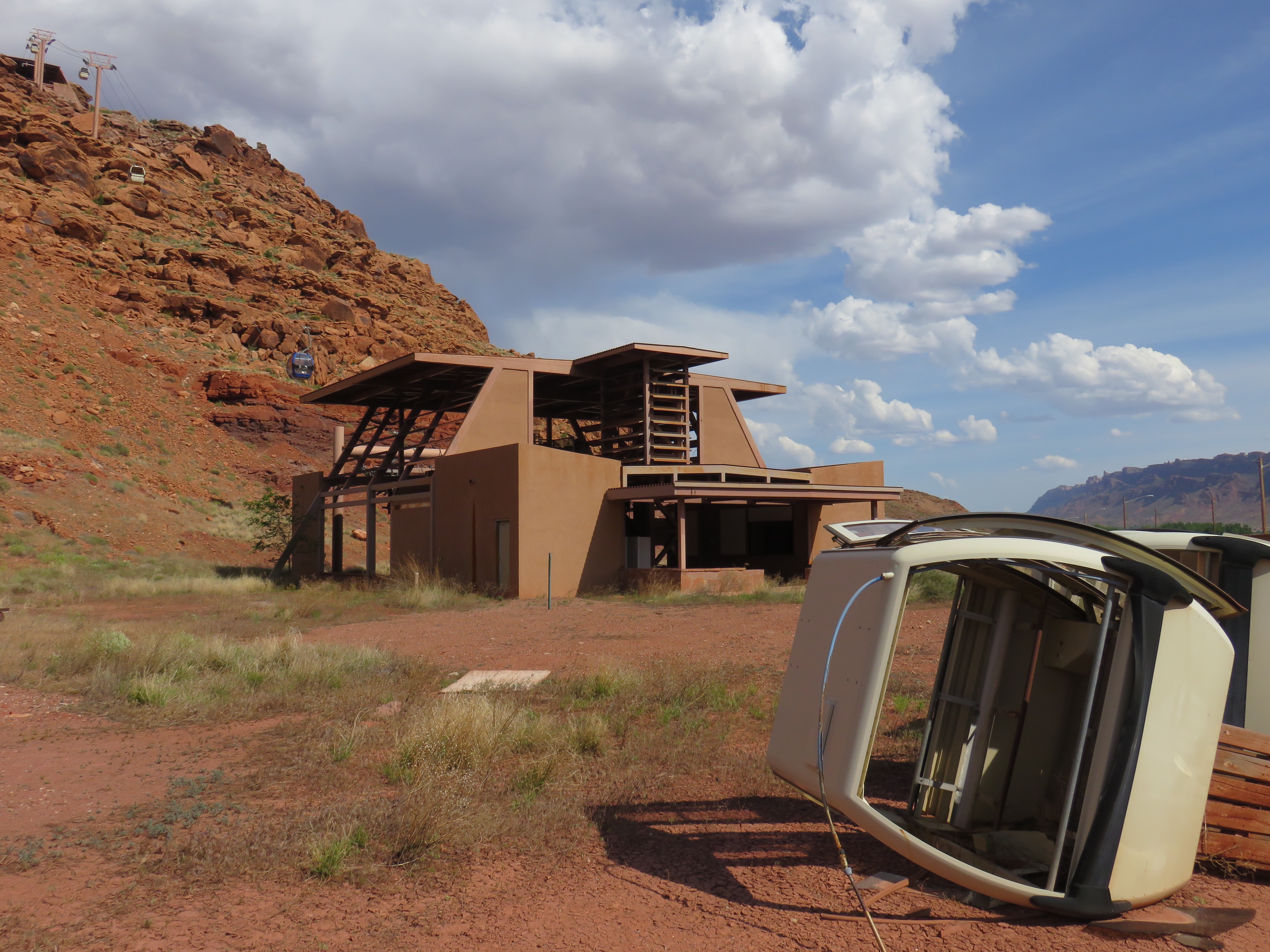
Moab Scenic Tram from Google Earth.Just south of Arches National Park stands the Moab Scenic Tram. It’s actually a pulse gondola built by Doppelmayr. A small group of investors spent $3.3 million to build the gondola along with a parking lot and two terminal buildings in 1999. From the outset it was criticized as the “tram to nowhere.” Scheduled to open in April 2001, the tram’s owners got in a fight with the county over a removal bond to be paid in case the business failed. Ironically the business never opened and the vandalized tram remains 16 years later. Its windows and control panels have been smashed and graffiti is everywhere. The lift is very short with only five towers and a handful of cabins, some of which never made it onto the haul rope. It is probably the world’s newest gondola to be tensioned with a counterweight and without level boarding. If you’d like to check it out in person, it’s hard to miss at the intersection of US 191 and Route 128.
The lower terminal of the Moab Scenic Tram sits abandoned in 2015. The lift never carried a single customer. Some cabins remain on the line while others lie in ruin at the base station.
Moab Scenic Skyway
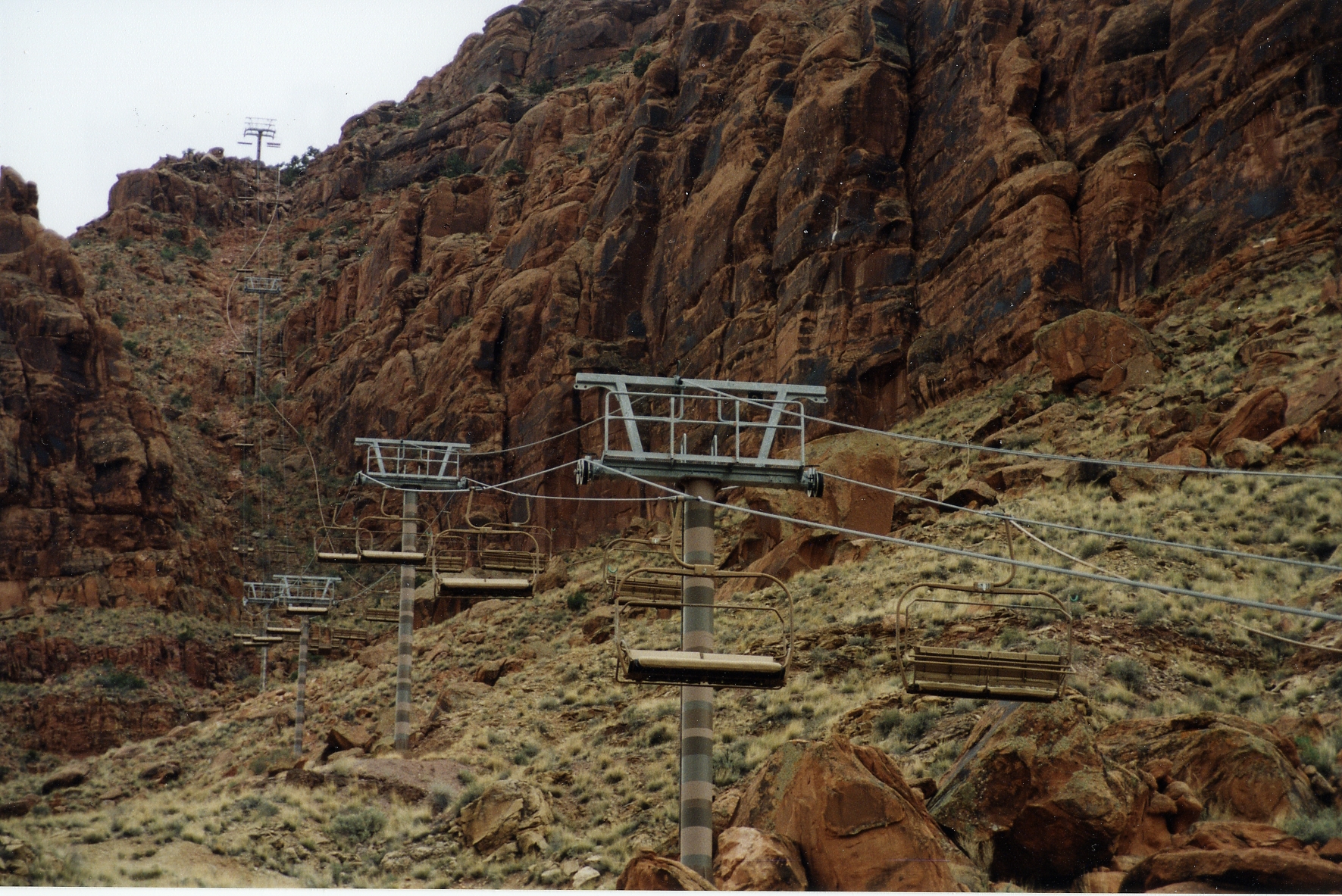
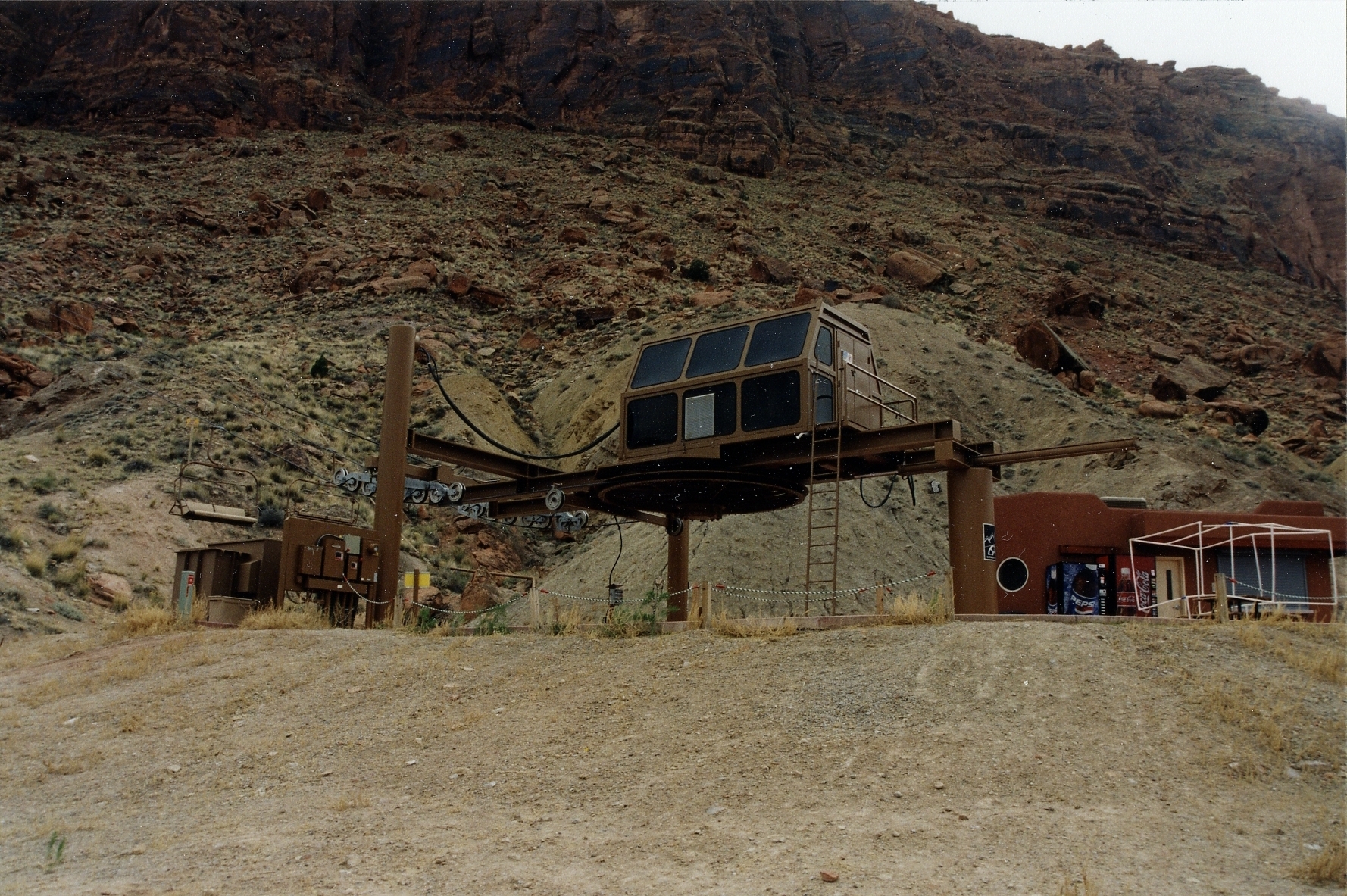
The Moab Scenic Skyway scaled the Moab Rim.On the other side of town was the Moab Scenic Skyway, a Garaventa CTEC quad chairlift which took hikers and bikers 1,000 feet up to the Moab Rim. Longtime resident Emmett Mays had dreamed of building a lift on his property since the 1970’s. He spent $2.2 million to build the lift, trails and parking lot and it opened in May 1999. The entire lift was painted brown and orange camouflage colors to blend in with the rocks below. Designed purely for sightseeing, it ran 250 feet a minute and took 16 minutes to ride round-trip. The attraction lasted five years, closing in 2004. The Nature Conservancy bought the land and the lift was sold to Whitefish Mountain Resort in Montana. It operates today as the Easy Rider Quad. The galvanized chairs still have patches of brown paint on them!



 Lift Blog