Subway in the Sky

There is a ropeway revolution going on in the Bolivian city of La Paz.  Last month, Doppelmayr won the largest lift construction contract in history to expand the region’s urban gondola network.  The government of Bolivia will pay $450 million for six new 10-passenger gondolas.  To put it in perspective, Doppelmayr’s total revenue last year was $915 million.  The company says 80% its business still comes from building lifts at ski resorts but that seems poised to change with La Paz as an urban ropeway success story.
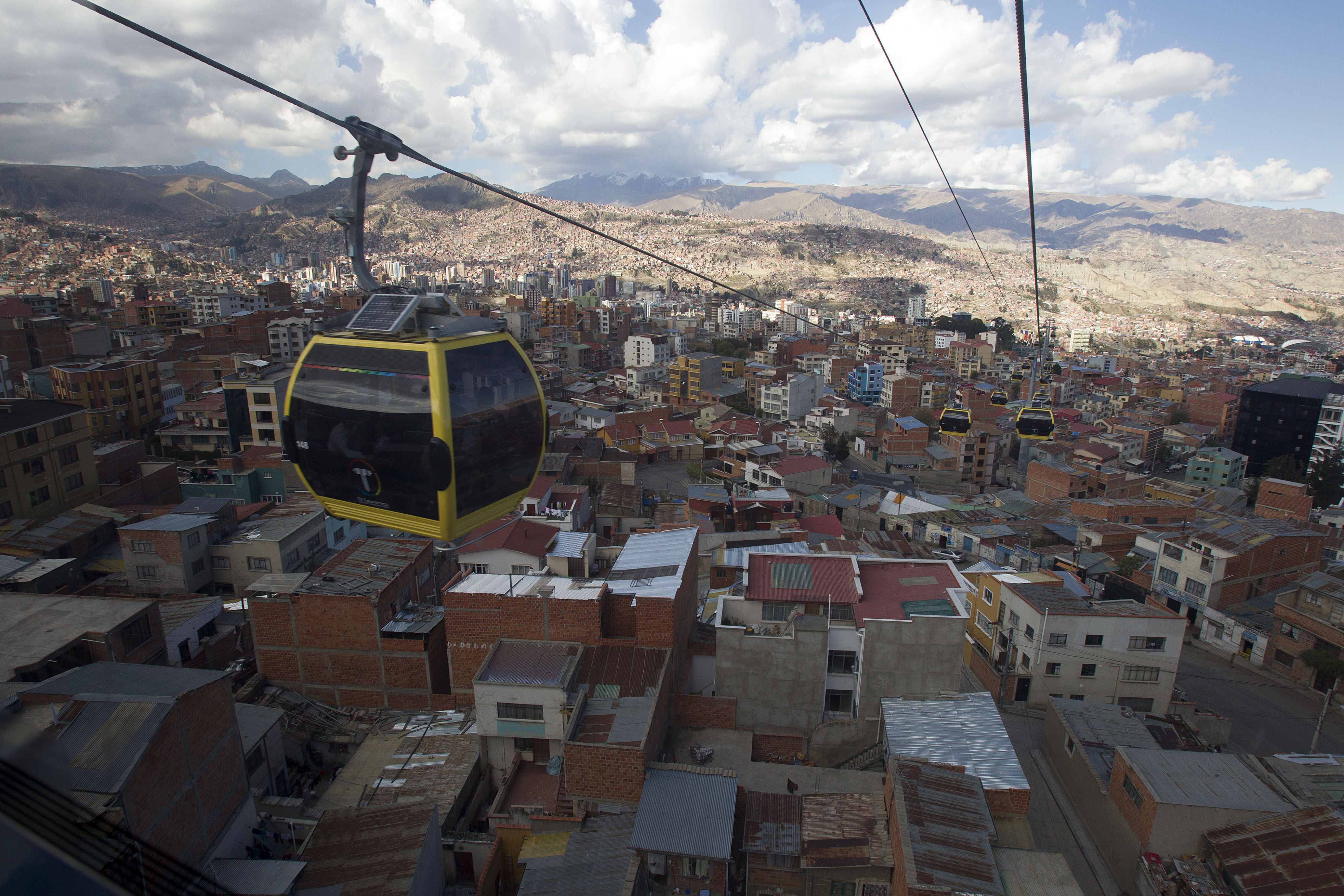
La Paz's Yellow Line. Photo credit: Doppelmayr
La Paz’s Yellow Line. Photo credit: Doppelmayr

La Paz already has three Doppelmayr gondolas that opened last year.  They have already carried more than 16 million people.  Each line operates 17 hours per day and a ride costs less than fifty cents US.  There are 11 Uni-G terminals where passengers load and unload.  The only major incident happened when a eucalyptus tree fell on the yellow line back in February, causing a deropement and rope evacuation.
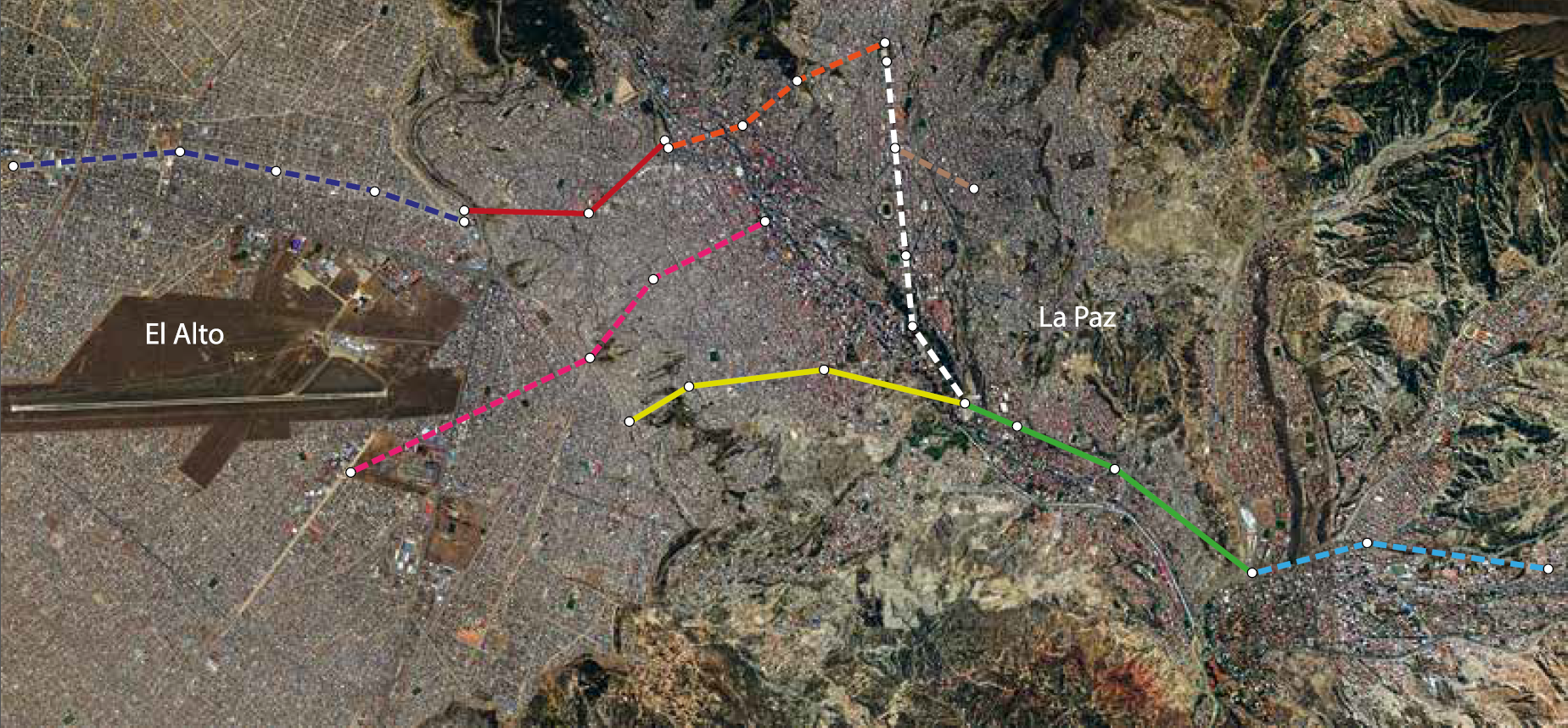
Map showing Phase I and Phase II gondola lines.

Phase II of the system will add 6 lines and 23 terminals between 2017 and 2019.  Once completed, the network will include 19 miles of gondolas spread across 9 haul ropes.  There will be a total of 34 stations and a ridiculous 1,350 CWA 10-passenger Omega cabins.

There are plenty of examples of urban ropeways scattered around the world, but no other city has gone all in on gondolas like La Paz.  It will be interesting to see if any American cities follow their example.

The New Park City Mountain Resort

PCMR                        CanyonsMasterLogo1_RGB

Yesterday was the last day anyone will ever ski at a place called Canyons Resort.  For those who have been living under a rock, most of the land that both resorts sit on has been owned by Talisker Corporation for decades.  Most of that time Canyons was operated by American Skiing Company and Park City by Powdr Corporation.  In 2013, Vail Resorts came to Utah, signing a long-term deal with Talisker to operate Canyons.  Two years earlier, Powdr Corp. had forgotten to renew their lease to the Talisker land that PCMR sits on.  Talisker evicted them and after a lengthy legal battle, Powdr Corporation sold Park City Mountain Resort to Vail last September.

Now under a single operator, the two resorts are about to become one.  Construction is beginning now on an interconnect gondola that will connect the Flat Iron lift at Canyons with the base of the Silverlode lift at Park City.  The Doppelmayr gondola will have an angle station on the ridge that separates the two resorts, from which guests can ski off either side.  The gondola will be approximately 7,000 feet long with 27 towers and 60 eight passenger CWA cabins.  The Canyons station will be at about 8,400 feet next to White Pine Lake in The Colony.  The angle station will be just below 9,000 feet on Pine Cone Ridge with the Park City station a thousand feet lower at Snow Hut Lodge.  Vail is also building a six pack, detachable quad and new lodge on the Park City side this summer.

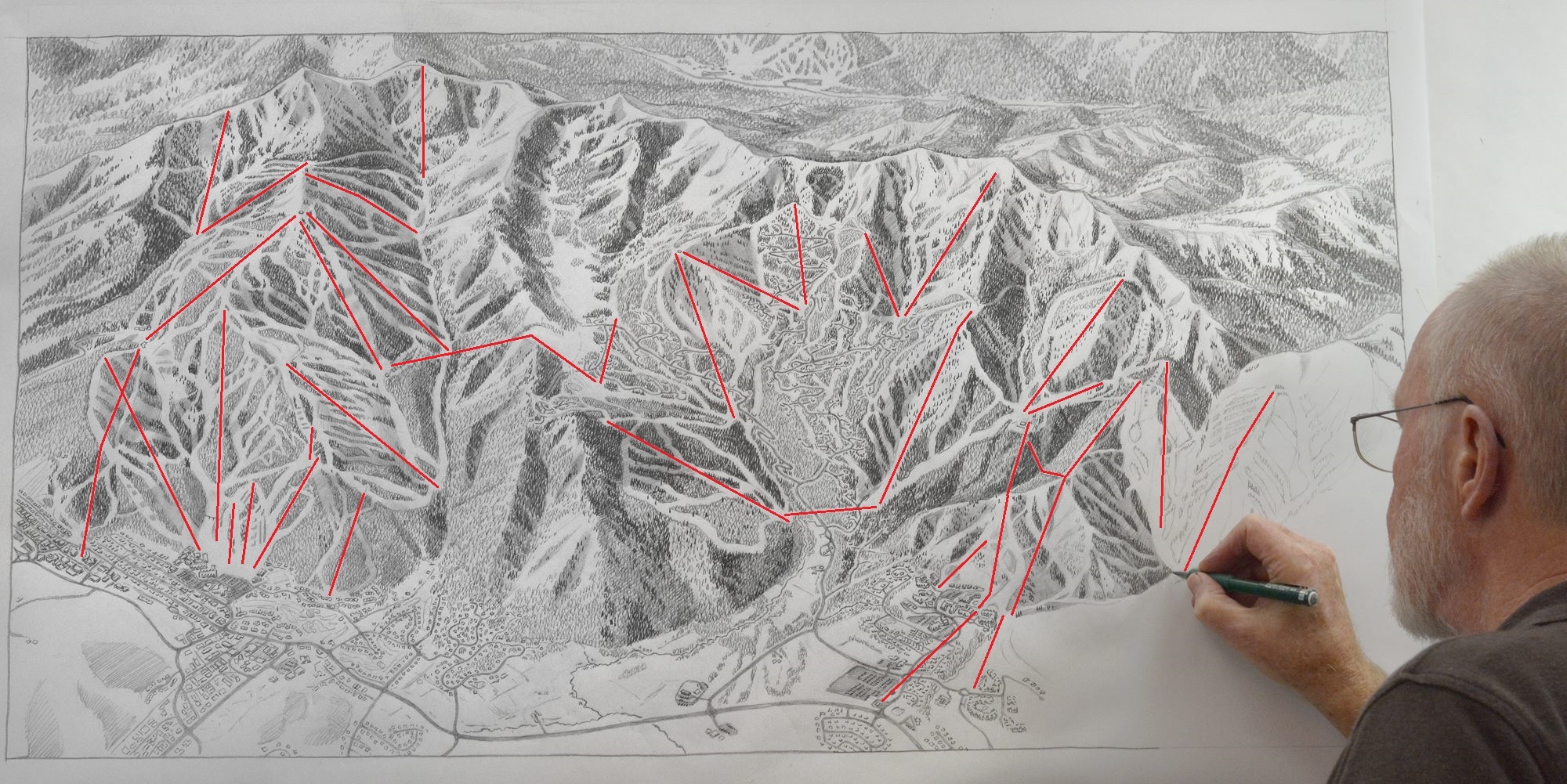
James Niehues paints the new PCMR trail map.

The combined lift stats for the new PCMR are impressive.  A single ticket will include 37 aerial lifts including 4 gondolas, 6 six-packs,  9 high speed quads and 18 fixed grip chairs.  Nearly 85 percent of the resort’s lifts will be GaraventaCTEC or Doppelmayr.  Only 5 Yans will remain in addition to the Red Pine Gondola, one of Utah’s only Poma-built lifts.  Combined uphill capacity will be 78,410 skiers per hour. (For comparison Vail’s is just under 55,000.)   The total lift length is 29.5 miles with 35,607 feet of vertical rise.  There will be 78 loading/unloading stations and 625 lift towers.  I tried but failed to calculate an exact number of chairs/gondola cabins but it will be somewhere on the order of 3,000.

It will be interesting to see how thoroughly Vail can merge two large resorts in one summer.  I haven’t heard yet whether they plan to keep Park City’s white and red branding or start fresh.  Canyons still has lifts painted in their old green color scheme from the ASC days as well as new orange branding.  I have to believe it will take a few years to paint every lift and change every trail sign.  Regardless, Park City will be a 7,300 acre monster ski resort next year.  No word yet on what Big Sky plans to do with its Biggest Skiing in America™ trademark.

Lifts by State (and Province)

Ever wanted to know how many lifts are operating in each state?  Read on.  Colorado has the most operating lifts of any state with 275.  California is close behind with 263 followed by New York (189) and Michigan (165).  There are only 9 states with more than 100 lifts each.  The majority of states have fewer than 20 lifts today.  Five sad states have no aerial lifts at all to my knowledge – Alabama, Arkansas, Delaware, Hawaii and Louisiana.  (Louisiana used to have a 6-passenger Poma gondola called MART that crossed the Mississippi River.)

Each one of Canada’s 10 provinces has at least 3 lifts used for skiing.  Only the Nunavut and Northwest Territories do not have a lift.  Quebec has the most lifts by far with 226 followed by British Columbia (165), Ontario (162), and Alberta (87).

The average age of lifts varies significantly by region.  Maryland’s 7 lifts average 17 years old while Ohio’s 33 lifts are more than twice as old at 34.4 years.  Utah and Montana stand out as having new lifts averaging 19.4 and 19.9 years old, respectively.  Places with really old lifts tend to be in the East and Midwest.  Wisconsin, Minnesota, Michigan, Ohio and New York all have lifts that average more than 30 years old.

It’s also interesting to look at which brand has the most operating lifts in each state/province.  25 states/provinces are dominated by brands which disappeared decades ago – Yan, Riblet, Borvig and Hall.  Borvig dominates in 5 eastern states – IL, VA, IA, ME, and PA.  Hall lifts are pervasive in many eastern states – ND, CT, MA, NY, WI, MN, OH, and SC.  Riblet still dominates all of the northwest and some of the midwest – MO, OR, WA, SD, AK, NM, IN, MI, and KY.  Yan takes its home state of Nevada and neighboring California and Arizona.

Doppelmayr is the most common lift brand in surprisingly few states – MD, GA, MT, NJ, NH, ID, and NC.  The story is different in Canada where Doppelmayr is the top brand in most of the country – BC, MB, SK, AB, QC, and NB.  Despite being gone for a decade, CTEC and GaraventaCTEC are still the most popular in Utah, Wyoming and West Virginia (thanks solely to Snowshoe Resort.)  Finally Poma and Leitner-Poma take their home state of CO plus VT and ON, NL, PEI and NS in Canada.

Lift Profile: Lewis & Clark at Big Sky, MT

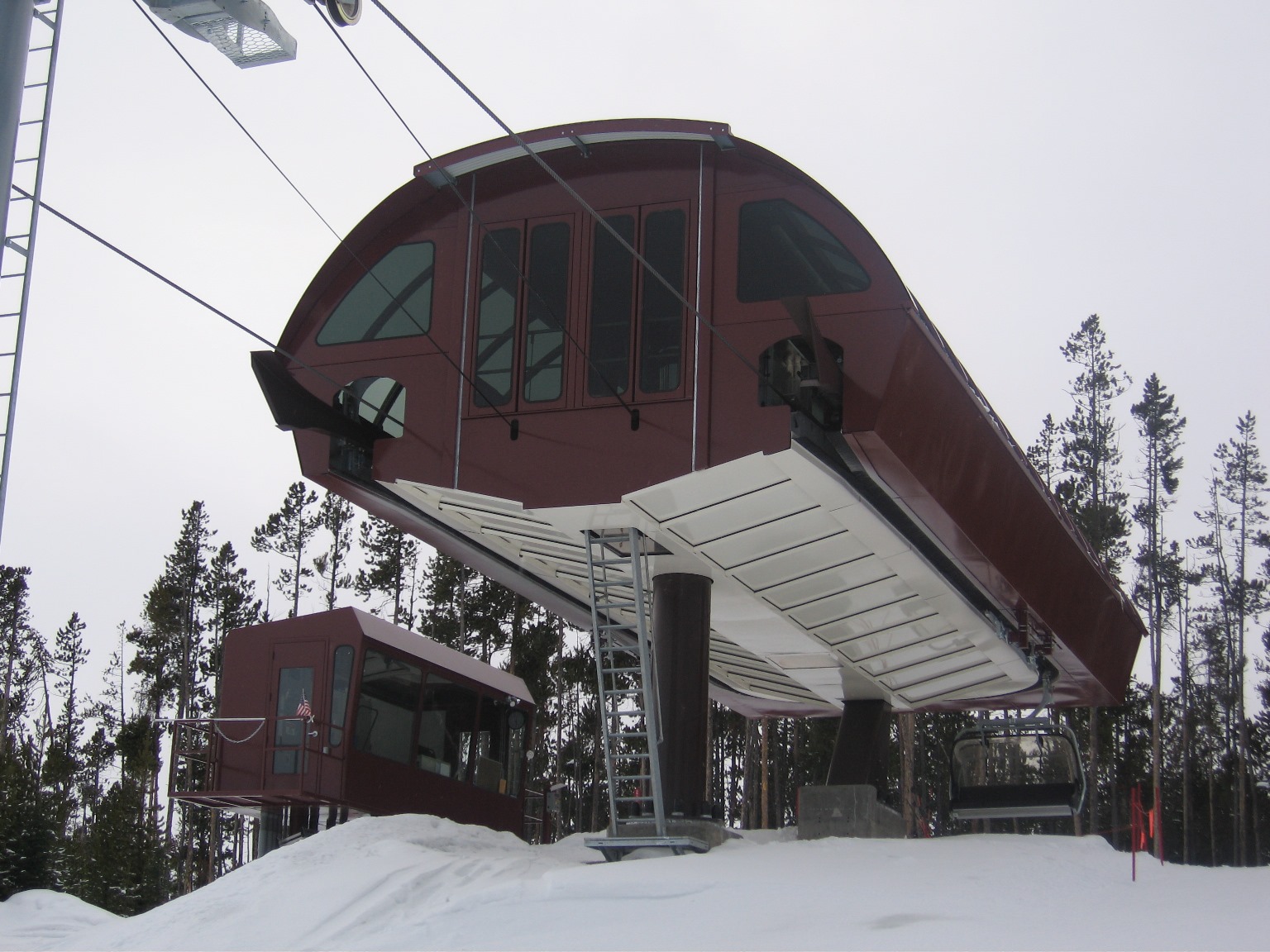
Top/drive terminal of Lewis & Clark.

Lewis & Clark is a 2005 Doppelmayr CTEC Uni-GS detachable quad in the Spanish Peaks residential development in Big Sky, Montana. It was built during Big Sky’s real estate boom when the Yellowstone Club, Spanish Peaks and Moonlight Basin were all developed. For those who haven’t been to the area, each resort includes lifts and ski trails connected to the original Big Sky Resort. 17 lifts were built during the boom years from 2004 to 2007. No lifts have been built in Big Sky since.

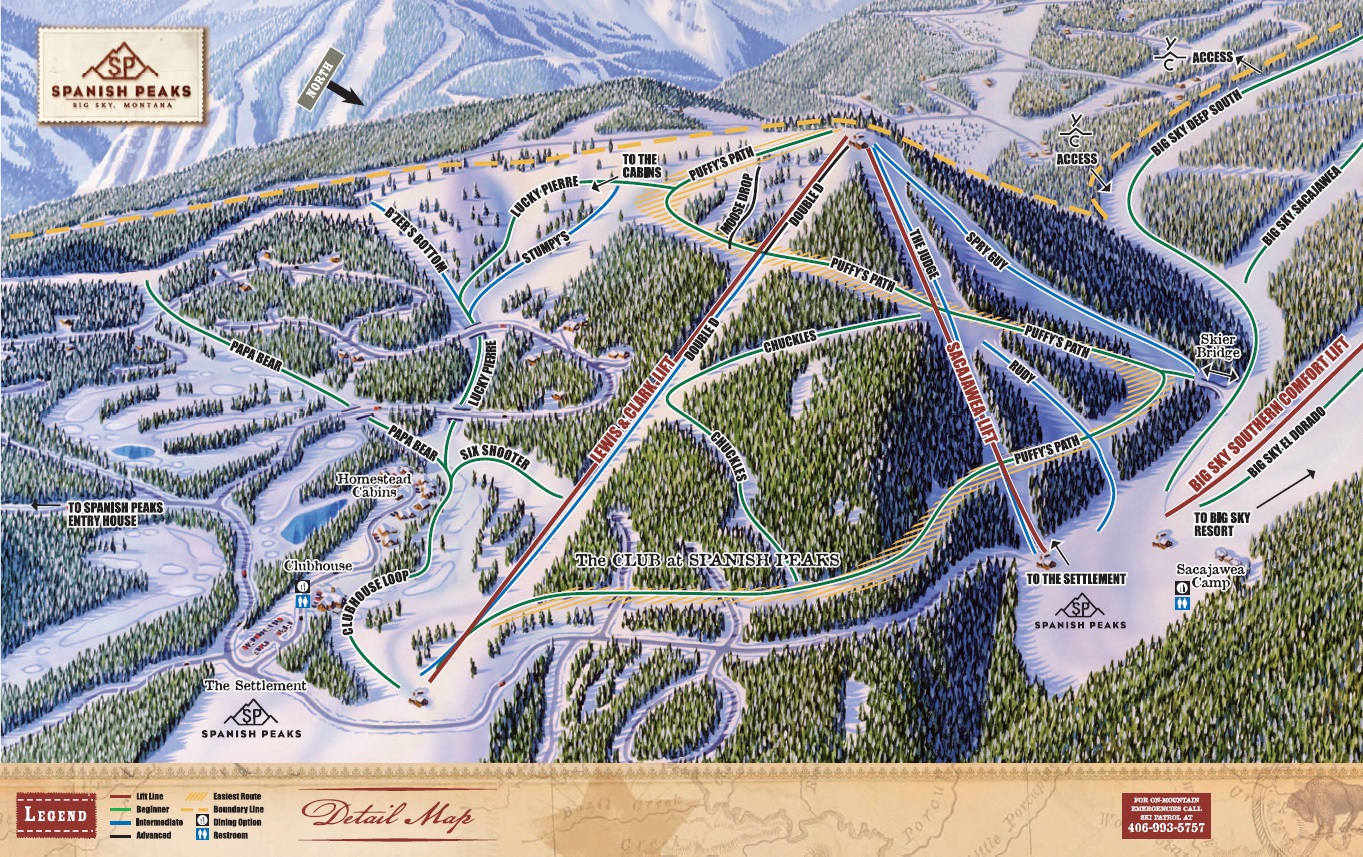
The original Spanish Peaks trail map from 2006.
Spanish Peaks original trail map from 2006.

Spanish Peaks was developed by timber billionaire Tim Blixseth, (who founded the neighboring Yellowstone Club) and James Dolan, the CEO of Cablevision. Doppelmayr built all 5 of Spanish Peaks’ lifts in the summer of 2005.  In addition to Lewis & Clark, there are 2 triples and 2 platters.  Lifts and trails opened for the 2005-06 ski season.

Continue reading

News Roundup: Reset and Go!

  • Sugarloaf shuts down 2nd Borvig quad lift.
  • Sugar Mountain, NC to build a base-to-summit Doppelmayr six-pack.
  • Leitner-Poma might have to pay $222k back to the State of Colorado.  This summer doesn’t look to be too busy for them either.
  • Vail Resorts goes to Australia.
  • Lift operator sued after boy hanged from backpack tangled in a chair.
  • The State of Pennsylvania is “not normally in the business of ski-lift construction.”
  • Another child falls from a chair, this time in eastern Canada.  Seems like there have been a lot of similar incidents this winter particularly with children.

Summer 2015 New Lifts – Early Trends

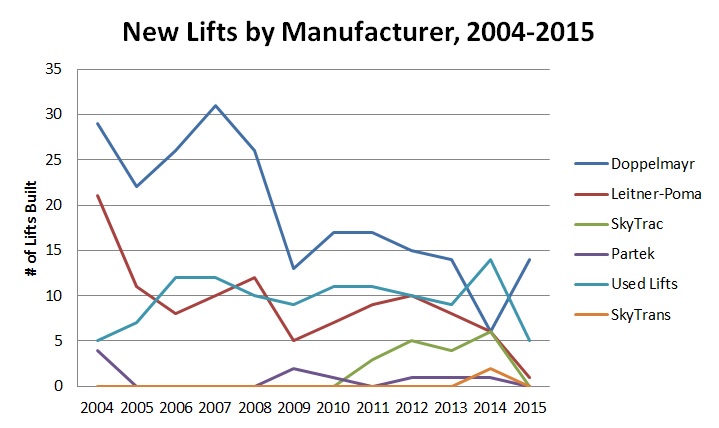
Resorts are starting to close and construction season is upon us.  Many new lift projects have already been announced.  You can see the full list here.  After last year’s “win” by Leitner-Poma, Doppelmayr will return to dominate with at least 14 projects.  Remarkably almost all of them will be detachables – more on that later.  So far the only other confirmed projects are a Leitner-Poma detachable at Powderhorn, CO and 2 Leitner urban gondolas in Mexico City.  (Apparently these are being built by Leitner in Italy, not by Leitner-Poma in Grand Junction.)

Lifts by manufacturer-year
Last year was the only year since the merger with CTEC that Doppelmayr did not build the most lifts.
The overall lift construction trend continues downward.

2015 also will be the first year since 2011 that more detachable lifts are built than fixed-grip lifts.  So far only 3 fixed grips have been announced.

Continue reading

New Blog about Lifts

There is no shortage of interest and information about ski lifts on the internet.
Skilifts.org, chairlift.org, lift-world.info and remontees-mecaniques.net are some of the best sites.  But as far as I know, no one has attempted to create a frequently updated blog about what’s going on in the lift world.

I am going to try.  My name is Peter Landsman and I work in the lift operations department at Jackson Hole Mountain Resort.  But long before I started working in the industry, I was a skier and lift nut.  Over the last 15 years I created a database with statistics and pictures of every ski lift in North America.

My plan is to write longer form posts that fit more logically on a blog than a forum.  Please add your comments, contact me with ideas, or write a guest post and let’s see where this goes.