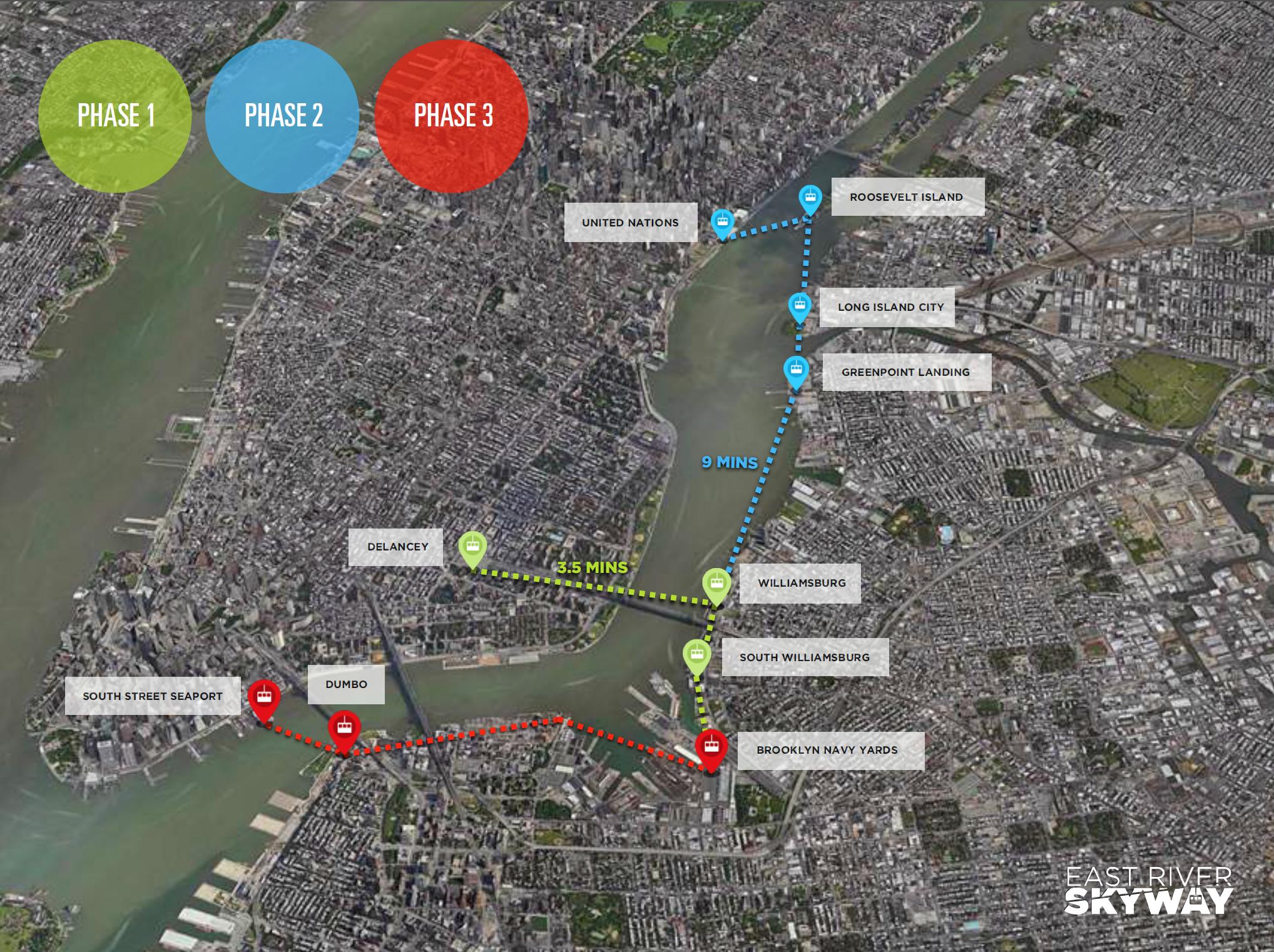
This week’s New Yorker features real estate website CEO Daniel Levy, who hatched a plan to bring gondolas to the Big Apple while on vacation in Chamonix in 2014. His private venture, dubbed East River Skyway, envisions a trio of 3S gondolas with up to 12 stations connecting points along the East River with landmarks in Brooklyn, Queens and Manhattan. Levy has retained the Canadian firm behind The Gondola Project, Creative Urban Projects Inc., as consultants for the proposal.
Working in East River Skyway’s favor is the fact that New York’s M.T.A. is finalizing plans to shut down a section of the L train subway for a year and a half or drastically reduce service for twice as long. The L train’s tunnel that shuttles 225,000 daily commuters under the East River sustained damaged during Hurricane Sandy and needs up to a billion dollars in repairs.
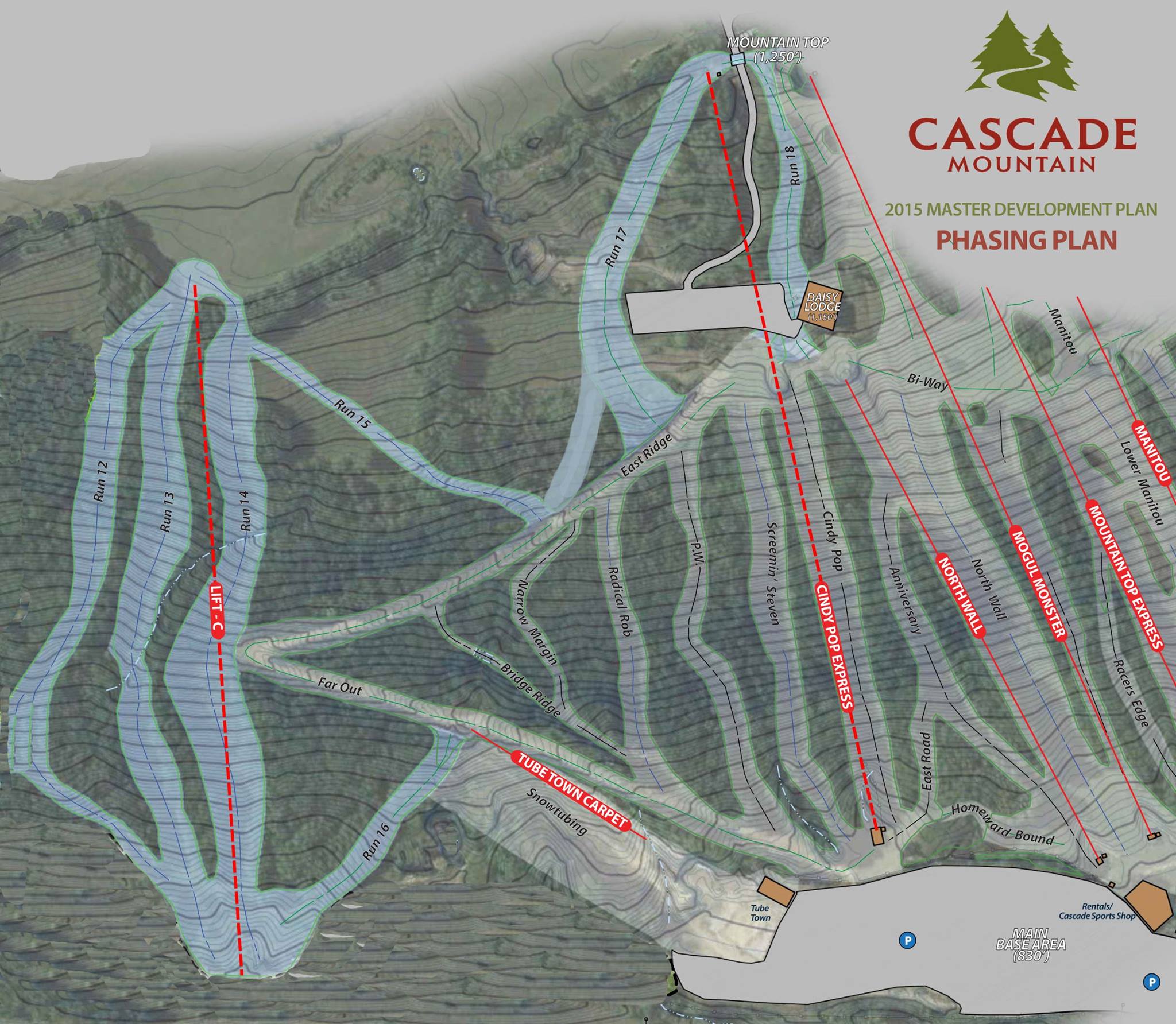
Cascade Mountain will get two new Leitner-Poma quad chairs this summer with more new lifts on the way, the resort announced today. This summer’s $9 million slate of improvements includes a high speed quad replacement for the Cindy Pop chair, a new quad serving seven new trails, an expanded base lodge and snowmaking improvements.
Cascade Mountain became the first ski area in Wisconsin with a high-speed lift back in 1998 and has eight lifts including three quad chairs. The new Cindy Pop Express will be nearly twice as long as the 1991 Borvig quad chair it replaces and will move 2,400 skiers per hour. The new “Lift C” will be a fixed-grip quad east of the current ski area serving new terrain. Cascade owners Rob and Vicki Walz are excited to move forward with the expansion that’s been years in the making. “My dad always envisioned using the far east side of Cascade for an expansion and he started cutting trails many years ago. The time has come to reach the next level for Cascade. Our customers will appreciate the new intermediate trails which are longer than what we have on the west side,” commented Rob Walz in the announcement on the resort’s website.
The Cindy Pop Borvig comes down to make way for a Leitner-Poma detachable quad. Photo credit: Cascade MountainWork has already begun in preparation for the new lifts. Cascade has plans for two additional chairlifts to be added in upcoming years which would bring the ski area up to 11 lifts and 55 trails. Congratulations to everyone at Cascade Mountain and Leitner-Poma on this exciting news!
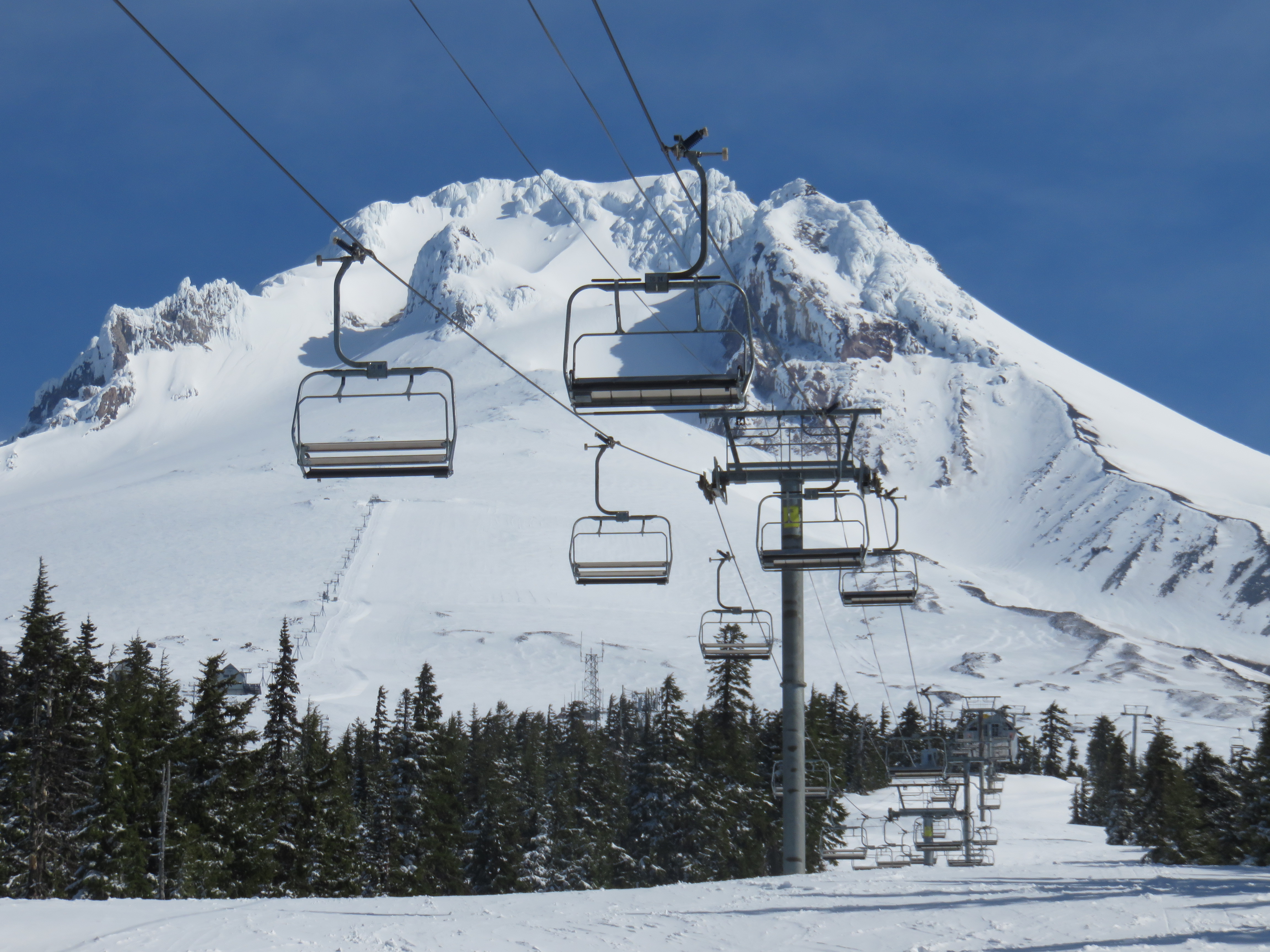
Timberline Lodge & Ski Area is perhaps America’s most unique snowsports destination with year-round skiing on one of the Lower 48’s largest volcanoes. Operated for the last fifty years by RLK & Company on behalf of the U.S. Forest Service, Timberline offers lift-served skiing twelve months a year on 1,400 acres of Mt. Hood. Two million people visit the Lodge and ski area annually which are under 60 miles from Portland, the tenth fastest-growing city in America. Timberline’s ski operation expanded in 2007 to accommodate growing numbers of visitors by adding the Jeff Flood Express in Still Creek Basin. The ski area now has seven lifts with a vertical rise of 3,690 feet, the largest in the Pacific Northwest.
On the left of Timberline’s trail map you can see the old Skyway lift line headed towards Government Camp.
Timberline is also unique in that much of its terrain lies below the Lodge and access road. Visitors drive halfway up the mountain just to leave their car and ski below. Although the mountain offers more alternative transportation options than ever, Timberline’s two-lane access road and relatively small parking lots remain woefully inadequate. Building more parking at 6,000 feet within a National Historic Landmark is not consistent with RLK’s sustainability goals nor those of the Oregon Department of Transportation and U.S. Forest Service to minimize development around the historic lodge.
The owner of Gletscherjet 3+4 built last summer in Austria say it has already carried 3 million passengers, believed to be a record for a winter lift. The system is an 8/10 combination lift interlining with a 10-passenger gondola.
Poma’s 2015 Reference Book is now online highlighting last year’s projects from around the world.
Doppelmayr and its contractors take responsibility for a construction accident at one of the terminals under construction in La Paz that injured ten people on Saturday.
Last week on my way home from the Rocky Mountain Lift Association conference, I stopped by Skytrac headquarters to sit down with Carl Skylling, General Manager of the company that’s shaken up the lift-building industry in North America over the past eight years. If you hadn’t heard, Leitner-Poma bought Skytrac two weeks ago in a move that surprised many. Carl is an industry veteran who worked his way up through Garaventa CTEC, Doppelmayr CTEC and Skytrac in construction, operations and management positions. In addition to kindly agreeing to be interviewed, Carl introduced me to some of the hard-working men and women who design and build Skytrac lifts in Salt Lake City.
Peter: How did you get started with SkyTrac?
Carl: I started out with Garaventa CTEC and then got pulled into the merger with Garaventa and Doppelmayr, becoming Doppelmayr CTEC. Jan Leonard had stepped down in 2008 and by 2010 I was Vice President of Operations but getting restless to do something different.
I approached these guys with a concept I had to continue this whole idea of doing service work and modification work because I saw that there was a big niche in the market that was missing there. So I approached Dave Metivier and Alan Hepner, and about the same time Jan Leonard was also getting interested in finding a way to take care of his former customer base by supporting them with service and parts. So there was this huge potential market to make all those parts.
One thing kind of led to another between [Jan] and I approaching our partners, Dave and Alan, who were running Hilltrac and Skytrac at the time. We ended up taking this Skytrac concept to the point where, with the four of us, we realized why stop with parts? Why not do a design of our own. SkyTrac started in 2008 doing some engineering/modification work with Dave and Alan but we really, in 2010, took it to the next level.
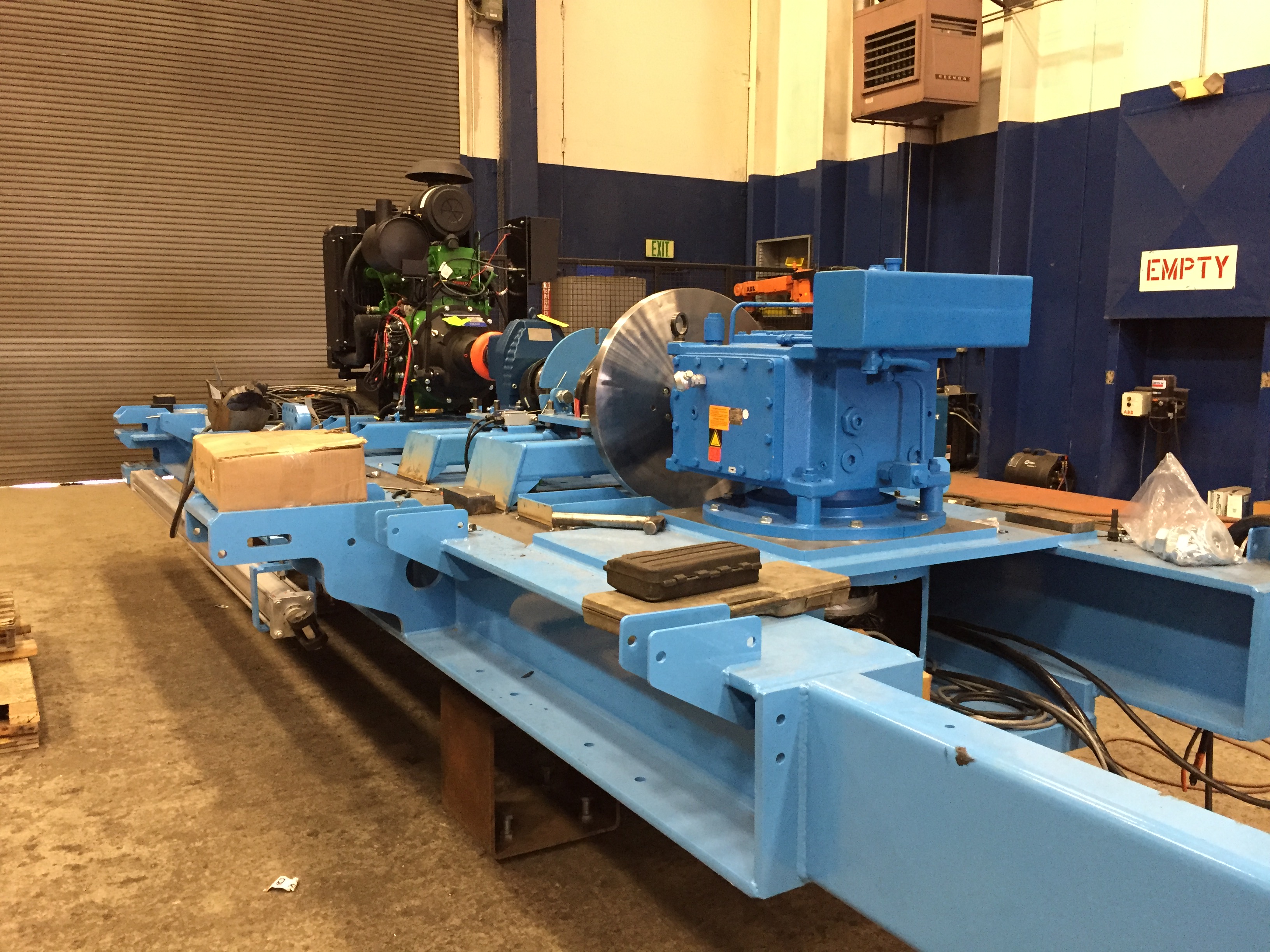
This lift bound for a fairgrounds in Sacramento won’t have Skytrac’s typical Monarch terminal but rather a simpler metal enclosure. Skytrac prides itself on meeting the needs of its customers in the legacy of Jan Leonard.
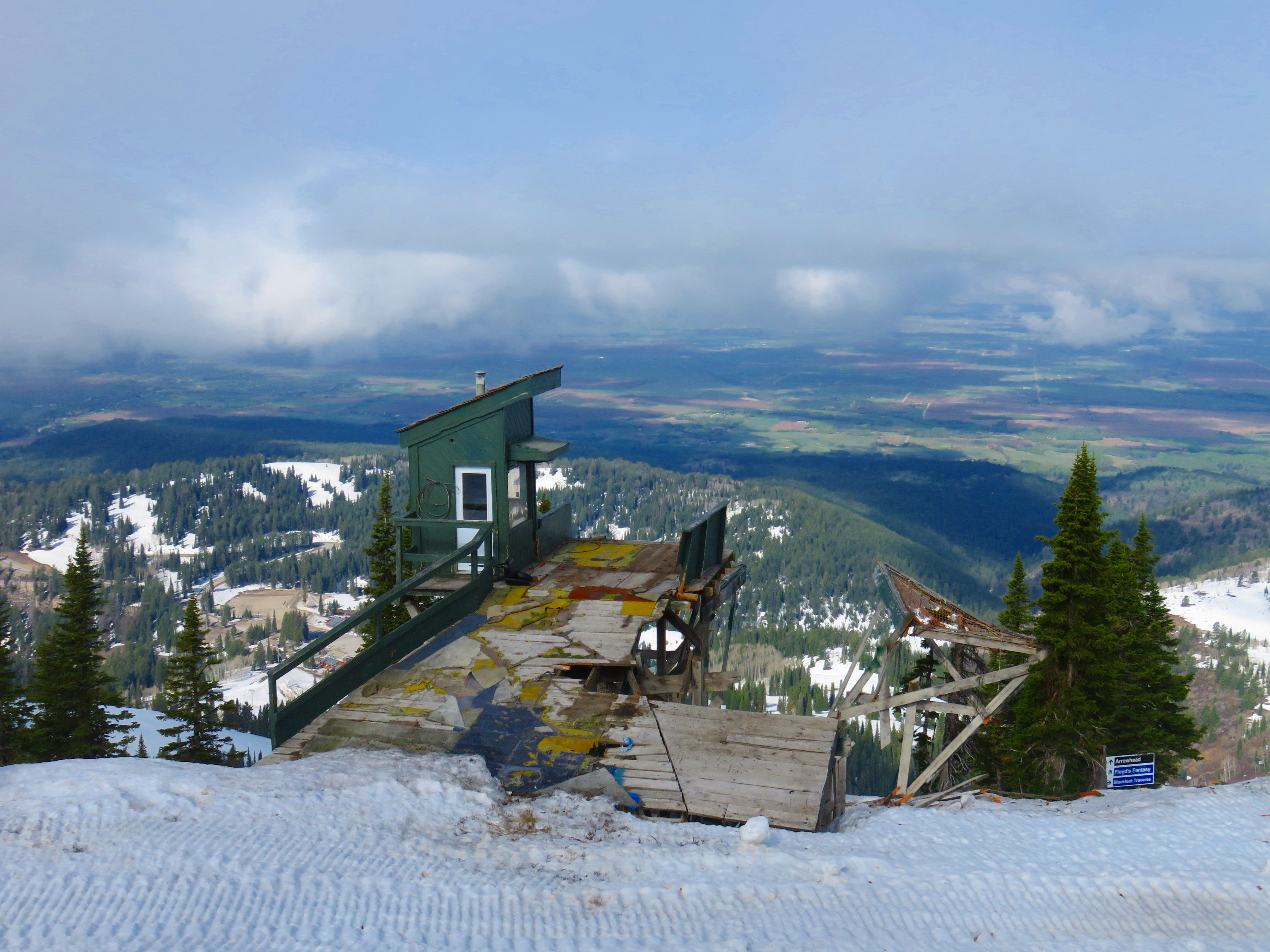
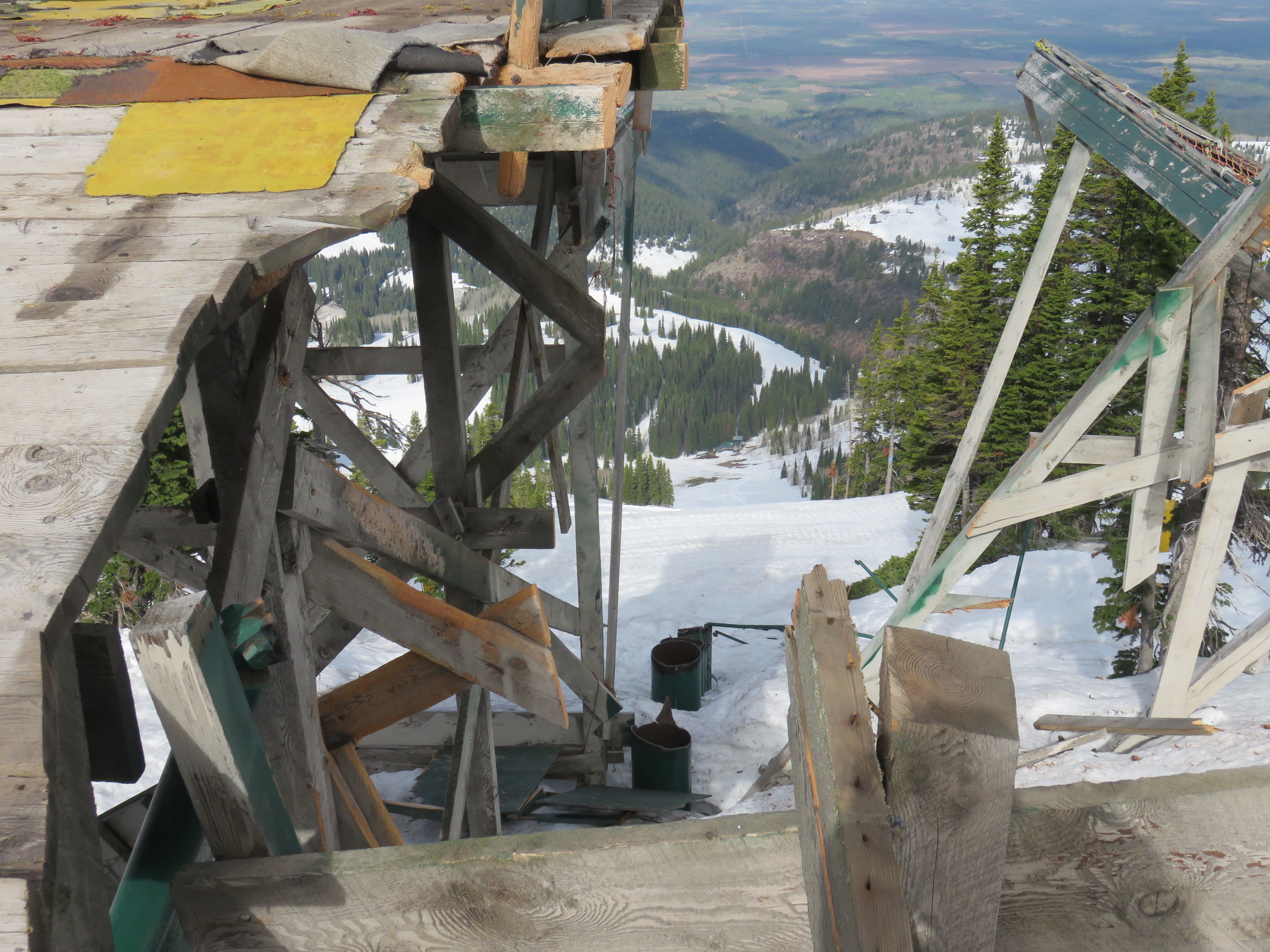
Grand Targhee wasted no time removing Blackfoot, starting even before they closed for skiing.
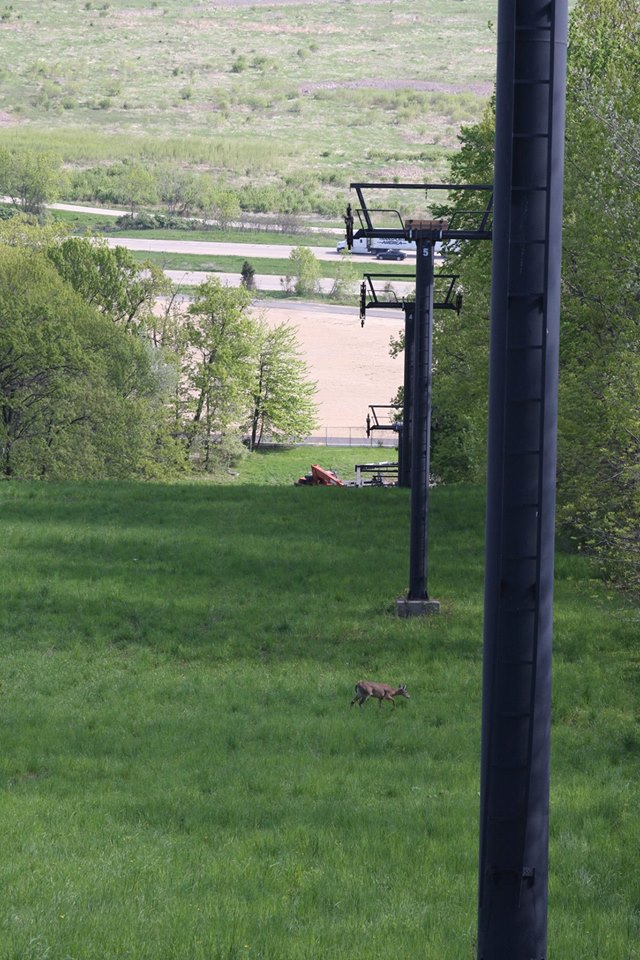
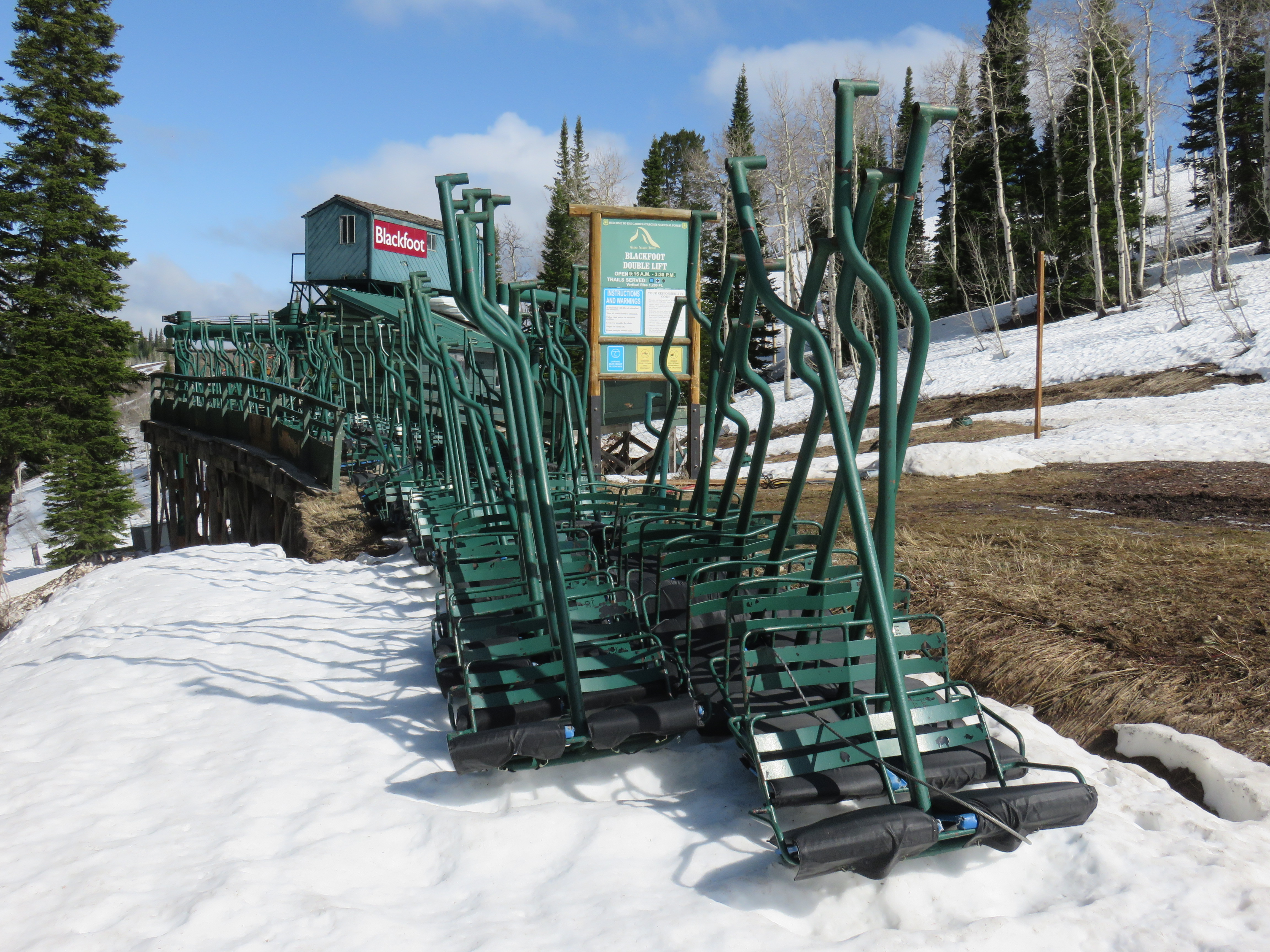
New lifts are coming to both sides of the Tetons this summer and that means three old lifts are coming down. At Grand Targhee, the Blackfoot double is being replaced with a Doppelmayr fixed-grip quad. All 20 towers have been removed along with the top terminal. Blackfoot had wooden ramps at both ends that will be burned down once all the steel is out of the way.
From the tree cutting that’s been done, it looks like the new lift will start to the skier’s left of the old one.Still no word on where these chairs are headed.
“This work is dedicated to the men and women who have been part of Poma’s innovative and epic journey. It is for our clients and partners who have placed their trust in Poma throughout the world – whether up in the mountains or in the heart of cities.”
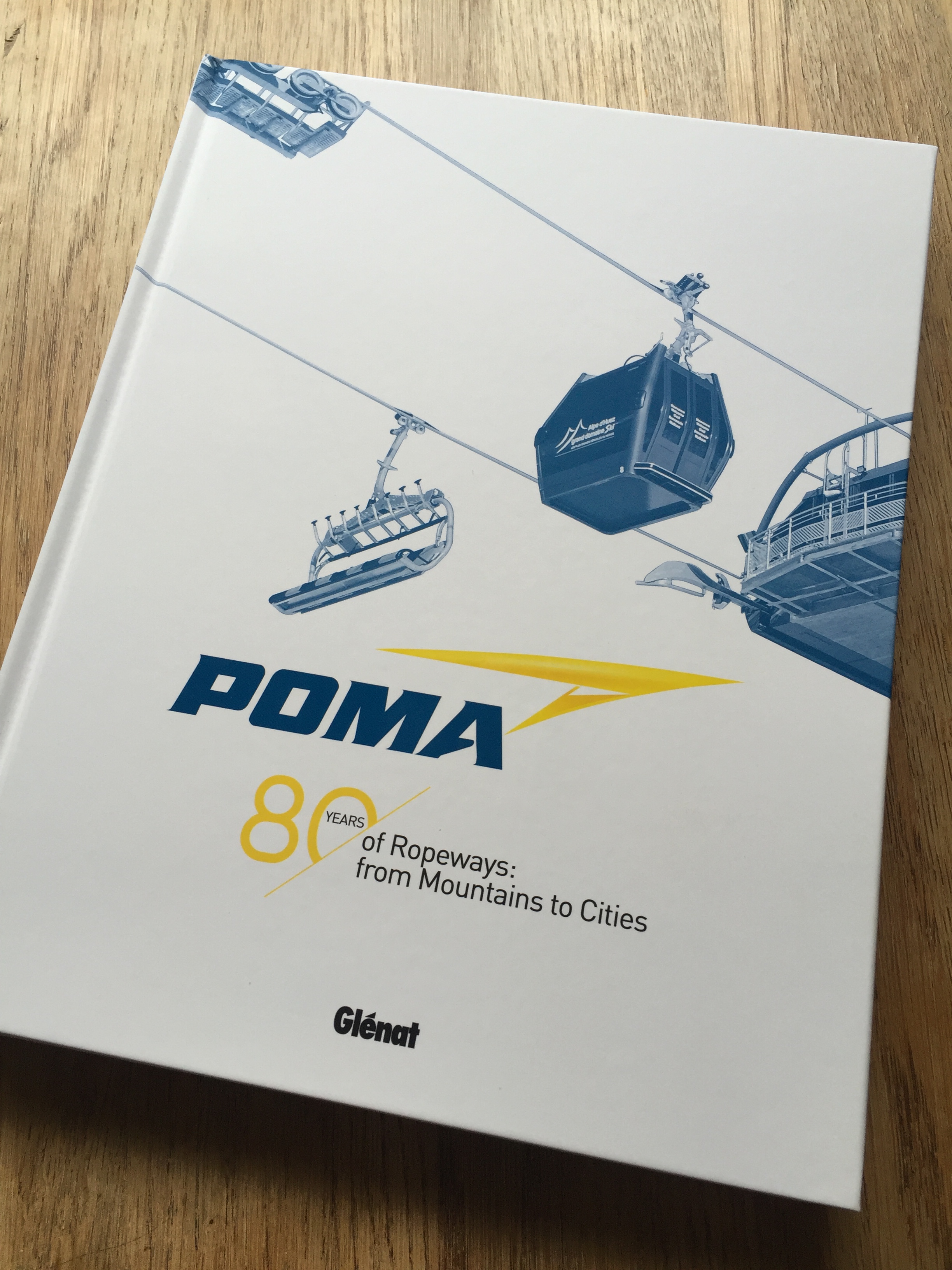
The above dedication sits on the first page of a new book celebrating eighty years of commercial success called Poma: 80 Years of Ropeways from Mountains to Cities. The 190-page work, written by Béatrice Méténier and Christian Bouvier, looks back at the firm’s more than 8,000 ropeway installations from the mountains of France to Colorado, South America and beyond.
A skier at heart, Jean Pomagalski installed his first surface lift in 1934 at Alpe d’Huez. He constructed it mostly out of wood and with a used Ford motor. After building three additional tows, Mr. Pomagalski had himself a company and filed a patent in 1936 for a “carrying device hauled by a rope moving at a constant speed.” After a break for Wold War II, Pomagalski S.A. grew to 15 employees by 1953. Even so, Mr. Pomagalski still found himself simultaneously a salesman, surveyor, designer and builder of lifts that were sent off as kits for installation by customers. The company’s first chairlift, a single-seater, debuted in 1955 near Chamonix.
Workers assembled, then disassembled early fixed-grip chairlifts in Poma’s French workshops before sending them to the field as seen in this 1963 photo.
By 1958, Pomagalski was selling 120 lifts a year, many of them to customers in the United States and Canada. Mr. Pomagalski decided to drop the latter part of his name from the company’s in 1965 to better appeal to English-speaking clients. Poma delivered its first gondola systems simultaneously in 1966 at Queenstown, New Zealand and Val d’Isère, France. A small new company called Sigma Plastiques provided the egg-shaped cabins. Poma trusted Sigma again the next year for the world’s first gondola with automatic doors and the rest is history.
In the wake of fraud allegations and a federal takeover, Q Burke Mountain Resort will lose the Q and likely be sold within a year.
At Jay Peak, Doppelmayr says the 52-year old aerial tramway needs $4.15 million in repairs. In a press conference, the Florida lawyer put in charge of both properties said “we’re not even sure we have to fix the tram. The company that tells us we have to fix it is also the one that will get the contract.” At least he’s stopped calling it a gondola.
A new lease for Ascutney Mountain will allow a nonprofit group to build up to three lifts at the ski area, which closed in 2008. Skytrac removed Ascutney’s four CTECs from 2012-2014 and sold them to Crotched Mountain, Pats Peak and Liberty Mountain. A 1970 Hall double remains standing on the property.





 Lift Blog