Exploring Mexico City’s Urban Gondolas

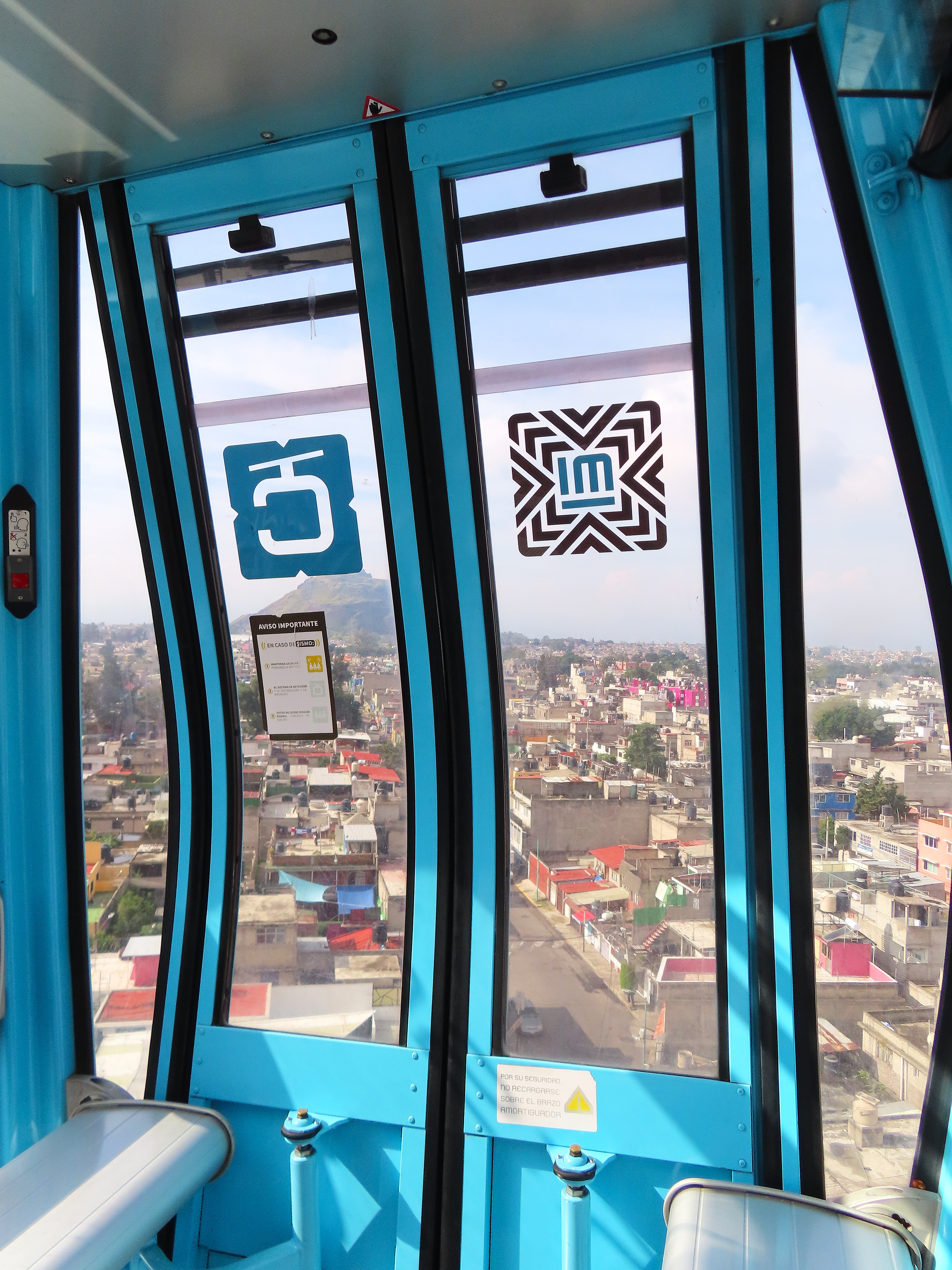
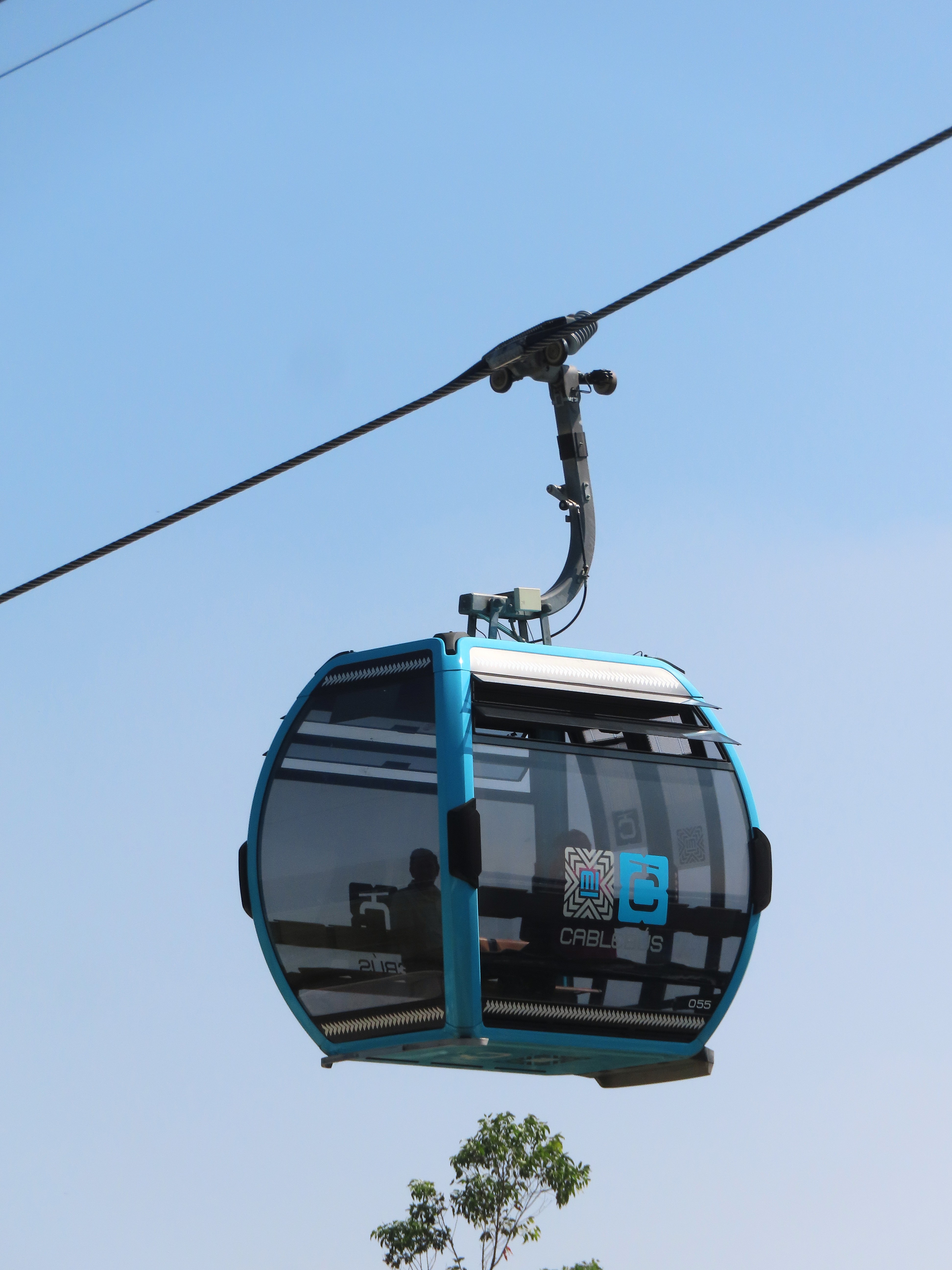
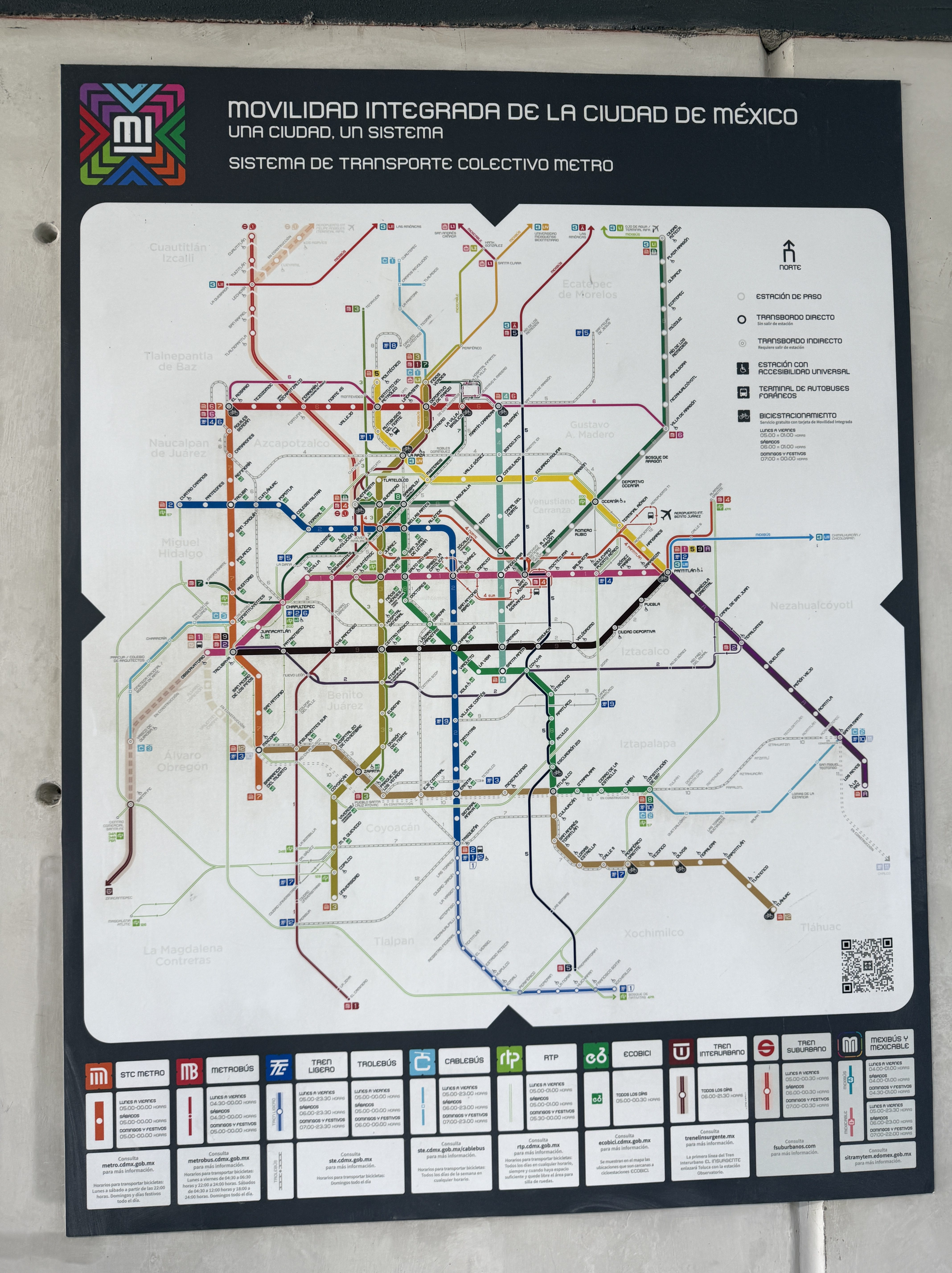
This week I got to ride two of North America’s most complex, high elevation gondola systems. They’ve never carried a single pair of skis but rather shuttle commuters within Mexico City’s expansive transit network. Branded Cablebús, the network consists of 19 stations and three distinct lines, each with several segments. They are fully integrated with the city’s trains and buses, accepting the same transit mobility card. Gondolas live on the city’s subway map in light blue with the same signage, typefaces and iconography as the broader network.
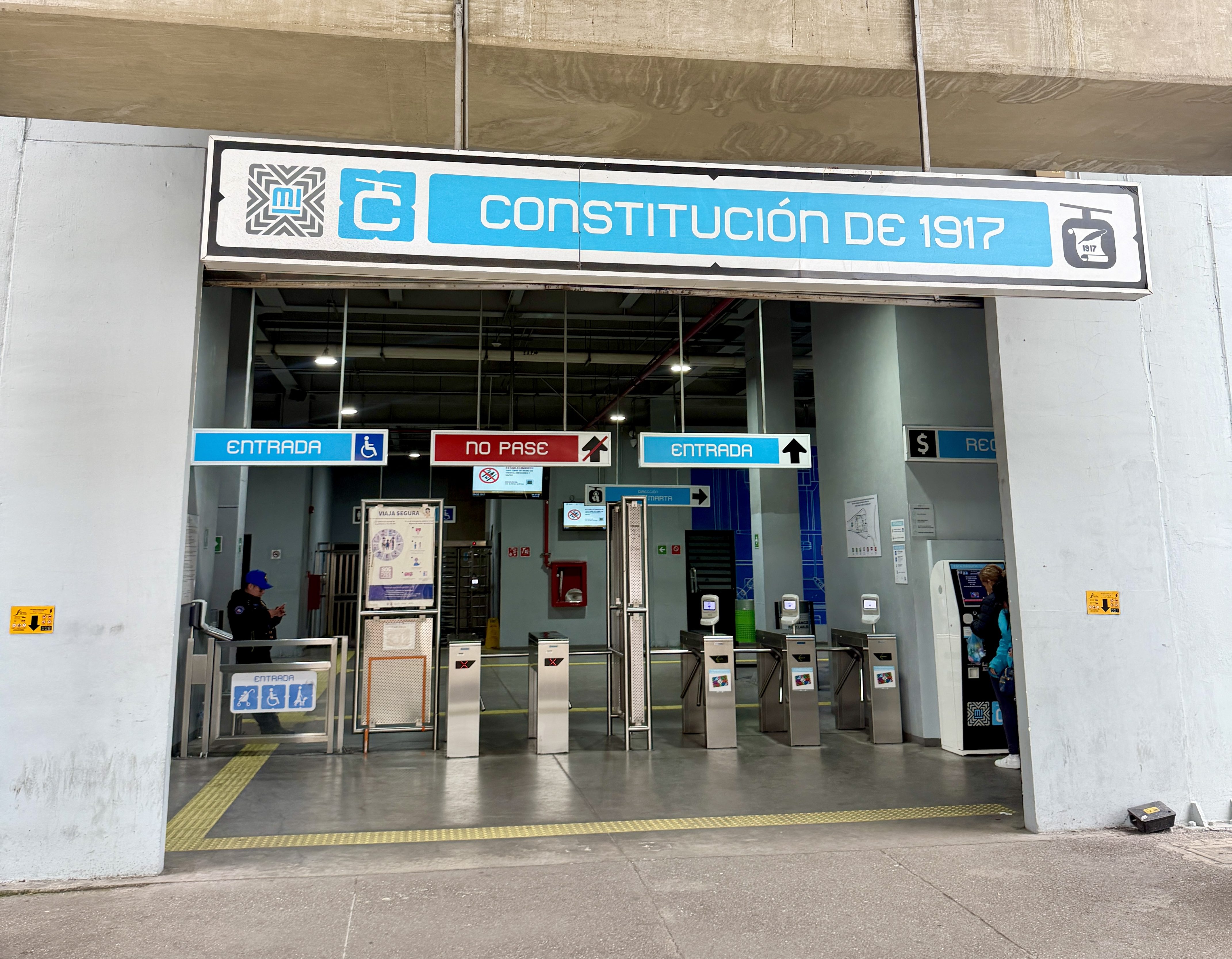
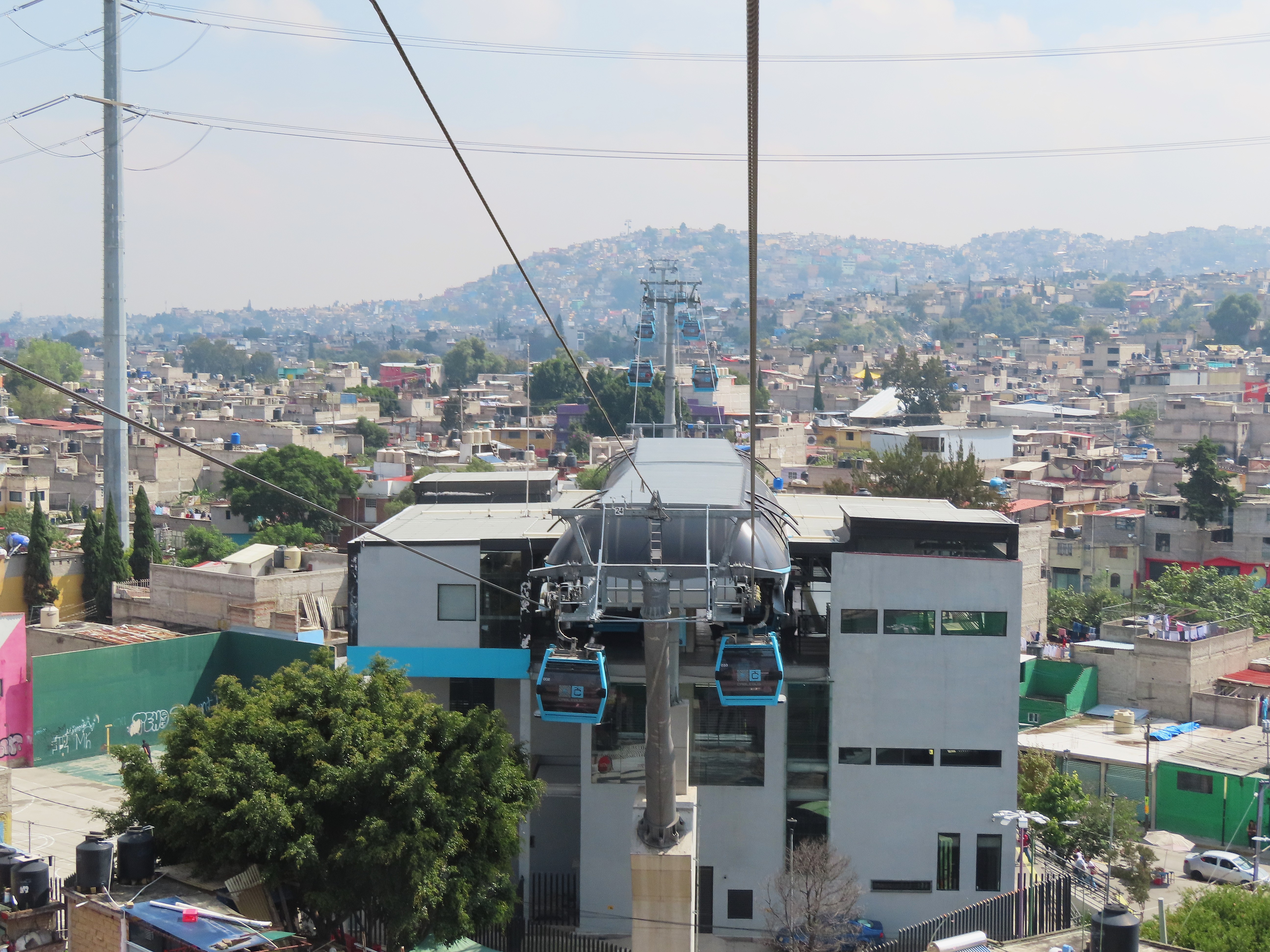
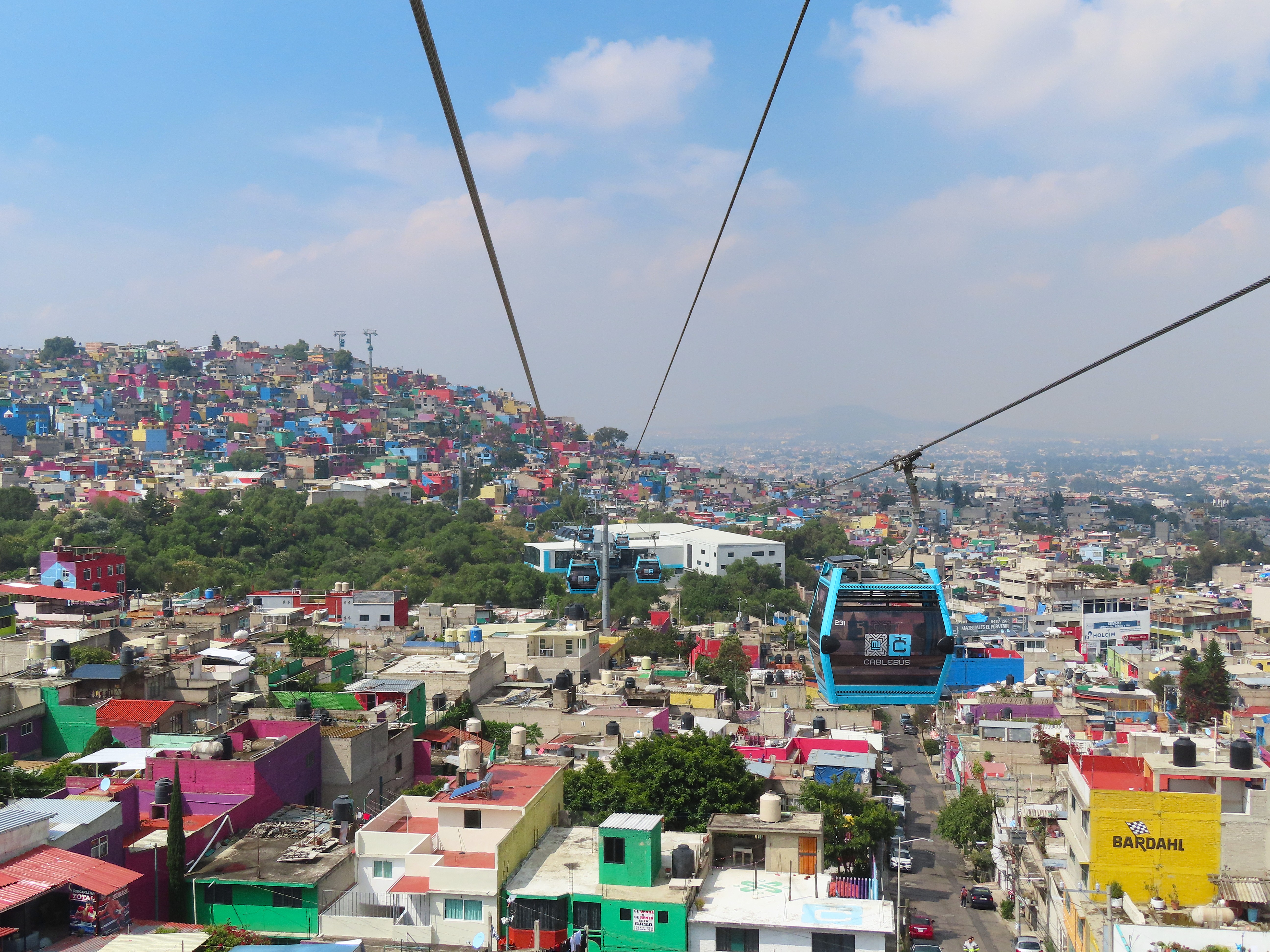
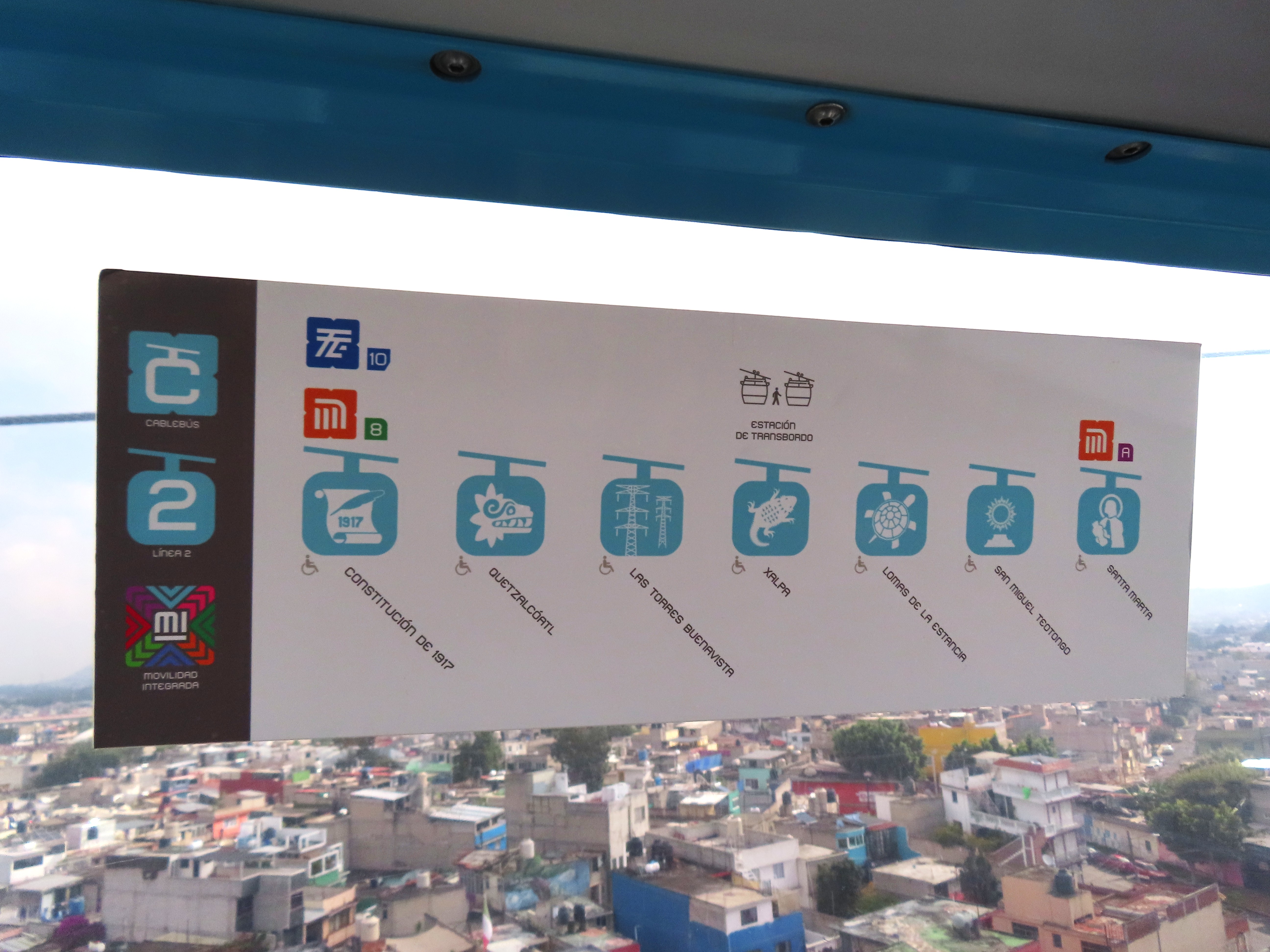
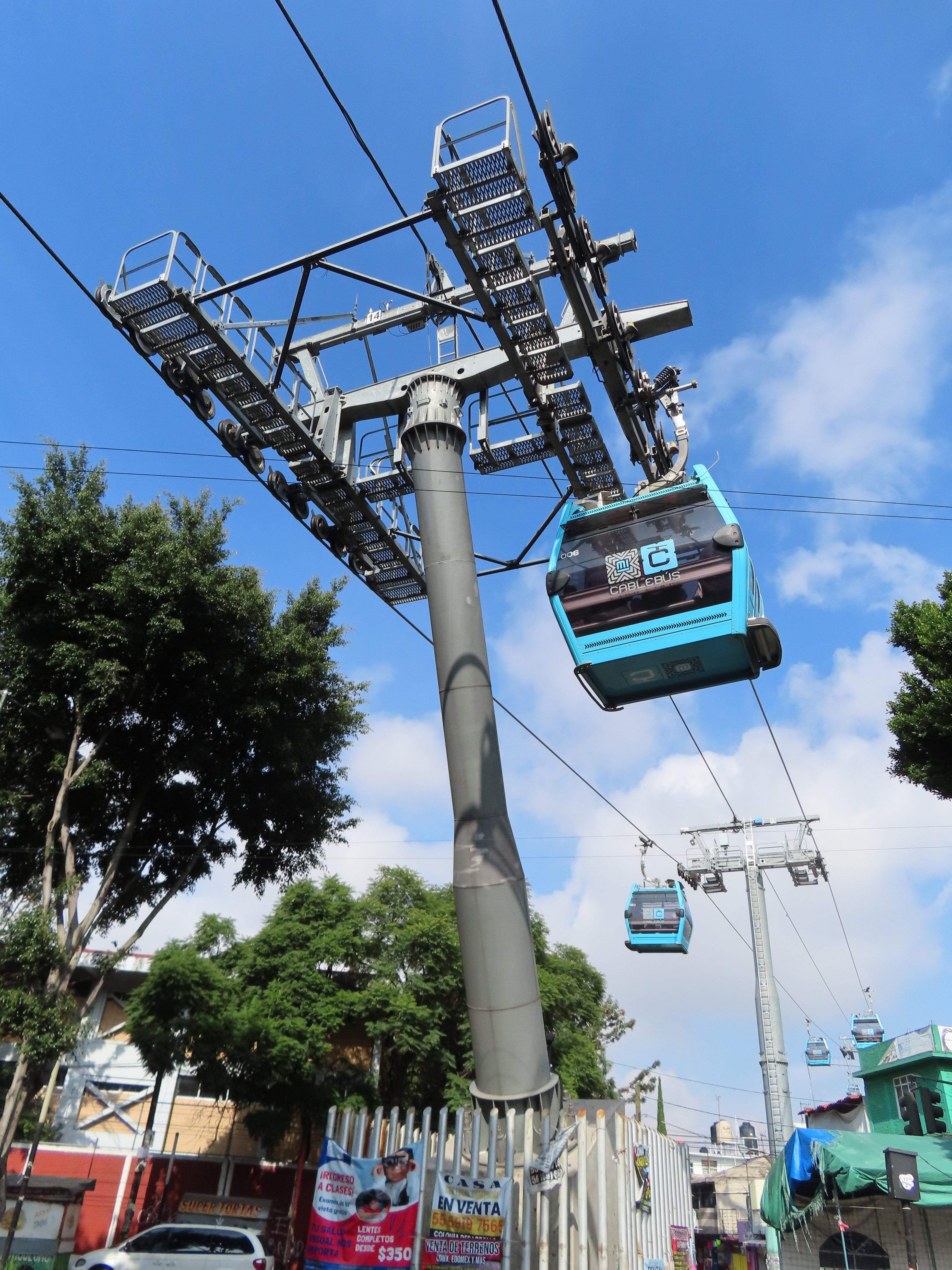
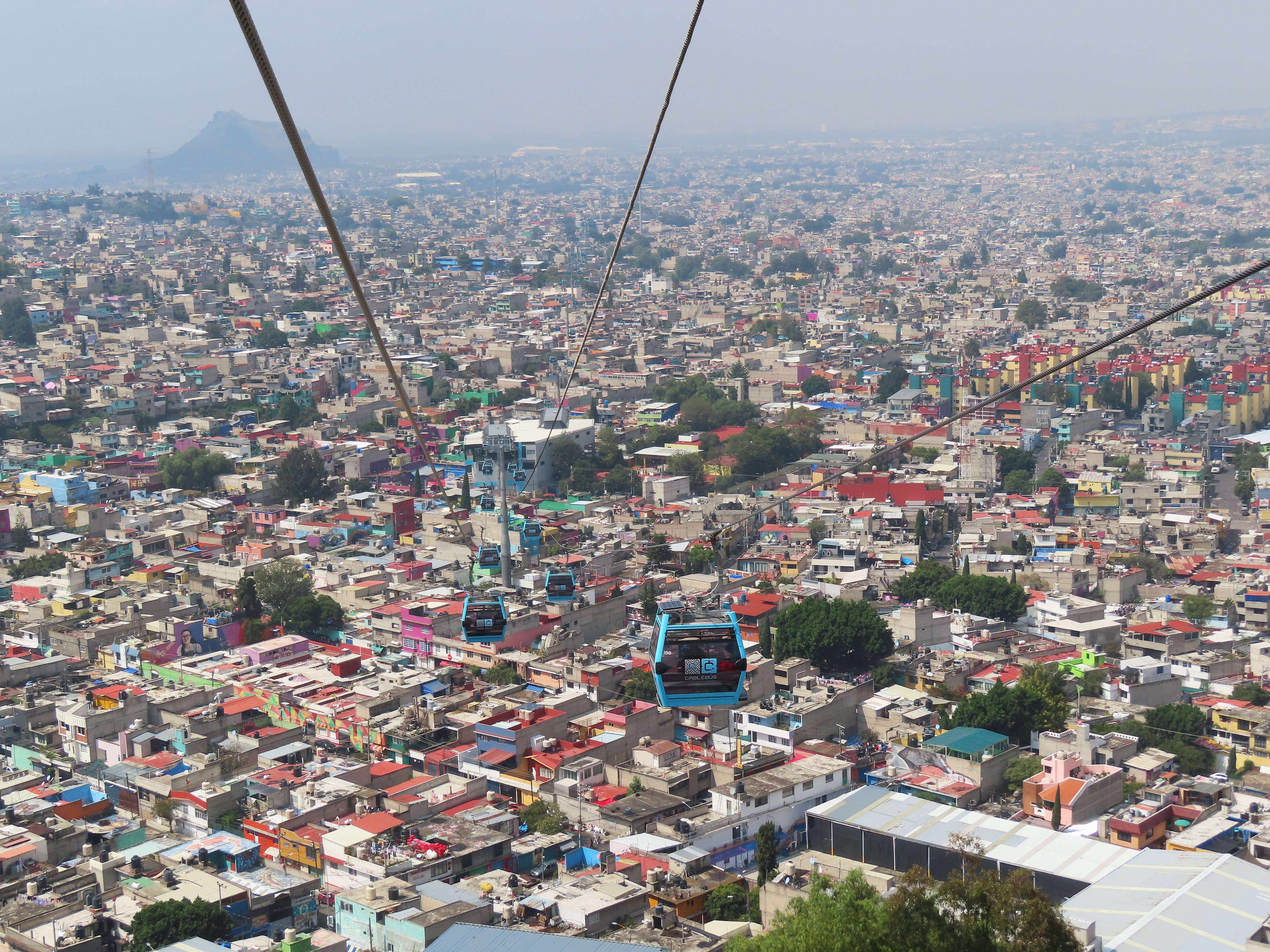
First I ventured to Line 2 in Iztapalapa, a historically poor and congested municipality with 1.8 million inhabitants. Line 2 travels from the end of one subway line to another, connecting seven communities along the way. When Leitner completed the system in 2021, it became the longest urban gondola in the world at 6.2 miles. It’s actually two separate lifts, each utilizting two direct drives and two haul ropes for a total of four ropes and four direct drives. A whopping 305 ten passenger cabins circulate over 59 towers.
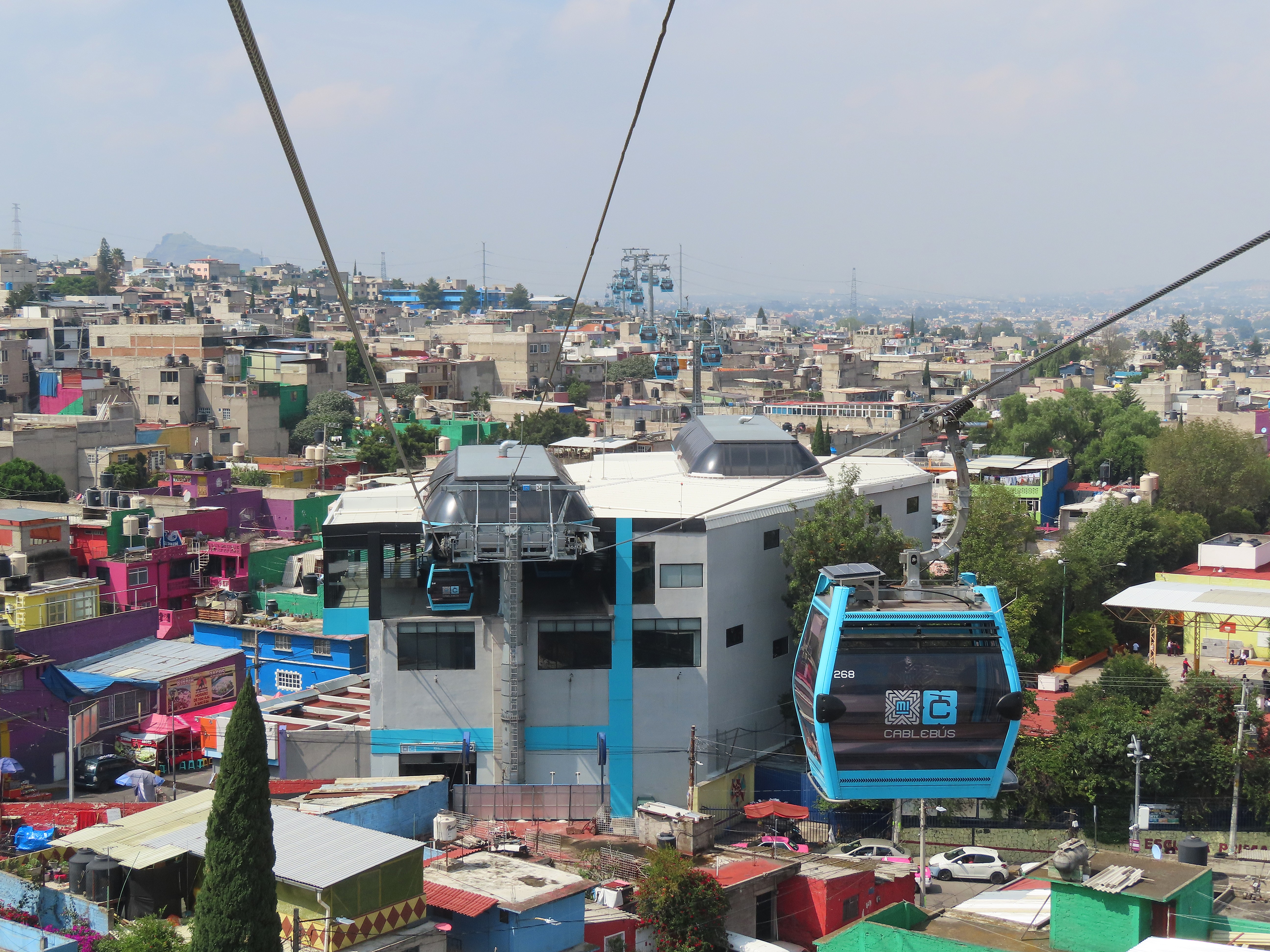
Several stations accommodate sharp angle changes with deflection bullwheels. Others are nearly straight with minimal angle change. Riding the entire line requires a quick switch between cabins at Xalpa station. I was told most commuters take the lift for a few stops and connect to other transit rather than riding the entire 45 minutes like I did.
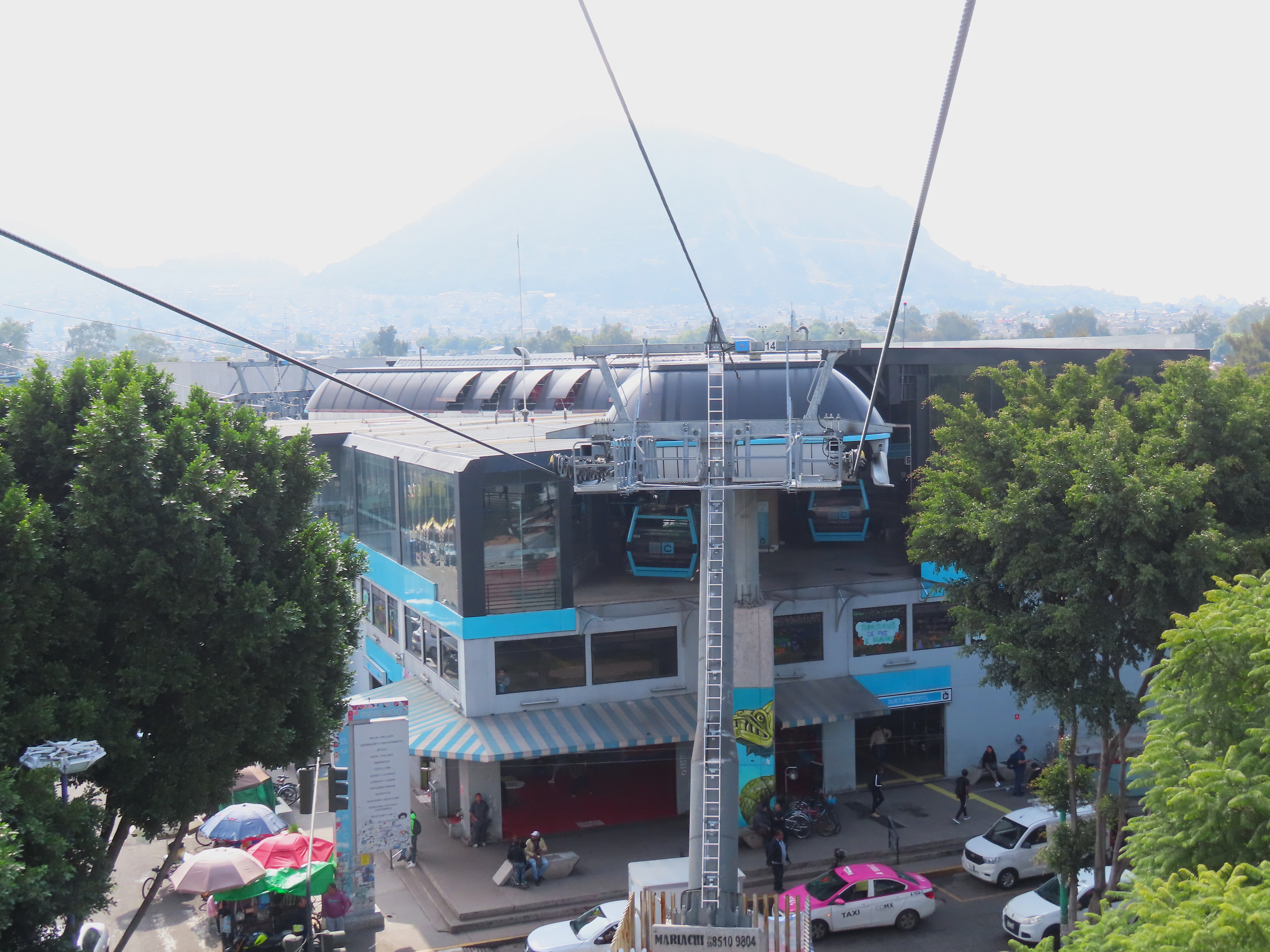
Stations serve as more than just transit stops and angle changes. One features a 150 stall market underneath the cabin parking facility (I’d never ridden a gondola where I could also buy a pig’s head from a butcher.) There are parks, community centers and healthcare along the gondola. Line 2 has proven successful, transporting approximately 63,000 riders per day in 2025. Travel times reduced significantly for residents and safety improved.
The government partners with joint ventures including Mexican infrastructure companies and European manufacturers to realize each installation here. For Line 2, Leitner and its local partner operated the system for the first year with the city’s transit agency taking over after. Towers were manufactured locally in Mexico.
Construction in Latin America can proceed quickly. For Line 2, the time between announcement and inauguration spanned just 30 months with actual construction taking 18. The line cost roughly $160 million to build, far more than a typical ski resort gondola but far less than a subway or highway project.
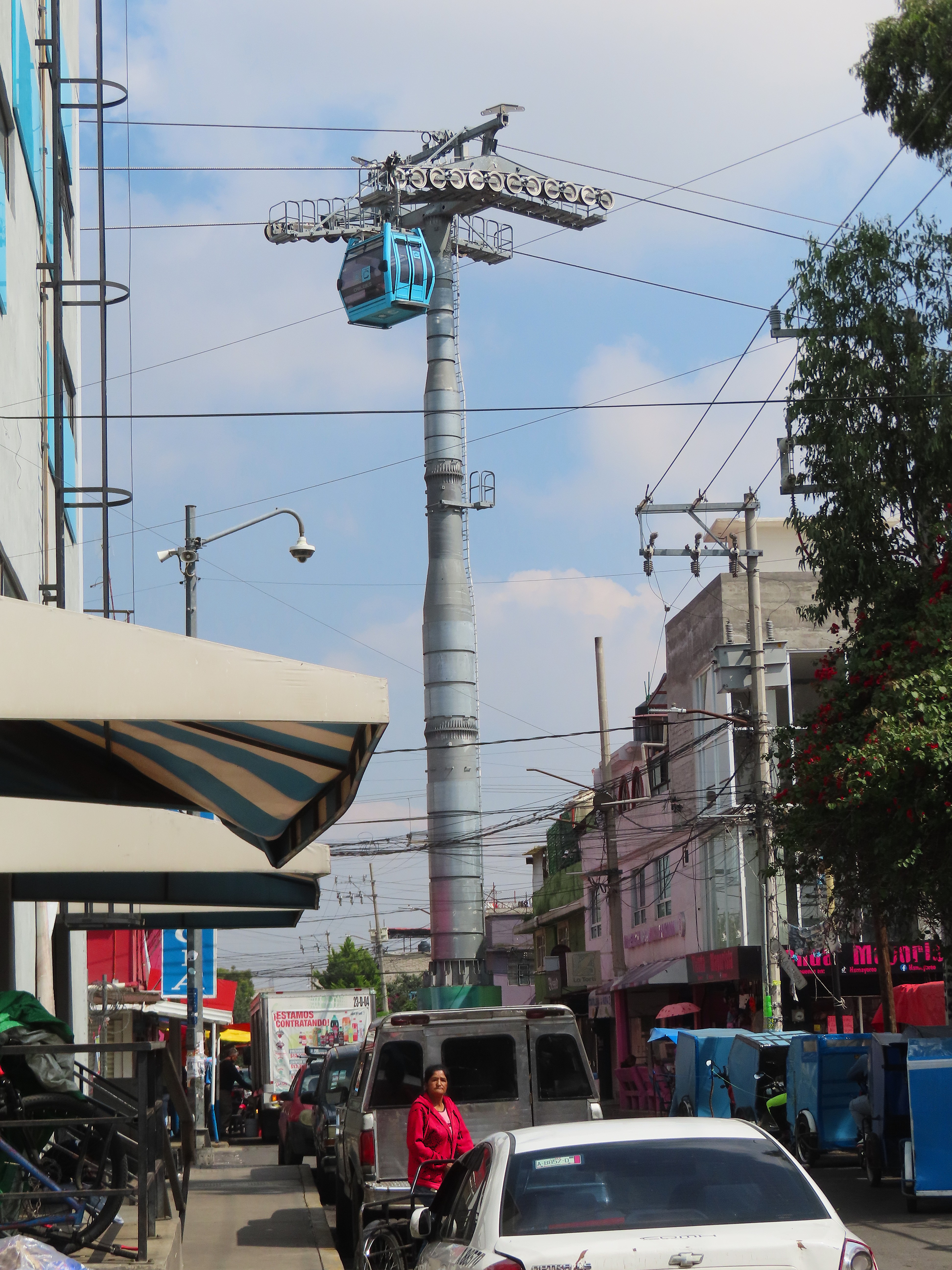
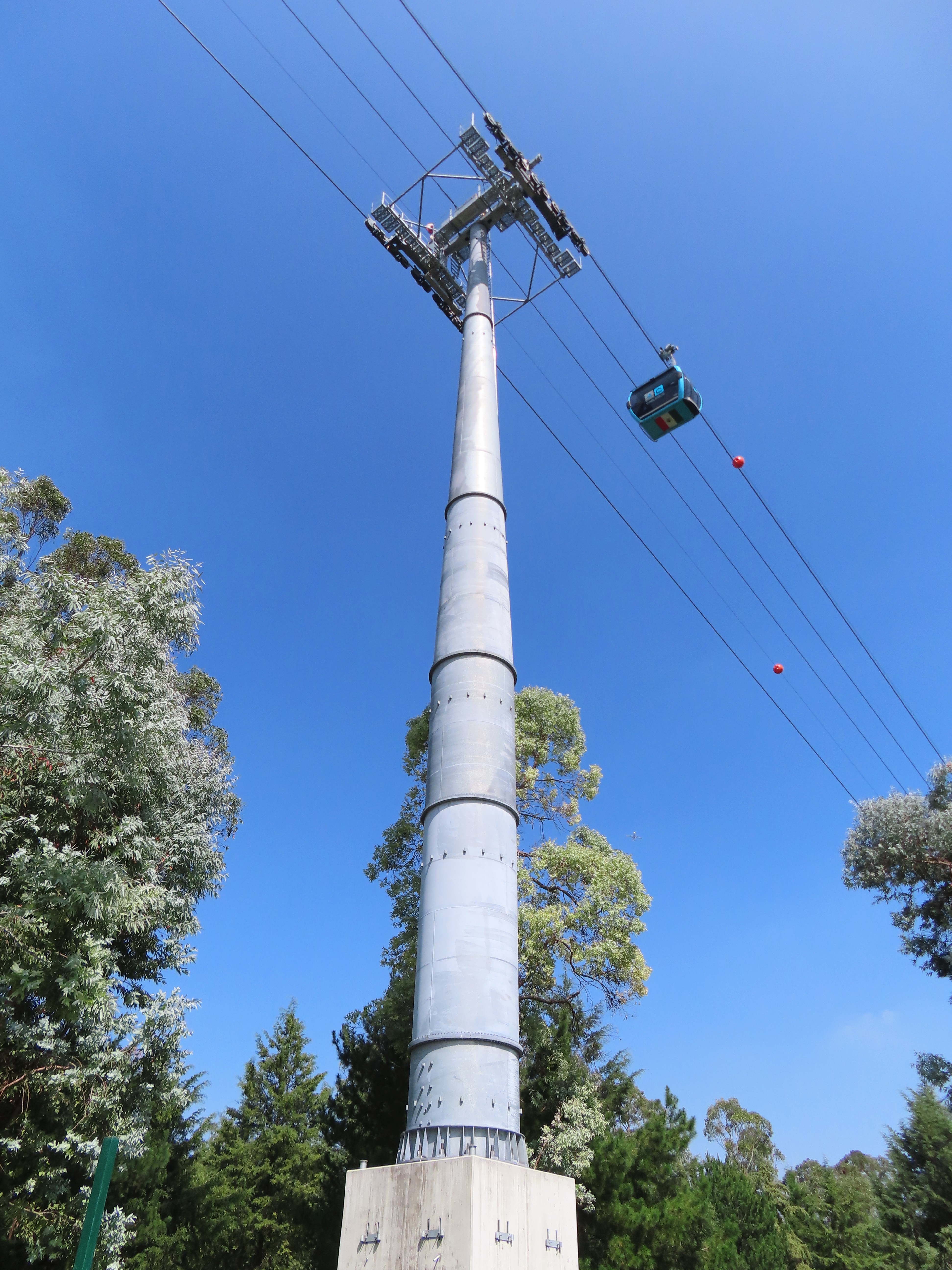
Mexico City’s gondolas utilize extremely tall towers to pass over buildings and minimize the number of towers needed. All of them move between 2,000 and 3,000 passengers per hour and direction.
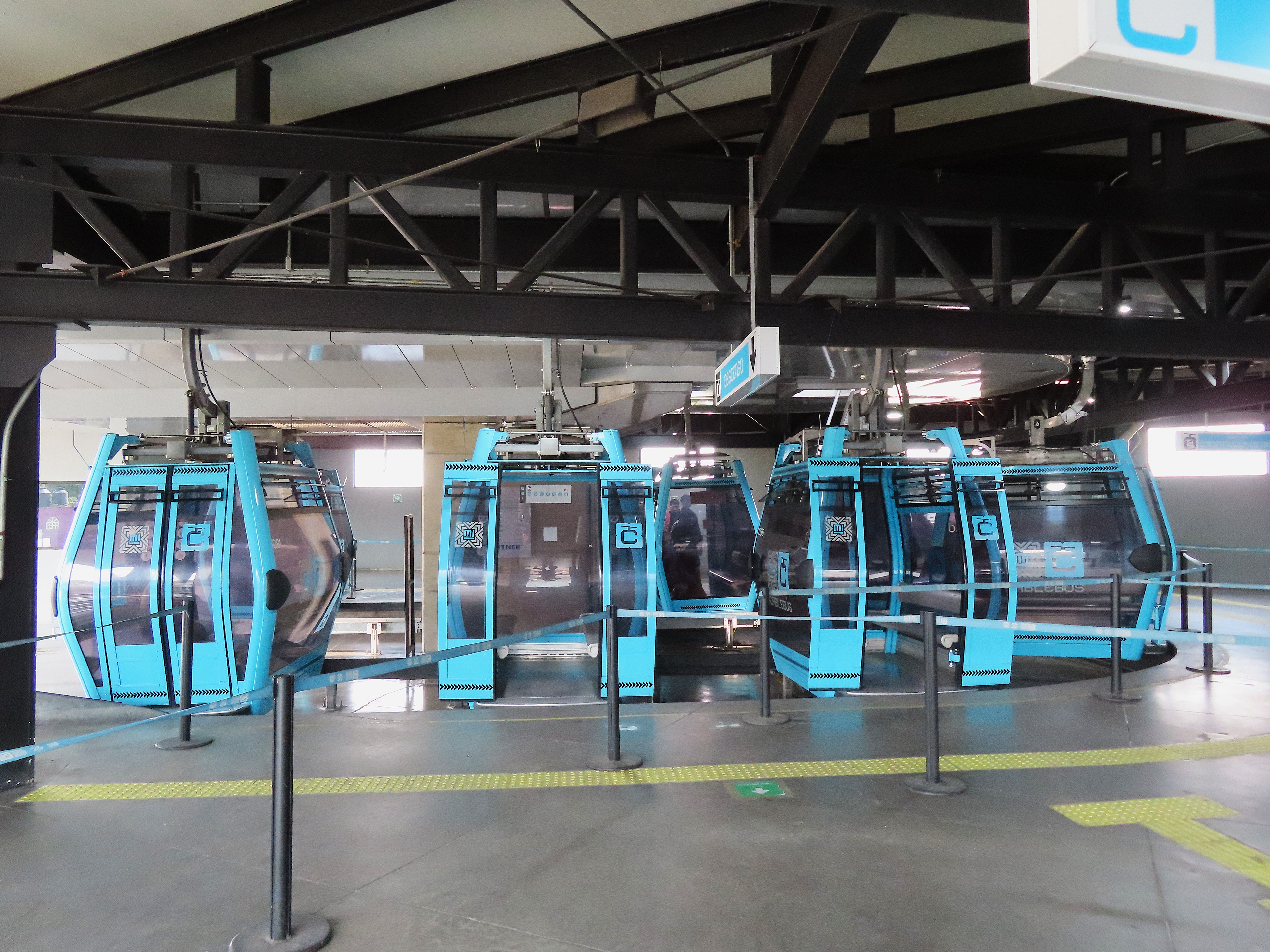
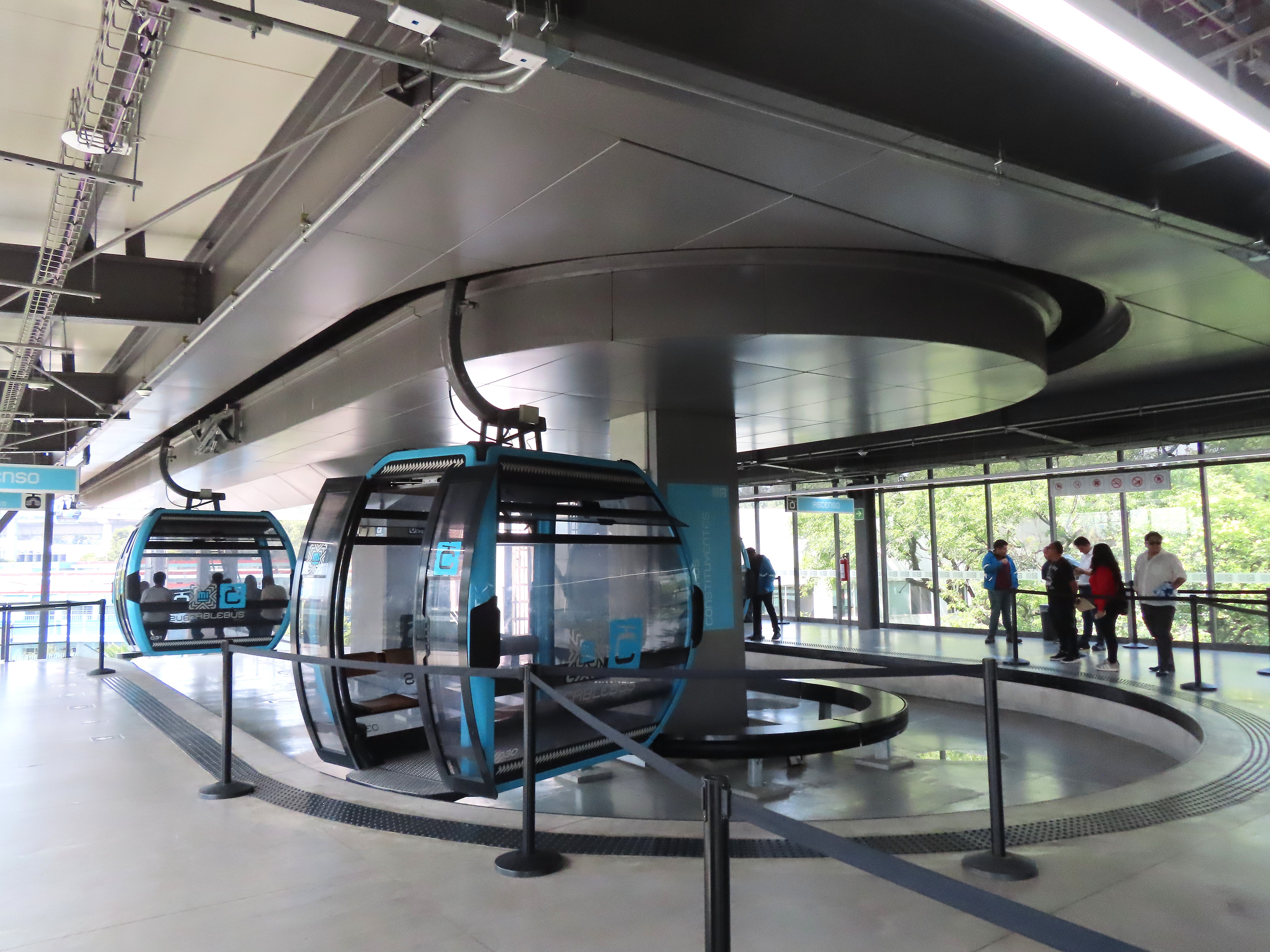
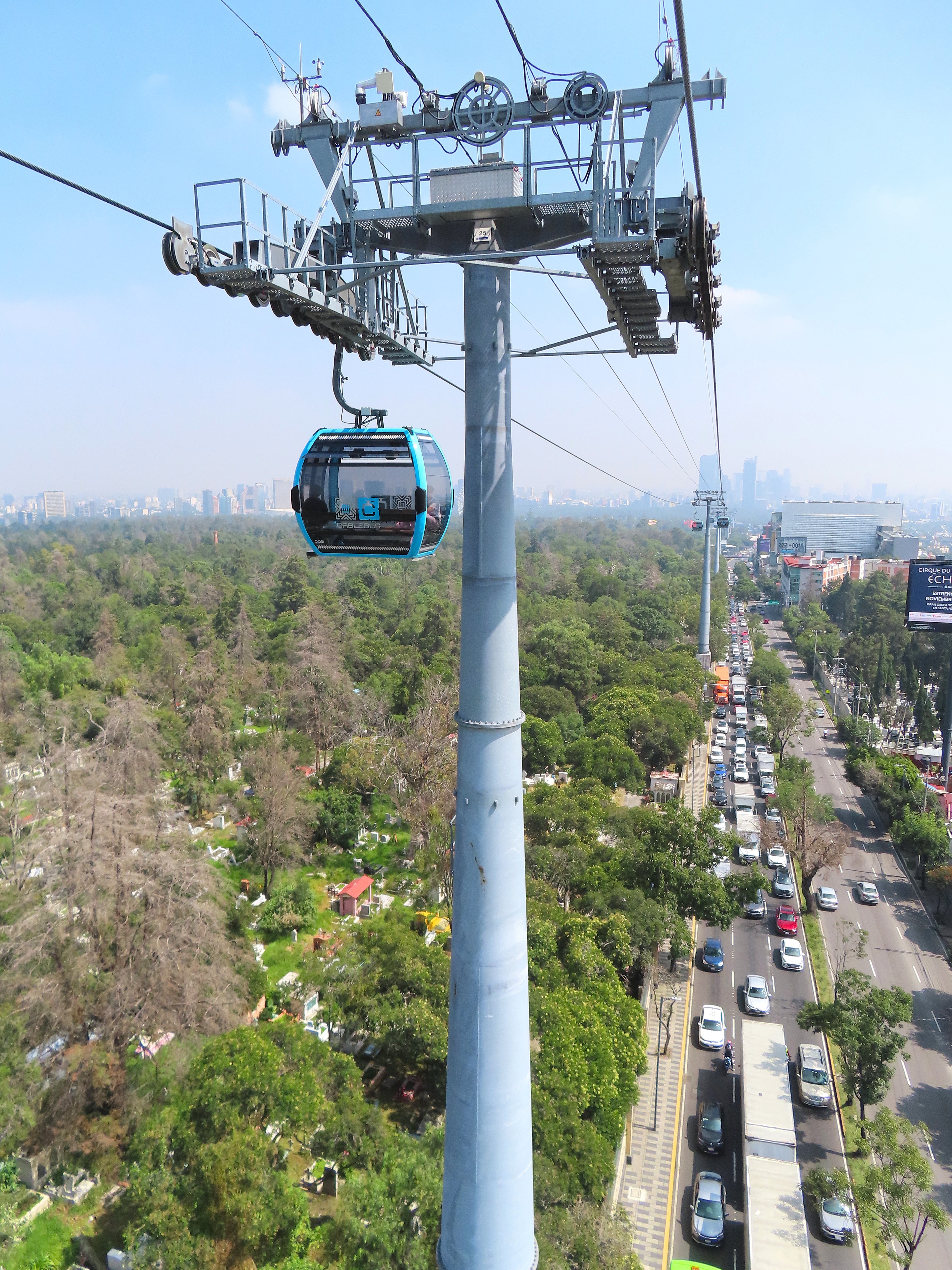
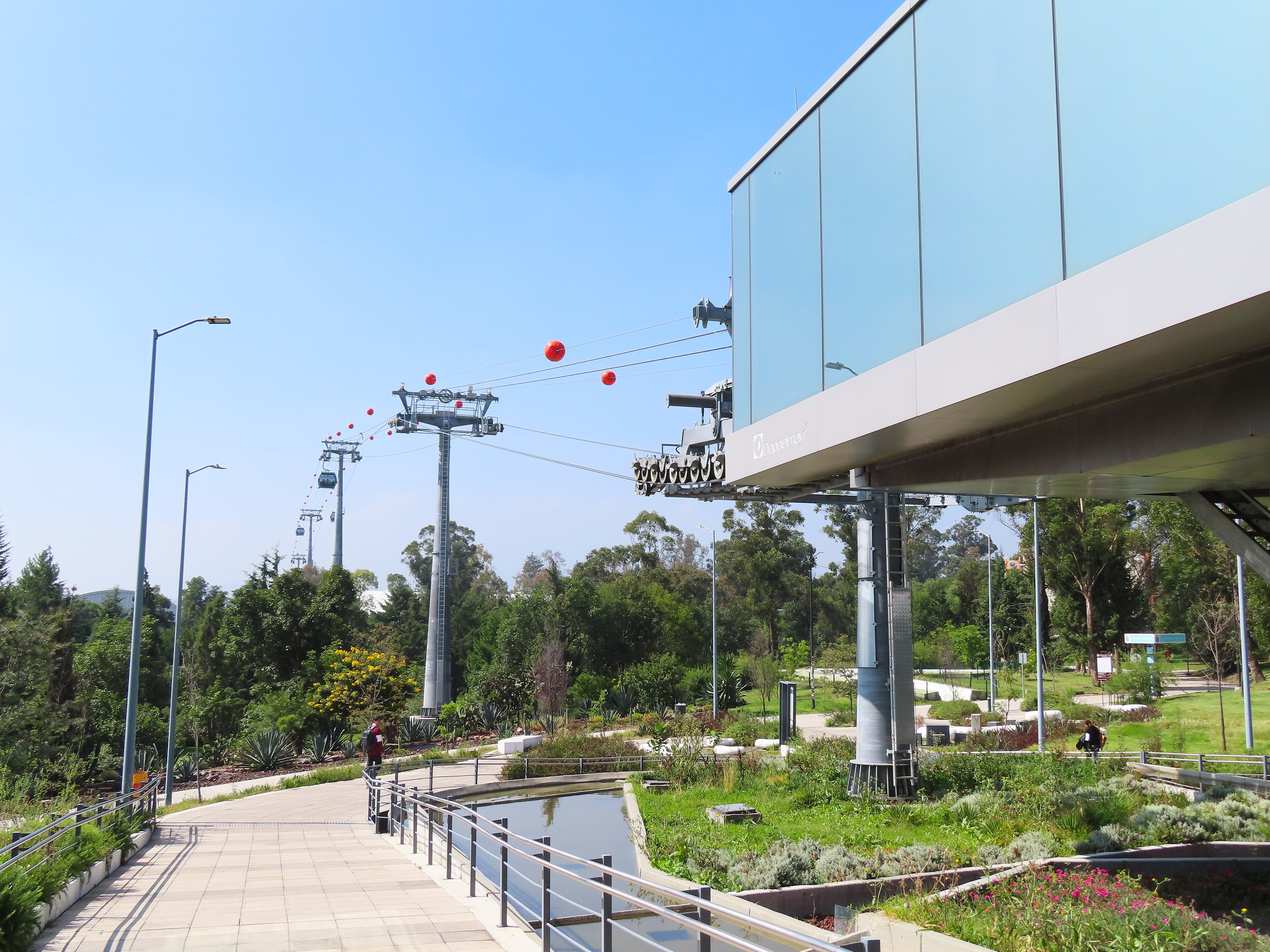
The other gondola I rode was Cablebús Line 3, built by Doppelmayr in 2024. This line services six stations along 3.4 miles of the Chapultepec Forest. This is a less dense, more touristy area and the system opened with just 71 ten passenger cabins. More cabins can be added in the future to reach a final capacity of 3,000 riders per hour. Line 3 moves up to 6 m/s and was fairly busy when I rode, especially when trains would unload at the nearby Constituyentes metro station. Cabins easily accommodate strollers, wheelchairs, dogs and bicycles.
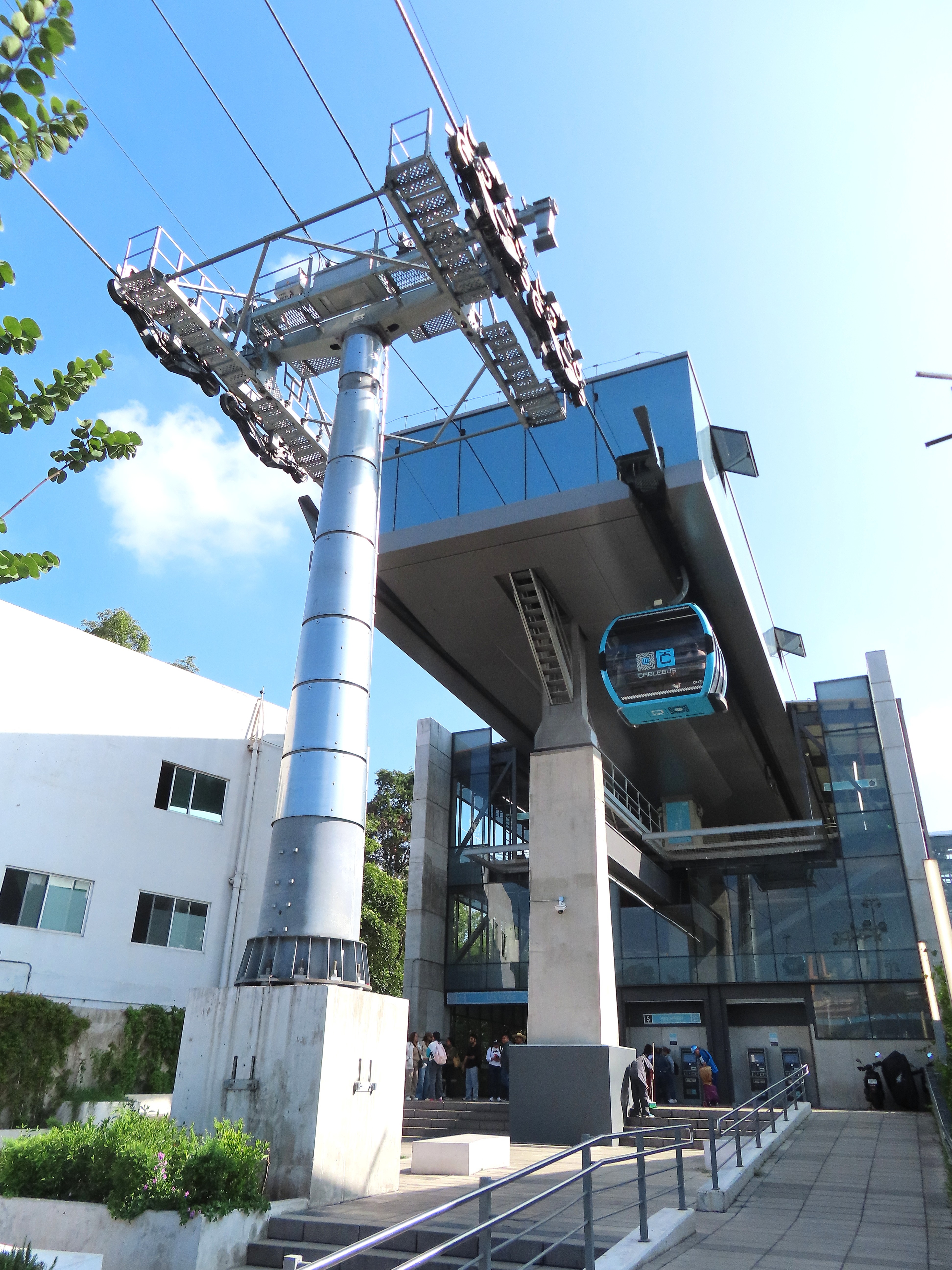
All of Line 3’s stations feature D-Line R2 glass enclosures, giving the lift a modern look. Much of the line passes over a highway, evoking the feeling of flying over traffic. The lifts 39 towers are extremely tall, giving incredible views. At various points cabins pass over a large canyon, a cemetary, train tracks and even an equestrian arena. Like Line 2, Line 3 is really two lifts with two separate haul ropes. On this line, however, cabins move between sections, forming a one seat ride through all six stations.
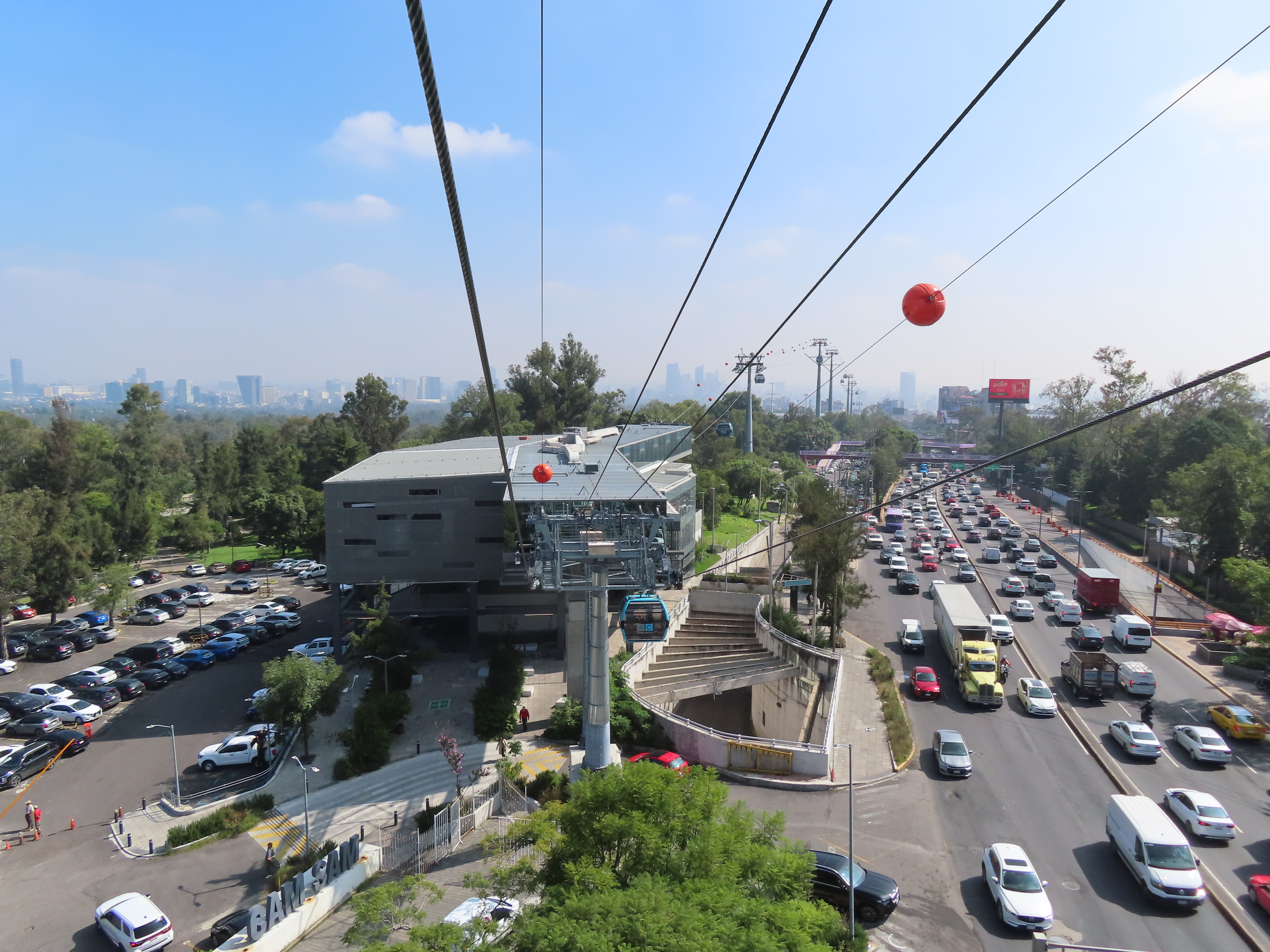
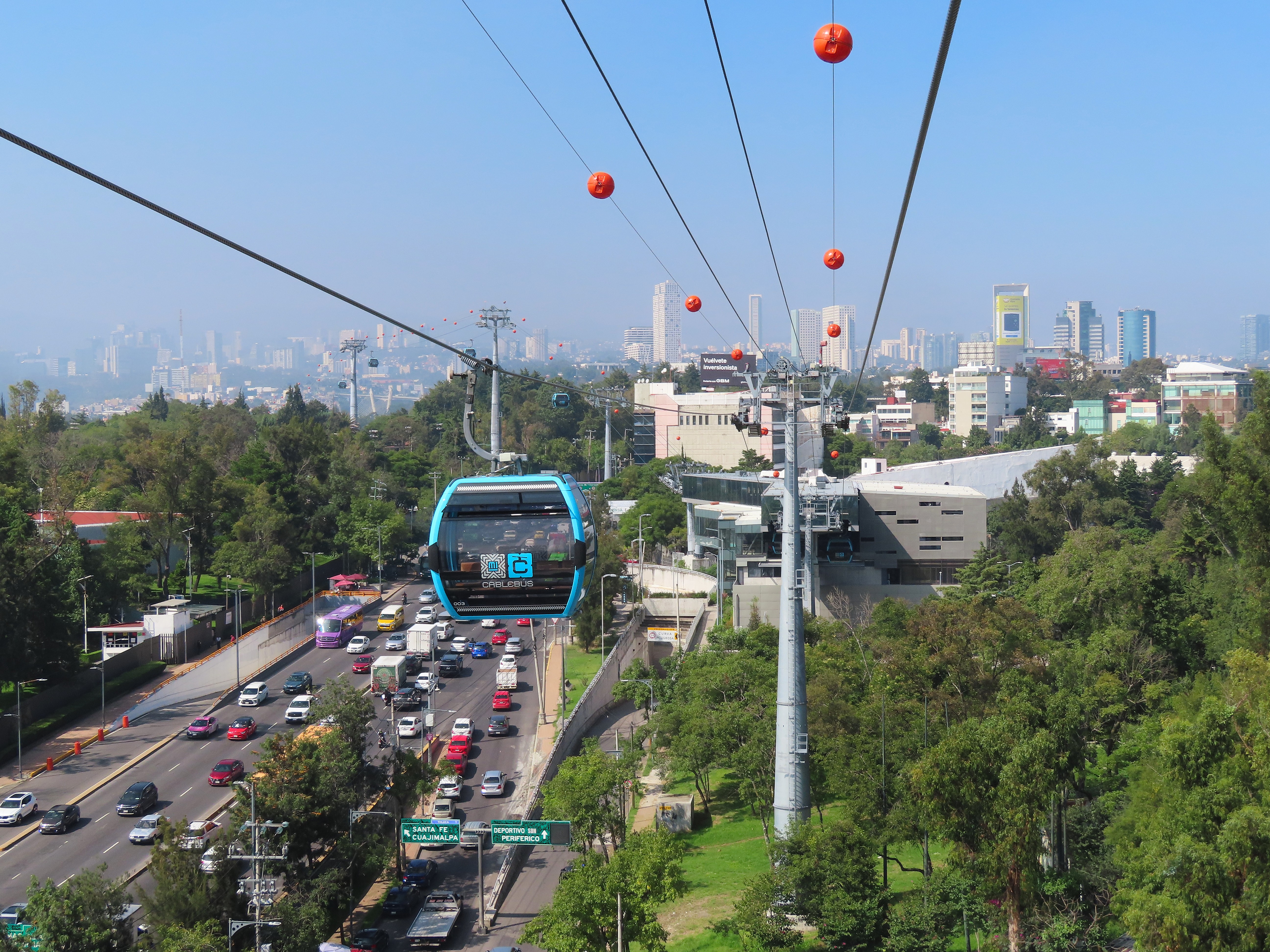
I didn’t get to ride Line 1, Doppelmayr’s largest system in Mexico City spanning 5.8 miles and six stations.
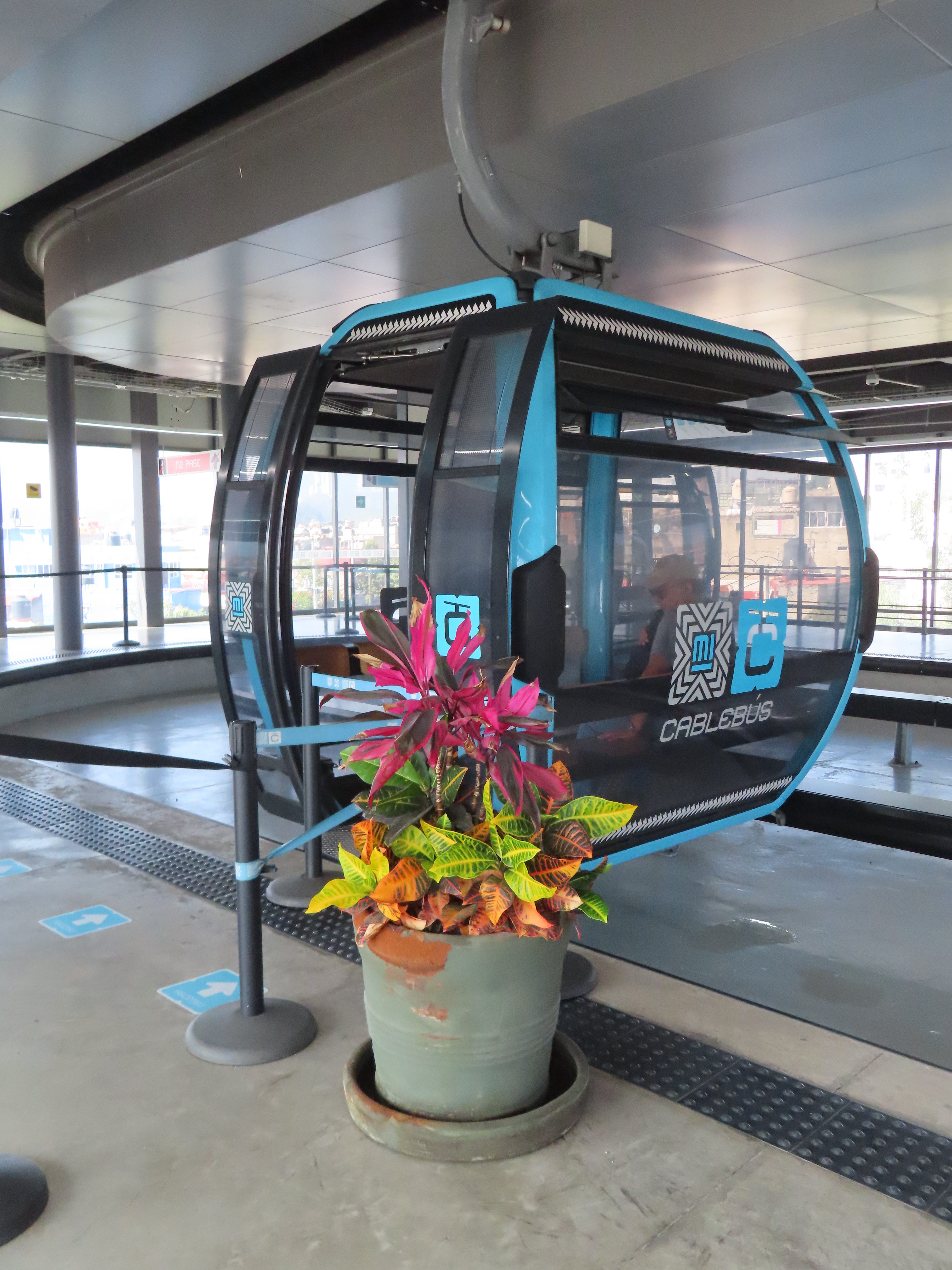
A ride on any of the three Cablebús lines runs just seven pesos or 38 cents US at current exchange rates. Each line runs 5:00 am to 11:00 pm on weekdays with slightly shorter hours on weekends. Maintenance is completed at night or during short closure periods. Mechanics work across three shifts covering 24 hours per day. All three systems feature direct drives and redundancies designed to all-but-eliminate the possibility of a ground evacuation.
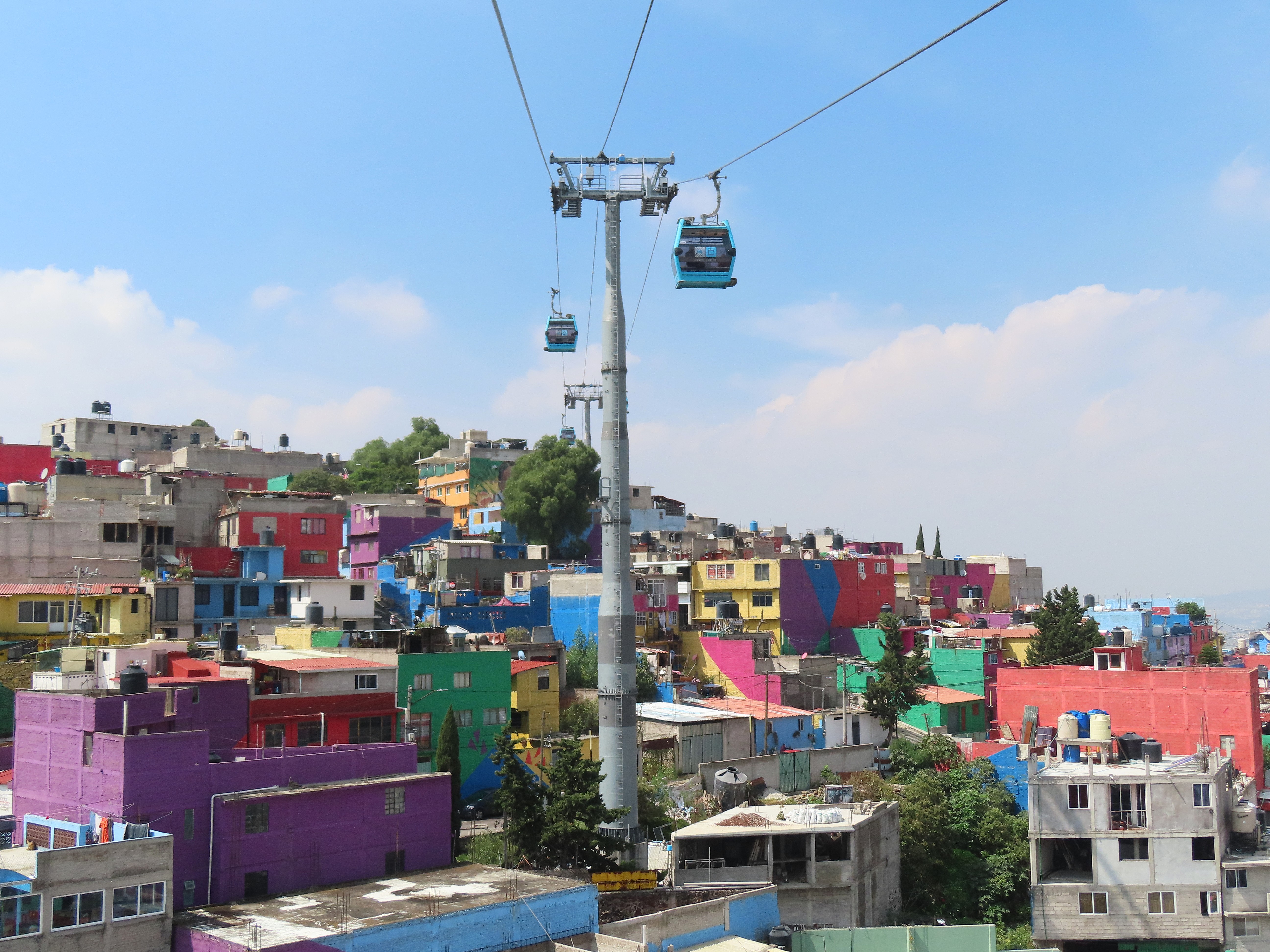
Outside Mexico City proper, the State of Mexico constructed another gondola network called Mexicable that connects with both Cablebús Line 1 and the subway system. Combined, Cablebús and Mexicable encompass 24 miles with 32 stations, 248 towers and 1,244 cabins. More gondolas are coming. Leitner recently won contracts for Cablebús 4 and 6 plus Mexicable Line 3, totalling 21 miles and 25 stations. Doppelmayr will build Cablebús Line 5, set to become the new longest urban gondola in the world with 12 stations along 9.4 miles utilizing 114 towers and 462 cabins. There’s so much work here neither manufacturer could do it all alone.

News Roundup: Auxiliary

News Roundup: Nine Figures

  • A wild wind video from South America makes the internet rounds.  Anyone know why are there double and quad chairs on the same lift?
  • A founding partner of the hugely successful Sea to Sky Gondola looks at building a similar lift along the Trans-Canada Highway near Chilliwack, BC.
  • 9News checks in on Winter Park’s major gondola upgrade.
  • Mexicable’s second gondola line could be a $105 million monster: 5.2 miles long with six stations carrying an estimated 35,000 riders each day.
  • I usually write about lifts and not myself but Skytrac recently interviewed me.
  • A BC court will hear the case of a skier injured when a Mueller lift de-roped four years ago. Crystal Mountain never reopened following the incident, which was blamed on multiple factors.
  • A local photographer is posting weekly pictures of Killington’s three simultaneous lift installations.
  • Fatzer releases more details on the US debut of Compacta at Big Sky.
  • The Balsams withdraws its application for a $28 million state loan guarantee, effectively shelving redevelopment for now.
  • LST’s American lift number two looks sharp at Waterville Valley.
  • Another Blackcomb Gondola update courtesy of Rob at WB shows how giant UNI-G XXLs are.

News Roundup: Intentions

  • Poma breaks ground on Medellín’s sixth urban gondola line as Doppelmayr prepares to open La Paz’s sixth on March 24th.
  • Gearbox issue strikes Camp Fortune, Quebec and 130 guests are roped off a Blue Mountain quad chair.
  • As Beantown weighs a gondola, Boston Globe staff travel to experience Leitner’s Mexicable.
  • Boyne Resorts acquires six mountain resorts plus the Gatlinburg Sky Lift it leased from CNL Lifestyle Properties and later Och-Ziff Capital Management.  “This opportunity will enable us to accelerate and fine tune the execution of our reinvestment plans for these spectacular properties, which will boost our competitive advantages and support our focus on continuous enhancement of the guest experience,” says Boyne President Stephen Kircher.
  • Don’t let this go unpunished at your resort.
  • The Australian man who was supposed to buy Maine’s third largest ski resort is caught on tape saying, “We’re not going to deliver on Saddleback,”  “Opening the mountain is not a primary concern for us,” and  “We’re not going to lose any sleep with regards to it,” acknowledging it was mostly about cashing in on the EB-5 immigrant investor program.
  • Triple Peaks’ Okemo, Crested Butte and Mt. Sunapee join the Epic Pass through a long-term alliance with Vail Resorts.
  • Anti Edmonton gondola editorial argues “challenges to a gondola could include its operational reliability in a harsh winter climate.”  Guess again.

News Roundup: Transformative

  • With The Beavers expansion, Arapahoe Basin ditches painted trail map for a VistaMap.
  • The BBC produces a fantastic 23-minute podcast explaining the success of Mexicable, the newest urban gondola built by Leitner Ropeways.
  • You can watch Belleayre’s gondola take shape live on their webcam. More recent photos are here.
  • The New York State Fair’s Broadway Skyliner appears to be a relocated Stadeli. I’m thinking it’s Bucksaw from Sugarloaf.
  • The latest from Orlando.
  • SNOW Operating to take over operations at Mountain Creek.
  • To compensate for a late July gondola opening, Steamboat extends “summer” season until late October.
  • Bob Wheaton says being part of a larger resort group will allow Deer Valley to negotiate better prices on lifts.
  • Lift operator and friends sentenced to probation and ordered to pay $96,000 in restitution for stealing and selling $116,000 in lift downtime vouchers from top shacks at Heavenly and Northstar.  Vail Resorts has since changed the way it handles the vouchers companywide.

News Roundup: Progress

News Roundup: Interalpin

  • Revelstoke homeowners aren’t happy lift development has stalled for almost ten years now.  The resort’s response identifies master plan lifts 1 and 11 as the highest priorities but notes construction of them is subject to market demand.
  • In an interview, new Crystal Mountain owner John Kircher says he wants to build a second gondola to Campbell Basin.
  • NY State Fair gondola continues to be targeted as an example of government waste.
  • Whaleback’s T-Bar project is a go.  The lift came from Plattekill, NY and will be installed by SkyTrans.
  • New Gatlinburg Sky Lift looks to be almost finished.
  • Poma reaches agreement to build new gondolas in Vietnam with the first next-generation Sigma Diamond EVO cabins introduced yesterday at Interalpin.  The new cabins offer more natural light and feature doors that slide rather than opening out.
  • Move over D-Line: the new Leitner Station is here.
  • LST gets another detachable contract.
  • Leitner launches urban gondola in Berlin.
  • Skier visits at Vail Resorts were down 2.8 percent this season but lift ticket revenue increased 7.4 percent.
  • Mi Teleférico opens $1.5 million Operations Control Center with 22 people monitoring 1,300 surveillance cameras on 66 screens and lightning detection system for four gondola lines.
  • Purgatory will add a mid-station to its Needles triple this summer.

News Roundup: Quebec

  • Intrawest likely won’t buy any new lifts this year.
  • TV station in Maine highlights lift maintenance and oversight with visits to Sugarloaf and Camden Snow Bowl.
  • Denver7 lands the first interview with Larry Smith of the Colorado Passenger Tramway Board following Granby Ranch incident.
  • Sunshine Polishing moving gondola refurbishing operation to Grand Junction.
  • A $67 million, six-year old gondola in Rio sits abandoned.
  • Poma double rope evacuated at Mont Orford.
  • Heron-Poma double rope evac’d at Sleeping Giant before problem apparently fixed with a screwdriver.
  • French lift site reports on two brand new lifts in Quebec.
  • Waterville Valley’s new Green Peak triple will finally open Saturday.
  • “Mexicable is a great experience and it is something that you need to do should you ever visit Mexico City.”
  • Austrian rope manufacturer Teufelberger acquires Italian competitor Redaelli (Fatzer of Switzerland and ArcelorMittal of France are the other big two.)
  • See more photos of the mind-blowing Giggijochbahn gondola.
  • La Paz’s fourth gondola opens March 6th.
  • Leitner Ropeways will complete the new 8-passenger gondola in Torreón, Mexico in April.
  • British Columbia approves construction of Revelstoke Adventure Park with chairlift/gondola construction planned for 2017 and 2018 adjacent to Revelstoke Mountain Resort.
  • Seilbahn Blog has some awesome new photos of the first and only D-Line chairlift.
  • Seven year-old falls from chair at Thunder Ridge.
  • The New York Times checks in at Tamarack.
  • Arapahoe Basin formally unveils Beavers/Steep Gullies trail map & expansion plan with fixed-grip quad chairlift to debut in late 2018.
  • Doppelmayr to build 21,000′, $18 million gondola in Silao, Mexico.
  • Sugarloaf and Doppelmayr are doing a mid-season load test of Skyline on Thursday.

News Roundup: Dangling