Exploring Mexico City’s Urban Gondolas

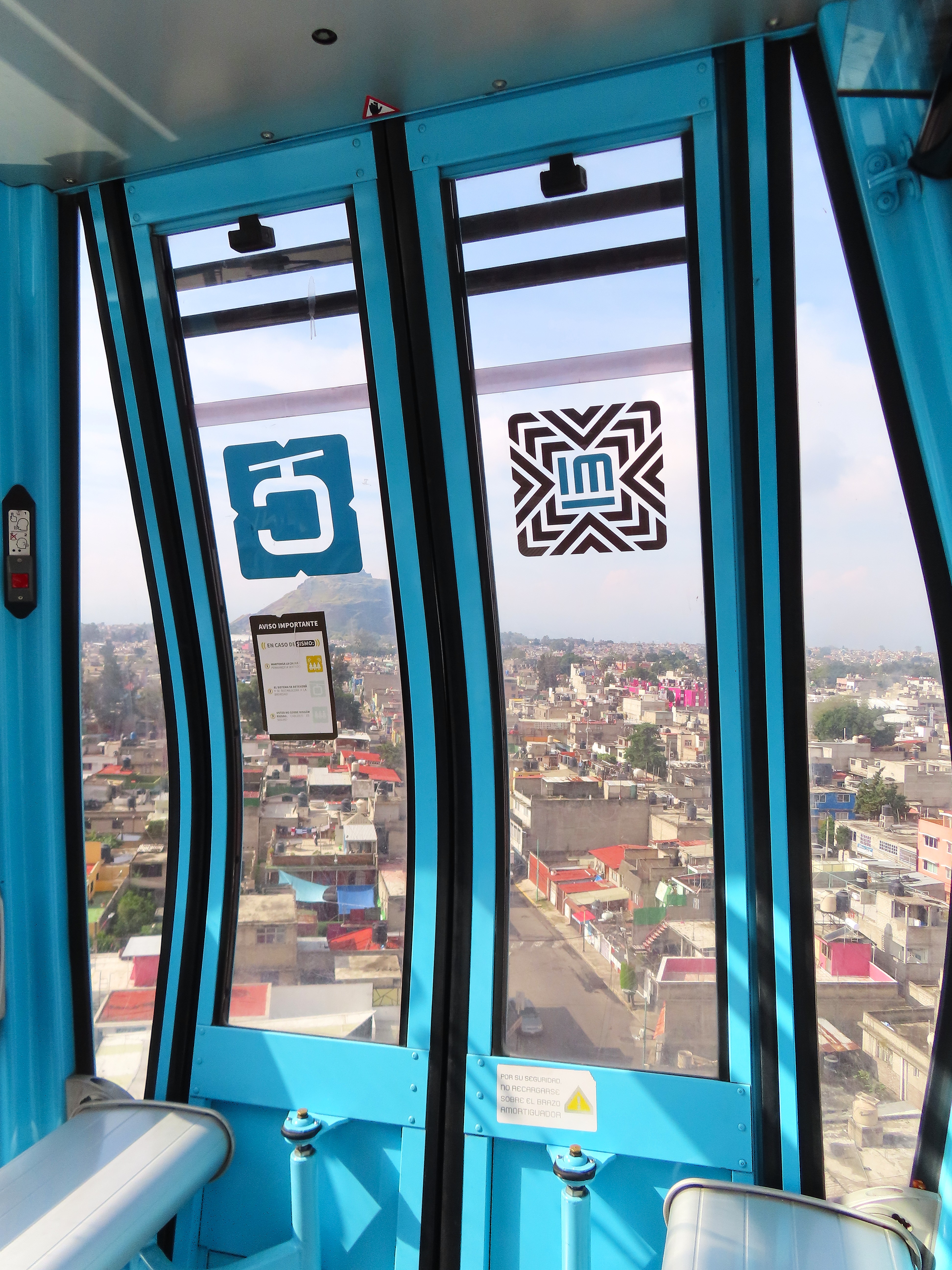
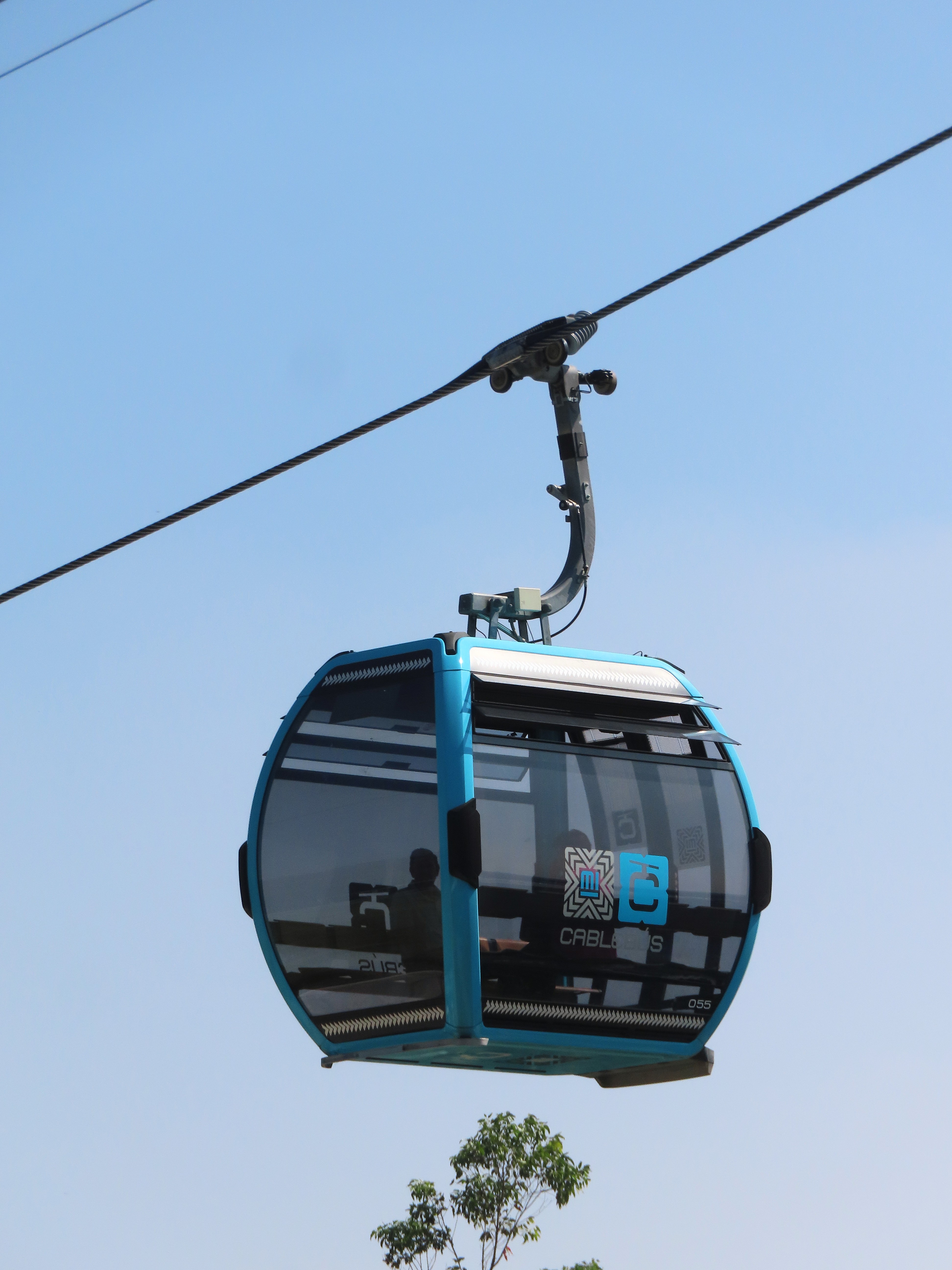
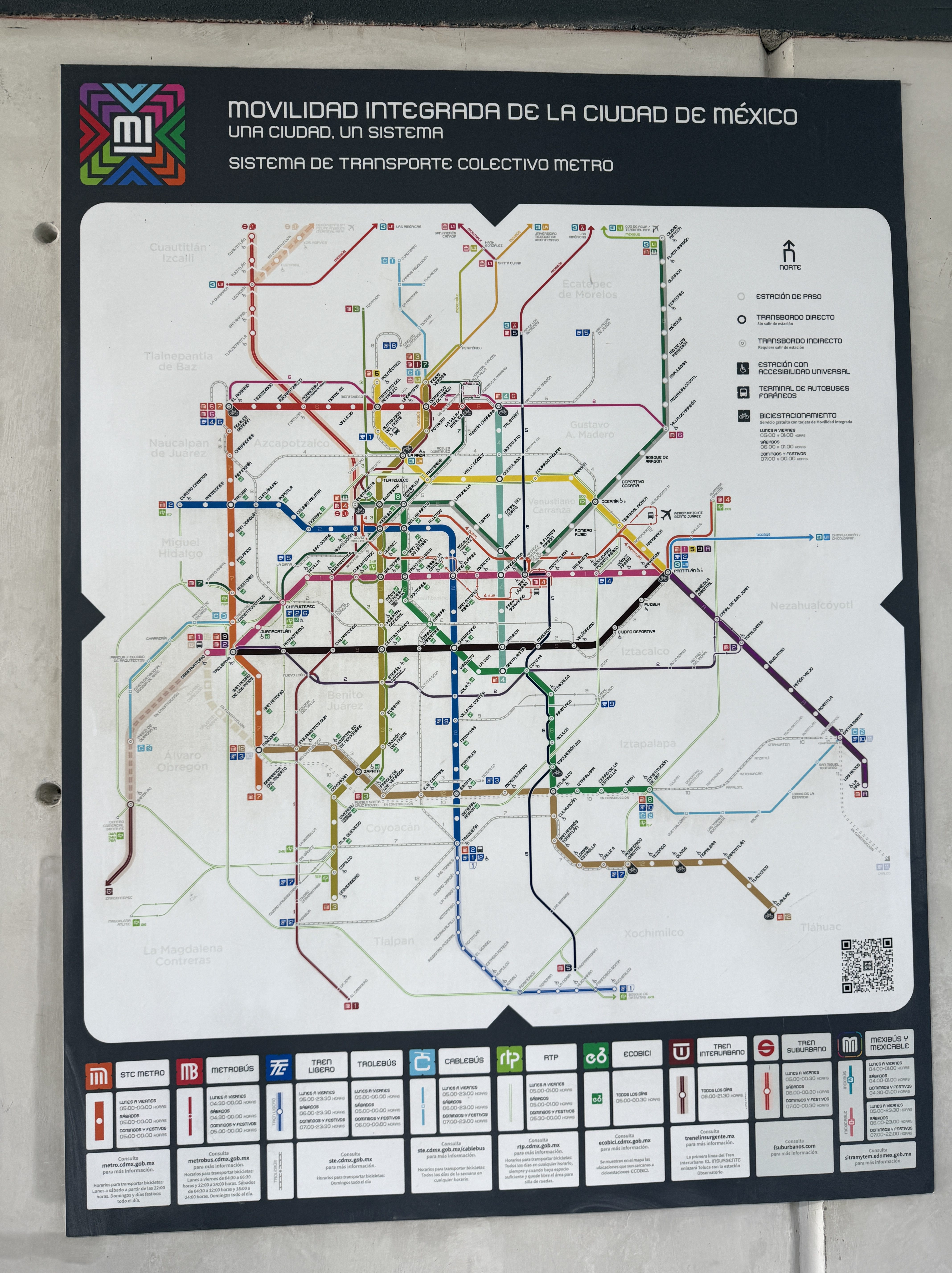
This week I got to ride two of North America’s most complex, high elevation gondola systems. They’ve never carried a single pair of skis but rather shuttle commuters within Mexico City’s expansive transit network. Branded Cablebús, the network consists of 19 stations and three distinct lines, each with several segments. They are fully integrated with the city’s trains and buses, accepting the same transit mobility card. Gondolas live on the city’s subway map in light blue with the same signage, typefaces and iconography as the broader network.
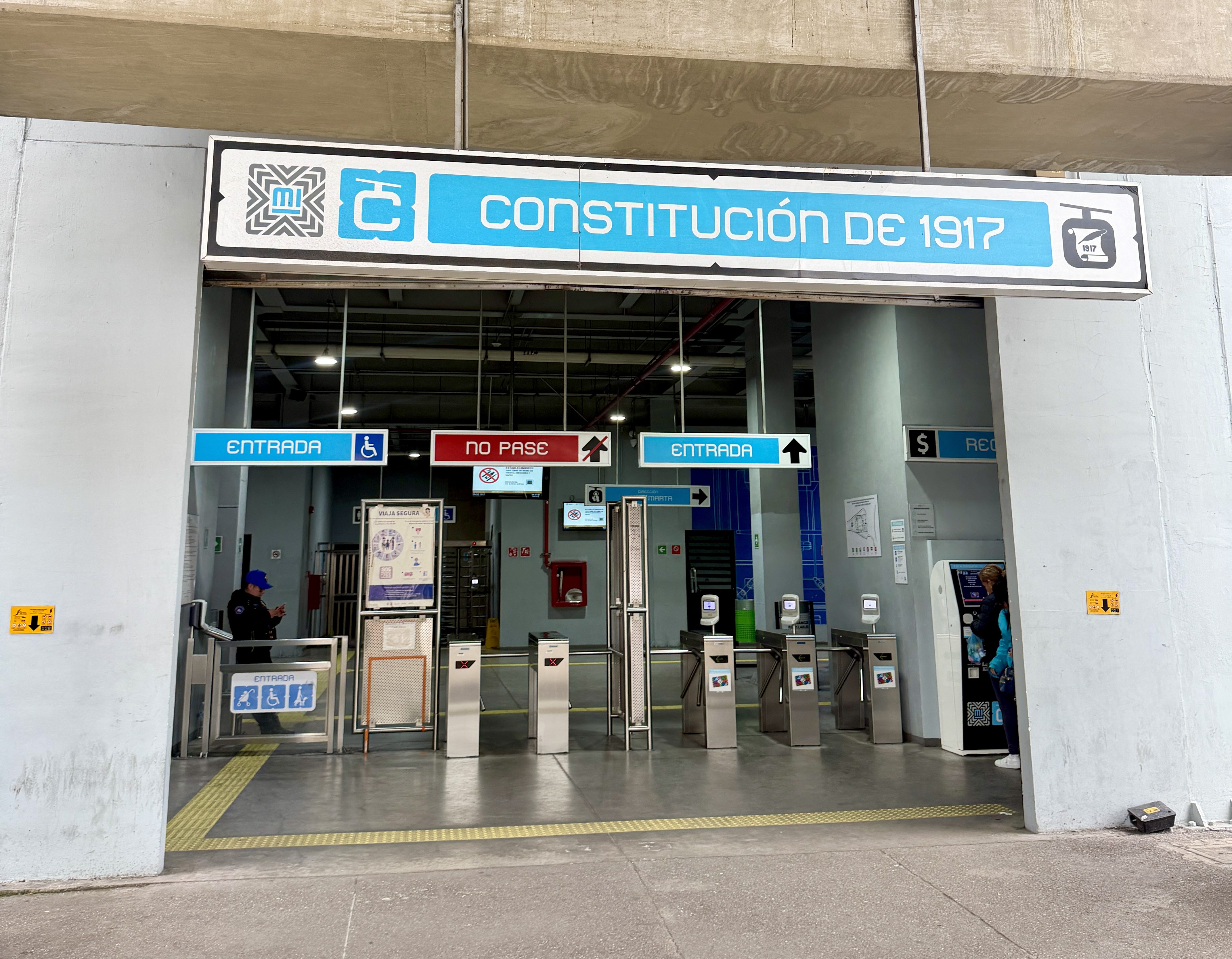
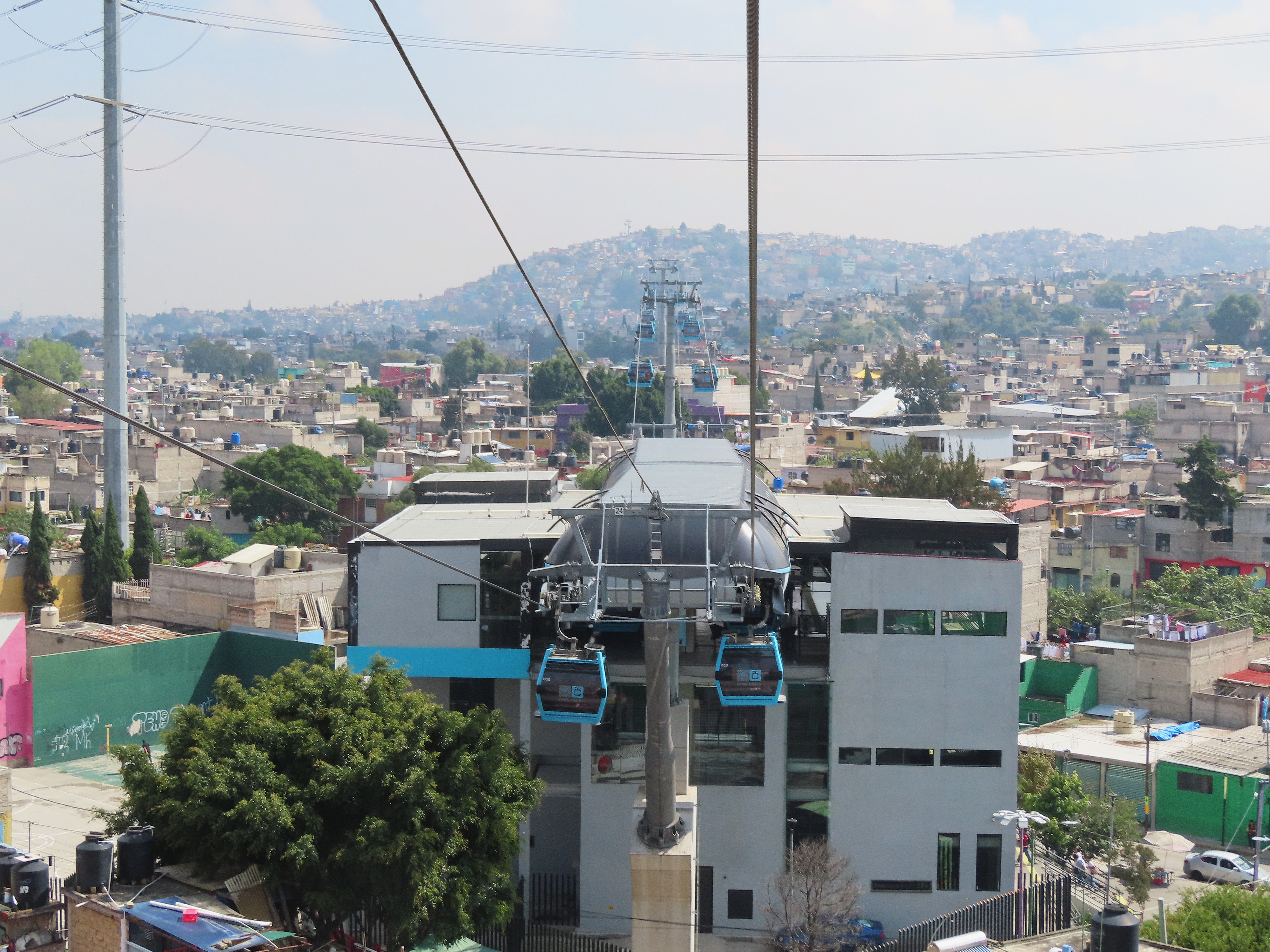
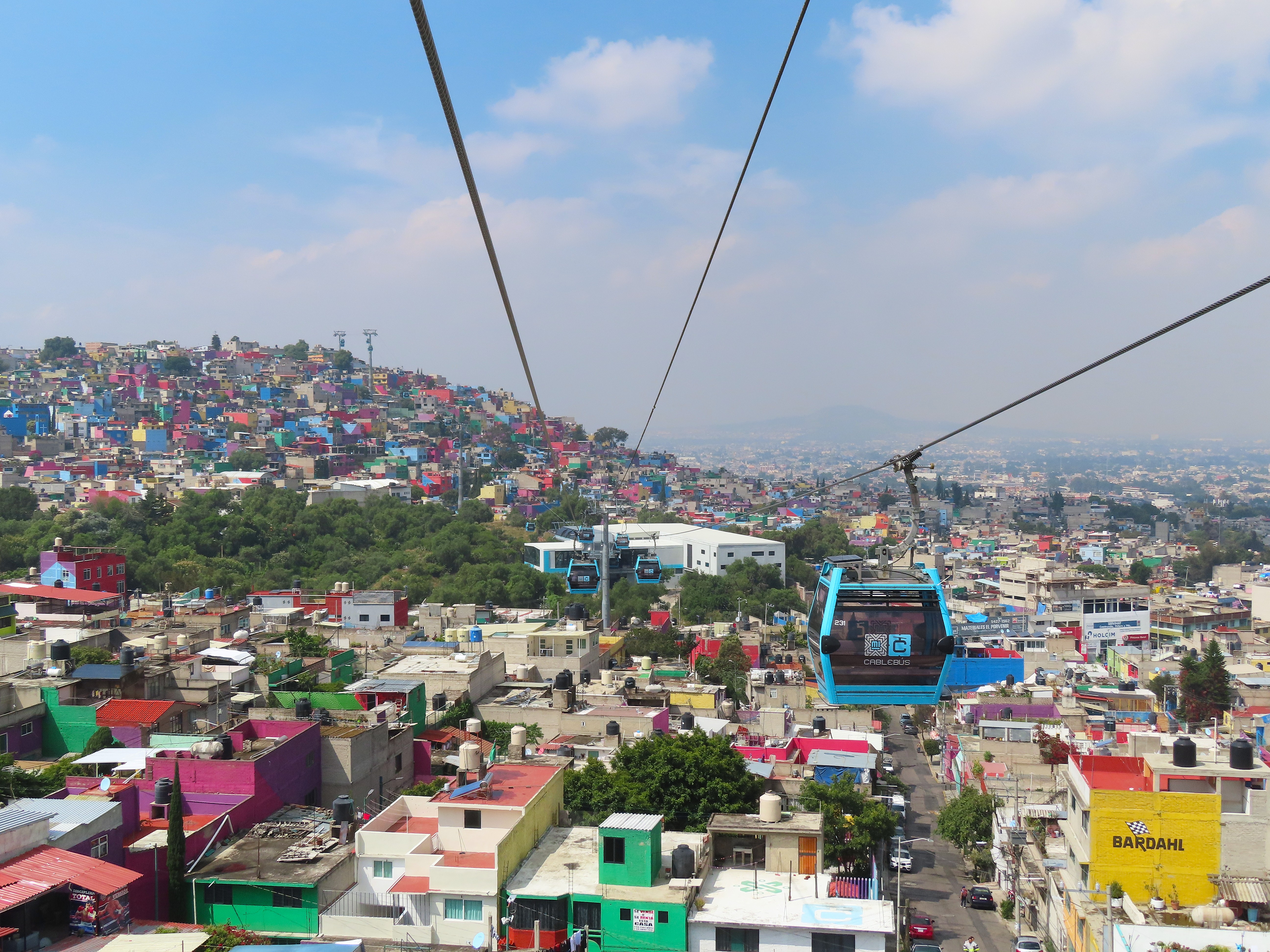
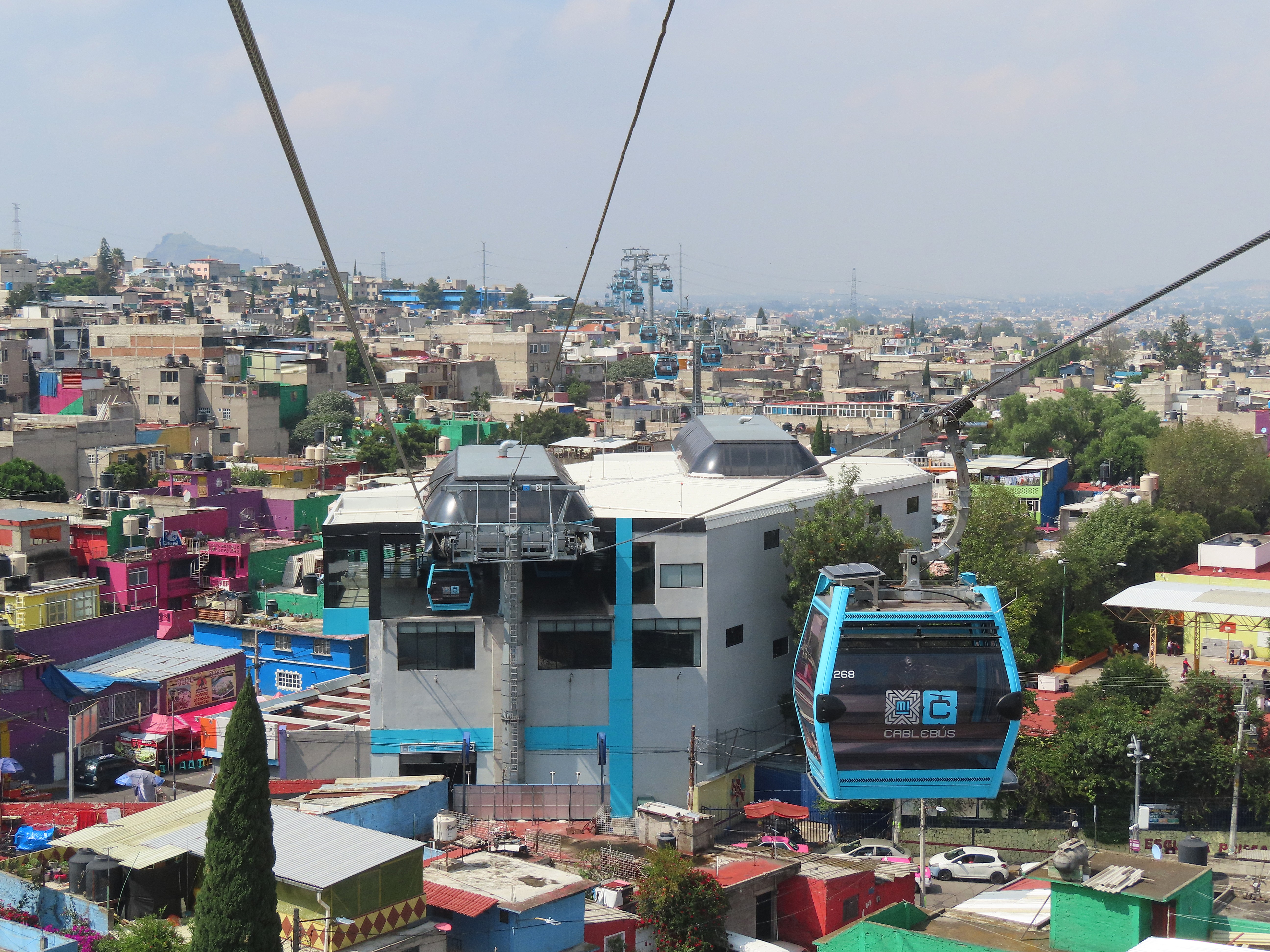
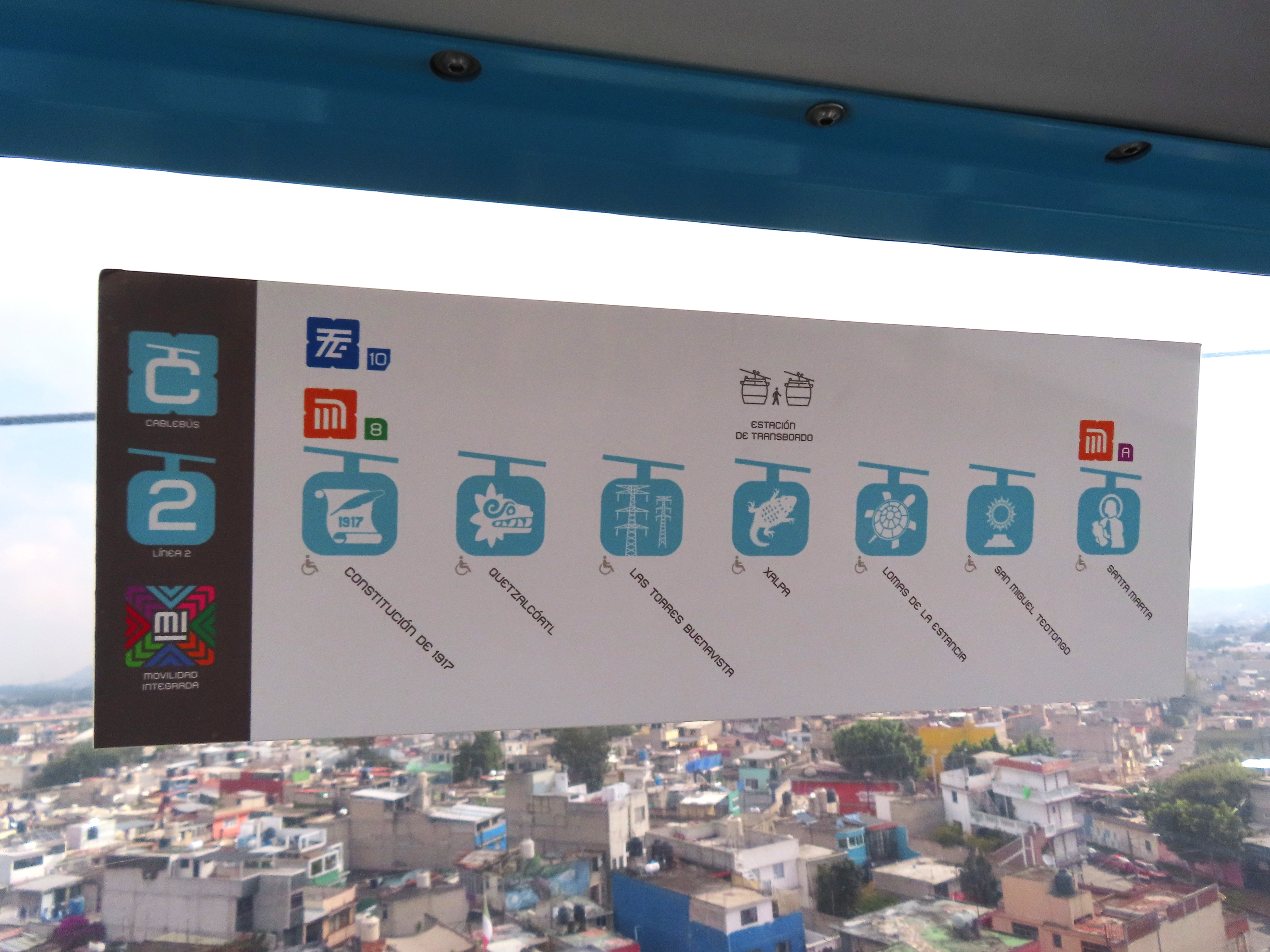
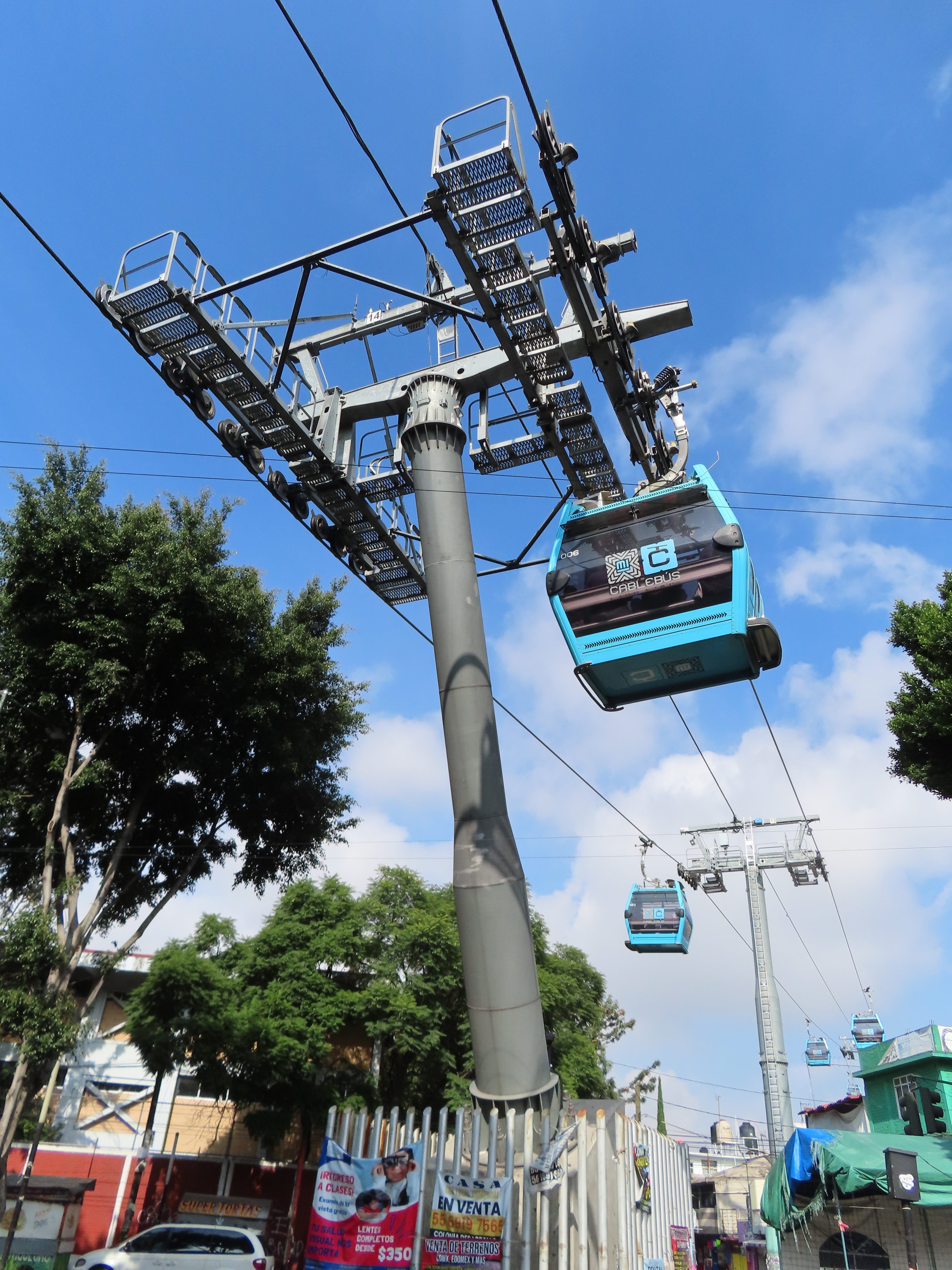
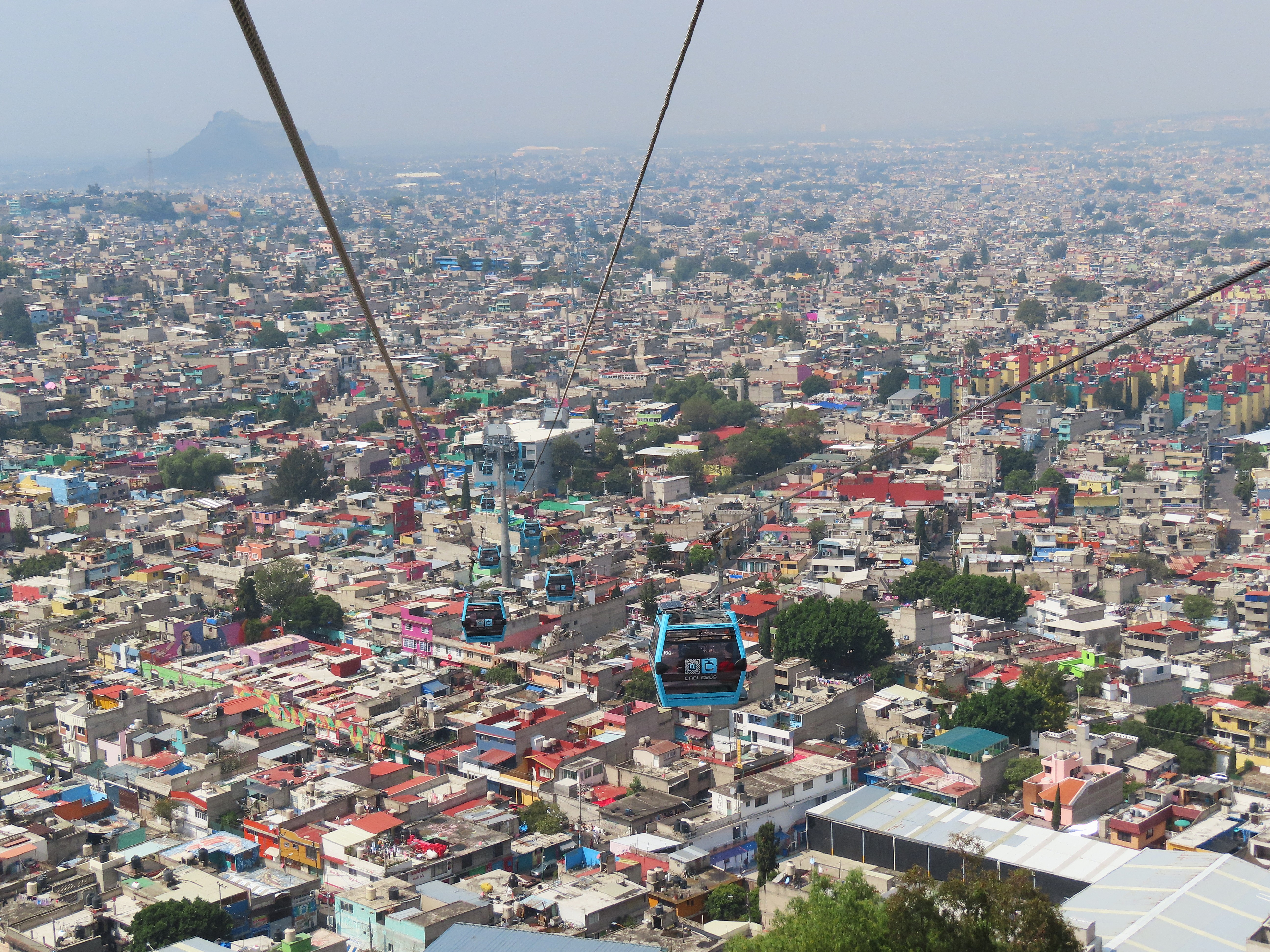
First I ventured to Line 2 in Iztapalapa, a historically poor and congested municipality with 1.8 million inhabitants. Line 2 travels from the end of one subway line to another, connecting seven communities along the way. When Leitner completed the system in 2021, it became the longest urban gondola in the world at 6.2 miles. It’s actually two separate lifts, each utilizting two direct drives and two haul ropes for a total of four ropes and four direct drives. A whopping 305 ten passenger cabins circulate over 59 towers.
Several stations accommodate sharp angle changes with deflection bullwheels. Others are nearly straight with minimal angle change. Riding the entire line requires a quick switch between cabins at Xalpa station. I was told most commuters take the lift for a few stops and connect to other transit rather than riding the entire 45 minutes like I did.
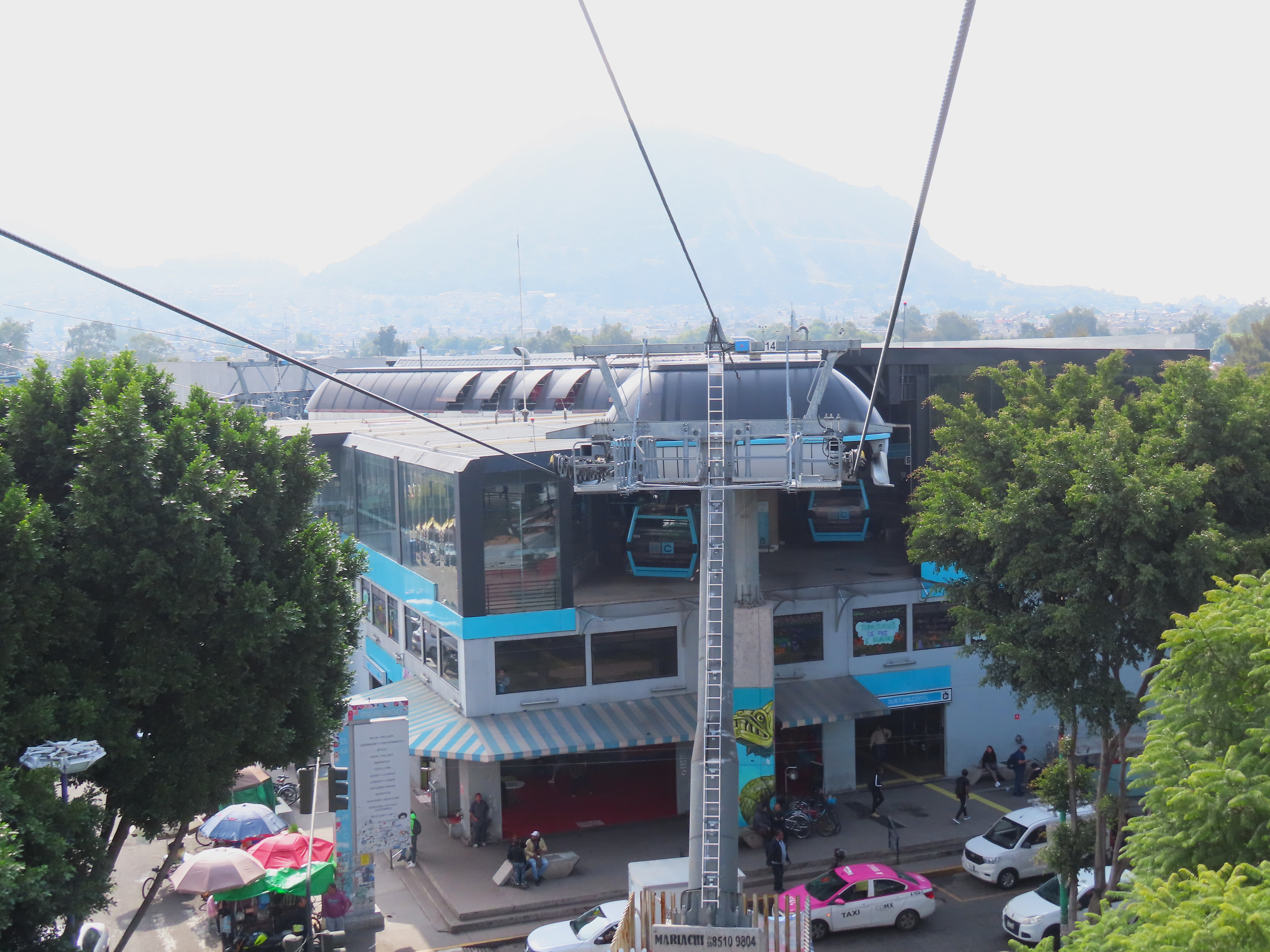
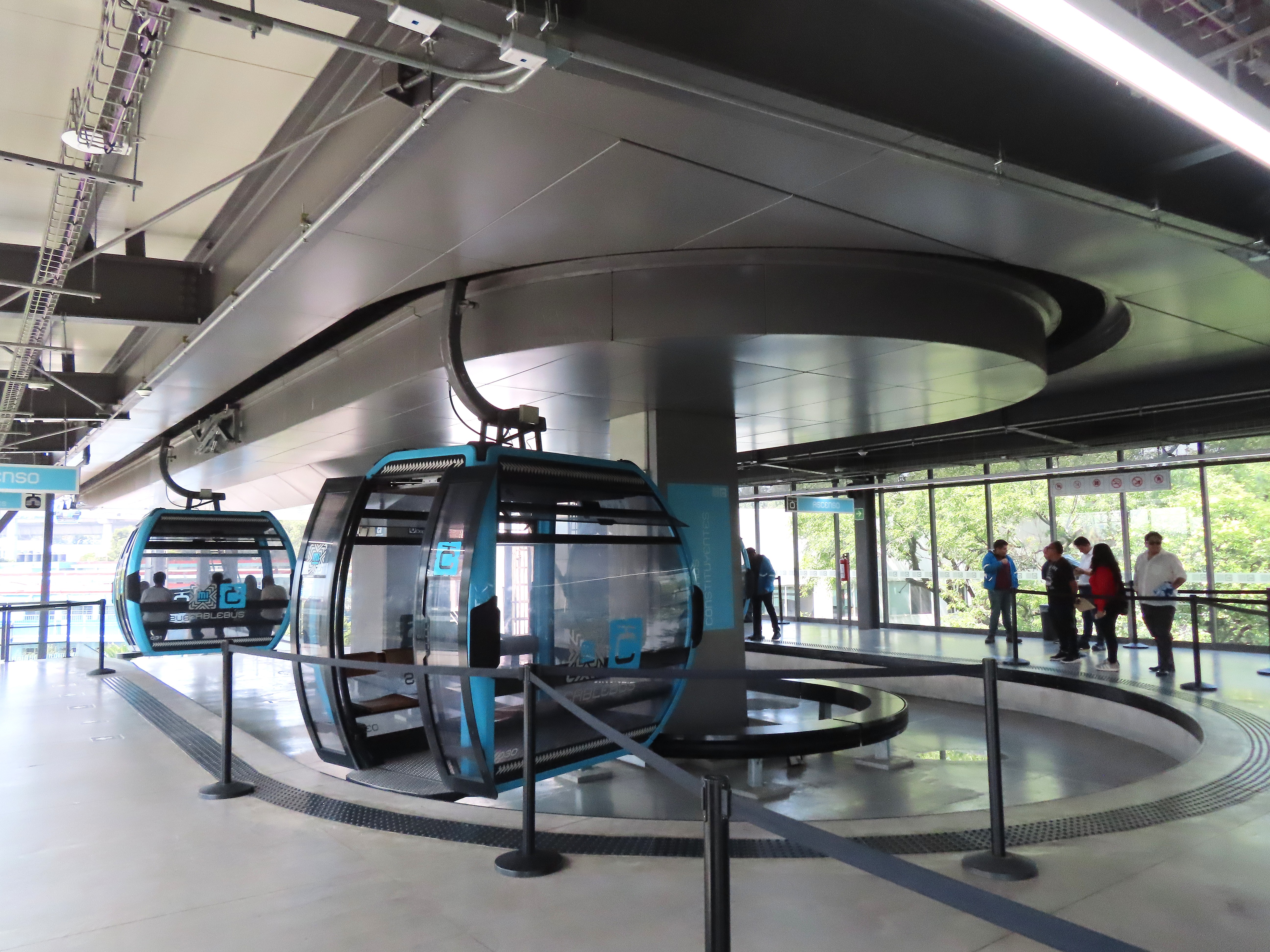
Stations serve as more than just transit stops and angle changes. One features a 150 stall market underneath the cabin parking facility (I’d never ridden a gondola where I could also buy a pig’s head from a butcher.) There are parks, community centers and healthcare along the gondola. Line 2 has proven successful, transporting approximately 63,000 riders per day in 2025. Travel times reduced significantly for residents and safety improved.
The government partners with joint ventures including Mexican infrastructure companies and European manufacturers to realize each installation here. For Line 2, Leitner and its local partner operated the system for the first year with the city’s transit agency taking over after. Towers were manufactured locally in Mexico.
Construction in Latin America can proceed quickly. For Line 2, the time between announcement and inauguration spanned just 30 months with actual construction taking 18. The line cost roughly $160 million to build, far more than a typical ski resort gondola but far less than a subway or highway project.
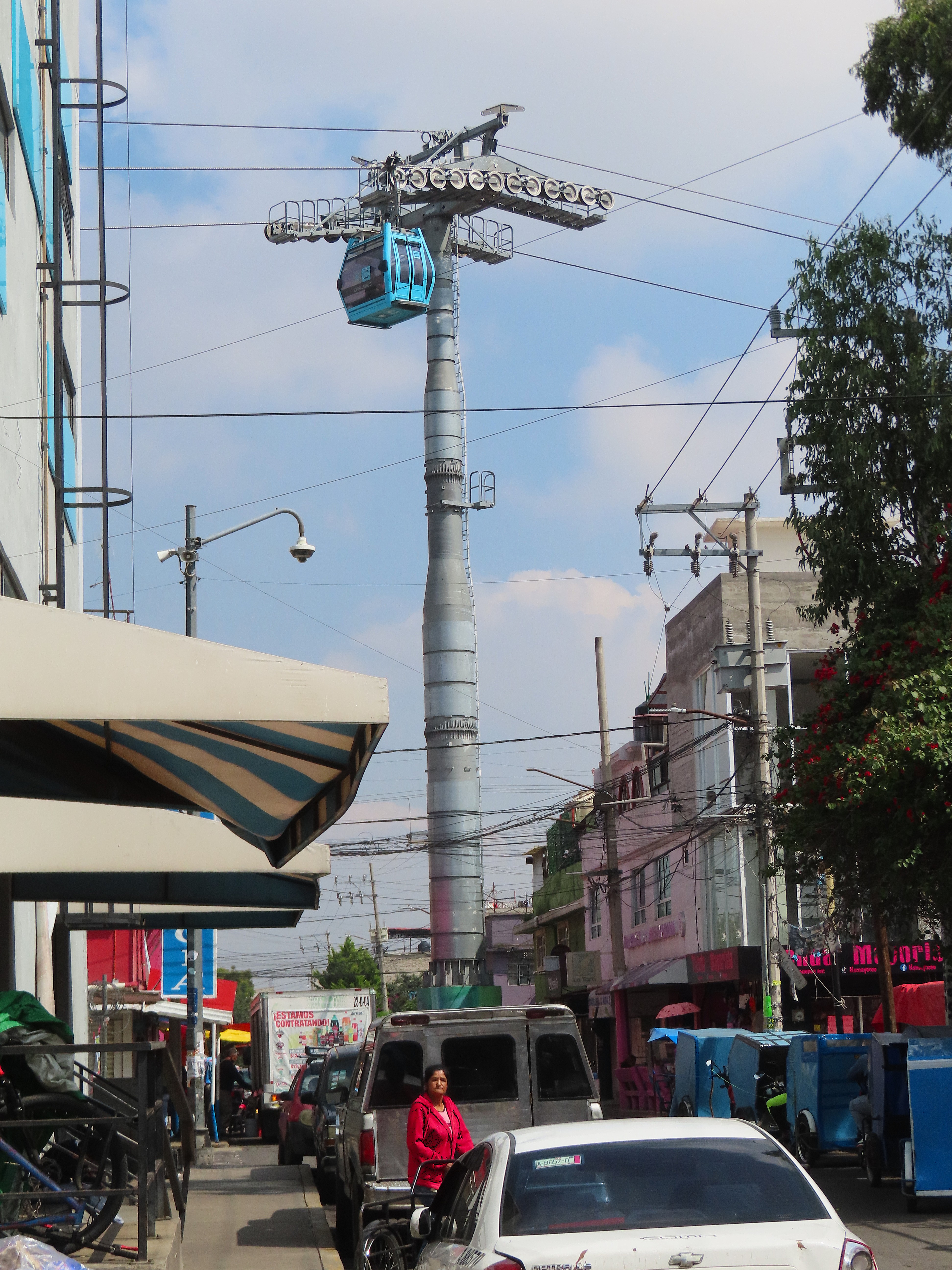
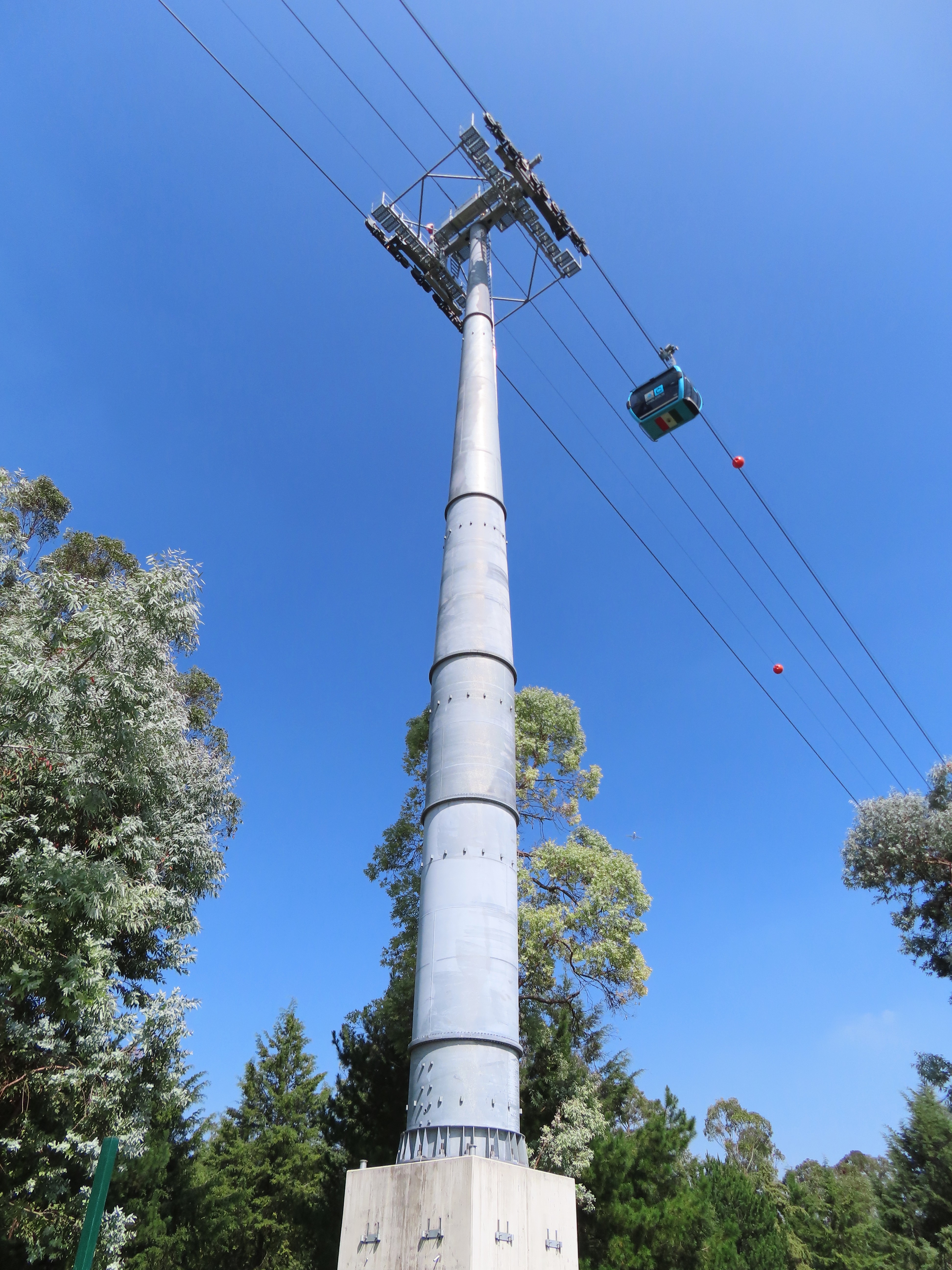
Mexico City’s gondolas utilize extremely tall towers to pass over buildings and minimize the number of towers needed. All of them move between 2,000 and 3,000 passengers per hour and direction.
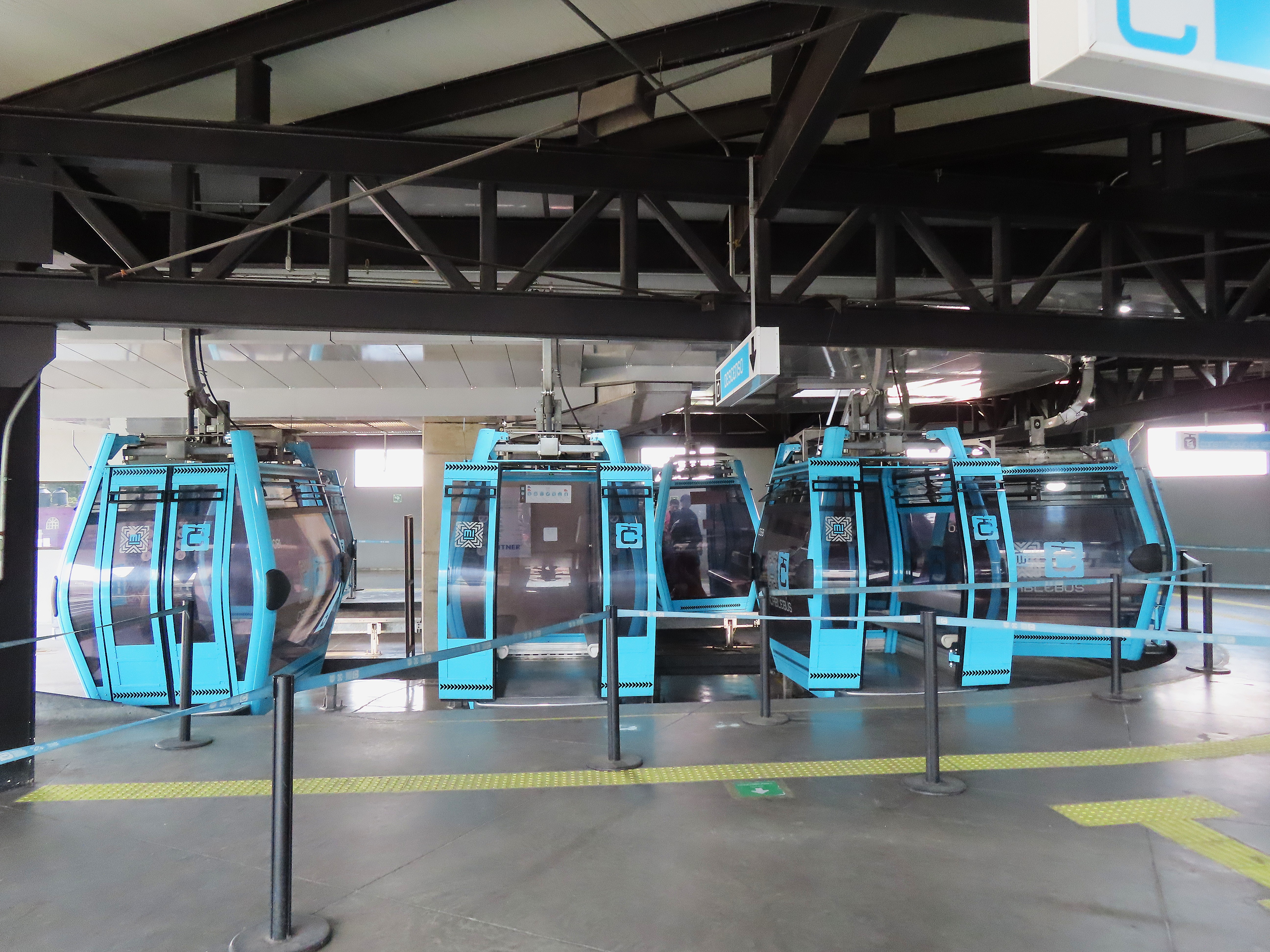
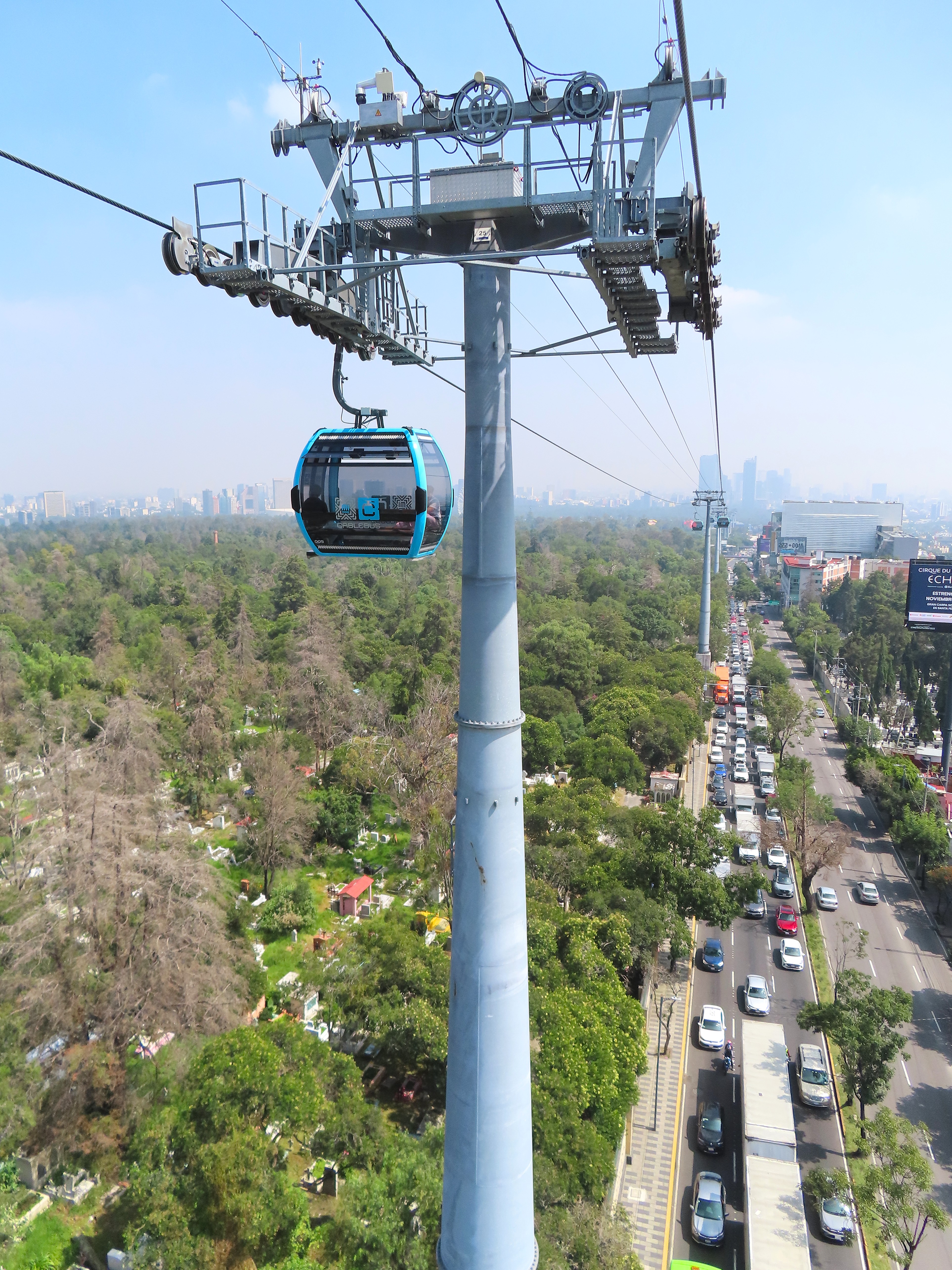
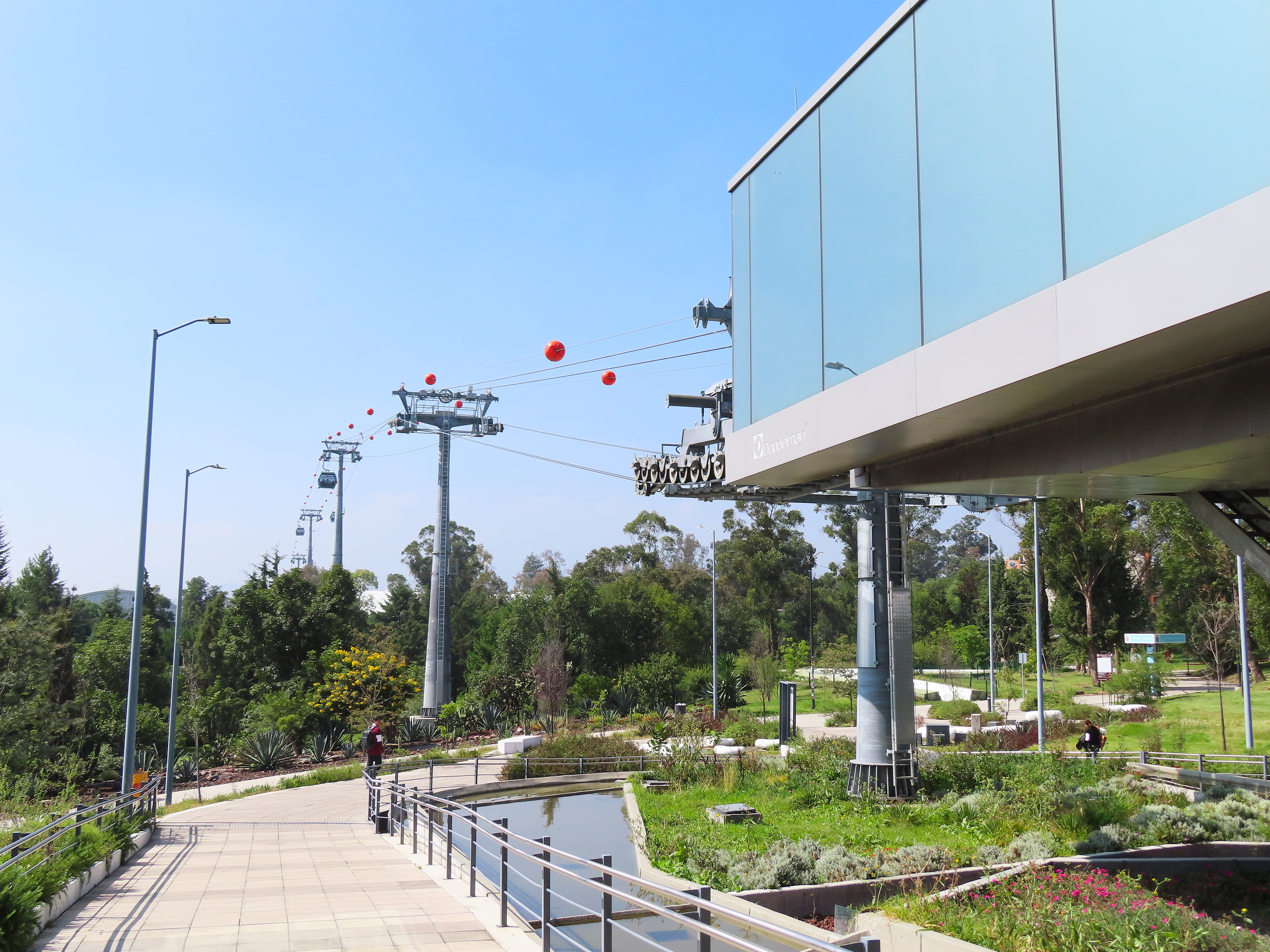
The other gondola I rode was Cablebús Line 3, built by Doppelmayr in 2024. This line services six stations along 3.4 miles of the Chapultepec Forest. This is a less dense, more touristy area and the system opened with just 71 ten passenger cabins. More cabins can be added in the future to reach a final capacity of 3,000 riders per hour. Line 3 moves up to 6 m/s and was fairly busy when I rode, especially when trains would unload at the nearby Constituyentes metro station. Cabins easily accommodate strollers, wheelchairs, dogs and bicycles.
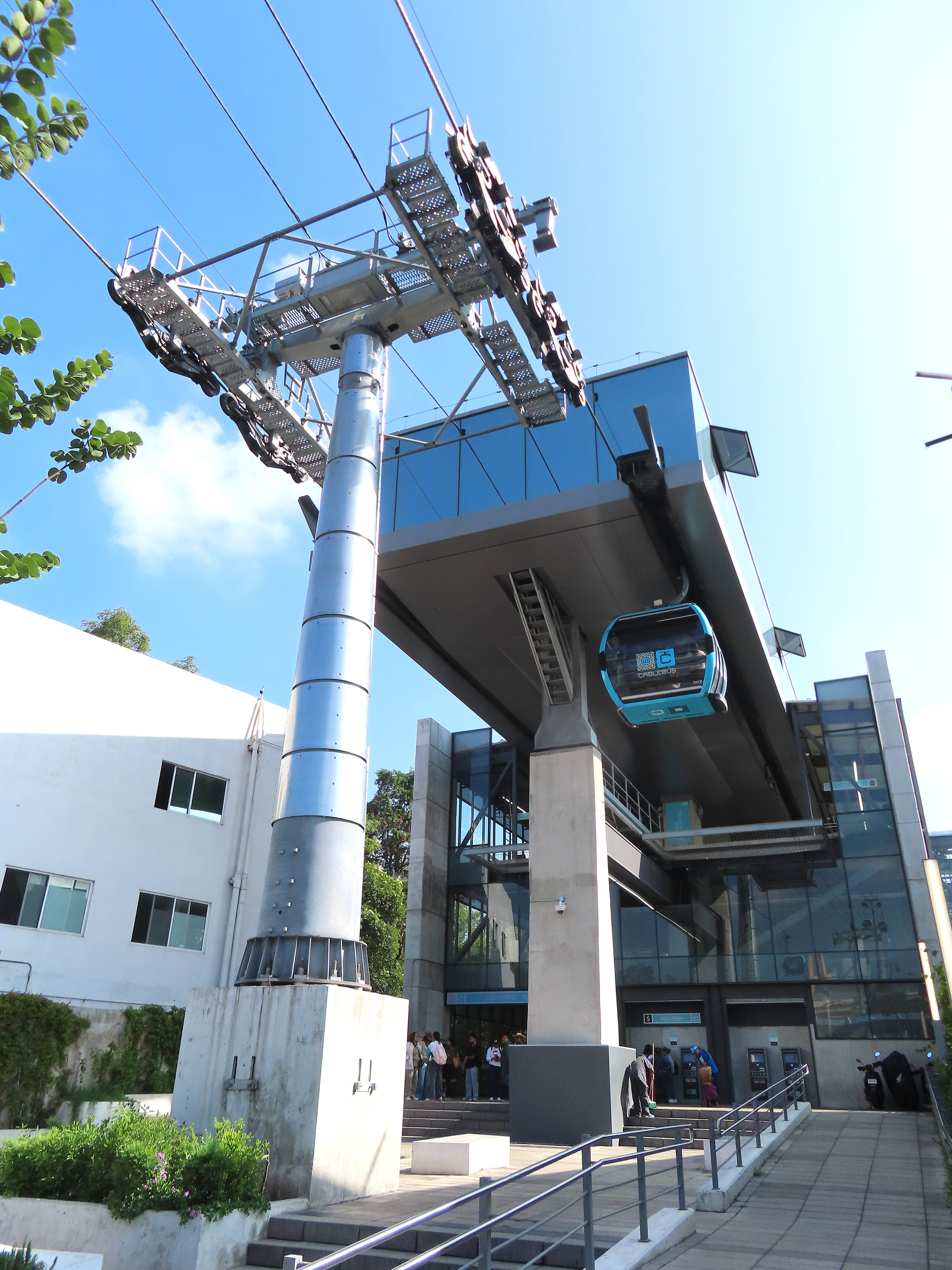
All of Line 3’s stations feature D-Line R2 glass enclosures, giving the lift a modern look. Much of the line passes over a highway, evoking the feeling of flying over traffic. The lifts 39 towers are extremely tall, giving incredible views. At various points cabins pass over a large canyon, a cemetary, train tracks and even an equestrian arena. Like Line 2, Line 3 is really two lifts with two separate haul ropes. On this line, however, cabins move between sections, forming a one seat ride through all six stations.
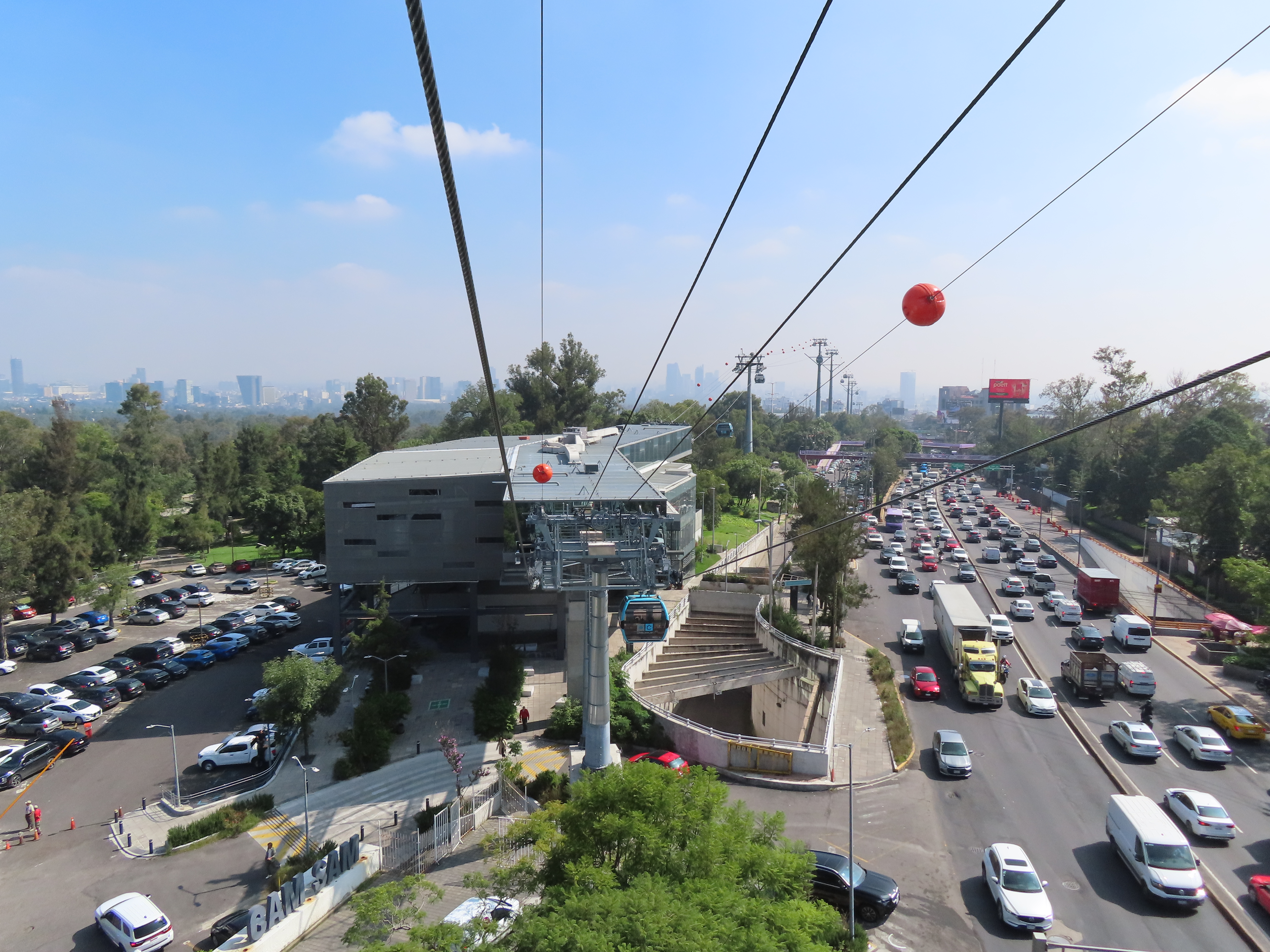
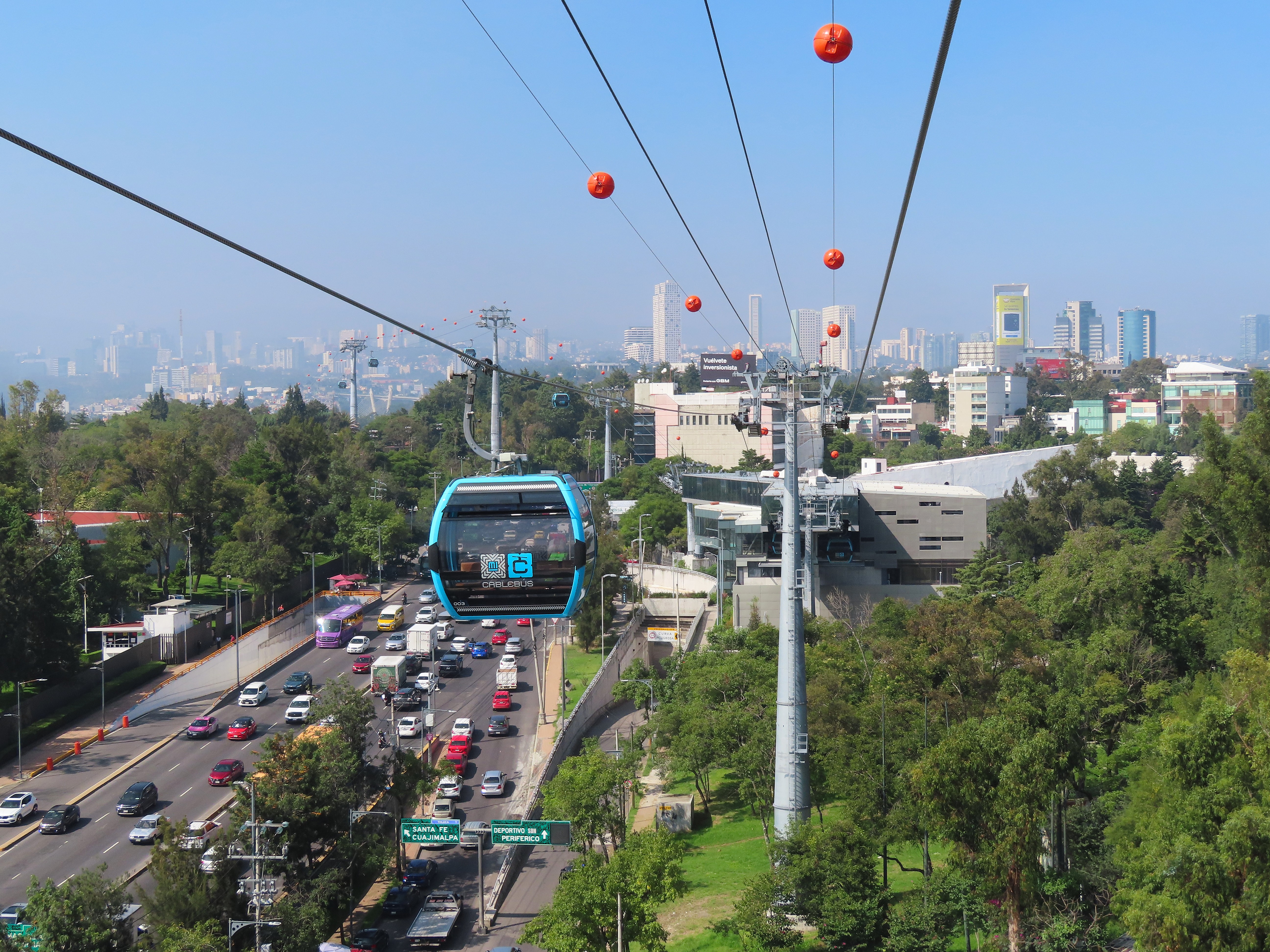
I didn’t get to ride Line 1, Doppelmayr’s largest system in Mexico City spanning 5.8 miles and six stations.
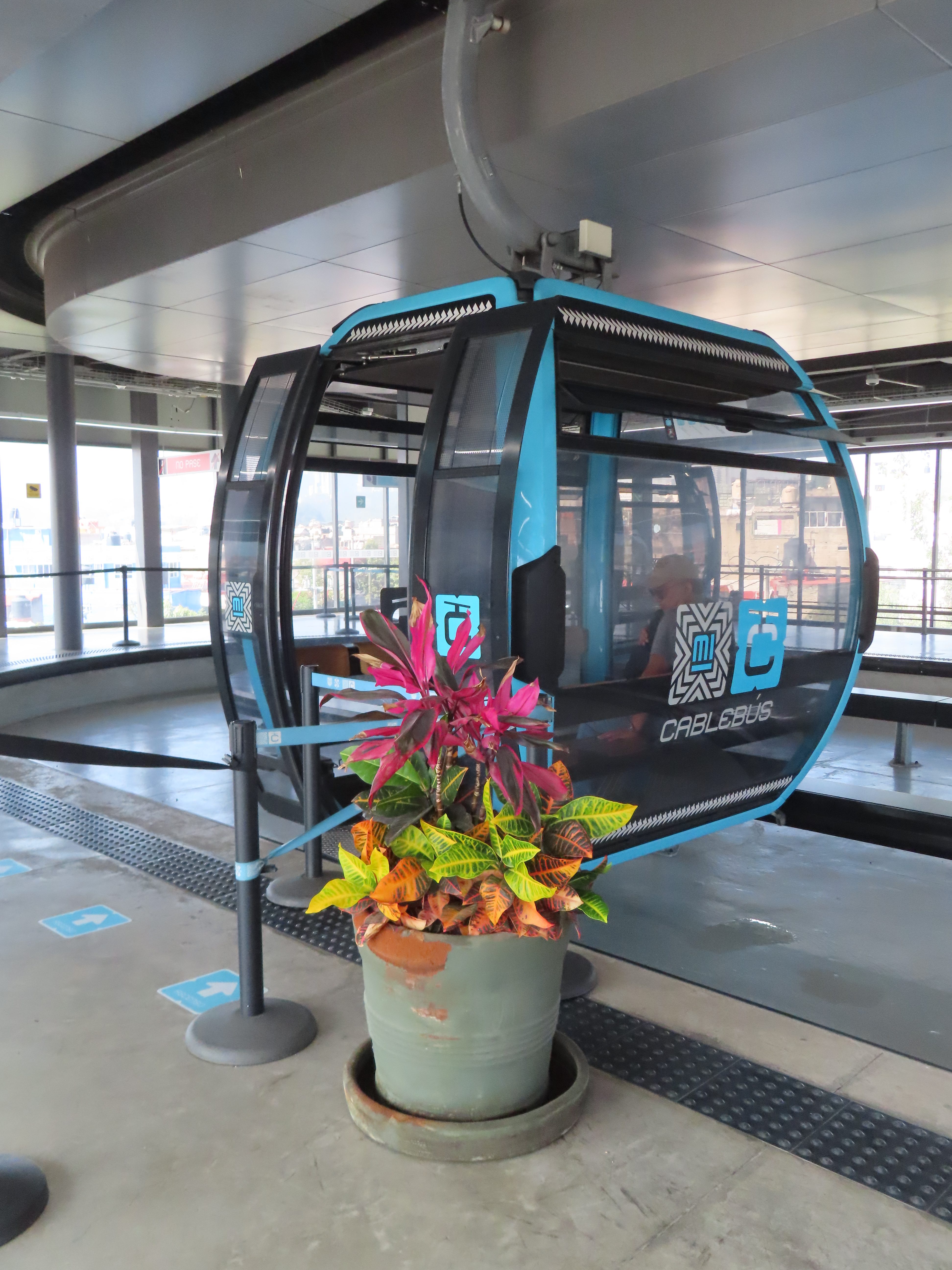
A ride on any of the three Cablebús lines runs just seven pesos or 38 cents US at current exchange rates. Each line runs 5:00 am to 11:00 pm on weekdays with slightly shorter hours on weekends. Maintenance is completed at night or during short closure periods. Mechanics work across three shifts covering 24 hours per day. All three systems feature direct drives and redundancies designed to all-but-eliminate the possibility of a ground evacuation.
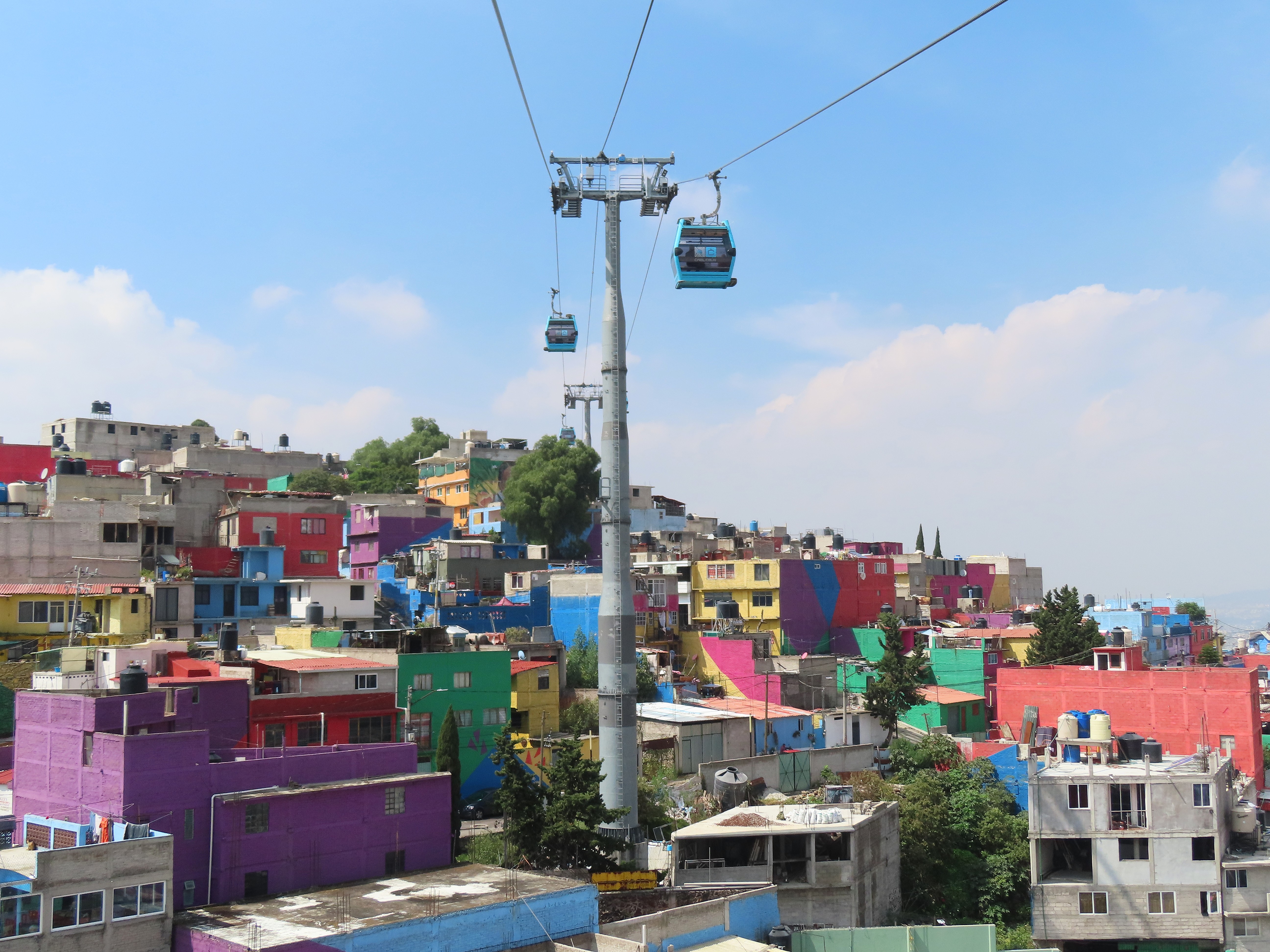
Outside Mexico City proper, the State of Mexico constructed another gondola network called Mexicable that connects with both Cablebús Line 1 and the subway system. Combined, Cablebús and Mexicable encompass 24 miles with 32 stations, 248 towers and 1,244 cabins. More gondolas are coming. Leitner recently won contracts for Cablebús 4 and 6 plus Mexicable Line 3, totalling 21 miles and 25 stations. Doppelmayr will build Cablebús Line 5, set to become the new longest urban gondola in the world with 12 stations along 9.4 miles utilizing 114 towers and 462 cabins. There’s so much work here neither manufacturer could do it all alone.

News Roundup: Ever Optimistic

News Roundup: Skytrac Upgrades

  • New Zealand and Victoria, Australia resorts reopen after extended Covid closures (New South Wales remains locked down.)
  • Mt. Spokane will replace the drive terminal of Chair 2 with a new one from Skytrac.
  • Skytrac is completing similar mods to Tumbelina at Monarch Mountain.
  • The fate of the Pandora’s expansion on Aspen Mountain will be decided October 13th.
  • Sierra at Tahoe still doesn’t know the full extent of lift damage from the Caldor Fire but remains optimistic.
  • Users get stuck on one of Mexico City’s new gondola lines following an earthquake.
  • The Holding family agrees to sell most of Sinclair Oil Corporation’s assets, though Sun Valley and Snowbasin aren’t included.
  • The Forest Service issues a Draft Environmental Impact Statement for Lutsen Mountains’ proposed expansion with public comments being solicited through October 25th. A new alternative would see the addition of five new chairlifts on Moose and Eagle Mountains rather than the initially planned seven.
  • The only lift in Oklahoma won’t open for the second year in a row and is in danger of removal.
  • Schweitzer adds 14 chairs to Stella.
  • A quick update from Snow King Mountain:

News Roundup: Valleys

News Roundup: 685 Cabins

  • New owners launch Granby Ranch Rising, a set of capital improvement initiatives.
  • Seven Springs’ new lift may be completed as soon as the end of this month.
  • Mexico City will launch the Doppelmayr-built Cablebús Line 1 on Sunday, followed by the Leitner-built Line 2 on July 24th with a system total of 13 stations, 121 towers and 685 cabins.
  • Mt. Hood Meadows proposes replacing the Mt. Hood Express with a Leitner-Poma six place in 2022 or 2023.
  • Lookout Pass begins cutting trails on Eagle Peak with installation of Sundance’s former Ray’s quad set to commence in 2022.
  • A Breckenridge developer proposes a short gondola to bring skiers from the Gold Rush parking lot to the BreckConnect Gondola.
  • Sunlight tables construction of the East Ridge expansion lift, citing “soaring costs of materials such as steel due to ongoing supply chain challenges.” The mountain says “new lift installations are happening at a premium price right now,” and will prioritize more immediate needs such as upgrades to existing lifts.
  • Speaking of premium lifts, more towers arrive for the Squaw-Alpine Base to Base Gondola.

News Roundup: So Long T-Bars

News Roundup: Grab Bag

News Roundup: Exceptional Ride

On the Black Quad lift front, there always seems to be something. And, the engineering firm who designed the lift has come back with quite a few changes that need to be implemented by Pfister Mountain Services, including changing out some sheave assembly wheel combinations at a few towers and a major overhaul of tower 13 cross arm and uphill sheave assembly. None of this is a quick fix at this point in our construction phase and comes as unwelcome news. And, of course, tower 13 is in a very difficult spot to get to, especially for what equipment will be needed to execute the cross arm changes. No timetable or budget as been provided as of yet. We will continue to keep you posted as news warrants. Certainly frustrating after all this time as we’d like to see our money put to good use for you. All I can say is that the Quad will be a part of our future here at Magic so we can expand uphill capacity and lift redundancy as we grow.

News Roundup: Adventure Assurance

  • Highland readies for mountain bike season with new chairs acquired from Nashoba Valley.
  • Alterra makes modest changes to Ikon in light of recent events: delaying price increases by a month and increasing renewal discounts.  Late today, the company added Adventure Assurance, permitting purchasers to defer their 2020-21 Ikon value to a 2021-22 pass if desired.
  • The Forest Service expects to have a decision on Keystone’s Bergman Bowl expansion by December.
  • Residents in opposition to Mexico City’s Cablebús Line 1 win an injunction stopping some construction.
  • The Colorado Sun goes inside the decision to close Colorado’s ski industry five Saturdays ago.
  • Saddleback decides to decommission Sandy alongside Rangeley and Cupsuptic.  Old chairs are for sale at $2,000 apiece.
  • A class action lawsuit is filed against Vail Resorts alleging fraud, misrepresentation and false advertising for this spring’s early closures.
  • Sinclair Oil Company may be exploring a sale although the firm’s two ski resorts (Snowbasin and Sun Valley) would not be included.
  • Doppelmayr may build a unique triangle shaped gondola in Australia.

News Roundup: Sunshine

  • The Summit at Snoqualmie shuts Hidden Valley for the season due to an “unusual mechanical problem.”
  • Sugarloaf closes King Pine due to a sheave assembly issue.
  • Dave Brownlie, former head of Whistler Blackcomb and current Revelstoke President, weighs in on the state of the British Columbia ski industry and his company’s plans for Grouse Mountain.
  • The Colorado Sun interviews three Colorado resort pioneers about industry trends and challenges.
  • As the gondola at Mont-Sainte-Anne reopens, the resort says an external power issue caused last month’s sudden stop.  A lawsuit has been filed and the power company denies responsibility.
  • Just the Leitner portion of Mexico City’s new urban gondola network will feature seven stations and 300 cabins.
  • Experienced resort executives Andy and Jace Wirth may take over operations at Granby Ranch.
  • Limited Ikon/Mountain Collective visits to Arapahoe Basin are 69 percent lower than unlimited Epic visits last year and the “experience is way up,” says Al Henceroth.
  • Another informative podcast from Stuart Winchester features an executive from Mountain Creek and Big Snow talking about the next new lift and a possible Big Snow Miami.
  • Smugglers’ Notch has no intentions of losing its independence or ditching its fleet of fixed grip double chairs.
  • Whitefish will begin work in Hellroaring Basin this summer and move the current Hellroaring triple to a new alignment in 2021.