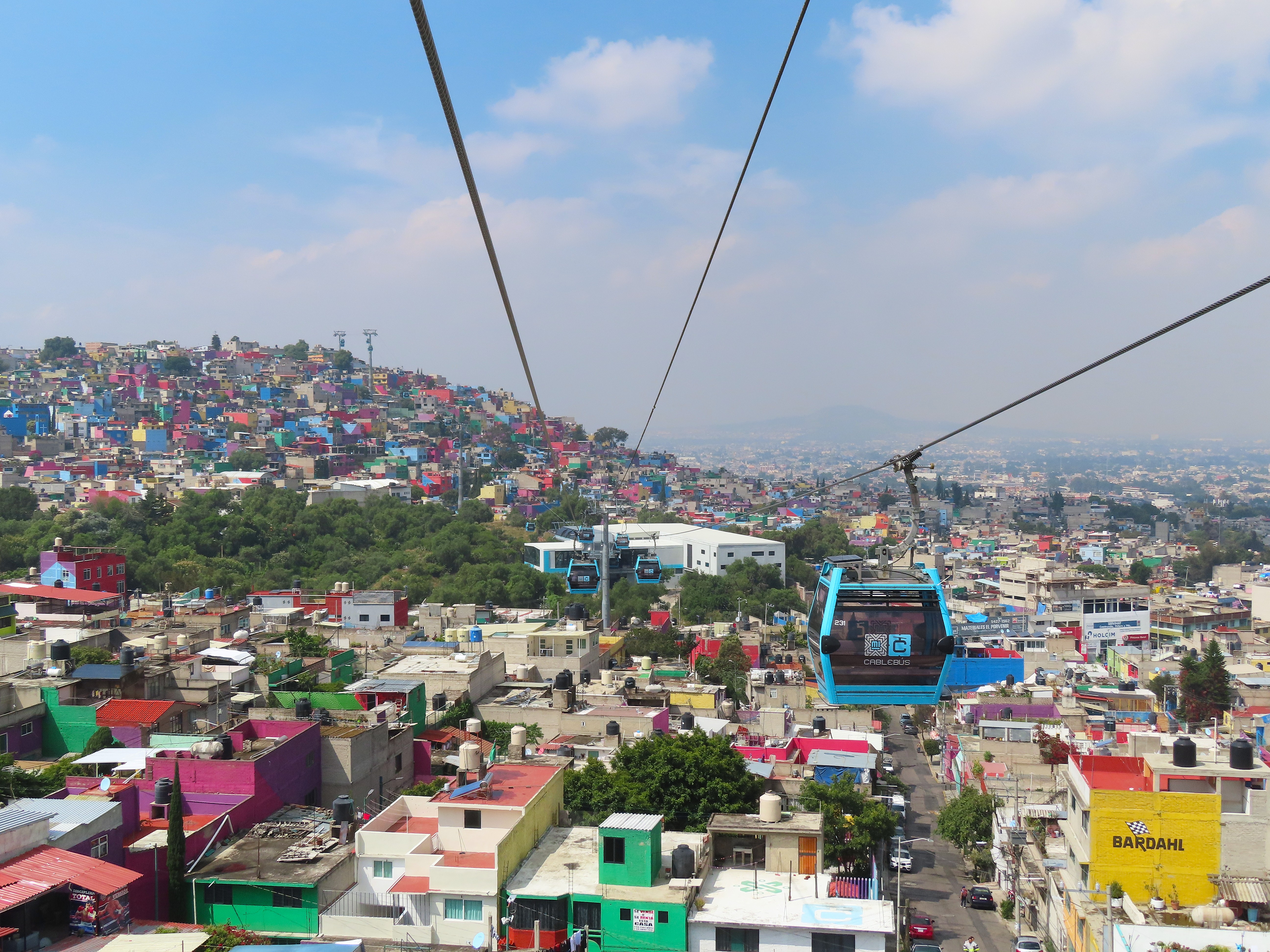
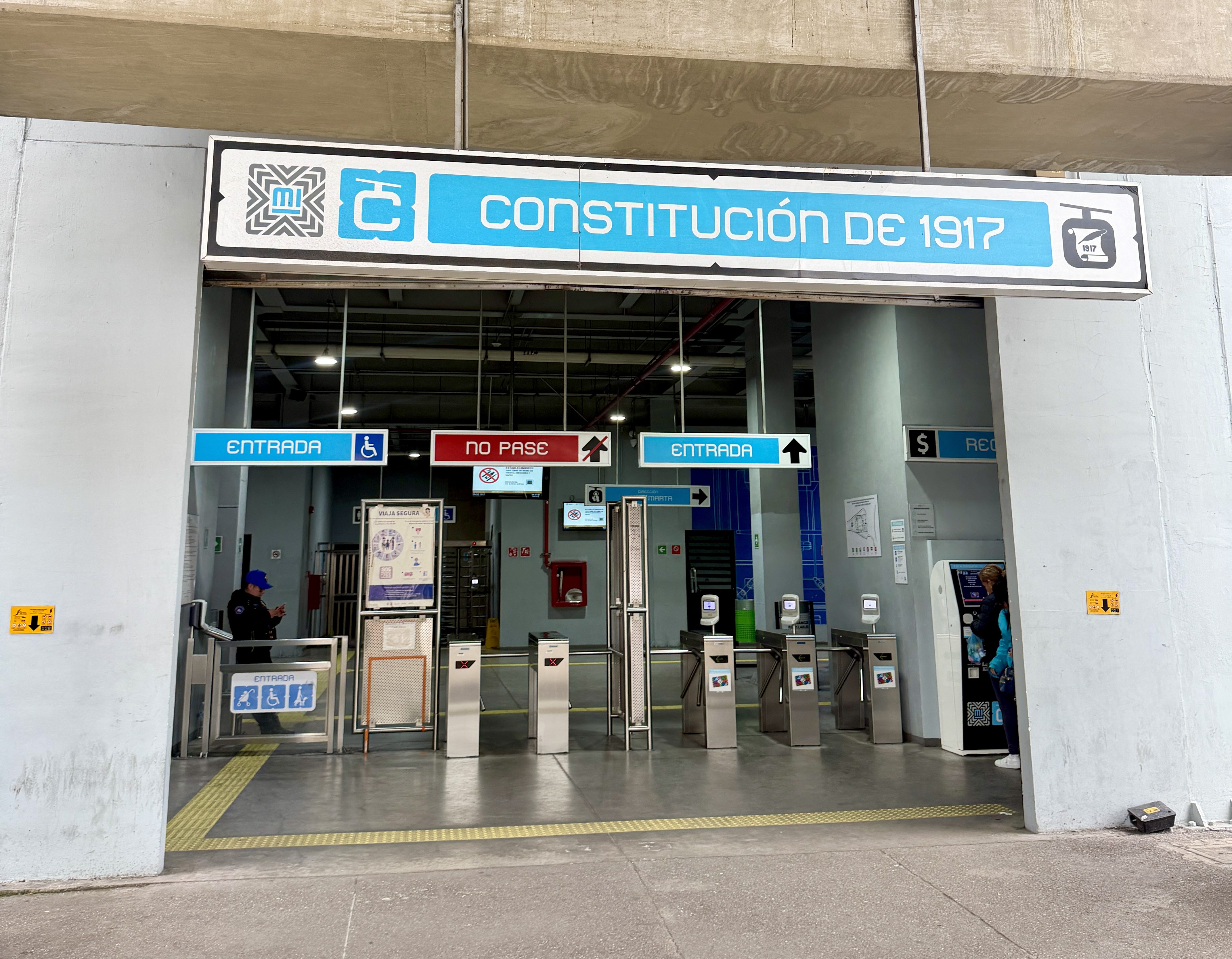
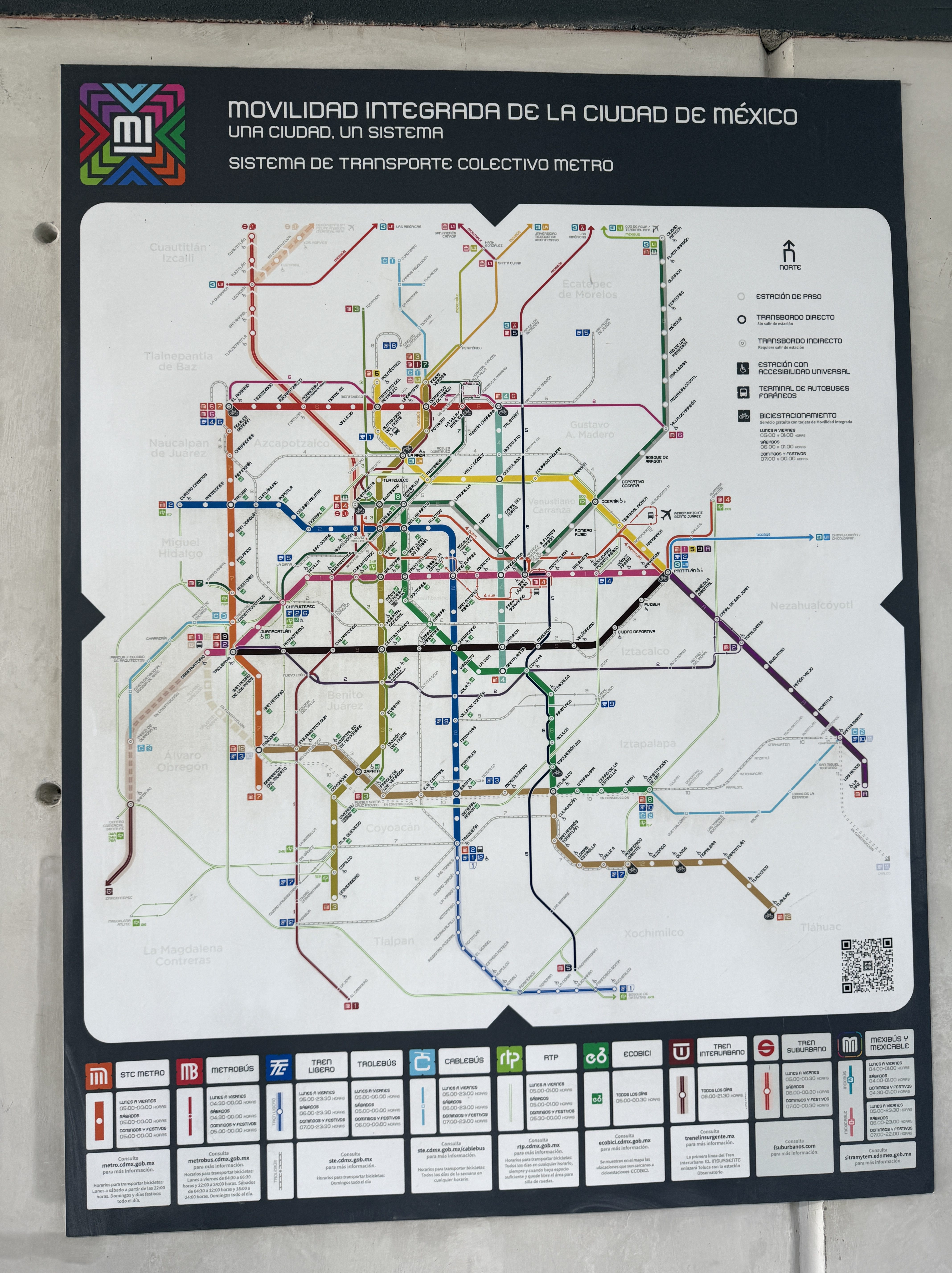
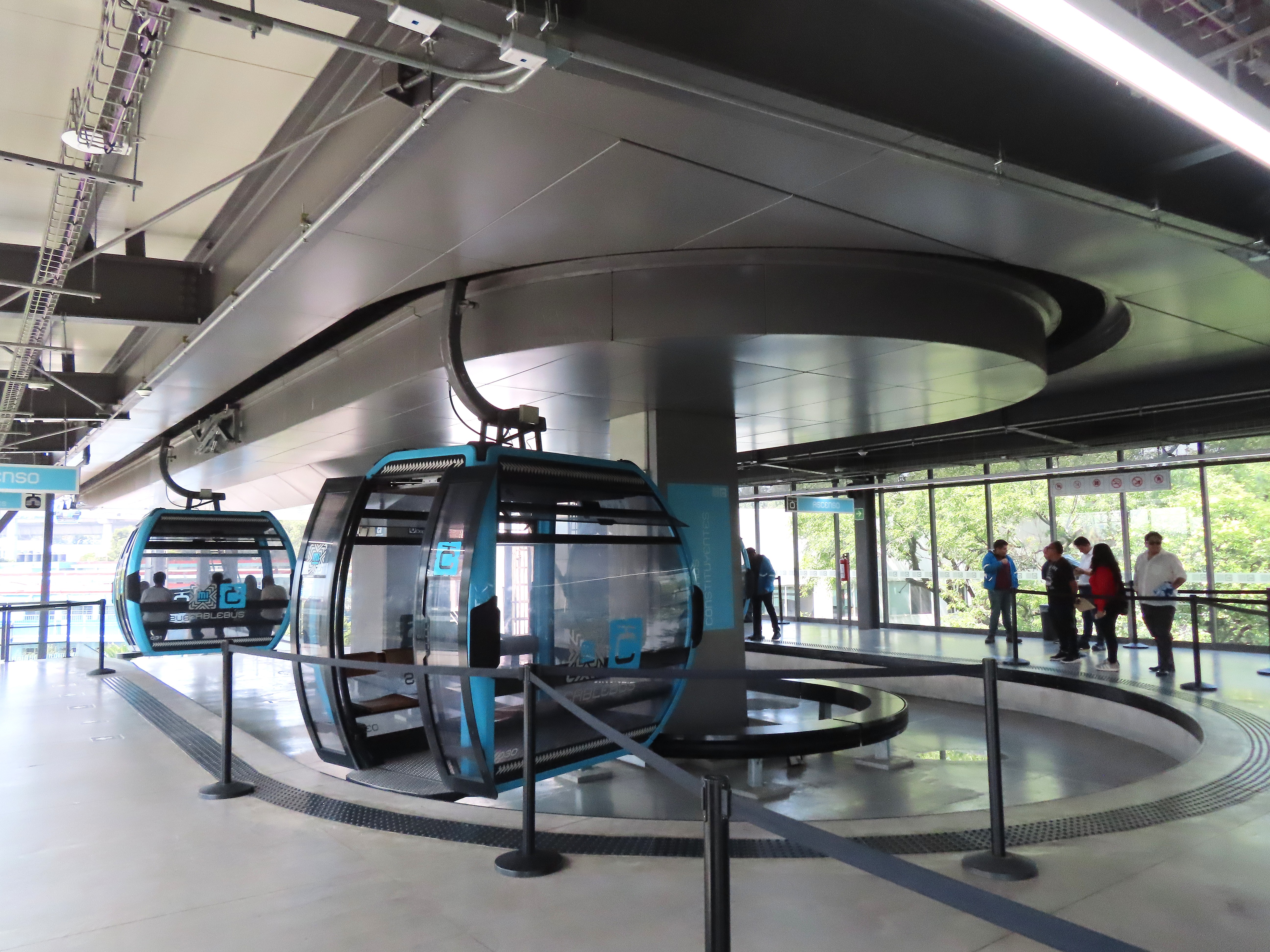
This week I got to ride two of North America’s most complex, high elevation gondola systems. They’ve never carried a single pair of skis but rather shuttle commuters within Mexico City’s expansive transit network. Branded Cablebús, the network consists of 19 stations and three distinct lines, each with several segments. They are fully integrated with the city’s trains and buses, accepting the same transit mobility card. Gondolas live on the city’s subway map in light blue with the same signage, typefaces and iconography as the broader network.
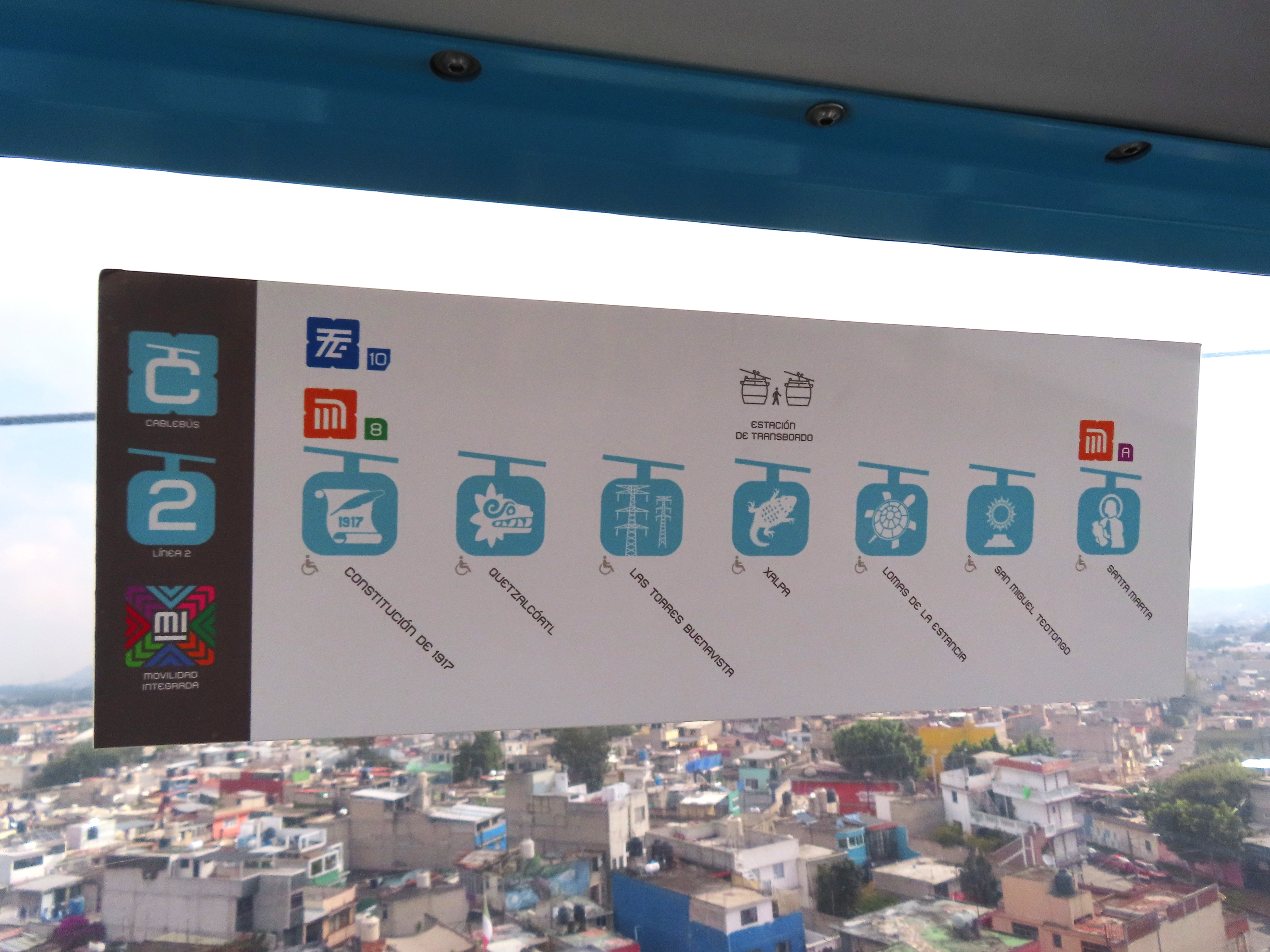
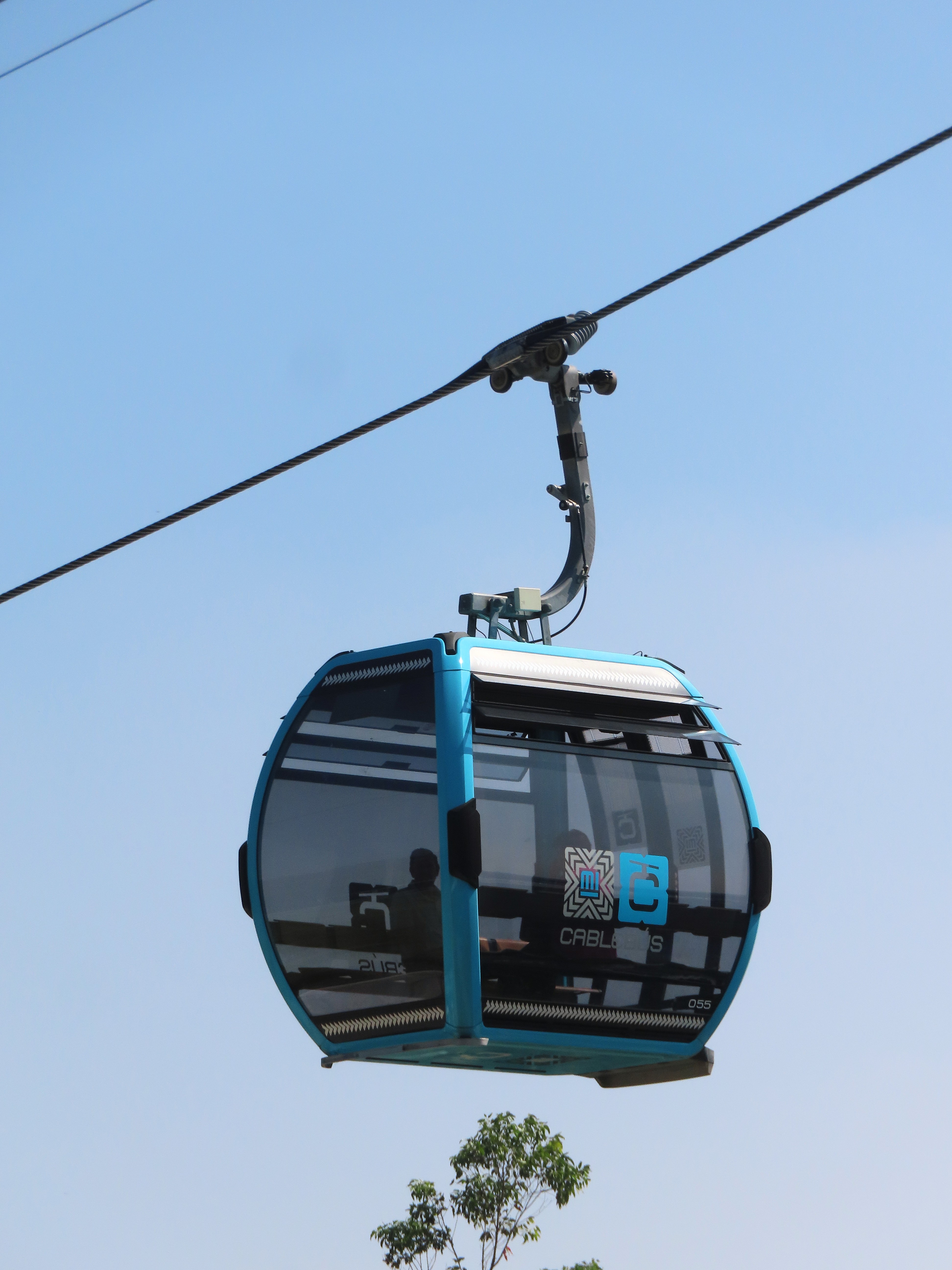
First I ventured to Line 2 in Iztapalapa, a historically poor and congested municipality with 1.8 million inhabitants. Line 2 travels from the end of one subway line to another, connecting seven communities along the way. When Leitner completed the system in 2021, it became the longest urban gondola in the world at 6.2 miles. It’s actually two separate lifts, each utilizting two direct drives and two haul ropes for a total of four ropes and four direct drives. A whopping 305 ten passenger cabins circulate over 59 towers.
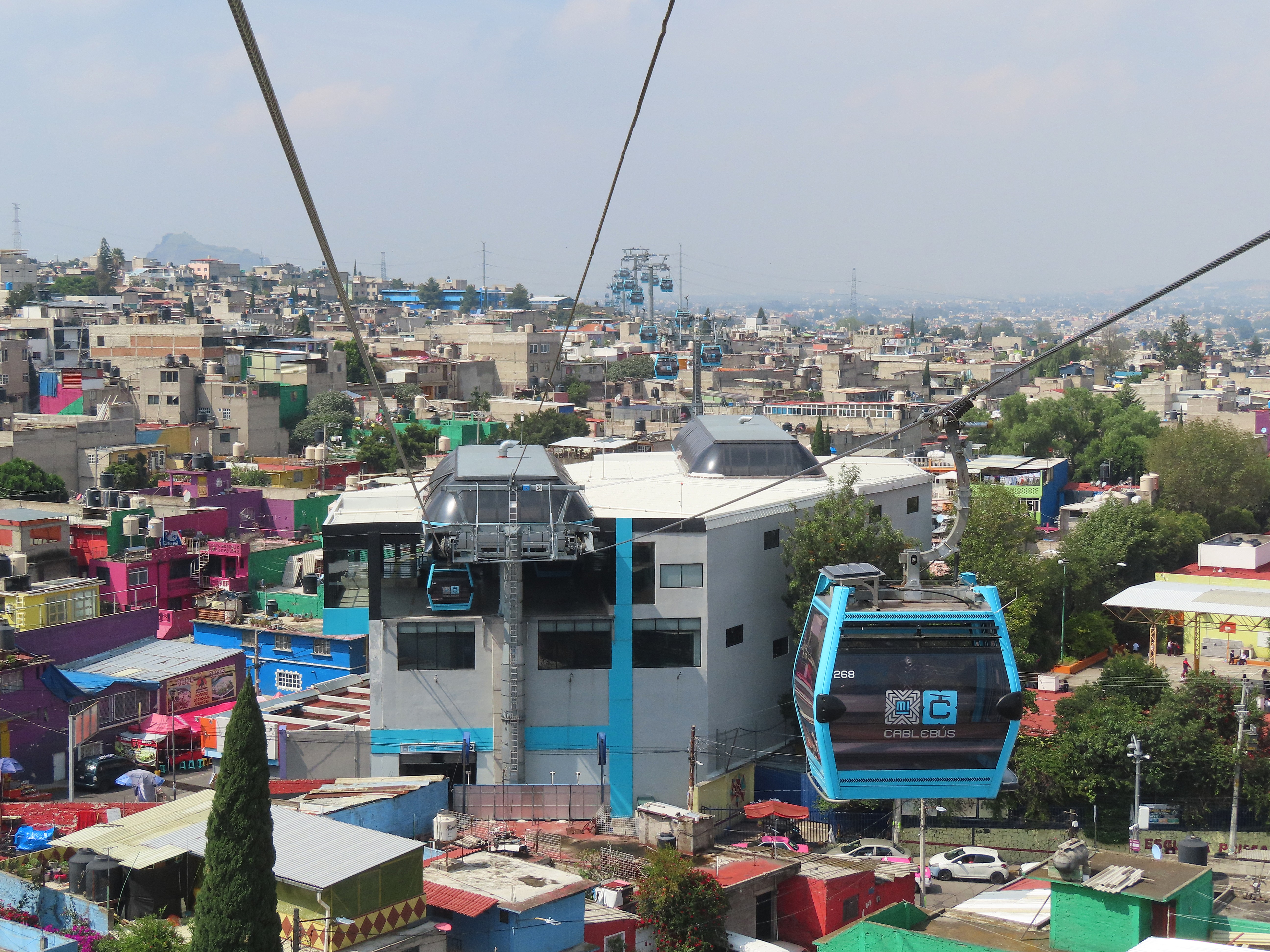
Several stations accommodate sharp angle changes with deflection bullwheels. Others are nearly straight with minimal angle change. Riding the entire line requires a quick switch between cabins at Xalpa station. I was told most commuters take the lift for a few stops and connect to other transit rather than riding the entire 45 minutes like I did.
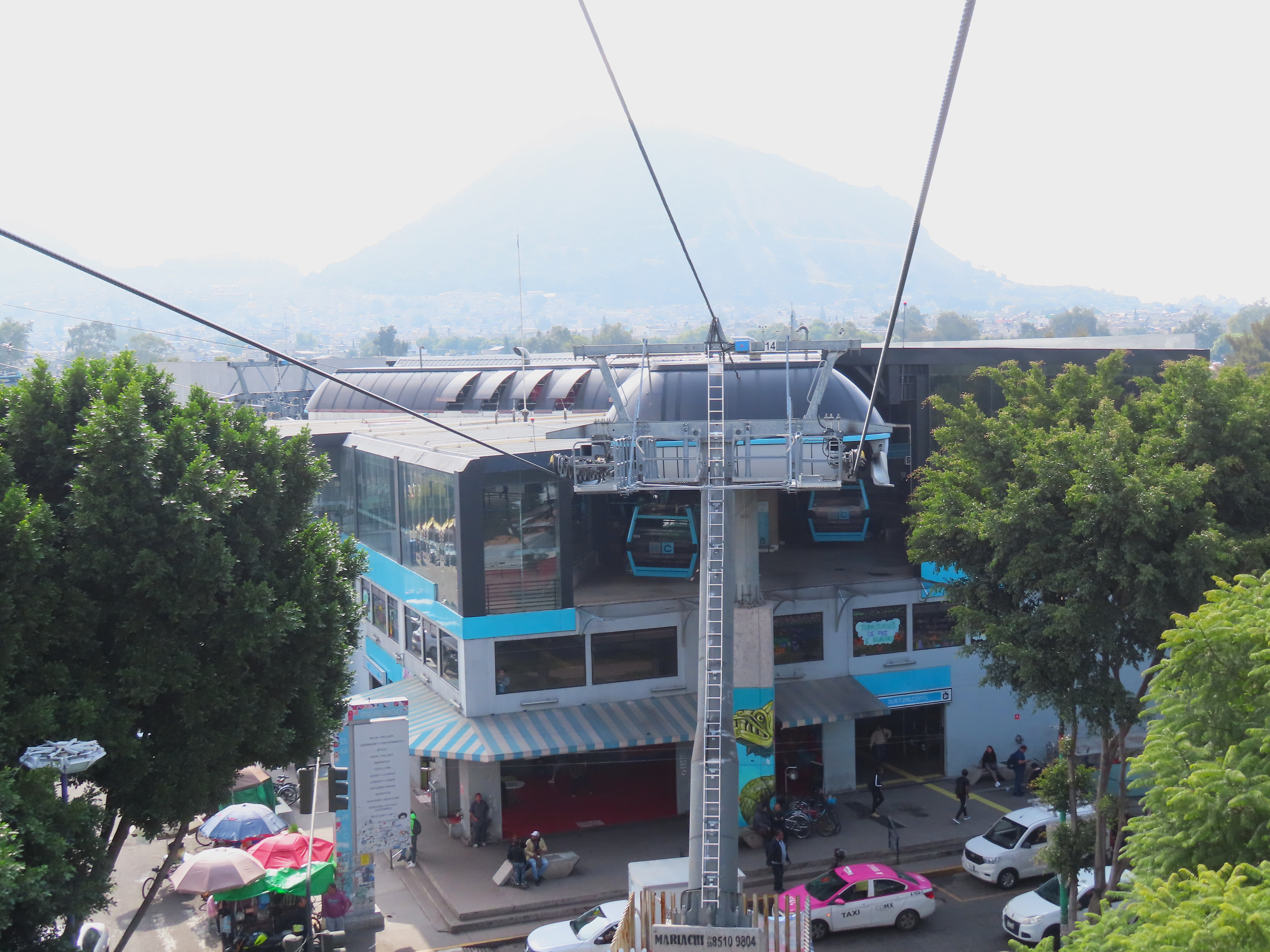
Stations serve as more than just transit stops and angle changes. One features a 150 stall market underneath the cabin parking facility (I’d never ridden a gondola where I could also buy a pig’s head from a butcher.) There are parks, community centers and healthcare along the gondola. Line 2 has proven successful, transporting approximately 63,000 riders per day in 2025. Travel times reduced significantly for residents and safety improved.
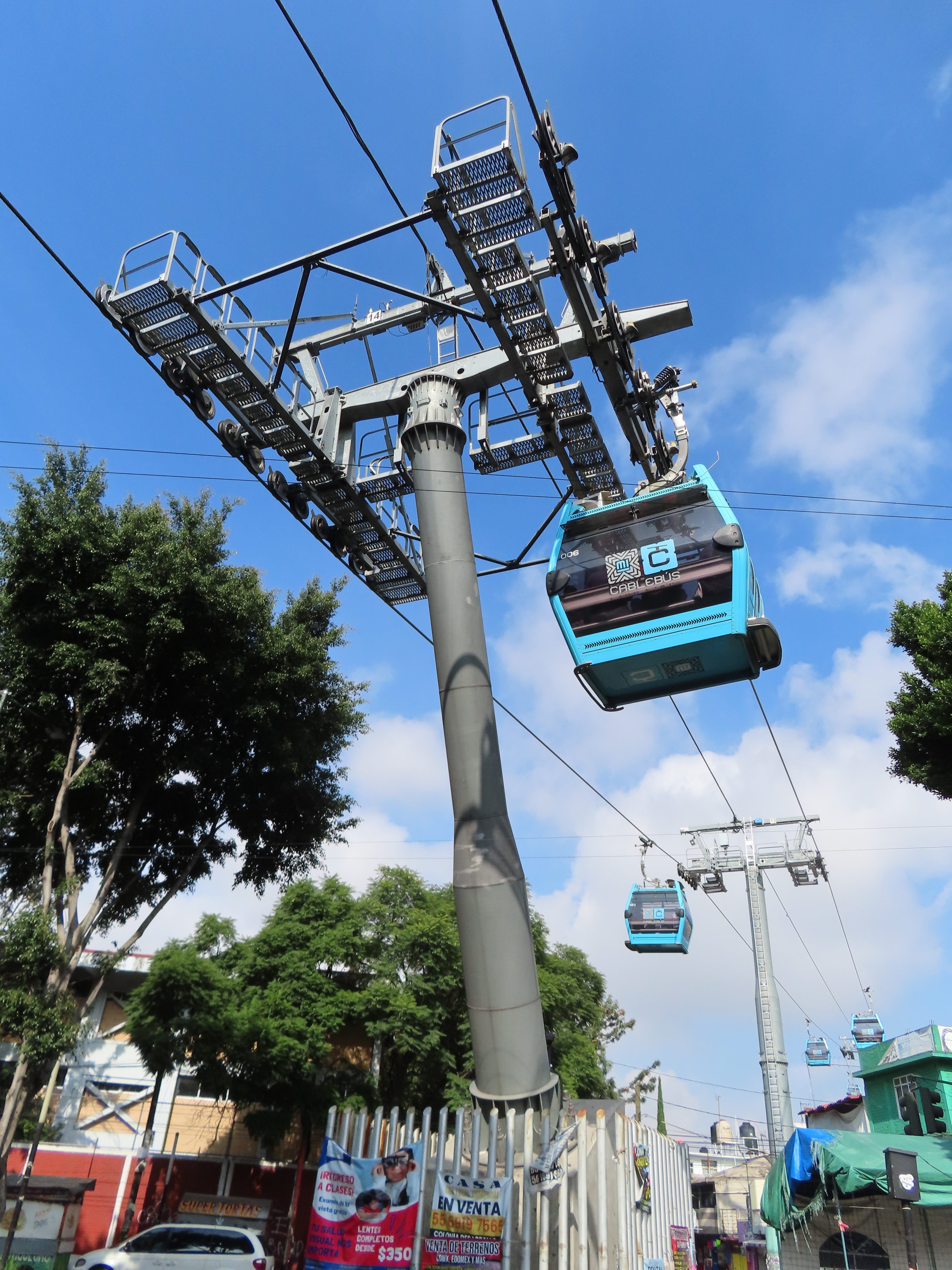
The government partners with joint ventures including Mexican infrastructure companies and European manufacturers to realize each installation here. For Line 2, Leitner and its local partner operated the system for the first year with the city’s transit agency taking over after. Towers were manufactured locally in Mexico.
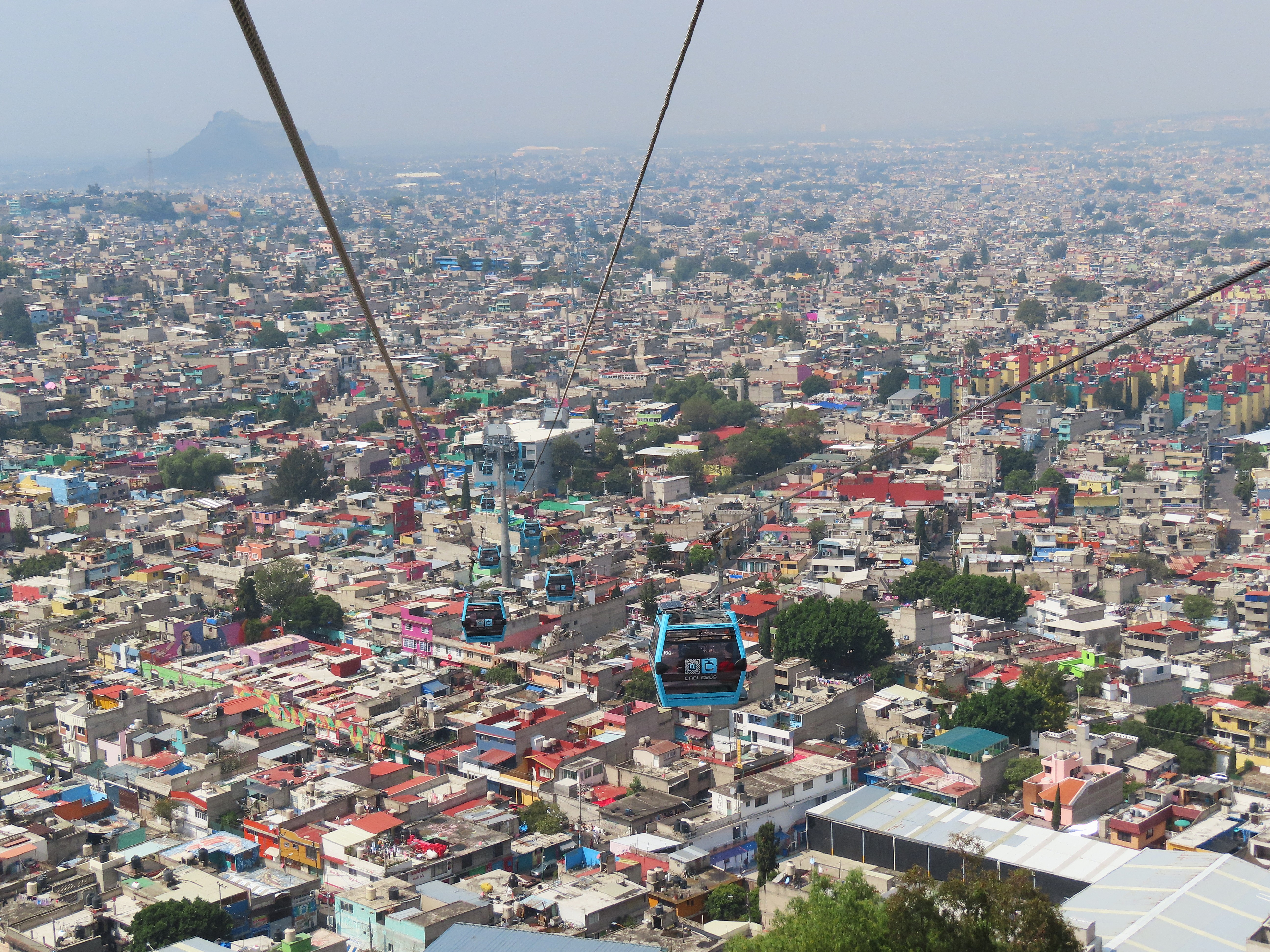
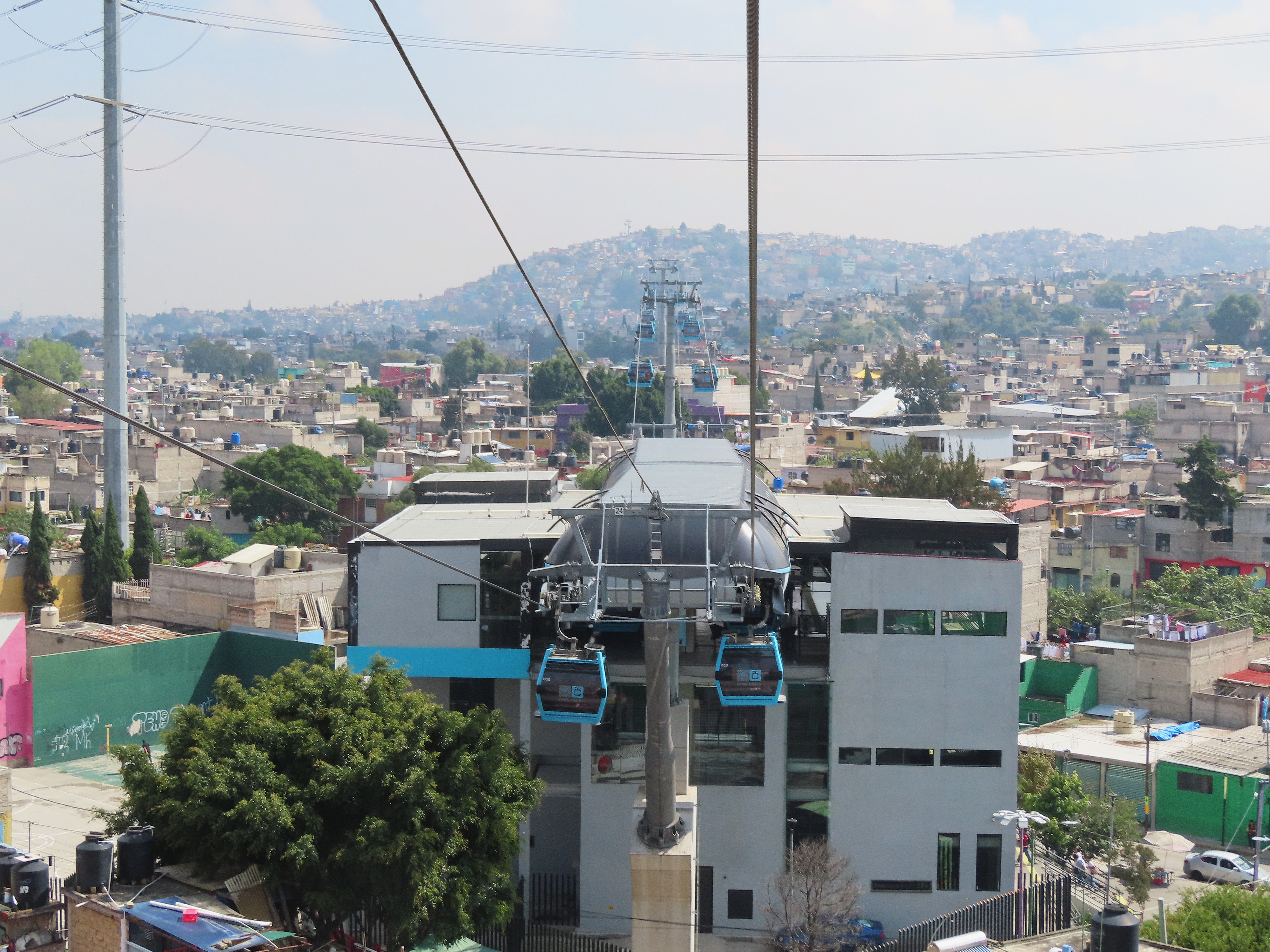
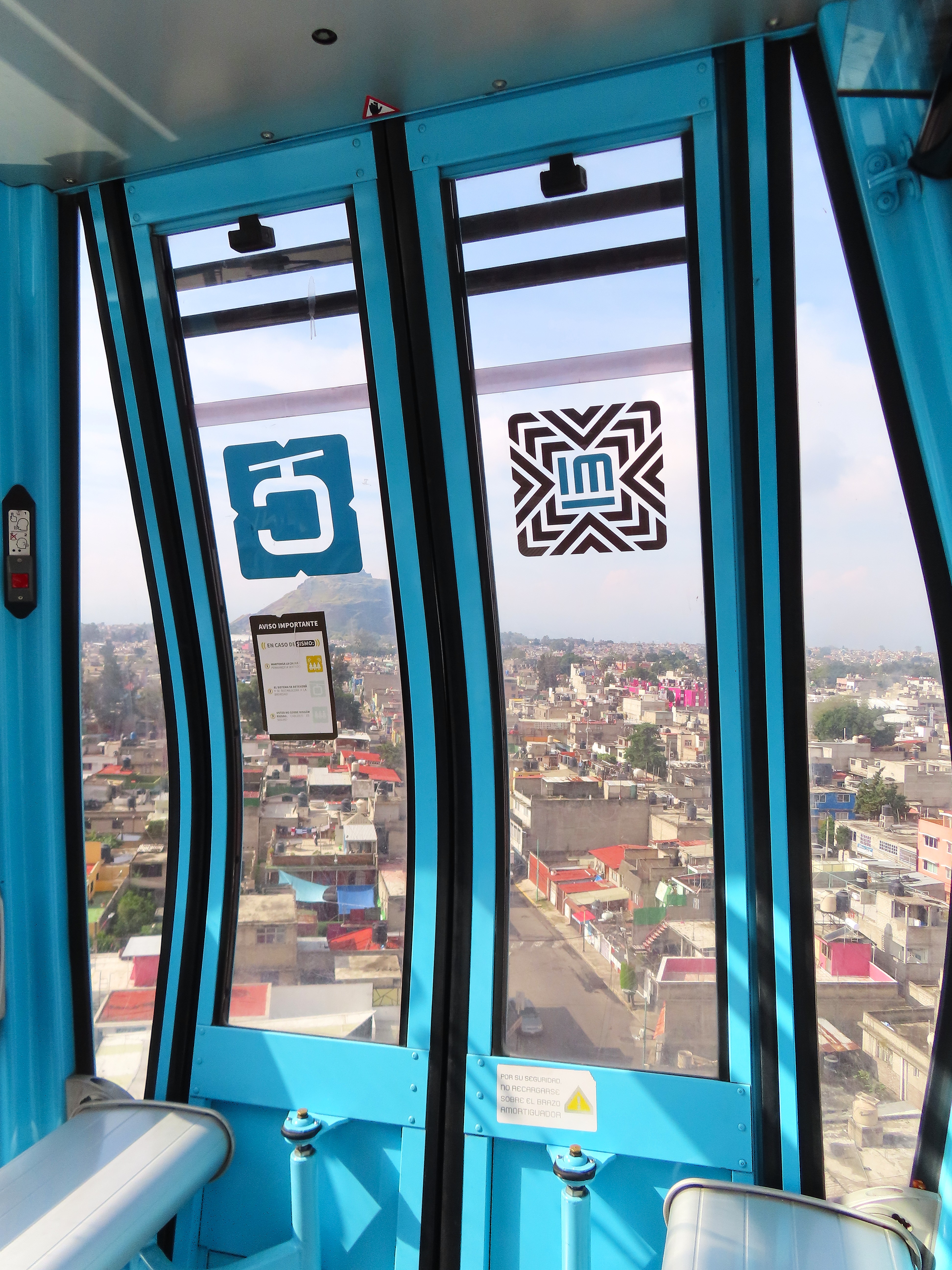
Construction in Latin America can proceed quickly. For Line 2, the time between announcement and inauguration spanned just 30 months with actual construction taking 18. The line cost roughly $160 million to build, far more than a typical ski resort gondola but far less than a subway or highway project.
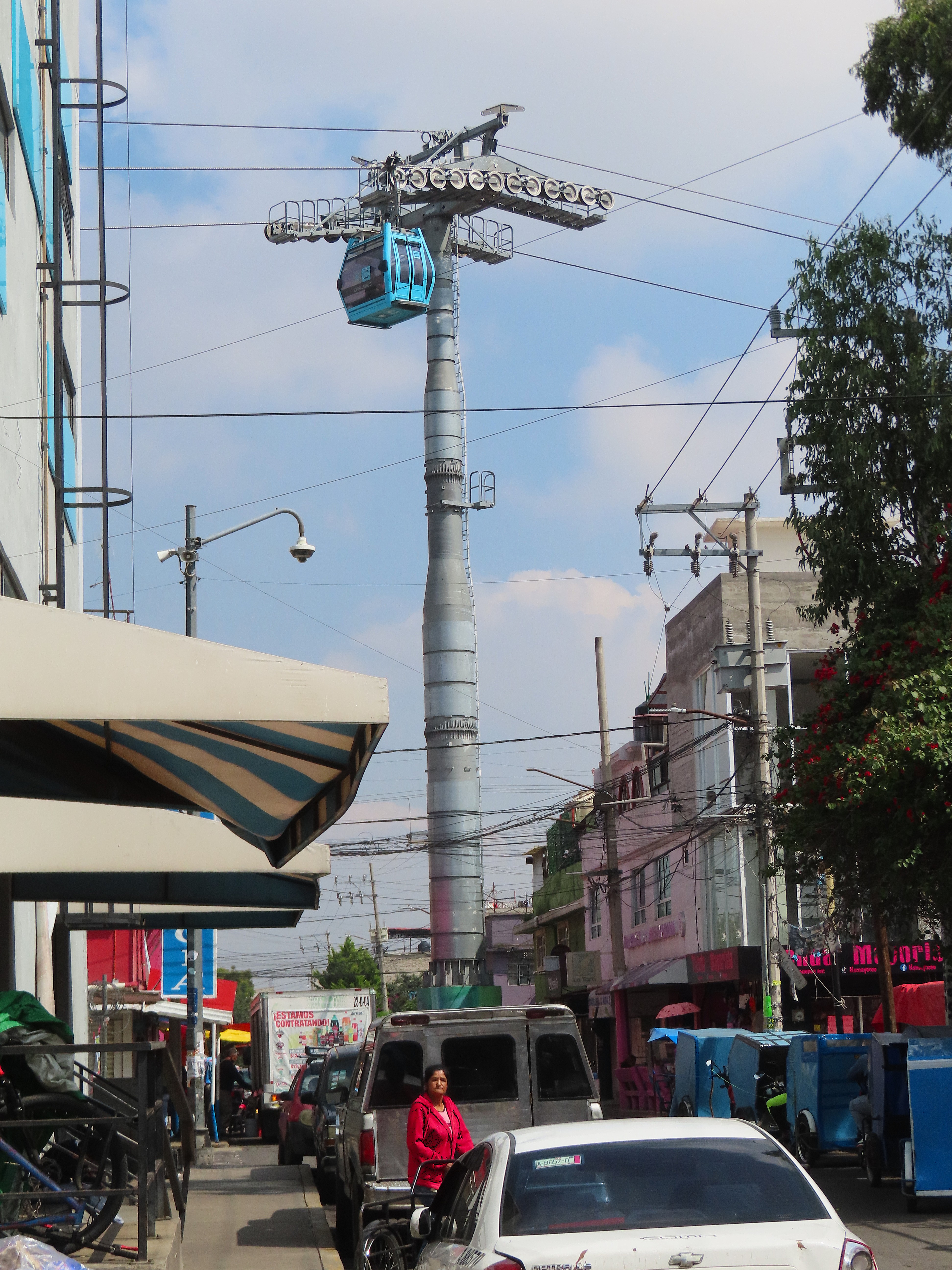
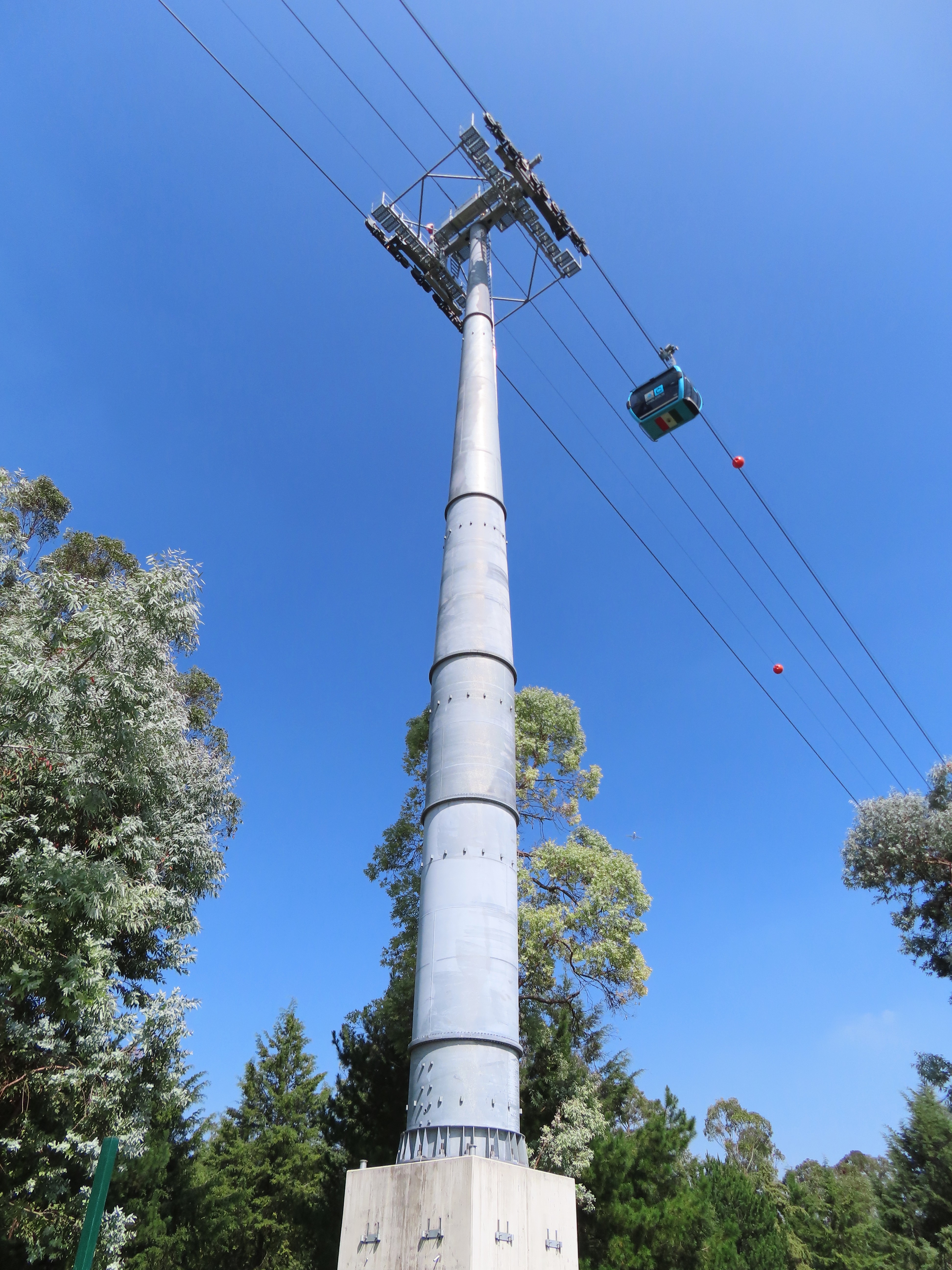
Mexico City’s gondolas utilize extremely tall towers to pass over buildings and minimize the number of towers needed. All of them move between 2,000 and 3,000 passengers per hour and direction.
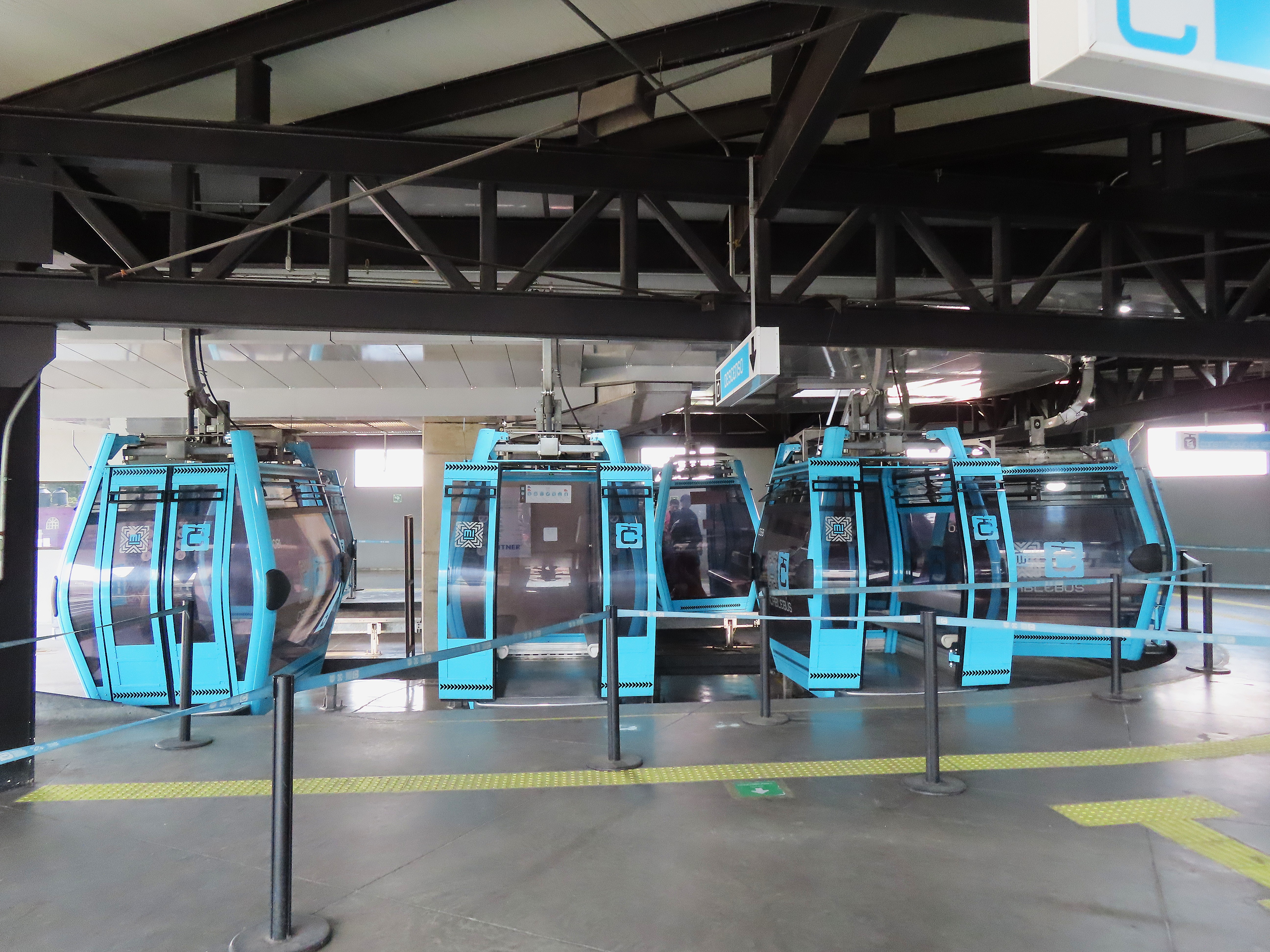
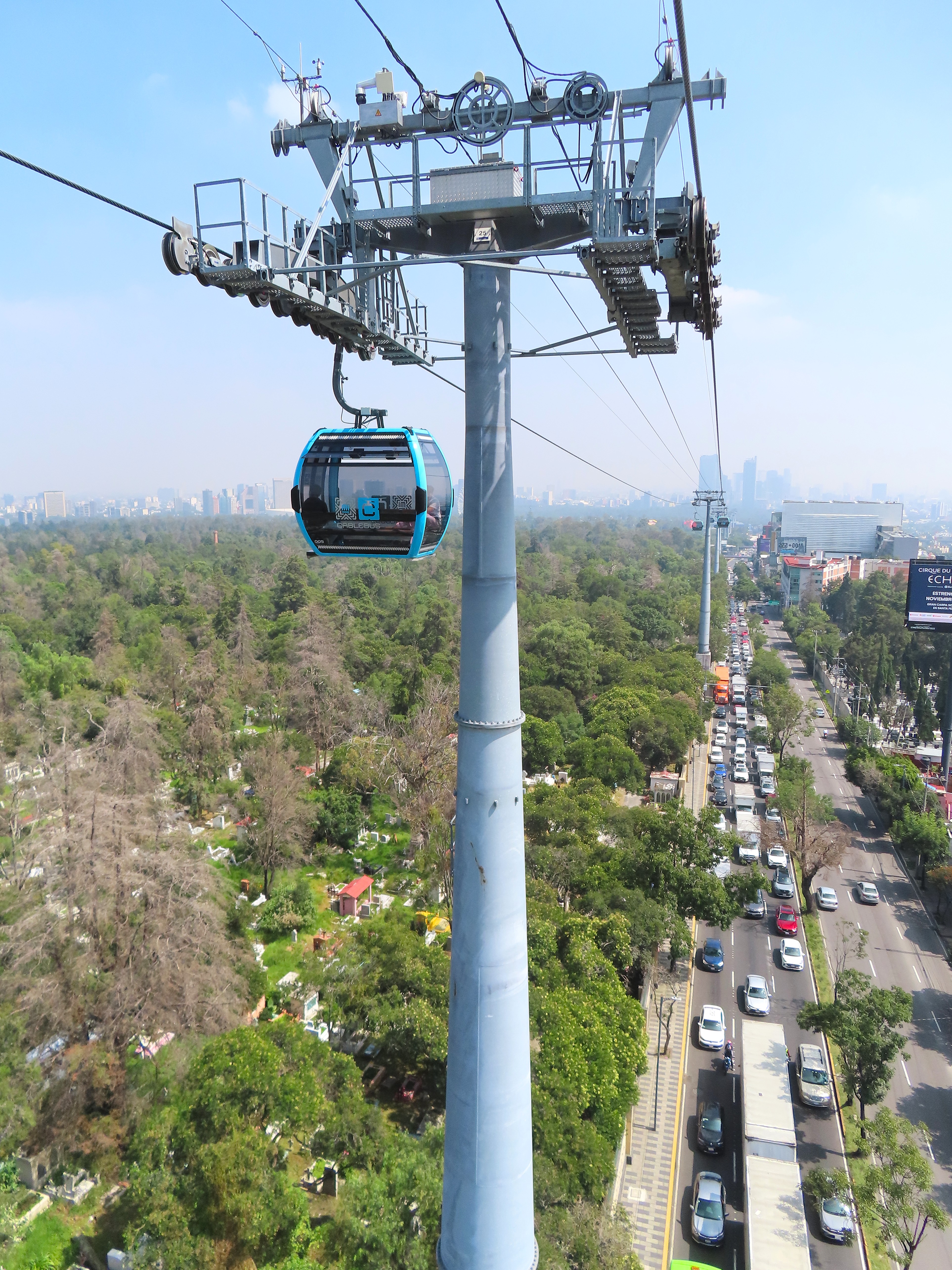
The other gondola I rode was Cablebús Line 3, built by Doppelmayr in 2024. This line services six stations along 3.4 miles of the Chapultepec Forest. This is a less dense, more touristy area and the system opened with just 71 ten passenger cabins. More cabins can be added in the future to reach a final capacity of 3,000 riders per hour. Line 3 moves up to 6 m/s and was fairly busy when I rode, especially when trains would unload at the nearby Constituyentes metro station. Cabins easily accommodate strollers, wheelchairs, dogs and bicycles.
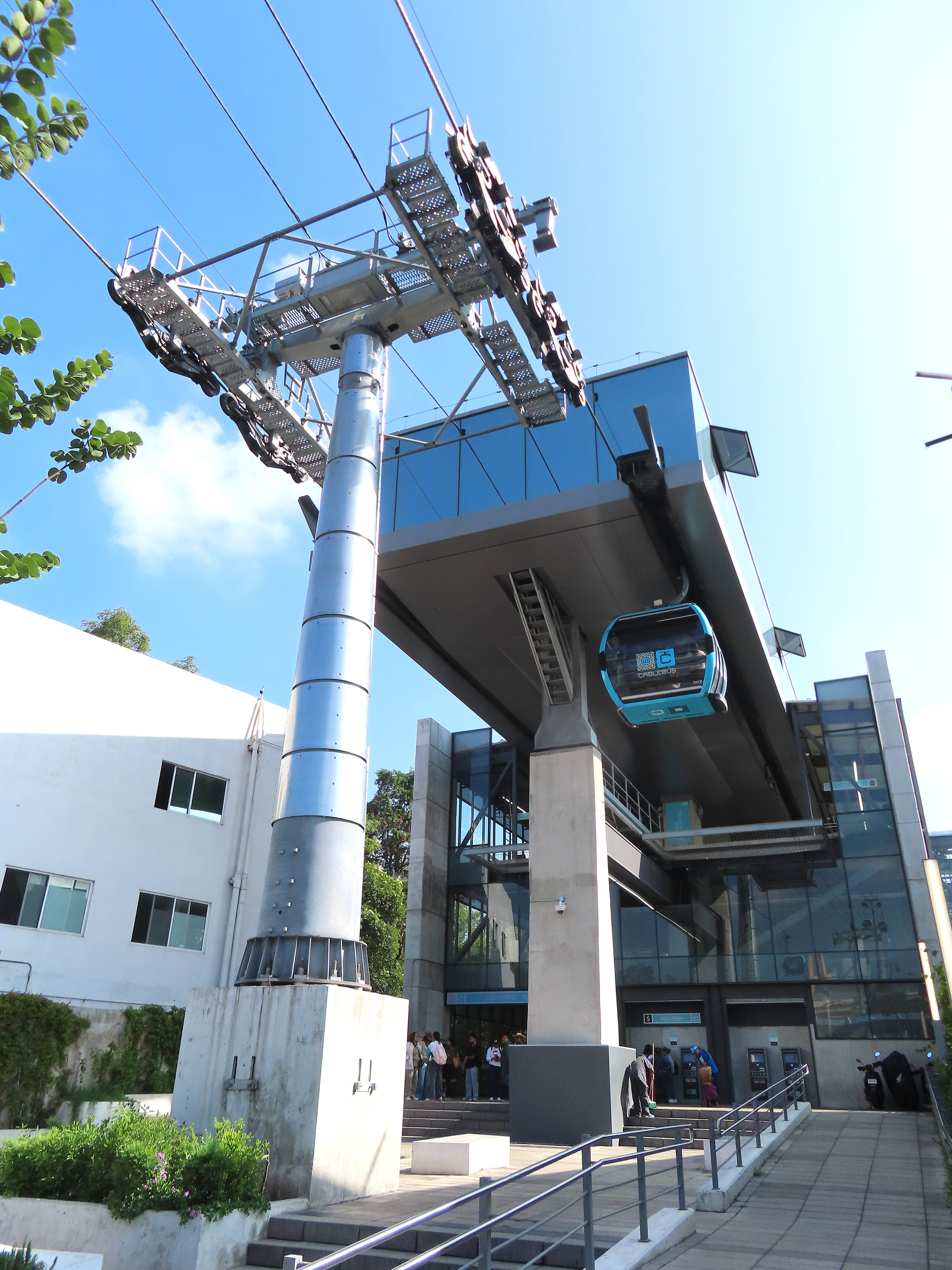
All of Line 3’s stations feature D-Line R2 glass enclosures, giving the lift a modern look. Much of the line passes over a highway, evoking the feeling of flying over traffic. The lifts 39 towers are extremely tall, giving incredible views. At various points cabins pass over a large canyon, a cemetary, train tracks and even an equestrian arena. Like Line 2, Line 3 is really two lifts with two separate haul ropes. On this line, however, cabins move between sections, forming a one seat ride through all six stations.
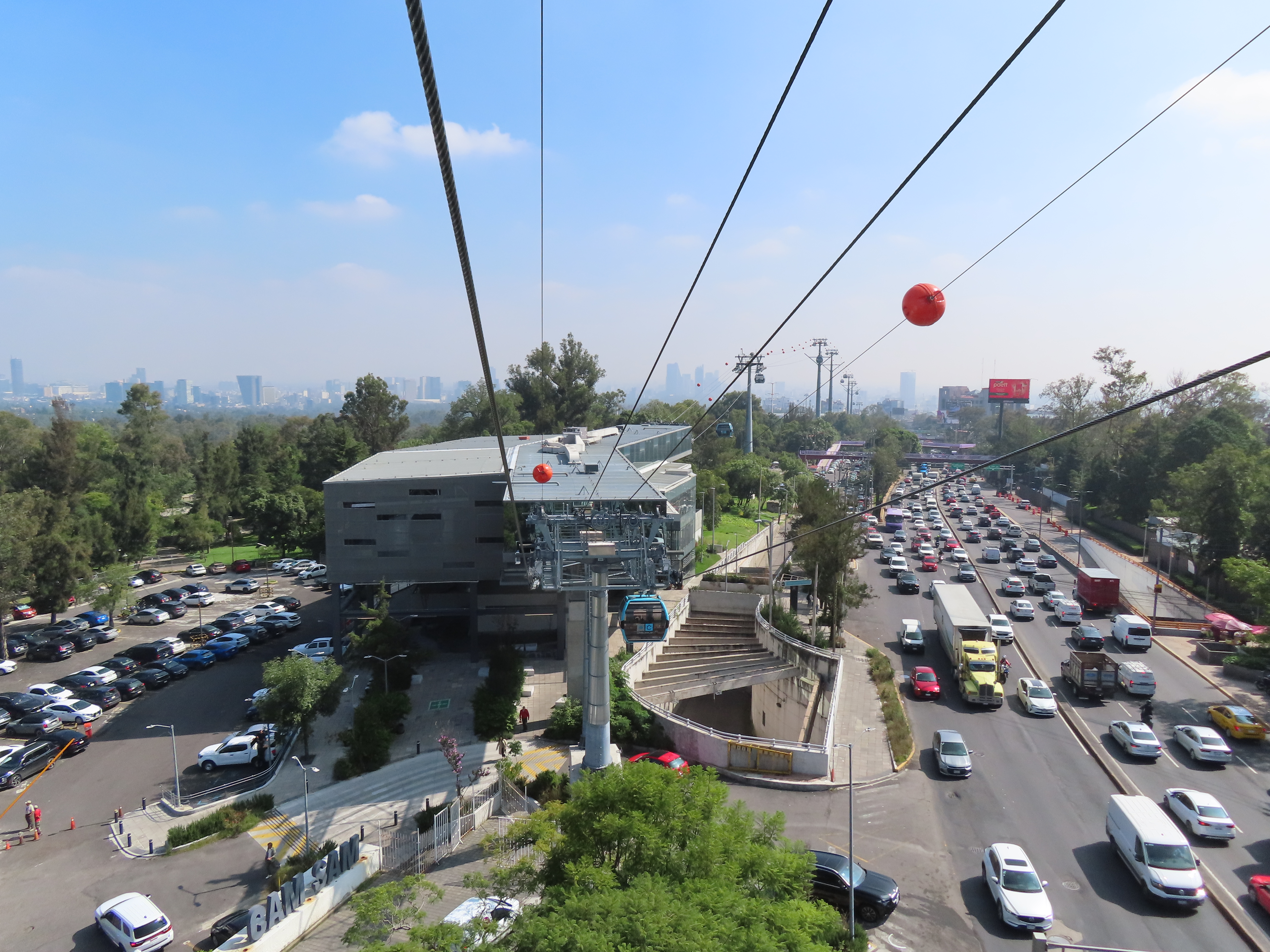
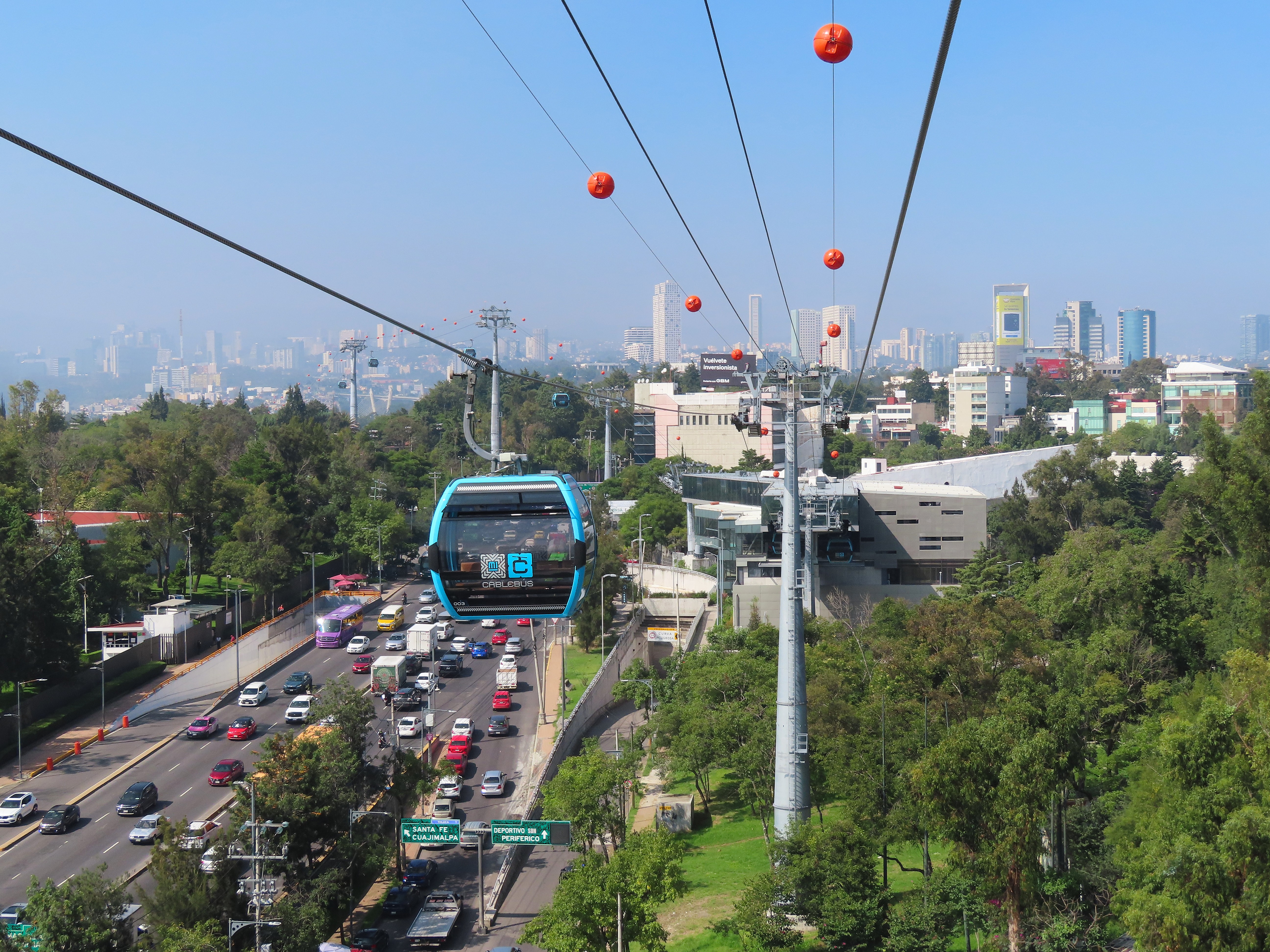
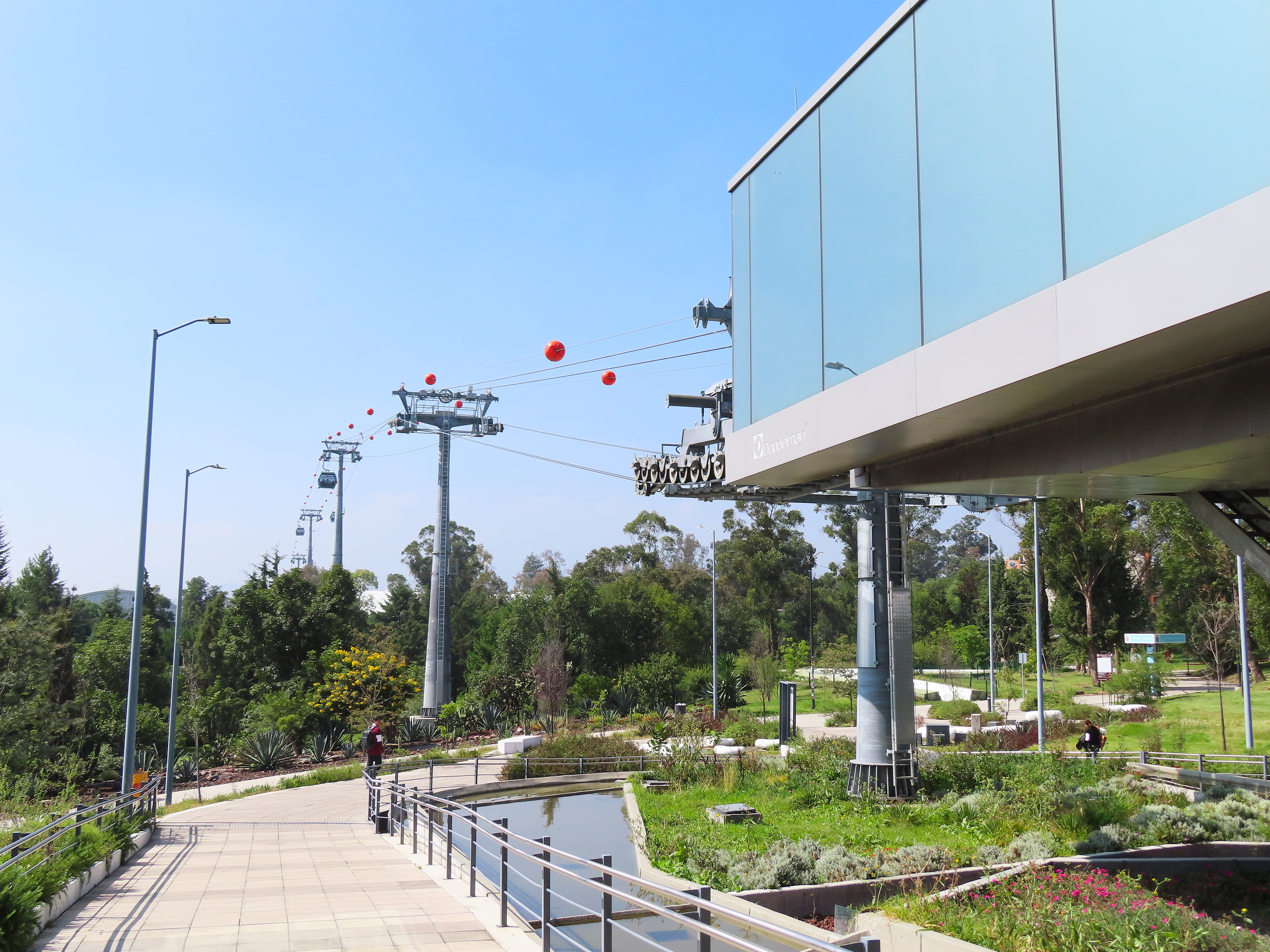
I didn’t get to ride Line 1, Doppelmayr’s largest system in Mexico City spanning 5.8 miles and six stations.
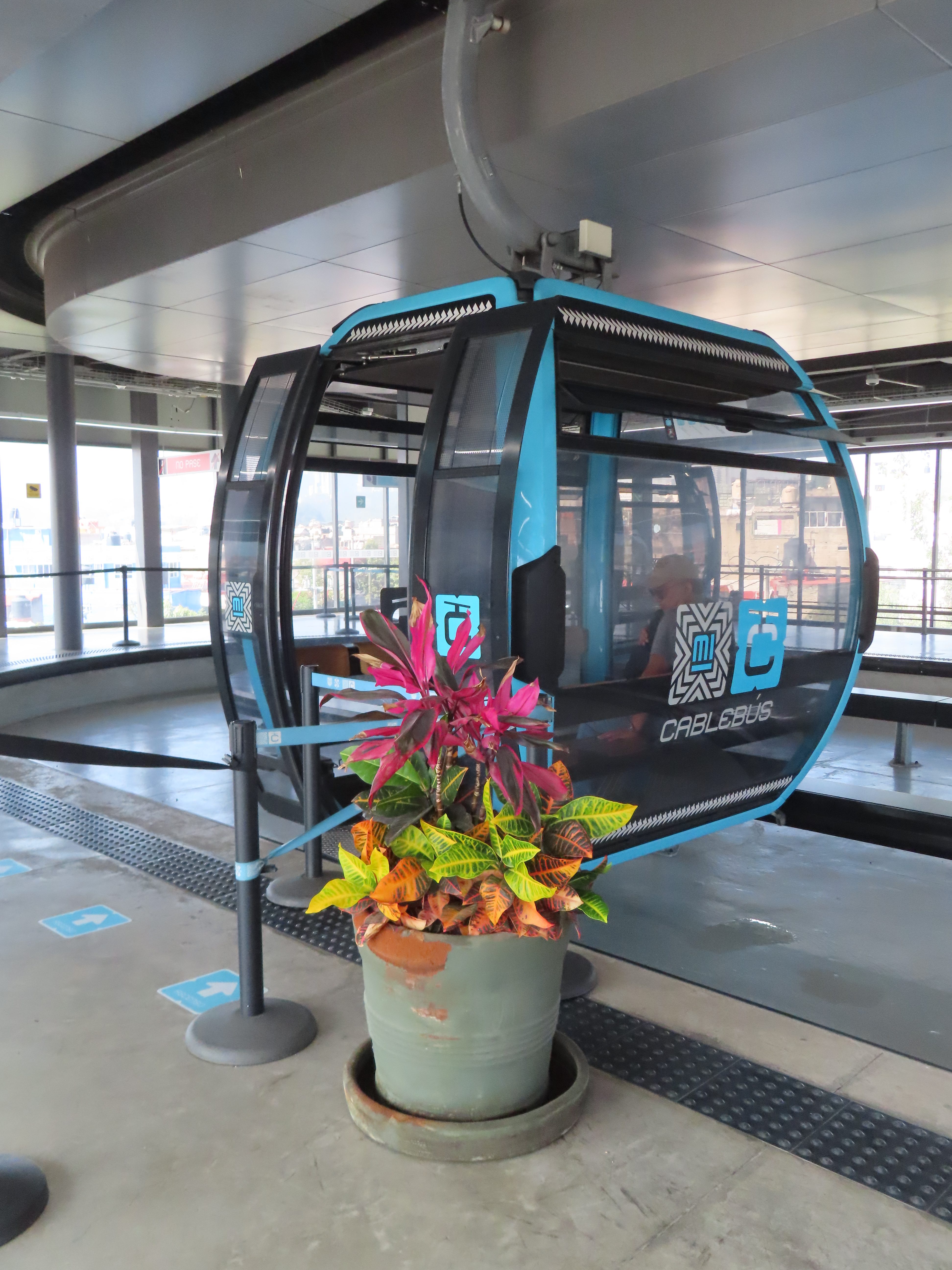
A ride on any of the three Cablebús lines runs just seven pesos or 38 cents US at current exchange rates. Each line runs 5:00 am to 11:00 pm on weekdays with slightly shorter hours on weekends. Maintenance is completed at night or during short closure periods. Mechanics work across three shifts covering 24 hours per day. All three systems feature direct drives and redundancies designed to all-but-eliminate the possibility of a ground evacuation.
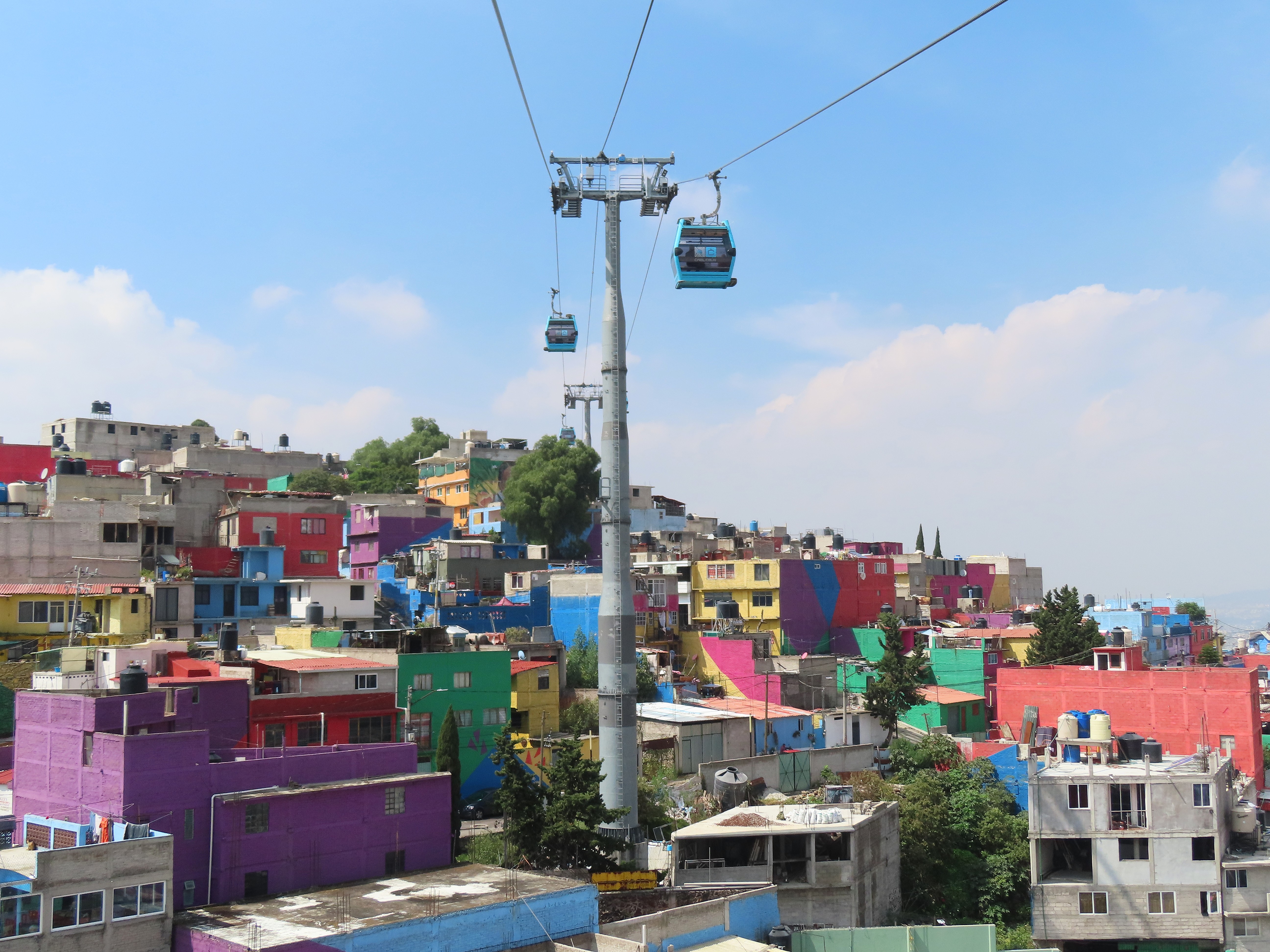
Outside Mexico City proper, the State of Mexico constructed another gondola network called Mexicable that connects with both Cablebús Line 1 and the subway system. Combined, Cablebús and Mexicable encompass 24 miles with 32 stations, 248 towers and 1,244 cabins. More gondolas are coming. Leitner recently won contracts for Cablebús 4 and 6 plus Mexicable Line 3, totalling 21 miles and 25 stations. Doppelmayr will build Cablebús Line 5, set to become the new longest urban gondola in the world with 12 stations along 9.4 miles utilizing 114 towers and 462 cabins. There’s so much work here neither manufacturer could do it all alone.