Lift Profile: Iron Mountain Tramway

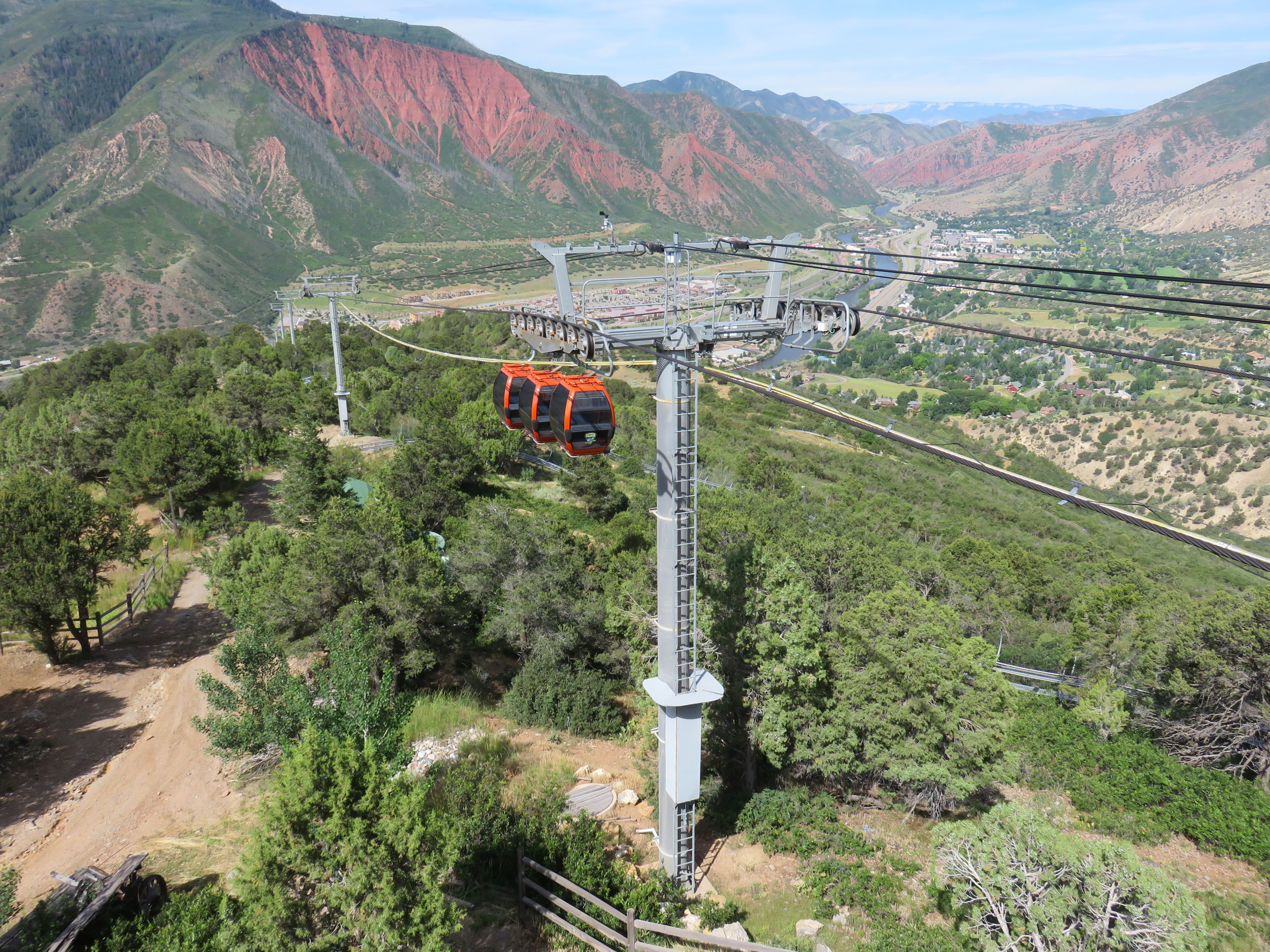
Three cabins near the summit of the Iron Mountain Tramway in Glenwood Springs, CO.
Three cabins nearing the summit of the Iron Mountain Tramway in Glenwood Springs, Colorado.

The Iron Mountain Tramway provides the only public access to the Glenwood Caverns Adventure Park located in Glenwood Springs, Colorado.  Built by Leitner-Poma in 2002, it was one of the first pulse gondolas to open in North America.  The system debuted with four sets of two CWA Omega III cabins and now has six pulses of three for a total of 18 cabins.  Ultimate design capacity is 36 cabins in groups of three which would achieve a capacity of 543 passengers per hour per direction.   With a top speed of 1,000 feet per minute, the trip takes about seven minutes including two slows along the way.  If more pulses are added, the trip time will increase as the system slows to a crawl whenever cabins are loading and unloading.  This is one of the disadvantages of pulse systems.
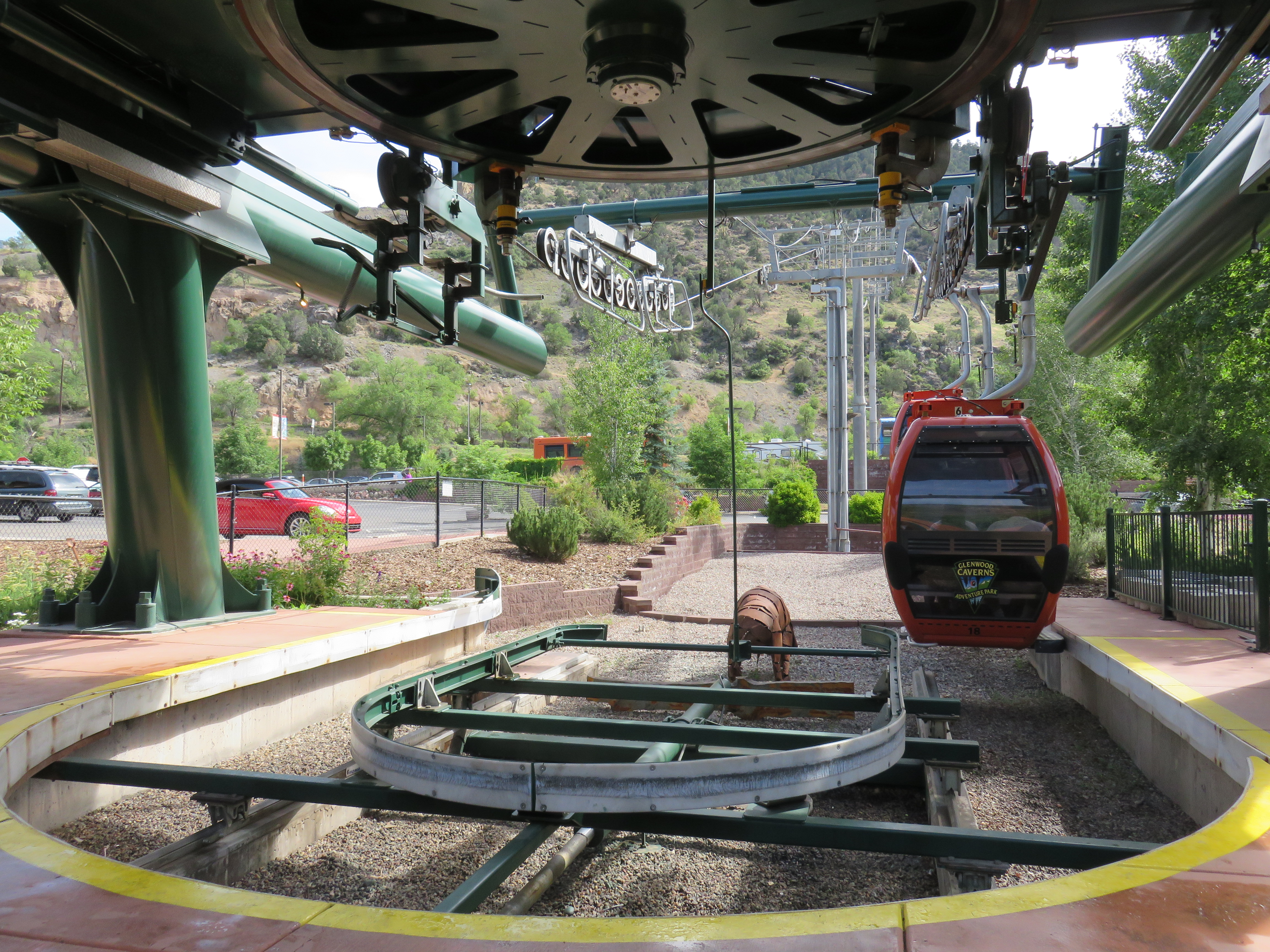
Notice the entire center loading platform and guides move hydraulically with the motor room above.
The entire center loading platform and guides move hydraulically with the motor room above.

The gondola rises 1,351 feet and has a slope length is 4,432 feet.  The bottom drive terminal is a Poma Alpha model with a 400 HP electric motor.  Because this is also the tension terminal, the entire loading platform moves hydraulically with the motor room and bullwheel.
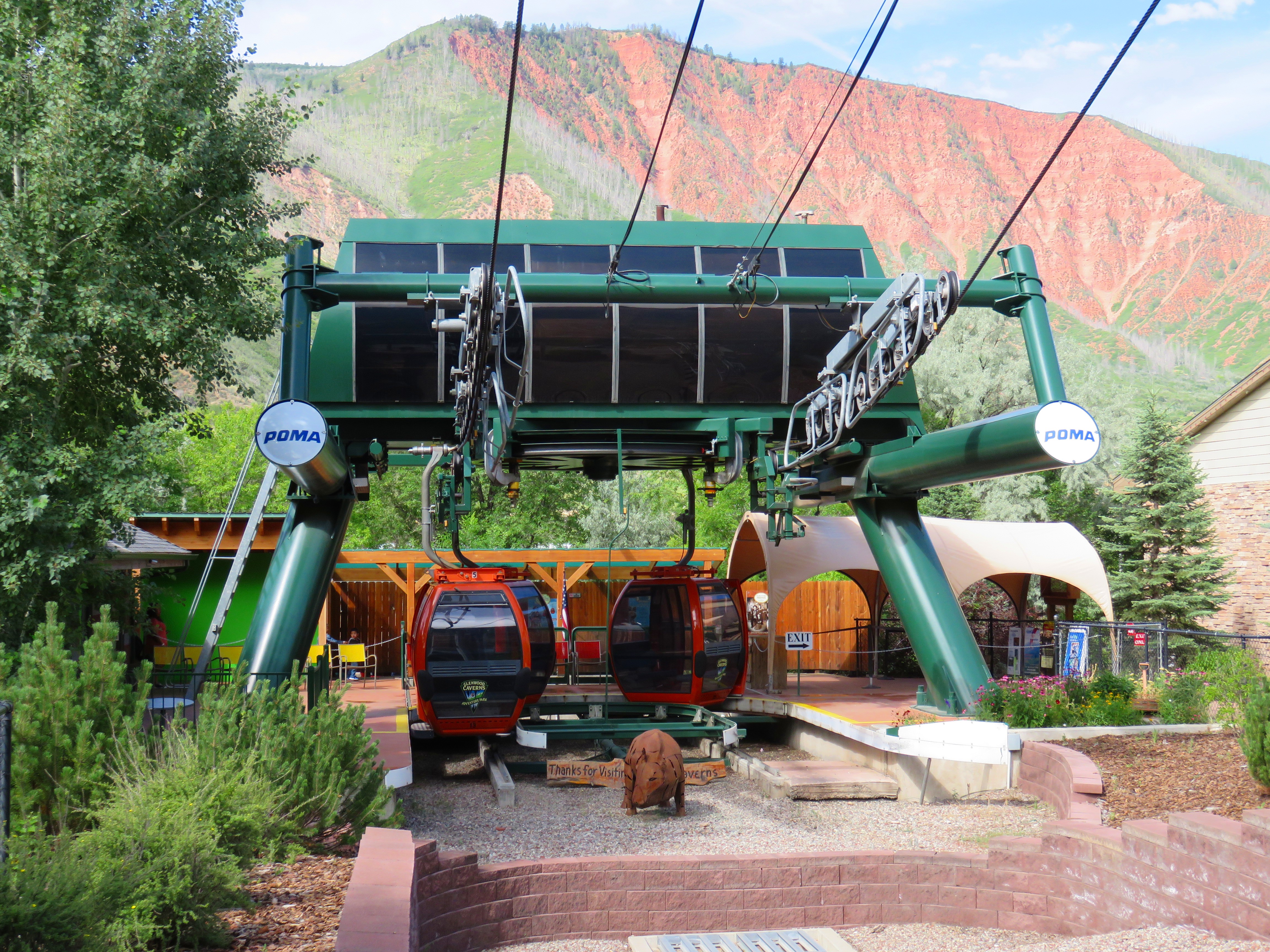
Bottom terminal adjacent to Interstate 70.

A unique feature of this installation is that the 18 towers also support water, natural gas and sewer lines for the summit facilities.  All three lines are suspended from a 3/16″ cable attached just under each tower’s crossarm.  The water line supplies 42 gallons per minute to a tank located at the summit.  The Colorado Passenger Tramway Safety Board approved transport of natural gas along the line because the fiberglass pipe used has a safety factor of 30 relative to the pressure of the gas.
Continue reading

Jumbo Glacier Resort is Dead

British Columbia’s Minister of Environment has finally killed the Jumbo Glacier Resort, proposed to rival Whistler in the Purcell Mountains of British Columbia.  Jumbo Glacier is a spectacularly-remote place up a dirt logging road from Panorama Mountain Village and Invermere.  It’s more than 200 miles from Calgary, the nearest major city and airport.  The plan was to build 20+ lifts on 3,000 hectares of public land above 5,000 feet.  You can read the full master plan here.

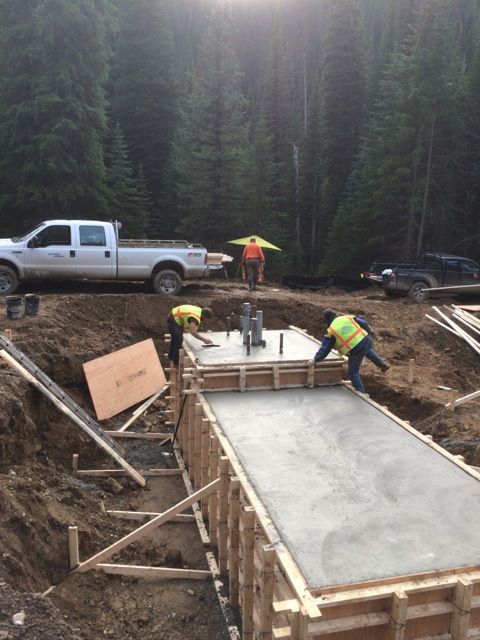
Leitner-Poma poured some footings last fall in a last-ditch effort.

The project was first submitted to the BC government in 1991 and received environmental approval in 2004.  The resort claimed they would get 2,700 skiers per day. This was always a red flag to me as 2,700 skiers is not a big number for a destination ski resort.  Take for example a mid-sized area like Mt. Sunapee in New Hampshire.  It has six lifts and a comfortable carrying capacity of 5,220 skiers per day.  2,700 could justify perhaps three or four lifts at Jumbo, not 23.

BC has no shortage of large ski areas struggling due to remoteness. Kicking Horse and Revelstoke are perhaps most similar to the Jumbo proposal. Revelstoke was supposed to have 21 lifts; they built three before running out of money in 2008. Lucky for them, the 27th richest person in Canada bought in and paid off over $100 million in debt.  Kicking Horse was in similar trouble when it was rescued by Resorts of the Canadian Rockies in 2011. Both of these resorts are on the Trans-Canada Highway, not 50 miles from a town.

Continue reading

Pulse Lifts

These days building a detachable lift means a capital investment of at least $3 million plus around $100,000 in annual maintenance.  A so-called ‘pulse’ lift offers the speed of a detachable system with similar infrastructure to a traditional fixed-grip lift.  Chairs or cabins are grouped together into ‘pulses’ and the entire lift slows down for loading and unloading.  When comparing types of aerial lifts there are always trade-offs; here they include low capacity and long headways.  Most pulse lifts can only move 300-600 passengers per hour and headway – the time a passenger has to wait for a carrier to show up – can be minutes instead of as low as six seconds.  Perfect for certain applications but unsuitable in most.

Pine Ridge lift at the Yellowstone Club, Montana.

There are currently 17 pulse lifts operating in the US, Canada and Mexico; all but three are gondolas.  Nearly all were built in the last 15 years.  Panorama Mountain Village, Northstar California, Steamboat, Snowmass, Canyons Resort, and Le Massif all use pulse gondolas to connect village areas.  These lifts are usually less than 3,000 feet long and convenient for skiers and non-skiers alike.  Other pulse gondolas are attractions in their own right such the Iron Mountain Tramway at Glenwood Caverns Adventure Park, SkyTrail at Trees of Mystery, the Gondola at Royal Gorge Bridge Bridge & Park and the Riverfront Park SkyRide in Spokane.  There is also a new Leitner-Poma pulse gondola in Orizaba, Mexico with tripod towers that are hundreds of feet tall.

Spokane Falls SkyRide, built by Doppelmayr.
Riverfront Park SkyRide, built by Doppelmayr.

Snow Valley in Edmonton, Alberta has a very unique pulse chairlift built by Doppelmayr in 2008.  Instead of having groups of 3-5 chairs, it has just two groups of 20 closely-spaced quad chairs.  Because it is only 850 feet long, the lift can move 1,378 skiers per hour at up to 5 m/s, the same speed as most detachable lifts.  In fact the ride is only about a minute.  The lift slows to a beginner-friendly 0.8 m/s for loading and unloading.  Because of the low speed, skiers ride around the bullwheel at the top and unload facing down the hill.  It’s the only lift I know of with 180-degree unloading.

Continue reading

News Roundup: Projects and Plans

https://instagram.com/p/3kGV5wiue-/?taken-by=pcski

Summer’s Heating Up

It’s been a great couple of weeks for Leitner-Poma since my last new lifts update.

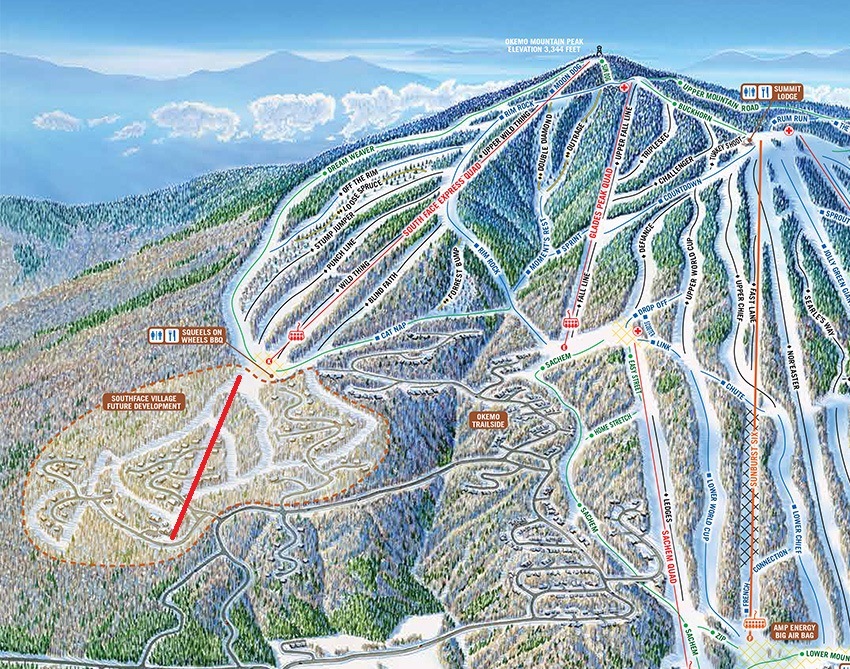
South Face Village at Okemo is moving forward with its first lift.
  • The $200 million Timber Creek real estate development at Okemo is moving forward with their first lift which will be an Alpha quad.  Also at Okemo the Jackson Gore Express is getting bubble chairs to match the Sunburst Six that went in last summer.
  • For the first time since 1966, Snowmass will be Riblet-less.  Aspen Skiing Company moved the High Alpine replacement up by a year to this summer.    It will be an LPA detachable quad in a new alignment.
  • London Ski Club at Boler Mountain in Ontario is replacing their main lift, Columbia, with an Alpha fixed quad.
  • New Mexico’s James Coleman bought four ski resorts last winter and now he’s gone lift shopping.  Sipapu in New Mexico will get a new L-P beginner lift and Purgatory (No longer Durango Mountain Resort) announced the replacement of the Legends triple with an L-P detachable quad.
  • Squaw Valley is replacing the Siberia Express with an L-P six-pack.
  • Loveland announced a major lift realignment.  Chair 2 (Yan triple) will lose its upper half and be shortened to its mid-station.  The parallel 1970 detachable Poma lift will also be removed and Leitner-Poma will build a new “Ptarmigan” lift from the base of the Poma to the old summit of Chair 2.  I am not sure yet if this will be a triple or a quad.

Continue reading

News Roundup: That’s a first

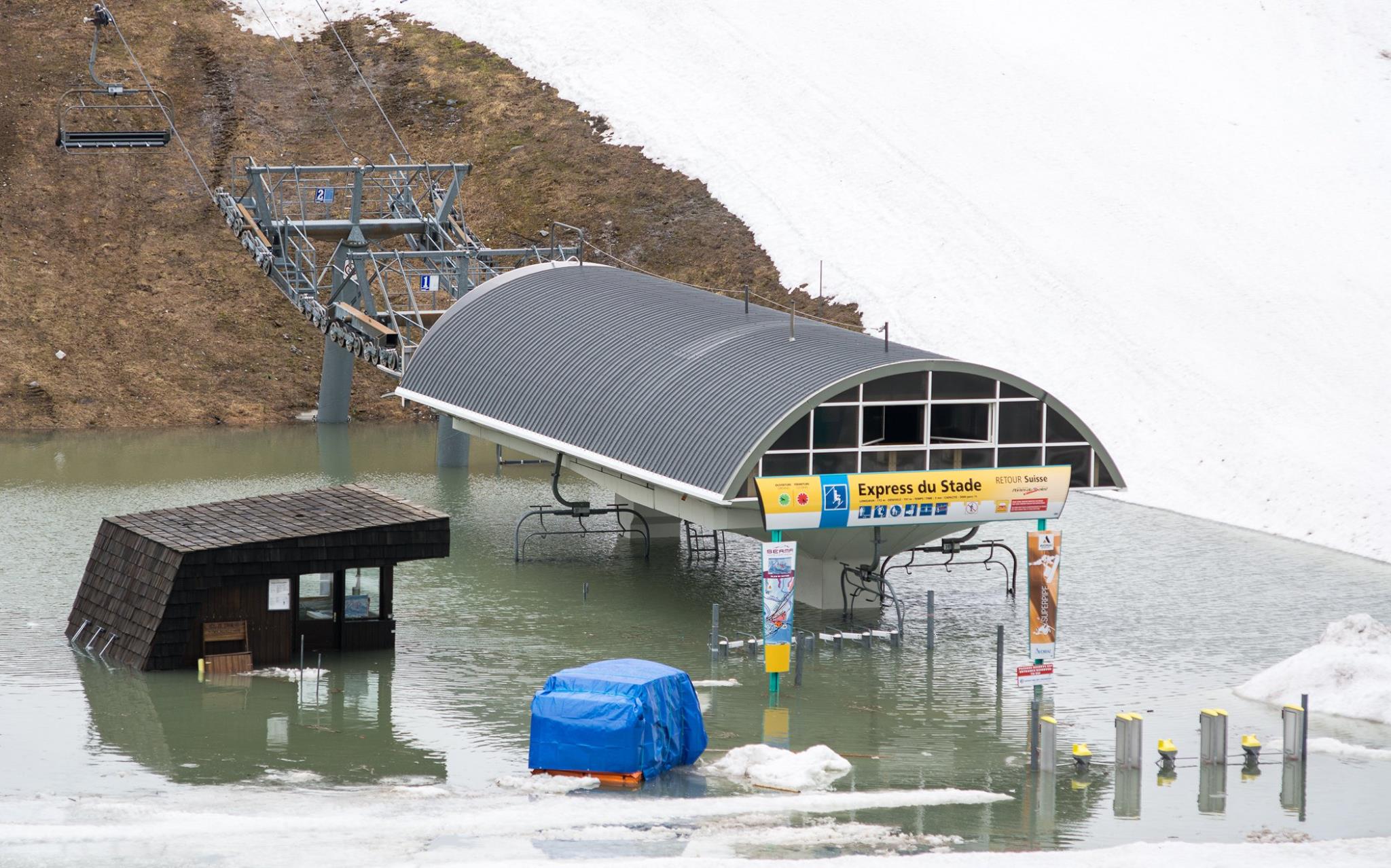
Flooded lift at Avoriaz.  Photo Credit: Avoriaz Facebook page.
Flooded lift at Avoriaz, France. Photo Credit: Avoriaz Facebook page.