Community Open House Launches Georgetown-Rosslyn Gondola Study

download
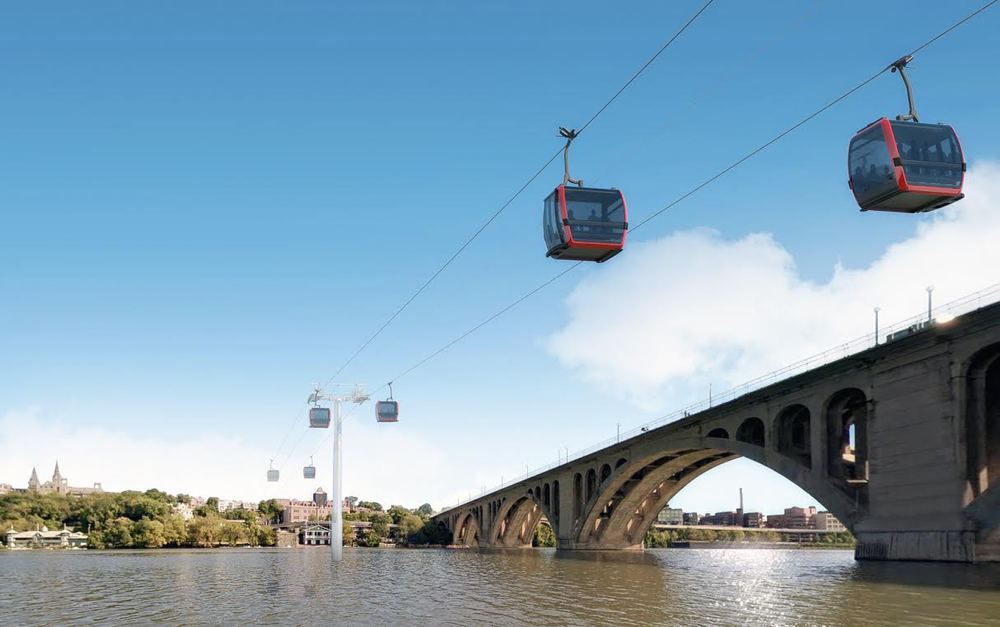
ZGF Architects will lead a team of professionals to study a possible gondola link between the Georgetown neighborhood in D.C. and Rosslyn, Virginia.

Washington, D.C. is inching closer to building the first urban transit gondola in the nation.  A team of consultants let by  ZGF Architects held an open house last week to update the public on the feasibility study underway for the Georgetown-Rosslyn Gondola proposed to cross the Potomac River.  ZGF, whose mission is to “create beautiful spaces that best serve people and the community,” was chosen this spring from eight teams who bid on the study. Local governments, Georgetown University and private-sector businesses have dedicated $190,000 to the project to date.

Jamie Bunch and Mike Deiparine from Engineering Specialties Group will provide technical ropeway expertise.  Their company has vast experience consulting on projects such as the Telluride Mountain Village GondolaPortland Aerial Tram, Roosevelt Island Tramway, Steamboat Silver Bullet Gondola and the Jackson Hole Tram Replacement.  ZGF Architects and its partners will study the gondola’s possible routing and overall feasibility, releasing their findings this fall.
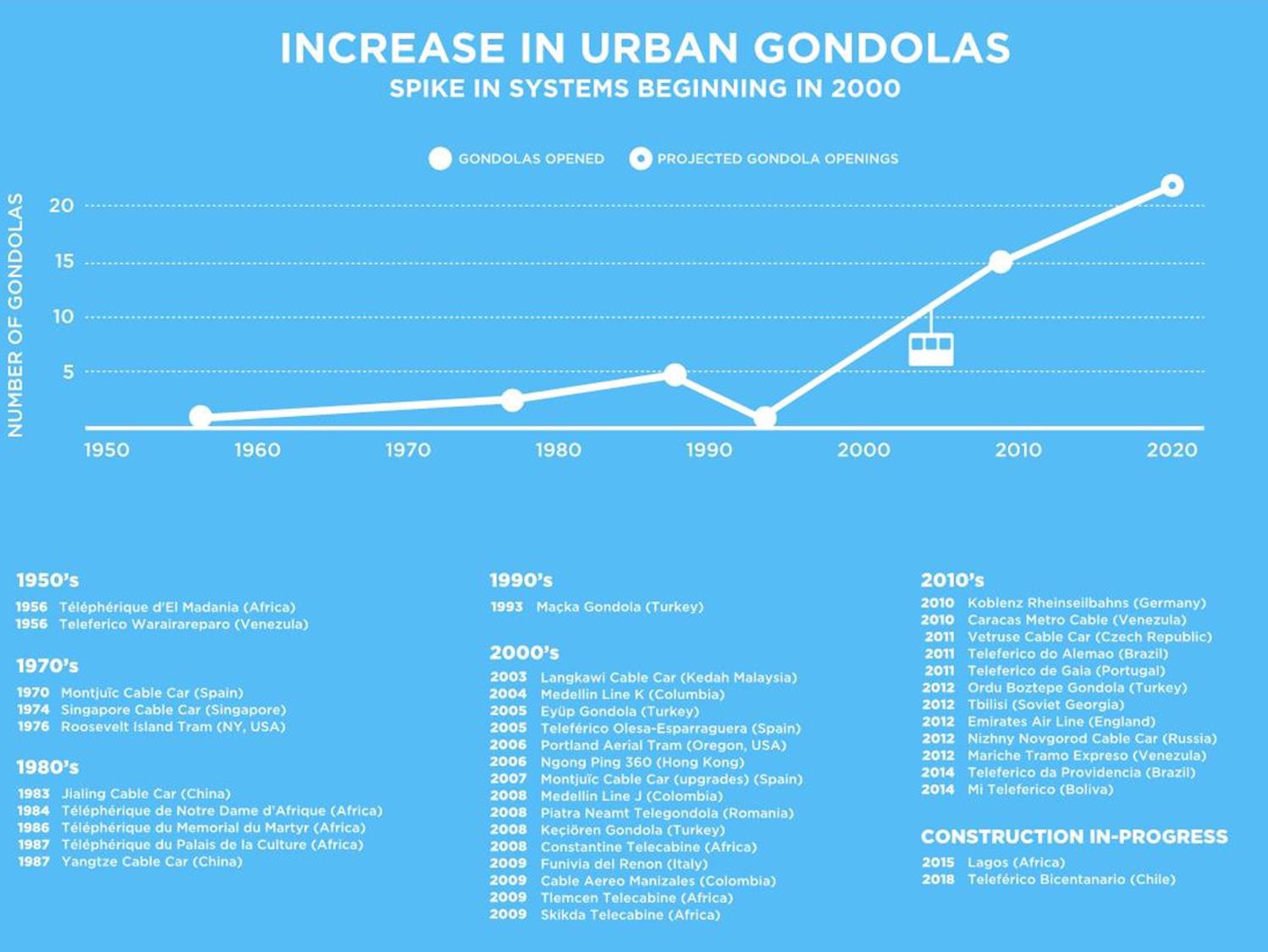
urban gondola timeline
Staff presented this graphic showing the rapid growth of gondolas in cities across the globe.

At the meeting, project staff presented a Gondola 101 primer and chronicled the rise of urban cable transport globally.  The presentation even included pictures from my lift database! Slides were impressively researched and something I wish every American city-dweller could sit through – explaining angle stations, towers and cabin spacing in an easy to understand way.  Staff detailed four case studies: the Portland Aerial Tram, Roosevelt Island Tramway, Emirates Air Line and South American systems in La Paz and Medellín. After the formal program, community members got to check out five stations with display boards and ask questions.
Continue reading

Revisiting a Burnaby Mountain Gondola

IMG_6291

Burnaby Mountain in Metro Vancouver seems like a textbook site to test cable-propelled transit in a major North American city.  Simon Fraser University, with 30,000 students and staff, occupies 200 acres on the western crest of the mountain.  A growing neighborhood called UniverCity occupies the eastern hilltop with 5,000 residents.  Both are surrounded by parks and conservation lands but are only 1.7 miles from a SkyTrain rail station.  The mountain is 985 feet tall and served by a fleet of 48 diesel buses providing more than four million annual transit trips with poor levels of service.  Snow cripples transit ten an average of days per year on a hill that 39,000 people will live on by 2030.

1382137493275
Burnaby Mountain. Photo credit: Simon Fraser University

In 2010, TransLink commissioned one of the first comprehensive studies pitting ropeway technologies against the status quo and other alternatives in a North American context. One of the world’s largest engineering firms, CH2M Hill, led the team with financial analysis by PricewaterhouseCoopers and technical consulting by Gmuender Engineering and the lift manufacturers.  Commercially sensitive sections of the report were never released to the public in order to safeguard a future competitive procurement process, but what was published is a fascinating read for anyone interested in transit or ropeways.

The SkyTrain Millenium Line, opened in 2002, passes 1.7 miles south of SFU at a station called Production Way-University in Burnaby.  Commuters wait an average of seven minutes for a bus here, which takes 13-16 minutes to go the less than four miles to SFU. Increased frequencies of already articulated buses would result in proportionally greater emissions, traffic impacts, staffing needs, required layover space and capital costs.

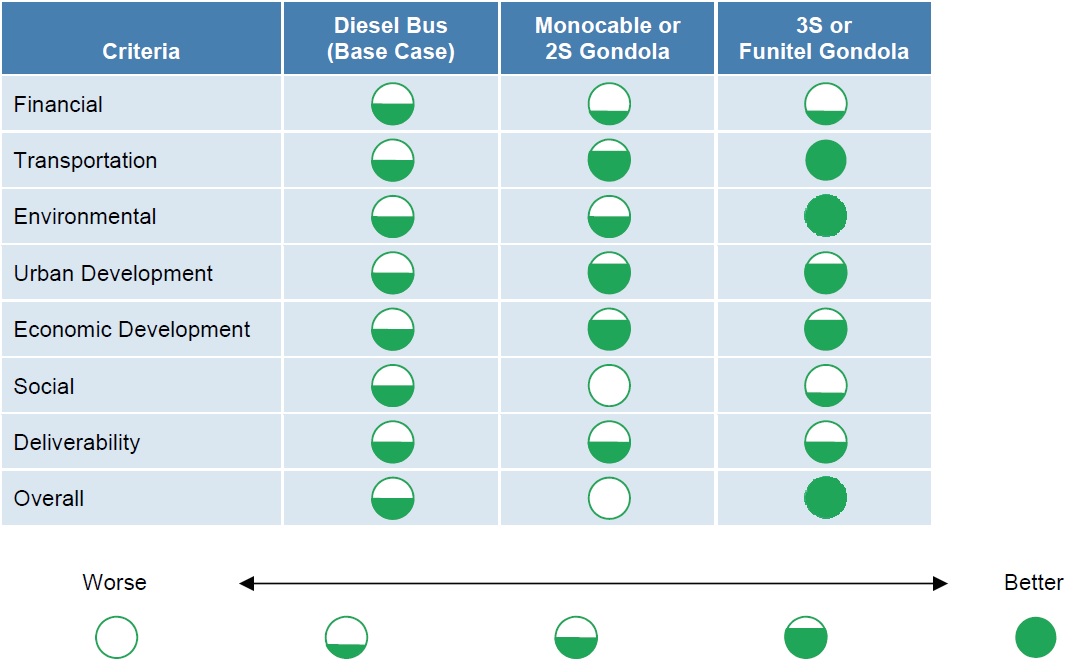
The study looked at a wide range of alternatives – from bus rapid transit (BRT) to light rail, funicular, subway, trolleybus, reversible aerial tramway, monocable gondola, 2S gondola, 3S gondola and funitel.  These were narrowed down to three major categories for further study – diesel bus, monocable/2S gondola and 3S gondola/funitel.  Other surface alternatives proved too expensive, had significant neighborhood impacts, or both.

secondary comparison
Comparison of three modes that made it to secondary study.  3S/funitel won on nearly every count except cost.

Continue reading

Steamboat Plans More Lifts

dsc_3529

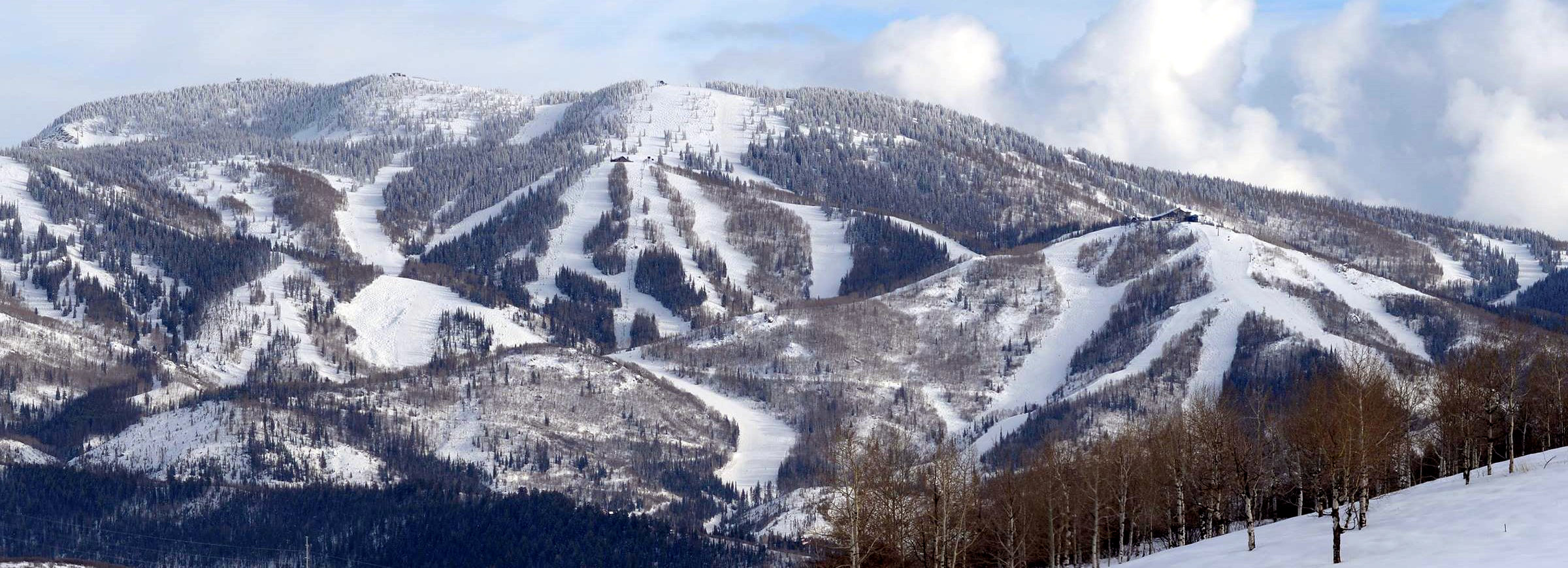
Steamboat is the fourth largest ski resort in Colorado with 19 lifts and almost 3,000 acres of terrain on 10,568 foot Mt. Werner.  In 2011, Steamboat Ski & Resort Corporation commissioned Ecosign Mountain Resort Planners to perform a detailed mountain analysis and update the resort’s master plan.  The Routt National Forest approved the plan in 2013, which envisions seven new lifts installed over the next ten years to better serve skiers.  Included are a mid-mountain learning center served by a second gondola, a new lift on Sunshine Peak and replacement of four lifts with upgraded equipment.  The first of the upgrade projects already underway, replacing the Elkhead triple (a 1984 Yan) with a Doppelmayr detachable quad.  Initially proposed as a six-pack, Steamboat opted to build a 4-place detachable instead.  The new Elkhead will be the first Doppelmayr lift built here since 1997 following four new Leitner-Poma lifts built at Steamboat in the 2000s.

steamboat-mtn-mp-1000x750
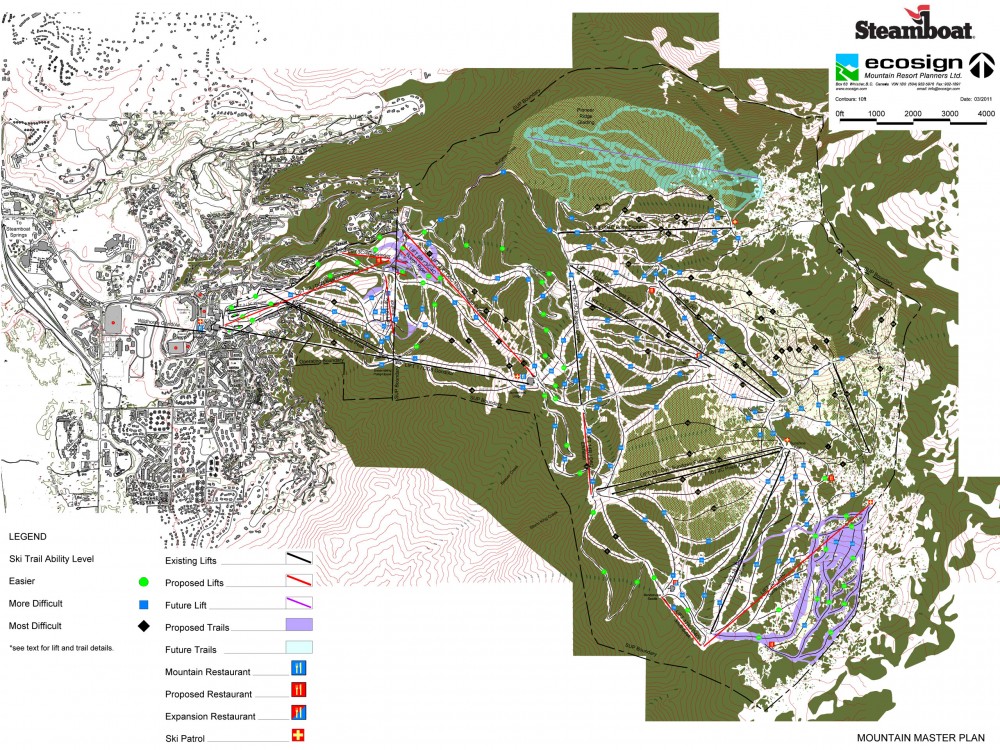
Plan overview from Ecosign.  The new lift and trails on Pioneer Ridge shown in blue were not approved in 2013 but are within Steamboat’s existing permit boundary, were approved in 1996 and remain in the resort’s long term plans.
By far the largest component of the 2011 plan is the Rough Rider Learning Center in Bashor Bowl served by a new 8-passenger gondola.  The Bashor Gondola will rise from the base of the Silver Bullet Gondola to the northeast, crossing Christie Peak Express and Christie III.  The top terminal will house an 8,000 square foot skier-services building. Unfortunately for the gondola’s future mechanics, 3,500 square feet of that space for gondola cabin storage and maintenance will be a lunch room for 300 kids during the day.  At night, the gondola will service the lodge and a new tube park near the top terminal.  It will also spin all summer alongside the Silver Bullet.

Two fixed-grip chairlifts dubbed Rough Rider and Swinger (no way that name sticks) will service teaching terrain in Bashor Bowl along with 2-3 new magic carpets.  The 1989 Rough Rider platter nearby will be removed.  A third new chairlift will replace the Bashor lift in the same vicinity but in a new alignment ending 500′ higher.  Bashor is the second oldest lift at Steamboat, a Lift Engineering double dating back to 1972.

Continue reading

Big Changes Coming to The Summit at Snoqualmie

IMG_3932
The Summit at Snoqualmie still operates eleven Riblet doubles dating as far back as 1967.

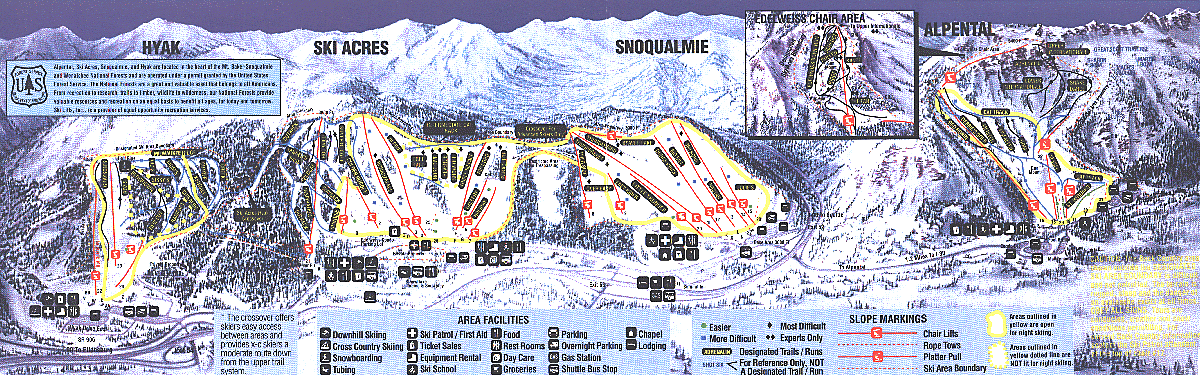
The Summit at Snoqualmie sits just 45 minutes from downtown Seattle, the 4th fastest-growing major city in America.  With 20 lifts spread across four ski areas, the resort hosts nearly 700,000 skier visits in a good snow year, placing it among the top 15 most-visited resorts nationwide (in a bad snow year, it barely opens.)  Three of The Summit’s areas – Summit East, Summit Central and Summit West are connected by ski trails while Alpental stands alone on the opposite side of I-90.

The Pacific Northwest region (Alaska, Washington, Oregon) saw a stunning increase of 142 percent in skier visits  last year, more than double the two million visits from the year before.  That fact, coupled with an aging lift system means The Summit is primed for major upgrades.  The resort still has four Riblets dating from the 1960s and seven from the 1970s.

1209857528
In 1996, The Summit had even more lifts than today – 25 total.  Photo credit: Skimap.org

The Summit at Snoqualmie Master Plan approved in 2008 authorizes replacement of 11 lifts and construction of nine new ones with just six lifts remaining in their current state. The first of these projects have already completed, including all new lifts at Summit East/Hyak and the replacement of Silver Fir with a Leitner-Poma high speed quad.  That leaves eleven lift projects planned for the next decade or two at Summit Central, Summit West and Alpental.

Continue reading

Five Challenges Facing Chicago’s Skyline

David-Brody-Bond-3

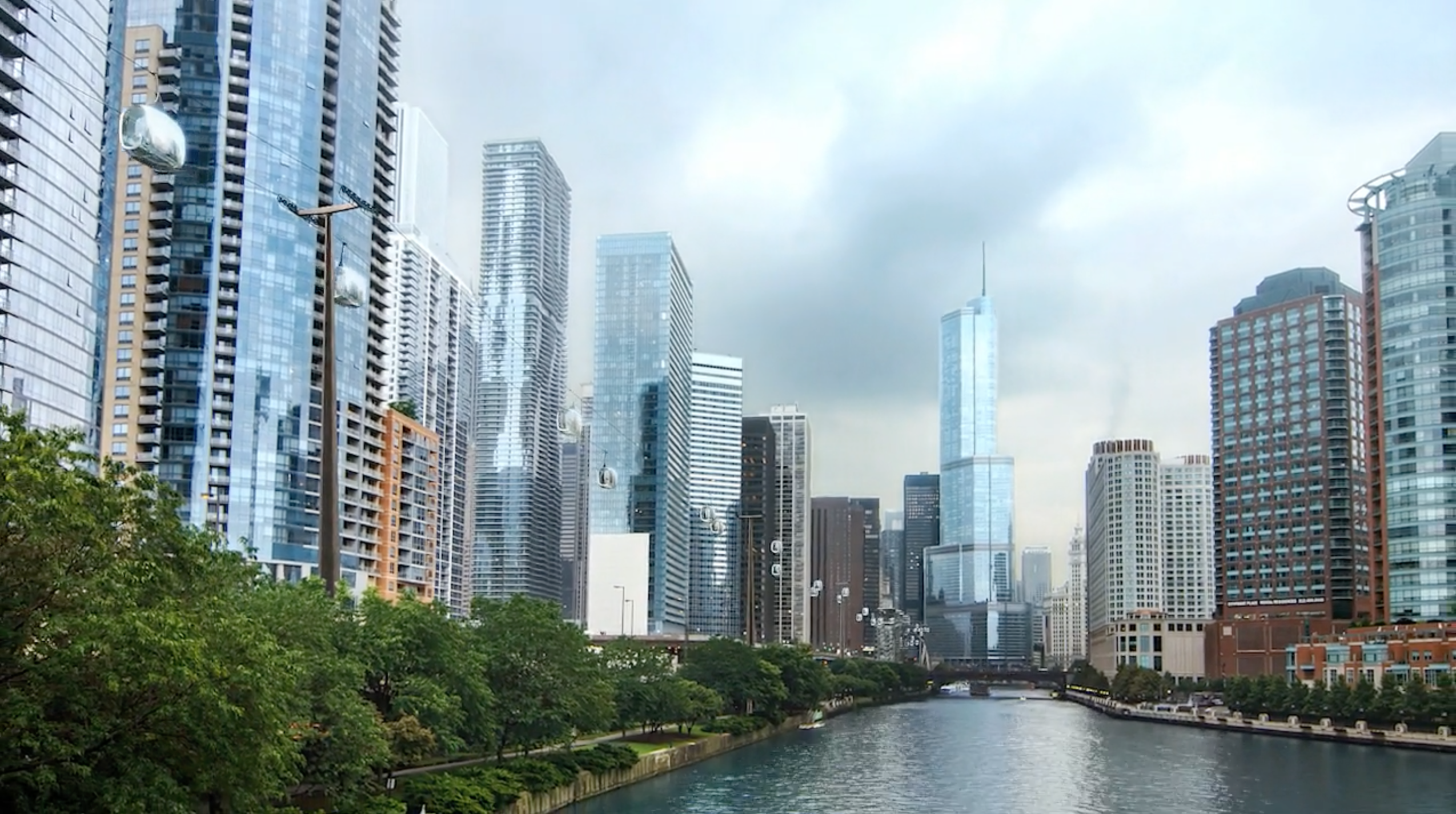
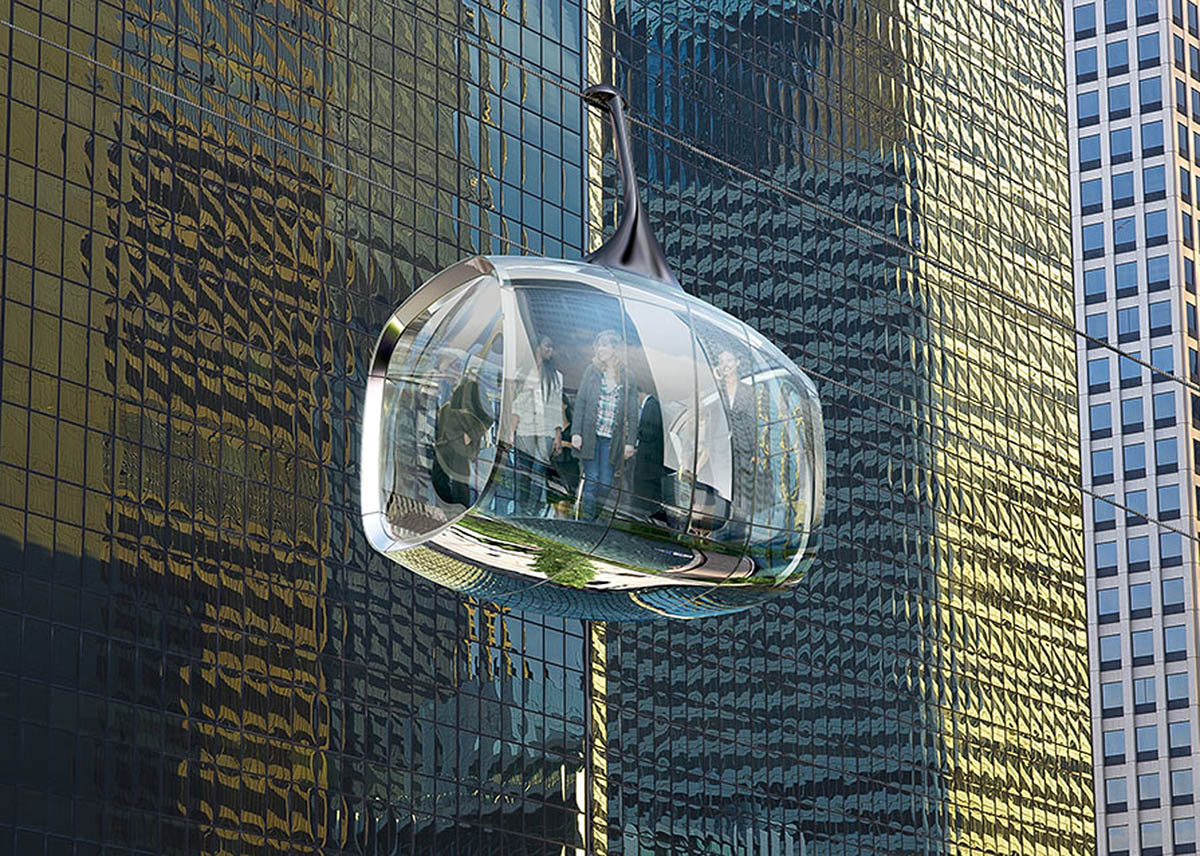
Chicago doesn’t have an iconic tourist attraction.  There’s no giant Ferris wheel, no observation tower, no famous bridge.  Entrepreneurs Lou Raizin and Laurence Geller want to change that with a gondola.  Over the past four years, the men studied more than fifty signature attractions in cities around the globe and came up with the Skyline as an iconic attraction for the Windy City.  As presented to the City Club of Chicago on May 3rd, the plan includes a gondola from Navy Pier with multiple stops along the Chicago Riverfront. David Marks, the architect behind the London Eye, collaborated on the innovative design with New York-based Davis Brody Bond.  Marks also designed the British Airways i360 observation tower with a passenger capsule built by Poma and Sigma.  The Skyline project would likely bring together the same team from the Eye and i360 with engineering firm Jacobs Inc. and ropeway technology from Leitner-Poma.

Mr. Raizin and Mr. Geller say they’ve spent millions designing and studying the Skyline, which will cost an estimated $250 million raised from private investors.  The premise is sound but the proposal comes with significant challenges.

1. What is it?

“This is not your typical aerial gondola,” Mr. Geller told the City Club.  The system would transport 3,000 visitors per hour at 800 feet a minute.  That’s pretty standard for a monocable gondola.  The challenge is architects want big, beautiful cabins while also keeping a “light footprint” for the system.  Renderings show approximately 25-passenger cabins with only one haul rope and no grips.  To date, the largest monocable gondolas in the world carry 15 passengers, not 25.  Larger cabins require track ropes, bigger terminals and complex towers with saddles.

leadimage-42-

Continue reading

East River Skyway Envisions 3S Gondolas for New York

EastRiverSkyway

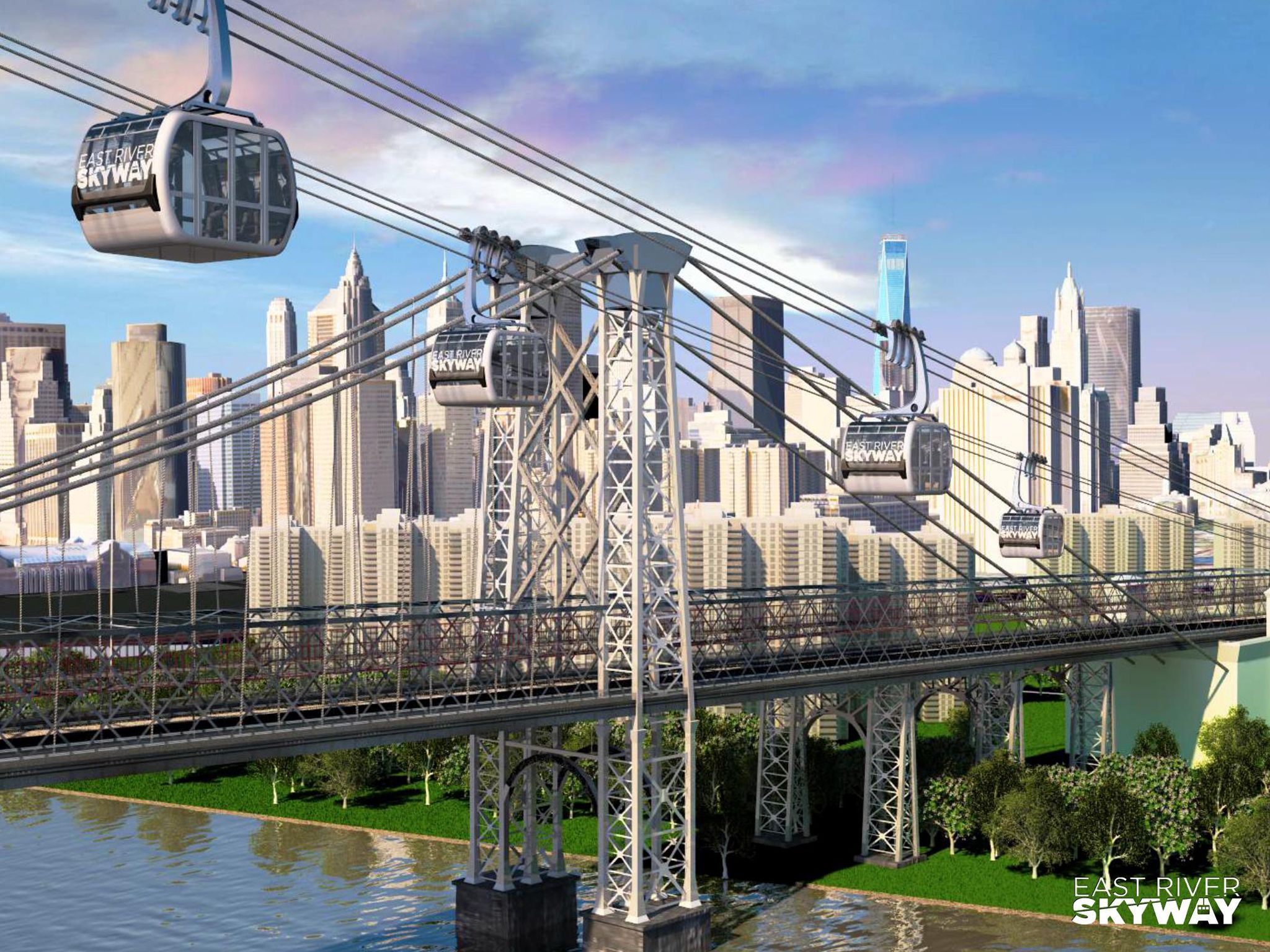
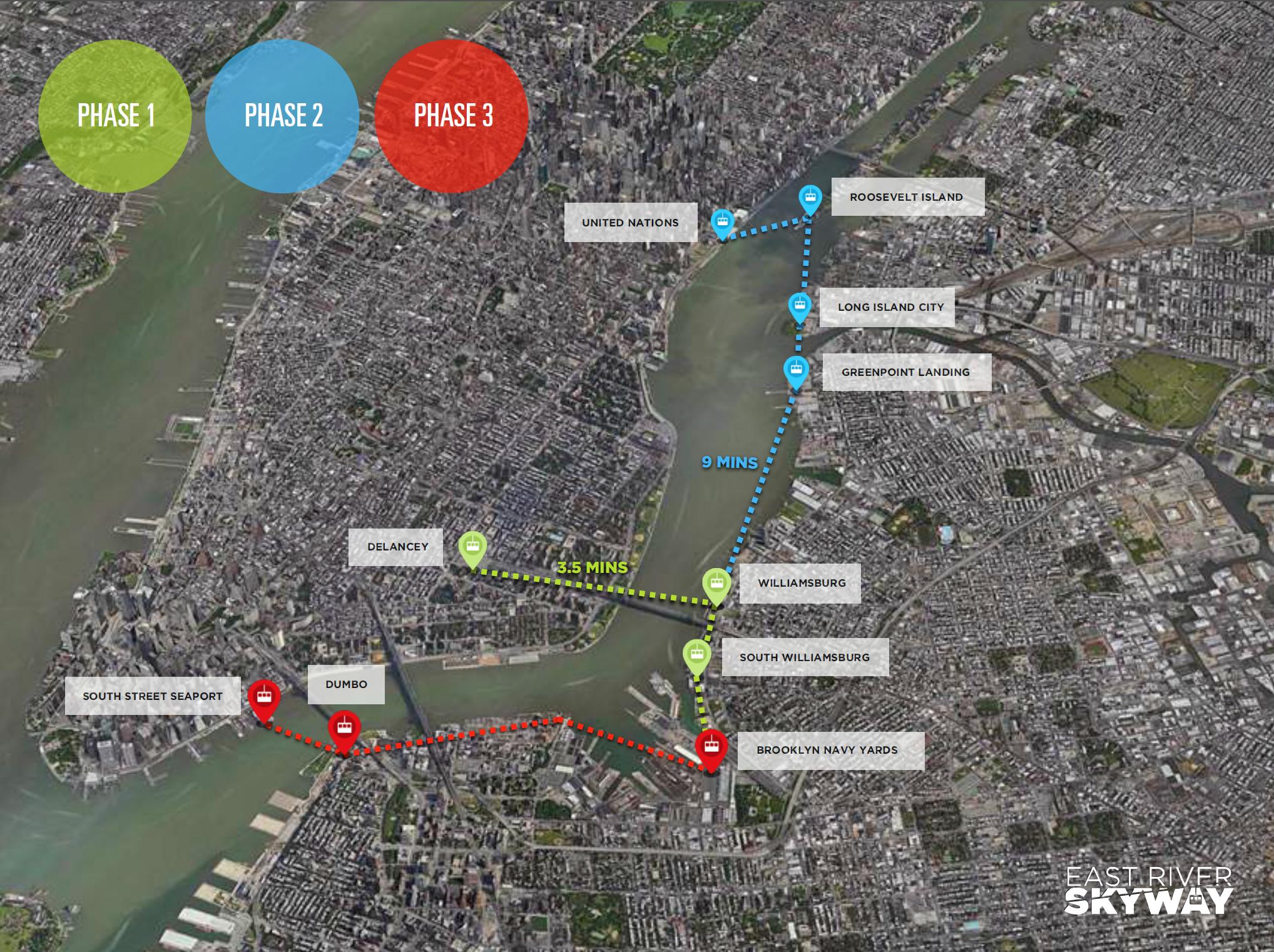
This week’s New Yorker features real estate website CEO Daniel Levy, who hatched a plan to bring gondolas to the Big Apple while on vacation in Chamonix in 2014.  His private venture, dubbed East River Skyway, envisions a trio of 3S gondolas with up to 12 stations connecting points along the East River with landmarks in Brooklyn, Queens and Manhattan.  Levy has retained the Canadian firm behind The Gondola Project, Creative Urban Projects Inc., as consultants for the proposal.

Working in East River Skyway’s favor is the fact that New York’s M.T.A. is finalizing plans to shut down a section of the L train subway for a year and a half or drastically reduce service for twice as long. The L train’s tunnel that shuttles 225,000 daily commuters under the East River sustained damaged during Hurricane Sandy and needs up to a billion dollars in repairs.

all-phases

Continue reading

The Case for a 3S Gondola to Timberline

IMG_3256

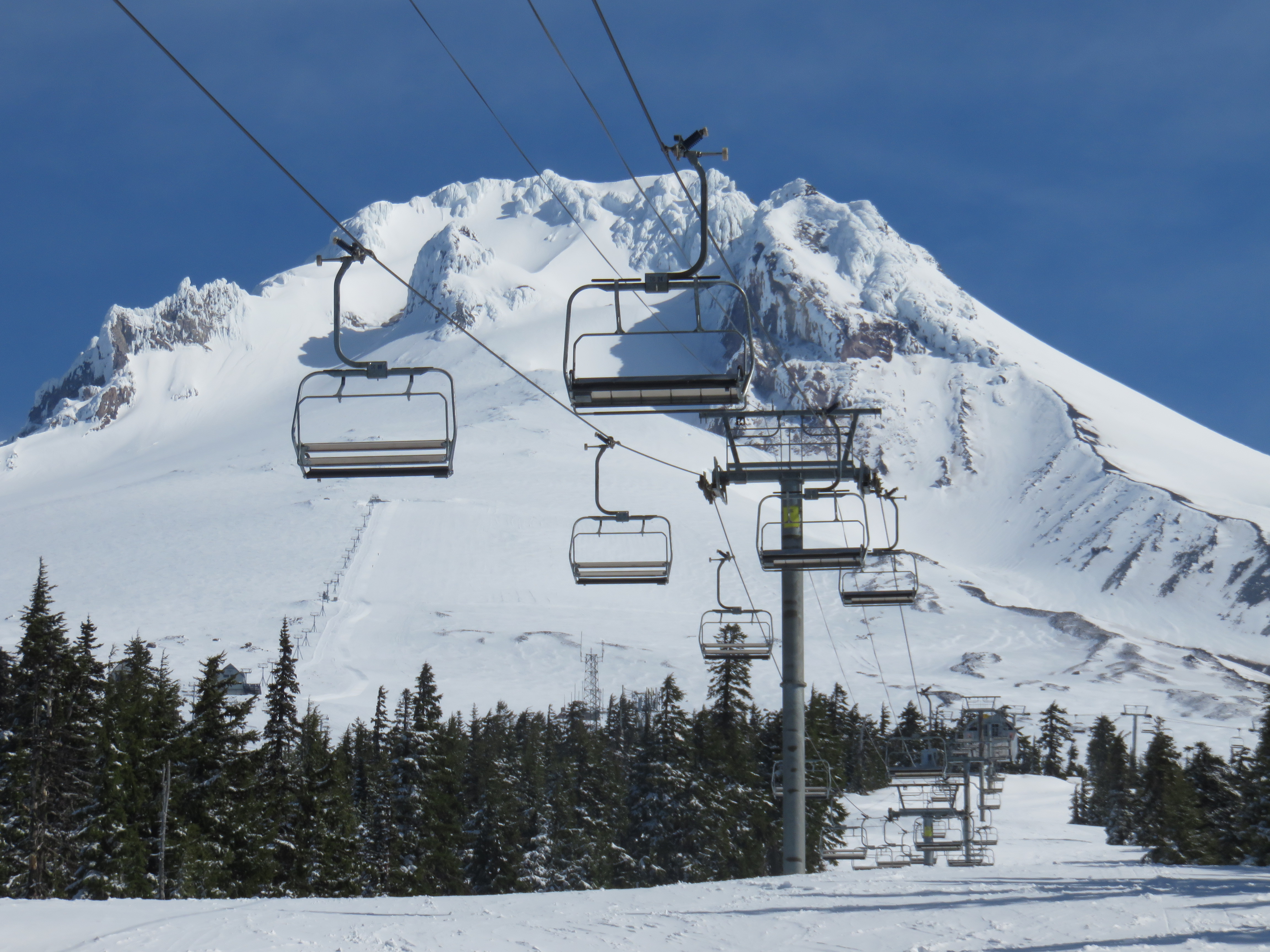
Timberline Lodge & Ski Area is perhaps America’s most unique snowsports destination with year-round skiing on one of the Lower 48’s largest volcanoes. Operated for the last fifty years by RLK & Company on behalf of the U.S. Forest Service, Timberline offers lift-served skiing twelve months a year on 1,400 acres of Mt. Hood.  Two million people visit the Lodge and ski area annually which are under 60 miles from Portland, the tenth fastest-growing city in America.  Timberline’s ski operation expanded in 2007 to accommodate growing numbers of visitors by adding the Jeff Flood Express in Still Creek Basin.  The ski area now has seven lifts with a vertical rise of 3,690 feet, the largest in the Pacific Northwest.

trail-map_timberline-lodge-ski-area_n4535-21718-0_raw
On the left of Timberline’s trail map you can see the old Skyway lift line headed towards Government Camp.

Timberline is also unique in that much of its terrain lies below the Lodge and access road. Visitors drive halfway up the mountain just to leave their car and ski below. Although the mountain offers more alternative transportation options than ever, Timberline’s two-lane access road and relatively small parking lots remain woefully inadequate.  Building more parking at 6,000 feet within a National Historic Landmark is not consistent with RLK’s sustainability goals nor those of the Oregon Department of Transportation and U.S. Forest Service to minimize development around the historic lodge.

Continue reading

Alta Wants a Tram, Chondola & More

Alta submitted some grand plans to the Forest Service last week – 12 projects including at least five new lifts.  The 77-year old ski area wants to replace more than half of its chairs in the next five years and build a low-capacity tram up 11,068′ Mt. Baldy.  If approved and implemented, these would be the biggest changes to Alta’s lift system since the two-stage Collins high speed quad debuted in 2004.

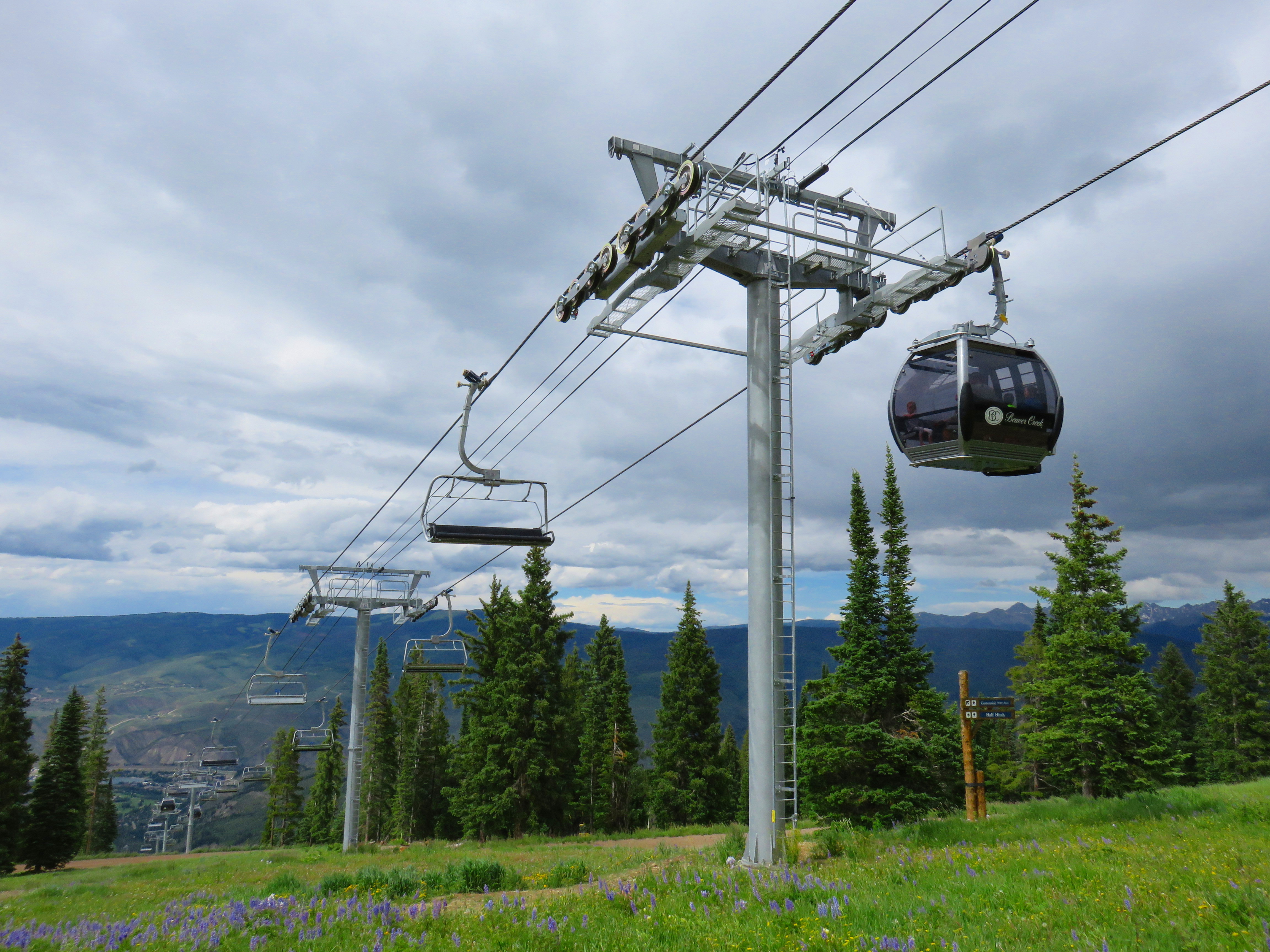
Beaver Creek-style lift coming soon to Alta?
A Beaver Creek-style Chondola coming soon to Alta?

Five lifts would be replaced with three new ones.  Sunnyside, one of only two detachable triple chairs remaining in North America, would be subbed with a higher-capacity Chondola with chairs and gondola or cabriolet cabins.  It would utilize the existing lift line and tower tubes where possible and have a capacity of 2,400 skiers per hour.  Albion, a 1980 Yan double running adjacent to Sunnyside, would be removed without being replaced.

supremeline
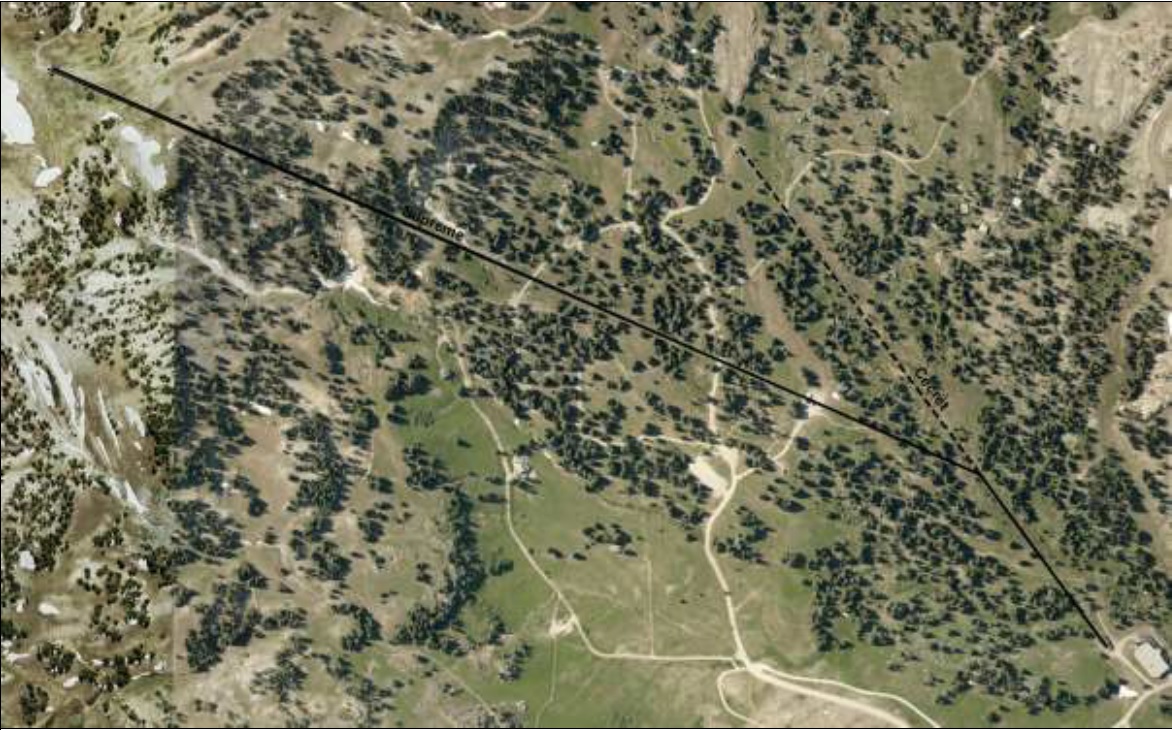
Supreme detachable quad lift line with angle station unloading for beginners.

Higher on the Albion side of the mountain, Cecret and Supreme would be replaced by a single detachable quad with an angle station, much like Collins’ mid-station.  Cecret and Supreme are both Yans built in 1981.  The new detach would follow the first third of Cecret’s current lift line before joining the Supreme line so it could utilize some of the current towers.  With these upgrades, the Albion side of Alta would go from five lifts to three.  That’s before a new lift called Flora is added. Flora would be a short (985 foot) double chair replacing the East Baldy Traverse with a lift to get from the top of Sugarloaf to the top of Collins.  The top-drive chair would move 1,200 skiers per hour out of Sugarbowl and have just four towers.

Continue reading

One Wasatch: How Four Lifts Could Link 18,000 Acres

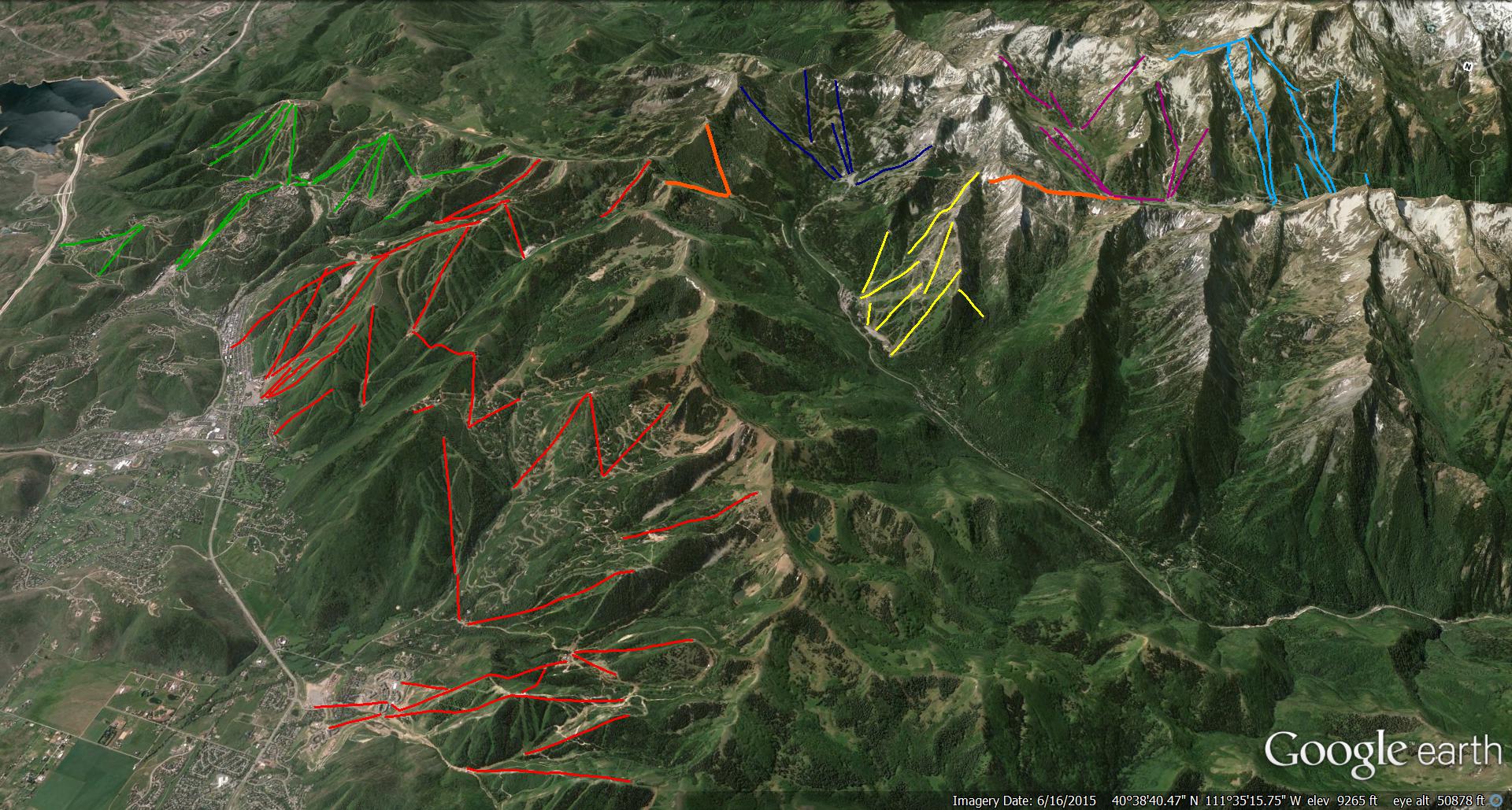
1318848If you’ve never driven over 9,700′ Guardsman Pass in the summer, you might not realize just how close Brighton Ski Resort is to the upper reaches of Park City Mountain. In fact, from Brighton’s fire station to the top of the Jupiter lift is less than 7,000 linear feet. It’s this reality and a similar one in Alta’s Grizzly Gulch that makes Ski Utah’s One Wasatch concept tantalizingly close to becoming reality.  But the feeling that the Wasatch just isn’t that big also has environmental groups scrambling to prevent any more of these mountains from becoming ski runs.  The challenge for Save Our Canyons, the Sierra Club and others is that all the land needed to complete One Wasatch is already in the private hands of Royal Street Land Company (owner of Deer Valley,) Iron Mountain Associates (developer of The Colony) and Alta Ski Lifts Co.

one wasatch overview
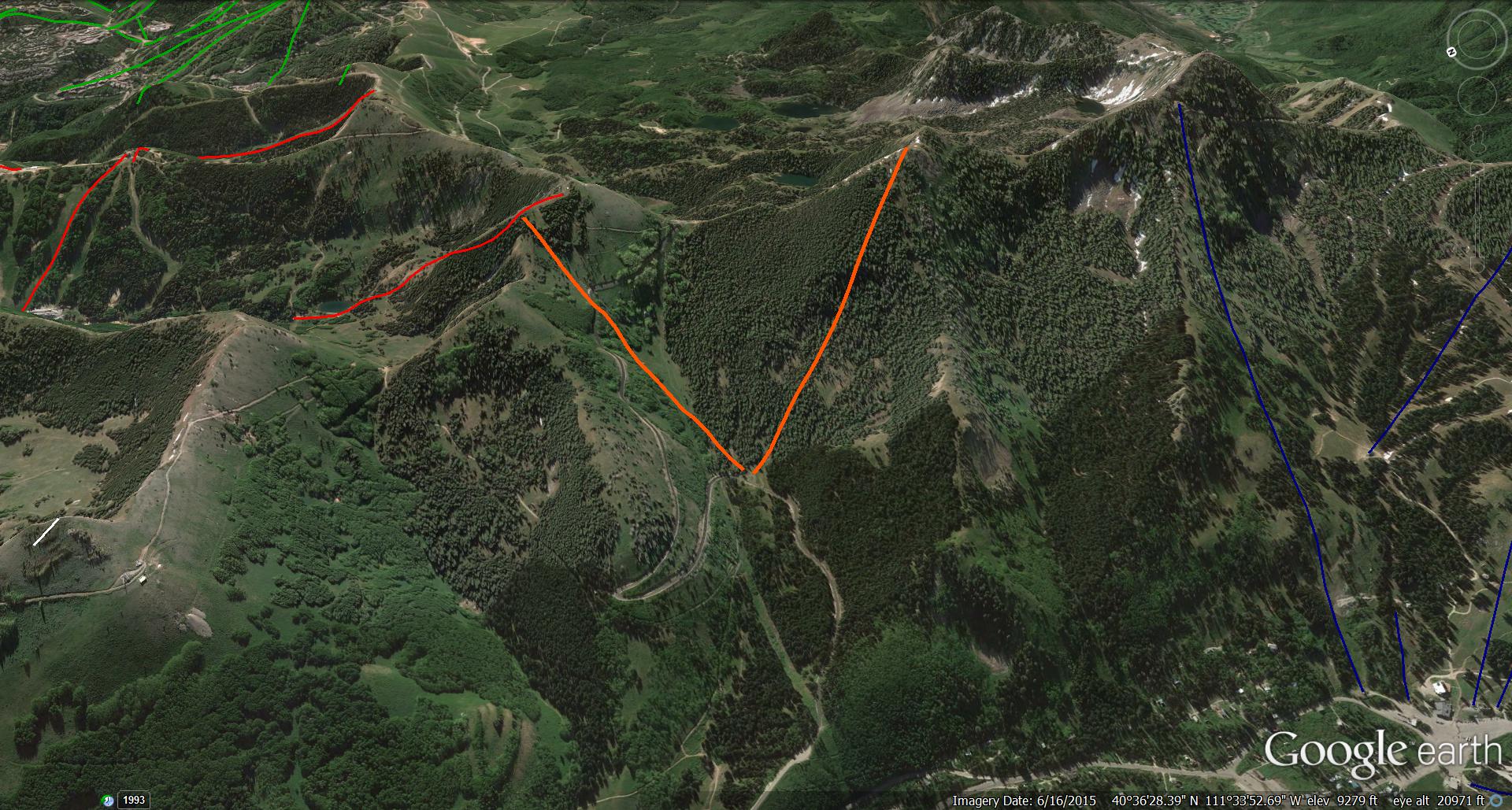
Only four new lifts, marked in orange, would be needed to connect six ski resorts in Utah’s Wasatch Mountains.

Over the Pass

I’m convinced Park City and Brighton will be connected first.  Ski Utah calls the two lifts needed for this connection Guardsman A and Guardsman B.  They would rise from a common point adjacent to Guardsman Pass Road between Brighton and Park City’s Jupiter pod on land owned by Royal Street a.k.a. Deer Valley. Operationally, it would make the most sense for CNL/Boyne to build and operate these lifts as part of Brighton.  Guardsman A, which would need approval from UDOT to cross State Route 190, would likely be a detachable quad approximately 4,065′ long with a vertical rise of 740′ ending near the top of Jupiter.  Guardsman B would rise back towards Brighton and be a detachable quad about 3,800′ long with a vertical of 1,235′.

Guardsman A+B
This view shows the two lifts needed to connect Park City Mountain to Brighton. Guardsman A is on the left and Guardsman B on the right.

Royal Street Land Company has a strong interest in completing the Guardsman connection because it now also owns Solitude.  With Guardsman in place, a Deer Valley skier at the top of Lady Morgan Express could ride 4 lifts (Pioneer and Jupiter at Park City, Guardsman B and Milly Express at Brighton) and be at Solitude in less than an hour.  The return trip would be almost as easy – Summit Express to Great Western Express to Guardsman A and Park City Mountain, which already abuts Deer Valley.  Salt Lake City and Salt Lake County would both need to approve the Guardsman lifts before construction could begin.

Continue reading

Fixed-Grip Chondola Coming to Anakeesta

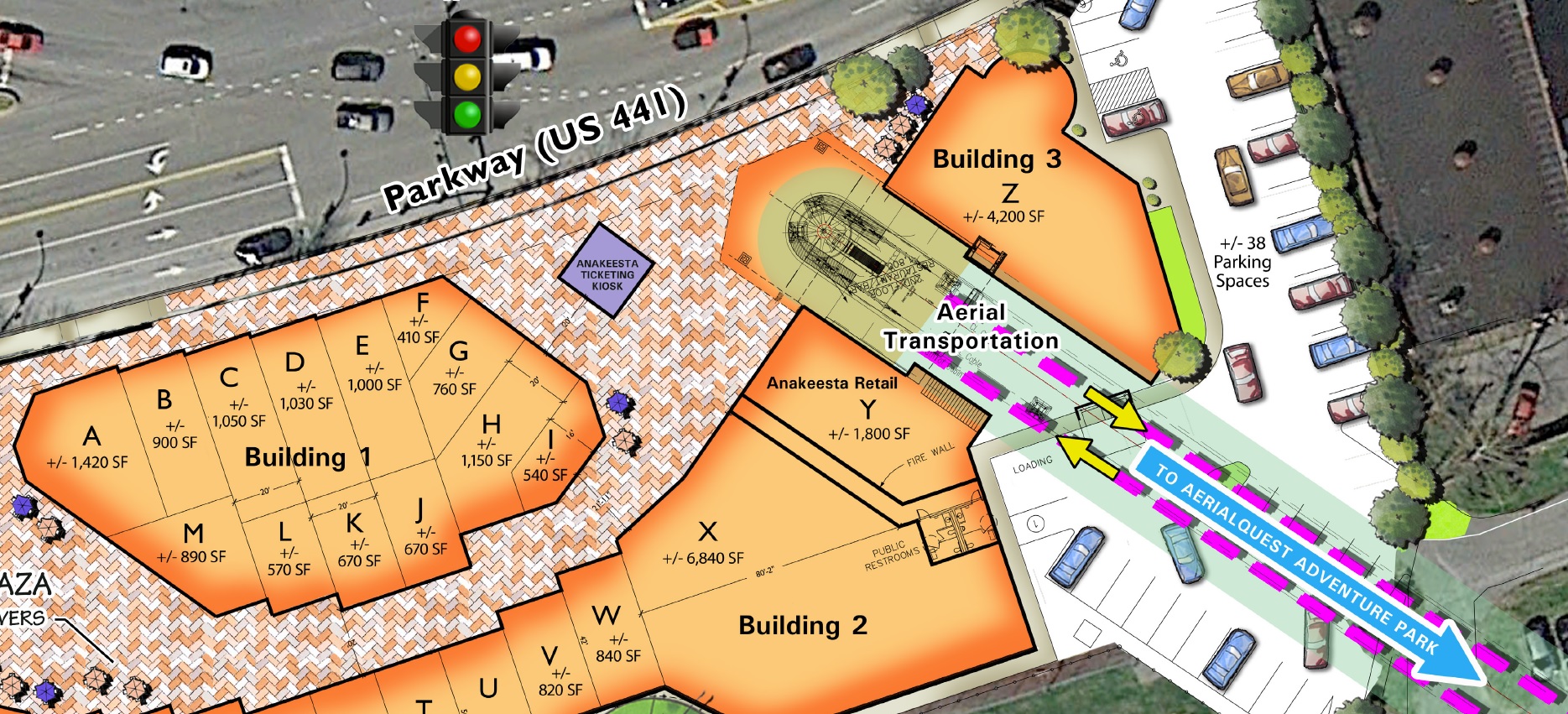
Gatlinburg is a national park border town in Tennessee’s Smokey Mountains that attracts more than 11 million visitors annually.  This city with 4,000 local residents already includes Boyne Resorts’ Gatlinburg Sky Lift and the Ober Gatlinburg 120-passenger aerial tramway. Doppelmayr also built a quad chair in 2012 called the Wilderness Mountain Chairlift in nearby Wears Valley.  Anakeesta is a new project that brings two acres of retail to the center of Gatlinburg with a 65-acre mountaintop adventure park rising above. A unique fixed-grip chondola lift will connect Anakeesta Village with the park, dubbed AerialQuest.

anakeesta village

Anakeesta’s developers were kind enough to provide me with a few details on this unique lift.  I initially assumed it would be a pulse gondola system similar to the Iron Mountain Tramway that serves a mountaintop adventure park in Colorado.  Anakeesta’s chondola will be the first lift of its kind to feature chairs and gondola cabins.  I’m pretty sure no one else has done this anywhere in the world on a fixed-grip lift.  In order to accomplish the feat, line speed will be very slow – under 200 feet a minute.   The system will be 2,032 feet long with a vertical of 528′ and will take about 12 minutes to ride.  It will have 104 quad chairs with 8 six-passenger gondola cabins carrying a total of 1,000 passengers per hour. Since no contract has been signed, the developer is not quite ready to say which lift company they are contracting with.  But if you know your lifts you can identify the terminal in the drawing above.  Anakeesta will open in 2017, crowning Gatlinburg as the lift capital of the southeast!