
Every Tuesday, we pick our favorite Instagram photos from around the lift world.
Construction Underway on New Lifts at Big Sky
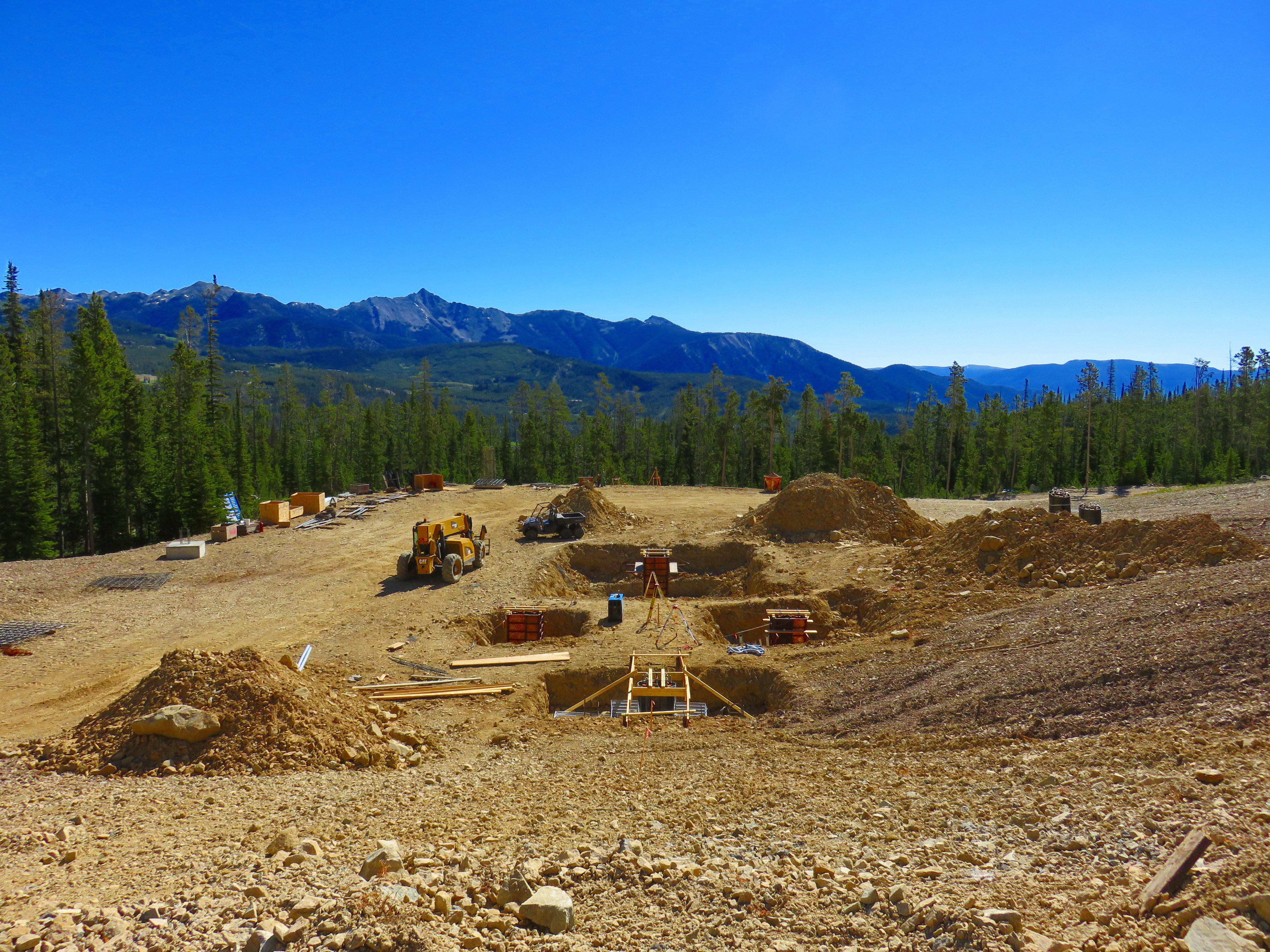
Next winter is going to be huge at Big Sky with a bubble six-pack detachable opening in The Bowl and a new triple chair replacing the legendary Challenger double. Doppelmayr is off to a solid start with terminal and tower footings going in for both lifts. Big Sky is known for its crazy steeps and rocky terrain which makes both projects challenging.
Challenger Triple
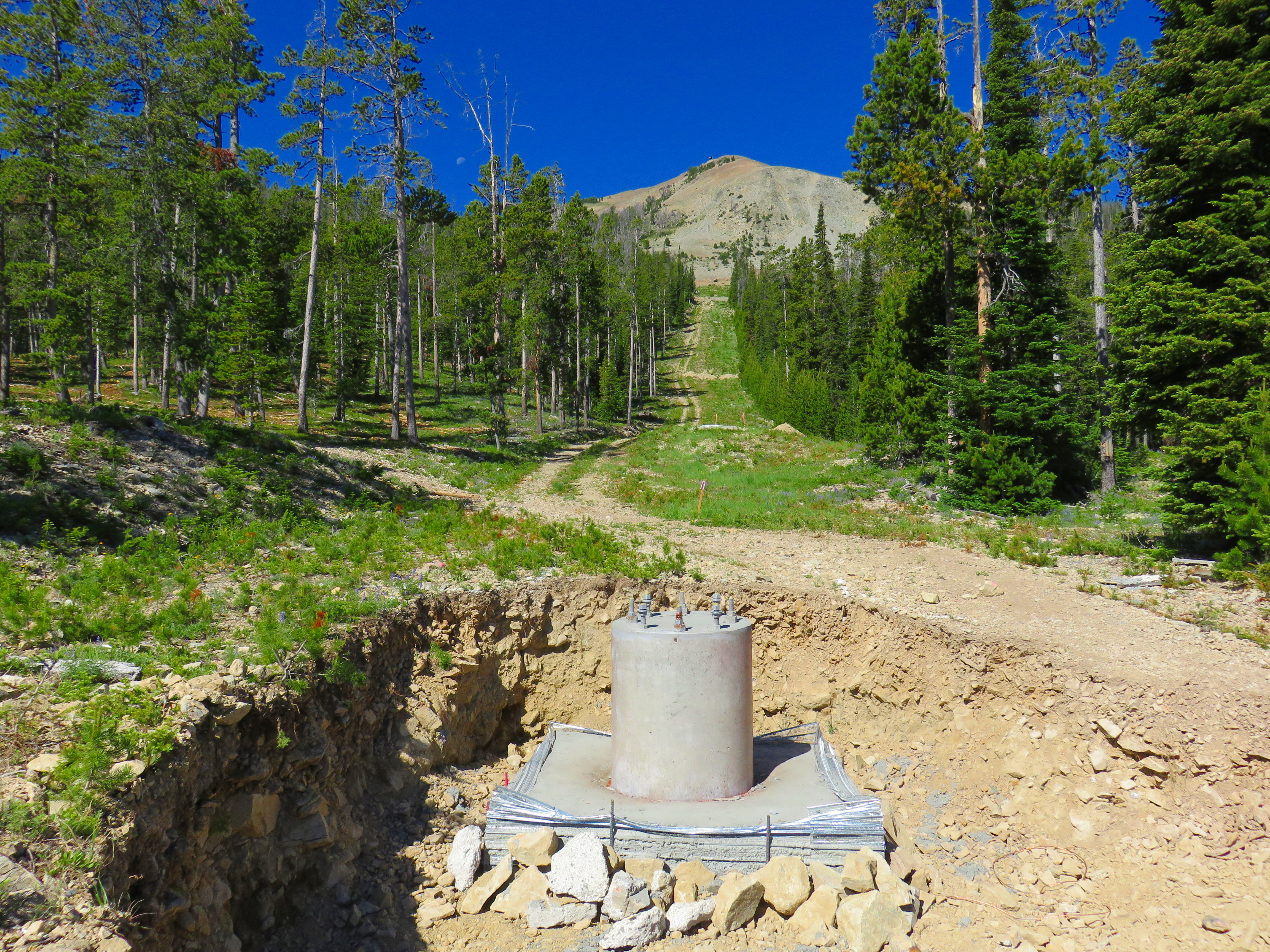
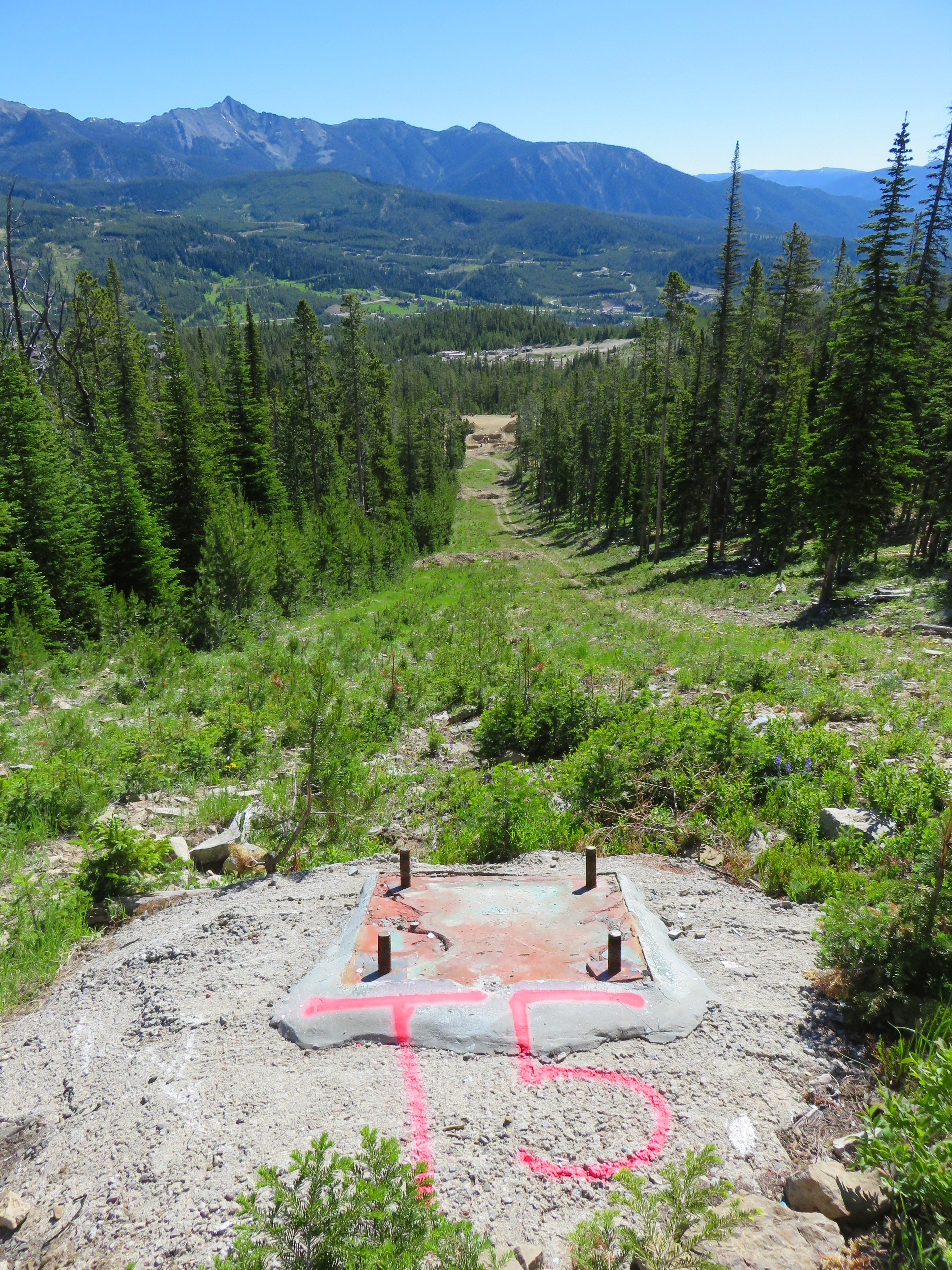
From what I can tell approximately half the old Challenger tower bases from 1988 will be re-used on the new lift. Dyer All Terrain Excavation was working on the upper section of Challenger with a spider hoe today. The only way to the top of Challenger is scrambling on foot or riding the Headwaters chair from the Moonlight side.
Revisiting a Burnaby Mountain Gondola
Burnaby Mountain in Metro Vancouver seems like a textbook site to test cable-propelled transit in a major North American city. Simon Fraser University, with 30,000 students and staff, occupies 200 acres on the western crest of the mountain. A growing neighborhood called UniverCity occupies the eastern hilltop with 5,000 residents. Both are surrounded by parks and conservation lands but are only 1.7 miles from a SkyTrain rail station. The mountain is 985 feet tall and served by a fleet of 48 diesel buses providing more than four million annual transit trips with poor levels of service. Snow cripples transit ten an average of days per year on a hill that 39,000 people will live on by 2030.

In 2010, TransLink commissioned one of the first comprehensive studies pitting ropeway technologies against the status quo and other alternatives in a North American context. One of the world’s largest engineering firms, CH2M Hill, led the team with financial analysis by PricewaterhouseCoopers and technical consulting by Gmuender Engineering and the lift manufacturers. Commercially sensitive sections of the report were never released to the public in order to safeguard a future competitive procurement process, but what was published is a fascinating read for anyone interested in transit or ropeways.
The SkyTrain Millenium Line, opened in 2002, passes 1.7 miles south of SFU at a station called Production Way-University in Burnaby. Commuters wait an average of seven minutes for a bus here, which takes 13-16 minutes to go the less than four miles to SFU. Increased frequencies of already articulated buses would result in proportionally greater emissions, traffic impacts, staffing needs, required layover space and capital costs.
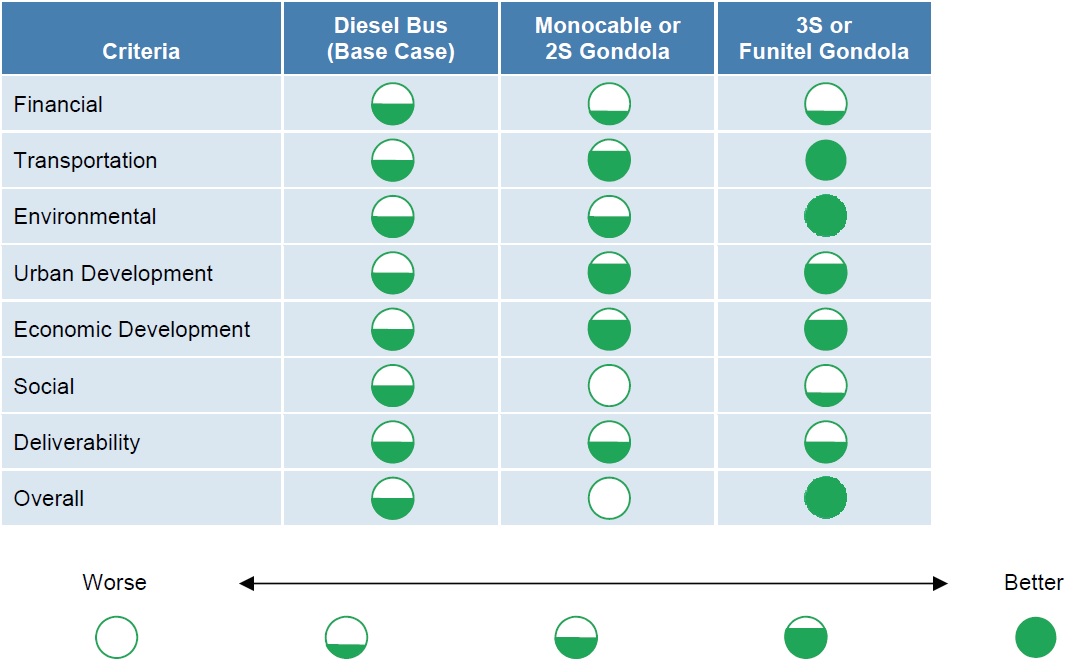
The study looked at a wide range of alternatives – from bus rapid transit (BRT) to light rail, funicular, subway, trolleybus, reversible aerial tramway, monocable gondola, 2S gondola, 3S gondola and funitel. These were narrowed down to three major categories for further study – diesel bus, monocable/2S gondola and 3S gondola/funitel. Other surface alternatives proved too expensive, had significant neighborhood impacts, or both.
News Roundup: Big Week

- Cloudchaser construction begins July 1 at Mt. Bachelor.
- La Paz’s gondola network sets a new daily ridership record – 180,000 passengers on three lines last Monday.
- Poma signs three year partnership with the World Wildlife Fund to promote environmentally-friendly urban cable transport.
- Doppelmayr sponsors exhibition at the Vienna Technical Museum showcasing ropeways in cities.
- Vista Ridge lost a carpet lift and might have to do some extra NDT but came away from the Fort McMurray wildfire relatively unscathed.
- It’s still not entirely clear when Vermont’s only aerial tram will reopen.
- The first LST lift in North America is under construction at Cannon Mountain.
- Local paper gives a progress report on Wilmot Mountain’s Vail makeover.
- Powdr announces Woodward Park City with lift-served downhill mountain biking and terrain parks to be built on 126 acres at Gorgoza Park.
- Powdr also commits to building a new lift at Eldora next summer, most likely the Cannonball six-pack.
- Laurel Mountain hosts a tower flying party.
- The President of Simon Fraser University puts the Burnaby Mountain Gondola back on the table in hopes of replacing 25,000 daily bus trips between campus and Vancouver’s SkyTrain Millenium Line with a 3S.
Instagram Tuesday: Cabins
Giants Ridge Scores $5.7 Million for New Lifts
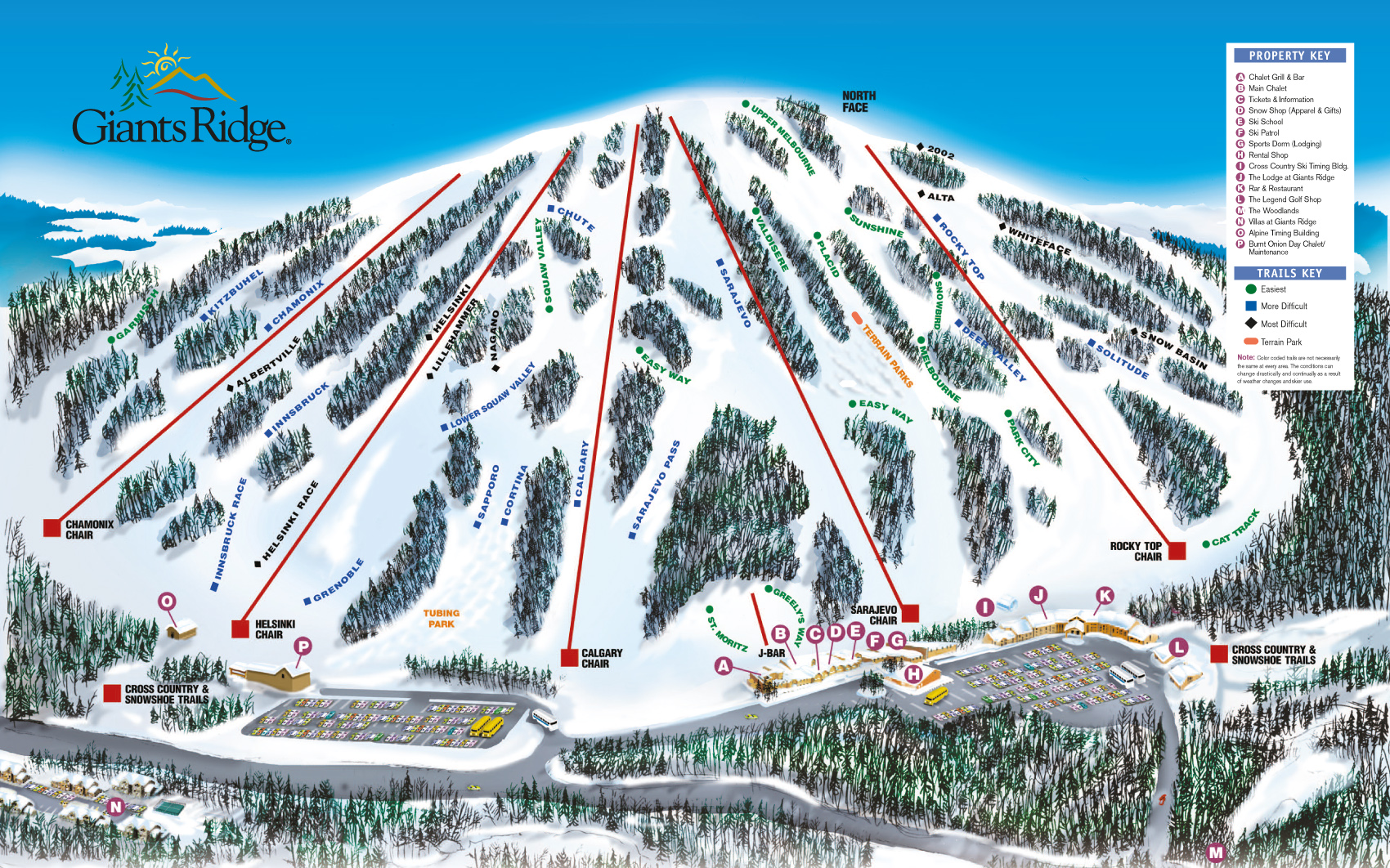
Giants Ridge is about to tackle its aging lifts problem with a huge grant from Minnesota’s state economic development agency. Last Tuesday, the Iron Range Resources & Rehabilitation Board (IRRRB) approved $5.7 million to buy new detachable and fixed-grip quad chairlifts for the 200-acre mountain resort it owns. Giants Ridge’s fleet of five Riblet chairlifts and a Borvig J-Bar date back to 1984, 1987 and 1997. As with hundreds of other small American ski areas, Giants Ridge’s lifts are orphaned, meaning the original manufacturer is no longer in business. Tram Support, Inc. still supplies parts for Riblet lifts but the fact remains that many of these lifts have exceeded their useful life. Giants Ridge Executive Director Linda Johnson told the board, “the company that made our lifts is no longer in business. We can be down for hours and skiers are longing for a high-speed lift experience.”
The IRRRB’s mission is “to promote and invest in business, community and workforce development for the betterment of northeastern Minnesota, providing vital funding, including low or no interest loans and grants for businesses relocating or expanding in the region.” The board bought Giants Ridge outright in 1984 to enhance the quality of life and create jobs for the people of the Iron Range. This news is a win-win for a ski operation that generates an estimated $43 million in community economic impact each year. Of course, not everyone is happy about the government owning a ski area that’s lost more than $40 million. There is a middle ground, however, between government ownership of ski areas and private mountains going out of business. The National Ski Areas Association is currently at work on an initiative urging governments to provide low- or no-interest loans to ski areas investing in infrastructure such as the replacement of older lifts. It’s really no different than state governments providing economic incentives for manufacturing plants or call centers.
The new Calgary Express high speed quad at Giants Ridge will reduce a 5.6 minute ride to 2.3 minutes. A fixed-grip quad will replace a second lift but it’s unclear which one (educated guess is the Helsinki double.) Both new lifts will be completed by November 2017 and there’s no word yet who will build them.
Beartooth Basin Summer Ski Area Lives On Despite Setbacks

In a stunning alpine setting along the Beartooth Highway in Northwestern Wyoming sits the summit of one of America’s most unique ski destinations. “You could call it backcountry skiing with a lift,” proclaims the website for Beartooth Basin Summer Ski Area. Located at 10,900 feet between Red Lodge, Montana and the Northeast Entrance to Yellowstone National Park, Beartooth Basin is the only ski resort in North America that opens for summer but not winter. To give a sense of the environment we’re talking about, the parking lot sits 450 feet higher than the top of the Jackson Hole Tram, 115 miles and two national parks to the southwest. I made some turns this spring in Beartooth Basin to check out the lifts shortly after the pass reopened Memorial Day weekend.
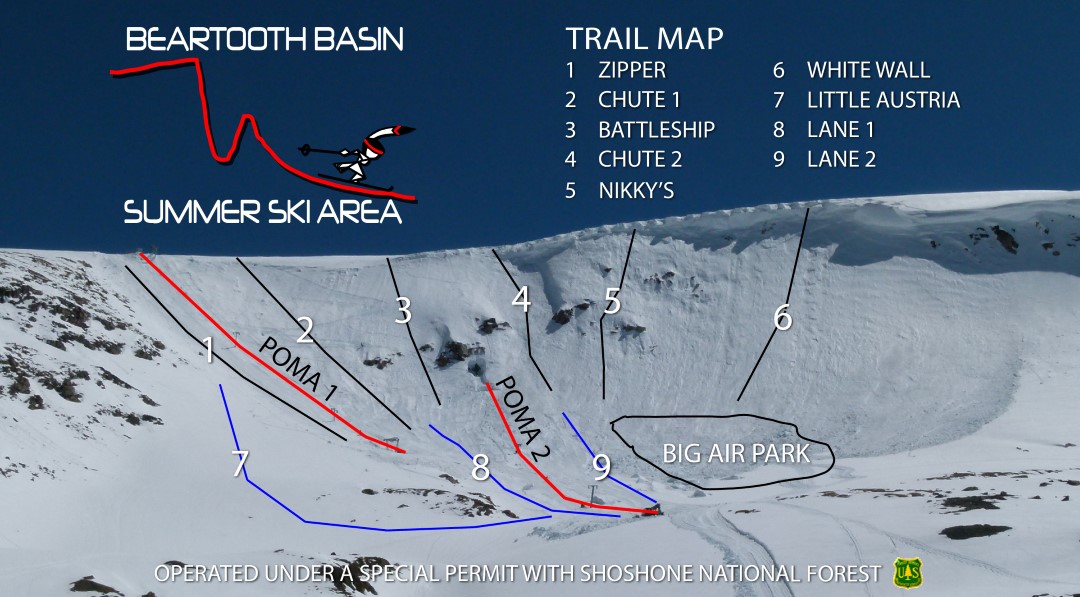
In good times, Beartooth Basin offers 900 vertical feet of skiing on six hundred acres serviced by two platter lifts that generally spin late-May through mid-July. But everything here is subject to exception rather than rule and it hasn’t snowed enough for Beartooth Basin to open the past two years. Even in good seasons, storms close the road and ski area, subjecting it to the whims of National Park Service plowing. In 2005, the highway never even opened. Despite years with too much snow, others without enough snow and still more with landslides, the dream lives on for the love of skiing.
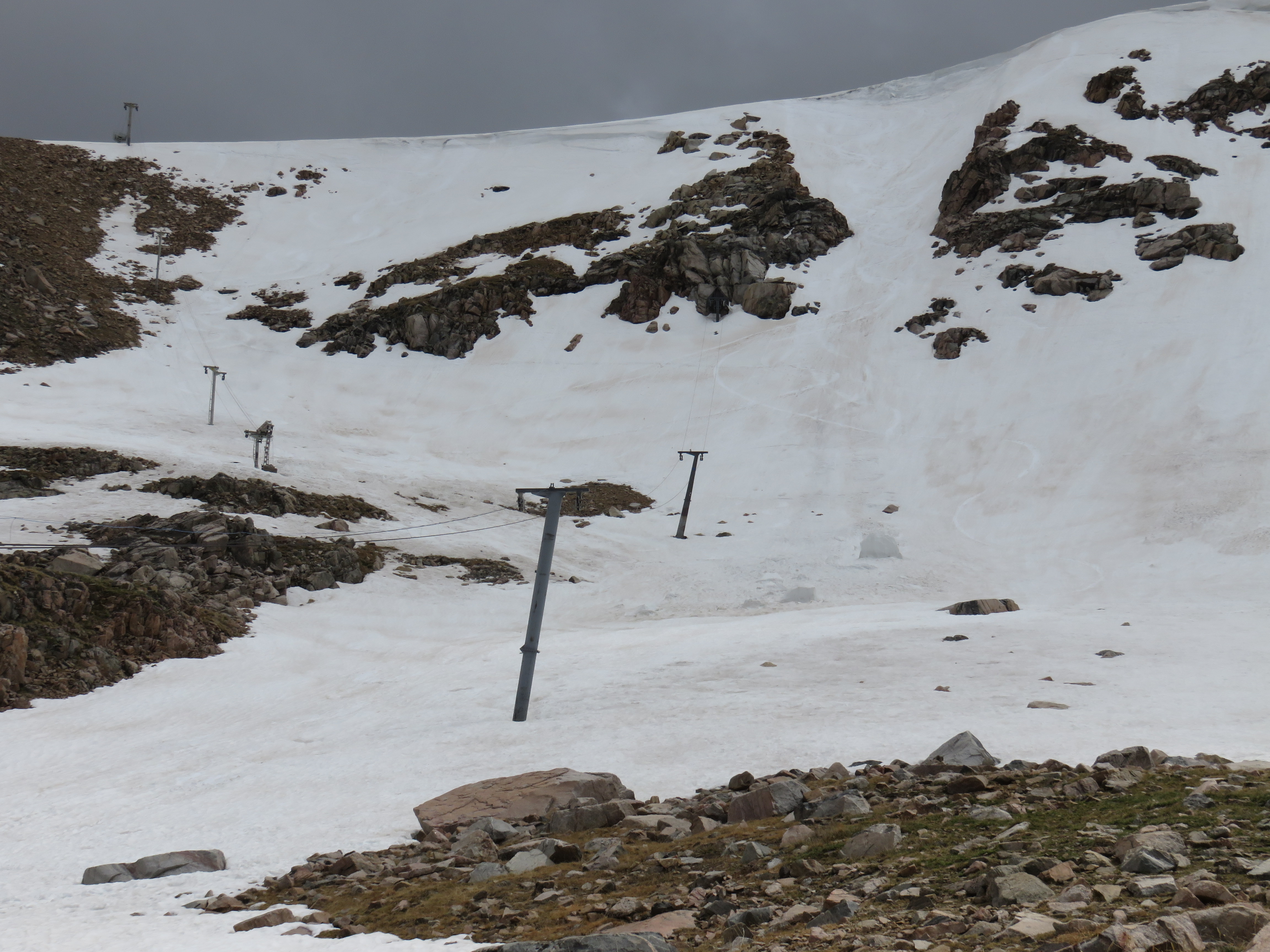
Pepi Gramshammer of Vail fame created Red Lodge International Race Camp with help from fellow Austrians Eric Sailer and Anderl Molterer in 1967 with the purchase of a portable Poma from Jean Pomagalski. Named for the closest town in Montana, the ski area actually lies just across the border in Wyoming. A permanent Doppelmayr platter was added in 1983 with another one following in 1984. Five Red Lodge locals purchased the mountain from the original ownership group in 2003 and renamed it Beartooth Basin.
Jay Peak Nears Tram Reopening with Upgrades Planned for 2017
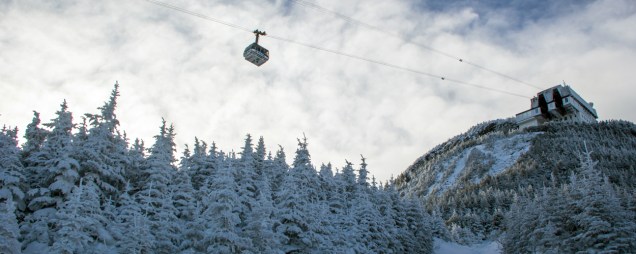
Jay Peak Resort broke the silence today on its tram issues following a federal takeover in April and an order from the State of Vermont in May prohibiting operation without major upgrades to the 50-year old tram. Since those events and now under control of a receiver, the resort worked with the State Tramway Division on a plan to re-open the tram early this summer and schedule major upgrades for next spring, which is great news for employees and skiers. Jay Peak personnel, together with a tramway specialist from Doppelmayr/Garaventa and state inspectors, completed a load test and inspection of the tram this week. They found a crack in a component of one carriage that will be replaced next week before the tram reopens. $5 million worth of upgrades to the lift’s tower saddles, carriages, hangers, brakes and safety systems will take place after the ski area closes next Spring. See Jay Peak’s full statement below.
June 16, 2016 (Jay, VT)- Jay Peak Resort recently completed a three-day inspection of its aerial tram. The resort, in cooperation with the state, flew in an aerial tramway specialist and worked with state inspectors to examine the tram and its operating systems. Inspectors conducted a successful load test designed to ensure that all of the conveyance’s electrical, hauling and braking systems can function normally under strenuous conditions. After passing the load test, resort personnel successfully completed and passed an evacuation drill. The team also inspected the tram’s towers and its bolting structures. All were found to be operating normally.
Inspectors did find on the last day of the inspection a hairline crack to one of the components of one of the tram carriages. That part will be removed and replaced next week. After that work is complete, state officials will return for a final review.
“We’re happy the inspection process has gone so smoothly,” remarked Steve Wright, Jay Peak’s General Manager. “The resort has a long history of cooperation with the state’s lift inspectors and it’s their rigor and responsiveness that has allowed this process to move so efficiently.”
The resort recently signed a $5 million contract with the Doppelmayr/Garaventa Group to conduct custom upgrades to the tram, but that work isn’t scheduled to begin until the spring of 2017 and is not required for operations this summer or for the coming winter.
Wright said Doppelmayr/Garaventa will begin work on the enhancements shortly as the improvements are all customized and will take approximately 12 months to complete. Installation of the upgrades will begin in the spring of 2017.
News Roundup: Six-Packs
- Mt. Snow becomes the latest mountain to replace a chairlift with a beginner-friendly carpet lift.
- New construction webcams are live at the Leitner 3S Matterhorn Glacier Paradise project.
- Skier visits in Colorado were up 13.9 percent last season, Vermont was down 32 percent.
- County approves The Balsams redevelopment.
- Baton Rouge, Louisiana is still eyeing gondolas.
- Stunning photos from inside the new Eisgratbahn 3S stations.
- Sipapu is upping the power on its new quad chair.
- Leitner-Poma will build three new lifts in Ontario this summer including a six-pack at Horseshoe Resort.
- Telluride’s Mountain Village Gondola turns 20 this year with celebrations planned. The gondola has over 100,000 hours and provides 2.5 million rides each year!

 Lift Blog