Top Ten Biggest Lifts in North America by VTFH

Vertical transport feet per hour (VTFH) is the best way to measure how lifts move people up mountains.  VTFH combines hourly capacity and vertical rise into one number, usually measured in millions.  Ski Area Management uses this metric each fall when they look at how good of a year it was for the lift-building business.
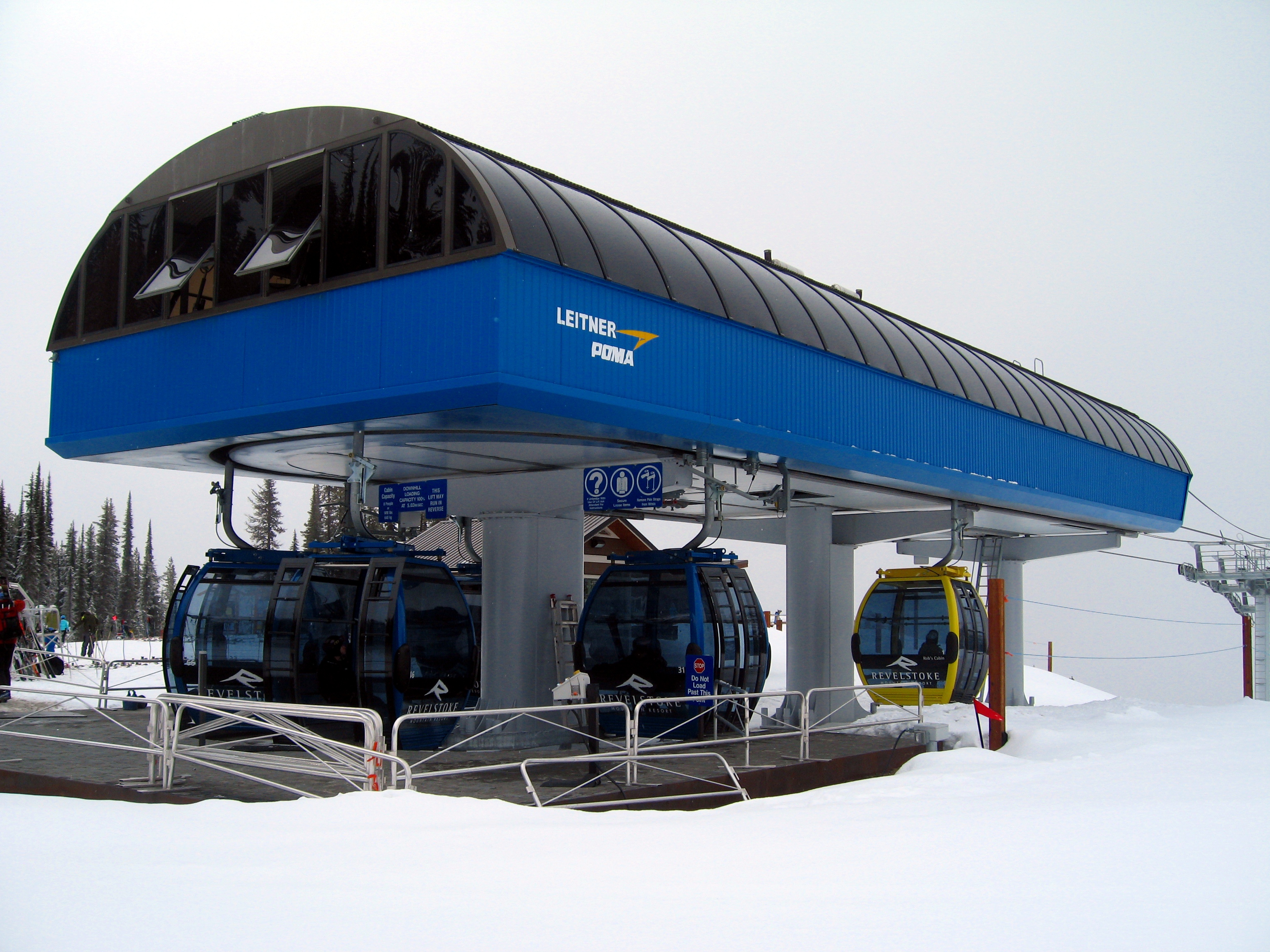
The second stage of Revelstoke's Revelation Gondola has a VTFH of over 8 million, the highest in North America.
The second stage of Revelstoke’s Revelation Gondola has a VTFH of over 8 million, the highest in North America.

For a lift to score big it has to have a high hourly capacity (think lots of carriers, high speed) and large vertical rise (think big slope length with many towers.)  The Jackson Hole tram has a huge vertical (over 4,000′) but very low capacity so its VTFH is only 2,654,600 – not even in the top 400.  The Peak 2 Peak Gondola has a huge capacity but only rises 119 feet for a dismal VTFH of 243,950.  There are 49 lifts in the US and Canada that move enough people high enough to achieve a VTFH over five million.  Below are the top ten.

1. Revelation Gondola Stage II, Revelstoke Mountain Resort, British Columbia

2007 Leitner-Poma 8-passenger gondola

2,952′ vertical x 2,800 passengers per hour = 8,265,600 VTFH

2. Gold Coast Funitel, Squaw Valley, California

1998 Garaventa CTEC 28-passenger funitel

2,000′ vertical x 4,032 passengers per hour = 8,064,000 VTFH

3. Heavenly Gondola, Heavenly Mountain Resort, California

2000 Doppelmayr 8-passenger gondola

2,874′ vertical x 2,800 passengers per hour = 8,047,200 VTFH

4. Gondola One, Vail Mountain, Colorado

2012 Leitner-Poma 10-passenger gondola

1,996′ vertical x 3,600 passengers per hour = 7,185,600 VTFH

5. Centennial Express, Beaver Creek Resort, Colorado

2014 Doppelmayr 6/10 chondola combination lift

2,102′ vertical x 3,400 passengers per hour = 7,146,800 VTFH
Continue reading

Up and Over Lifts

What if you could build two lifts for the price of one longer lift?  A handful of ski areas have done it with “up and over” lifts.  With this setup, riders load at each end and unload at a ridgetop mid-station.   There are obvious cost advantages but also limited locations where such a lift makes sense.  Due to multiple load/unload areas more stops and slows can occur.  Another disadvantage is that the entire system has to run even if only one side is open.  Most up and over lifts are located in the Pacific Northwest.

Ray's lift at Sundance, UT.
Ray’s lift at Sundance, UT.

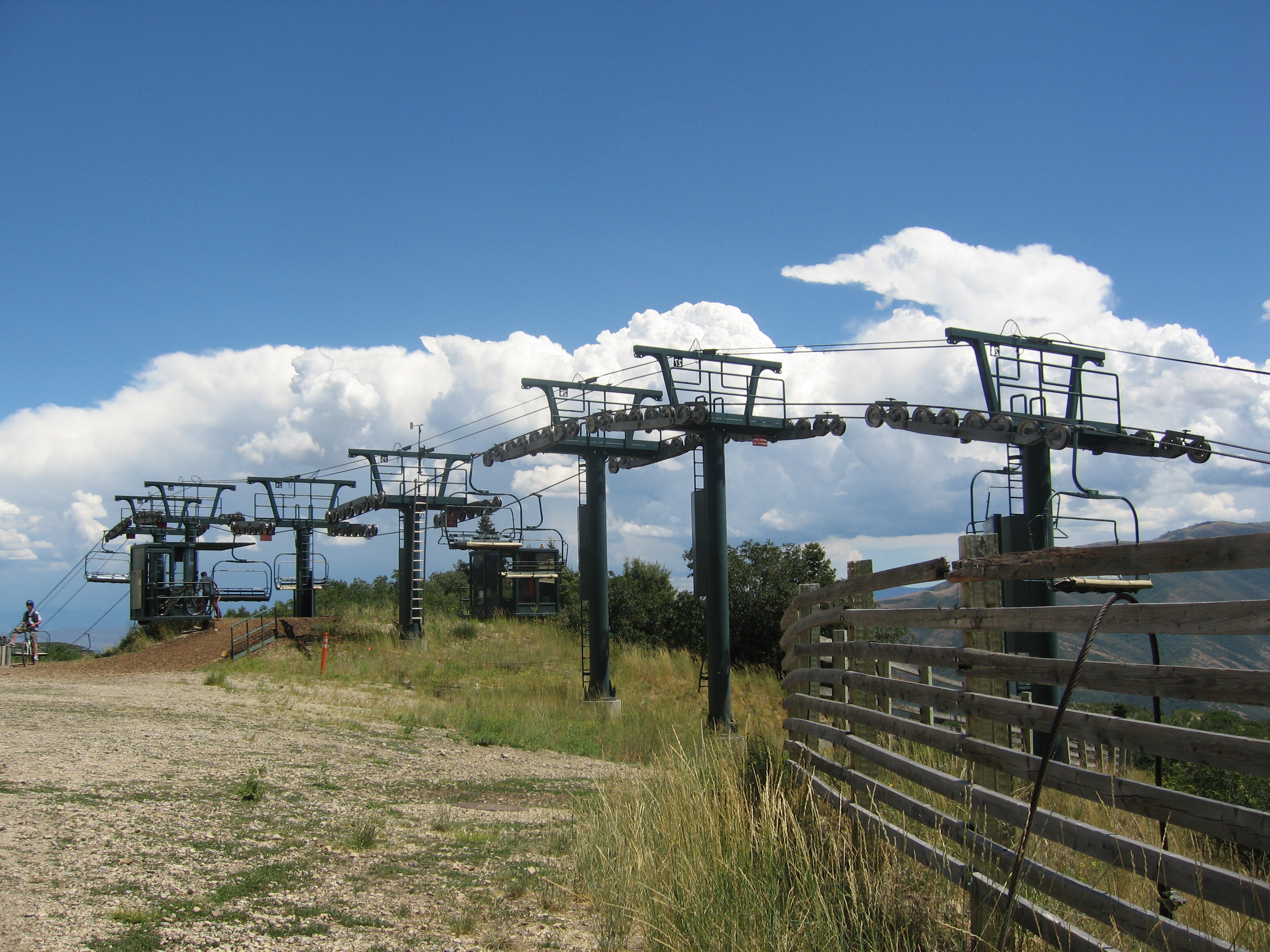
Robert Redford’s Sundance Resort built a CTEC up and over quad in 1995 to replace two lifts.  Skiers who load Ray’s Lift in the main village can unload at the Mont Mountain summit or continue down the other side to the base of the Arrowhead lift.  Guests can also load at this end to ride back up to the mid-station.  Ray’s lift is a beast – depending on the season it has eight different load/unload points, five lift shacks with controls and 33 towers.

Stevens Pass considers its Double Diamond/Southern Cross system as two separate lifts.  Skiers load at both ends and unload on two ramps at the summit which are monitored by one operator.  The front side portion, called Double Diamond, is short and steep while the rest of the lift is on the Mill Valley side and dubbed Southern Cross.  This system was also built by CTEC in 1987.  The combined lift is 5,700 feet long and moves 1,200 people per hour up each side.

One operator oversees two unloading ramps from high above at Stevens Pass.

Perhaps the most famous of the up and over lifts is the Dinosaur at Snoqualmie’s Hyak.  It was built by Murray-Latta in 1965.  Over 5,000 feet long, it started at the base of Hyak, crossed the summit and continued down into Hidden Valley.  This one lift accessed 100% of the resort’s terrain on both sides of Mt. Hyak.  The lift had a rollback in 1971 that injured dozens of skiers.  The Dinosaur continued to run until 1988.  When it closed, large portions of Hyak became abandoned.  The Dinosaur sat idle until was removed in 2009 and replaced with two used Riblet lifts, a triple on the front side and a double in Hidden Valley.

Continue reading