The 2015 Doppelmayr Worldbook is out! It’s 150 pages of statistics and pictures of the 83 lifts Doppelmayr and Garaventa built last year. The book comes out every spring and the last seven of them are available online.
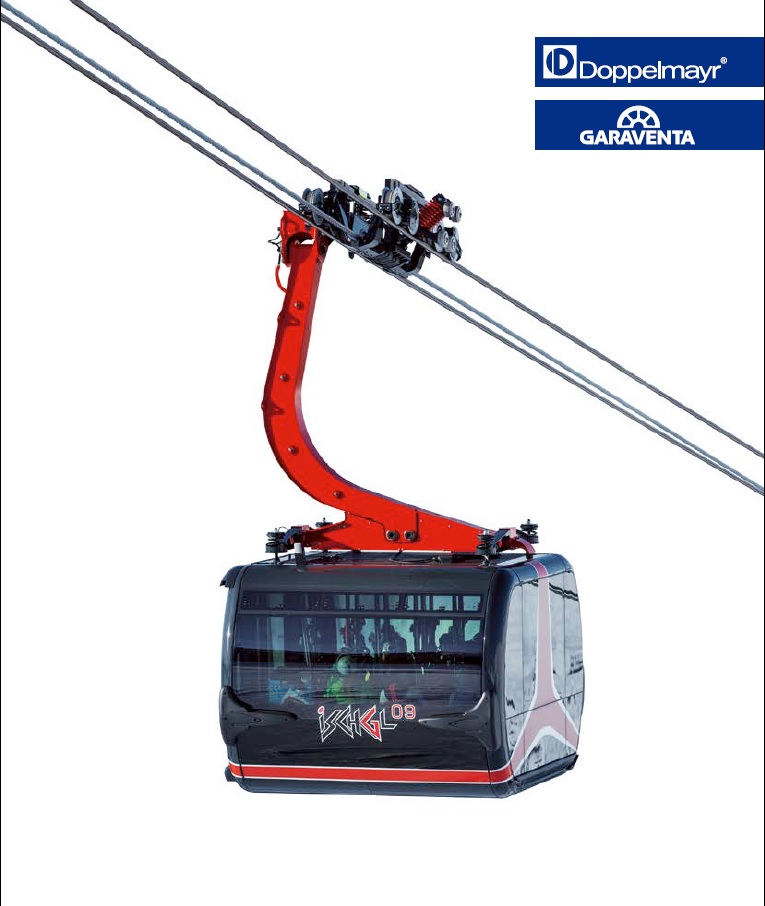
CWA’s new Titlis cabin is on the cover.
Some of the projects I found interesting:
Universal Studios’ Hogwarts Express, a modern funicular designed to look like a train from Harry Potter.
Oakland’s airport connector which is the first Doppelmayr CableLiner Shuttle to have multiple haul ropes and detachable cars. $484 million buys a pretty cool train.
Three gondolas in China including one to the Great Wall with heated seats.
The world’s longest chondola at Beaver Creek (also the first with 10 passenger cabins.)
Maine newspaper digs deeper into ski lift safety in the wake of Sugarloaf’s 2 major incidents. Be sure to check out the bottom of the page which has inspection records for every lift in Maine.
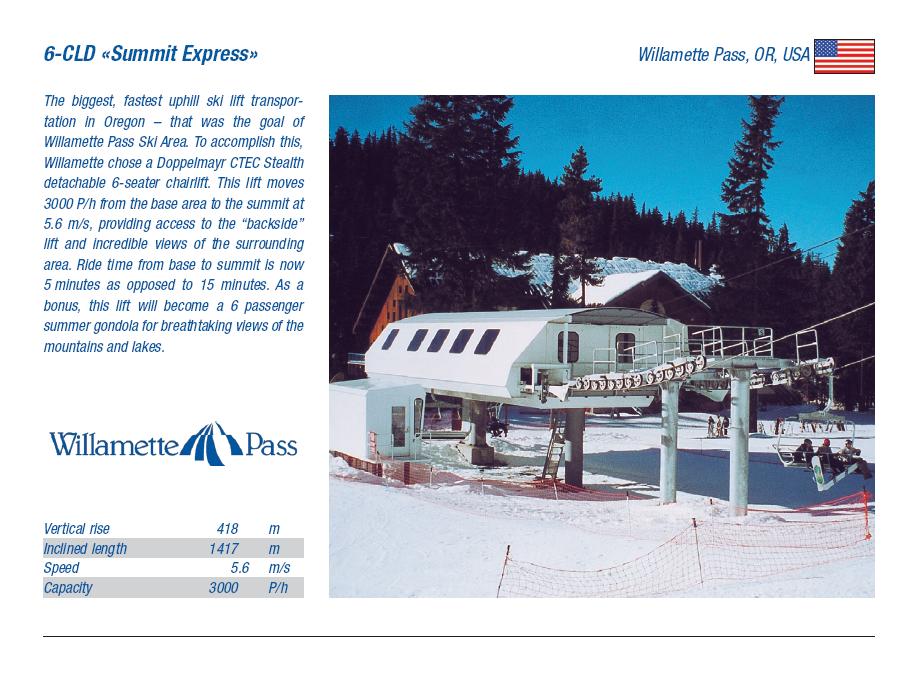
This week, we learned Willamette Pass in Oregon has put their base-to-summit six-pack up for sale for $2.65 million. The Eagle Peak Accelerator was built in 2002 by GaraventaCTEC for $3.5 million. After three terrible seasons in a row, the ski area says it can no longer afford to operate such an expensive lift. This winter, Willamette Pass got 7 percent of its normal snowfall and essentially didn’t operate. The plan is to buy or trade the detachable for a fixed grip lift and reuse the existing tower tubes. If this happens Willamette Pass will become the first resort in North America to remove a six-pack. (Mount Washington on Vancouver Island might not be far behind – they have a similar lift and barely opened the last two winters.)
The “biggest, fastest uphill transportation in Oregon” may go away.
The list of “lost” detachable lifts is short. Ascutney Mountain in Vermont spent $2 million to build the North Peak Express in 2002 but went into foreclosure in 2010 and never reopened. Creditors sold their flagship lift to Crotched Mountain, NH and SkyTrac moved it there in 2012.
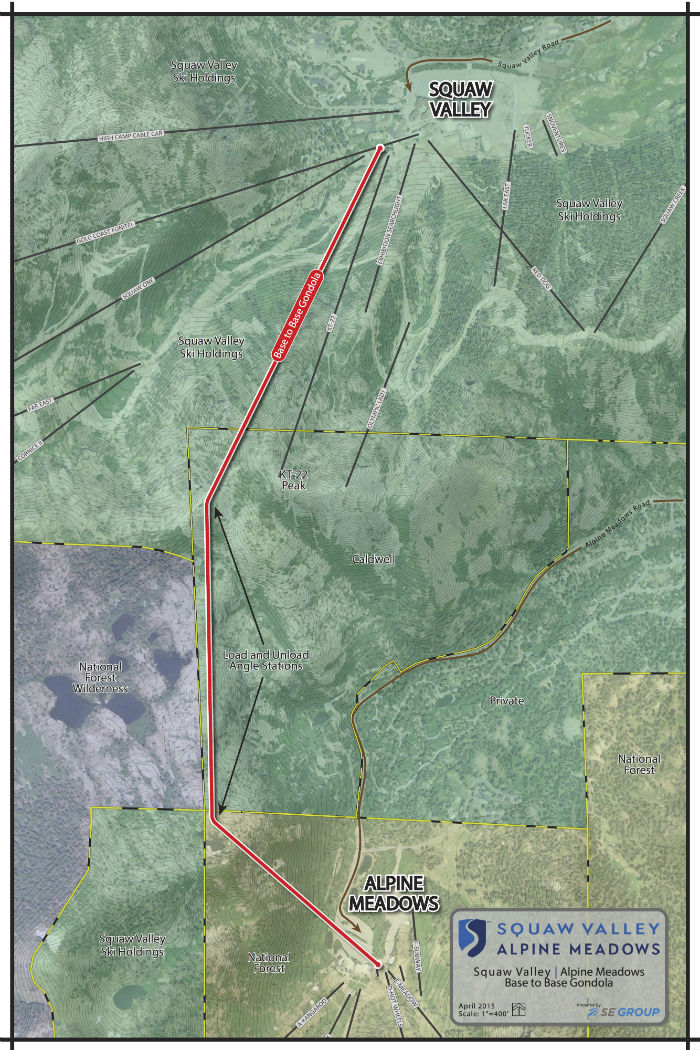
This week Squaw Valley and Alpine Meadows announced plans for a base-to-base interconnect gondola. Such a project has been likely ever since Squaw and Alpine merged in 2011. The gondola’s alignment will include two angle stations with skier unloading – one below the summit of KT-22 at Squaw and the other on the ridge above the Alpine Meadows base area. The two end sections will be within their respective ski areas and able to run independently of the middle stage.
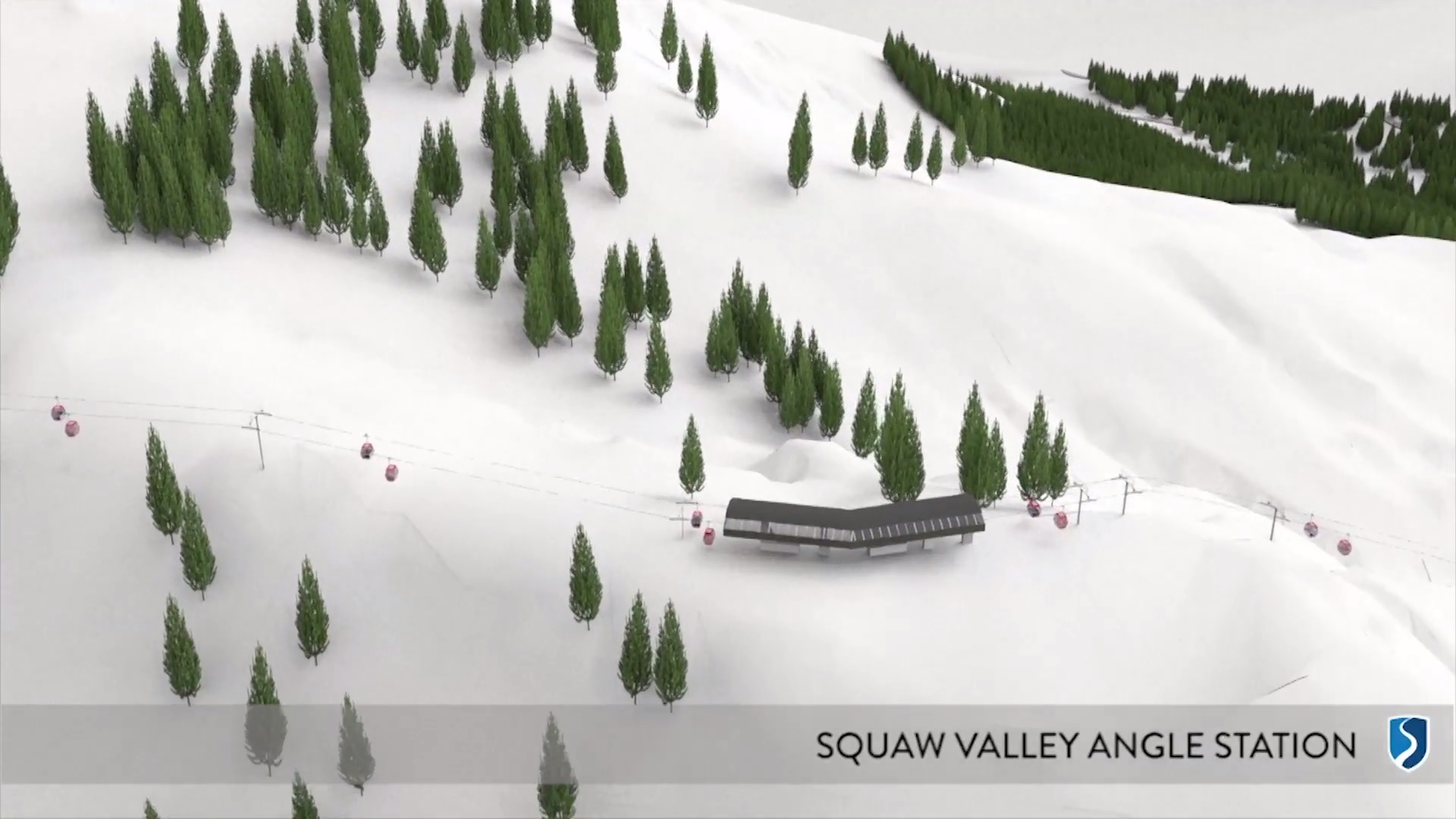
Rendering of the Squaw Valley angle station near KT-22.
It took Squaw four years to come up with this plan in part because the gondola will cross land owned by three different entities. The Squaw section will be mostly on private land owned by Squaw Valley Ski Holdings. Just before the first angle station, the alignment will cross into land known as White Wolf owned by Troy Caldwell. You may remember Troy began building a private lift on his property a few years ago. So far only the towers have been completed. One thing that many people don’t realize is that the top terminals of the KT-22 and Olympic Lady lifts are already on his property. We will never know how much Squaw Valley Ski Holdings pays Troy Caldwell to lease this land but I am sure it is a lot. The second midstation and all of the Alpine Meadows section will be in the Tahoe National Forest.
Map of the proposed gondola alignment.
This would be the first gondola in North America with the ability to run three sections independently. Breckenridge’s BreckConnect has two angle stations but only one drive and haul rope. Examples of gondolas with two independent sections are the Whistler Village Gondola and Revelstoke’s Revelation Gondola although these resorts rarely run sections independently. Killington sometimes runs just the upper stage of its Skyeship Gondola.
As proposed, the base-to-base gondola will be about two miles long and take 13.5 minutes to ride. Capacity will be a relatively low 1,400 skiers per hour in each direction with 8-passenger cabins. Squaw’s CEO, Andy Wirth, noted they are in talks with both Doppelmayr and Leitner-Poma. Squaw has never had much brand loyalty – They built a Doppelmayr six pack in 2007 and an L-P one in 2012. Before any contract is signed Squaw needs approval from the Forest Service and county which could take a few years. In the meantime they could really use a good snow year or two!
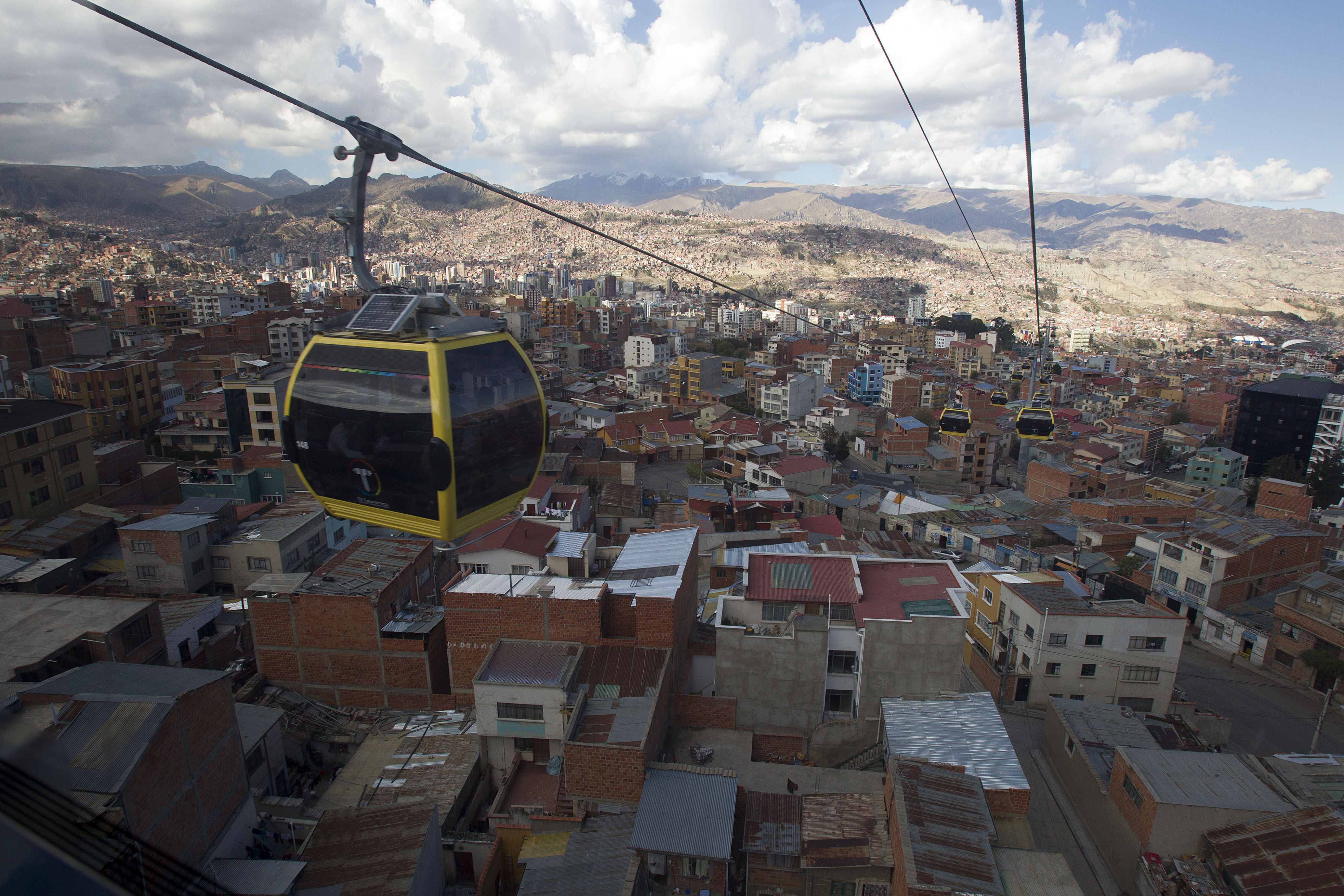
There is a ropeway revolution going on in the Bolivian city of La Paz. Last month, Doppelmayr won the largest lift construction contract in history to expand the region’s urban gondola network. The government of Bolivia will pay $450 million for six new 10-passenger gondolas. To put it in perspective, Doppelmayr’s total revenue last year was $915 million. The company says 80% its business still comes from building lifts at ski resorts but that seems poised to change with La Paz as an urban ropeway success story.
La Paz’s Yellow Line. Photo credit: Doppelmayr
La Paz already has three Doppelmayr gondolas that opened last year. They have already carried more than 16 million people. Each line operates 17 hours per day and a ride costs less than fifty cents US. There are 11 Uni-G terminals where passengers load and unload. The only major incident happened when a eucalyptus tree fell on the yellow line back in February, causing a deropement and rope evacuation.
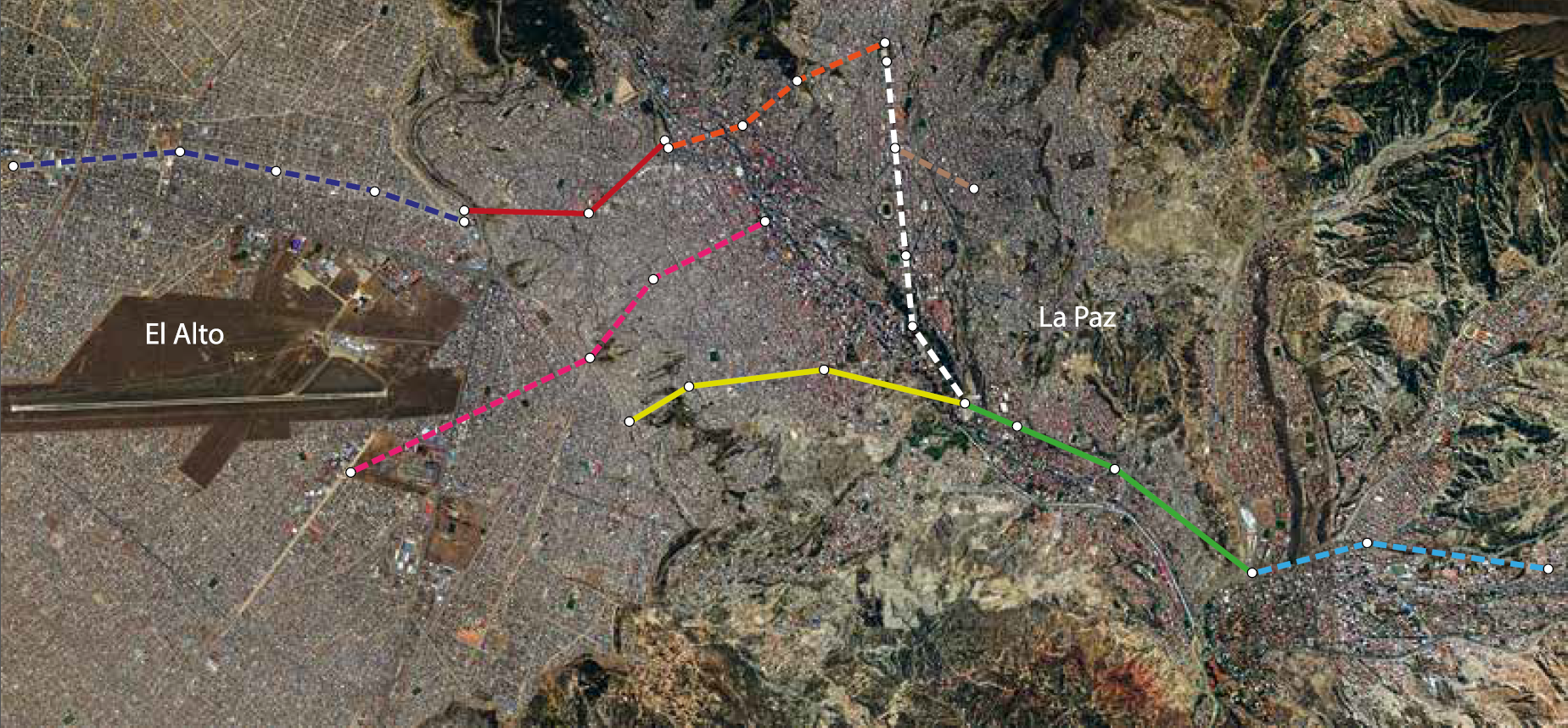
Map showing Phase I and Phase II gondola lines.
Phase II of the system will add 6 lines and 23 terminals between 2017 and 2019. Once completed, the network will include 19 miles of gondolas spread across 9 haul ropes. There will be a total of 34 stations and a ridiculous 1,350 CWA 10-passenger Omega cabins.
There are plenty of examples of urban ropeways scattered around the world, but no other city has gone all in on gondolas like La Paz. It will be interesting to see if any American cities follow their example.
Yesterday was the last day anyone will ever ski at a place called Canyons Resort. For those who have been living under a rock, most of the land that both resorts sit on has been owned by Talisker Corporation for decades. Most of that time Canyons was operated by American Skiing Company and Park City by Powdr Corporation. In 2013, Vail Resorts came to Utah, signing a long-term deal with Talisker to operate Canyons. Two years earlier, Powdr Corp. had forgotten to renew their lease to the Talisker land that PCMR sits on. Talisker evicted them and after a lengthy legal battle, Powdr Corporation sold Park City Mountain Resort to Vail last September.
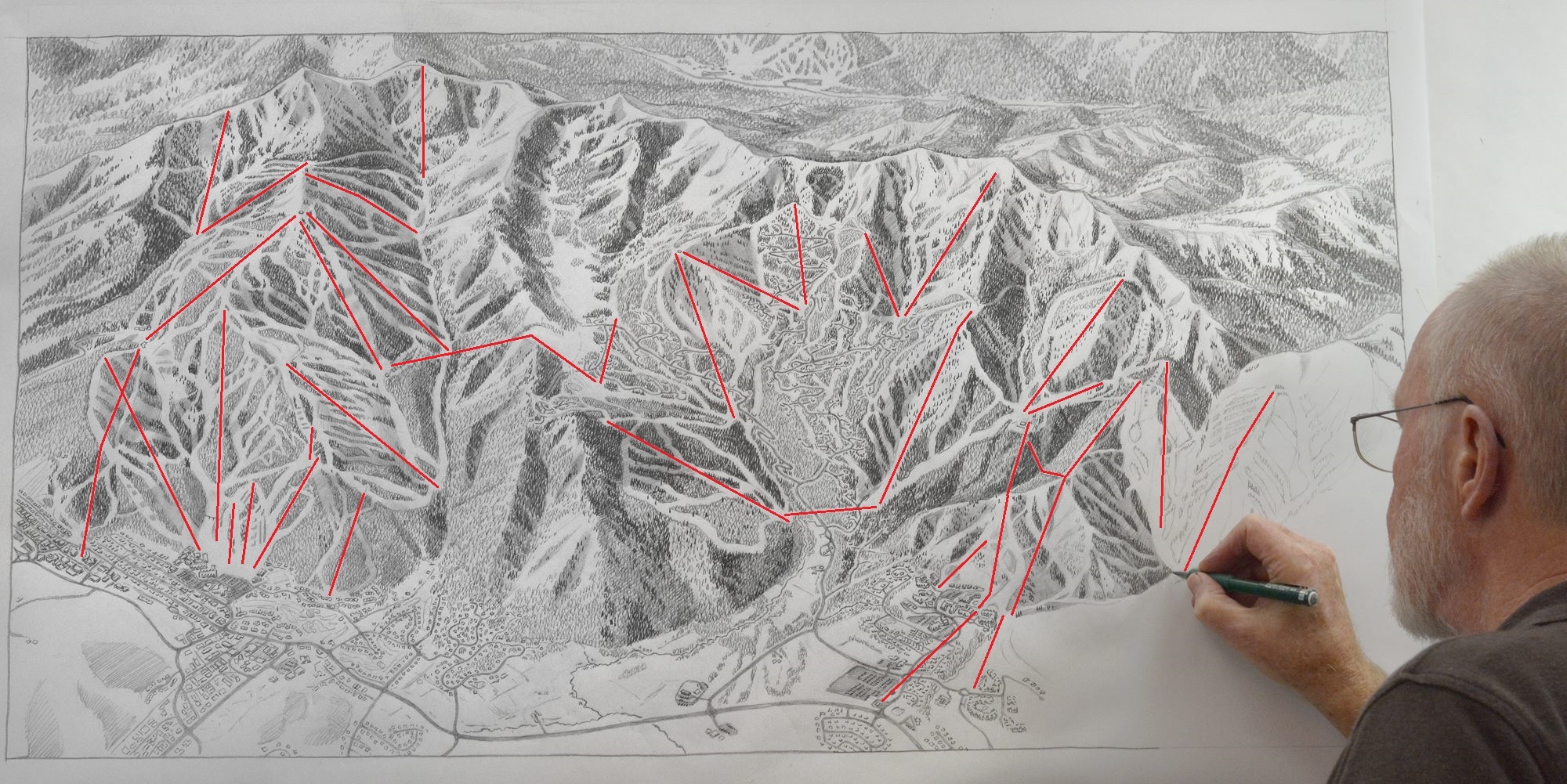
Now under a single operator, the two resorts are about to become one. Construction is beginning now on an interconnect gondola that will connect the Flat Iron lift at Canyons with the base of the Silverlode lift at Park City. The Doppelmayr gondola will have an angle station on the ridge that separates the two resorts, from which guests can ski off either side. The gondola will be approximately 7,000 feet long with 27 towers and 60 eight passenger CWA cabins. The Canyons station will be at about 8,400 feet next to White Pine Lake in The Colony. The angle station will be just below 9,000 feet on Pine Cone Ridge with the Park City station a thousand feet lower at Snow Hut Lodge. Vail is also building a six pack, detachable quad and new lodge on the Park City side this summer.
James Niehues paints the new PCMR trail map.
The combined lift stats for the new PCMR are impressive. A single ticket will include 37 aerial lifts including 4 gondolas, 6 six-packs, 9 high speed quads and 18 fixed grip chairs. Nearly 85 percent of the resort’s lifts will be GaraventaCTEC or Doppelmayr. Only 5 Yans will remain in addition to the Red Pine Gondola, one of Utah’s only Poma-built lifts. Combined uphill capacity will be 78,410 skiers per hour. (For comparison Vail’s is just under 55,000.) The total lift length is 29.5 miles with 35,607 feet of vertical rise. There will be 78 loading/unloading stations and 625 lift towers. I tried but failed to calculate an exact number of chairs/gondola cabins but it will be somewhere on the order of 3,000.
It will be interesting to see how thoroughly Vail can merge two large resorts in one summer. I haven’t heard yet whether they plan to keep Park City’s white and red branding or start fresh. Canyons still has lifts painted in their old green color scheme from the ASC days as well as new orange branding. I have to believe it will take a few years to paint every lift and change every trail sign. Regardless, Park City will be a 7,300 acre monster ski resort next year. No word yet on what Big Sky plans to do with its Biggest Skiing in America™ trademark.
The State of Pennsylvania is “not normally in the business of ski-lift construction.”
Another child falls from a chair, this time in eastern Canada. Seems like there have been a lot of similar incidents this winter particularly with children.



 Lift Blog