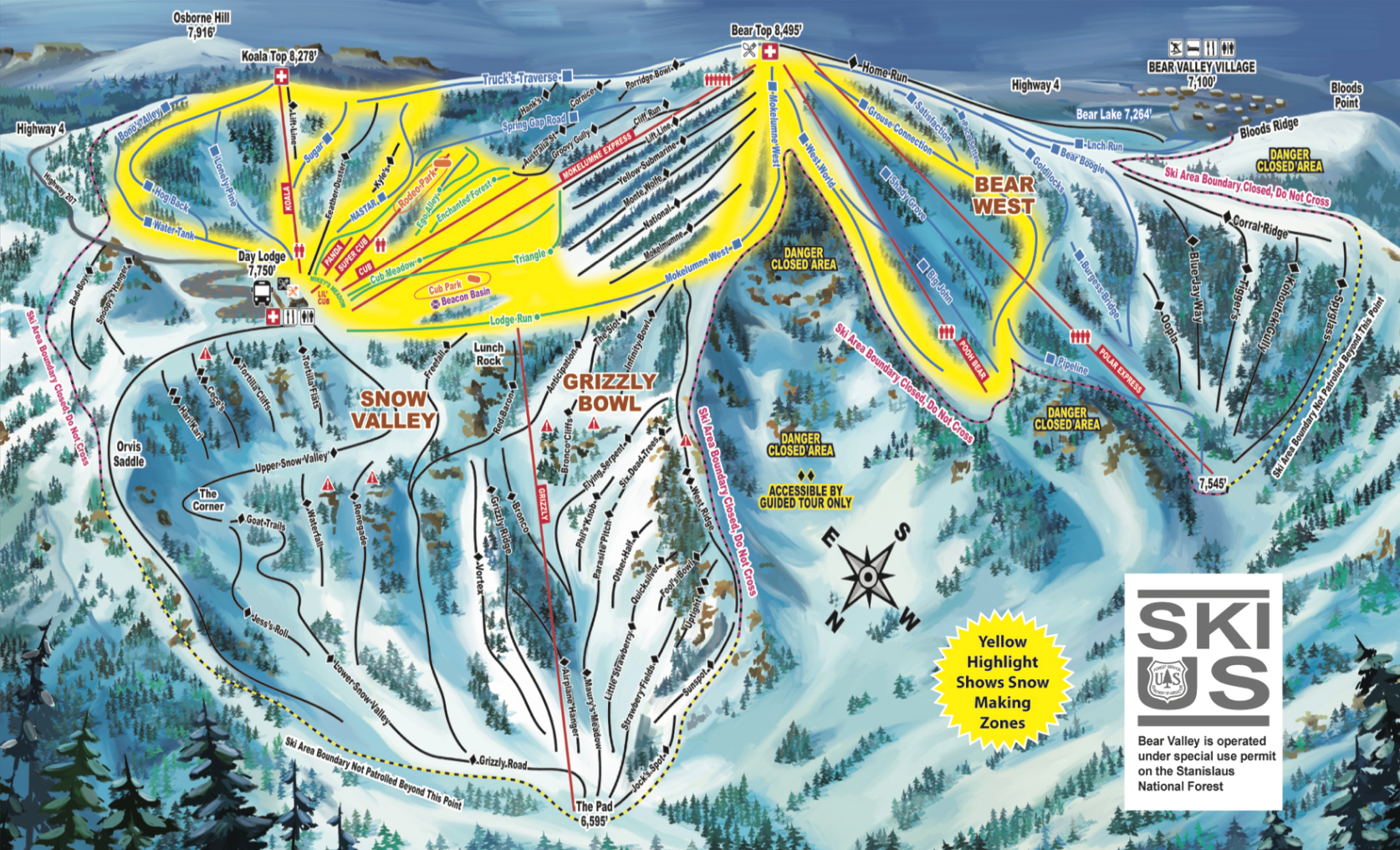
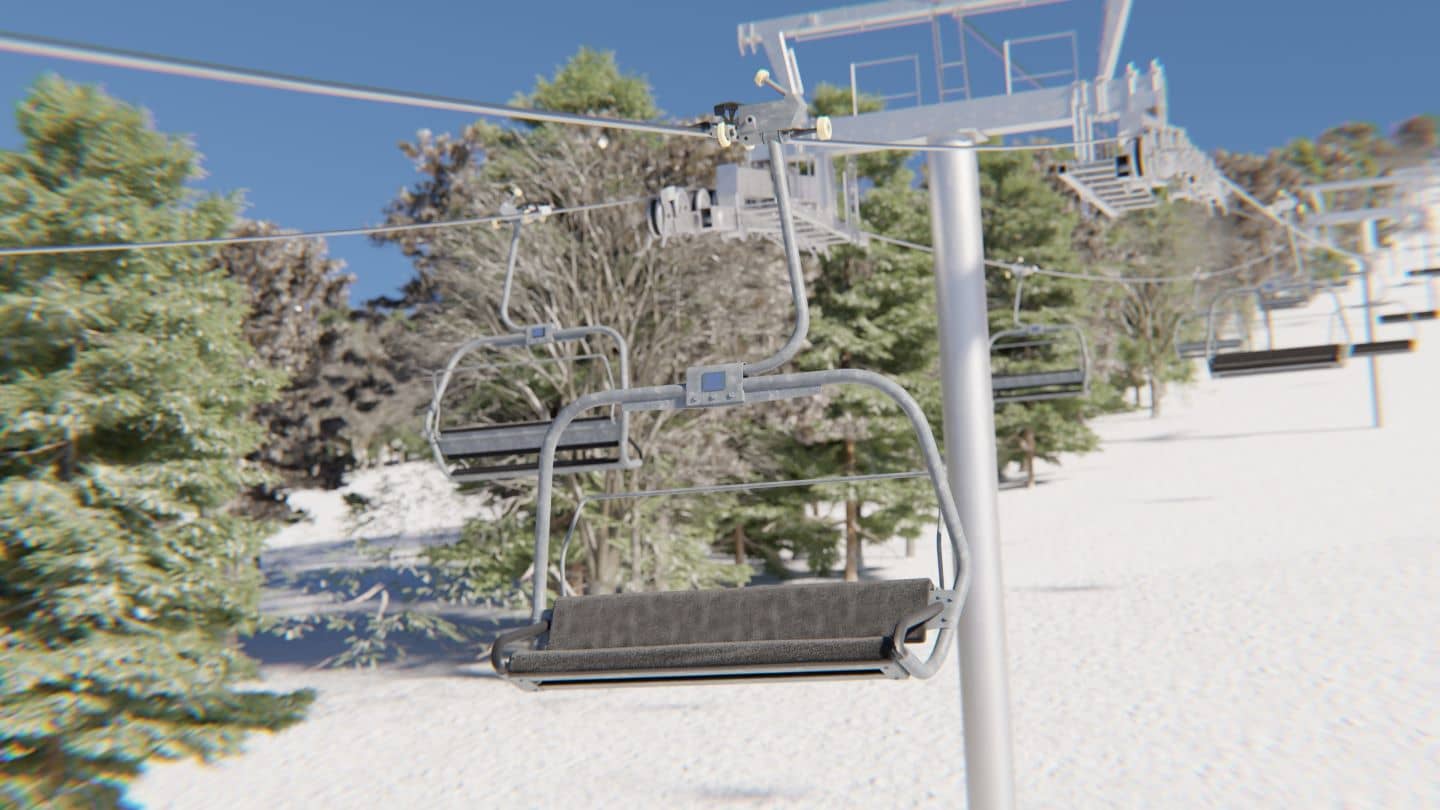
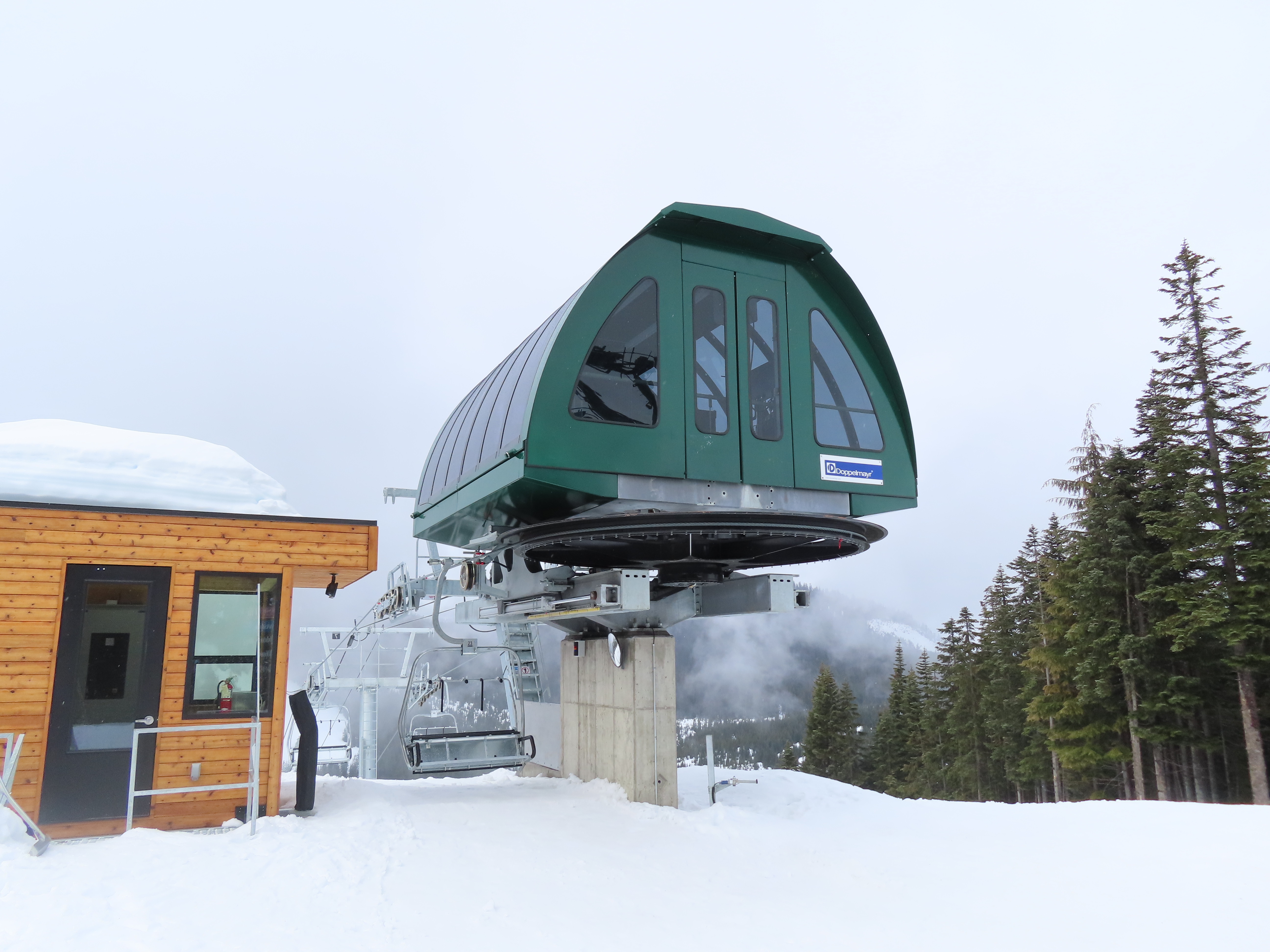
California Mountain Resort Company has revealed its first major capital projects at newly-acquired Bear Valley. In an email to passholders, Bear Valley explained the plan includes changes to four different lifts in the main base area, improving the experience for beginner and intermediate skiers. “We’ve got some major lift improvement projects lined up for this summer, and they’re going to completely transform the Bear Valley base area,” the mountain wrote.
First, the Koala double will be removed and replaced with a used fixed grip quad. Koala dates back to 1968 and the new machine is a 1992 Poma fixed grip quad recently removed from Taos, New Mexico. For the second project, the Kuma triple will be shortened from its original length to become a beginner lift with the top station moving downhill. Kuma hasn’t been needed in its current base-to-summit configuration since the parallel Mokelumne Express opened in 2017. As part of the Kuma project, the existing Cub double will be retired. That lift dates back to 1967 and will be made redundant by the shortened Kuma chair. Finally, the Super Cub double will receive new chairs that will be easier for beginners to load. This entire lift shuffle is expected to be completed this summer and will reduce the mountain’s fleet of of aging Riblet lifts from four to two. In addition to base area projects, Bear Valley also expects to complete significant summer grooming and lift repairs in Grizzly Bowl.
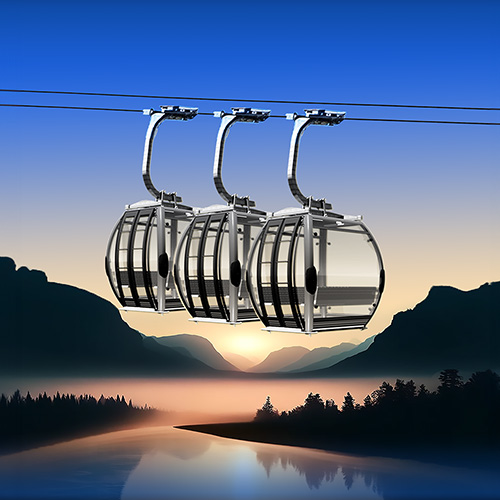
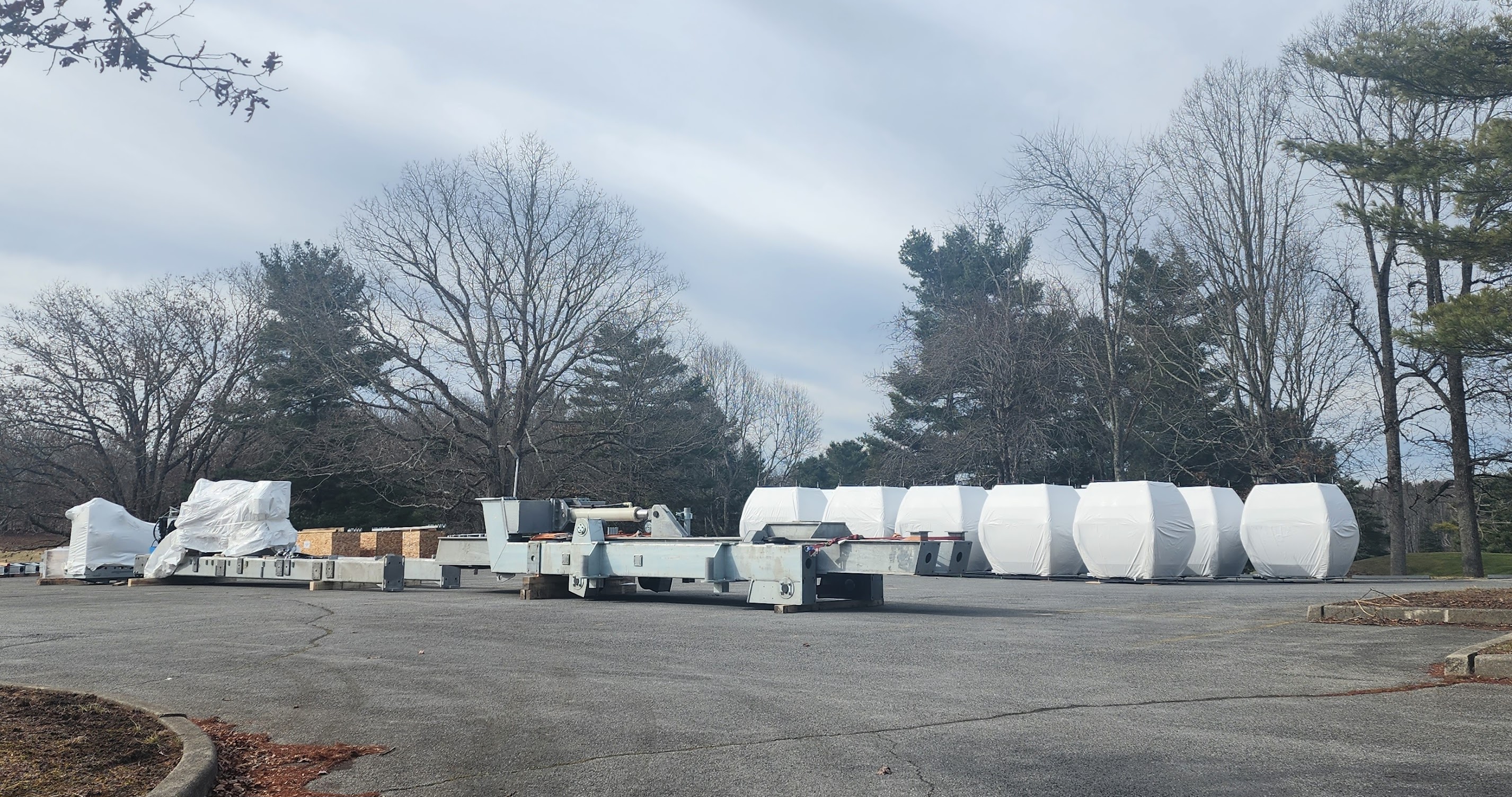
New Hampshire’s Loon Mountain has made it official: a pulse gondola will join the lift fleet in 2025. The connector lift will cross the Pemigewasset River, linking RiverWalk at Loon Mountain in the town of Lincoln to Escape Route parking lot B, the Timbertown Quad and future South Peak Village. Doppelmayr USA will build the 1,300 foot machine, which will become the first pulse gondola in New England. Pulse gondolas are fixed grip lifts with pods of cabins that slow down for loading and unloading. Loon’s pulse will be configured four groupings of three cabins each. The 12 Omega IV cabin will hold up to eight riders and include floor-to-ceiling windows for views of the White Mountains.
With the South Peak expansion, Loon Mountain has nearly doubled the size of its lift fleet over the past 18 years. “Innovation and access are areas we continue to focus on,” said Brian Norton, Loon’s president and general manager. “This lift has been long dreamt of—dating back to the late ‘80s—and would not be possible without collaboration with RiverWalk and South Peak resorts,” Norton noted.
Construction on the gondola is expected to begin in spring 2025 and the lift will open for the 2025-26 winter season. Hours of operation and whether the gondola will be free or paid will be determined closer to opening.
Both destination and day skiers will gain a new option to access Deer Valley Resort next winter with the addition of a Doppelmayr bubble chairlift. The yet-to-be-named six pack will connect the Grand Hyatt Deer Valley in the new East Village to a knob above the existing Sultan Express and Mayflower lifts. The 5,800 foot long bubble lift will service both the slopeside hotel and 500 new day skier parking spaces at opening. After riding 1,240 vertical feet on the D-Line bubble chair, guests can access the rest of Deer Valley via Sultan without needing to park at Snow Park Village.
Known for now as Lift 3, the Doppelmayr six place will be the first of nine lifts to open as part of Expanded Excellence phase one. This bubble chair is distinct from Lift 7, another bubble six place under consideration by the Park City Planning Commission tomorrow evening. Lift 3 and perhaps a couple small access lifts will be completed by December 2024 with Lift 7 with the rest of the 2,900 acre phase one expansion opening for the 2025-26 season.
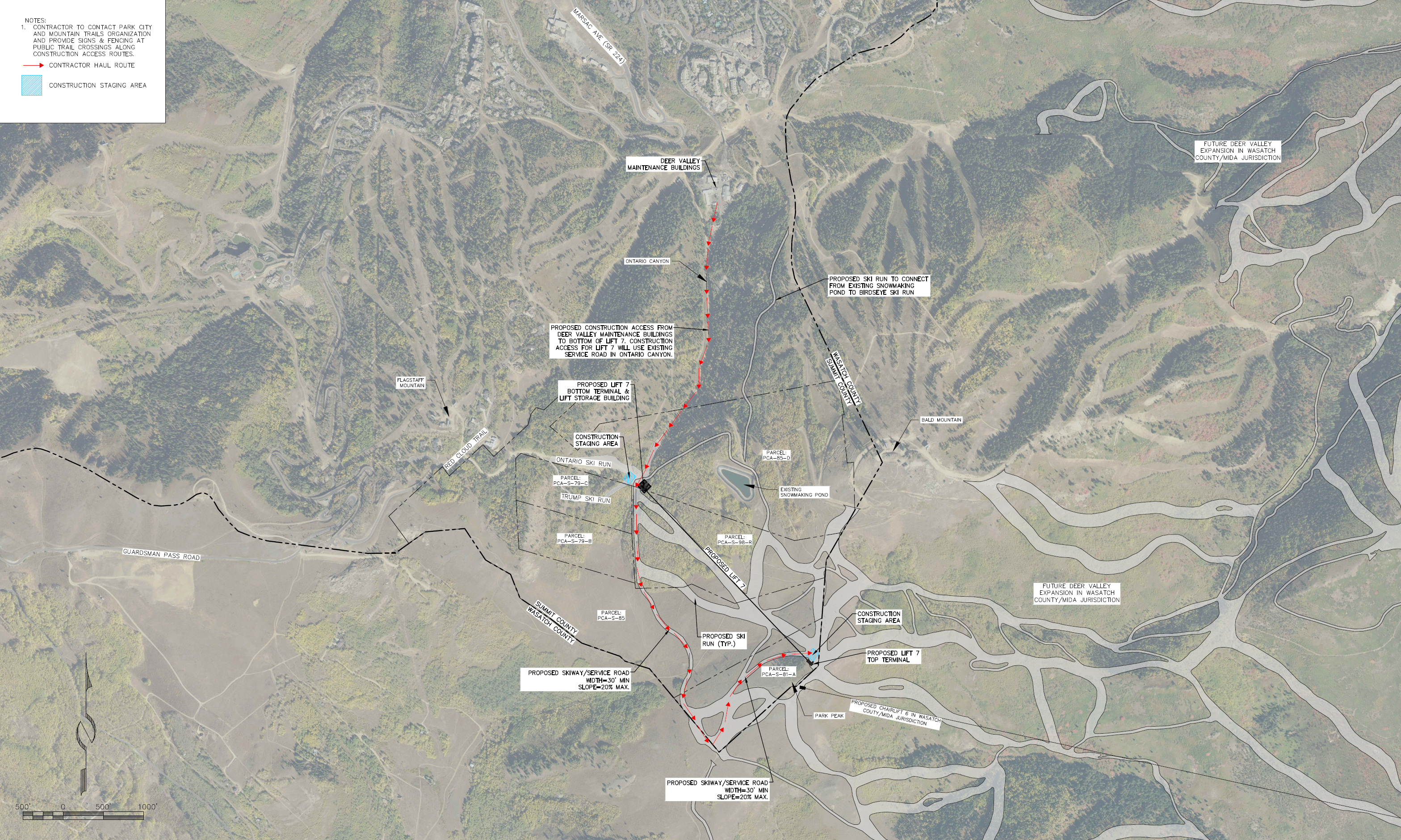
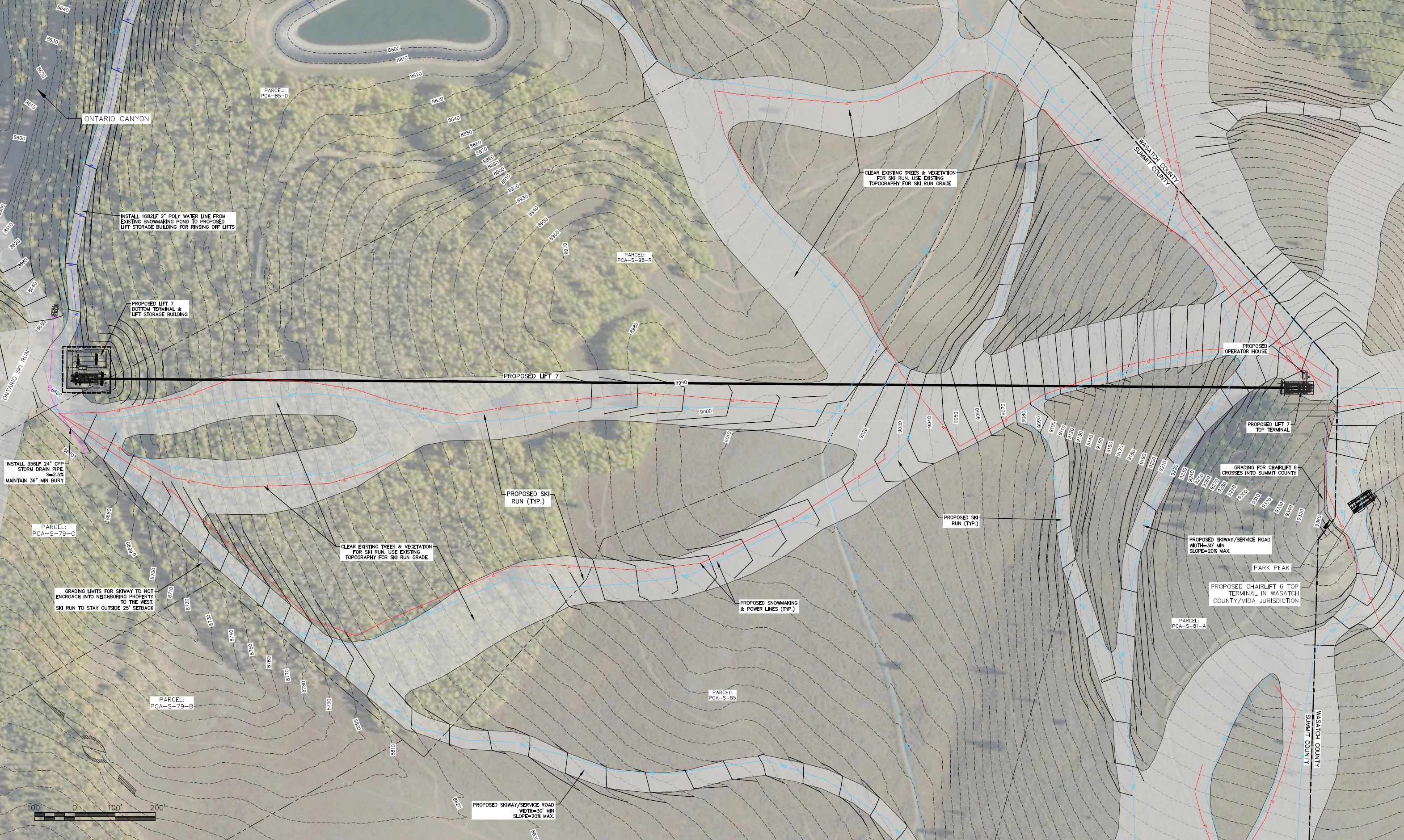
The Park City Planning Commission is set to consider one of the first lift projects in Deer Valley’s Expanded Excellence expansion next week. The new Lift 7 would become not only become Deer Valley’s first six pack but also its first bubble chair and first D-Line lift. Though relatively short, Lift 7 will form a key link between existing terrain on Bald and Flagstaff mountains and Park Peak, the summit of Expanded Excellence terrain. In the below map, Lift 7 is the uppermost red alignment surrounded by green runs. It will be accessed from existing Ontario and Trump ski runs and carry 3,000 skiers per hour. Guests will unload near the top of the future East Village gondola and Lift 6 six pack on Park Peak.
The project currently under review includes 4.62 miles of beginner ski runs that will be among the highest elevation trails at Deer Valley, topping out at 9,285 feet. Lift 7 will include 58 bubble chairs both for guest comfort and wind protection. The top drive, bottom tension machine will ascend 624 vertical feet in just 3.5 minutes at 1,000 feet per minute. Half the chairs can be parked in the bottom terminal with the rest in an adjacent 8,500 square foot storage facility. Deer Valley proposes to install 10 lift towers ranging in height from 19 to 53 feet.
Lift 7 is one of ten lifts set to be built over the next two summers as part of Expanded Excellence, set to open in winter 2025/26. If approved, Lift 7 and perhaps other lifts could open as early as next winter. Alterra typically announces specific capital plans for all its resorts in March but has not yet done so for 2024 (the only reason we know these details about Lift 7 is because it falls within the purview of the Park City municipal Planning Commission. The rest of the expansion is outside Park City boundaries in Wasatch County.) The Grand Hyatt Deer Valley is slated to open next season and in order to be ski in, ski out, the out-of-base Lift 3 would need to be constructed this summer to connect to Sultan Express. That project would likely also be a Doppelmayr bubble six place. Other real estate access chairlifts may be constructed this summer as well. I have reached out to Deer Valley for more information on 2024 lift plans and will update if I hear back.
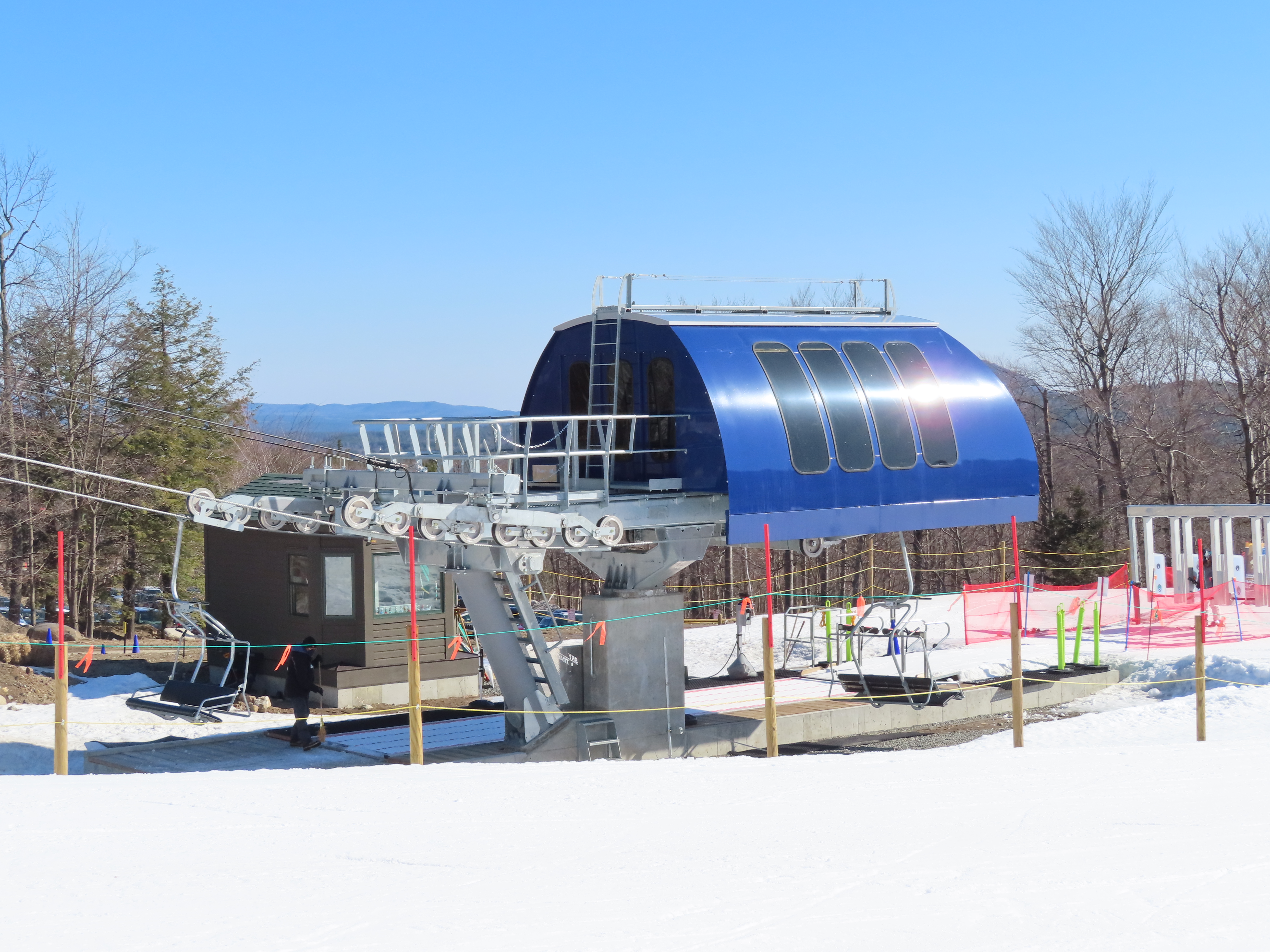
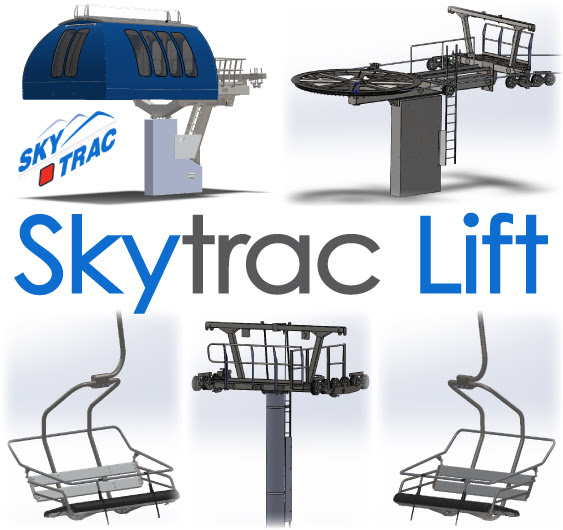
Ski Sundown today announced it will replace the base-to-summit Exhibition triple this offseason with a quad from Skytrac. The current Exhibition lift opened in 1977 and carries 1,800 skiers per hour. The new fixed grip lift will feature a loading conveyor and 2,400 skier per hour capacity. The new lift will reduce ride time to 4.5 minutes with speed increasing from 400 feet per minute to 450 feet per minute. It will include 90 quad chairs and span 1,999 feet.
Exhibition’s final day will be this Sunday and the new lift is expected to open for the 2024-25 season.
Construction is ramping up on a new six passenger gondola in West Virginia. The State announced this week the Doppelmayr pulse system is expected to be complete this fall. The lift replaces a four passenger Mueller gondola which operated from 1970 until 2023. The new lift will be fully ADA accessible and carry riders 1,100 vertical feet down into the Bluestone River Gorge. The lift will serve a wide variety of visitors from sightseers to overnight lodging guests, anglers and boaters. To accomplish this, the gondola will feature four pulses of three cabins each along with a freight carrier for bicycles and kayaks.
“Pipestem Resort has always been one of the most popular state parks in West Virginia and this new tramway is going to help us accommodate visitors and continue to offer a world-class experience,” said West Virginia Division of Natural Resources Director Brett McMillion. “As a former superintendent at Pipestem, I want to thank Governor Justice for his continued support of our state parks over these last seven years and guaranteeing that they will be enjoyed by West Virginians and visitors alike for years to come.”
Crews will soon fly out nine old Mueller lattice towers and set new tubular towers for the system. Each station will also require new loading platforms to be constructed.
Doppelmayr has a longstanding construction base in West Virginia and is also scheduled to construct a new gondola at Hawks Nest State Park in 2024-25.
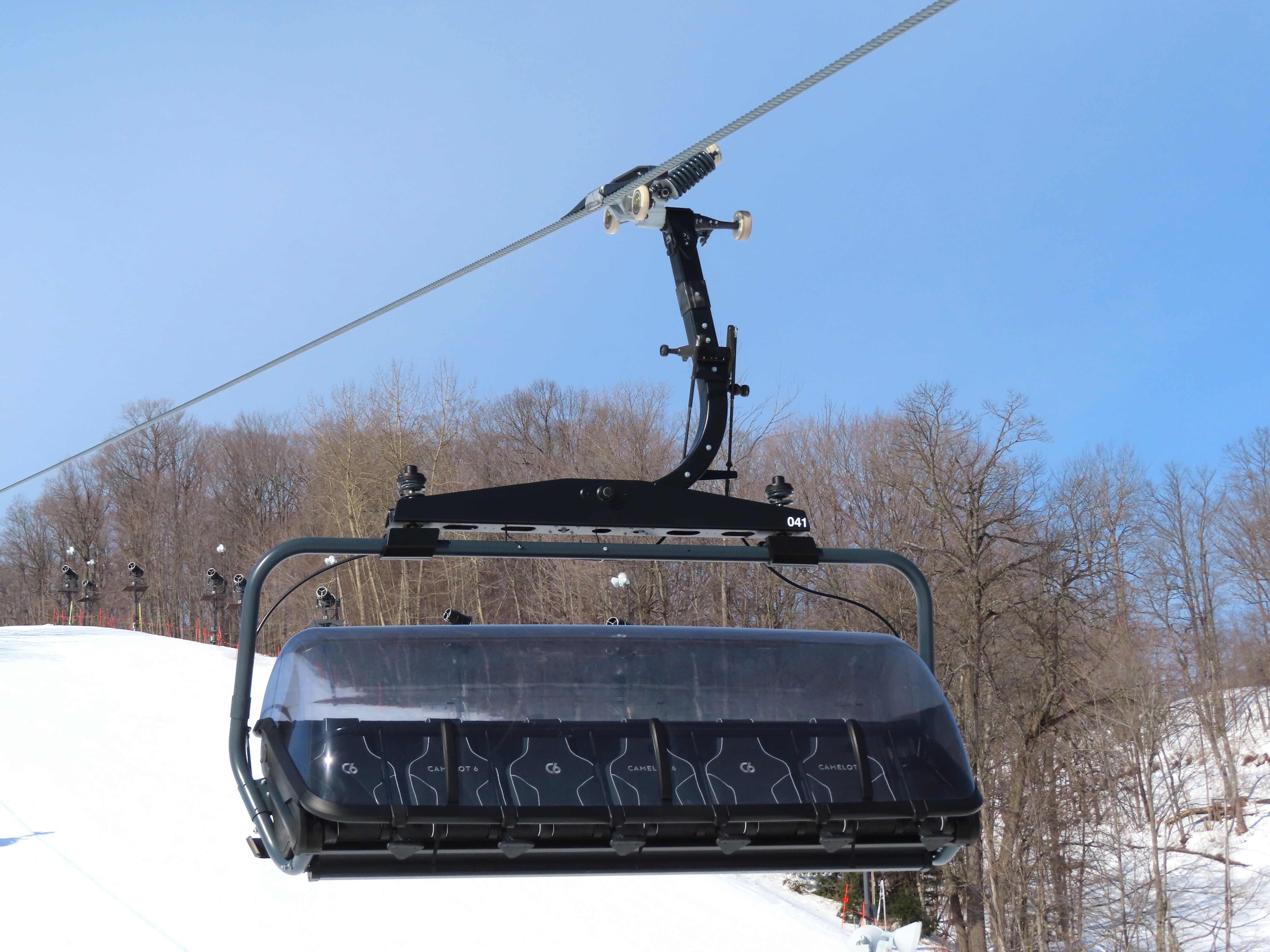
The Highlands at Harbor Springs will forge ahead with another lift replacement project this summer, retiring the Interconnect Riblet triple for a faster Doppelmayr version. The new fixed grip triple will feature a height adjustable loading conveyor, RFID gates and safety bars, all of which the current triple lacks. The Alpenstar machine will move 33 percent faster and improve access to North Peak terrain. The move comes hot on the heels of this season’s debut of Camelot 6, the first bubble detachable in the Midwest and fastest chairlift in Michigan.
When the new Interconnect lift is complete, The Highlands will have replaced four aging Riblet chairlifts with new technology over just two seasons. “We are eager to upgrade our Interconnect lift with a new Doppelmayr fixed-grip design to enhance the experience for guests next winter season,” said Mike Chumbler, president and general manager of The Highlands. “With improved speed, efficiency, modern conveniences, and safety features, we are confident that this addition will help build on the overall skiing and riding adventures at The Highlands.”
For the second year in a row, Boyne Resorts has announced more new lifts at more mountains than any other North American operator. Boyne plans at least six lift projects this summer at its resorts in Maine, Michigan, Montana and Washington.
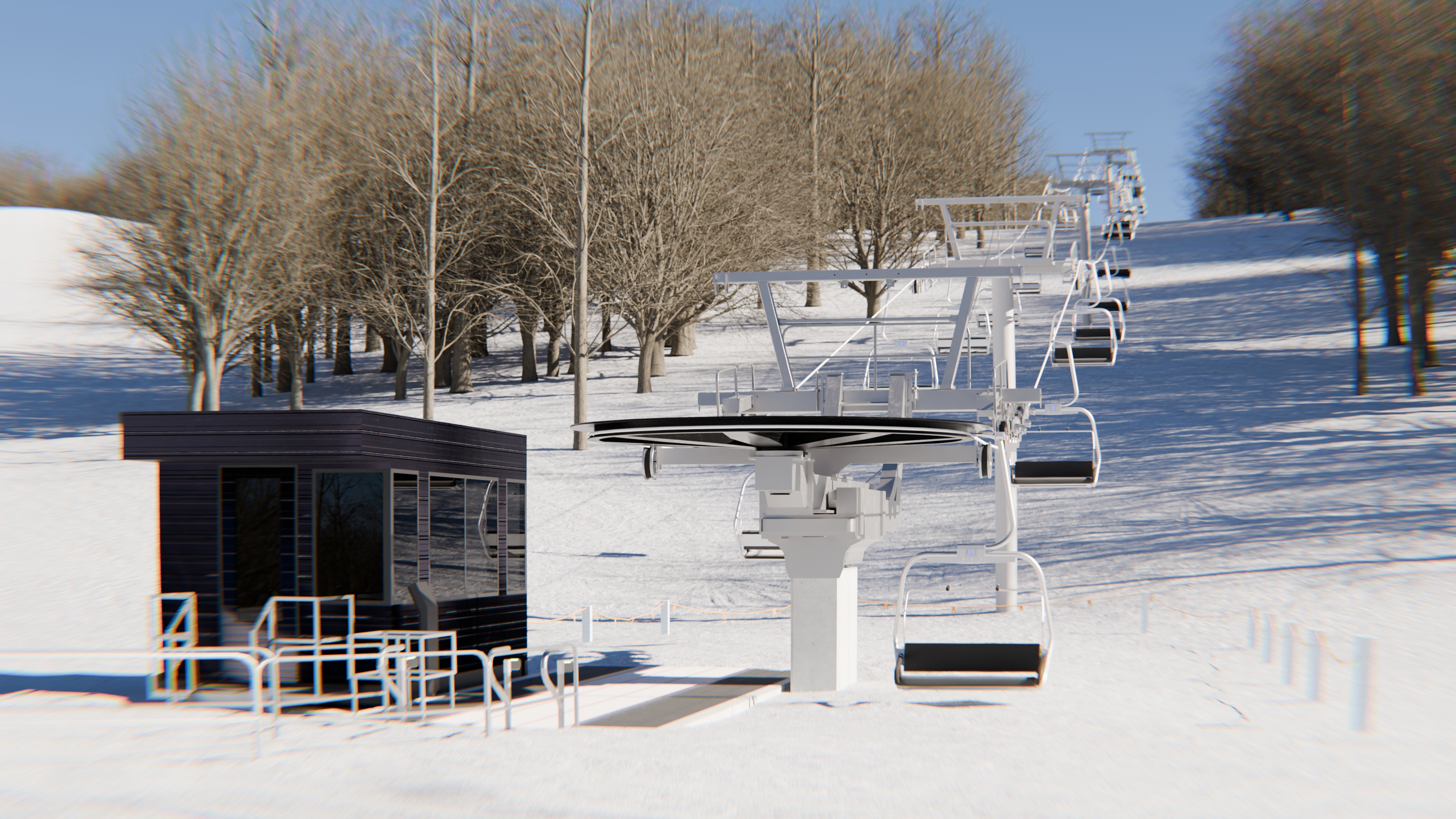
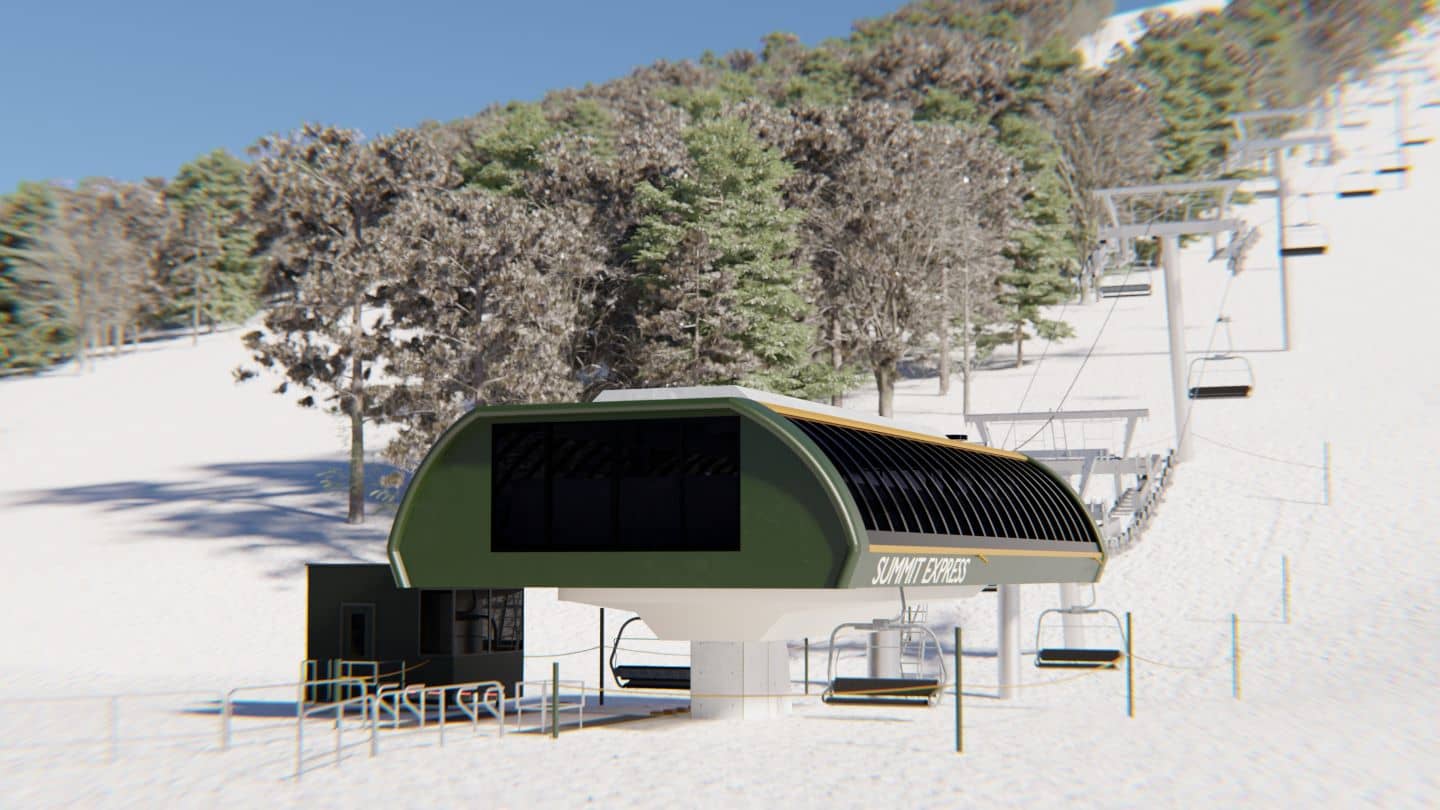
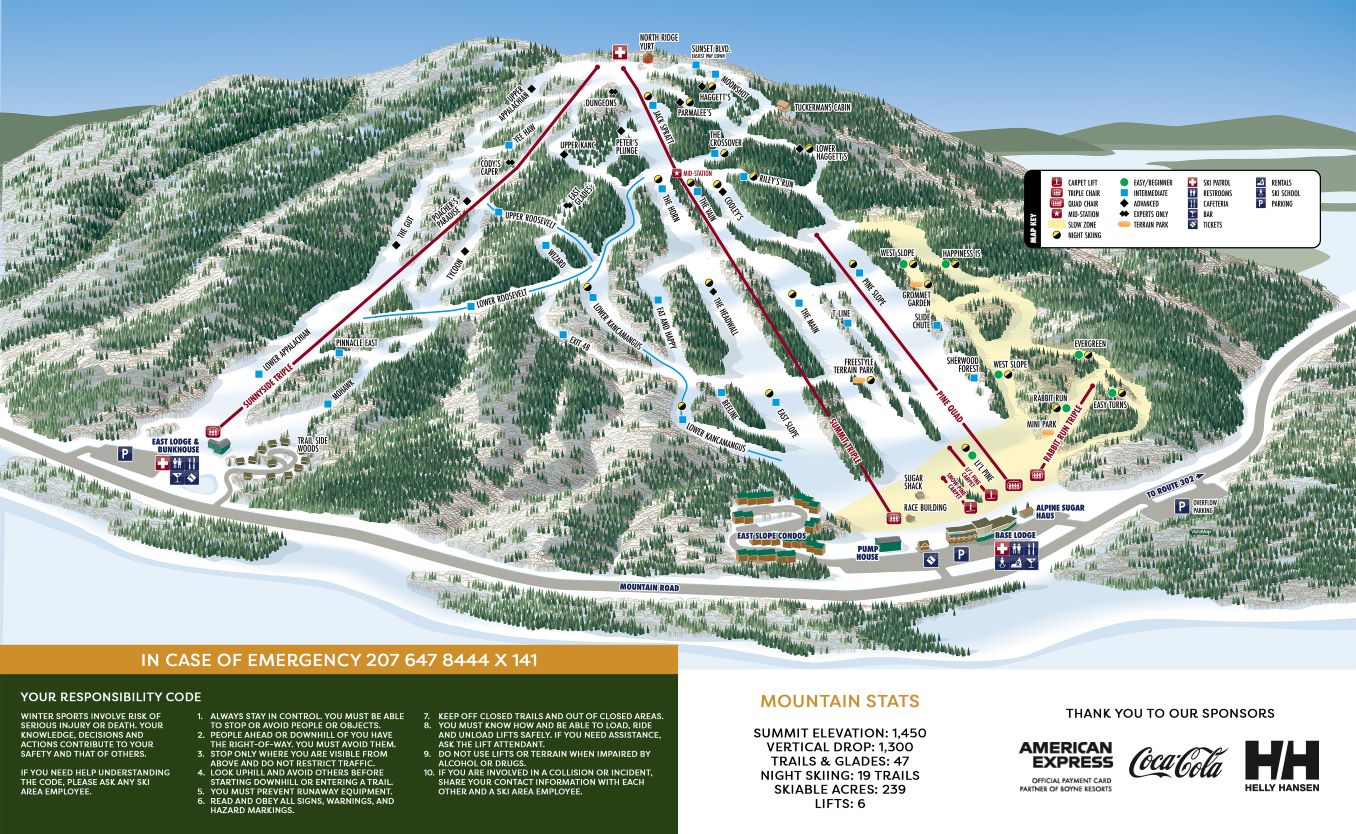
For the first time in its 86 year history, Maine’s Pleasant Mountain will feature a high speed lift next season. The new Summit Express will run 1,220 vertical feet from the base of the mountain to the top in just 4.5 minutes. The detachable quad will contain some new parts from Doppelmayr along with many refurbished components from the former Jordan Bowl Express at Sunday River. Like with the new Bucksaw Express at Sugarloaf, Pleasant Mountain is working with Doppelmayr to make the lift look and feel like a completely new machine. The existing Summit Triple, which was down for a period this season with mechanical issues, will be removed.
“We’re taking our guest experience to new heights with a faster, more efficient detachable quad from Doppelmayr,” the resort said, noting the new lift will carry 2,400 skiers per hour at 1,000 feet per minute. “We can’t wait to introduce Pleasant Mountain guests to the new lift experience.”
The Summit Express is the fifth new lift project announced by Boyne Resorts for the 24-25 season. Big Sky and The Summit at Snoqualmie also plan to debut new lifts for next winter.
Instead of building two new chairlifts at Alpental this summer, The Summit at Snoqualmie will instead build one lift at Alpental and another at Summit West in partnership with Doppelmayr. The Summit encompasses four distinct ski areas and is in the midst of a multi-year investment push called Summit 2030 that will now see at least five new lifts installed over four years. Alpental is a major focus of the plan with two lift replacements and one completely new expansion lift. Phase one was a replacement Sessel lift, which debuted this season. A brand new International triple will follow above Sessel this summer. Snoqualmie previously announced Chair 2/Edelweiss would also be replaced in 2024, but that has now been postponed one year to 2025.
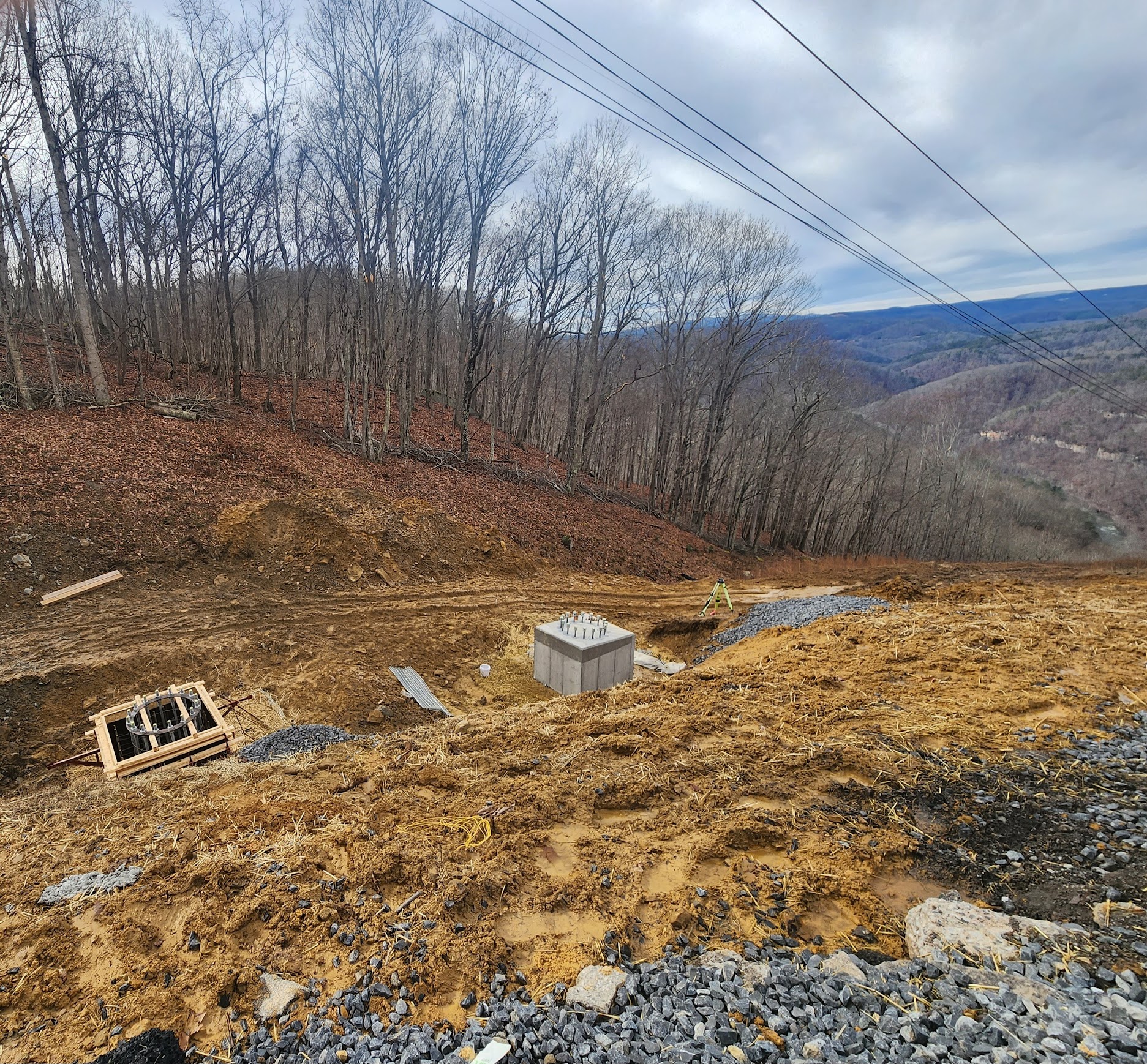
Crews have already completed many of the foundations for both International and Chair 2, which ascend extremely steep terrain and have limited to no road access outside of snow season. In fact, crews this week transported the new haul rope for International up the mountain over snow in advance of this summer’s construction. “Shifting the Edelweiss timeline will allow the construction team at Alpental to focus all their efforts on completing International prior to the 24/25 season,” the resort noted. “We’ve mentioned it before but work on International is extremely challenging and time-consuming due to the lack of road access and gnarly terrain.”
Simultaneously with the International project, crews will now replace the Wildside triple with a new fixed grip quad at Summit West for next season. Wildside dates back to 1974 and had broken down occasionally in recent seasons. Summit West has traditional service roads and work can more easily be completed there at the same time as International. “[Wildside] is a much simpler installation with easier access for the construction team and is a great opportunity to get another aging lift replaced,” said Snoqualmie. Unlike the current lift, the realigned Wildside will feature a loading conveyor and restraint bars.
New Chair 2 at Alpental will now debut in winter 2025-26, the fourth season in a row with a new lift on Snoqualmie Pass. In the meantime, skiers can enjoy one more season on the classic Riblet to the top.
With one of the largest lift fleets in the country and a dozen recent additions, Vail Mountain could probably stop building lifts for awhile and be fine. However a new 2024 Master Development Plan, accepted by the Forest Service last month, suggests investment will continue at Vail Resorts’ flagship mountain. The new plan is a collaboration between Vail, SE Group and the Forest Service and replaces a 2018 MDP. It’s important to note that resort master plans are conceptual in nature and don’t constitute approval of specific projects. But Vail has big plans, or at least big ideas.
Today Vail operates two gondolas, 21 chairlifts, four surface tows and seven conveyors designed to accommodate 23,690 guests on the mountain. However the resort is managed to a capacity of 19,900 skiers per day, a planning target that won’t change as lifts are upgraded and reconfigured. “Vail desires to maintain certain capacities, particularly the lift network capacity, in excess of the manage-to threshold in order to ensure a high-quality guest experience,” the plan notes. If implemented completely, it would increase lift network capacity by about seven percent to to 25,420 guests. “The goals of Vail are to continue operating at less than full capacity, but add lifts and lift capacity where needed in order to improve circulation, ease congestion, spread skiers out, more fully utilize underutilized terrain and keep wait times at lifts at a comfortable level and, therefore, maintain a high level ski experience for guests,” notes the MDP.
A major focus of the upgrade plan is moving guests up and out of Vail’s base areas. When Vail occasionally makes headlines for an epic lift line, it’s often at a gondola base first thing on a powder morning. To address this, five new egress lifts are planned. First the Eagle Bahn Gondola at Lionshead is earmarked for replacement. “Given its year-round, day and night operations, freight hauling duties, and limited capacity, the gondola will need a major overall or potentially an upgrade during the life of this plan,” notes the MDP. Built by CTEC in 1996, Eagle Bahn is technically a twelve person gondola; however, Vail has operated the gondola effectively as an eight passenger gondola. A new Lionshead gondola will likely feature 12 passenger cabins and move 3,200 riders per hour.
On the Vail Village side of the valley, the Riva Bahn Express is planned to become a third gondola extending all the way to Two Elk Lodge. The new lift would continue to feature a mid-station on Golden Peak but the top terminal would move thousands of feet up the mountain. “Due to the extended alignment, it will have an enhanced role in transporting guests to the back bowls rather than having guests access this terrain using Northwoods Express #11,” the plan notes. This eight passenger gondola would be a beast, stretching more than 16,000 linear feet and rising nearly 3,000 vertical feet from base to summit.
Also envisioned for Vail Village is a completely new lift with the working name Trans Montane. This 8,400 foot long six pack would start adjacent to the workhorse Gondola One and rise to mid-mountain, providing much-needed capacity and redundancy out of Vail Village. The top station would sit where the Riva Ridge and Trans Montane runs merge and provide access to Northwoods Express. Trans Montane would carry 3,000 guests per hour with a vertical rise of 1,829 feet.
Another new out-of-base lift in Lionshead has already been approved by the Forest Service but not constructed. Once known as Ever Vail and now called the West Lionshead lift, this would be either a detachable chairlift or 10 passenger gondola with a capacity of 2,400 skiers per hour. A couple possible alignments are under consideration with approximately 1,200 feet of vertical unloading near the base of Pride Express #26. Also at Lionshead, Born Free Express #8, is slated to become a six pack while continuing to run parallel to the Eagle Bahn Gondola. This lift is the only original CLD-260 detachable left on the front side, dating back to 1988.
Finally on the out-of-base egress front, the longest fixed grip lift at Vail, Cascade Village #20, would also go detach. This one would be a quad, either following the existing alignment or running further up the mountain to Eagle’s Nest. The lengthened option would include a mid angle station with the lift totaling 2,272 feet of vertical rise. Once all new lifts are in place, guests could choose from seven different gondolas and chairlifts capable of moving 21,000 skiers each hour.
Numerous chairlift replacements are also envisioned on the upper mountain. Even relatively new lifts may be replaced with more modern and larger capacity versions. The first is Avanti Express #2, which would go from a six to an eight place (Vail Resorts just this season opened its first eight place chairlift in North America at Whistler and apparently sees more possibilities in the future.) Mountaintop Express #4 also could be up-gauged from a six to an eight. If either of these projects happen, existing equipment would likely be reinstalled on Vail Mountain or elsewhere in the Vail Resorts portfolio.
Wildwood Express #3 and Pride Express #26, both aging CTEC detachables, would be replaced by newer technology high speed quads or six packs. Little Eagle #15, another one of the three remaining fixed grip chairs at Vail, would be replaced with a detachable quad to create an improved beginner experience. The alignment would move slightly as well and increase in length.
Vail’s Back Bowls are the other location where viral lift line photos occasionally originate. In China Bowl, the 1988 build Orient Express #21 is slated for retirement. “This chairlift is the only access to Mongolia, and Siberia bowls, so reliable service is critical to access the back bowls of the resort,” notes SE Group. The new lift would become the first six pack in the Back Bowls. Nearby, Teacup Express #36 could also go from a quad to a six seater. Finally, a completely new Mongolia Express quad is proposed to run from near Two Elk Creek to the ridgeline above the existing Mongolia Platter. This would create a direct route up Mongolia Bowl and become the sixth detachable lift in the legendary back bowls.
No lift upgrades are planned in Blue Sky Basin, however a variety of trails remain in Vail’s plans. The MDP also contains plans for snowmaking improvements, new lodges and summer activities across the mountain. The full plan is available on the Forest Service website here.