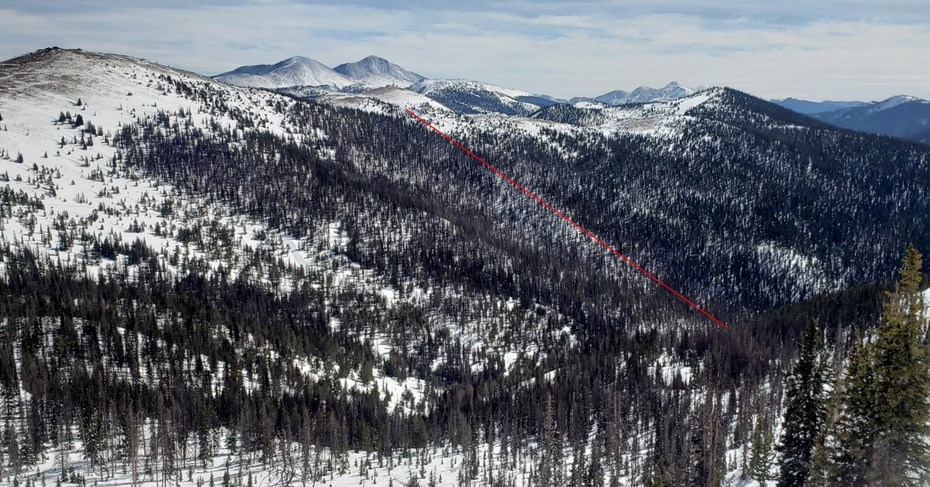
With the electronic stroke of a pen, the Forest Service green-lighted a 377 acre expansion of Colorado’s Monarch Mountain yesterday. The project will include 62 acres of cleared trails, gladed terrain, a fixed grip triple chairlift, restrooms and a warming hut in No Name Basin. “We are SO excited to actually get started on this project after years of planning and project review by multiple entities,” said Scott Pressly, Vice President of Mountain Operations. The basin’s 2,700 foot chairlift will rise 960 vertical feet and become Monarch’s first new lift in 25 years.
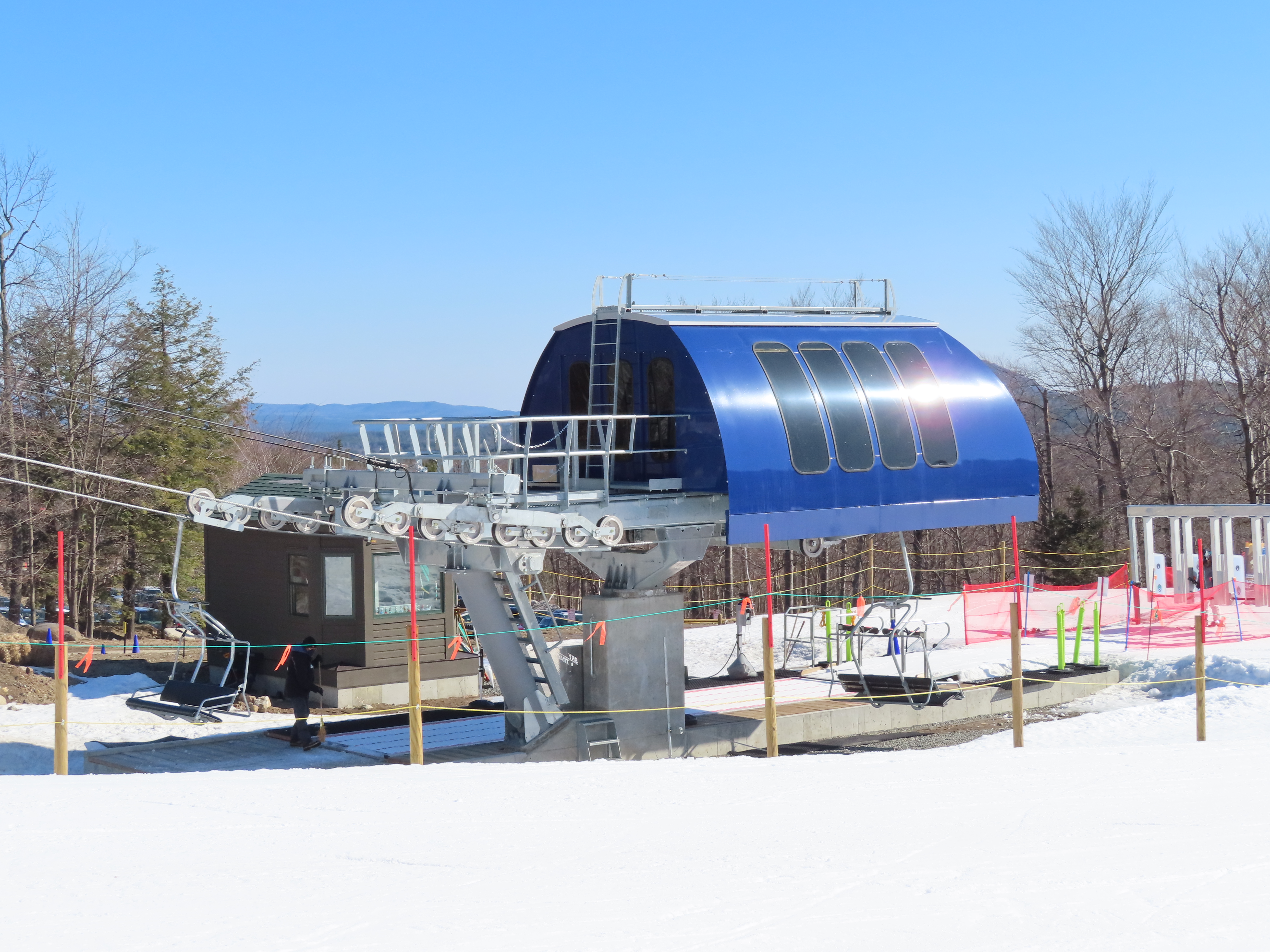
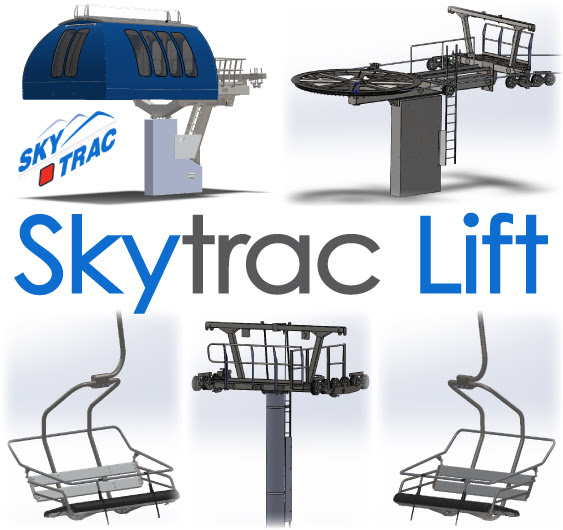
The no-frills ski area plans to begin work soon. “This project will involve two summers of construction (2024 & 2025) with the No Name Basin terrain scheduled to open for the 2025-26 winter season,” wrote Pressly. Monarch has not publicly identified the manufacturer of the new lift, though Skytrac built its very first lift drive terminal at the ski area, naming it the Monarch.
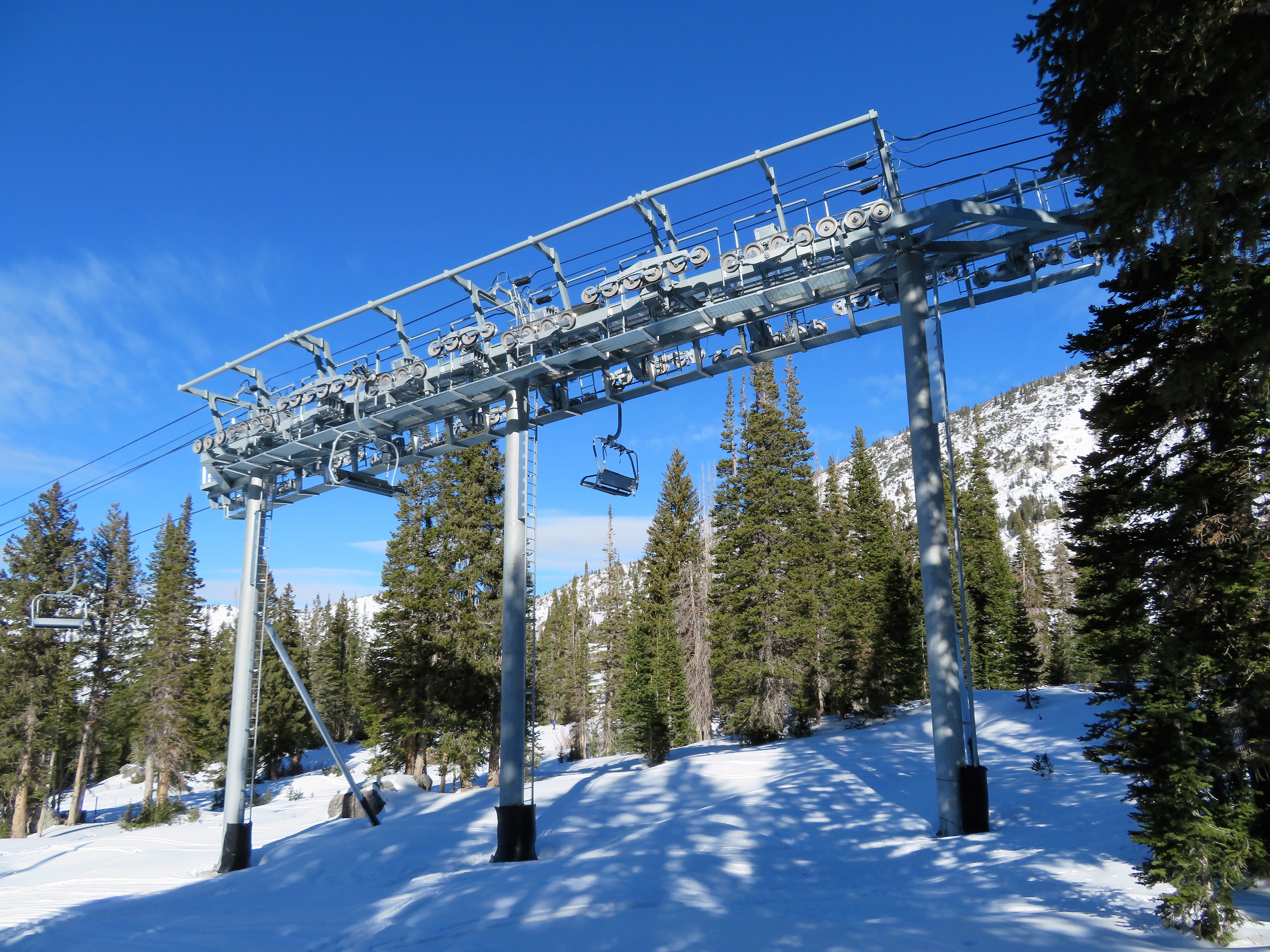
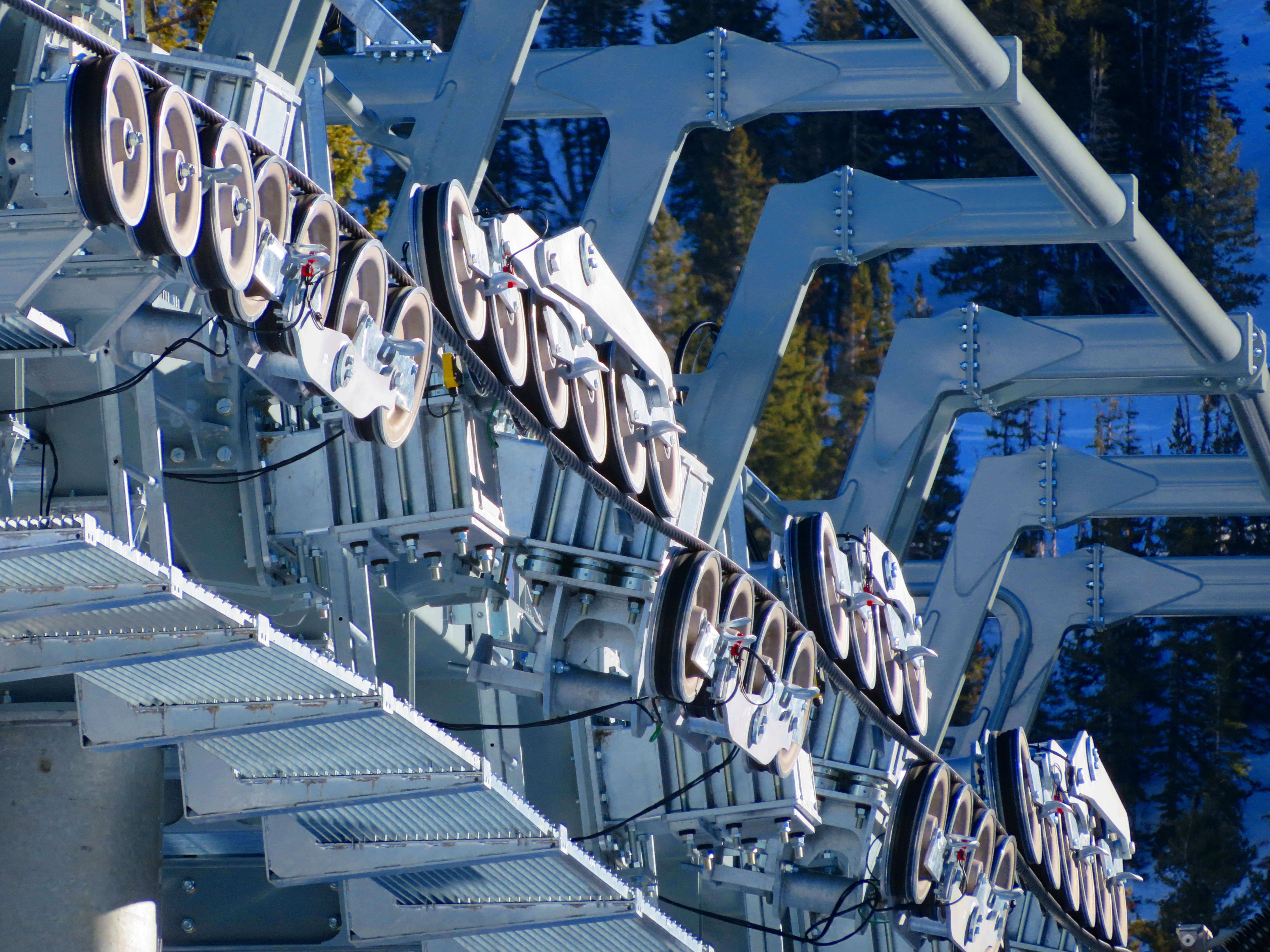
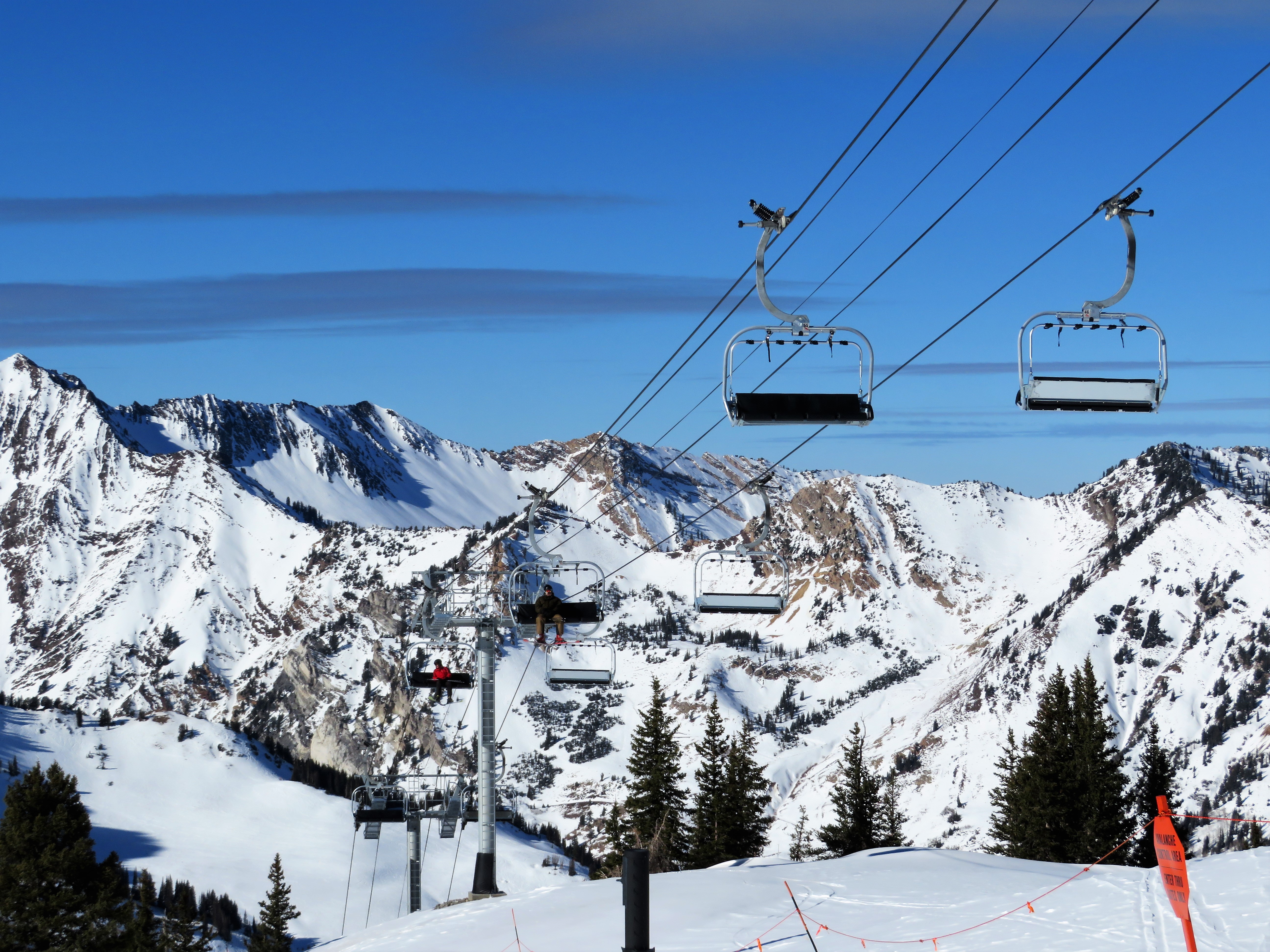
The experiment to build a detachable quad with an eight degree turn and no angle station may be coming to an end. This week Alta Ski Area General Manager Mike Maughan revealed the Supreme lift is suffering from accelerated metal fatigue, requiring the ski area to look at major modifications. Specifically the lift’s chairs have become damaged over time as they pass through numerous canted sheave assemblies. “Every one of those [chair pans] is cracked significantly,” Maughan told the Alta Town Council Thursday. “An investigation by engineers said we’re accelerating fatigue on the chairs, the grips and the bend itself.”
Supreme was constructed in 2017 to replace two separate lifts – Cecret and Supreme – which ran consecutively in different alignments. A new high speed quad was envisioned to include an angle station near the top of the old Cecret chair where beginners could unload. Chairs would detach, turn and continue to the Supreme summit. That plan proved expensive so Alta pivoted to a unique bend design that kept chairs moving at full speed through a line turn. By following both old lift lines with a bend, Alta would cut fewer trees and avoid significant ground disturbance. Doppelmayr reportedly declined to bid on the bend design and would only supply the lift with an angle station (like they did on nearby Collins.) Alta went ahead with Leitner-Poma and the new Supreme opened for the 2017-18 season. From the beginning skiers noticed the ride through the bend was quite bumpy and jarring. Last winter, Alta experimented with a different Leitner chair design in an attempt to mitigate the rough ride through the bend.
A couple folks tipped me off to the two Leitner “comfort chairs” that appeared at the base of @AltaSkiArea’s Supreme detachable quad. I’m told they’re part of a test to possibly make the line turn less jarring. 📷: @ozskierpic.twitter.com/a9z7RNBI3z
Fast forward to today and Alta sees two possible paths forward. The first is to rebuild the lift in a straight path between the top and bottom terminals. This would require every tower and terminal foundation to be replaced. “All the equipment would be re-used with maybe a few new towers added to the mix,” said Maughan. A second, less likely option is to keep both terminals in place and build a full angle station where the bend stands today. Analysis is underway to determine the best solution. “We approached the Forest Service and they are open to the realignment approach which would end up with a simpler lift with fewer moving parts and less wear and tear,” noted Maughan. Either way, the project will be a major undertaking targeted for summer 2025. “We’re waiting for numbers back from Poma to understand the cost of both options.”
For the upcoming 2024-25 season, the lift is expected to continue operating with chairs either repaired or replaced as necessary. It’s important to remember Supreme has operated safely for seven years and thorough inspections caught the issue before any incident. Now that the problem is known, Alta will work closely with the Forest Service, Leitner-Poma and the Utah Passenger Ropeway Safety Committee on safe interim and long term solutions.
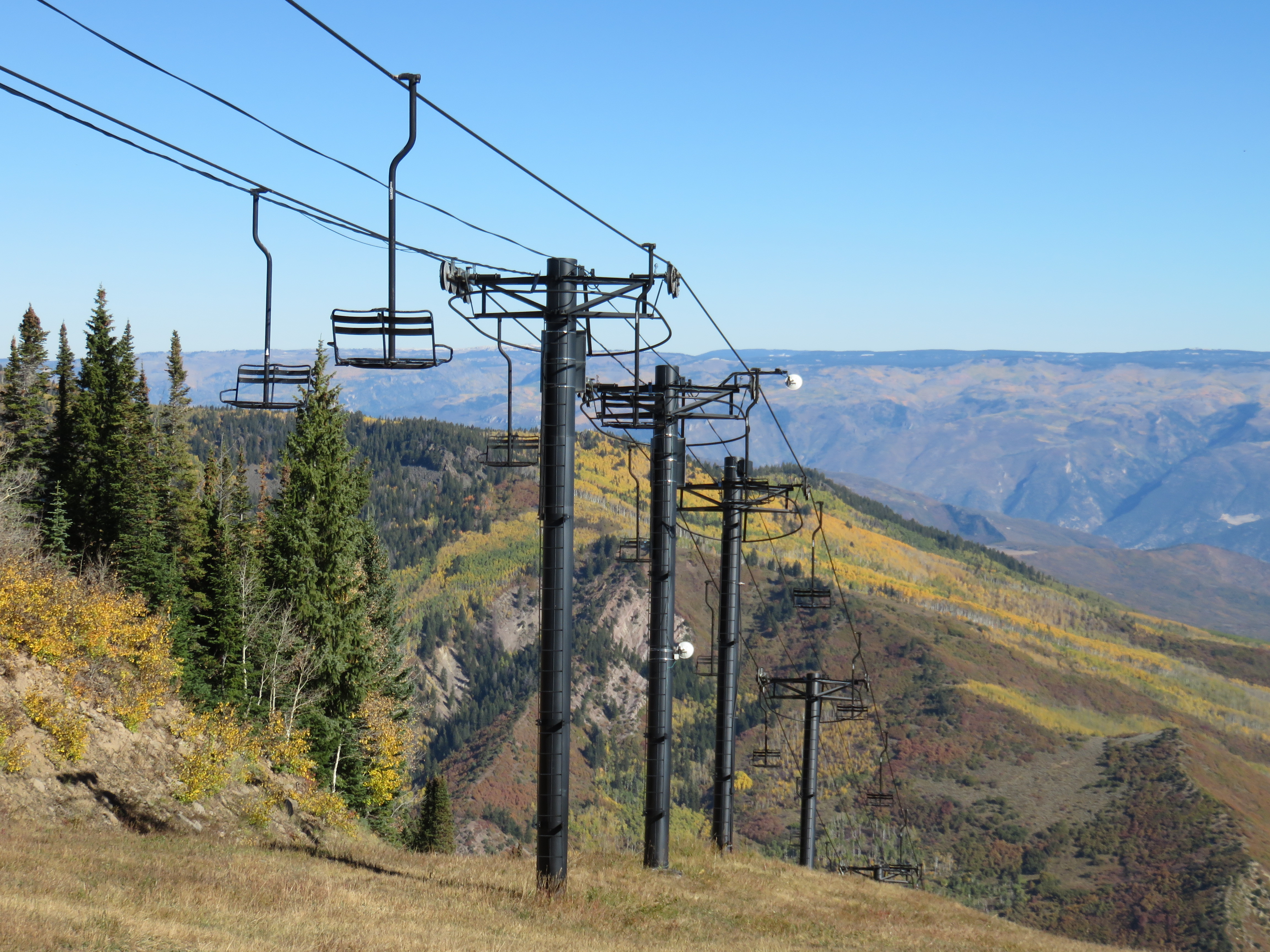
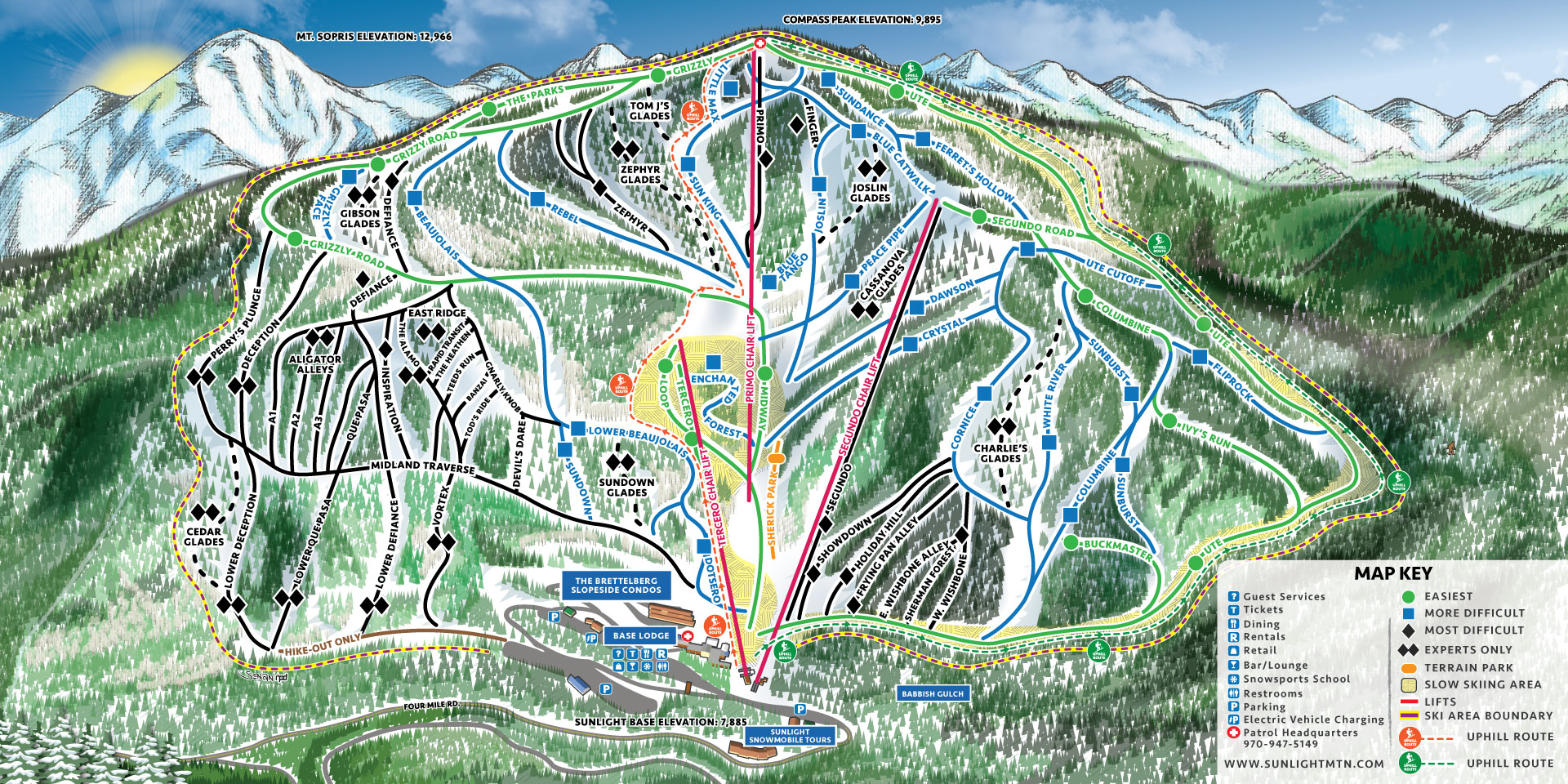
Two of Colorado’s oldest chairlifts will be replaced simultaneously in 2025, Sunlight Mountain Resort has announced. Primo, a 1966 Riblet double, will be replaced by a Leitner-Poma Alpha fixed grip quad. Segundo, a 1954 Heron with Riblet upgrades, will be replaced by a 2001 Leitner-Poma triple from Arapahoe Basin. The project will be the largest capital undertaking in the history of Sunlight.
“The replacement of Primo and Segundo signifies a new era for our resort,” Sunlight said in a release. “We are excited about the increased capacity and efficiency these new lifts will bring, while also honoring the legacy of Segundo, a beloved fixture of our mountain for over 50 years. Our goal is to offer an incredible and personalized experience, ensuring that while our infrastructure evolves, the essence of Sunlight remains unchanged.” Construction is set to begin this summer with the bulk of work taking place in summer 2025. Existing lifts will continue to operate for the 2024-25 winter season and both new lifts will be completed for 2025-26.
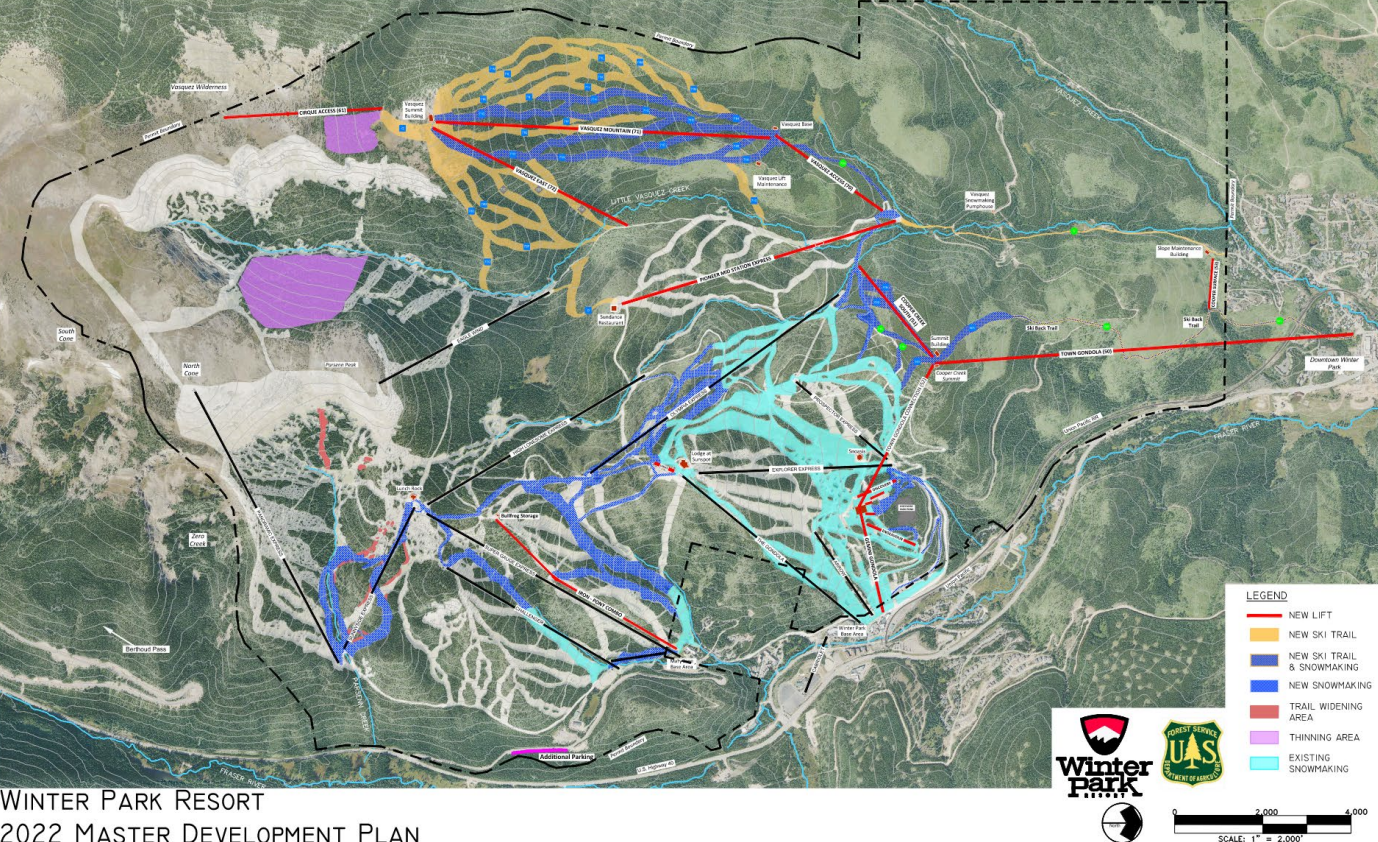
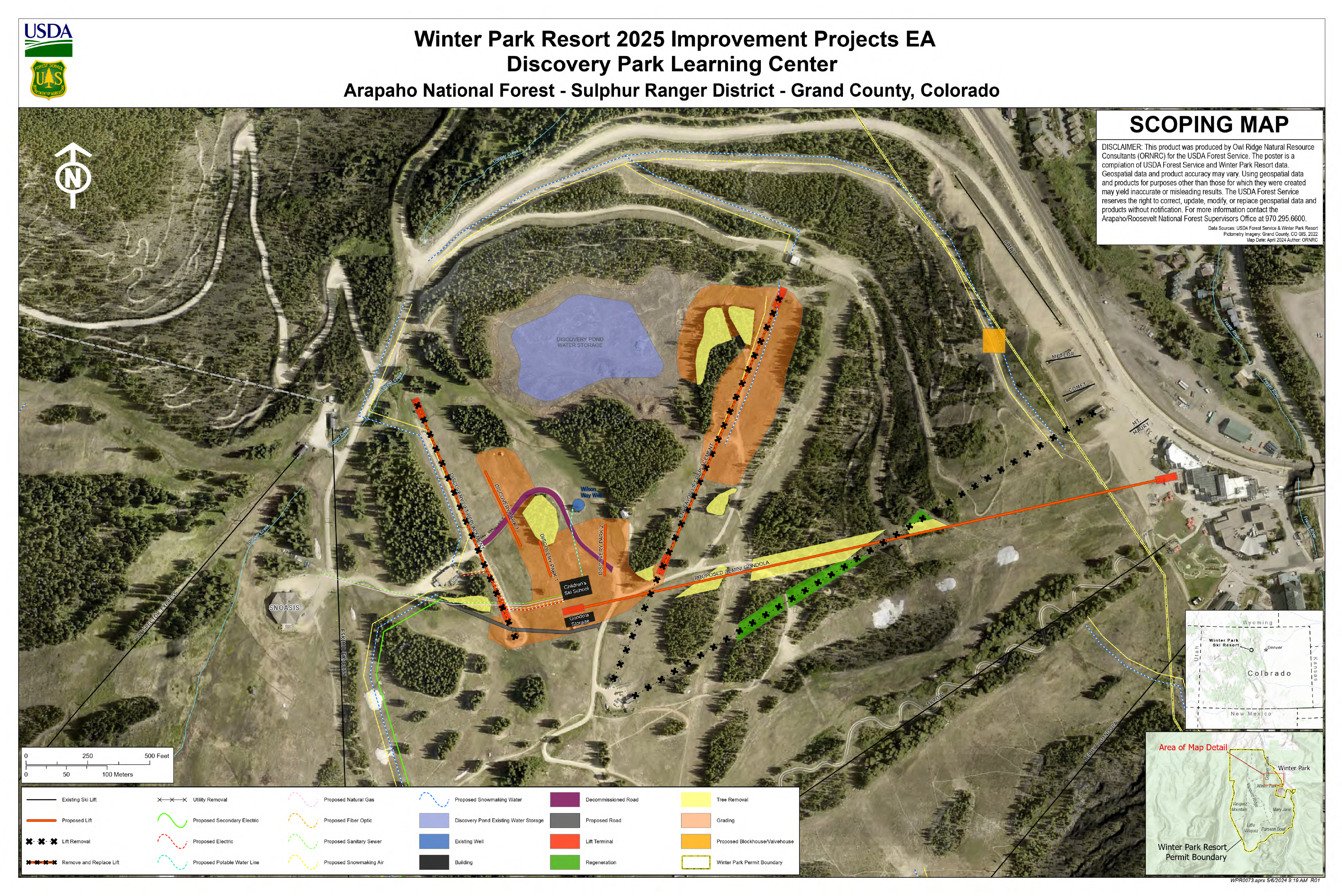
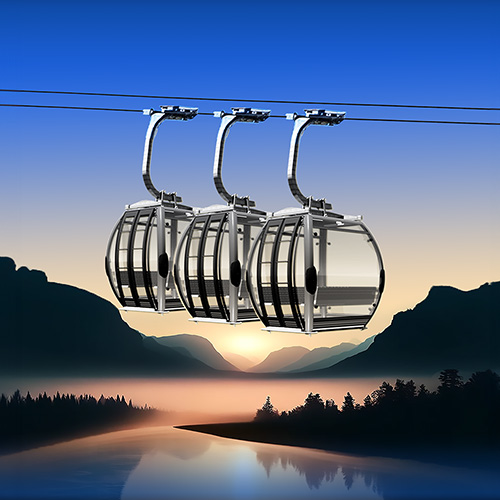
As I reported on Friday, Winter Park Resort is seeking Forest Service approval for a major revamp of the Discovery Park learning zone. The project, contemplated in the 2022 master plan, has four major lift components. First the Gemini Express would be replaced by a 10 passenger gondola, allowing beginner guests to upload and download as foot passengers. The 2,400 foot long gondola would start closer to the Village at Winter Park than Gemini and unload at a new children’s ski school building, where a variety of conveyor lifts are planned. The new gondola will be a workhorse capable of carrying 3,600 passengers per hour. One reason for such high capacity is this gondola could eventually become the third section of a town-to-village gondola long envisioned as a way to reduce traffic.
Once new skiers and riders are ready to progress to chairlifts, two new options will sit near the learning center. The current Endeavour triple will be replaced by a 2,400 pph detachable quad in a shorter alignment. The Discovery double will be upgraded from a double to a short fixed grip quad carrying 1,600 skiers per hour.
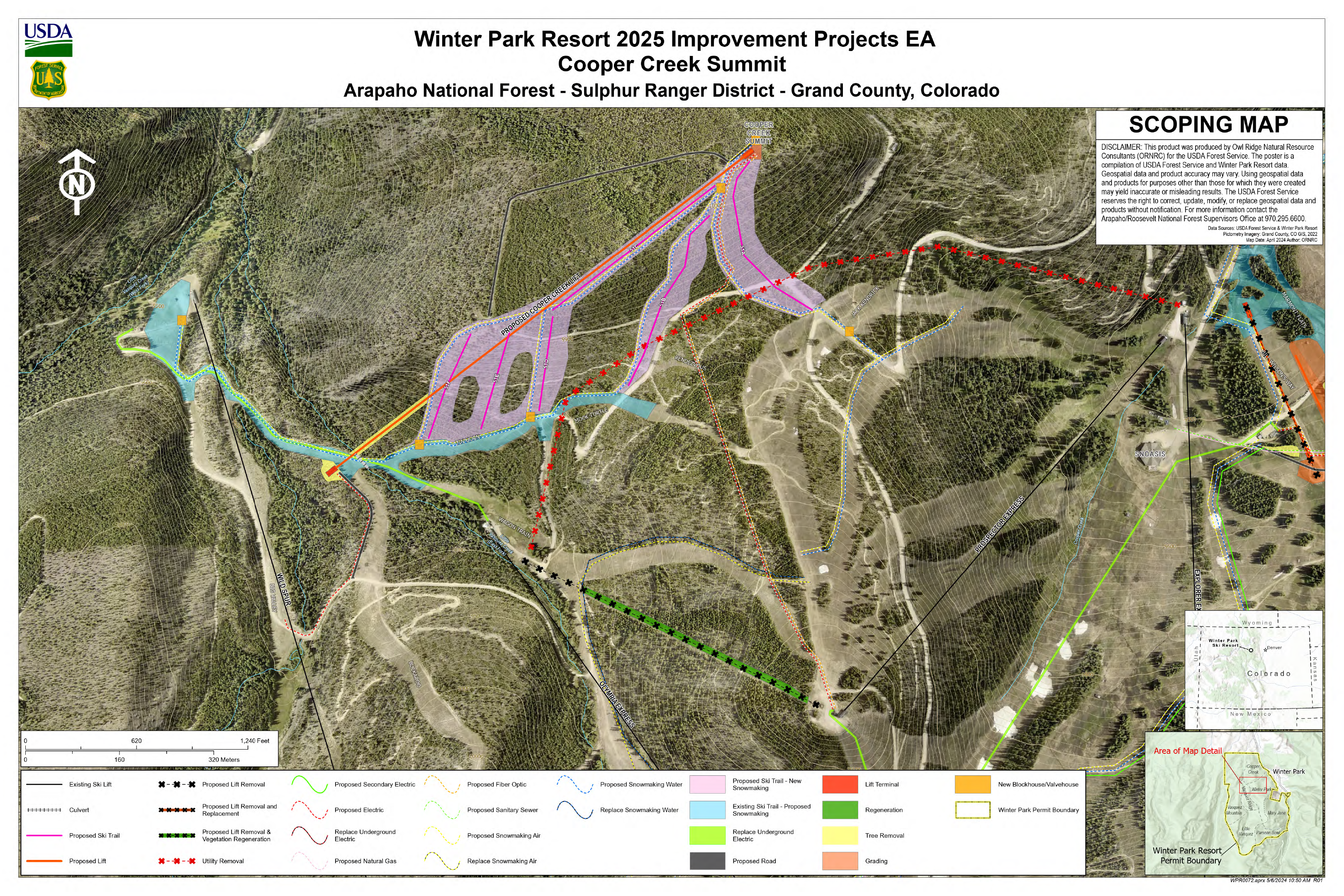
The final component of the plan is a new Cooper Creek six pack. This 2,700 foot long lift would load below the bottom of Olympia Express and rise 365 feet to the Cooper Creek Summit, carrying 2,800 guests per hour. Five new beginner trails would be constructed with new snowmaking throughout. As part of the project, the aging Looking Glass double would be removed. All told Winter Park would retire four chairlifts dating back to 1966, 1984 and 1993, replacing them with three new chairlifts and a gondola.
The Forest Service is preparing an Environmental Assessment and welcomes public comments. The agency expects to publish a decision in the first quarter of 2025 and construction could begin next summer.
A new two stage gondola and six passenger chairlift could be coming soon to Breckenridge’s popular Peak 9. The Forest Service and Breckenridge have begun scoping for the project, which would boost out-of-base capacity, better serve beginners and improve mountain circulation. A new mid-mountain learning center would be constructed, allowing Breckenridge to join the growing list of mountains moving learn-to-ski away from congested base areas.
The gondola, first proposed as a one stage gondola in the 2022 Master Plan, would load in the Peak 9 base area adjacent to the Quicksilver Super6. A whopping 43 percent of Breckenridge skiers use the Peak 9 portal and the gondola would add 2,200 seats per hour. The new lift would cross over Quicksilver and travel to the new Frontier learning center, where a cabin storage facility and two conveyors are planned. The Camelback platter would also be relocated from the base of Peak 9 to this zone. Gondola cabins would make an angle change at the learning center station and continue to an unload point near the top of the existing A-Chair. While A services excellent beginner terrain, the 1975 Riblet triple sits underutilized due to its long ride time and would be removed. The existing Eldorado platter is also slated for removal without direct replacement.
The second major component of the project is a detachable replacement for the existing C-Chair, a Riblet double that dates back to 1972. The faster six seat lift would carry 3,000 skiers per hour and follow the existing alignment, crossing under the Peak 8 SuperConnect. Both the bottom and top terminals would shift slightly higher on the mountain. The C SuperChair would rise 1,250 vertical feet become the sixth detachable lift on Peak 9.
The Forest Service and Breck plan to host an open house for the public to learn more about the project on May 22nd from 4-6 pm at the Maggie. Public comments will be accepted until June 13th and the USFS intends to reach a decision around the end of the year. If approved, construction could commence in summer 2025. The gondola learning center project is likely to be built first, followed by the C-Chair replacement in a later season.
California Mountain Resort Company has revealed its first major capital projects at newly-acquired Bear Valley. In an email to passholders, Bear Valley explained the plan includes changes to four different lifts in the main base area, improving the experience for beginner and intermediate skiers. “We’ve got some major lift improvement projects lined up for this summer, and they’re going to completely transform the Bear Valley base area,” the mountain wrote.
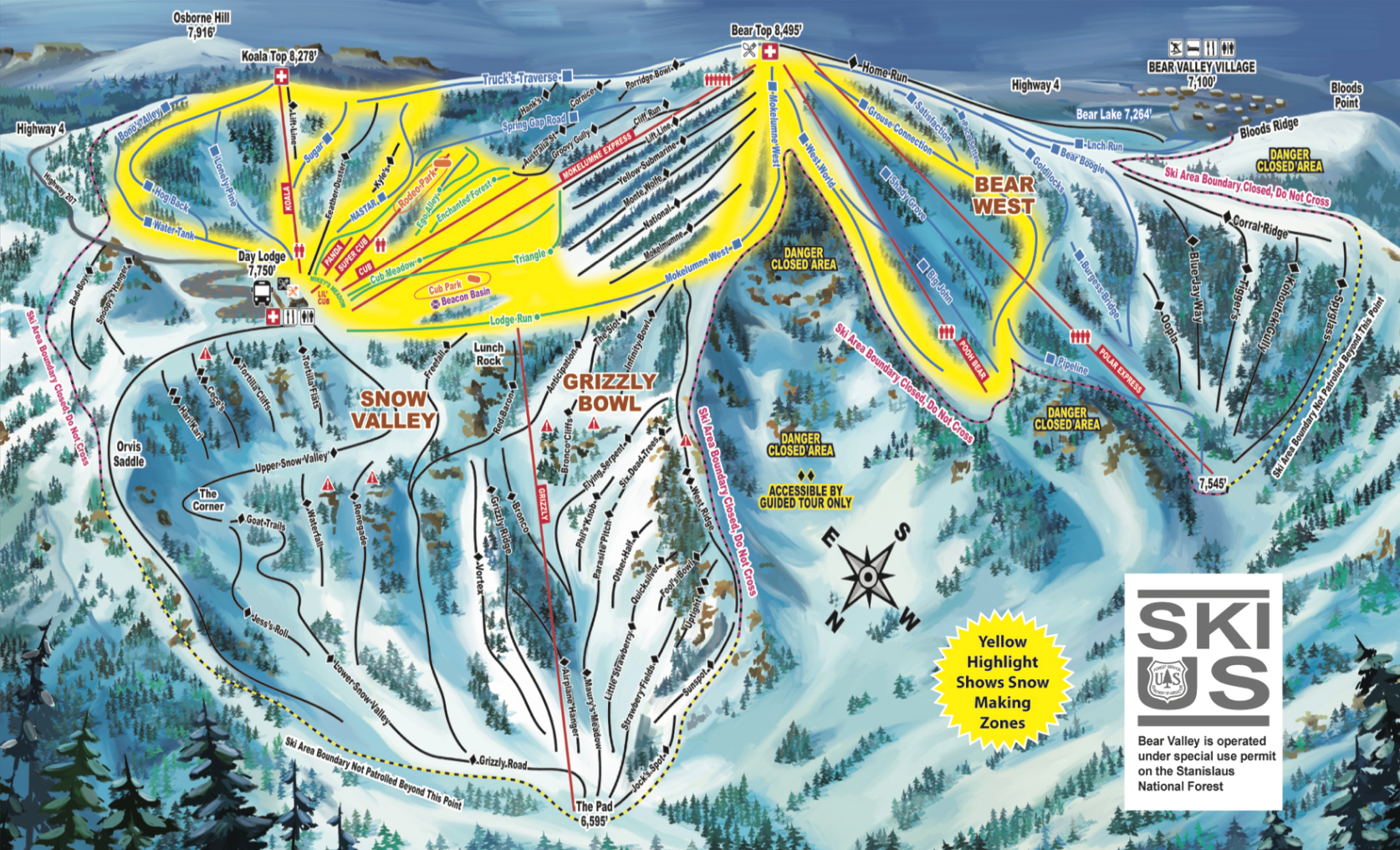
First, the Koala double will be removed and replaced with a used fixed grip quad. Koala dates back to 1968 and the new machine is a 1992 Poma fixed grip quad recently removed from Taos, New Mexico. For the second project, the Kuma triple will be shortened from its original length to become a beginner lift with the top station moving downhill. Kuma hasn’t been needed in its current base-to-summit configuration since the parallel Mokelumne Express opened in 2017. As part of the Kuma project, the existing Cub double will be retired. That lift dates back to 1967 and will be made redundant by the shortened Kuma chair. Finally, the Super Cub double will receive new chairs that will be easier for beginners to load. This entire lift shuffle is expected to be completed this summer and will reduce the mountain’s fleet of of aging Riblet lifts from four to two. In addition to base area projects, Bear Valley also expects to complete significant summer grooming and lift repairs in Grizzly Bowl.
New Hampshire’s Loon Mountain has made it official: a pulse gondola will join the lift fleet in 2025. The connector lift will cross the Pemigewasset River, linking RiverWalk at Loon Mountain in the town of Lincoln to Escape Route parking lot B, the Timbertown Quad and future South Peak Village. Doppelmayr USA will build the 1,300 foot machine, which will become the first pulse gondola in New England. Pulse gondolas are fixed grip lifts with pods of cabins that slow down for loading and unloading. Loon’s pulse will be configured four groupings of three cabins each. The 12 Omega IV cabin will hold up to eight riders and include floor-to-ceiling windows for views of the White Mountains.
With the South Peak expansion, Loon Mountain has nearly doubled the size of its lift fleet over the past 18 years. “Innovation and access are areas we continue to focus on,” said Brian Norton, Loon’s president and general manager. “This lift has been long dreamt of—dating back to the late ‘80s—and would not be possible without collaboration with RiverWalk and South Peak resorts,” Norton noted.
Construction on the gondola is expected to begin in spring 2025 and the lift will open for the 2025-26 winter season. Hours of operation and whether the gondola will be free or paid will be determined closer to opening.
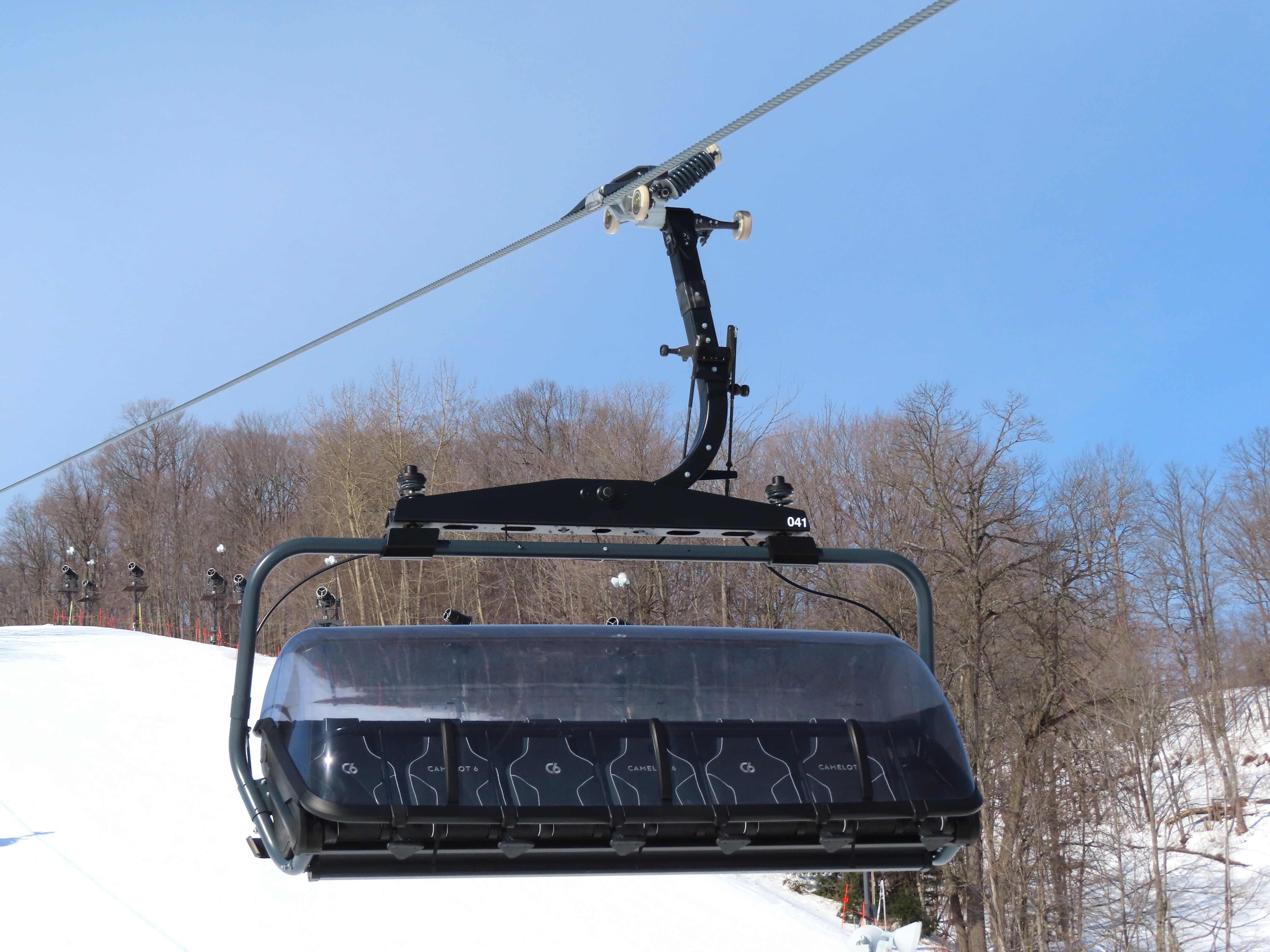
Both destination and day skiers will gain a new option to access Deer Valley Resort next winter with the addition of a Doppelmayr bubble chairlift. The yet-to-be-named six pack will connect the Grand Hyatt Deer Valley in the new East Village to a knob above the existing Sultan Express and Mayflower lifts. The 5,800 foot long bubble lift will service both the slopeside hotel and 500 new day skier parking spaces at opening. After riding 1,240 vertical feet on the D-Line bubble chair, guests can access the rest of Deer Valley via Sultan without needing to park at Snow Park Village.
Known for now as Lift 3, the Doppelmayr six place will be the first of nine lifts to open as part of Expanded Excellence phase one. This bubble chair is distinct from Lift 7, another bubble six place under consideration by the Park City Planning Commission tomorrow evening. Lift 3 and perhaps a couple small access lifts will be completed by December 2024 with Lift 7 with the rest of the 2,900 acre phase one expansion opening for the 2025-26 season.
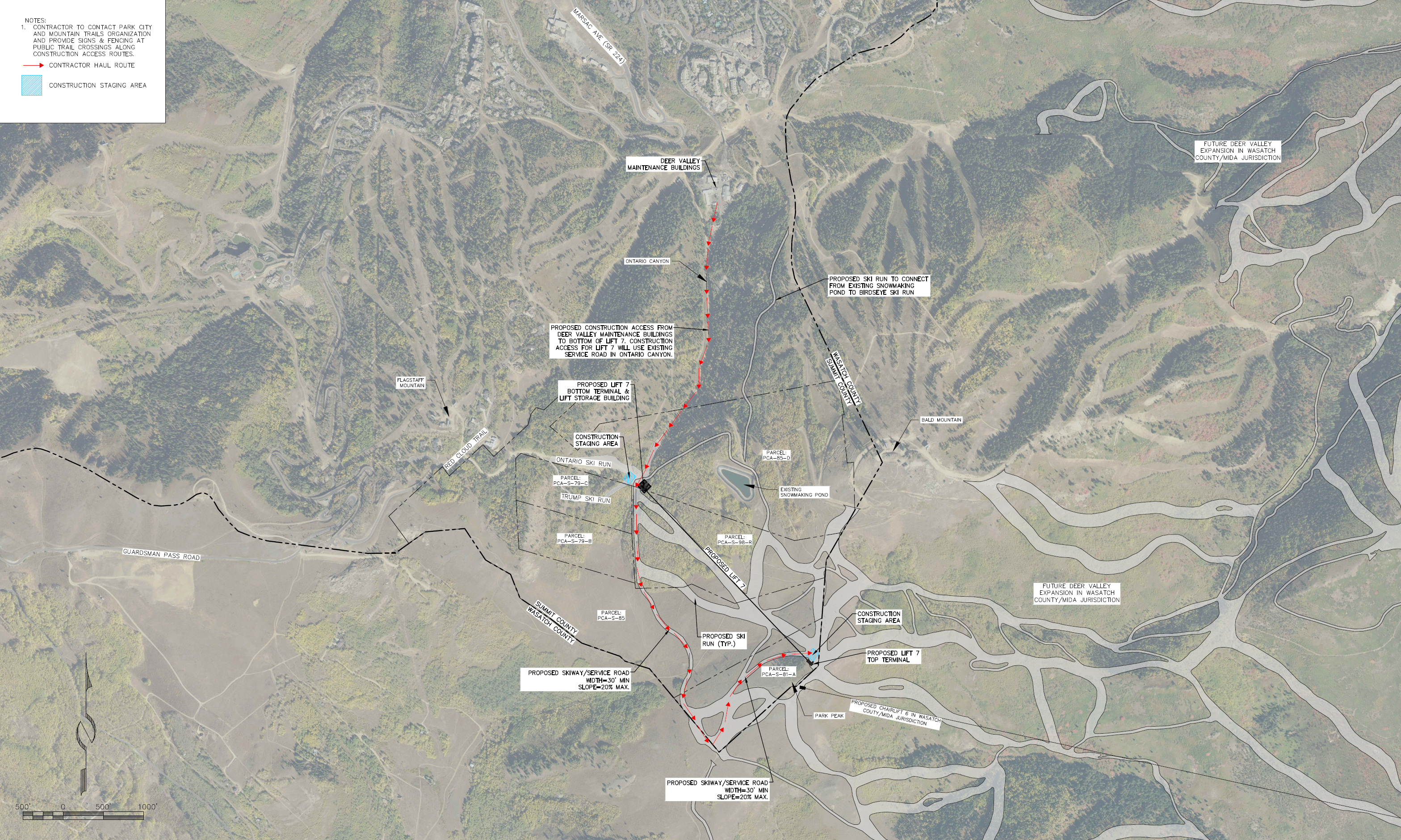
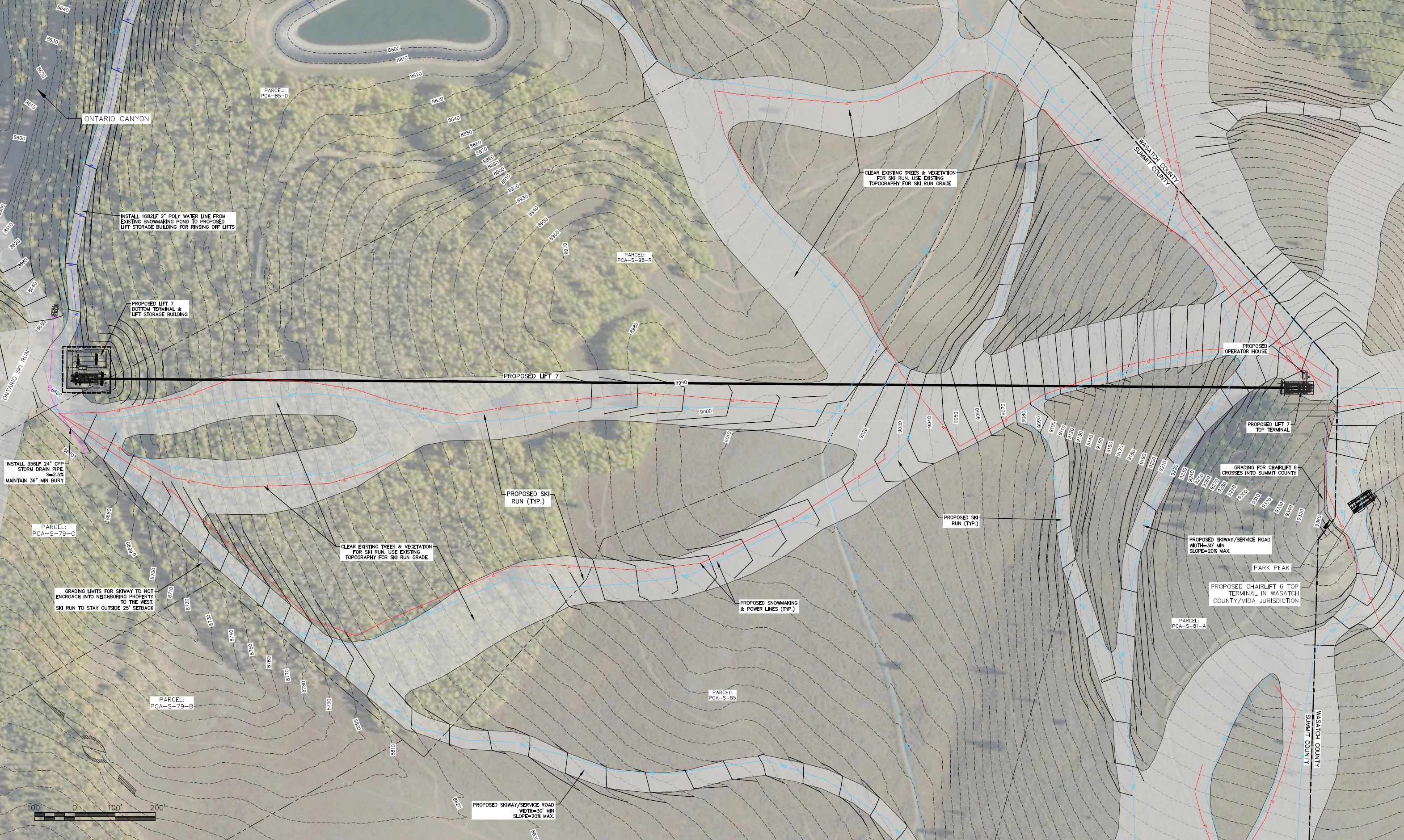
The Park City Planning Commission is set to consider one of the first lift projects in Deer Valley’s Expanded Excellence expansion next week. The new Lift 7 would become not only become Deer Valley’s first six pack but also its first bubble chair and first D-Line lift. Though relatively short, Lift 7 will form a key link between existing terrain on Bald and Flagstaff mountains and Park Peak, the summit of Expanded Excellence terrain. In the below map, Lift 7 is the uppermost red alignment surrounded by green runs. It will be accessed from existing Ontario and Trump ski runs and carry 3,000 skiers per hour. Guests will unload near the top of the future East Village gondola and Lift 6 six pack on Park Peak.
The project currently under review includes 4.62 miles of beginner ski runs that will be among the highest elevation trails at Deer Valley, topping out at 9,285 feet. Lift 7 will include 58 bubble chairs both for guest comfort and wind protection. The top drive, bottom tension machine will ascend 624 vertical feet in just 3.5 minutes at 1,000 feet per minute. Half the chairs can be parked in the bottom terminal with the rest in an adjacent 8,500 square foot storage facility. Deer Valley proposes to install 10 lift towers ranging in height from 19 to 53 feet.
Lift 7 is one of ten lifts set to be built over the next two summers as part of Expanded Excellence, set to open in winter 2025/26. If approved, Lift 7 and perhaps other lifts could open as early as next winter. Alterra typically announces specific capital plans for all its resorts in March but has not yet done so for 2024 (the only reason we know these details about Lift 7 is because it falls within the purview of the Park City municipal Planning Commission. The rest of the expansion is outside Park City boundaries in Wasatch County.) The Grand Hyatt Deer Valley is slated to open next season and in order to be ski in, ski out, the out-of-base Lift 3 would need to be constructed this summer to connect to Sultan Express. That project would likely also be a Doppelmayr bubble six place. Other real estate access chairlifts may be constructed this summer as well. I have reached out to Deer Valley for more information on 2024 lift plans and will update if I hear back.
Ski Sundown today announced it will replace the base-to-summit Exhibition triple this offseason with a quad from Skytrac. The current Exhibition lift opened in 1977 and carries 1,800 skiers per hour. The new fixed grip lift will feature a loading conveyor and 2,400 skier per hour capacity. The new lift will reduce ride time to 4.5 minutes with speed increasing from 400 feet per minute to 450 feet per minute. It will include 90 quad chairs and span 1,999 feet.
Exhibition’s final day will be this Sunday and the new lift is expected to open for the 2024-25 season.