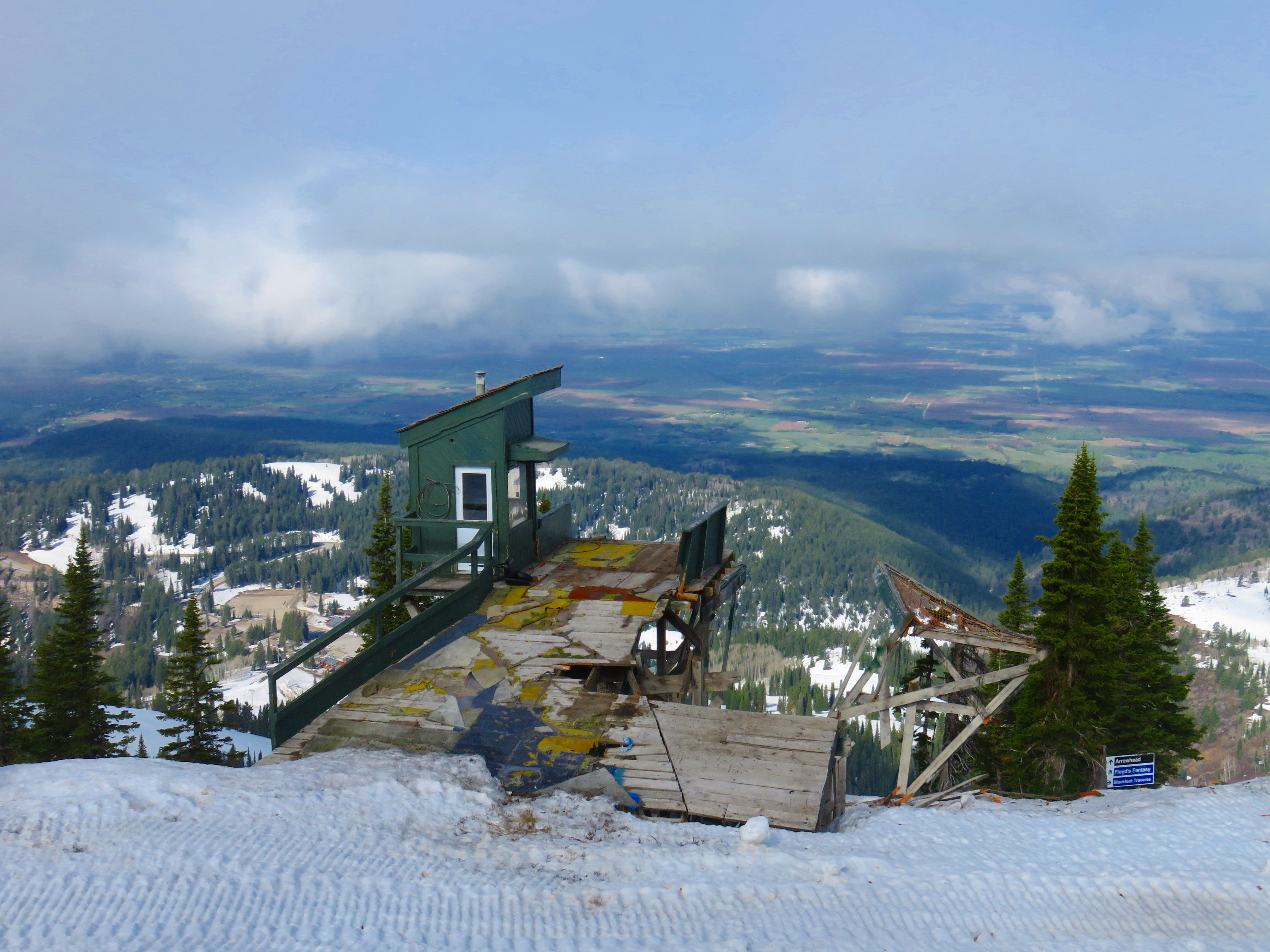
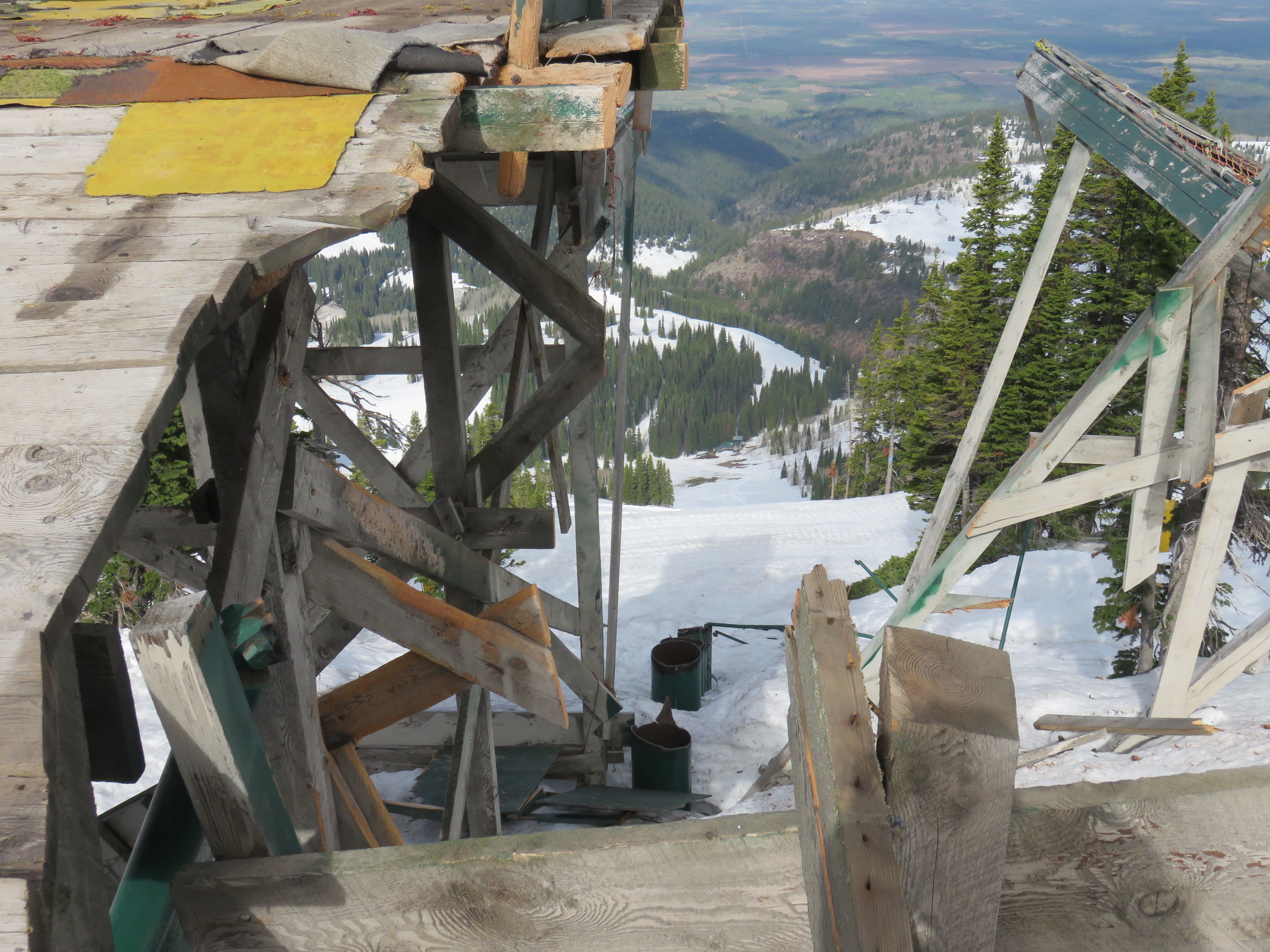
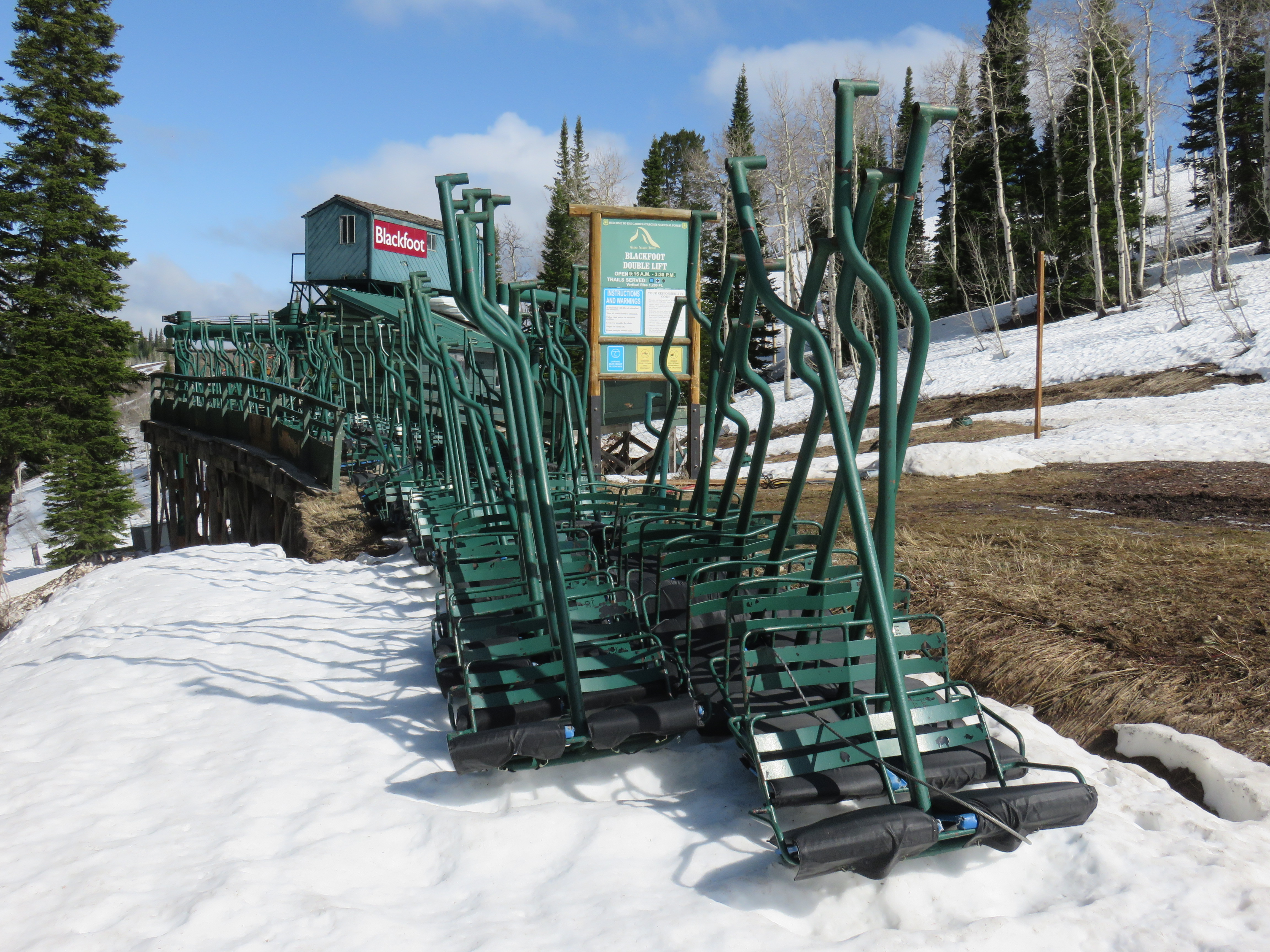
Grand Targhee wasted no time removing Blackfoot, starting even before they closed for skiing.
New lifts are coming to both sides of the Tetons this summer and that means three old lifts are coming down. At Grand Targhee, the Blackfoot double is being replaced with a Doppelmayr fixed-grip quad. All 20 towers have been removed along with the top terminal. Blackfoot had wooden ramps at both ends that will be burned down once all the steel is out of the way.
From the tree cutting that’s been done, it looks like the new lift will start to the skier’s left of the old one.Still no word on where these chairs are headed.
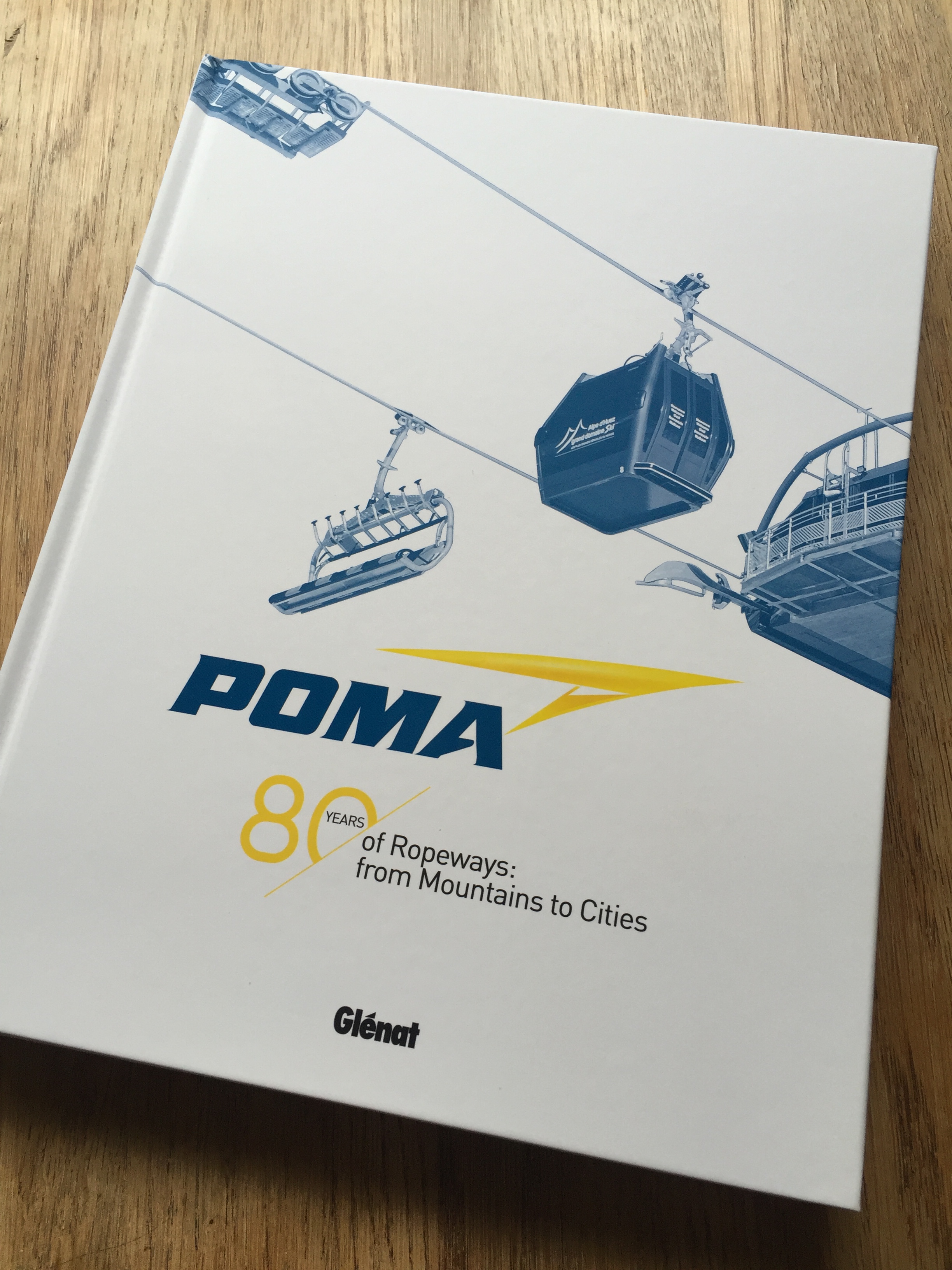
“This work is dedicated to the men and women who have been part of Poma’s innovative and epic journey. It is for our clients and partners who have placed their trust in Poma throughout the world – whether up in the mountains or in the heart of cities.”
The above dedication sits on the first page of a new book celebrating eighty years of commercial success called Poma: 80 Years of Ropeways from Mountains to Cities. The 190-page work, written by Béatrice Méténier and Christian Bouvier, looks back at the firm’s more than 8,000 ropeway installations from the mountains of France to Colorado, South America and beyond.
A skier at heart, Jean Pomagalski installed his first surface lift in 1934 at Alpe d’Huez. He constructed it mostly out of wood and with a used Ford motor. After building three additional tows, Mr. Pomagalski had himself a company and filed a patent in 1936 for a “carrying device hauled by a rope moving at a constant speed.” After a break for Wold War II, Pomagalski S.A. grew to 15 employees by 1953. Even so, Mr. Pomagalski still found himself simultaneously a salesman, surveyor, designer and builder of lifts that were sent off as kits for installation by customers. The company’s first chairlift, a single-seater, debuted in 1955 near Chamonix.
Workers assembled, then disassembled early fixed-grip chairlifts in Poma’s French workshops before sending them to the field as seen in this 1963 photo.
By 1958, Pomagalski was selling 120 lifts a year, many of them to customers in the United States and Canada. Mr. Pomagalski decided to drop the latter part of his name from the company’s in 1965 to better appeal to English-speaking clients. Poma delivered its first gondola systems simultaneously in 1966 at Queenstown, New Zealand and Val d’Isère, France. A small new company called Sigma Plastiques provided the egg-shaped cabins. Poma trusted Sigma again the next year for the world’s first gondola with automatic doors and the rest is history.
In the wake of fraud allegations and a federal takeover, Q Burke Mountain Resort will lose the Q and likely be sold within a year.
At Jay Peak, Doppelmayr says the 52-year old aerial tramway needs $4.15 million in repairs. In a press conference, the Florida lawyer put in charge of both properties said “we’re not even sure we have to fix the tram. The company that tells us we have to fix it is also the one that will get the contract.” At least he’s stopped calling it a gondola.
A new lease for Ascutney Mountain will allow a nonprofit group to build up to three lifts at the ski area, which closed in 2008. Skytrac removed Ascutney’s four CTECs from 2012-2014 and sold them to Crotched Mountain, Pats Peak and Liberty Mountain. A 1970 Hall double remains standing on the property.
Alta submitted some grand plans to the Forest Service last week – 12 projects including at least five new lifts. The 77-year old ski area wants to replace more than half of its chairs in the next five years and build a low-capacity tram up 11,068′ Mt. Baldy. If approved and implemented, these would be the biggest changes to Alta’s lift system since the two-stage Collins high speed quad debuted in 2004.
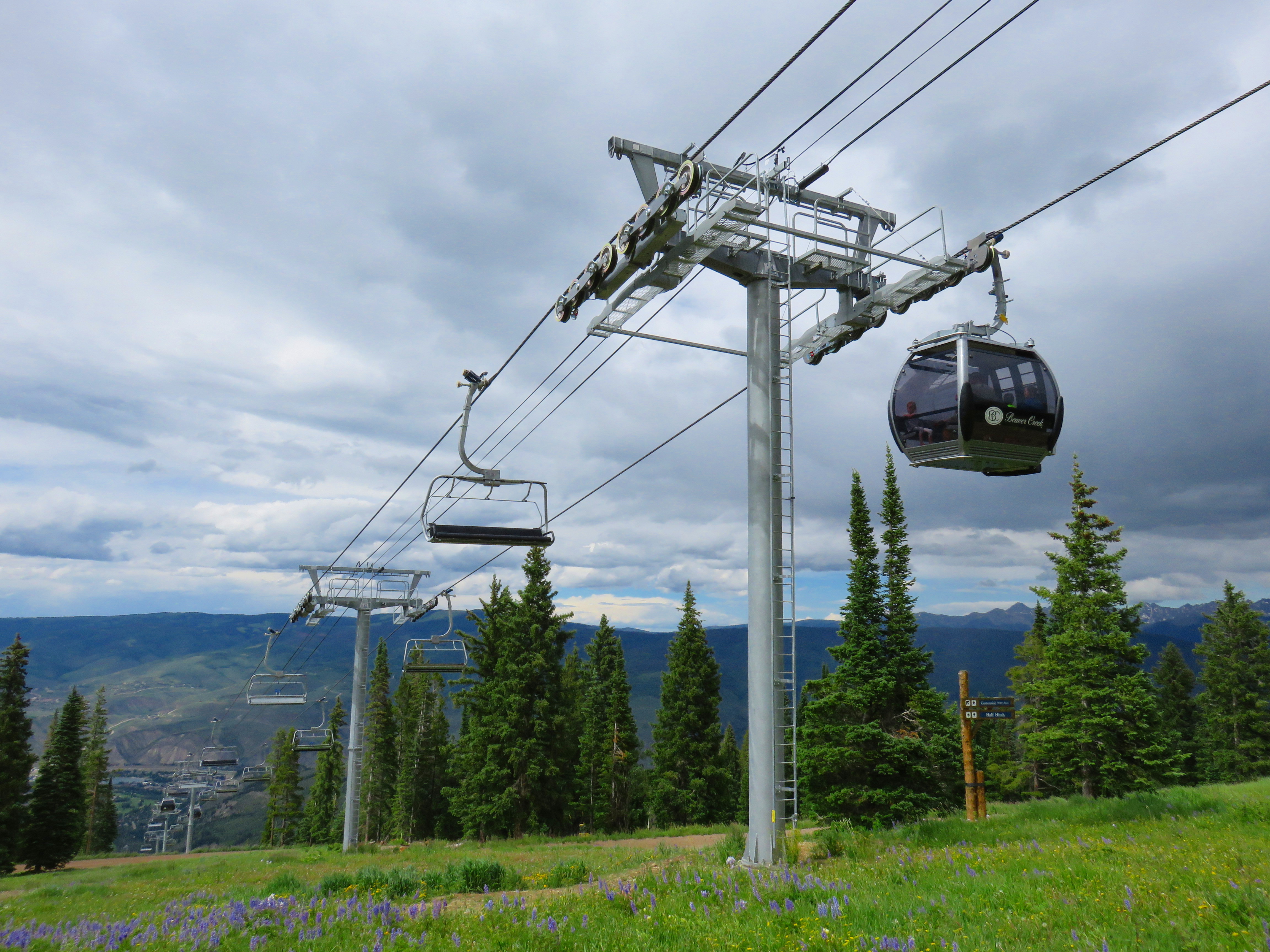
A Beaver Creek-style Chondola coming soon to Alta?
Five lifts would be replaced with three new ones. Sunnyside, one of only two detachable triple chairs remaining in North America, would be subbed with a higher-capacity Chondola with chairs and gondola or cabriolet cabins. It would utilize the existing lift line and tower tubes where possible and have a capacity of 2,400 skiers per hour. Albion, a 1980 Yan double running adjacent to Sunnyside, would be removed without being replaced.
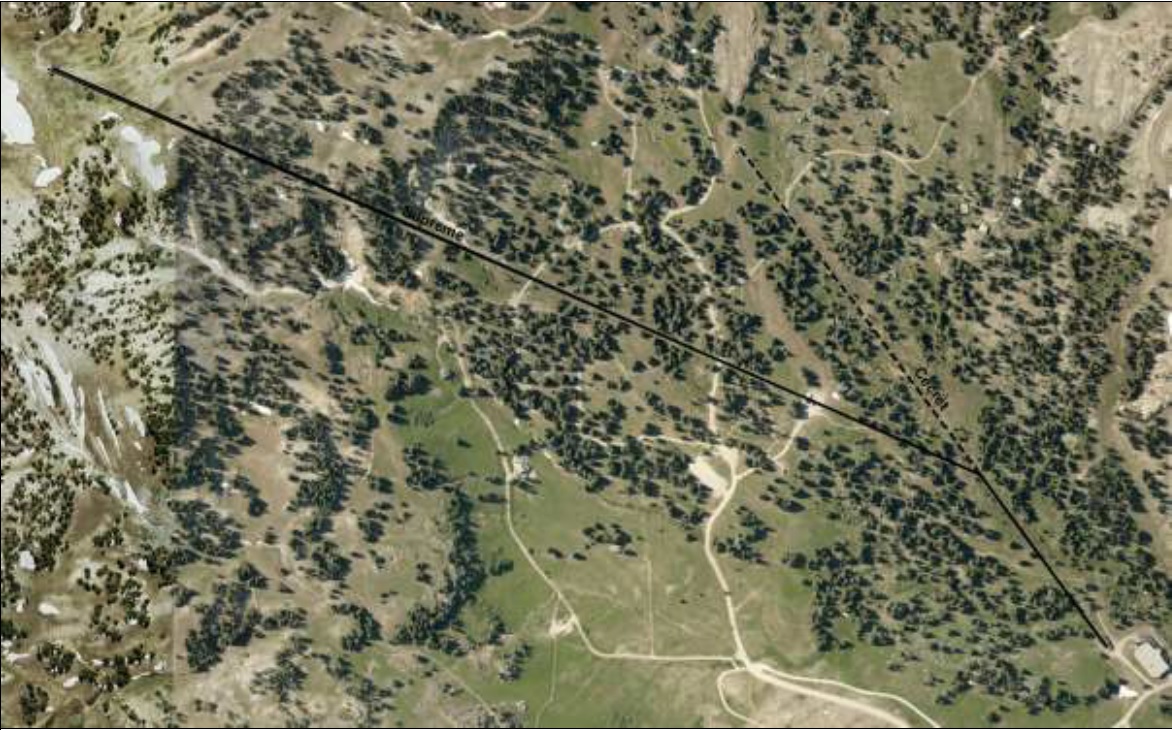
Supreme detachable quad lift line with angle station unloading for beginners.
Higher on the Albion side of the mountain, Cecret and Supreme would be replaced by a single detachable quad with an angle station, much like Collins’ mid-station. Cecret and Supreme are both Yans built in 1981. The new detach would follow the first third of Cecret’s current lift line before joining the Supreme line so it could utilize some of the current towers. With these upgrades, the Albion side of Alta would go from five lifts to three. That’s before a new lift called Flora is added. Flora would be a short (985 foot) double chair replacing the East Baldy Traverse with a lift to get from the top of Sugarloaf to the top of Collins. The top-drive chair would move 1,200 skiers per hour out of Sugarbowl and have just four towers.
Leitner-Poma acquired Skytrac this week in a deal revealed today. Even more exciting is Skytrac will continue to operate as a subsidiary brand of the Leitner-Poma Group. “We would like to welcome Skytrac to our family,” said Anton Seeber, CEO of the European parent company of both Leitner and Poma. “Like Leitner-Poma, Skytrac also will be managed autonomously and independently to make sure the Skytrac team can focus on its strengths and hone its skills, all while having access to the Group’s resources to be able to benefit from particular synergies.” Leitner and Poma have experience operating in Europe as separate brands while sharing technology such as the latest-generation LPA detachable grip.
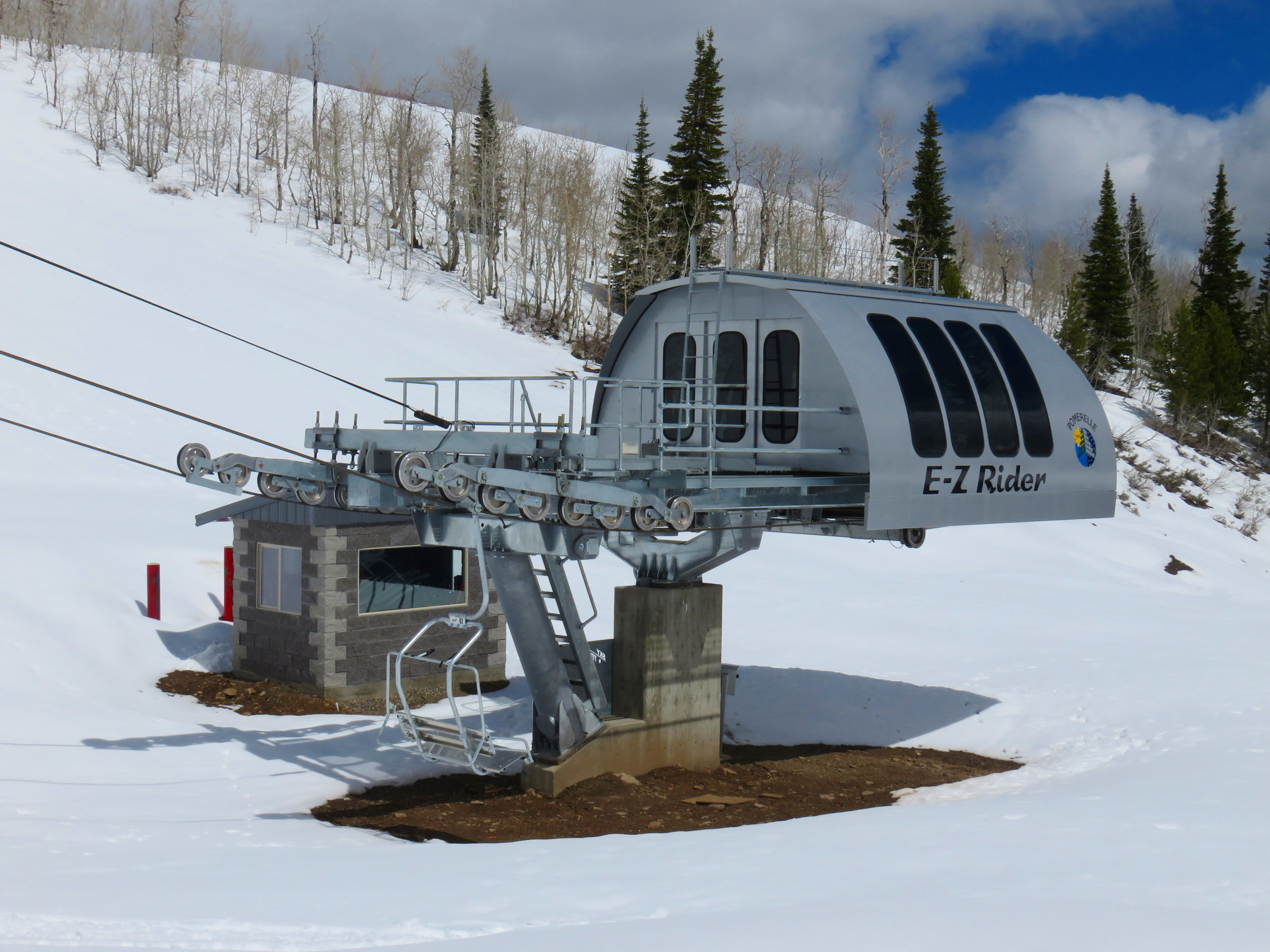
SkyTrac made a name for itself providing smaller resorts like Pomerelle in Idaho with modern lift systems like this one.
Jan Leonard and other former CTEC employees started Skytrac in 2010 to fill a niche retrofitting older lifts and building economical fixed-grip lifts in Salt Lake City. The company has built 19 complete lift systems to date, mostly at small-to-medium sized ski areas from Washington to Massachusetts. Skytrac had its best year in 2014, building as many new lifts as both Leitner-Poma and Doppelmayr that year. In addition to building complete lifts, Skytrac also specializes in outfitting older lifts with new terminals and control systems.
Boyne Resorts has firmed up an approximately $10 million deal with Doppelmayr USA to build a flagship detachable lift in The Bowl at Big Sky Resort and replace the damaged Challenger double with an all-new fixed-grip triple chair this summer, according to multiple sources. The resort announced back in February that two new lifts were coming but has yet to officially say much else. These will be the first new lifts built in Big Sky since Moonlight Basin, Spanish Peaks and the Yellowstone Club went bankrupt in 2008-10 and a sure sign that the region has bounced back.
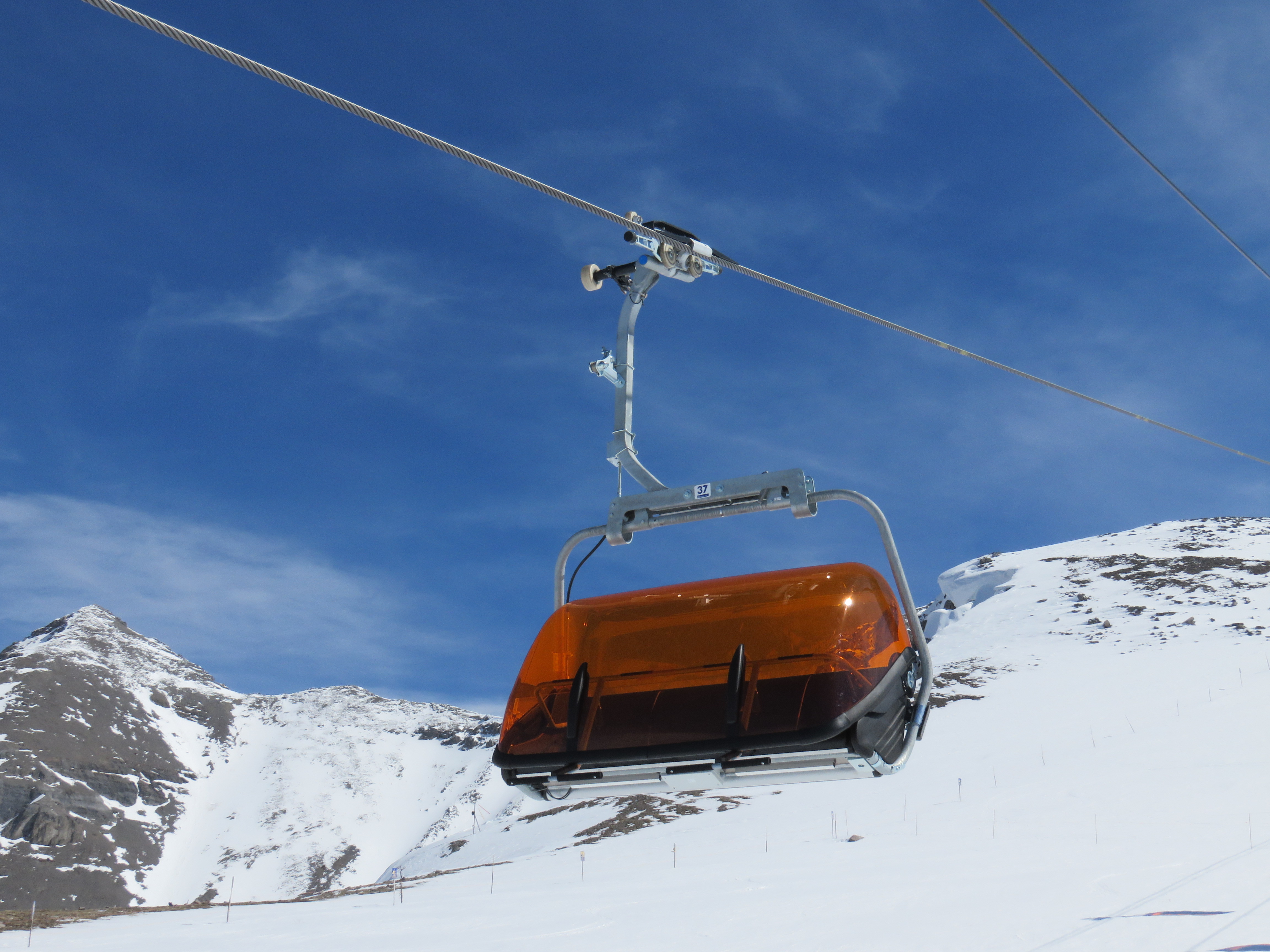
Doppelmayr bubble chair with heated seats at Sunshine Village, similar to what will be installed at Big Sky.
The big story here is the six-pack replacement of the Lone Peak triple which will be just the sixth lift in North America to feature chairs with bubbles and heated seats. The others are at Park City, Sunshine Village, Okemo and the private Hermitage Club in Vermont. The new six pack’s alignment will be altered from the current lift for better traffic flow and the bottom station will feature 90-degree loading. The lift will be just over 3,000 feet long with a vertical rise of approximately 800 feet and ride time of just three minutes.
The new Challenger lift will be a bottom drive/bottom tension fixed-grip triple with loading carpet, capable of spinning up to 500 feet a minute for a 9.5 minute ride. The Challenger double chair that broke in February only ran 396 fpm. Challenger will most likely feature Doppelmayr’s Tristar drive/tension terminal and an expanded unloading area next to the summit of the Headwaters double.
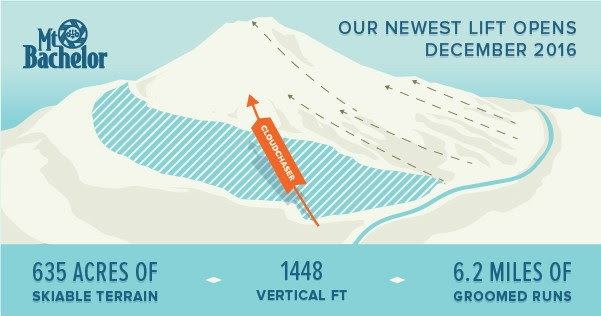
Mt. Bachelor will open the long-awaited east side expansion served by a new high speed quad called Cloudchaser in time for Christmas. Powdr Corp. has signed a nearly $6 million contract with Doppelmayr to install the lift this summer. The project will add 635 acres of skiable terrain to Mt. Bachelor, making it the 5th largest ski area in the United States. This will be the first new terrain serviced by a new lift since the Northwest Express was added in 1996. With the addition of Cloudchaser, Mt. Bachelor will have eight detachable quad chairs serving more than 4,300 acres. The new lift will rise 1,448 vertical feet with a slope length of 6,576 feet and 21 towers.
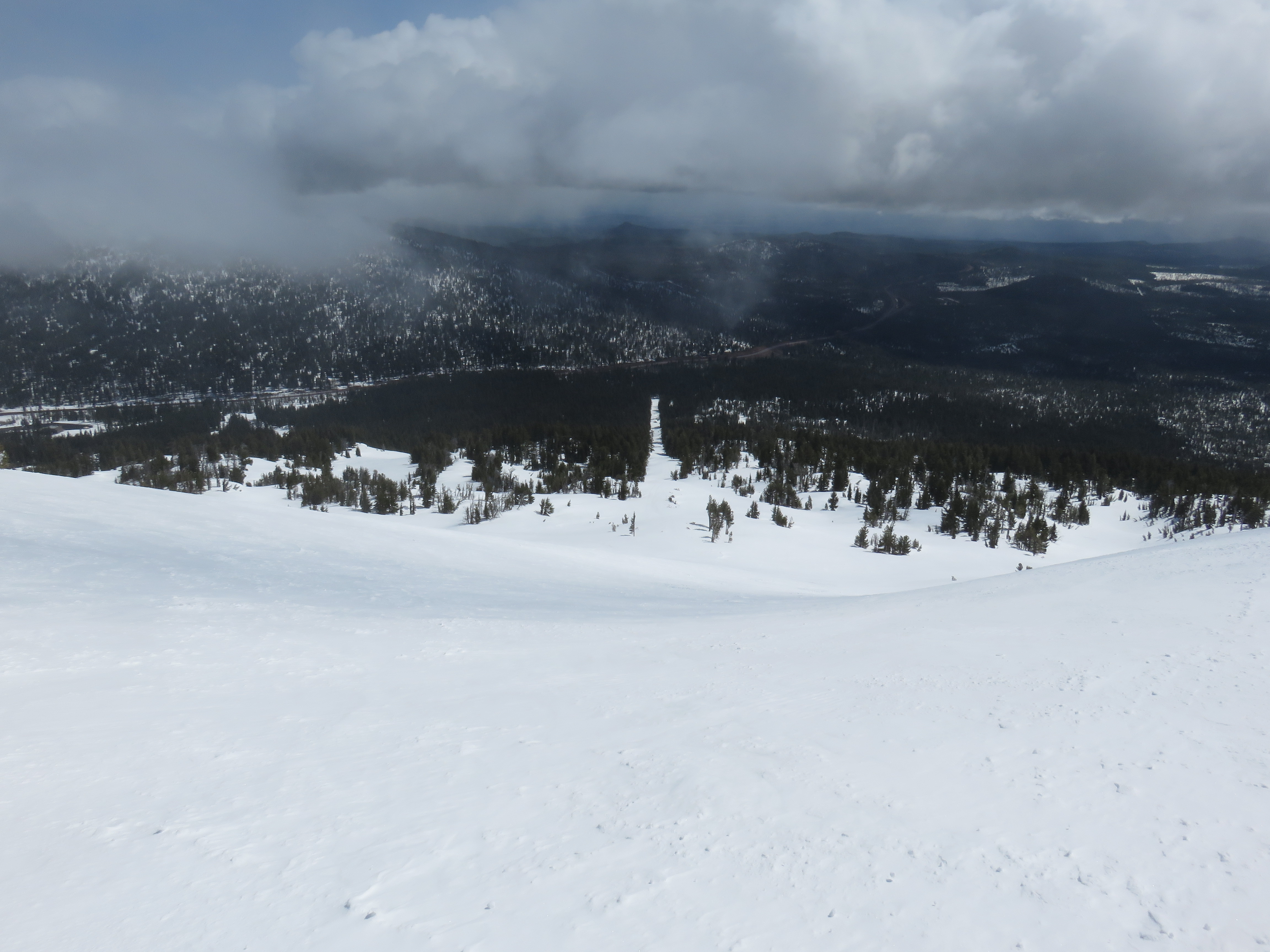
Cloudchaser lift line seen this week. It’s hard to believe a lift will be operating here in six months.
Mt. Bachelor will host a Cloudchaser launch party on May 7th with free skiing and entertainment. “This is an exciting milestone for the entire team here at Mt. Bachelor and for you, our loyal pass holders,” interim General Manager John McCleod wrote in an email to season pass holders. “Powdr’s investment in this lift underscores a commitment to Mt. Bachelor and provides us a new way to enjoy our favorite mountain.”




 Lift Blog