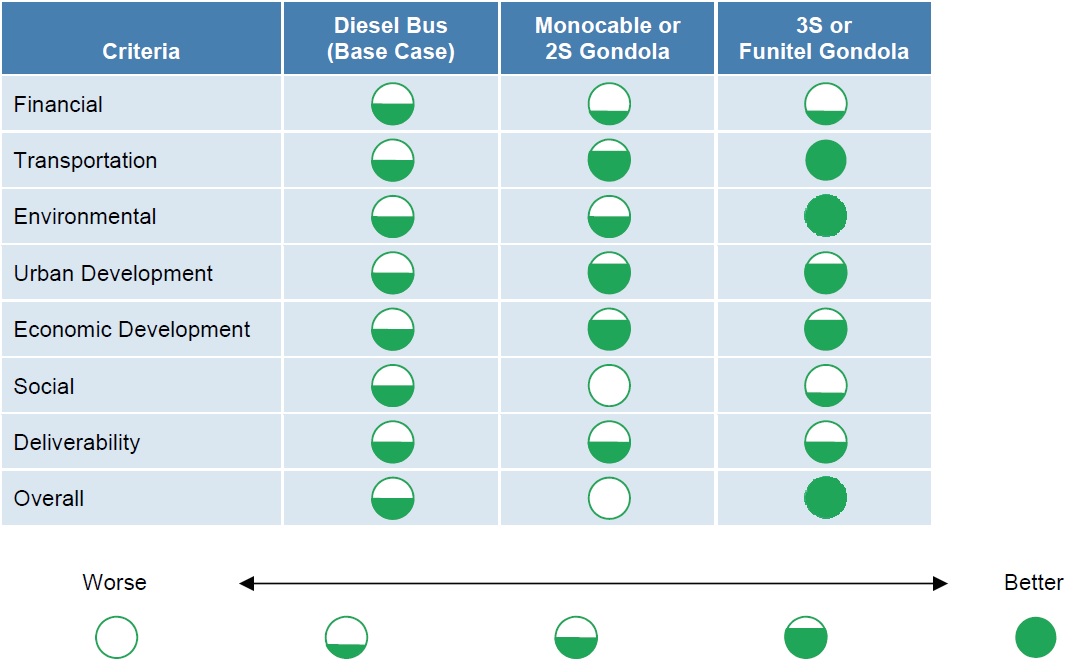
The State of Utah has selected a 3S gondola as the winning alternative for Little Cottonwood Canyon mobility after a multi-year environmental impact study. The study considered roadway widening, enhanced bus service, rail and two different gondola options. UDOT received and analyzed some 50,000 public comments in the lead up to its decision.
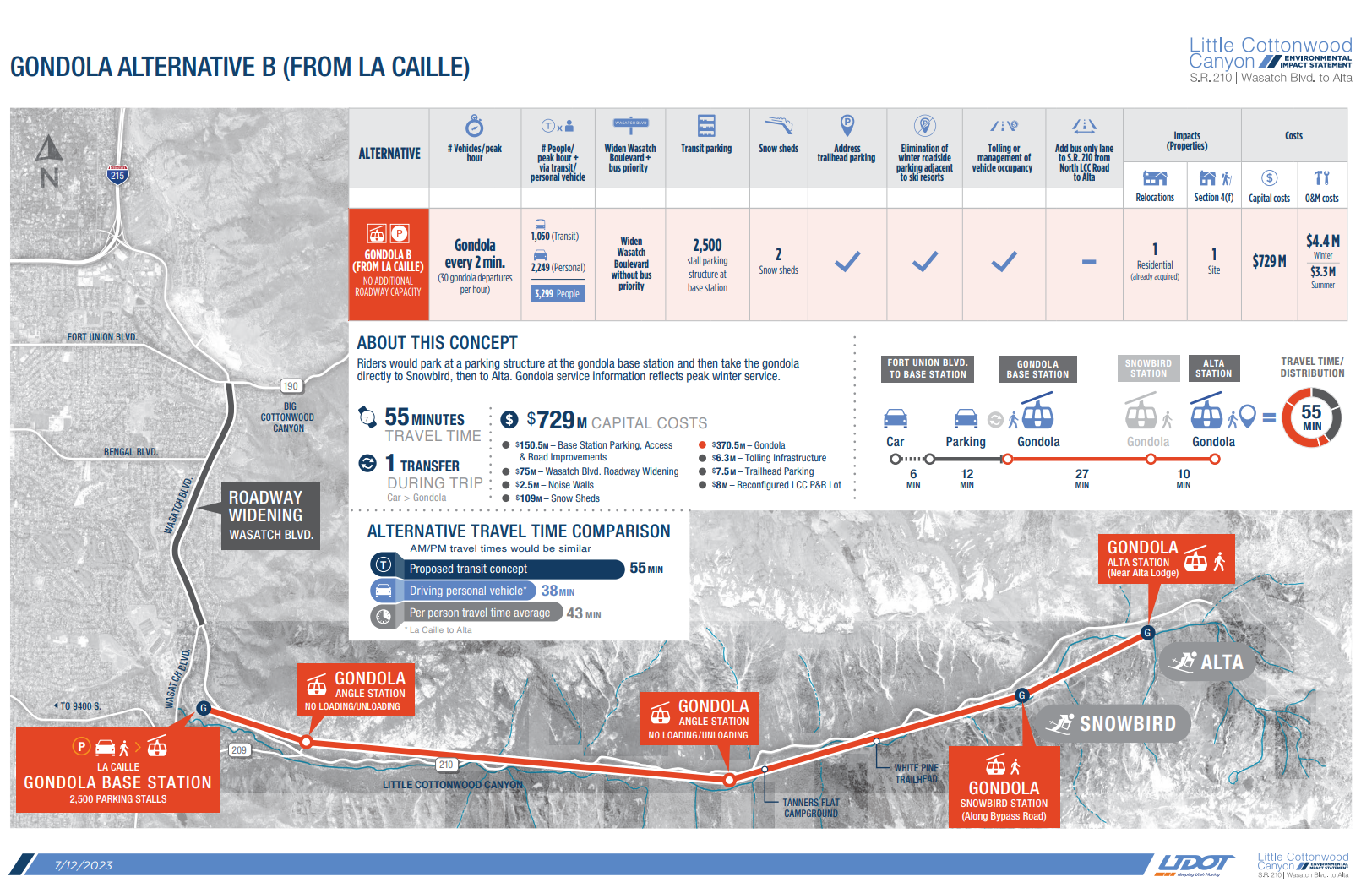
The selected gondola alternative B will start with enhanced bus service in 2025 and other road improvements before the gondola is constructed and State Route 210 becomes tolled. The 3S system would be capable of carrying 1,050 passengers per hour from a base terminal at La Caille to stations at Snowbird and Alta. The innovative system would include four sections with 35 passenger cabins departing stations every two minutes.
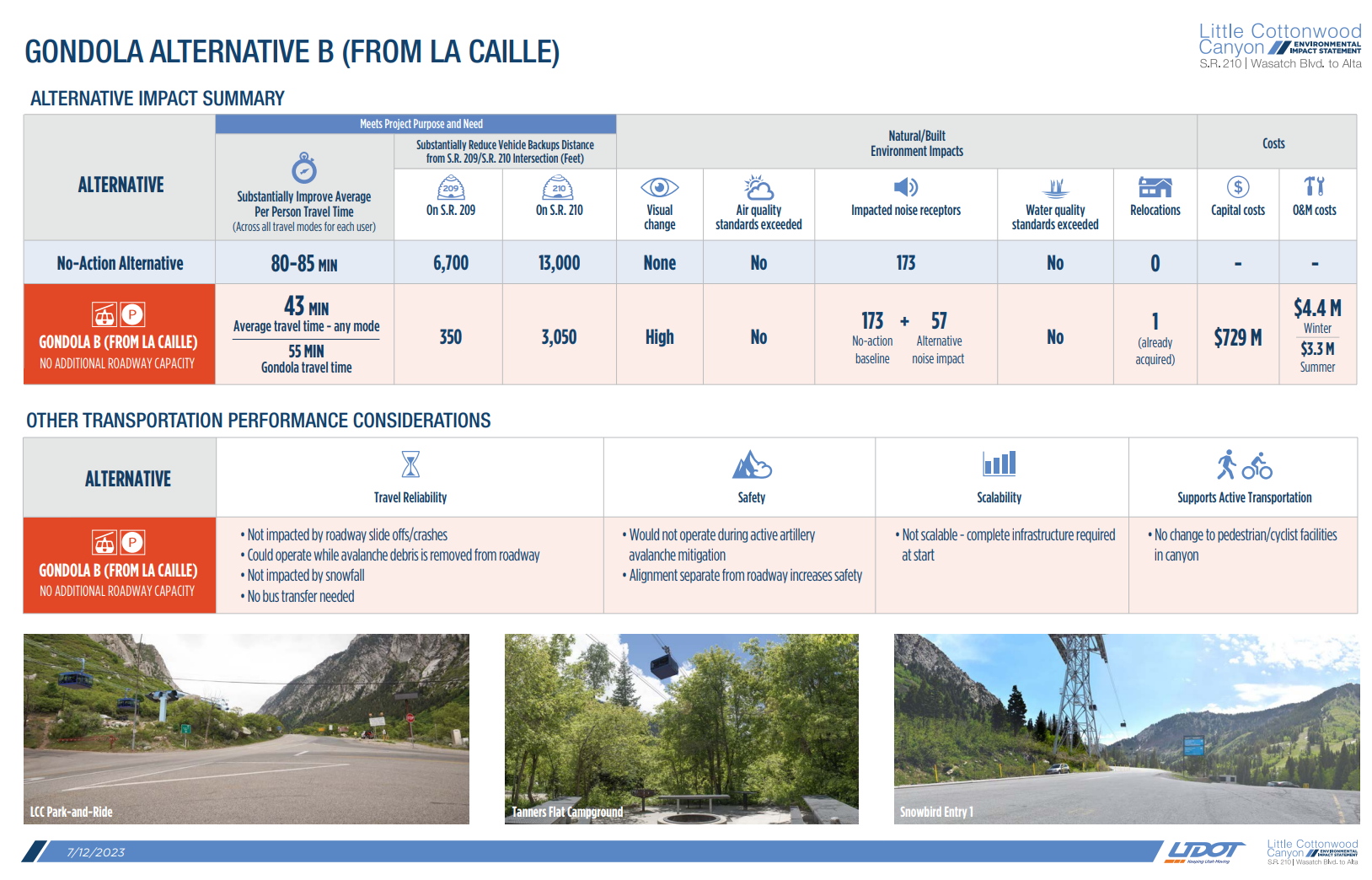
“The gondola provides the highest travel reliability, as it can operate independently of State Route 210, avoiding delays related to adverse weather, crashes, slide offs, and slow moving traffic,” wrote UDOT in its Record of Decision. “While the gondola does have high visual impacts, it has low impacts to the watershed, wildlife movement and climbing boulders, along with low operations and maintenance costs.”
The gondola itself would cost $370 million to construct and would become the most expensive and capable lift system ever built in the United States. A new parking garage, tolling infrastructure and trailhead improvements would bring all-in capital cost to $729 million. However, because the gondola would cost less than $8 million per year to operate, it has the lowest 30 year lifecycle cost of all the options studied.
Once the gondola is complete, UDOT expects the Utah Transit Authority to discontinue bus service in Little Cottonwood with transit riders transferring to the gondola at the base of the canyon. Skiers and resort employees alike could reliably access Snowbird in 27 minutes and Alta in 37 minutes whenever the gondola is operating. The road would remain open for private vehicles with tolling in the upper canyon to help pay for improvements.
Although gondola alternative B is now officially the state’s selected alternative, lawmakers have not yet funded the project. As such, no timeline has been set for gondola construction to begin.






 Lift Blog