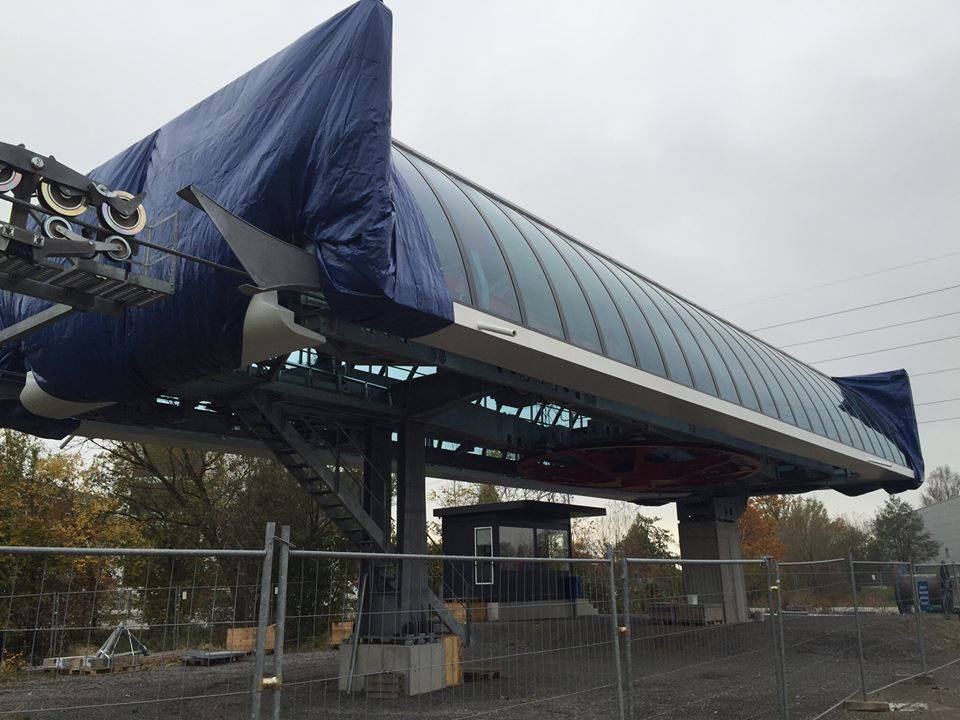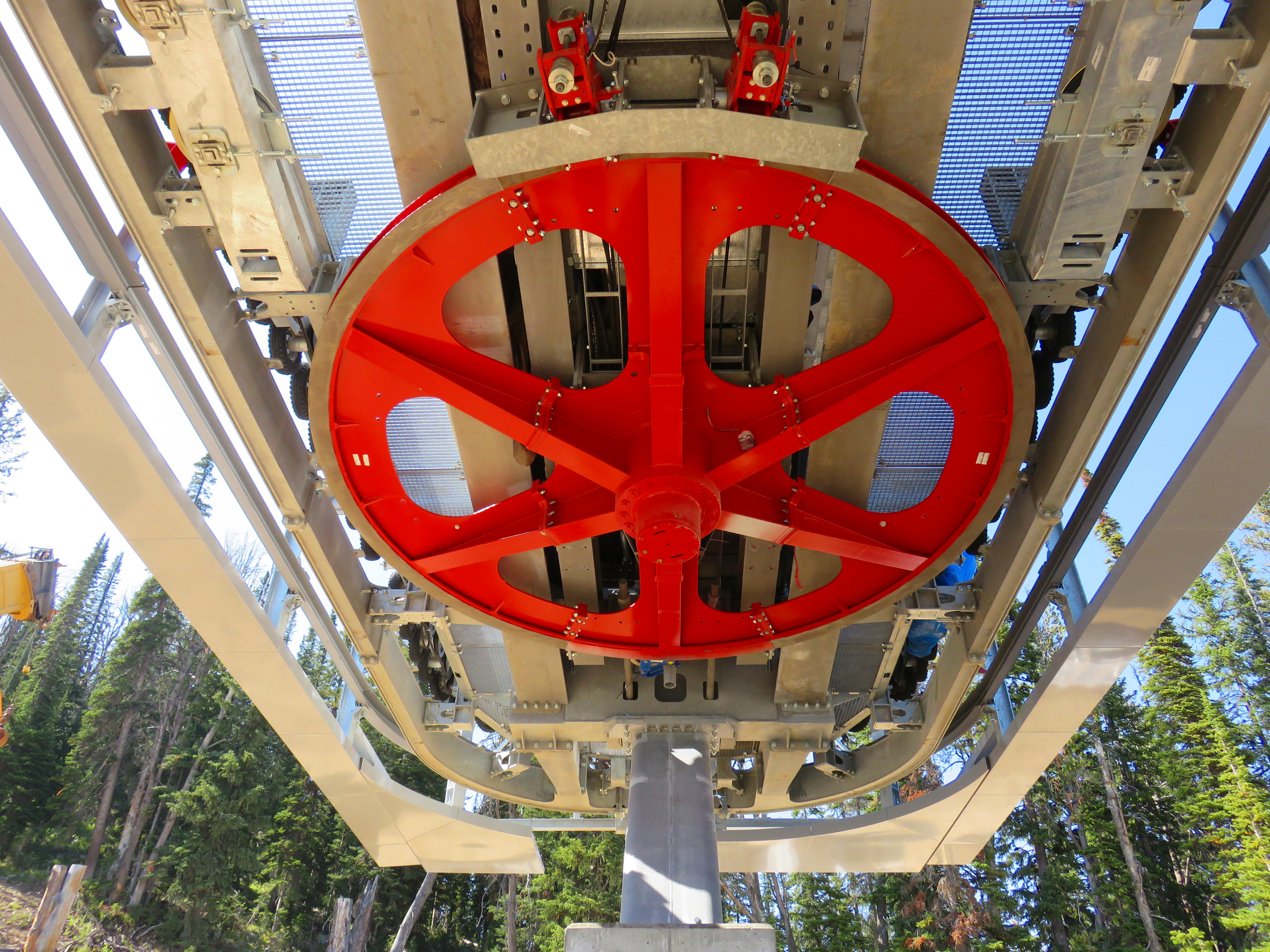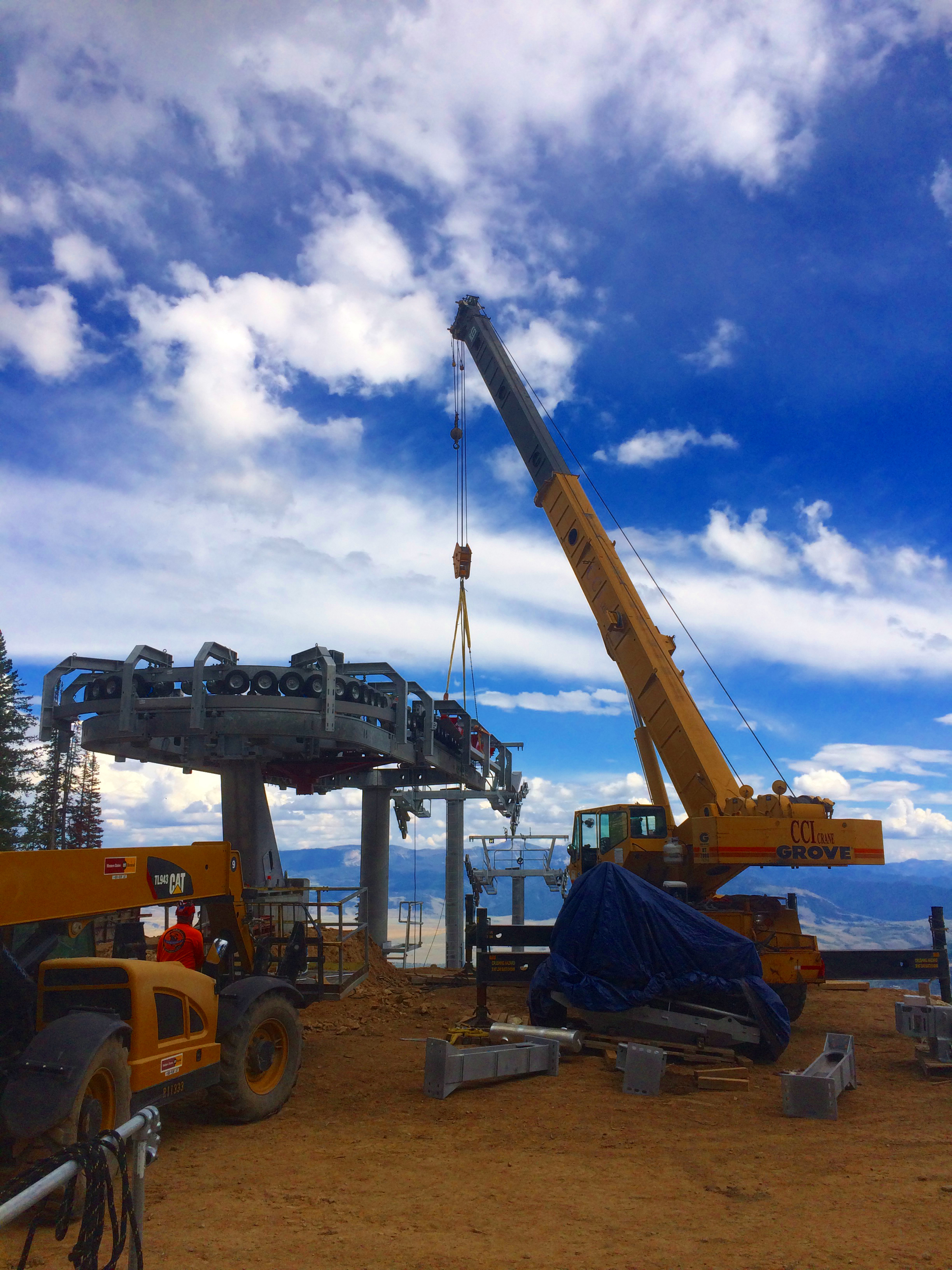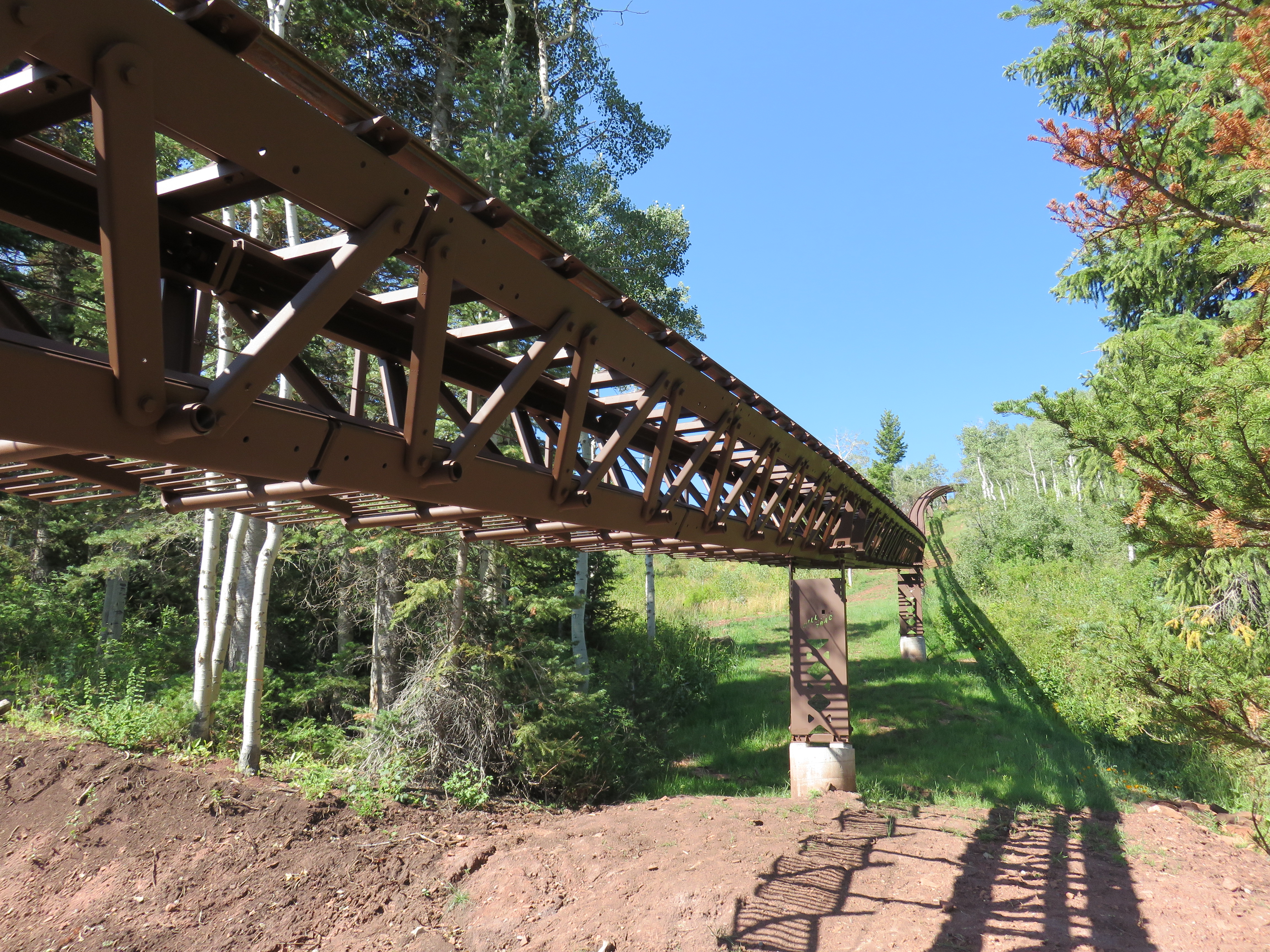
https://instagram.com/p/5ryobXTUHm/
https://instagram.com/p/5hspN3iuZY/

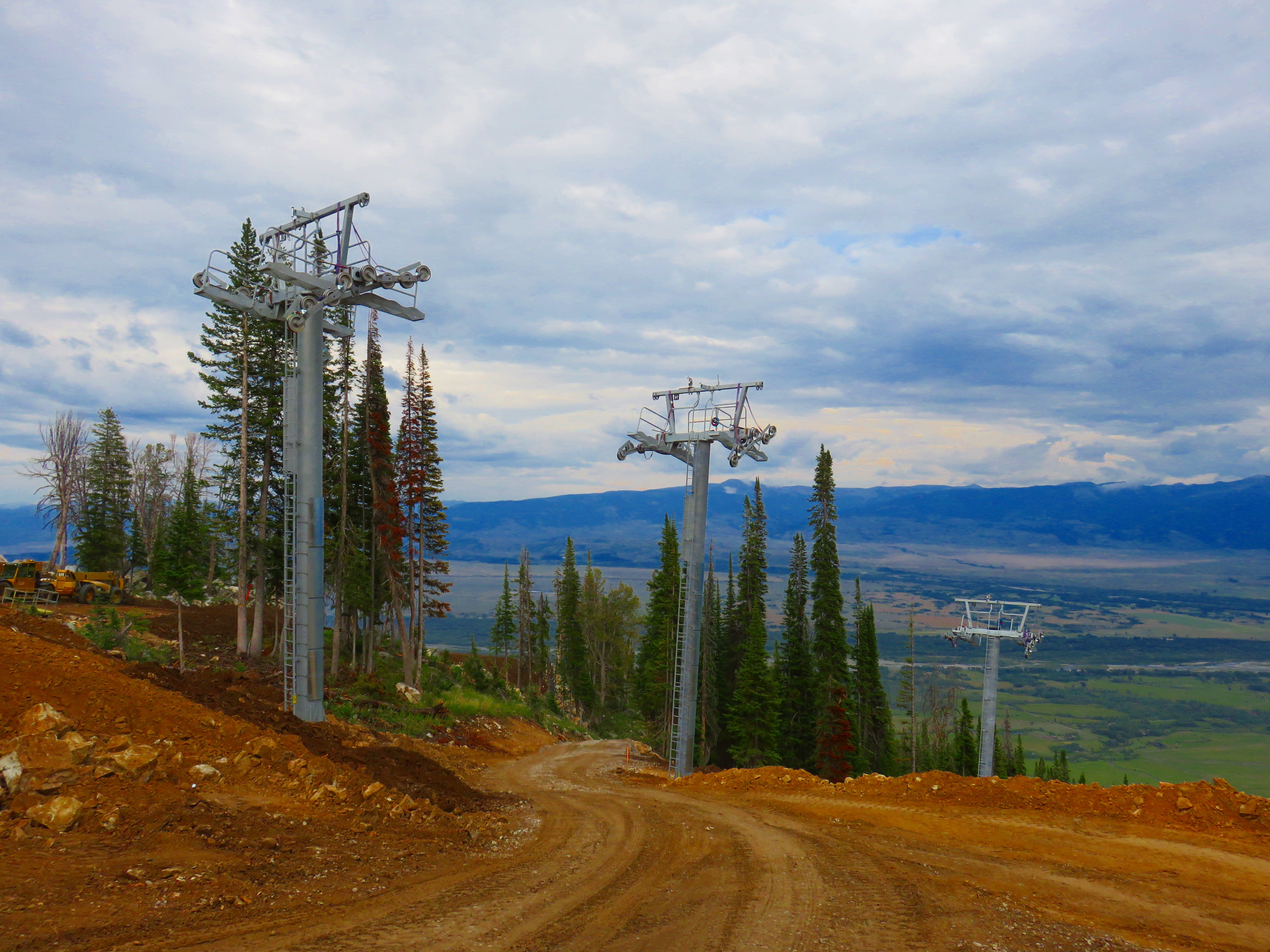
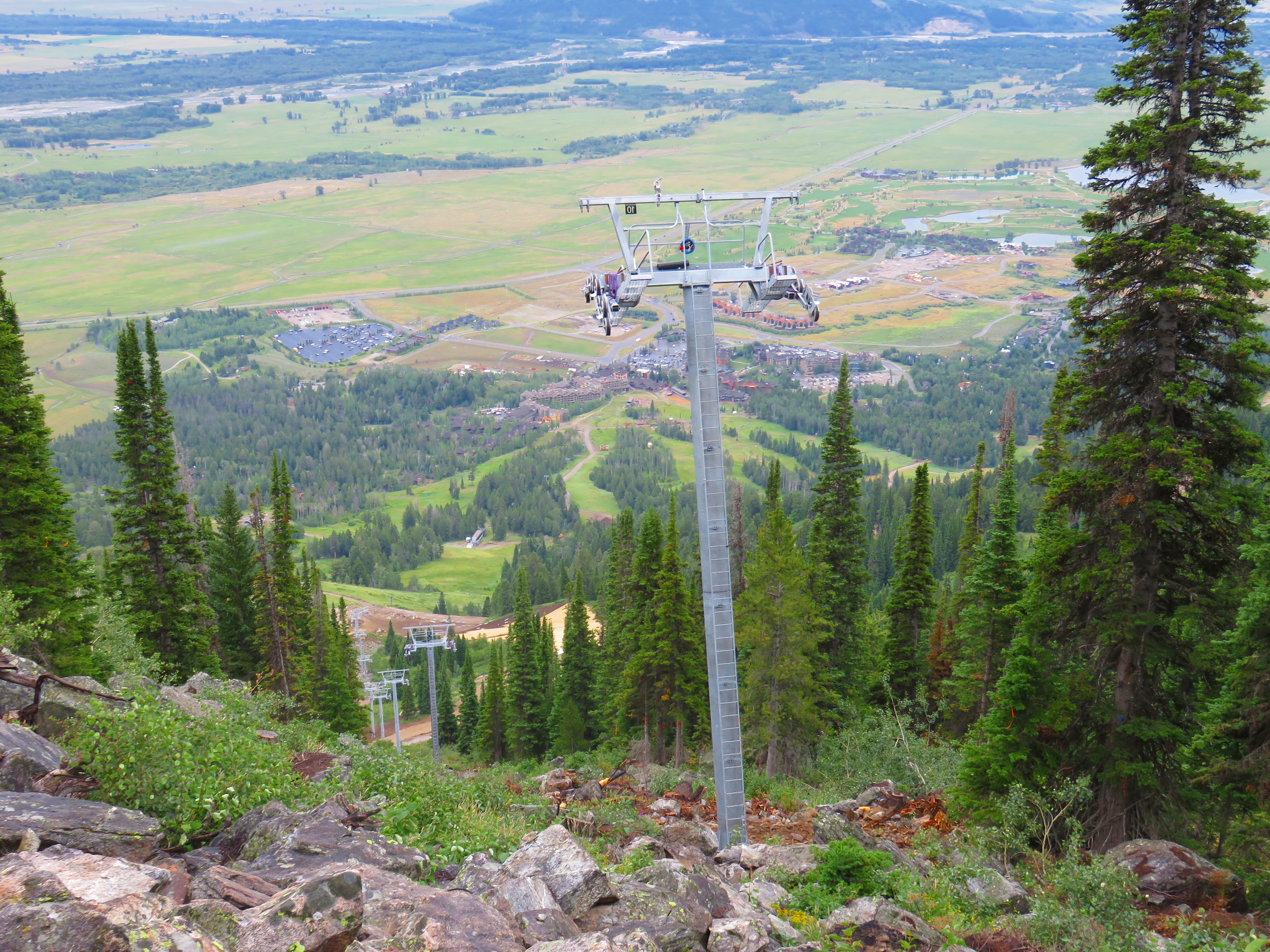
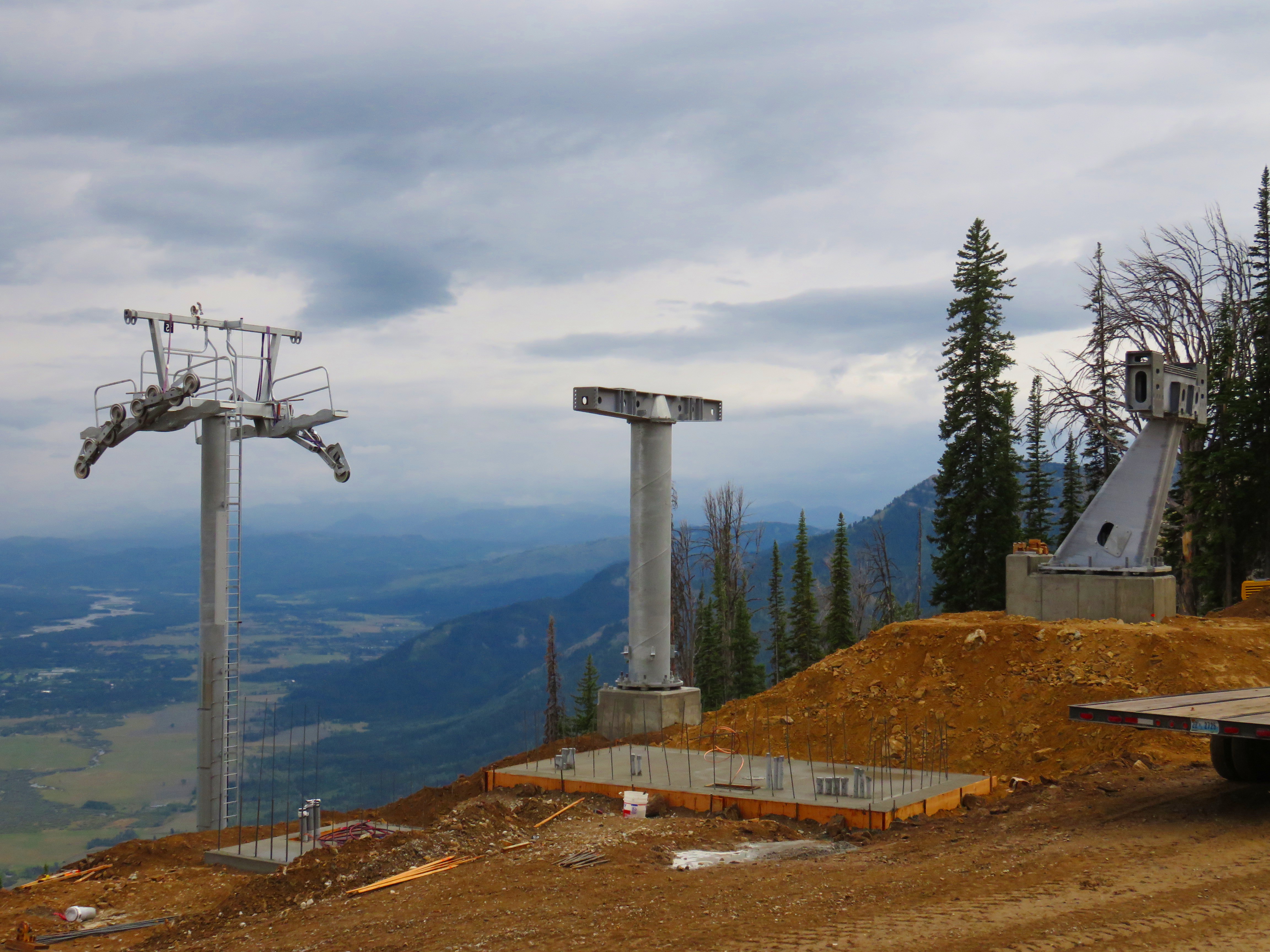
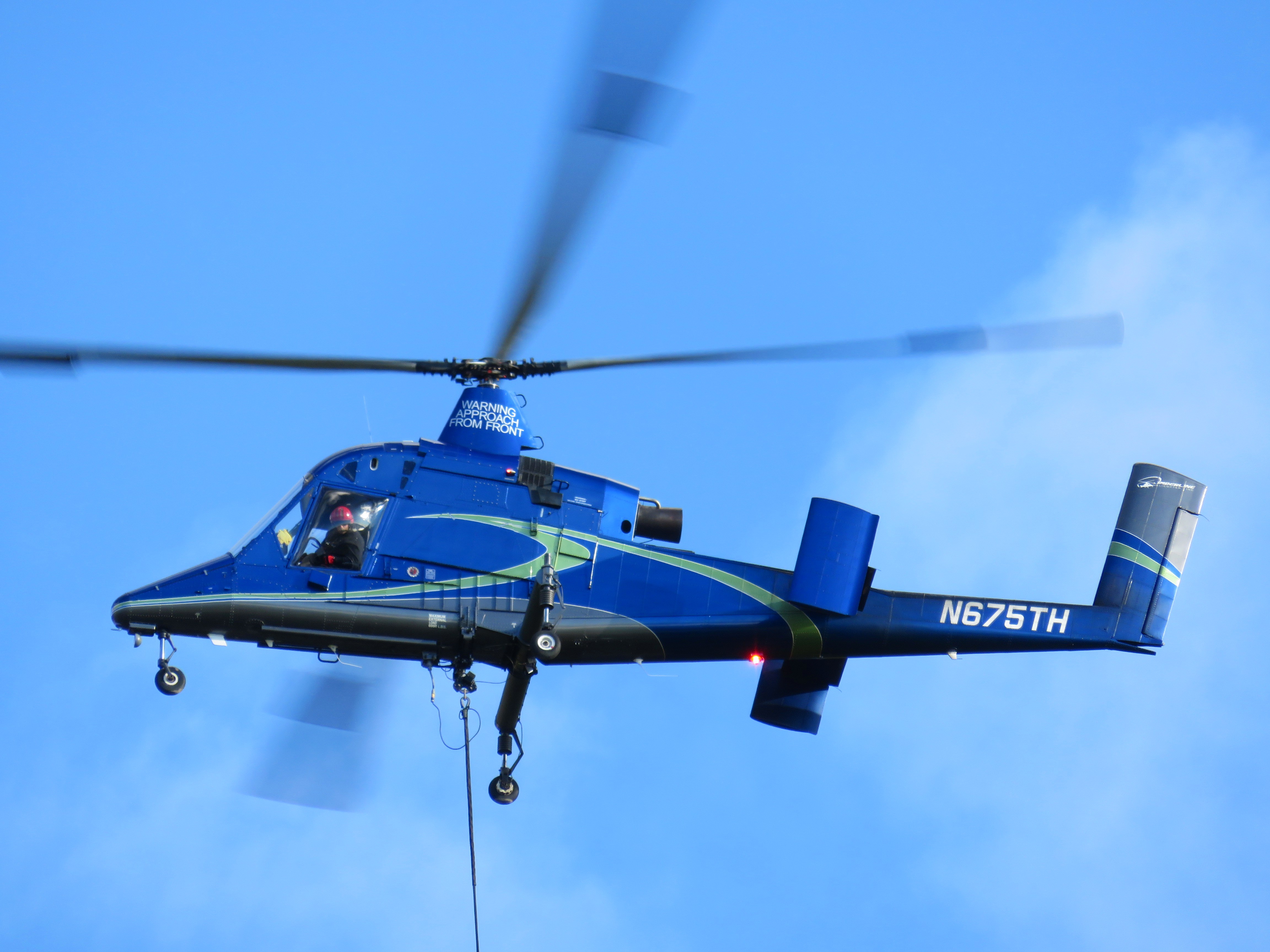
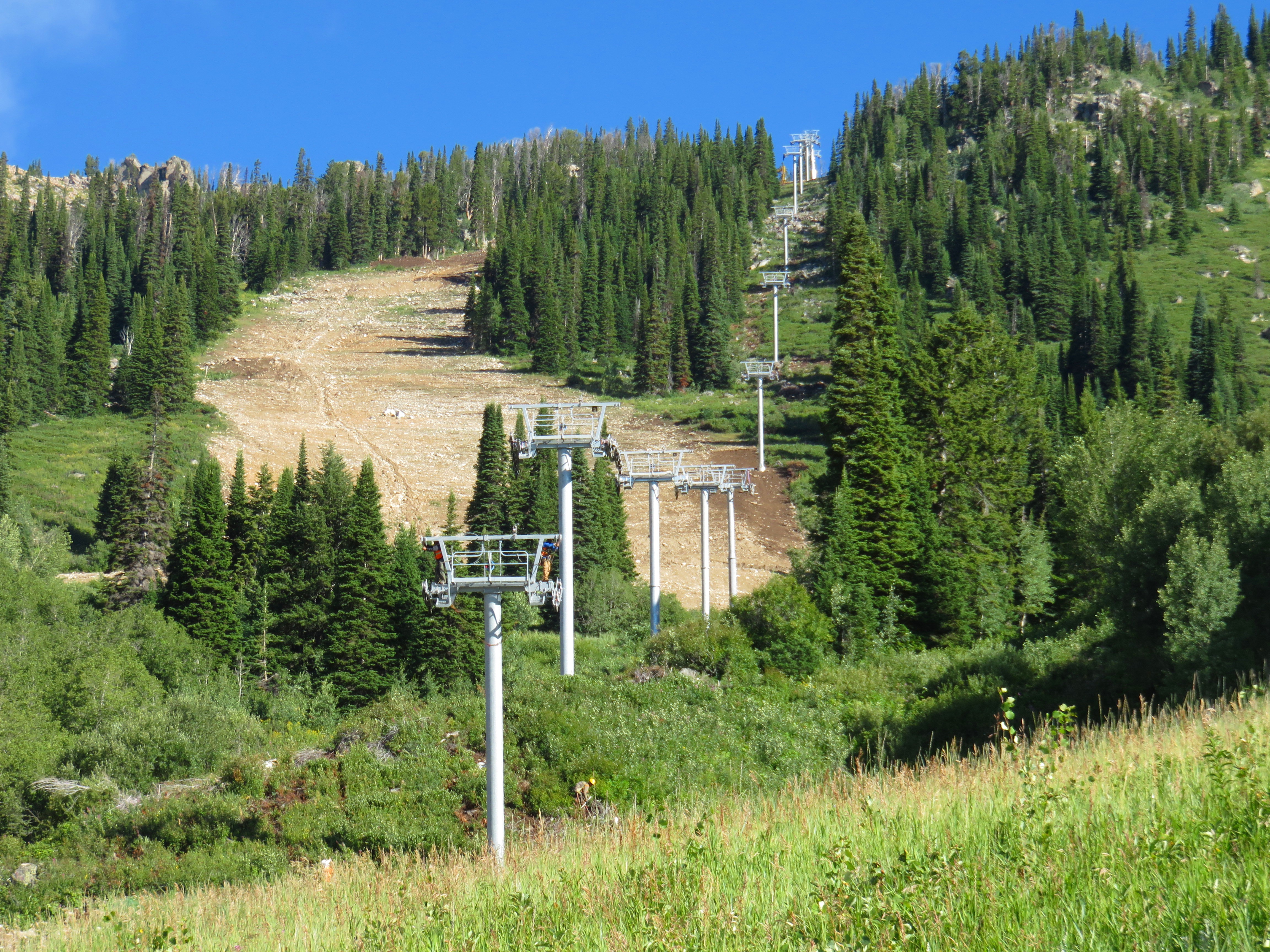
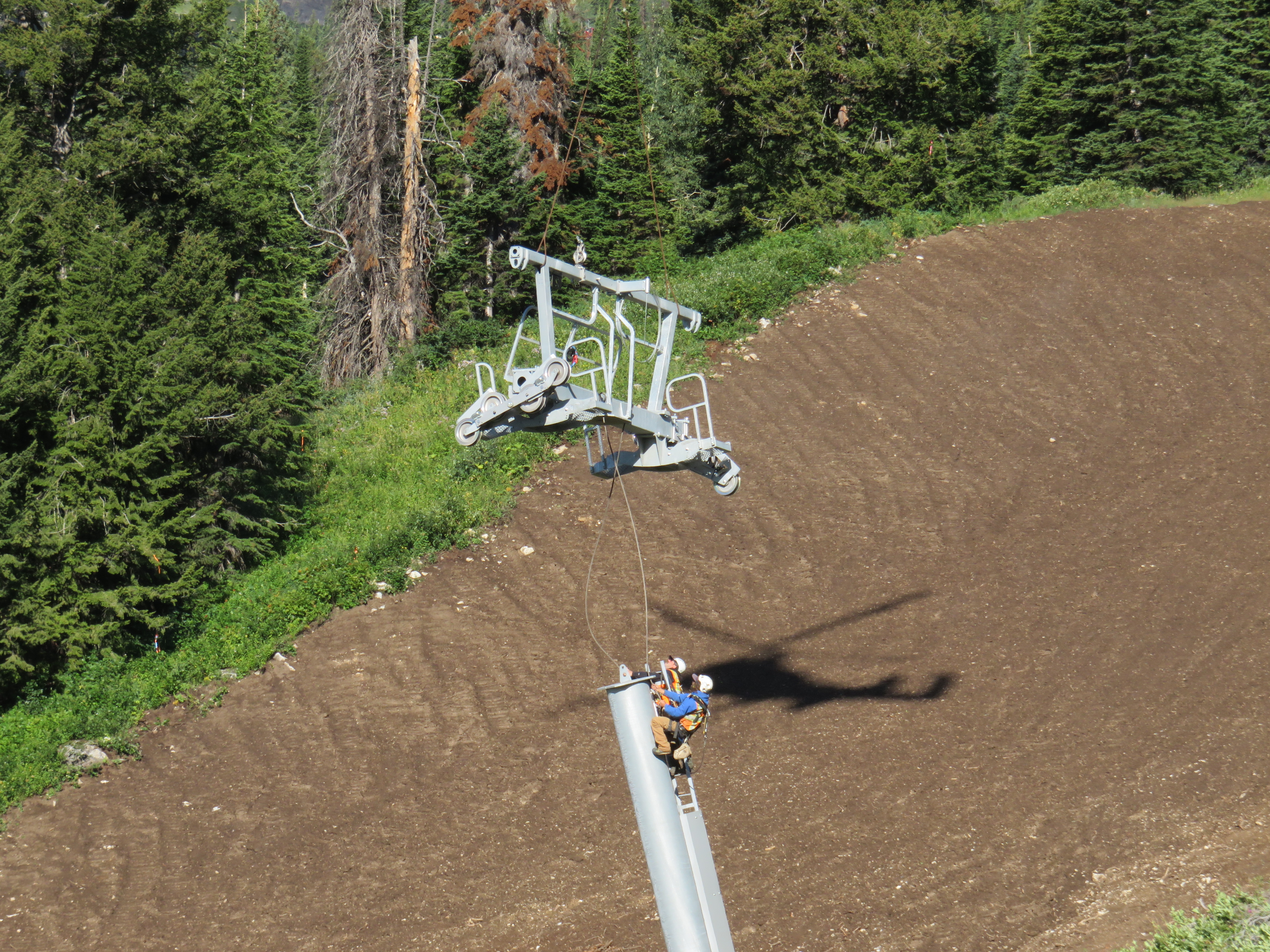
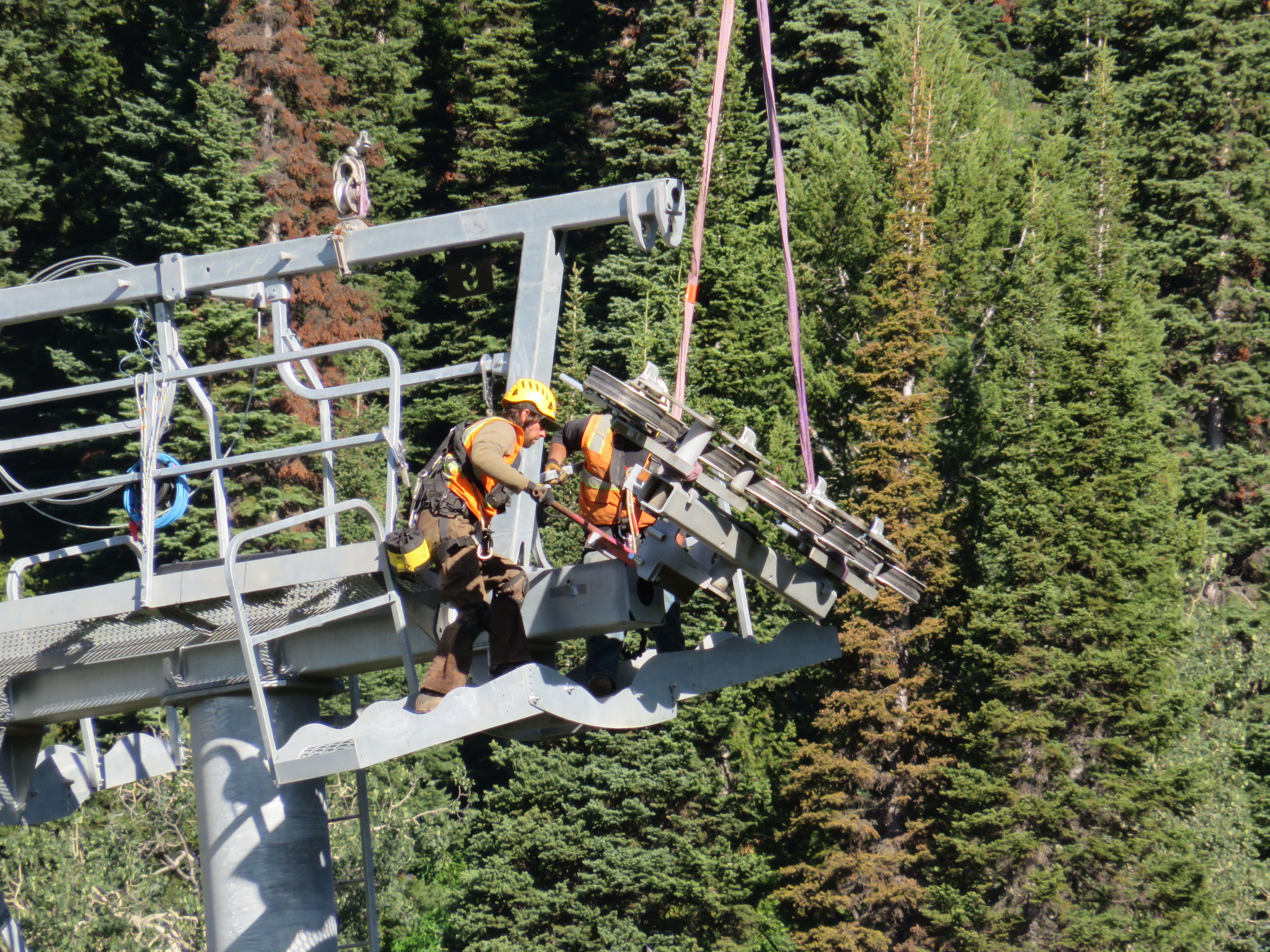
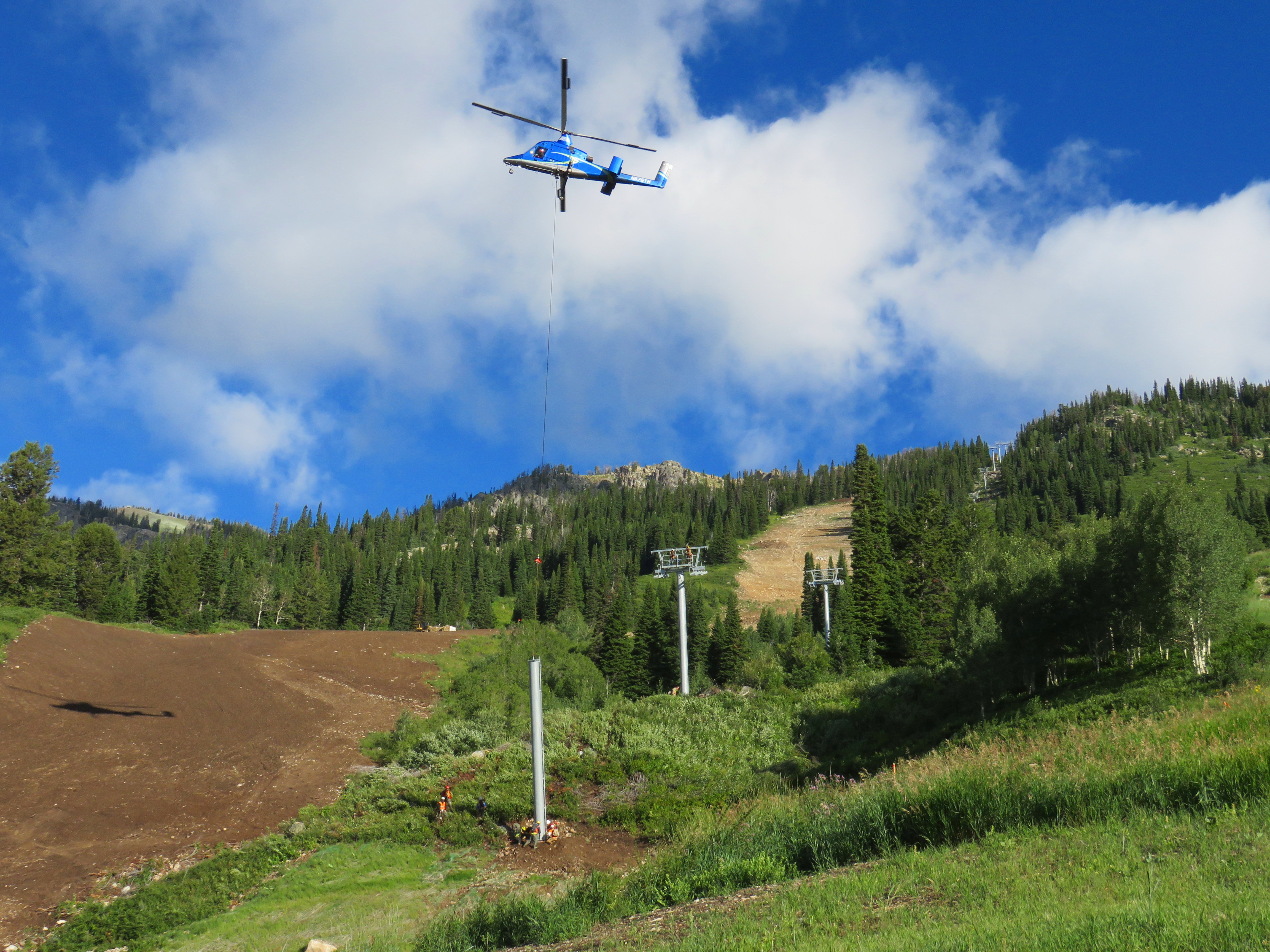
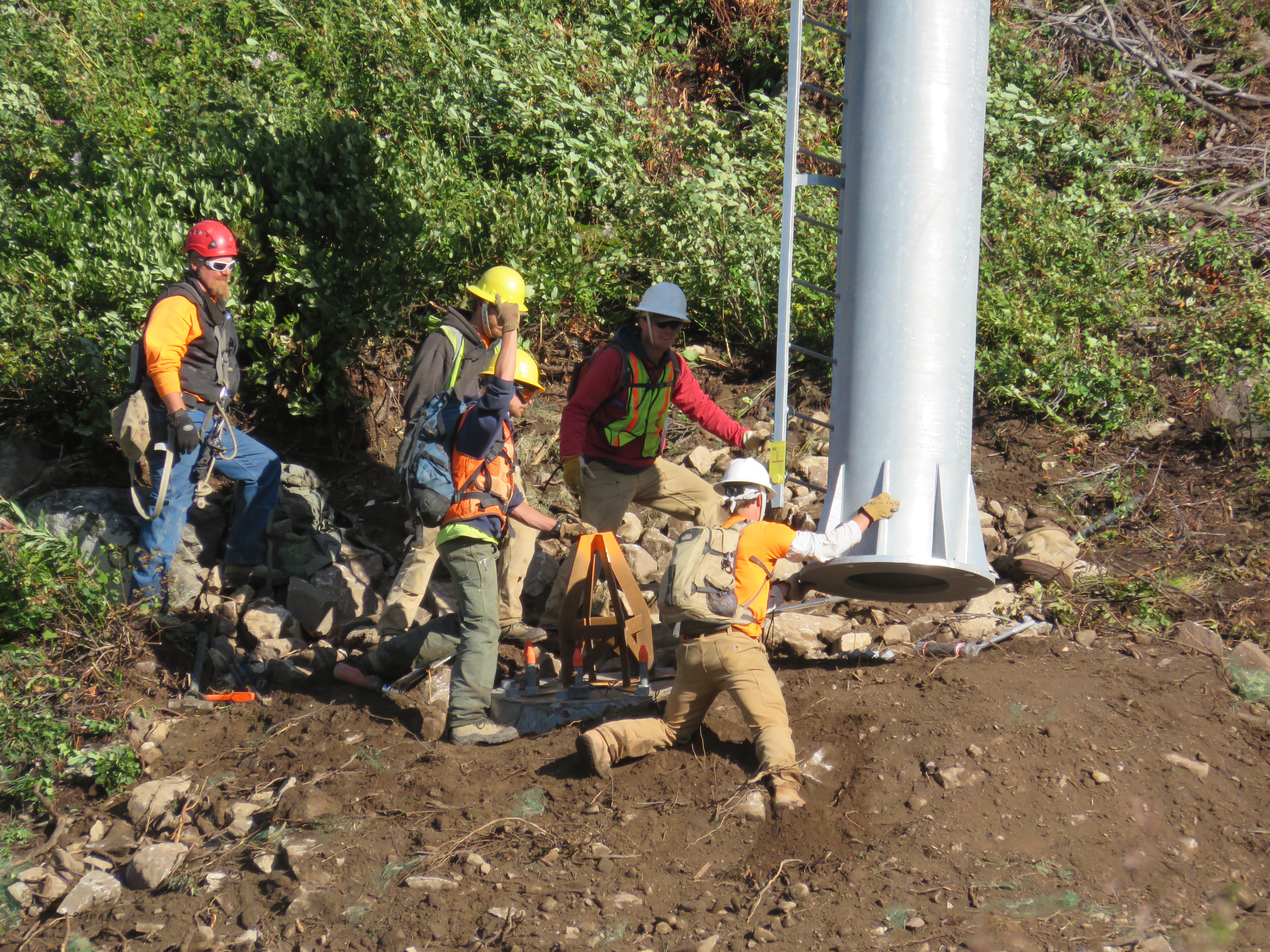
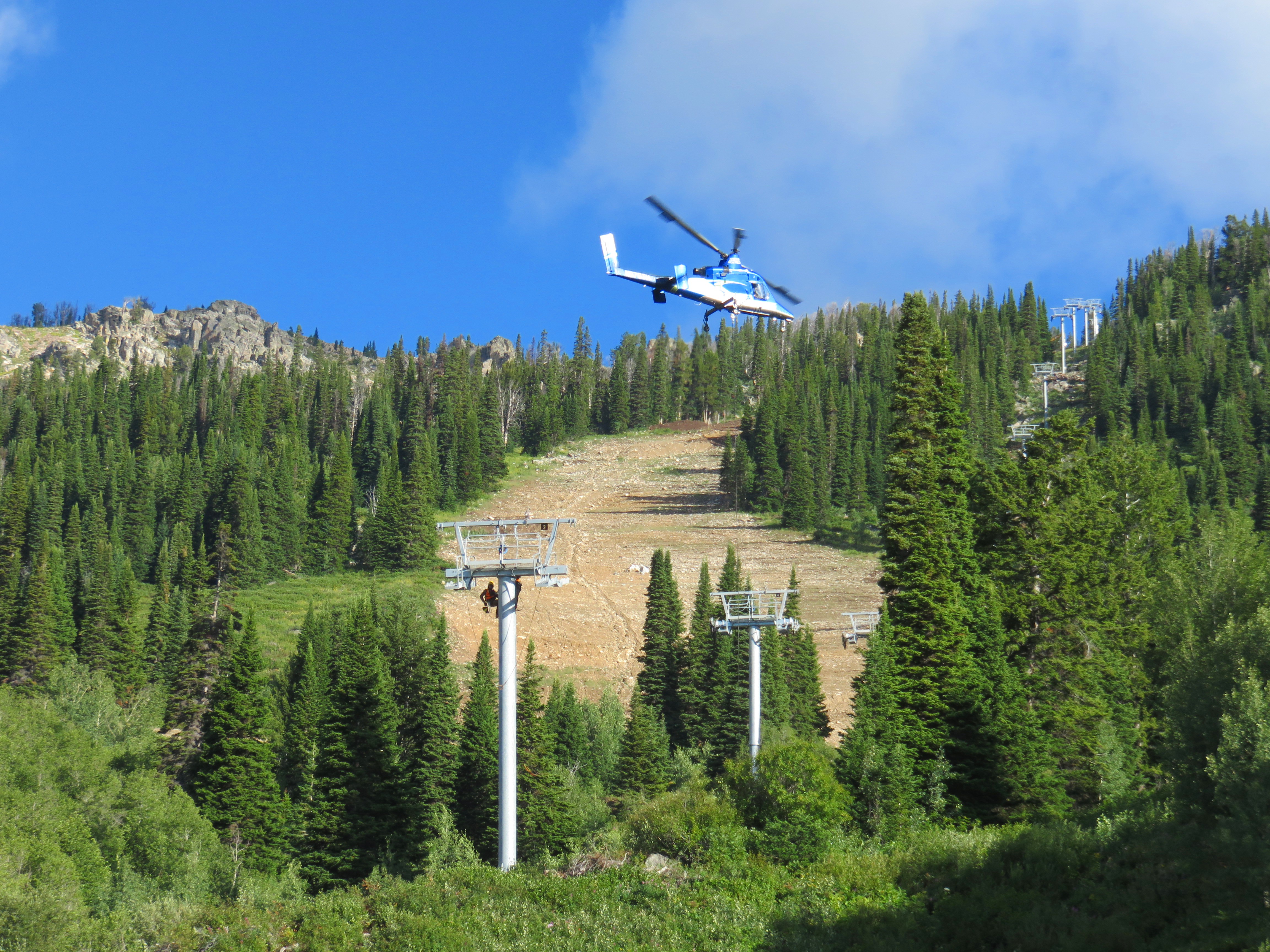
Last night I heard the unmistakable sound of a helicopter flying over my house. Around here it’s usually a search and rescue chopper but this time I looked out to see the double rotors of a Kaman K-Max. It’s the same helicopter that did the concrete footings for the Teton lift last week. Doppelmayr started flying towers early this morning and the crew worked their way down from the top, setting towers 15 through 5 before wind and snow shut them down around noon.
The K-Max can’t fly complete towers at 9,000 feet so the tubes, crossarms and sheave trains were flown separately. As the wind picked up, the pilot had to call it a day while working on tower 5 so it sits for now missing a crossarm. Tower 1 can be done with a crane when the lower terminal goes in so there are only a handful left to fly.
The Portland Aerial Tram, opened in January 2007, is one of only a handful of urban commuter lifts in the United States. It connects the campus of the Oregon Health & Science University with Portland’s up-and-coming South Waterfront neighborhood. The tram was built for $57 million during Doppelmayr-Garaventa’s North American golden years when they completed three projects worth $150 million in less than two years (the others being Jackson Hole’s new tram and the Peak 2 Peak Gondola.) The Portland tram now carries more than 3,300 passengers a day, far exceeding initial projections.

The tram only rises 496 feet but it crosses a light rail line, eight lanes of Interstate 5 and eleven other roads. The bottom terminal houses the 600 HP drive motor and tram offices while the 80,000 lb. counterweight sits underneath the top station. Slope length is only 3,437 feet, allowing quick three-minute trips at 2000 feet per minute or 7 m/s. This achieves a capacity of 1,014 passengers per hour, per direction.

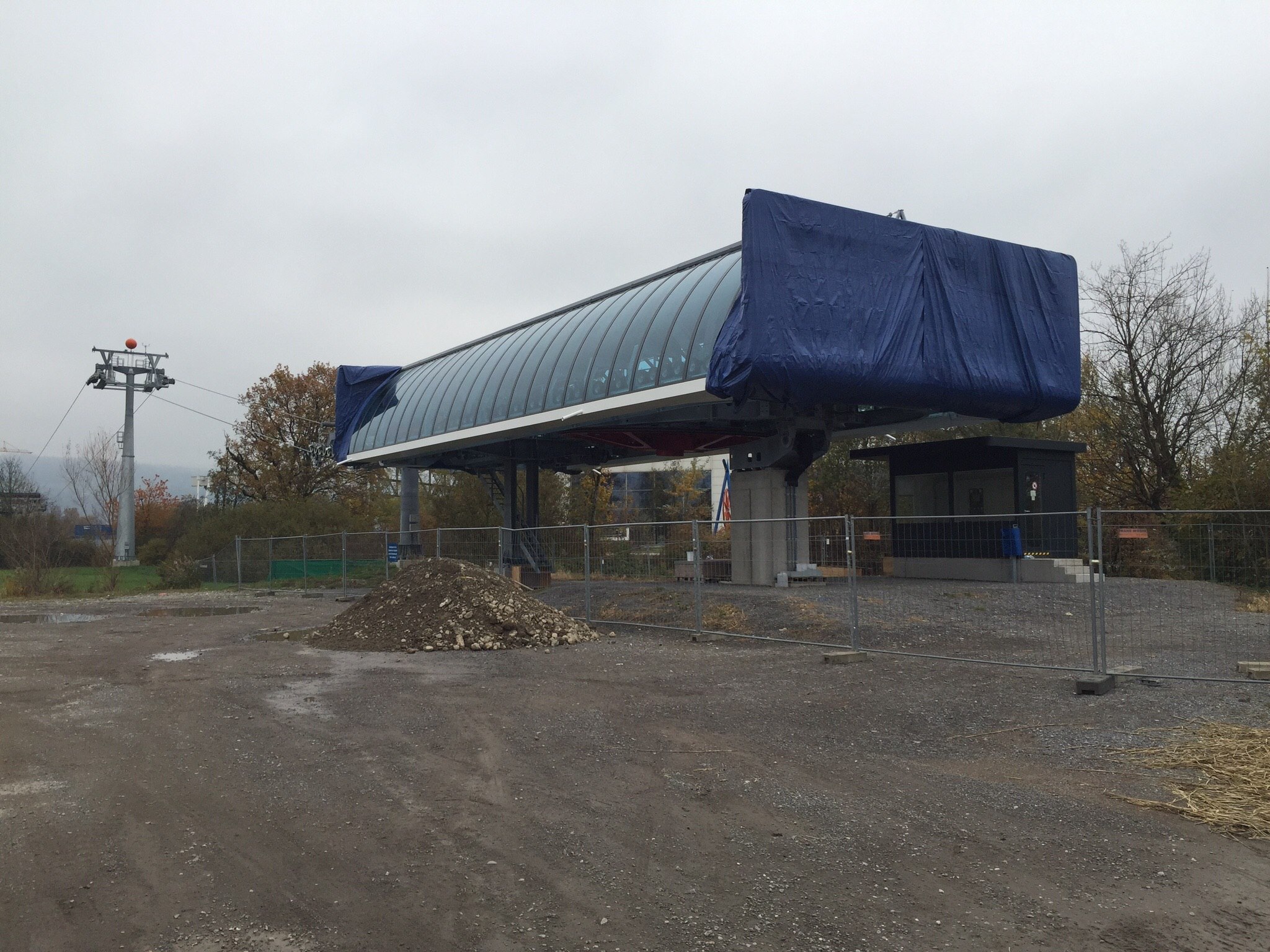
Why did a tram one quarter of the size of Jackson Hole’s cost $25 million more? Two words: politics and aesthetics. Designers wanted the system to be unique to Portland and aesthetically pleasing. The city held an international design competition and selected AGPS Architecture of Zurich to design the terminals, tower and cabins. The 197-foot tower is entirely covered in steel panels and lit up in colors at night. Gangloff custom-designed the tram’s two 78-passenger cabins to look like flying reflective bubbles. The top station is perhaps the most complex piece of the project, sitting 140-feet above ground and supported by angled columns.

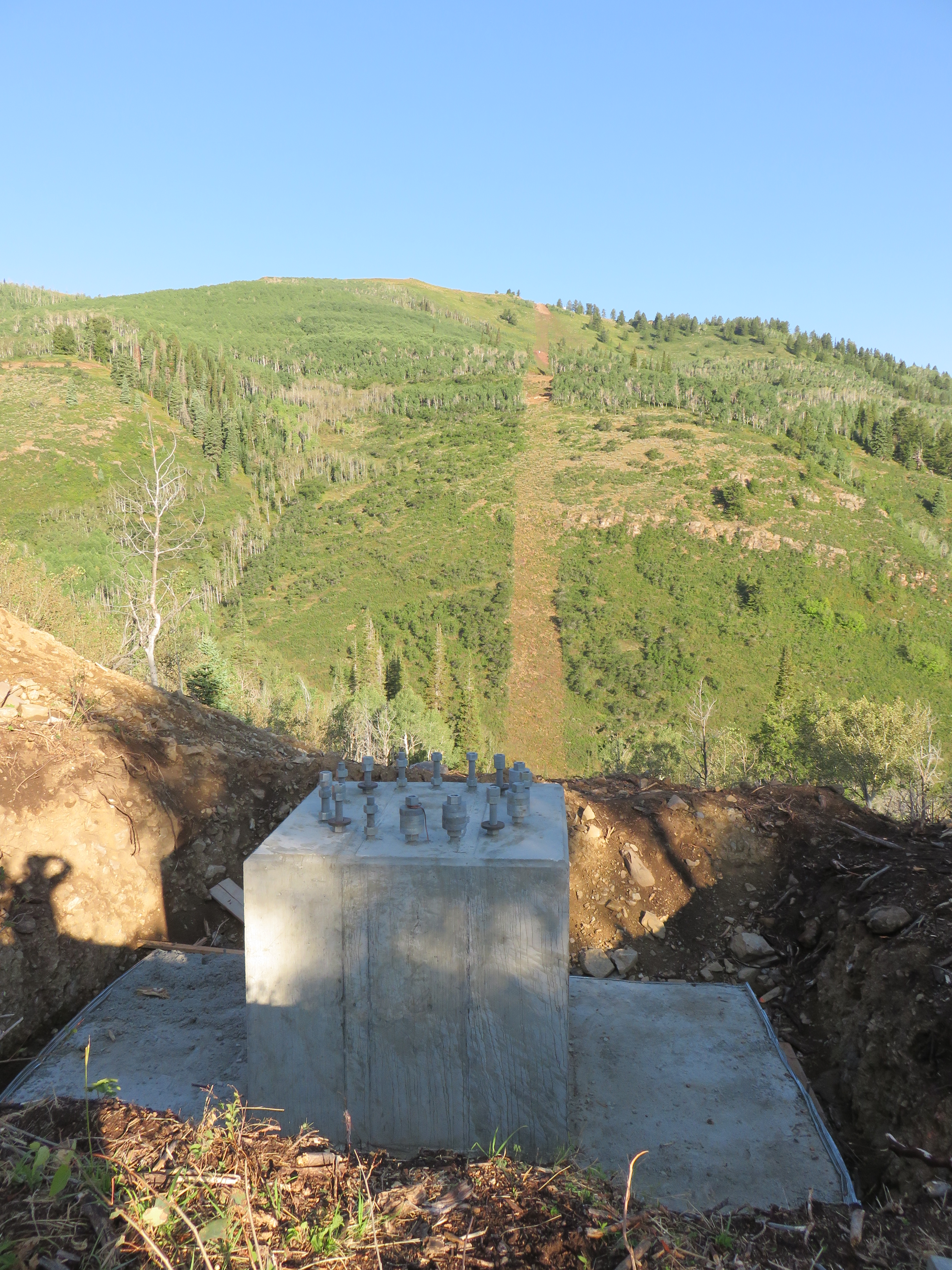
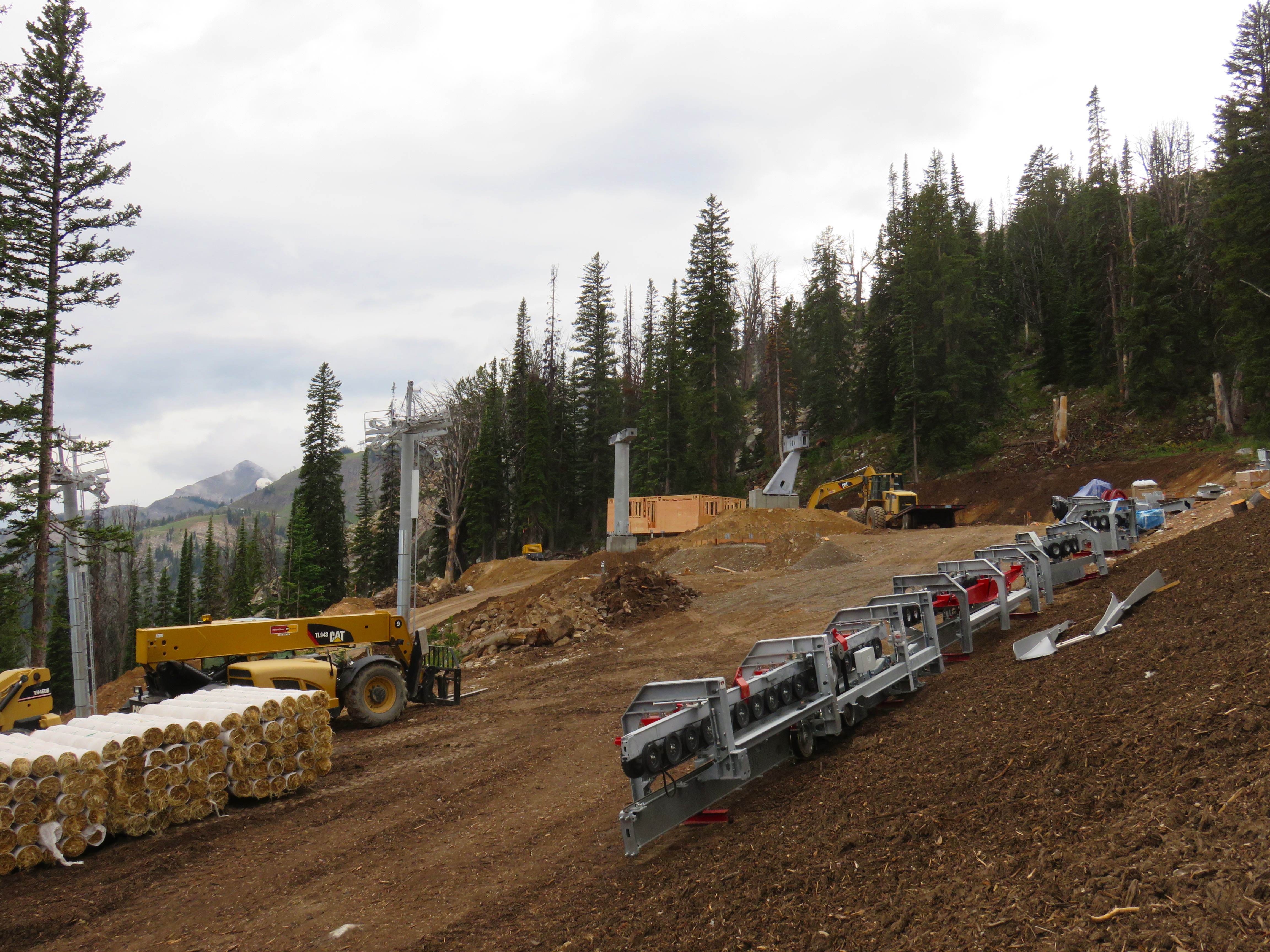
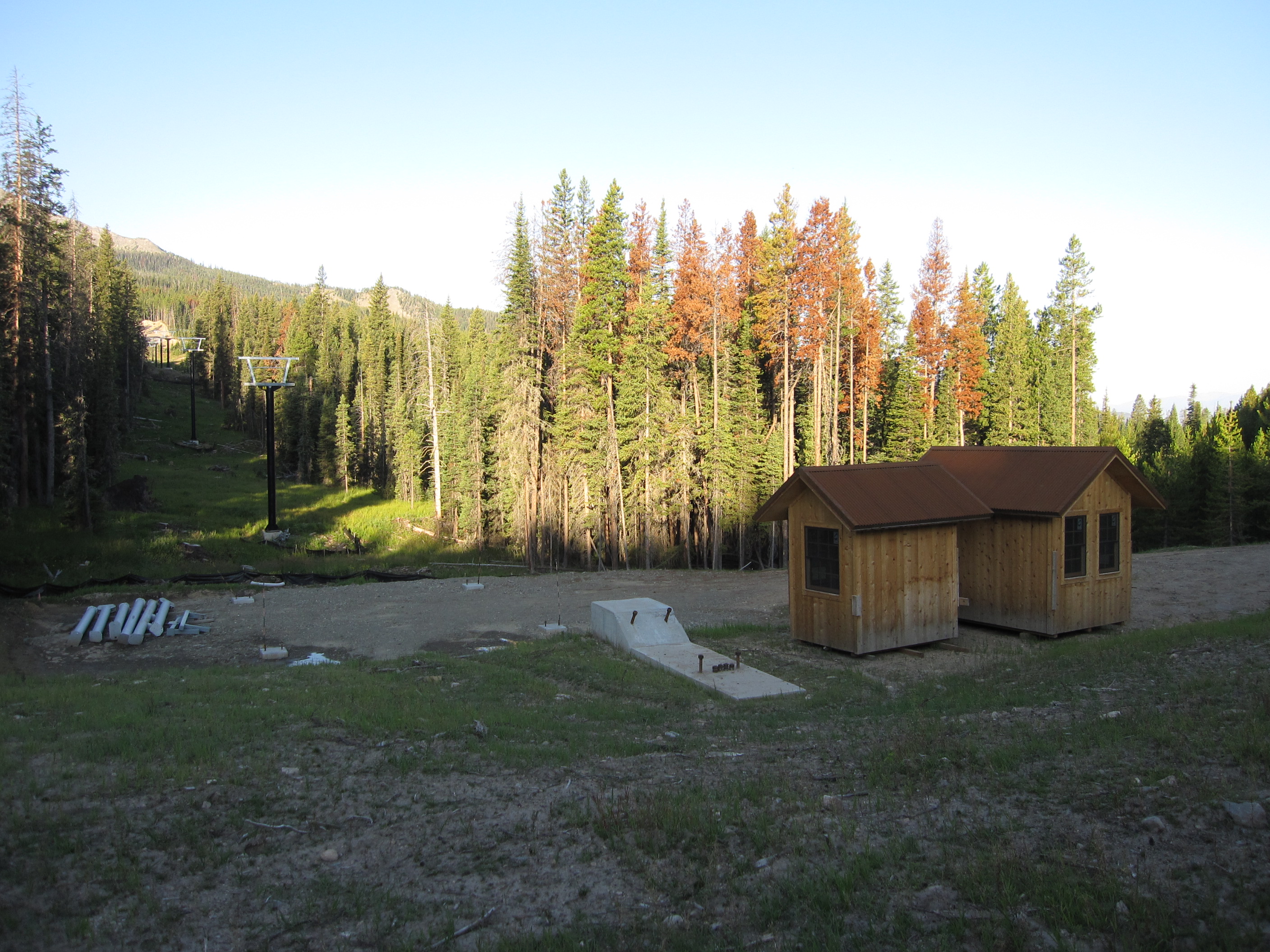
It’s mid-July and construction is ramping up on the north side of the Jackson Hole Mountain Resort. A K-Max helicopter from Timberline Helicopters was on-site Sunday to fly concrete for the towers that couldn’t be accessed by road. The rest of the tower footings were already finished and back filled. Concrete work is also complete at the top terminal and steel will be going up shortly. The bottom terminal is a few weeks behind. Down in the parking lot, towers are mostly assembled and terminal components will be headed up the hill soon.


Maine’s third largest ski resort is in trouble. We knew something was up earlier this summer when Saddleback put their main out-of-base lift up for sale on Resort Boneyard for $350,000. Today the Berry family definitively announced the 52-year old Rangeley lift will not spin again. The lift has upgraded Doppelmayr terminals but aging towers, line equipment and chairs. $3 million is needed by August 1st to build a new Doppelmayr fixed-grip quad or the ski area will close.

Saddleback’s story includes decades of ups and downs like many mid-sized New England ski resorts. A bank foreclosed on the entire property in 1975 but it remained open. In 2002, the previous owners announced Saddleback would close. Local skier Bill Berry stepped in and bought the mountain for $8 million in 2003. After their first season of ownership, the Berry family invested heavily in lifts, installing the South Branch quad and replacing both of Rangeley’s terminals with new Doppelmayr CTEC ones in 2004. A new James Niehues trail map was commissioned that at one point showed six new lifts to be built. The Kennebago T-Bar was replaced with a Doppelmayr CTEC quad in 2008 but no other lifts ever got completed.


Deer Valley closed on its purchase of Solitude Mountain Resort in May and announced they would replace the Summit double with a new Doppelmayr detachable quad. The new Summit will be in a new, longer alignment that is easier to access from Apex Express. I checked out the progress last week.
The old lift is completely removed and stored in the Moonbeam parking lot. It looks like the Thiokol double will be used elsewhere (the last lift Solitude removed ended up at Canyons Resort.) Trees are gone from the new lift line and a lot of earth work has been done although nothing has been built yet. Highlander Ski Lift Services appears to be building the new quad. With 13 new lifts projects and counting, Doppelmayr is stretched pretty thin. I did not see any parts for the new lift but I am sure they will be arriving soon.


Beaver Creek Resort faced a unique challenge last year when they needed to replace their aging workhorse lift. The original Centennial Express was one of Doppelmayr’s first high speed quads, built in 1986. Vail Resorts wanted the new lift to serve skiers as well as private events at the Spruce Saddle Lodge while at the same time achieving a high hourly capacity. Originally announced as a regular six pack, Vail and Doppelmayr later decided to build the world’s only chondola with six passenger chairs and ten passenger gondola cabins.


The result is an impressive lift nearly 8,000 foot long that moves 3,400 passengers an hour. 25 10-passenger CWA Omega gondola cabins alternate with 125 chairs in a 5:1 ratio. The old lift had 195 quad chairs but moved 35 percent fewer people. The new Centennial rises over 2,000 vertical feet in 7.9 minutes at 1,000 fpm. It has 25 towers, five fewer than the original.

In addition to the new Pinecone Gondola, Vail Resorts is doing a major lift shuffle at Park City Mountain this summer. The King Con high speed quad (1993 CTEC) is being replaced with a brand new Doppelmayr six pack. King Con is being refurbished and relocated to replace Motherlode higher up on the hill. More on that in an upcoming post.
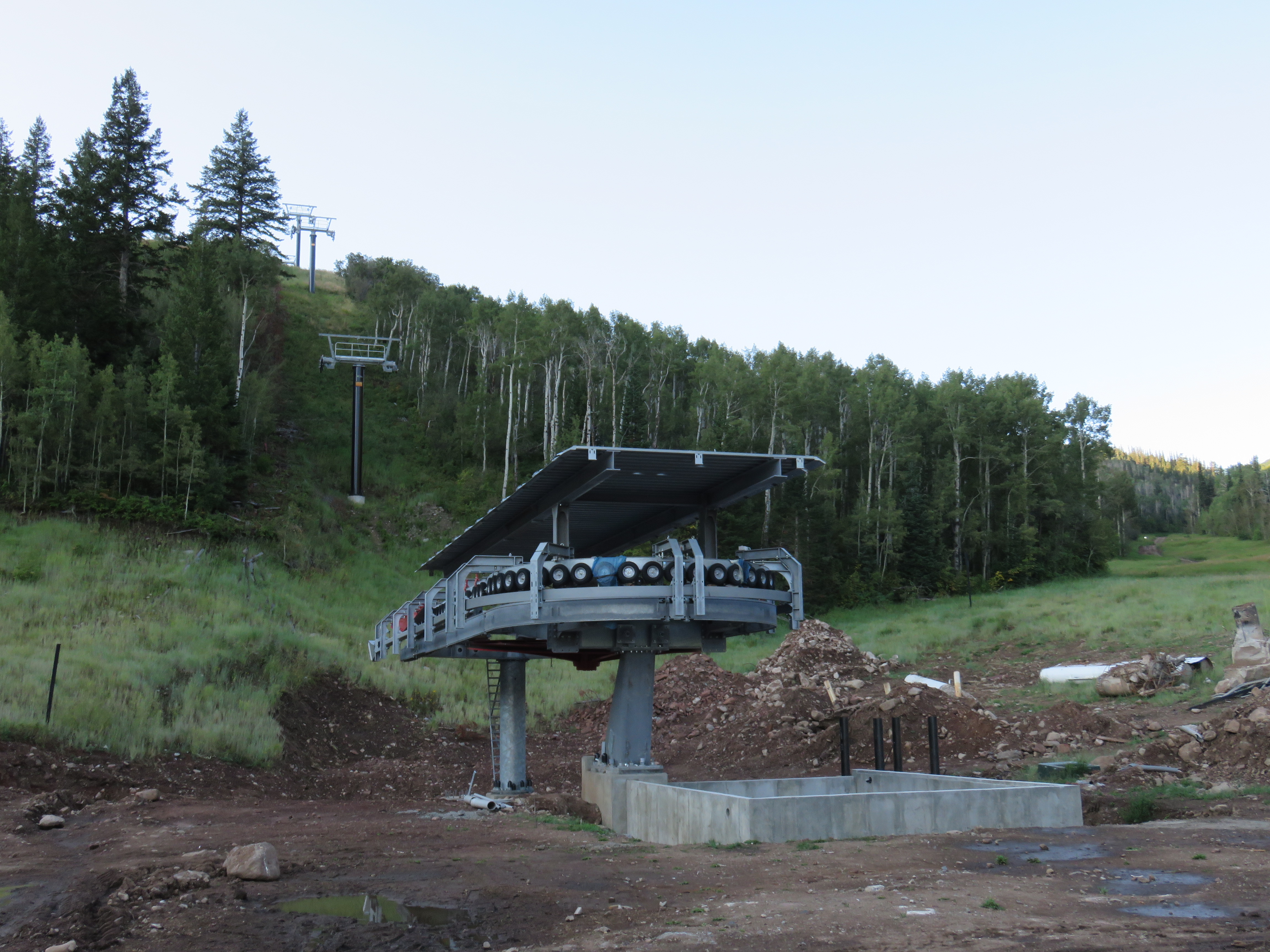
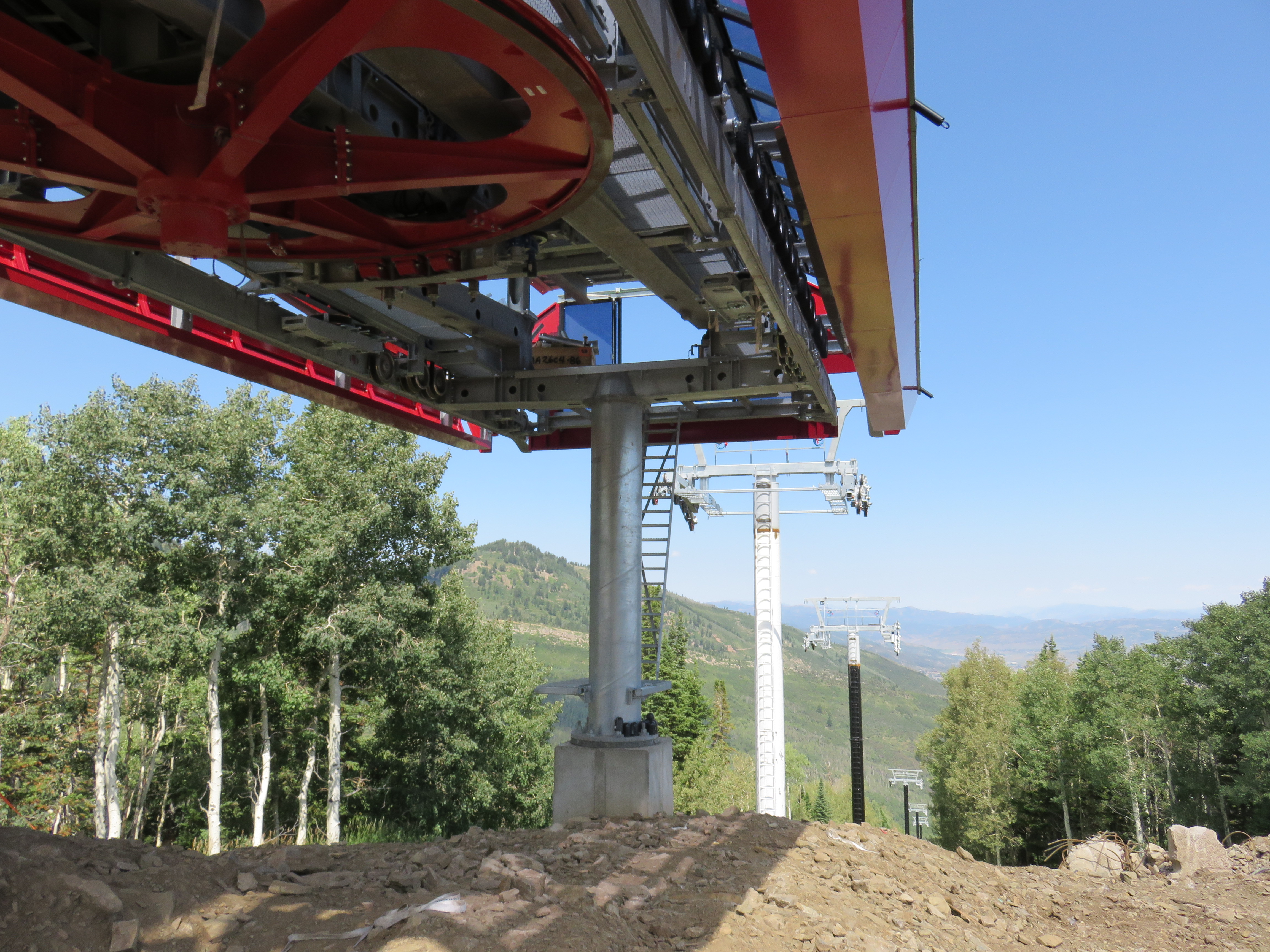
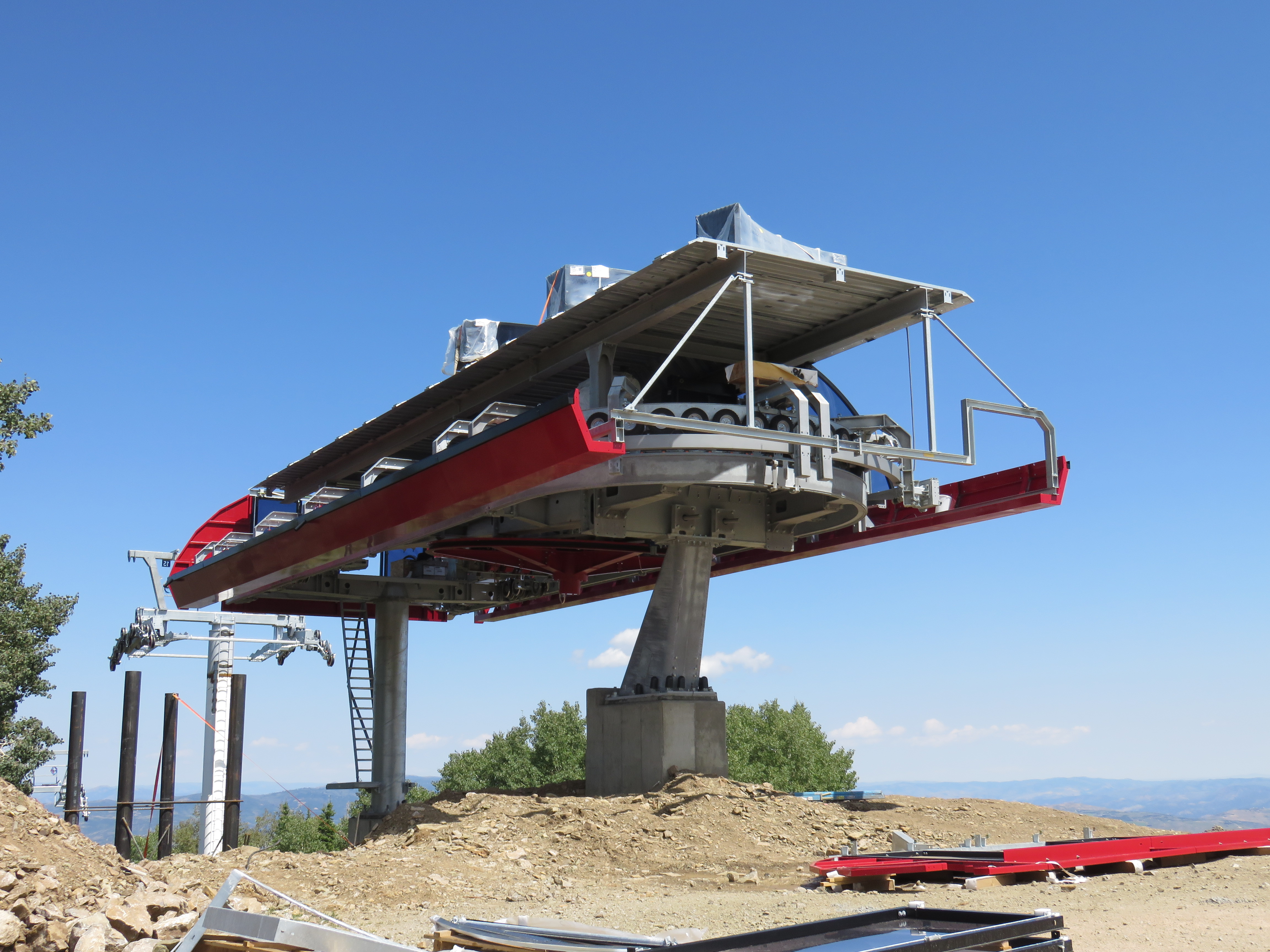
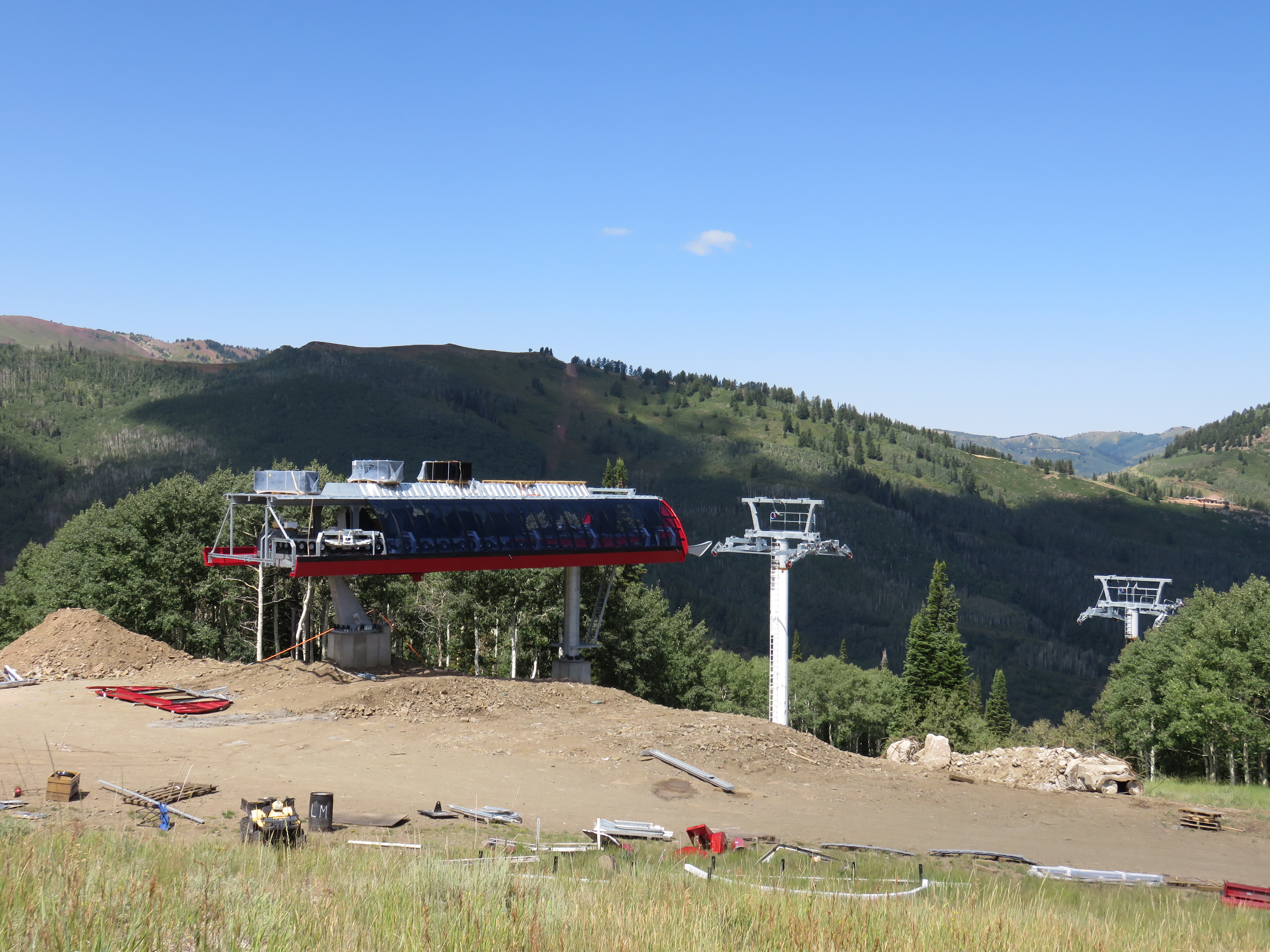
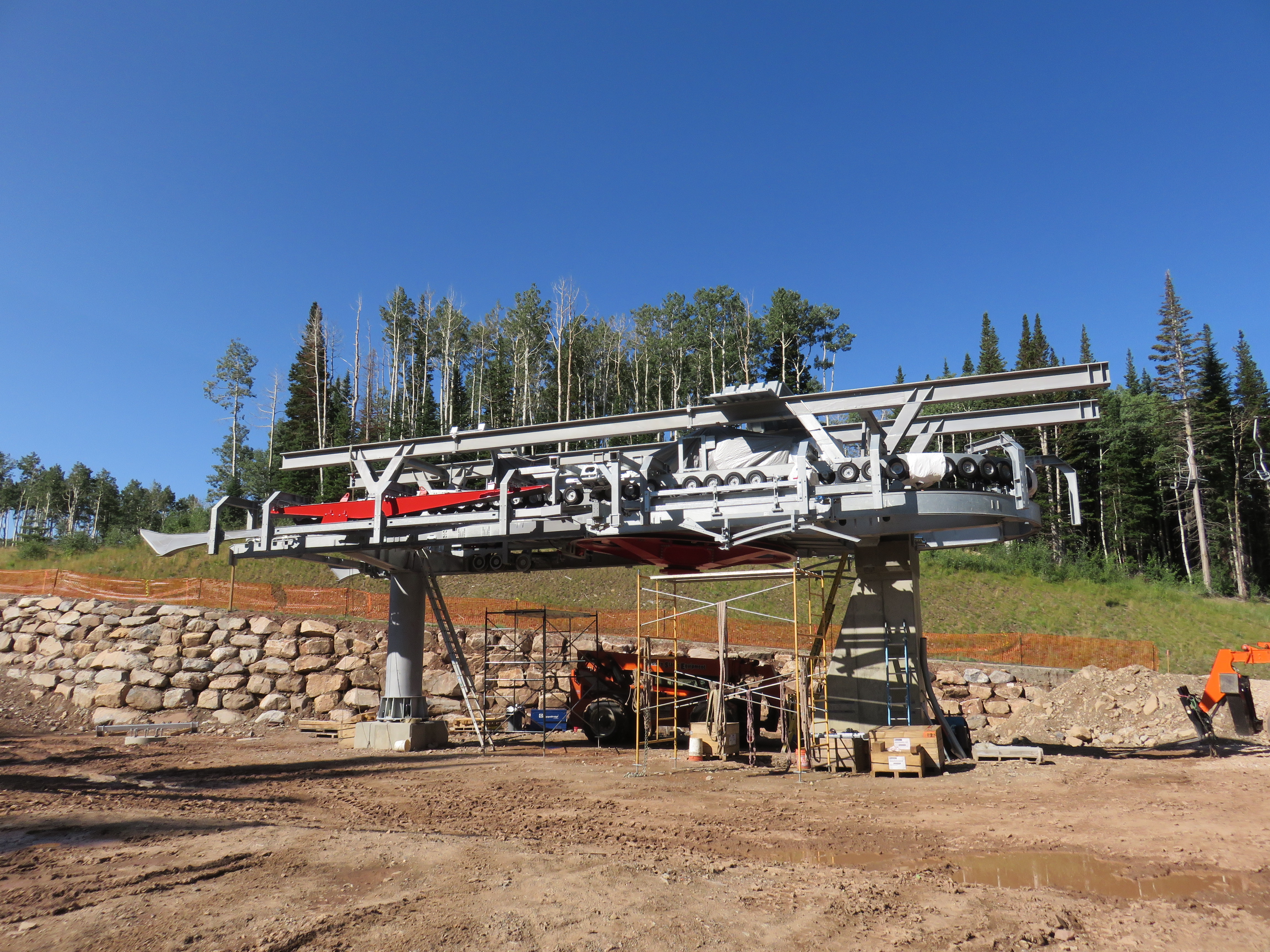
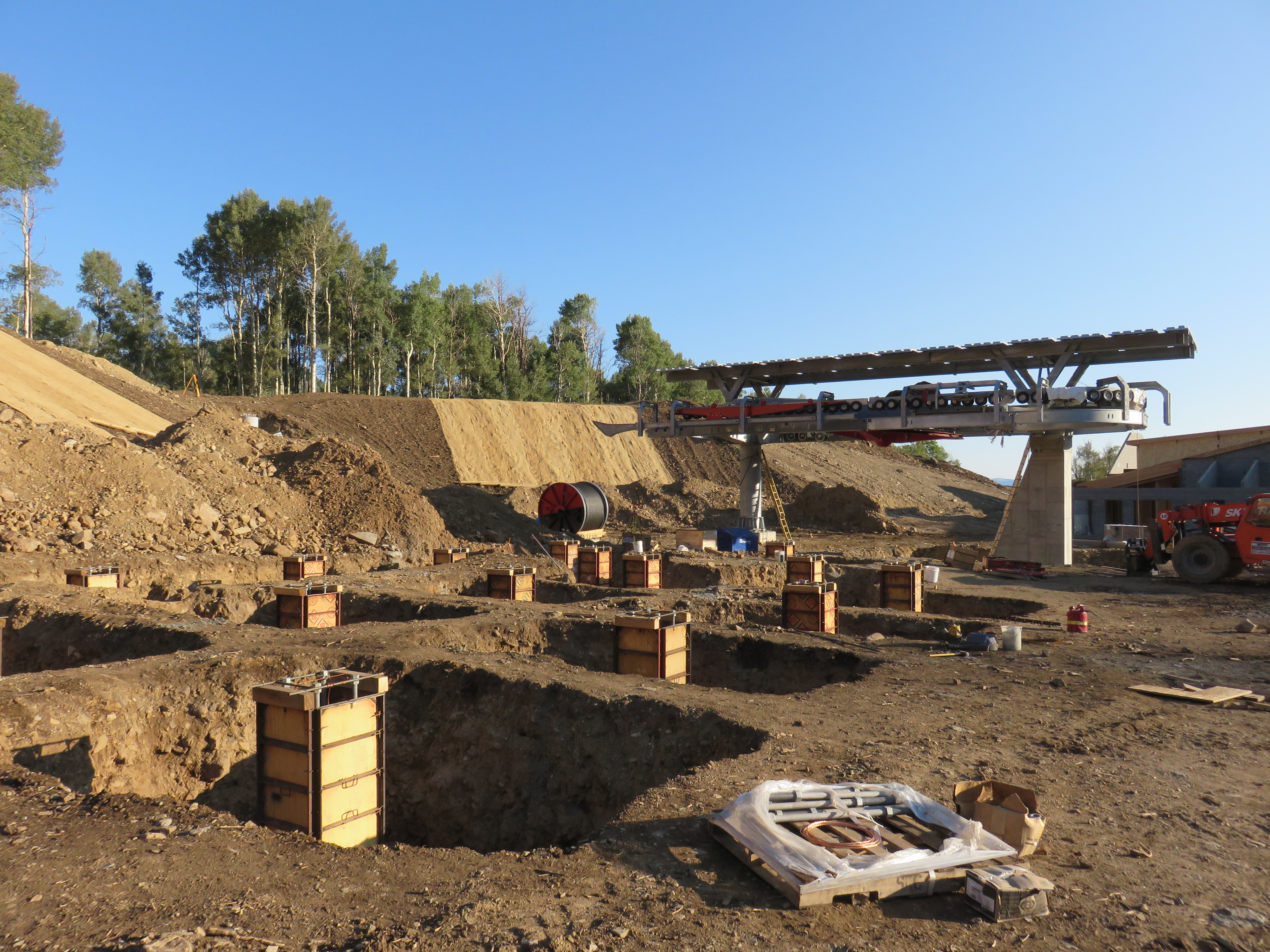
Both terminals for the new King Con are largely complete as of this week. The Uni-G model terminals will be dark red and silver to match the new Park City Mountain logo and brand which will be unveiled on July 29th. Rumors are that the word resort will be removed from the PCMR name and the new logo will be a dark red version of the Canyons infinity logo. Most of the existing detachable lifts at Park City have already been painted in the new color scheme.
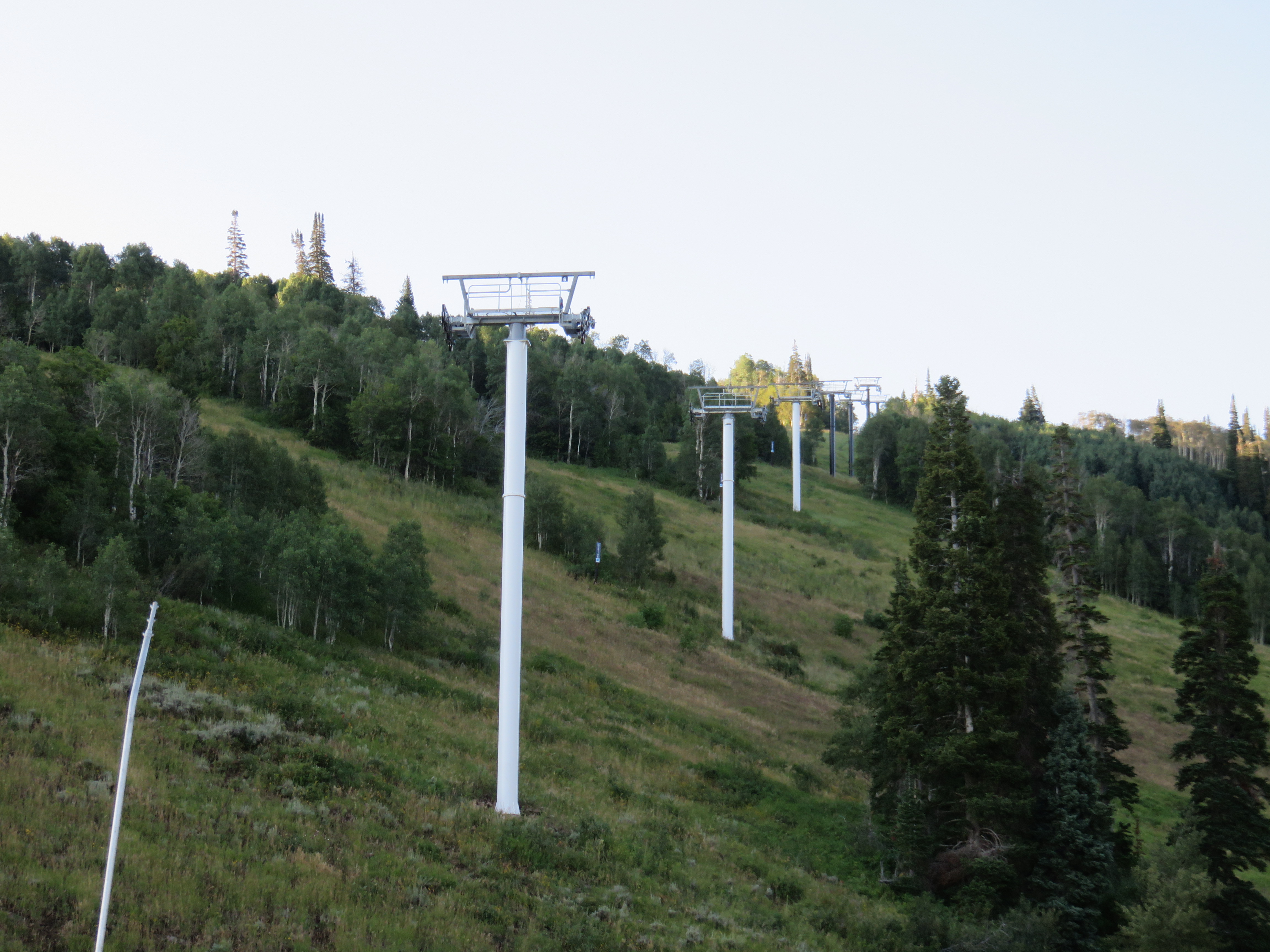
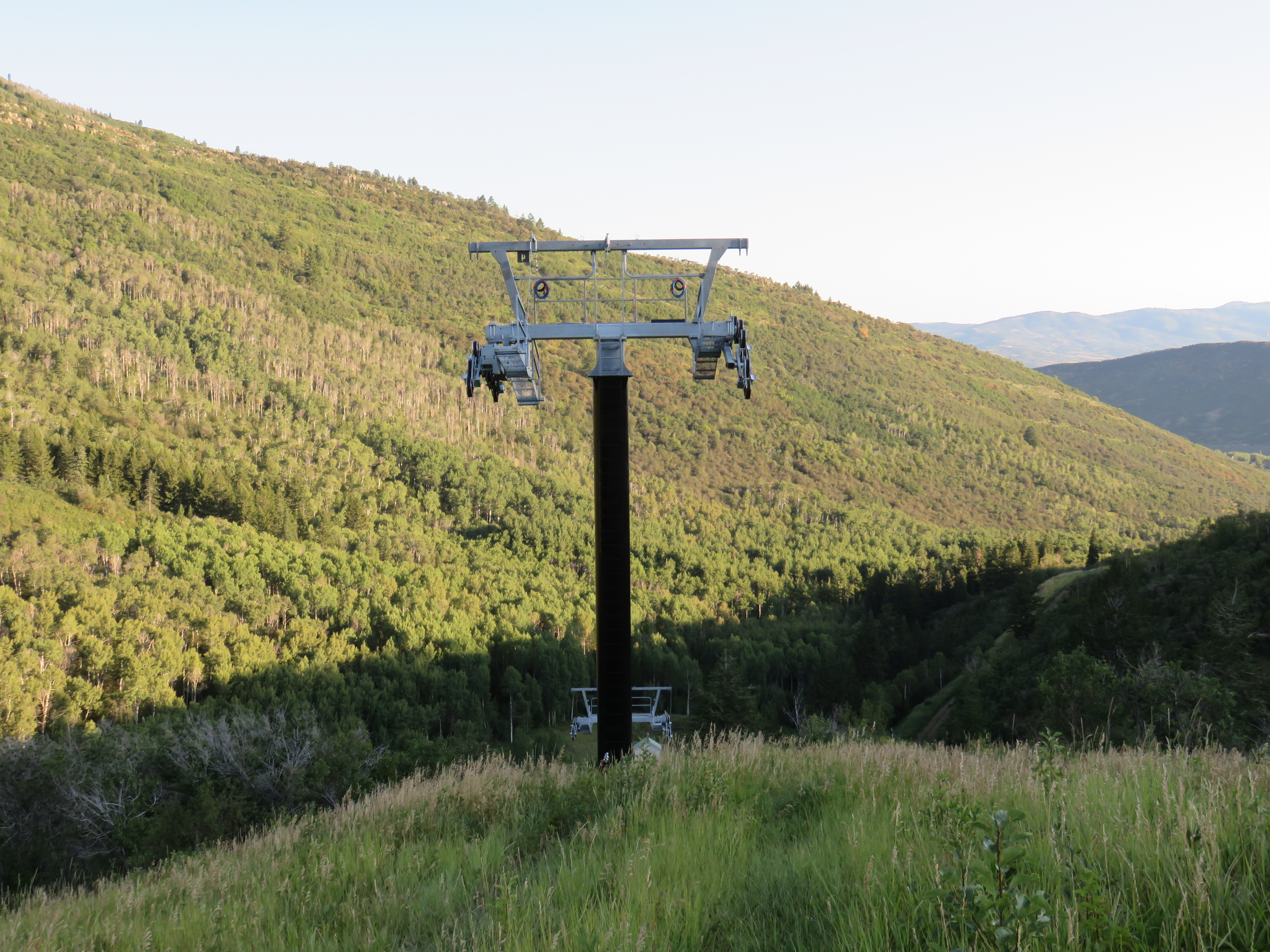
King Con Six will re-use the CTEC tower tubes from the old high speed quad. New tower heads are being assembled in the base area parking lot. The bottom terminal will have a loading carpet as is standard with all new detachable lifts at Vail Resorts these days. The lift is a top-drive, bottom-tension configuration. Doppelmayr EJ six passenger chairs are already on-site. All three of Park City’s new lifts will have Redaelli haul ropes which have also been delivered.

I found myself near Park City this week and had to check out all the construction creating Utah’s largest ski resort. It’s one thing to read Vail Resorts’ press releases touting $50 million in improvements but it is quite another to see hundreds of workers scrambling to complete a long list of projects spread over 7,300 acres. This post will focus on what is perhaps the most exciting part – the new Pinecone Gondola that will link Park City to Canyons.

The 8,200′ long gondola starts adjacent to Park City’s Silverlode six-pack where a new Snow Hut lodge is also being built. The terminal and first two tower footings have already been poured. From this point, the line crosses over a modest ridge and descends before beginning the climb to Canyons in earnest. There is a break halfway up Pinecone Ridge where the liftline moderates before a steep section to the summit. Most of the holes for the towers in this portion have been dug including the two breakover towers just before the ridge-top mid-station. I was surprised at how sharp the midstation’s angle will be – around 30 degrees.