In His Own Words: Carl Skylling of Skytrac on the Leitner-Poma Acquisition

Last week on my way home from the Rocky Mountain Lift Association conference, I stopped by Skytrac headquarters to sit down with Carl Skylling, General Manager of the company that’s shaken up the lift-building industry in North America over the past eight years.  If you hadn’t heard, Leitner-Poma bought Skytrac two weeks ago in a move that surprised many.  Carl is an industry veteran who worked his way up through Garaventa CTEC, Doppelmayr CTEC and Skytrac in construction, operations and management positions.  In addition to kindly agreeing to be interviewed, Carl introduced me to some of the hard-working men and women who design and build Skytrac lifts in Salt Lake City.

Team-Sky-Trac-0106169-1

Peter: How did you get started with SkyTrac?

Carl: I started out with Garaventa CTEC and then got pulled into the merger with Garaventa and Doppelmayr, becoming Doppelmayr CTEC.  Jan Leonard had stepped down in 2008 and by 2010 I was Vice President of Operations but getting restless to do something different.

I approached these guys with a concept I had to continue this whole idea of doing service work and modification work because I saw that there was a big niche in the market that was missing there.   So I approached Dave Metivier and Alan Hepner, and about the same time Jan Leonard was also getting interested in finding a way to take care of his former customer base by supporting them with service and parts.  So there was this huge potential market to make all those parts.

One thing kind of led to another between [Jan] and I approaching our partners, Dave and Alan, who were running Hilltrac and Skytrac at the time.  We ended up taking this Skytrac concept to the point where, with the four of us, we realized why stop with parts?  Why not do a design of our own.  SkyTrac started in 2008 doing some engineering/modification work with Dave and Alan but we really, in 2010, took it to the next level.
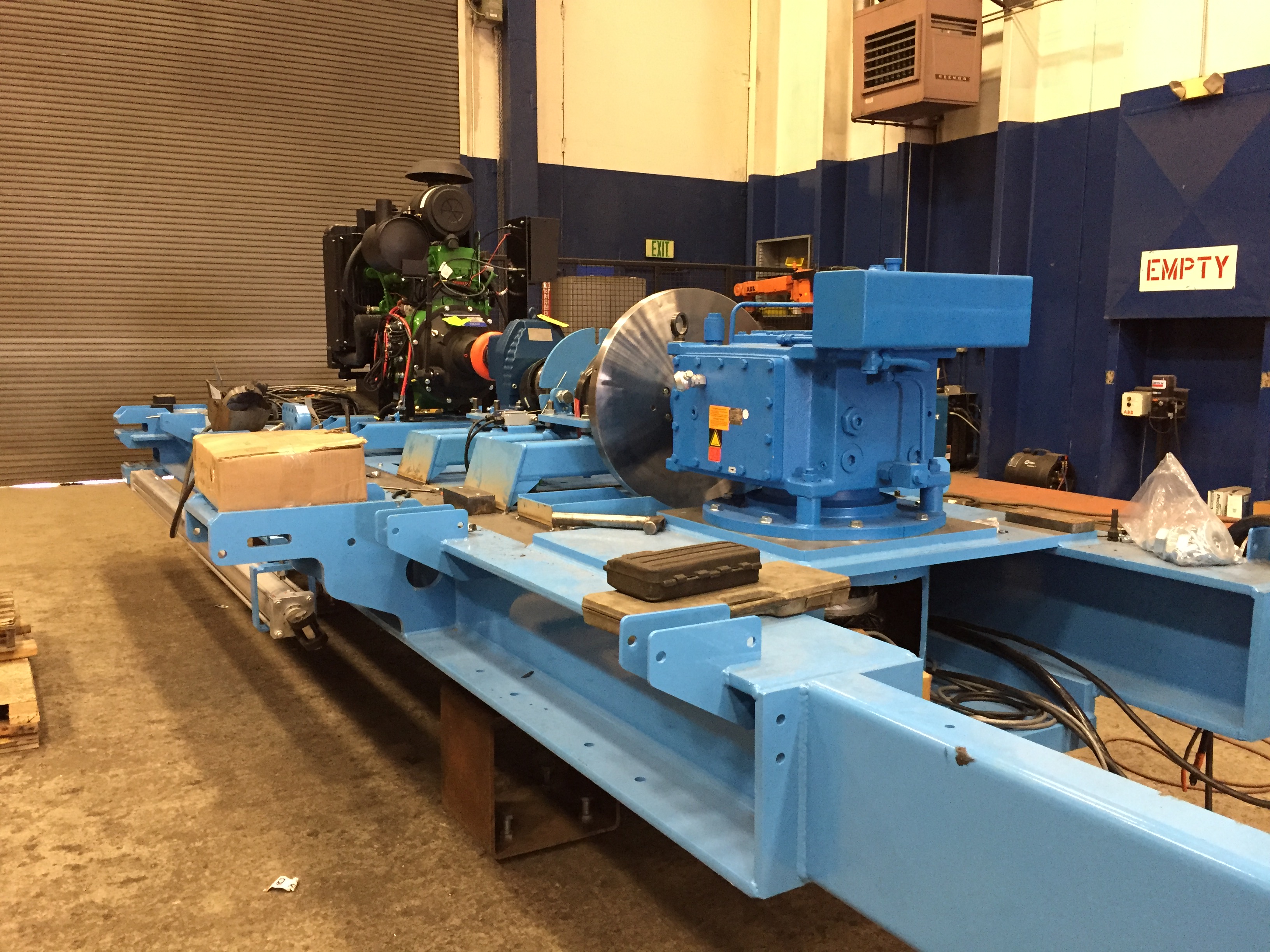
IMG_9905
This lift bound for a fairgrounds in Sacramento won’t have Skytrac’s typical Monarch terminal but rather a simpler metal enclosure.  Skytrac prides itself on meeting the needs of its customers in the legacy of Jan Leonard.

Continue reading

New Book Chronicles 80 Years of Innovation at Poma

IMG_9929
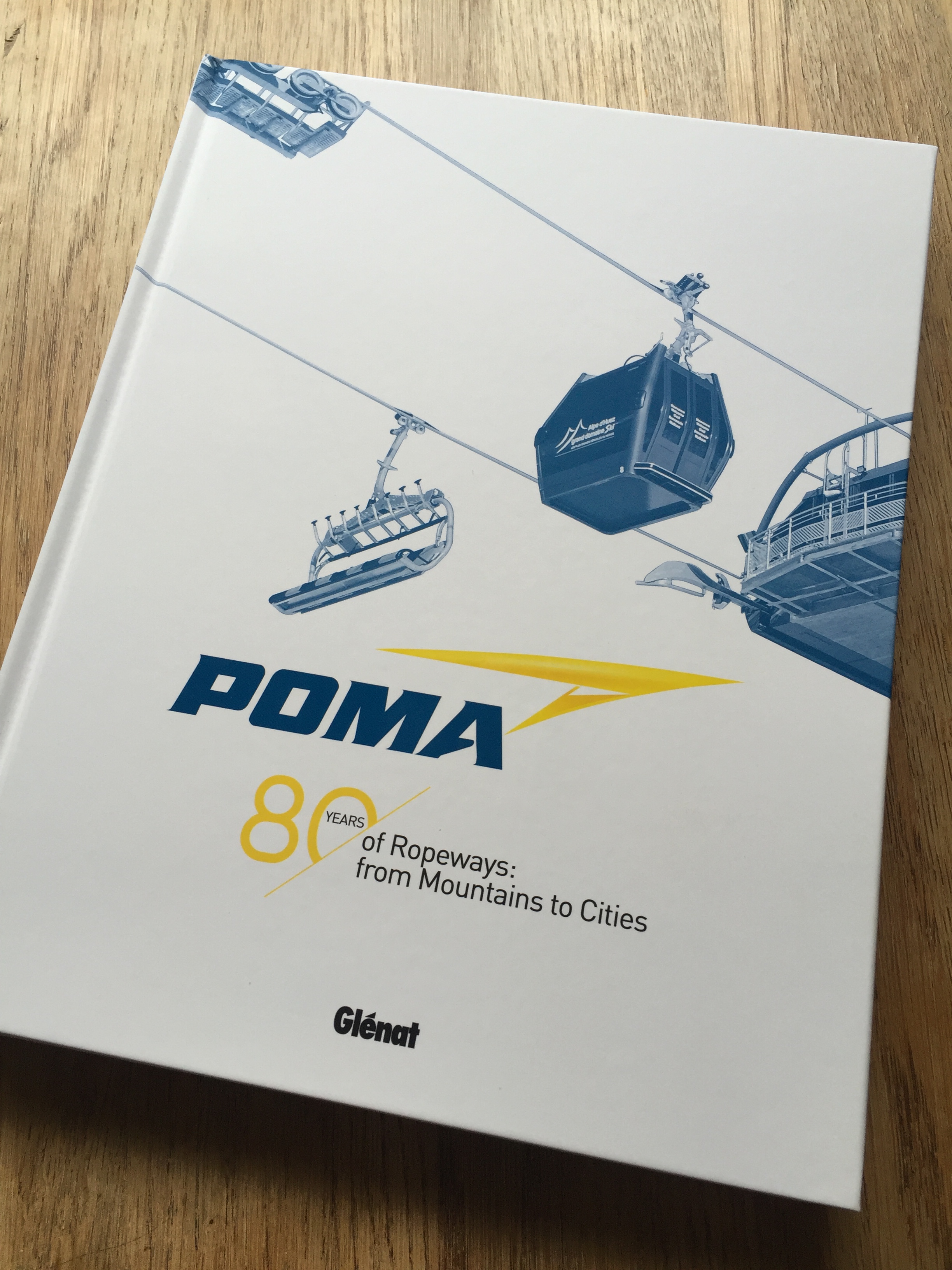
“This work is dedicated to the men and women who have been part of Poma’s innovative and epic journey. It is for our clients and partners who have placed their trust in Poma throughout the world – whether up in the mountains or in the heart of cities.”

The above dedication sits on the first page of a new book celebrating eighty years of commercial success called Poma: 80 Years of Ropeways from Mountains to Cities.  The 190-page work, written by Béatrice Méténier and Christian Bouvier, looks back at the firm’s more than 8,000 ropeway installations from the mountains of France to Colorado, South America and beyond.

A skier at heart, Jean Pomagalski installed his first surface lift in 1934 at Alpe d’Huez. He constructed it mostly out of wood and with a used Ford motor.  After building three additional tows, Mr. Pomagalski had himself a company and filed a patent in 1936 for a “carrying device hauled by a rope moving at a constant speed.” After a break for Wold War II, Pomagalski S.A. grew to 15 employees by 1953.  Even so, Mr. Pomagalski still found himself simultaneously a salesman, surveyor, designer and builder of lifts that were sent off as kits for installation by customers. The company’s first chairlift, a single-seater, debuted in 1955 near Chamonix.

IMG_4080
Workers assembled, then disassembled early fixed-grip chairlifts in Poma’s French workshops before sending them to the field as seen in this 1963 photo.

By 1958, Pomagalski was selling 120 lifts a year, many of them to customers in the United States and Canada.   Mr. Pomagalski decided to drop the latter part of his name from the company’s in 1965 to better appeal to English-speaking clients.  Poma delivered its first gondola systems simultaneously in 1966 at Queenstown, New Zealand and Val d’Isère, France. A small new company called Sigma Plastiques provided the egg-shaped cabins.  Poma trusted Sigma again the next year for the world’s first gondola with automatic doors and the rest is history.

Continue reading

Big News! Leitner-Poma Acquires Skytrac

Leitner-Poma acquired Skytrac this week in a deal revealed today.  Even more exciting is Skytrac will continue to operate as a subsidiary brand of the Leitner-Poma Group.  “We would like to welcome Skytrac to our family,” said Anton Seeber, CEO of the European parent company of both Leitner and Poma. “Like Leitner-Poma, Skytrac also will be managed autonomously and independently to make sure the Skytrac team can focus on its strengths and hone its skills, all while having access to the Group’s resources to be able to benefit from particular synergies.”  Leitner and Poma have experience operating in Europe as separate brands while sharing technology such as the latest-generation LPA detachable grip.

IMG_3848
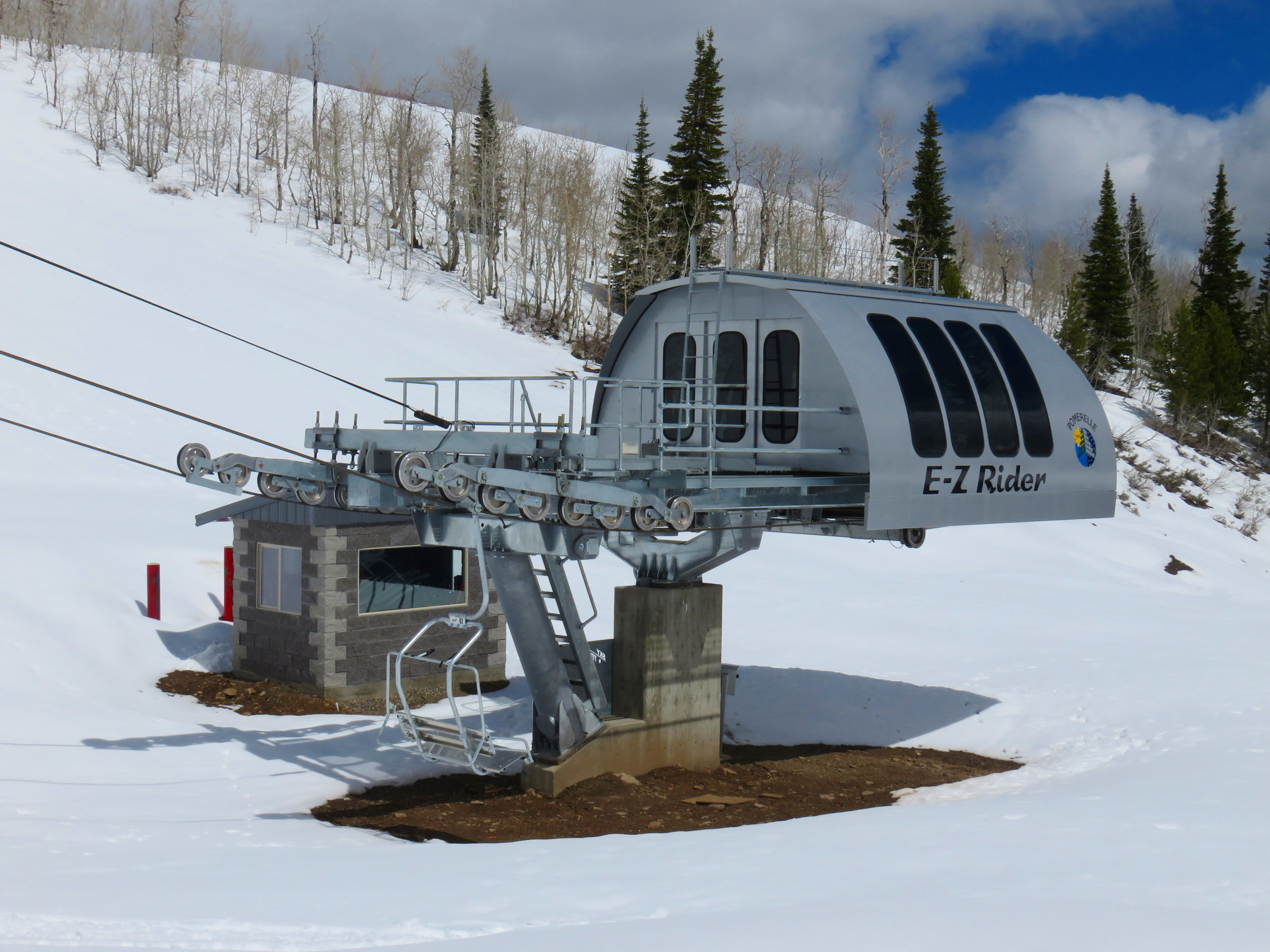
SkyTrac made a name for itself providing smaller resorts like Pomerelle in Idaho with modern lift systems like this one.

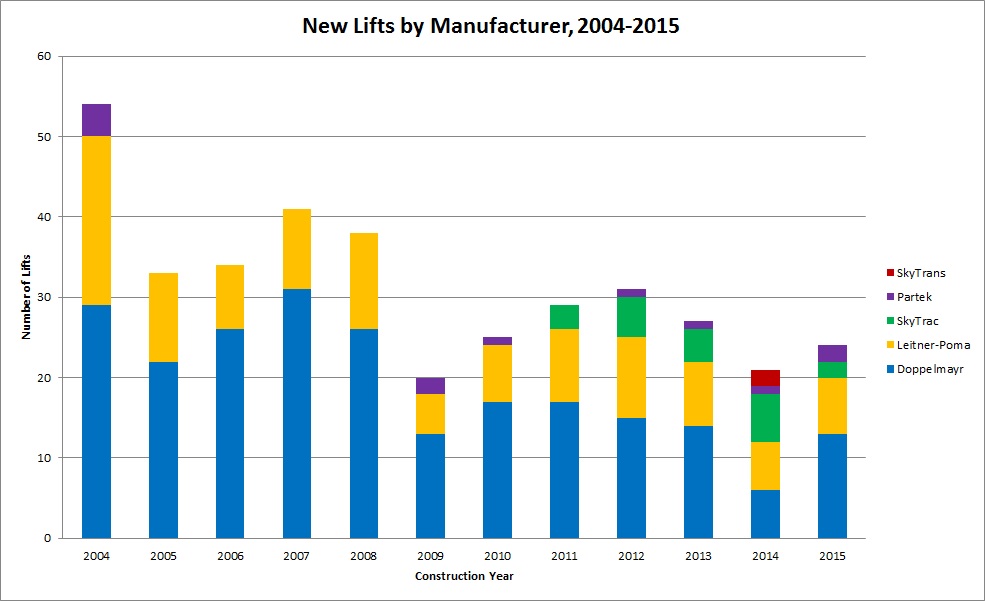
Jan Leonard and other former CTEC employees started Skytrac in 2010 to fill a niche retrofitting older lifts and building economical fixed-grip lifts in Salt Lake City.  The company has built 19 complete lift systems to date, mostly at small-to-medium sized ski areas from Washington to Massachusetts.  Skytrac had its best year in 2014, building as many new lifts as both Leitner-Poma and Doppelmayr that year.  In addition to building complete lifts, Skytrac also specializes in outfitting older lifts with new terminals and control systems.

Continue reading

Arizona Snowbowl & Purgatory Announce New Lifts

Fresh on the heels of adding three lifts at his collective of Southwestern resorts last summer, James Coleman revealed today he will invest another $10 million to build new lifts and more at Arizona Snowbowl and Purgatory in 2016.

2016-17 New Chairlift_bold_0

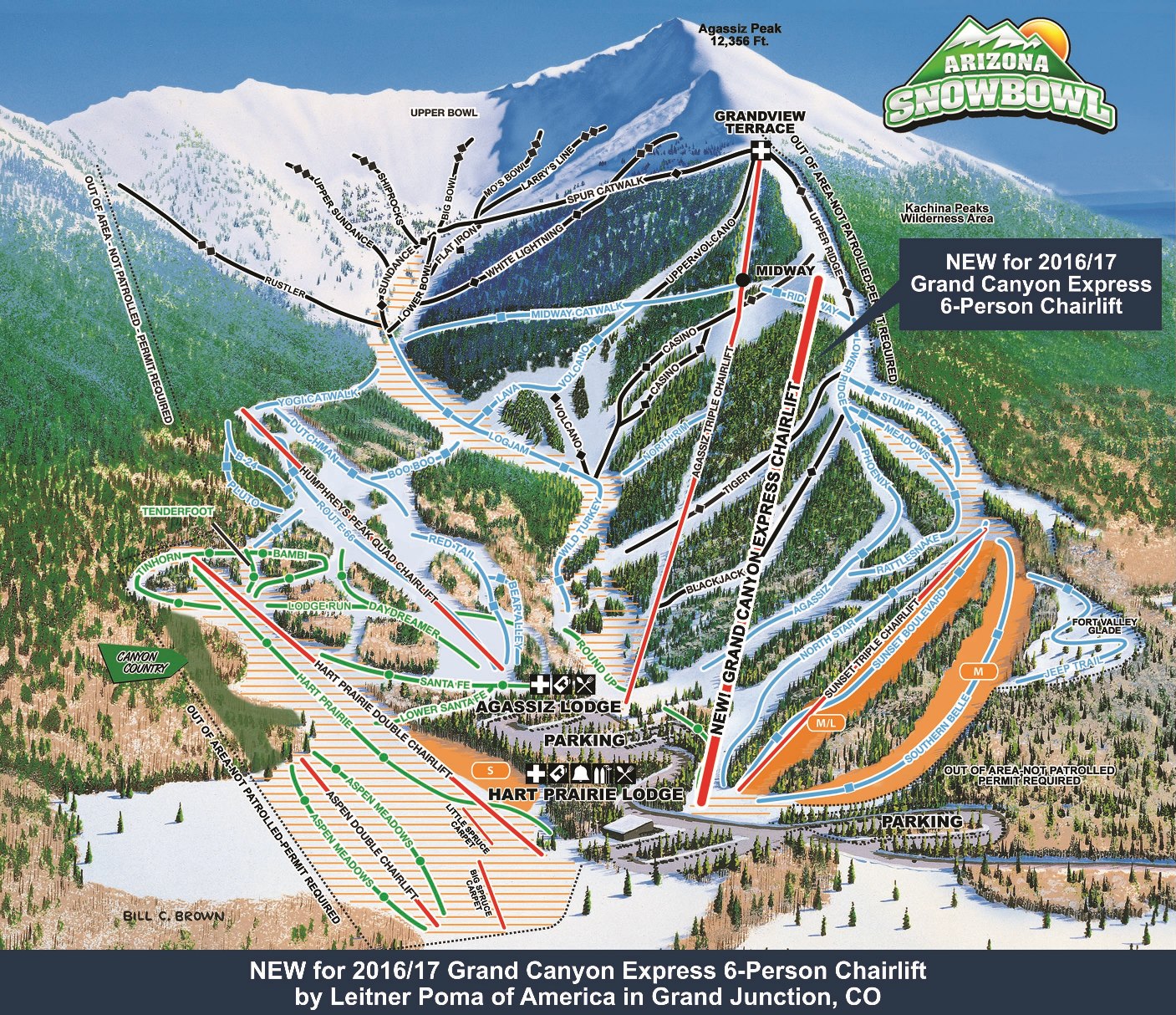
The Leitner-Poma-built Grand Canyon Express will serve 85 percent of Arizona Snowbowl’s terrain with a 5.8 minute lift ride.  It will run approximately 5,500′ (1,530 vertical feet) in a new alignment starting near the Hart Prarie Lodge and topping out at 10,900′ in elevation near the Agassiz mid-station.  This is the second new chairlift at Arizona Snowbowl following last summer’s Humphreys Peak addition that expanded the mountain’s intermediate terrain with a SkyTrac quad.  The Sunset triple (a 1983 CTEC) will likely be removed and may be used to replace the Aspen double in the future. Arizona Snowbowl’s master plan also calls for a second detachable lift to replace the Hart Prarie double. Exciting times at a mountain whose very survival was questionable a few years ago!

In Colorado, Purgatory Resort will get a new two-way surface lift called T-3 to link the bottom terminals of backside lifts 5 and 8.  The latter is a 1980 Riblet double, the former a 2015 Leitner-Poma high speed quad. Purgatory plans to add a similar connection between lifts 3 and 5 and replace more of the resort’s aging fixed-grip chairlifts (namely #2, 4 and 5) in upcoming years.

Mr. Coleman is the Durango-based businessman who’s owned Sipapu since 2000 and took over operations at Pajarito, Purgatory and Arizona Snowbowl in 2014.  When the Durango Herald asked last year whether he was done buying ski areas, Coleman replied “no.”  That’s great news considering his willingness to invest in capital improvements to the tune of $20 million thus far.

Squaw-Alpine Applies to Build Base-to-Base Gondola(s)

ImageUploadedByTGR Forums1450406020.299083
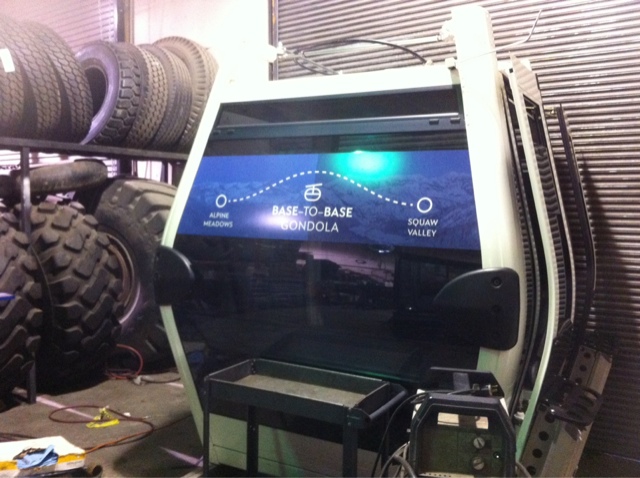
8-Passenger Sigma Diamond demo cabin in Squaw Valley’s shop.  Source

Earlier this fall, Squaw Valley Ski Holdings submitted its formal application to the Placer County Planning Department to build the three-stage gondola connecting Squaw Valley with Alpine Meadows that was first announced last spring.  Leitner-Poma will design the system on the heels of completing Squaw’s Big Blue and Siberia six-packs.  LPOA has lots of experience building detachable lifts with angle stations including similar three-section gondolas at Breckenridge and Sunshine Village.

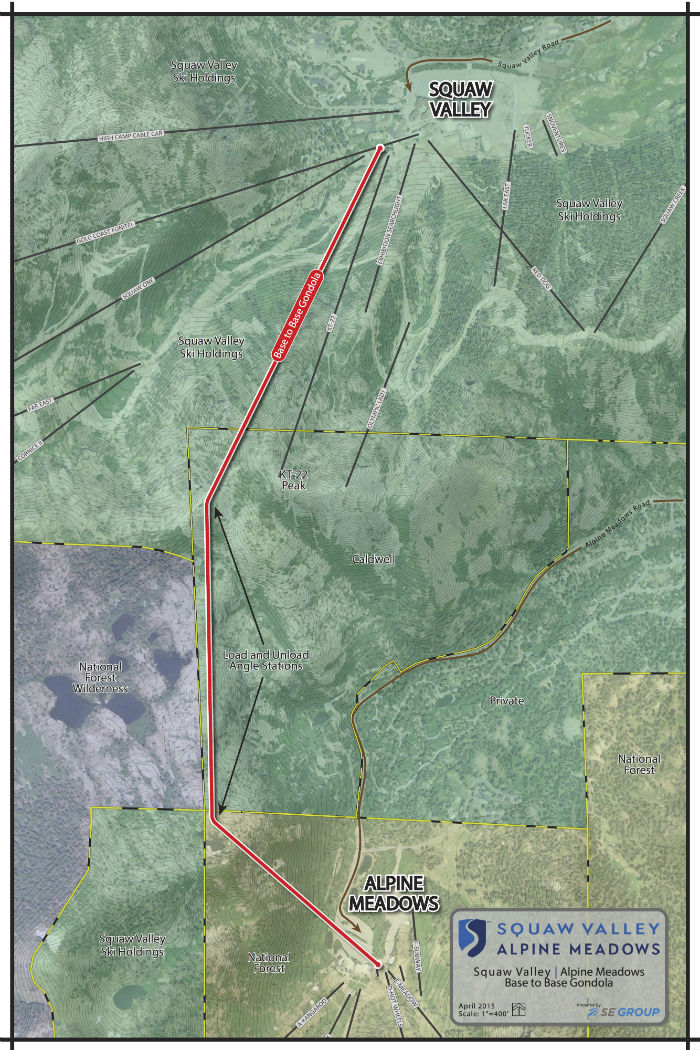
The Squaw-Alpine gondola will be around 13,000 feet long with 37 towers and two ridge-top angle stations.  The unique system will have three haul ropes but only two drives located at the end stations (Breck and Sunshine’s gondolas have just one rope & drive each.)  In this sense, the base-to-base gondola is really two gondolas similar to Whistler Village and Revelstoke. What’s different at Squaw is the center section will operate with the Alpine drive by sharing a common bullwheel where the sections meet.  As such, the Squaw section could be run independently but the other two spans must operate together.  Regardless, cabins will normally make the entire trip from Squaw to Alpine.  The gondola’s hourly capacity will be 1,400 passengers per direction with 8-passenger cabins and a line speed of 1,000 fpm.  Squaw also plans full-speed operations during a power outage with generators at each drive station.

gondolamap
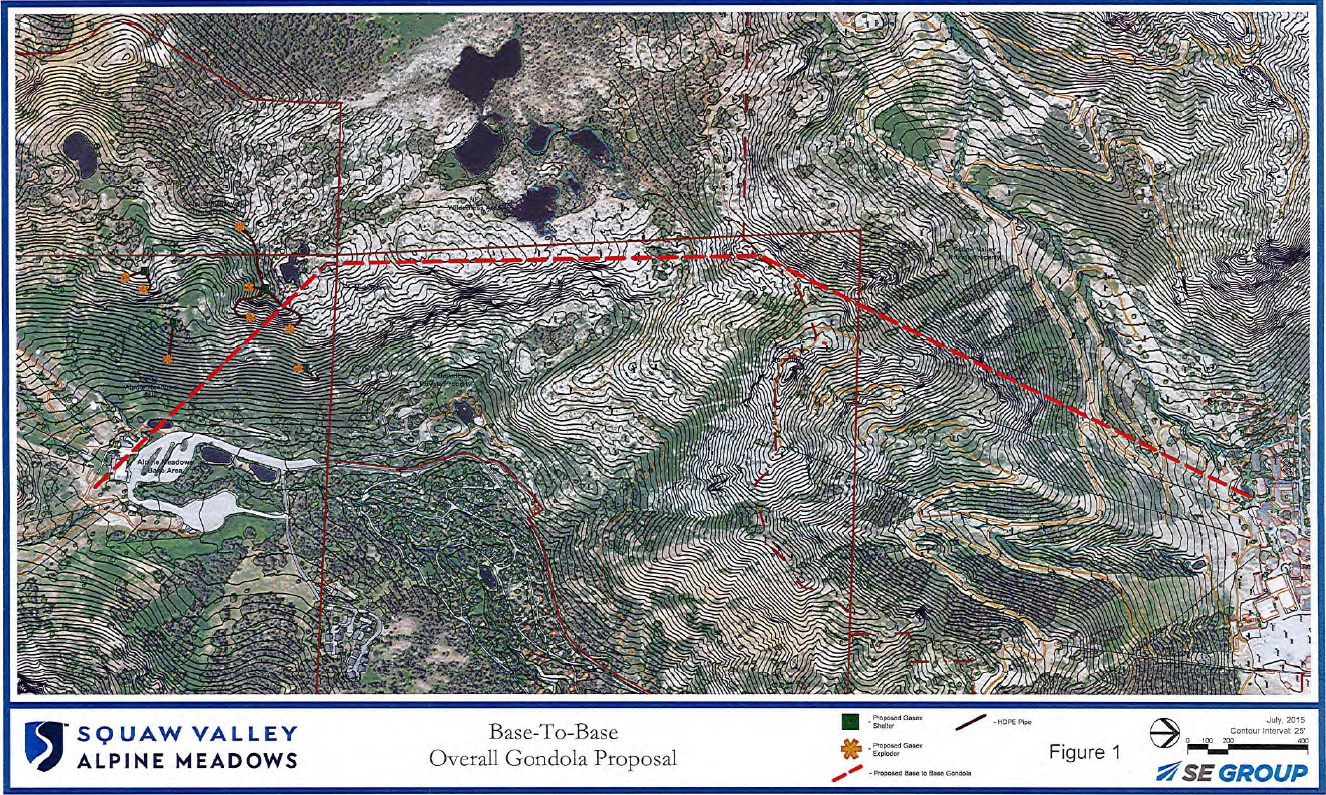
Updated map with some changes from the original alignment.

The north mid-station on the Squaw side will be sited on private lands near the summit of the KT-22 detachable quad while the south mid-station will be in the Tahoe National Forest within Alpine’s existing permit boundary.  Skiers will be able to access some pretty awesome terrain from both mid-stations when conditions allow.  The Squaw Village terminal will sit between KT-22 and the Squaw One Express while the Alpine terminal will be between the Roundhouse Express and Hot Wheels. The gondola will actually fly over Alpine’s base lodge and under Squaw’s Funitel.  One interesting point from the application is that the Alpine mid-station at just over 7,700 feet in elevation will have no permanent road access or power line to it, which is part of why the central section has no drive motor of its own.  The terminal control systems, lights, etc. will run off a line generator and diesel genset.

Continue reading

News Roundup: 115.4 mph

1516_StarBlog

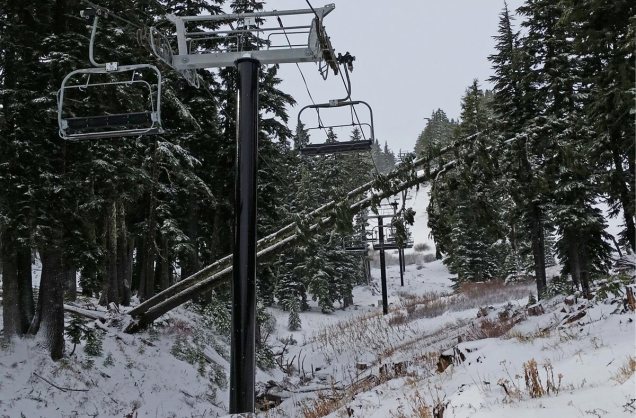
  • Mt. Hood Meadows updates skiers on the windstorm that sent two hundred-foot hemlock trees onto the Shooting Star Express the night of November 17th.
  • Vail Resorts announces $100 million in capital improvements across its mountains for 2016/17 including replacement of the last major fixed-grip lift on Vail Mountain.  The new Sun Up Lift #17 will be a detachable quad, manufacturer unknown.
  • SkyTrac splices the Humphrey’s Peak Quad at Arizona Snowbowl.
  • The latest from Sugarloaf on the new King Pine.  An apparent Doppelmayr delay will push opening until late-December. Luckily (or unluckily) there’s no snow anyways.
  • Utah’s new ski resort, Cherry Peak, announces a December 21st debut with two lifts.
  • Doppelmayr’s 10th  3S gondola, the Penkenbahn, is ready to go.
  • A nonprofit ski area in Ontario that’s been unable to operate its quad chair since 2011 due to a 2006 Doppelmayr service bulletin hopes to crowdfund $80,000 for repairs.
  • West Mountain celebrates their new lift with fireworks rather than skiing and already has the drive terminal up for another new-used lift next summer.

News Roundup: First Chairs

  • Hanging carriers at PowderhornSnowmass, Sipapu and Lutsen.
  • Leitner-Poma Alpha motor room arrives at Okemo.
  • No lift inspections, no updates and no comment from Maine’s third largest ski resort. The last post on their Facebook page was Oct. 17th.
  • The Balsams will not break ground this year as originally planned but still hopes for a 2016-17 opening with a mix of new and existing lifts.
  • Leitner-Poma would supply a gondola proposed to run from Queenstown to The Remarkables on the South Island of New Zealand.  L-P built The Remarkables’ flagship six-pack “Curvy Basin Express” in 2014.  The new gondola system would span 6.1 miles in two sections and take 27 minutes to ride with a potential opening in 2018.  It would feature an impressive 4,200 foot vertical rise and 140 8-passenger cabins from Sigma.
  • Sunshine Village cuts the ribbon on Canada’s first new bubble chair since 1999.  Tee Pee Town LX (Luxury eXpress) also has the first seat heating in Canada.  Congratulations to Sunshine on completing one of the most modern lift fleets on the continent while others curate lift museums.

Leitner Introduces Premium Chair

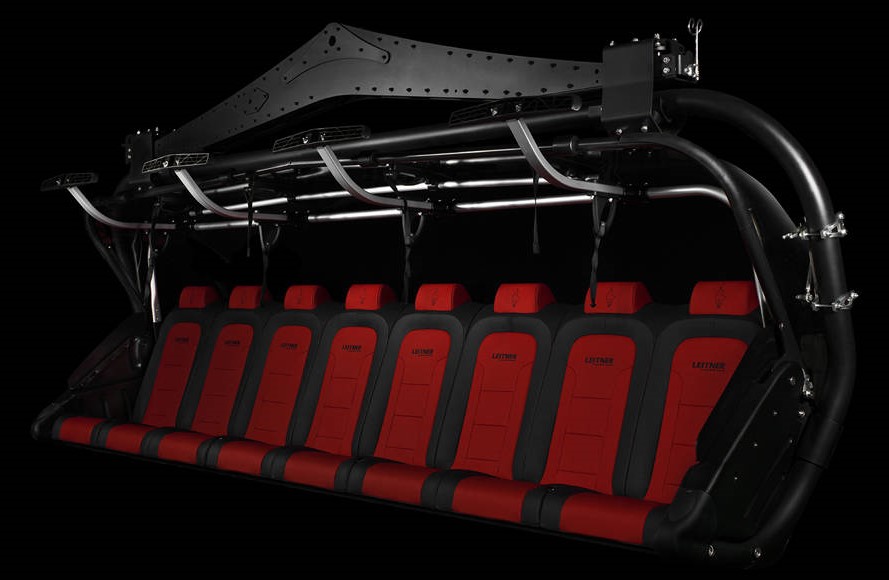
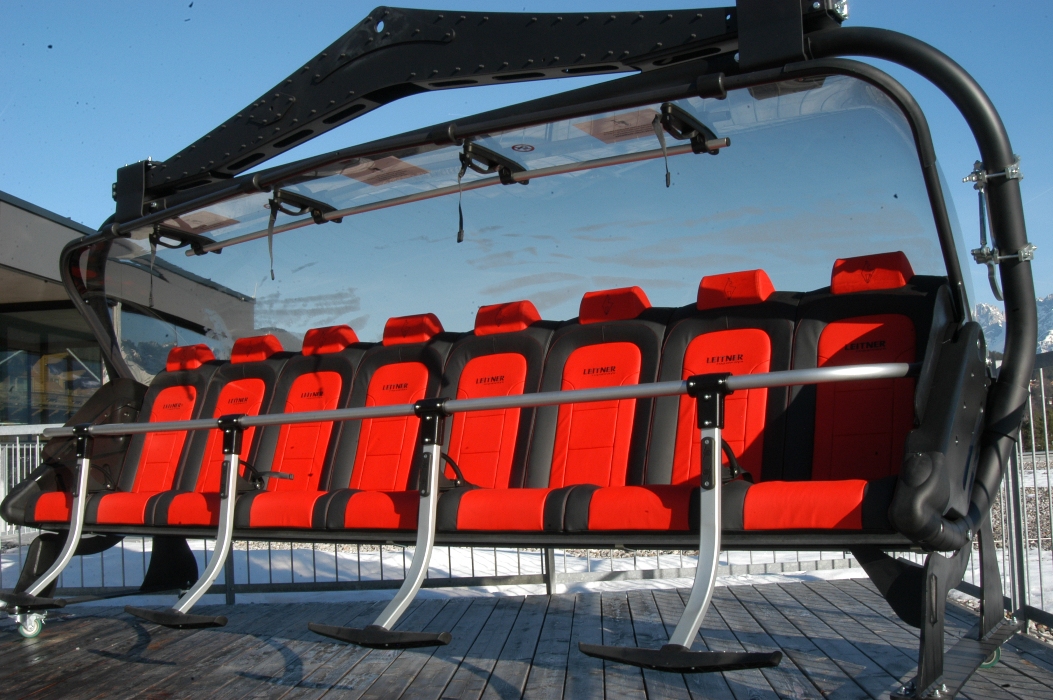
When Sigma decided to develop a new 3S gondola cabin, they turned to a designer of Ferraris and Maseratis to create Symphony.  Now Leitner is giving its chairs the same treatment with automotive-style upholstered seating.  The new ‘Premium Chair’ combines real leather with heated seats and bubbles for the ultimate in rider comfort.  The chair also has automatic locking footrests for safety.  One of Audi’s design firms created the chair and it is manufactured at Leitner’s plant in Telfs, Austria.  In a press release announcing the new option, Martin Leitner remarked, “The Leitner Premium chair delivers optimum comfort, ergonomics, and elegant design in one luxurious package. ‘Business Class for ski resorts’ sums it up perfectly.”

Leitner's new 'Premium Chair' will debut in Austria next month.
Leitner’s new ‘Premium Chair’ will debut in Austria next month.

Kitzbühel is the launch customer for the new chair, debuting 62 of the 8-passenger version on their new Brunn chairlift this winter.  Brunn is the resort’s eighth Leitner installation and will serve a pod of three new runs.  The lift will also feature a 980-horsepower DirectDrive that Leitner claims will reduce noise and electric consumption by 20 percent versus a standard drive with a gearbox.  Brunn will haul an impressive 3,300 skiers per hour at up to 6.0 m/s.  The lift is 4,790 feet long and rises 1,417 feet with 17 towers.  Kitzbühel’s total investment in the Brunn lift and trails is $22.1 million.

DSC_0051

Continue reading

Summer 2015: The Good and the Bad

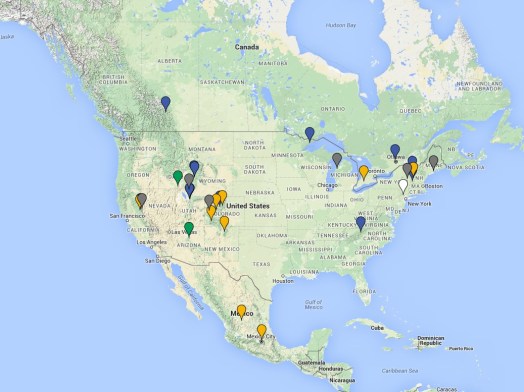
It’s almost November and by my count construction is wrapping up on 33 lifts across the US and Canada.  With the usual caveat that there could be a lift project I haven’t heard about, 2015 will be the fourth year in a row that the total number of new lifts has declined.  Nonetheless there are some encouraging trends – namely more of this summer’s lifts were (expensive) detachables and more were brand new rather than re-installations of used lifts.

Click on the map above to explore our interactive map of 2015's new lifts powered by Google Maps.
Click on the map above to explore our interactive map of 2015’s new lifts powered by Google Maps.

Looking geographically, there’s no question the dismal snow situation last winter killed the market for lifts in the Sierras and Cascades.  In a typical year, Washington, Oregon and British Columbia account for five new lifts and this year they had zero.  The Rockies were a bright spot this summer, with at least one new lift being built in every Rocky Mountain state except Montana.  Colorado had a particularly strong year, building five new lifts including four detachables.  Utah had almost as good a year, thanks largely to Vail Resorts’ mega-project at Park City.  Colorado averages 4.4 new lifts a year and Utah 3.3 and both came out ahead of those numbers this summer.

The Midwest was about average for snowfall last winter but its ski areas built just one new lift and one used lift this year.  The one bright spot was Lutsen in Minnesota which spent $7 million with Doppelmayr to rebuild the Midwest’s only gondola.  Looking further east, Vermont was a success story, getting three brand new lifts from both Leitner-Poma and Doppelmayr.  Despite averaging more than five new lifts a year, nowhere else in the Northeast invested in a new lift despite a stellar winter in 2014-15.

Canada had a tough year with only three lifts going in at Sunshine Village, Boler Mountain and Mont Cascades.  In a normal construction season the country’s resorts build 7-8 new lifts. My take is newer resorts in Western Canada – places like Sun Peaks, Revelstoke and Kicking Horse – were hit particularly hard by the Great Recession and still haven’t recovered.2015 by manufacturer

Continue reading

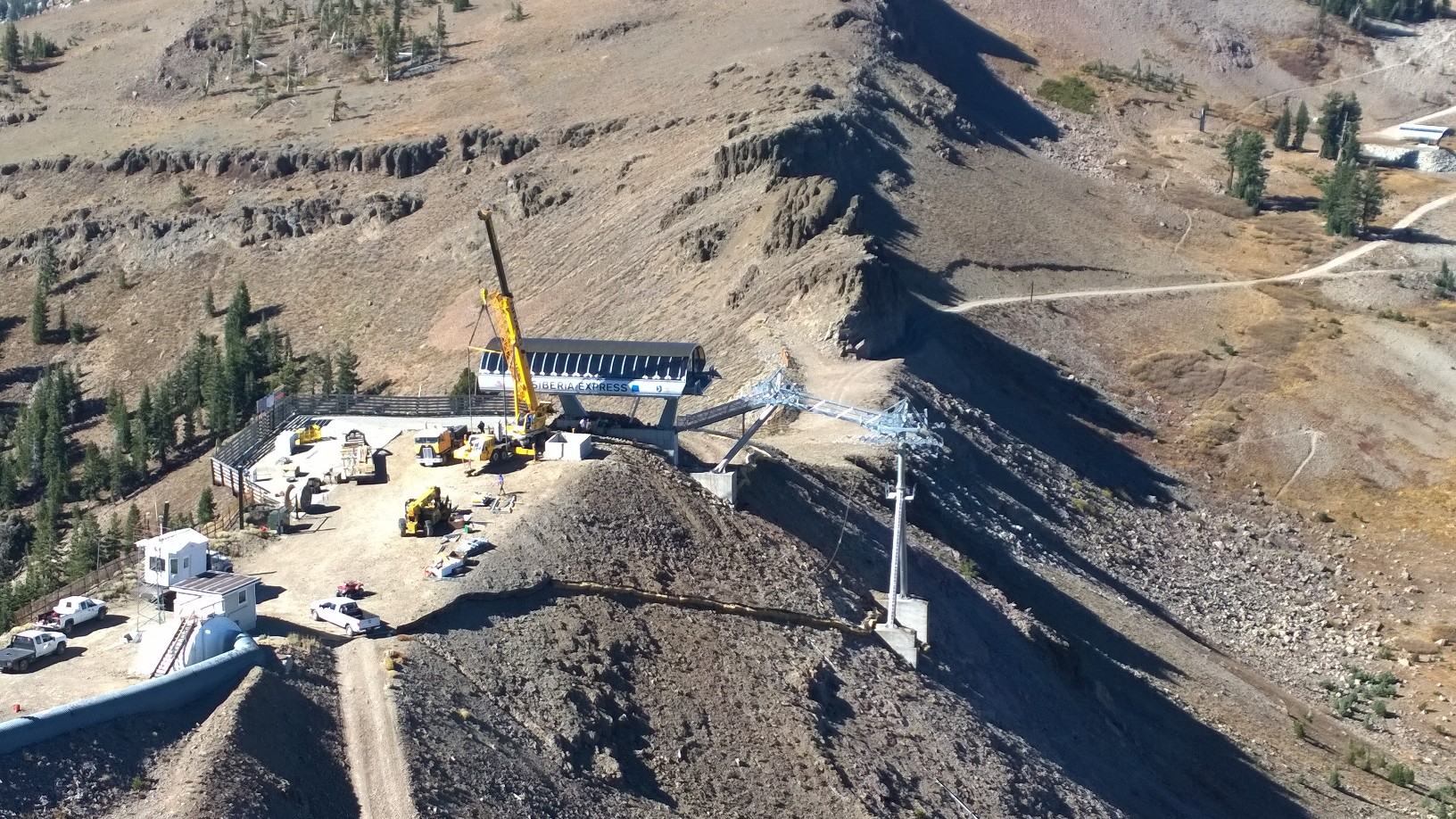
Squaw Valley’s New Siberia Express Six-Pack

WP_20151011_14_26_21_Pro

Squaw Valley has removed ten of its lifts since 2007 while building only four new lifts in the same period.  What’s going on?  Squaw is strategically removing redundant/older fixed grips like Cornice II and replacing first-generation detachable quads with newer technology.  This summer’s project replaces the Siberia Express (a 1985 Poma) with an all-new Leitner-Poma six-pack.  The new Siberia will be Squaw’s second lift with LPA grips and terminals.  The first was the Big Blue six-pack, which replaced not one but three Yan lifts in 2012.  The LPA grip is now used worldwide by both Leitner and Poma but terminals used in North America are designed and built in Grand Junction, Colorado.

The original Siberia was a workhorse at Squaw for thirty years, operating in a harsh above-treeline environment.  It had an old-school Alpha drive building and chain-driven contours.  In addition to upgraded technology, the new Siberia should be less subject to wind closures with heavier chairs.  In a press release announcing the project, Squaw Valley CEO Andy Wirth noted, “upgrading the Siberia Express lift to a high-speed six-passenger chairlift is guaranteed to have a positive impact on the skier experience on the upper mountain at Squaw.  In addition, the lift has been designed in a way that will improve its ability to operate during inclement weather.”  Because its line is so exposed, the new lift has parking for all 56 chairs at the drive terminal.

WP_20151009_10_59_57_Pro
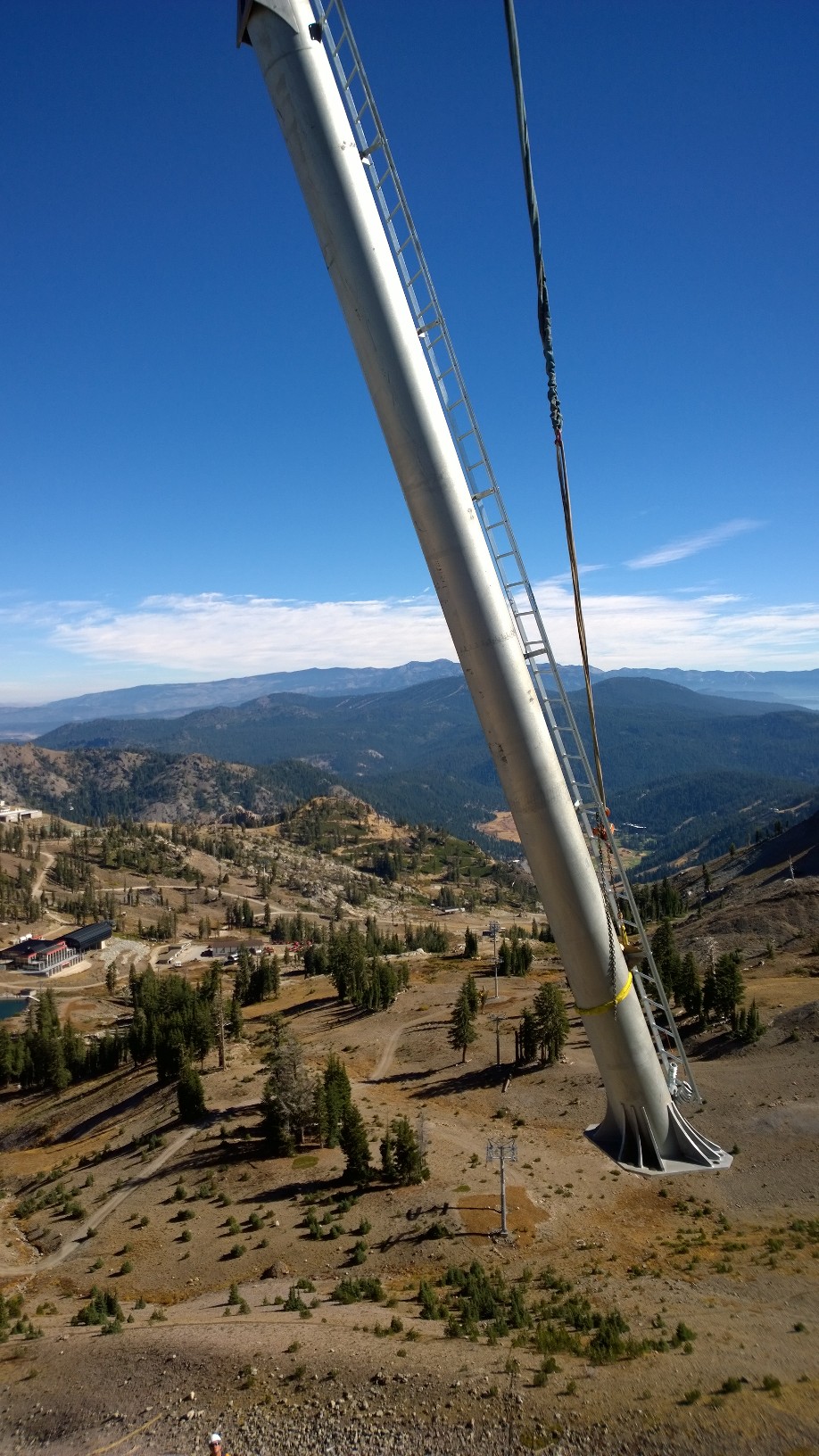
The first leg of a unique tower 13 is lowered into place.

Continue reading