News Roundup: Fire Season

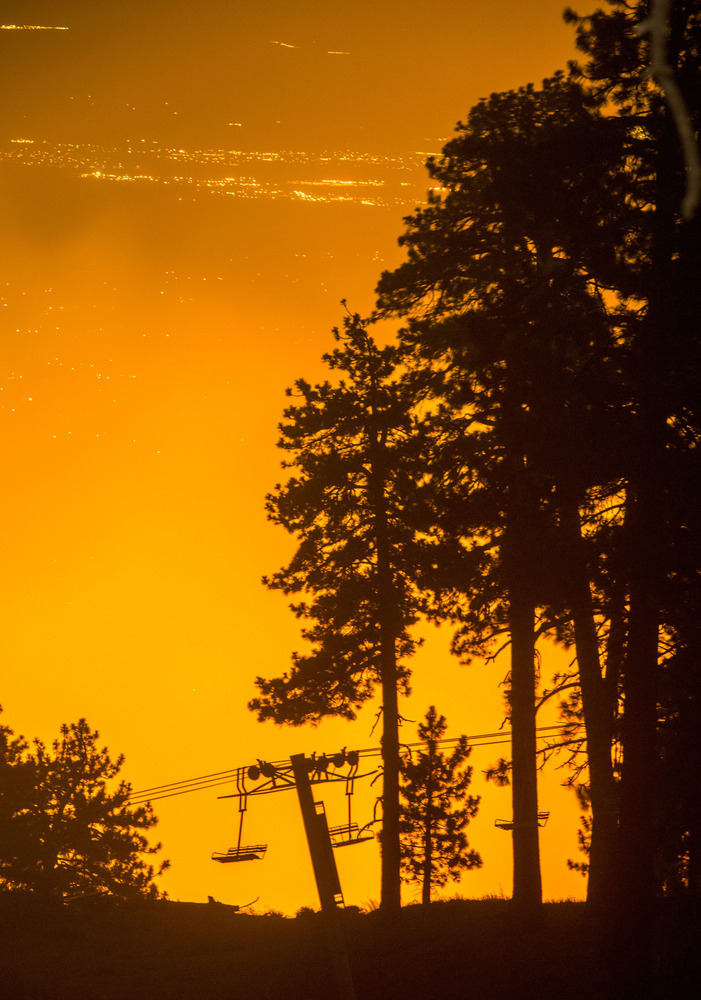
The Pine Fire near Wrightwood, CA narrowly missed Mountain High Resort earlier this week.
The Pine Fire near Wrightwood, California skirted Mountain High Resort earlier this week.  Photo credit: Stuart Palley.
  • The North Resort at Mountain High narrowly escapes one of California’s many wildfires burning out of control.
  • Leitner-Poma is about to start 3 1/2 months of construction at Sipapu, New Mexico.
  • Next season will not happen at Saddleback, Maine unless the resort can secure $3 million for a new quad lift in the next two weeks.  Or so they say.
  • In central New Hampshire, Waterville Valley continues clearing for the Green Peak expansion while Tenney Mountain prepares to reopen after a decade being closed.
  • Sugarloaf launches their lift safety website that appears it took an intern half an hour to make.
  • Leitner gets into the surfing business with DirectDrive.
  • Poma’s 2014 Reference Book is now online.  Better late than never!
  • Snow King Mountain’s very wealthy investors announce phase 2 expansion with a base-to-summit gondola and major skiing expansion.
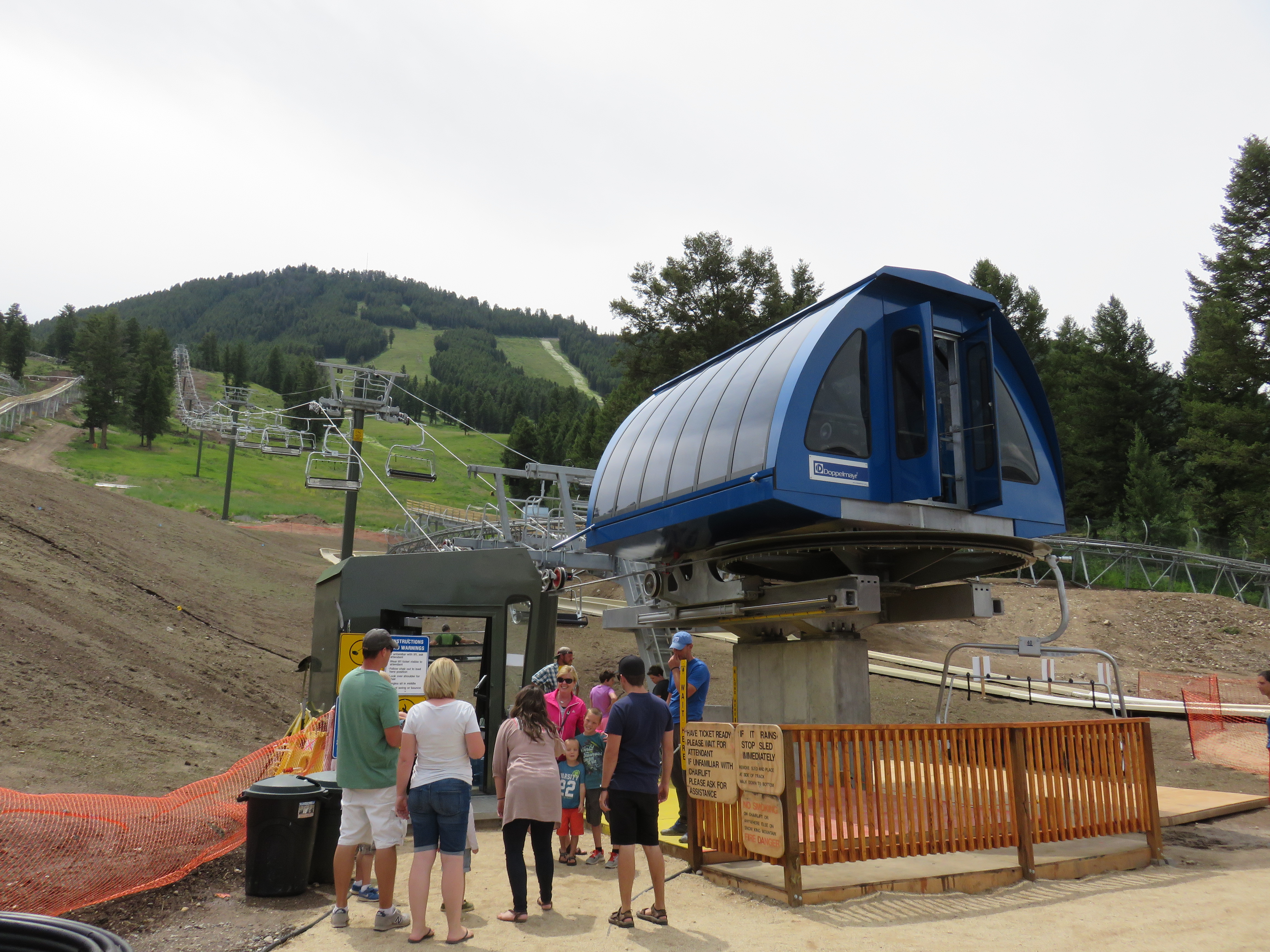
Snow King's Rafferty lift opened on July 12th.
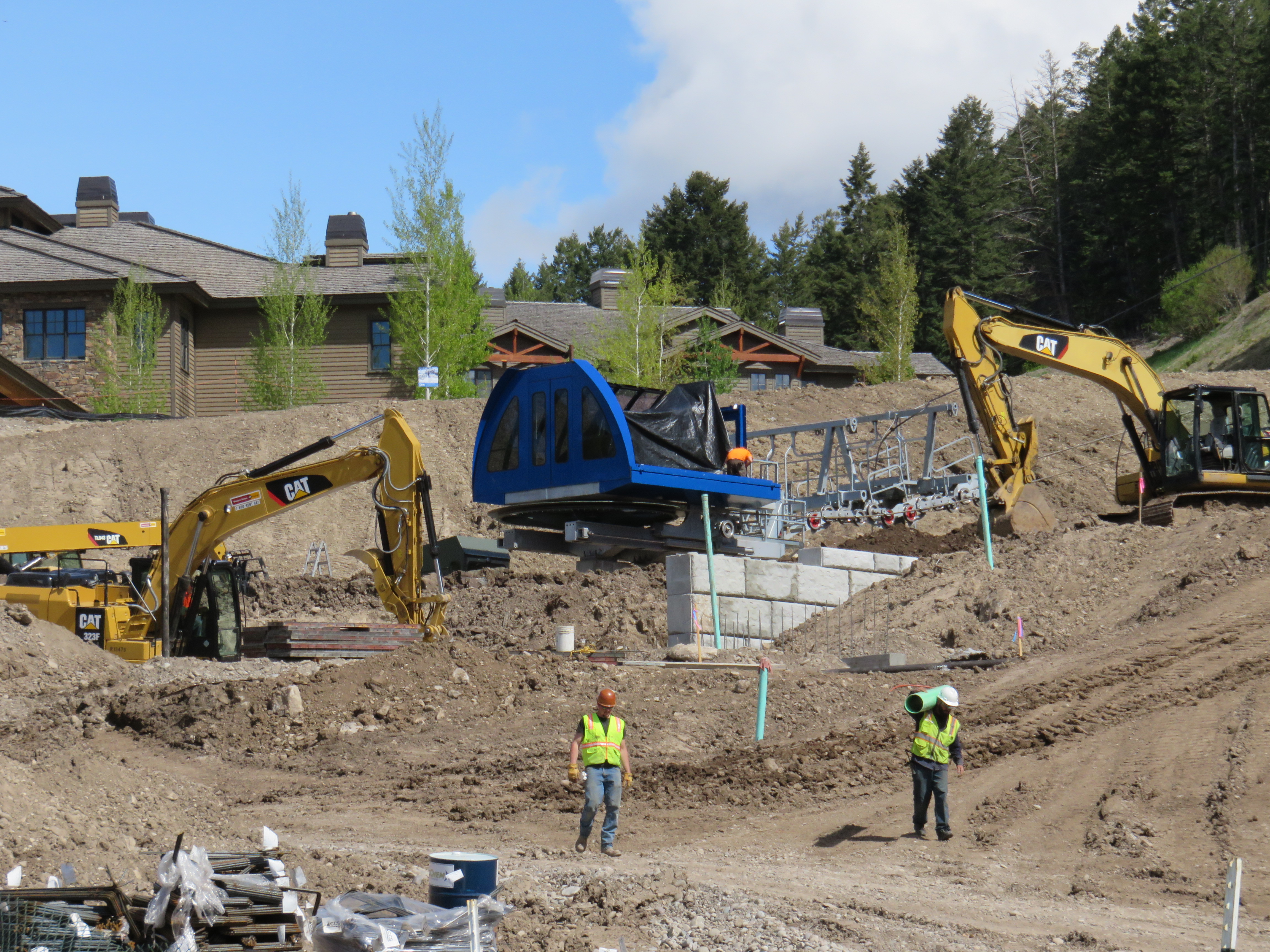
Snow King’s new Rafferty lift and alpine slide finally opened on July 12th, about a month behind schedule.

News Roundup: Small Mountains and Big Cities

IMG_0164
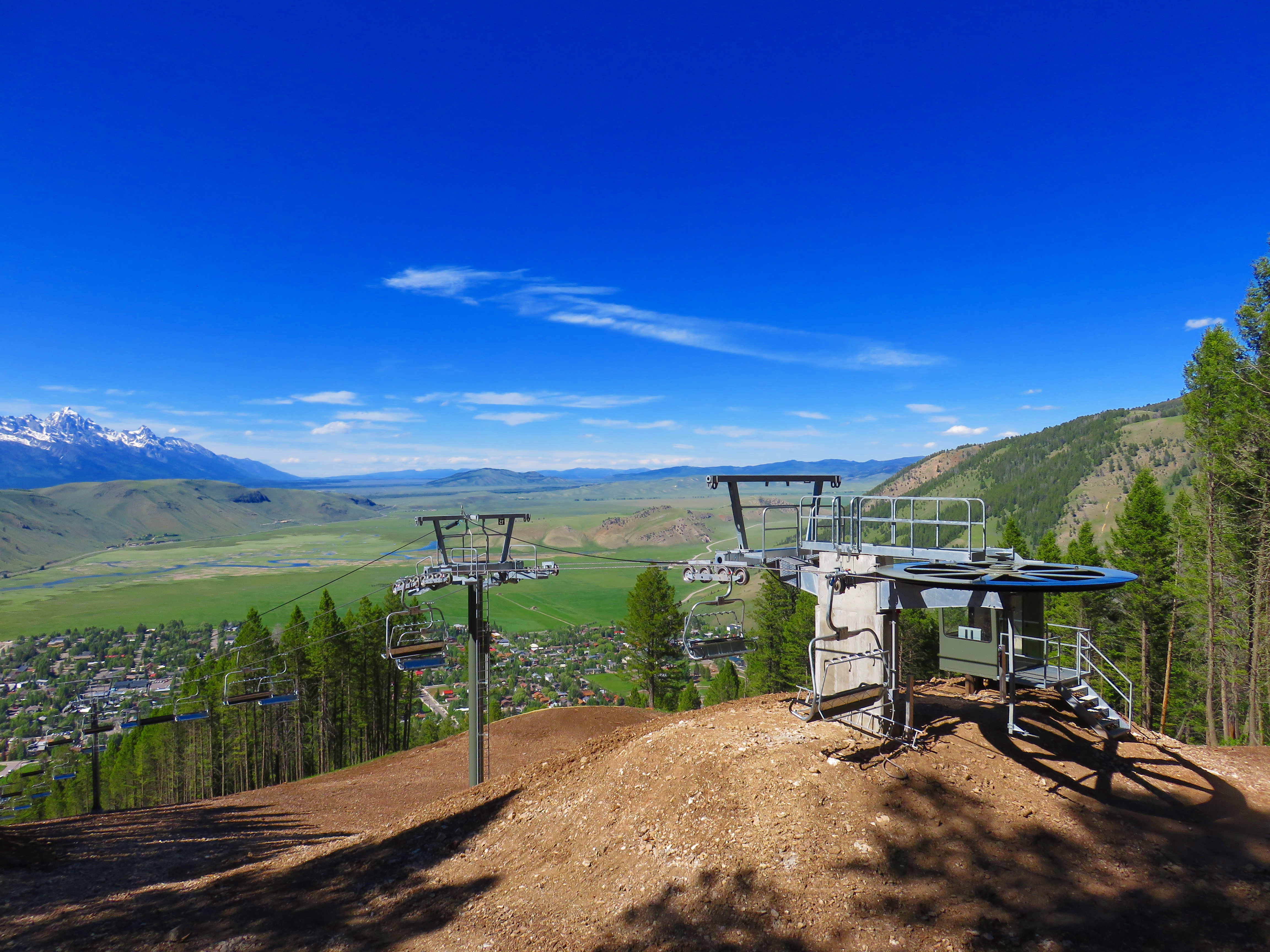
Doppelmayr load tested Snow King Mountain’s new Rafferty Quad this week.
  • Construction on The Balsams Resort in New Hampshire may begin late this summer.  We could see new lifts there next summer.
  • A bit further south, Waterville Valley started cutting trees for its Green Peak Expansion.  Unfortunately they don’t have funding for a new lift or even a used one.
  • Also in New Hampshire, Tenney Mountain plans to reopen next season after being closed since 2010.  The mountain has a 1964 Stadeli double and 1987 Borvig triple
  • You can own one of Oregon’s ski areas for only $1.25 million.  Includes lifts with charming names like “Happy” and “Echo.”
  • The Harbour Skylink would be a four-stage gondola in one of the world’s great capitals.
  • Poma is currently building five gondolas in Latin America, two for the Metrocable system in Medellin, Colombia and one each in Bolivia, Chile and Mexico.  They recently received €1.3 million from the French government to lead a consortium promoting ropeway transportation in cities.
  • The world’s tallest observation tower is coming to Brighton, England, courtesy of Poma, who also brought us the London Eye and the High Roller in Las Vegas.
  • Sigma takes on CWA with 3S gondola cabins developed by Italian car designer Pininfarina, set to debut in 2018 on the world’s highest 3S in Zermatt.

Lift Profile: Sunshine Village Gondola

sunshine 365 sunshine 073

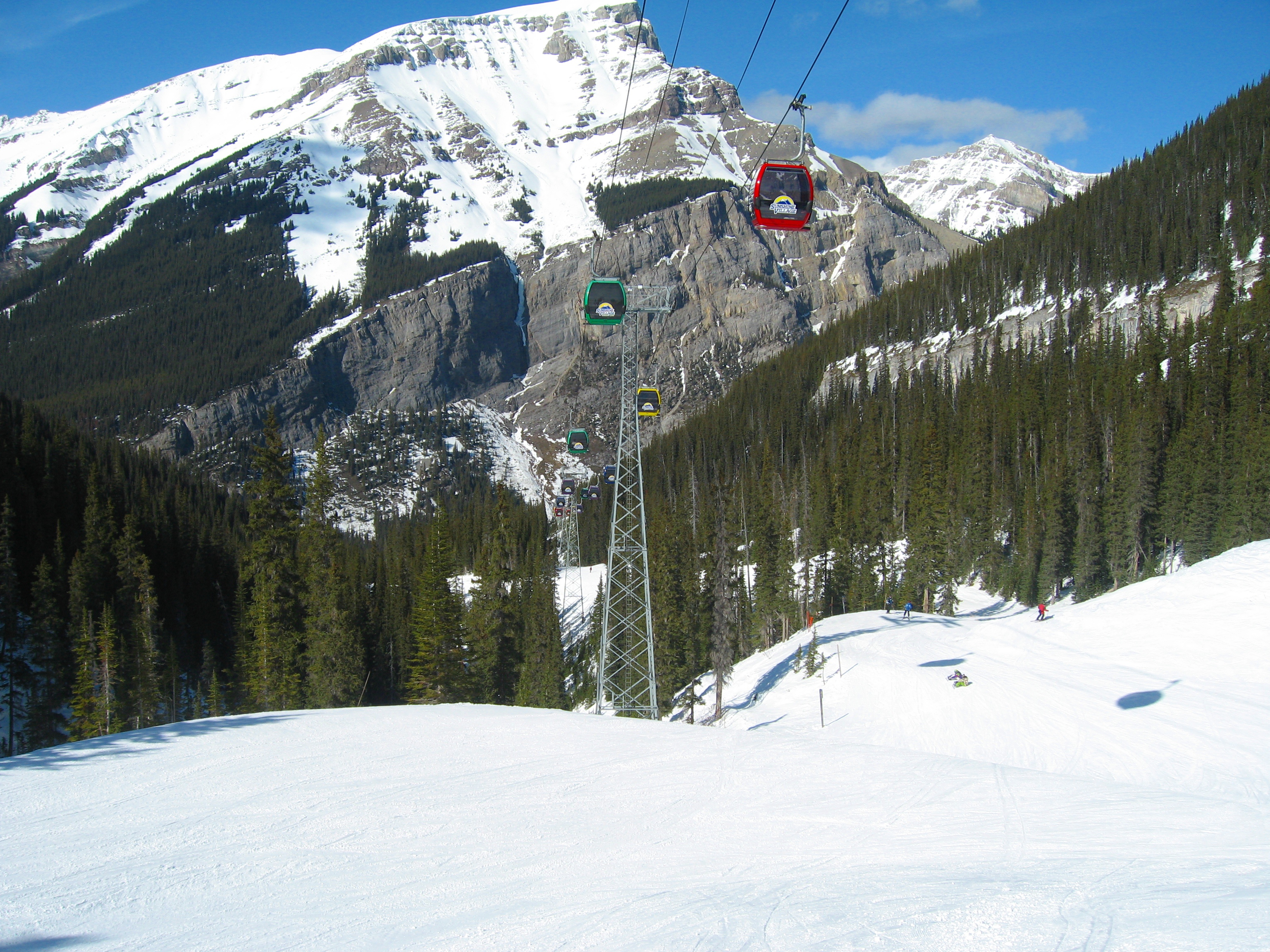
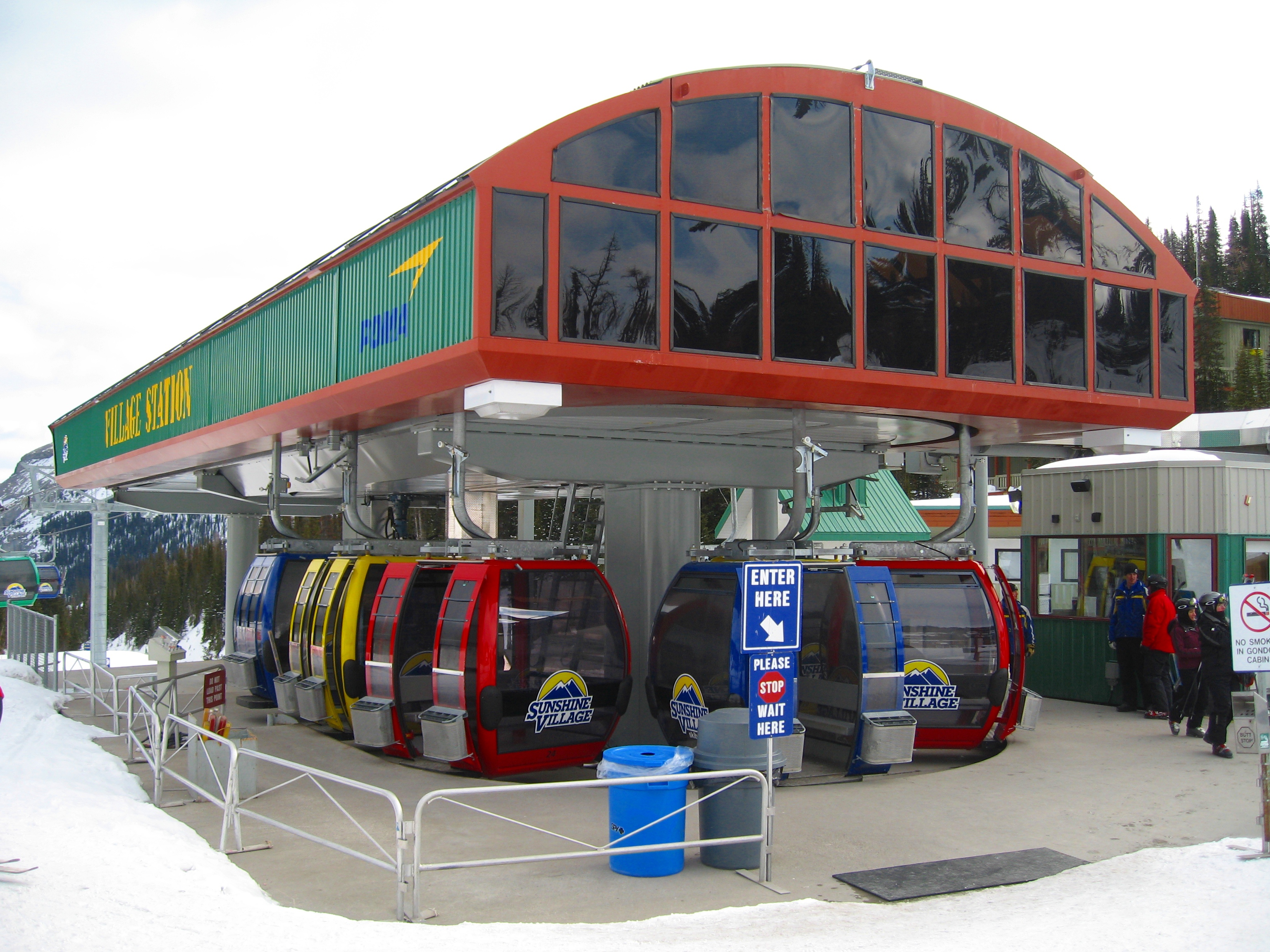
Sunshine Village is one of two ski resorts in North America with access provided by gondola rather than road, the other being Silver Mountain in Idaho.  Visitors park at the end of Sunshine Road and transfer to a Poma gondola for a 17 minute ride to Sunshine Village.  Along the way there are two angle stations, one where doors stay closed and the other with loading/unloading at Goat’s Eye Mountain.  All three sections share one haul rope driven by a 2,000 HP electric motor underneath the top terminal.  The Goat’s Eye angle station has indoor cabin storage and there are additional maintenance rails at each end.

When opened on November 22, 2001, Poma claimed the Sunshine Village Gondola was the world’s fastest 8-passenger gondola with a max speed of 1,200 feet per minute.  I don’t believe this was ever true as Whiteface’s Cloudsplitter Gondola opened two years earlier and can run 1,212 fpm.  There are now at least 15 gondolas in North America that can do 1,200 feet a minute or faster.  Regardless, Sunshine’s gondola is an impressive machine that moves 2,800 people per hour in each direction 15+ hours per day.  It cost $16 million to build.

Continue reading

News Roundup: Getting There

Moving along at Snow King Mountain, WY.
Getting there at Snow King Mountain, WY.
  • Fire at Misery Mountain (A movie title if I’ve ever heard one!)
  • Another urban gondola proposed, this time in Belgrade, Serbia
  • Poma makes it clear they don’t have a deal with Israel to build a gondola in Jerusalem.
  • Speaking of conflict-torn places, Myanmar may gets its first aerial tram.
  • Another Midwest ski area closes.  Anyone need a Hall double, Riblet quad or VonRoll triple?
  • Environmental group files objection to Eldora’s master plan that includes building 3 new detachables.
  • How does a ski hill with 200 vertical need $15 million to stay afloat?
  • Someone in business development at Doppelmayr has some very dramatic music and a lot of time.
  • Red McCombs’ 28-year battle with the Forest Service over the Village at Wolf Creek may be coming to end.  A private lift would access Wolf Creek Ski Area, although the owners of the ski area do not support the Village.
  • Powderhorn is moving along with their refurbished detachable quad from Marble Mountain, Newfoundland.

The 3S Gondola

A “3S” is a detachable gondola with two track ropes and one haul rope.  It combines the speed and stability of a tram with the capacity of a gondola.  Cabins generally hold about 30 passengers.  3S systems can move up to 4,500 passengers per hour at up to 8.5 meters per second.  They can withstand high winds and traverse long spans between towers.  These highly capable lifts are also expensive.  Only 12 3S gondolas have been built.  Perhaps the most famous of them, Whistler’s Peak 2 Peak, cost $51 million!

3S Gondolas are huge machines.

The 3S was developed by VonRoll of Switzerland.  The first one to open was the Alpin Express at Saas-Fee in 1991.  A second section opened in 1994.  When Doppelmayr merged with VonRoll in 1996, they inherited the 3S technology.  Doppelmayr built its first 3S in 2002 at Val d’Isere, France.  Called L’Olympique, it accesses the famous ski area of Escape Killy.

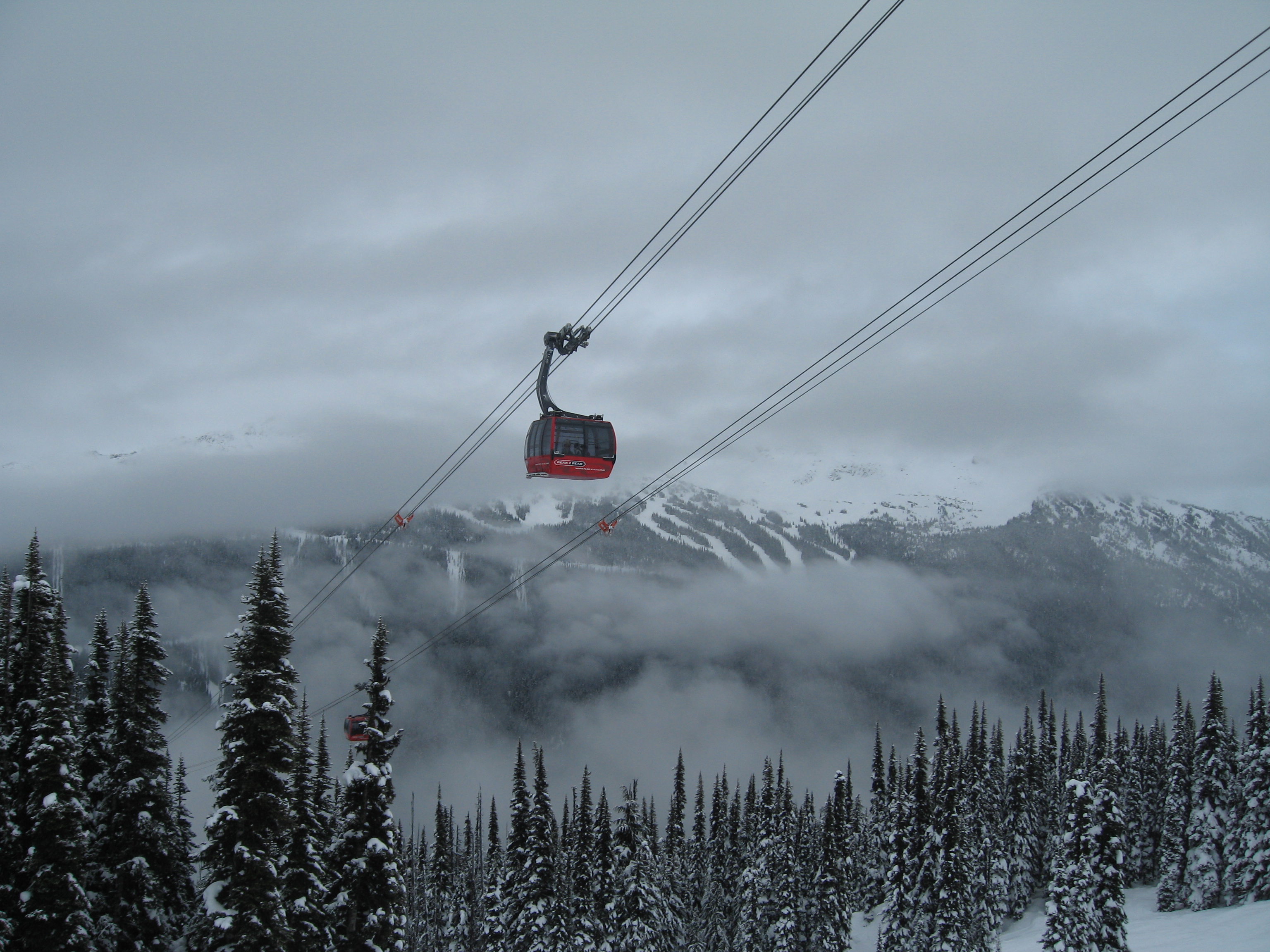
Kitzbuhel, Austria opened the 3S Bahn in 2004.  It connects two ski areas across a valley with an 8,200 foot-long unsupported span.  Four years later, Doppelmayr connected Whistler and Blackcomb with the Peak 2 Peak, featuring an even longer unsupported span of 1.88 miles.  Peak 2 Peak’s highest point above ground is an incredible 1,427 feet.  It remains the only 3S gondola outside of Europe.

Whistler-Blackcomb's Peak 2 Peak Gondola.
Whistler-Blackcomb’s Peak 2 Peak Gondola.

Leitner got into the 3S business in 2009 with a system in northern Italy.  The towns of Renon and Ritten were connected by a 2.8 mile-long 3S.  This was the first 3S built outside of a ski resort.  Another urban 3S was built across the Rhine River in Koblenz, Germany in 2010.  This Doppelmayr system moves 3,800 passengers per hour in each direction.  Also in 2010, Doppelmayr built the Gaislachkogl 2 at Solden, Austria.

Continue reading

Lifts by State (and Province)

Ever wanted to know how many lifts are operating in each state?  Read on.  Colorado has the most operating lifts of any state with 275.  California is close behind with 263 followed by New York (189) and Michigan (165).  There are only 9 states with more than 100 lifts each.  The majority of states have fewer than 20 lifts today.  Five sad states have no aerial lifts at all to my knowledge – Alabama, Arkansas, Delaware, Hawaii and Louisiana.  (Louisiana used to have a 6-passenger Poma gondola called MART that crossed the Mississippi River.)

Each one of Canada’s 10 provinces has at least 3 lifts used for skiing.  Only the Nunavut and Northwest Territories do not have a lift.  Quebec has the most lifts by far with 226 followed by British Columbia (165), Ontario (162), and Alberta (87).

The average age of lifts varies significantly by region.  Maryland’s 7 lifts average 17 years old while Ohio’s 33 lifts are more than twice as old at 34.4 years.  Utah and Montana stand out as having new lifts averaging 19.4 and 19.9 years old, respectively.  Places with really old lifts tend to be in the East and Midwest.  Wisconsin, Minnesota, Michigan, Ohio and New York all have lifts that average more than 30 years old.

It’s also interesting to look at which brand has the most operating lifts in each state/province.  25 states/provinces are dominated by brands which disappeared decades ago – Yan, Riblet, Borvig and Hall.  Borvig dominates in 5 eastern states – IL, VA, IA, ME, and PA.  Hall lifts are pervasive in many eastern states – ND, CT, MA, NY, WI, MN, OH, and SC.  Riblet still dominates all of the northwest and some of the midwest – MO, OR, WA, SD, AK, NM, IN, MI, and KY.  Yan takes its home state of Nevada and neighboring California and Arizona.

Doppelmayr is the most common lift brand in surprisingly few states – MD, GA, MT, NJ, NH, ID, and NC.  The story is different in Canada where Doppelmayr is the top brand in most of the country – BC, MB, SK, AB, QC, and NB.  Despite being gone for a decade, CTEC and GaraventaCTEC are still the most popular in Utah, Wyoming and West Virginia (thanks solely to Snowshoe Resort.)  Finally Poma and Leitner-Poma take their home state of CO plus VT and ON, NL, PEI and NS in Canada.