New Book Chronicles 80 Years of Innovation at Poma

IMG_9929
“This work is dedicated to the men and women who have been part of Poma’s innovative and epic journey. It is for our clients and partners who have placed their trust in Poma throughout the world – whether up in the mountains or in the heart of cities.”

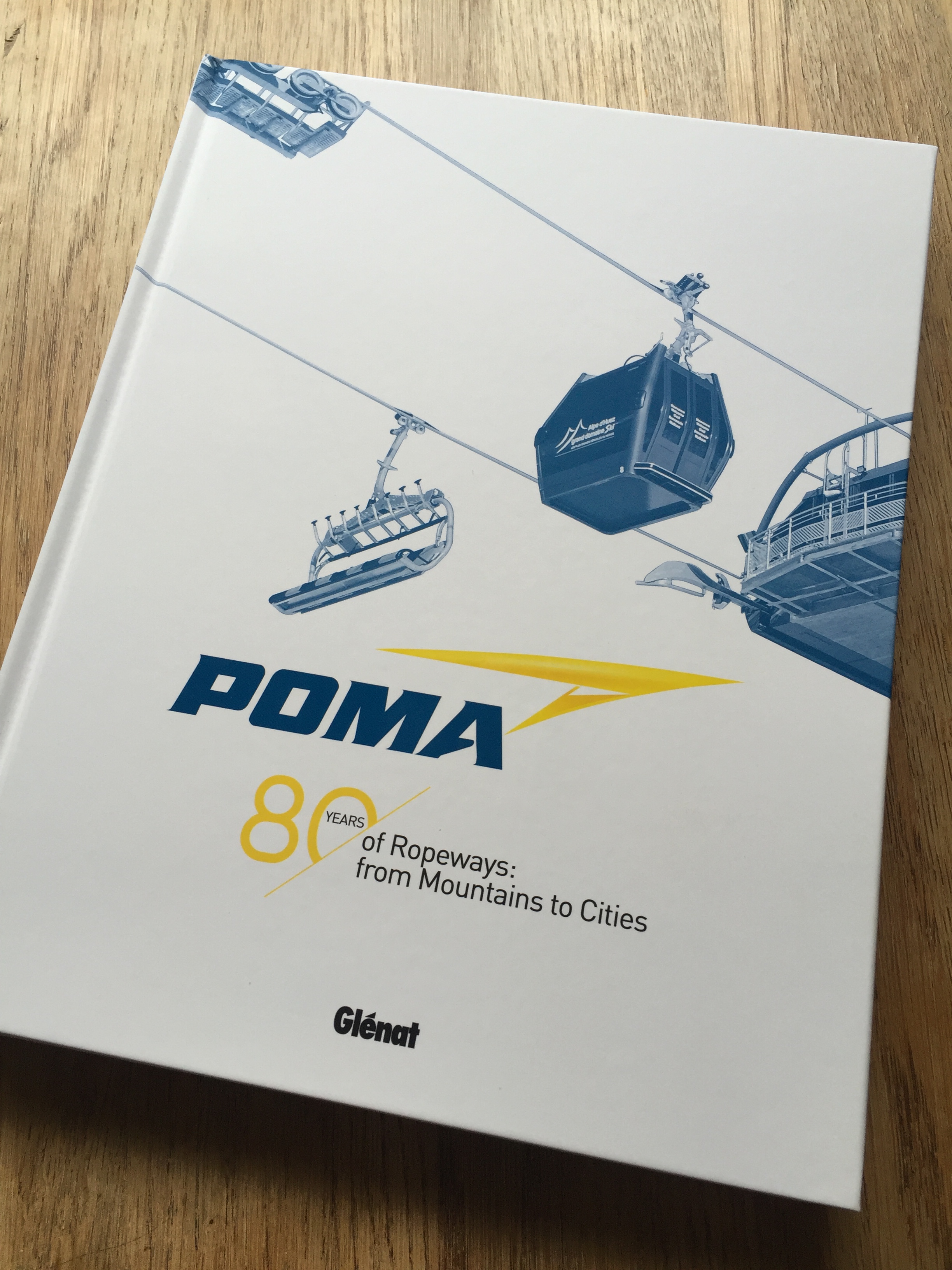
The above dedication sits on the first page of a new book celebrating eighty years of commercial success called Poma: 80 Years of Ropeways from Mountains to Cities.  The 190-page work, written by Béatrice Méténier and Christian Bouvier, looks back at the firm’s more than 8,000 ropeway installations from the mountains of France to Colorado, South America and beyond.

A skier at heart, Jean Pomagalski installed his first surface lift in 1934 at Alpe d’Huez. He constructed it mostly out of wood and with a used Ford motor.  After building three additional tows, Mr. Pomagalski had himself a company and filed a patent in 1936 for a “carrying device hauled by a rope moving at a constant speed.” After a break for Wold War II, Pomagalski S.A. grew to 15 employees by 1953.  Even so, Mr. Pomagalski still found himself simultaneously a salesman, surveyor, designer and builder of lifts that were sent off as kits for installation by customers. The company’s first chairlift, a single-seater, debuted in 1955 near Chamonix.

IMG_4080
Workers assembled, then disassembled early fixed-grip chairlifts in Poma’s French workshops before sending them to the field as seen in this 1963 photo.

By 1958, Pomagalski was selling 120 lifts a year, many of them to customers in the United States and Canada.   Mr. Pomagalski decided to drop the latter part of his name from the company’s in 1965 to better appeal to English-speaking clients.  Poma delivered its first gondola systems simultaneously in 1966 at Queenstown, New Zealand and Val d’Isère, France. A small new company called Sigma Plastiques provided the egg-shaped cabins.  Poma trusted Sigma again the next year for the world’s first gondola with automatic doors and the rest is history.
Continue reading →

News Roundup: Big Lifts

News Roundup: Peak Pressure

  • Peak Resorts’ financial footing reportedly worsens amid staff layoffs, reduced operations and spending cuts.  The company owns 14 resorts across the Eastern U.S.
  • Leitner Ropeways celebrates 15 years of DirectDrive with 55 installations to date.
  • Poma has already delivered components for Zacatecas, Mexico’s new gondola but construction that was supposed to start in January has been delayed.
  • The 2002 Garaventa CTEC Chondola at Willamette Pass is still for sale along with the mountain’s Midway triple.  WP apparently can’t afford to maintain its only detachable lift and listed it for sale a year ago.
  • Le Relais also has 2 lifts newly listed (these are being removed to make way for a new six pack.)
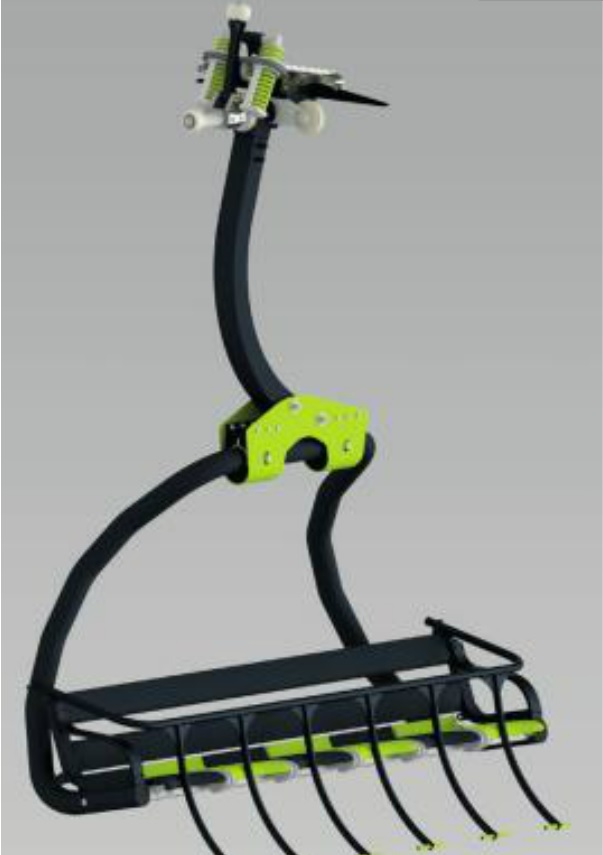
  • LST signs La Plagne to launch the company’s first detachable lift next winter. MND Group CEO Xavier Gallot-Lavallee commented, “We are delighted to announce the initial commercial success of our brand new range of detachable chairlifts. The new contract signed with SAP, a subsidiary of leading ski resort operator Compagnie des Alpes, confirms the benefits of the innovative technology that we have developed and positions MND as a leading market player.”
LST chair
LST will debut unique new detachable chairs and terminals for a new six-pack chairlift in La Plagne.

Chair Falls from Timberline’s Magic Mile

20060292-mmmain.jpg
Photo credit: Oregonlive.com

Timberline Lodge & Ski Area on Mt. Hood posted the following statement on Facebook Thursday afternoon after an empty chair fell from one of its high speed quads.

At approximately 1:45pm today there was a mechanical malfunction on the Magic Mile chair lift. A chair detached from the cable on the downhill side of the lift. The chair lift was not occupied. No customers or staff were involved in the incident. All guests were offloaded in a timely manner. The Magic Mile will be closed until further notice, pending a thorough investigation involving the lift manufacturer and a 3rd party lift engineer. Timberline Lodge thanks all guests on the lift for their patience and apologizes the inconvenience. We are compiling all details of the incident, which will be posted as soon as possible.

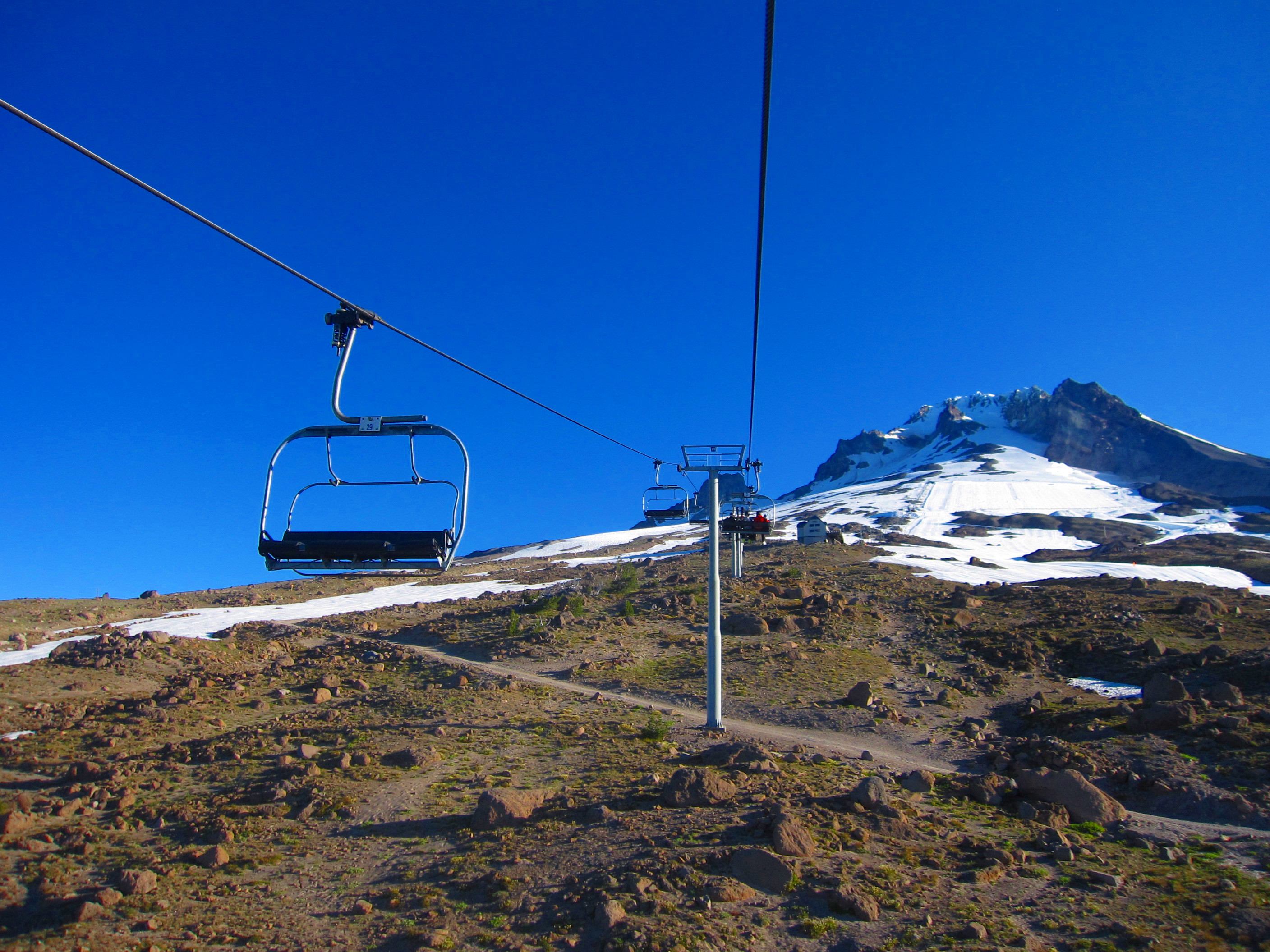
Poma built the Magic Mile in 1992 to replace a Riblet double.  The lift is 5,472′ long, rises 1,089′ and has Poma’s TB-41 grips. Much of this lift operates above tree line, so both its terminals are housed inside buildings that can be buttoned up during storms.  Magic Mile also has indoor parking for all its chairs and grip maintenance bays at the bottom terminal.

IMG_7274
The Magic Mile operates year-round serving Timberline’s summer ski operation.

Almost exactly a year ago, an empty chair fell from a Doppelmayr detachable quad at Mt. Bachelor in a similar incident which was later blamed on component failure.

Update 4/2/16: Magic Mile has re-opened and Timberline posted the following update this afternoon.

This is a communications update regarding the Magic Mile chairlift malfunction, which we reported on March 31. The lift has been inspected by an independent chairlift engineer along with representatives from the US Forest Service. It was determined that failure of a key component of a carrier grip occurred, resulting in the detachment of an empty chair on the downhill side of the lift.

RLK and Company chairlift technicians followed the recommendations of the chairlift engineer and performed comprehensive inspections and testing on the entire chairlift. It has been determined that the chairlift conforms to industry standards, and is now operating.

Update 5/1/16: We’ve learned Magic Mile’s safety systems worked as designed and this incident was a combination of component failure and operator error.

News Roundup: Eurotrip

Will Detachable Lifts Get Faster?

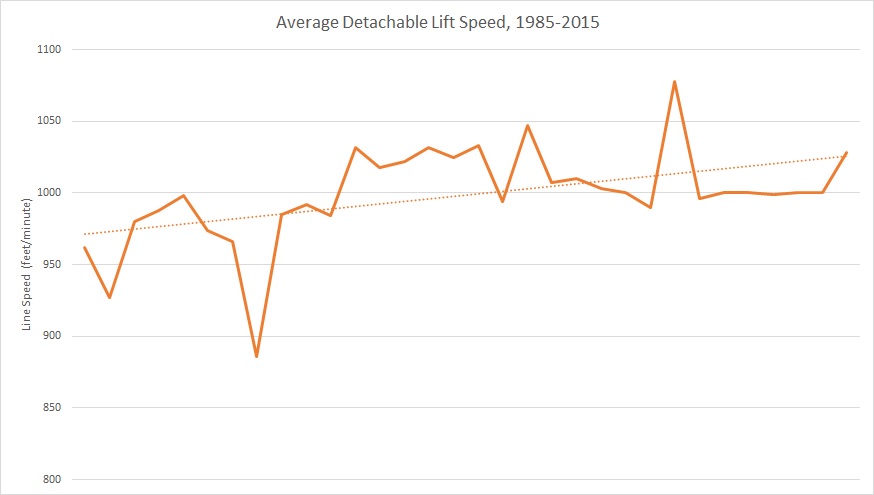
There’s a lively discussion going on over at Alpinforum about the future of detachable lifts, which haven’t gotten much faster despite huge advances in technology over the last thirty years.  The first modern detachable chairlift, Quicksilver at Breckenridge, went 787 feet a minute when it debuted in 1981.  Since then, manufacturers have installed hundreds of gondolas and chairlifts capable of going more than 1,000 fpm.

The first lift to go 1,100 fpm was the Whistler Village Gondola in 1988 and the first capable of 1,200 fpm was Stowe’s gondola in 1991.  Both were built by Poma, the early adopter of faster line speeds.  The only detachable installed in North America since 1991 capable of traveling any more than 1,200 fpm is the Peak 2 Peak Gondola, debuting in 2012. As a tri-cable gondola, P2P has an impressive capability of 1,476 fpm (7.5 m/s.) Doppelmayr claims similar systems can go up to 1,670 fpm (8.5 m/s.)  So far, the fastest 3S ever built goes 8 m/s and one that can go 8.5 will debut in Vietnam next year.  Meanwhile, 1,200 fpm (6 m/s) remains the highest speed for a single cable detachable, a stat that hasn’t changed since 1991.

avg speed over time
From 1984 to 2015, the average speed of a detachable lift in the U.S. increased by only 900 feet a minute.

The truth is the vast majority of detachable lifts built these days have the standard design speed of 1,000 fpm (5.08 m/s) and operate even slower much of the time.  In my experience, many ski areas run so-called high speed lifts at 800 or 900 feet a minute on all but the busiest of days.  As users on Alpinforum note, ski resort operators care more about reducing stops, wear and tear than shaving thirty seconds off a ride time that the average guest won’t even notice.

Continue reading →

Kicking Horse Gondola Evacuated by Helicopter

A transformer failed yesterday afternoon at Kicking Horse Mountain Resort, knocking two lifts out of service.  Crews restarted the Catamount quad on auxiliary but the Golden Eagle Express Gondola sustained damage to its safety systems such that it could not operate.  With nightfall approaching, some of the gondola’s 75 passengers were plucked out of cabins by helicopter at sunset, making for some pretty spectacular GoPro footage.  The rest were roped down by ground teams over about five hours. The 8-passenger, 11,188′ Golden Eagle Express was built by Poma in 2000 and rises more than 3,500 vertical feet.  The gondola remained closed today but the mountain hopes to have it back in business tomorrow.

Kicking Horse posted the following statement on Facebook this morning:

“Further to an electrical issue, the Golden Eagle Express Gondola was manually evacuated yesterday evening. With everyone safe, warm and fed, we apologize to each of you involved for the inconvenience. We are thankful that everyone is safe and credit to the talented team of professionals; Kicking Horse Mountain Resort teams, Golden and District Search and Rescue & Canadian Ski Patrol.  We are hopeful that the Gondola will be spinning later today, though currently is still on standby. We are offering skiing and snowboarding via the Catamount Chair & Pioneer Chair.  Stay tuned for further updates.”