
Vertical transport feet per hour (VTFH) is the best way to measure how lifts move people up mountains. VTFH combines hourly capacity and vertical rise into one number, usually measured in millions. Ski Area Management uses this metric each fall when they look at how good of a year it was for the lift-building business.
For a lift to score big it has to have a high hourly capacity (think lots of carriers, high speed) and large vertical rise (think big slope length with many towers.) The Jackson Hole tram has a huge vertical (over 4,000′) but very low capacity so its VTFH is only 2,654,600 – not even in the top 400. The Peak 2 Peak Gondola has a huge capacity but only rises 119 feet for a dismal VTFH of 243,950. There are 49 lifts in the US and Canada that move enough people high enough to achieve a VTFH over five million. Below are the top ten.
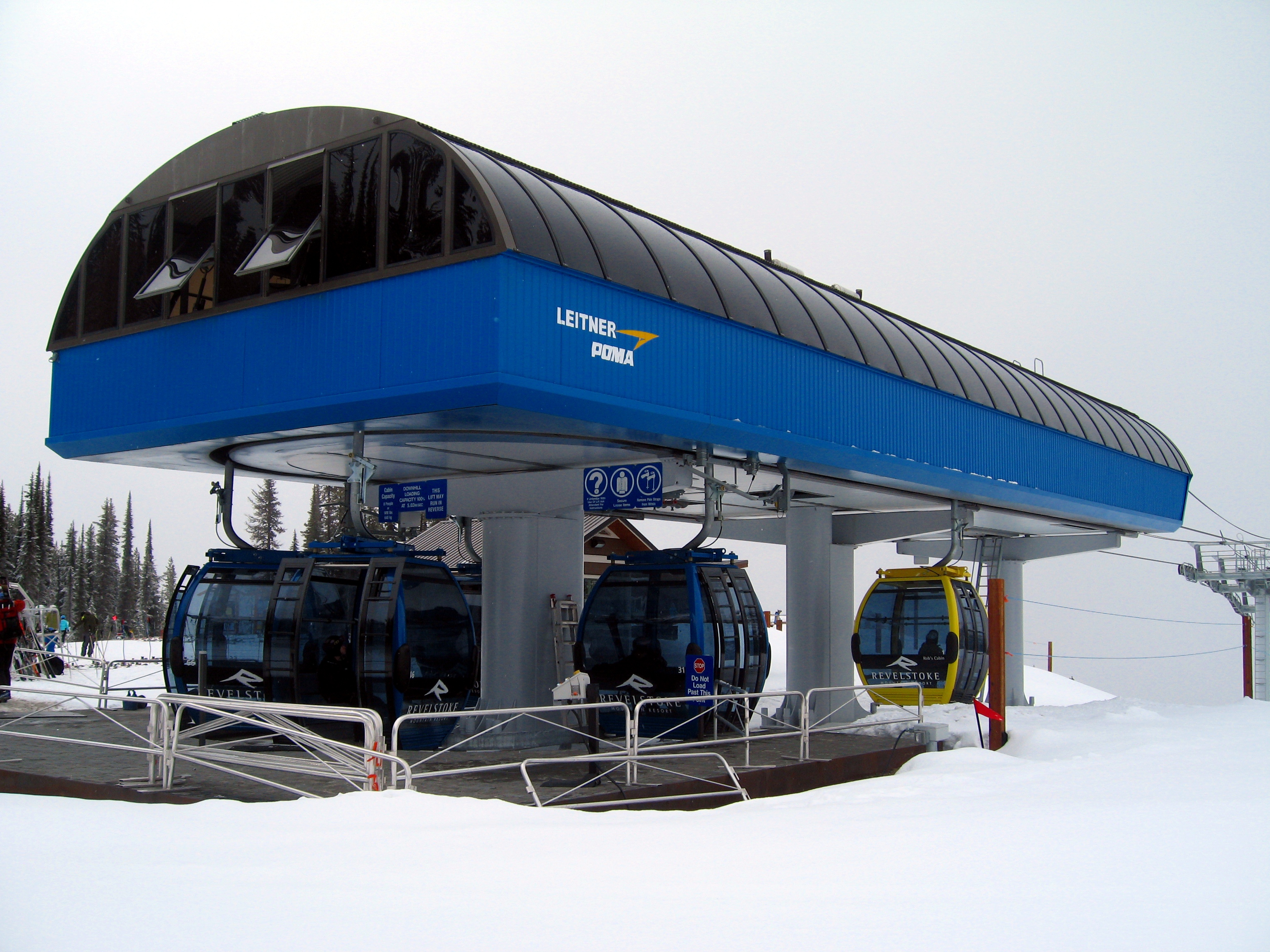
1. Revelation Gondola Stage II, Revelstoke Mountain Resort, British Columbia
2007 Leitner-Poma 8-passenger gondola
2,952′ vertical x 2,800 passengers per hour = 8,265,600 VTFH
2. Gold Coast Funitel, Squaw Valley, California
1998 Garaventa CTEC 28-passenger funitel
2,000′ vertical x 4,032 passengers per hour = 8,064,000 VTFH
3. Heavenly Gondola, Heavenly Mountain Resort, California
2000 Doppelmayr 8-passenger gondola
2,874′ vertical x 2,800 passengers per hour = 8,047,200 VTFH
4. Gondola One, Vail Mountain, Colorado
2012 Leitner-Poma 10-passenger gondola
1,996′ vertical x 3,600 passengers per hour = 7,185,600 VTFH
5. Centennial Express, Beaver Creek Resort, Colorado
2014 Doppelmayr 6/10 chondola combination lift
2,102′ vertical x 3,400 passengers per hour = 7,146,800 VTFH


 Lift Blog