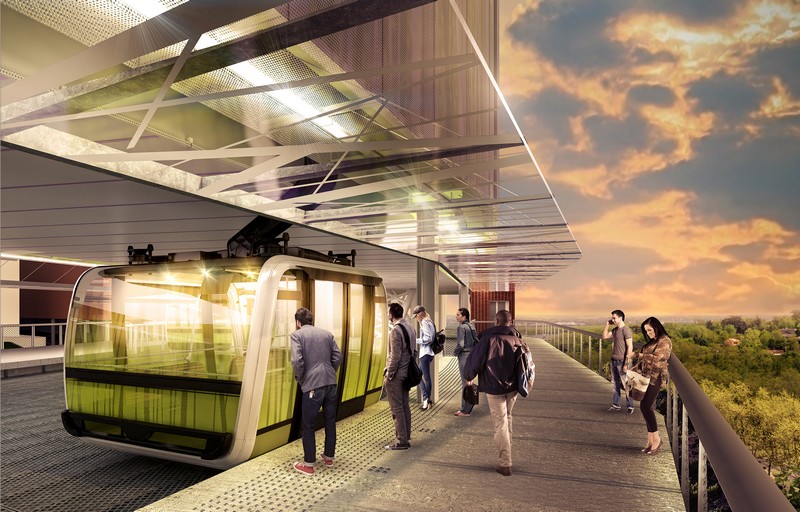
Leitner-Poma Wins Staten Island Gondola Design Competition

98f946b0-6dfe-450f-bf09-1d92d7d80a92
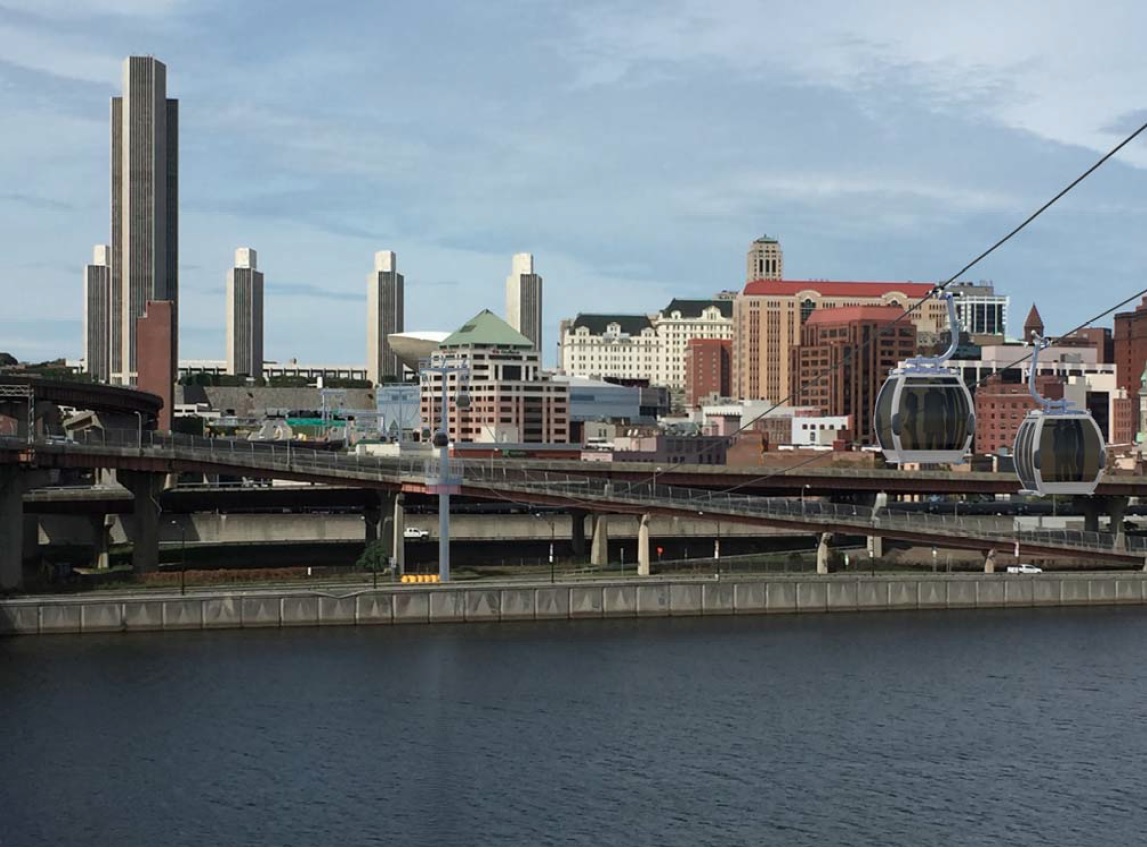
The Staten Island Economic Development Corporation selected this design by Leitner-Poma to move forward as part of a proposed connection to Manhattan.

New York City’s iconic Roosevelt Island Tramway could soon be joined by a gondola linking Staten Island to Bayonne, New Jersey serving commuters and tourists alike. Staten Island has all the ingredients for a successful urban gondola: a dense (and growing) population, a geographic barrier surmountable by cable, and connections to other transit modes at both ends.  This week, the Staten Island Economic Development Corporation (SIEDC) crowned Leitner-Poma of America the winner of a design competition it launched in January to promote a ropeway solution.  A jury of engineers, architects and business leaders selected Leitner-Poma’s 10-passenger gondola proposal that would cross the Kill Van Kull tidal strait to New Jersey.

staten-island-potential-routes
In its request for proposals, the nonprofit development corporation floated four possible alignments for a gondola to serve Staten Island.

According to the development group’s request for proposals, subway-less Staten Islanders suffer from some of the longest commutes in the country, averaging 90 minutes to Manhattan by ferry.  A new rail tunnel under New York Harbor is estimated to cost $400 million per mile and would not be completed for a generation, if ever. Despite mobility challenges, $1 billion of redevelopment is currently underway in this suburban borough.  The SIEDC’s competition encompassed 4-6 possible routes, the most ambitious of which would connect Staten Island’s northeast tip with Battery Park in Manhattan over five miles of water.

Leitner-Poma recognized the technical and political challenges of 10,000-foot spans skirting the Statue of Liberty over New York Harbor and instead settled on a shorter connection to New Jersey and its rail network.  Other entrants chose routes from Staten Island to Brooklyn, where the East River Skyway is separately proposed to connect to Manhattan.

Continue reading

New Owner Plans to Reopen Stagecoach, Colorado in 2017

If Don McClean gets his way, Steamboat Springs will have a third ski area again in a little over a year at the site of the largest ski resort failure in American history.  His company, Stagecoach Communities LLC, is under contract to buy the Stagecoach property by October and plans to rebuild the ski area that opened in 1972 and closed less than two years later. Mr. McClean has 38 years of ski industry experience working at Alyeska, Telluride, Beaver Creek and Vail.  “Our intention is to create a blueprint for responsible mountain development,” he told the Routt County Planning Commission. Investors include Bode Miller and others from the Vail Valley and Steamboat Springs.  Two new Doppelmayr quad chairs are planned for next summer.

1450808816

The old Stagecoach opened with three Heron-Poma double chairs in December 1972.  It closed in March 1974 when its creditor abruptly pulled financing.  The main lift named Big Hitch was relocated to Granby Ranch in 1988 before being moved again to Winter Park and eventually replaced by the Panoramic Express in 2007.  Two other chairlifts, Little Hitch and Yellow Jacket Express, remain standing on the site and will be removed.  A new high speed quad will replace Big Hitch in a similar alignment and a fixed-grip quad will reach the summit along the former Yellow Jacket Express route.

Mr. McClean surprised the County Planning Commission Thursday with plans to build temporary base facilities along with a high speed quad and fixed-grip quad on the 3,500-acre property that lies 18 miles south of Steamboat.  He addresses the Commission starting at 99:45 of the Sept. 1st meeting which can be heard here.  McClean noted, “[Stagecoach] will be a ski area built by skiers for skiers and riders.”  Doppelmayr has already visited the site and bid the two lifts that will serve 2,200 vertical feet.  The existing landowner, the Wittemyer Family, is working on the ski trails and mountain roads this fall.  “It’s ready to go.” McClean said.

Big Sky 2025: A $150 Million Vision for the Next Decade on Lone Peak

1000X300_LIFTS

Big Sky Resort plans to build the most high-speed, high-tech lift network in North America over the next ten years, the company announced at media event this afternoon. Boyne Resorts Principal Stephen Kircher outlined Big Sky 2025, a $150 million road map for capital investment that includes a new North Village gondola, replacement of core lifts with bubble six-packs and additional lifts to serve new terrain. Enhanced snowmaking, new on-mountain dining and improvements to the Mountain Village will complement the massive investment in new lifts.

IMG_2358

The rise of Big Sky from Chet Huntley’s four-lift outpost in 1973 to the Biggest Skiing in America with 26 lifts owes in large part to the Matterhorn-like mountain named Lone Peak. Boyne Resorts bought Big Sky in 1976 and slowly grew it into America’s largest ski resort by 2013 with the purchase of Moonlight Basin and the Spanish Peaks Mountain Club.  Mr. Kircher noted none of the three mountains were financially sustainable in the 2000s and the uniting of the three has been transformative.  Now with 5,800 acres of terrain, Boyne seeks to elevate the ski experience to match the grandeur of its mountain that is unmatched in North America.  “We have a unique opportunity with the high alpine terrain here at Big Sky,” he noted.

IMG_1283
Phase one underway this summer includes the new Challenger Triple, Lone Peak Six and upgrades to Ramcharger and Lone Tree.

With $13 million of construction underway on the mountain, Big Sky Resort will operate the second third largest lift fleet in North America this winter behind Whistler Blackcomb and Park City.  The sprawling complex already includes two six-packs, five detachable quads and the famous Lone Peak Tram. This summer’s new lifts are just the beginning of a plan that includes the return of a gondola and ten more lifts (eight with bubbles) within existing boundaries and beyond.  Big Sky 2025 will transition the resort from one with nearly the most lifts to one with the best lifts featuring loading carpets, bubble chairs, head rests and heated seats that skiers have become accustomed to in Austria and Switzerland but rarely find in the States.

Continue reading

Talking Wire Austin with Designer Jared Ficklin

427371_600719729942974_1326816451_n

Jared Ficklin and Michael McDaniel are co-creators of The Wire, a brand and concept for urban gondolas in what Forbes calls America’s next big boom town.  Designers by trade, they began speaking about their vision to tech conferences and business groups in 2012, leading to a TED Talk in early 2013.  If the lifts in Zillertal, Austria can move up to seven million people a day, they asked, why haven’t gondolas entered the transportation picture in our densest landscapes?  The presentation was enthusiastically received and Jared gave it a second time at TEDx Kansas City in 2013 to a crowd of more than 4,000.  Three years later, Jared and the team at argodesign are at work on a plan for Austin’s first line, Wire One. This week, Jared graciously answered my questions about the project and what comes next.

Peter: How did your background as a designer shape your vision for urban cable in Austin? 
Jared: First it gave me access to amazing people like Michael McDaniel and the whole group of other designers that worked on the original Wire Vision for Austin at frog design. It also gives me more designers here at argodesign that are working on the current vision for the first pilot line in Austin, Wire One.  It takes a group of designers to come up with something like The Wire, there has been many who contributed, they are all awesome.
Product design is my specialty and really good product design figures out how a technology seamlessly improves the lives of those using it.  By contrast, often it seems modern transportation planning begins with a technology looking for a place to be, followed by hoping users will make use of it.  As product designers, we came to urban cable from an experiential point of view arrived at using the tools of Design Research & Experience Based Design.  After talking to users (people driving around the city) we saw that urban cable is a technology that matches closely the transportation experience Austinites and others in the U.S. are looking to have.  Most importantly, urban cable with its unique fitment into the second story and ability to span obstacles can achieve routes people actually want to use.  It does this without displacing routes they currently use.  We call this principle of doubling the carrying capacity of a route Additive Supply.  Culturally, urban cable also offers the personal space and quiet environment people said they would be comfortable in while allowing them to maintain their habits of transportation on demand (also known as not wanting to follow schedules.)  By starting with the experience the rider is looking for, we hope to drive adoption and avoid unrealistic costs per rider that ultimately burden the community.  I believe the most expensive form of mass transit you can build is the one that nobody uses.
Being a designer has given me a chance to work professionally on feasibility studies in partnership with Engineering Specialties Group and others.  The experience of studying system feasibility have greatly clarified the current vision for The Wire.  This will sound like a plug, but I mean it as advice to those undertaking this design and engineering challenge.  Combining the skills of design research & product design with the traditional skills of architecture and engineering is a great mix for designing systems.  That mix can bring to bear a full arsenal of knowledge allowing one to really study routing, ridership, cost & experience in very detailed fashion.   Anyone doing any kind of transportation feasibility should seek out design researchers and really talk to users from a product standpoint.  The end results of system deployments will improve.
Frog-Design-Gondola-Cable-cars1
Peter: Cities in South America, Europe and Asia have urban cable operating today. Which example globally is most similar to The Wire proposal?
Jared: Medellín, Caracas or La Paz.  All are purpose-built as mass transit to connect neighborhoods with the city center.  They leverage the ability to utilize eminent domain in the least intrusive manner to gain the most benefit per dollar on routes that have a meaningful impact.  They considered cultural impact in their design yielding adoption and ridership.  These are all things we have envisioned The Wire to have in Austin.

Continue reading

British Columbia Approves up to 16 Lifts at Valemount Glacier

IMG_1618

Oberto Oberti is a man who doesn’t give up.  Less than two months after the province of British Columbia revoked authorization to build his controversial Jumbo Glacier Resort, Mr. Oberti won approval today to build a 12,000-acre ski resort in the Premier Mountains west of Jasper. The resort’s master plan lays out 16 lifts surrounding Mt. Pierre Trudeau, named for the father of Canadian Prime Minister Justin Trudeau.  Mr. Oberti’s storied history in Canadian skiing includes designing Kicking Horse Mountain Resort, building resort hotels in Whistler and proposing Jumbo Glacier.

P5-RESORT-PHASING-Without-TOPO
The lift layout envisions building 4 gondolas, 8 quad chairlifts and 4 T-Bars over ten years.

Valemount Glacier could eventually rise 7,415 vertical feet with the only lift-served, year-round glacier skiing on the continent.  Its vertical drop would be third longest in the world, rivaled only by Zermatt and Chamonix. Total acreage could reach 12,348, nearly twice the size of the new Park City.  “You have to picture this as a series of gondolas on mountains, one after another,” Mr. Oberti’s son Tommaso told Business Vancouver today.  “Each mountain is taller than the preceding one.”  Lifts could reach an elevation of 10,515 feet – 1,500 feet higher than Canada’s current loftiest lift at Sunshine Village.

Continue reading

Powder Mountain Plans Two New Lifts for Winter 2016-17

IMG_5812
Lefty’s Canyon from near the summit of Hidden Lake with the new Powder Mountain Village under construction earlier this summer.  The Village Lift will rise through the trees in the center-right of this photo.

Powder Mountain will build new lifts in Mary’s Bowl and Lefty’s Canyon this fall if all goes according to plans filed with Weber County last month.  The Village lift will be a Skytrac fixed-grip quad with a design capacity of 2,000 pph and line speed of 450 fpm.  It will be 3,680′ long with a vertical rise of 582′, 105 chairs and 14 towers.  A second lift called Mary’s will serve the other side of the new Summit Powder Mountain Village and top out near the Sunrise Platter.  Design details for this lift have not yet been filed with the county but it will be similar in length and vertical to Village.  “The plan is to have them open to the public and operating for this ski season,” Summit Powder Mountain COO Jeff Werbelow told the Ogden Standard-Examiner.  Both lifts will be located entirely on private land but still must pass design review with Weber County.  Future plans call for a third lift called Lefty’s linking the bottom of Village to the top of Sunrise.

IMG_5822
New runs and skier bridges have already been completed in Lefty’s Canyon.
The new lifts will be behind the current ski area, not visible on Powder Mountain's current trail map.
The new lifts will be behind the current ski area in areas not visible on Powder Mountain’s current trail map.

Skytrac will also build a new quad chair at Christmas Mountain Village, Wisconsin this fall, bringing the company to seven new lifts for 2016.  Combined with Leitner-Poma, that makes 18 new lift projects in North America compared with 17 for Doppelmayr thus far. You can see a full rundown of  new lifts for 2016 here.

Community Open House Launches Georgetown-Rosslyn Gondola Study

download
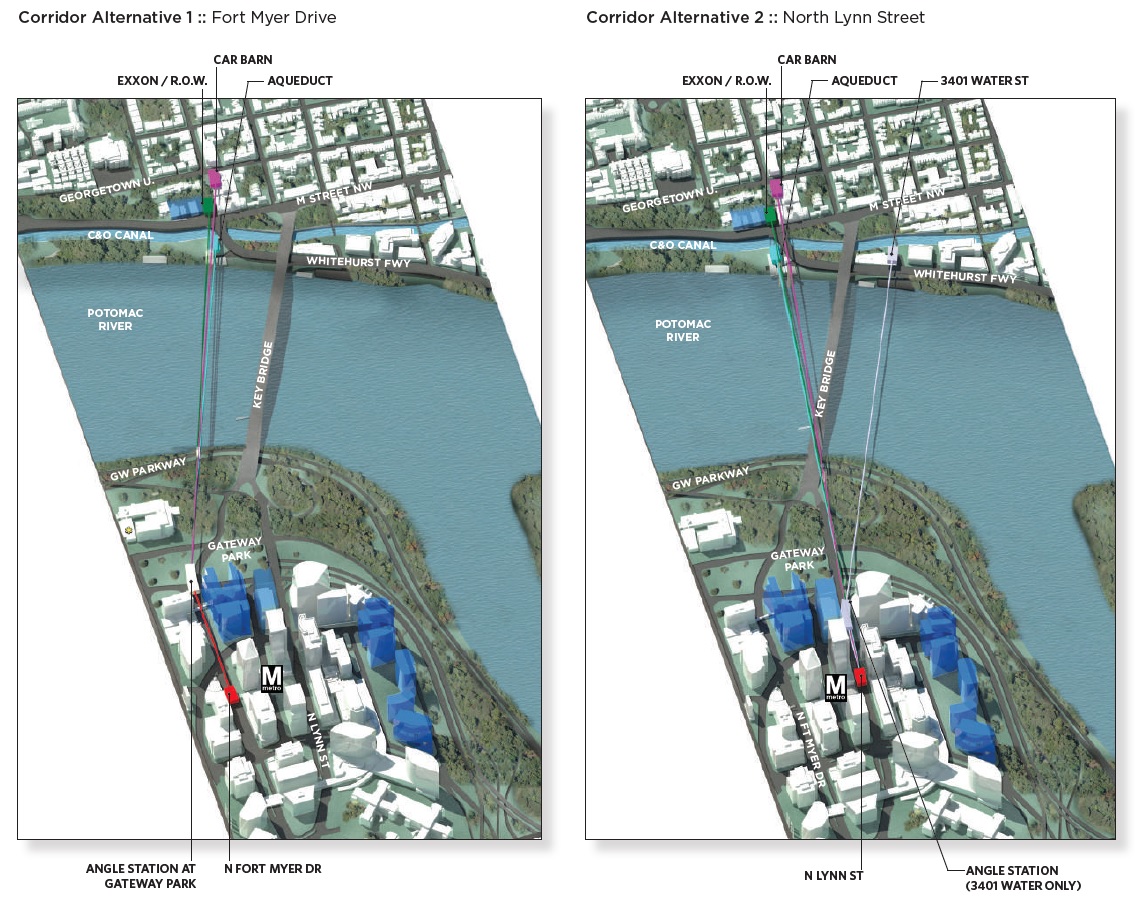
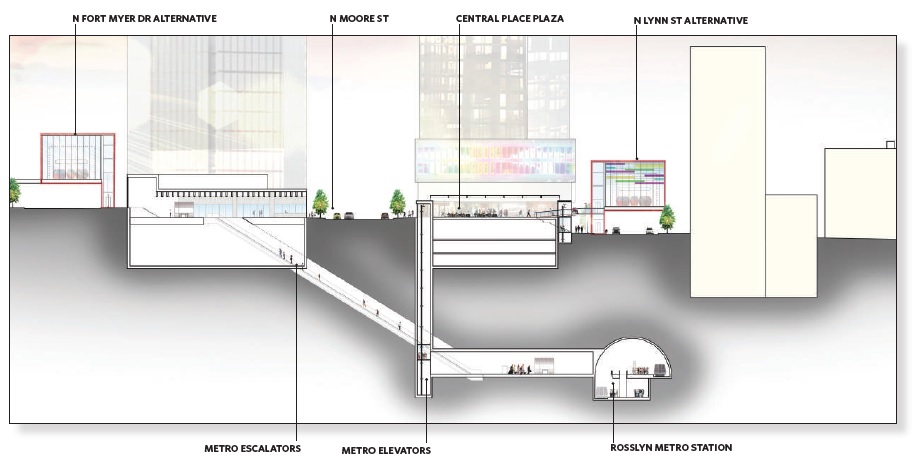
ZGF Architects will lead a team of professionals to study a possible gondola link between the Georgetown neighborhood in D.C. and Rosslyn, Virginia.

Washington, D.C. is inching closer to building the first urban transit gondola in the nation.  A team of consultants let by  ZGF Architects held an open house last week to update the public on the feasibility study underway for the Georgetown-Rosslyn Gondola proposed to cross the Potomac River.  ZGF, whose mission is to “create beautiful spaces that best serve people and the community,” was chosen this spring from eight teams who bid on the study. Local governments, Georgetown University and private-sector businesses have dedicated $190,000 to the project to date.

Jamie Bunch and Mike Deiparine from Engineering Specialties Group will provide technical ropeway expertise.  Their company has vast experience consulting on projects such as the Telluride Mountain Village GondolaPortland Aerial Tram, Roosevelt Island Tramway, Steamboat Silver Bullet Gondola and the Jackson Hole Tram Replacement.  ZGF Architects and its partners will study the gondola’s possible routing and overall feasibility, releasing their findings this fall.

urban gondola timeline
Staff presented this graphic showing the rapid growth of gondolas in cities across the globe.

At the meeting, project staff presented a Gondola 101 primer and chronicled the rise of urban cable transport globally.  The presentation even included pictures from my lift database! Slides were impressively researched and something I wish every American city-dweller could sit through – explaining angle stations, towers and cabin spacing in an easy to understand way.  Staff detailed four case studies: the Portland Aerial Tram, Roosevelt Island Tramway, Emirates Air Line and South American systems in La Paz and Medellín. After the formal program, community members got to check out five stations with display boards and ask questions.

Continue reading

Revisiting a Burnaby Mountain Gondola

IMG_6291

Burnaby Mountain in Metro Vancouver seems like a textbook site to test cable-propelled transit in a major North American city.  Simon Fraser University, with 30,000 students and staff, occupies 200 acres on the western crest of the mountain.  A growing neighborhood called UniverCity occupies the eastern hilltop with 5,000 residents.  Both are surrounded by parks and conservation lands but are only 1.7 miles from a SkyTrain rail station.  The mountain is 985 feet tall and served by a fleet of 48 diesel buses providing more than four million annual transit trips with poor levels of service.  Snow cripples transit ten an average of days per year on a hill that 39,000 people will live on by 2030.

1382137493275
Burnaby Mountain. Photo credit: Simon Fraser University

In 2010, TransLink commissioned one of the first comprehensive studies pitting ropeway technologies against the status quo and other alternatives in a North American context. One of the world’s largest engineering firms, CH2M Hill, led the team with financial analysis by PricewaterhouseCoopers and technical consulting by Gmuender Engineering and the lift manufacturers.  Commercially sensitive sections of the report were never released to the public in order to safeguard a future competitive procurement process, but what was published is a fascinating read for anyone interested in transit or ropeways.

The SkyTrain Millenium Line, opened in 2002, passes 1.7 miles south of SFU at a station called Production Way-University in Burnaby.  Commuters wait an average of seven minutes for a bus here, which takes 13-16 minutes to go the less than four miles to SFU. Increased frequencies of already articulated buses would result in proportionally greater emissions, traffic impacts, staffing needs, required layover space and capital costs.

The study looked at a wide range of alternatives – from bus rapid transit (BRT) to light rail, funicular, subway, trolleybus, reversible aerial tramway, monocable gondola, 2S gondola, 3S gondola and funitel.  These were narrowed down to three major categories for further study – diesel bus, monocable/2S gondola and 3S gondola/funitel.  Other surface alternatives proved too expensive, had significant neighborhood impacts, or both.

secondary comparison
Comparison of three modes that made it to secondary study.  3S/funitel won on nearly every count except cost.

Continue reading

Steamboat Plans More Lifts

dsc_3529

Steamboat is the fourth largest ski resort in Colorado with 19 lifts and almost 3,000 acres of terrain on 10,568 foot Mt. Werner.  In 2011, Steamboat Ski & Resort Corporation commissioned Ecosign Mountain Resort Planners to perform a detailed mountain analysis and update the resort’s master plan.  The Routt National Forest approved the plan in 2013, which envisions seven new lifts installed over the next ten years to better serve skiers.  Included are a mid-mountain learning center served by a second gondola, a new lift on Sunshine Peak and replacement of four lifts with upgraded equipment.  The first of the upgrade projects already underway, replacing the Elkhead triple (a 1984 Yan) with a Doppelmayr detachable quad.  Initially proposed as a six-pack, Steamboat opted to build a 4-place detachable instead.  The new Elkhead will be the first Doppelmayr lift built here since 1997 following four new Leitner-Poma lifts built at Steamboat in the 2000s.

steamboat-mtn-mp-1000x750
Plan overview from Ecosign.  The new lift and trails on Pioneer Ridge shown in blue were not approved in 2013 but are within Steamboat’s existing permit boundary, were approved in 1996 and remain in the resort’s long term plans.
By far the largest component of the 2011 plan is the Rough Rider Learning Center in Bashor Bowl served by a new 8-passenger gondola.  The Bashor Gondola will rise from the base of the Silver Bullet Gondola to the northeast, crossing Christie Peak Express and Christie III.  The top terminal will house an 8,000 square foot skier-services building. Unfortunately for the gondola’s future mechanics, 3,500 square feet of that space for gondola cabin storage and maintenance will be a lunch room for 300 kids during the day.  At night, the gondola will service the lodge and a new tube park near the top terminal.  It will also spin all summer alongside the Silver Bullet.

Two fixed-grip chairlifts dubbed Rough Rider and Swinger (no way that name sticks) will service teaching terrain in Bashor Bowl along with 2-3 new magic carpets.  The 1989 Rough Rider platter nearby will be removed.  A third new chairlift will replace the Bashor lift in the same vicinity but in a new alignment ending 500′ higher.  Bashor is the second oldest lift at Steamboat, a Lift Engineering double dating back to 1972.

Continue reading

Big Changes Coming to The Summit at Snoqualmie

IMG_3932
The Summit at Snoqualmie still operates eleven Riblet doubles dating as far back as 1967.

The Summit at Snoqualmie sits just 45 minutes from downtown Seattle, the 4th fastest-growing major city in America.  With 20 lifts spread across four ski areas, the resort hosts nearly 700,000 skier visits in a good snow year, placing it among the top 15 most-visited resorts nationwide (in a bad snow year, it barely opens.)  Three of The Summit’s areas – Summit East, Summit Central and Summit West are connected by ski trails while Alpental stands alone on the opposite side of I-90.

The Pacific Northwest region (Alaska, Washington, Oregon) saw a stunning increase of 142 percent in skier visits  last year, more than double the two million visits from the year before.  That fact, coupled with an aging lift system means The Summit is primed for major upgrades.  The resort still has four Riblets dating from the 1960s and seven from the 1970s.

1209857528
In 1996, The Summit had even more lifts than today – 25 total.  Photo credit: Skimap.org

The Summit at Snoqualmie Master Plan approved in 2008 authorizes replacement of 11 lifts and construction of nine new ones with just six lifts remaining in their current state. The first of these projects have already completed, including all new lifts at Summit East/Hyak and the replacement of Silver Fir with a Leitner-Poma high speed quad.  That leaves eleven lift projects planned for the next decade or two at Summit Central, Summit West and Alpental.

Continue reading