Heated Six-Person Chairlift Coming to Saint-Sauveur in 2019

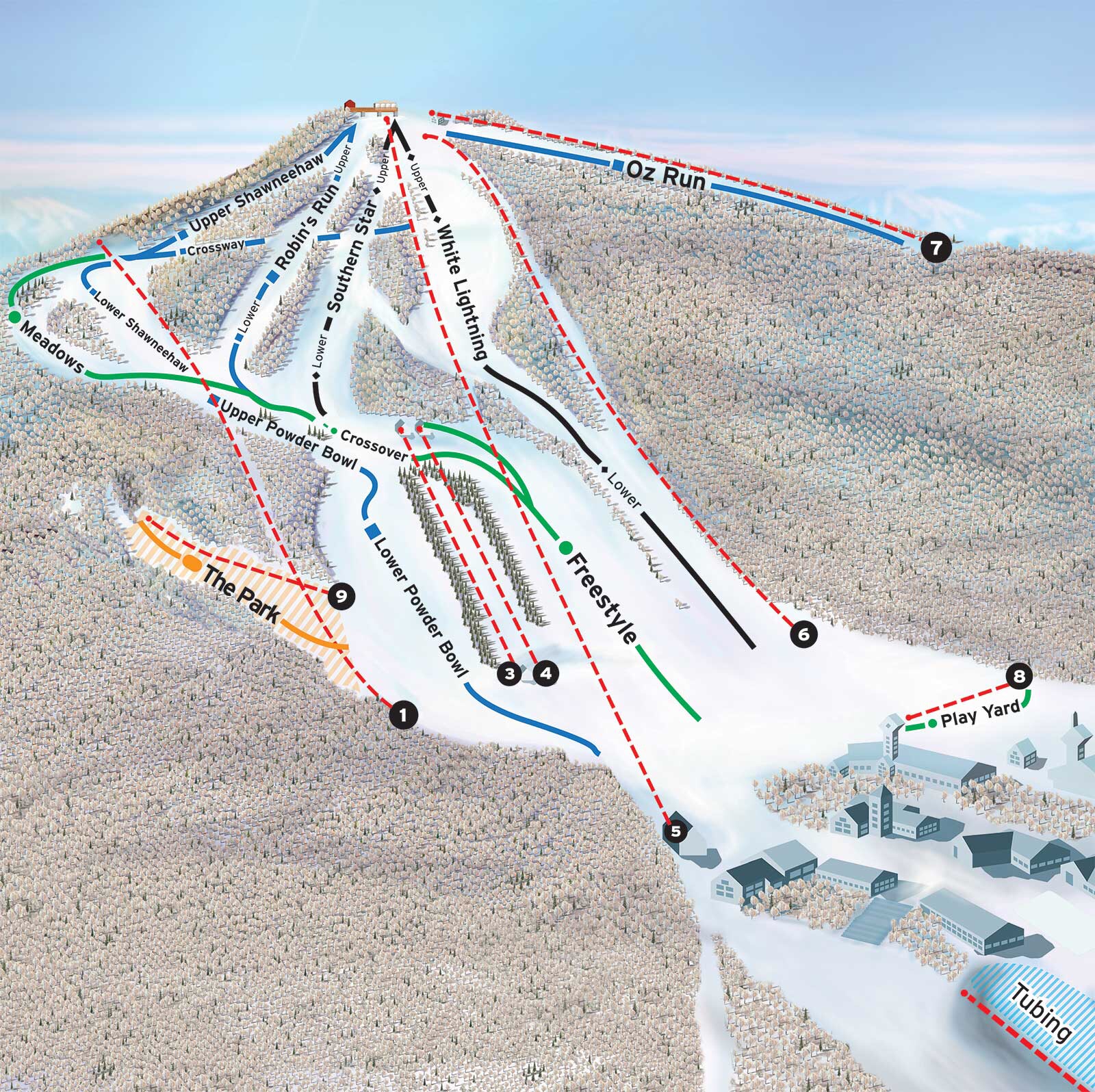
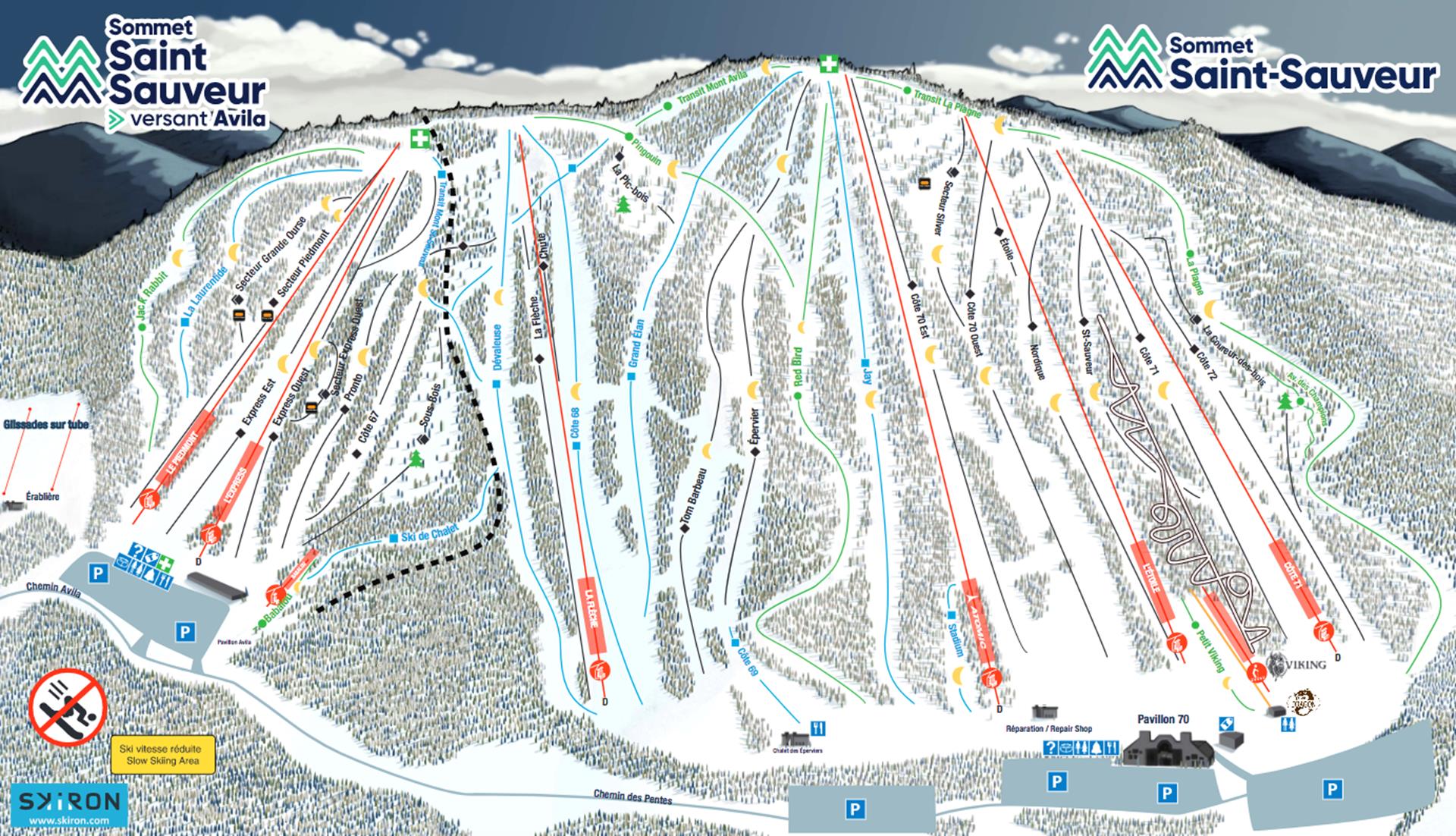
carte_skiron_sommet_saint_sauveur

One of the world’s first chairlifts with heated seats but without bubbles will launch for the 2019-20 season at Sommet Saint-Sauveur, formerly known as Mont Saint Sauveur in Quebec.  The new $4.7 million lift will be constructed by Doppelmayr, which is no surprise given that company’s significant manufacturing base just 15 minutes away in Saint-Jérôme.  The six-pack will replace the Atomic Express, named for the famous ski brand and tied for the oldest operating detachable chairlift in North America at 33 years.

The Government of Quebec will provide approximately $2.3 million in funding for the new lift and other projects, an agreement which many American ski resort operators may envy.  Sauveur is owned by MSSI, a holding company with five Laurentian resorts and is the previous owner of Jay Peak, Vermont.

Tahoe Donner Chooses Skytrac for New Beginner Lift

Tahoe Donner’s 1971 SLI will go by the wayside this summer and be swapped for a new Skytrac triple chair.

It may not be the biggest lift project I write about this week but Tahoe Donner near Truckee, California has signed a contract to replace its Snowbird SLI double this summer.  The Tahoe Donner Association is one of the country’s largest homeowner associations and therefore the process of assessing the old lift, designing a new one and funding it is all detailed on the neighborhood’s website.  Tahoe Donner staff solicited quotes from multiple manufacturers and looked at the used marketplace but ultimately settled on a brand new Skytrac Monarch fixed-grip triple chair to improve safety and reliability.

The new $1.5 million lift will be bottom drive and bottom tension with an increased line speed of 400 feet per minute.  Capacity will jump from 900 pph to 1500 with a comfortable 7.2 second chair interval.  New terminals will be smaller than the old ones and located off to the side of the Snowbird ski run for better circulation.  The lift will go from nine towers to six with a slope length of 1,600 feet.


Tahoe Donner is open to the public and popular with California families as an affordable option near Lake Tahoe. It’s great to see homeowners committing to the future of the mountain with this new lift.  Thanks to Kirk and Max for letting me know about the project.

Copper Mountain to Build a Chondola & Bubble Six-Pack

Just four days after its bombshell announcement of $16 million worth of new lifts for Killington, Powdr Co. today unveiled an even bigger project planned for Copper Mountain in 2018.  The American Eagle high-speed quad will be replaced with a combination lift featuring six passenger chairs and eight passenger gondola cabins while the American Flyer is going to become a six-place bubble chair.  The two Poma detachables being replaced were built in 1989 and 1986, respectively, and out-of-Village capacity will increase by 35 percent.

I will miss the Flyer’s old school charm but it has reached the end of its design life.

“Replacing our most popular mountain-access lifts will significantly improve how our guests experience some of the best skiing and riding on Copper Mountain,” said Gary Rodgers, president and general manager of Copper Mountain Resort in a press release. “More guests will be able to get up the mountain quicker to enjoy a variety of easy, intermediate and advanced terrain.” The Denver Post reports the new lifts will cost a staggering $20 million.

The outgoing American Eagle lift featured a Poma terminal design found on only a few lifts in North America.

Copper Mountain operates a mixed fleet of Doppelmayr and Poma lifts and no manufacturer was identified.  Most recently, Doppelmayr built the Kokomo Express, two surface lifts in 2013 and the Union Creek Express in 2011.  Pending Forest Service approval, the two monster new additions will open in time for the 2018-19 season.

Update: According to V3 in the comments, these lifts could be built by Leitner-Poma with the first DirectDrives in the United States.  This would be great news if true amid a flurry of gearbox-related problems in North American ski country recently.

Boston Gondola Would Link South Station with Seaport District

01.246.07.019
A gondola in Boston, Massachusetts could connect America’s sixth busiest train station with a growing waterfront neighborhood and convention center.  Photo credit: Handel Architects

Two private development firms are moving forward with plans for a $100 million gondola in South Boston, which would feature three stations in its first phase.  Millennium Partners and Cargo Ventures are building a 2.7 million square foot mixed-use development at the eastern edge of the Seaport District, a part of the city historically under served by public transit.  The current Silver Line bus rapid transit lines here have been criticized since their inception as slow, overcrowded and inconvenient while a gondola would create a quick and efficient path to the new complex and beyond.

Photo credit: Handel Architects

Millennium is working with Handel Architects and Leitner-Poma on a design which it presented to the Boston Planning and Development Agency in January.  The latest route avoids cabins flying past rooms at the new $550 million Omni Hotel, a source of criticism for an earlier route proposal, which is somewhat ironic considering Omni’s hopes to build its own gondola at Bretton Woods in New Hampshire.  The Boston gondola would travel over Summer Street for its entire 4,650′ alignment with stations adjacent to the South Station transit hub, Boston Convention & Exhibition Center and Marine Park.

01.246.07.015a
The lift would travel down Summer street at varying heights to avoid getting too close to buildings.  Photo credit: Handel Architects

The lift would feature 13 towers, 70 10-passenger cabins and a capacity of 4,000 passengers per hour, per direction (nine second spacing!)  A ride between South Station and Marine Park would take just 7.3 minutes.  A second phase could service the South Boston neighborhood with the Marine Park terminal becoming a sharp angle station.  Cabin parking and maintenance would also be housed at Marine Park.

Photo credit: Handel Architects

This proposal is one of many urban gondolas envisioned for North American cities including Albany, Vancouver and Washington, DC.  It will be interesting to see which one will be the first to actually break ground.

Public Comment Opens for Three Lift Crested Butte Expansion

crestedbutteexpansionmap

Crested Butte Mountain Resort’s vision to add three lifts and 500 acres of intermediate and advanced terrain moved forward last Friday with the release of a Draft Environmental Impact Statement by the Gunnison National Forest.  Operated by Triple Peaks, LLC along with New England’s Okemo and Mt. Sunapee resorts, Crested Butte currently has a fleet of 12 lifts serving mostly beginner and expert terrain.  The 58 year-old mountain seeks to provide guests more intermediate and advanced options and improve skier circulation.  Triple Peaks owners Tim and Diane Mueller were previously blocked from building a five-lift, 2,000-acre expansion on neighboring Snodgrass Mountain in 2009.

Under the new plan, first proposed in 2015, one current lift would be replaced with two more added in an area called Teocalli 2 – far from Snodgrass and nearer current resort infrastructure.  The North Face lift, a Leitner T-Bar installed in 2004, would be removed and replaced with a much longer chairlift.  This fixed-grip quad would stretch around 5,000 feet with a capacity nearly twice that of the current surface lift.  The new lift was orignally envisioned to start between the East River and Paradise lifts but is now slated to load directly adjacent to Paradise.

cbtrailmap
Current Crested Butte trail map; the expansion would be mostly behind the expert terrain in the upper left corner.

A second new lift with the working name Teo Park would similarly top out at the summit of the North Face but rise from the Teo 2 drainage behind.  This fixed-grip triple would move 1,200 guests per hour with a slope length of 3,050′ and create a link between the proposed expansion area and the already-developed ski area front side.

The heart of the expansion lies lower in the west-facing Teo watershed, where a new high-speed or fixed-grip triple would span approximately 6,000 linear feet.  Capacity would be limited to 1,200 skiers per hour and only a handful of new intermediate runs cut, totaling 89 acres.  Most of the terrain – 434 acres – would be left as gladed skiing with select trees removed by helicopter.  This expansive zone would supplement the popular and sometimes overcrowded intermediate runs serviced by Paradise and East River.

Public comments for this major project will be accepted here until May 10th and the Forest Supervisor is expected to make a decision around October.  Implementation of approved elements could begin as early as 2019 and the Mueller family would likely sign with Leitner-Poma for any new lifts as they have for decades at Crested Butte, Okemo and Sunapee.

Alberta’s Castle Mountain Looks to Grow

IMG_9115
Known for its steep terrain, lack of crowds and plentiful powder, Castle Mountain is poised to expand significantly while staying true to its roots.

Something interesting happened in Western Canada over the past few decades.  Just as many struggling small- and mid-sized American ski areas looked toward government ownership or nonprofit charity as solutions, private investors up north did the opposite, convincing communities to sell their publicly-owned ski areas for a brighter future.  Residents in the town of Golden, British Columbia voted by a 97 percent margin in 2000 to give up control of a one-Riblet ski area called Whitetooth to a Dutch construction company.  After debuting one of the world’s greatest gondolas and two new quad chairs, the renamed Kicking Horse Mountain Resort was sold to the Resorts of the Canadian Rockies conglomerate in 2011.

IMG_2075
Golden, BC sits along the Trans-Canada Highway and saw significant development in the early 2000s with the creation of Kicking Horse Mountain Resort.

Seven years after Golden’s experiment, a Denver-based developer bought the Powder Springs ski area from the City of Revelstoke and announced a $22 million contract with Leitner-Poma Canada to create North America’s first resort with a vertical greater than 5,500 feet.  One more lift out of a planned 30 was built in 2008 before a mountain of debt and the global financial crisis nearly forced Revelstoke Mountain Resort to close.  Now controlled by giant hotelier Northland Properties of Vancouver, the jury is still out on Revelstoke’s viability as a billion dollar destination.

Meanwhile in Alberta

Another public to private transaction took place in 1996, when a group of 150 skiers purchased Castle Mountain from a nearby municipality to form Castle Mountain Resort, Inc.  Castle was privately developed with two Mueller T-Bars in 1965 but became insolvent after a 1976 fire and was rescued by Pincher Creek taxpayers.  Just across the continental divide from Fernie, BC, the mountain shares the same dramatic scenery as other Canadian Rockies destinations but without the fancy hotels and high-speed lifts.  With a local population only around 35,000 and a three hour drive from Calgary, Castle currently averages only 90,000 skier visits despite its terrific snow and terrain.  Some 3,200 acres are serviced by five main lifts and a nearly 3,000′ vertical drop exceeds those found at places like Squaw Valley and Alta.  Averaging zero winter rain days at mid mountain (a perennial problem in much of British Columbia) and 350 inches of snow, there’s a lot to love for those willing to make the trek.

When the current investors took over, they inherited the two T-Bars, one of which is among the longest remaining in the world at 4,518 feet.  Designed to be turned into a chairlift but never actually converted, the dinosaur was named T-Rex in 1996 and these days only rarely drags guests up its 1,670′ vertical.  Castle Mountain has installed four new chairlifts since ’96, all of which came used from mountains like Sunshine Village and Beaver Creek.  The ski area continues to generate all of its own power with diesel fuel.

IMG_9221
The famed T-Rex, a beastly Mueller that cost only $67,000 to build in 1965.

In 2016, Castle Mountain Resort partnered with Whistler-based Brent Harley and Associates to develop a road map for the next decades of growth with input from the mountain’s shareholders, the local community and other stakeholders.  The new master development plan was completed in May of last year and envisions the replacement of most of the current lifts, construction of up to nine new ones and expanded year-round recreational opportunities.

Continue reading

Glenwood Caverns Gondola to Go Detachable in 2019

IMG_1102
The Iron Mountain Tramway provides the only guest access to a popular adventure park called Glenwood Caverns along Interstate 70.

Colorado’s growing Glenwood Caverns Adventure Park will make a major lift upgrade in 2019, swapping its pulse gondola system for a detachable oneThe Iron Mountain Tramway is a 2002 Poma Alpha model with 16 6-passenger Omega cabins that currently moves up to 300 guests per hour.  From early 2019, a new Leitner-Poma detachable gondola is planned to more than triple capacity to 1,000 per hour with 44 six passenger cabins.  Ride time will plunge from 12-15 minutes down to just seven.  “This will help us enhance our guests’ experience by reducing wait times to board the tram and reducing the frequency of weather-related tram closures,” noted the park’s general manager, Nancy Heard in a press release.  “It will be more stable in high-wind conditions, and will eliminate 80 percent of the shutdowns caused by wind and lightning.”

IMG_1031
This terminal will be replaced with a new LPA one along with new cabins and a new haul rope.

Sixteen years after Steve and Jeanne Beckley opened the adventure park in Glenwood, it now averages 205,000 visitors annually and the tramway sometimes experiences 60 to 90 minute wait times.  New tropical model Sigma Diamond cabins will feature additional ventilation and lightning arresters will be added to the towers in hopes of achieving more up time.  Pending local approval, construction will begin November 1st and continue for four months, during which the park will be closed.  Existing towers will be reused while the terminals will be completely replaced (the new drive system will shift to the top terminal.)  The unique tower-mounted utility lines that have been in service since opening day will also be buried and a new two-story administration building constructed in time for the park’s 17th season.

Six Big Lifts Launch in Colorado

IMG_8066
This new high-speed chairlift on Beaver Creek Mountain is one of six new lifts on Colorado slopes this season, representing the most new additions in a single year since 2013.

With over 100 detachable chairlifts, 22 gondolas and some 150 fixed-grip lifts, the Colorado lift fleet represents a total investment somewhere in the neighborhood of $700 million.  The Centennial State has more ski lifts than any other state or province and on each visit I’m amazed by the caliber of ski infrastructure here.  More than half of Colorado’s lifts are detachable models, a feat which no other North American region comes close to achieving.  This winter, six more high-speed chairlifts came on scene, and while none open up new terrain, each one serves an important purpose.  I was lucky enough to ride the new machines at Beaver Creek, Breckenridge, Copper, Eldora, Keystone and Vail over three days this week, testament to the remarkable amount of skiing available within a few hours’ drive here.  This year’s class includes two Doppelmayr high-speed quads, a Doppelmayr six-pack and three Leitner-Poma six-place chairs representing half of all new detachable chairlifts built in North America for 2017-18.

Red Buffalo Express – Beaver Creek Mountain

IMG_8028

The last lift from Beaver Creek’s 1980 inaugural season, Drink of Water, was replaced with a new lift with a new name over the summer.  The quad’s namesake, Red Buffalo Park, is now a dedicated learning zone with awe-inspring views of the Gore Range from 11,400 feet.  While lift 5’s terminals, hangers, grips and operator houses are new, most of the tower components and chairs are from the former Montezuma lift at Keystone.  Like its sister Vail, Beaver Creek now has just one fixed-grip lift of appreciable length remaining alongside an amazing 14 detachable chairlifts and gondolas.

Falcon SuperChair – Breckenridge

IMG_8465

Breckenridge debuted its third next-gen Leitner-Poma LPA six-pack on December 28th.  The new Falcon SuperChair replaces a Poma high-speed quad that opened along with Peak 10 itself in 1985.  The new ride lifts capacity by 25 percent to 3,000 guests per hour in this popular advanced-intermediate pod.  The Falcon has the same sweet plush chairs as the new Colorado and Kensho SuperChairs.

Continue reading

Gore & Whiteface Propose Ten New Lifts

Whiteface is the largest resort in the East by vertical and played host to the 1980 Olympic Downhill.  The New York State-owned Olympic Regional Development Authority continues to operate Whiteface along with nearby Gore Mountain and Belleayre in the Catskills.  This week, Governor Andrew Cuomo proposed an impressive $62.5 million for capital improvements at ORDA facilities for 2018-19.  While the budget proposal is not yet law and does not identify specific items, it is likely to fund projects from Whiteface and Gore‘s management plans which, probably not coincidentally, were updated this month to include up to ten new lifts.

whitefaceplan

The biggest project in Whiteface’s future is the replacement of the Freeway double (a 1978 Hall) in a completely new and much longer alignment.  A new high-speed quad would start at in the base area and cross over the Little Whiteface double-double, topping out on the Upper Mackenzie trail.  Two new trails would be cut from the top, making this lift ideal for intermediate skiers and riders.  A second project would replace the 1984 VonRoll double named Bear with a fixed-grip quad.  An offload opportunity would be included near the current top terminal and the new lift would continue to the Mid-station lodge area parallel with the Face Lift detachable quad.

whiteface_trail_map_1718
Current Whiteface trail map for reference.

Significant improvements are planned for the Bear Den beginner complex.  A relocated Riblet double-turned-triple currently services this zone and would be replaced with a fixed-grip quad.  “The new quad and magic carpet at Bear Den will serve the extensive trail work we are planning in that area,” Whiteface General Manager Aaron Kellett tells NY Ski Blog.  “We want to extend the lift top terminal higher to create better flow in and out of the area.”  Last year, Whiteface proposed a new lift from Bear Den all the way to the Mid-station but that plan has morphed into a conceptual transfer lift between the two base areas.  A second transfer lift (think gondola, pulse gondola or cabriolet) could link the main parking lot to the base lodge.

Continue reading

Copper Mountain Pursues New Tucker Mountain Lift

IMG_6294
A lift on Tucker Mountain, seen here in the background, would provide expanded access to 360 acres of terrain currently accessible only by cat or on foot.

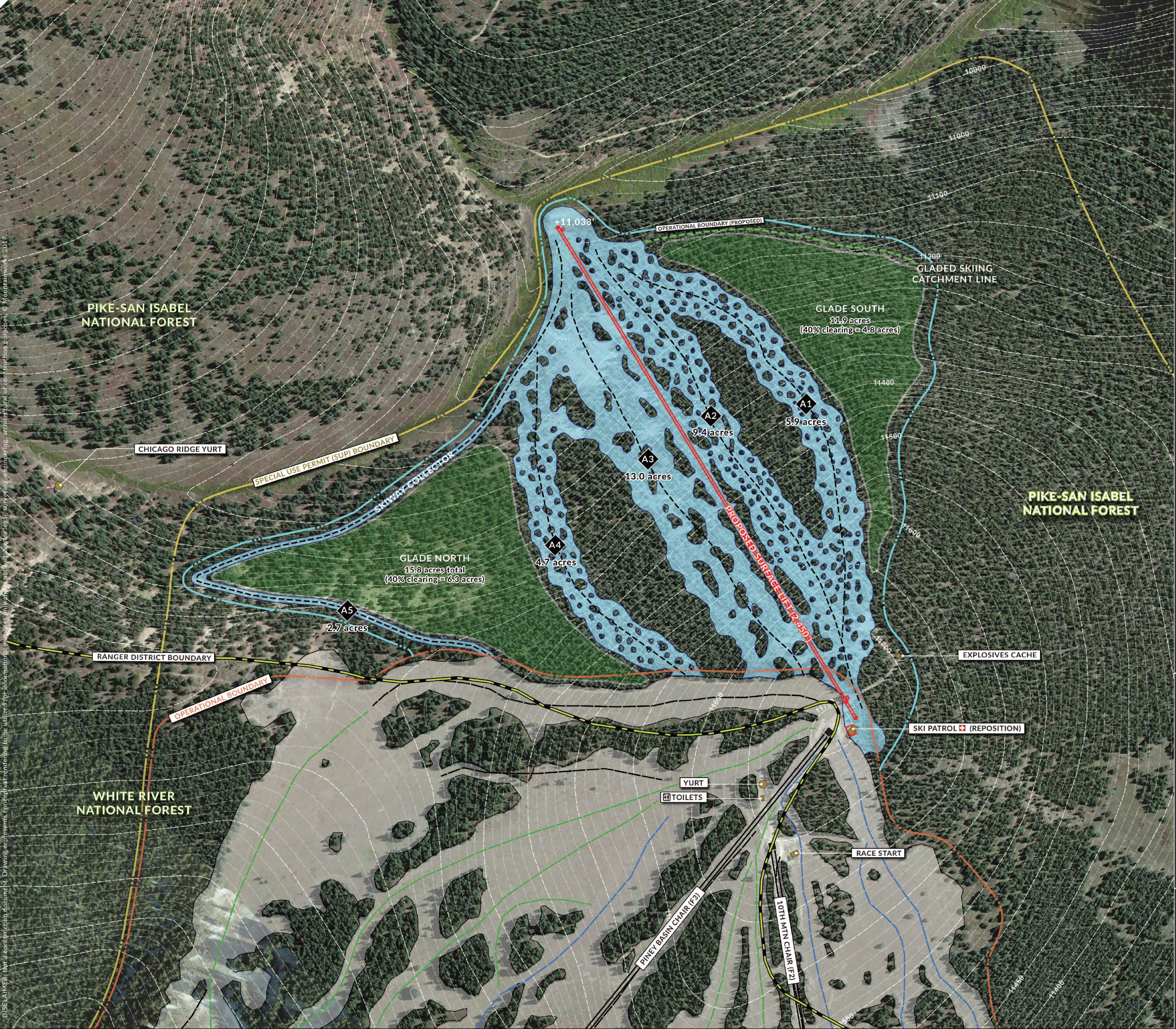
Copper Mountain is moving forward with plans for lift service on Tucker Mountain, the 12,337 foot peak that forms the backside of Copper Bowl.  A Tucker lift was first approved in 2006 under Intrawest ownership but free cat skiing is as close as it got to being implemented.  Eight years into new management, Powdr Co. has proposed a new alignment that begins at the current Blackjack return terminal and ascends 1,150′ to the Tucker summit.  The fixed-grip triple chair would be only around 3,000 feet long and move up to 1,200 skiers per hour.  Blackjack’s return terminal would be moved slightly uphill to make room for the new machine.

tuckermountainmapThe project would improve access to underutilized advanced terrain within Copper’s existing permit area and is undergoing expedited review as a result of the previous approval. The White River National Forest opened public comment yesterday (running through February 9th) and a decision is expected in March.  According the the forest’s schedule of proposed actions, construction could begin as early as this June with an opening next winter.