- The St. Louis Zoo maps a gondola connecting to a new hotel.
- Two 230-passenger tram cabins take flight.
- Poma’s building a 5-stage(!) gondola transit system in Algeria.
- Leitner announces the company’s sixth 3S gondola installation will replace a 53-year old jig-back at Voss Resort in Norway.
- California Trail is coming along.
- One of the world’s steepest tramways opens in China with a maximum rope angle of 42 degrees.
- Doppelmayr’s Worldwide 2016 yearbook is now available. Note how few fixed-grip lifts they built last year.
- Also the spring issue of Poma’s magazine is out. Check out the Poma Coaster!
Garaventa
CWA Delivers Monster Cabins for Ha Long Queen

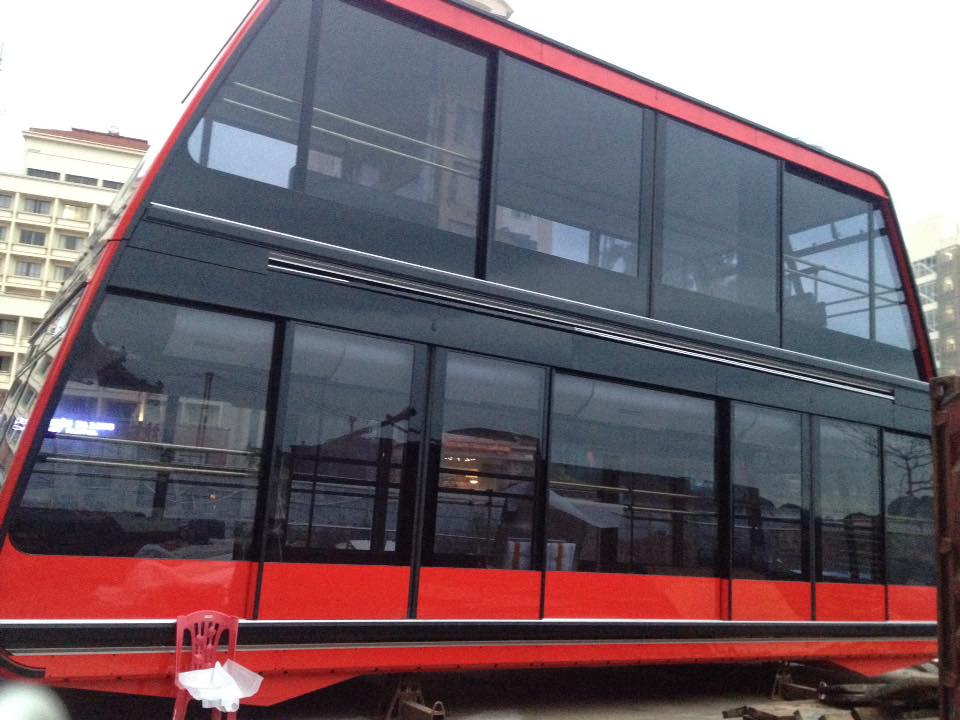
We now know what the world’s largest tramway cabins look like. One bright yellow and the other red, CWA’s largest Kronos cabins built to date will hold 230 passengers plus one operator each with six sets of doors on two levels. They will soon be hung on the Ha Long Queen cable car, whose track cables already stretch 5,000 feet across Vietnam’s Ha Long Bay at heights up to 617 feet. The Queen will supplant the 200-passenger Vanoise Express as the world’s highest capacity aerial tram when it opens early this summer.
News Roundup: Gearbox Trouble at Sugarloaf

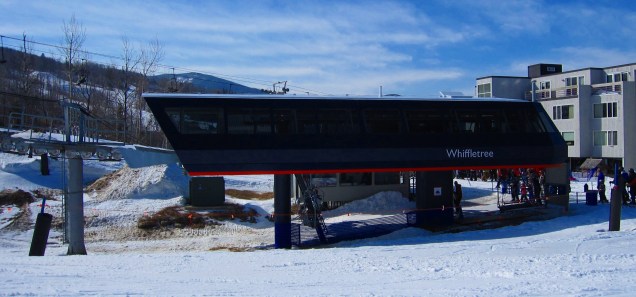
- Sugarloaf’s Whiffletree high speed quad (shown above) will be down 1-2 weeks while its gearbox gets rebuilt in Michigan for the second time in six months. Cone Drive rebuilt the gearbox in question last Fall and it was back in action a mere two months before failing on Saturday. Whiffletree is a 1997 Garaventa CTEC Stealth detachable at a mountain that’s had more than its fair share of lift setbacks.
- Doppelmayr’s latest Wir magazine is online. Some article highlights: the Penkenbahn 3S gondola turns 6.5 degrees mid-line and Park City’s new gondola transitions between two different line gauges.
- Leitner Ropeways will break ground on a two-stage gondola in Berlin March 26th to serve guests of the city’s 2017 horticultural expo. Doppelmayr built temporary gondolas at similar expos in 2009 and 2011. Must be nice to spend millions on lifts for four months of temporary operation! To be fair, Whistler did something similar for the Olympics.
- Garaventa crews pulling rope 600 feet above Ha Long Bay but they took some time off to celebrate the Lunar New Year. The world’s largest aerial tramway opens next month.
- The Telluride-Mountain Village gondola transit system, built by CTEC in 1992, has clocked 100,000 hours and elected officials are trying to figure out how to modernize it.
World’s Largest Aerial Tramway Under Construction in Vietnam

Vietnam doesn’t have skiing. That fact makes it an unlikely candidate for the title of world ropeway capital. With multiple record-breaking gondolas operating and more under construction, that may soon change. In 2007, Poma built a spectacular installation over two miles of ocean called the Vinpearl Cable Car. The Hanoi-based Sun Group is behind many of Vietnam’s lift projects and is perhaps the Doppelmayr/Garaventa Group’s best customer. Sun Group operates the second longest mono-cable gondola, just commissioned the world’s longest 3S gondola and is currently building another 3S that’s a mile longer than the first one. Now they are building a huge aerial tramway and at least two more gondola lifts.

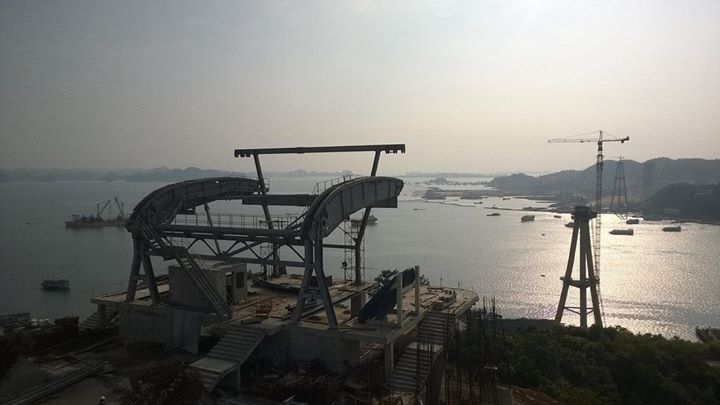
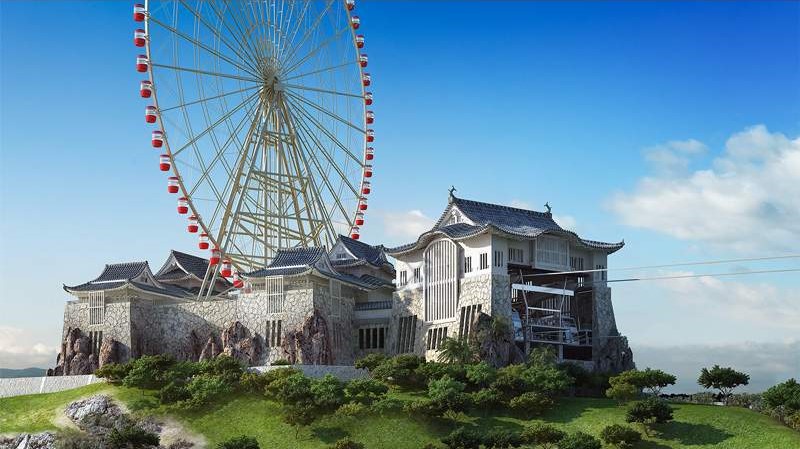
Vietnam’s first reversible aerial tramway under construction in Ha Long Bay will break two world records. The Mystic Mountain Skyway Ha Long Queen Cable Car will link a new amusement park called Ha Long Ocean Park with one of the world’s largest observation wheels on a neighboring mountain across the bay. The $282 million project is a perfect site for an aerial tramway with two points needing to be connected but with natural obstacles in between. At the same time, the alignment is relatively short with moderate capacity needs.
News Roundup: Eco-Friendly
- Leitner-Poma flies concrete for Loveland’s new Ptarmigan lift, a triple which will replace two lifts in a new alignment.
- Aerospace Engineer Michael Bouchard is determined to reopen Tenney Mountain after five seasons being closed.
- Season pass sales have been suspended at the troubled Magic Mountain in Londonderry, Vermont. The classic New England ski resort is down to two working chair lifts (in 1990 it had five.)
- Poma has a new brochure about its urban lift projects.
- Mt. Rose is relocating the Ponderosa quad (1993 Garaventa CTEC) to become the Wizard beginner lift. It also looks like their James Niehues trail map is out and a Gary Milliken VistaMap is in.
- One of Garaventa’s retired engineers has written an 834-page book called Ropeway Technology. It can be yours for only 125 Swiss Francs (plus $32 for shipping to the USA.)
- Sugarloaf pours foundations for their new terminal on an old lift.
Lift Profile: Portland Aerial Tram
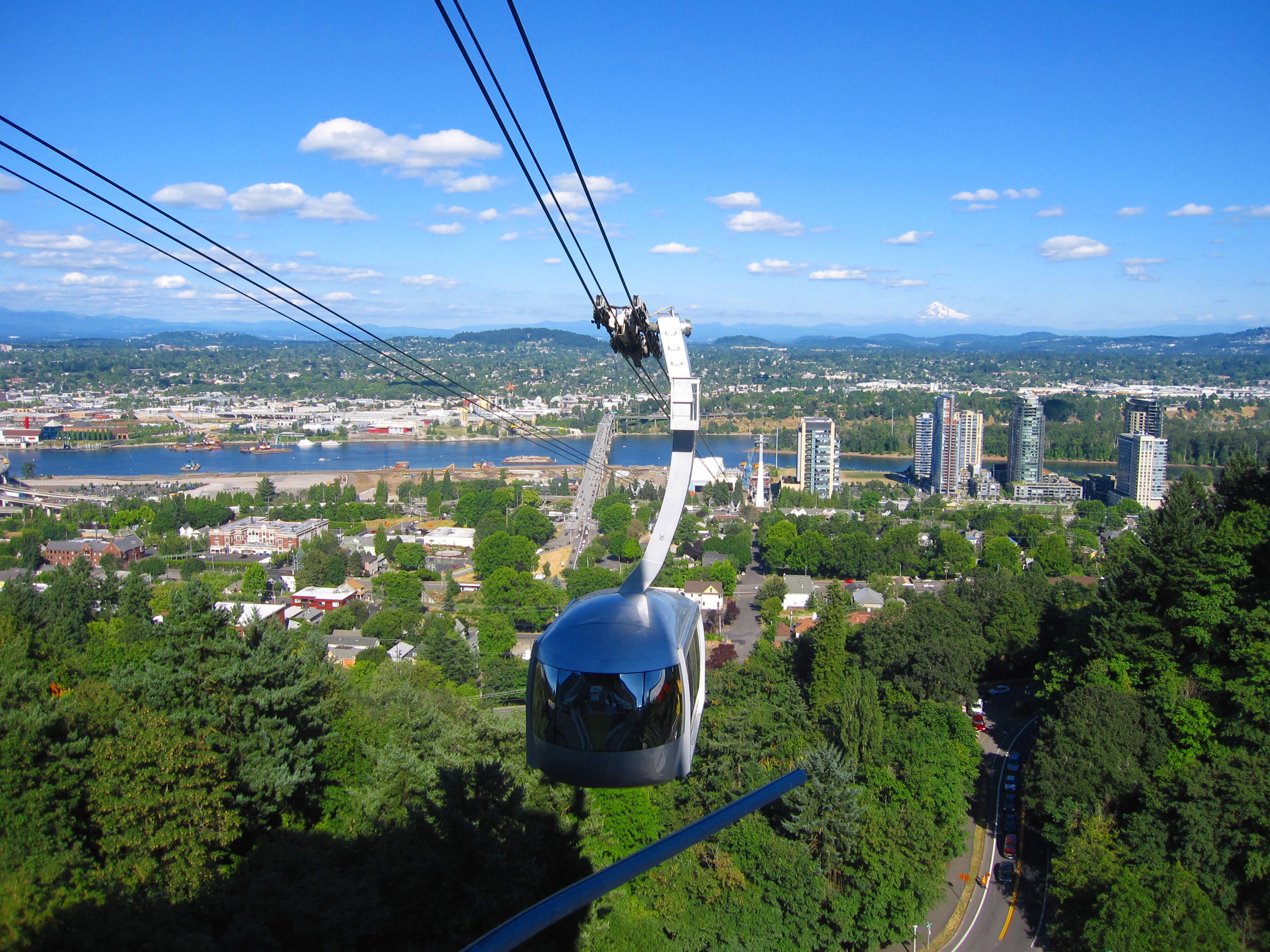
The Portland Aerial Tram, opened in January 2007, is one of only a handful of urban commuter lifts in the United States. It connects the campus of the Oregon Health & Science University with Portland’s up-and-coming South Waterfront neighborhood. The tram was built for $57 million during Doppelmayr-Garaventa’s North American golden years when they completed three projects worth $150 million in less than two years (the others being Jackson Hole’s new tram and the Peak 2 Peak Gondola.) The Portland tram now carries more than 3,300 passengers a day, far exceeding initial projections.

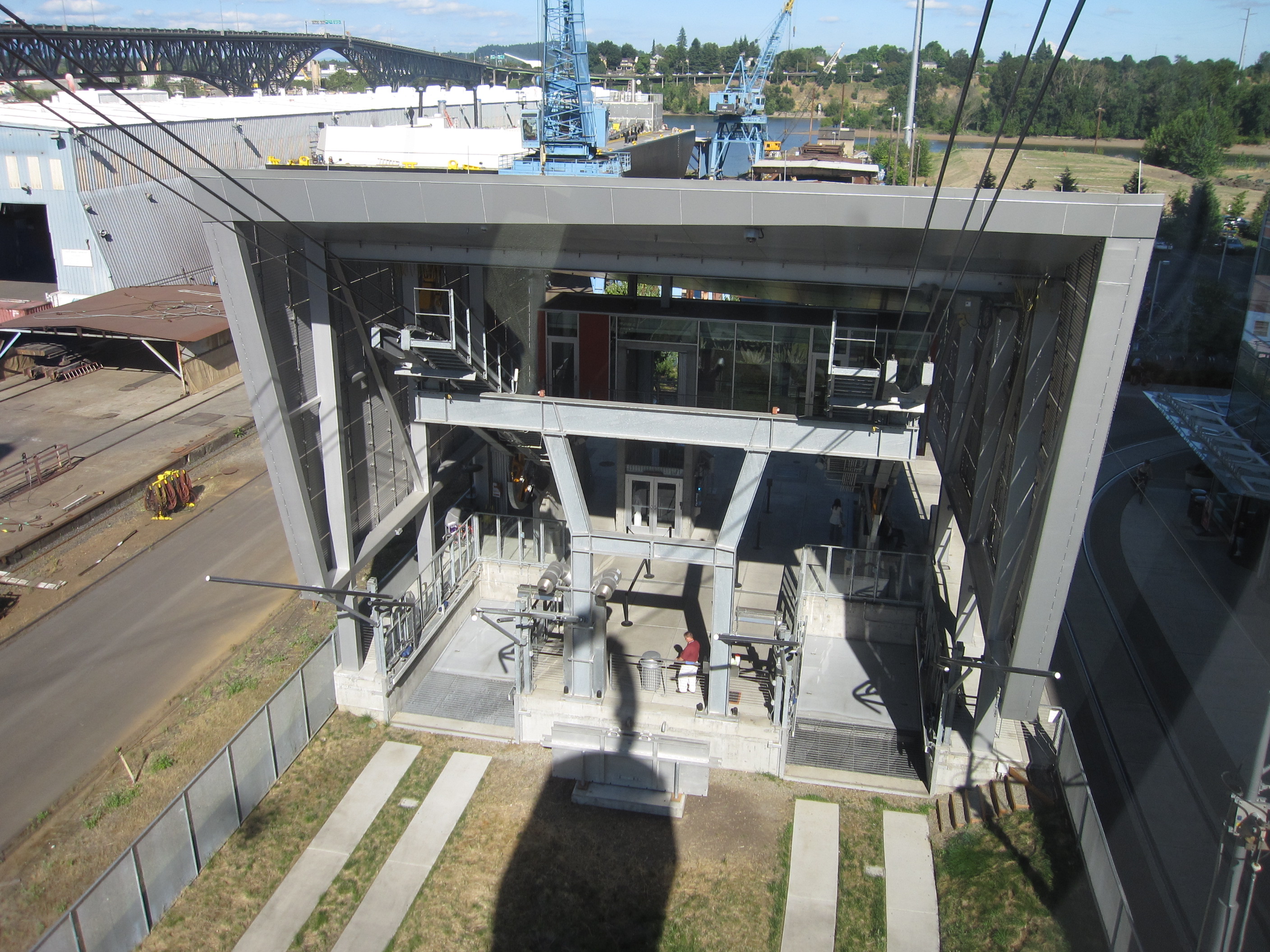
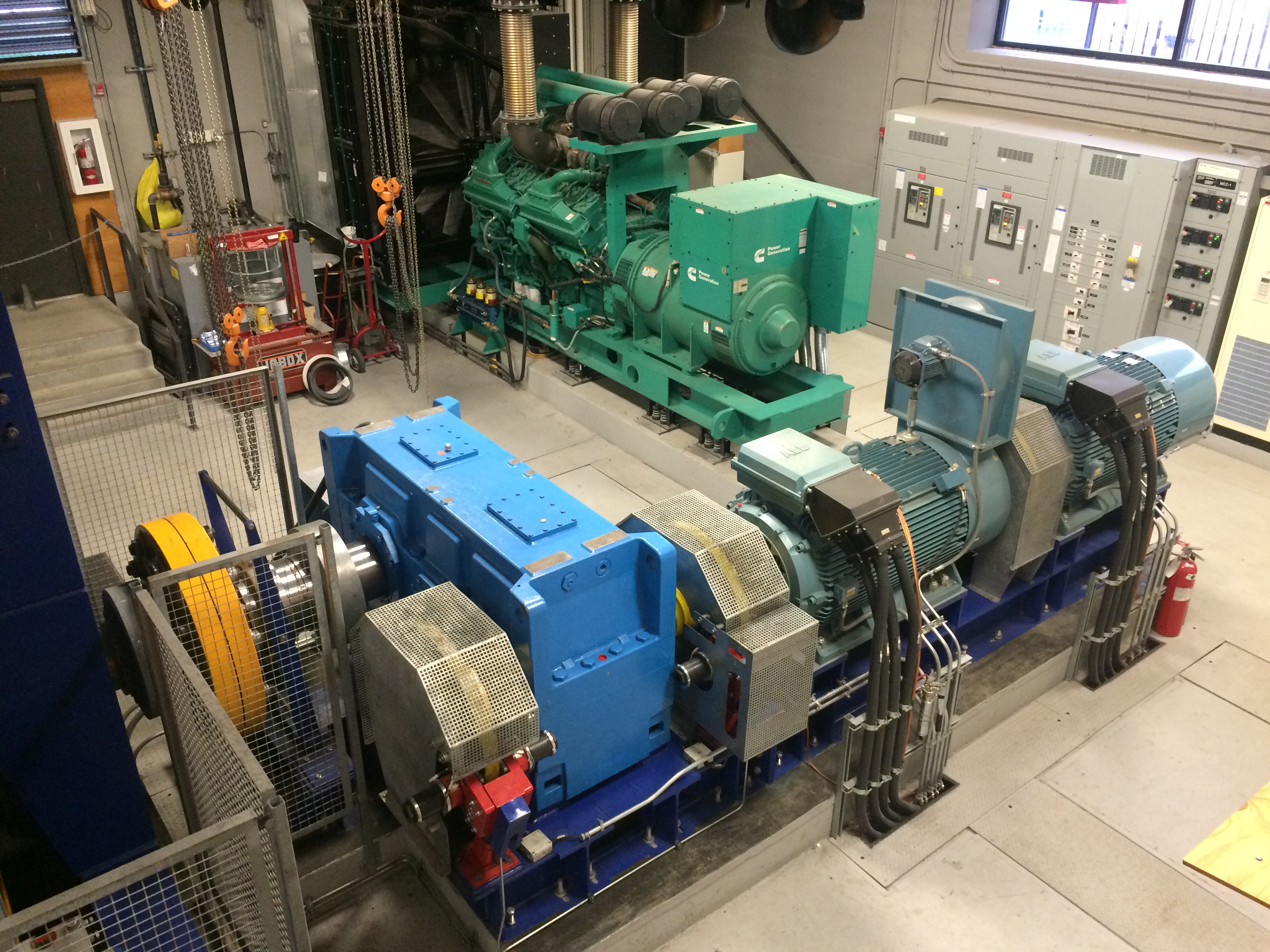
The tram only rises 496 feet but it crosses a light rail line, eight lanes of Interstate 5 and eleven other roads. The bottom terminal houses the 600 HP drive motor and tram offices while the 80,000 lb. counterweight sits underneath the top station. Slope length is only 3,437 feet, allowing quick three-minute trips at 2000 feet per minute or 7 m/s. This achieves a capacity of 1,014 passengers per hour, per direction.

Why did a tram one quarter of the size of Jackson Hole’s cost $25 million more? Two words: politics and aesthetics. Designers wanted the system to be unique to Portland and aesthetically pleasing. The city held an international design competition and selected AGPS Architecture of Zurich to design the terminals, tower and cabins. The 197-foot tower is entirely covered in steel panels and lit up in colors at night. Gangloff custom-designed the tram’s two 78-passenger cabins to look like flying reflective bubbles. The top station is perhaps the most complex piece of the project, sitting 140-feet above ground and supported by angled columns.
Garaventa Building Record-Breaking Tram in Germany

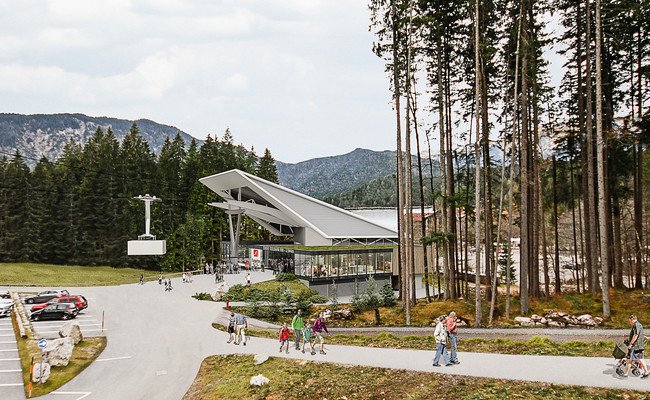
Just weeks after opening two record-breaking aerial tramways on the Italian side of Mont Blanc, the Doppelmayr/Garaventa Group has begun construction on an even more remarkable tramway to Germany’s highest summit. Replacing a 1963 jig-back tram, the new 120-passenger Eibsee Cable Car on the Zugspitze will leave a base terminal at 3,337 feet and top out at 9,718 feet with only one tower in between. Two other aerial tramways that reach the same summit, the Tyrolean Zugspitzebahn and the Zugspitze Gletcherbahn, will remain unchanged.

The new cable car will maintain the old version’s record for the largest vertical rise of a single tramway span at 6,381 feet, down slightly from 6,398 feet. Its lone tower will be the tallest in the world at 416 feet – 43 feet taller than the current tallest on Austria’s Gletscherbahn Kaprun III. The new cableway will also have the longest unsupported span at 10,541 feet, breaking the current record of 9,941 feet on the Peak 2 Peak Gondola’s middle span.
Behind the Scenes of the Jackson Hole Tram

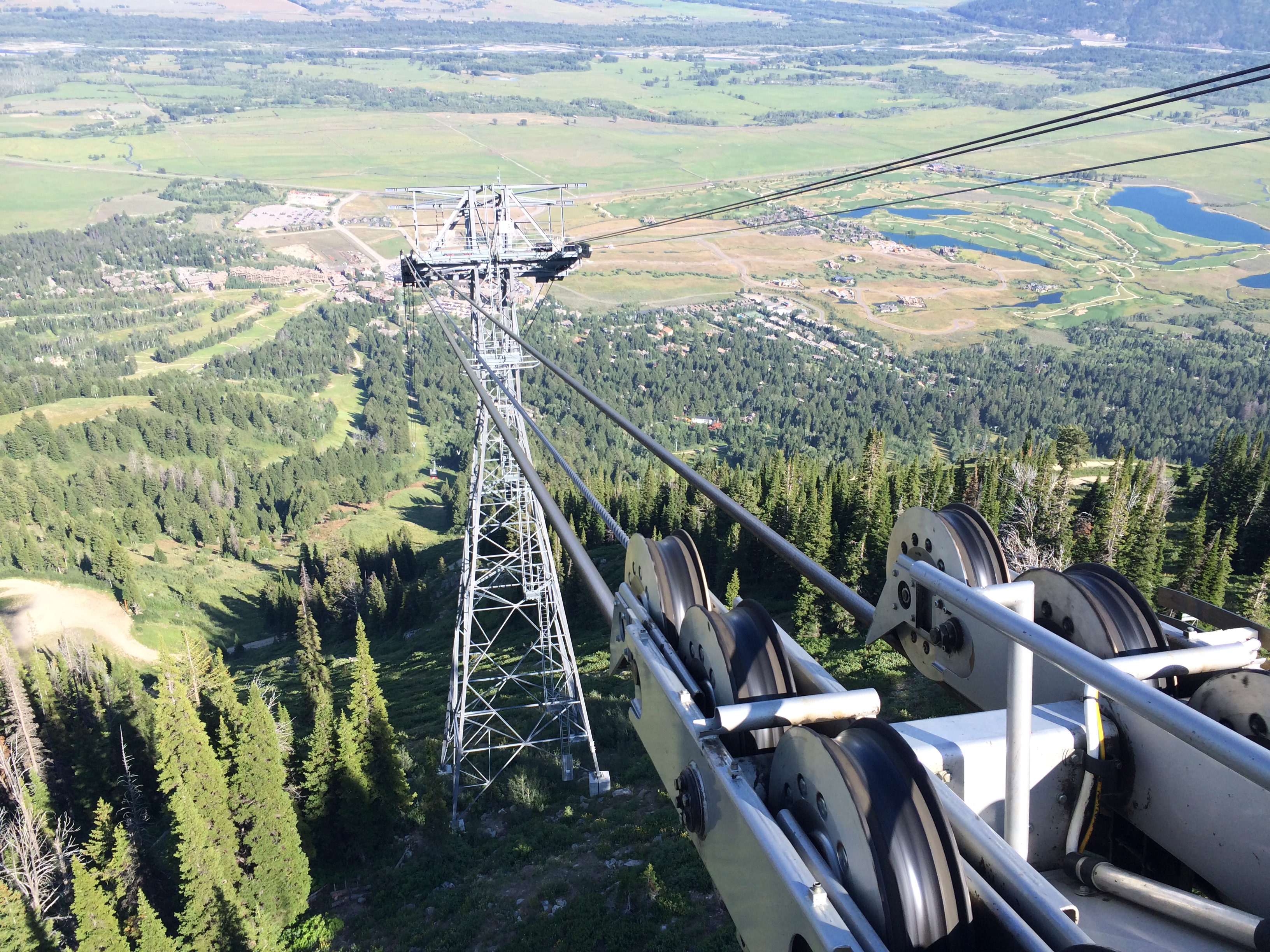
The $31 million Jackson Hole Aerial Tram is the most expensive lift ever built at a US ski area. Constructed by Garaventa over 20 months, the new tram opened to great fanfare on December 20, 2008. It can move a hundred people 4,083 vertical feet in under nine minutes. Compared with a detachable lift, the tram is a relatively simple machine built on a massive scale.

Like most jig-back aerial tramways, there are four track ropes and a single haul rope that that drives both cabins. All five wire ropes were manufactured by Fatzer in Switzerland. Five towers support the line; towers 1 and 2 are the tallest and furthest apart. Two CWA Kronos cabins move 650 passengers per hour per direction at a maximum speed of 10 m/s. Slope length is 12,463 feet.