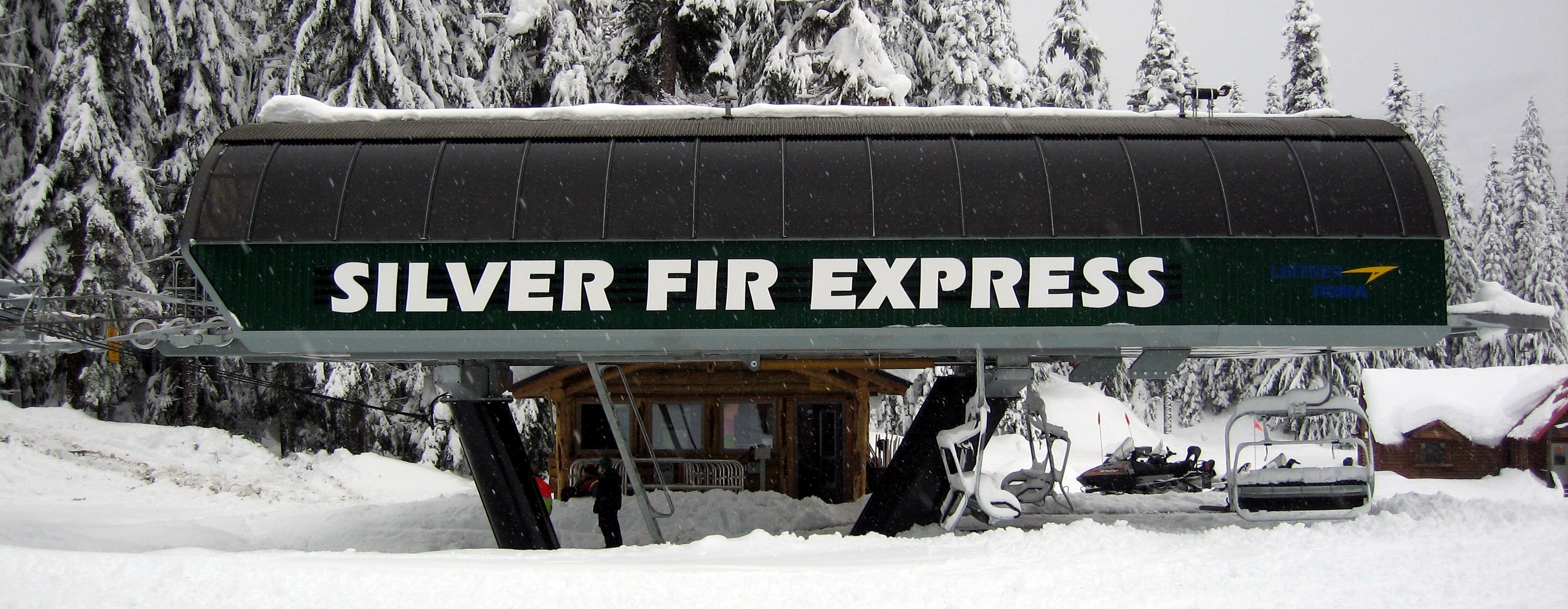
Jumbo Glacier Resort is Dead

British Columbia’s Minister of Environment has finally killed the Jumbo Glacier Resort, proposed to rival Whistler in the Purcell Mountains of British Columbia.  Jumbo Glacier is a spectacularly-remote place up a dirt logging road from Panorama Mountain Village and Invermere.  It’s more than 200 miles from Calgary, the nearest major city and airport.  The plan was to build 20+ lifts on 3,000 hectares of public land above 5,000 feet.  You can read the full master plan here.
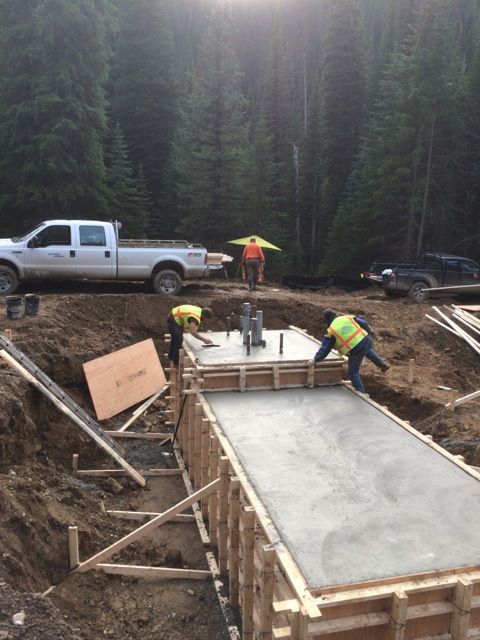
Leitner-Poma poured some footings last fall in a last-ditch effort.

The project was first submitted to the BC government in 1991 and received environmental approval in 2004.  The resort claimed they would get 2,700 skiers per day. This was always a red flag to me as 2,700 skiers is not a big number for a destination ski resort.  Take for example a mid-sized area like Mt. Sunapee in New Hampshire.  It has six lifts and a comfortable carrying capacity of 5,220 skiers per day.  2,700 could justify perhaps three or four lifts at Jumbo, not 23.

BC has no shortage of large ski areas struggling due to remoteness. Kicking Horse and Revelstoke are perhaps most similar to the Jumbo proposal. Revelstoke was supposed to have 21 lifts; they built three before running out of money in 2008. Lucky for them, the 27th richest person in Canada bought in and paid off over $100 million in debt.  Kicking Horse was in similar trouble when it was rescued by Resorts of the Canadian Rockies in 2011. Both of these resorts are on the Trans-Canada Highway, not 50 miles from a town.

Continue reading

Pulse Lifts

These days building a detachable lift means a capital investment of at least $3 million plus around $100,000 in annual maintenance.  A so-called ‘pulse’ lift offers the speed of a detachable system with similar infrastructure to a traditional fixed-grip lift.  Chairs or cabins are grouped together into ‘pulses’ and the entire lift slows down for loading and unloading.  When comparing types of aerial lifts there are always trade-offs; here they include low capacity and long headways.  Most pulse lifts can only move 300-600 passengers per hour and headway – the time a passenger has to wait for a carrier to show up – can be minutes instead of as low as six seconds.  Perfect for certain applications but unsuitable in most.

Pine Ridge lift at the Yellowstone Club, Montana.

There are currently 17 pulse lifts operating in the US, Canada and Mexico; all but three are gondolas.  Nearly all were built in the last 15 years.  Panorama Mountain Village, Northstar California, Steamboat, Snowmass, Canyons Resort, and Le Massif all use pulse gondolas to connect village areas.  These lifts are usually less than 3,000 feet long and convenient for skiers and non-skiers alike.  Other pulse gondolas are attractions in their own right such the Iron Mountain Tramway at Glenwood Caverns Adventure Park, SkyTrail at Trees of Mystery, the Gondola at Royal Gorge Bridge Bridge & Park and the Riverfront Park SkyRide in Spokane.  There is also a new Leitner-Poma pulse gondola in Orizaba, Mexico with tripod towers that are hundreds of feet tall.

Spokane Falls SkyRide, built by Doppelmayr.
Riverfront Park SkyRide, built by Doppelmayr.

Snow Valley in Edmonton, Alberta has a very unique pulse chairlift built by Doppelmayr in 2008.  Instead of having groups of 3-5 chairs, it has just two groups of 20 closely-spaced quad chairs.  Because it is only 850 feet long, the lift can move 1,378 skiers per hour at up to 5 m/s, the same speed as most detachable lifts.  In fact the ride is only about a minute.  The lift slows to a beginner-friendly 0.8 m/s for loading and unloading.  Because of the low speed, skiers ride around the bullwheel at the top and unload facing down the hill.  It’s the only lift I know of with 180-degree unloading.

Continue reading

News Roundup: Small Mountains and Big Cities

IMG_0164
Doppelmayr load tested Snow King Mountain’s new Rafferty Quad this week.
  • Construction on The Balsams Resort in New Hampshire may begin late this summer.  We could see new lifts there next summer.
  • A bit further south, Waterville Valley started cutting trees for its Green Peak Expansion.  Unfortunately they don’t have funding for a new lift or even a used one.
  • Also in New Hampshire, Tenney Mountain plans to reopen next season after being closed since 2010.  The mountain has a 1964 Stadeli double and 1987 Borvig triple
  • You can own one of Oregon’s ski areas for only $1.25 million.  Includes lifts with charming names like “Happy” and “Echo.”
  • The Harbour Skylink would be a four-stage gondola in one of the world’s great capitals.
  • Poma is currently building five gondolas in Latin America, two for the Metrocable system in Medellin, Colombia and one each in Bolivia, Chile and Mexico.  They recently received €1.3 million from the French government to lead a consortium promoting ropeway transportation in cities.
  • The world’s tallest observation tower is coming to Brighton, England, courtesy of Poma, who also brought us the London Eye and the High Roller in Las Vegas.
  • Sigma takes on CWA with 3S gondola cabins developed by Italian car designer Pininfarina, set to debut in 2018 on the world’s highest 3S in Zermatt.

Lift Profile: Sunshine Village Gondola

sunshine 365 sunshine 073

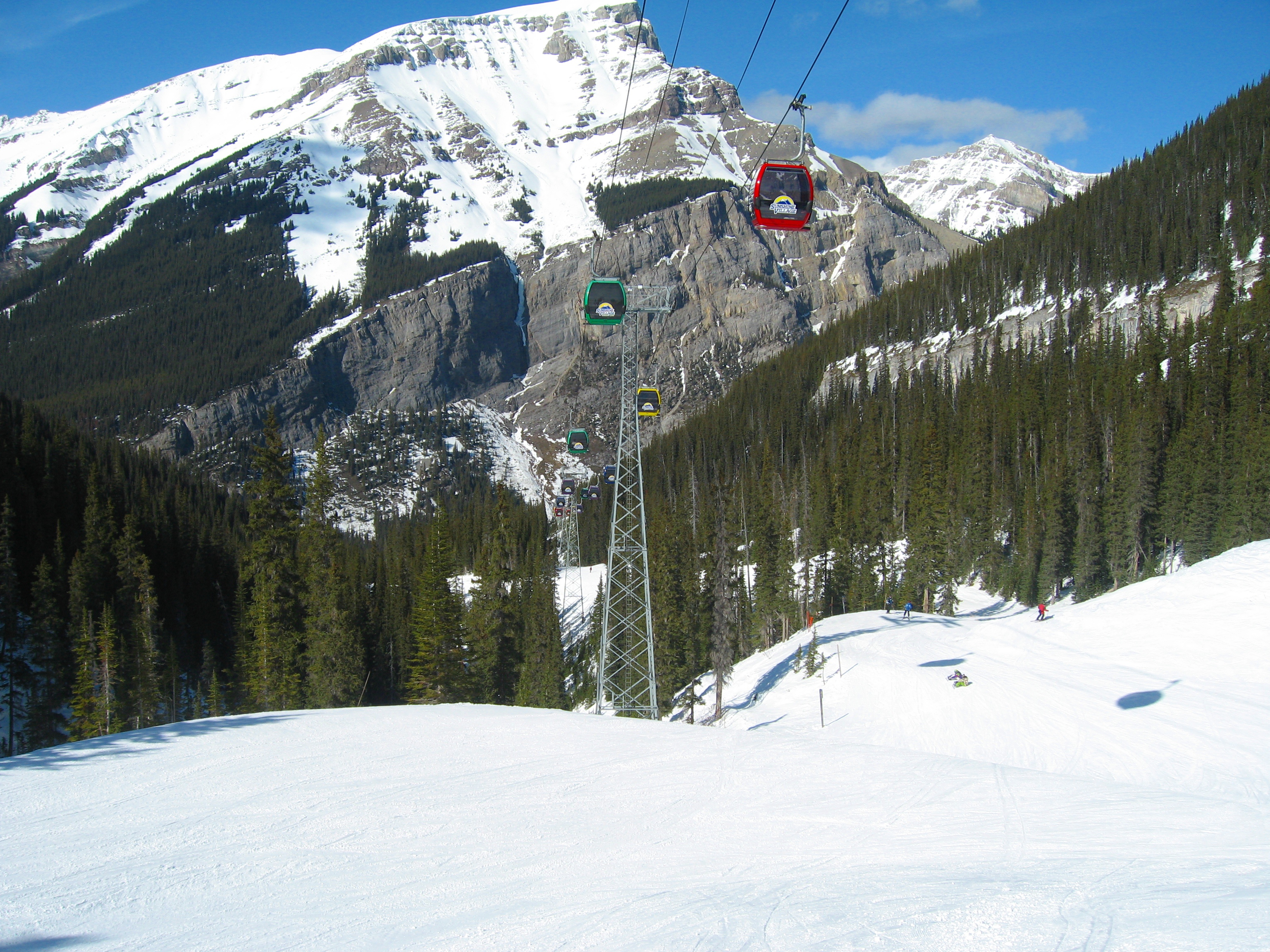
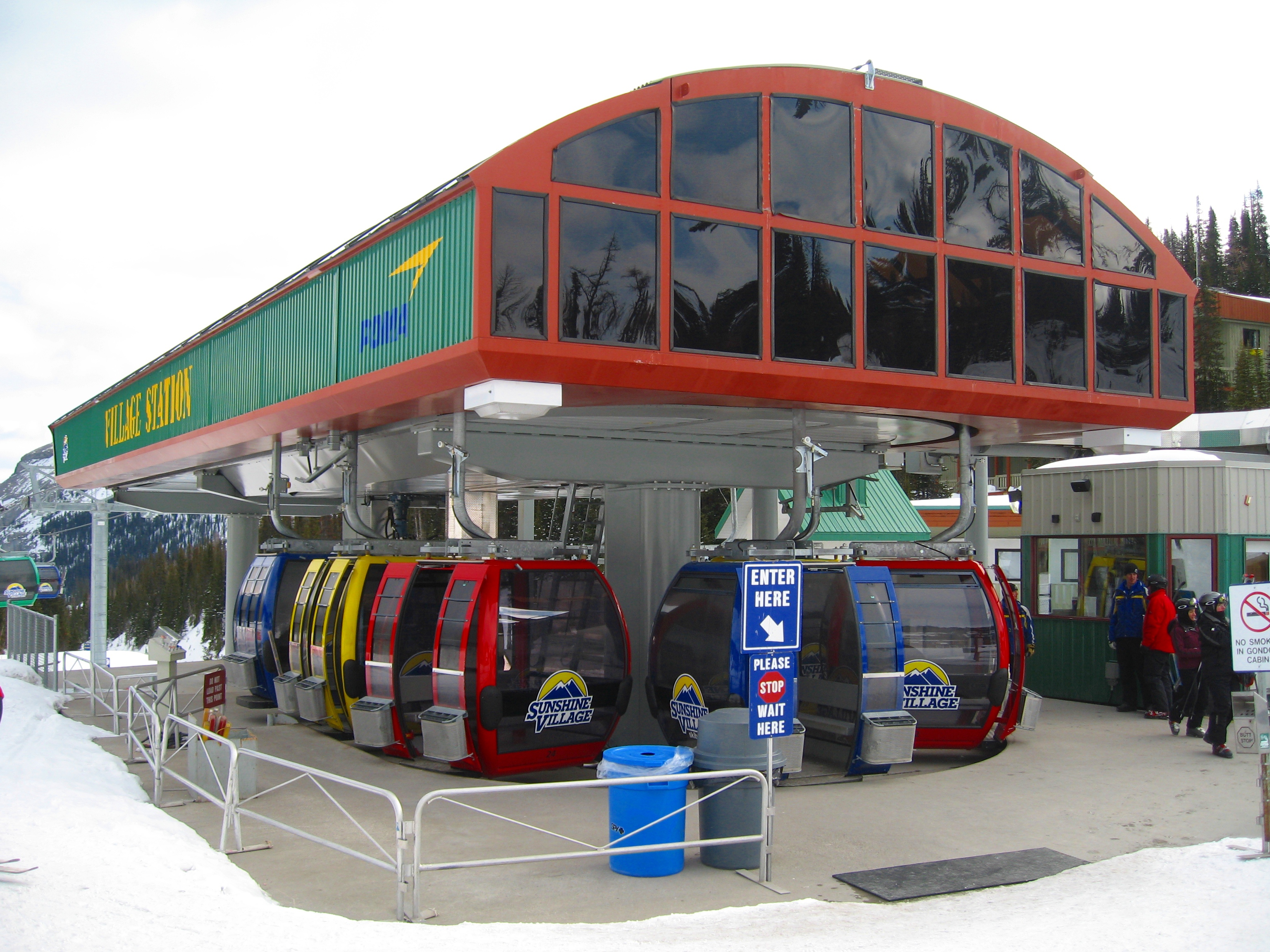
Sunshine Village is one of two ski resorts in North America with access provided by gondola rather than road, the other being Silver Mountain in Idaho.  Visitors park at the end of Sunshine Road and transfer to a Poma gondola for a 17 minute ride to Sunshine Village.  Along the way there are two angle stations, one where doors stay closed and the other with loading/unloading at Goat’s Eye Mountain.  All three sections share one haul rope driven by a 2,000 HP electric motor underneath the top terminal.  The Goat’s Eye angle station has indoor cabin storage and there are additional maintenance rails at each end.

When opened on November 22, 2001, Poma claimed the Sunshine Village Gondola was the world’s fastest 8-passenger gondola with a max speed of 1,200 feet per minute.  I don’t believe this was ever true as Whiteface’s Cloudsplitter Gondola opened two years earlier and can run 1,212 fpm.  There are now at least 15 gondolas in North America that can do 1,200 feet a minute or faster.  Regardless, Sunshine’s gondola is an impressive machine that moves 2,800 people per hour in each direction 15+ hours per day.  It cost $16 million to build.

Continue reading

Snow King Transformation

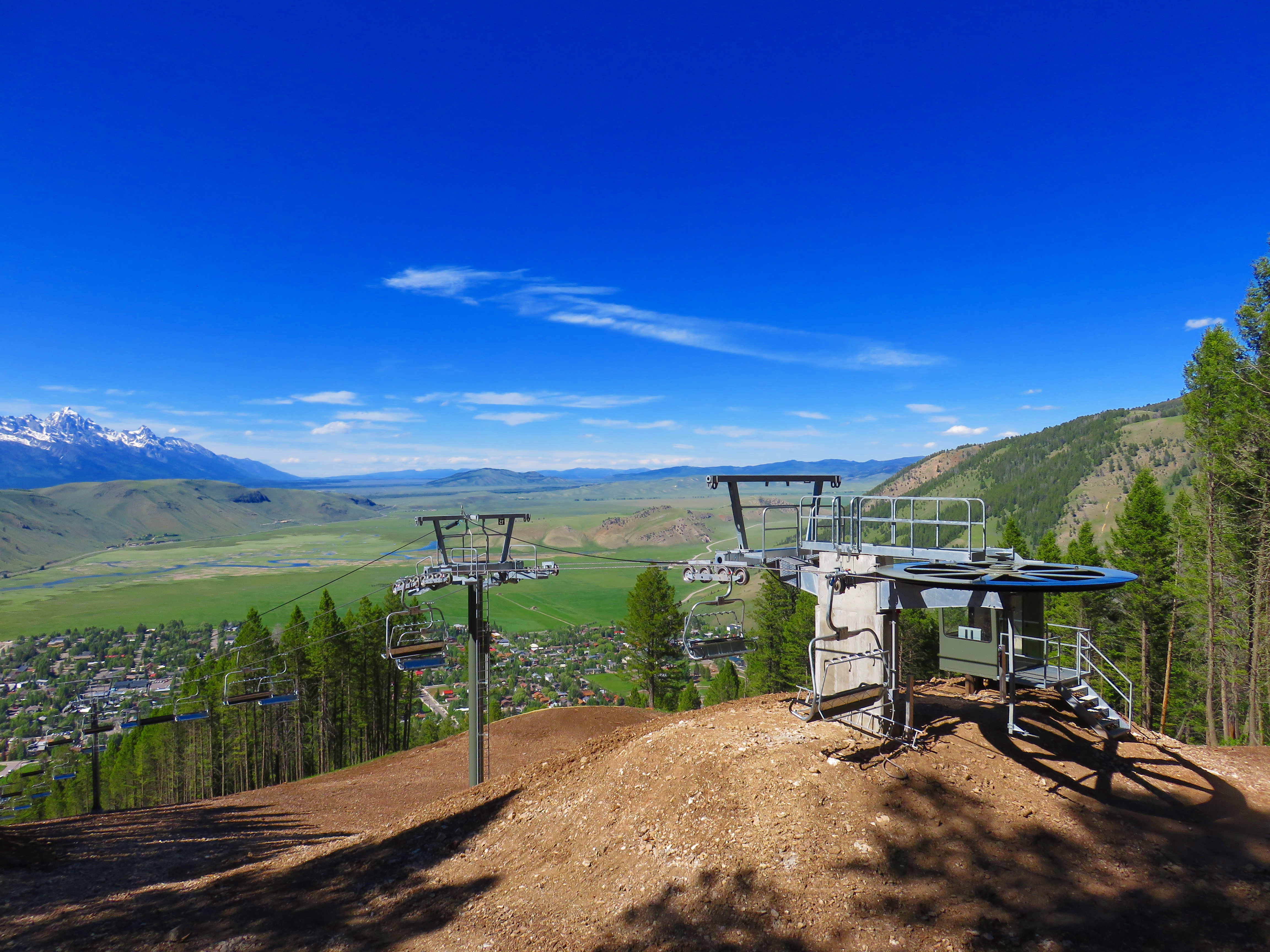
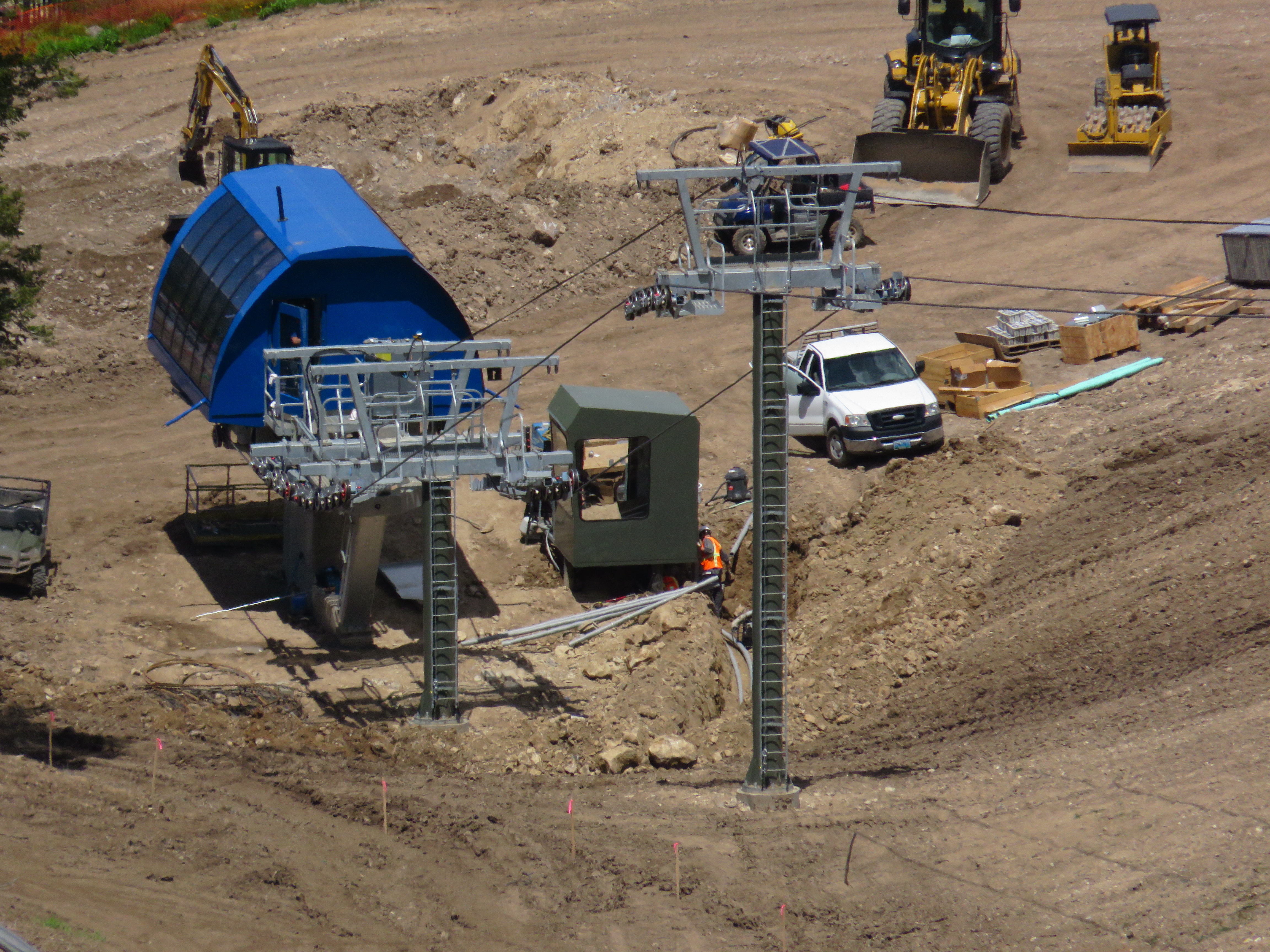
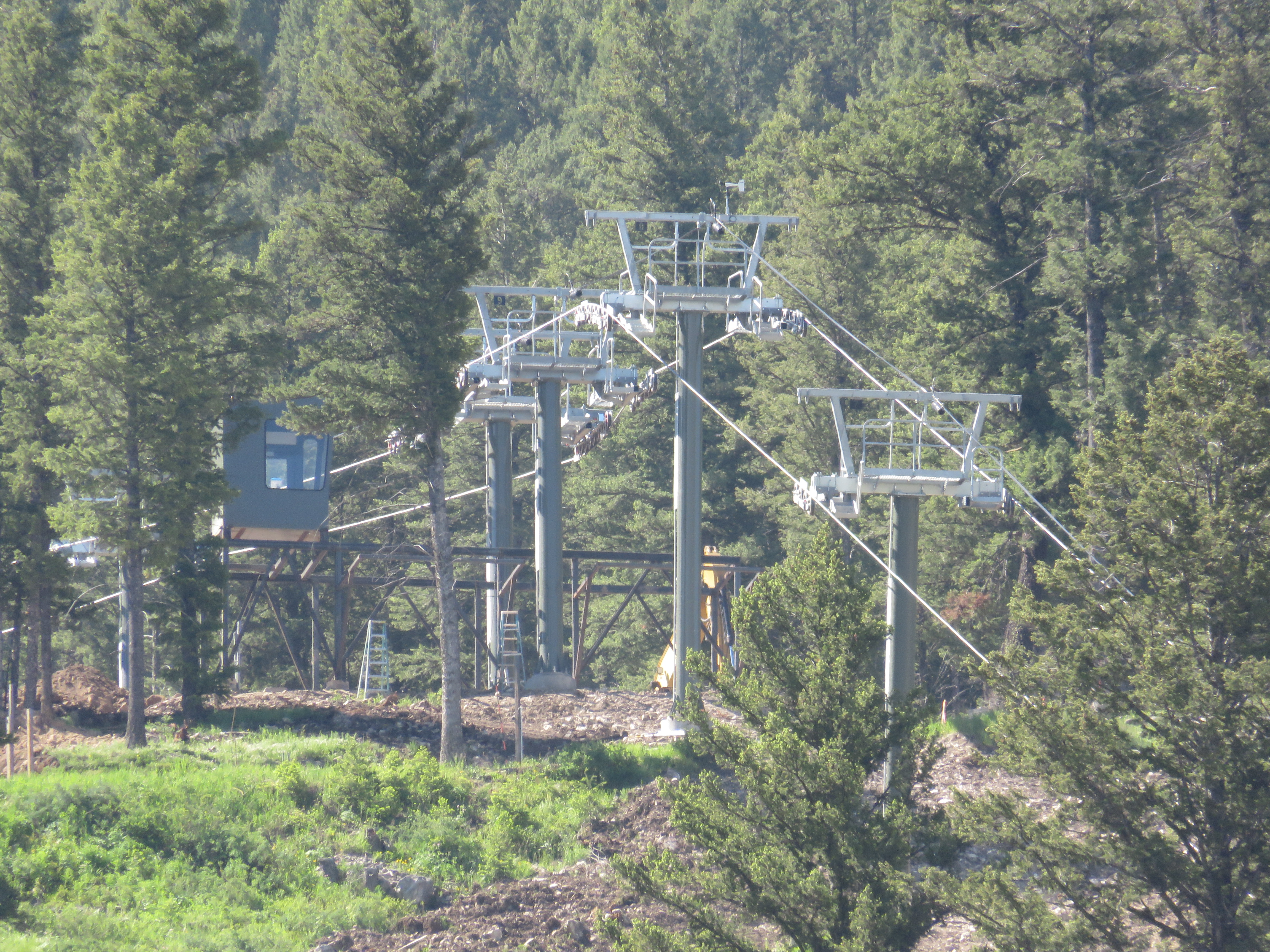
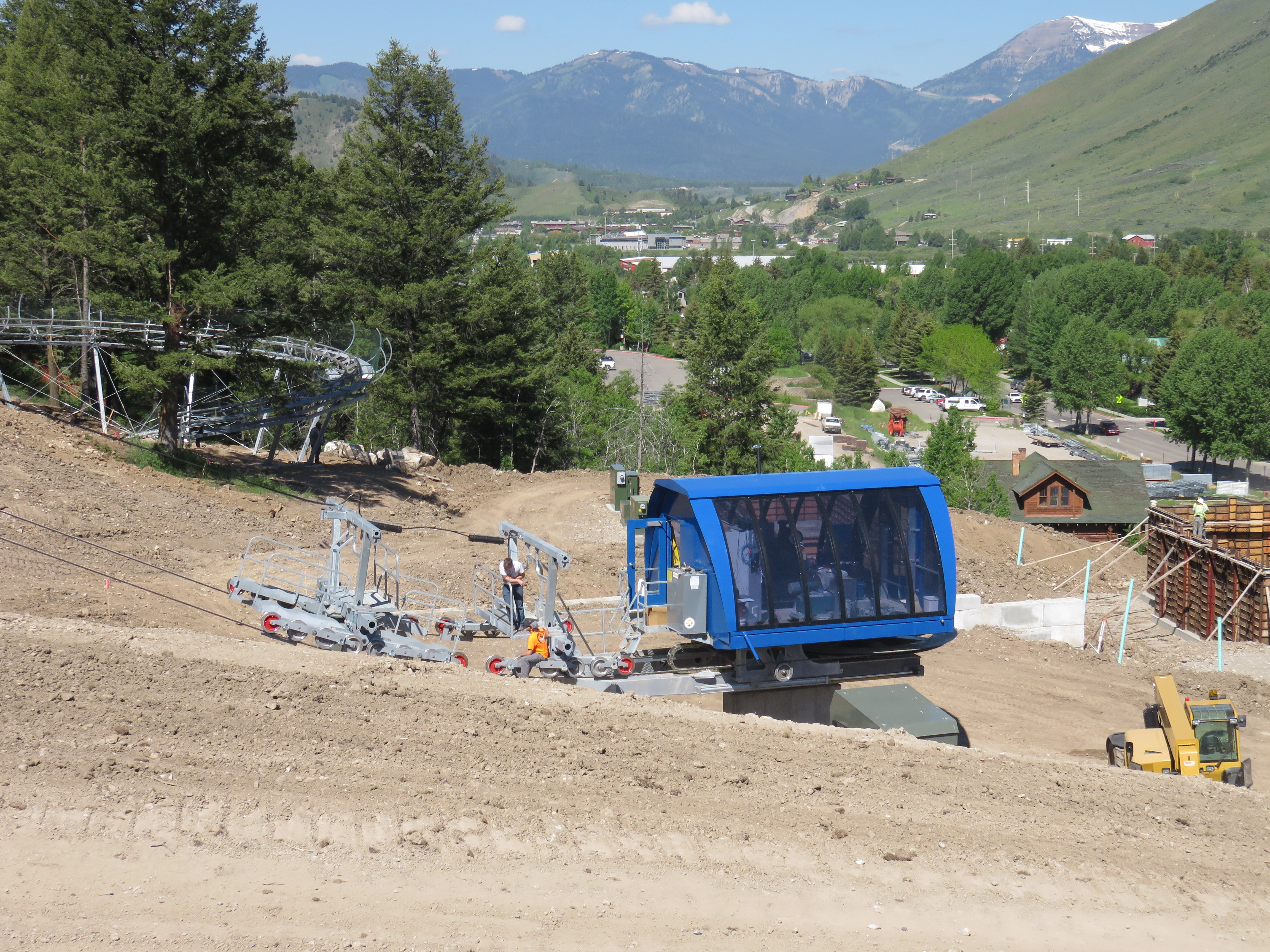
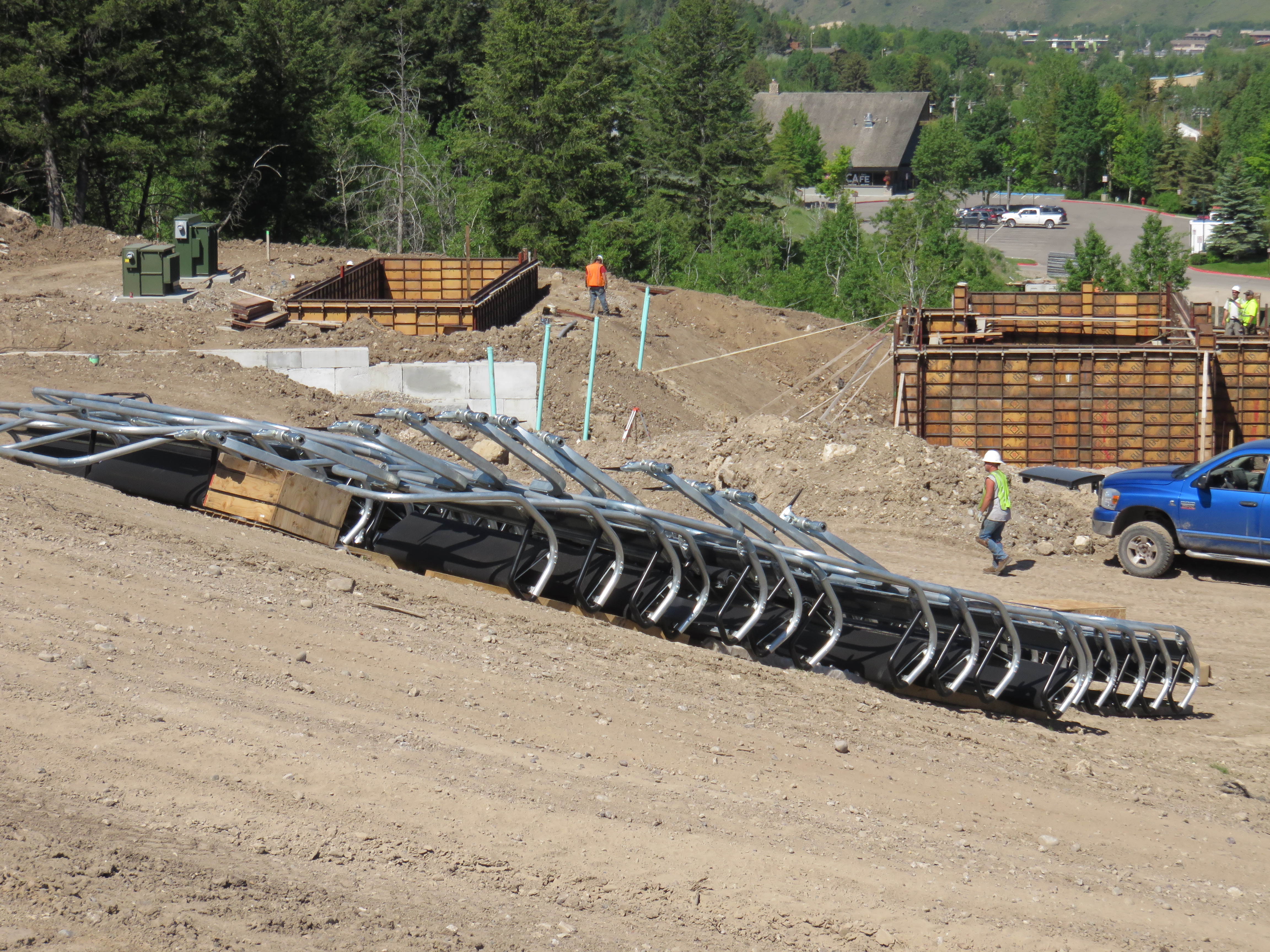
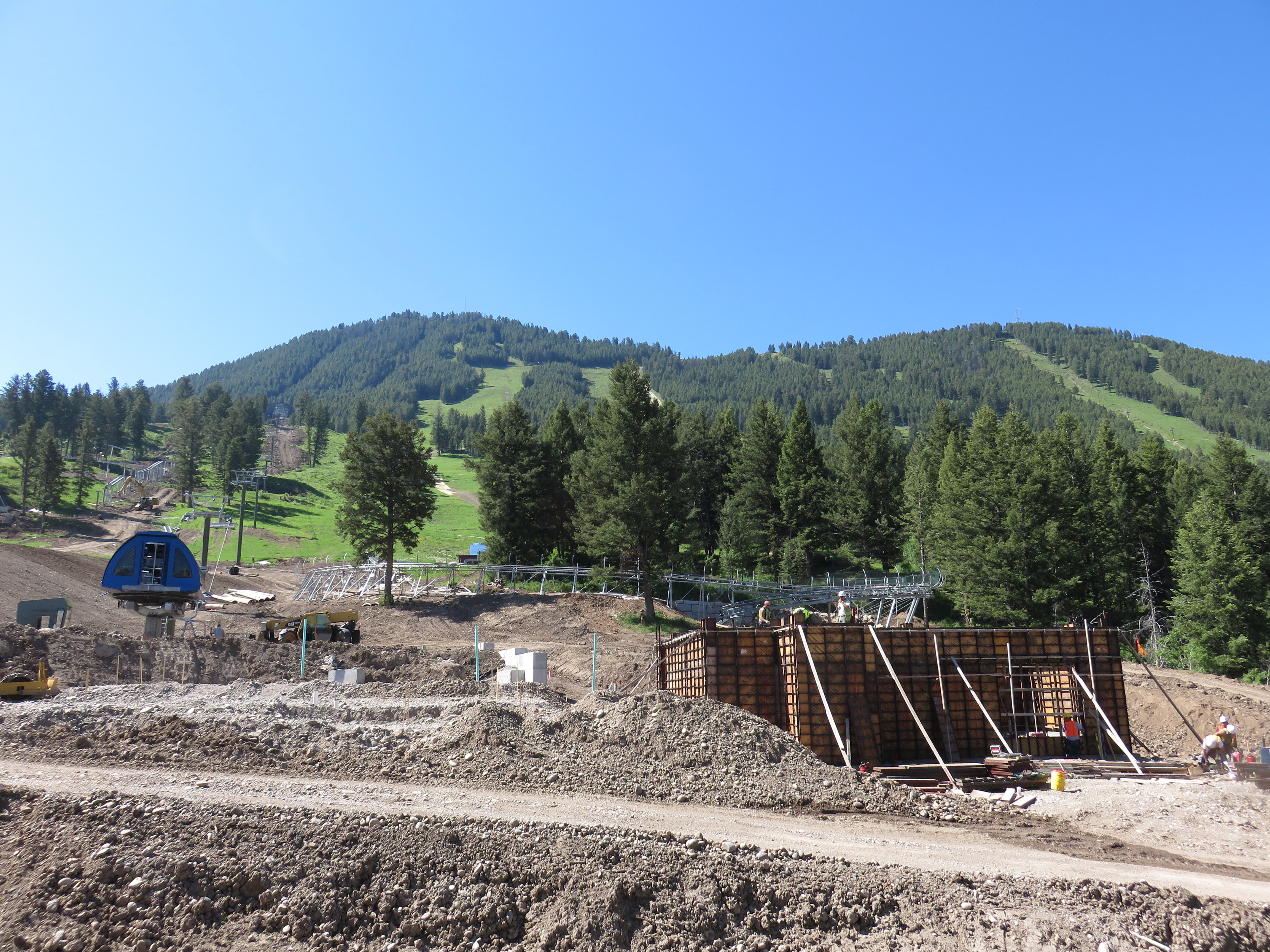
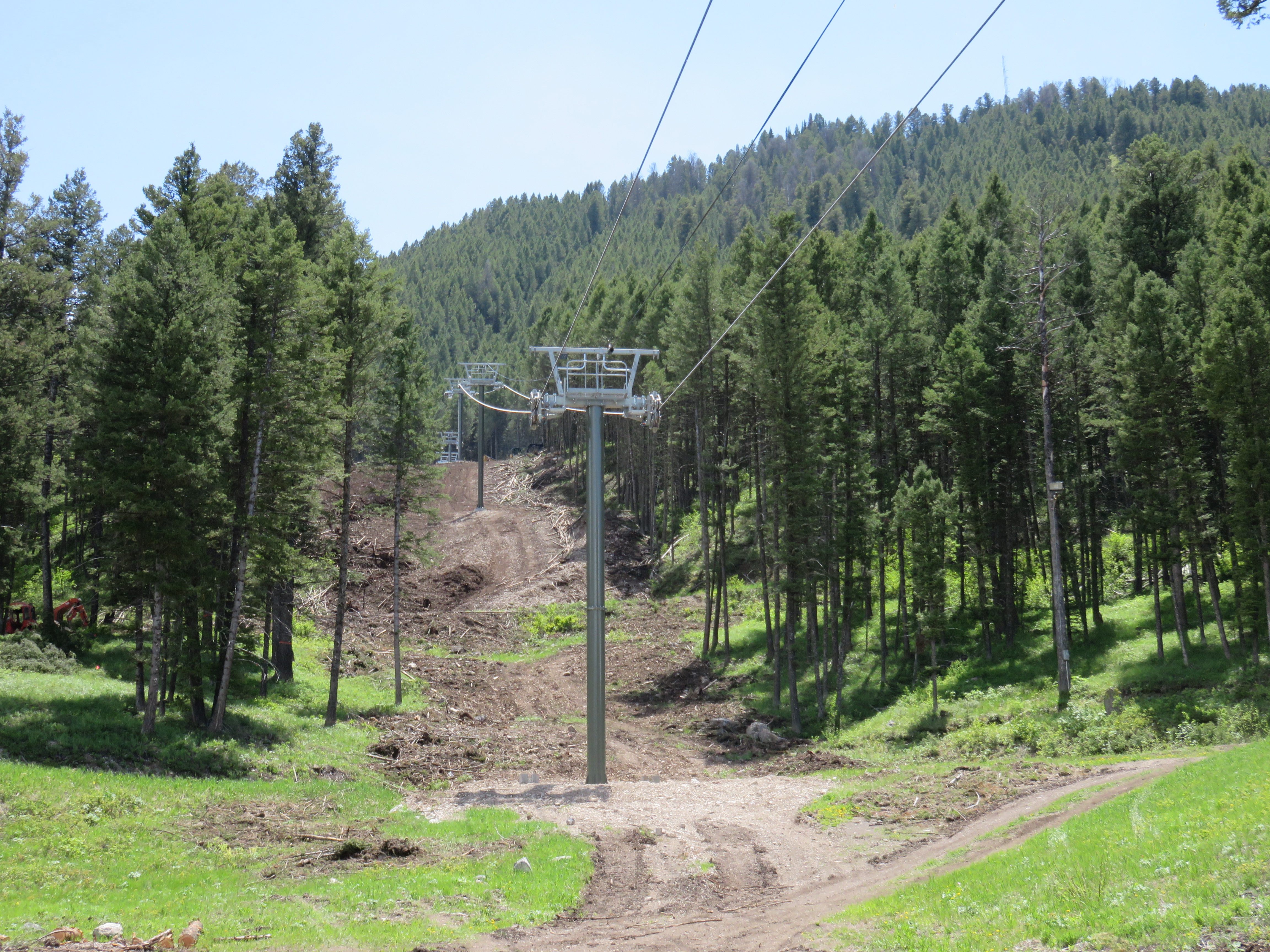
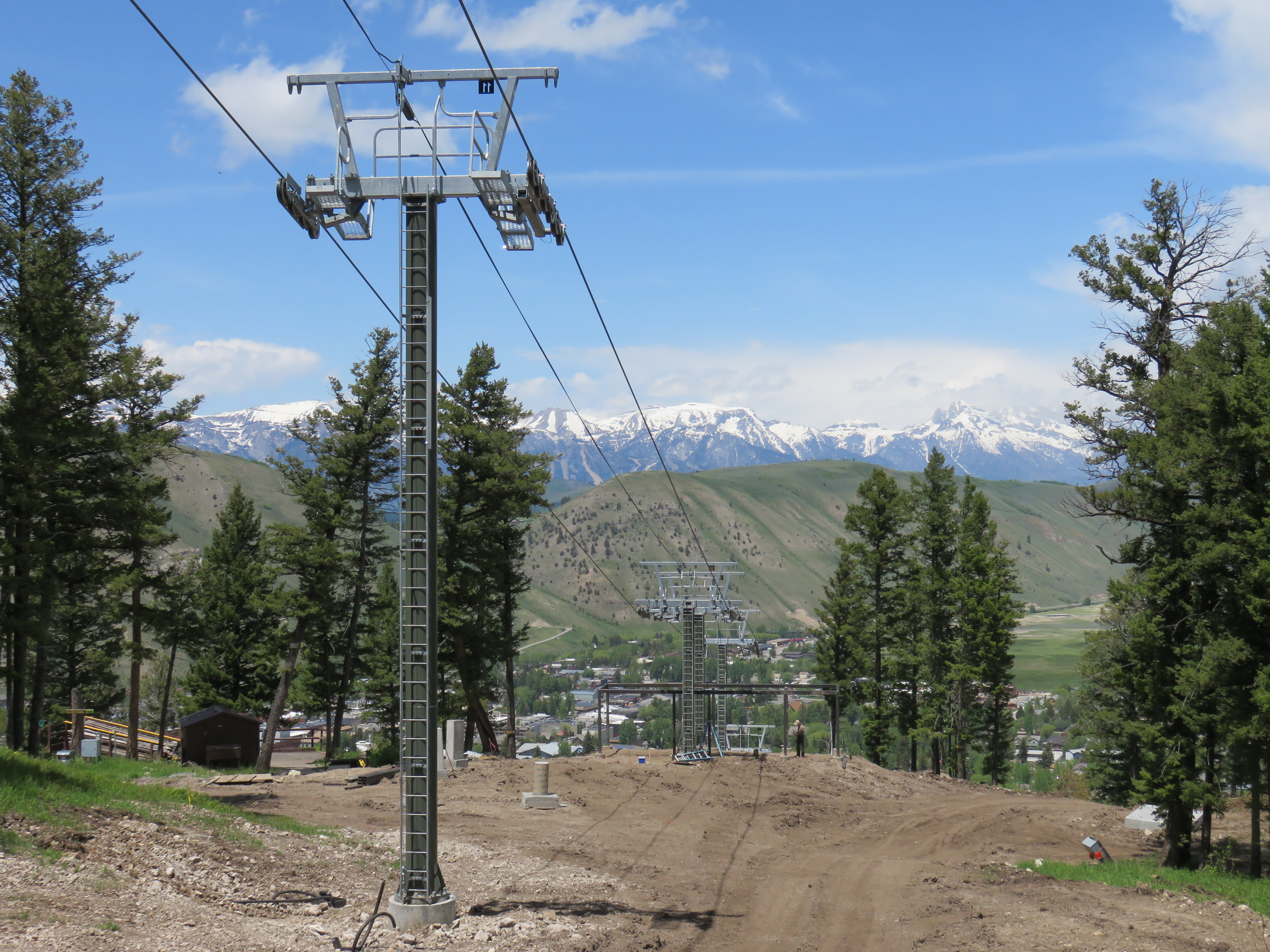
Little Snow King Mountain in downtown Jackson, Wyoming is in the midst of an $8 million transformation.  They are simultaneously building a new Doppelmayr quad, Wiegand alpine coaster, zip-line adventure course and brand new base lodge.  The lift is nearly complete and expected to open shortly along with Snow King’s famous alpine slide.  The goal was June 15th but I think it will probably be a week or so later.  The alpine coaster is well on its way and planned to open in August.  With a $4 million base-to-summit TechnoAlpin snowmaking system installed last summer, the future is looking good for this community ski area.  The only thing they need now is a detachable summit lift and restaurant overlooking the Town of Jackson with the Tetons in the background.  Willamette Pass’ six pack with gondola conversion would be perfect.

IMG_0088 IMG_0120 IMG_0118 IMG_0113 IMG_0109 IMG_0095 IMG_0094

Behind the Scenes of the Jackson Hole Tram

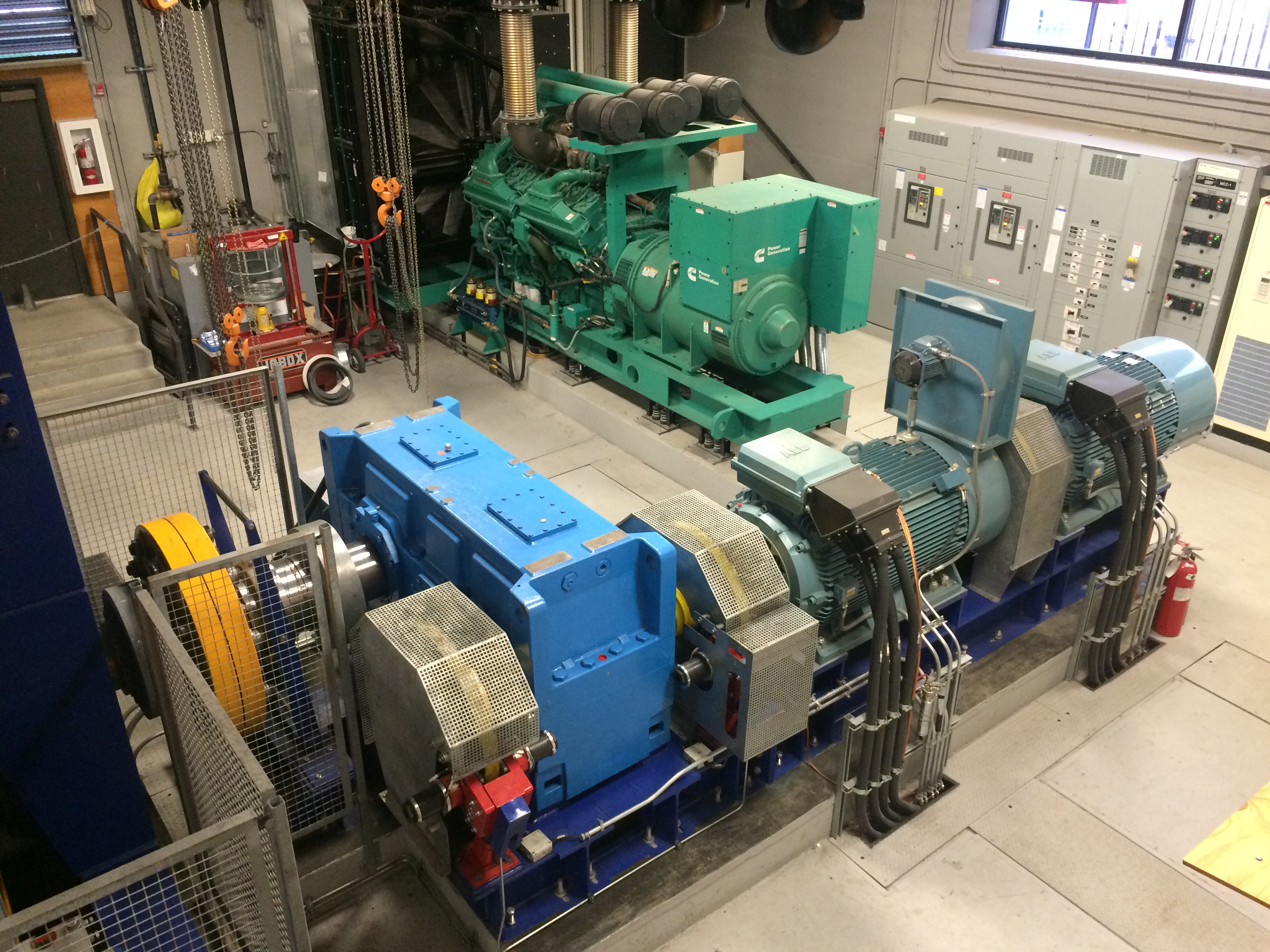
The tram's motor room under the bottom dock houses electric motors, a large generator, braking systems and evacuation drives.
A motor room under the bottom dock houses electric motors, two generators, three braking systems and two evacuation drives.

The $31 million Jackson Hole Aerial Tram is the most expensive lift ever built at a US ski area.  Constructed by Garaventa over 20 months, the new tram opened to great fanfare on December 20, 2008.  It can move a hundred people 4,083 vertical feet in under nine minutes.  Compared with a detachable lift, the tram is a relatively simple machine built on a massive scale.

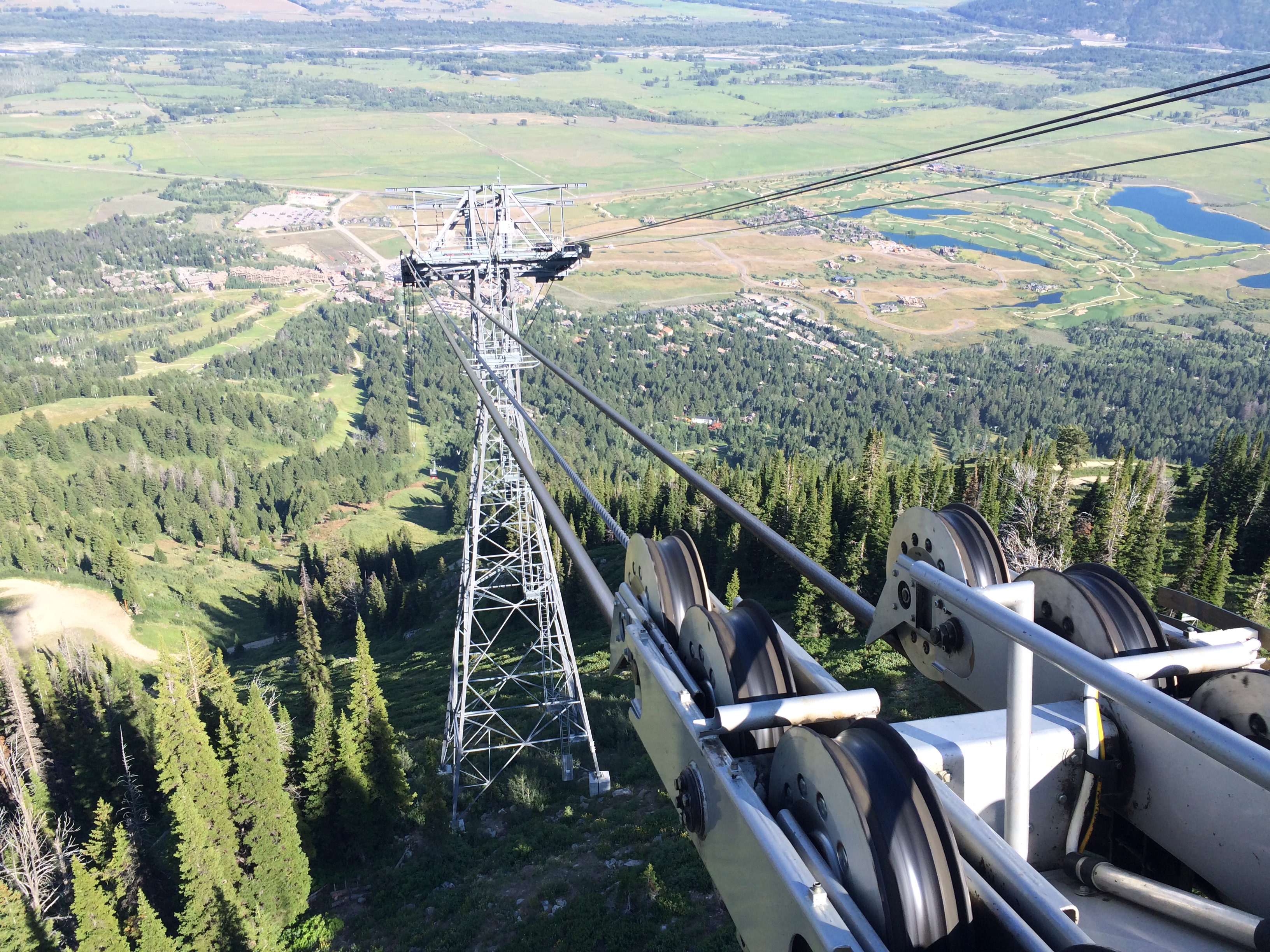
The view from carriage level just above tower 2.

Like most jig-back aerial tramways, there are four track ropes and a single haul rope that that drives both cabins.  All five wire ropes were manufactured by Fatzer in Switzerland.  Five towers support the line; towers 1 and 2 are the tallest and furthest apart.  Two CWA Kronos cabins move 650 passengers per hour per direction at a maximum speed of 10 m/s.  Slope length is 12,463 feet.

Continue reading

What’s in a Lift Name?

036

I respect ski resorts that come up with creative, well-thought-out names for their lifts.  A lift’s name will usually last decades and be passed on to subsequent lifts in the same location.  KT-22 is an example of a lift name so iconic I do not even need to say the resort.  Yet more than 900 lifts in the US and Canada have no name at all or go only by a letter/number.  Many resorts have a bunch of lifts with generic names like “T-Bar” and “Beginner.”  I set out to identify some of the most frequently-used names in hopes that the ski industry can be more creative in the future.  Here are the top 10:

  • Summit. There are 38 lifts called Summit including nine Summit Expresses.  Forty-four more lifts have other words added such as Mt. Snow’s Grand Summit Express.  The temptation to name a lift Summit is obvious but it is hardly a helpful name when we are talking about machines that ascend mountains.
  • North. While only ten lifts are called North, 34 more are named North Bowl, North Creek, North Face, etc.  The other compass directions are almost as common – there are 28 West lifts, 22 East lifts and 21 South lifts.  Not very creative and I would argue most ski resort guests have no idea which direction is which.
  • Blue.  Most ski areas have gotten away from painting their lifts bright colors and giving them corresponding names since the Forest Service banned such displays.  However there are still 23 Blue lifts, 20 Green, 19 Silver, 15 Red & Gold, 7 Yellow, and a handful each of Orange, Pink and Purple lifts.
  • Eagle.  A surprising 26 lifts have the word Eagle in their name including four that are Eagle Express.  Other resorts go further with Flying Eagle, Soaring Eagle, Screaming Eagle, Golden Eagle and Copper’s American Eagle.  Other popular animal names include Bear and Elk.  These aren’t bad names; they are just too common.
  • Village.  The US and Canada have 17 Village lifts including 4 Village Gondolas.  I put these in the same generic category as Summit.
  • Sunrise.  Some resorts try to get past East and West by using Sunrise and Sunset.  The result is 15 Sunrise lifts and almost as many Sunsets.  For an industry centered on snow, the word sun is very popular.  I count 9 Sunnysides, 8 Sundances and 8 Sunshines among others.
  • Meadow. Learning lifts in particular seem to suffer from generic naming.  Meadow is by far the most popular name for a beginner lift at 18, followed by Easy Rider at 12, Beginner (10) and Discovery (8.)
  • Skyline.  A logging term for transporting timber by cable, Skyline is a natural name for a ski lift.  But with 12 Skyline lifts and counting, it’s time to use some new logging terms.
  • Panorama.  There are seven of theseWinter Park tried to put a spin on it with Panoramic Express but it’s still not very creative.

Last summer’s construction season had two new Summit lifts, 3 Sun variations, a Meadow and a Discovery.  Hopefully 2015 will be better but it’s looking like we may see three more Summit chairs!

News Roundup: Projects and Plans

https://instagram.com/p/3kGV5wiue-/?taken-by=pcski