Next season will not happen at Saddleback, Maine unless the resort can secure $3 million for a new quad lift in the next two weeks. Or so they say.
In central New Hampshire, Waterville Valley continues clearing for the Green Peak expansion while Tenney Mountain prepares to reopen after a decade being closed.
Sugarloaf launches their lift safety website that appears it took an intern half an hour to make.
Leitner gets into the surfing business with DirectDrive.
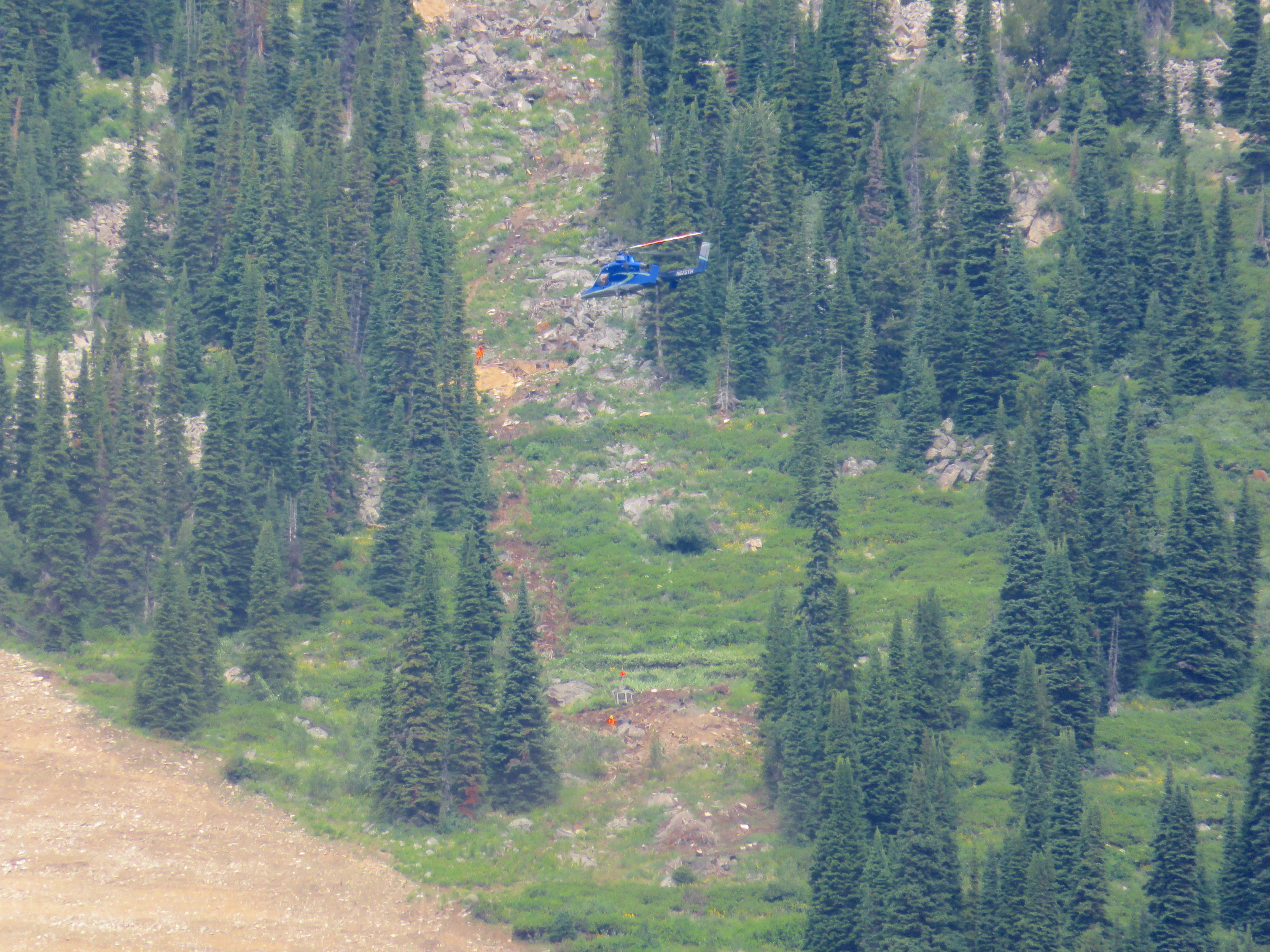
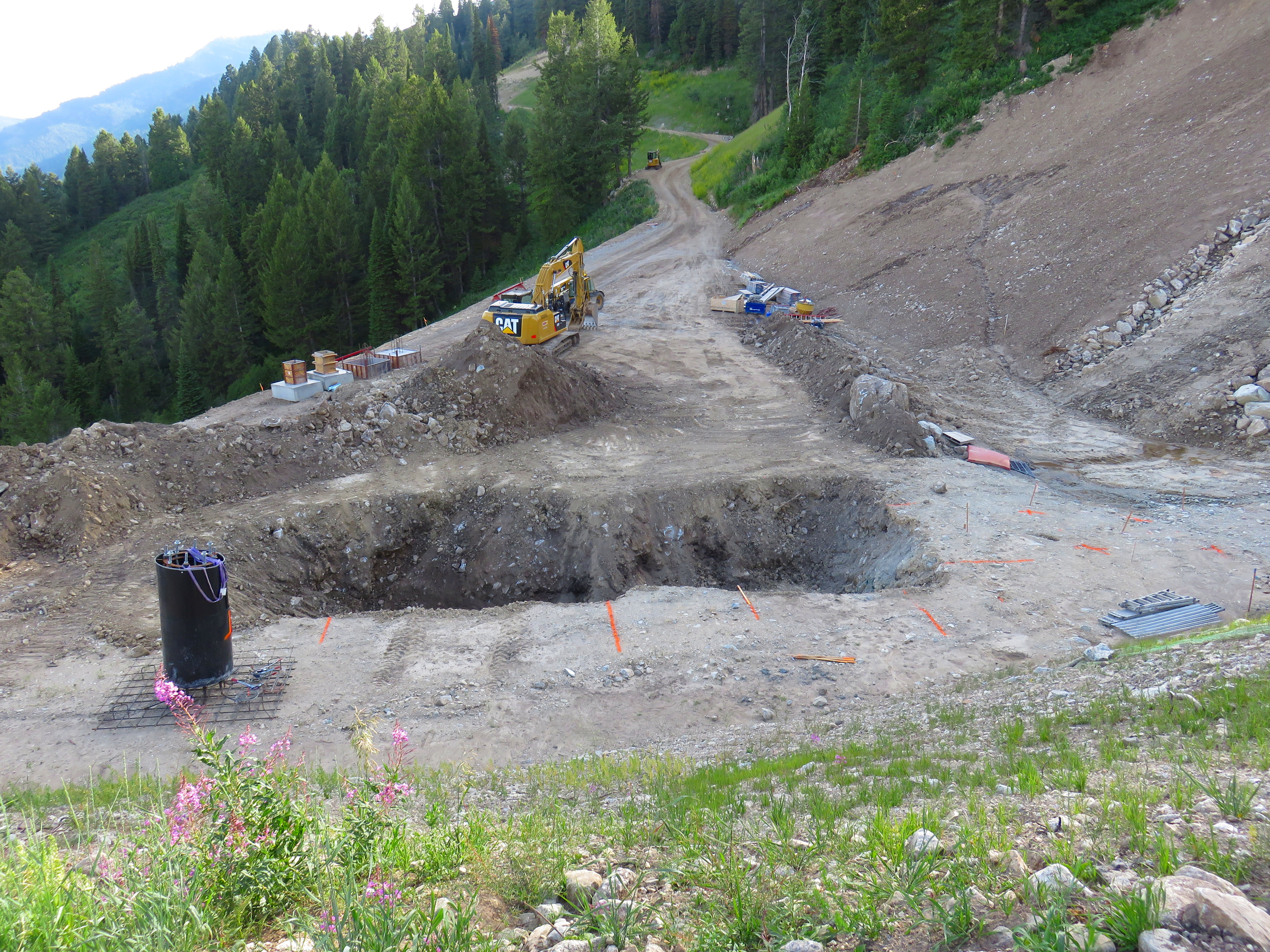
Brian Jorgenson from Timberline Helicopters flies concrete for the new Teton Lift earlier this week.
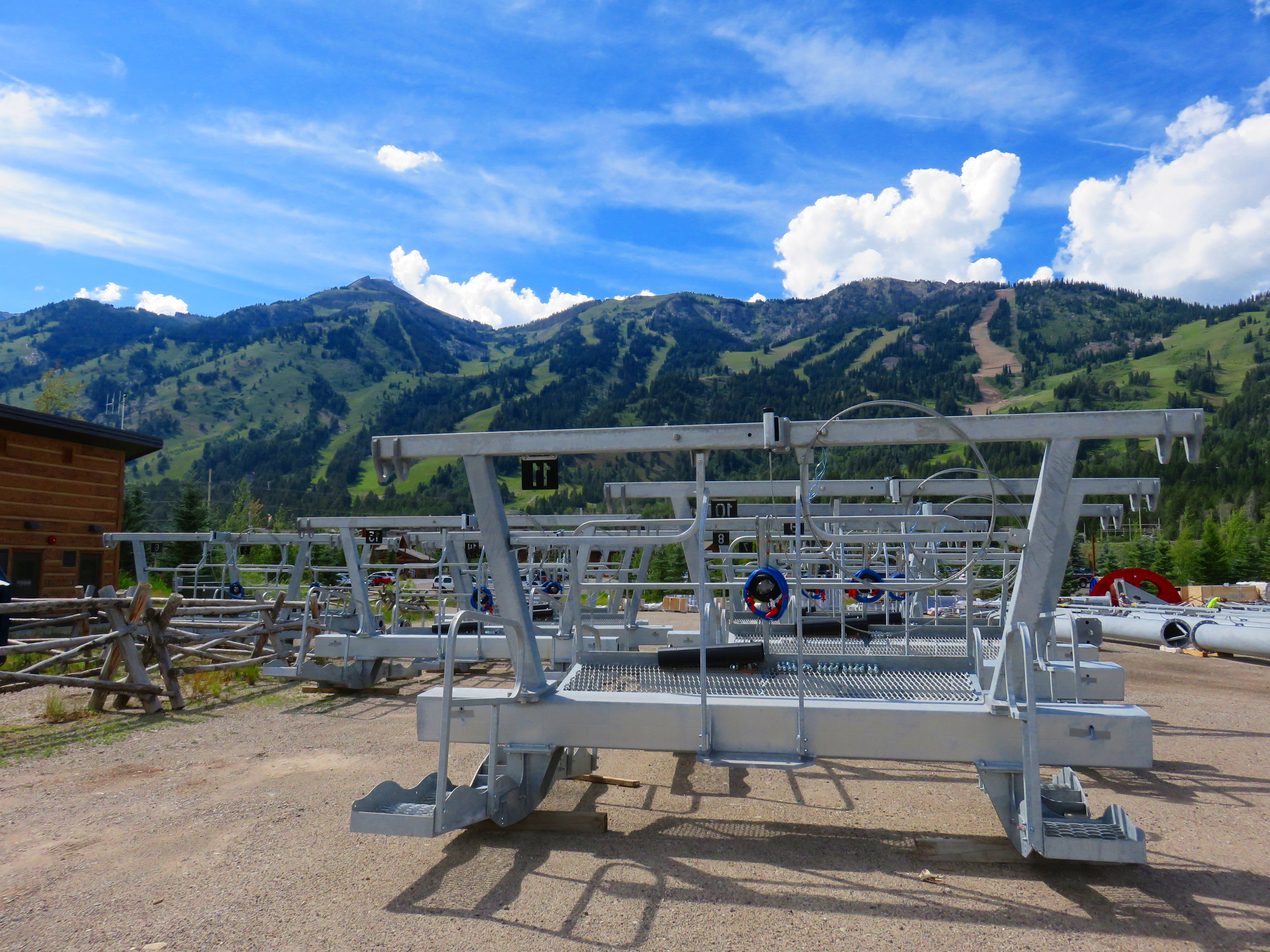
It’s mid-July and construction is ramping up on the north side of the Jackson Hole Mountain Resort. A K-Max helicopter from Timberline Helicopters was on-site Sunday to fly concrete for the towers that couldn’t be accessed by road. The rest of the tower footings were already finished and back filled. Concrete work is also complete at the top terminal and steel will be going up shortly. The bottom terminal is a few weeks behind. Down in the parking lot, towers are mostly assembled and terminal components will be headed up the hill soon.
Tower heads are just missing sheaves. If a K-Max helicopter is used, sheave trains will be flown separately.Bottom terminal is still just a hole and tower one’s rebar cage is to the left.
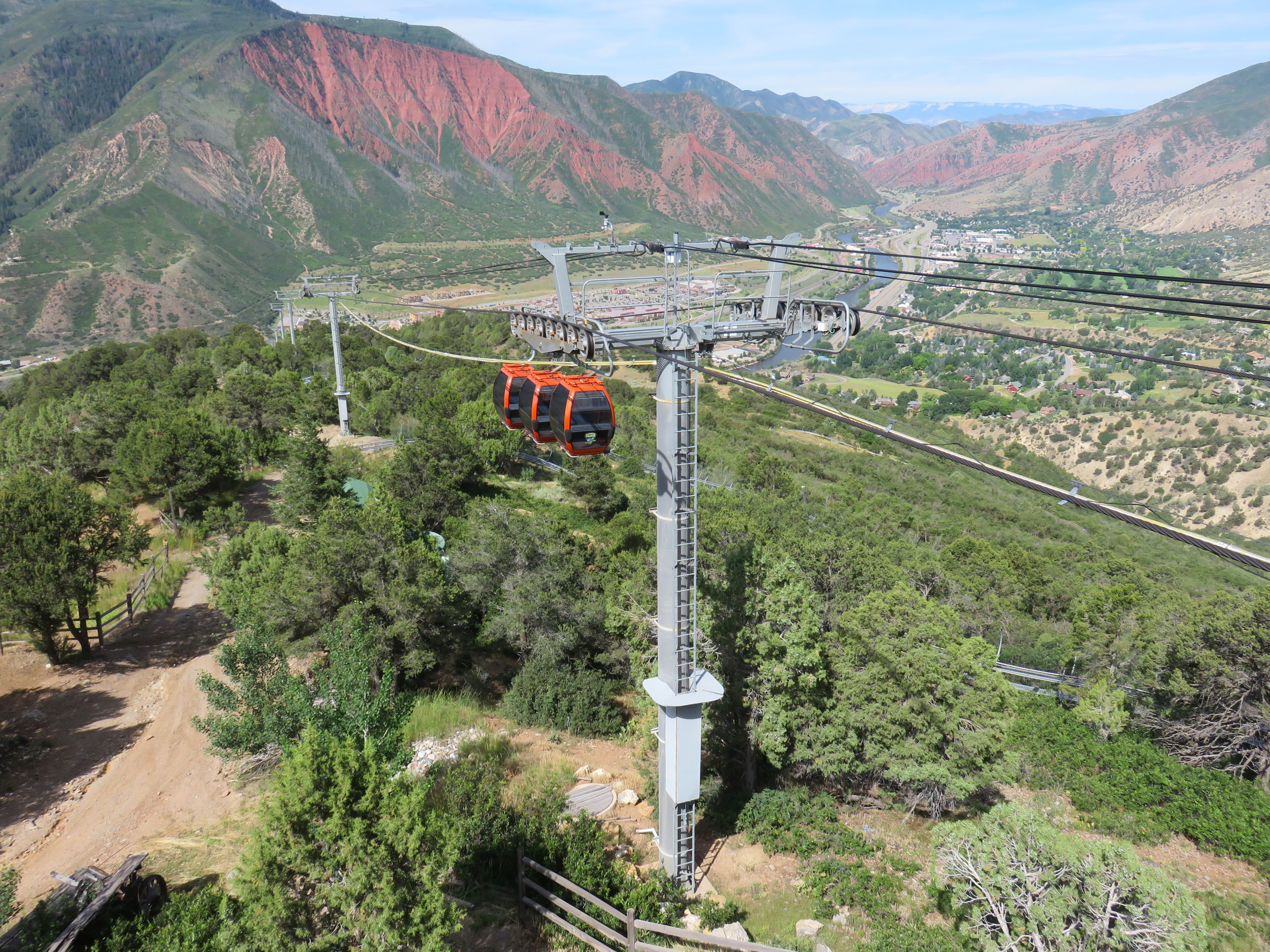
Three cabins nearing the summit of the Iron Mountain Tramway in Glenwood Springs, Colorado.
The Iron Mountain Tramway provides the only public access to the Glenwood Caverns Adventure Park located in Glenwood Springs, Colorado. Built by Leitner-Poma in 2002, it was one of the first pulse gondolas to open in North America. The system debuted with four sets of two CWA Omega III cabins and now has six pulses of three for a total of 18 cabins. Ultimate design capacity is 36 cabins in groups of three which would achieve a capacity of 543 passengers per hour per direction. With a top speed of 1,000 feet per minute, the trip takes about seven minutes including two slows along the way. If more pulses are added, the trip time will increase as the system slows to a crawl whenever cabins are loading and unloading. This is one of the disadvantages of pulse systems.
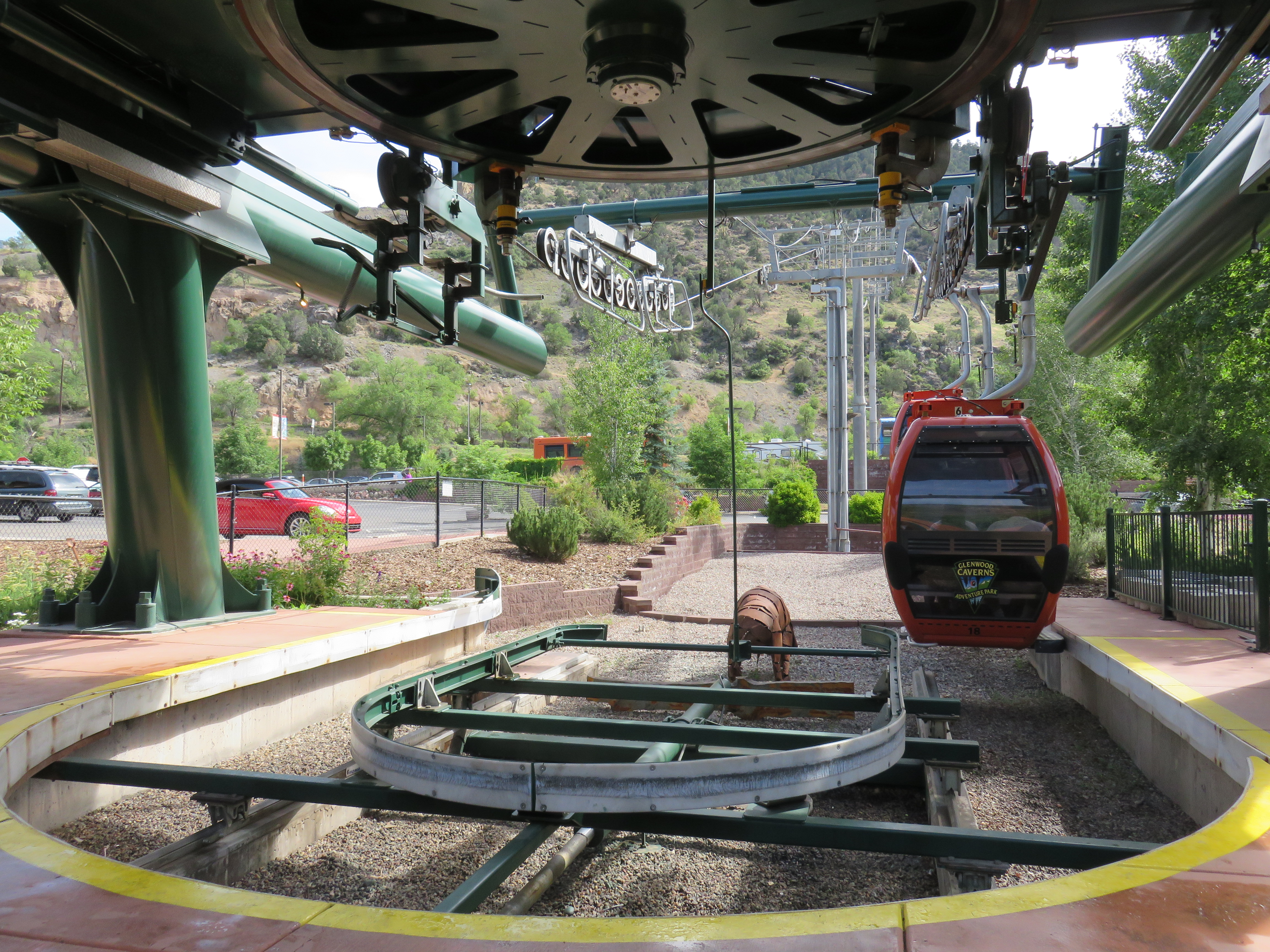
The entire center loading platform and guides move hydraulically with the motor room above.
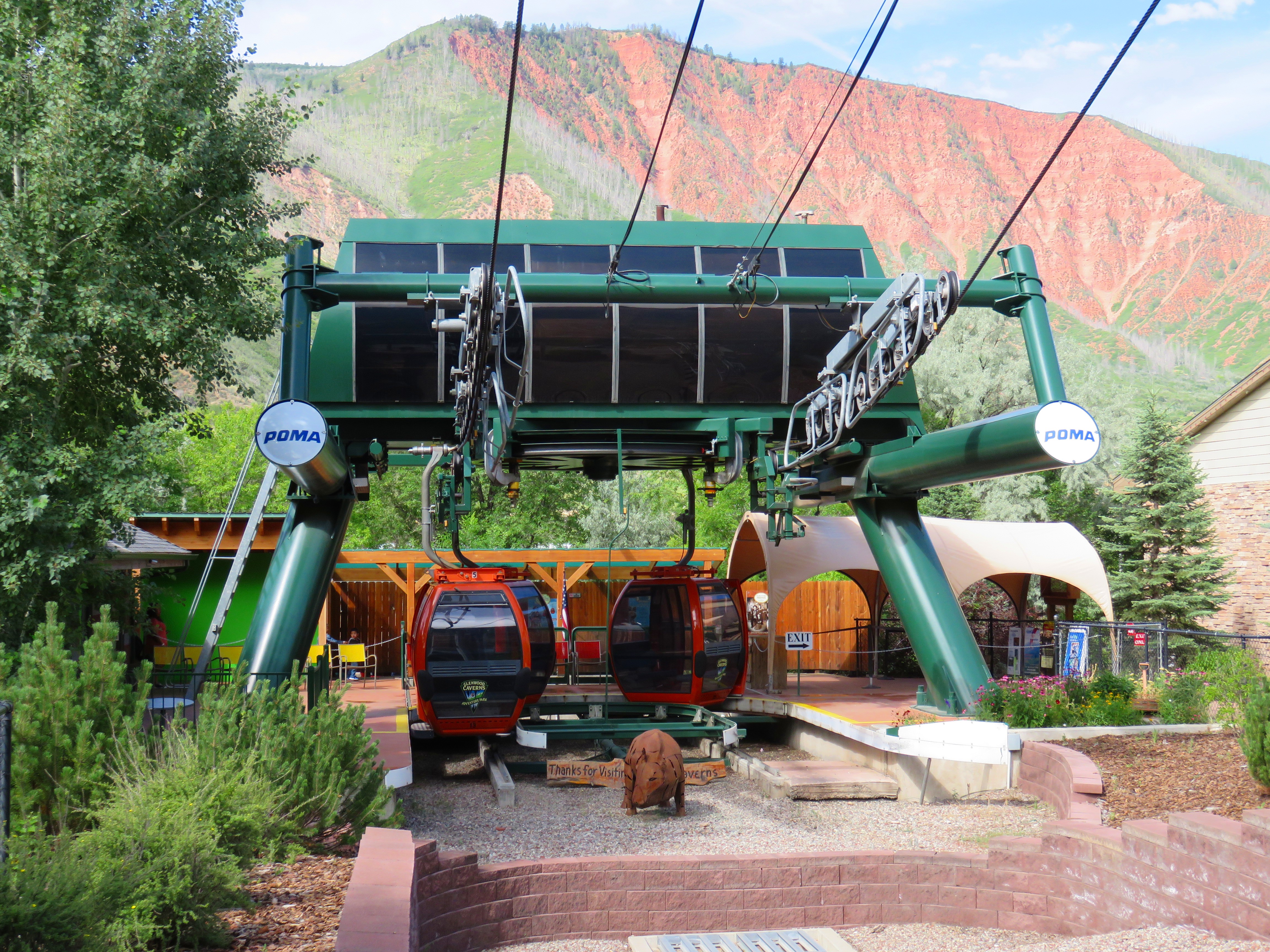
The gondola rises 1,351 feet and has a slope length is 4,432 feet. The bottom drive terminal is a Poma Alpha model with a 400 HP electric motor. Because this is also the tension terminal, the entire loading platform moves hydraulically with the motor room and bullwheel.
Bottom terminal adjacent to Interstate 70.
A unique feature of this installation is that the 18 towers also support water, natural gas and sewer lines for the summit facilities. All three lines are suspended from a 3/16″ cable attached just under each tower’s crossarm. The water line supplies 42 gallons per minute to a tank located at the summit. The Colorado Passenger Tramway Safety Board approved transport of natural gas along the line because the fiberglass pipe used has a safety factor of 30 relative to the pressure of the gas.
I sometimes find myself telling people the classic line that there are only two companies left making ski lifts even though I know reality is far more complicated. Doppelmayr-Garaventa and the Seeber Group (Leitner and Poma) aren’t even the only companies building detachable lifts these days. There is a smaller player called Bartholet Maschinenbau Flums (BMF) that has completed dozens of projects around the world, including even here in North America.
BMF detachable six-person chairlift in France.
BMF, based in Switzerland, is over 50 years old and completed its first lift in 1977. The firm’s first detachable, a six pack, opened at Val d’Isere in 2007. BMF has also built aerial trams, surface lifts, a funitel and chondola. Some of BMF’s unique designs include chairs that rotate 45-degrees, solar-powered surface lifts and carriers by the Porsche Design Studio. Gangloff Cabins joined the Bartholet Group in March 2014. Gangloff already has a significant presence at US ski resorts including Canyons, Winter Park and Deer Valley.
Leave it to the Swiss to develop chairs that turn 45-degrees for a better view.
I was surprised to learn BMF already built three lifts in North America. The first was the Sky Tram at Monteverde, Costa Rica in 2006. Technically a pulse gondola rising 571 vertical feet, it has five towers and can move 432 passengers per hour. BMF built a second rain forest tram in Costa Rica in 2007. The company built the city of Durango, Mexico a 25-passenger aerial tram in 2010. BMF started construction on a second tram in the Mexican city of Puebla in 2013 before construction was halted over concerns about construction impacts in this world heritage site.
Maine’s third largest ski resort is in trouble. We knew something was up earlier this summer when Saddleback put their main out-of-base lift up for sale on Resort Boneyard for $350,000. Today the Berry family definitively announced the 52-year old Rangeley lift will not spin again. The lift has upgraded Doppelmayr terminals but aging towers, line equipment and chairs. $3 million is needed by August 1st to build a new Doppelmayr fixed-grip quad or the ski area will close.
The 4,550′ Rangeley double has reached the end of its useful life and needs to be replaced.
Saddleback’s story includes decades of ups and downs like many mid-sized New England ski resorts. A bank foreclosed on the entire property in 1975 but it remained open. In 2002, the previous owners announced Saddleback would close. Local skier Bill Berry stepped in and bought the mountain for $8 million in 2003. After their first season of ownership, the Berry family invested heavily in lifts, installing the South Branch quad and replacing both of Rangeley’s terminals with new Doppelmayr CTEC ones in 2004. A new James Niehues trail map was commissioned that at one point showed six new lifts to be built. The Kennebago T-Bar was replaced with a Doppelmayr CTEC quad in 2008 but no other lifts ever got completed.
Saddleback needs $3 million for a new Doppelmayr quad to match Kennebago, seen here.
Looking up from the base of Solitude’s future Summit Express.
Deer Valley closed on its purchase of Solitude Mountain Resort in May and announced they would replace the Summit double with a new Doppelmayr detachable quad. The new Summit will be in a new, longer alignment that is easier to access from Apex Express. I checked out the progress last week.
The old lift is completely removed and stored in the Moonbeam parking lot. It looks like the Thiokol double will be used elsewhere (the last lift Solitude removed ended up at Canyons Resort.) Trees are gone from the new lift line and a lot of earth work has been done although nothing has been built yet. Highlander Ski Lift Services appears to be building the new quad. With 13 new lifts projects and counting, Doppelmayr is stretched pretty thin. I did not see any parts for the new lift but I am sure they will be arriving soon.
These two Doppelmayr CTEC towers must be extra from when Moonbeam was moved to Powderhorn.
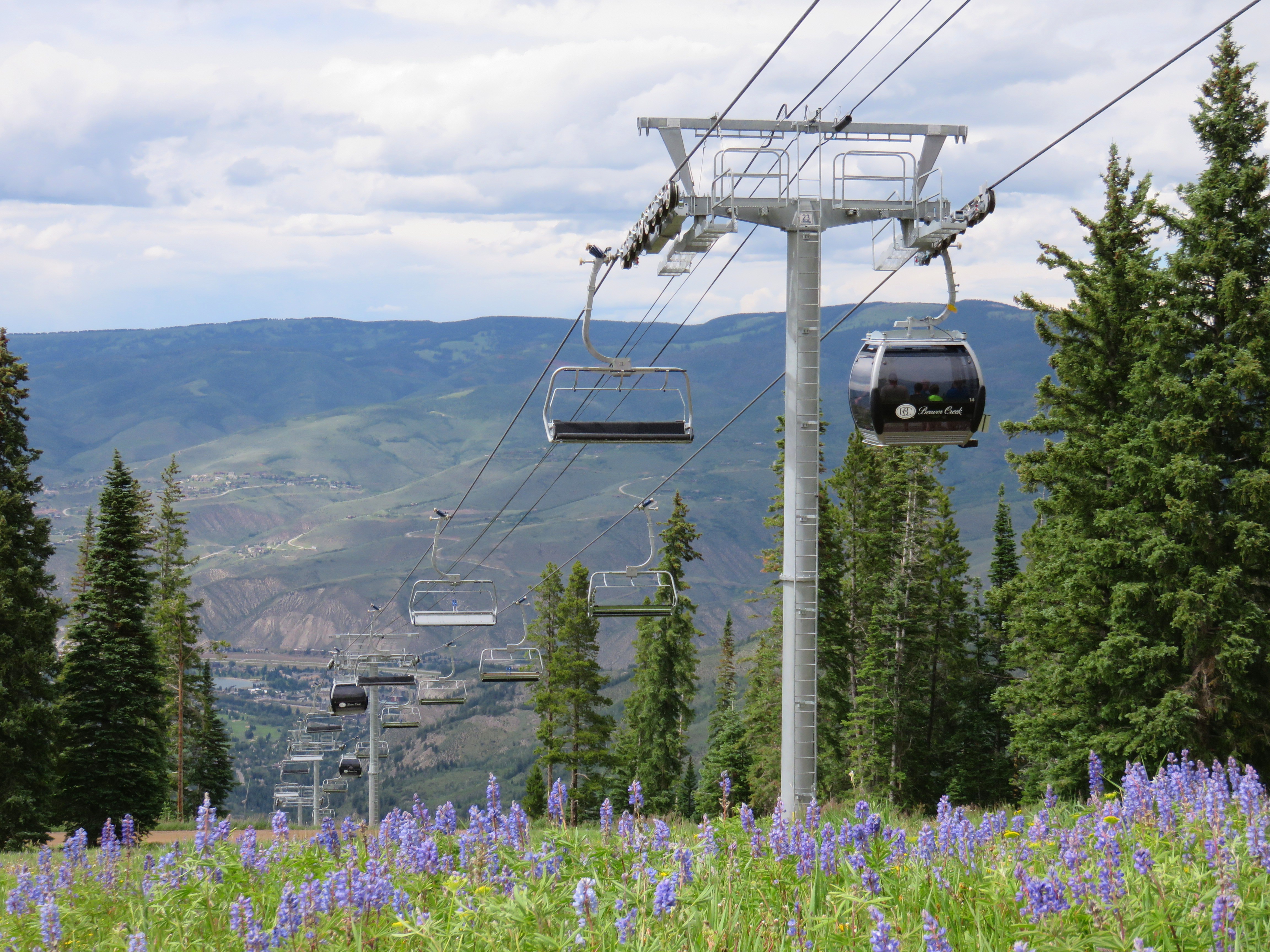
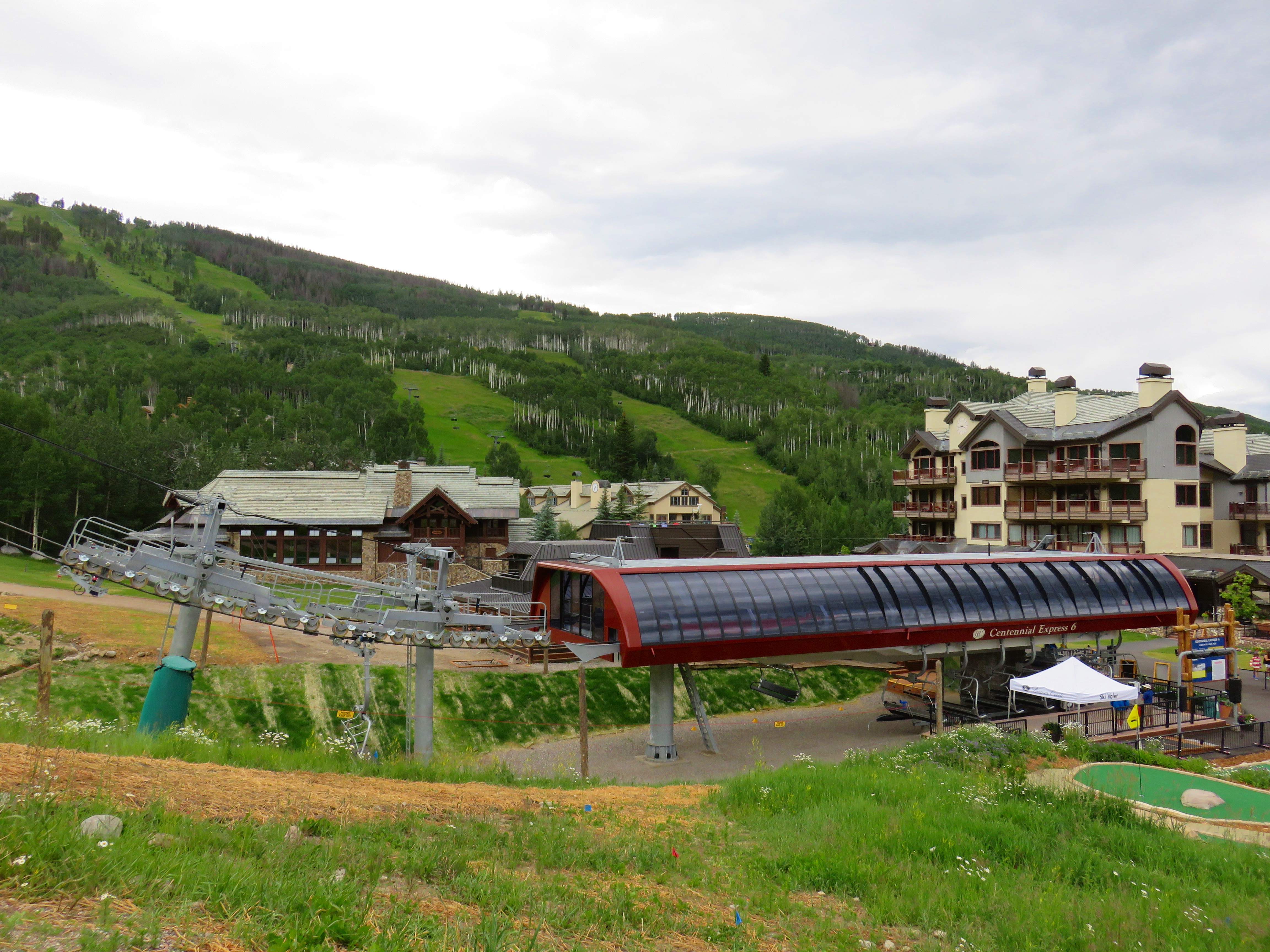
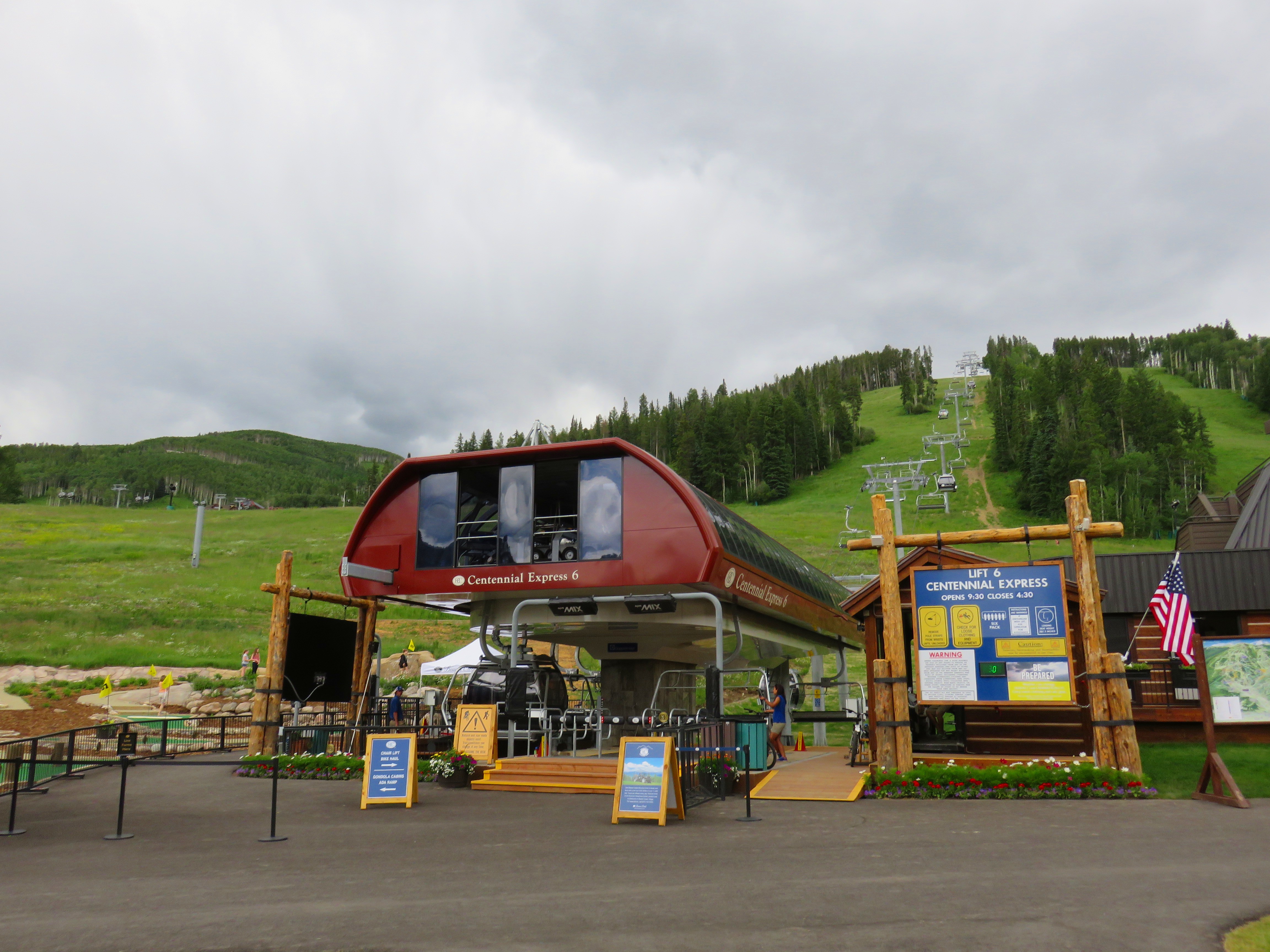
Centennial is the world’s only 6/10 chondola lift.
Beaver Creek Resort faced a unique challenge last year when they needed to replace their aging workhorse lift. The original Centennial Express was one of Doppelmayr’s first high speed quads, built in 1986. Vail Resorts wanted the new lift to serve skiers as well as private events at the Spruce Saddle Lodge while at the same time achieving a high hourly capacity. Originally announced as a regular six pack, Vail and Doppelmayr later decided to build the world’s only chondola with six passenger chairs and ten passenger gondola cabins.
This is the longest Uni-G terminal I have ever seen.During summer operation the loading carpet is covered but queuing gates remain.
The result is an impressive lift nearly 8,000 foot long that moves 3,400 passengers an hour. 25 10-passenger CWA Omega gondola cabins alternate with 125 chairs in a 5:1 ratio. The old lift had 195 quad chairs but moved 35 percent fewer people. The new Centennial rises over 2,000 vertical feet in 7.9 minutes at 1,000 fpm. It has 25 towers, five fewer than the original.
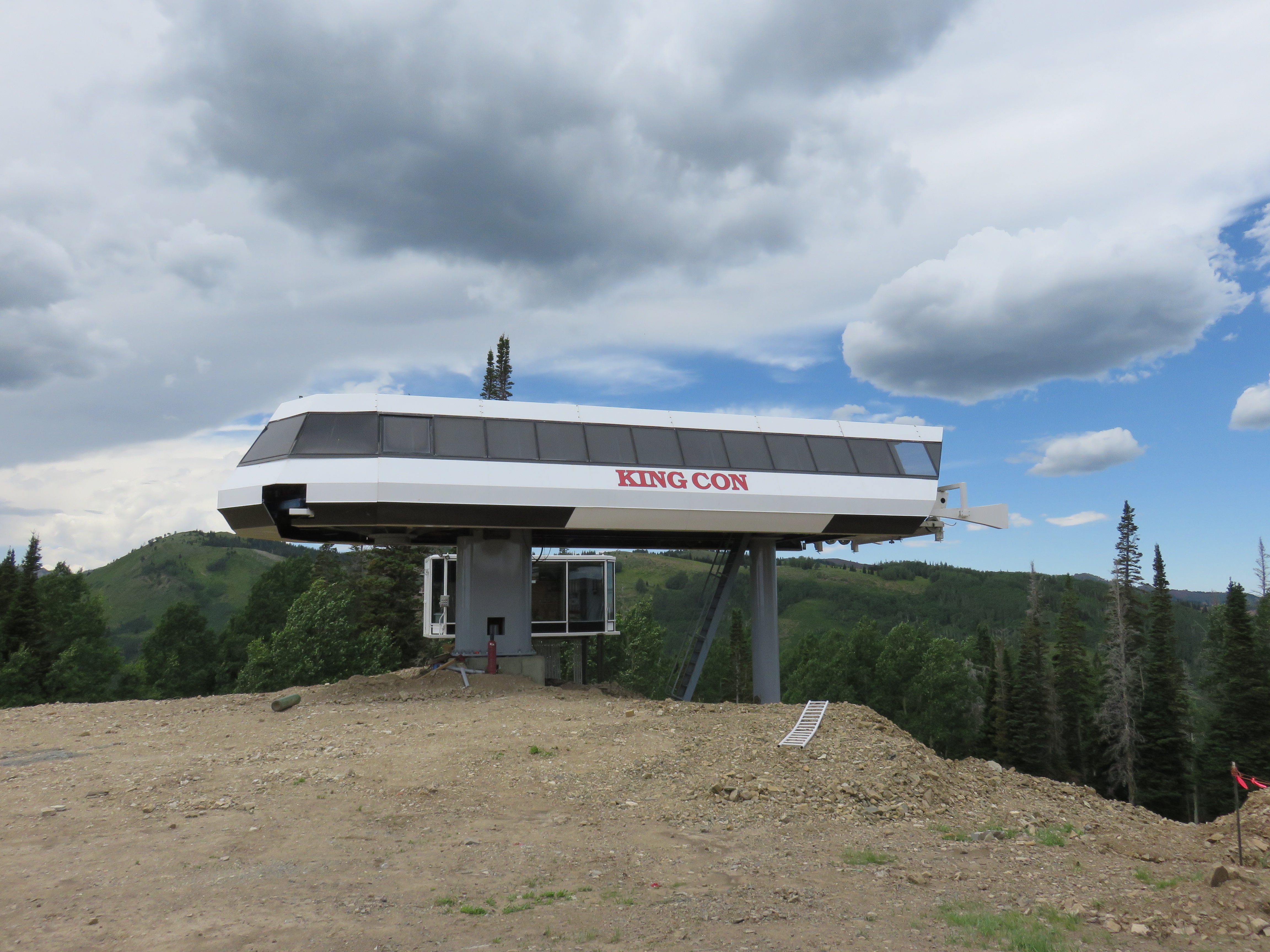
Top of the new Motherlode high speed quad. Obviously it still needs to be painted.
Park City removed the Motherlode triple early this spring to make way for a new high speed quad in the same alignment. Instead of a brand new lift, Vail Resorts opted to relocate the King Con lift, originally built in 1993. Both CTEC terminals have already been moved and all tower footings poured. Motherlode will get new tower tubes but just about everything else is coming from King Con. The lift may need some new chairs due to the increased length of Motherlode. The new tower tubes and haul rope are on site.
The new Motherlode under construction July 14, 2015.
In addition to the new Pinecone Gondola, Vail Resorts is doing a major lift shuffle at Park City Mountain this summer. The King Con high speed quad (1993 CTEC) is being replaced with a brand new Doppelmayr six pack. King Con is being refurbished and relocated to replace Motherlode higher up on the hill. More on that in an upcoming post.
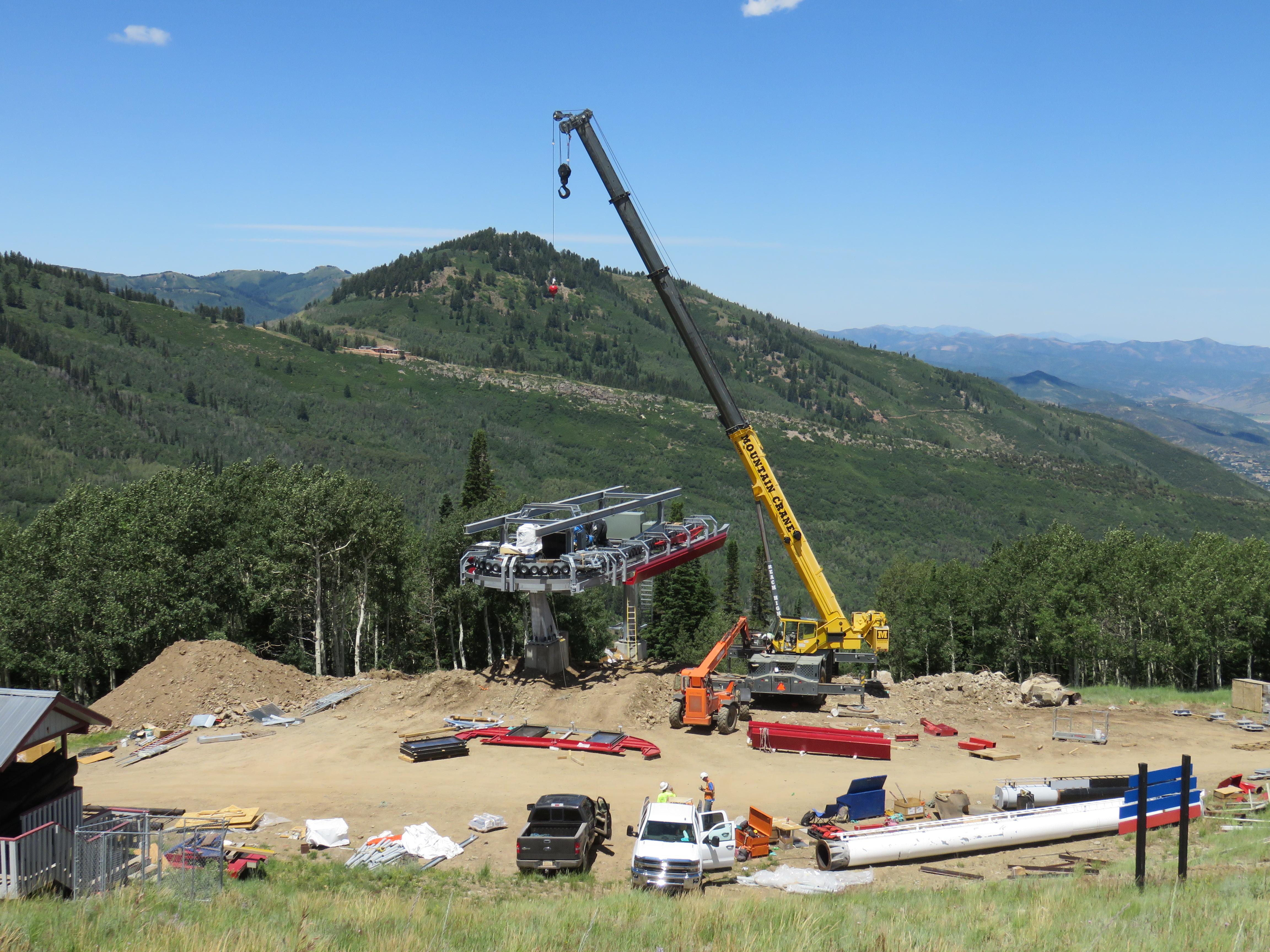
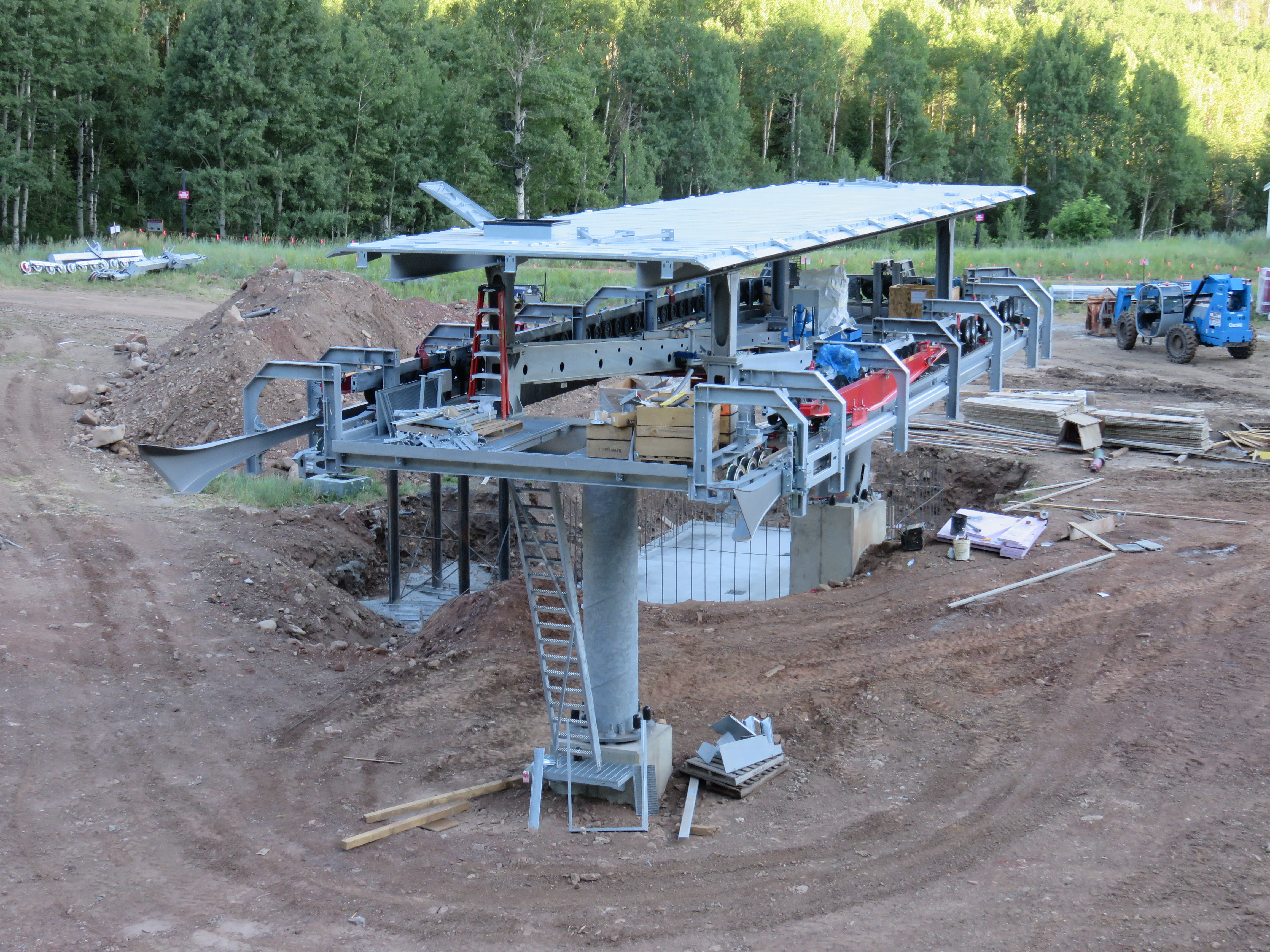
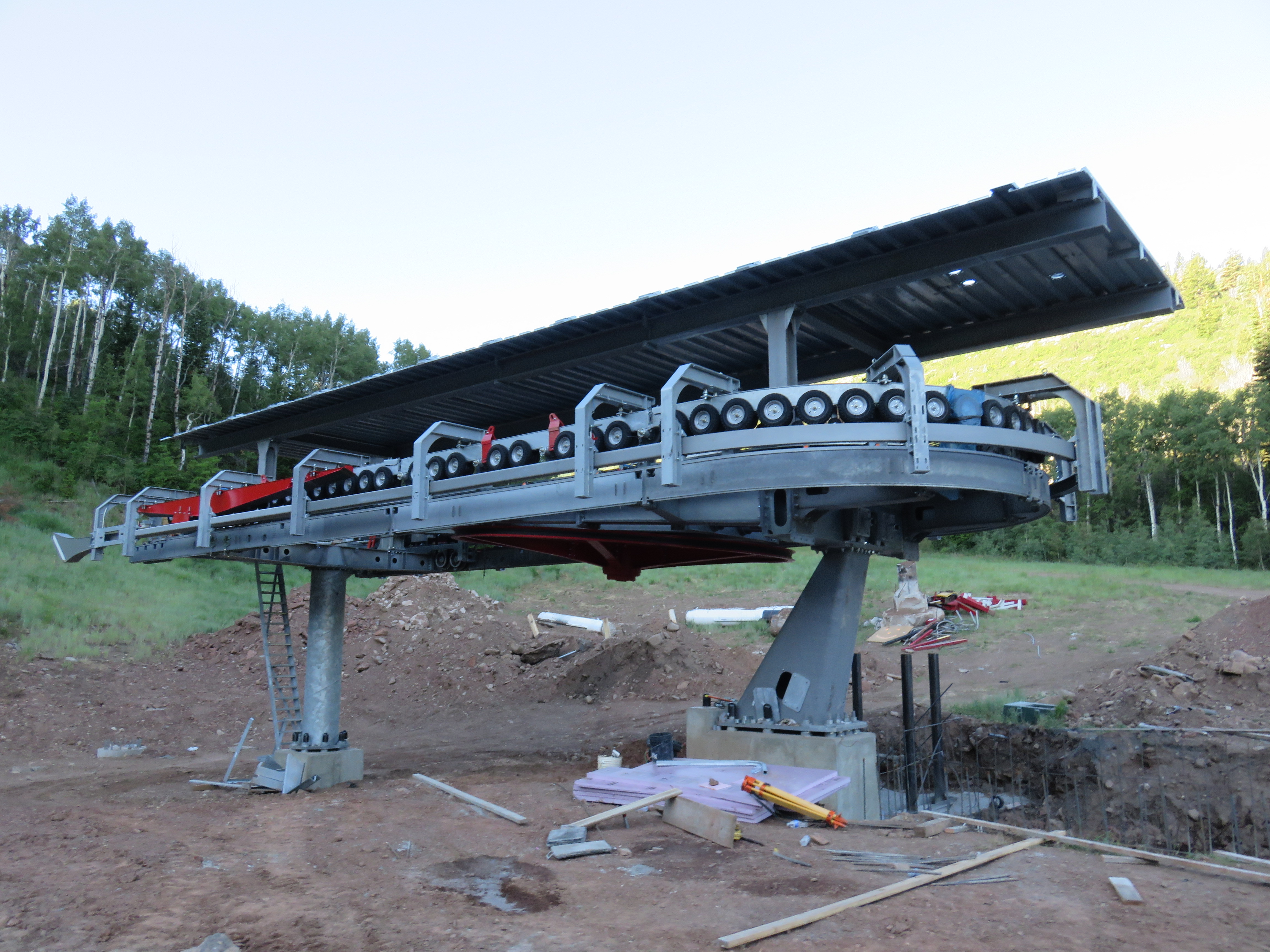
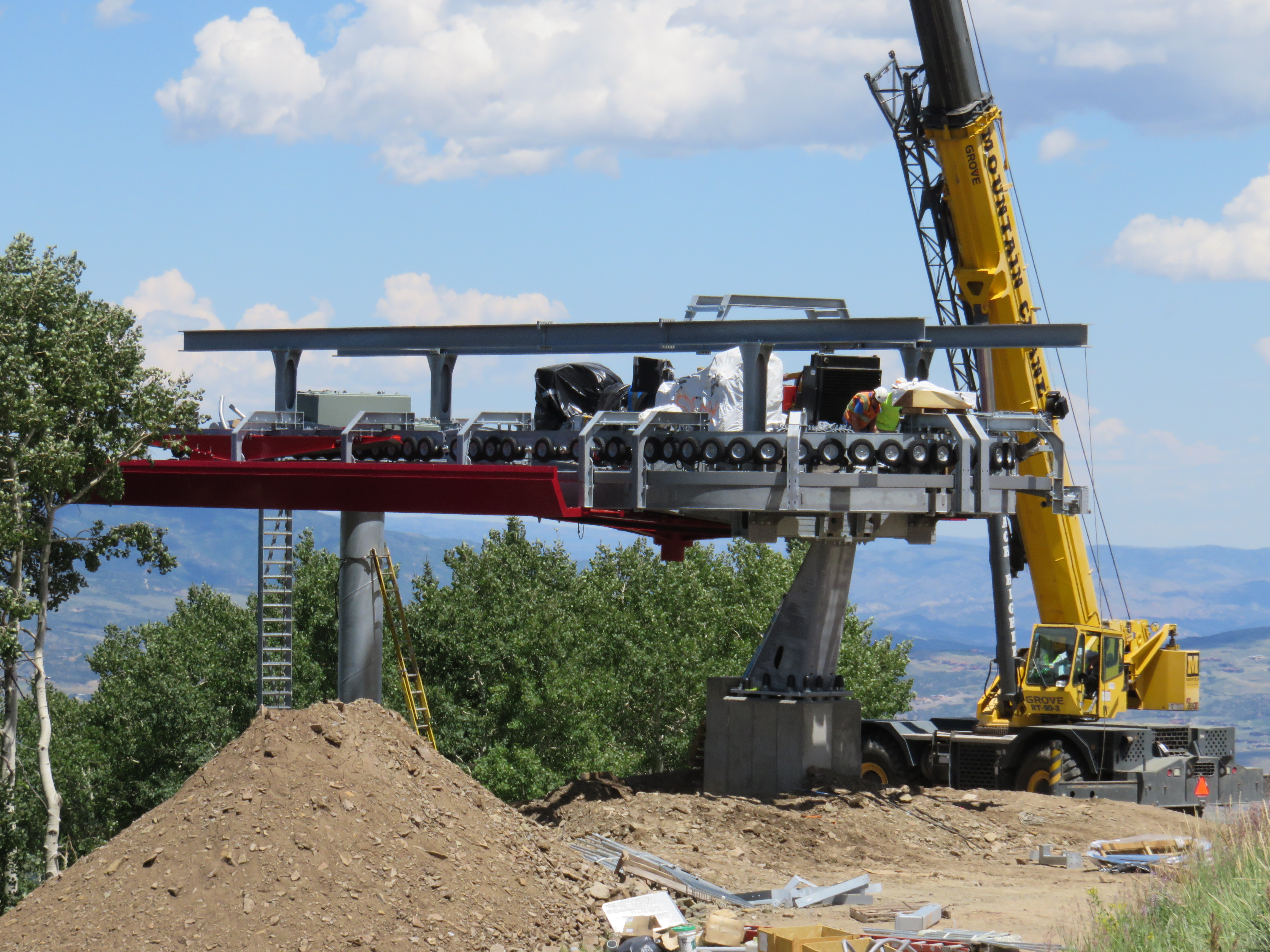
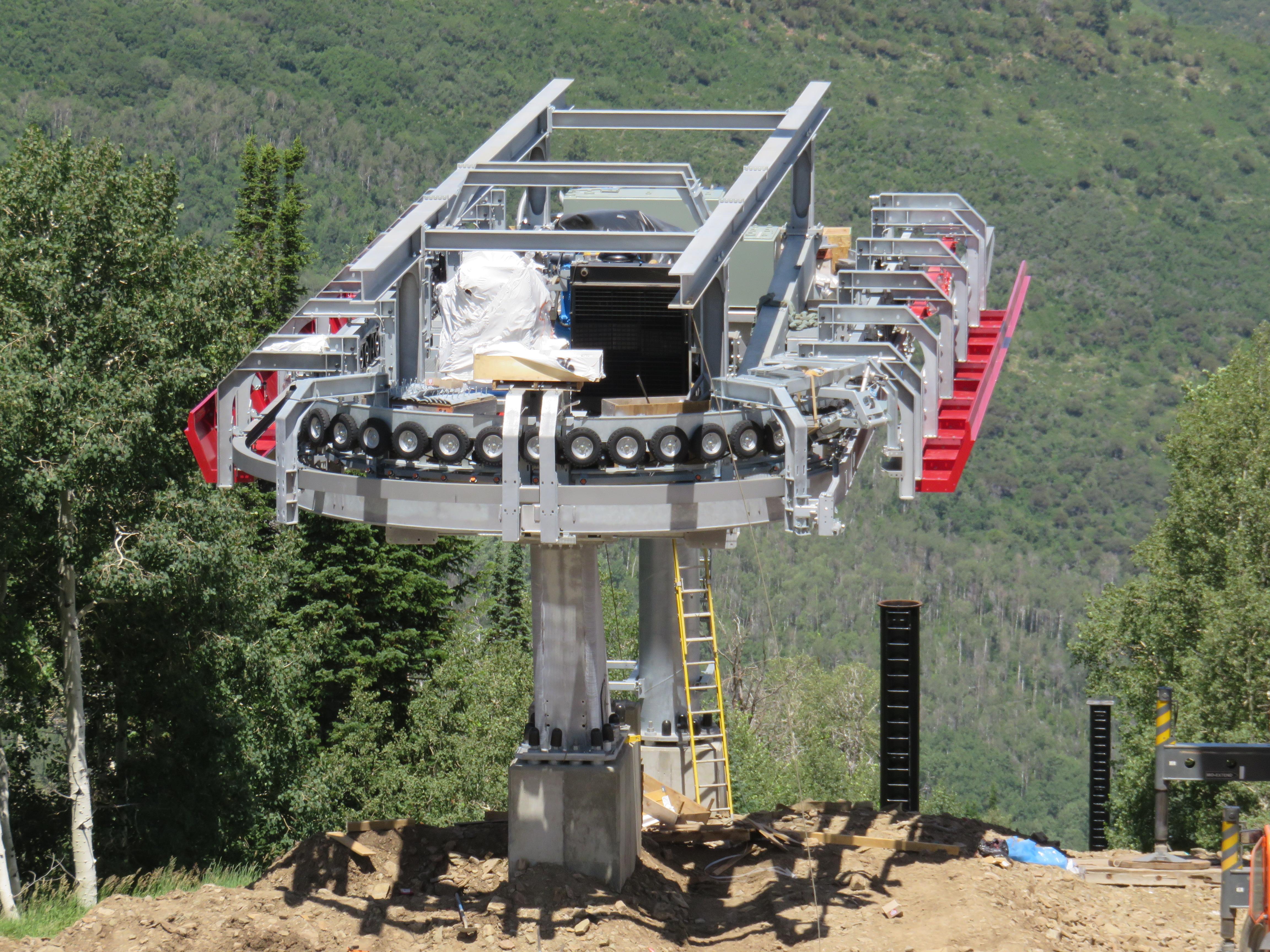
Both terminals for the new King Con are largely complete as of this week. The Uni-G model terminals will be dark red and silver to match the new Park City Mountain logo and brand which will be unveiled on July 29th. Rumors are that the word resort will be removed from the PCMR name and the new logo will be a dark red version of the Canyons infinity logo. Most of the existing detachable lifts at Park City have already been painted in the new color scheme.
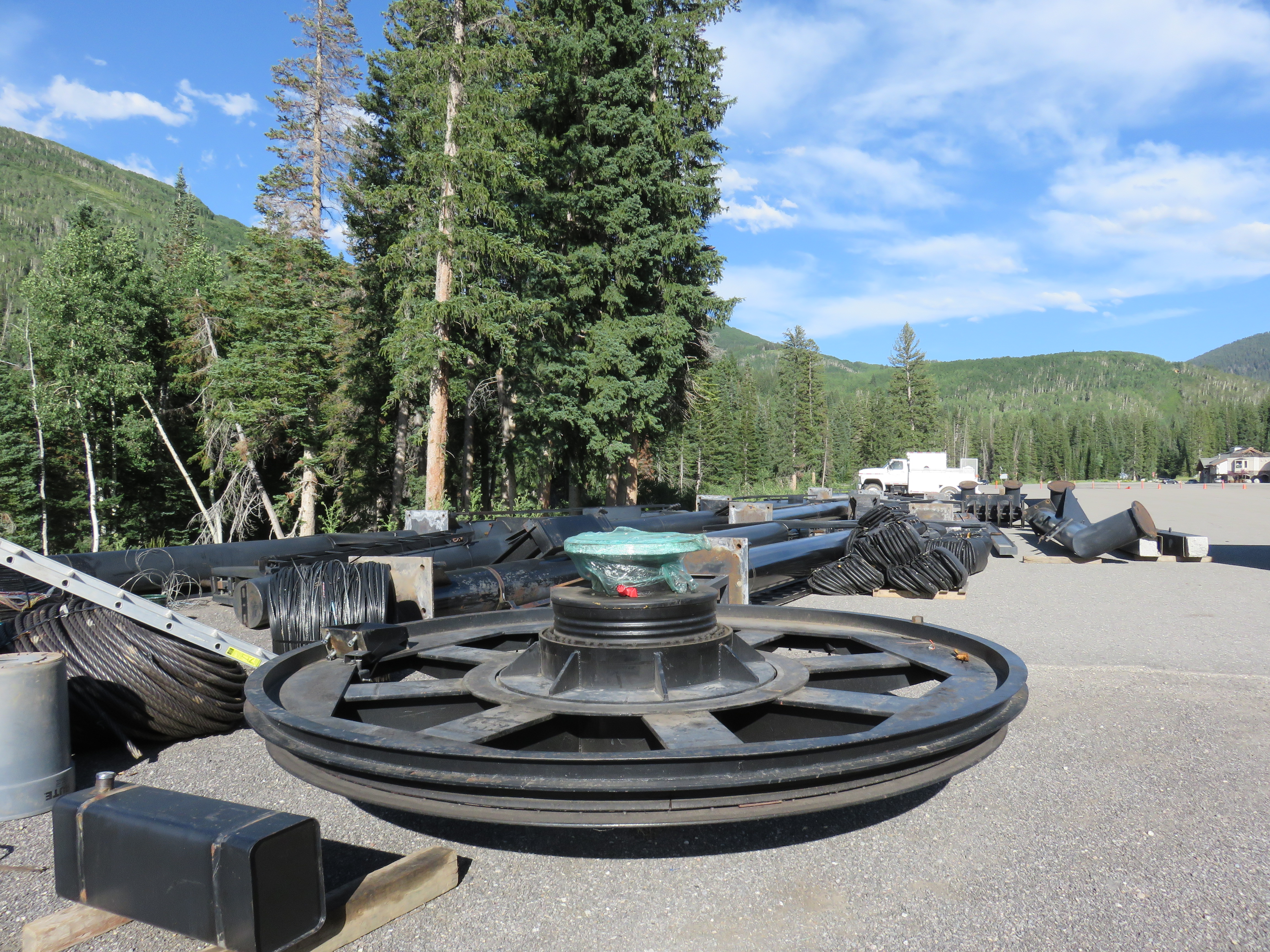
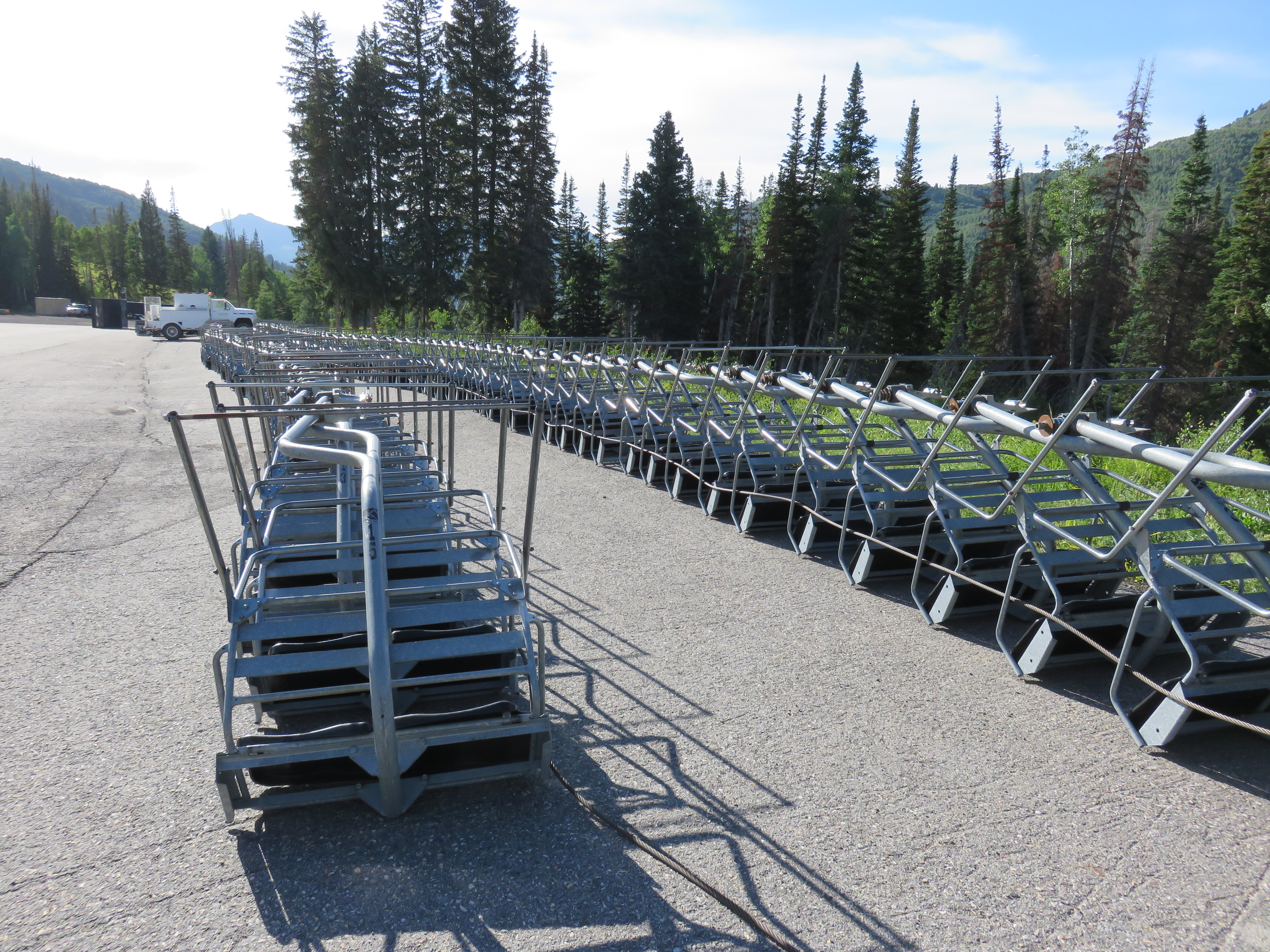
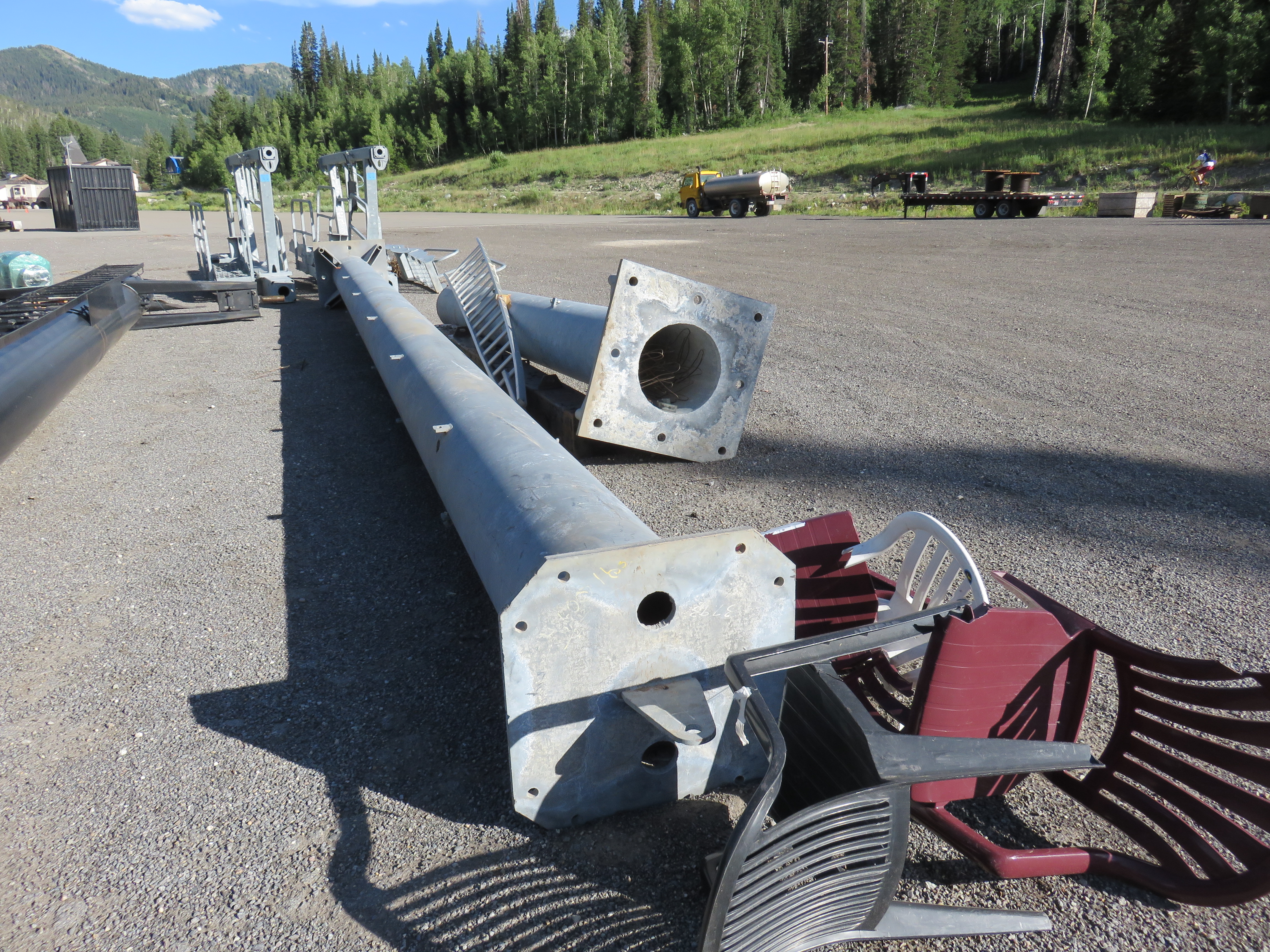
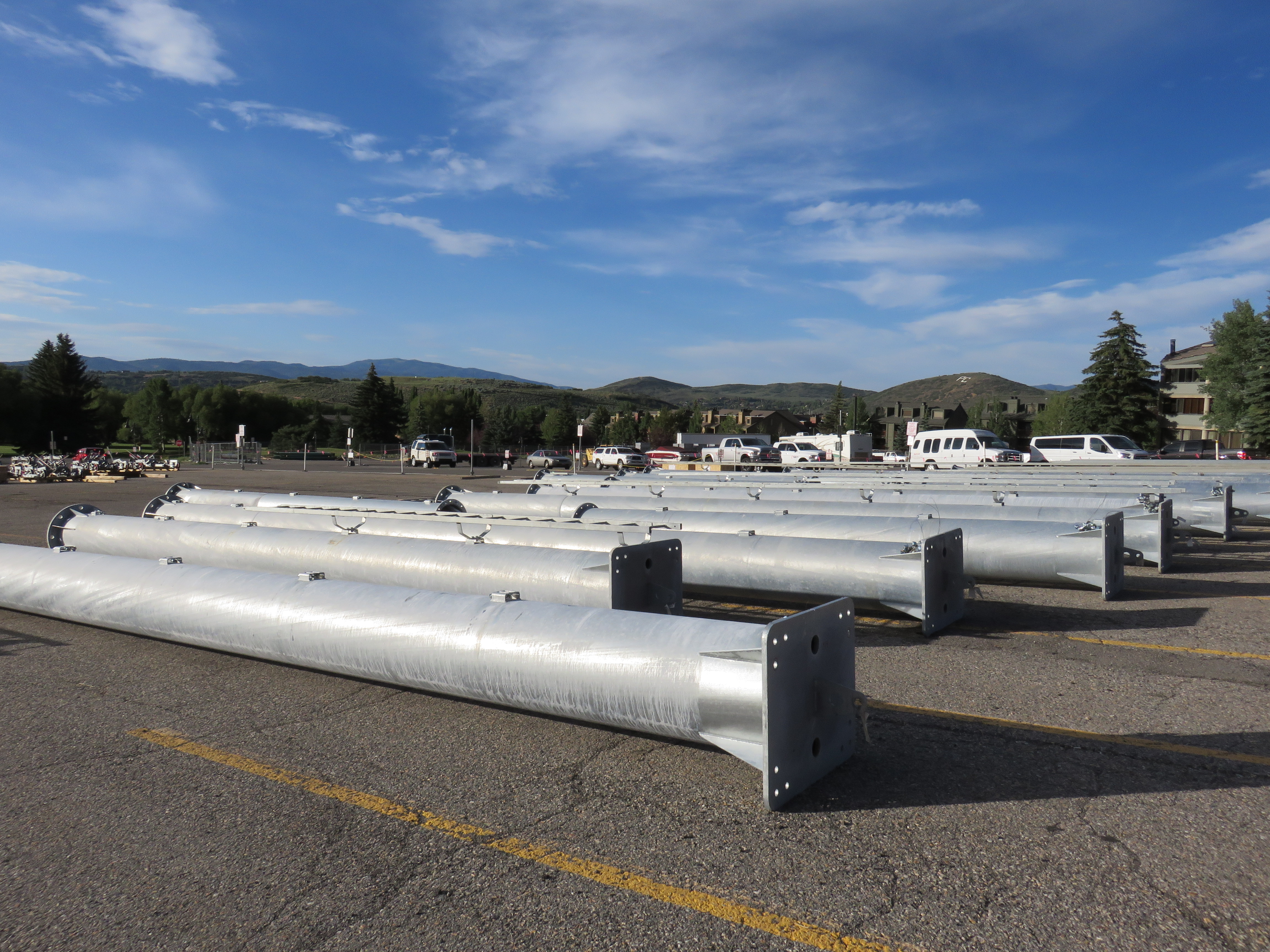
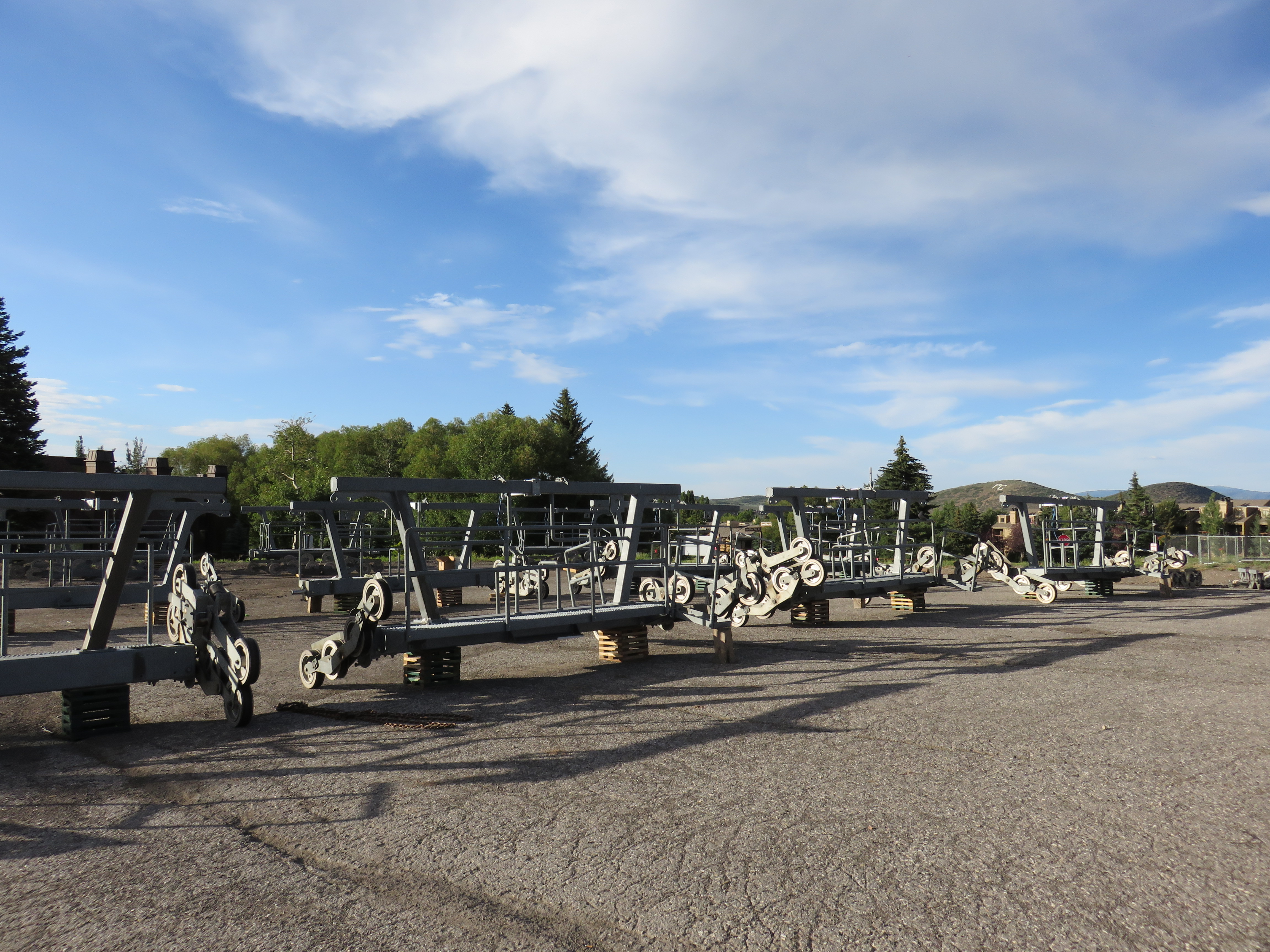
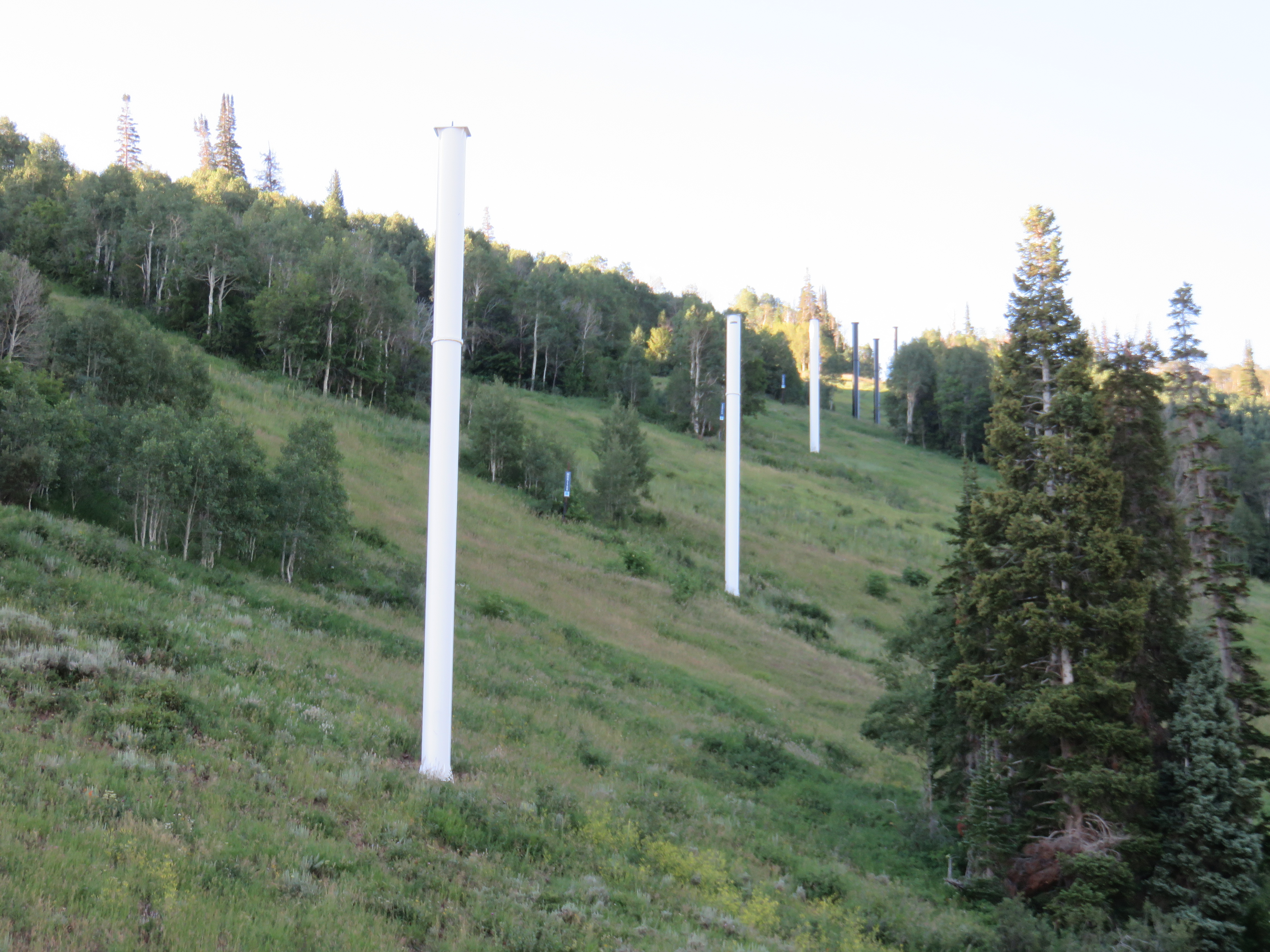
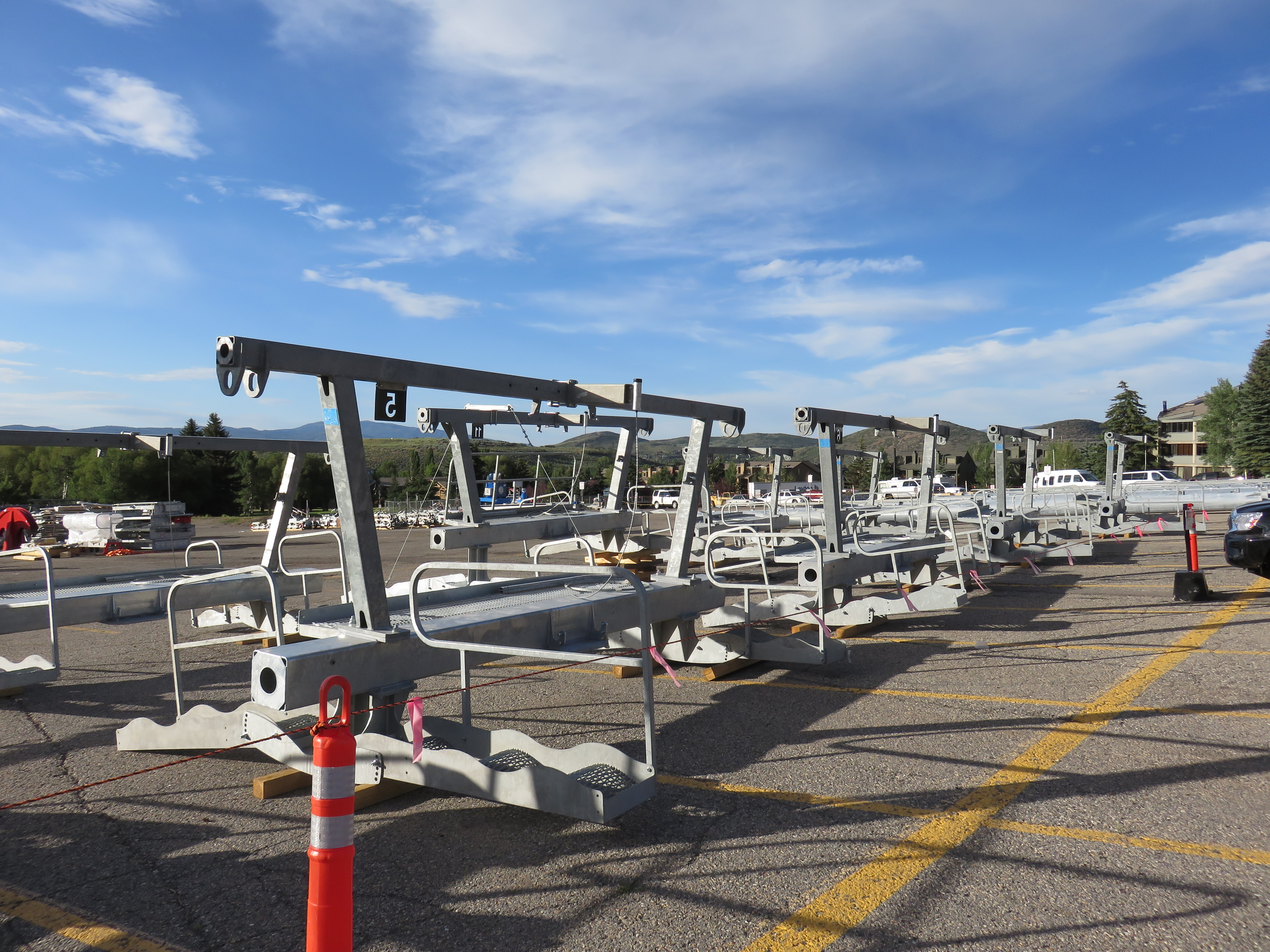
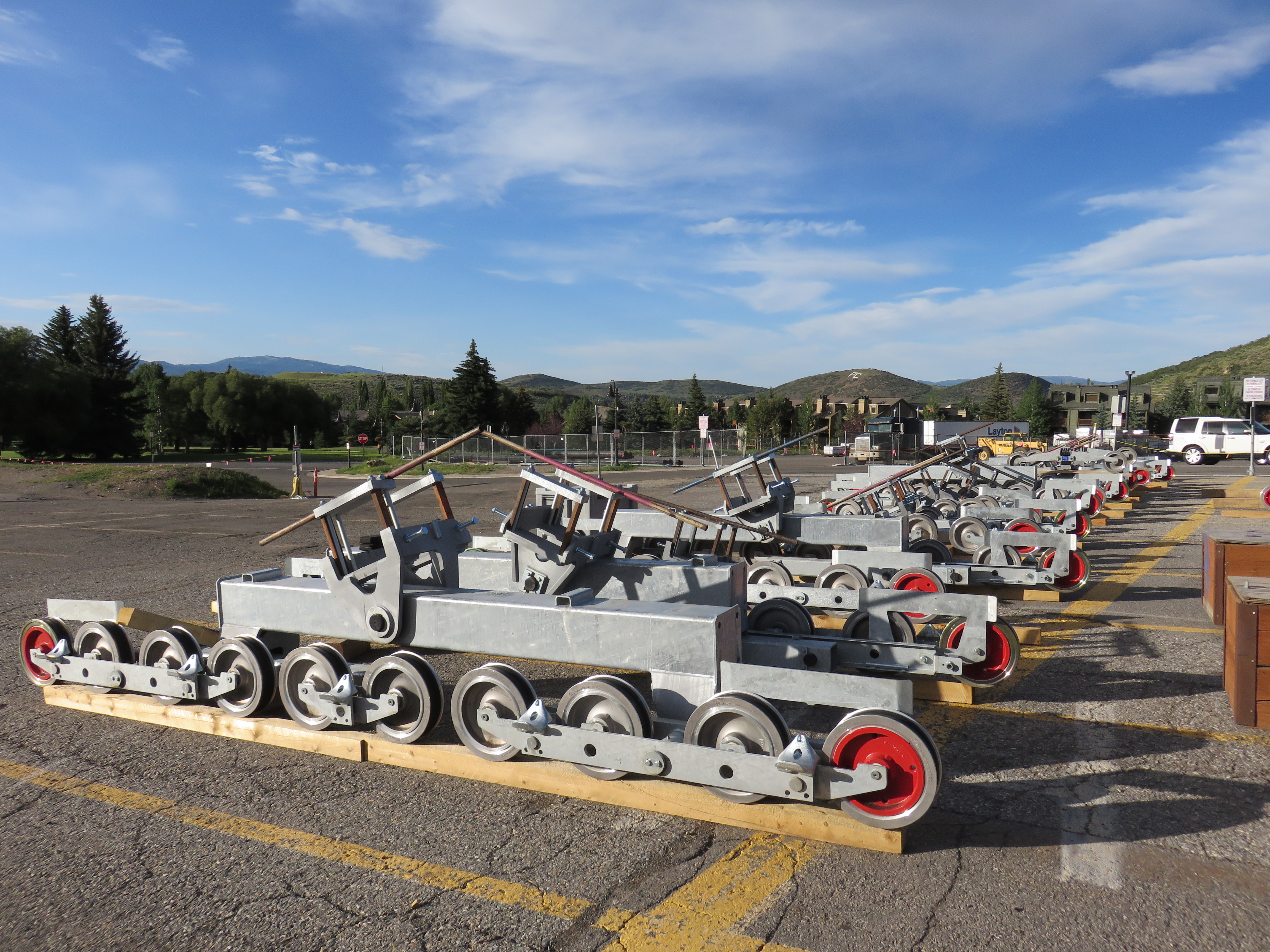
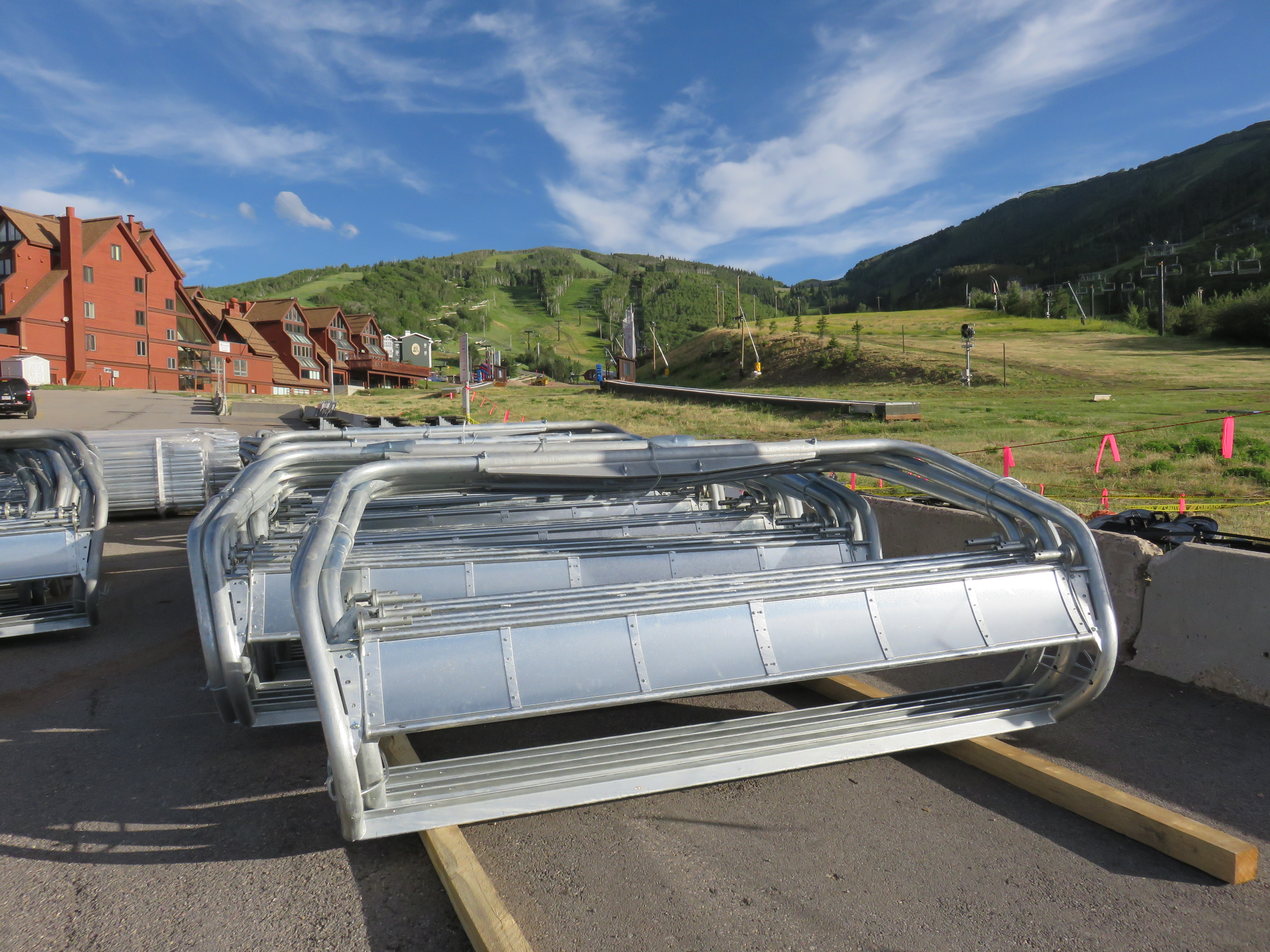
King Con Six will re-use the CTEC tower tubes from the old high speed quad. New tower heads are being assembled in the base area parking lot. The bottom terminal will have a loading carpet as is standard with all new detachable lifts at Vail Resorts these days. The lift is a top-drive, bottom-tension configuration. Doppelmayr EJ six passenger chairs are already on-site. All three of Park City’s new lifts will have Redaelli haul ropes which have also been delivered.


 Lift Blog