
Year: 2015
What’s in a Lift Name?
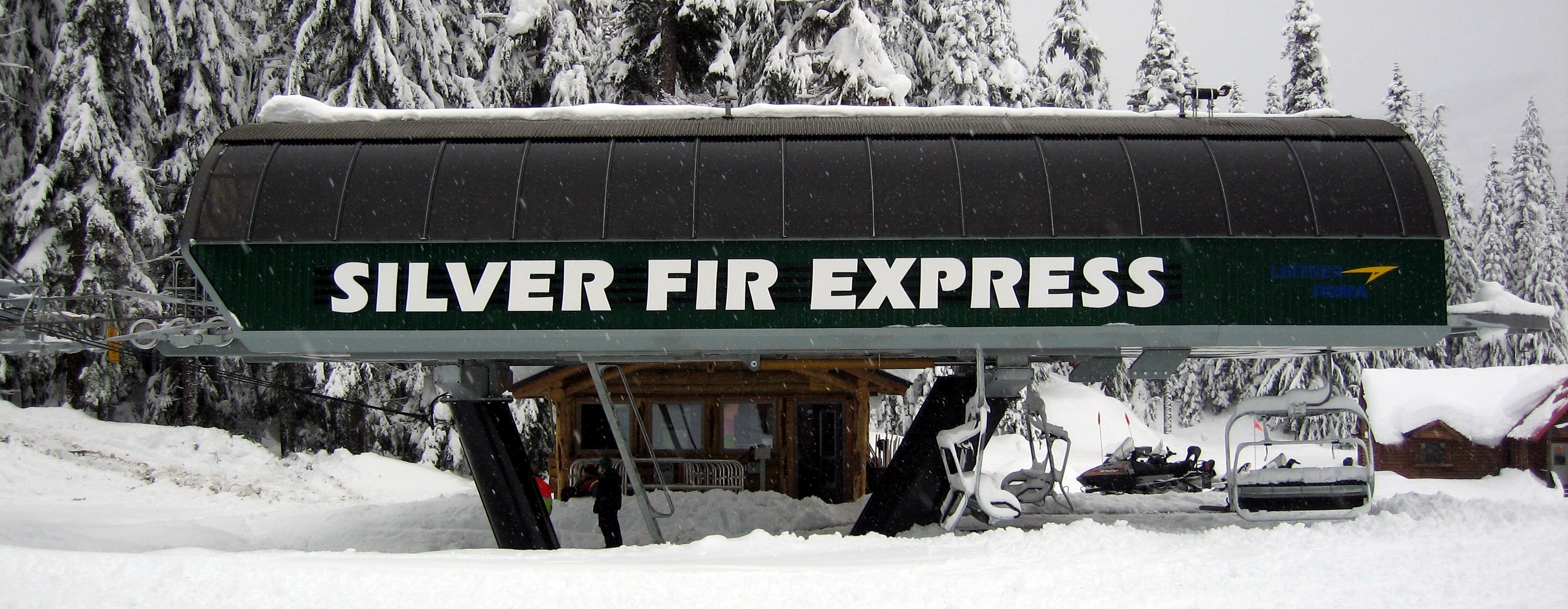
I respect ski resorts that come up with creative, well-thought-out names for their lifts. A lift’s name will usually last decades and be passed on to subsequent lifts in the same location. KT-22 is an example of a lift name so iconic I do not even need to say the resort. Yet more than 900 lifts in the US and Canada have no name at all or go only by a letter/number. Many resorts have a bunch of lifts with generic names like “T-Bar” and “Beginner.” I set out to identify some of the most frequently-used names in hopes that the ski industry can be more creative in the future. Here are the top 10:
- Summit. There are 38 lifts called Summit including nine Summit Expresses. Forty-four more lifts have other words added such as Mt. Snow’s Grand Summit Express. The temptation to name a lift Summit is obvious but it is hardly a helpful name when we are talking about machines that ascend mountains.
- North. While only ten lifts are called North, 34 more are named North Bowl, North Creek, North Face, etc. The other compass directions are almost as common – there are 28 West lifts, 22 East lifts and 21 South lifts. Not very creative and I would argue most ski resort guests have no idea which direction is which.
- Blue. Most ski areas have gotten away from painting their lifts bright colors and giving them corresponding names since the Forest Service banned such displays. However there are still 23 Blue lifts, 20 Green, 19 Silver, 15 Red & Gold, 7 Yellow, and a handful each of Orange, Pink and Purple lifts.
- Eagle. A surprising 26 lifts have the word Eagle in their name including four that are Eagle Express. Other resorts go further with Flying Eagle, Soaring Eagle, Screaming Eagle, Golden Eagle and Copper’s American Eagle. Other popular animal names include Bear and Elk. These aren’t bad names; they are just too common.
- Village. The US and Canada have 17 Village lifts including 4 Village Gondolas. I put these in the same generic category as Summit.
- Sunrise. Some resorts try to get past East and West by using Sunrise and Sunset. The result is 15 Sunrise lifts and almost as many Sunsets. For an industry centered on snow, the word sun is very popular. I count 9 Sunnysides, 8 Sundances and 8 Sunshines among others.
- Meadow. Learning lifts in particular seem to suffer from generic naming. Meadow is by far the most popular name for a beginner lift at 18, followed by Easy Rider at 12, Beginner (10) and Discovery (8.)
- Skyline. A logging term for transporting timber by cable, Skyline is a natural name for a ski lift. But with 12 Skyline lifts and counting, it’s time to use some new logging terms.
- Panorama. There are seven of these. Winter Park tried to put a spin on it with Panoramic Express but it’s still not very creative.
Last summer’s construction season had two new Summit lifts, 3 Sun variations, a Meadow and a Discovery. Hopefully 2015 will be better but it’s looking like we may see three more Summit chairs!
News Roundup: Projects and Plans
https://instagram.com/p/3kGV5wiue-/?taken-by=pcski
- Doppelmayr and Bolivia break ground on Subway in the Sky part II.
- Steamboat has a new master plan proposal that includes two new six packs to replace the Elkhead and Thunderhead lifts.
- Will our nation’s capitol get it’s first aerial lift?
- Lake Louise abandons plan for Wolverine Ridge lift but still wants new lifts on Richardson’s Ridge and Hidden Bowl.
- A six-mile aerial tram across New York Harbor? The Gondola Project says no and even Doppelmayr says it may not be possible.
- The International Skiing Federation again tells Aspen to build a new lift or lose the 2017 World Cup Finals.
- Powderhorn and Leitner-Poma break ground on lift replacement.
- Helicopter removes “poles” at the Hermitage Club.
Lift Profile: Sunday River’s Chondola
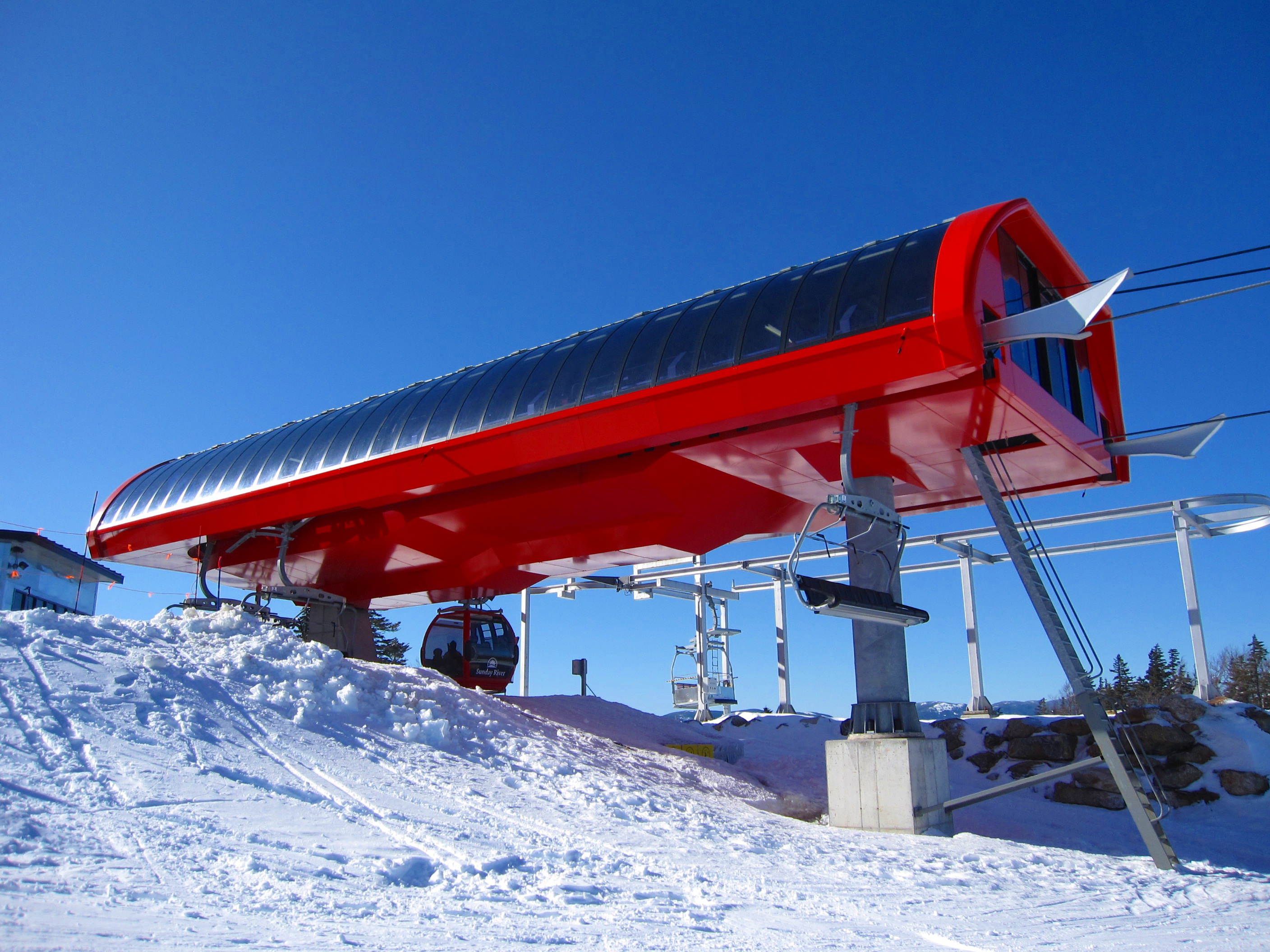
 The Chondola at Sunday River, Maine was Boyne Resorts’ first (and arguably last) major investment after purchasing the resort from American Skiing Company in 2007. This Doppelmayr CTEC combination lift replaced two fixed grip lifts and connects the South Ridge Lodge to North Peak. The older South Ridge Express and North Peak Express run parallel enough that
 the latter no longer operates midweek. I would not be surprised to see this 1997 Doppelmayr detachable quad relocated within the Boyne Resorts family at some point. Big Sky perhaps?
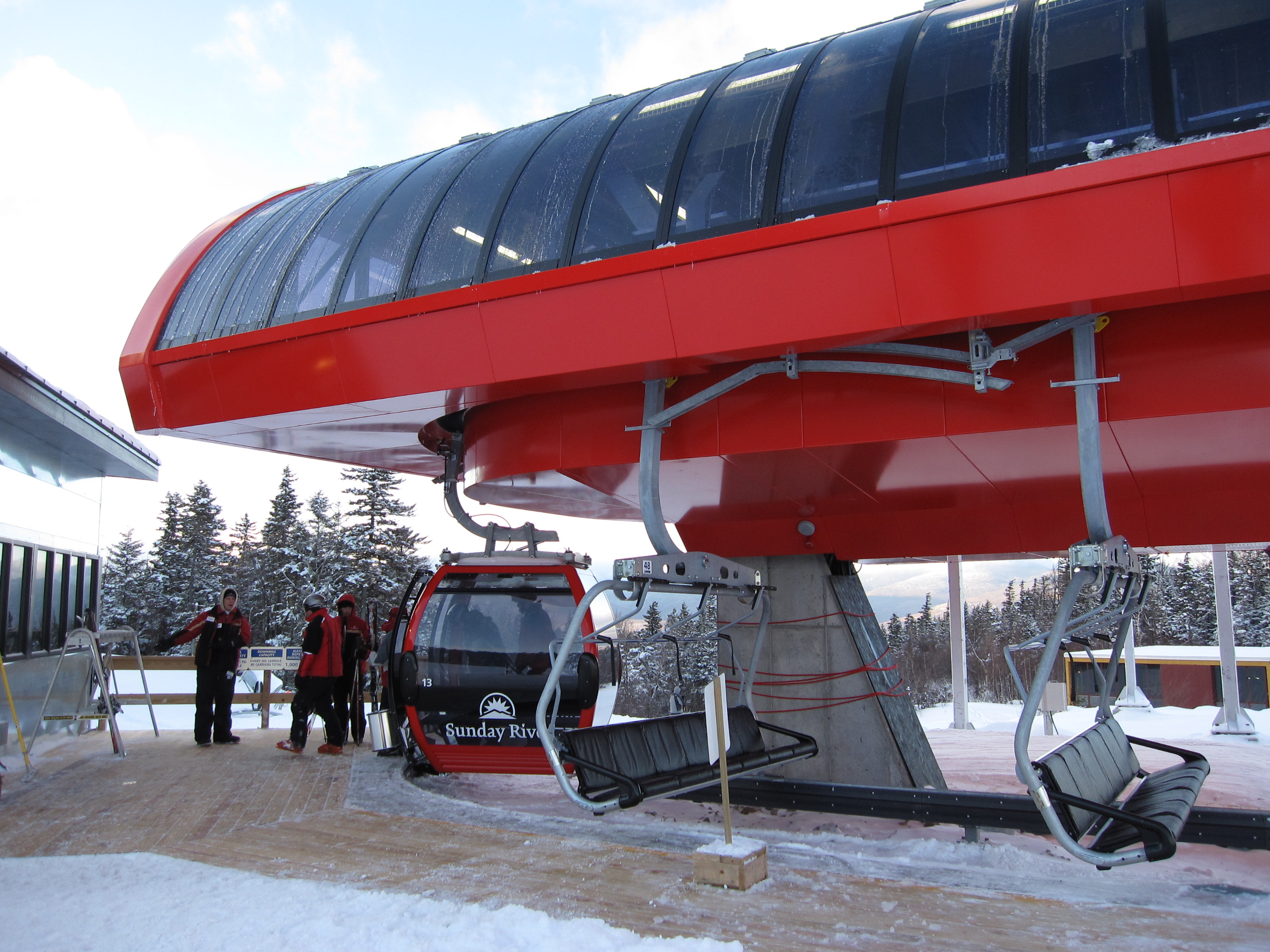
At $7.2 million, the Chondola is one of the most expensive lifts ever built in New England. It is also one of only five combination lifts in North America, the others being at Telluride, Beaver Creek, Mont Orford and Northstar. It is one of only eleven lifts in North America with Doppelmayr’s European towers. Sixty-four six passenger chairs alternate with 16 eight passenger cabins that move a combined 2,330 passengers an hour. The chairs are Doppelmayr’s extra comfy “flying couches” from Austria. The Chondola is Sunday River’s longest lift at 6,427 feet although the vertical is a modest 1,138’. Continue reading
Instagram Tuesday: Going Up & Coming Down
Parts Arriving in Jackson Hole
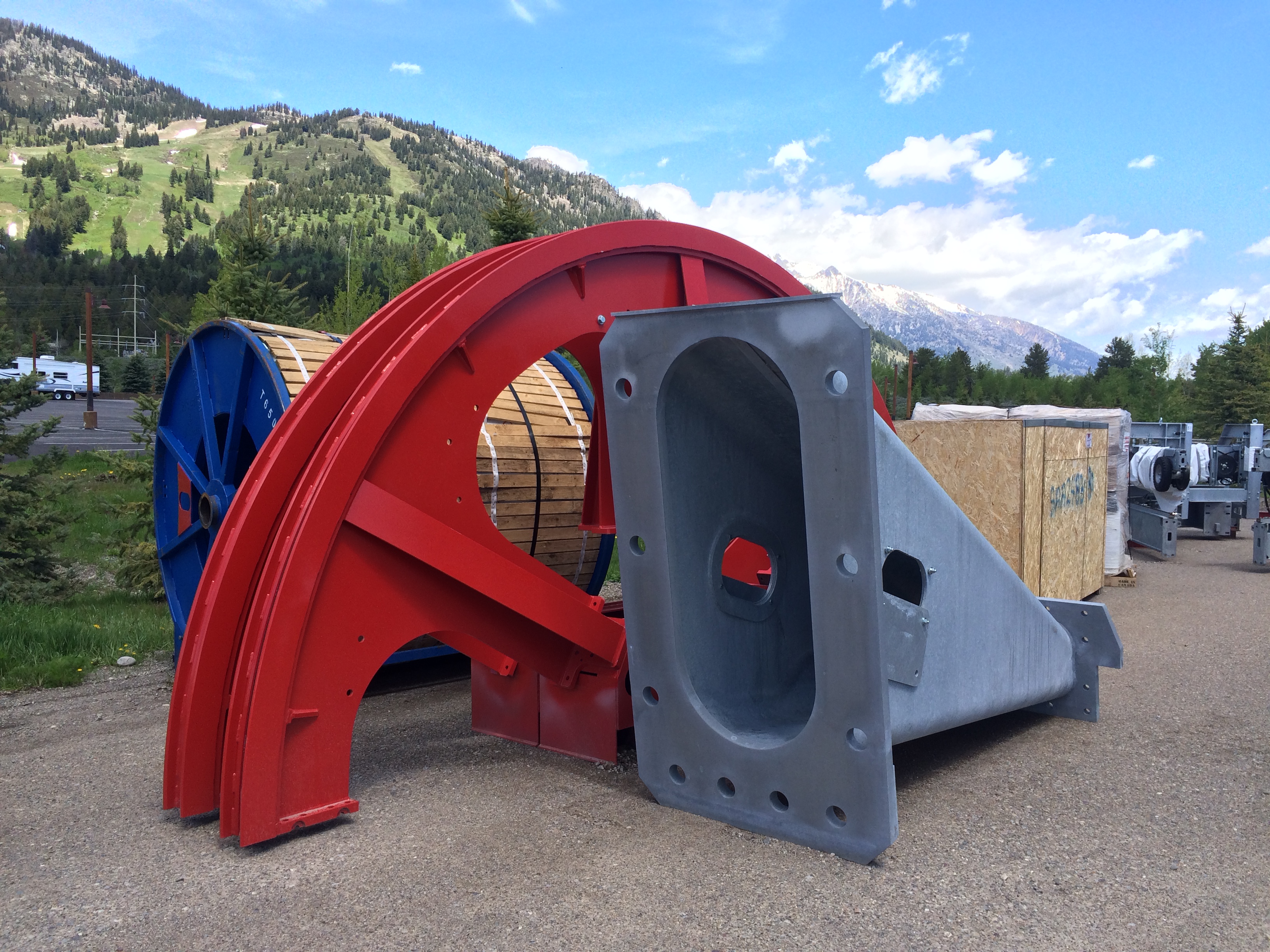
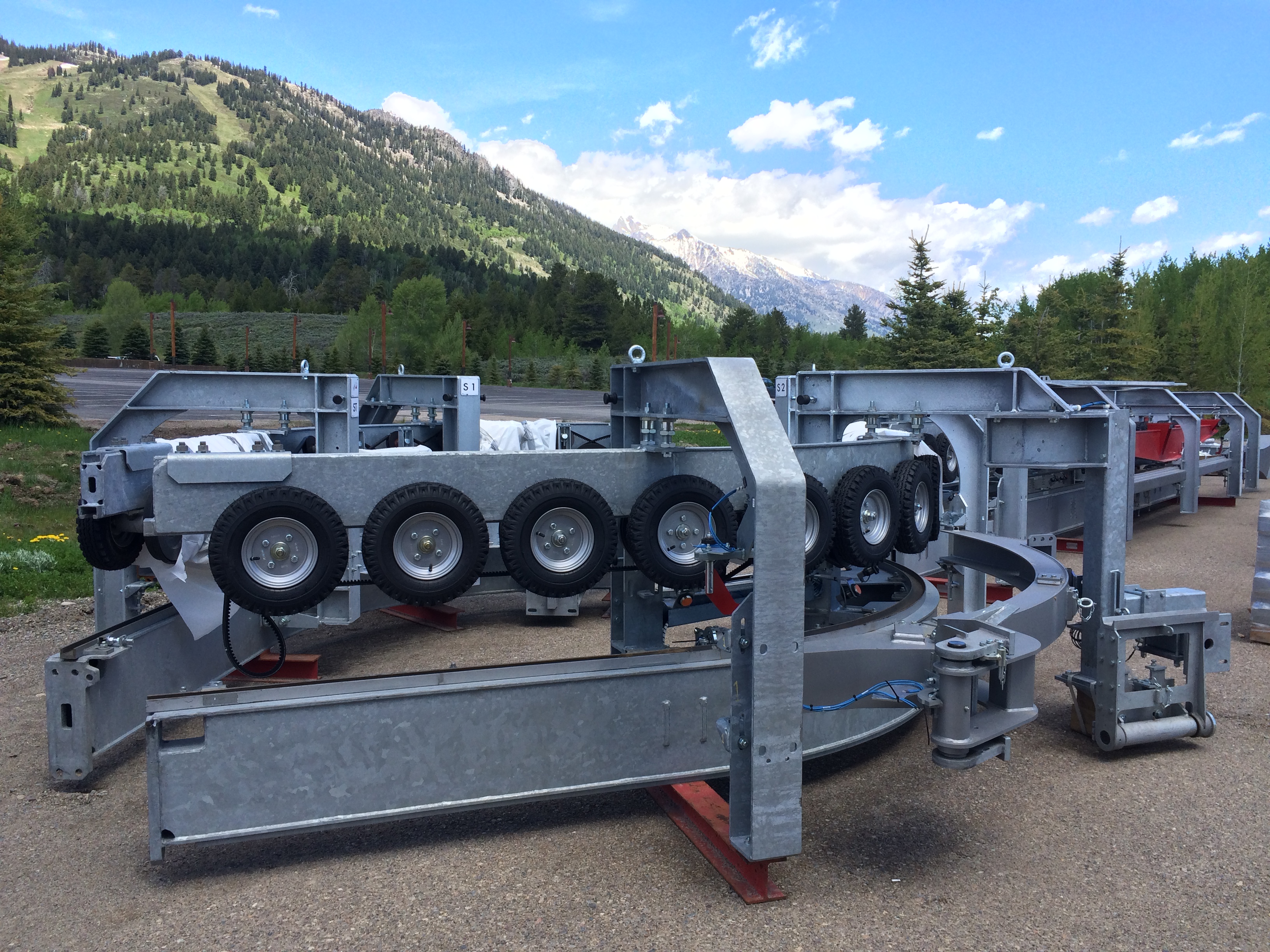
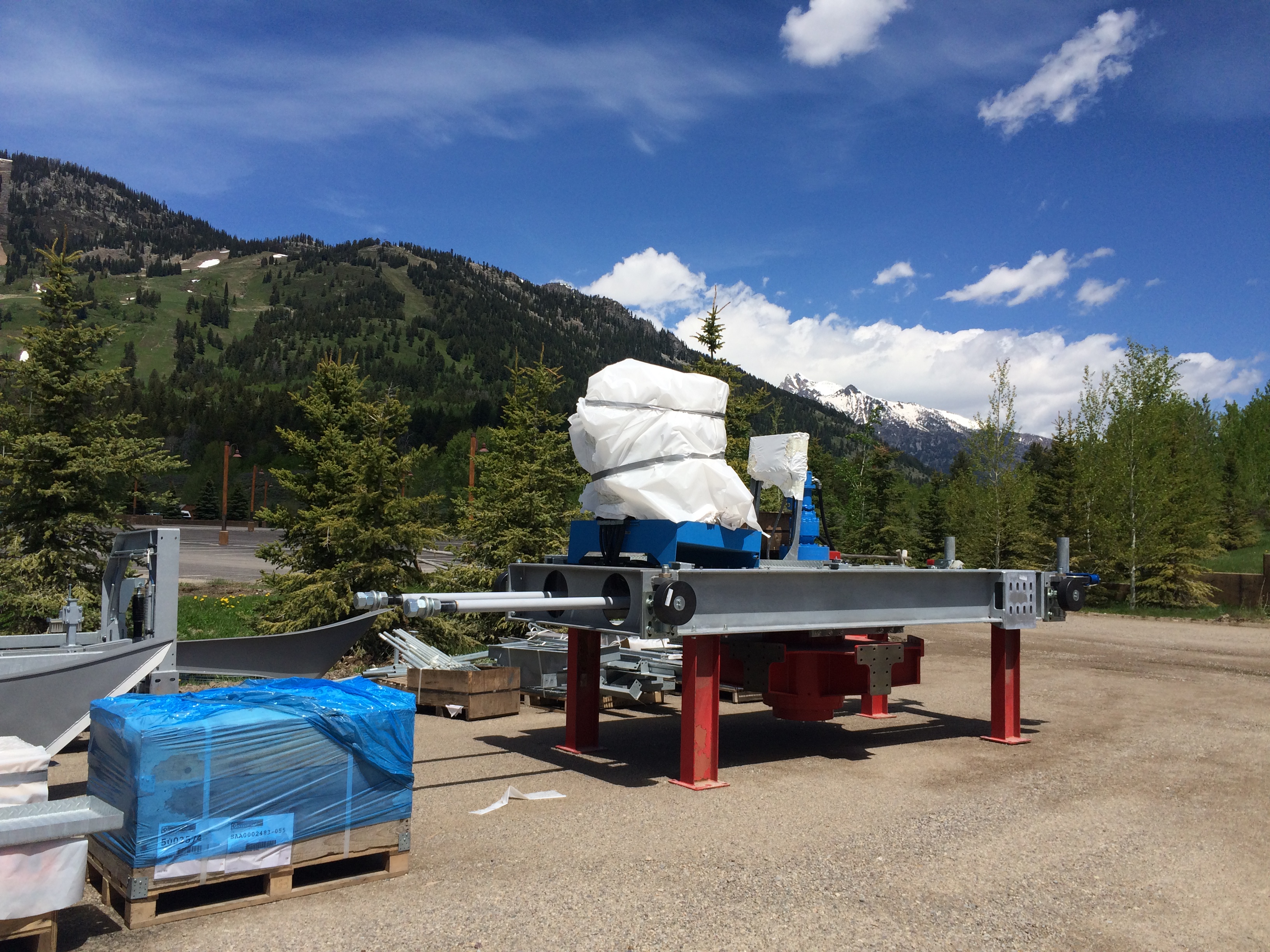
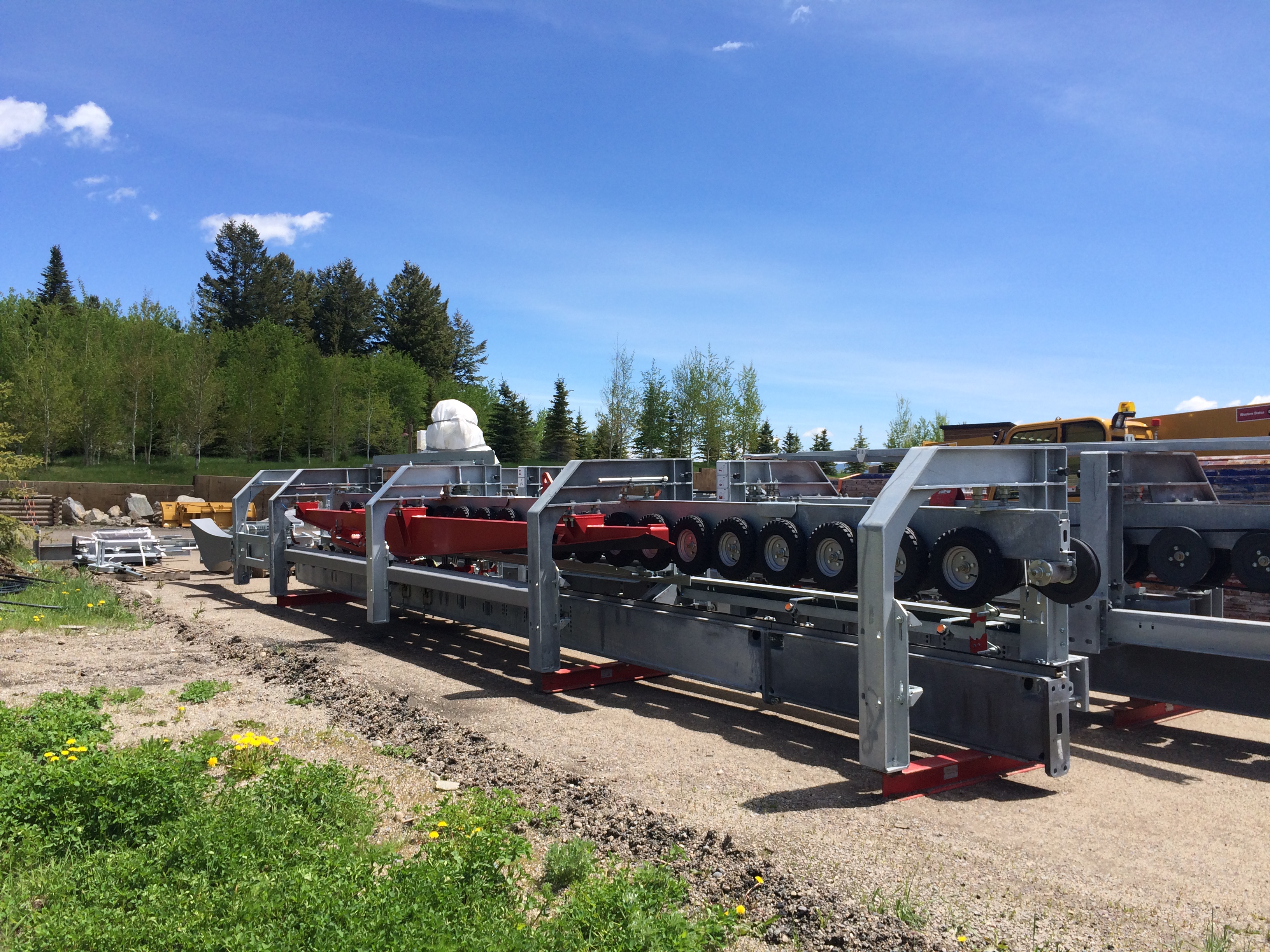
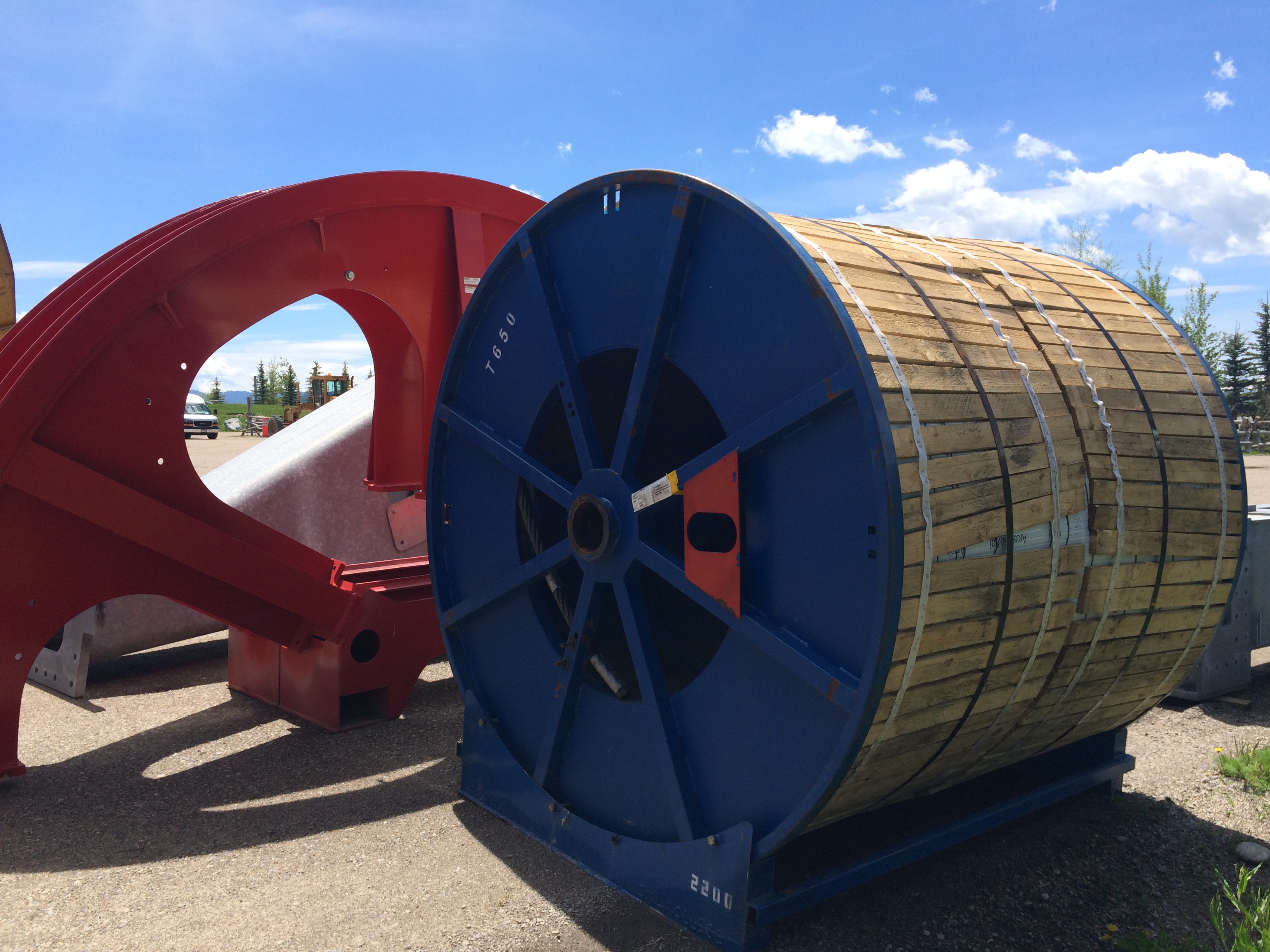
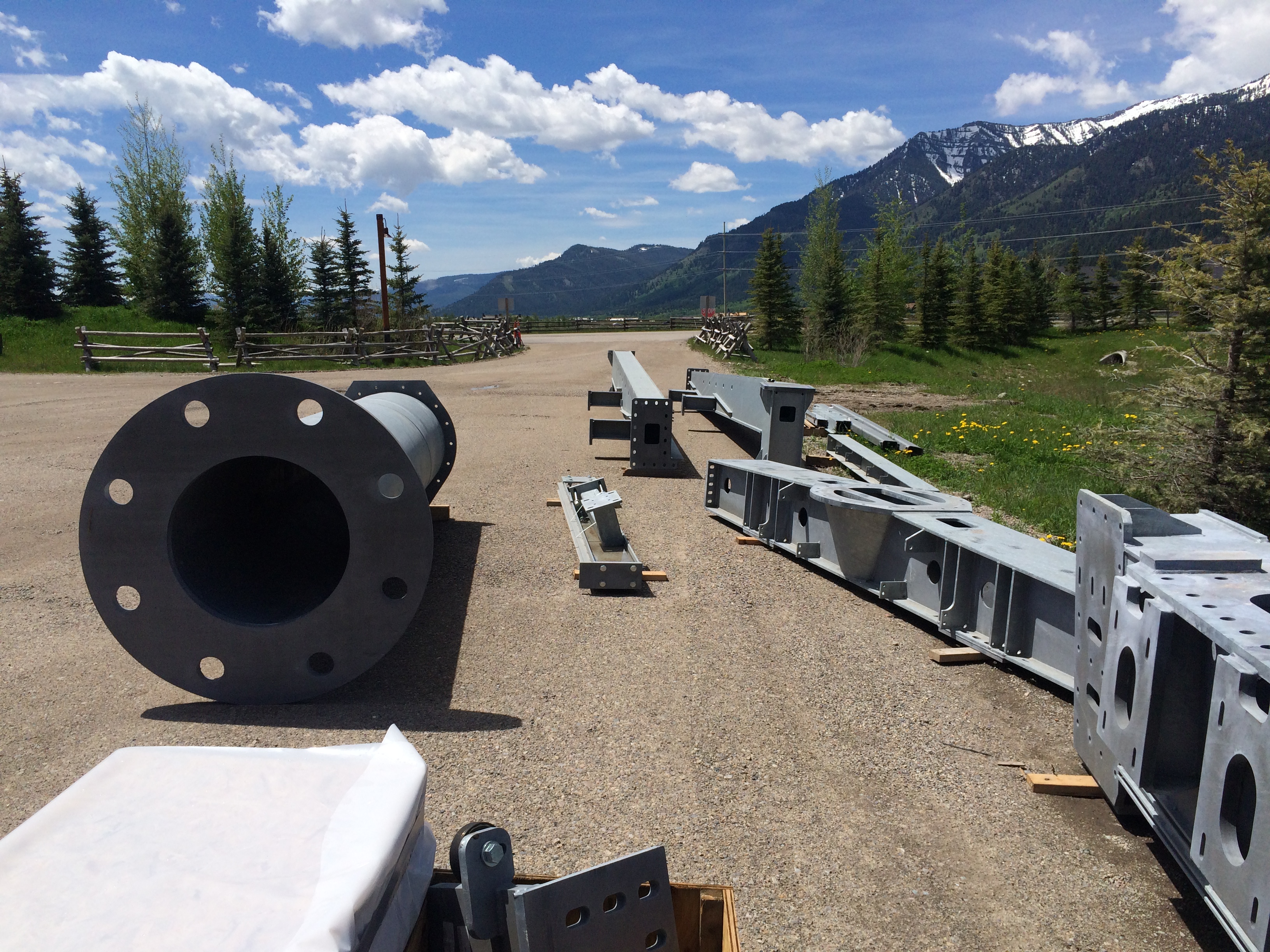
The crew from Doppelmayr is just about finished at Snow King and they are moving down the road to Jackson Hole Mountain Resort to build the new Teton detachable quad. Most of the return terminal parts are now on site along with the haul rope. I was surprised to see the rope was manufactured in France by a company called ArcelorMittal. Apparently it’s the largest steel company in the world and they supplied the rope for Vail’s Gondola One.
7,000 Vertical Feet in Ten Minutes
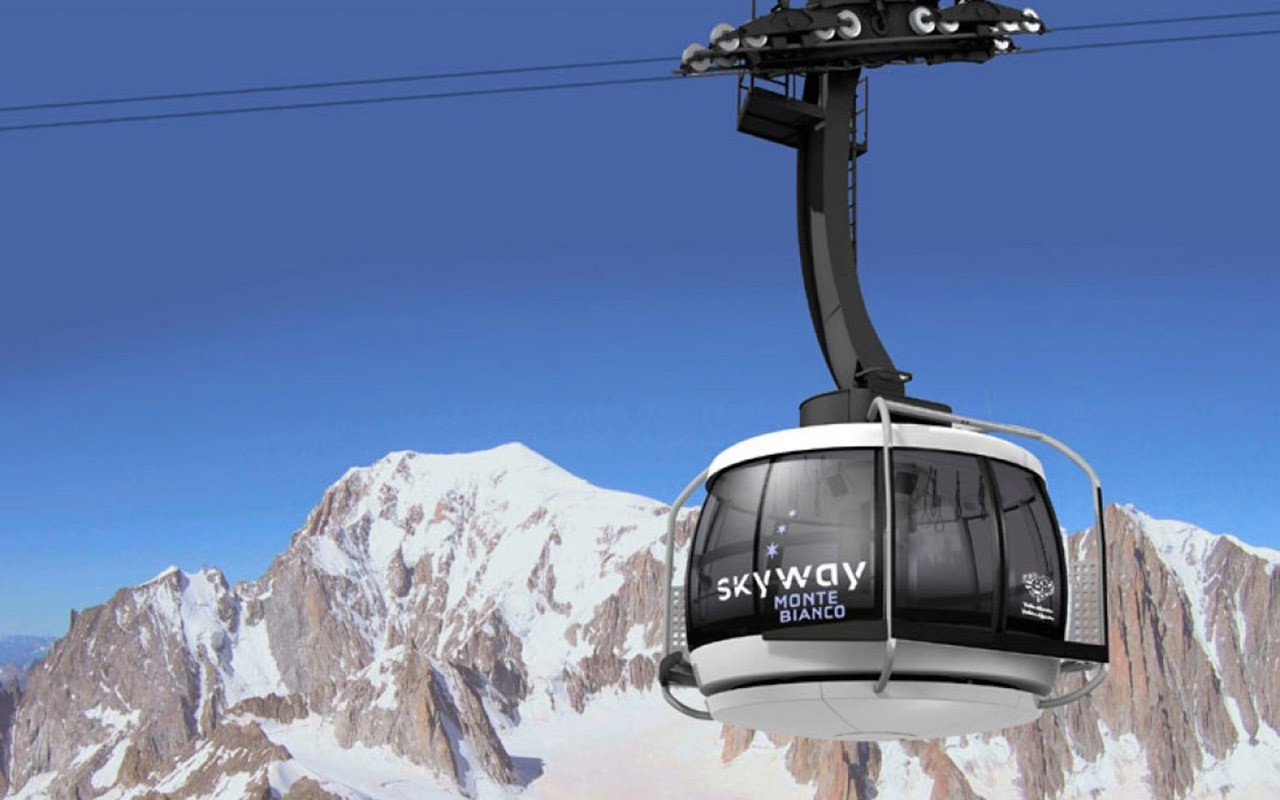
Two new aerial tramways are about to open on the Italian side of Mont Blanc that will be among the steepest in the world. This is Doppelmayr’s largest project ever on Leitner’s home turf. The €110 million contract was awarded in late 2011 and construction began in 2012. Two sets of 80-passenger cabins will ascend a crazy 7,093 vertical feet in ten minutes. For comparison, Palm Springs’ tram does 5,873 feet in 12 minutes, Jackson Hole’s 4,084 feet in nine minutes.
Mont Blanc can be accessed from both the Italian and French sides. There is also a highway tunnel under the mountain, but that’s not nearly as cool. The existing setup on the Italian side requires riding three lifts built in the 40s and 50s to reach Point Helbronner at 11,358 feet. The French side has two tramways, the famous Aguille du Midi 1 & 2 that reach 12,392 feet. Connecting the French and Italian summits is a 3.1 mile bi-cable pulse gondola that opened in 1957.
Both new trams will have the world’s first 360-degree rotating cabins (others like the Palm Springs Tramway have only rotating floors.) Built by CWA, these 80-passenger cabins will feature heating, air conditioning and video screens showing live camera views.
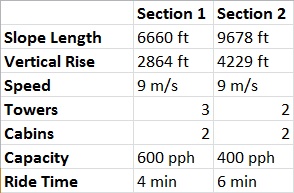
Both sections will be in new alignments as shown in Google Maps above. The first section ascends from the village of Entreves to a mid-station called Le Pavillon with three towers along the way. It will move 600 passengers per hour with a four minute ride. The second section from Le Pavillon to Point Helbronner has only two towers and ascends over 4,000 feet in six minutes. Both sections will operate year-round once they open in mid-June.
News Roundup: Getting There
- Fire at Misery Mountain (A movie title if I’ve ever heard one!)
- Another urban gondola proposed, this time in Belgrade, Serbia
- Poma makes it clear they don’t have a deal with Israel to build a gondola in Jerusalem.
- Speaking of conflict-torn places, Myanmar may gets its first aerial tram.
- Another Midwest ski area closes. Anyone need a Hall double, Riblet quad or VonRoll triple?
- Environmental group files objection to Eldora’s master plan that includes building 3 new detachables.
- How does a ski hill with 200 vertical need $15 million to stay afloat?
- Someone in business development at Doppelmayr has some very dramatic music and a lot of time.
- Red McCombs’ 28-year battle with the Forest Service over the Village at Wolf Creek may be coming to end. A private lift would access Wolf Creek Ski Area, although the owners of the ski area do not support the Village.
- Powderhorn is moving along with their refurbished detachable quad from Marble Mountain, Newfoundland.
Lift Profile: Spokane Falls SkyRide
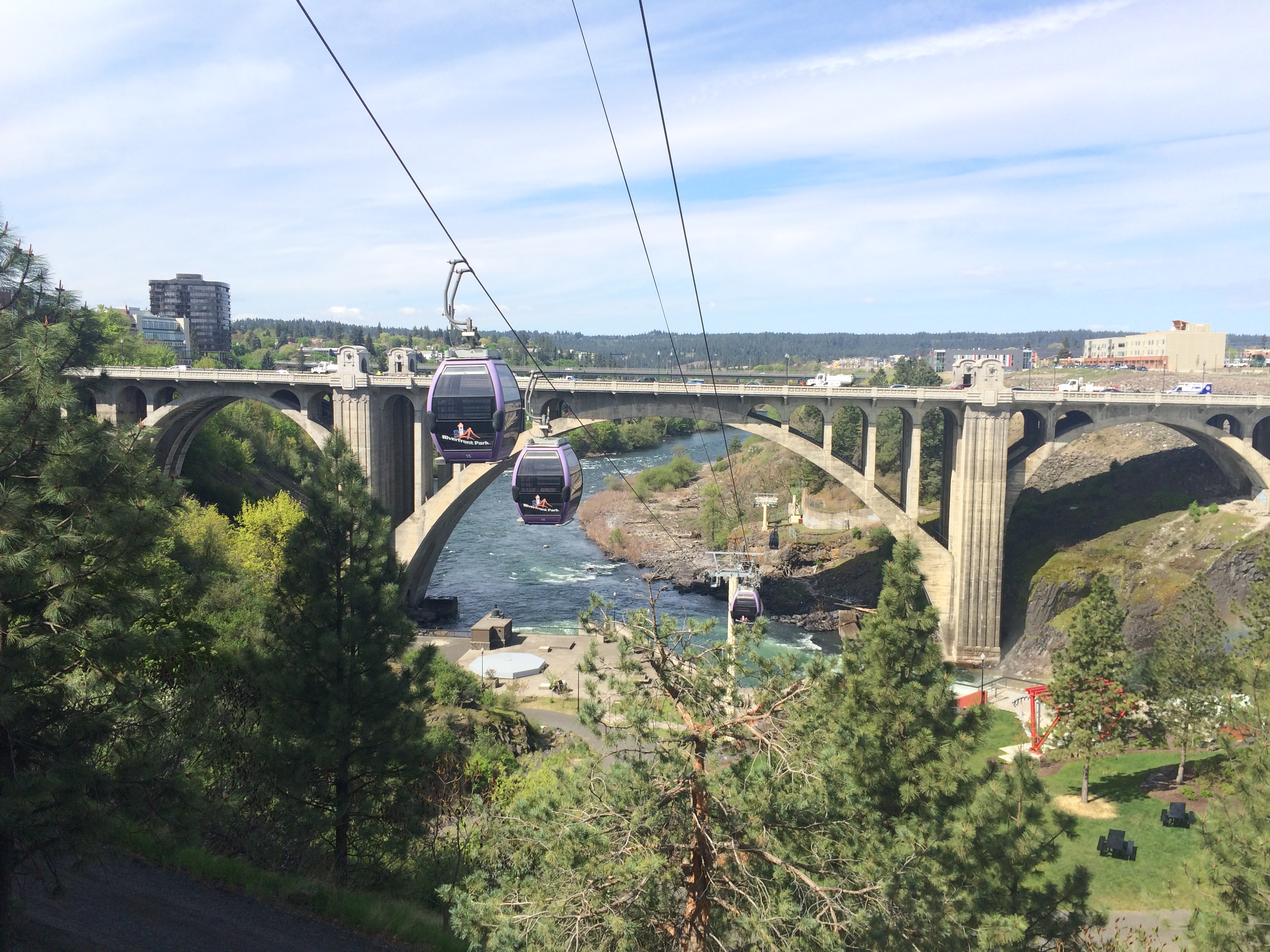
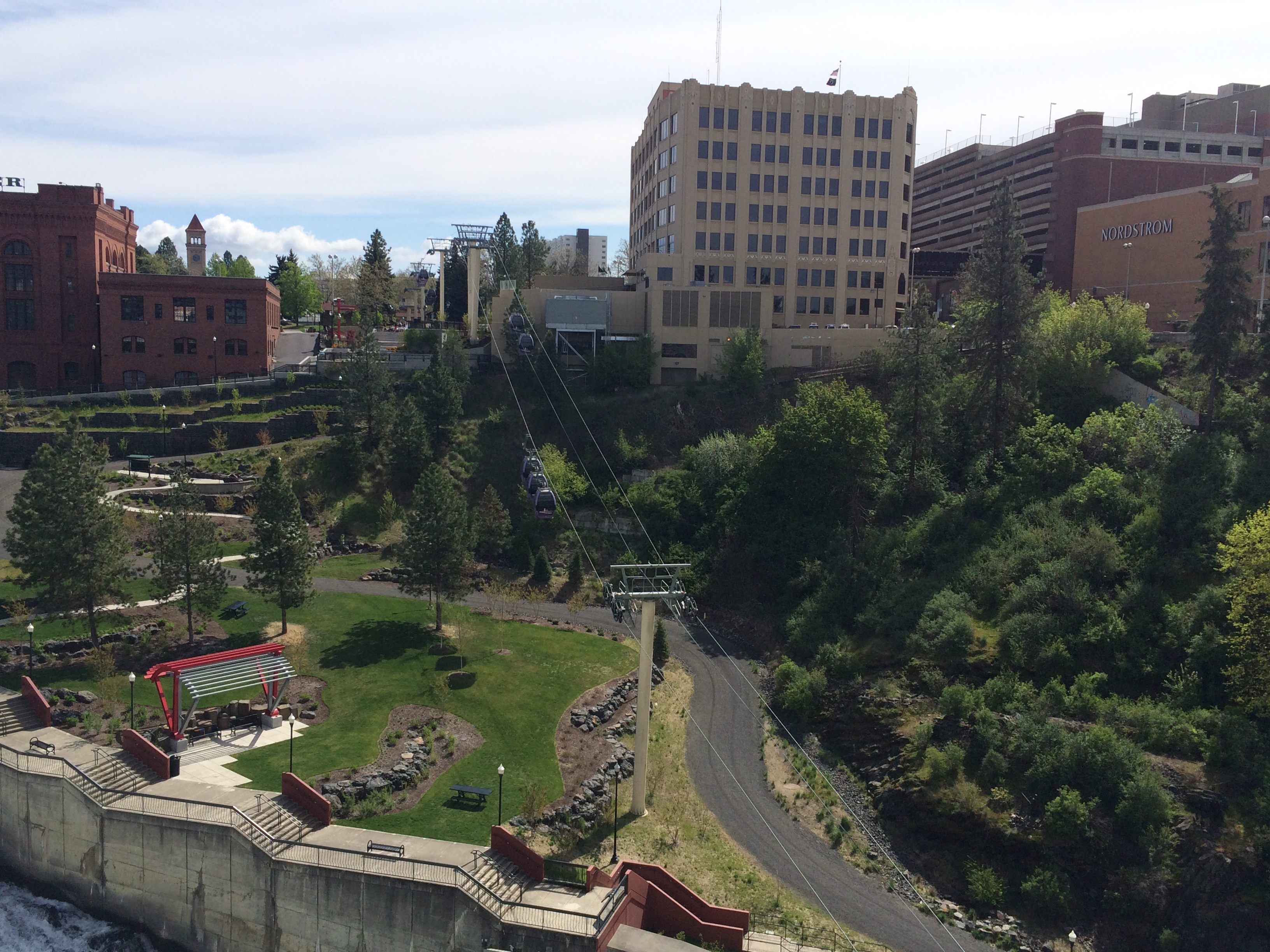
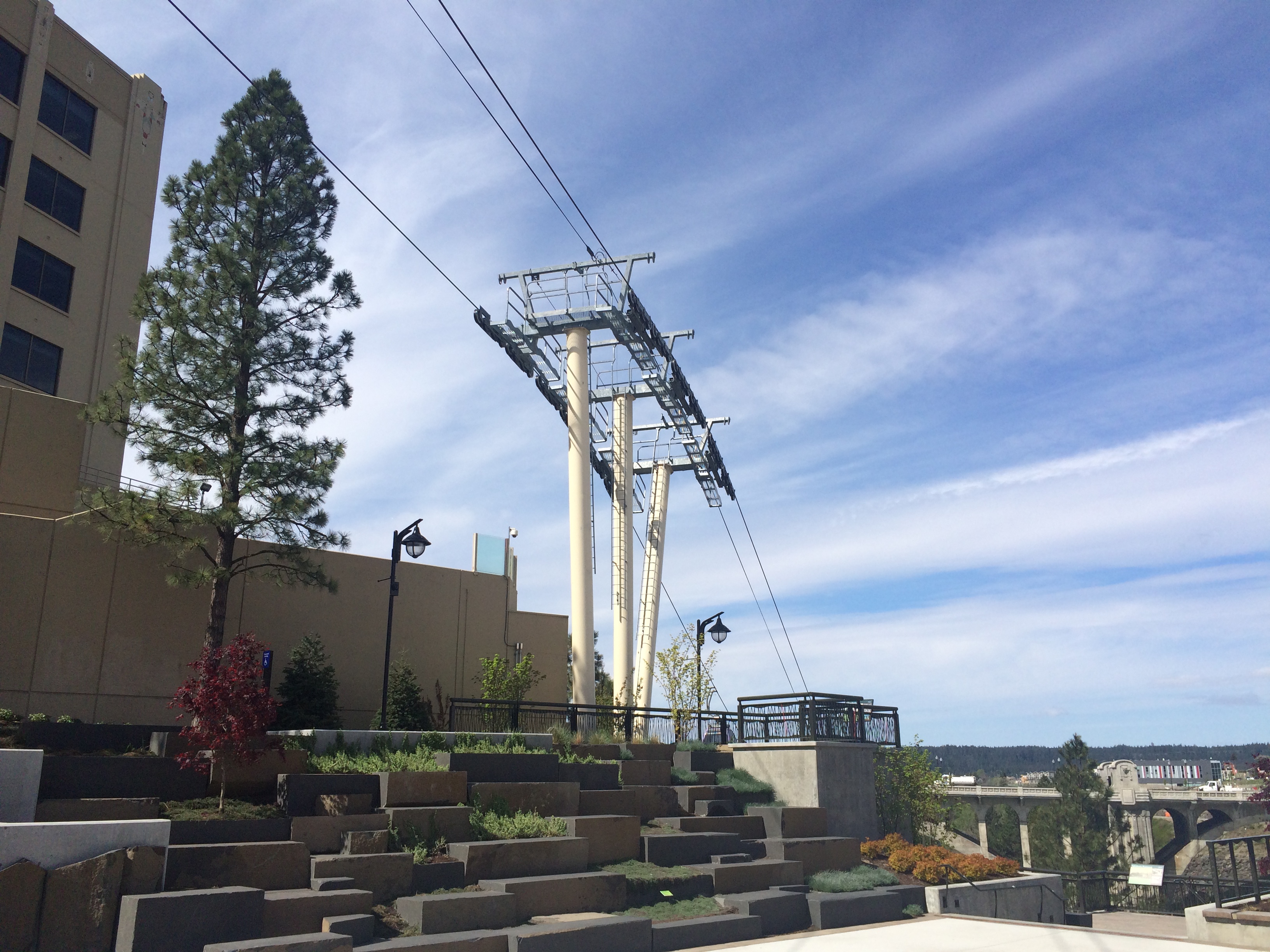
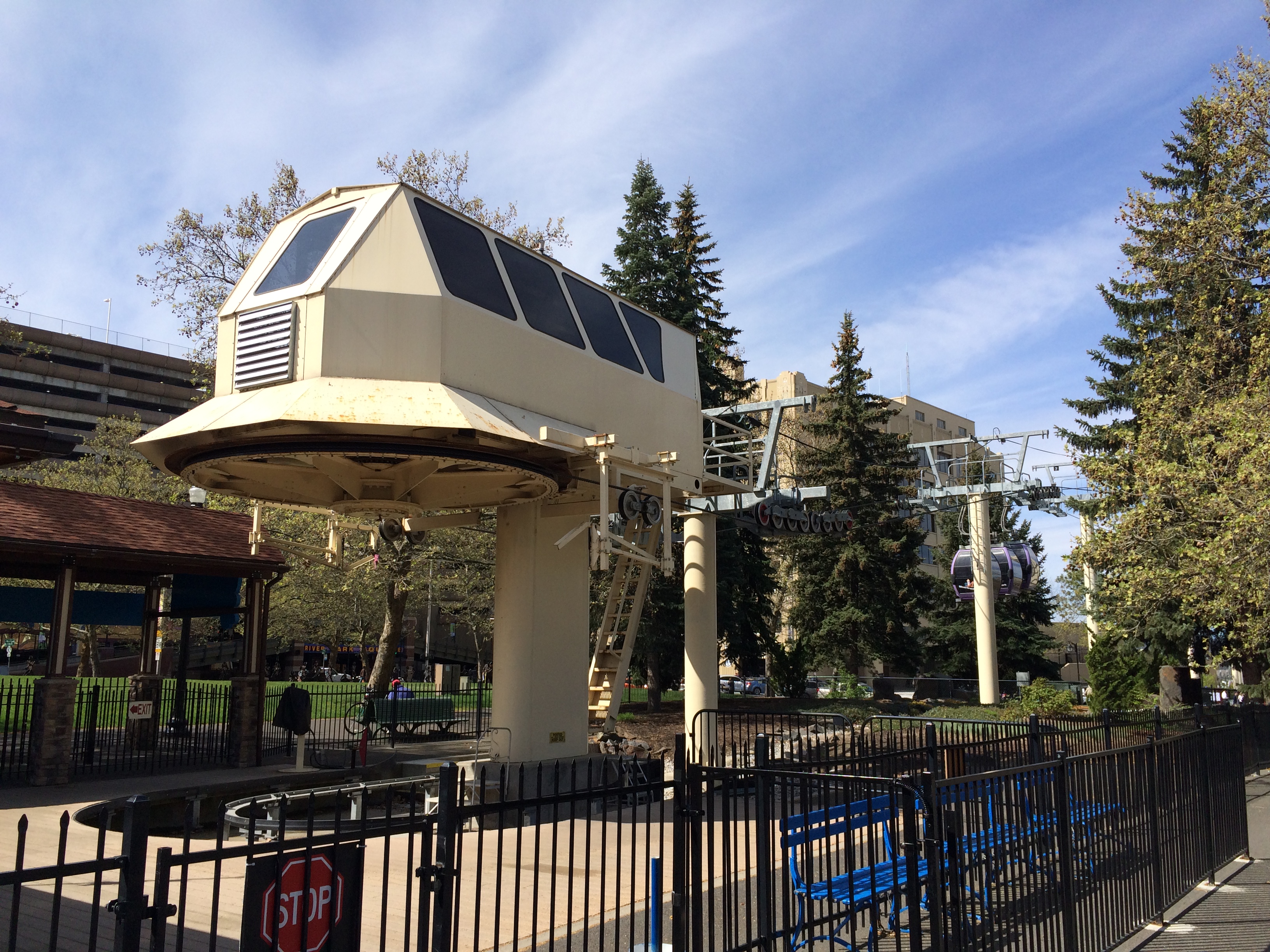
The $2.5 million Spokane Falls SkyRide is one of only a handful of lifts in North America owned by city government. Doppelmayr CTEC built the pulse gondola in 2005 to replace a Riblet version that debuted in 1974. Riders board at the drive station in downtown Spokane’s Riverfront Park. The gondola travels down through the park, across the Spokane River and under a four-lane bridge before turning around. All this happens in only 1,120 feet. It takes 15 minutes to ride round-trip at a painful 150 feet per minute (the design speed is 600 fpm.) The gondola’s turnaround station on the far bank of the river does not have loading/unloading or even an operator. A ticket for the SkyRide costs $7.50 and it operates year-round.
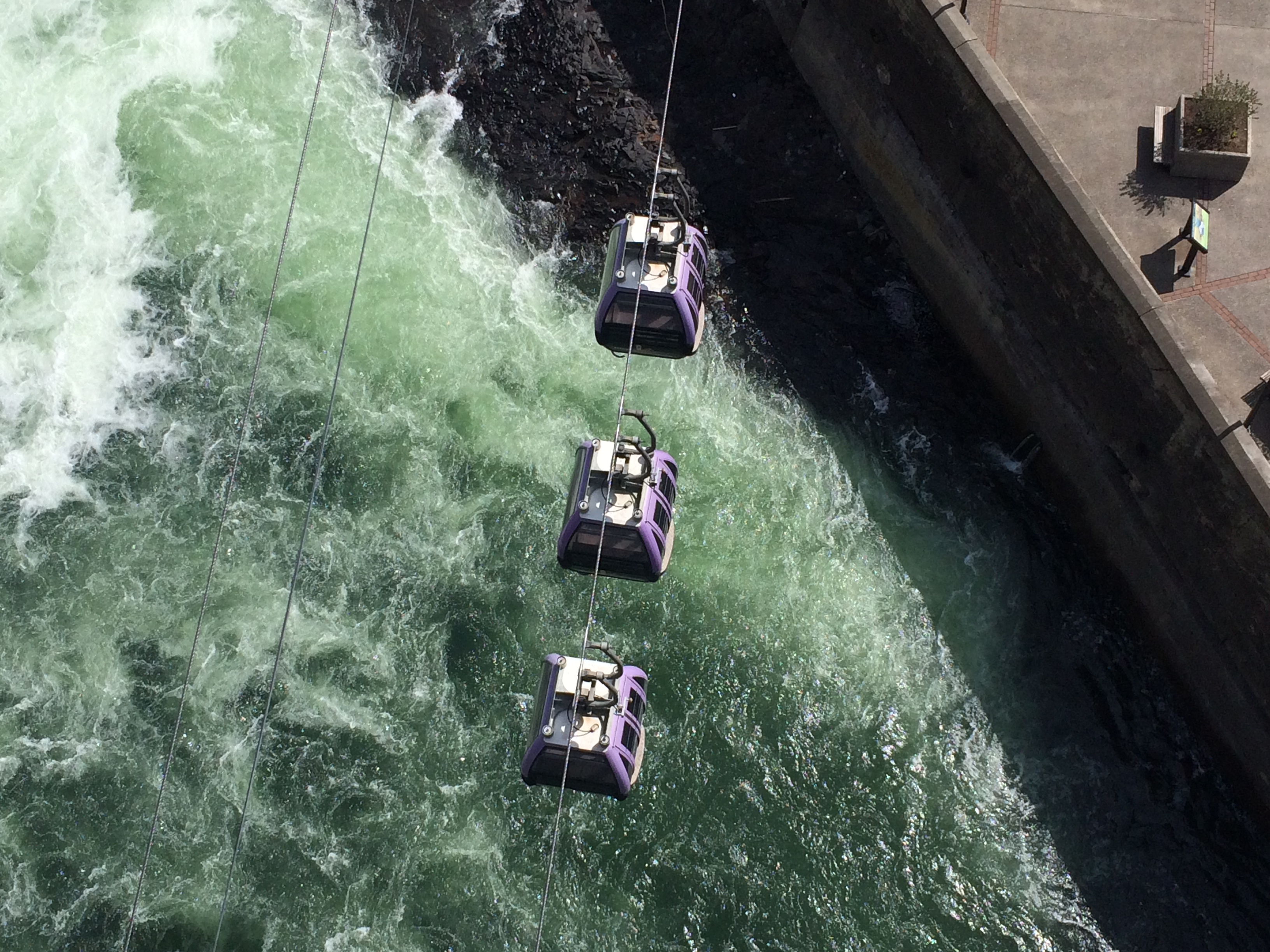
Spokane’s original Riverfront SkyRide, built by Riblet, ran in a similar alignment from 1974 to 2005. (Riblet built over 500 lifts in a shop three miles away.) The Riblet version of the SkyRide had open air cabins but the new one has 15 CWA Omega 6-passenger cabins. Because the cabins are enclosed, the SkyRide shuts down when the temperature exceeds 85 degrees, which happens fifty days a year in Spokane. Last year Doppelmayr developed a plan to retrofit cabins with larger opening windows but so far these have not been installed. Despite this issue, over 70,000 people ride the SkyRide every year.
The Next Big Resort?
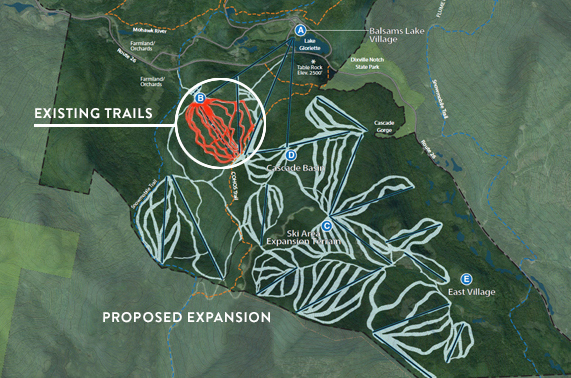
Last Wednesday, New Hampshire Governor Maggie Hassan signed a bill that may create the largest resort in the east out of a tiny, closed ski area called The Balsams. The resort hotel and Wilderness ski area have been closed since 2011 when the owners began renovations and ran out of cash. Now Les Otten, founder of American Skiing Company, has partnered with the Balsams ownership group to create the next big eastern ski resort. The bill the governor signed allows the state to back $28 million in development loans for the $143 million project.
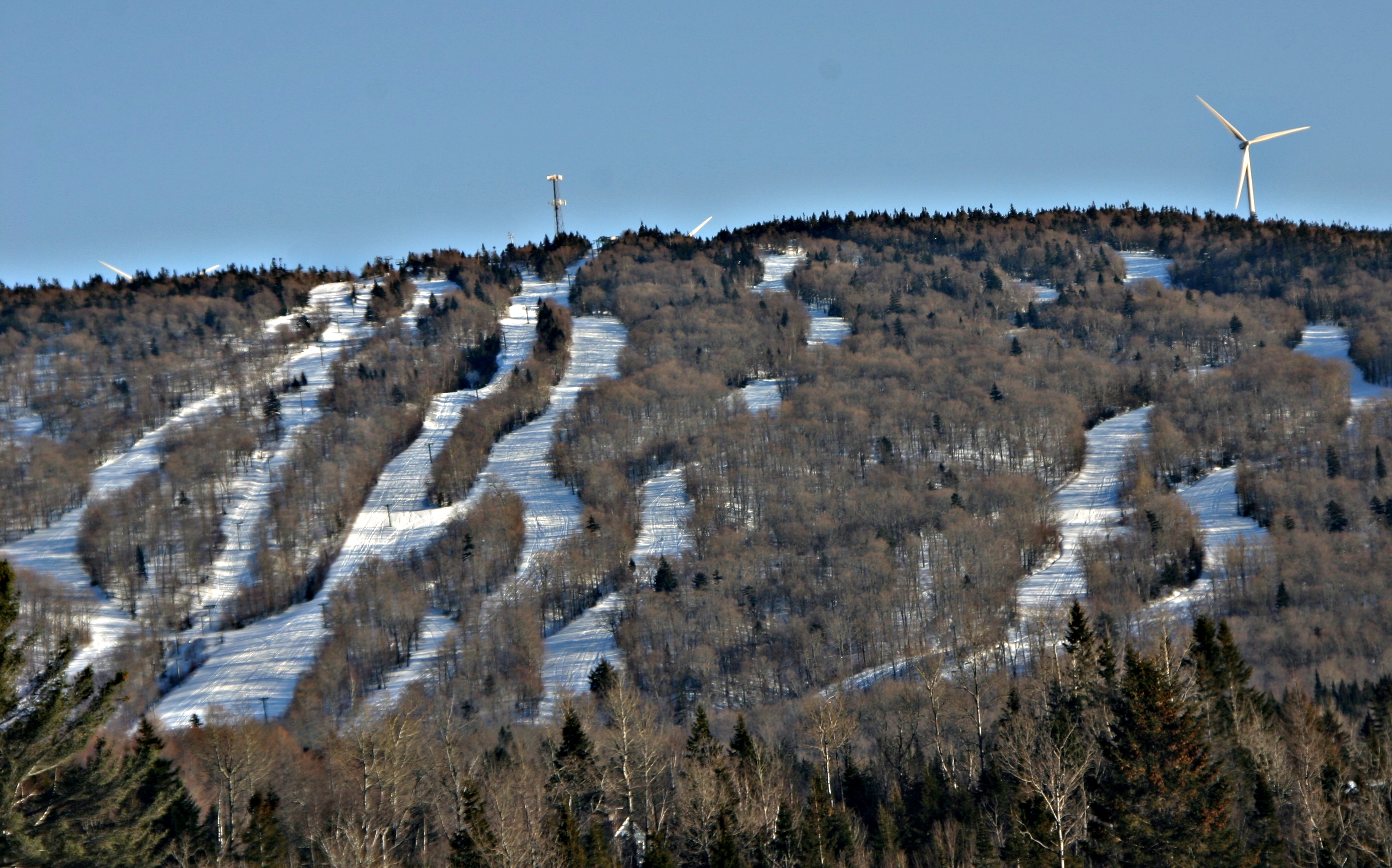
Otten is perhaps best known for turning Sunday River from a one-lift operation to a 525,000 skier visit beast of the east. Circa 2002, his empire included Sunday River, Sugarloaf, Cranmore, Attitash, The Canyons, Killington, Sugarbush, Mount Snow, Heavenly and Steamboat. After leaving the ski industry, Otten created a renewable energy company and ran for Governor in Maine. He lost. Now, six years after selling The Canyons, he’s back in the lift business.
 Lift Blog