The Case for a 3S Gondola to Timberline

IMG_3256

Timberline Lodge & Ski Area is perhaps America’s most unique snowsports destination with year-round skiing on one of the Lower 48’s largest volcanoes. Operated for the last fifty years by RLK & Company on behalf of the U.S. Forest Service, Timberline offers lift-served skiing twelve months a year on 1,400 acres of Mt. Hood.  Two million people visit the Lodge and ski area annually which are under 60 miles from Portland, the tenth fastest-growing city in America.  Timberline’s ski operation expanded in 2007 to accommodate growing numbers of visitors by adding the Jeff Flood Express in Still Creek Basin.  The ski area now has seven lifts with a vertical rise of 3,690 feet, the largest in the Pacific Northwest.

trail-map_timberline-lodge-ski-area_n4535-21718-0_raw
On the left of Timberline’s trail map you can see the old Skyway lift line headed towards Government Camp.

Timberline is also unique in that much of its terrain lies below the Lodge and access road. Visitors drive halfway up the mountain just to leave their car and ski below. Although the mountain offers more alternative transportation options than ever, Timberline’s two-lane access road and relatively small parking lots remain woefully inadequate.  Building more parking at 6,000 feet within a National Historic Landmark is not consistent with RLK’s sustainability goals nor those of the Oregon Department of Transportation and U.S. Forest Service to minimize development around the historic lodge.
Continue reading →

Alta Wants a Tram, Chondola & More

Alta submitted some grand plans to the Forest Service last week – 12 projects including at least five new lifts.  The 77-year old ski area wants to replace more than half of its chairs in the next five years and build a low-capacity tram up 11,068′ Mt. Baldy.  If approved and implemented, these would be the biggest changes to Alta’s lift system since the two-stage Collins high speed quad debuted in 2004.

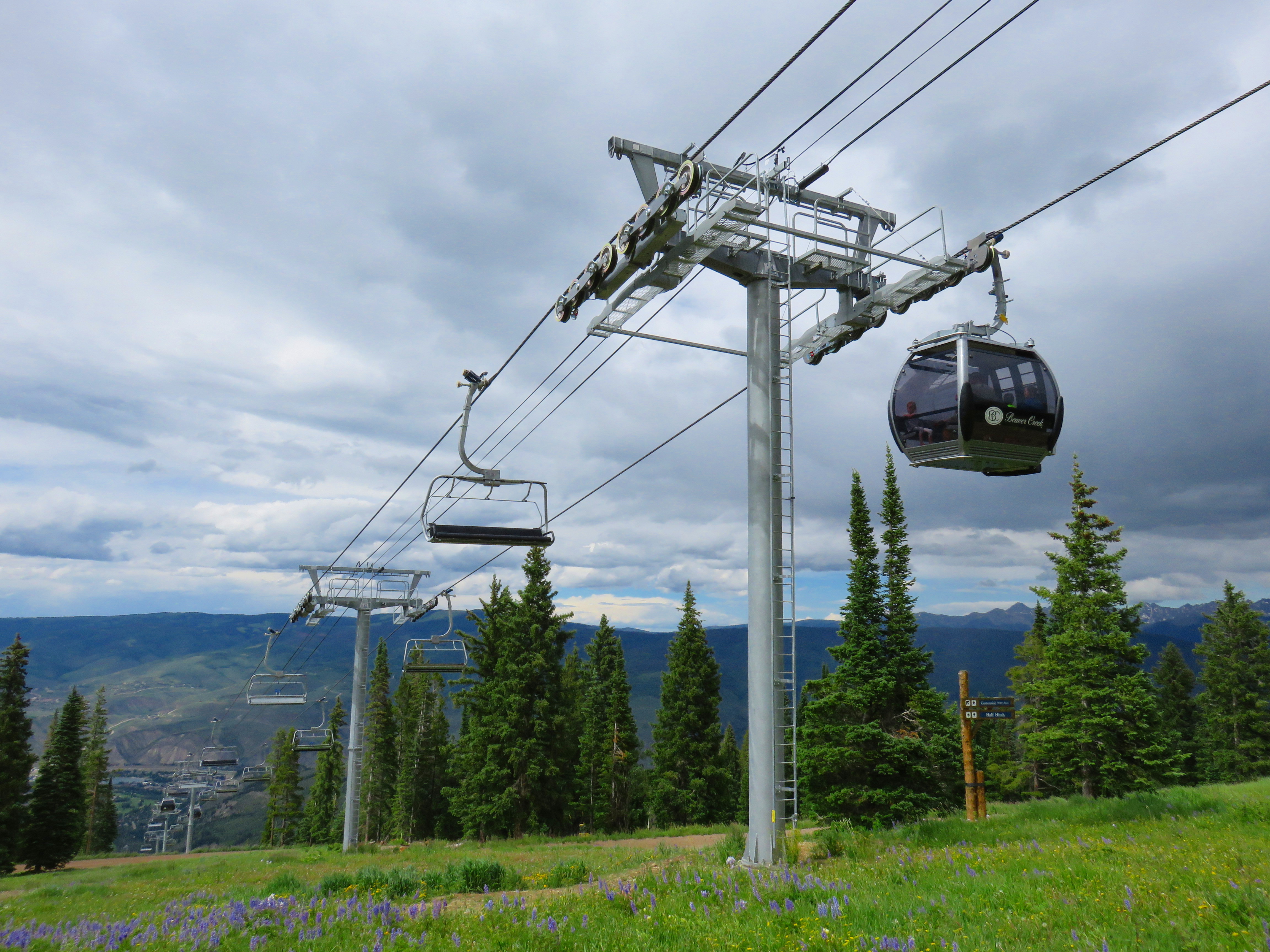
Beaver Creek-style lift coming soon to Alta?
A Beaver Creek-style Chondola coming soon to Alta?

Five lifts would be replaced with three new ones.  Sunnyside, one of only two detachable triple chairs remaining in North America, would be subbed with a higher-capacity Chondola with chairs and gondola or cabriolet cabins.  It would utilize the existing lift line and tower tubes where possible and have a capacity of 2,400 skiers per hour.  Albion, a 1980 Yan double running adjacent to Sunnyside, would be removed without being replaced.

supremeline
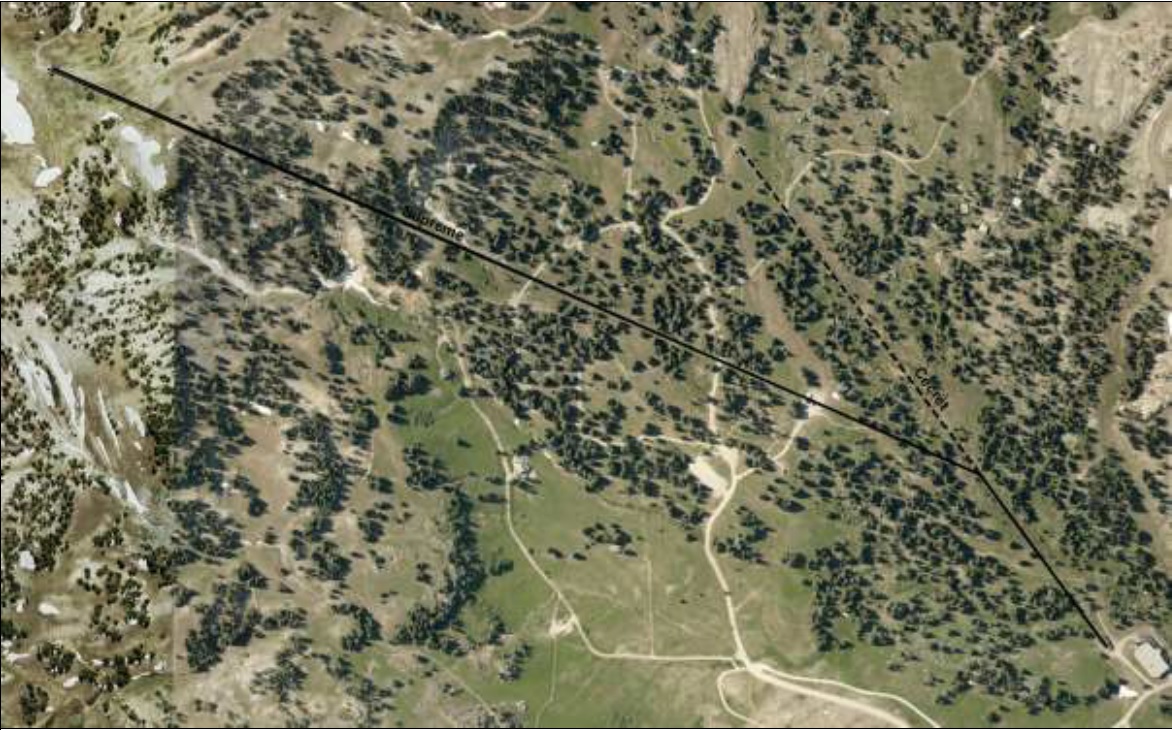
Supreme detachable quad lift line with angle station unloading for beginners.

Higher on the Albion side of the mountain, Cecret and Supreme would be replaced by a single detachable quad with an angle station, much like Collins’ mid-station.  Cecret and Supreme are both Yans built in 1981.  The new detach would follow the first third of Cecret’s current lift line before joining the Supreme line so it could utilize some of the current towers.  With these upgrades, the Albion side of Alta would go from five lifts to three.  That’s before a new lift called Flora is added. Flora would be a short (985 foot) double chair replacing the East Baldy Traverse with a lift to get from the top of Sugarloaf to the top of Collins.  The top-drive chair would move 1,200 skiers per hour out of Sugarbowl and have just four towers.

Continue reading →

One Wasatch: How Four Lifts Could Link 18,000 Acres

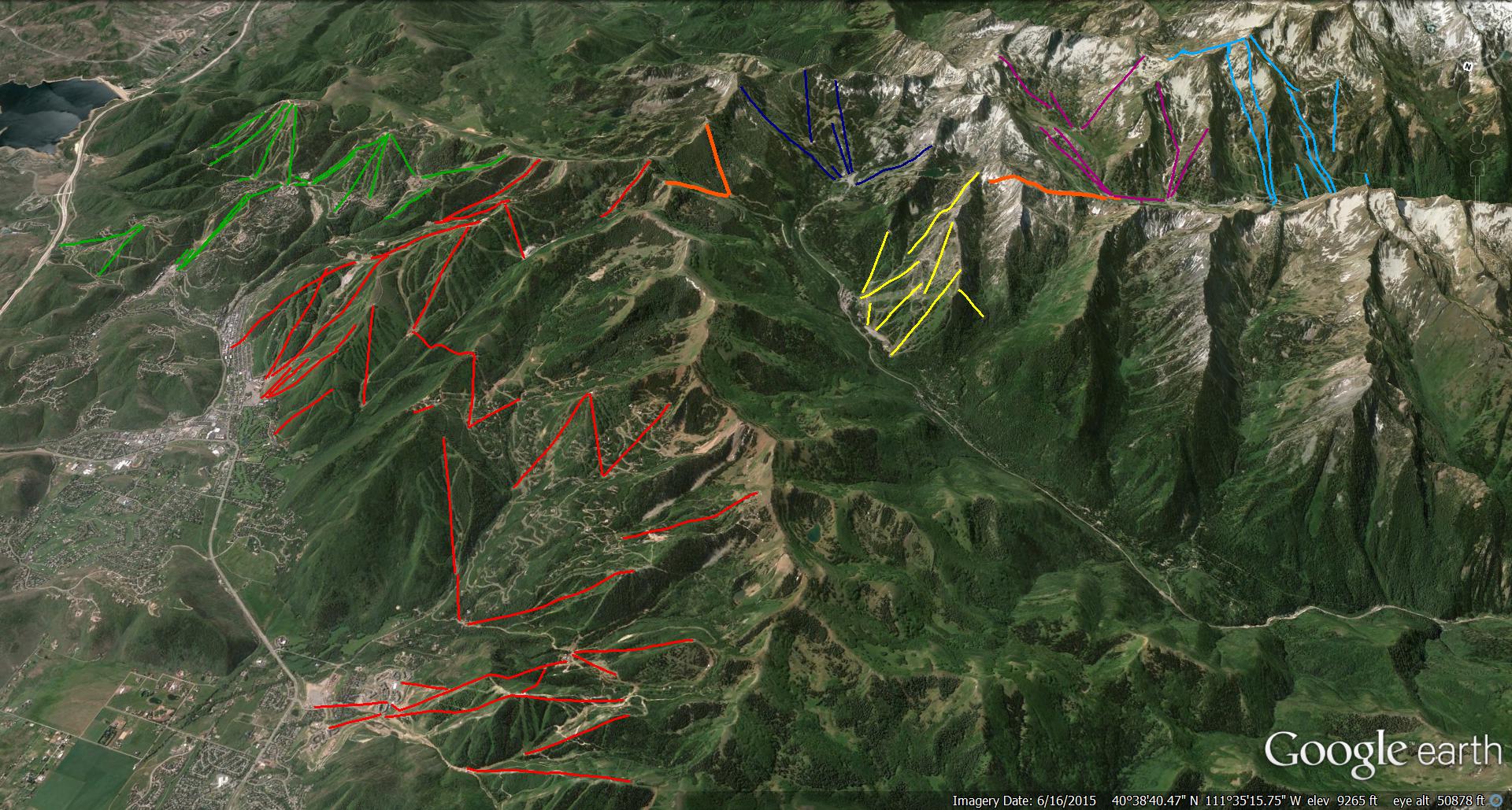
1318848If you’ve never driven over 9,700′ Guardsman Pass in the summer, you might not realize just how close Brighton Ski Resort is to the upper reaches of Park City Mountain. In fact, from Brighton’s fire station to the top of the Jupiter lift is less than 7,000 linear feet. It’s this reality and a similar one in Alta’s Grizzly Gulch that makes Ski Utah’s One Wasatch concept tantalizingly close to becoming reality.  But the feeling that the Wasatch just isn’t that big also has environmental groups scrambling to prevent any more of these mountains from becoming ski runs.  The challenge for Save Our Canyons, the Sierra Club and others is that all the land needed to complete One Wasatch is already in the private hands of Royal Street Land Company (owner of Deer Valley,) Iron Mountain Associates (developer of The Colony) and Alta Ski Lifts Co.

one wasatch overview
Only four new lifts, marked in orange, would be needed to connect six ski resorts in Utah’s Wasatch Mountains.

Over the Pass

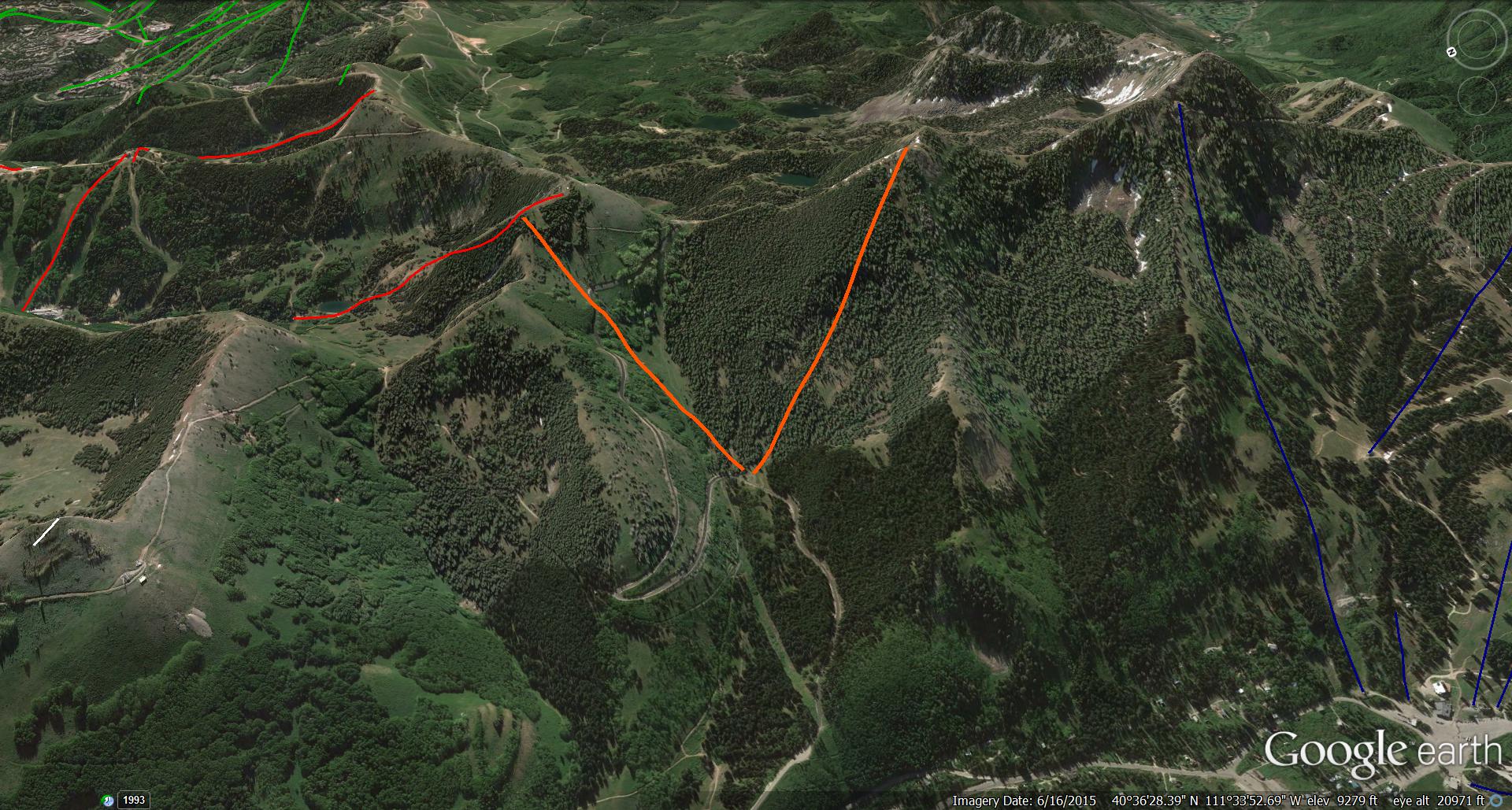
I’m convinced Park City and Brighton will be connected first.  Ski Utah calls the two lifts needed for this connection Guardsman A and Guardsman B.  They would rise from a common point adjacent to Guardsman Pass Road between Brighton and Park City’s Jupiter pod on land owned by Royal Street a.k.a. Deer Valley. Operationally, it would make the most sense for CNL/Boyne to build and operate these lifts as part of Brighton.  Guardsman A, which would need approval from UDOT to cross State Route 190, would likely be a detachable quad approximately 4,065′ long with a vertical rise of 740′ ending near the top of Jupiter.  Guardsman B would rise back towards Brighton and be a detachable quad about 3,800′ long with a vertical of 1,235′.

Guardsman A+B
This view shows the two lifts needed to connect Park City Mountain to Brighton. Guardsman A is on the left and Guardsman B on the right.

Royal Street Land Company has a strong interest in completing the Guardsman connection because it now also owns Solitude.  With Guardsman in place, a Deer Valley skier at the top of Lady Morgan Express could ride 4 lifts (Pioneer and Jupiter at Park City, Guardsman B and Milly Express at Brighton) and be at Solitude in less than an hour.  The return trip would be almost as easy – Summit Express to Great Western Express to Guardsman A and Park City Mountain, which already abuts Deer Valley.  Salt Lake City and Salt Lake County would both need to approve the Guardsman lifts before construction could begin.

Continue reading →

Fixed-Grip Chondola Coming to Anakeesta

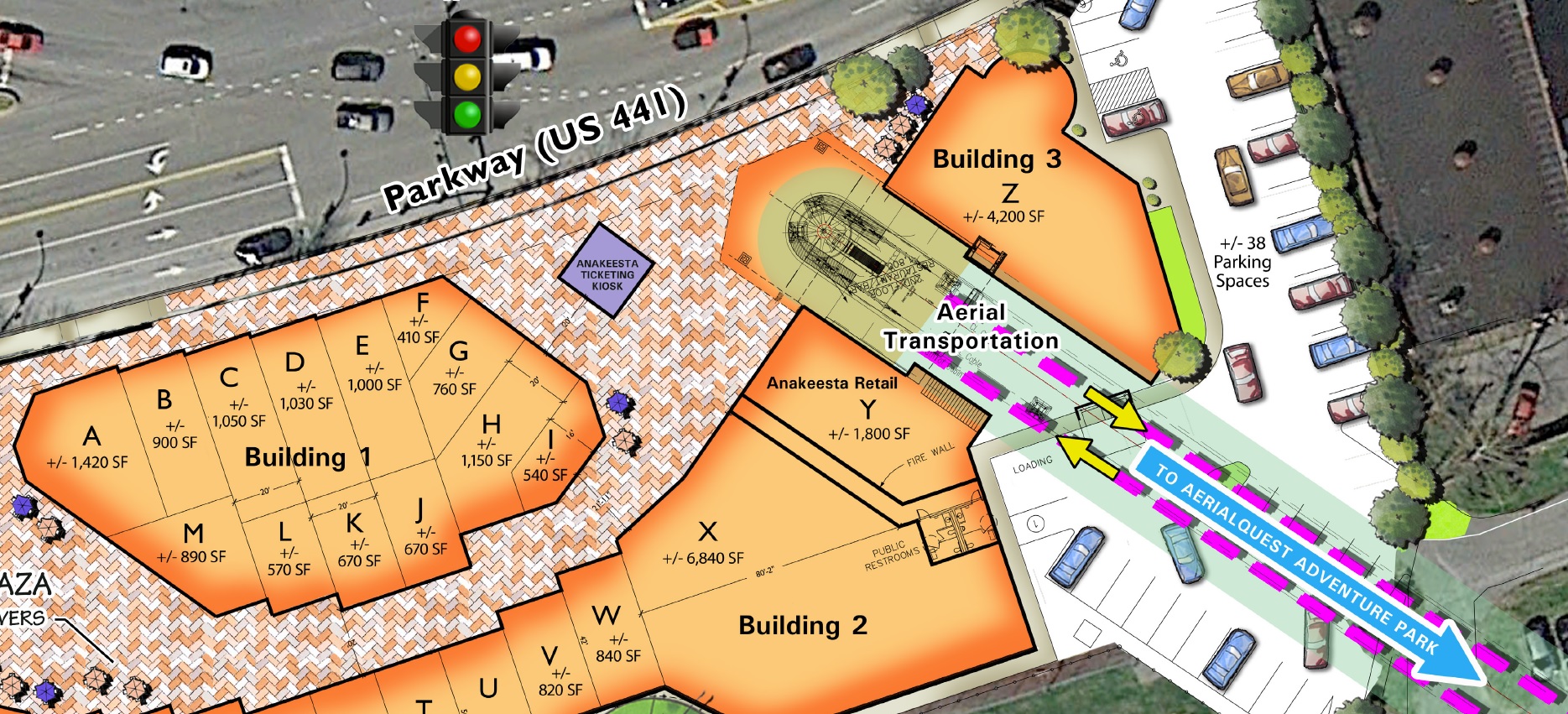
Gatlinburg is a national park border town in Tennessee’s Smokey Mountains that attracts more than 11 million visitors annually.  This city with 4,000 local residents already includes Boyne Resorts’ Gatlinburg Sky Lift and the Ober Gatlinburg 120-passenger aerial tramway. Doppelmayr also built a quad chair in 2012 called the Wilderness Mountain Chairlift in nearby Wears Valley.  Anakeesta is a new project that brings two acres of retail to the center of Gatlinburg with a 65-acre mountaintop adventure park rising above. A unique fixed-grip chondola lift will connect Anakeesta Village with the park, dubbed AerialQuest.

anakeesta village

Anakeesta’s developers were kind enough to provide me with a few details on this unique lift.  I initially assumed it would be a pulse gondola system similar to the Iron Mountain Tramway that serves a mountaintop adventure park in Colorado.  Anakeesta’s chondola will be the first lift of its kind to feature chairs and gondola cabins.  I’m pretty sure no one else has done this anywhere in the world on a fixed-grip lift.  In order to accomplish the feat, line speed will be very slow – under 200 feet a minute.   The system will be 2,032 feet long with a vertical of 528′ and will take about 12 minutes to ride.  It will have 104 quad chairs with 8 six-passenger gondola cabins carrying a total of 1,000 passengers per hour. Since no contract has been signed, the developer is not quite ready to say which lift company they are contracting with.  But if you know your lifts you can identify the terminal in the drawing above.  Anakeesta will open in 2017, crowning Gatlinburg as the lift capital of the southeast!

Innovative Gondola Coming to Oakland Zoo’s California Trail

gondola_arrival
Berkeley-based Noll & Tam Architects designed California Trail’s striking hilltop visitor center integrated with the gondola’s top terminal.

This fall, the Oakland Zoo will open a unique new gondola serving a 56-acre expansion called California Trail, enabling the zoo’s 750,000 annual visitors to enjoy two distinct complexes less than four minutes apart.  It’s only logical that a ropeway system will serve exhibits on a summit featuring grizzly bears, mountain lions and gray wolves. By choosing to build a gondola, the zoo avoided the environmental impacts of roads, trails, and exhibits on steep slopes and won’t have to run higher-impact shuttle buses. Nik Dehejia, Oakland Zoo’s Chief Financial Officer notes, “the gondola system will be the first urban gondola of its size in Northern California and the second in the state. It will be an iconic feature for the Bay Area, drawing thousands from all over the region to Oakland.”

IMG_3851
Doppelmayr crews building the top terminal.

The detachable 8-passenger system is being built by Doppelmayr USA under general contractor Overra Construction.  The gondola will feature 16 CWA Omega IV cabins and 7 towers that are up to 68 feet tall.  Slope length of the lift is 1,780 feet with a vertical rise of 309 feet.  The system will move up to 1,000 guests per hour/per direction initially with the option of adding 8 cabins to reach 1,500 per hour.  Ride time will be a quick 3.95 minutes at an operating speed of 450 feet per minute.

Continue reading →

One Park City and What’s Next for America’s Largest Resort

IMG_7721

Vail Resorts’ $50 million endeavor to connect Utah’s two largest resorts last summer was one of the biggest infrastructure investments at a U.S. resort since American Skiing Company created The Canyons in 1997.  That summer twenty years ago, ASC bought so many lifts for The Canyons (8!) they had to split the order between three lift manufacturers to get them all done in time for the 1997-98 season. It’s hard to even imagine that happening today. Still, Vail did manage to build a two-stage gondola, add a six-pack, move a detachable quad, construct a mid-mountain lodge and re-brand an entire company over the last eight months.  I got to check out the results this week.

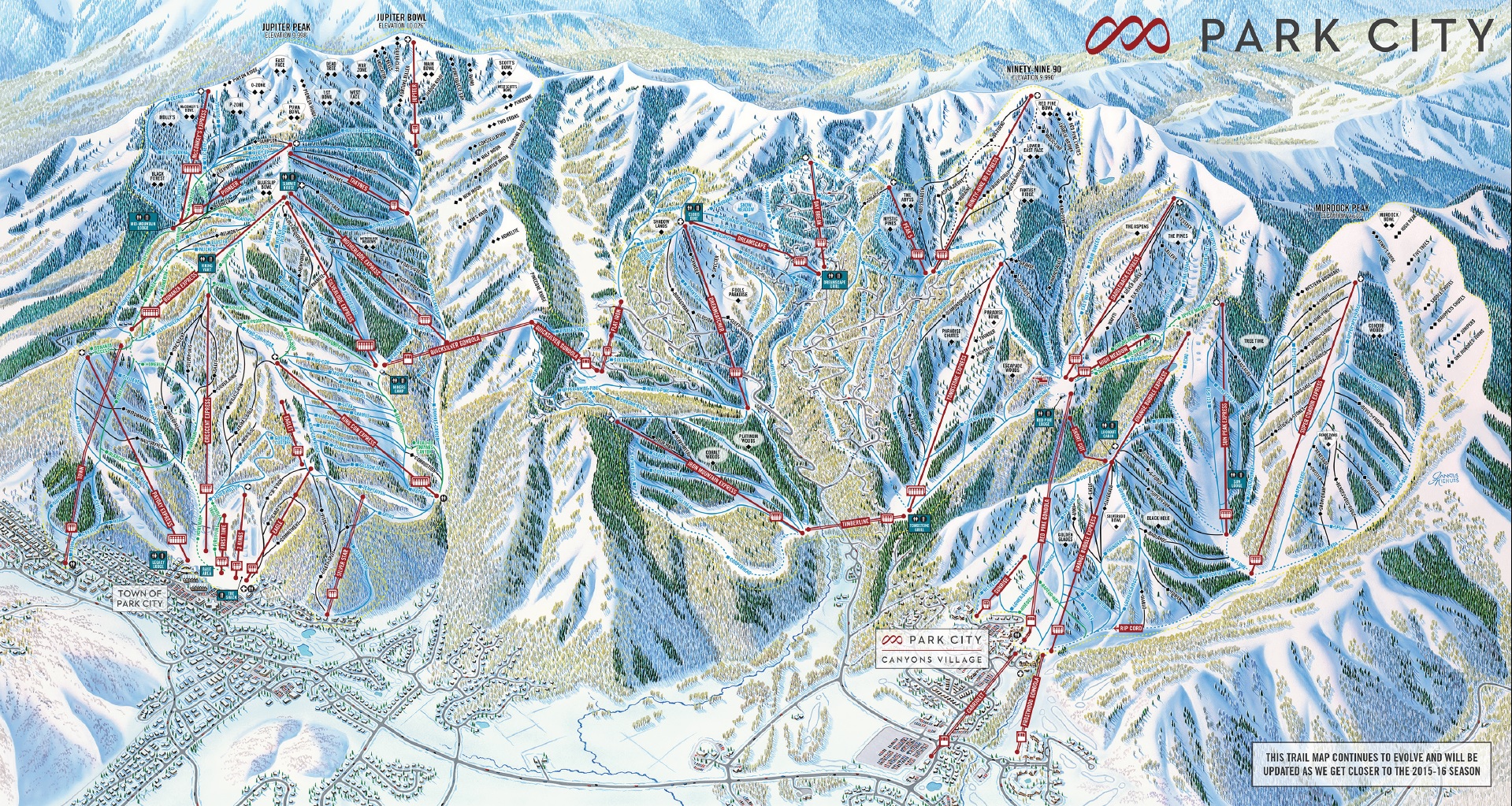
Park City Mountain is now the undisputed largest ski resort in America with 37 lifts and 300+ trails spread across 7,300 acres (it’s worth noting that Big Sky Resort still owns, and seems to have no problem using, the Biggest Skiing in America® trademark.)  The first thing I noticed is Vail did its best to remove all references to Powdr’s old Park City logo and the Canyons name, replacing them with the red infinity branding.  Despite these efforts, everyone still seems to call the northern half of the complex Canyons, or perhaps worse, The Canyons. Thousands of signs were changed over the summer and every employee got a new uniform. Most of the lifts were painted red although a few remain in black and orange.

PCtrailmap
The new Park City has 37 lifts moving 78,000 skiers per hour across 11 square miles.
The flagship of “One Park City” is the Quicksilver Gondola and neighboring Miners Camp lodge. Vail Resorts took the design they used for the Tamarack Lodge at Heavenly and Zephyr Lodge at Northstar and brought it east, demonstrating how the company excels at standardizing everything across its resorts. (Pepsi, never Coke, and safety bars on every chair at every mountain are other examples.)

Continue reading →

Mi Teleférico to Add 9th Gondola Line in La Paz

The world’s largest gondola-based public transit network, Mi Teleférico “My Cable,” announced on social media this week it has ordered a 9th gondola from Doppelmayr for delivery in 2019.  The Linea Plateada (Silver Line) will connect the existing Yellow/Red and under construction Purple/Blue lines in Bolivia’s capitol city of La Paz.  When complete, it will connect nine separate lines and 42 miles of cable together for the first time.


The brainchild of President Evo Morales, Bolivia went all-in on gondolas in 2012, ordering three lines (with 4 haul ropes, 11 stations and 450 cabins) for phase one.  The experiment proved wildly successful, offering safe, clean and reliable transport to the masses in La Paz and neighboring El Alto.  Less than two months after the first gondola opened, President Morales announced construction of five additional lines on July 1, 2015.

Not many public transit systems are as revered as this one, which has more than 160,000 likes on Facebook  (the largest subway system in the world, New York’s MTA, has just 50,000.)  Mi Teleférico’s slogan is Uniting Our Lives and it serves more than 100,000 passengers every weekday.  For 40 cents a trip, riders even get free wi-fi.

https://www.instagram.com/p/xOuSB5IrkP/?tagged=miteleferico

Continue reading →

World’s Largest Aerial Tramway Under Construction in Vietnam

11071092_1476077369364323_5188808649322470878_o
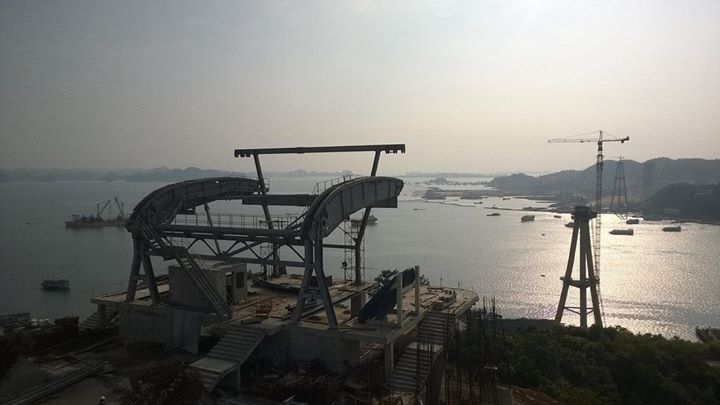
The Ha Long Queen will have the world’s largest tram cars capable of handling 230 passengers each.  All photos from Skyscrapercity.com

Vietnam doesn’t have skiing.  That fact makes it an unlikely candidate for the title of world ropeway capital.  With multiple record-breaking gondolas operating and more under construction, that may soon change.  In 2007, Poma built a spectacular installation over two miles of ocean called the Vinpearl Cable Car.  The Hanoi-based Sun Group is behind many of Vietnam’s lift projects and is perhaps the Doppelmayr/Garaventa Group’s best customer.  Sun Group operates the second longest mono-cable gondola, just commissioned the world’s longest 3S gondola and is currently building another 3S that’s a mile longer than the first one.  Now they are building a huge aerial tramway and at least two more gondola lifts.

VHL-09-normal
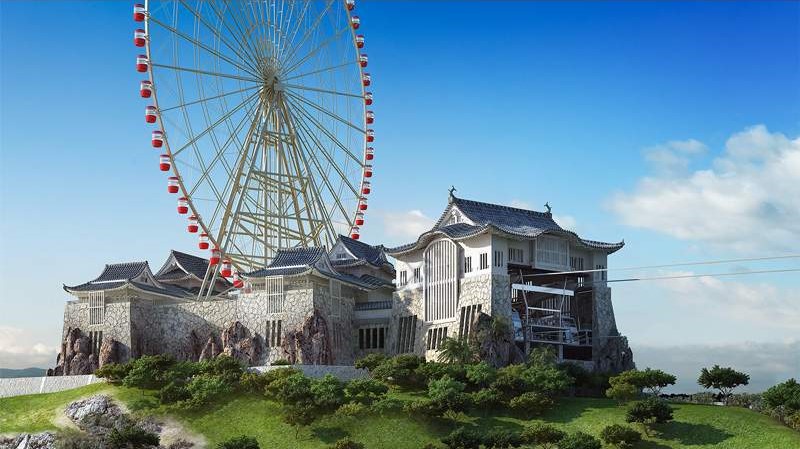
A big tramway for a big wheel.

Vietnam’s first reversible aerial tramway under construction in Ha Long Bay will break two world records.  The Mystic Mountain Skyway Ha Long Queen Cable Car will link a new amusement park called Ha Long Ocean Park with one of the world’s largest observation wheels on a neighboring mountain across the bay.  The $282 million project is a perfect site for an aerial tramway with two points needing to be connected but with natural obstacles in between.  At the same time, the alignment is relatively short with moderate capacity needs.

Continue reading →

Jackson Hole to Build Another Gondola

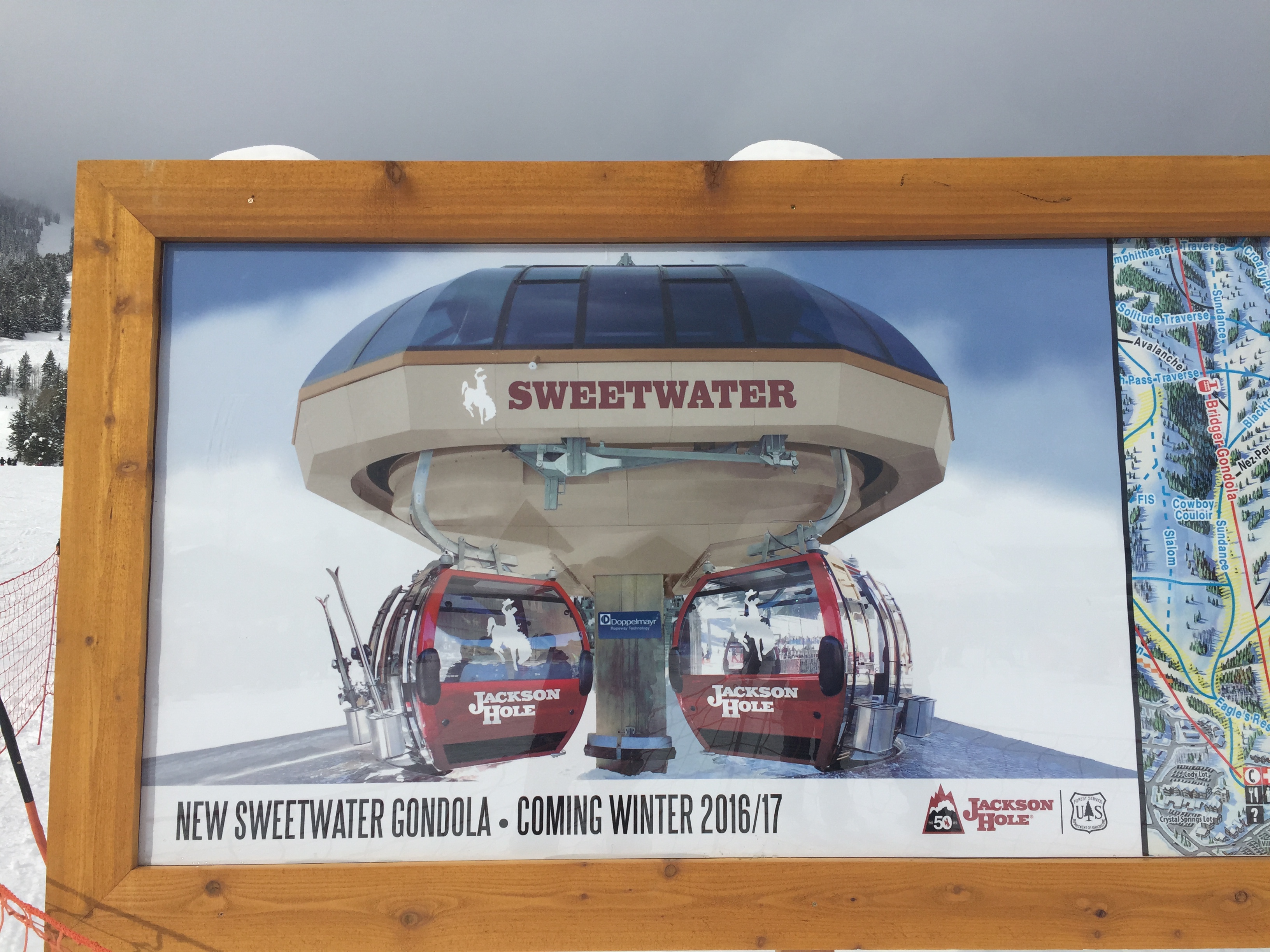
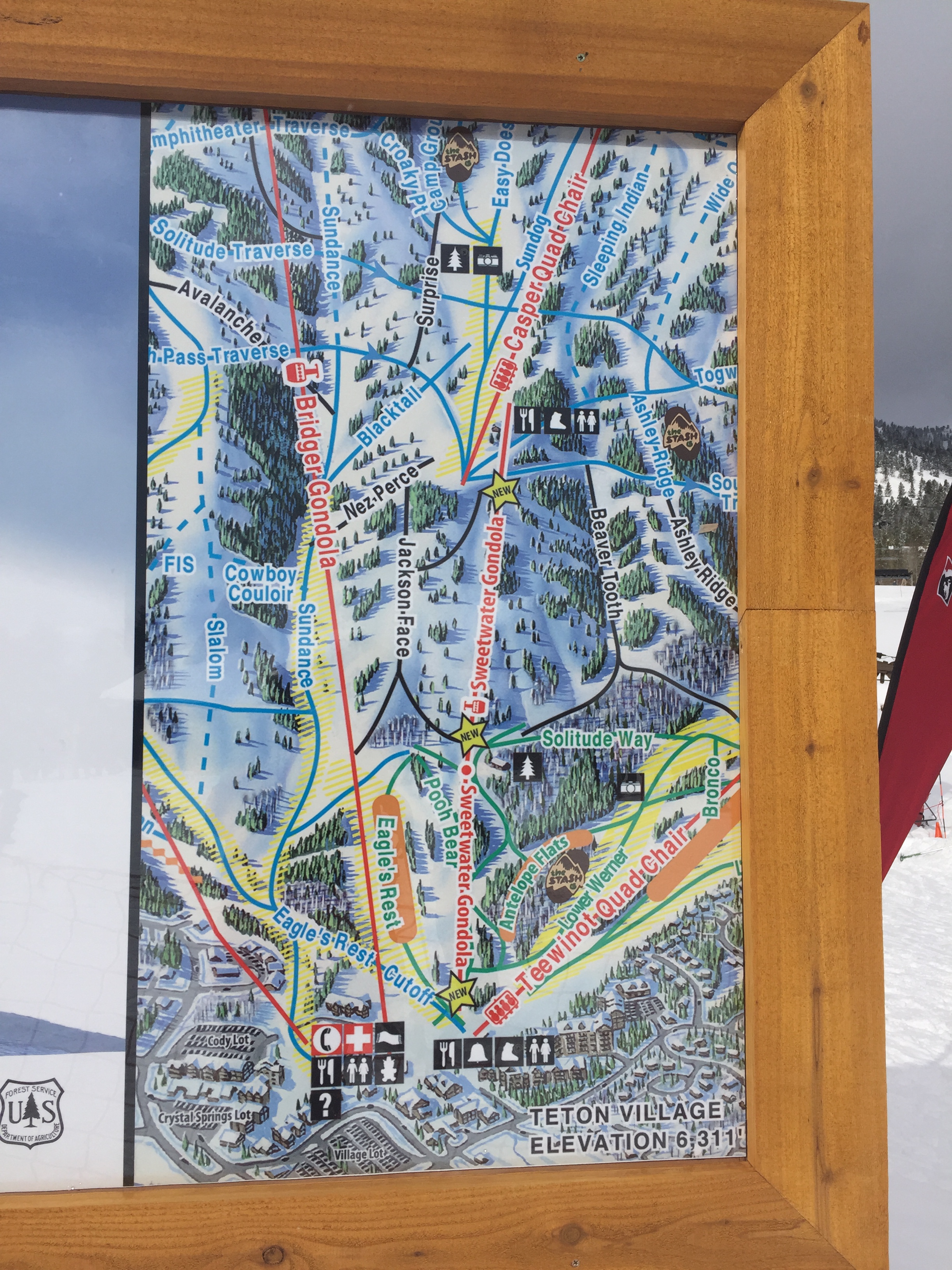
The sign went up this week at Jackson Hole, which will become the 12th mountain in the United States with the distinction of having two gondolas.  The new Sweetwater Gondola will replace the Eagle’s Rest and Sweetwater chairs in two stages.  Built by Doppelmayr, it will boost out-of-base capacity by 25% and provide direct access to beginner and intermediate terrain at mid-mountain.  In the future, a dedicated learning facility with dining, lessons and rentals will open at the mid-station just north of Sweetwater’s existing bottom station. Though expensive, gondolas have proven to be extremely efficient and less intimidating than chairlifts for people learning to ski and snowboard.

IMG_9135
It looks like Doppelmayr will modify its Uni-G terminal skin in an effort to match the Poma terminals next door at Teewinot and Bridger.

This section of Rendezvous Mountain has an interesting lift history.  A Riblet double chair named Crystal Springs served a similar alignment but with no mid-station from 1978 until 1997, when it was removed to make way for the Bridger Center and Bridger Gondola.  If you ride Eagle’s Rest today, there is still one Riblet tower where the old Crystal Springs crossed under on its way up.  Eagle’s Rest is one of three original lifts opened at Jackson Hole in 1965, even before the first tram.  When Eagle’s Rest is retired this spring there will be just six Murray-Latta lifts remaining in service worldwide.  The new gondola also replaces Sweetwater, a triple chair that found its way to Jackson in 2005 by way of Winter Park. It was the Zephyr triple from 1983 to 1990 and Eskimo from 1990 to 1999 before sitting in storage for six years. Built by Lift Engineering, it was upgraded over time with Poma chairs/line gear and Doppelmayr CTEC controls.  Assuming it gets re-installed somewhere, the equipment will be in its fourth home!

IMG_9136
Sweetwater’s two sections will have around 8 towers each.

Continue reading →

Squaw-Alpine Applies to Build Base-to-Base Gondola(s)

ImageUploadedByTGR Forums1450406020.299083
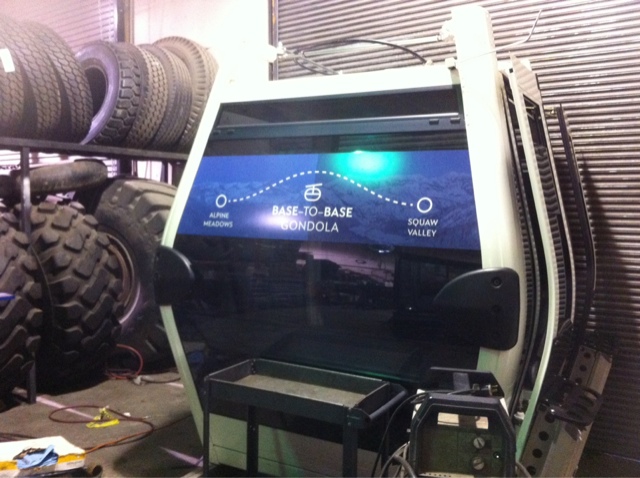
8-Passenger Sigma Diamond demo cabin in Squaw Valley’s shop.  Source

Earlier this fall, Squaw Valley Ski Holdings submitted its formal application to the Placer County Planning Department to build the three-stage gondola connecting Squaw Valley with Alpine Meadows that was first announced last spring.  Leitner-Poma will design the system on the heels of completing Squaw’s Big Blue and Siberia six-packs.  LPOA has lots of experience building detachable lifts with angle stations including similar three-section gondolas at Breckenridge and Sunshine Village.

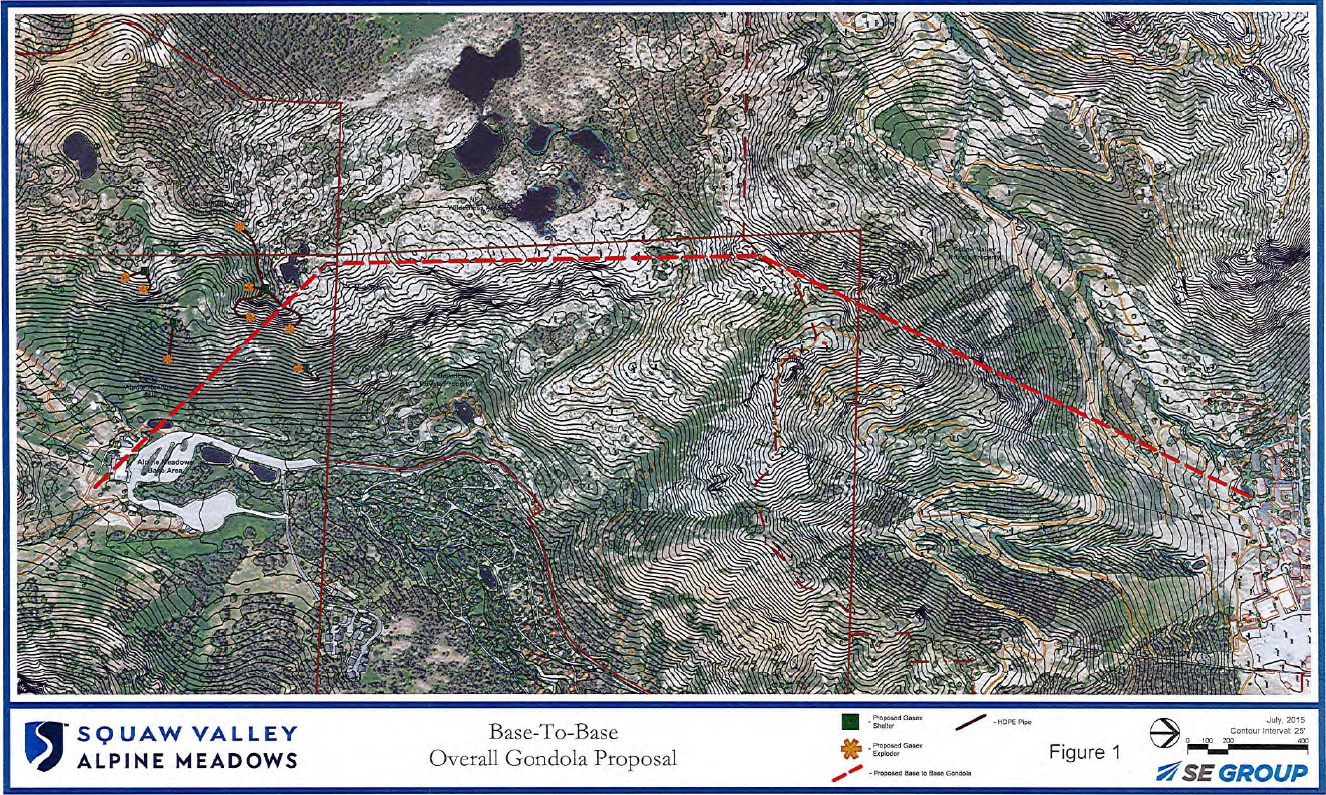
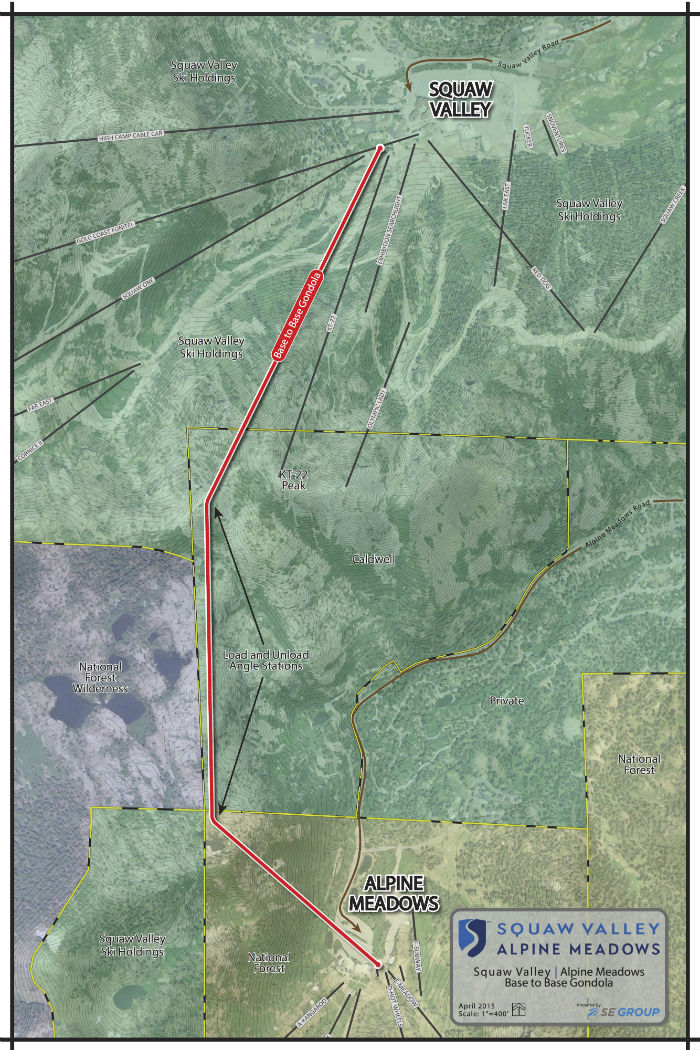
The Squaw-Alpine gondola will be around 13,000 feet long with 37 towers and two ridge-top angle stations.  The unique system will have three haul ropes but only two drives located at the end stations (Breck and Sunshine’s gondolas have just one rope & drive each.)  In this sense, the base-to-base gondola is really two gondolas similar to Whistler Village and Revelstoke. What’s different at Squaw is the center section will operate with the Alpine drive by sharing a common bullwheel where the sections meet.  As such, the Squaw section could be run independently but the other two spans must operate together.  Regardless, cabins will normally make the entire trip from Squaw to Alpine.  The gondola’s hourly capacity will be 1,400 passengers per direction with 8-passenger cabins and a line speed of 1,000 fpm.  Squaw also plans full-speed operations during a power outage with generators at each drive station.

gondolamap
Updated map with some changes from the original alignment.

The north mid-station on the Squaw side will be sited on private lands near the summit of the KT-22 detachable quad while the south mid-station will be in the Tahoe National Forest within Alpine’s existing permit boundary.  Skiers will be able to access some pretty awesome terrain from both mid-stations when conditions allow.  The Squaw Village terminal will sit between KT-22 and the Squaw One Express while the Alpine terminal will be between the Roundhouse Express and Hot Wheels. The gondola will actually fly over Alpine’s base lodge and under Squaw’s Funitel.  One interesting point from the application is that the Alpine mid-station at just over 7,700 feet in elevation will have no permanent road access or power line to it, which is part of why the central section has no drive motor of its own.  The terminal control systems, lights, etc. will run off a line generator and diesel genset.

Continue reading →