Castle Mountain Announces Haig 1 Expansion

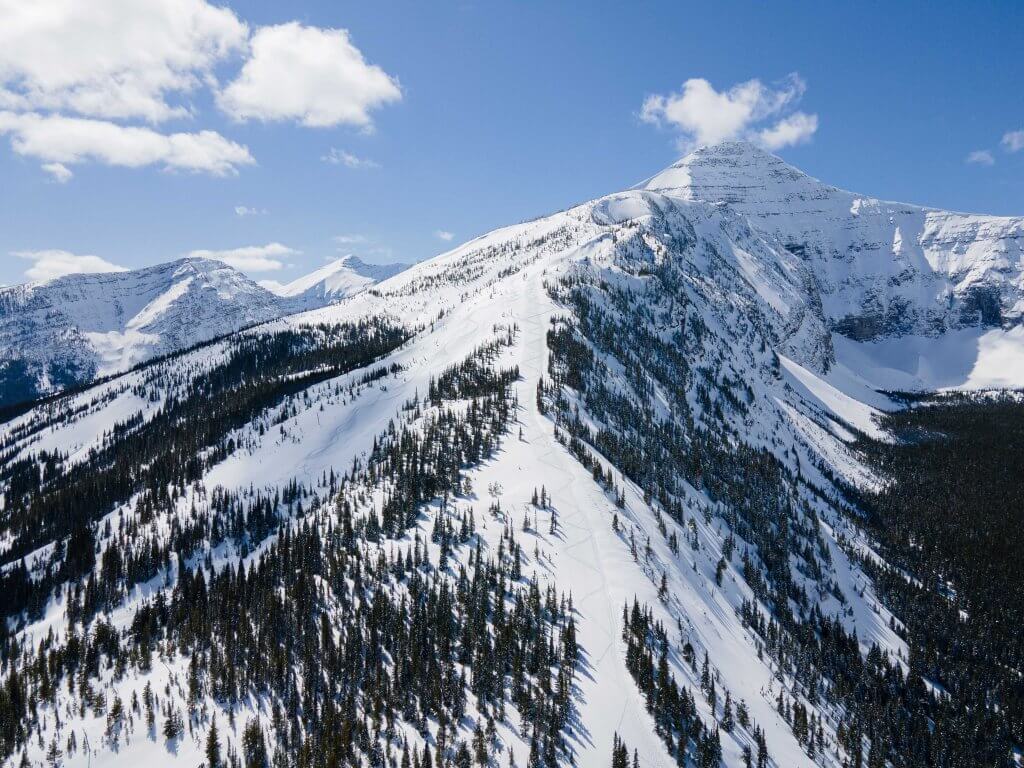
Alberta’s Castle Mountain will expand lift-served terrain by 25 percent next season as it opens its first detachable quad on Haig Ridge, located above the existing Huckleberry lift. Castle is currently the second largest resort in North America without a high speed lift behind only Red Mountain, British Columbia. Installation of the quad chair, which previously operated as Angel Express at Sunshine Village, represents the largest capital investment in Castle’s nearly 60 year history. Independent Castle Mountain has a long history of repurposing used lifts from Sunshine, Beaver Creek in Colorado and Angel Fire, New Mexico. “The addition of a lift serving this phenomenal terrain will forever transform our guests’ experience”, said Dean Parkinson, General Manager. “The terrain that will soon be available to all has been well loved by our cat skiing guests for over a decade, primarily for its deep snow and great skiing. We are excited to finally be opening up this terrain for everyone to enjoy.”

The 20 tower Haig 1 lift will span 4,757 linear feet with an impressive 1,805 foot vertical rise and five minute ride time. It’s is expected to open for the 2025-26 season, marking the end of cat skiing in the expansive Haig zone. The project is known for now as Haig 1 but will receive a new name before opening. “Castle Mountain Resort is proud to be taking on this project, utilizing its fantastic team, augmented with subject matter experts to ensure the success of the project,” the resort said in a release. “The lift will receive mechanical, electrical, and operational upgrades in order to be ready to go for December 2025.”

Forest Service Approves Taos Base-to-Base Gondola, Lift Improvements

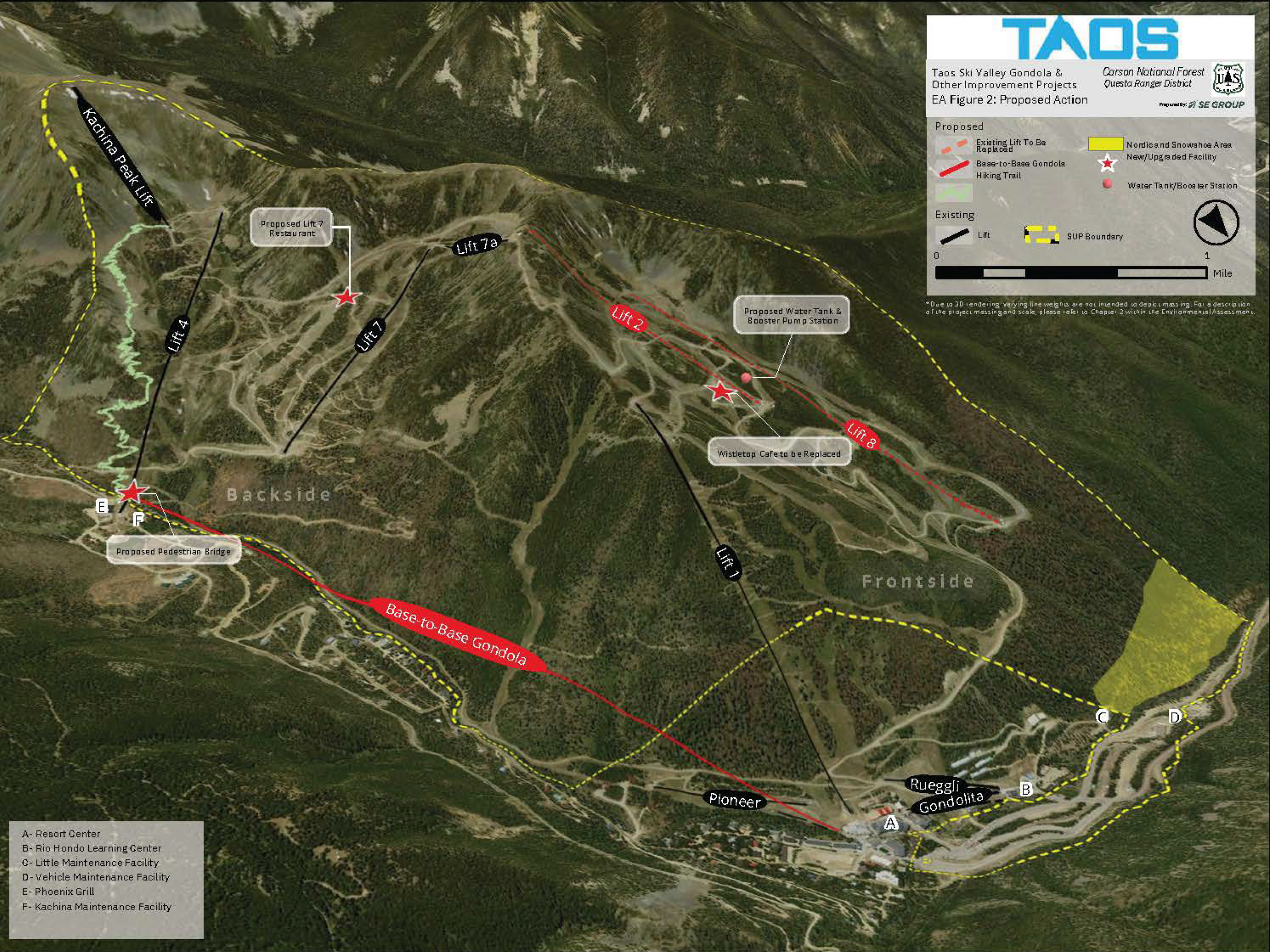
More than three years after it was first proposed, Taos’ Base-to-Base gondola is closer to reality. In a draft decision published today, the Forest Service proposed approving both the gondola and replacements for Lifts 2 and 8, though the decision is still subject to an objection period.

The gondola’s purpose is multifold. First, it would provide much-needed alternative to Lift 1, the only non-beginner lift out of the Resort Center. When Lift 1 goes down, the only other way for skiers to access the mountain is via road to Kachina Basin. The detachable gondola would also improve skier access to backside lifts 4 and 7. In summer, the gondola would link the village and Taos Ski Valley’s summer summer activity hub with bike park, via ferrata and hiking trails. The gondola would become the longest lift at Taos with eight seat cabins transiting 7,300 linear feet. While the base-to-base would not directly service much skiing, it would rise 800 vertical feet and provide access to a green trail running between Kachina Basin and the village. A small cabin maintenance facility is planned adjacent to the Kachina terminal.

The gondola is being designed to move 1,800 guests per hour both winter and summer and is expected to reduce vehicle traffic between base areas. A ticket will be required to ride in order to minimize foot traffic into the Wheeler Peak Wilderness adjacent to the top terminal. “Use of the gondola by non-ticketed guests may be allowed in the future following further study of guest use patterns and the broader use of the Wheeler Peak Wilderness,” notes the Forest Service. The agency did not set a minimum price for gondola rides, noting it could be “nominal.”

A second approved project would replace Lift 2, a 1995 fixed grip quad running from near the top of Lift 1 to Taos Patrol Headquarters. This lift would likely be a detachable quad and boost capacity from 1,800 to 2,400 skiers per hour. Lift 8 is also approved for similar treatment in the coming years. That lift services terrain below Lift 2 and dates back to 1991. When all three projects are completed, Taos will operate five modern detachable lifts, up from zero just five years ago.

Parties who previously commented on the projects have 45 days from today to file any objections.

Killington to Replace Superstar Express and Upgrade Skyeship Gondola

The sale of Killington and Pico to local investors has closed and today the group announced their initial tranche of capital investments. Over the next 12 to 16 months, Killington plans to spend roughly $30 million to build a Superstar Express six pack, add 1,000 HKD low energy new snow guns and replace all 116 Skyeship Gondola cabins. Skyeship’s cabin storage facility will also be replaced in the near future. The current Superstar lift is the oldest detachable chairlift in New England, dating back to 1987 (tied with two other lifts at Killington/Pico and the Grand Summit Express at Mount Snow.)

The news comes just over a month since Powdr announced the sale of Killington and listing of three other resorts. “Over the next 10 years, our goal is to reinvest all the profits the mountain creates,” said Michael Ferri, one of two lead investors in Killington Independence Group, LLC, comprised of 16 total investors. “[Profits] will stay here in Vermont, they will stay here at Pico and they will stay here at Killington,” said Ferri.

A new Sigma Diamond cabin installed on the K-1 gondola, the same model Skyeship will receive.

Surprisingly after 37 straight lifts from other manufacturers, Killington selected Doppelmayr to construct the new Superstar Six. Unlike Killington’s Snowdon Six, the new lift will not feature bubbles. “There are a number of factors, but this lift is a relatively short ride which makes having bubbles on the lift less impactful, especially considering the added complexity of needing a storage barn for overnight storage of bubble chairs,” said Killington. Superstar has one of the longest winter operating schedules in the country, spinning for World Cup ski racing in November all the way until the end of the season in May or June. “The Superstar lift replacement will affect spring skiing this season and potentially the 2025 Stifel Killington Cup, noted Killington President and CEO Mike Solimano. “We do plan to make more snow in North Ridge to extend the season in the Canyon this year and are working with the lift manufacturer to finalize the construction plan for the lift before making the call on the Killington Cup,” he continued.

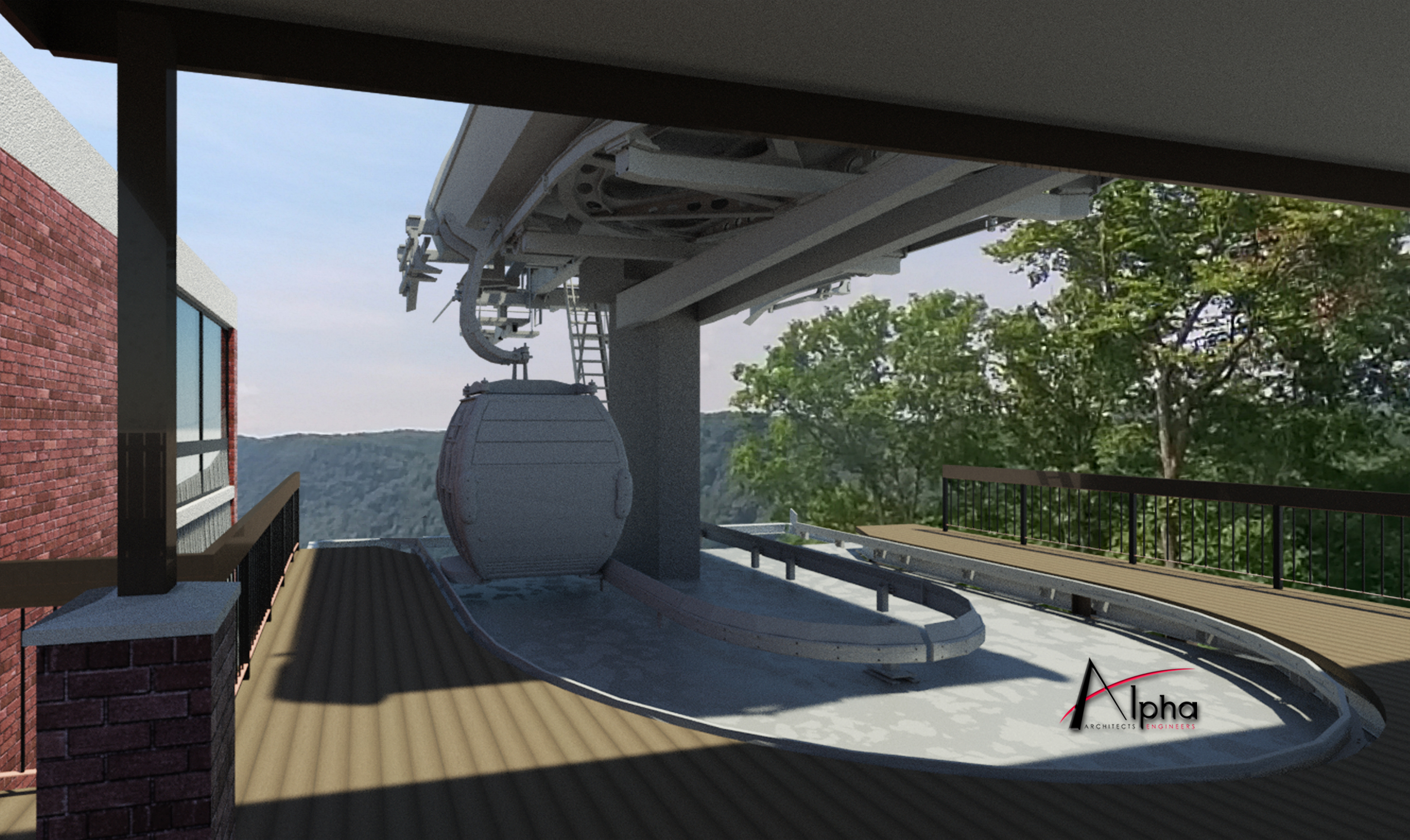
Skyeship Gondola, set to receive new cabins and a new maintenance facility.

Leitner-Poma will supply new cabins for Skyeship, the same Diamond model the K-1 Gondola received in 2018. “Many of our current operational challenges with [Skyeship] can be attributed to the older cabins,” noted Killington. “The challenges are exasperated by not being able to store the cabins in a heated building causing door opening and closing mechanisms to become frozen overnight.” All of these improvements are slated for the next two years with more expected to follow over the next decade.

Snowbasin Announces Becker Replacement

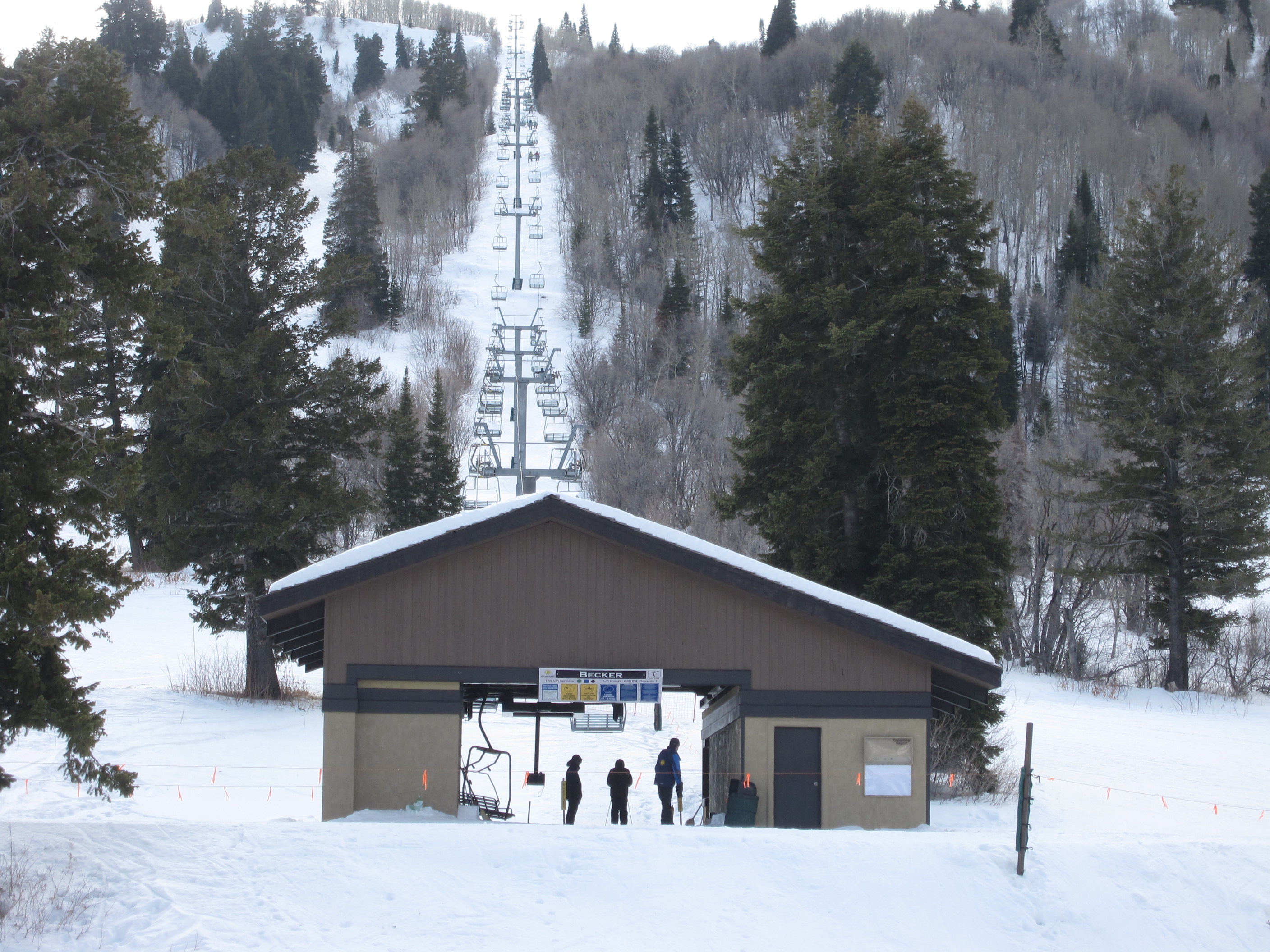
Snowbasin Resort will construct its seventh detachable lift next summer, replacing the Becker triple in a new alignment. The detachable quad, to be constructed by Leitner-Poma of America, will load closer to the Wildcat Express and unload in a simlar location to the current triple. Becker is a 1986 Stadeli triple, one of just 21 Stadeli-built lifts remaining in the United States. When the replacement is complete in 2025, Snowbasin will operate just one fixed grip chairlift, another Stadeli triple called Porcupine. Snowbasin has been on a roll lately, adding the Wildcat Express in 2017, Middle Bowl Express in 2021 and DeMoisy Express in 2023. Snowbasin’s owner, the Holding family, has been on a similar improvement push at its Sun Valley Resort in Idaho. Between the two mountains, the Holdings have purchased eight detachable chairlifts in nine years.

The new Becker will span more than 5,800 linear feet with a vertical ascent of approximately 1,300 feet, serving a variety of terrain and providing access to the Strawberry area. The new lift will transport 1,800 skiers per hour and cut ride time in half from 12 minutes to six. In conjunction with the lift installation, Snowbasin will widen and re-grade Bear Hollow, Snowshoe and Slow Road to improve flow and safety.

Snowbasin also announced a refurbishment of the Needles Gondola‘s 86 cabins, which are nearing 26 years old. The first third of cabins will receive new mechanisms, windows and seats this summer with the rest to follow over the next two years.

West Virginia Kicks Off Second Gondola Project

Over the weekend the State of West Virginia broke ground on an $8 million gondola project at Hawks Nest State Park. Doppelmayr will build the fixed grip system, which will carry visitors down 465 vertical feet to the New River and be fully ADA accessible. The top drive, bottom tension design will feature three six passenger cabins in a pulse configuration. A fourth carrier will accommodate kayaks and other outdoor recreation equipment. The new gondola replaces a 1970 Hall jig-back which closed in 2021 due to safety concerns. “A whole lot of people who love Hawks Nest State Park have been waiting for the tram project,” said West Virginia Governor Jim Justice at the groundbreaking. “Hundreds of thousands of folks have created memories here on the tram over the last 50 years, and I’m excited for the next hundred thousand visitors to the park to be able to do just the same.”

This is the second gondola construction project underway in the Mountain State. A $12.4 million gondola is set to open at Pipestem State Park this fall. The Hawks Nest gondola is expected to follow in late spring 2025, completing the replacement of two iconic ropeways. Governor Justice said he expects to be among the first to ride each new gondola with his Bulldog named Babydog.

Monarch Mountain Expansion Approved

With the electronic stroke of a pen, the Forest Service green-lighted a 377 acre expansion of Colorado’s Monarch Mountain yesterday. The project will include 62 acres of cleared trails, gladed terrain, a fixed grip triple chairlift, restrooms and a warming hut in No Name Basin. “We are SO excited to actually get started on this project after years of planning and project review by multiple entities,” said Scott Pressly, Vice President of Mountain Operations. The basin’s 2,700 foot chairlift will rise 960 vertical feet and become Monarch’s first new lift in 25 years.

The no-frills ski area plans to begin work soon. “This project will involve two summers of construction (2024 & 2025) with the No Name Basin terrain scheduled to open for the 2025-26 winter season,” wrote Pressly. Monarch has not publicly identified the manufacturer of the new lift, though Skytrac built its very first lift drive terminal at the ski area, naming it the Monarch.

Alta Plans to Rebuild Supreme Lift

The experiment to build a detachable quad with an eight degree turn and no angle station may be coming to an end. This week Alta Ski Area General Manager Mike Maughan revealed the Supreme lift is suffering from accelerated metal fatigue, requiring the ski area to look at major modifications. Specifically the lift’s chairs have become damaged over time as they pass through numerous canted sheave assemblies. “Every one of those [chair pans] is cracked significantly,” Maughan told the Alta Town Council Thursday. “An investigation by engineers said we’re accelerating fatigue on the chairs, the grips and the bend itself.”

Supreme was constructed in 2017 to replace two separate lifts – Cecret and Supreme – which ran consecutively in different alignments. A new high speed quad was envisioned to include an angle station near the top of the old Cecret chair where beginners could unload. Chairs would detach, turn and continue to the Supreme summit. That plan proved expensive so Alta pivoted to a unique bend design that kept chairs moving at full speed through a line turn. By following both old lift lines with a bend, Alta would cut fewer trees and avoid significant ground disturbance. Doppelmayr reportedly declined to bid on the bend design and would only supply the lift with an angle station (like they did on nearby Collins.) Alta went ahead with Leitner-Poma and the new Supreme opened for the 2017-18 season. From the beginning skiers noticed the ride through the bend was quite bumpy and jarring. Last winter, Alta experimented with a different Leitner chair design in an attempt to mitigate the rough ride through the bend.

Fast forward to today and Alta sees two possible paths forward. The first is to rebuild the lift in a straight path between the top and bottom terminals. This would require every tower and terminal foundation to be replaced. “All the equipment would be re-used with maybe a few new towers added to the mix,” said Maughan. A second, less likely option is to keep both terminals in place and build a full angle station where the bend stands today. Analysis is underway to determine the best solution. “We approached the Forest Service and they are open to the realignment approach which would end up with a simpler lift with fewer moving parts and less wear and tear,” noted Maughan. Either way, the project will be a major undertaking targeted for summer 2025. “We’re waiting for numbers back from Poma to understand the cost of both options.”

For the upcoming 2024-25 season, the lift is expected to continue operating with chairs either repaired or replaced as necessary. It’s important to remember Supreme has operated safely for seven years and thorough inspections caught the issue before any incident. Now that the problem is known, Alta will work closely with the Forest Service, Leitner-Poma and the Utah Passenger Ropeway Safety Committee on safe interim and long term solutions.

Sunlight to Replace Two Lifts in 2025

Two of Colorado’s oldest chairlifts will be replaced simultaneously in 2025, Sunlight Mountain Resort has announced. Primo, a 1966 Riblet double, will be replaced by a Leitner-Poma Alpha fixed grip quad. Segundo, a 1954 Heron with Riblet upgrades, will be replaced by a 2001 Leitner-Poma triple from Arapahoe Basin. The project will be the largest capital undertaking in the history of Sunlight.

“The replacement of Primo and Segundo signifies a new era for our resort,” Sunlight said in a release. “We are excited about the increased capacity and efficiency these new lifts will bring, while also honoring the legacy of Segundo, a beloved fixture of our mountain for over 50 years. Our goal is to offer an incredible and personalized experience, ensuring that while our infrastructure evolves, the essence of Sunlight remains unchanged.” Construction is set to begin this summer with the bulk of work taking place in summer 2025. Existing lifts will continue to operate for the 2024-25 winter season and both new lifts will be completed for 2025-26.

Winter Park Eyes Beginner-Focused Lift Upgrades

As I reported on Friday, Winter Park Resort is seeking Forest Service approval for a major revamp of the Discovery Park learning zone. The project, contemplated in the 2022 master plan, has four major lift components. First the Gemini Express would be replaced by a 10 passenger gondola, allowing beginner guests to upload and download as foot passengers. The 2,400 foot long gondola would start closer to the Village at Winter Park than Gemini and unload at a new children’s ski school building, where a variety of conveyor lifts are planned. The new gondola will be a workhorse capable of carrying 3,600 passengers per hour. One reason for such high capacity is this gondola could eventually become the third section of a town-to-village gondola long envisioned as a way to reduce traffic.

Once new skiers and riders are ready to progress to chairlifts, two new options will sit near the learning center. The current Endeavour triple will be replaced by a 2,400 pph detachable quad in a shorter alignment. The Discovery double will be upgraded from a double to a short fixed grip quad carrying 1,600 skiers per hour.

The final component of the plan is a new Cooper Creek six pack. This 2,700 foot long lift would load below the bottom of Olympia Express and rise 365 feet to the Cooper Creek Summit, carrying 2,800 guests per hour. Five new beginner trails would be constructed with new snowmaking throughout. As part of the project, the aging Looking Glass double would be removed. All told Winter Park would retire four chairlifts dating back to 1966, 1984 and 1993, replacing them with three new chairlifts and a gondola.

The Forest Service is preparing an Environmental Assessment and welcomes public comments. The agency expects to publish a decision in the first quarter of 2025 and construction could begin next summer.

Breckenridge Plans Peak 9 Lift Upgrades

A new two stage gondola and six passenger chairlift could be coming soon to Breckenridge’s popular Peak 9. The Forest Service and Breckenridge have begun scoping for the project, which would boost out-of-base capacity, better serve beginners and improve mountain circulation. A new mid-mountain learning center would be constructed, allowing Breckenridge to join the growing list of mountains moving learn-to-ski away from congested base areas.

The gondola, first proposed as a one stage gondola in the 2022 Master Plan, would load in the Peak 9 base area adjacent to the Quicksilver Super6. A whopping 43 percent of Breckenridge skiers use the Peak 9 portal and the gondola would add 2,200 seats per hour. The new lift would cross over Quicksilver and travel to the new Frontier learning center, where a cabin storage facility and two conveyors are planned. The Camelback platter would also be relocated from the base of Peak 9 to this zone. Gondola cabins would make an angle change at the learning center station and continue to an unload point near the top of the existing A-Chair. While A services excellent beginner terrain, the 1975 Riblet triple sits underutilized due to its long ride time and would be removed. The existing Eldorado platter is also slated for removal without direct replacement.

The second major component of the project is a detachable replacement for the existing C-Chair, a Riblet double that dates back to 1972. The faster six seat lift would carry 3,000 skiers per hour and follow the existing alignment, crossing under the Peak 8 SuperConnect. Both the bottom and top terminals would shift slightly higher on the mountain. The C SuperChair would rise 1,250 vertical feet become the sixth detachable lift on Peak 9.

The Forest Service and Breck plan to host an open house for the public to learn more about the project on May 22nd from 4-6 pm at the Maggie. Public comments will be accepted until June 13th and the USFS intends to reach a decision around the end of the year. If approved, construction could commence in summer 2025. The gondola learning center project is likely to be built first, followed by the C-Chair replacement in a later season.