All photos credit Skyscrapercity forum user tmanhthang
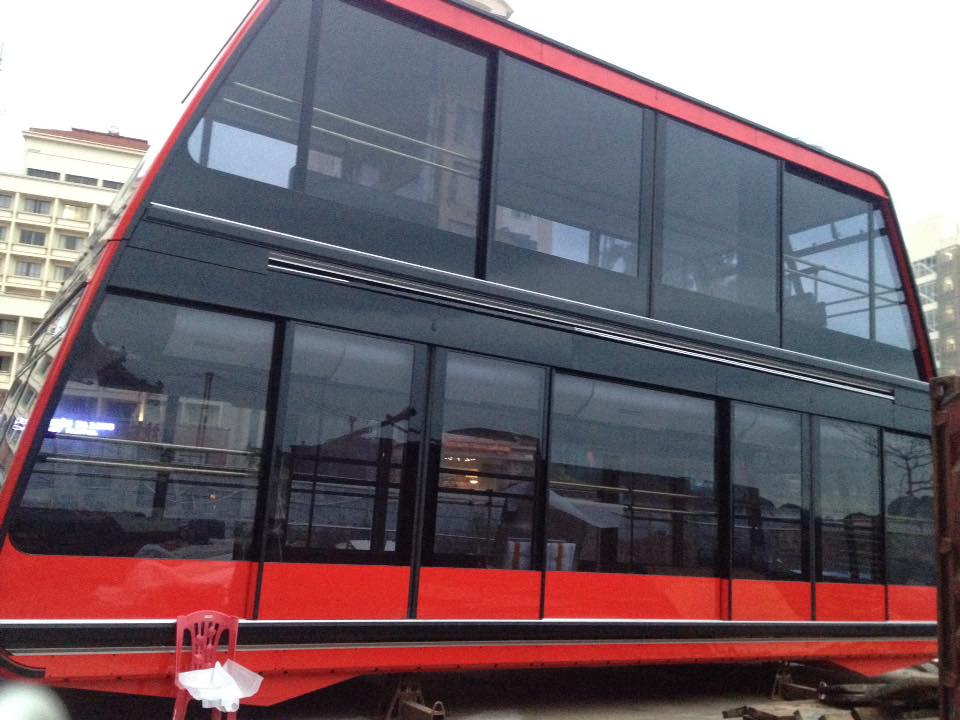
We now know what the world’s largest tramway cabins look like. One bright yellow and the other red, CWA’s largest Kronos cabins built to date will hold 230 passengers plus one operator each with six sets of doors on two levels. They will soon be hung on the Ha Long Queen cable car, whose track cables already stretch 5,000 feet across Vietnam’s Ha Long Bay at heights up to 617 feet. The Queen will supplant the 200-passenger Vanoise Express as the world’s highest capacity aerial tram when it opens early this summer.
Three people injured in a March 2014 de-ropement on a Mueller double chair at Crystal Mountain, BC have filed claims against the resort. The BC Safety Authority’s investigation found the cause to be low tension in the haul rope due to the lift’s counterweight resting on the ground. Crystal Mountain has been closed ever since.
Wolf Creek’s owner still floating the idea of a low capacity jag-back tram on the backside of the mountain.
Yesterday Doppelmayr released a series of videos on YouTube highlighting the specifications and features of the company’s latest evolution in detachable technology called D-Line. While these are computer animations, there is a real-life prototype at Doppelmayr’s Wolfurt campus and the launch customer opened the first D-Line gondola last December in Hochgurgl, Austria. The first video highlights the CWA Omega IV SI D cabin, which has a simplified hanger and larger overall dimensions. 10-passenger cabins appear to be the standard for D-Line rather than 8-passenger cabins.
You can also take a tour of the detachable grip-D with a virtual tear-down. The grip-D can support ropes up to 64mm in diameter, carry up to 4,000 lbs and operate on 45-degree rope inclines.
Perhaps most interesting is the Station-D, which has gotten some negative reaction for its appearance. We now learn there is a boxier version utilizing real glass that can even be customized into a video wall.
D-Line will be available in North America in 2017 alongside the current-generation UNIG terminals and Agamatic/DT grips offered by Doppelmayr.
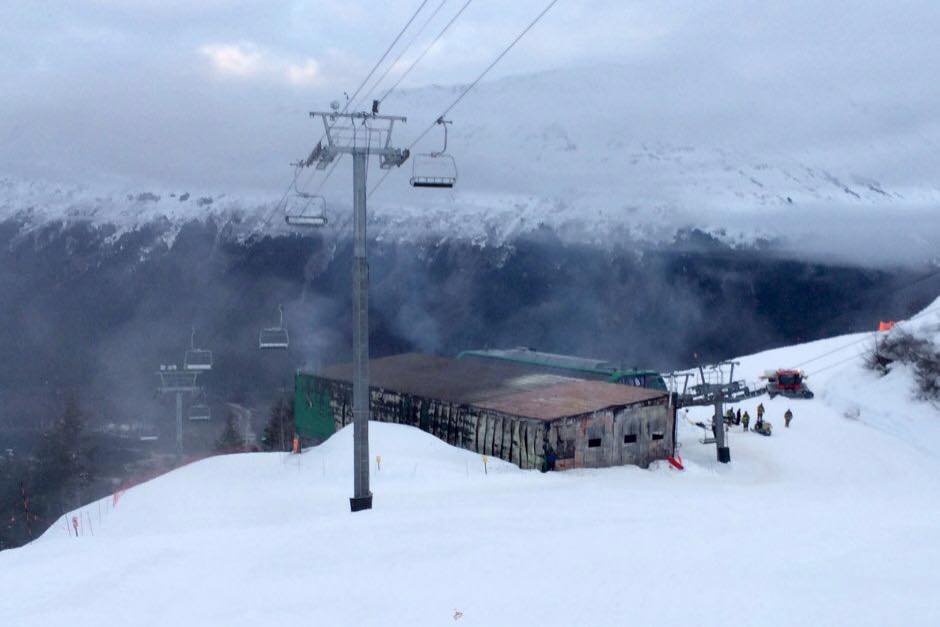
A chair parking barn adjacent to the Glacier Bowl Express smolders following an early morning fire on March 17, 2016. Photo credit: Alyeska Resort
Alyeska got lucky early this morning when a fire broke out at the Glacier Bowl Express chair parking facility but did not spread to the lift itself. Girdwood Fire Department and Alyeska crews responded at 5:27 am, accessing the scene by snowcat and using the mountain’s snowmaking system to fight the fire. “We are actively investigating the cause of the fire and will know more details later today when investigators can access the scene,” said Mountain General Manger Di Whitney in a statement. “We are grateful for the speedy response and support from Girdwood Fire Department which did a fantastic job putting out the fire.”
Due to unforeseen circumstances, mountain operations are tentatively scheduled to open at 1PM today.
The Glacier Bowl Express is a 2013 Doppelmayr detachable quad built to replace another high speed quad installed in 1988. Considering the barn is at the drive station, this fire could have been much worse. The lift’s operator house is a separate building on the other side of the terminal. Alyeska re-opened much of the mountain at 1pm today and says it will have the Glacier Bowl Express back in action soon.
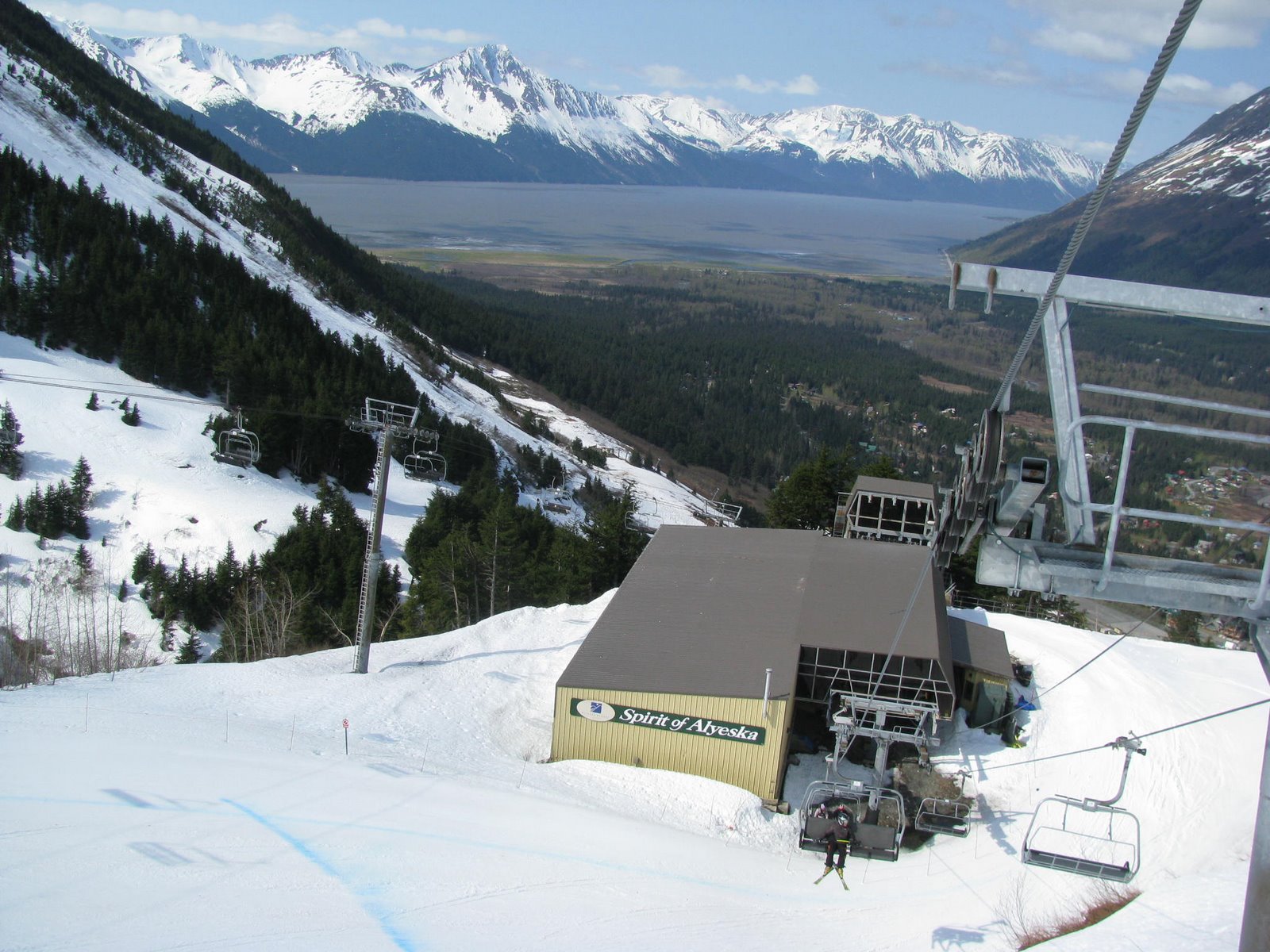
The parking barn that burned was originally built for the Spirit of Alyeska lift which had bubble chairs for most of its life.
Update 3/25/16: GBX is still down. Alyeska’s snow reports notes, “we have initiated a plan to resume operations of Glacier Bowl Express this season. The fire investigation and preliminary mechanical inspections have been completed, and equipment and tools to make the repairs have arrived. Experts are on site today to assist with repairs, and inspectors will be in place to confirm successful repairs and oversee the return to safe operations.” From the below post on Instagram, it looks like the fire damaged the haul rope, requiring repair.
Leitner highlights its latest project in Mexico, a pulse gondola to access a popular statue in Torreon.
Gangloff unveils unique aerial tramway cabins fabricated for an urban aerial tramway in France with privacy glass that can be turned on when passing over homes.
Twenty years ago this spring, 15 resorts faced near-disaster when the high-speed lifts they spent more than $50 million to build proved to be of faulty design and had to be retrofitted or replaced just a few years later. Lift Engineering, the company founded in 1965 by Yanek Kunczynski and more commonly called Yan, entered the detachable lift market in 1986 at June Mountain, CA reportedly after just one year of development. Yan built a total of 31 detachable quads in the US and Canada between 1986 and 1994. The majority of Yan’s customers were repeat clients such as Whistler Mountain Ski Corporation, which bought three high speed quads and the Sun Valley Company, which purchased seven. Whistler’s general manager would later write to Lift Engineering describing his team as the “unwitting recipients of a research and development project.”
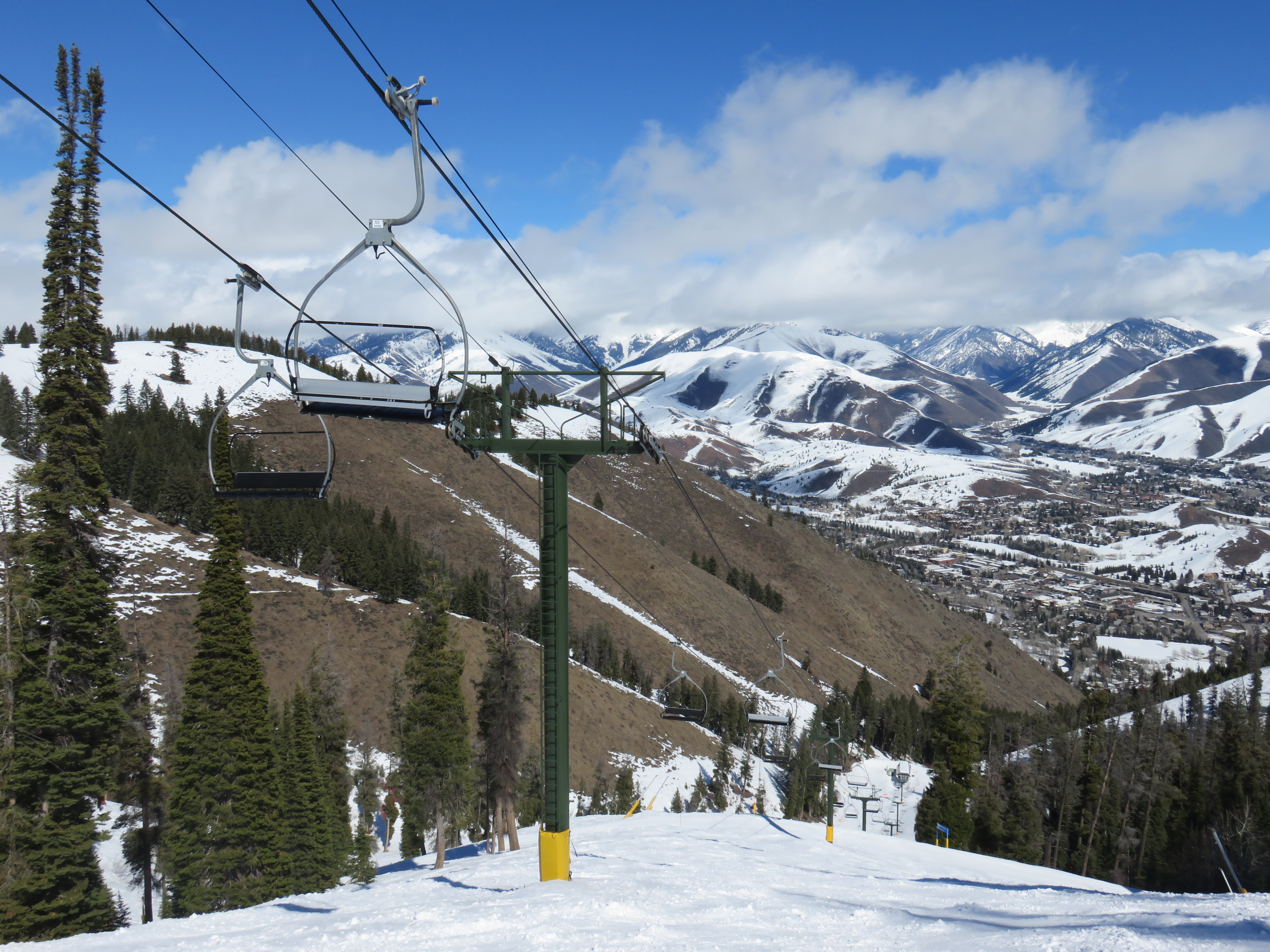
Frenchman’s is one of seven high speed quads on Bald Mountain built by Yan and retrofitted by Doppelmayr after accidents elsewhere. The original Yan teardrop chairs are some of the most comfortable I’ve ever ridden.Three incidents in two years sealed the fate of Yan detachables and eventually forced Lift Engineering to liquidate. On April 4, 1993, a 9-year old boy was killed and another child injured when loose bolts and a subsequent derailment caused two chairs to stack up on Sierra Ski Ranch’s Slingshot lift. The same lift had sent an empty chair to the ground two months prior when a grip failed. Lift Engineering settled a wrongful-death suit after the accident for $1.9 million. Sierra Ski Ranch’s marketing director would later state, “we found they just didn’t withstand the test of time” when the company committed $6 million to replace its three Yan detachables in 1996.
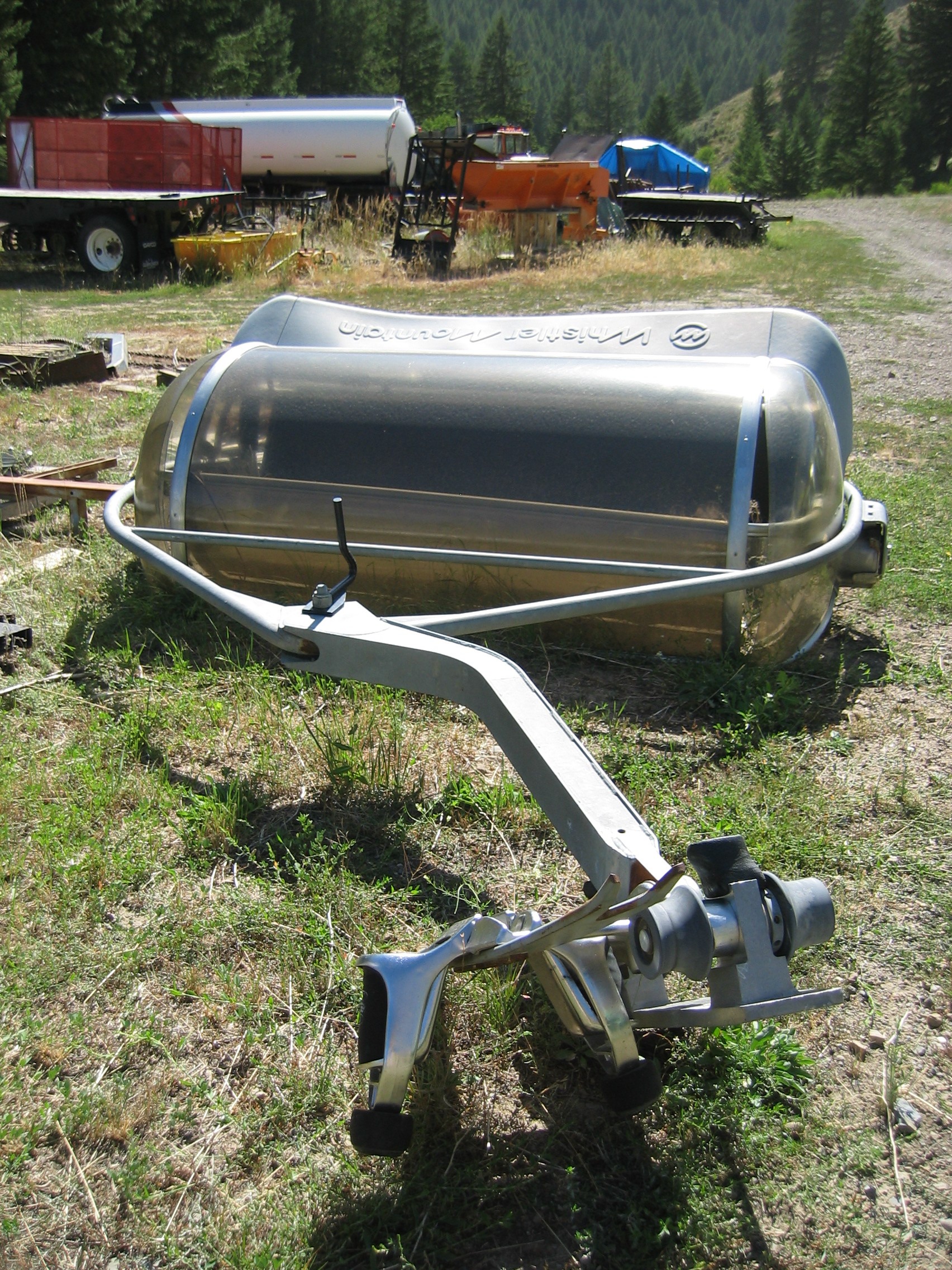
A Yan type-11 grip with marshmallow rubber springs on a bubble chair from Whistler’s Quicksilver high speed quad.On December 23rd, 1995, a routine emergency stop on the Quicksilver high speed quad at Whistler Mountain initiated a chain reaction crash of four down-bound chairs, plunging skiers 75 feet onto the Dave Murray Downhill course below. 25-year old Trevor MacDonald died at the scene, nine people were seriously injured, 200 had to be evacuated and a second guest died 12 days later. The coroner’s investigation revealed Yan’s design failed to maintain the required 15-degree lateral swing clearance over towers, causing damage to grips over time. The type-11 grips could not maintain adequate clamping force for the maximum 38-degree rope angle on Quicksilver between towers 20-21 (Quicksilver was the only lift built with Yan’s type-11 grip owing to its heavier chairs with bubbles, the rest had the type-7 grip.) On two prior occasions, empty chairs had fallen from Quicksilver’s line, including one time three weeks prior to the deadly accident and in the same location. Leading up to December 23rd, mechanics were getting grip force faults 20+ times a day and had reportedly stuffed paper into the corresponding alarm. At the time, detachable lifts were relatively new and not required to stop automatically as a result of a grip force fault.
Vail Resorts announced today it will spend $13 million this summer to modernize Wilmot Mountain, which the company acquired in January. Improvements include three new quad chairs to replace existing lifts. Wilmot Mountain currently operates eight chairlifts built by Hall, Borvig and Riblet between 1964 and 1978, meaning upgrades are long overdue. Four chairlifts will be removed, three added and three others overhauled. The three new quads along with two new carpets will increase Wilmot’s uphill capacity by 45 percent.
“We think our guests from Chicago and Milwaukee will be thrilled with the improvements we are making at Wilmot for the 2016-2017 ski season, which represents one of the biggest transformations ever undertaken for a Midwestern ski area,” said Rob Katz, Chairman and CEO of Vail Resorts. No manufacturer was named, but Vail chose Doppelmayr in 2013 to provide Eco-drive quads as part of a $10 million redevelopment at Mt. Brighton near Detroit. For those lifts, they re-used quad chairs and towers from retired Doppelmayr lifts at Vail and Beaver Creek.
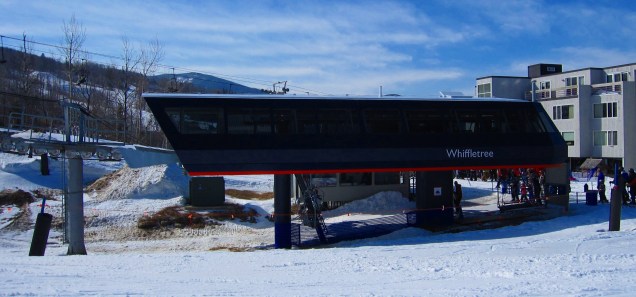
Sugarloaf’s Whiffletree high speed quad (shown above) will be down 1-2 weeks while its gearbox gets rebuilt in Michigan for the second time in six months. Cone Drive rebuilt the gearbox in question last Fall and it was back in action a mere two months before failing on Saturday. Whiffletree is a 1997 Garaventa CTEC Stealth detachable at a mountain that’s had more than its fair share of lift setbacks.
Doppelmayr’s latest Wir magazine is online. Some article highlights: the Penkenbahn 3S gondola turns 6.5 degrees mid-line and Park City’s new gondola transitions between two different line gauges.
Leitner Ropeways will break ground on a two-stage gondola in Berlin March 26th to serve guests of the city’s 2017 horticultural expo. Doppelmayr built temporary gondolas at similar expos in 2009 and 2011. Must be nice to spend millions on lifts for four months of temporary operation! To be fair, Whistler did something similar for the Olympics.
The Telluride-Mountain Village gondola transit system, built by CTEC in 1992, has clocked 100,000 hours and elected officials are trying to figure out how to modernize it.