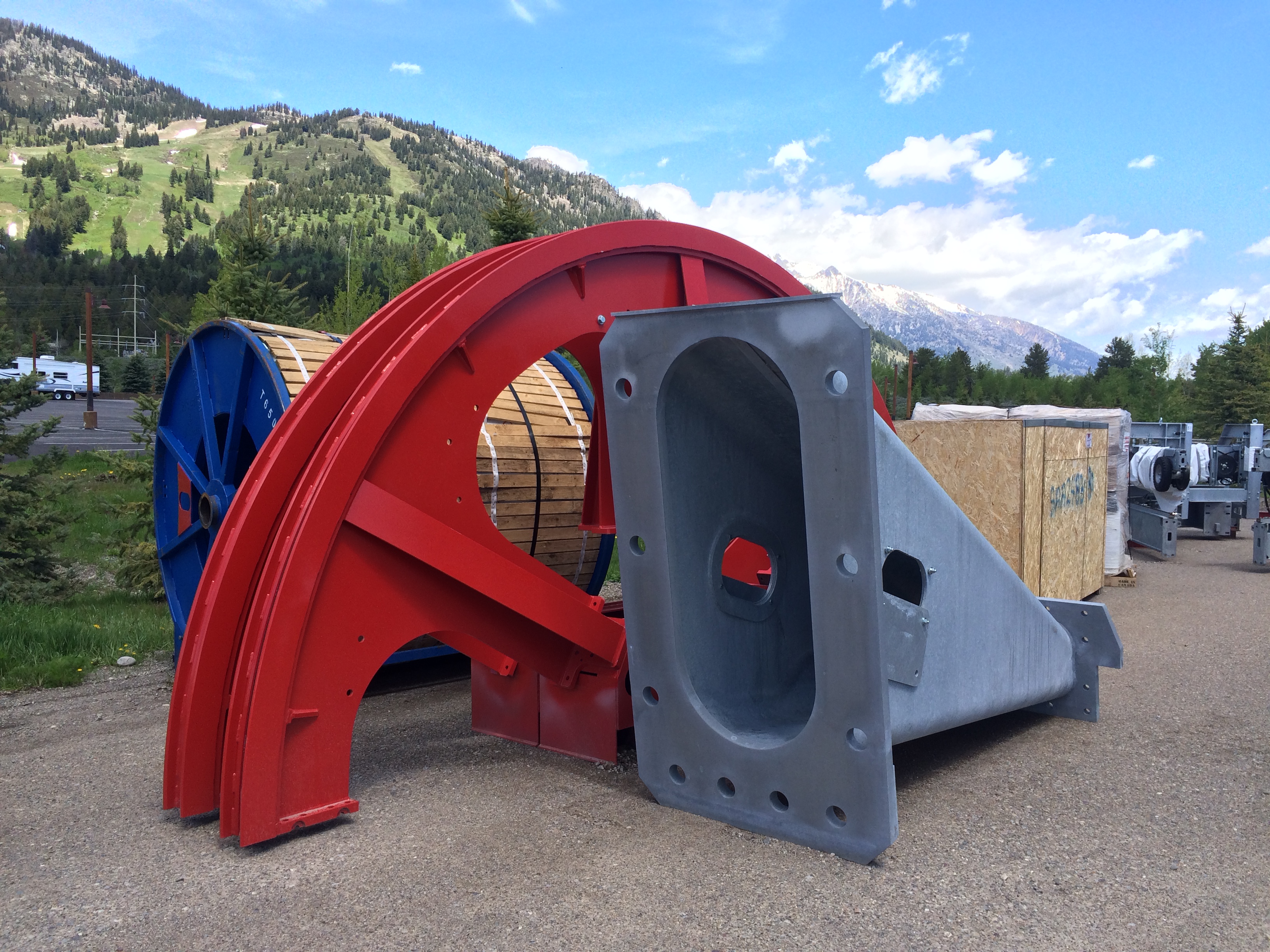
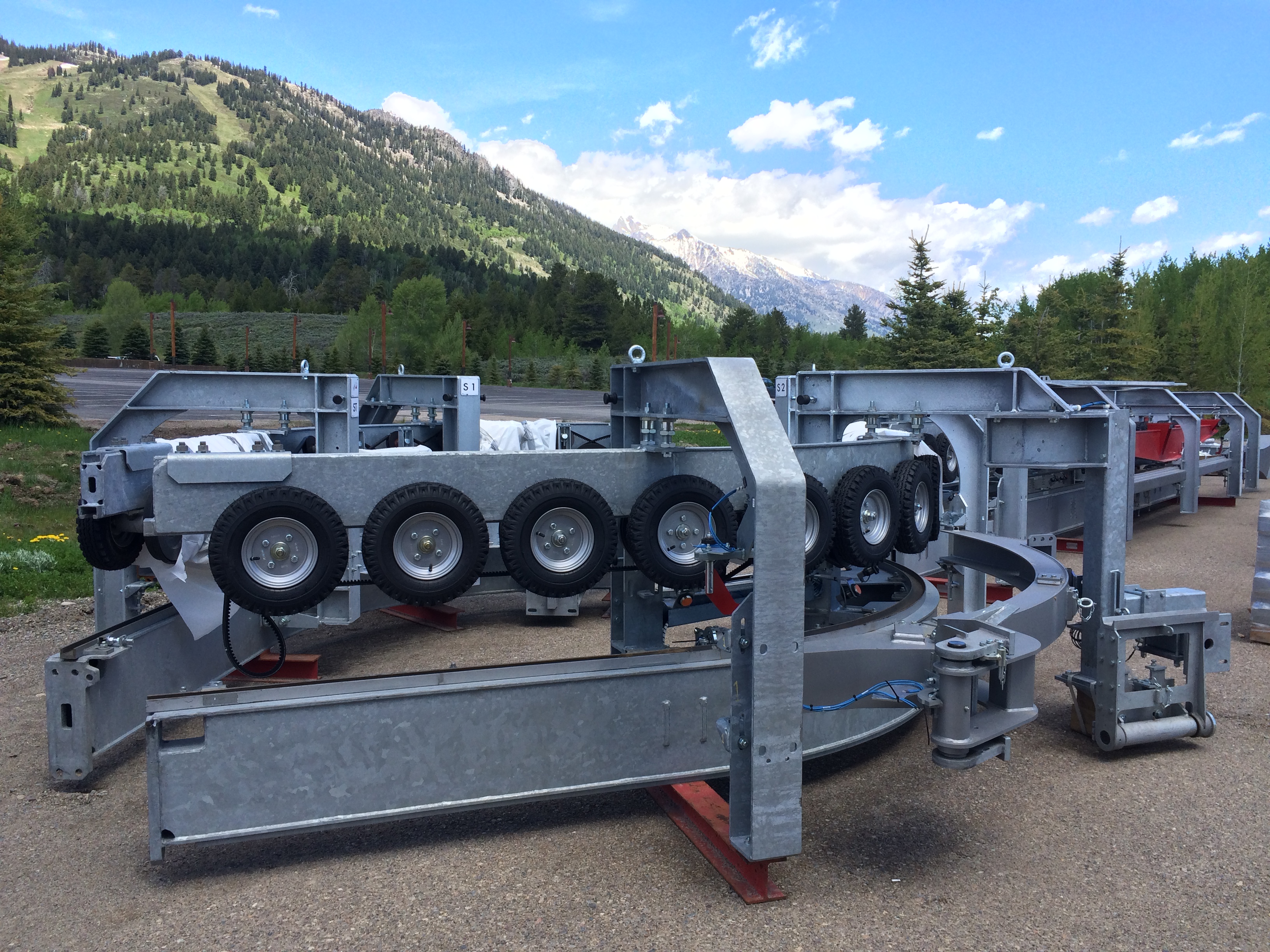
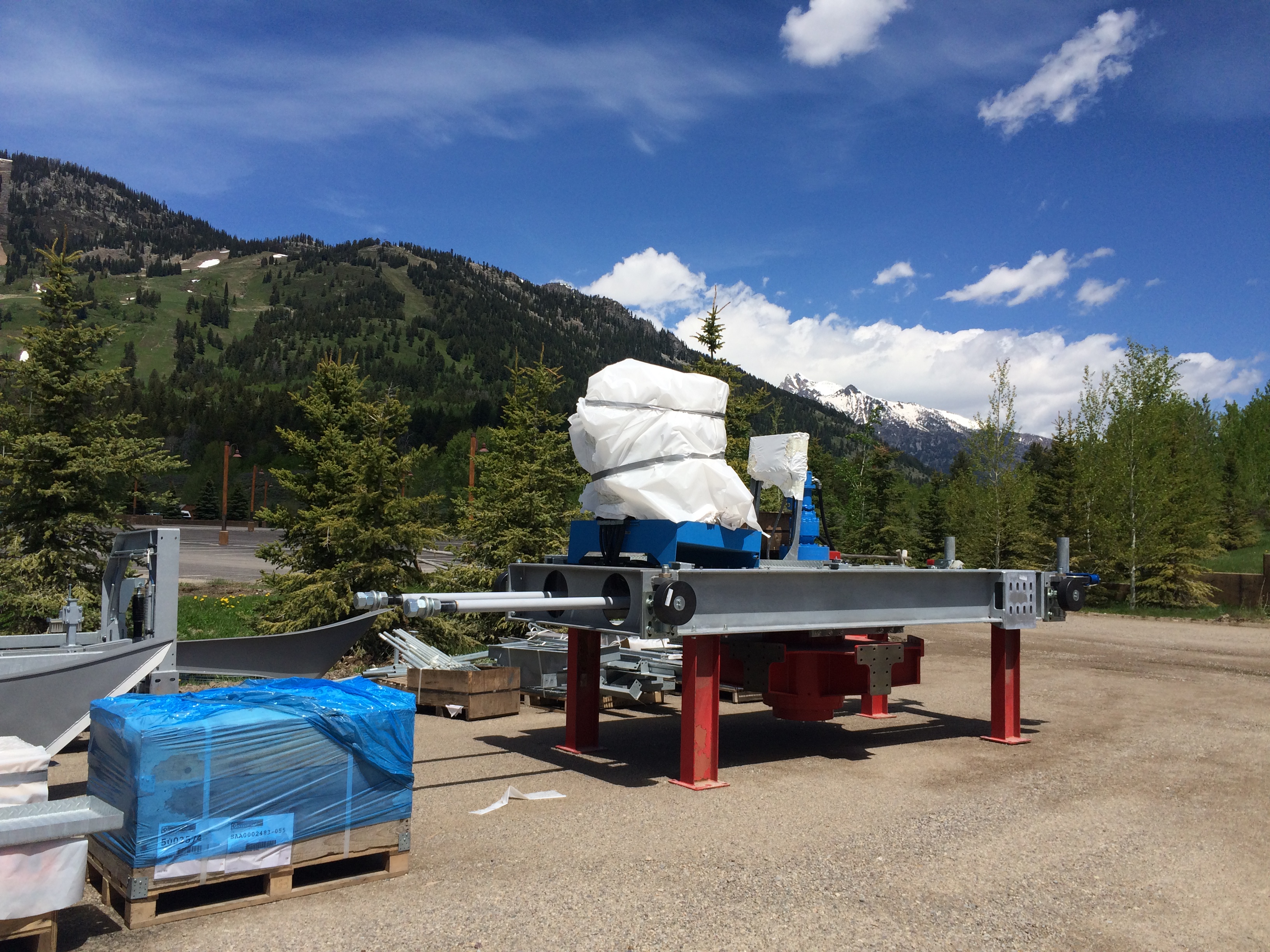
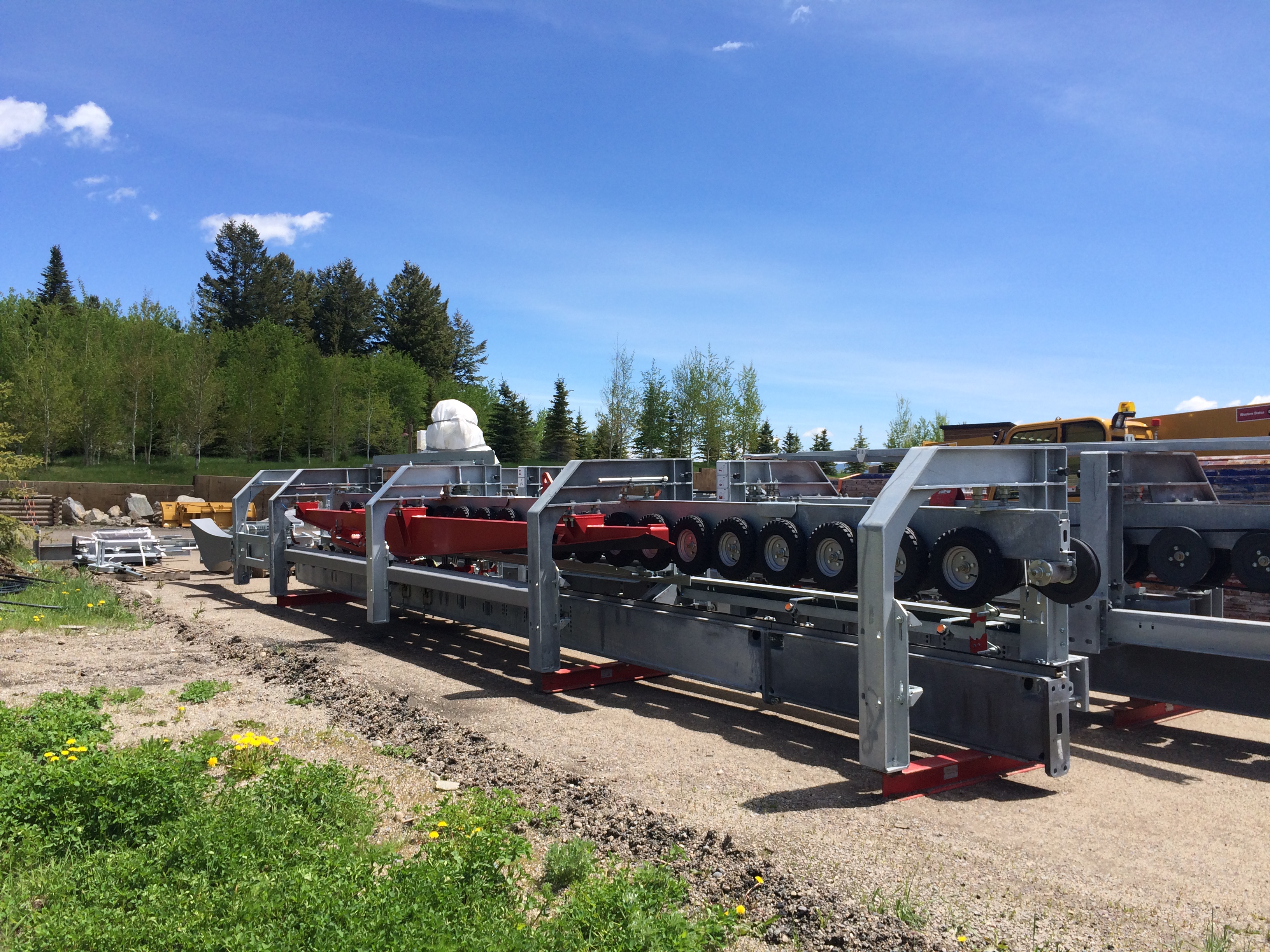
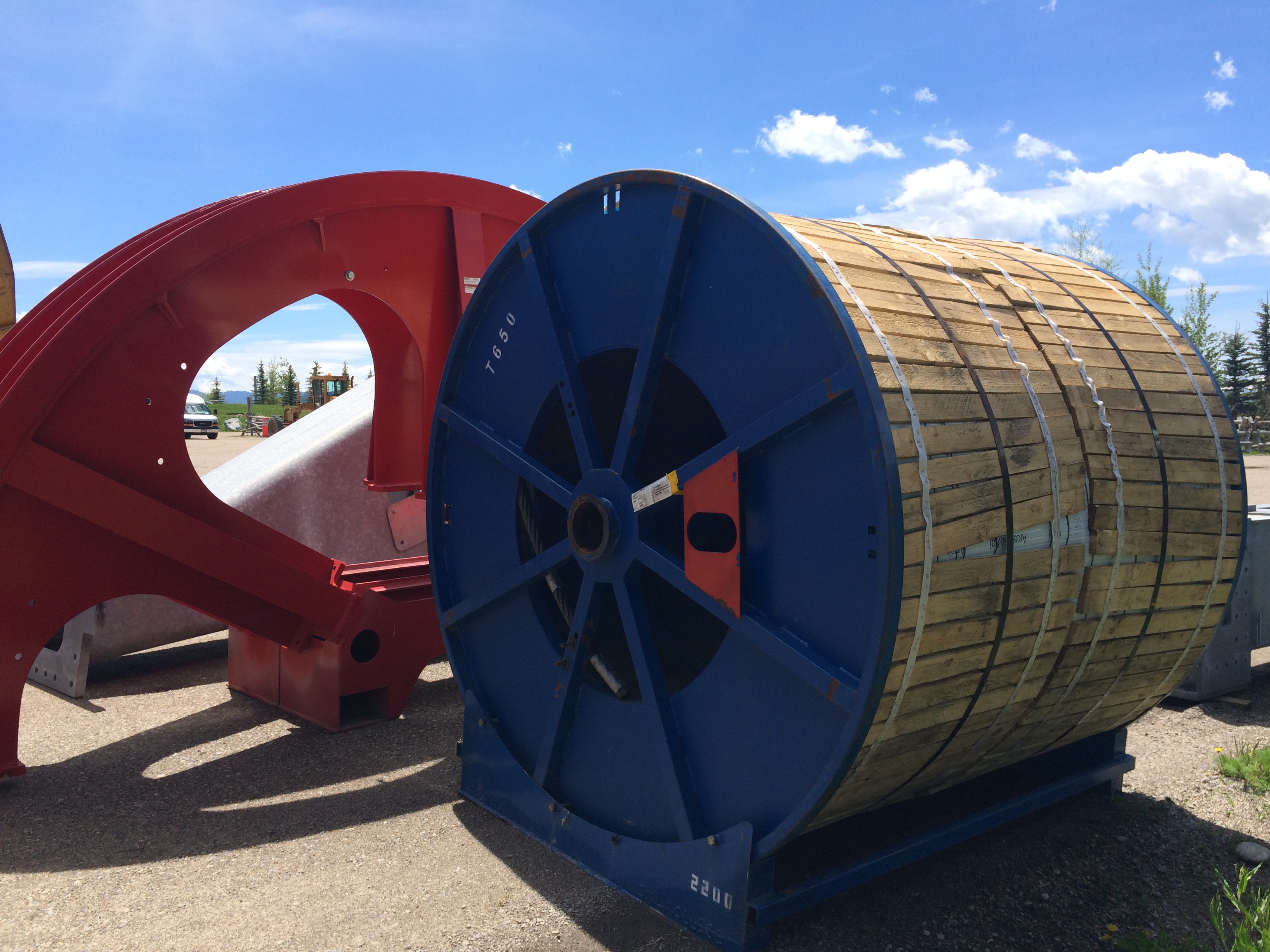
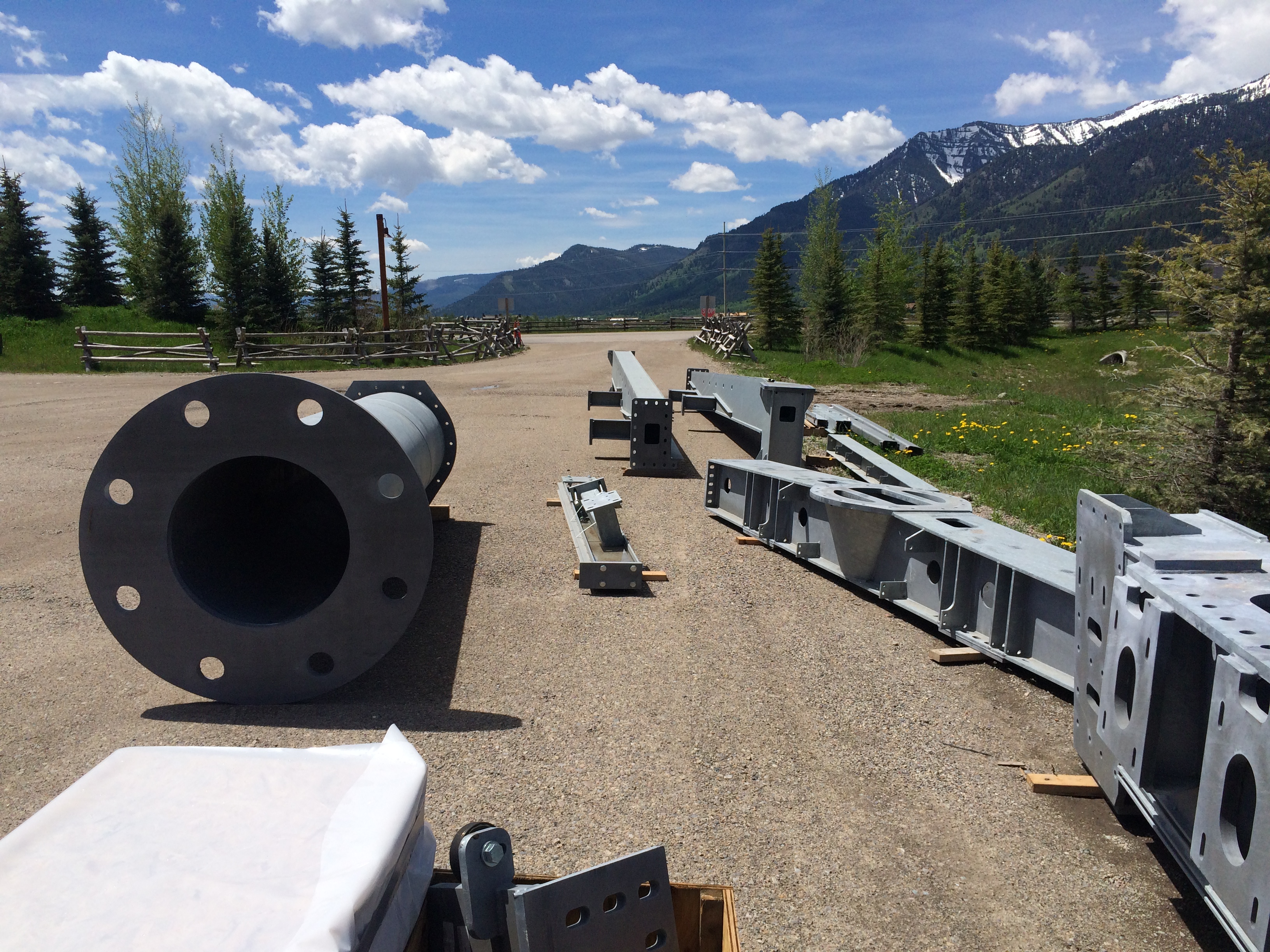
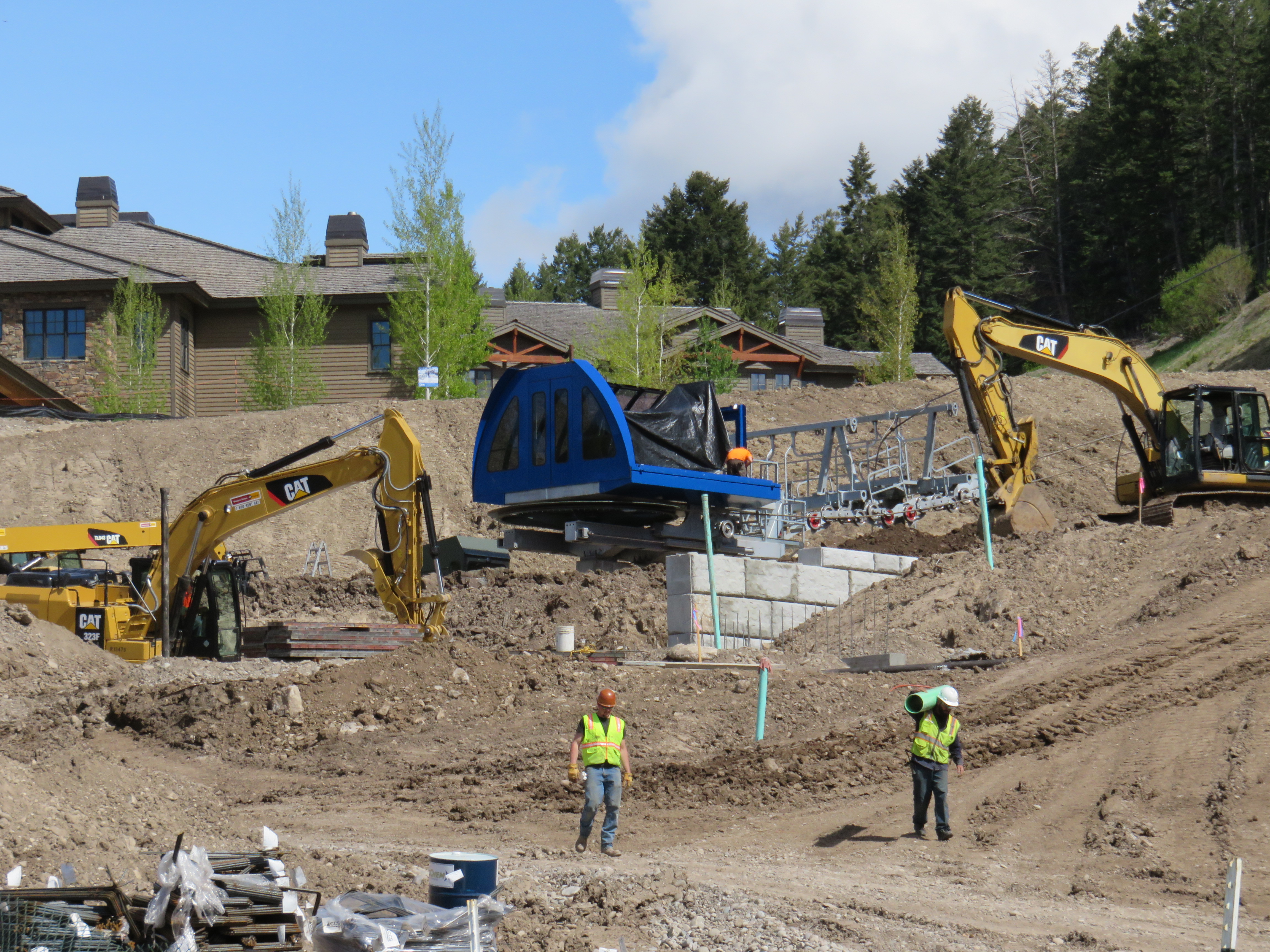
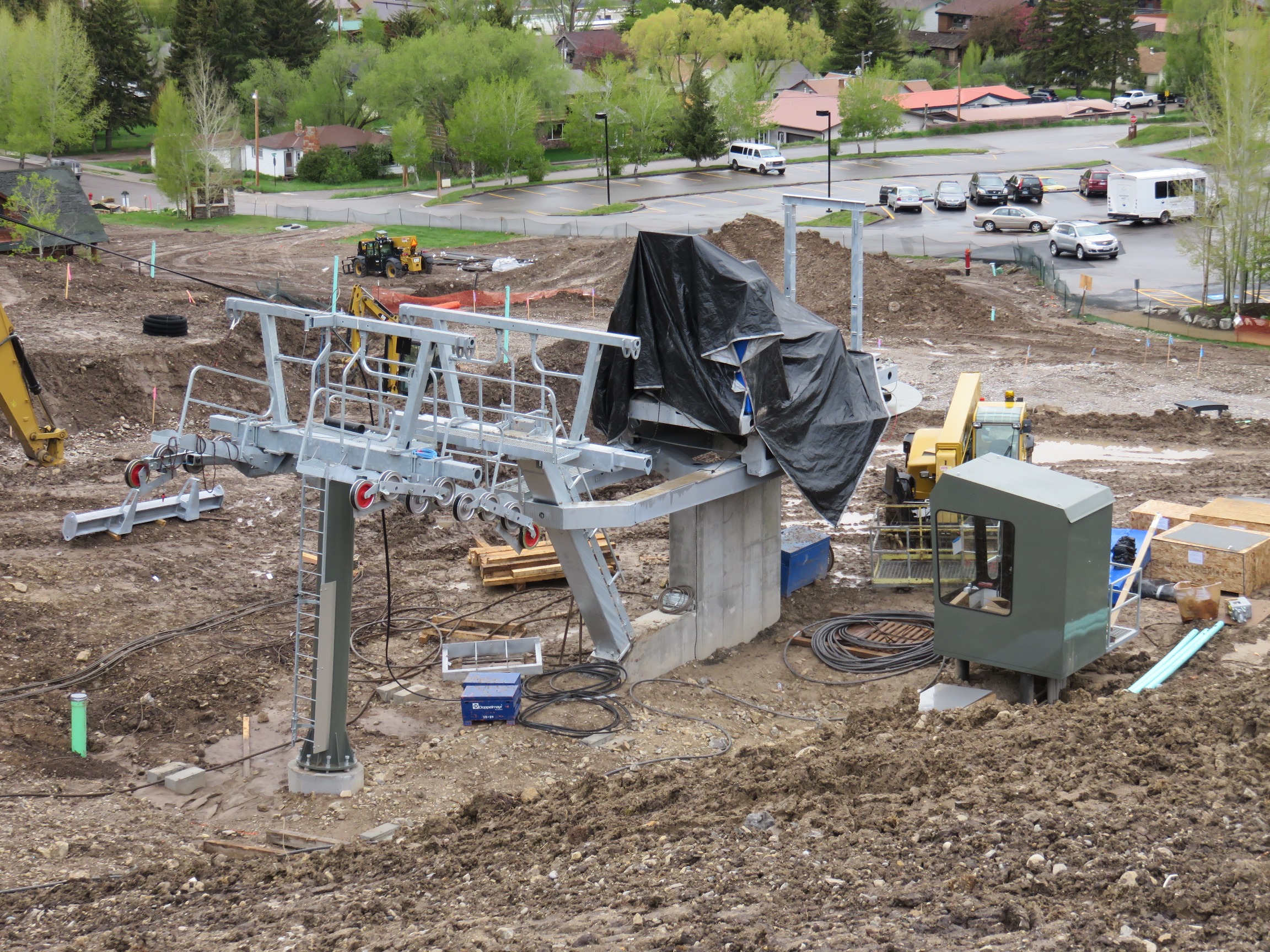
The crew from Doppelmayr is just about finished at Snow King and they are moving down the road to Jackson Hole Mountain Resort to build the new Teton detachable quad. Most of the return terminal parts are now on site along with the haul rope. I was surprised to see the rope was manufactured in France by a company called ArcelorMittal. Apparently it’s the largest steel company in the world and they supplied the rope for Vail’s Gondola One.
Two new aerial tramways are about to open on the Italian side of Mont Blanc that will be among the steepest in the world. This is Doppelmayr’s largest project ever on Leitner’s home turf. The €110 million contract was awarded in late 2011 and construction began in 2012. Two sets of 80-passenger cabins will ascend a crazy 7,093 vertical feet in ten minutes. For comparison, Palm Springs’ tram does 5,873 feet in 12 minutes, Jackson Hole’s 4,084 feet in nine minutes.
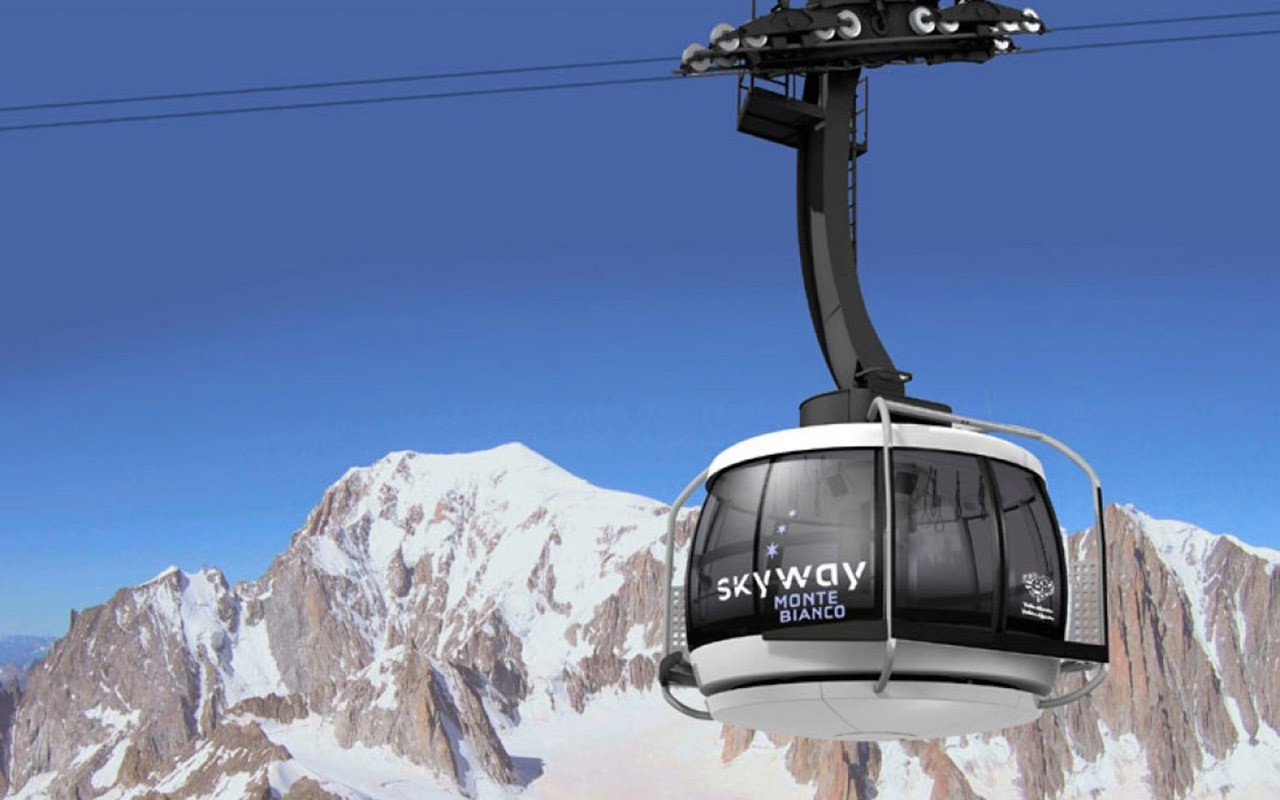
Mont Blanc will have CWA’s first fully-rotating cabins.
Mont Blanc can be accessed from both the Italian and French sides. There is also a highway tunnel under the mountain, but that’s not nearly as cool. The existing setup on the Italian side requires riding three lifts built in the 40s and 50s to reach Point Helbronner at 11,358 feet. The French side has two tramways, the famous Aguille du Midi 1 & 2 that reach 12,392 feet. Connecting the French and Italian summits is a 3.1 mile bi-cable pulse gondola that opened in 1957.
Both new trams will have the world’s first 360-degree rotating cabins (others like the Palm Springs Tramway have only rotating floors.) Built by CWA, these 80-passenger cabins will feature heating, air conditioning and video screens showing live camera views.
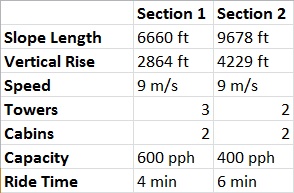
System Statistics
Both sections will be in new alignments as shown in Google Maps above. The first section ascends from the village of Entreves to a mid-station called Le Pavillon with three towers along the way. It will move 600 passengers per hour with a four minute ride. The second section from Le Pavillon to Point Helbronner has only two towers and ascends over 4,000 feet in six minutes. Both sections will operate year-round once they open in mid-June.
Red McCombs’ 28-year battle with the Forest Service over the Village at Wolf Creek may be coming to end. A private lift would access Wolf Creek Ski Area, although the owners of the ski area do not support the Village.
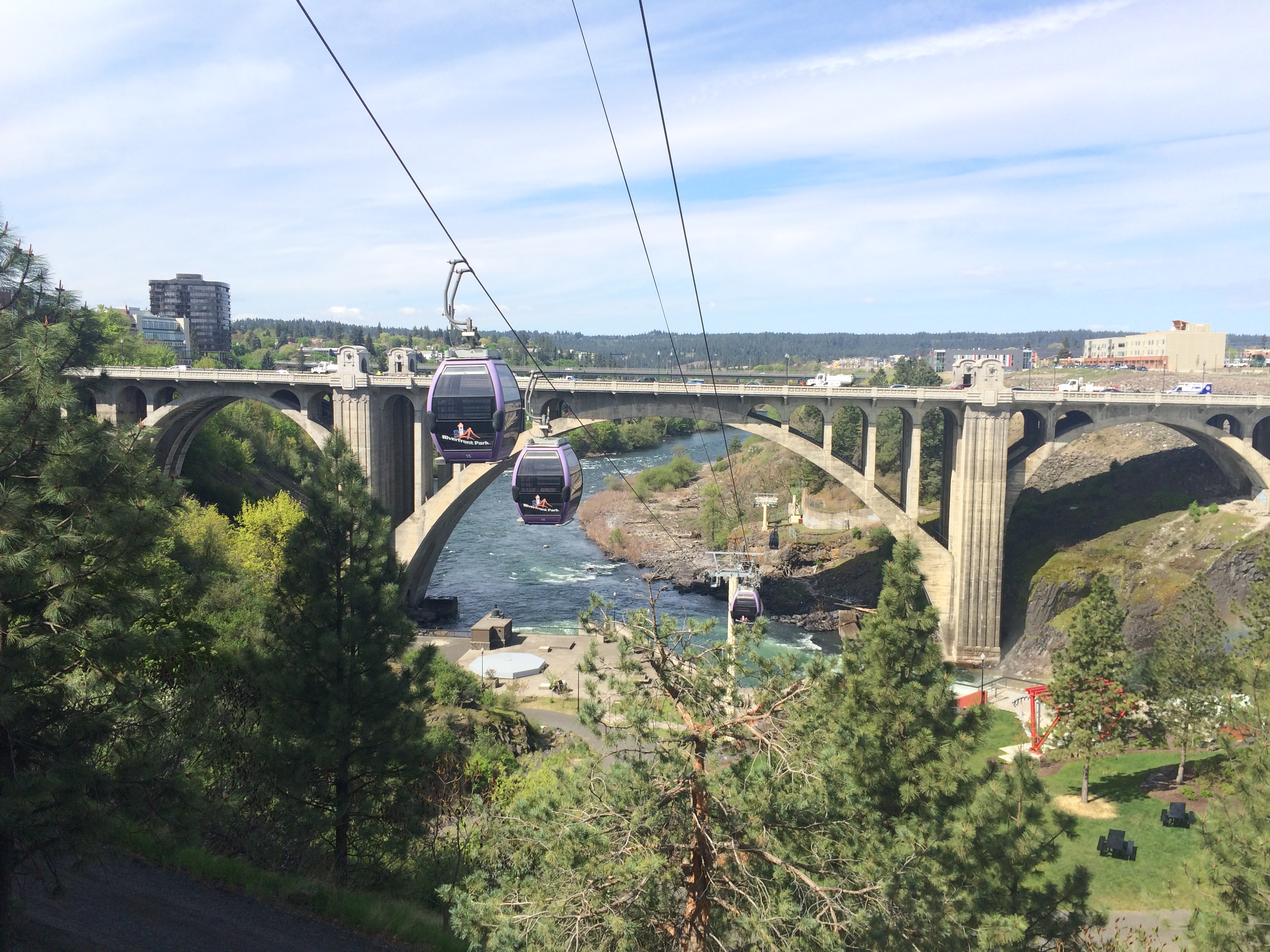
The only lift I know of that crosses under a major bridge.
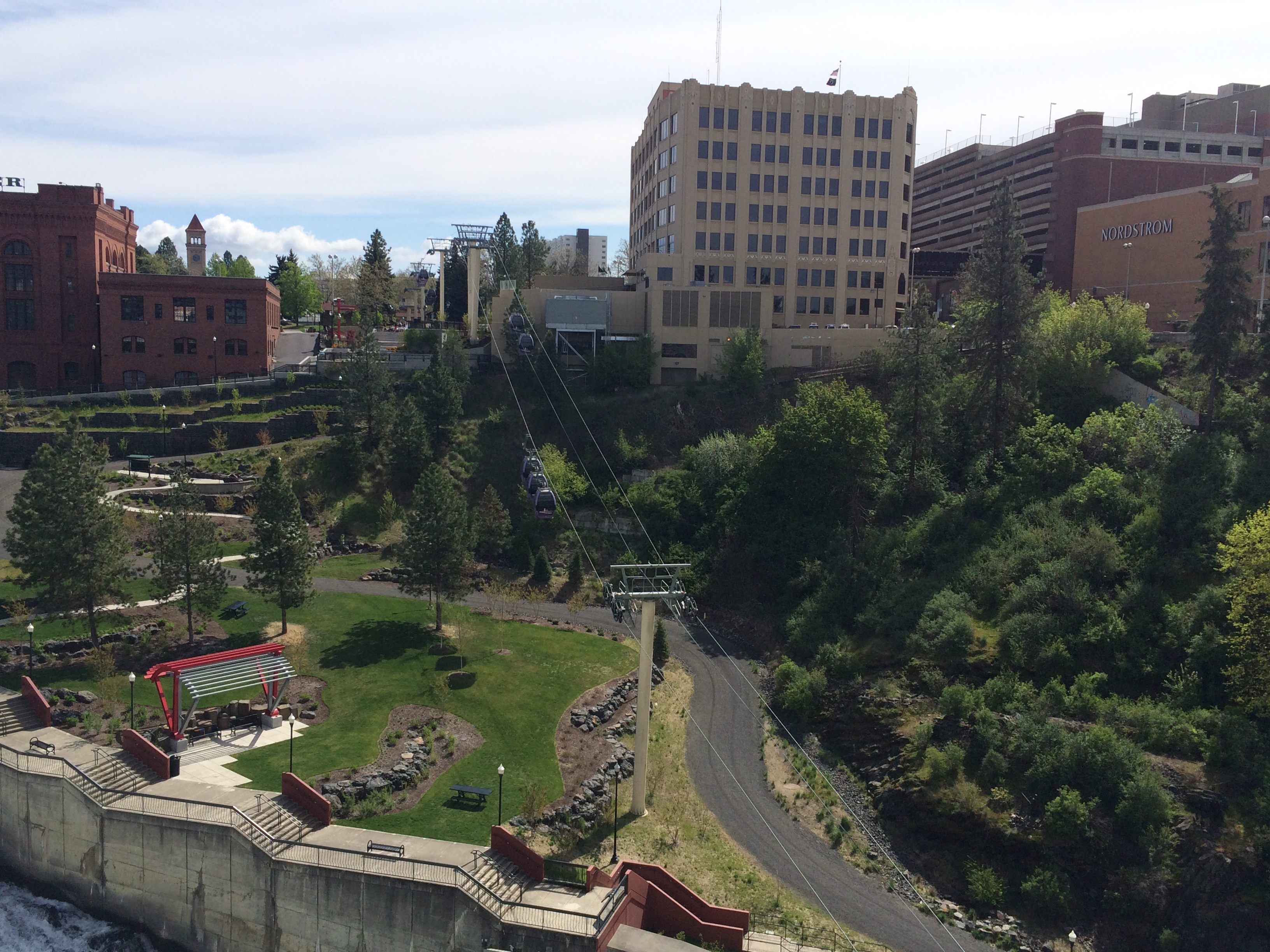
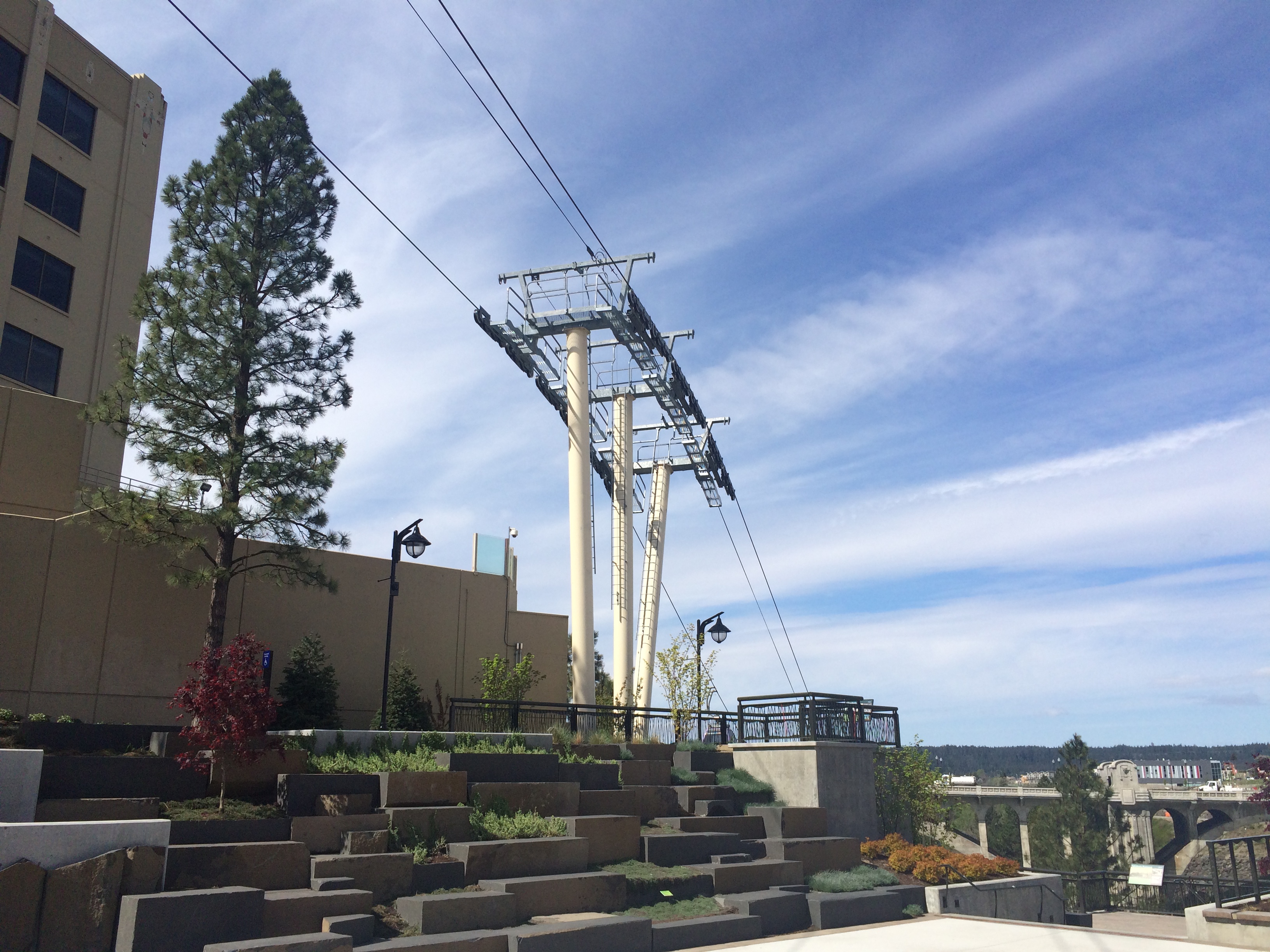
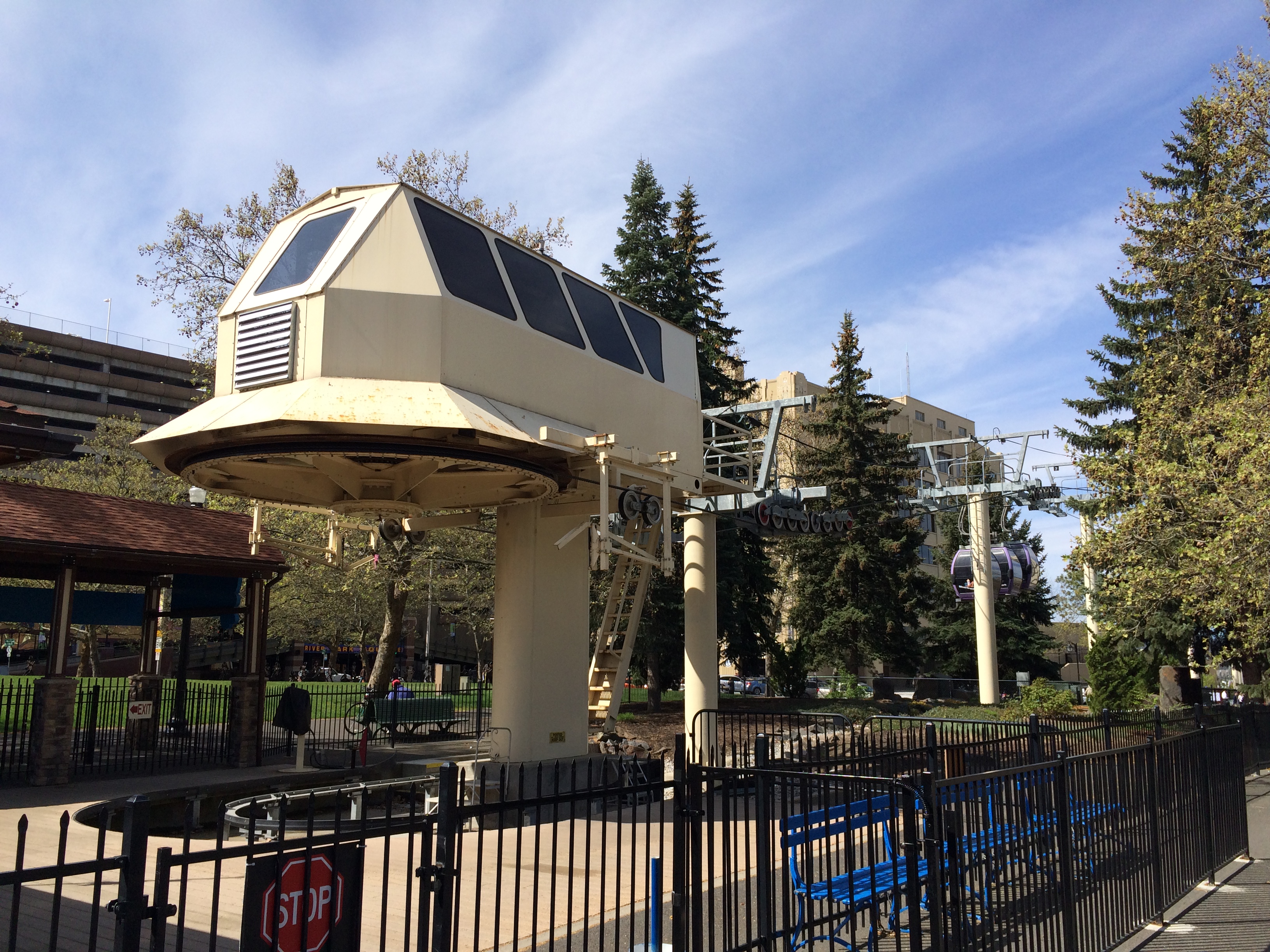
The $2.5 million Spokane Falls SkyRide is one of only a handful of lifts in North America owned by city government. Doppelmayr CTEC built the pulse gondola in 2005 to replace a Riblet version that debuted in 1974. Riders board at the drive station in downtown Spokane’s Riverfront Park. The gondola travels down through the park, across the Spokane River and under a four-lane bridge before turning around. All this happens in only 1,120 feet. It takes 15 minutes to ride round-trip at a painful 150 feet per minute (the design speed is 600 fpm.) The gondola’s turnaround station on the far bank of the river does not have loading/unloading or even an operator. A ticket for the SkyRide costs $7.50 and it operates year-round.
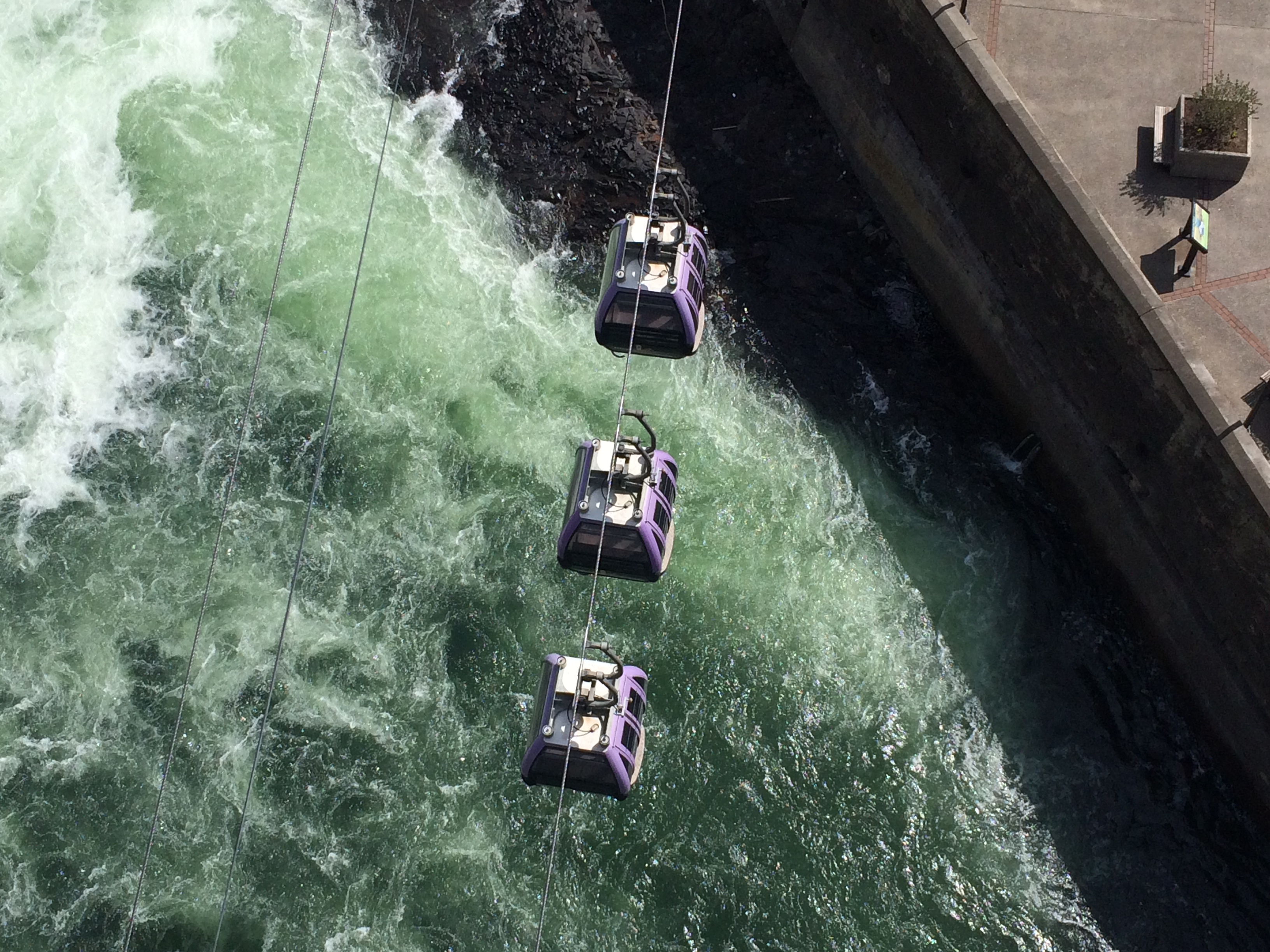
Looking down at one of five pulses of cabins.
Spokane’s original Riverfront SkyRide, built by Riblet, ran in a similar alignment from 1974 to 2005. (Riblet built over 500 lifts in a shop three miles away.) The Riblet version of the SkyRide had open air cabins but the new one has 15 CWA Omega 6-passenger cabins. Because the cabins are enclosed, the SkyRide shuts down when the temperature exceeds 85 degrees, which happens fifty days a year in Spokane. Last year Doppelmayr developed a plan to retrofit cabins with larger opening windows but so far these have not been installed. Despite this issue, over 70,000 people ride the SkyRide every year.
The owner of West Mountain, NY tells the local paper there’s a 25 percent chance both of his new-used lifts will be finished this summer. At least he’s honest!
Some taxpayers are calling for Steamboat’s Howelsen Hill to abandon its Heron-Poma double after a landslide took out a tower.
North America is getting its first Doppelmayr RopeCon at the El Limon gold mine under construction in Mexico.
I got to check out the Rafferty lift construction at Snow King Mountain this weekend. This project is on track to be Doppelmayr USA’s fastest lift installation ever. Snow King actually sells more alpine slide rides in the summer than they do ski tickets in the winter so the lift needed to be completed quickly in between seasons. Construction began in April and will be done by June 15th. Snow King is also building a Wiegand Alpine Coaster that will open in August.
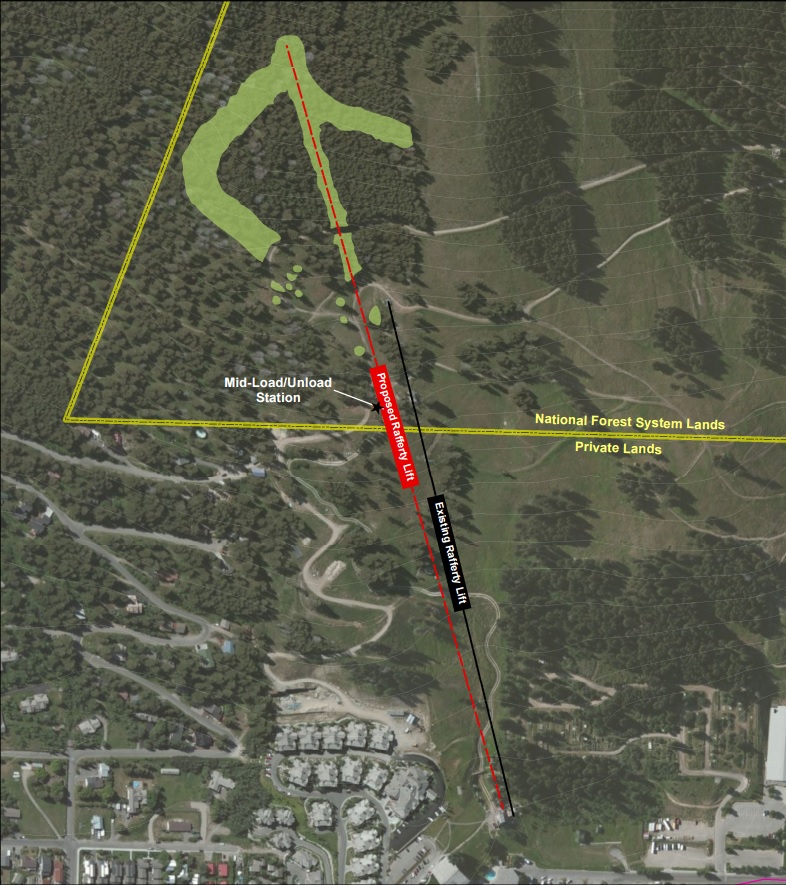
New and old Rafferty lift lines.
The old Rafferty was a Hall double installed in 1978. It will find new life at the Bearizona Wildlife Park in Williams, Arizona. The new Rafferty quad goes 400 vertical feet higher than the old one but the load- and mid-stations are pretty much in the same spots. The bottom drive-tension terminal is a brand new design from Doppelmayr called the Alpen Star. It is a single-mast terminal that looks a lot like SkyTrac’s Monarch design to me. Check out more pictures below of this $8 million project.
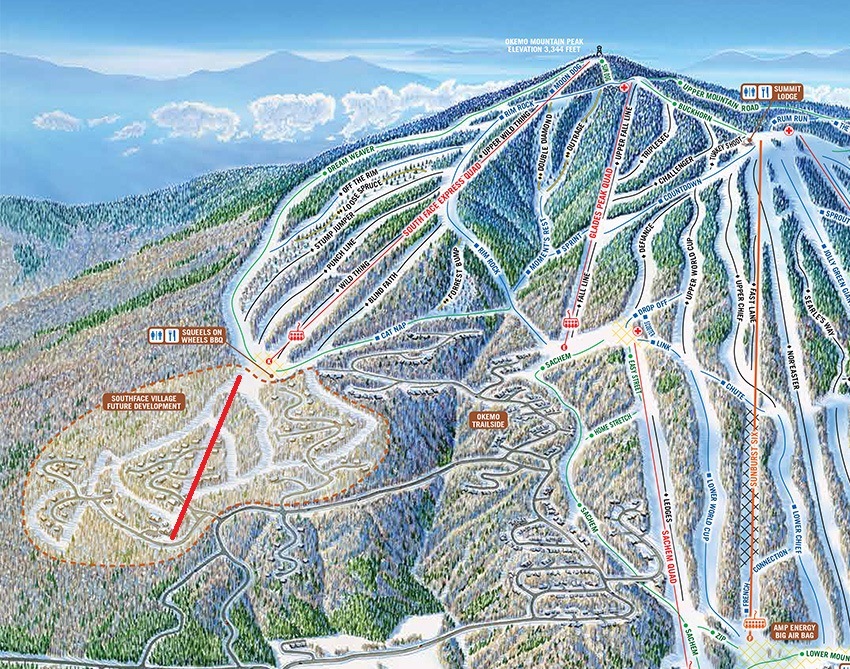
South Face Village at Okemo is moving forward with its first lift.
The $200 million Timber Creek real estate development at Okemo is moving forward with their first lift which will be an Alpha quad. Also at Okemo the Jackson Gore Express is getting bubble chairs to match the Sunburst Six that went in last summer.
For the first time since 1966, Snowmass will be Riblet-less. Aspen Skiing Company moved the High Alpine replacement up by a year to this summer. It will be an LPA detachable quad in a new alignment.
London Ski Club at Boler Mountain in Ontario is replacing their main lift, Columbia, with an Alpha fixed quad.
New Mexico’s James Coleman bought four ski resorts last winter and now he’s gone lift shopping. Sipapu in New Mexico will get a new L-P beginner lift and Purgatory (No longer Durango Mountain Resort) announced the replacement of the Legends triple with an L-P detachable quad.
Squaw Valley is replacing the Siberia Express with an L-P six-pack.
Loveland announced a major lift realignment. Chair 2 (Yan triple) will lose its upper half and be shortened to its mid-station. The parallel 1970 detachable Poma lift will also be removed and Leitner-Poma will build a new “Ptarmigan” lift from the base of the Poma to the old summit of Chair 2. I am not sure yet if this will be a triple or a quad.
The 2015 Doppelmayr Worldbook is out! It’s 150 pages of statistics and pictures of the 83 lifts Doppelmayr and Garaventa built last year. The book comes out every spring and the last seven of them are available online.
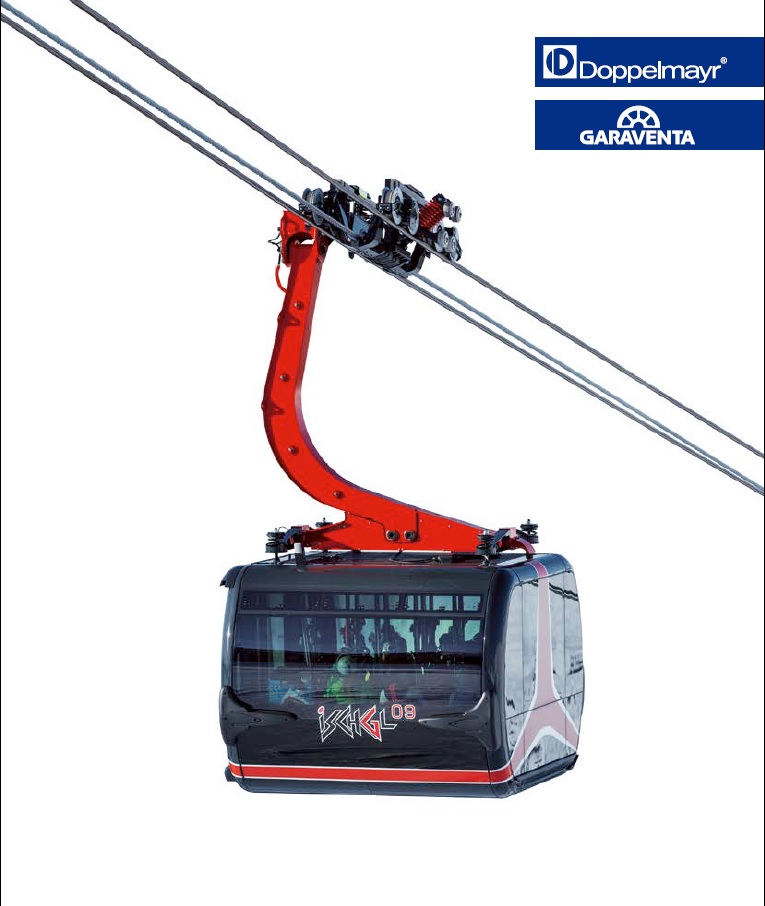
CWA’s new Titlis cabin is on the cover.
Some of the projects I found interesting:
Universal Studios’ Hogwarts Express, a modern funicular designed to look like a train from Harry Potter.
Oakland’s airport connector which is the first Doppelmayr CableLiner Shuttle to have multiple haul ropes and detachable cars. $484 million buys a pretty cool train.
Three gondolas in China including one to the Great Wall with heated seats.
The world’s longest chondola at Beaver Creek (also the first with 10 passenger cabins.)
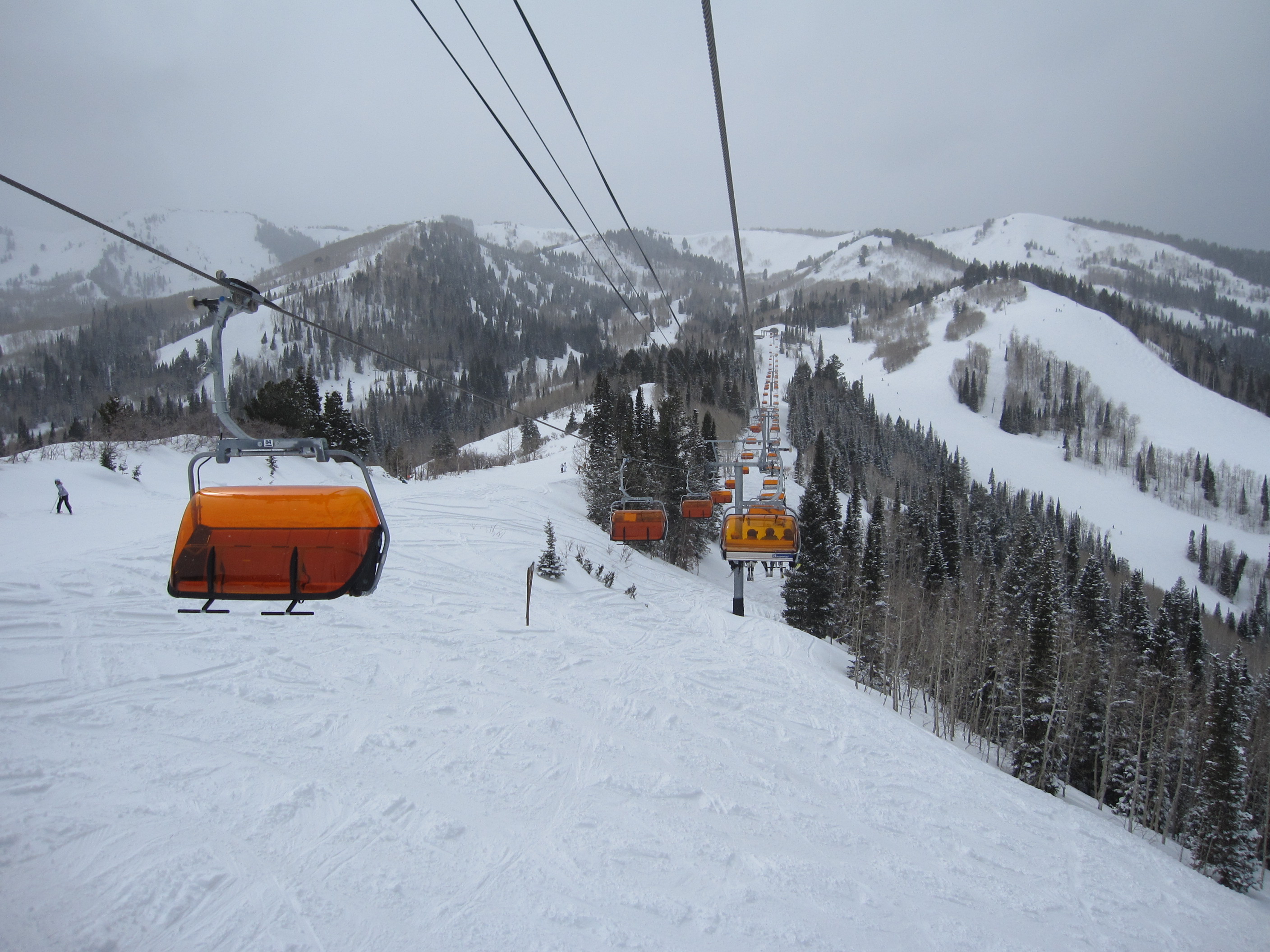
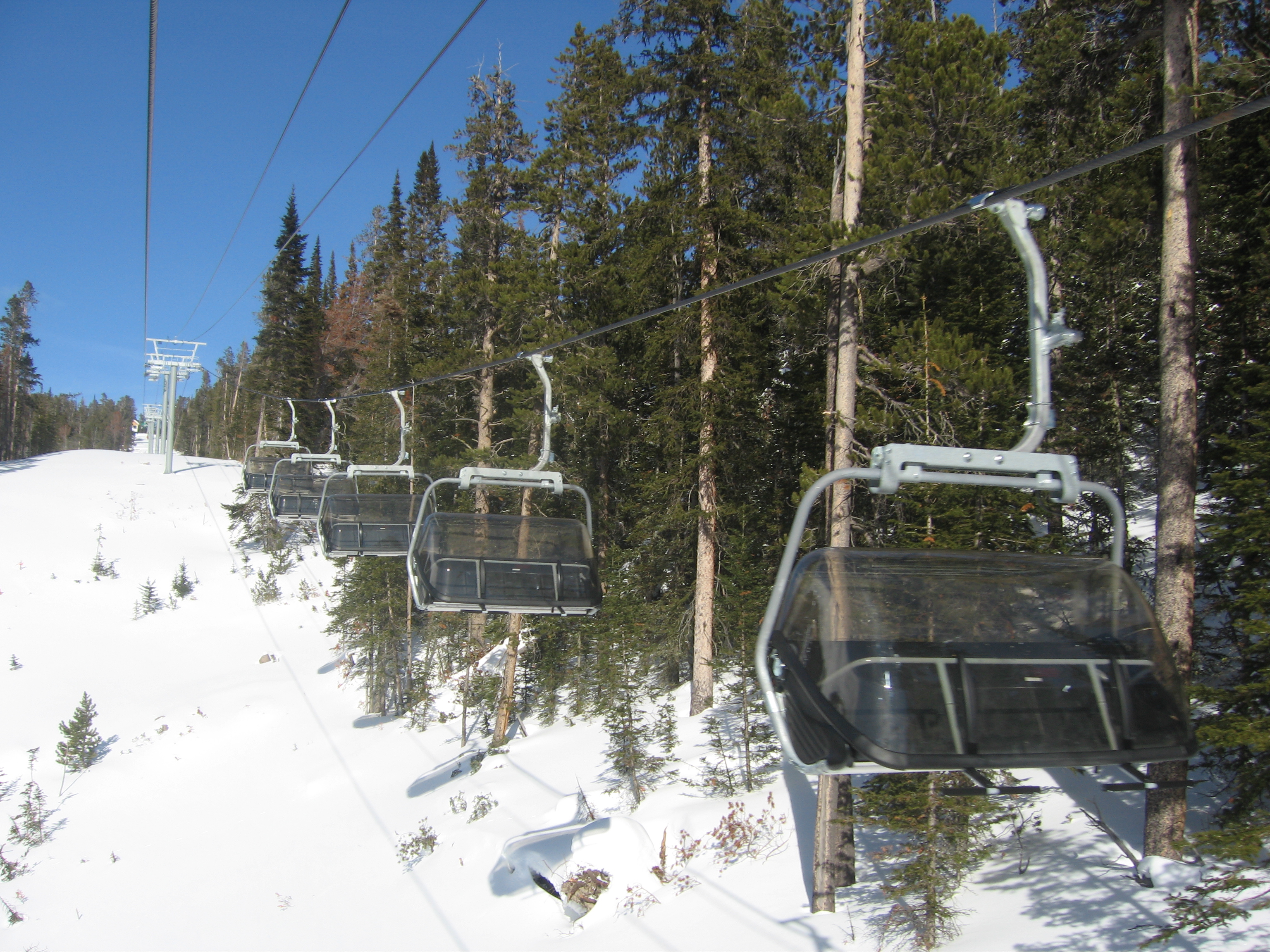
Growing up in the rainy Pacific Northwest, I happen to love chairs with bubbles. I can get the comfort of a gondola without taking my skis off or enjoy fresh air like on any other chairlift. Lifts with bubbles are technically very cool too. Electronic eyes in the lift terminals know when chairs are empty and the bubbles lower automatically. Chairs stay dry and lifties don’t have to sweep them or flip chairs at night.
Bubbles everywhere at the Yellowstone Club.
Despite their added comfort, bubbles haven’t really caught on in North America. Europe is a different story where 30+ lifts are built with them every year. In the US and Canada, Doppelmayr has built 16 lifts with bubbles since 1985. You can find them at Whistler-Blackcomb, Sun Peaks, Mont-Saint-Anne, Big Sky, Canyons and Stoneham. The Yellowstone Club also has bubbles on all six of their quad chairs.