
- Granite Peak will announce a plan this fall for new runs and multiple new lifts.
- Crystal Mountain pushes back Kelly’s Gap high speed quad to 2021.
- James Coleman purchases Hesperus, adding to his collective that includes Arizona Snowbowl, Pajarito, Purgatory and Sipapu. A 1961 Riblet double from Mt. Bachelor is Hesperus’ only lift.
- Fatzer opens a new production plant.
- The United States overtakes France as the world’s most popular ski destination. The U.S. is the fourth largest lift market.
- Austin’s NPR station dedicates more than seven minutes to a discussion about urban cable. “Once we went to La Paz, we were up and running within 12 months,” Doppelmayr’s Randy Woolwine tells listeners.
- A six-pack rises at Arizona Snowbowl.
- Eagle Point unveils Vision 2020 with new lifts and expanded terrain planned.
- Next season might be the last for Blackcomb’s Horstman T-Bar due to glacial recession. This video demonstrates one of the pitfalls of the sinking T-Bar.
- SAM reports how Jay Peak employees have made the most of a bad situation amidst a federal fraud investigation.
- Mont Bellevue gets a Doppelmayr Eco quad with a return station design we haven’t seen before and two different-style bullwheels.
- Le Relais’ $5 million six-place chair is just about finished.
- Vail Resorts loses $65.3 million in the fourth quarter.
- Big Sky’s new six-pack will be named Powder Seeker.
- The first Poma EEZII-model compact detachable terminal is assembled in France.
- Whistler-Blackcomb releases Conflicted Obsessions documentary about climate change. “The gorilla in the room is the long-distance travel required to get to these special places,” admits W-B’s environmental resource manager.
Fatzer
Mount Roberts Tramway Celebrates Twenty Years
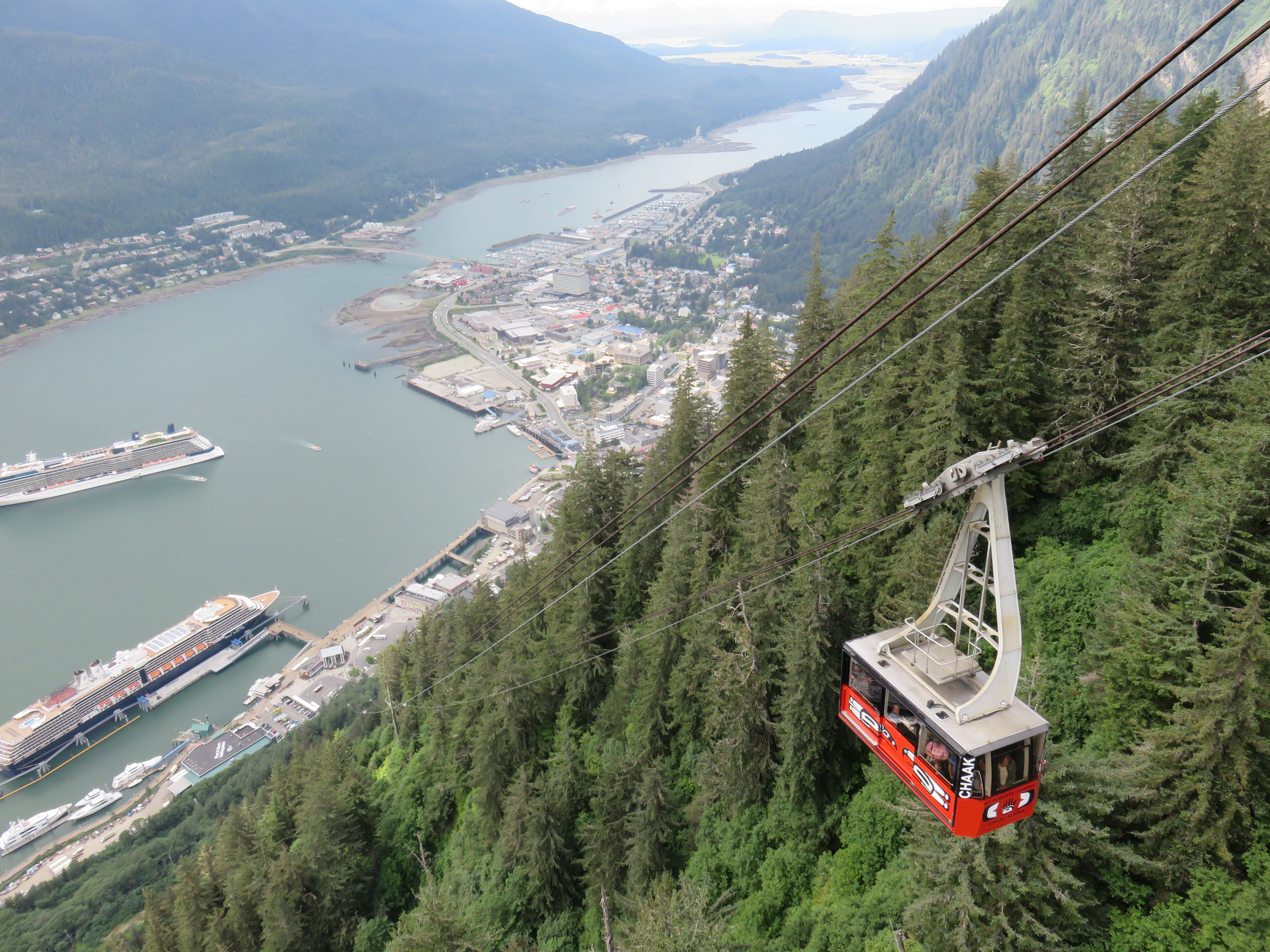
Rising from the cruise docks on the edge of Alaska’s capital, the Mt. Roberts Tramway is the undisputed steepest lift in North America with an average slope angle of 39 degrees. The now-famous tram carried its first passengers 1,800 feet above Juneau almost twenty years ago. It’s among the newest large aerial tramways in North America and one of two in the U.S. built by Poma. The summit terminal soars 165 feet above the forested slopes of Mt. Roberts, downtown Juneau and the massive cruise ships below. On August 10th, the tram will celebrate twenty years of service and more than 3.5 million riders.
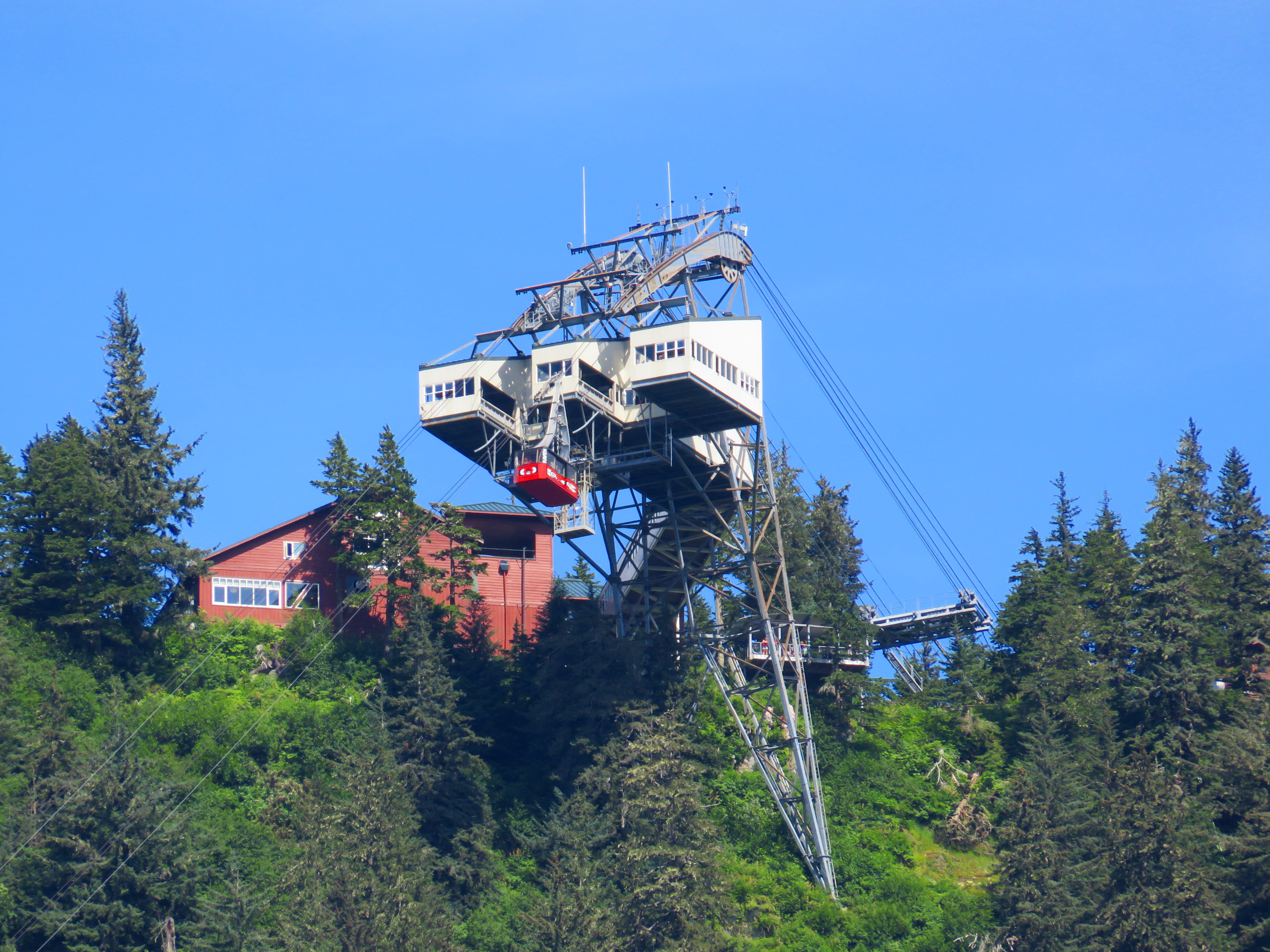
John Heiser proposed the lift in 1994, becoming President of the Mount Roberts Development Corporation before leaving to join Intrawest. He financed the $16 million project with investments from Anchorage businessmen and Goldbelt (an Alaska Native Corporation) and leased right of way from the City of Juneau. Goldbelt took 100-percent ownership of the tram in 1998.

News Roundup: Vail Effect
- The state of Utah hosted 4.5 million skier visits last season, a new record credited in part to the “Vail effect” and six new lifts.
- The Boston Globe autopsies New England’s nightmare season.
- Bloomberg Businessweek talks urban ropeway growth with Doppelmayr and Poma, so does The Wall Street Journal.
- Snowbird’s tram track cable replacement project is finished a week early.
- Disneyland will demolish historic VonRoll Skyway terminal to make way for Star Wars Land.
- Fatzer finishes six 27,000 foot ropes for the world’s longest 3S, set to open in 2017 in the Gulf of Thailand.
- Powdr buys Eldora.
- Jay Peak works on a plan to get its grounded tram running sometime this summer.
Will Detachable Lifts Get Faster?
There’s a lively discussion going on over at Alpinforum about the future of detachable lifts, which haven’t gotten much faster despite huge advances in technology over the last thirty years. The first modern detachable chairlift, Quicksilver at Breckenridge, went 787 feet a minute when it debuted in 1981. Since then, manufacturers have installed hundreds of gondolas and chairlifts capable of going more than 1,000 fpm.

30-year old lift: 1000 ft/min

Brand new lift: 1000 ft/min
The first lift to go 1,100 fpm was the Whistler Village Gondola in 1988 and the first capable of 1,200 fpm was Stowe’s gondola in 1991. Both were built by Poma, the early adopter of faster line speeds. The only detachable installed in North America since 1991 capable of traveling any more than 1,200 fpm is the Peak 2 Peak Gondola, debuting in 2012. As a tri-cable gondola, P2P has an impressive capability of 1,476 fpm (7.5 m/s.) Doppelmayr claims similar systems can go up to 1,670 fpm (8.5 m/s.) So far, the fastest 3S ever built goes 8 m/s and one that can go 8.5 will debut in Vietnam next year. Meanwhile, 1,200 fpm (6 m/s) remains the highest speed for a single cable detachable, a stat that hasn’t changed since 1991.
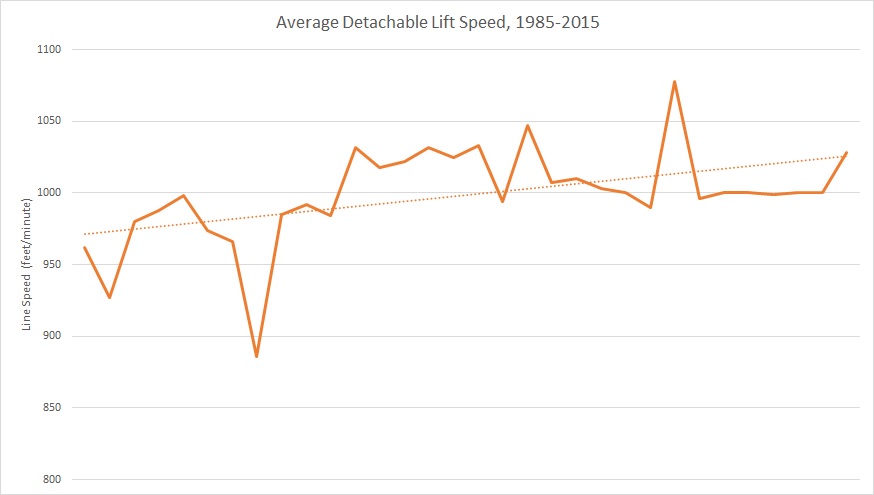
The truth is the vast majority of detachable lifts built these days have the standard design speed of 1,000 fpm (5.08 m/s) and operate even slower much of the time. In my experience, many ski areas run so-called high speed lifts at 800 or 900 feet a minute on all but the busiest of days. As users on Alpinforum note, ski resort operators care more about reducing stops, wear and tear than shaving thirty seconds off a ride time that the average guest won’t even notice.
Behind the Scenes of the Jackson Hole Tram
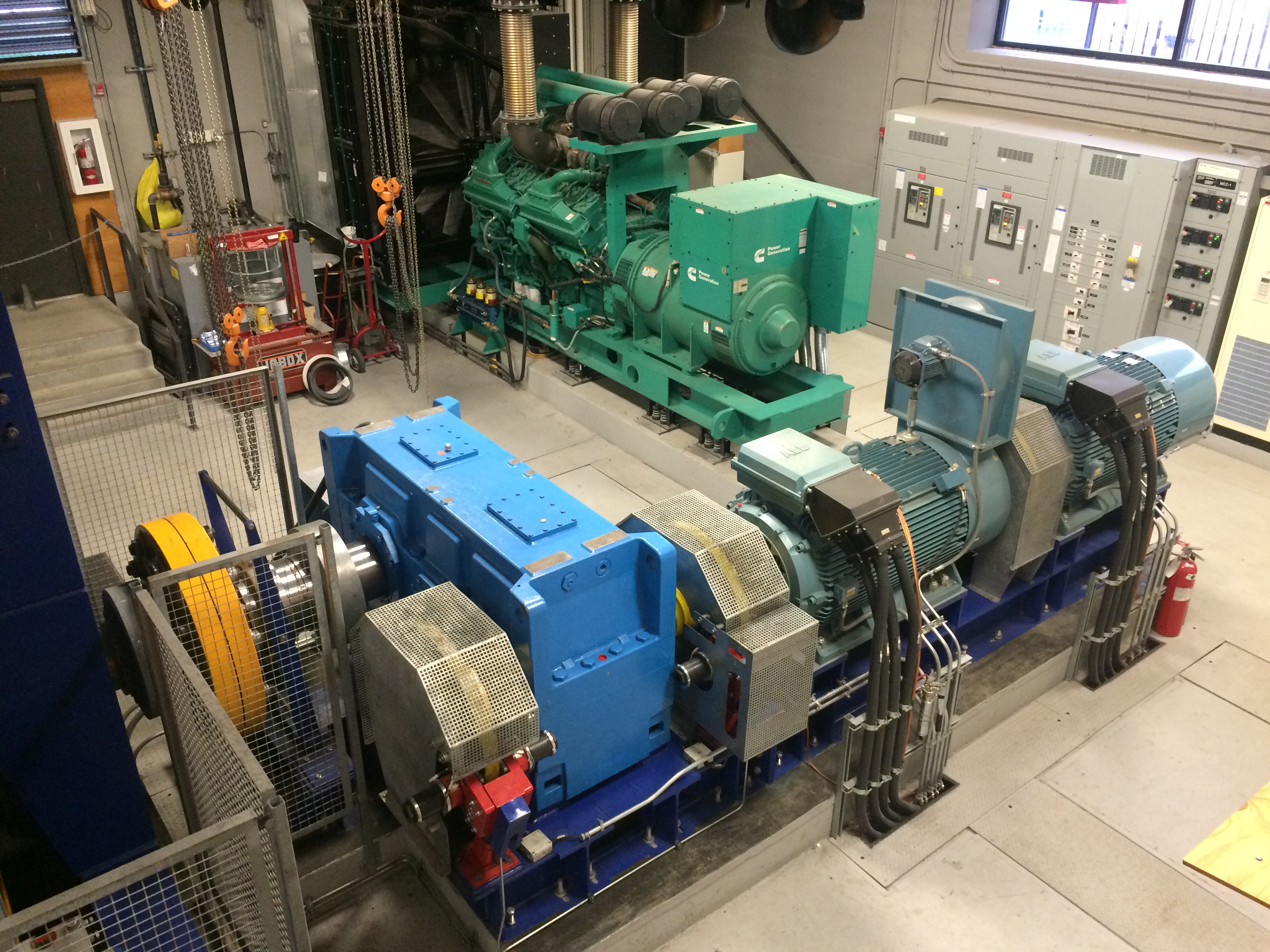
The $31 million Jackson Hole Aerial Tram is the most expensive lift ever built at a US ski area. Constructed by Garaventa over 20 months, the new tram opened to great fanfare on December 20, 2008. It can move a hundred people 4,083 vertical feet in under nine minutes. Compared with a detachable lift, the tram is a relatively simple machine built on a massive scale.
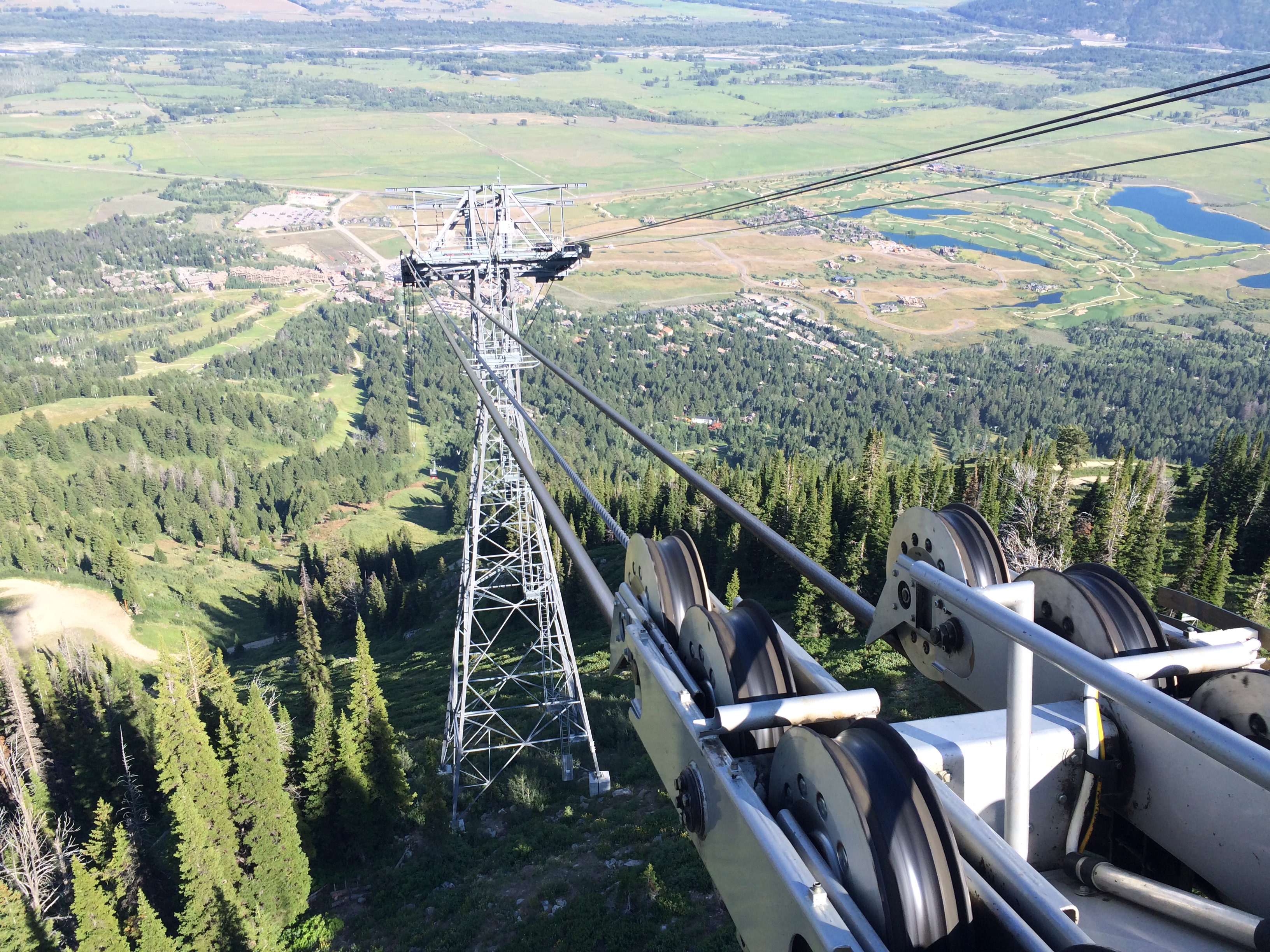
Like most jig-back aerial tramways, there are four track ropes and a single haul rope that that drives both cabins. All five wire ropes were manufactured by Fatzer in Switzerland. Five towers support the line; towers 1 and 2 are the tallest and furthest apart. Two CWA Kronos cabins move 650 passengers per hour per direction at a maximum speed of 10 m/s. Slope length is 12,463 feet.
 Lift Blog