
Leitner-Poma
Instagram Tuesday: Wheels
A Chondola for Gatlinburg, Tennessee?
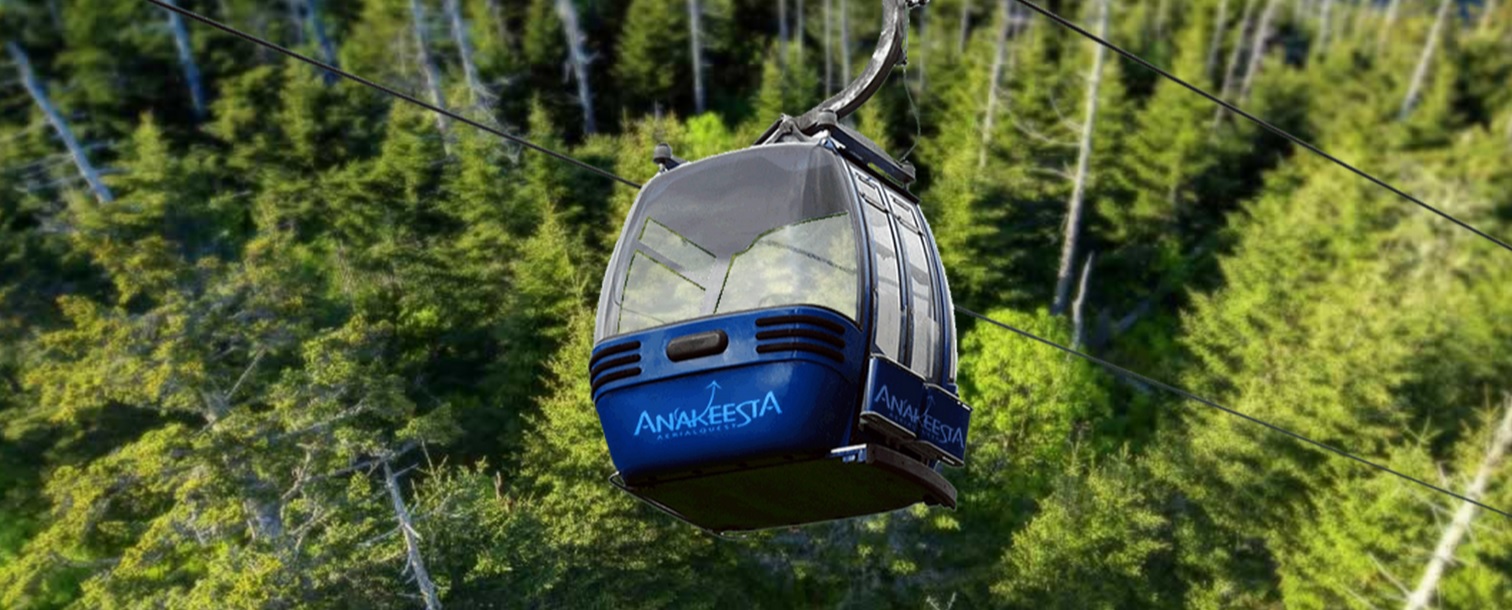
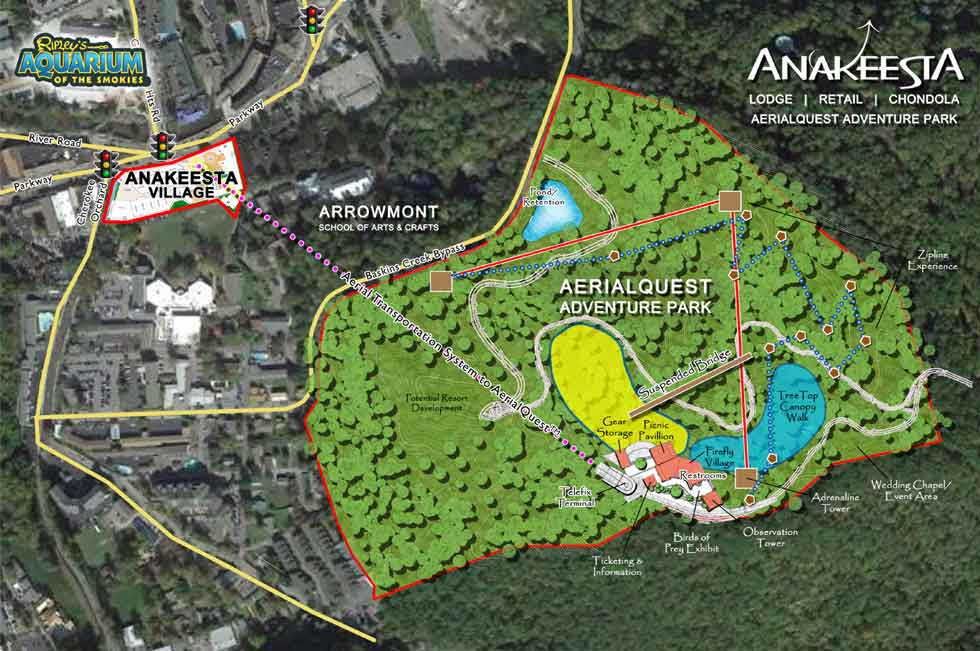
Gatlinburg, Tennessee is the surprising home to a half dozen aerial lifts including the Gatlinburg Sky Lift and Ober Gatlinburg ski resort with a 120-passenger VonRoll aerial tramway. This town of less than 4,000 may now be adding a Leitner-Poma chondola to the mix. A new mixed-use development called Anakeesta includes the AerialQuest Adventure Park and a new hotel with a chondola connecting the two. The project’s website is unclear on exactly what type of system is coming, but apparently it will take 12 minutes each way and have between four and eight passenger cabins (the photoshopped cabins on the website are Gangloff, not Sigma.) The site calls it a chondola and Telemix although its not clear the person who wrote the copy actually knows what those terms mean. Websites are cheap, gondolas are not so we will see if this one really opens in the Spring of 2017.
Lift Profile: Vail’s Gondola One
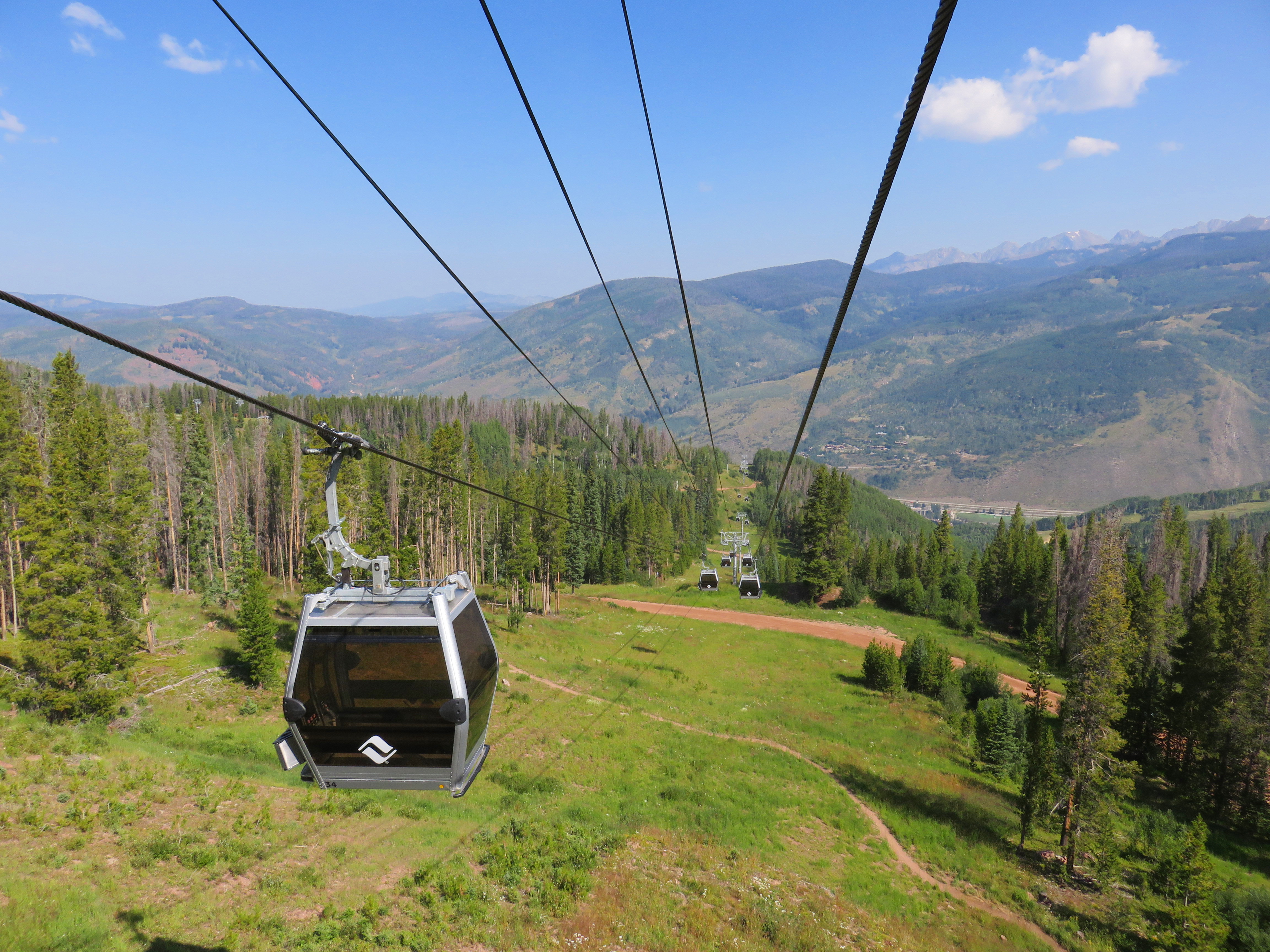
When Vail opened the 10-passenger Gondola One in 2012, it marked the return of gondola service to Vail Village for the first time since 1976. Gondola One is named after the original Bell gondola at Vail, which opened fifty years earlier in 1962. After a de-ropement on that gondola the Lionshead gondola that killed four, various chairlifts served Vail Village for the next thirty years. Gondola One replaced the Vista Bahn, one of Vail’s original detachable quads from 1985. The Vista Bahn was a beast of a lift – over 9,000 feet long with 216 bubble quad chairs that could move 2,650 skiers per hour to the heart of Vail Mountain. By 2011, the Vista Bahn had reached the end of its useful life and needed replacement.

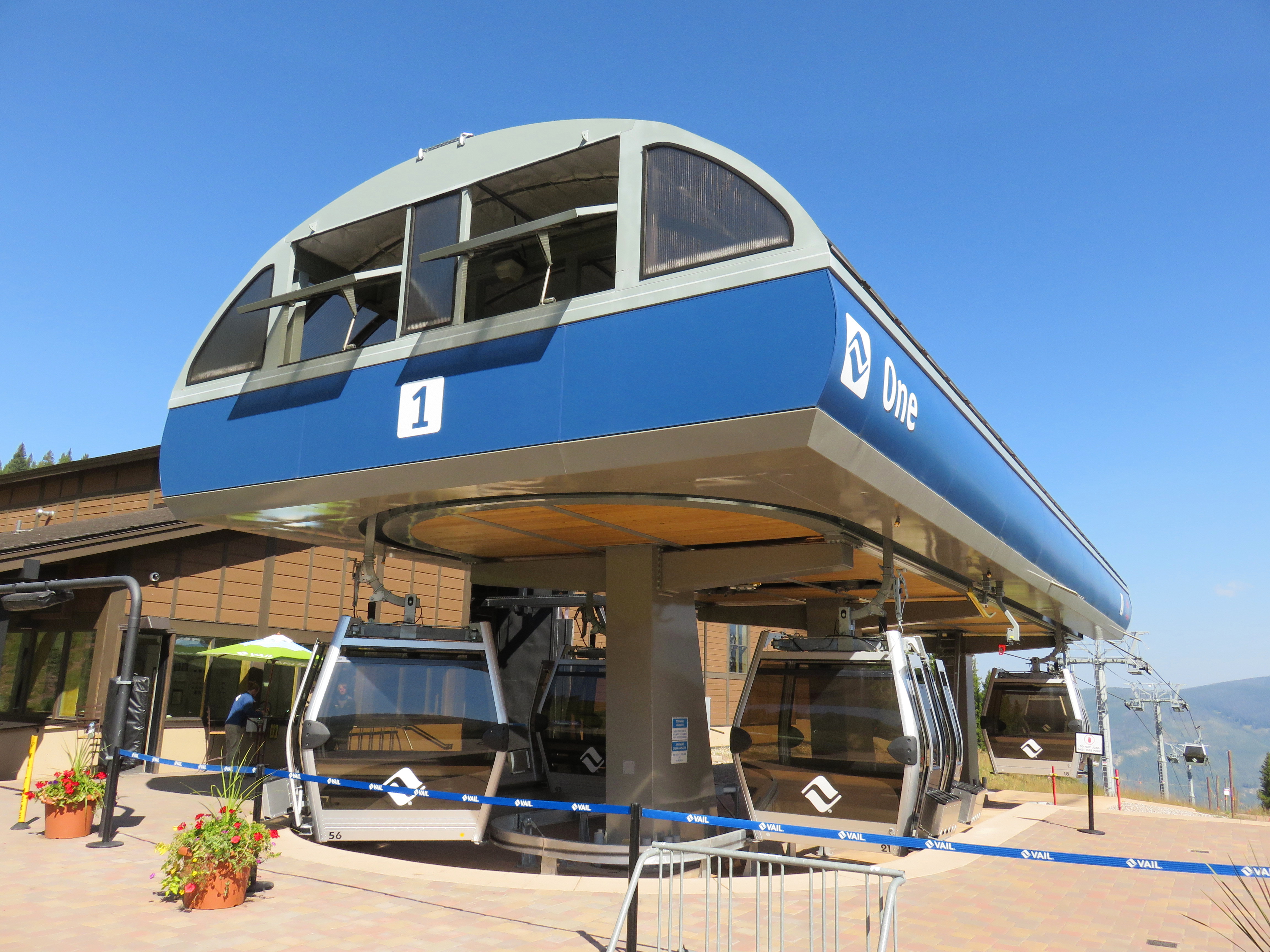
Gondola One is an impressive upgrade, full of modern features and an example of how the gondola is staging a comeback. Built by Leitner-Poma, it has 120 10-passenger Sigma Diamond cabins with heated seats, LED lighting and Wi-Fi. Cabin 50 is painted gold to celebrate Vail’s 50th anniversary which was celebrated the year it opened. Exterior ski racks on the cabins have space for ten pairs of skis or six snowboards and bikes can fit inside the cabins in the summer.
News Roundup: Eco-Friendly
- Leitner-Poma flies concrete for Loveland’s new Ptarmigan lift, a triple which will replace two lifts in a new alignment.
- Aerospace Engineer Michael Bouchard is determined to reopen Tenney Mountain after five seasons being closed.
- Season pass sales have been suspended at the troubled Magic Mountain in Londonderry, Vermont. The classic New England ski resort is down to two working chair lifts (in 1990 it had five.)
- Poma has a new brochure about its urban lift projects.
- Mt. Rose is relocating the Ponderosa quad (1993 Garaventa CTEC) to become the Wizard beginner lift. It also looks like their James Niehues trail map is out and a Gary Milliken VistaMap is in.
- One of Garaventa’s retired engineers has written an 834-page book called Ropeway Technology. It can be yours for only 125 Swiss Francs (plus $32 for shipping to the USA.)
- Sugarloaf pours foundations for their new terminal on an old lift.
Lift Profile: Casper at Jackson Hole

Jackson Hole’s Casper lift is an example of how the right lift can revitalize an entire section of a mountain. Prior to 2012, Casper was a 1974 Heron-Poma triple chair with a 10-minute ride time. The lift and nearby trails felt like no-man’s land in between the much newer Bridger Gondola and Apres Vous high speed quad. Casper had a race course and restaurant, but few people wanted to ride the lift.
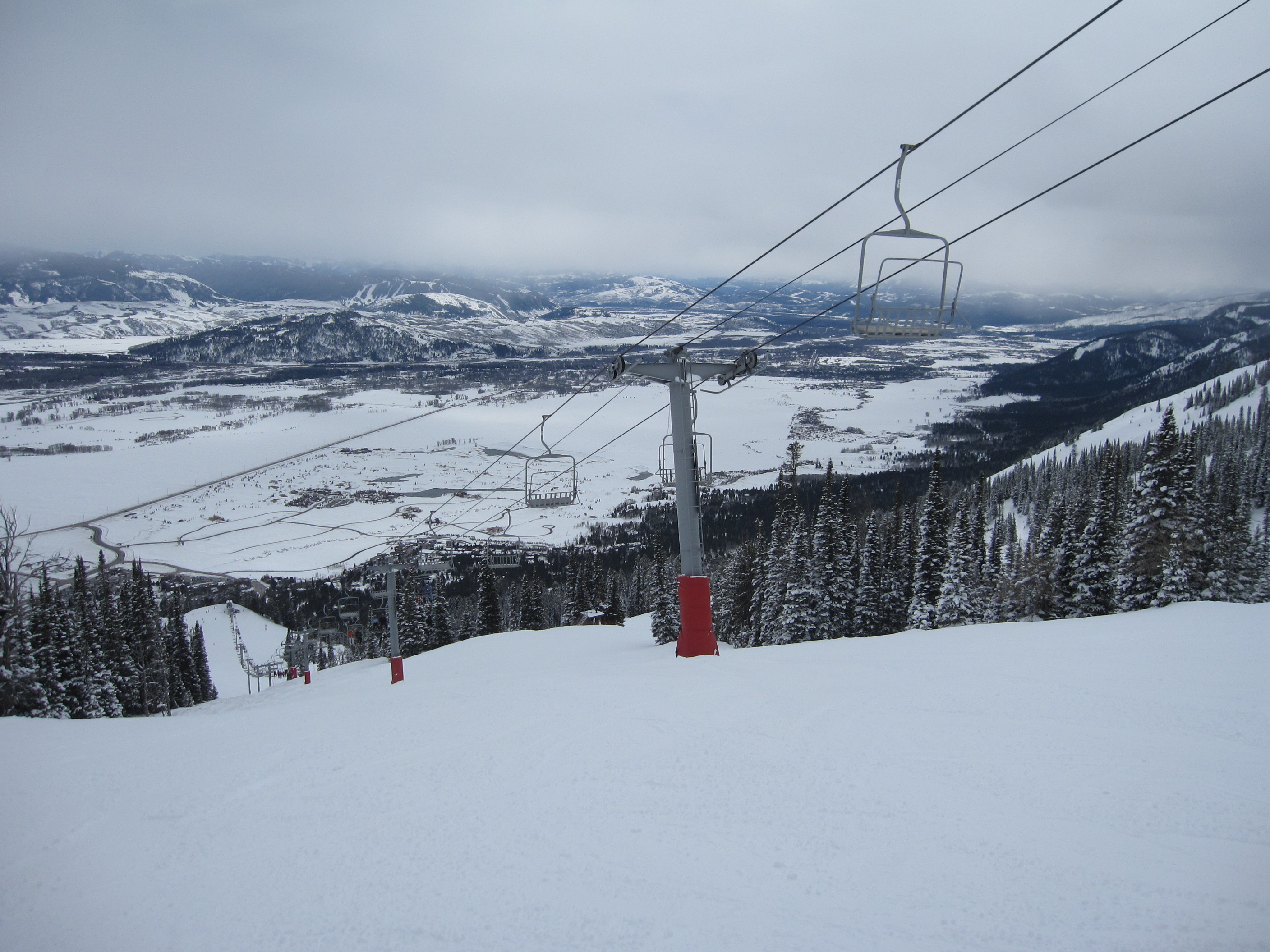
In the summer of 2012, Jackson Hole invested $5 million to build a new Casper high speed quad and re-grade three major runs in the Casper pod. The race course was moved elsewhere and the entire area dubbed “all new, all-blue.” The new Casper opened December 6, 2012 and completely changed intermediate skiing at Jackson Hole.
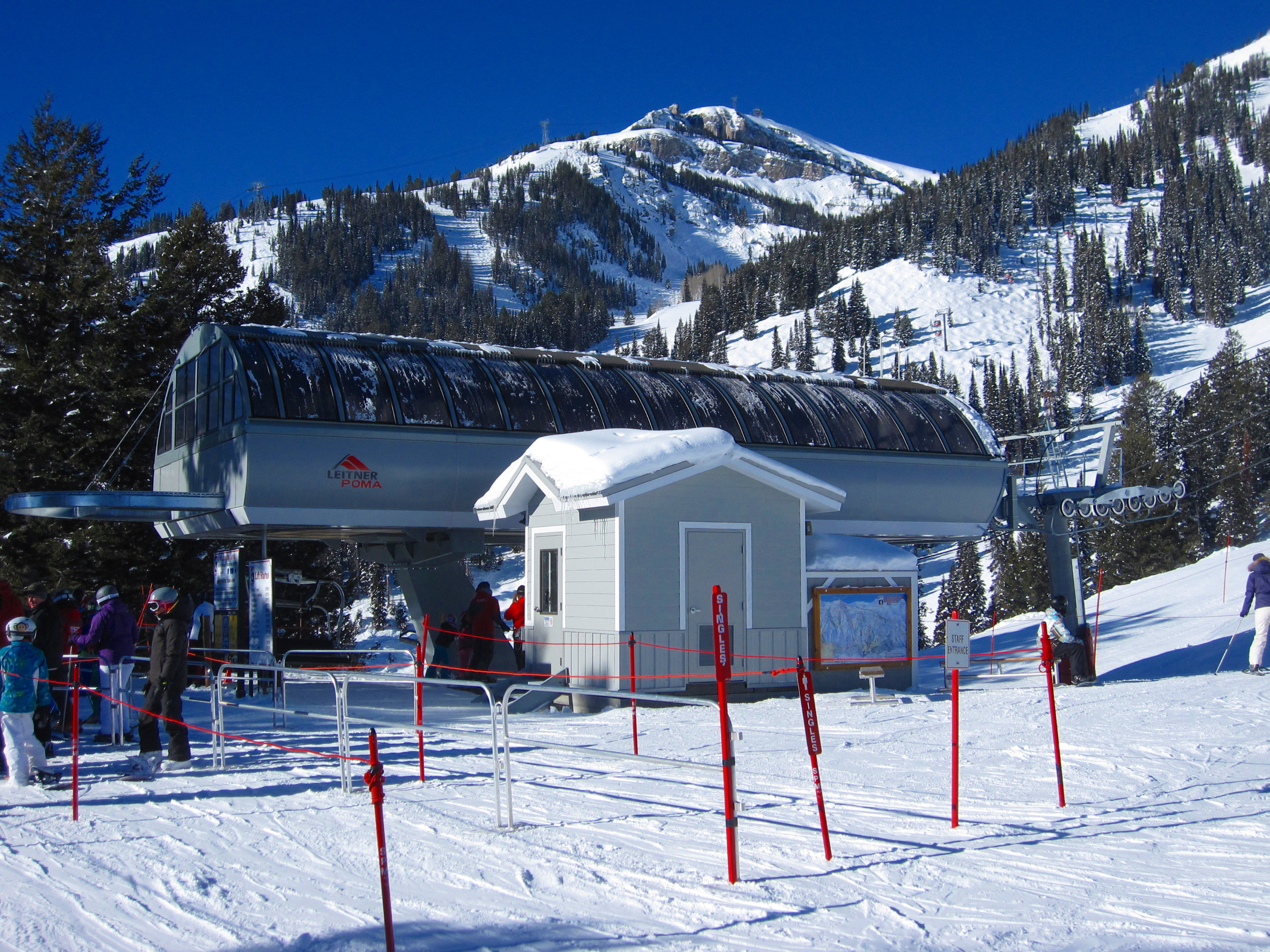
Casper is one of Leitner-Poma’s first dozen lifts to utilize the new LPA terminals and grips, which debuted at Vail in 2010. While not without the usual hiccups, Casper is a machine well-liked by mechanics, operators and skiers. The lift shacks and terminals are spacious with many thoughtful features. For example, the chairs have clips that prevent seats from blowing up in high winds. The lift can auto-slow and auto-stop at pre-set wind speeds. A touchscreen at the return terminal gives operators just as much information as at the drive. Tower ladders extend all the way to the top of the lifting frames.
Lift Profile: Iron Mountain Tramway
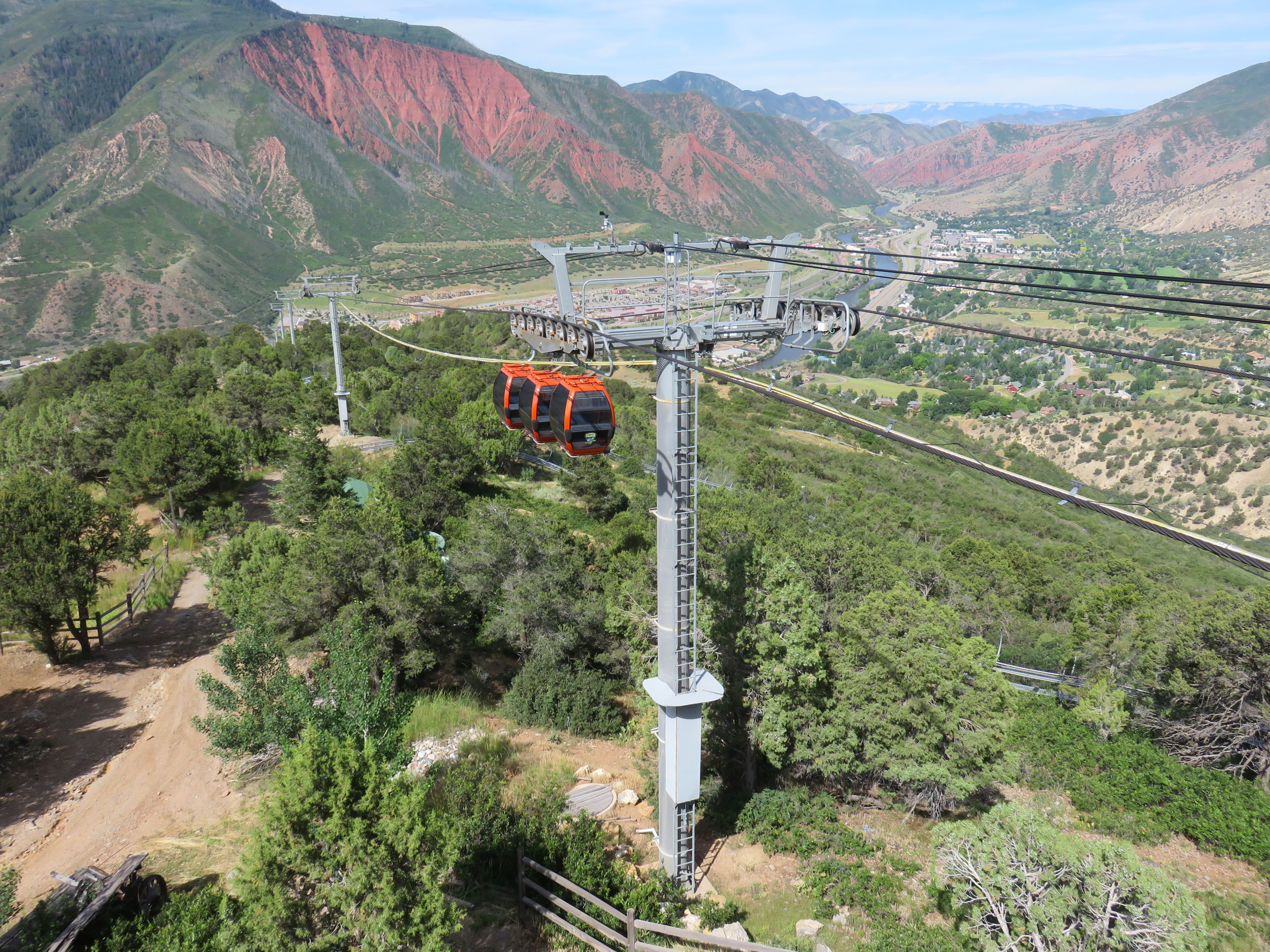
The Iron Mountain Tramway provides the only public access to the Glenwood Caverns Adventure Park located in Glenwood Springs, Colorado. Built by Leitner-Poma in 2002, it was one of the first pulse gondolas to open in North America. The system debuted with four sets of two CWA Omega III cabins and now has six pulses of three for a total of 18 cabins. Ultimate design capacity is 36 cabins in groups of three which would achieve a capacity of 543 passengers per hour per direction. With a top speed of 1,000 feet per minute, the trip takes about seven minutes including two slows along the way. If more pulses are added, the trip time will increase as the system slows to a crawl whenever cabins are loading and unloading. This is one of the disadvantages of pulse systems.
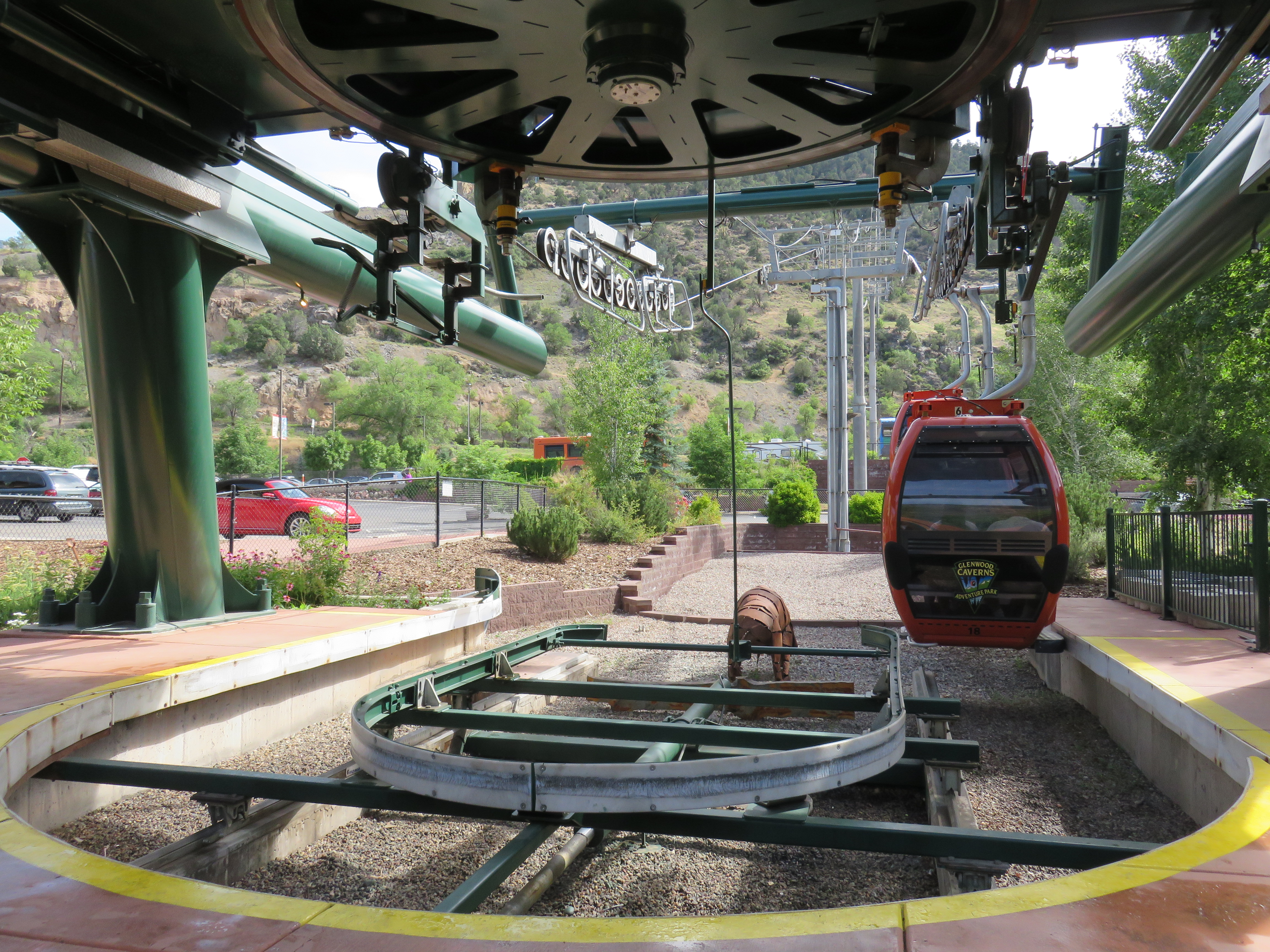
The gondola rises 1,351 feet and has a slope length is 4,432 feet. The bottom drive terminal is a Poma Alpha model with a 400 HP electric motor. Because this is also the tension terminal, the entire loading platform moves hydraulically with the motor room and bullwheel.
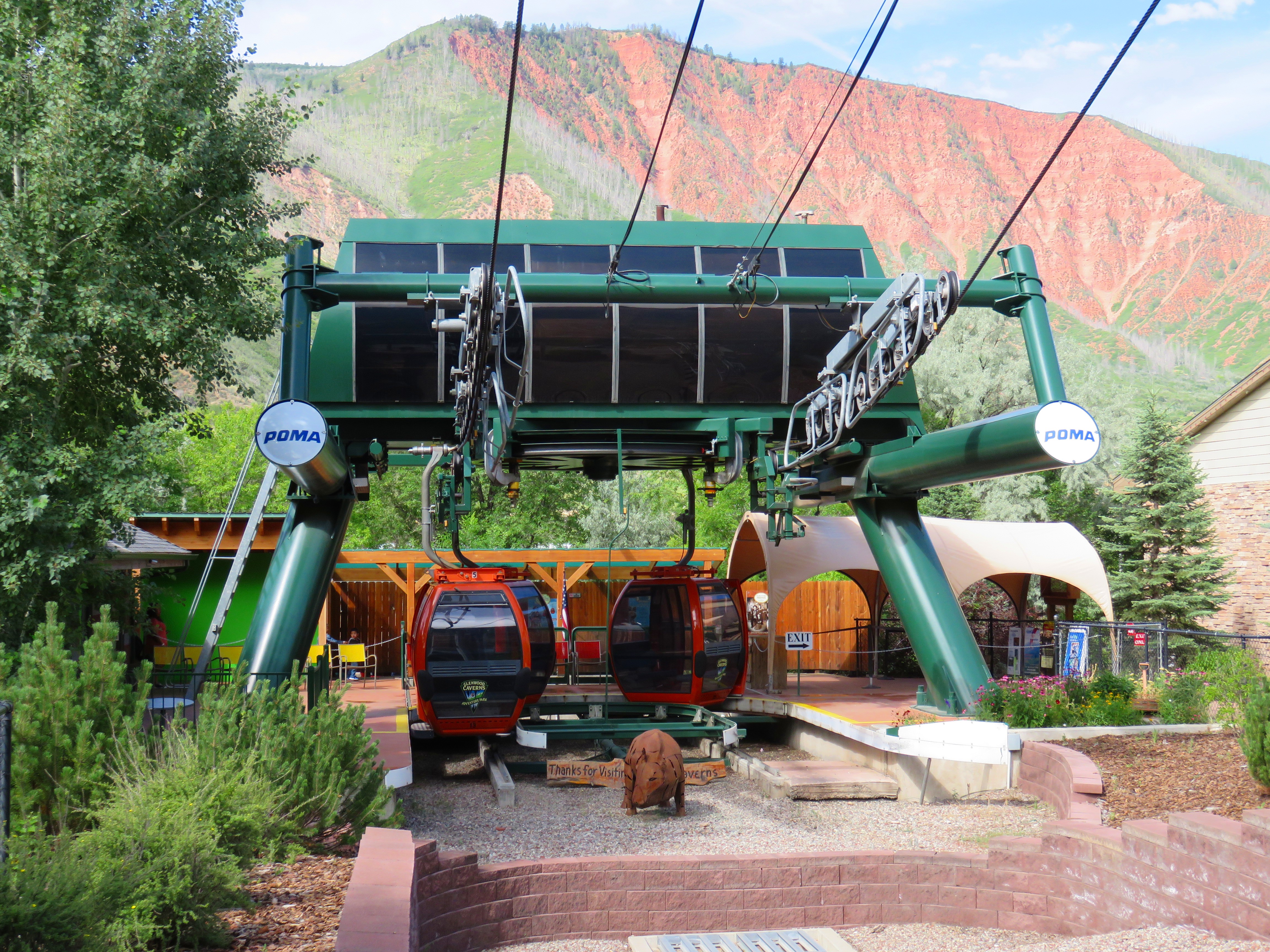
A unique feature of this installation is that the 18 towers also support water, natural gas and sewer lines for the summit facilities. All three lines are suspended from a 3/16″ cable attached just under each tower’s crossarm. The water line supplies 42 gallons per minute to a tank located at the summit. The Colorado Passenger Tramway Safety Board approved transport of natural gas along the line because the fiberglass pipe used has a safety factor of 30 relative to the pressure of the gas.
Jumbo Glacier Resort is Dead
British Columbia’s Minister of Environment has finally killed the Jumbo Glacier Resort, proposed to rival Whistler in the Purcell Mountains of British Columbia. Jumbo Glacier is a spectacularly-remote place up a dirt logging road from Panorama Mountain Village and Invermere. It’s more than 200 miles from Calgary, the nearest major city and airport. The plan was to build 20+ lifts on 3,000 hectares of public land above 5,000 feet. You can read the full master plan here.
The project was first submitted to the BC government in 1991 and received environmental approval in 2004. The resort claimed they would get 2,700 skiers per day. This was always a red flag to me as 2,700 skiers is not a big number for a destination ski resort. Take for example a mid-sized area like Mt. Sunapee in New Hampshire. It has six lifts and a comfortable carrying capacity of 5,220 skiers per day. 2,700 could justify perhaps three or four lifts at Jumbo, not 23.
BC has no shortage of large ski areas struggling due to remoteness. Kicking Horse and Revelstoke are perhaps most similar to the Jumbo proposal. Revelstoke was supposed to have 21 lifts; they built three before running out of money in 2008. Lucky for them, the 27th richest person in Canada bought in and paid off over $100 million in debt. Kicking Horse was in similar trouble when it was rescued by Resorts of the Canadian Rockies in 2011. Both of these resorts are on the Trans-Canada Highway, not 50 miles from a town.
Pulse Lifts
These days building a detachable lift means a capital investment of at least $3 million plus around $100,000 in annual maintenance. A so-called ‘pulse’ lift offers the speed of a detachable system with similar infrastructure to a traditional fixed-grip lift. Chairs or cabins are grouped together into ‘pulses’ and the entire lift slows down for loading and unloading. When comparing types of aerial lifts there are always trade-offs; here they include low capacity and long headways. Most pulse lifts can only move 300-600 passengers per hour and headway – the time a passenger has to wait for a carrier to show up – can be minutes instead of as low as six seconds. Perfect for certain applications but unsuitable in most.

There are currently 17 pulse lifts operating in the US, Canada and Mexico; all but three are gondolas. Nearly all were built in the last 15 years. Panorama Mountain Village, Northstar California, Steamboat, Snowmass, Canyons Resort, and Le Massif all use pulse gondolas to connect village areas. These lifts are usually less than 3,000 feet long and convenient for skiers and non-skiers alike. Other pulse gondolas are attractions in their own right such the Iron Mountain Tramway at Glenwood Caverns Adventure Park, SkyTrail at Trees of Mystery, the Gondola at Royal Gorge Bridge Bridge & Park and the Riverfront Park SkyRide in Spokane. There is also a new Leitner-Poma pulse gondola in Orizaba, Mexico with tripod towers that are hundreds of feet tall.

Snow Valley in Edmonton, Alberta has a very unique pulse chairlift built by Doppelmayr in 2008. Instead of having groups of 3-5 chairs, it has just two groups of 20 closely-spaced quad chairs. Because it is only 850 feet long, the lift can move 1,378 skiers per hour at up to 5 m/s, the same speed as most detachable lifts. In fact the ride is only about a minute. The lift slows to a beginner-friendly 0.8 m/s for loading and unloading. Because of the low speed, skiers ride around the bullwheel at the top and unload facing down the hill. It’s the only lift I know of with 180-degree unloading.
News Roundup: Projects and Plans
https://instagram.com/p/3kGV5wiue-/?taken-by=pcski
- Doppelmayr and Bolivia break ground on Subway in the Sky part II.
- Steamboat has a new master plan proposal that includes two new six packs to replace the Elkhead and Thunderhead lifts.
- Will our nation’s capitol get it’s first aerial lift?
- Lake Louise abandons plan for Wolverine Ridge lift but still wants new lifts on Richardson’s Ridge and Hidden Bowl.
- A six-mile aerial tram across New York Harbor? The Gondola Project says no and even Doppelmayr says it may not be possible.
- The International Skiing Federation again tells Aspen to build a new lift or lose the 2017 World Cup Finals.
- Powderhorn and Leitner-Poma break ground on lift replacement.
- Helicopter removes “poles” at the Hermitage Club.

