
Every Tuesday, I feature my favorite Instagram photos from around the lift world.
Month: July 2025
News Roundup: Rescues
- Whiteface joins the Mountain Collective Pass.
- The Forest Service approves up to three lifts for the Trails at Mena bike park in Arkansas, down from a proposed five.
- Nearly a thousand people show up to watch Doppelmayr install East Village Gondola towers at Deer Valley.
- Big Sky’s ski patrol debriefs the avalanche that hit the top of Swift Current 6 last winter.
- Snow Ridge, New York is selling chairs from the old Snowy Meadows double.
- A zoo chairlift in Massachusetts is evacuated by ladder truck and boom lifts.
- A dangling man is rescued from the chairlift at Lagoon, Utah.
- A tower from Killington’s Superstar Express heads to Sugarbush – not sure why but I have asked.
- Foreign investors sue Powder Mountain seeking $76 million.
- Enjoy this small glimpse into mountain planning and design.
- Hogadon, Wyoming floats price increases and a 10 percent facility surcharge to help pay for a new chairlift.
Instagram Tuesday: From Austria
Every Tuesday, I feature my favorite Instagram photos from around the lift world.
News Roundup: Hypotheticals
- Sun Valley’s proposed Frenchman’s replacement would be a higher capacity detachable quad and River Run would be a six pack with the same capacity as the existing quad.
- Park City’s proposed Cabriolet replacement would include a mid-station with slight angle change.
- From the classifieds: a used Doppelmayr quad for sale in Ontario.
- Marble Mountain, Newfoundland cancels July lift service citing supply chain delays.
- Closed Sugar Loaf, Michigan could reopen as a non-lift recreation area.
- A proposed 30 percent tariff on goods from the EU and 35 percent on Canada could spell trouble for the ski industry.
- A full aerial tram car and bear spray don’t mix well.
- MND and ten associated individuals in France are fined €1.89 million for “late communication of inside information, insider trading and breaches of professional obligations.”
Instagram Tuesday: Red Bullwheel
Every Tuesday, I feature my favorite Instagram photos from around the lift world.
Brian Head Eyes Massive Expansion
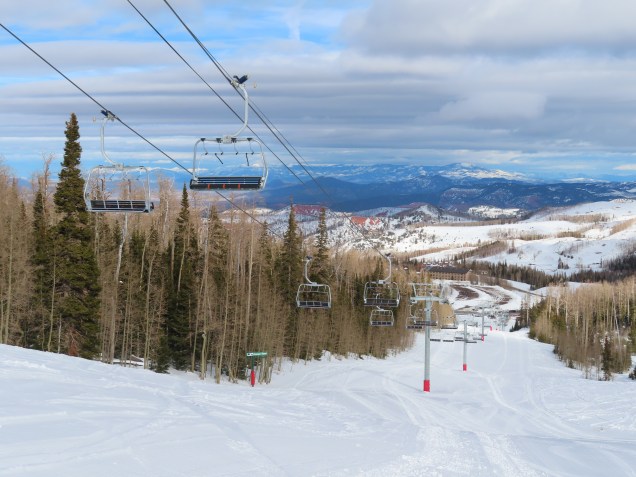
Southern Utah’s Brian Head Resort would quadruple in size under a sprawling vision detailed today by the Forest Service. The complex expansion would encompass 1,651 acres of the Dixie National Forest along with thousands of acres of private land owned by Brian Head Resort and third party developer Aspen Meadows. The expanded ski area would also include lands owned by the State of Utah and Brian Head Town. All told, the vision could see 26 new lifts, more than 382 acres of new cut trails, 19 miles of new snowmaking lines, 15 miles of new roads and four new on-mountain restaurants. Brian Head’s Comfortable Carrying Capacity would more than triple from 4,330 guests today to 13,250. The resort says the project would accommodate a growing demand for outdoor recreation in Utah, enhance learning progression, provide connectivity between base portals and improve the overall guest experience.

Brian Head was acquired in 2019 by Mountain Capital Partners, the fast-growing collective of 13 ski areas in the Western United States and South America helmed by James Coleman. Coleman’s ambitious plan for Brian Head is not completely new as adjacent developer Aspen Meadows proposed eight of the lifts on 850 acres of private land back in 2023. Many of the lifts proposed on public land were included in Brian Head’s 2023 Master Development Plan.

Of the 26 lifts now proposed, ten would be located entirely on Forest Service land, four would straddle private and USFS lands and 12 would occupy entirely private land. Within the existing ski area, Roulette would be replaced with a high speed quad and extended to load lower on the mountain. All other existing lifts would remain. A surface tow is proposed near the existing Alpen Glow triple to serve four new trails. Higher up on the mountain, three new lifts are planned on 11,310′ foot Brian Head Peak. These would include a 4,340′ detachable quad called Dragon’s Back and a 1,400 foot jig-back tram called Peak.

In the Sid’s Peak to East Ridge expansion pod, Brian Head aims to manage hazard trees and vegetation in areas impacted by the 2017 Brian Head Fire. Five lifts in this pod would service some of Brian Head’s most advanced terrain. The longest, dubbed Summit, would be a detachable quad spanning 7,425 feet. Four other lifts in this zone would be fixed grip triples extending between 999 and 3,120 feet.

A third pod called Navajo Ridge to Dry Lakes would include four lifts ranging from surface tow to detachable quad. These installations would run near the existing Navajo Express and stretch between 558 and 4,887 feet. They would operate on public land within the Dixie National Forest and require a Special Use Permit boundary adjustment.

Finally is the Aspen Meadows to Highway 143 pod with a substantial new day skier portal called Art Village. This pod, located on private land, would include an eight passenger pulse gondola linking to Brian Head’s existing Navajo base. From Art Village, skiers could connect to numerous lifts including four conveyors, six fixed triples and a detachable quad called Long Meadows. The Forest Service notes construction on this pod could begin before or concurrent with projects on public land as it is not subject to the EIS.

If this expansion was constructed as envisioned, it would create a unique opportunity to ski 360 degrees around a huge area in either direction along numerous different aspects. “Certain new lifts and associated ski runs would play an integral role in creating a circuit of resort skiing around a base village currently unparalleled in North America,” the plan exclaims.


The Forest Service notes portions of the proposal on public and adjacent land will undergo its most stringent level of environmental review – an Environmental Impact Statement (EIS). Even with today’s potentially favorable regulatory climate, the review is expected to take at least three years.

At a high level, Mountain Capital Partners has shown an incredible fortitude for acquiring ski areas and dreaming up big plans. Just last week, MCP announced its intent to become the controlling shareholder of four more ski areas in Chile, bringing its total mountain count to 17. Since 2015, the company has invested more than $125 million in improvements across its growing portfolio, including new detachable lifts at Nordic Valley and Arizona Snowbowl. Last year, the company debuted a modest new Skytrac at Arizona Snowbowl and this year MCP plans new lifts at Purgatory and Sipapu, both of which are fixed grip and contain parts from older lifts. Despite its success, Mountain Capital Partners’ ambition has not always been met with realized capital projects. A similarly massive expansion plan for Nordic Valley involving public land announced in 2018 went nowhere with the Forest Service.
At Brian Head, three public open houses are planned during the initial scoping period to solicit public feedback. They are:
- Tuesday, July 29, 2025 — Brian Head Lodge, 314 W Hunter Ridge Dr, Brian Head, UT
- Wednesday, July 30, 2025 — Parowan City Office, 35 E 100 N, Parowan, UT
- Thursday, July 31, 2025 — Southern Utah University, Brian Head Room (Sharwan Smith Center), Cedar City, UT
All three will run from 6:00 to 8:00 pm.
Sun Valley Plans Two New Lifts in 2026
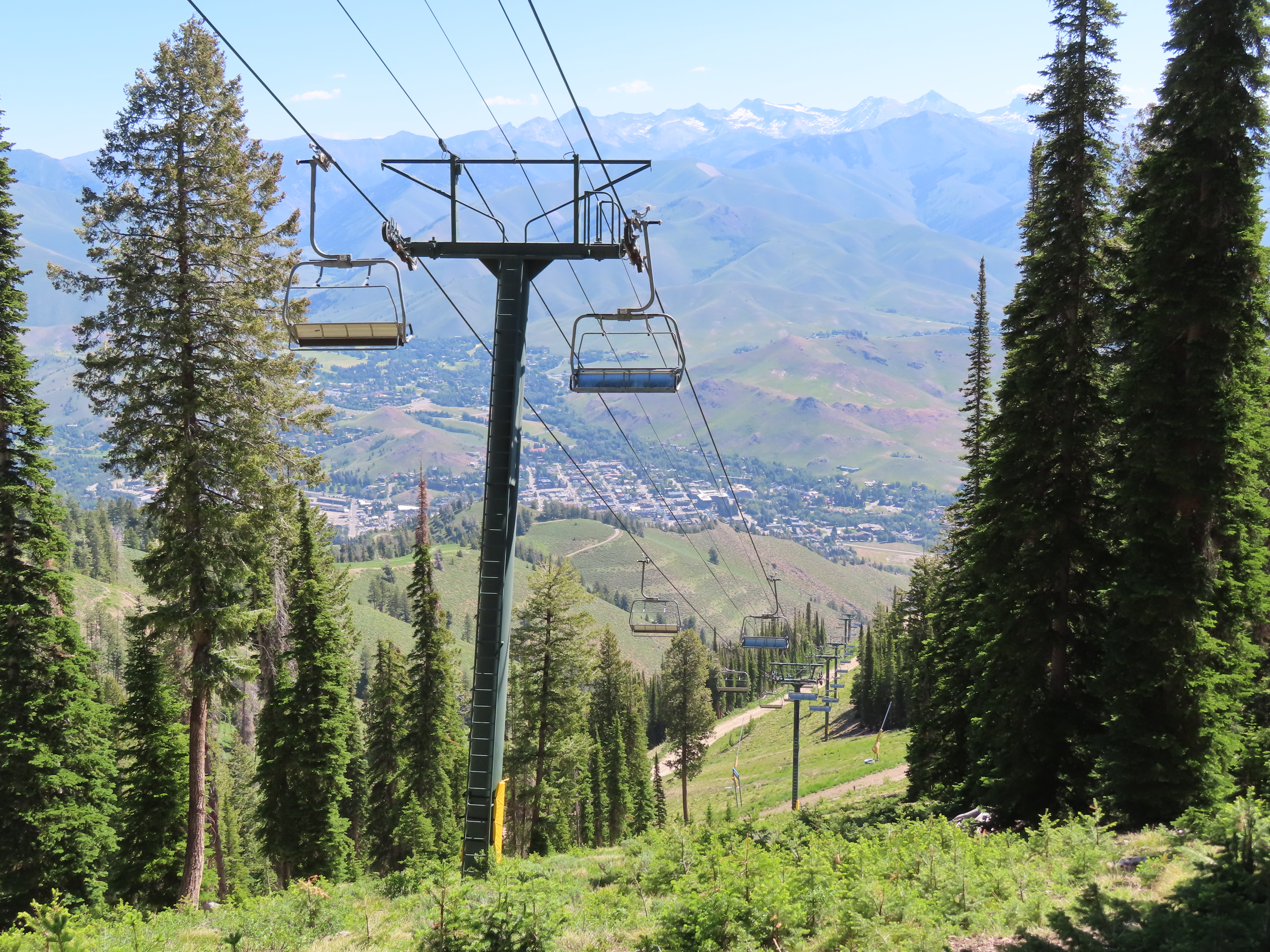
Sun Valley Resort’s Bald Mountain will see two upper mountain lift upgrades for the 2026-27 season. Lookout Express will be upgraded to a detachable six pack and Christmas will be replaced by a modern detachable quad. Both outgoing machines are Yan high speed quads dating back to 1993 and 1988, respectively. A new Christmas was originally approved as a gondola-chairlift combination lift but in the end will only include chairs. A new lift maintenance facility is also planned near the summit of both lifts. “With today’s announcement, Sun Valley is embarking on another round of major investments in the mountain,” said Pete Sonntag, COO of Sun Valley Resort. “The replacement of Christmas and Lookout Express chairlifts will ensure fast, reliable access to some of Sun Valley’s best terrain for many years to come,” he continued. A manufacturer was not announced as Sun Valley is still working through the contract process. Baldy currently operates a mostly Doppelmayr fleet.

These projects will be the fourth and fifth new lifts for family-owned Sun Valley in four years. New Challenger and Flying Squirrel opened in 2023 and an upgraded Seattle Ridge debuted in 2024. By winter 2026-27, Sun Valley will have replaced five of its seven Yan detachable quads built between 1988 and 1994. The final two, Frenchman’s and River Run, are going through replacement scoping now with no set timeline for construction. They probably won’t be around for long as Sun Valley’s parent company, Grand America Hotels & Resorts, has been investing heavily in both its ski resorts of late. Sun Valley’s sister mountain, Snowbasin, has similarly added three marquee lifts in the past five years. That’s eight new lifts in five years for the company – all detachable.
In partnership with the Forest Service and Bureau of Land Management, Sun Valley will host a community open house and public comment opportunity next Monday, July 21st. It will be held at the Community Library from 4:30 to 6:00 pm.
Cannon Mountain to Retire, Eventually Replace Aerial Tram
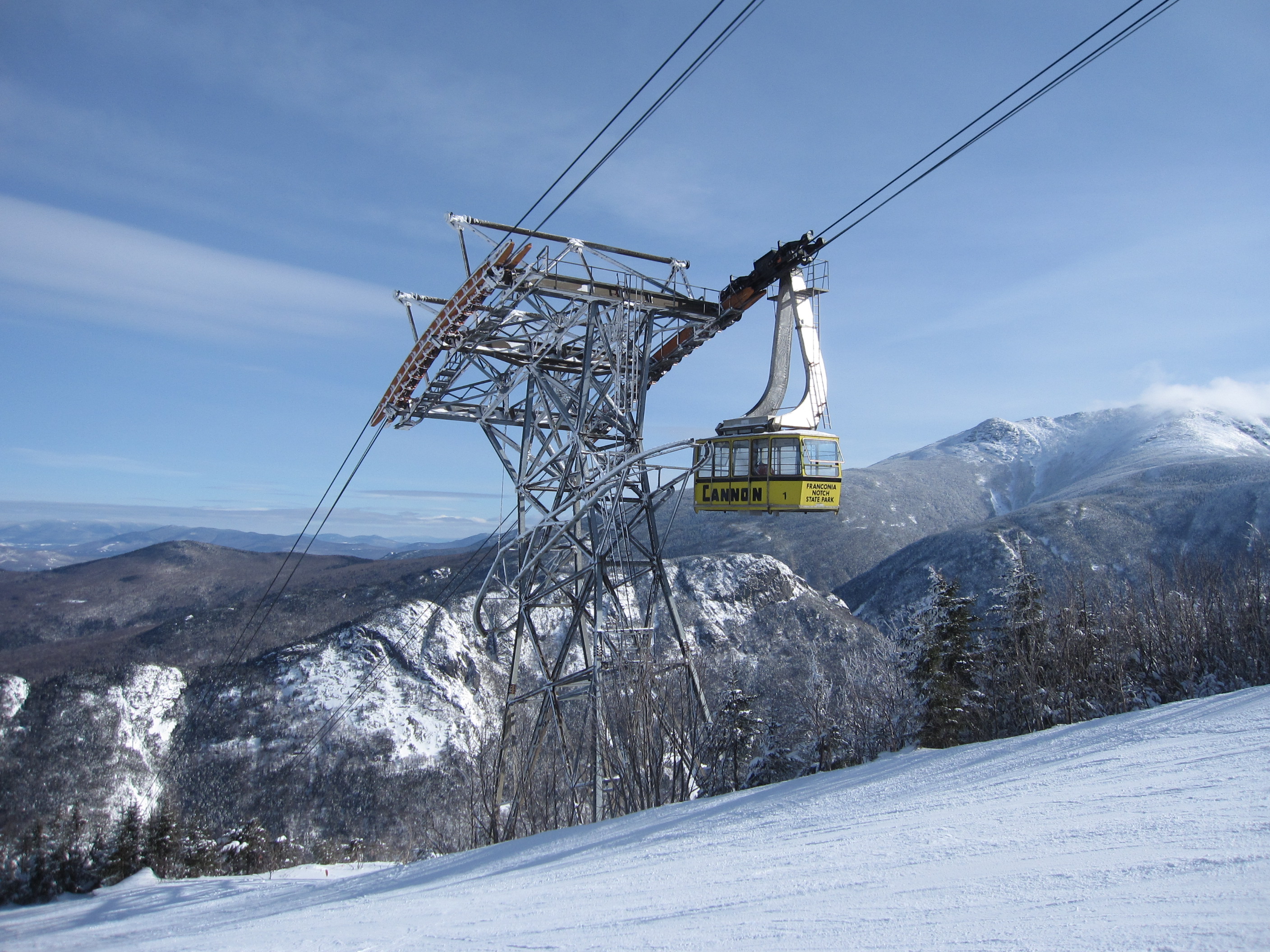
This fall is your last chance to ride the iconic Cannon Mountain Aerial Tram in its current form. The state-owned New Hampshire mountain announced this morning the conclusion of public operations with planning underway for a new system to be constructed in the coming years. The current tram opened in 1980, making it 45 years old with more than nine million passengers carried. It was built by Italian manufacturer Agudio and replaced an American Steel & Wire tram that served the summit from 1938 to 1981. “She’s aged gracefully, but like all legends, she deserves a dignified retirement,” said Jace Wirth, General Manager of Cannon Mountain and Franconia Notch State Park. “It’s time to begin writing the next chapter.”

Planning is underway for a third-generation tram but there’s no set timeline for reopening. In 2022, the state considered building a much cheaper gondola, but public feedback revealed a strong desire to continue Cannon’s tram legacy. The following year, the state put out an RFP for modernization of the current tram with a projected budget of $18 million. Leitner-Poma was the only bidder and came in $11 million over that amount. The project was put on hold while state leaders sought more funding.
Cannon’s original American Steel & Wire tram carried 27 riders per car, the current “ketchup and mustard” cars hold up to 80 and the next version may carry even more. “With $27.2 million secured through New Hampshire House Bill 25, along with additional capital resources anticipated, a structural analysis—pending Governor and Executive Council approval—will soon begin to confirm the renovation strategy for existing towers, terminals, and foundations,” Cannon wrote today. “This analysis will also help refine design requirements and load considerations for the next-generation tram system.” While $27 million is a great start, it’s nowhere near enough to build a completely new system at current prices. Skiers and sightseers will likely be without a base-to-summit lift for a number of years while the new tram is designed and built. In the meantime, the summit can still be accessed by a series of chairlifts in the winter.
A specific date for the tram’s final laps will be announced in the coming weeks.
News Roundup: A Long Time Coming
- Powderhorn, Colorado formally proposes replacing West End.
- Off-the-grid Mt. Baker to construct a central generation facility to power numerous chairlifts once driven by diesel prime movers.
- The plan for Aspen Mountain’s Lift 1A replacement “continues to evolve.”
- The Forest Service releases a map of the proposed Nell Bell high speed quad on Ajax, which would span 8,300 feet and 2,650′ vertical.
- Over at Snowmass, crews work to build the new Elk Camp Express while the old lift continues spinning in nearly the same alignment for a few more weeks.
- The WestJet Skyride in downtown Calgary may be shortened or removed to make way for a hotel.
- Urban gondolas are catching on nearly everywhere. Why not the US and Canada?
- Repairs to Kicking Horse’s Golden Eagle Express, closed since early March, will take longer than expected due to supply chain issues.
- The Okanagan Gondola breaks ground in BC.
- Towers go in for the Mighty Argo Cable Car, set to open in March 2026.
- A soon-to-open 3S in Italy will feature automatic cabin washing, a heat recovery system and impressive 3,200 foot vertical rise.
- Doppelmayr updates its Ropeway Configurator to include new products like Stella.
- Analysis shows a new urban gondola in Norway will have lower lifecycle emissions per passenger kilometer than most other forms of transport.
- Deer Valley invites the public to watch tower flying for the upper East Village Gondola and Pinyon Express.
Town of Nederland, Colorado to Buy Eldora
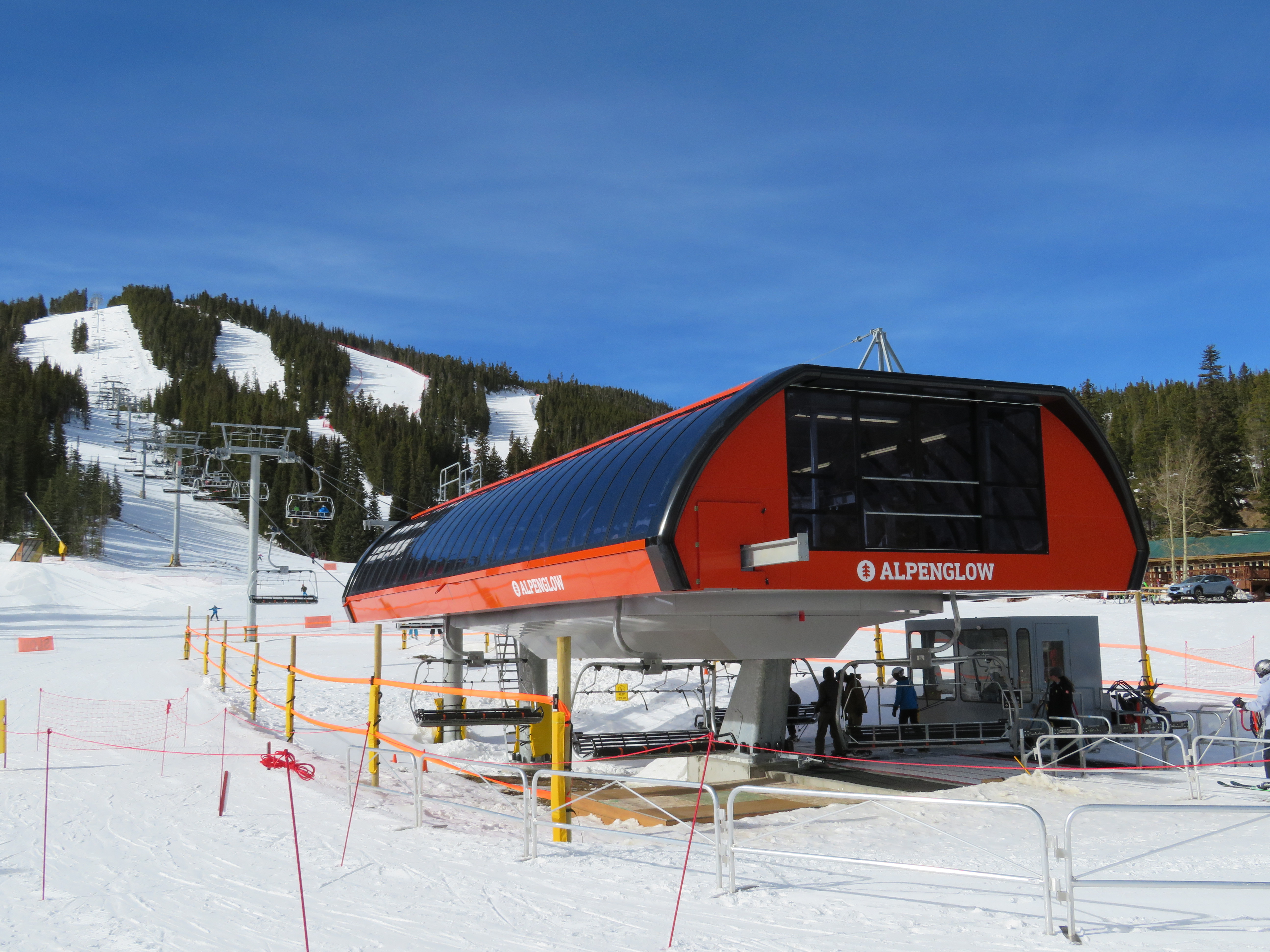
The Colorado town located closest to unincorporated Eldora Mountain Resort plans to purchase the mountain from Powdr Corporation by October. A signed term sheet comes after months of negotiation and work behind the scenes between Powdr and the Town of Nederland. Powdr will continue to operate the mountain for two years until a “coalition of Front-Range ski industry veterans” takes over. The town plans to quickly add summer activities, a first for the 63 year old mountain. “Nederland aims to turn Eldora into a year-round, community-driven asset– expanding recreation, sparking local jobs and outdoor industries, and weaving sustainability and social equity (i.e. workforce housing) into every run, trail, and event,” said an announcement from Nederland’s Board of Trustees. “These economic development opportunities will give the Town a long-needed, sustainable way to fund infrastructure.” Eldora will remain partnered with the Alterra-owned Ikon Pass as it has been since Ikon’s inception in 2018.

Eldora is one of five mountains Powdr placed on the market last summer. Killington and Pico in Vermont sold to a local ownership group while Mt. Bachelor, Oregon was eventually pulled off the market in April. SilverStar, British Columbia remains for sale. Powdr always planned to retain Boreal and Soda Springs in California; Woodward Park City and Snowbird in Utah as well as Copper Mountain, Colorado.
Once the Eldora acquisition is complete, Nederland plans to annex the ski area, which operates partially on private land and mostly in the Roosevelt National Forest. Annexation could add $1-2 million in annual tax revenue to the town’s general fund. Eldora’s 700 staff will eventually become municipal employees, offering new benefits to them. “To the Powdr team: Thank you for stewarding the mountain thus far,” wrote the town trustees. “We take our responsibility seriously and we are forever thankful for your belief in us to continue your legacy.”
The town plans to issue municipal revenue bonds backed by the resort’s earnings, not tax revenue for the purchase. The total sale price remains confidential. The mountain is profitable though and projections show the town could build a $10 million reserve in the first few years of ownership. “The Town will also be exploring opportunities for grants and private-sector dollars to help lower the total debt,” an FAQ noted. The sale is expected to close by the beginning of October if everything goes smoothly.
 Lift Blog