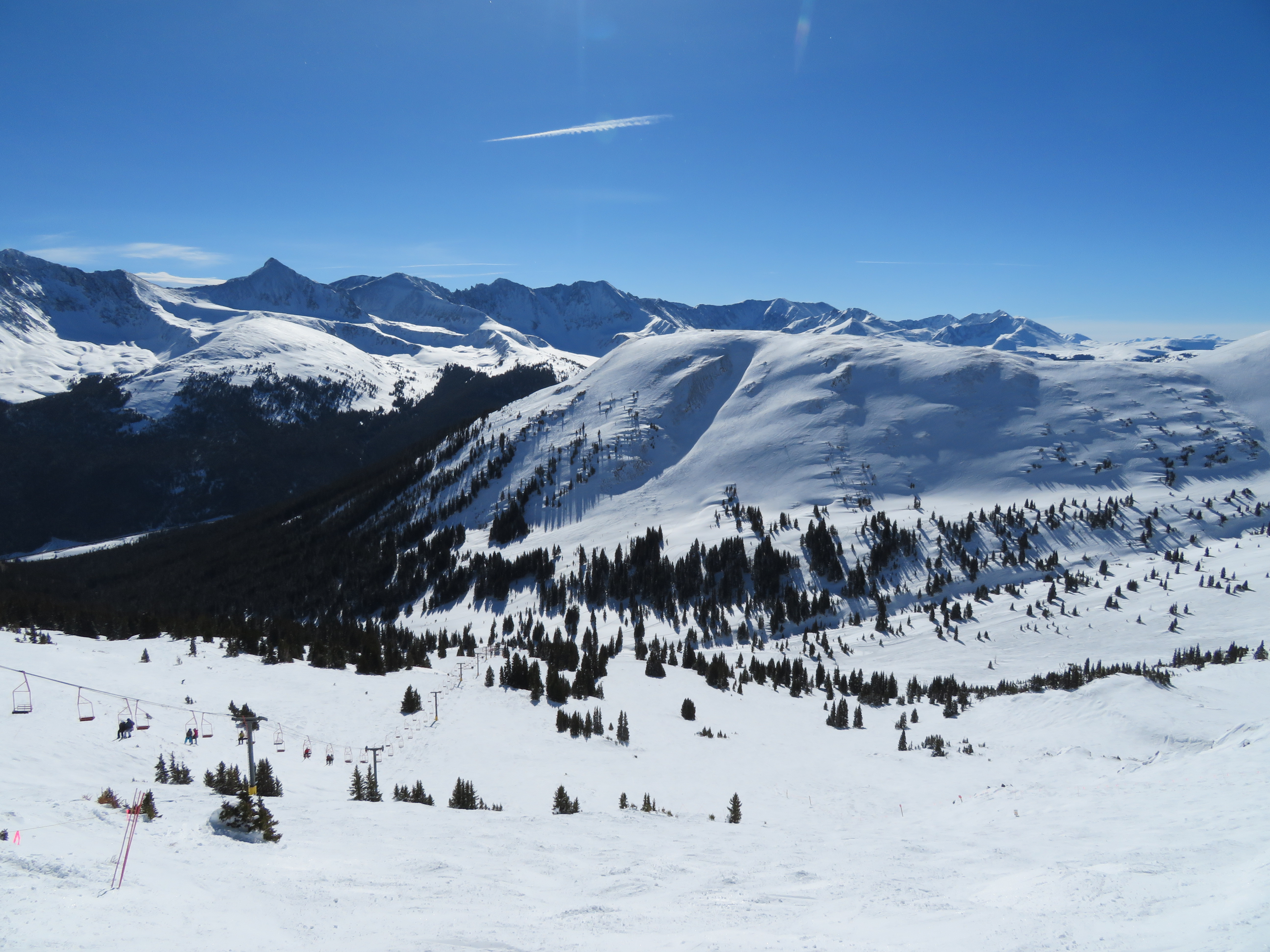
A lift on Tucker Mountain, seen here in the background, would provide expanded access to 360 acres of terrain currently accessible only by cat or on foot.
Copper Mountain is moving forward with plans for lift service on Tucker Mountain, the 12,337 foot peak that forms the backside of Copper Bowl. A Tucker lift was first approved in 2006 under Intrawest ownership but free cat skiing is as close as it got to being implemented. Eight years into new management, Powdr Co. has proposed a new alignment that begins at the current Blackjack return terminal and ascends 1,150′ to the Tucker summit. The fixed-grip triple chair would be only around 3,000 feet long and move up to 1,200 skiers per hour. Blackjack’s return terminal would be moved slightly uphill to make room for the new machine.
The project would improve access to underutilized advanced terrain within Copper’s existing permit area and is undergoing expedited review as a result of the previous approval. The White River National Forest opened public comment yesterday (running through February 9th) and a decision is expected in March. According the the forest’s schedule of proposed actions, construction could begin as early as this June with an opening next winter.
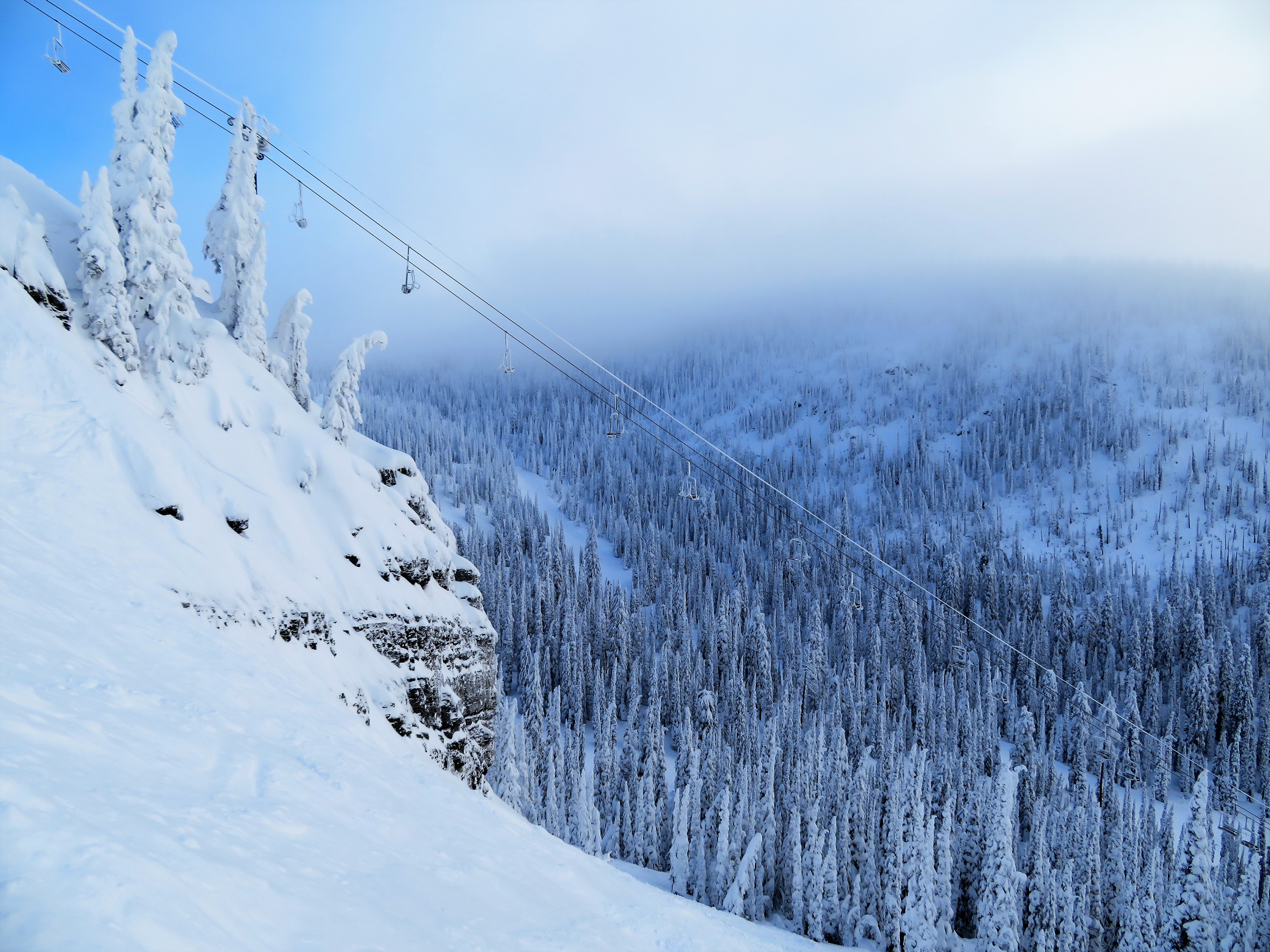
A 35-year old chairlift is proving very popular in Whitefish, Montana this season after moving from an alignment redundant with other lifts to an underutilized corner of the mountain.
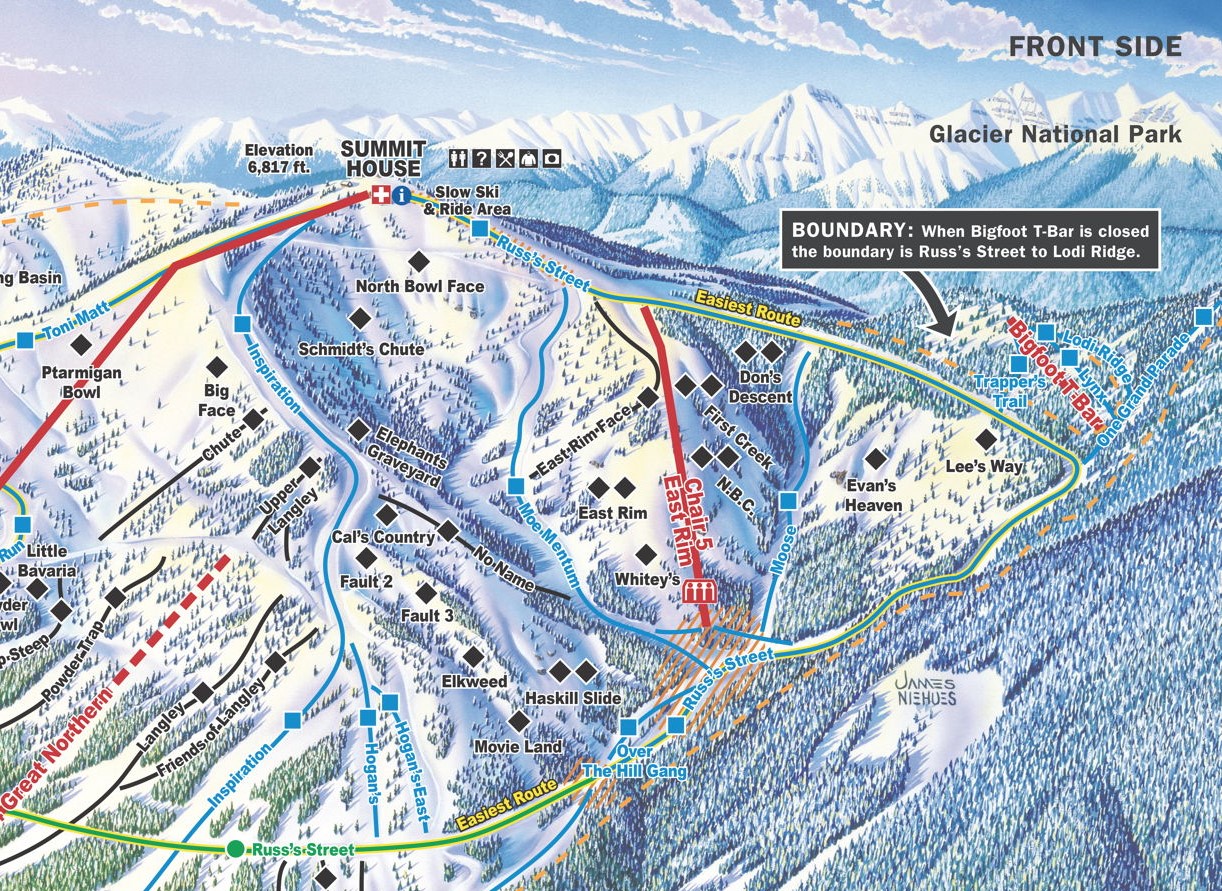
Exactly half of the 14 lifts at Whitefish Mountain Resort stand in a second location, with some even finding a third home in Northwestern Montana. By strategically re-engineering and relocating lifts from elsewhere on the mountain and beyond, Whitefish has been able to grow faster than many of its competitors and now encompasses 3,000 acres of glades, groomers and chutes. This year’s move of Chair 5 creates the East Rim lift and turns a machine that sat idle for years into a dedicated lift for some of the finest advanced terrain in the Inland Northwest.
For the first 50 years, every lift on Big Mountain was purchased new from a manufacturer. That changed in 1999 and 2000, when the the Bigfoot and Sunrise T-Bars joined the Whitefish fleet just as consolidation and new technology were making new lifts increasingly expensive. In 2002, the ski area acquired a Hall triple for a new beginner lift. Continuing the pattern, Big Mountain, as it was then still known, snagged Moab’s failed Skyway experiment for another new beginner pod. When the first-generation Glacier Chaser detachable needed to be replaced the following year, Whitefish had no choice but to go new for the flagship Big Mountain Express. But instead of scrapping the old Doppelmayr, it shifted west to become the Swift Creek Express. That summer’s lift shuffle also turned the old Easy Rider triple into Elk Highlands, a real estate egress lift. In 2011, the Bad Rock lift was brought in all the way from Pennsylvania and now runs out of the base lodge in both winter and summer. With a major lift renewal complete, Whitefish set its sights on expansion for winter 2014-15, opening the Flower Point lift and 200 additional acres. That machine came from across the border, the old Rosa triple from Kimberley (and the predecessor to the Whistler Village Gondola before that.) To summarize, Whitefish impressively built “new” lifts in 1999, 2000, 2002, 2006, 2007, 2011, 2014 and now 2017.
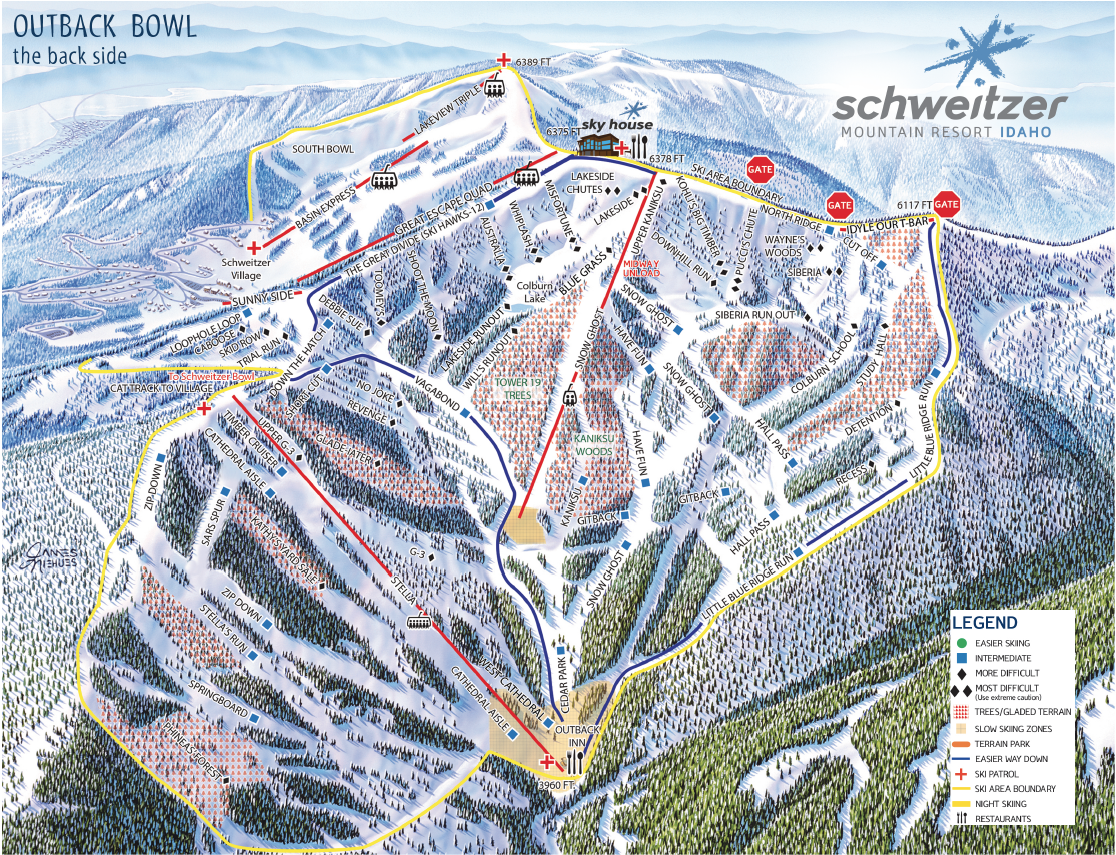
Outback Bowl at Schweitzer is currently serviced by three lifts, the longest of which will be replaced by two new ones in 2019.
Pacific Northwest favorite Schweitzer Mountain Resort will replace one long double with two new chairlifts in 2019, says CEO Tom Chasse. The first lift will service the lower two thirds of the current Snow Ghost double, a 1971 Riblet with a 13-minute ride time. The second one will replace Snow Ghost’s upper segment, servicing the Lakeside Chutes in a new alignment topping out near the new Sky House restaurant. “We don’t have enough lift capacity right now,” Chasse told the Spokane Spokesman-Review. “We think it’s going to be a draw and will bring in more people.” The Bonner County Dailyreported Schweitzer wanted to replace the nearly 2,000′ vertical lift a year ago but the $6-8 million project depended on financing becoming available. Schweitzer completed a project very similar to this one in 2007, replacing the lower section of Chair 1 with a high-speed quad and the upper section with a realigned Doppelmayr CTEC triple.
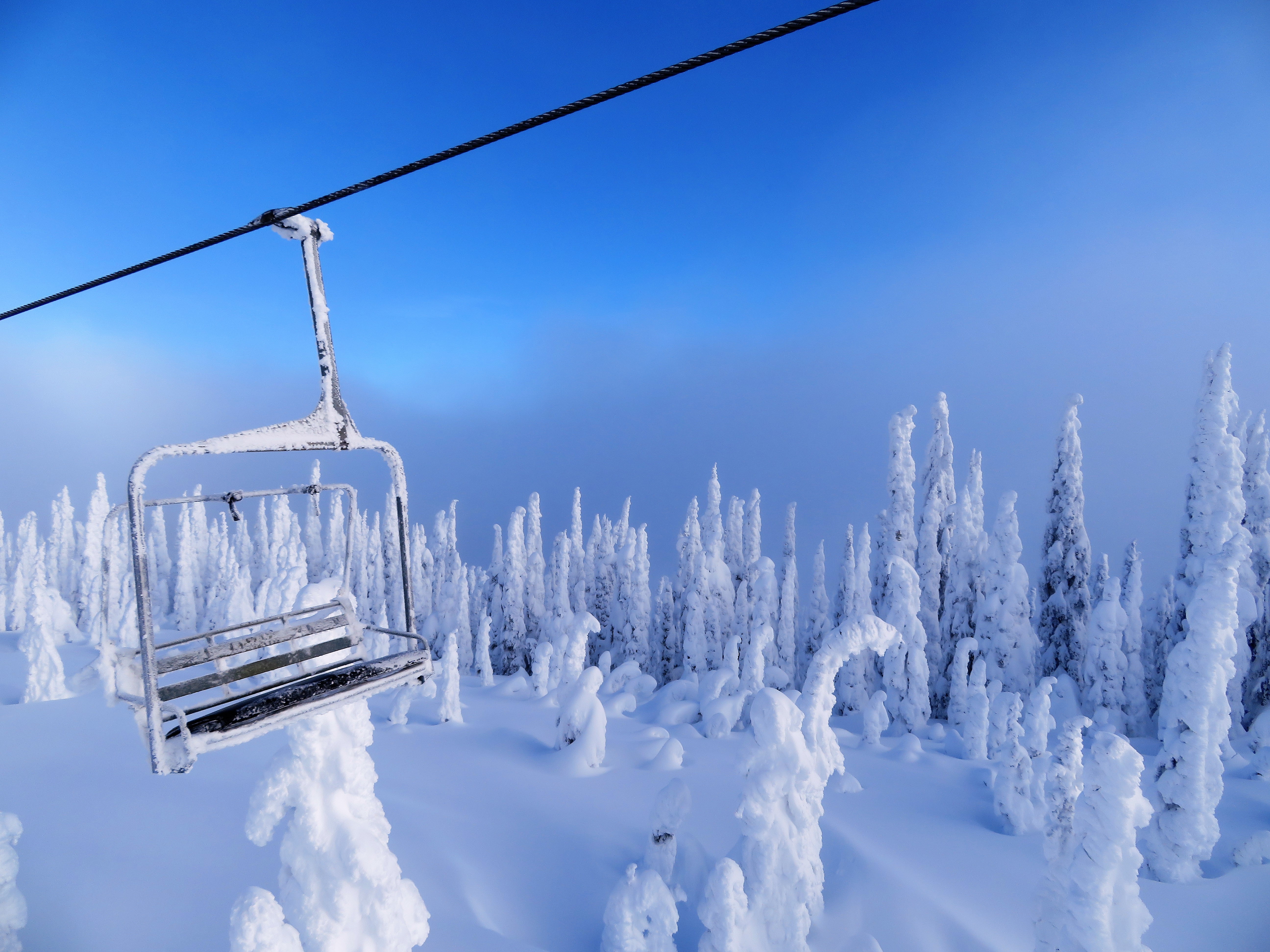
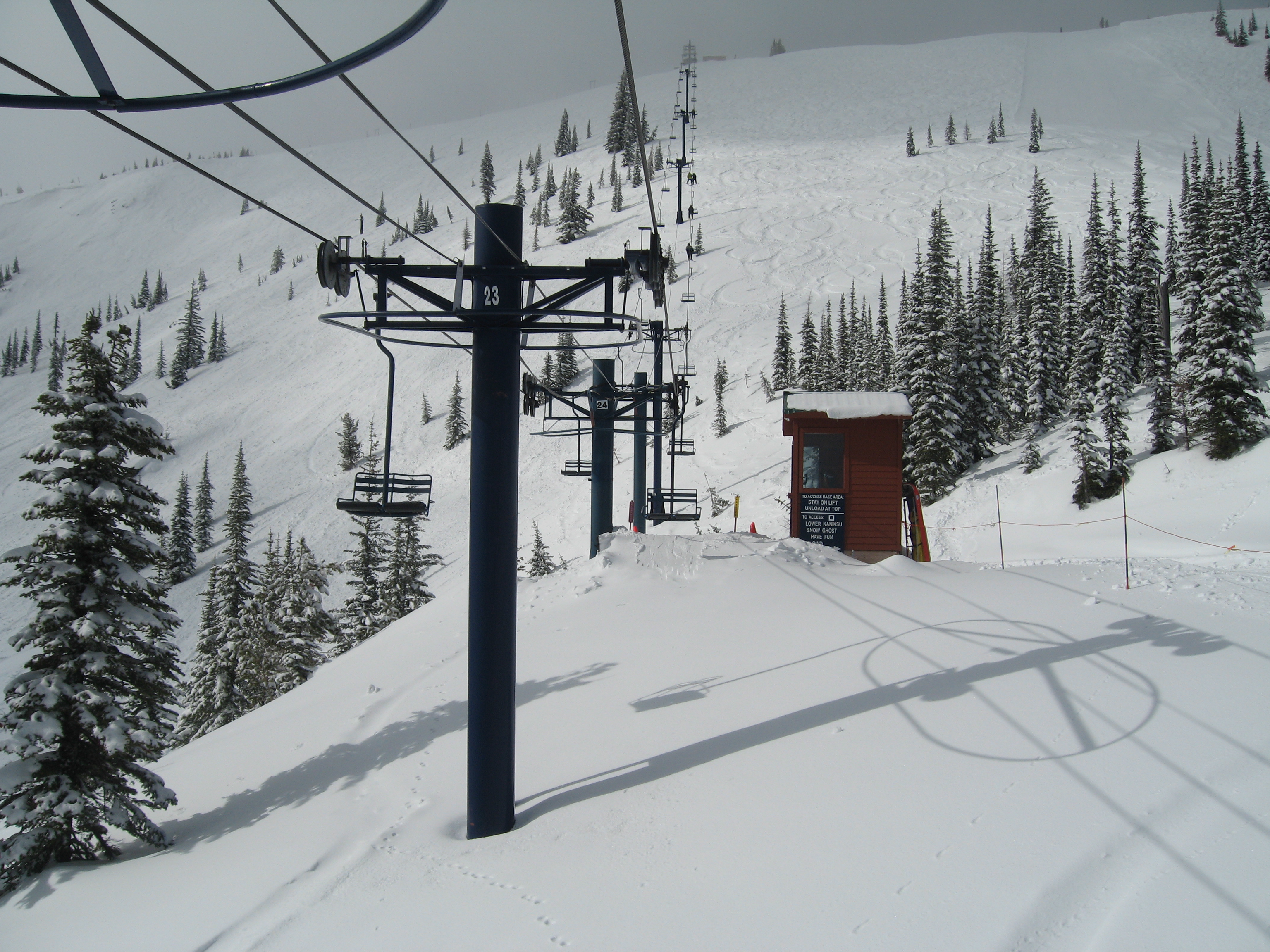
Snow Ghost is a sweet lift but its time will soon come.
Outback Bowl has a cool lift history. The current Snow Ghost lift used to be called Chair 6 and went from the very bottom of the bowl to the Siberia Runout. You can still see the old lift line in person and on the trail map. In 1987, the entire machine was moved to start and end higher with a mid-station added, leaving the lower part of Outback serviced only by Chair 5. That lift was replaced by a uniquely-themed six-pack called Stella in 2000. Schweitzer skiers can enjoy another season and a half of Snow Ghost but 2019 can’t come soon enough! No word yet on specific models or a manufacturer for the new lifts.
We are excited to announce that we are pursuing a protected, dedicated family-friendly area at McCoy Park, subject to U.S. Forest Service approval. This will be the perfect area for beginners as it is tucked away in a pristine setting on gentle terrain.https://t.co/EfU32C6nwhpic.twitter.com/DLOD1Dz5rG
Beaver Creek says it will seek Forest Service approval to build two new lifts, just as it debuts the resort’s 14th detachable lift in Red Buffalo Park. Vail Resorts-owned Beaver Creek is unique in that much of its beginner and low intermediate terrain lies on the upper mountain, giving guests learning to ski and snowboard the high alpine experience many of us take for granted. Just a few miles from its older, more famous cousin, Beaver Creek’s visitation has increased ten percent in just the last five years to well over a million skiers annually. B.C. has grown to encompass 16 lifts despite opening in 1980, decades later than most American ski resorts. Now the 16th largest resort, Beaver Creek’s success came largely through catering to families, a legacy which McCoy Park will build on.
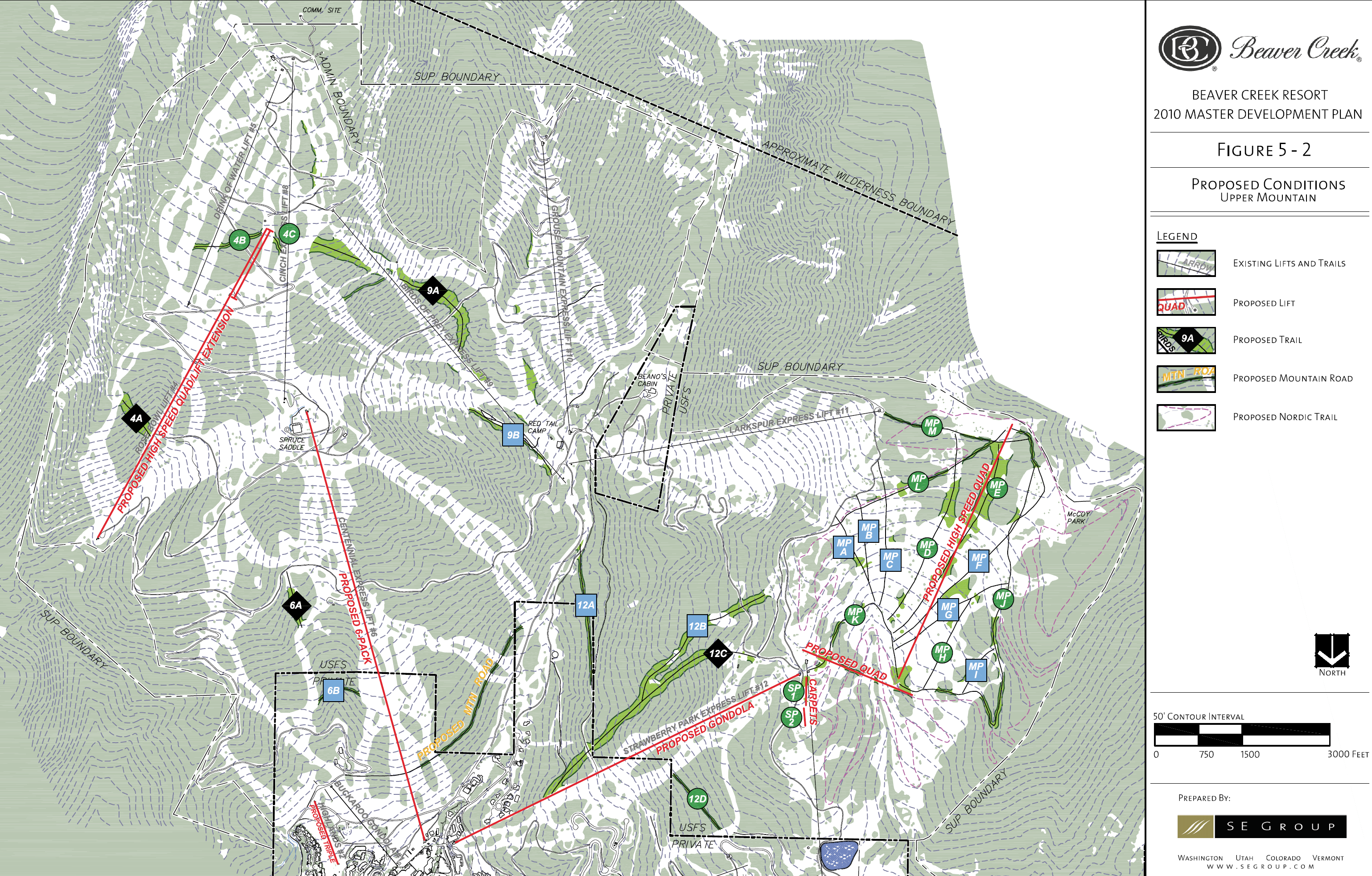
This expansion was previously mapped out on Beaver Creek’s 2010 master plan, though some details could change. The Park is located near the top terminals of the Strawberry Park, Upper Beaver Creek Mountain and Larkspur Express lifts and currently features cross-country ski trails. “McCoy Park is the ideal location for a protected family zone,” notes Beth Howard, vice president and COO of Beaver Creek Resort. “The views are spectacular, and the Park has an amazing natural feel that will be preserved. It is gentle terrain that will be separated from the rest of the mountain so that guests looking for a more relaxed, beginner and intermediate experience at a slower pace will enjoy it, and others won’t find themselves travelling through it on their way to another run or lift.”
Seventeen trails serviced by two lifts will encompass 250 acres left mostly in a natural state. Three quarters of the trails will be green circles with the rest rated intermediate. A McCoy Park Express quad will serve most of the new, gladed runs with a shorter, possibly fixed-grip lift providing egress. The detachable lift will run approximately 4,746 feet with a vertical of 710′ and capacity of 2,400 skiers per hour. The other lift will be just over 2,000 feet rising 300 feet and capable of moving around 1,200 guests per hour.
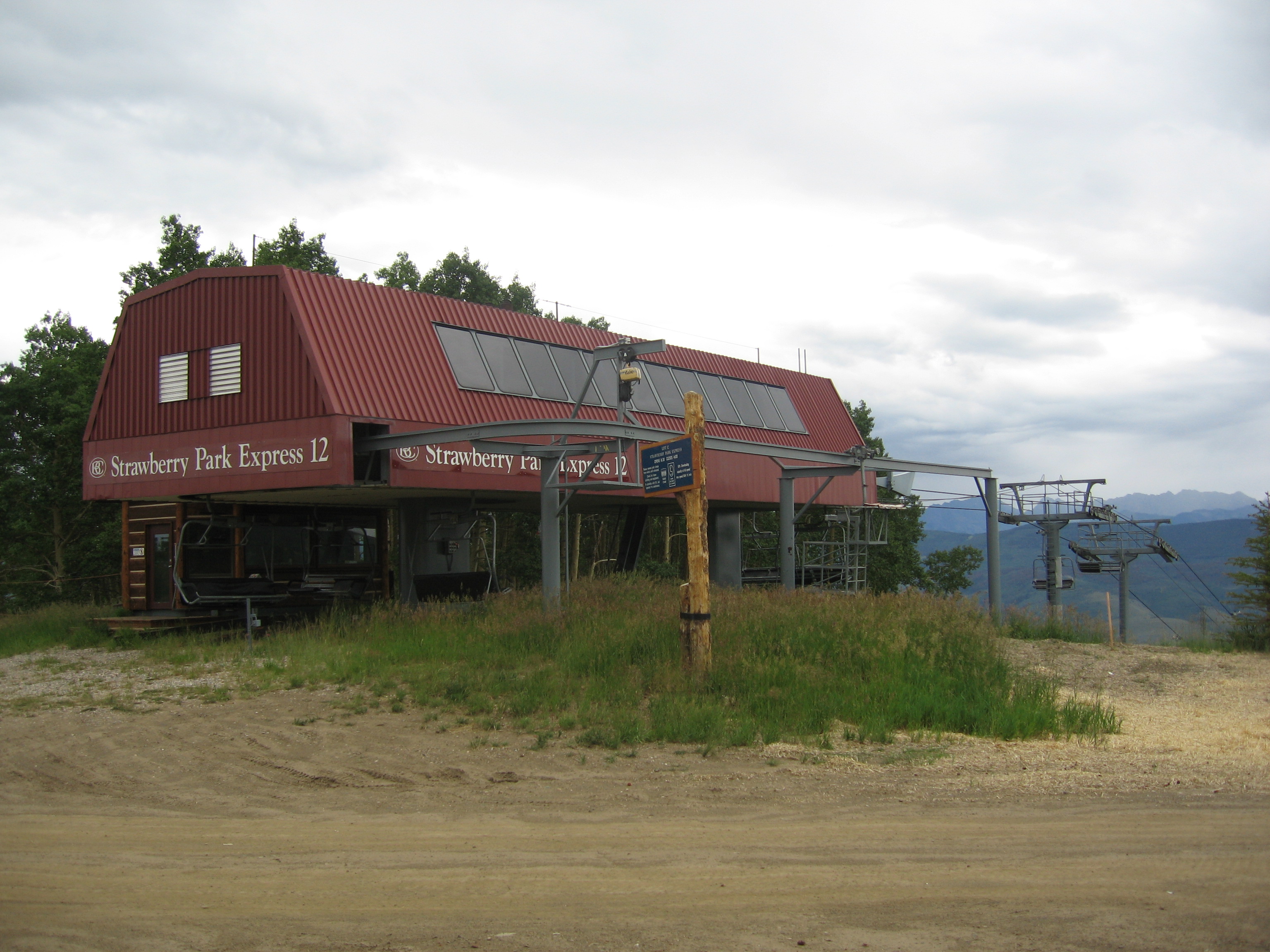
By the time McCoy Park opens, the Strawberry Park Express will be near the end of its useful life and could be replaced by a gondola, providing direct access to and from Beaver Creek Village.
As part of the expansion, the 23 year-old Strawberry Park Express will probably be upgraded to a gondola. Strawberry Park already allows for downloading, but a gondola or chondola would better serve beginner folks and families. The almost 7,000-foot new lift would carry approximately the same number of people as the 2,800 pph quad it replaces. Vail Resorts plans to release additional details on the approval process and timeline for McCoy Park in the next few weeks.
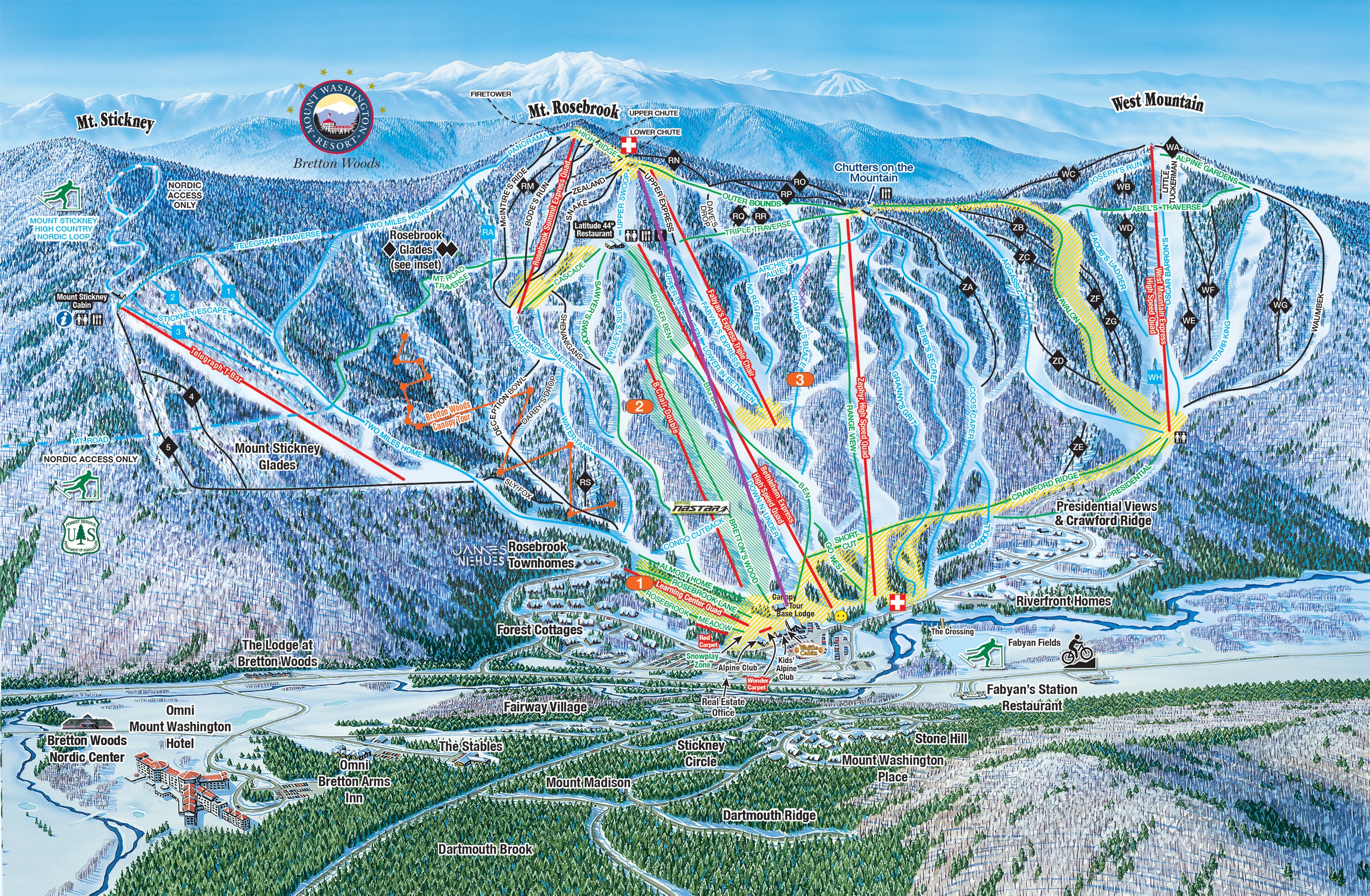
Routing of a new gondola planned for Bretton Woods will give riders excellent views of the famous Mt. Washington across the way.
Pending government approval, one of the closest ski resorts to Mt. Washington and its famous cog railway will open a 6,000-foot base-to-summit gondola in 2018. Bretton Woods’ director of ski operations Chris Ellms appeared before a local planning board last night to unveil plans for the all-season lift and a new summit lodge.
The relatively low-capacity gondola will circulate 36 8-passenger cabins, making it the largest gondola in the state by cabin size. Loon Mountain’s gondola seats only four. Both the Bethlehem Express quad and Fayban’s Express triple chair will remain in place for winter skiers but the 1,300 vertical-foot gondola will spin other seasons as well. Fayban’s top terminal will be moved downhill to make room for the gondola station and the new lift will cross over Bethlehem. Ellms said the approximately five minute gondola ride will serve skiers, sightseers, hikers, diners and wedding parties. “What we are proposing is it is not all about skiing, it is what the resort is about which is four seasons.” Total project cost for the gondola and new restaurant is approximately $15 million and Bretton Woods’ owner, Omni Hotels & Resorts, hopes to open the new lift next ski season. The mountain’s current fleet includes mostly Doppelmayr and Garaventa CTEC lifts, though a manufacturer for the new gondola was not named.
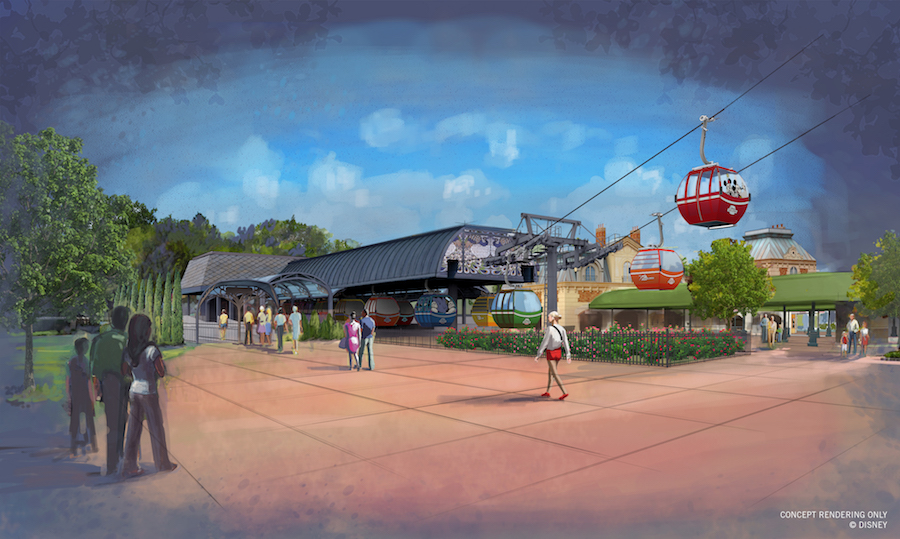
The new EPCOT gondola station at Walt Disney World Resort will feature metal and glass with hand-painted murals, the park revealed in a blog post today. Photo credit: Disney Parks Blog
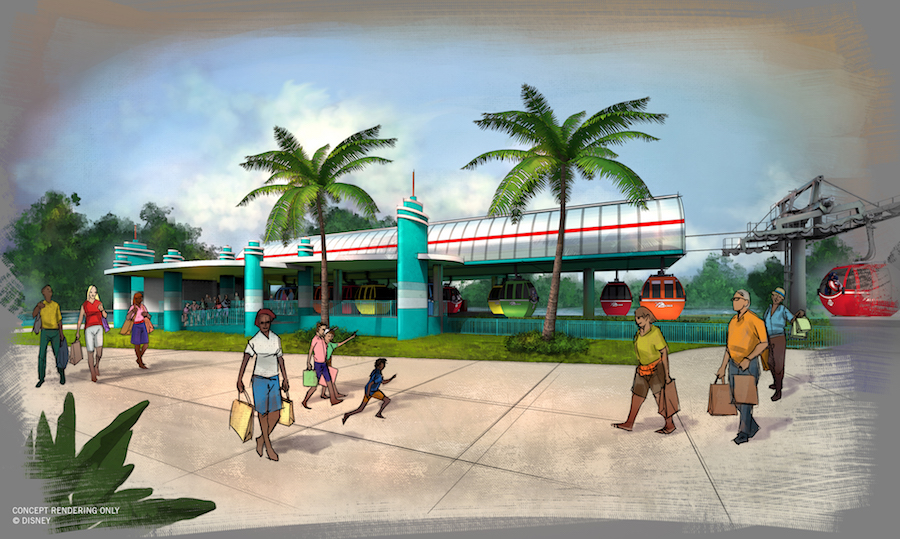
Doppelmayr’s next-generation detachable lift technology appears headed for North America. Walt Disney World Resort released new details about the upcoming Disney Skyliner gondola system this morning and renderings appear to show D-Line Station-D enclosures. Each of the six gondola stations will be themed differently, reflecting unique character of the destinations they serve.
D-Line is Doppelmayr’s latest detachable product that debuted two years ago in Hochgurgl, Austria. Numerous D-Line lifts have since opened in the Alps but no American resort operator has opted to pay extra for one so far, opting instead for the proven UNI-G terminals and standard line equipment. The Walt Disney Company isn’t your standard lift customer, however. D-Line sports hundreds of innovations including rope speeds up to 7 m/s or 1,378 feet per minute and wider line gauge for wider carriers. CWA has developed D-Line-specific Omega gondola cabins with 11 percent greater seating area than non-D 10-passenger versions. At Disney World, cabins will sport custom wraps with the Disney characters guests know and love.
The Disney Hollywood Studios station will be themed to match nearby buildings in a retro style. Most Disney guests will have no idea they are riding some of the most technologically-advanced lifts in North America. Photo credit: Disney Parks Blog
. @VailResorts invests in the heart of Whistler Blackcomb. Historic investment of $66 million (USD $52 million) for the 2018.19 season will feature a new Blackcomb Gondola and two new lifts, cutting wait times at the core of each mountain. Info: https://t.co/eaEXH9j8ACpic.twitter.com/Lk6Tkse5hr
It’s 4:45 am in Jackson Hole and I’m awake because today is the biggest day of the year for the North American lift business. Moments ago, Vail Resorts released its first quarter 2018 financial results which include guidance on next year’s capital improvements to the tune of $150 million. As I speculated it might, Broomfield, Colorado-based Vail is going all in on new lifts next year, with $52 million (CAD$66 million) going to Whistler Blackcomb alone.
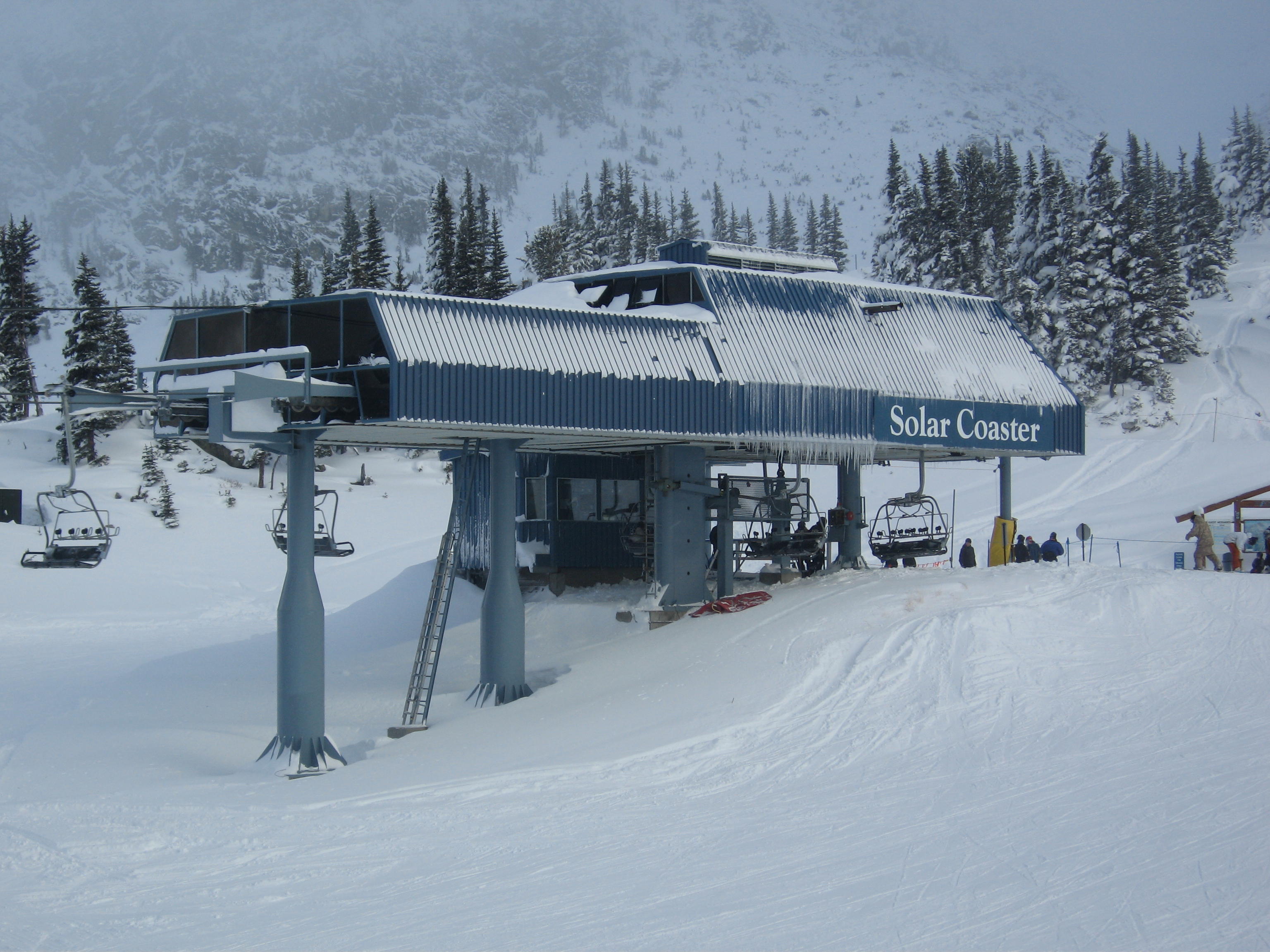
Goodbye Wizard and Solar Coaster, hello gondola on Blackcomb Mountain.
On Blackcomb, the company will add a signature 10-passenger gondola with mid-station replacing Wizard and Solar Coaster, two 1987 bubble quad chairs with very high hours. The new 4,000 skier-per-hour machine will be W-B’s sixth gondola and the second-highest capacity lift in North America after Squaw Valley’s Gold Coast Funitel. The mid-station will likely be located downhill of the current Wizard/Solar Coaster transition where more space can be created for a large terminal and cabin parking. The two stages will be able to be run independently with two haul ropes and separate drive systems. Together with the Peak 2 Peak and WhistlerVillage gondolas, the new gondola will create the world’s only three-gondola connection and an impressive 8.4 mile-long continuous sightseeing trip. The nearby Excalibur Gondola, amazingly Blackcomb’s last all-new lift, debuted in 1994.
The 1997 Doppelmayr-built Emerald Express on Whistler Mountain will move to Blackcomb, replacing the Catskinner triple likely in a modified alignment. An all-new Emerald six-place lift will also welcome skiers on Whistler Mountain for 2018-19. “Our integration efforts at Whistler Blackcomb are largely complete,” commented Vail Resorts CEO Rob Katz. “We believe this plan will dramatically improve the on-mountain experience for our guests with enhanced lift capacity, improved circulation and a significantly elevated experience for skiers, riders and sightseeing guests.” The three new lifts represent a combined 43 percent improvement in capacity over the lifts they replace and are part of the largest-ever capital improvement season at Whistler Blackcomb, topping even the 2008 construction of the Peak 2 Peak Gondola. “We believe these transformational, mountain-focused investments are the most significant improvements we can undertake to support Whistler Blackcomb’s long-term growth and our commitment to pursue the most impactful projects to enhance the guest experience,” Vail noted.
In a bit of a surprise, Vail chose to upgrade High Meadow at Park City Mountain, the main beginner lift at Canyons Village.
At Park City, the rumored Sunrise replacement will wait for another year but the High Meadow lift will be swapped for a high-speed quad chair, reducing ride time by 70 percent and anchoring a new family fun zone. On the shores of Lake Tahoe, Heavenly will finally replace Galaxy, which has fallen into disuse. A new fixed-grip triple chair will serve 400 acres of terrain that was inaccessible the past two seasons. Vail Resorts will also replace a T-Bar with a fixed-grip quad at Perisher in Australia. “We remain committed to reinvesting in our resorts, creating an experience of a lifetime for our guests and generating strong returns for our shareholders,” Katz concluded.
Galaxy will remain closed this season but 2018 will see a new lift go in on the Nevada side of Heavenly.
An approved day-use ski area on Hatcher Pass includes two chairlifts and support buildings.
A group planning to open a rare new American ski area just got a big boost, securing $500,000 towards building chairlift number one yesterday. Despite encompassing 425 million acres and with more residents than Vermont and Wyoming, the great state of Alaska includes just five lift-served public ski mountains, three of which are in close proximity to Anchorage. The proposed Hatcher Alpine Xperience sits in the Mat-Su Valley, well north of the Alyeska, Hilltop and Arctic Valley ski areas, where locals have been dreaming of their own mountain for decades.
Not satisfied with dreaming, citizens formed a 501(c)3 nonprofit organization in 2015 and got to work. Already, they’ve completed a federal environmental impact statement, forged an agreement to operate within the Government Peak Recreation Area, cleared trails and built a maintenance facility. An access road, parking lot and utilities are also in place. This winter, trails will be groomed but without lift service. Hatcher Pass tentatively plans to acquire a used triple chair from SkyTrans next spring and install for a 2018-19 opening. Just today I learned Vail Resorts removed Chair 8 from Afton Alps, Minnesota over the summer – a 1969 Heron which was 1,280′ x 190′ – and might be the lift in question. It’s just a theory, but no other recently-removed triple chair matches the stats.
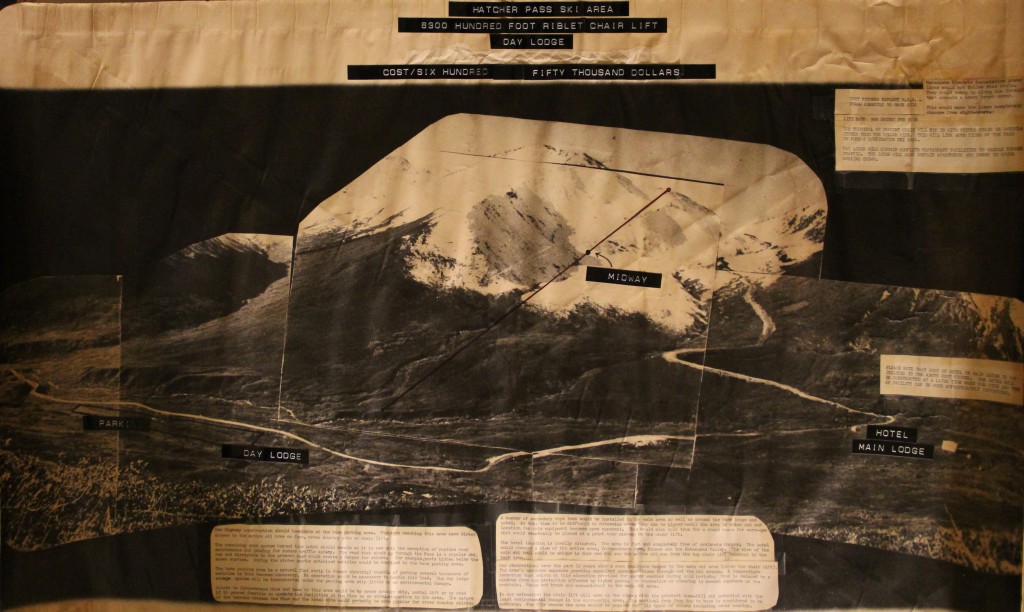
The Alaska Pacific Mining Company proposed building a 6,300′ Riblet double chair on Hatcher Pass in the 1960s which was never built. Photo credit: Alaska Public Media
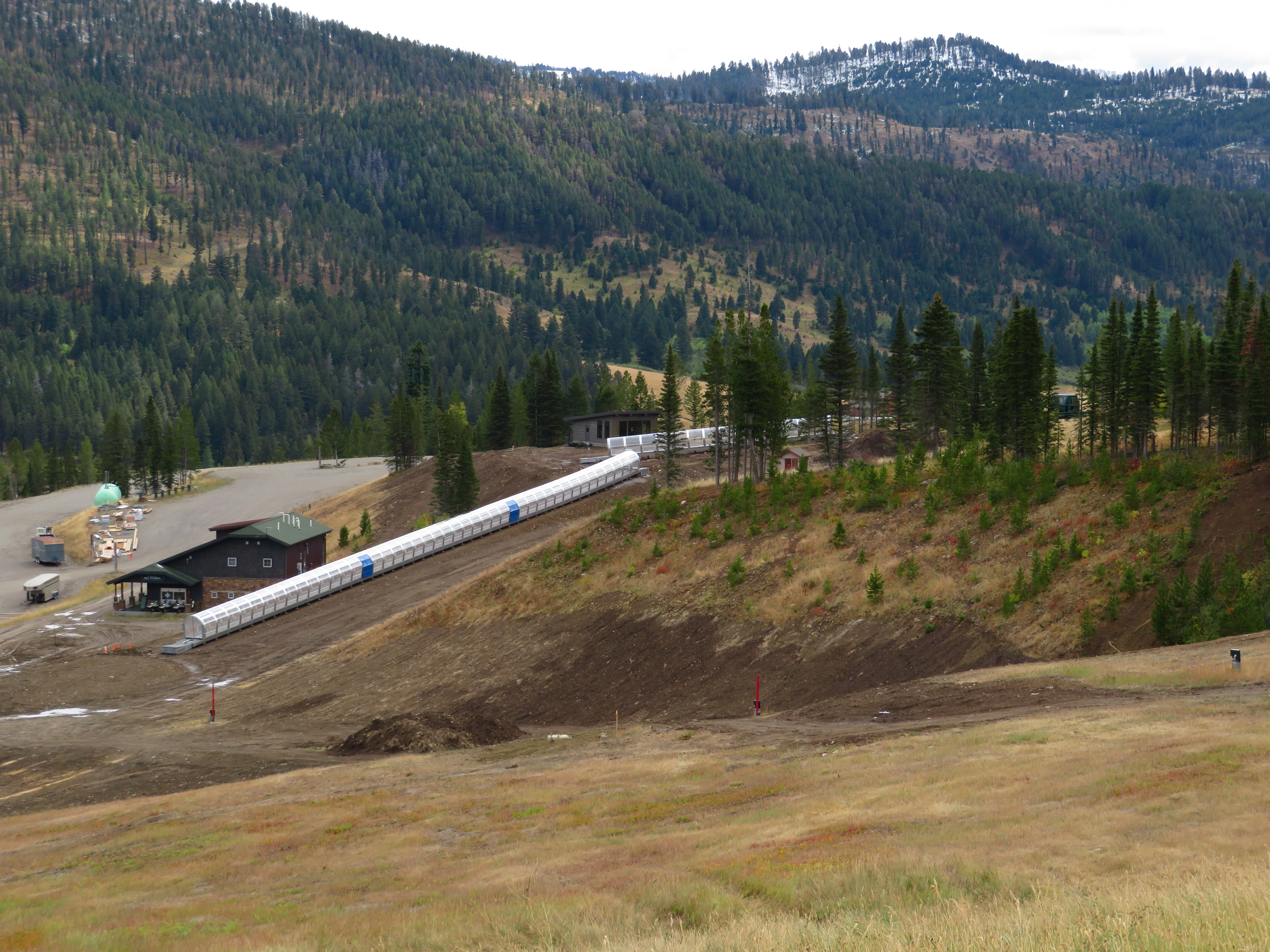
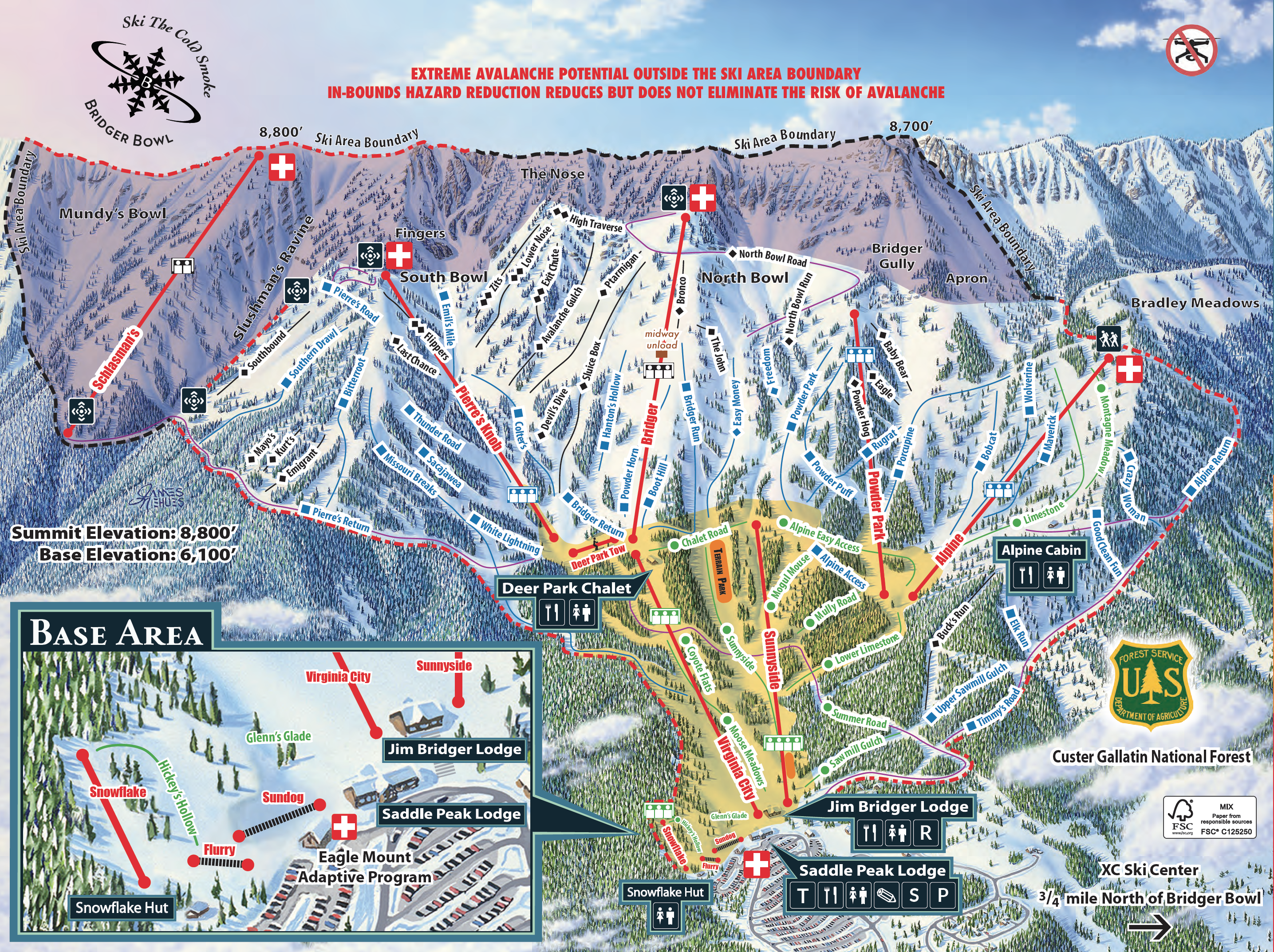
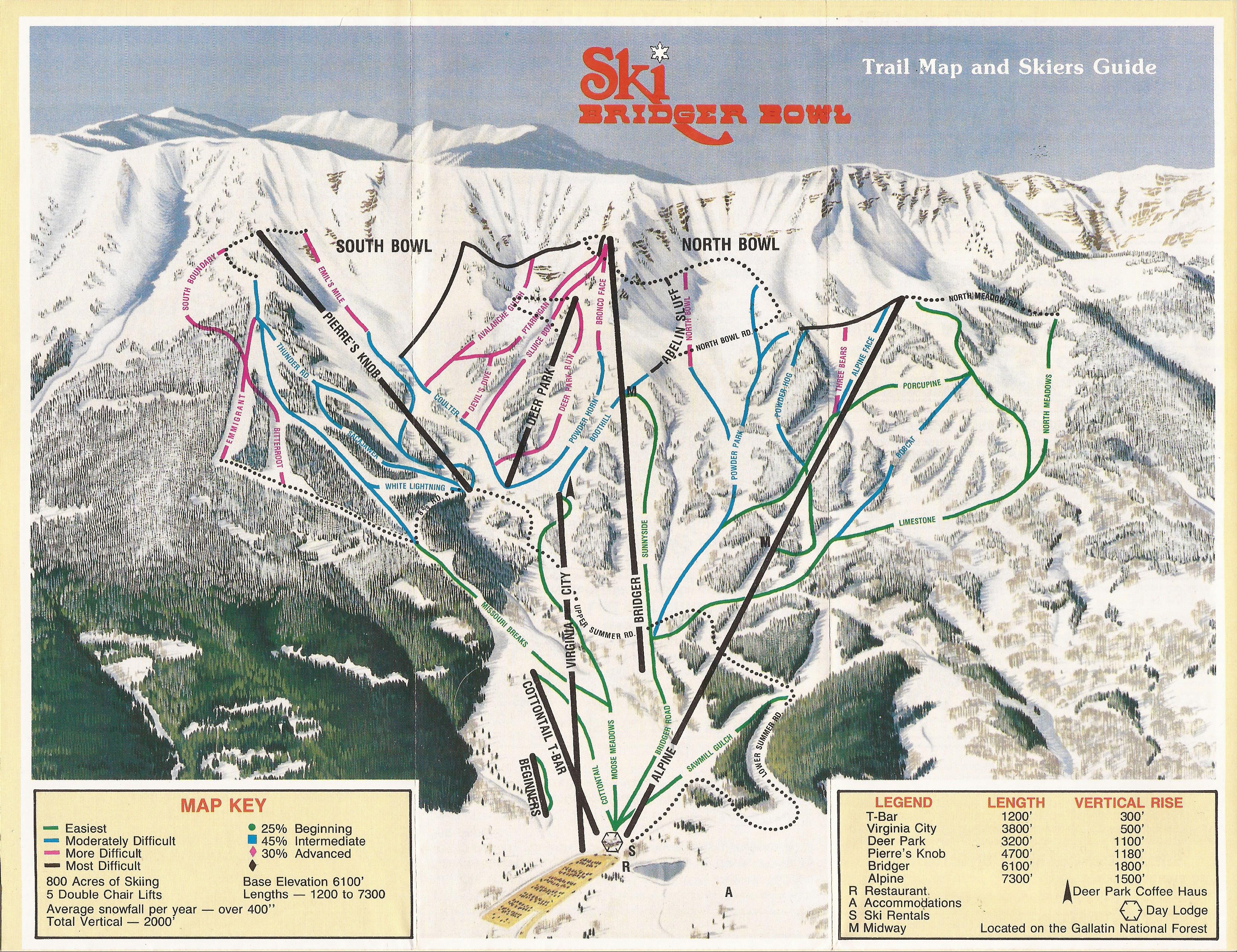
Located near Bozeman, Montana, Bridger Bowl is a nonprofit day-use ski area that has seen major growth and investment recently. This year’s projects cater to beginner skiers and snowboarders.Bridger Bowl is creating a first-rate learning center this fall, with four new lifts under construction to serve exclusively green terrain. Following years of attendance records and upper mountain expansion, the move is similar to what Beaver Creek, Jackson Hole, Taos and the Yellowstone Club did recently combining short gondolas, new chairlifts and/or covered carpets to create dedicated teaching hubs away from facilities for other guests. At Bridger, the Snowflake lift is being moved away from conflicting skier traffic to a completely new area, the Virginia City double replaced with a Skytrac triple chair with loading carpet and two new SunKid conveyors added. An addition to the Saddle Peak Lodge and new Snowflake Hut cap this major investment by the Bridger Bowl Association, the mountain’s nonprofit owner for the past 63 years. Impressively, the entire expansion is being paid for with cash reserves.
2017-18 Bridger Bowl trail map showing the new lift layout.Bridger Bowl’s redevelopment over the last two decades is a model for nonprofit community ski areas everywhere. At the turn of the millennium, the mountain ran one modern quad chair and five Riblet doubles built between 1964 and 1978. Every lift was subsequently replaced with new fixed grip triples and quads with loading carpets from Garaventa CTEC, Doppelmayr CTEC and now Skytrac. With six Chairkit systems, Bridger Bowl is the largest operator of loading carpets in North America. “The conveyors are very effective in reducing mis-loads and allow the lifts to be operated closer to full speeds,” Four Mountain Advisors noted in the mountain’s master plan. “This helps maintain lift capacity without the added costs of a high-speed lift.” While at one point Bridger operated two mile-long doubles, the new strategy relies on a larger number of shorter, well-placed fixed-grip triples and quads. Virginia City and Snowflake are the fifth and sixth modern lift replacements in new alignments.
Up to five more high-speed quads like the new Jupiter Express could join the Stevens Pass lift fleet over the next 10-15 years.
Once again in 2016, Seattle found itself the fastest-growing big city in America, and the only one of the top five in close proximity to major mountain resorts. The Seattle-Tacoma-Bellevue metro area is now home to 3.8 million people, seven figures more than metro Denver or the Wasatch Front and growing faster than both. Yet despite being generally outdoorsy and with high average incomes, Puget Sound residents have only three real choices for where to spend a day skiing. Unlike in neighboring Oregon, where three resorts flank Mt. Hood and another Mt. Bachelor, Washington’s large volcanoes never saw ski development before being placed under conservation. Most of Washington State’s ski areas lie far from Puget Sound, along which two-thirds of Washingtonians live, concentrating some 1.5 million skiers annually at The Summit at Snoqualmie, Stevens Pass and Crystal Mountain.
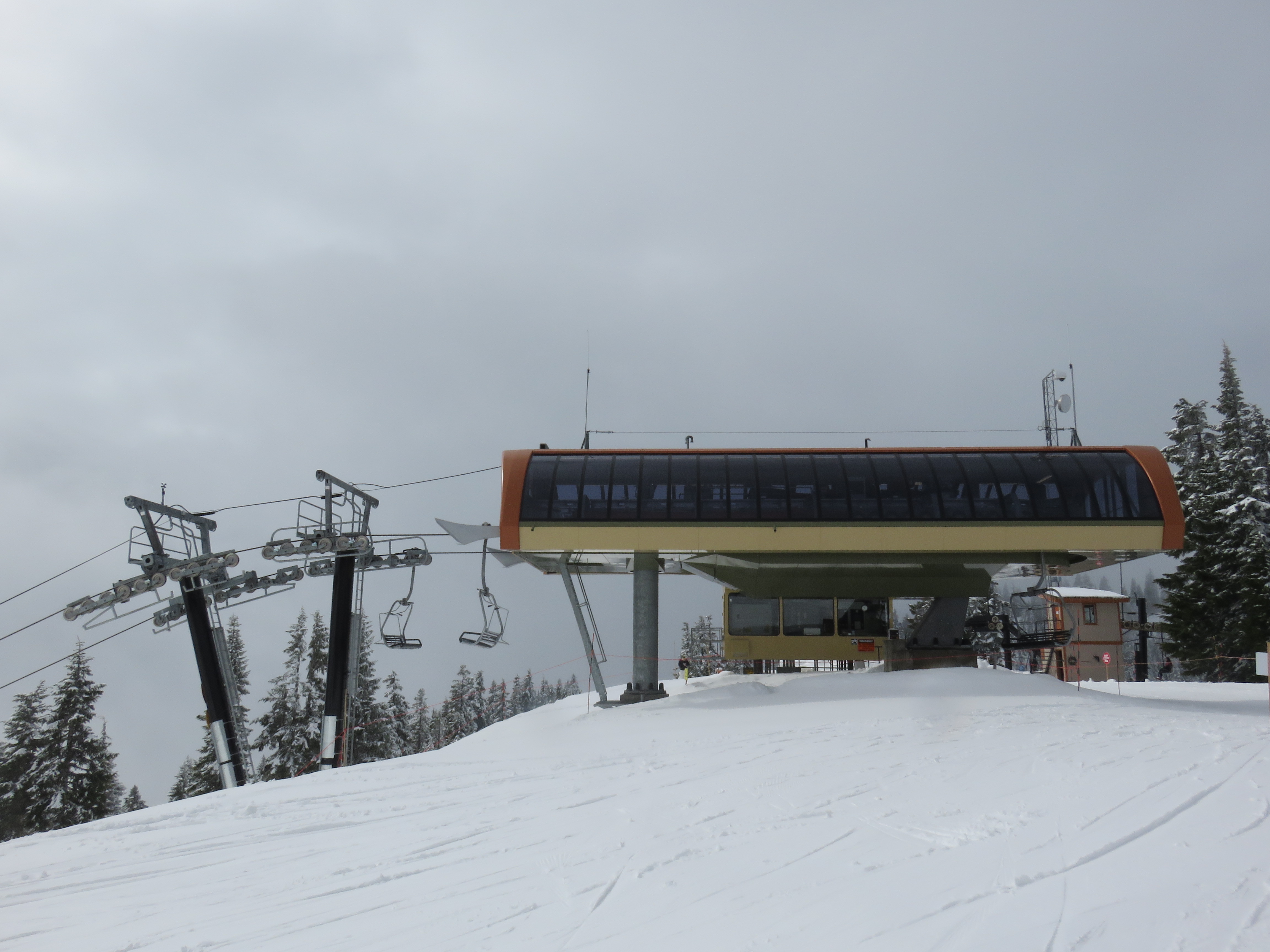
Crystal spun off from Boyne Resorts in April to become Seattle’s only locally-owned and operated mountain. The resort’s master plan includes new lifts but most of them have already been built. Michigan-based Boyne still operates The Summit at Snoqualmie, just 45 minutes from Amazon’s new 24,000-head complex in Downtown Seattle. The Summit’s approved plan includes a dozen new lifts but almost all of them simply replace very old ones. That leaves the place where I first rode a detachable chairlift in 1997, Stevens Pass, to meet much of the Puget Sound region’s growing demand for local skiing. As the second busiest resort in Washington, Stevens averages double the skier density of Crystal and Snoqualmie. Located along U.S. Route 2, Stevens Pass grew under the ownership of Seattle-based Harbor Properties, which also at one point held Mission Ridge and Schweitzer. In 2011, Harbor sold Stevens to CNL Lifestyle Properties with operations assumed by Karl Kapuscinski of Mountain High, California. Stevens saw one new lift during CNL’s tenure, a Doppelmayr detachable in Mill Valley called Jupiter Express.
Feb 04, 11:55AM: All parking lots are full. No parking is available at this time. We apologize for the inconvenience.
As the 2007 Stevens Pass master plan notes, “demand for skiing facilities currently exceeds capacity both on the trails, on the lifts and in the base area. A a result, Stevens Pass frequently experiences days when these facilities are overcrowded, resulting in the use of satellite parking, long lift lines, lack of seating and a shortage of restrooms.” The introduction concludes by noting Stevens has been over-utilized every year since 1995. But with its ambitious upgrade plan approved in 2015 and new stability following the sale of CNL’s ski holdings to hedge fund Och-Ziff last fall, more lifts and less crowding are on the horizon.
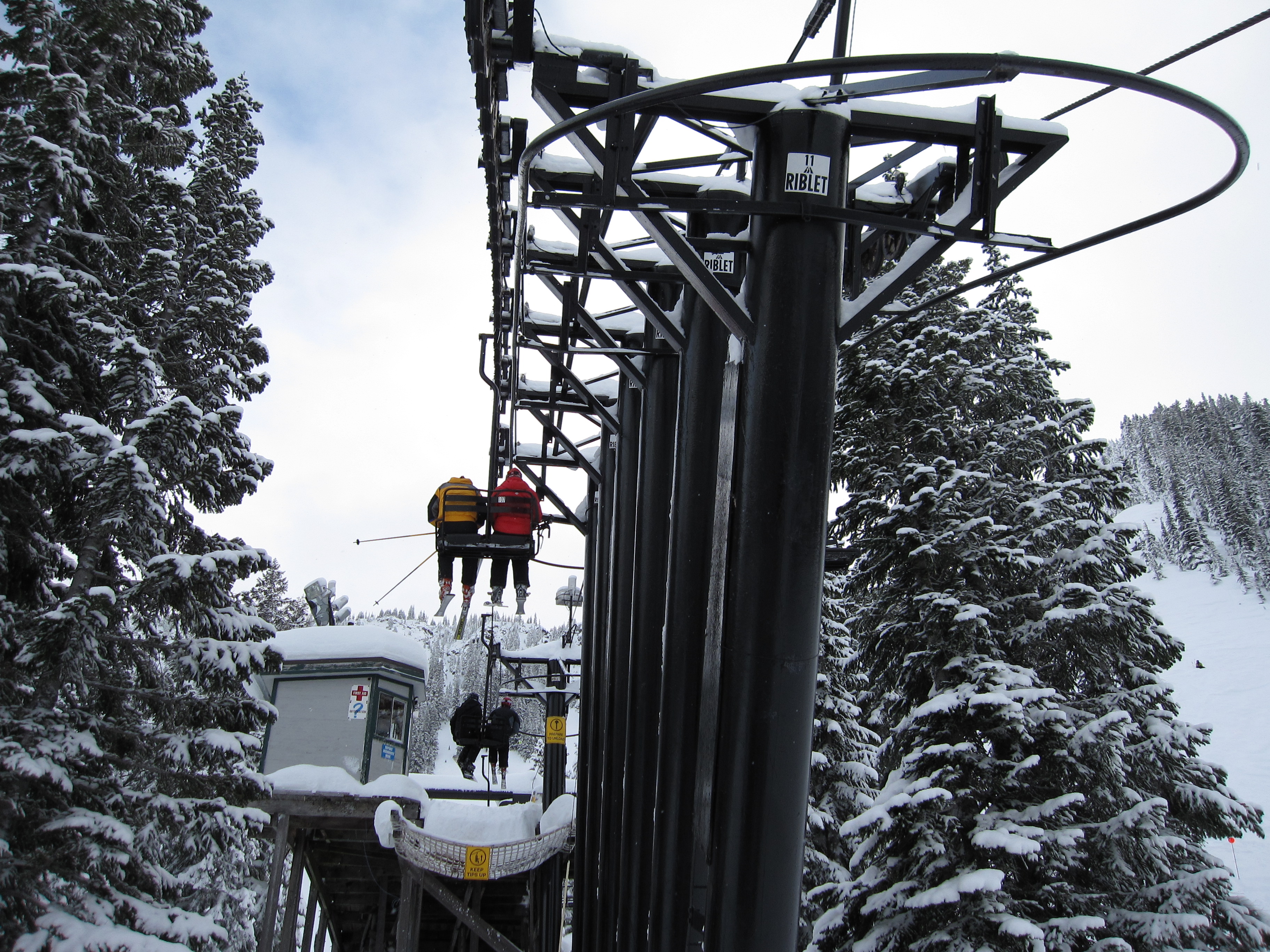
Stevens’ two oldest Riblets are planned to be replaced under the current MDP filed with the Mt. Baker-Snoqualmie National Forest. I will miss this breakover!

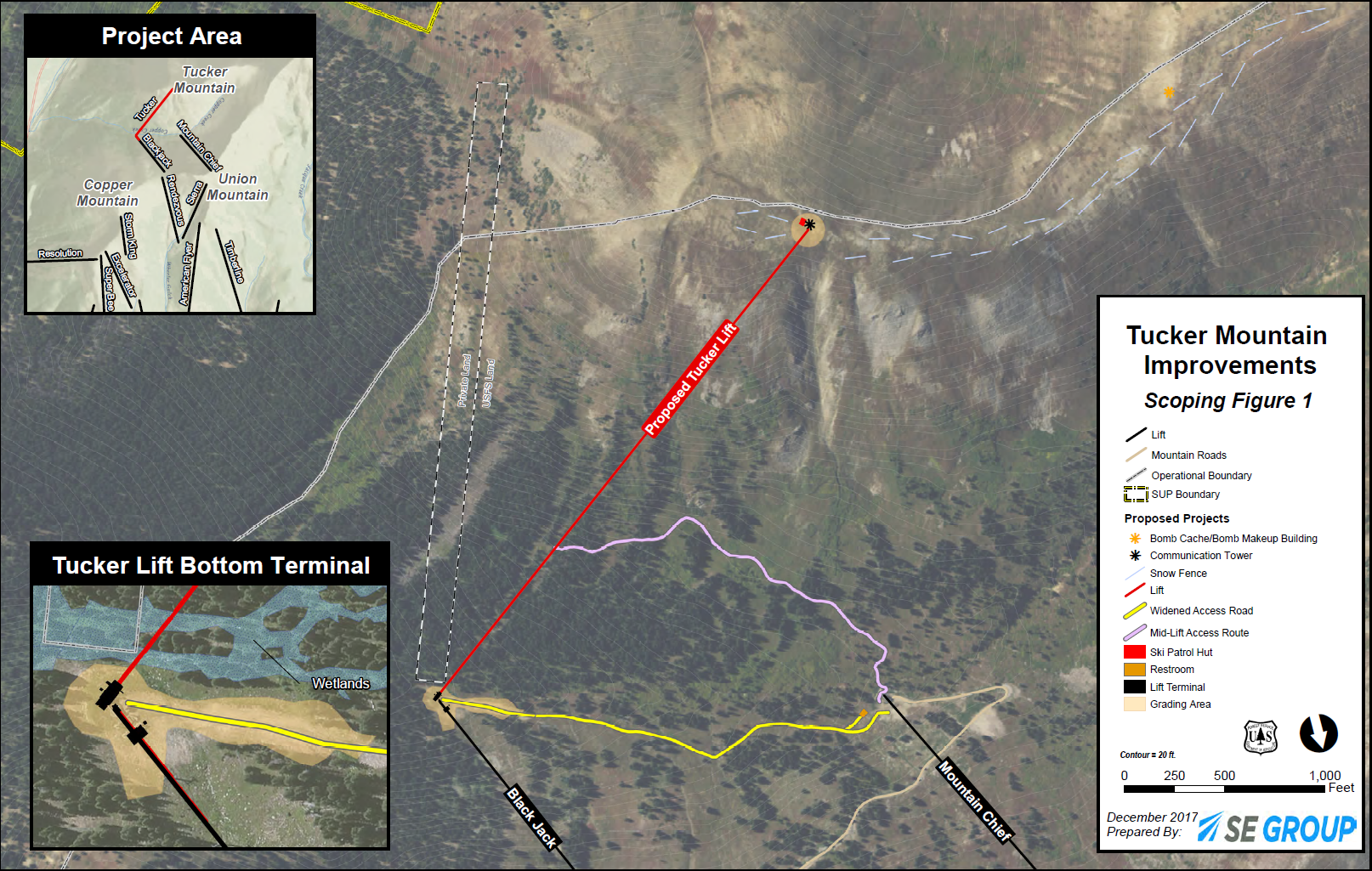 The project would improve access to underutilized advanced terrain within Copper’s existing permit area and is undergoing expedited review as a result of the previous approval. The White River National Forest opened public comment yesterday (running through February 9th) and a decision is expected in March. According the the forest’s schedule of proposed actions, construction could begin as early as this June with an opening next winter.